BRUGES (ST. ANDREW'S)
History
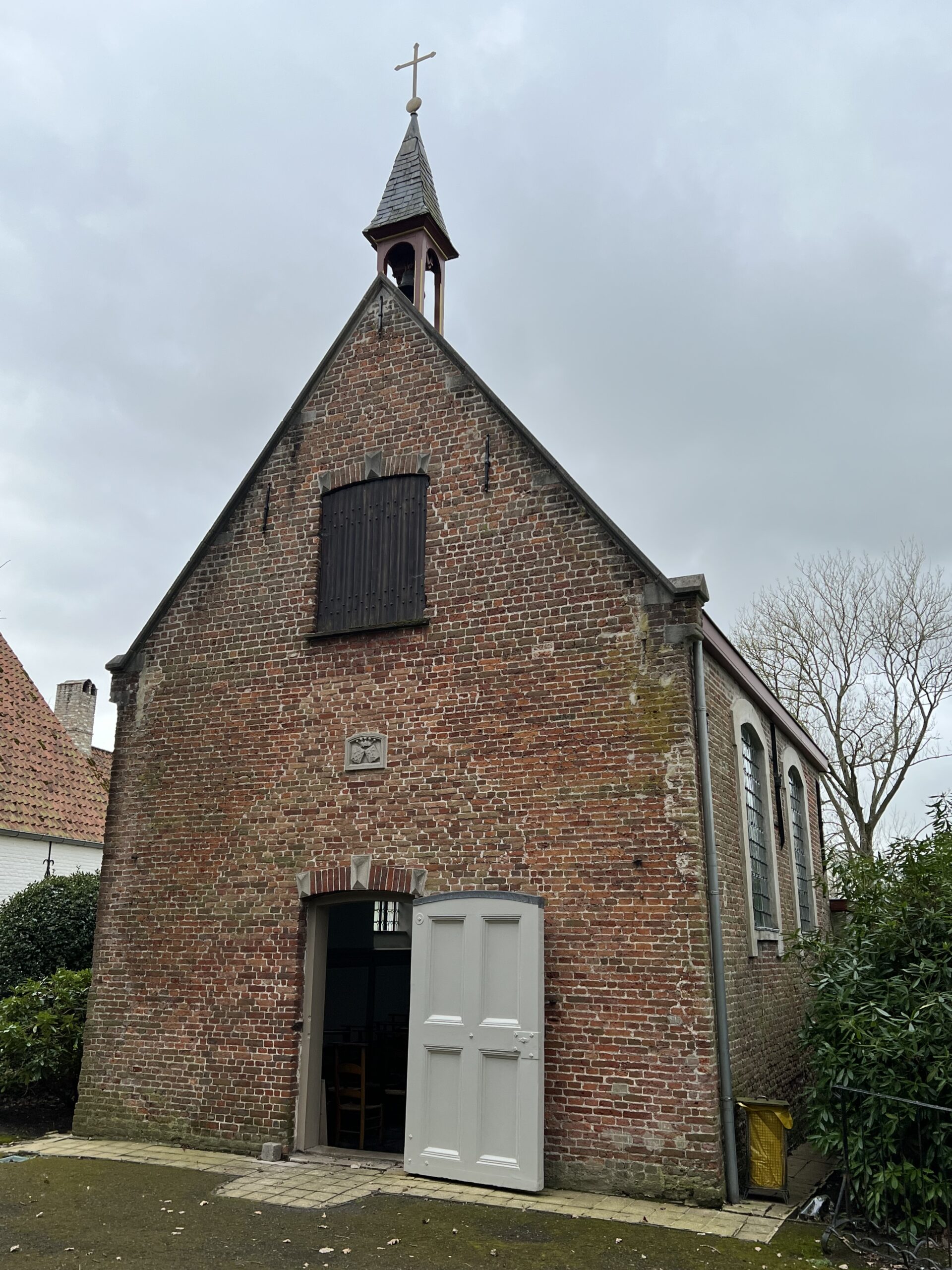
The first signs of Marian veneration in Sint-Andries date back to 1563. These were recorded by historian, philologist and literary scholar Karel De Flou (1853-1931) from Bruges. The veneration takes place at a statue in a linden tree. This led to the name Our Lady of the Little Tree. Over 100 years later, namely in 1664, the chapel was built.
A legend tells:
Two skippers moor their boats along the Yperleet, a river where the Bruges-Ostend Canal is now located. This happens near the estate Ter Lucht, and there they find a small statue of Our Lady among the branches of a linden tree. The two men take the small statue and bring it to the priest of Sint-Andries. There, they tell him the story of their discovery. The priest wishes to place the small statue of Mary in the church so that visitors can pray to it. Curiously, the small statue disappears from the church and is found again in the branches of the linden tree. From this, people conclude that this is a sign that the small statue belongs there. The small statue of Mary remains by the linden tree. Later, the linden tree was felled to prevent superstitious practices, such as cutting and taking branches from the tree.
The land on which the statuette in the linden tree is located belongs to the Italian merchant Andries de la Coste (1612-1680) from Genoa, who was also Lord of Ter Linde and mayor of Bruges. In 1655, he received permission from Pope Alexander VII, who was pope from 1655 to 1667, to establish a private chapel in his castle Ter Lucht. In 1663, a miracle occurred after Our Lady was invoked. Andries de la Coste requested the Pope to build a chapel. He received permission via Robert de Haynin (1613-1668), Bishop of Bruges from 1661 to 1668, to build a chapel, provided it was accessible to everyone. By the end of 1664, the chapel was built and furnished. Subsequently, the Bruges Capuchins conducted services in the chapel. During the 17th and 18th centuries, popes granted indulgences, remissions of temporal punishment, for pilgrimages to Our Lady of the Little Tree. The De la Coste family remained the owner of the estate and the chapel until 1789 when the French Revolution (1789-1799) broke out. In the 19th century, the estate with the chapel changed hands several times.
In 1840, the chapel was renovated at the initiative of the owner Julien Emmanuel d’Hanis de Moerkerke (1785-1855), who was also the mayor of Oostkamp (1828-1830). These works gave the chapel its current appearance.
In the 20th century, the importance of the chapel declined and visitor numbers fell. There were resurgences in visitor numbers during both world wars. On 8th September 1944 (the feast day of the Nativity of Mary), Sint-Andries was liberated by Canadian troops. This led to many visitors flocking to the chapel.
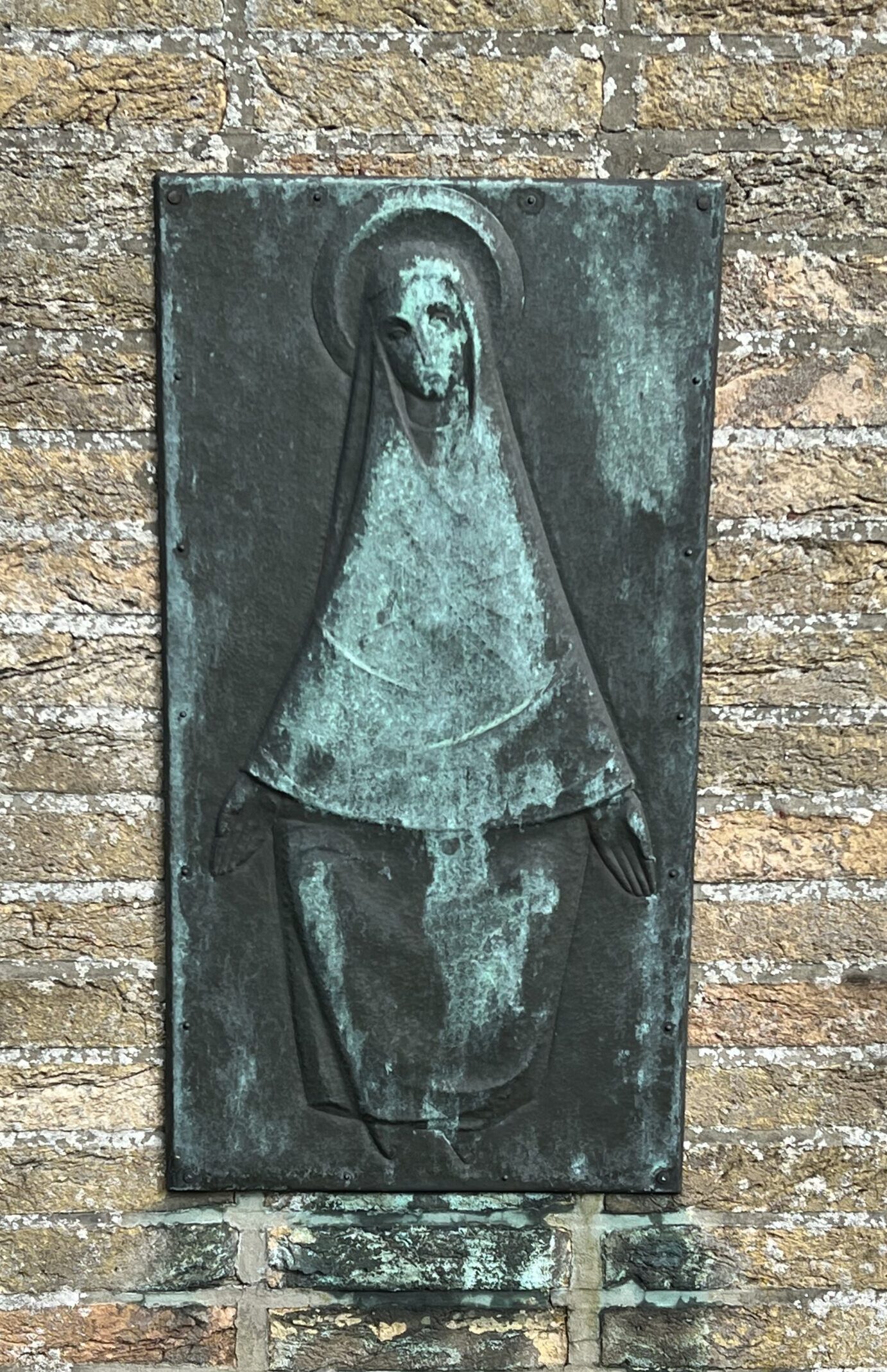
In 1963, 8 small chapels, in honour of Our Lady of Sorrows, were placed behind the chapel of Our Lady of the Little Tree. The consecration took place on 6 September 1963.
The chapel is a protected monument.
Pilgrimage site
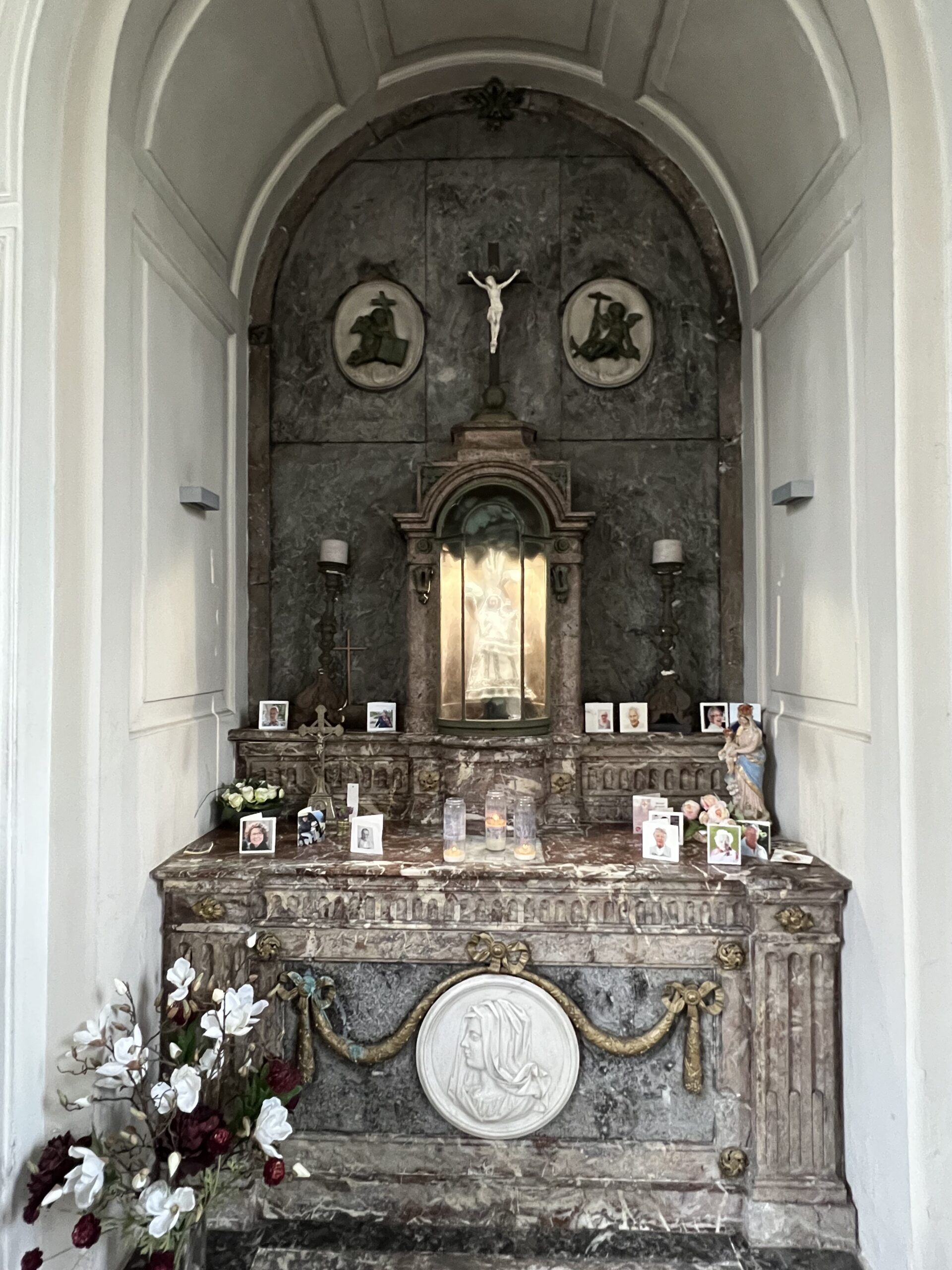
The altar is made of red marble and Mary is depicted in a grey medallion. The year 1781 is inscribed in the arched altarpiece. At the top, two angels are present: one angel holds a small cross and an open book of Gospels, while the other holds an anchor. It was made by sculptor Pieter Pepers (1730-1785) from Bruges.
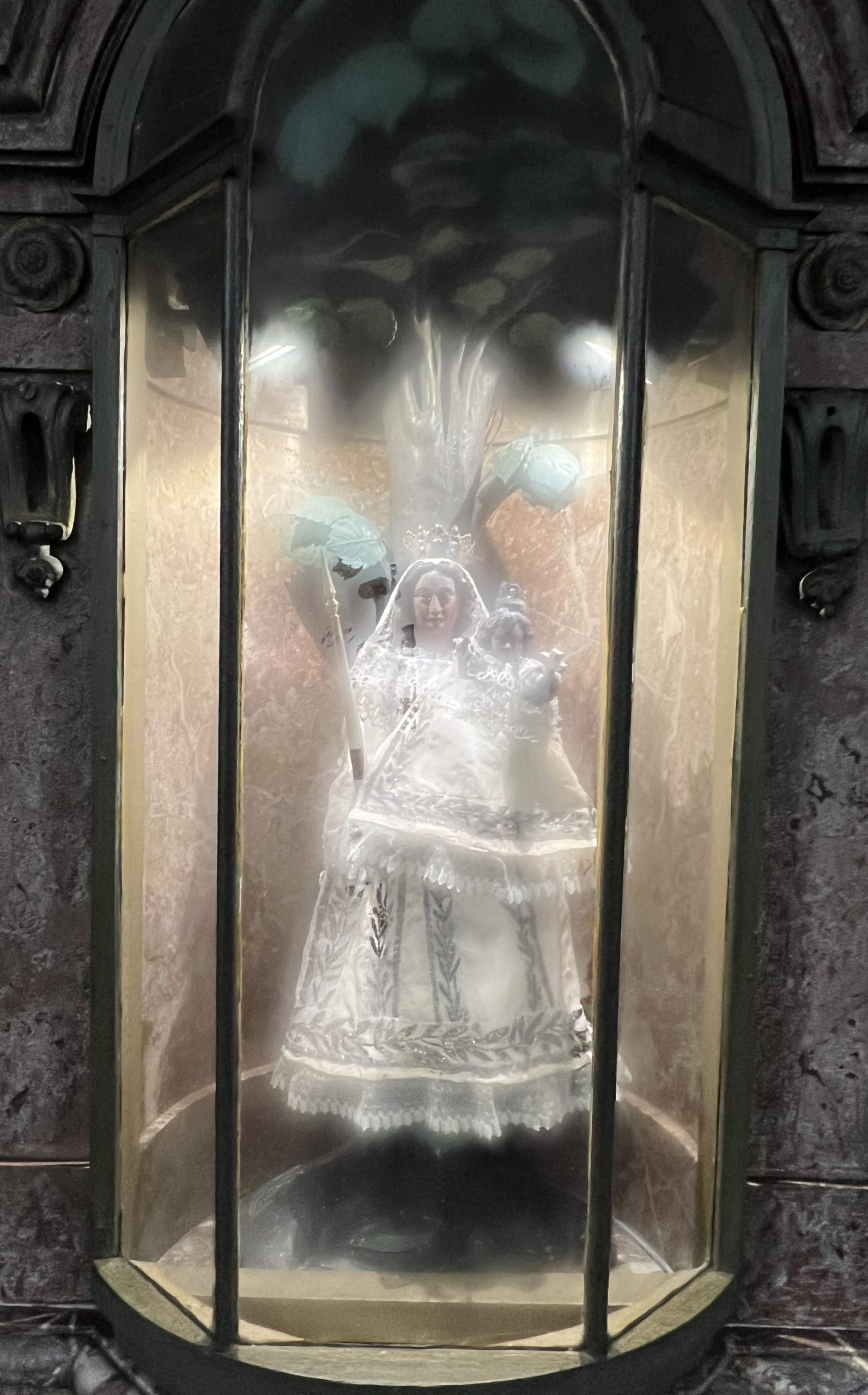
The statuette of Our Lady with Child is approximately 35 cm high. It stands under a carved linden tree in a marble niche. Mary and Child are wearing a damask robe. Our Lady holds a sceptre in her right hand and on her left arm she carries her Son, who has a globe with a cross.
On the side walls of the altar hang two coats of arms of the De la Coste family.

High up in the chapel hangs a miniature ship. It is a gift from some sailors, a thank you to Mary for a rescue from a heavy storm in 1683. The colourful little boat symbolises gratitude.
The chapel has long been significant as a pilgrimage site for sailors.
At the chapel, there is a memorial stone in honour of Maurits Van Coppenolle (1910-1955). After the Second World War (1940-1945), he was the great promoter of the devotion to Our Lady of ’t Boompje.
The chapel, which is open daily, is mainly visited by cyclists and hikers.
ACCESSIBILITY

The chapel of Our Lady of the Little Tree is located in Sint-Andries, a sub-municipality of the West Flemish city of Bruges. The chapel is situated in the northwest of Bruges and can be reached via Pastoriestraat. Then, after the railway crossing, turn right into Koestraat and follow a path next to number 30, which continues into a country lane.
Address: Koestraat 26, 8200 Bruges.
Experience
The chapel of Our Lady of the Little Tree is hidden amongst tall trees, near the Bruges-Ostend railway line. First, you have to go along a stone path which, after about 100m, turns into a country lane. From the Koestraat, it's about a 400m walk past a few buildings, trees, meadows, a hedge, and then I'm at the chapel. This building has certainly seen a lot of history. The door stands invitingly open and I go inside.
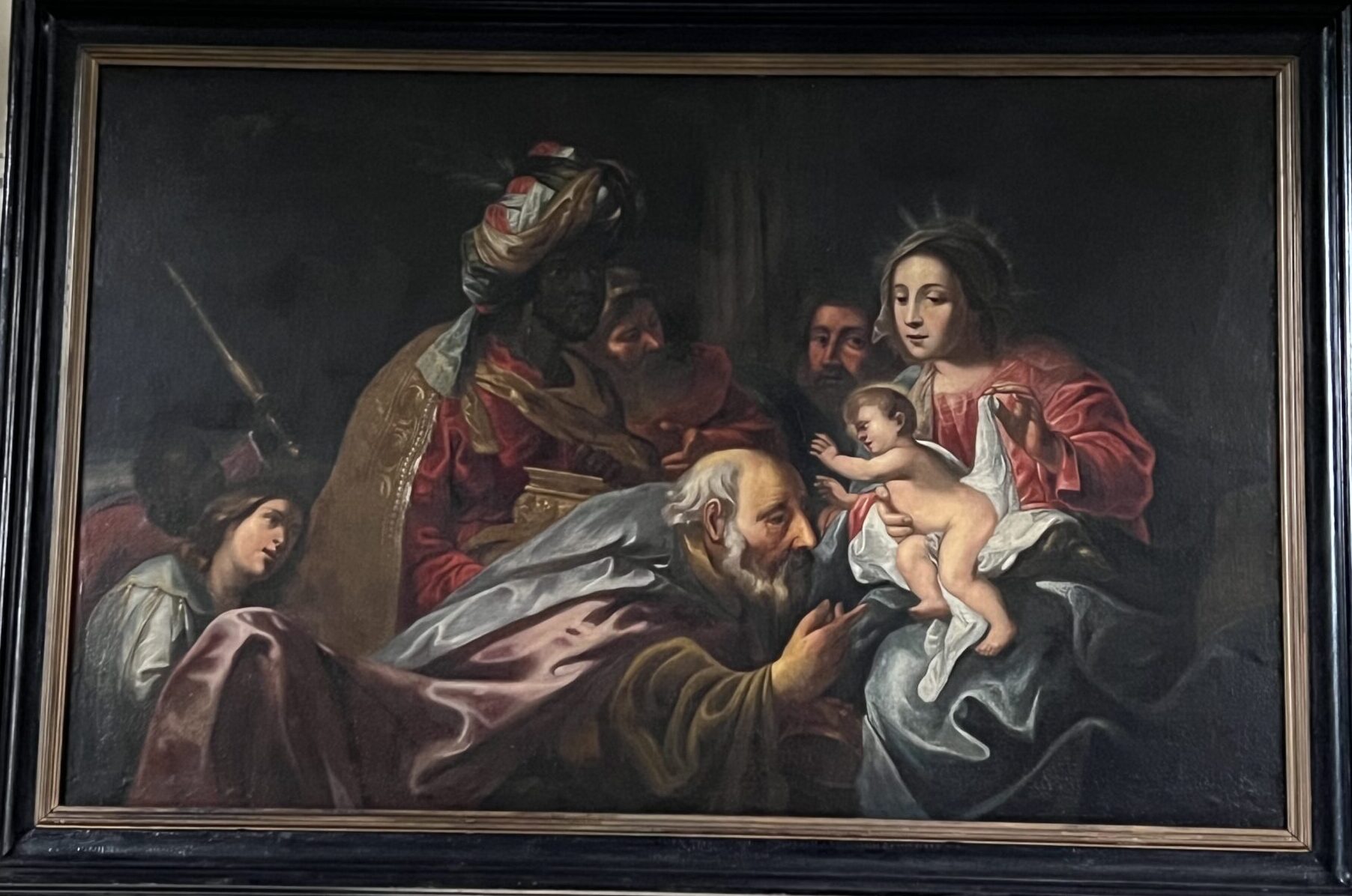
Above the entrance door, I see a large, colourful painting with the theme “The Adoration of the Magi”. Next, I go to the altar and see the statue of Our Lady, which stands behind a glass wall and in front of a carved lime tree. To the left of the altar, candles are burning, and another one is being lit. I am thinking of friends who are having health problems. How fragile a human being is!

The coats of arms of former owners hang on the wall. One bears the Latin text “in aeternun non commovebitur” (“it will not be moved for ever”). A small boat is mounted high on the ceiling. Skippers used to come here often, but now it is mostly hikers and cyclists who visit the chapel.
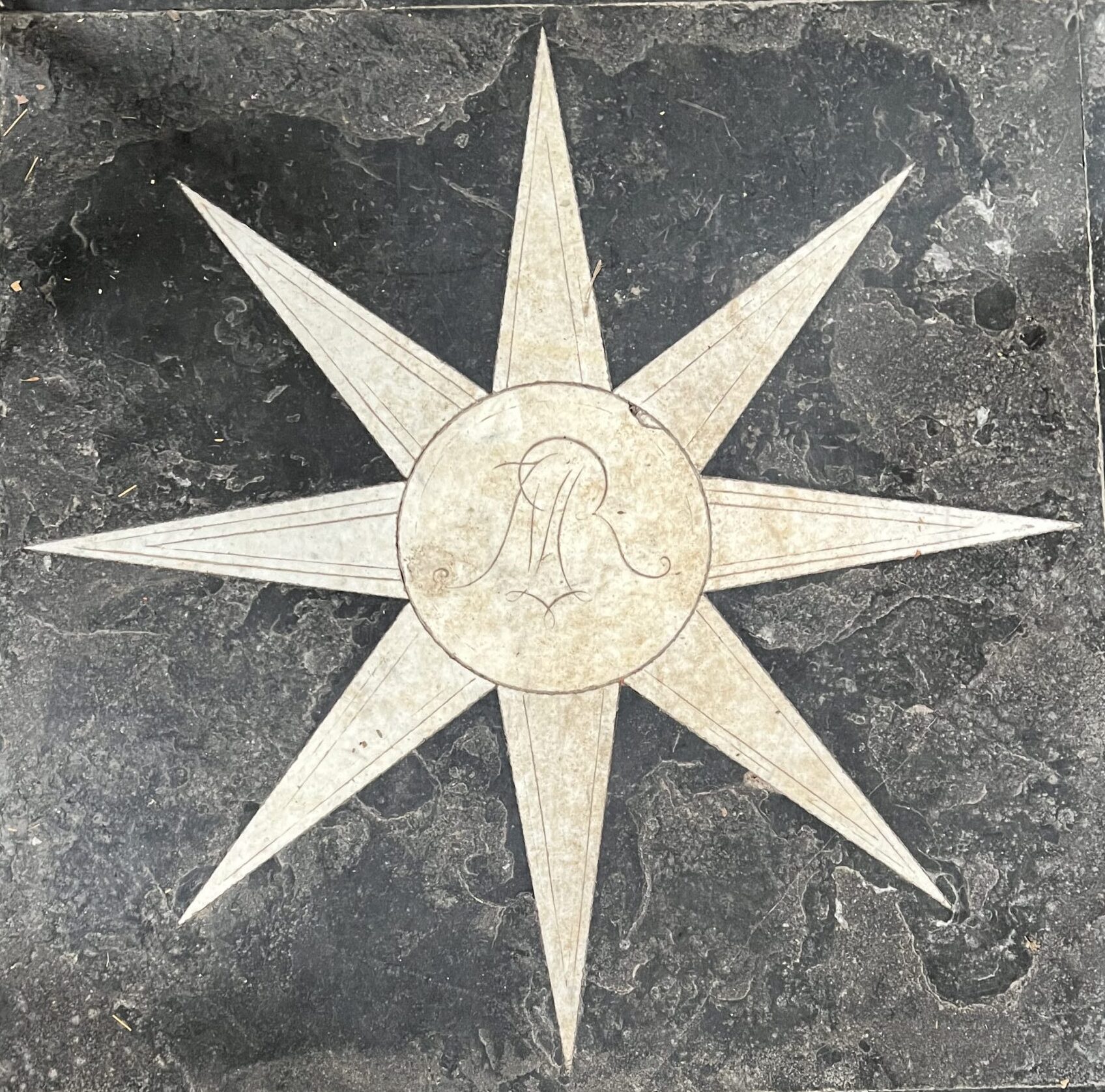
In the middle of the chapel, a star shape of white marble is incorporated into the floor. I stand beside it and imagine myself in the turbulent years of this chapel's history.
I then leave the chapel and go to the chapels of Our Lady of Sorrows, which are located behind the chapel. There's a woman sitting on a bench, and she says she's enjoying the peace and quiet here. What a privilege it is to be able to visit here.
Environment
Sint-Andries is a sub-municipality of Bruges, and this city is definitely worth visiting. Bruges has a lot to offer, such as churches, monumental buildings, museums, and canal tours.
Nearby are the coastal towns of Blankenberge and Oostende, where there are plenty of options for walking. Harbours, shops and restaurants are also available to visit.
~~~

 Nederlands
  English (UK)
  Deutsch
  Français