DA DI ZELE
History
Dadizele has been a beloved pilgrimage site for many years. As far back as the 12th century, there was a church or chapel in Dadizele. The first church was built under the rule of Margaret II (1202-1280). She was also known as Margaret of Constantinople, Countess of Flanders, and in 1254, she donated significant sums to build a church in Dadizele.
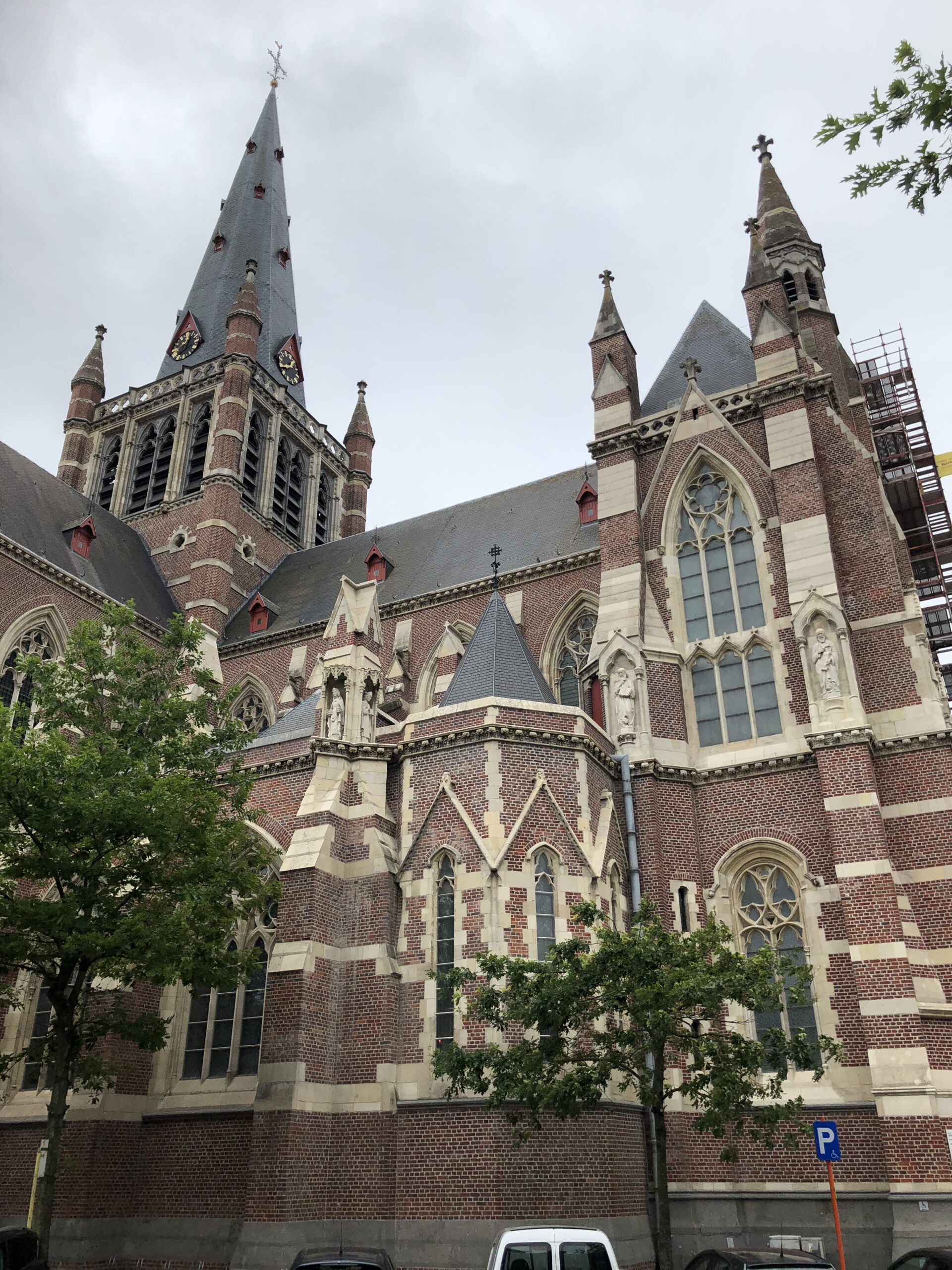
In the writings of Sir Jan van Dadizele (1432-1481), who was also known as Jan III of Vleerdeghem, it is stated that a Eucharist celebration was held annually in honour of the deceased Lord Lambrecht van Dadizele, who lived at the end of the 12th century. In 1468, Jan van Dadizele laid the foundation stone of the church tower in Dadizele. Jan van Dadizele meant a great deal to the pilgrimage site. He had the church rebuilt and enlarged. In 1474, he became sovereign bailiff, chief judge, of the County of Flanders and the Lordship of Mechelen. In 1476, Jan van Dadizele became Grand Bailiff of Ghent. Later, he became a councillor at the Court of Justice and chamberlain to Archduke and Emperor Maximilian I of Austria (1459-1519) and general of the Flemish rural militia. He was also knighted. In 1481, Jan van Dadizele was murdered, and in that year his mortal remains were interred in the church. In the crypt, a magnificent tomb of black marble was made, in which Jan van Dadizele and his wife Catharina Breydel (1431-1499) rest.

Since 1353, miracles have been recorded in Dadizele, such as the legend of the black and white oxen, Jan Onraet’s ability to read and sing, an infinite red thread, a blind person regaining their sight, a drowned woman coming back to life, mute people regaining their speech, people being cured of the plague, women in labour being helped, people being cured of deafness, and stillborn children being brought back to life.
Three legends are depicted in scenes in the park, next to the basilica. The artworks were consecrated in 1982. The legend of the two white and two black oxen tells of a wealthy farmer who loses his black oxen one day. Prayers are offered to Mary, and she appears in the guise of a pious woman to a hermit. Mary says that the black oxen can no longer be found, but two white oxen can. These oxen are for the farmer if he builds a chapel dedicated to Our Lady. The farmer keeps his word, and a chapel is built.
The legend of the infinite red thread originates from the construction of the chapel, which Mary requested. Once the chapel's construction is complete, it must be consecrated. People from Dadizele travel to the bishop to ask for the chapel's consecration. En route, the people encounter a pious woman. She tells them it is unnecessary to ask the bishop for consecration, as Our Lady has already done this. The woman also states that a red thread has been stretched around the chapel and that the area within the thread is consecrated. This thread turns out to be infinite.
The legend of Jan Onraet is about an illiterate man who can suddenly read and sing. One night, Our Lady visits Jan Onraet, a man who could neither read nor sing. Under his pillow, he finds a songbook. He goes to the priest, tells him about the book, becomes a sacristan, rings the bells in the church tower, and sings at the top of his lungs.
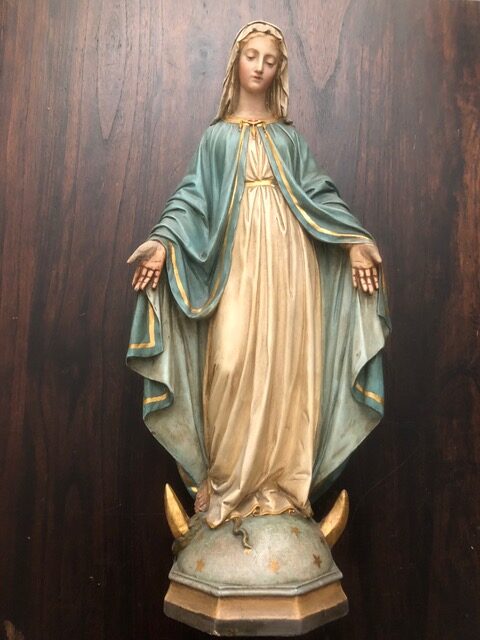
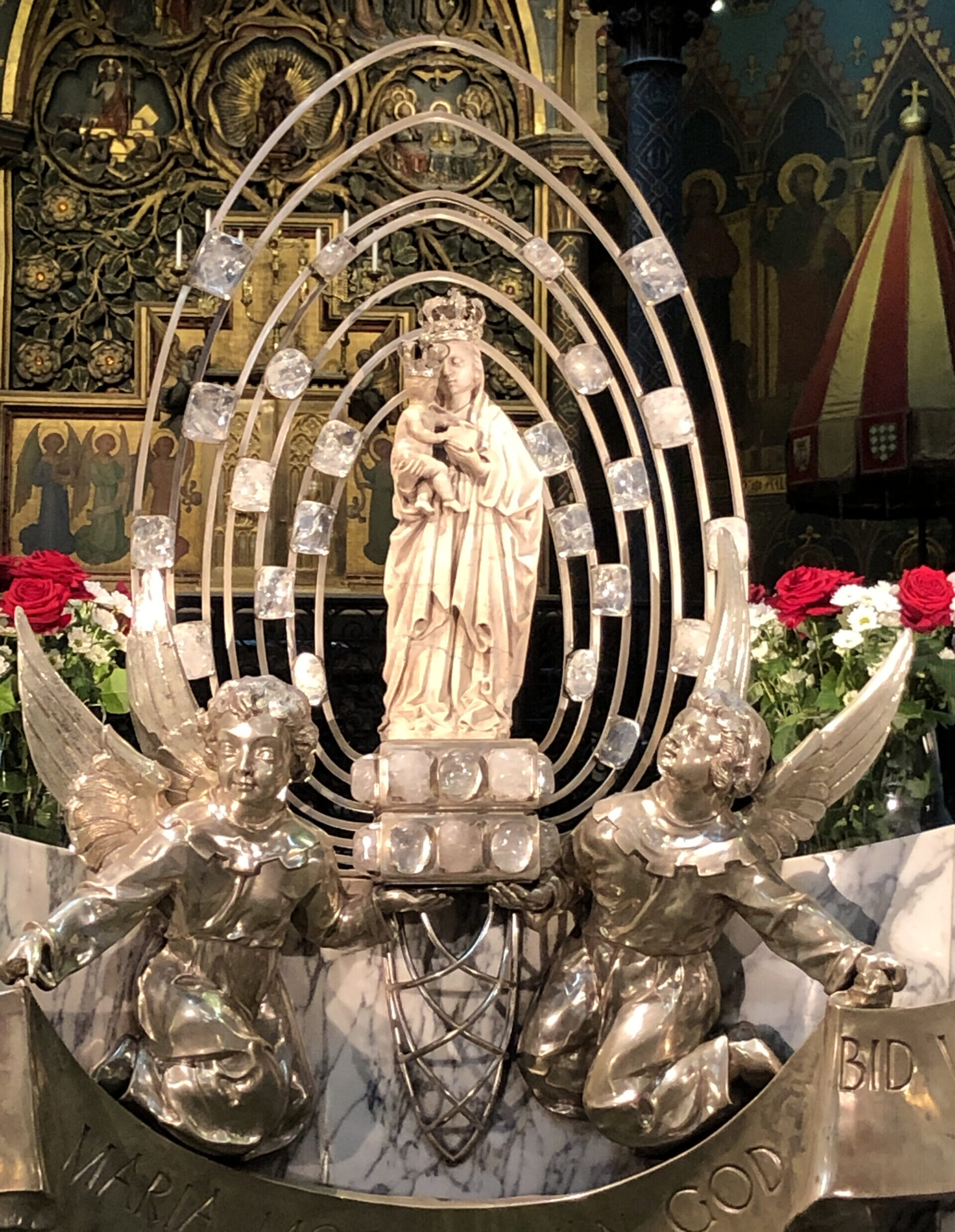
In the basilica of Dadizele stands a miraculous statue. This is not the first statue. The original statue of Our Lady was made of oak wood and dated from the 12th century. In the 17th century, this statue was replaced by the current alabaster statue. This originates from Chartres in France and is about 50 centimetres high.
During the Iconoclastic Fury in 1566, the church is desecrated and plundered by the Protestant Geuzen. A particularly miraculous statue stood in the church, and this was saved. In 1581, the plundering and destruction happened again, but this time by the Scots, who were allies of the Geuzen. After the religious wars, peace returned and this happened under the rule of Albert of Austria (1559-1621) and Isabella of Spain (1566-1633), who had guardianship over the Southern Netherlands.
In 1658, the French plundered and devastated much in Dadizele, but the miraculous statuette was saved in time and brought to Menen. In 1745, the statuette goes to the Capuchin monastery in Menen. In 1794, the church again suffers due to French rule.
In 1836, a new relic of Our Lady was received in Dadizele and placed in the church. In 1854, the dogma of the Immaculate Conception of Mary was declared. This led Bishop Joannes Baptista Malou of Bruges (1809-1864), Bishop from 1849 to 1864, to plan the construction of a basilica. The bishop was undecided between Dadizele and Westrozebeke, as both were pilgrimage sites. Eventually, he chose Dadizele. On 8 September 1859, the feast day of the Nativity of Mary, the first stone was laid. In 1880, the church was consecrated by Jean Joseph Faict, who lived from 1813 to 1894 and was Bishop of Bruges from 1864 to 1894. In the following years, Dadizele grew to become a highly visited Marian shrine. In 1882, the church was elevated to the status of a basilica. This title was granted by Pope Leo XIII, Pope from 1878 to 1903 (his name was Gioacchino Pecci and he lived from 1810 to 1903). In 1902, the miraculous statue of Our Lady, which stands on a marble throne centrally in the basilica, was crowned by Gustavus Josephus Waffelaert (1847-1931), Bishop of Bruges from 1895 to 1931.

During the First World War, the Great War (1914-1918), the basilica served as a horse stable and later the building became a field hospital used by the occupying forces. The miraculous statue was then in Lendelede and later in Balen. In 1918, at the end of the war, the basilica was almost completely destroyed. In 1919, the rebuilding of the church began and the statue of Mary returned to Dadizele. Alfons Depauw (1867-1937) from Bruges was in charge of this construction. In 1924, the basilica was restored.
In the Second World War (1940-1945), the tower and stained-glass windows were destroyed, and restoration work took place after the war.
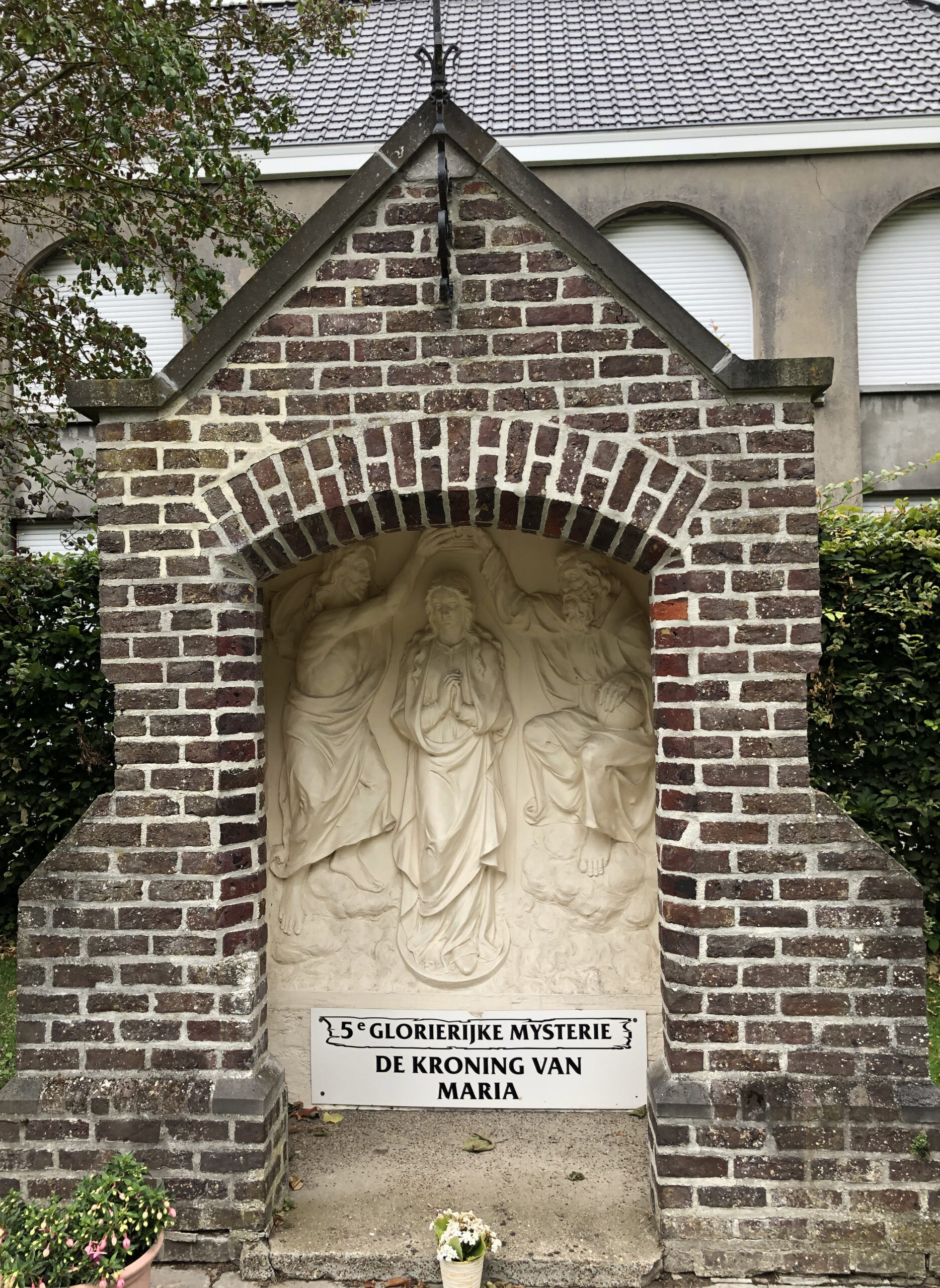
In 1956, the Maria-Rozenkranspark, also known as the Rosarium, was consecrated by Emiel Jozef De Smedt (1909-1995), Bishop of Bruges from 1952 to 1984. This park, which features depicted mysteries as well as a large altar chapel, is located next to the basilica.

In 1959, the new Our Lady's throne is blessed.
Since July 2019, the basilica has possessed a relic with some hairs of Pope John Paul II (Pope from 1978 to 2005), who was canonised on 27 April 2014. For this, a cross-shaped reliquary was chosen and a “papal altarpiece” was created by Koen Deleu. The left panel of the triptych centrally features Our Lady of Dadizele, and also depicted there are Maximilian Kolbe (1894-1941), Godelieve of Gistel (c. 1049-c. 1070), and Mother Teresa (1910-1997). In the middle panel of the artwork, alongside John Paul II, Pope Benedict XVI (1927) and Oscar Romero (1917-1980) are also painted. The right panel of the triptych shows Father Damian (1840-1889), parish priest and commissioner of the artwork, Wim Vangheluwe, the back of Saint Nicholas, who is wearing a red cape, and Juan Diego Cuauhtlatoatzin (1474-1548), to whom Mary appeared in Guadalupe, Mexico, in 1531.
The basilica is a protected monument.
Pilgrimage site
In the basilica stands the miraculous image of Our Lady. It is about 50 centimetres high and is situated amidst an egg-shaped, silver wreath, which is set with large rock crystals. The angels depicted with the image are made of solid silver, as is the banner. This banner bears the text “Holy Mary, Mother of God, pray for us”.
In the crypt of the basilica, the tomb of knight Jan van Dadizele and his wife Catharina Breydel can be visited. The knight's gloves, spurs, and sword also lie there.
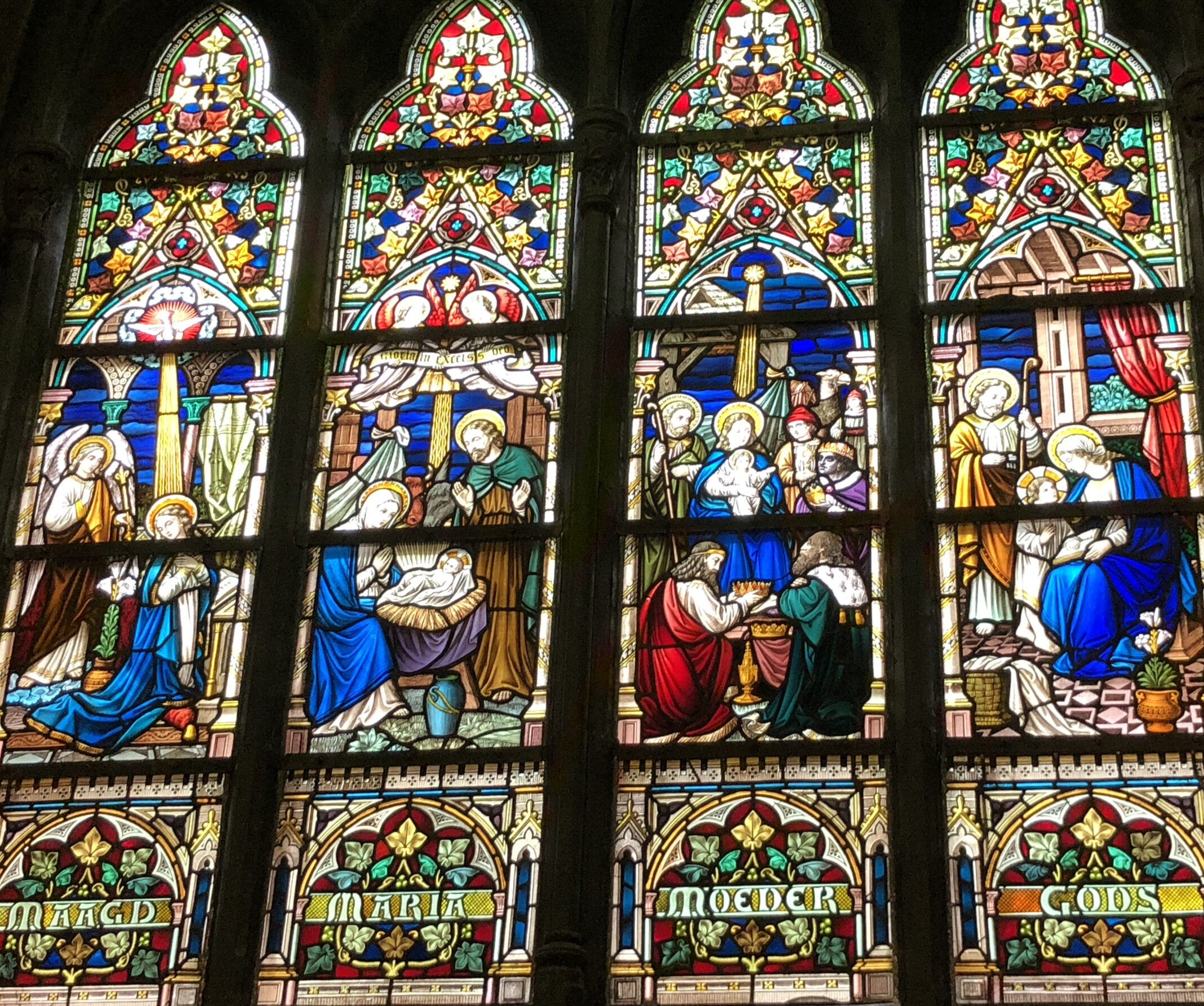
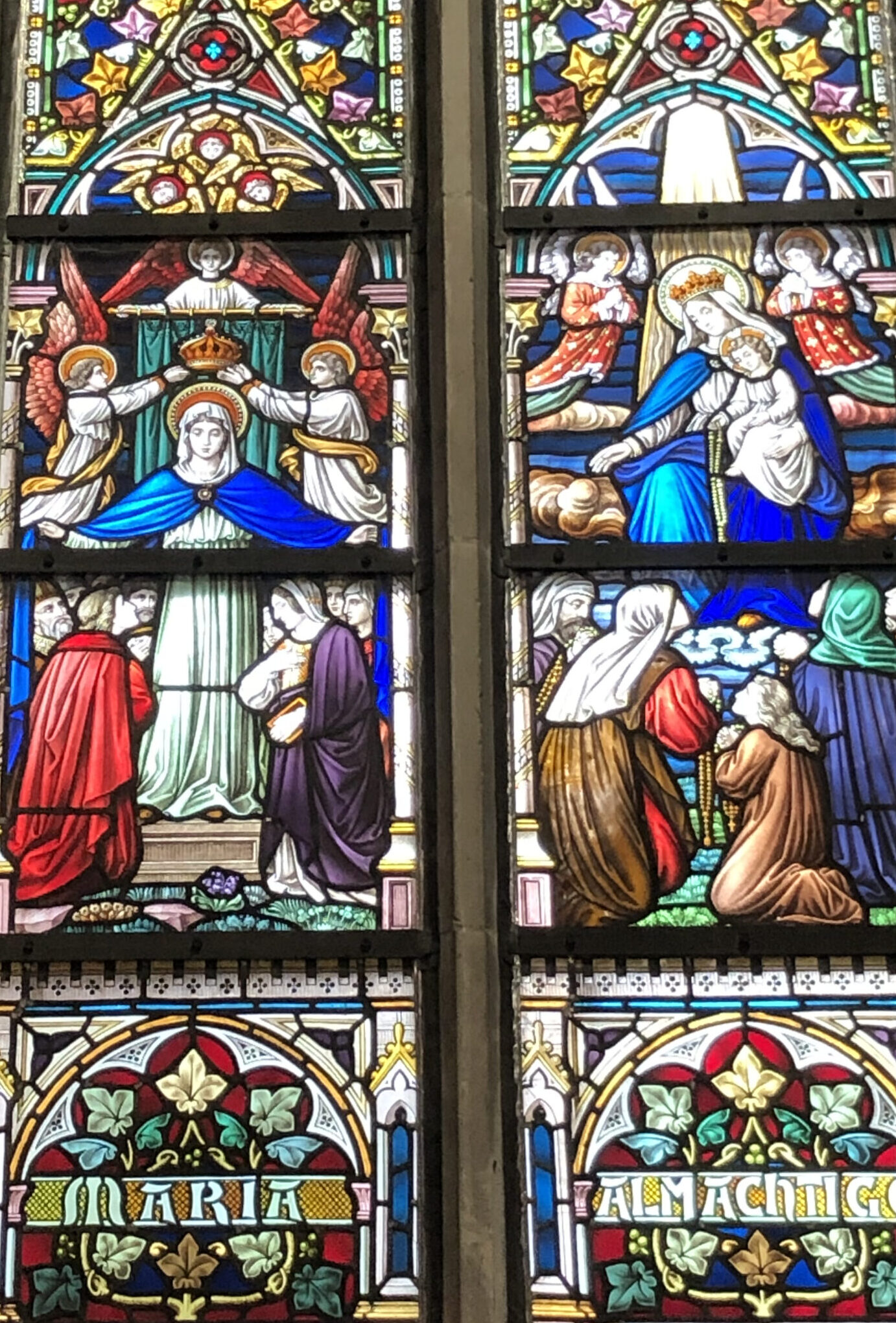
The numerous stained-glass windows of the Basilica of Our Lady of Dadizele are very special. Stained-glass windows showcase beauty and craftsmanship. Furthermore, for centuries, the windows have served as visual aids to introduce believers to stories from the Bible and the life of Mary, among others. The colourful stained-glass windows in the basilica depict various stages from the life and apparitions of the Virgin Mary, such as the birth of Mary, Our Lady of Lourdes, the Annunciation by the angel Gabriel, the birth of Jesus, the Flight into Egypt, the dead Jesus in his Mother's lap, the Assumption of Mary, the Coronation of Mary in heaven, and Our Lady of the Rosary. Arthur Verhaegen (1847-1917) created the stained-glass windows of the basilica's high choir around 1880. Designs and executions of the stained-glass windows were also made by Jules Dobbelaere (1859-1916) from Bruges. However, due to wartime damage and restoration work on the church, these were only installed in 1922. Gustave Ladon (1863-1942) created the rose windows in the transept and the windows in the side chapels. Achiel Ladon (1879-1945) also worked on the stained-glass windows. Later, Mieke Verwaetermeulen (1962) created the rose window above the organ (1993).
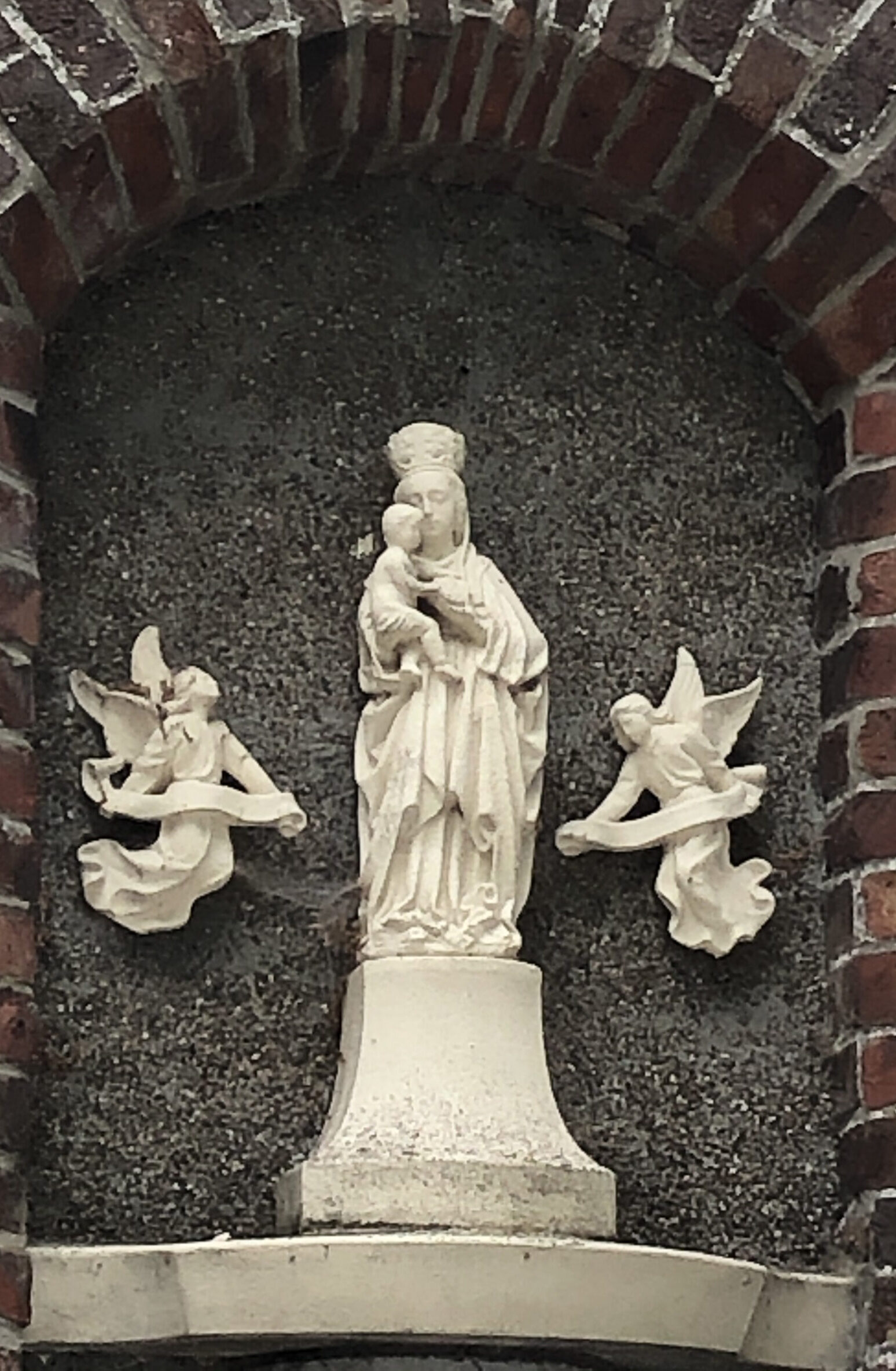
Around the basilica, niches with statues are visible. These were sculpted by Gentil Vanelslander (1917-1982) from Dadizele. The artworks were created between 1953 and 1963.
Next to the basilica is the entrance to the Rosary, or the Shrine of Our Lady of the Rosary park, which features a statue of Our Lady, among other things. Shortly after the entrance, three legends are depicted. The legend that Mary wants a chapel, with the story of the black and white oxen. The second legend concerns the story of the red thread, that Mary herself consecrated the chapel. The third, ancient story is about Jan Onraet, who was exhorted in a dream by Mary to become a verger.
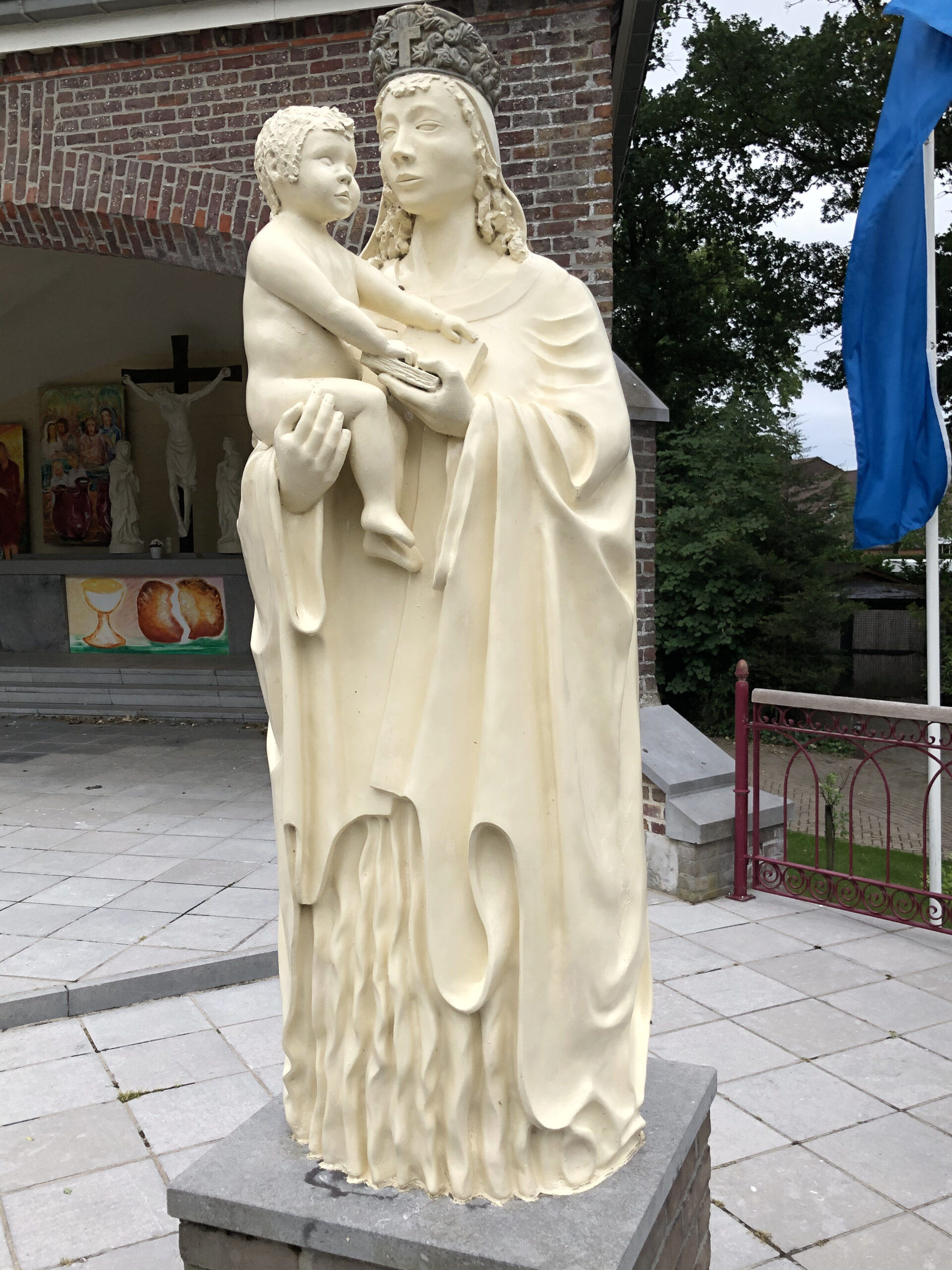
The Rosarium is a floral prayer park. Also in this park is an open-air chapel, where the mysteries of light are depicted. Beneath this structure, a small crypt chapel has been created for prayer and small group gatherings. Behind this chapel are paintings by an artistic priest, Wilfried Joye (1939-2019), born in Dadizele. The park's walking path follows the mysteries of the rosary. Within the prayer park are sculptures by Godfried Theunynck (1944).
In Dadizele, two processions have been laid out. The large procession has 14 stations of the cross and is approximately 4 kilometres long. Of particular note is the Spanish Chapel. This Baroque building is octagonal and is the 13th station of the large procession. The small procession is shorter, with a length of just over one kilometre. This procession depicts the “seven sorrows of Mary”.
On average, 50,000 visitors come to the pilgrimage site each year.
ACCESSIBILITY
Dadizele is located in West Flanders and belongs to the municipality of Moorslede, near the city of Kortrijk.
More information can be found at
– www.ick-dadizele.blogspot.com
-www.inforegio.be/prayerpark-rosarium
Experience
In the basilica, my particular interest lies with the altar, which is dedicated to Our Lady Immaculate. The white statue of “Our Lady of Life,” crafted by sculptor Harry-Arnold Elström (1906-1993), also catches my eye.
I find it very special to receive a piece of the red thread. This infinite thread makes Dadizele unique as a pilgrimage site. What a remarkable tradition this is for the pilgrims! The accompanying text states, among other things:
“Maria,
Our Lady of Dadizele,
we pray to you:
Keep us going, keep leading us,
through thick and thin,
through death
until eternity.
Amen.”
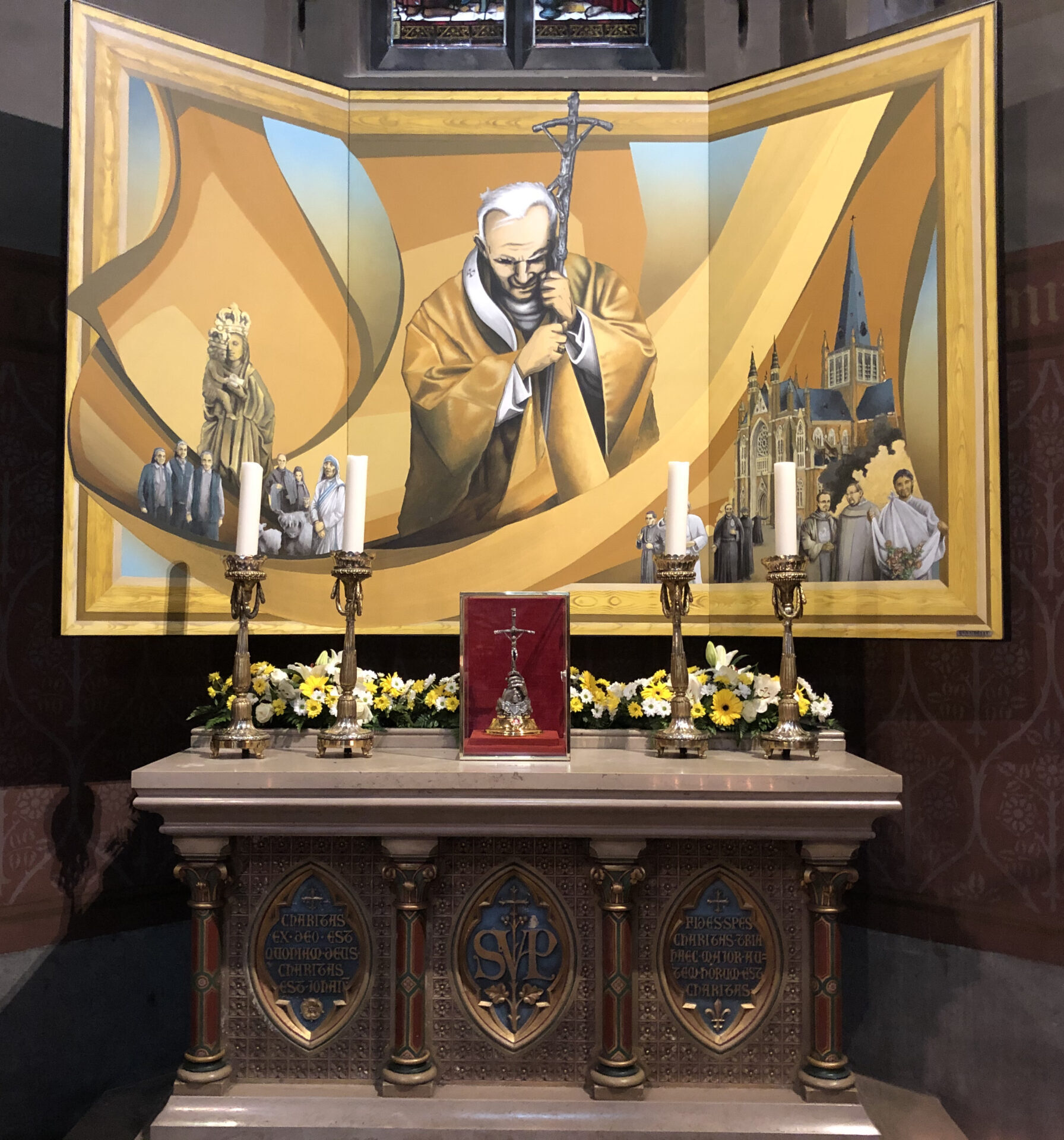
The basilica also features a reliquary and artwork dedicated to Saint Pope John Paul II (Karol Józef Wojtyla, 1920-2005), who was Pope from 1978 to 2005.
I am leaving the basilica and going to the prayer park. At the entrance, I see the images of the three legends, who have achieved so much here. I read and see typical representations of the stories of the oxen, the red thread, and Jan Onraet.
~~~

 Nederlands
  English (UK)
  Deutsch
  Français