History
The origin of the pilgrimage site in the hamlet of Gaverland, near Melsele, begins with a legend. It is told that in 1511, a wooden statue of Mary, 39 centimetres in size, was found under an old lime tree. This happened as members of the Van Den Bosch family were returning home in the evening. They took the statue with them and brought it to the presbytery. Remarkably, the statue returned to the lime tree the following day. The same finders again brought it to the priest. The next day, the statue was once more in the old tree. This was seen as a sign that the image wished to be venerated by the tree. A prayer house was erected on the spot, and this has been replaced several times. The number of visitors to the statue of Mary steadily increased. After a few years, enough money had been raised to build a small chapel. Since the statue was found, several miracles have occurred.
The Mechelen miracle statue is presumed to date from the period 1550-1600. Devotees have gifted the statue precious cloaks with gold embroidery, veils of fine lace, and silver jewellery.

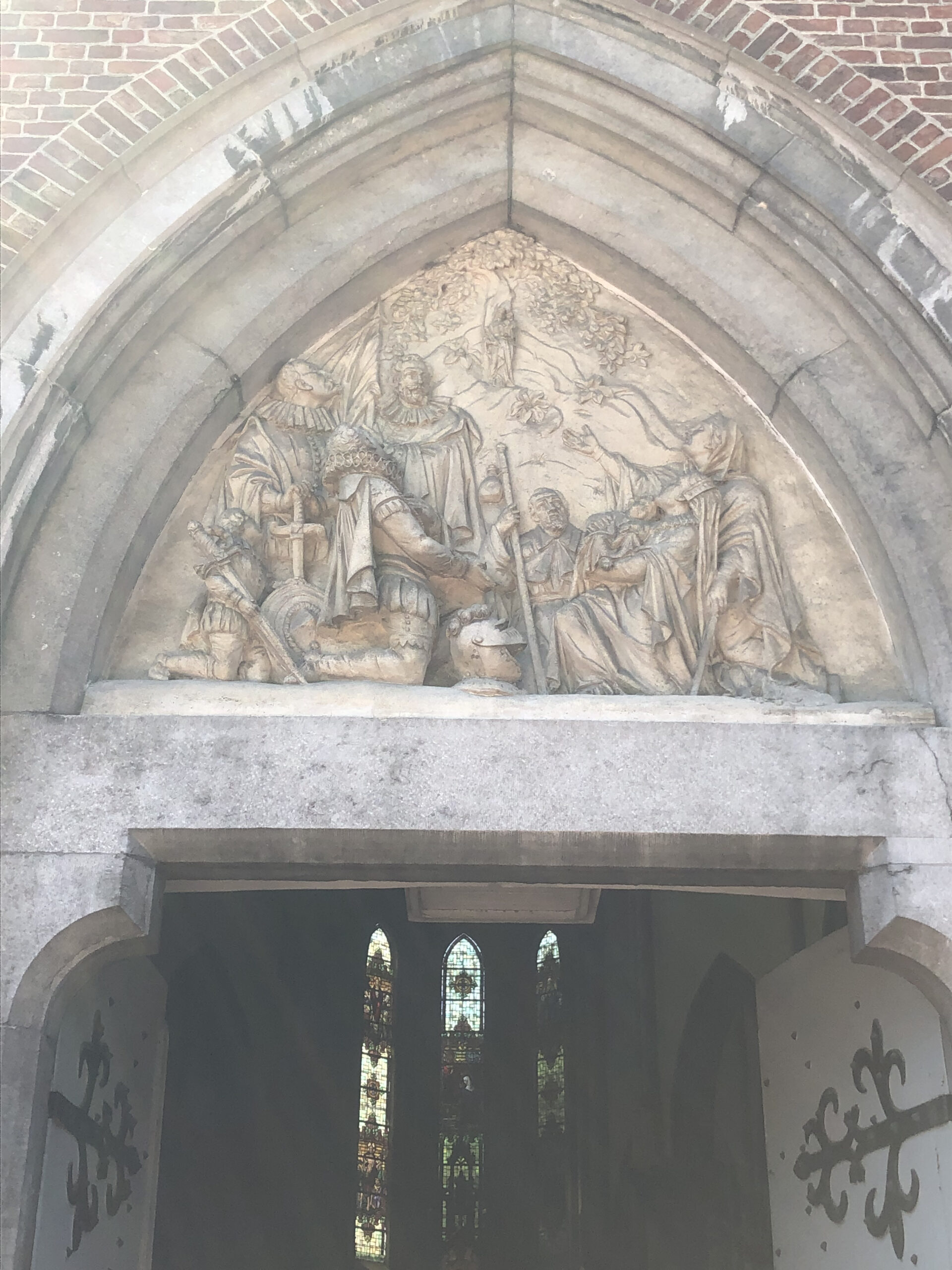
In 1585, the Spanish commander Alexander Farnese (1545-1592), Duke of Parma and Piacenza (1586-1592), Governor-General of the Netherlands (1578-1592), prays before the statue of Our Lady. He asks Mary to help him put an end to the Siege of Antwerp (1584-1585), during the Eighty Years' War (1566-1648). Antwerp is then occupied by the Protestants of the States Army of the United Provinces. His prayer is answered, as the next day he has driven the enemy troops out of Antwerp. For this deed, Alexander Farnese is appointed a knight of the exclusive Order of the Golden Fleece in 1585.
During the French Revolution (1789-1799), the nobility and clergy were pushed back from their leading positions in society. The French destroyed the chapel and Stations of the Cross. However, the statue of Mary was saved in time and carefully hidden. For years, pilgrims came to pray at the remains of the chapel. In 1801, a small, wooden replica was built on the site of the destroyed chapel. This space soon became too small for the many pilgrims. In 1840, a larger chapel was built, but this also proved to be too small after some time for the influx of so many pilgrims. Subsequently, plans were made for a larger chapel, and this became the building that is still visited today for lighting a candle and/or praying. In 1852, preparatory work began to build a larger chapel.
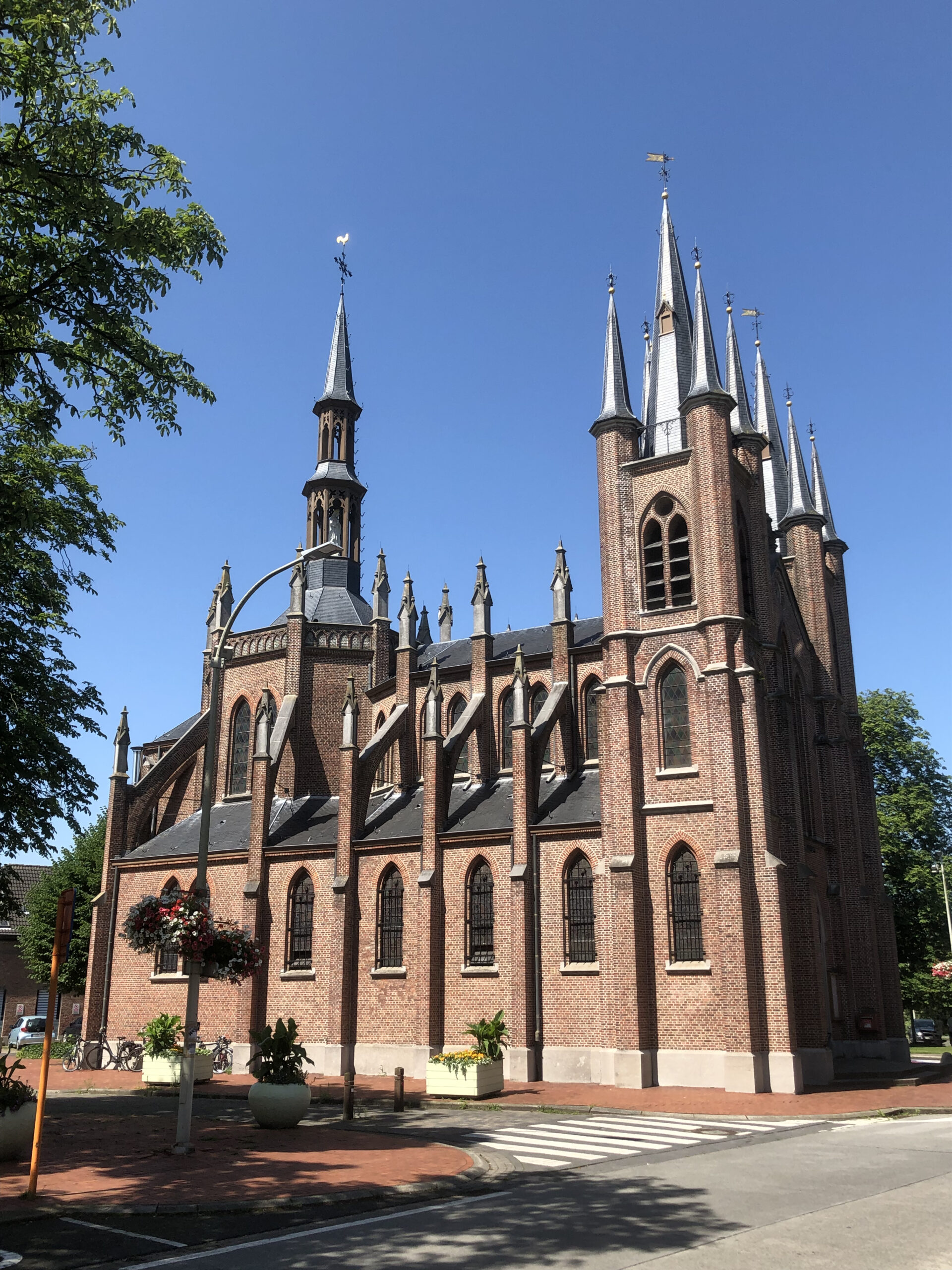
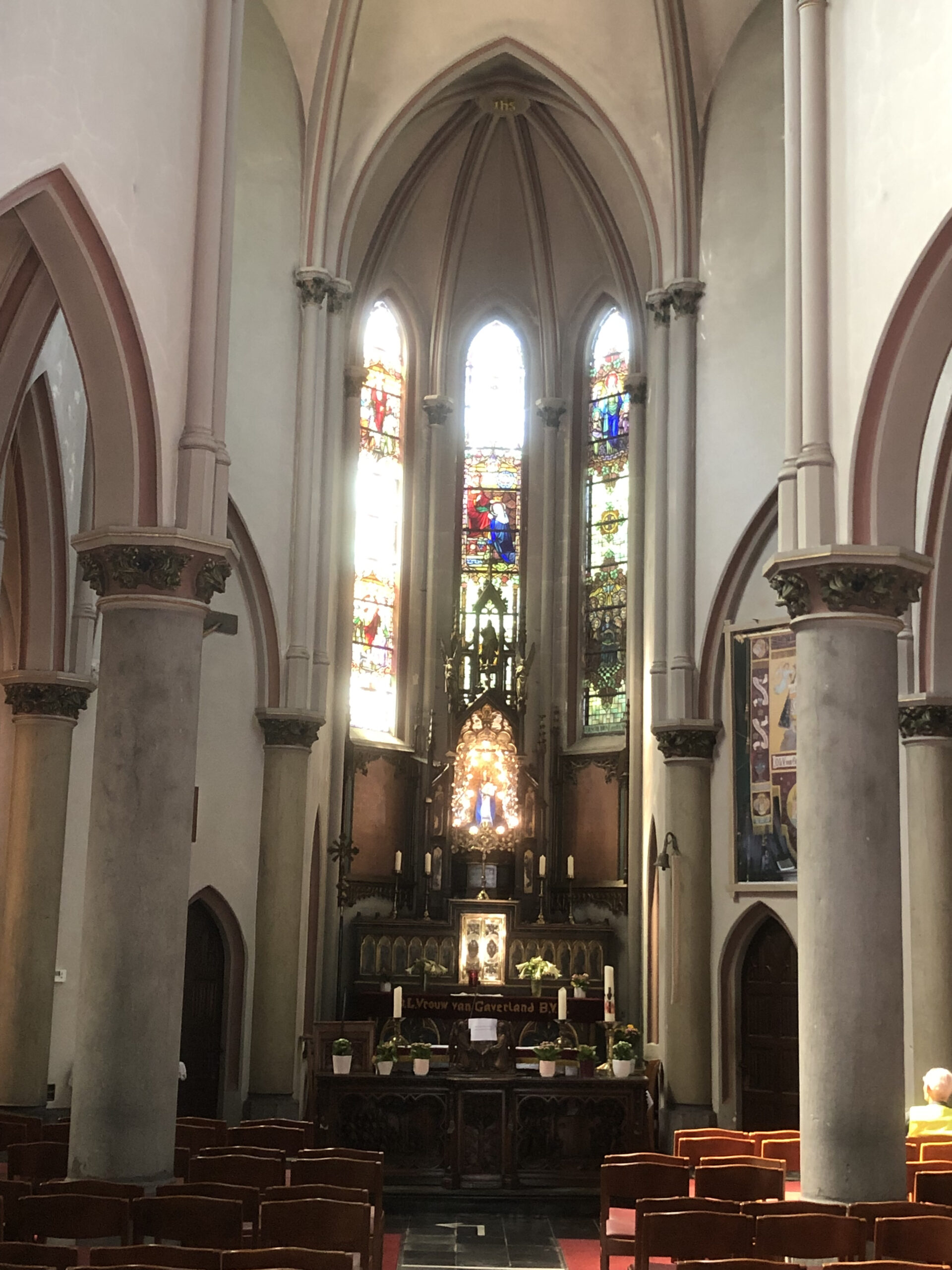
The current chapel was built between 1862 and 1864 in the Neo-Gothic style. The design is by priest-architect Jan August Clarysse (1814-1873) from Roeselare. The building is a three-nave, brick chapel, with an octagonal central structure, which is strongly focused on the centre. Due to the increase in the number of pilgrims, the place of worship was enlarged, and the current building shows a fairly large chapel. The high altar dates from 1887 and was made by Charles van Oemberg (1824-1901) from Brussels. Two side altars, which have unfortunately been destroyed, and the communion rail were crafted by Jean Baptiste van Biesbroeck (1825-1878) from Ghent. The panels of the communion rail depict the pilgrimage of the Spanish general Alexander Farnese (1545-1592), governor-general of the Netherlands (1578-1592), Duke of Parma and Piacenza (1586-1592). This general comes with his entourage to Our Lady of Gaverland. On 2 May 1864, the consecration of the chapel took place, performed by Louis-Joseph Delebecque (1798-1864), Bishop of Ghent (1838-1864). The chapel soon proved to be too small and was enlarged. After the renovation, the chapel was re-consecrated. This happened on 29 June 1871 by Henricus Franciscus Bracq (1804-1888), Bishop of the Diocese of Ghent (1865-1888).
Many pilgrimages, both group and individual, are made to Gaverland. One example dates from 1893. The Brabantsch Nieuwsblad, which included the daily newspapers De Grondwet and De Zoom from Publishers De Grondwet NV, reported on 30 April 1893 that a pilgrimage was being organised from Bergen op Zoom to Gaverland. The article mentioned, among other things: “On Thursday 11 May, the pilgrimage to Gaverland will take place. The Company for the Exploitation of State Railways has, at the request of the Belgian State, agreed to run an extra train from Bergen op Zoom to Antwerp for this purpose. From 6 to 10 May inclusive, at 8 o’clock in the evening, special 3rd class return tickets for Roosendaal-Antwerp will be issued at the price of 80 cents.”
In 1968, a park was laid out with 15 stations. The sculptural groups are made of French sandstone by sculptor Gerard Thienpont (1940).
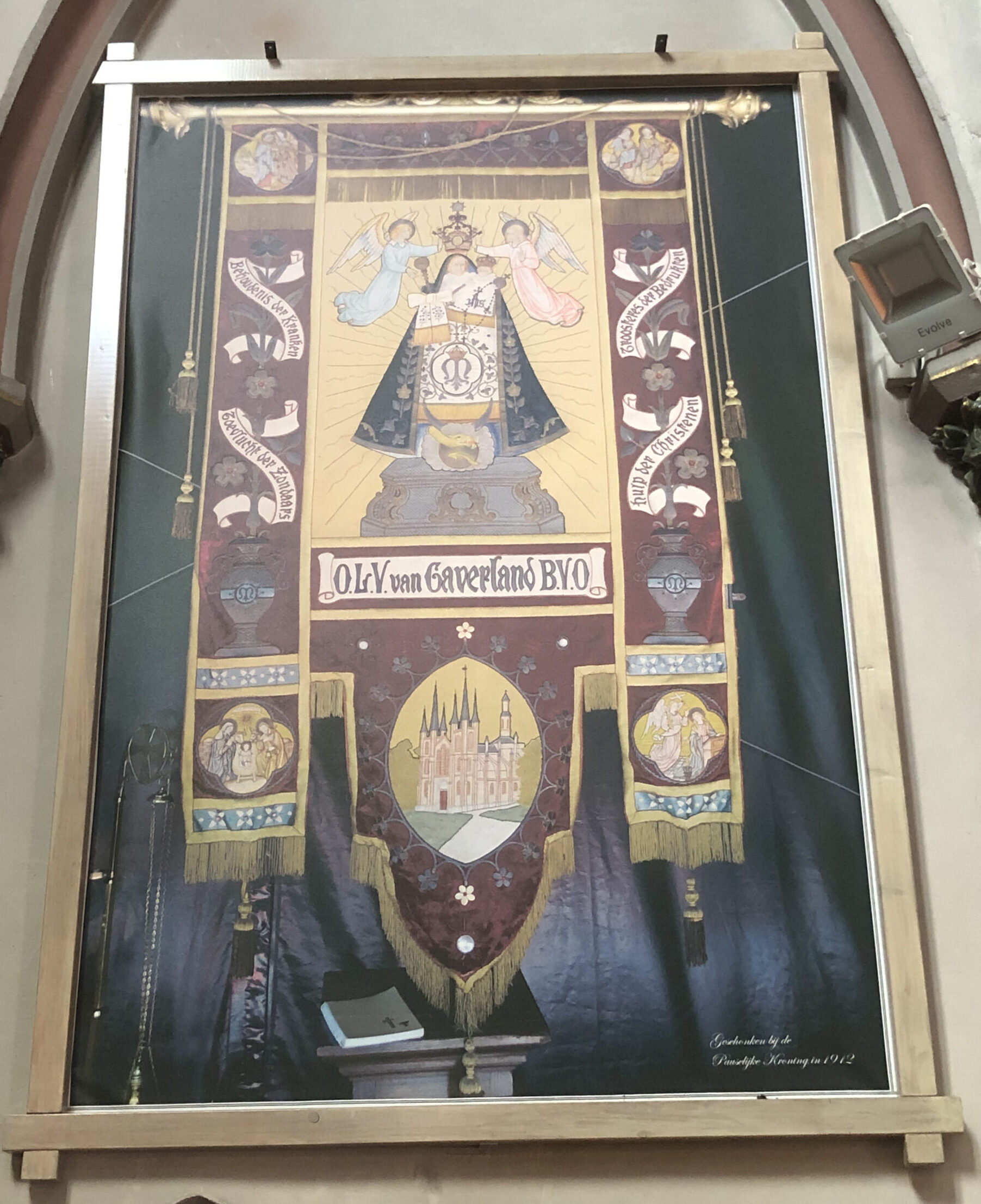
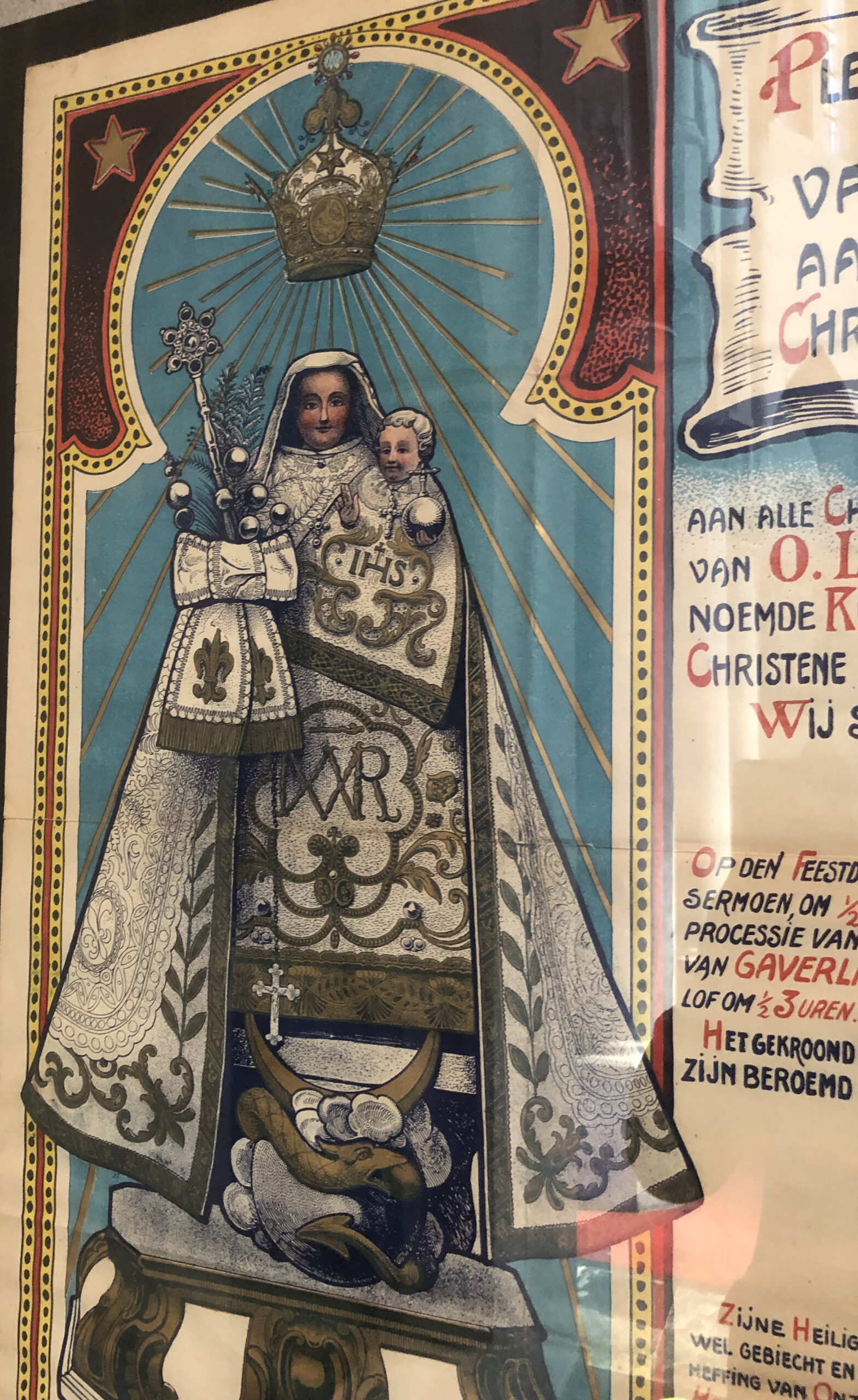
On 4 August 1912, the coronation of the statue takes place. This happens to mark the 400th anniversary of the statue of Our Lady of Gaverland. This is done after authorisation by Pope Pius X, who was born Giuseppe Melchiorre Sarto (1835-1914) and was Pope from 1903 to 1914. The coronation is performed by Bishop Anton Schillemans (1832-1916), who was the 24th Bishop of Ghent from 1890 to 1916. It is a canonical coronation and is granted to a statue of grace. This statue of Our Lady of Gaverland is invoked for all ailments and incurable diseases. For a pilgrimage site, this is the highest recognition. To commemorate the coronation, a banner was made. This banner bears 4 mottos: Salvation of the sick, Refuge of sinners, Comforter of the afflicted, and Help of Christians. The cloth was donated by Frans Xaverius van Goey (1835-1914).
In the chapel stands an organ from 1818, which comes from a Spanish village church in Tarazona. The large musical instrument was installed in 1976 by the Amsterdam organ builder Gerard Albert Cornelis de Graaf (1928-2013).
Since 2003, the chapel and the adjacent house of the chapel keeper have been protected as a monument.
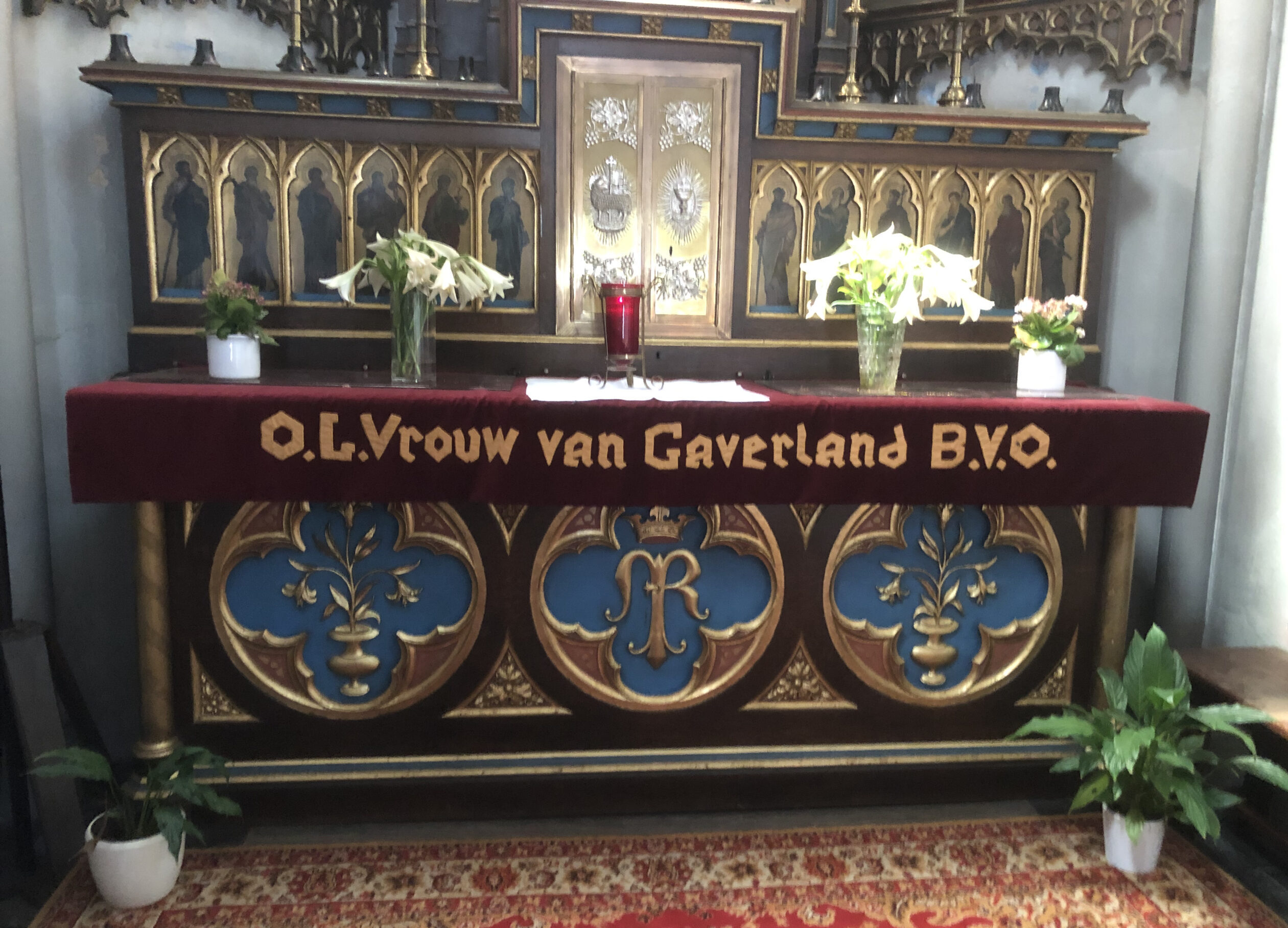
Pilgrimage site
Individual and group pilgrimages take place to Our Lady of Gaverland. This is the pilgrimage site in the Flemish Waasland region.
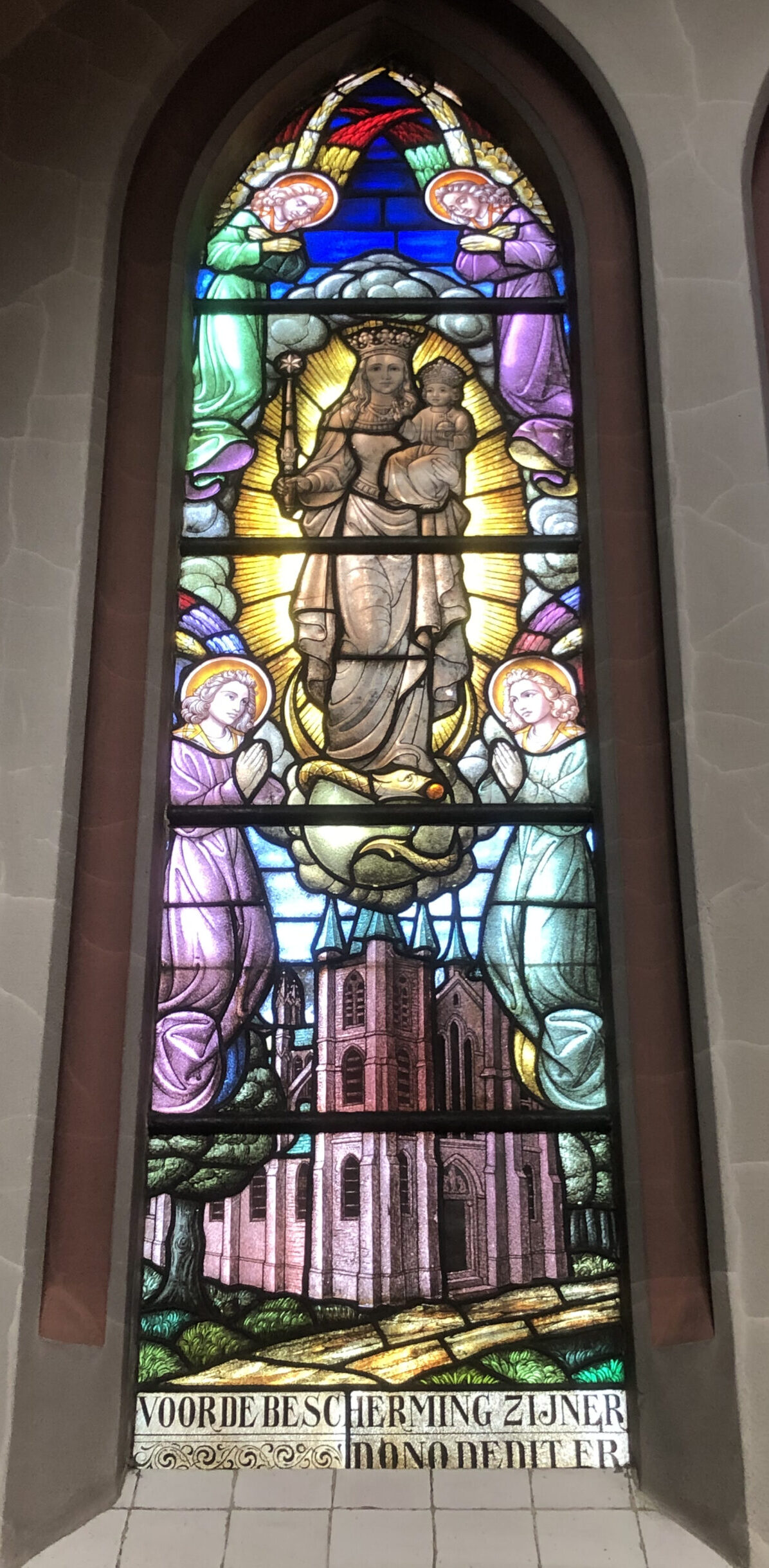
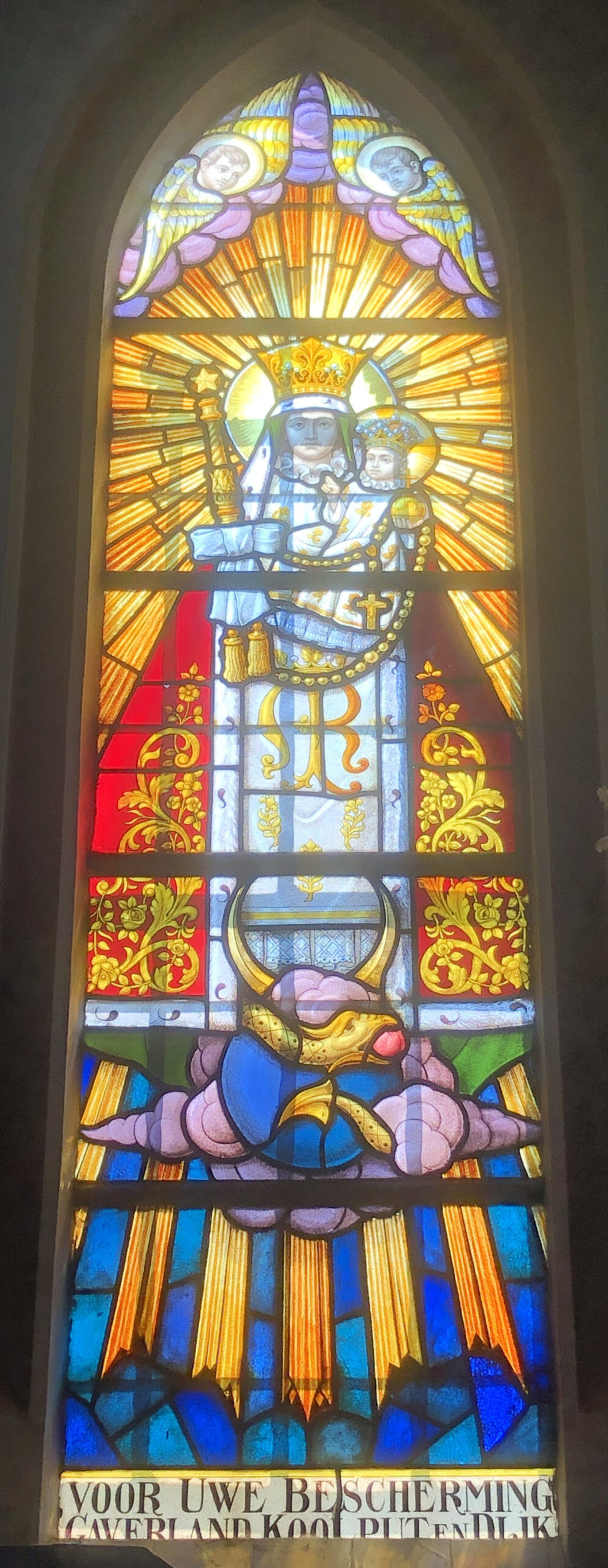
In the chapel, a mural by Father Frans de Bruycker (1916-2007), who signs as “Geroen,” can be seen. The chapel features stained-glass windows depicting colourful representations of Mary.
The striking tower reaches a height of 34 metres.
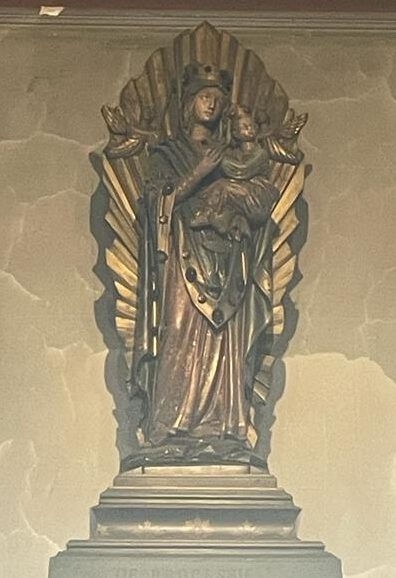
The devotional statue was found in a tree in 1511 and is polychromed. It is 39 cm in size and depicts Mary holding her smiling Child in her left hand. In her right hand, she holds a sceptre. The effigy stands in the chancel of the chapel, above the high altar. Mary's clothing has changed over time and she is often dressed in a mantle from the Spanish period.
The image of Our Lady of Gaverland is invoked for all ailments and incurable diseases.
In the adjacent park with 15 stations, you can experience a Marian procession to see white stone statue groups.
The chapel and park are accessible daily.
ACCESSIBILITY
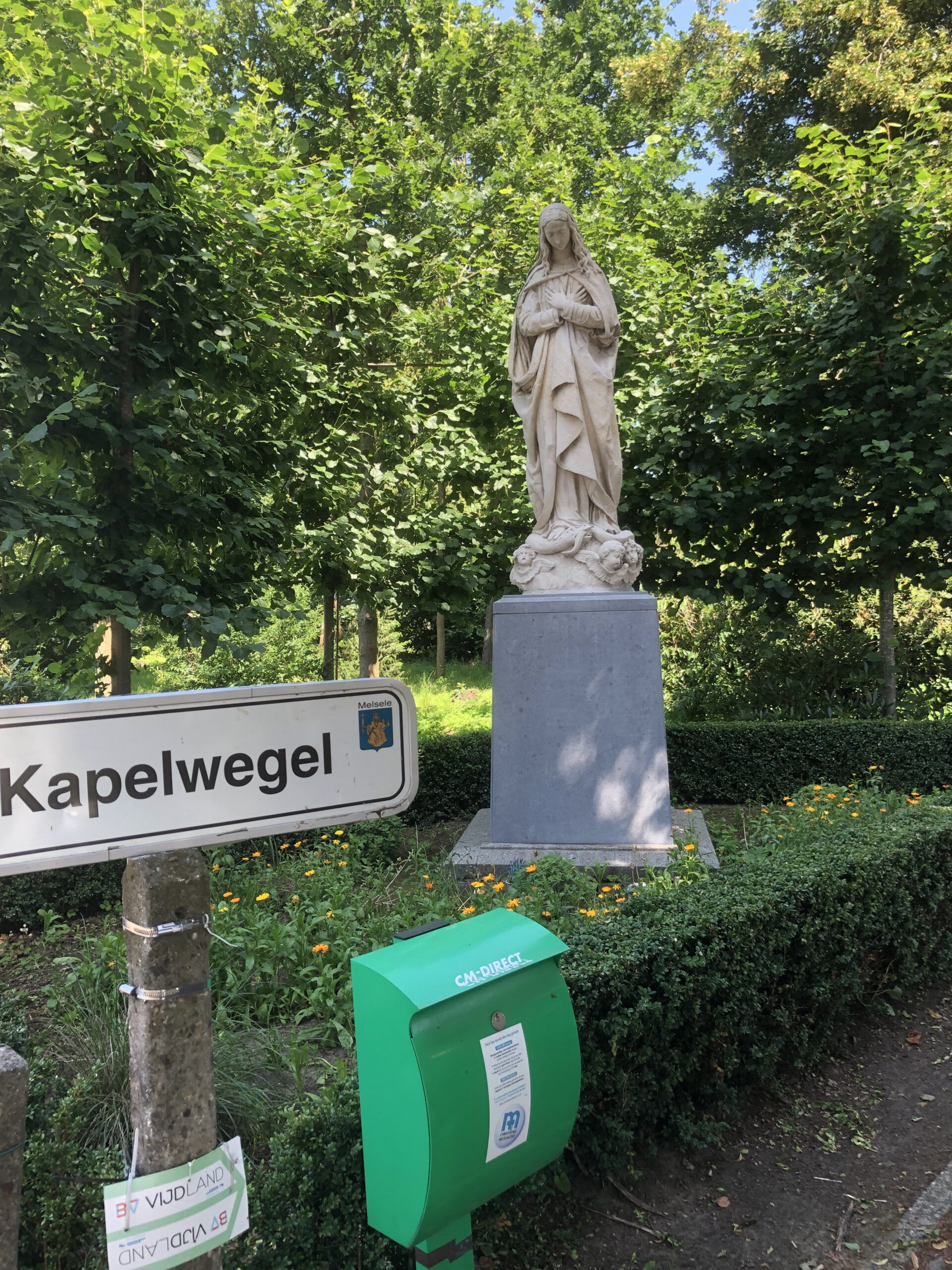
The chapel is located on two streets and therefore has two addresses. One address is Gaverlandstraat 150, B 9120 Melsele (Beveren). The other address of the Chapel of Our Lady of Gaverland is Oude-Beewegstraat 14, B 9120 Melsele (Beveren), close to the border with the southeastern part of Dutch Zeeuws-Vlaanderen, not far from Antwerp and Sint-Niklaas.
Address: Oude-Beewegstraat 14, B9120 Melsele.
Op www.kerknet.be/parish-beveren-zwijndrecht the necessary information can be found.
Experience
A visit to the largest chapel in Belgium…
In the chapel of Our Lady of Gaverland, I experience an oasis for reflection and prayer. I see the polychrome statue of Mary. She holds a smiling baby Jesus on her right arm.
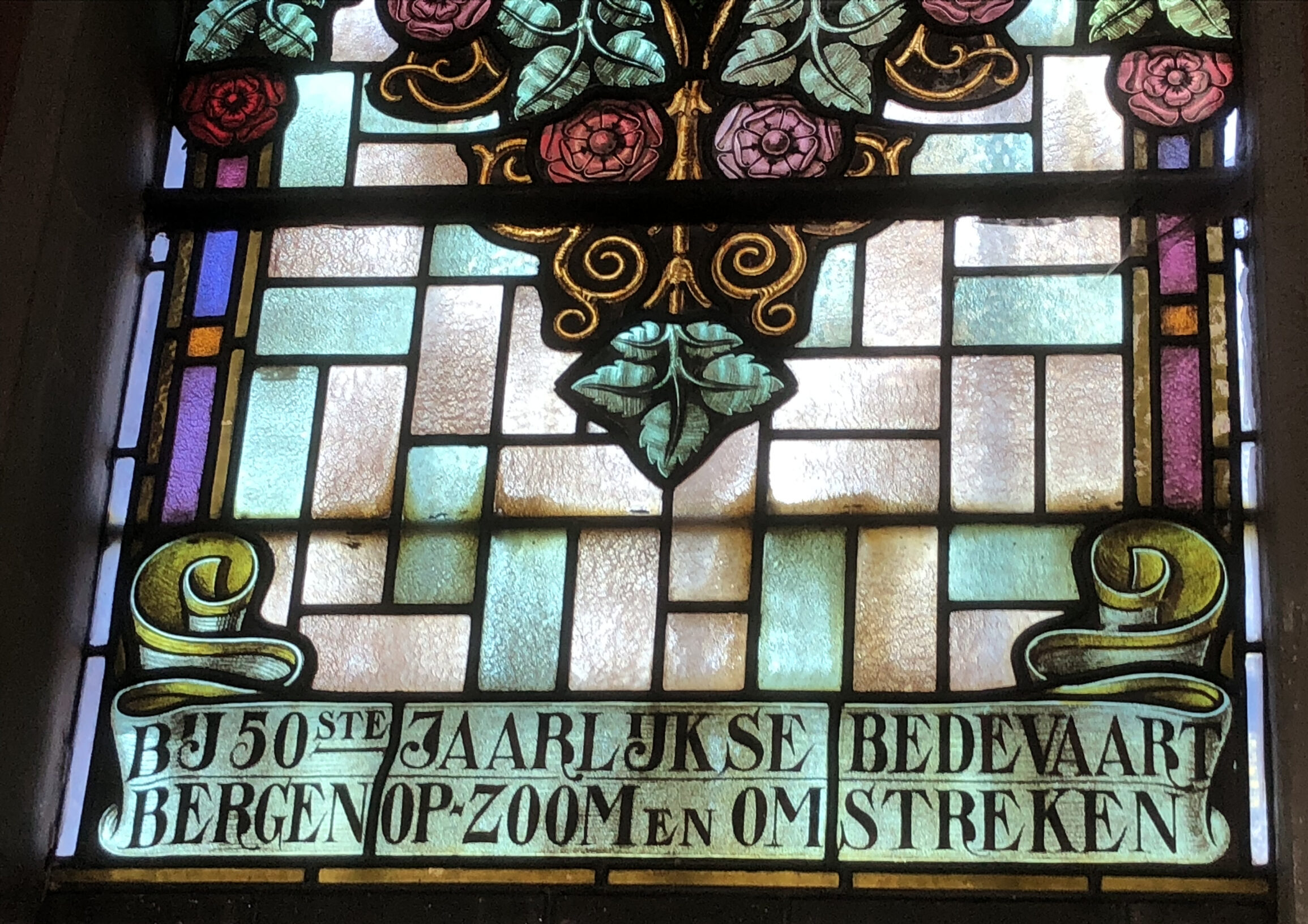
What strikes me are beautiful stained-glass windows. I even see an image that relates to a pilgrimage from my hometown Bergen op Zoom.
After I have made a tour of the chapel, I am told that the statue of Mary possesses a large wardrobe and a rich assortment of silver crowns. However, this statue is not the original, as there is a replica in the chapel. This has been done for protection against theft and damage. I learn that the original statue is kept in a vault of the parish church of Melsele.

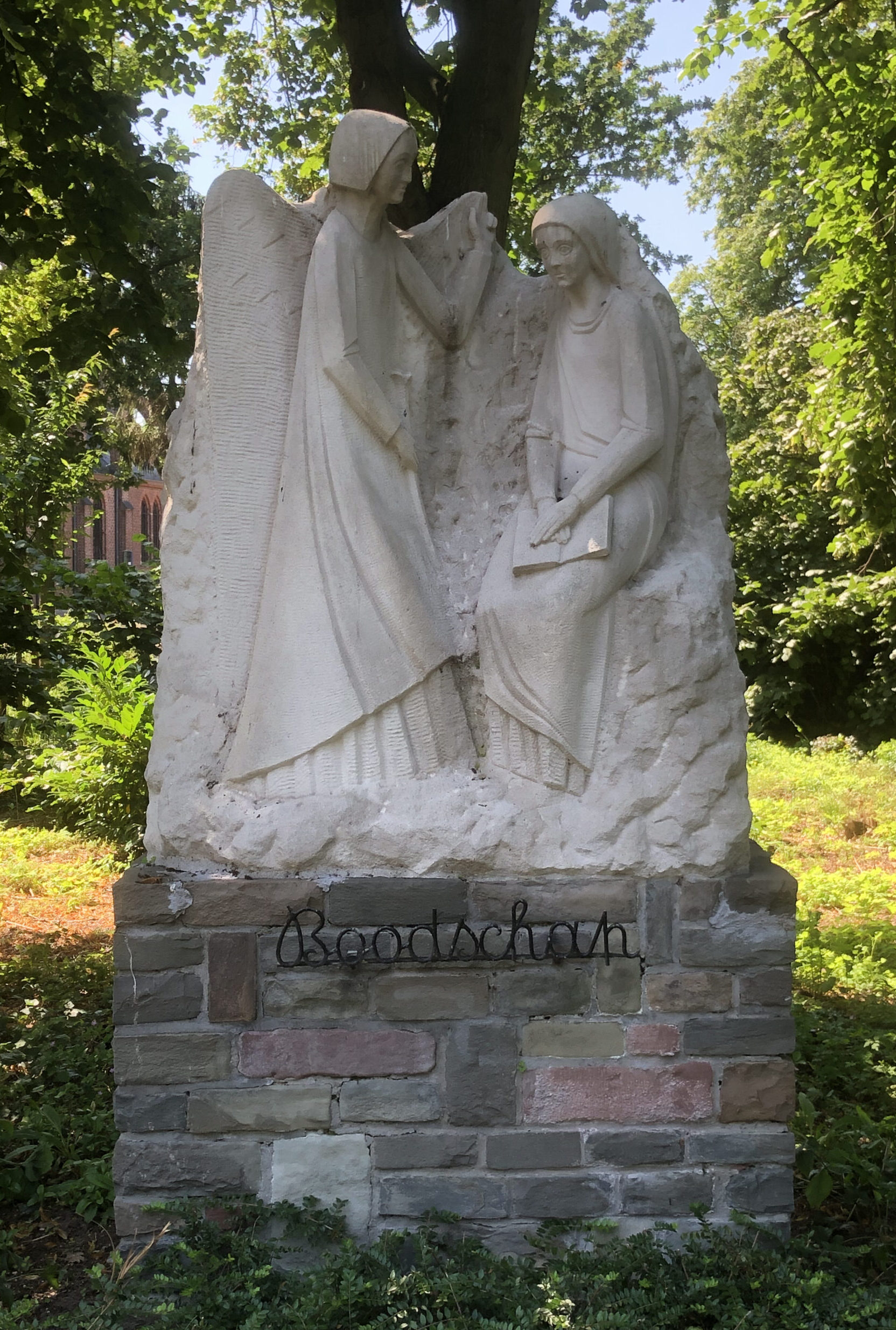
After visiting the church, I'm going to the park to admire the beautiful stations. What craftsmanship! This pilgrimage site is a gem to visit.
Environment
Departing from Sint-Niklaas to arrive at the pilgrimage site of Gaverland means travelling 14 km to the northeast.
From Antwerp to Gaverland involves travelling 16 km to the west.
The distance from Dutch Hulst to Gaverland is 25 km in a southeasterly direction.
Travelling from Bergen op Zoom in Brabant to Gaverland covers a distance of 42 km to the southwest.
~~~

 Nederlands
  English (UK)
  Deutsch
  Français