Hasselt
History
The veneration of Mary in Hasselt has existed for many centuries. In the 13th century, a chapel was built in a hazel wood. Residents of the city of Hasselt are called “Hasselaren,” and this name is derived from the word “hazelaar” (hazel).
A document from 1308 mentions the existence of a fraternity, dedicated to Our Lady, with the aim of helping the poor people in the city. In 1334, a “clerks” chapel" was built by members of the fraternity. Adolf II of the Marck (1288-1344), Prince-Bishop of Liège (1313-1344), gave permission for this. This chapel is located on the Bruges-Cologne trade route. Many pilgrims travel along this road on their way to the great pilgrimage sites in Aachen and Maastricht. The chapel was consecrated in 1357. Miracles have been performed for pilgrims by visiting the chapel. These miraculous healings occur at the statue of Our Lady. This miraculous statue is carried annually in a procession. Processions are first mentioned in 1495.
In the 16th century, religious wars brought an end to the veneration of Mary in Hasselt. In 1645, the procession returned to the streets. In the second half of the 17th century, Pope Alexander VII (1655-1667, Fabio Chigi, 1599-1667) granted indulgences to pilgrims, and numerous devotees came to Hasselt. The statue of Our Lady received the name “Virga Jesse,” meaning branch or twig on the tree of Jesse. During the procession, a song is sung in honour of the Virgin of Jesse. Jesse was the father of King David.
From 1682, the procession no longer takes place annually but once every 7 years. The miraculous image is carried in the procession. The choice of once every 7 years was made because neighbouring towns also hold a procession once every 7 years.
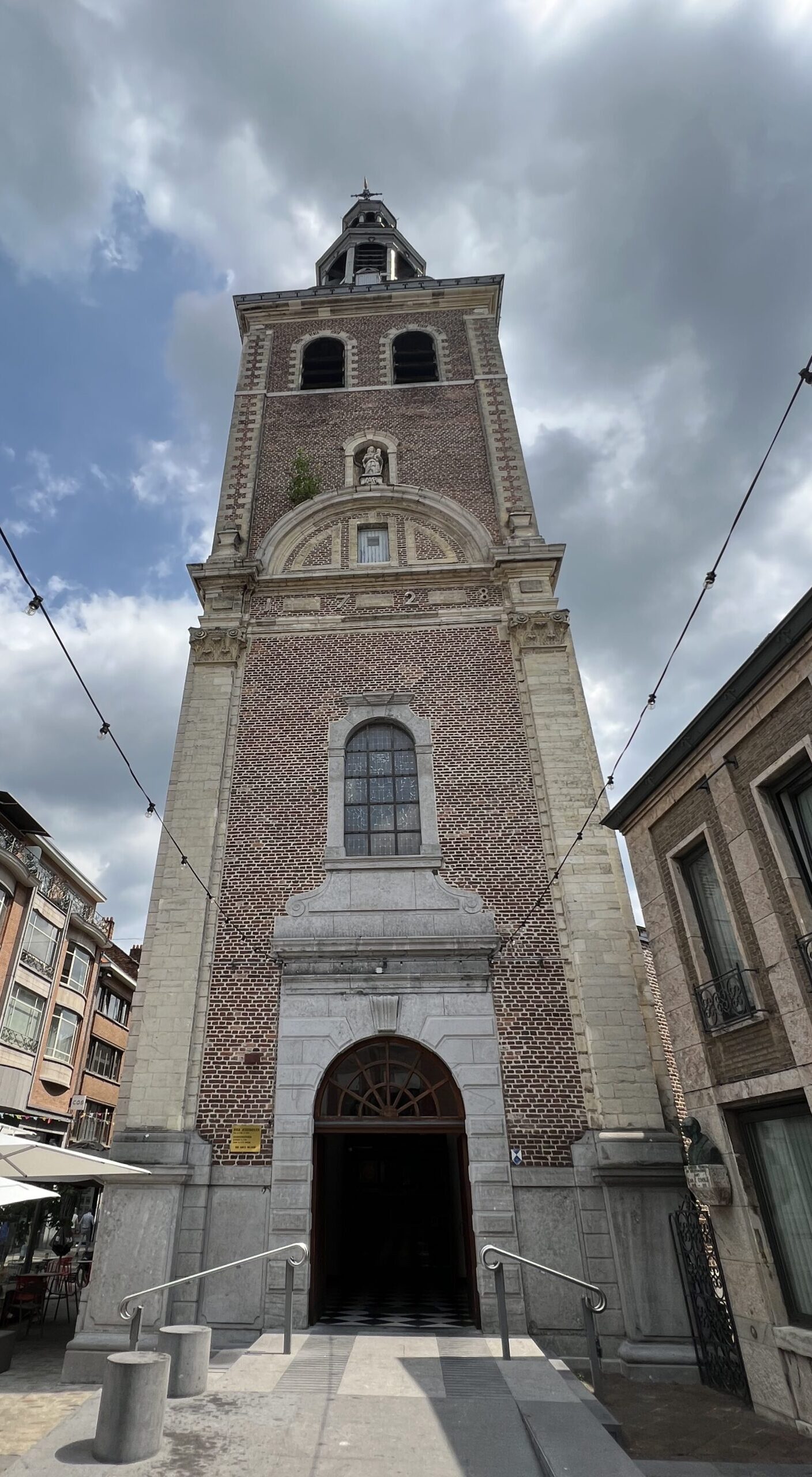
The 14th-century chapel fell into disrepair and was demolished in early 1727. On the same site, the Church of Our Lady Virga Jesse was built between 1727 and 1731. The first stone was laid by the two mayors of Hasselt, Jan Loyens and David Kemps. On 8 September 1731, the new church was consecrated by Jan Baptist (Johannes Baptista) Gillis, the suffragan bishop of Liège from 1729 to 1736.
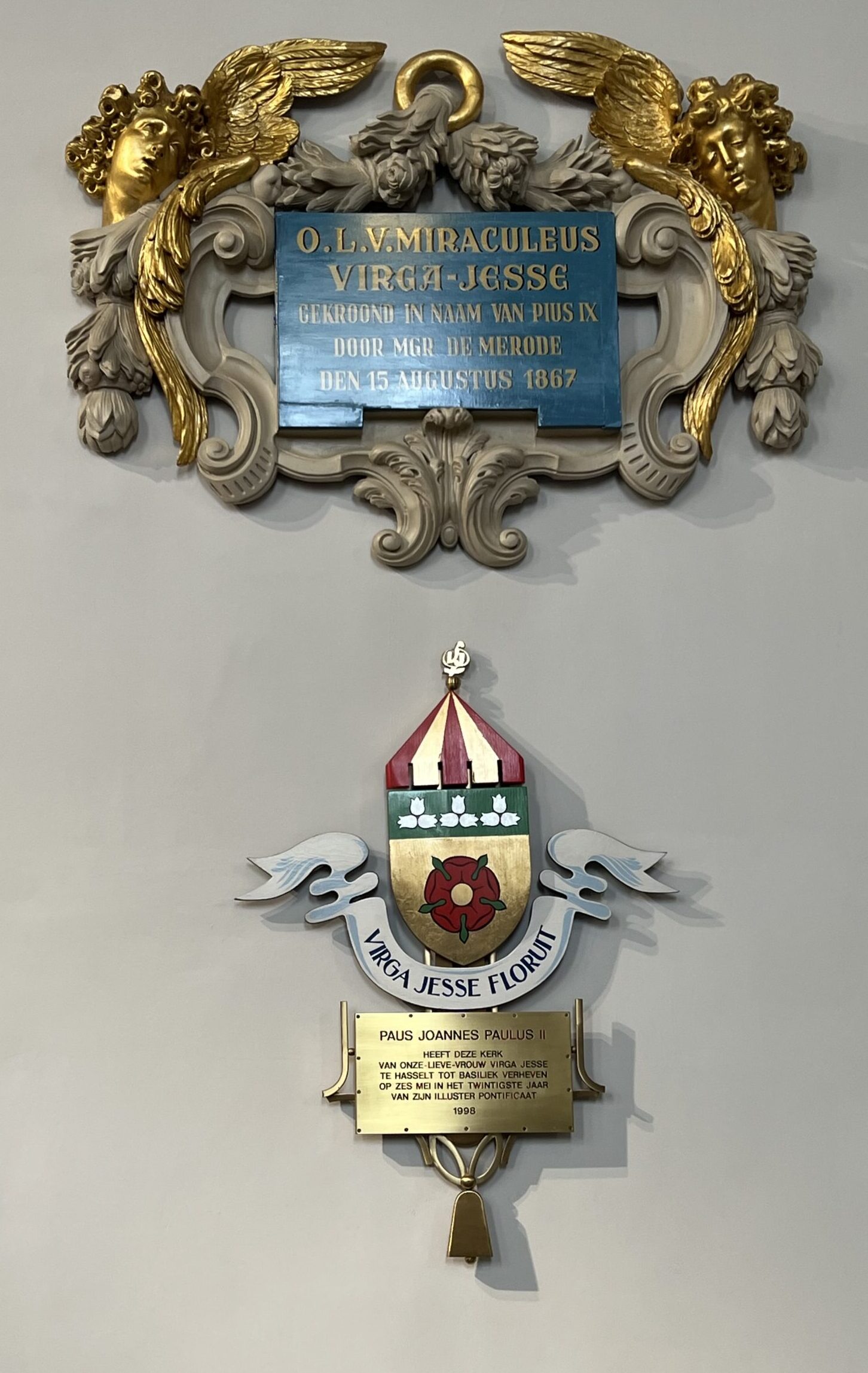
The French Revolution (1789-1799) brings about a ban on processions. In 1798, the statue of Mary is hidden by a member of the brotherhood and thus kept safe. On 30 July 1803, the statue of Mary is back in the church. The furnishings were sold off by the French occupying forces. The Franciscans are responsible for the church organisation and the security of the statue during the period 1846-1899. In 1867, the statue of Mary was crowned in the name of Pius IX, Pope from 1846 to 1878 (Giovanni Maria Mastai-Ferretti, 1792-1878). The coronation was performed by Théodore Alexis Joseph de Montpellier (Mérode) (1807-1879), Bishop of Liège (1852-1879) on 15 August 1867. The memory of the coronation can be seen on the wall of the basilica. The golden crowns are a gift from the people of Hasselt.
During the Second World War (1940-1945), the church was heavily damaged and later rebuilt.
On 6 May 1998, the church was elevated to the status of a basilica. John Paul II, Pope from 1978 to 2005 (Karol Józef Wojtyla, 1920-2005) granted the church its elevation to a basilica. A memento has been affixed to the wall of the basilica.
Pilgrimage site
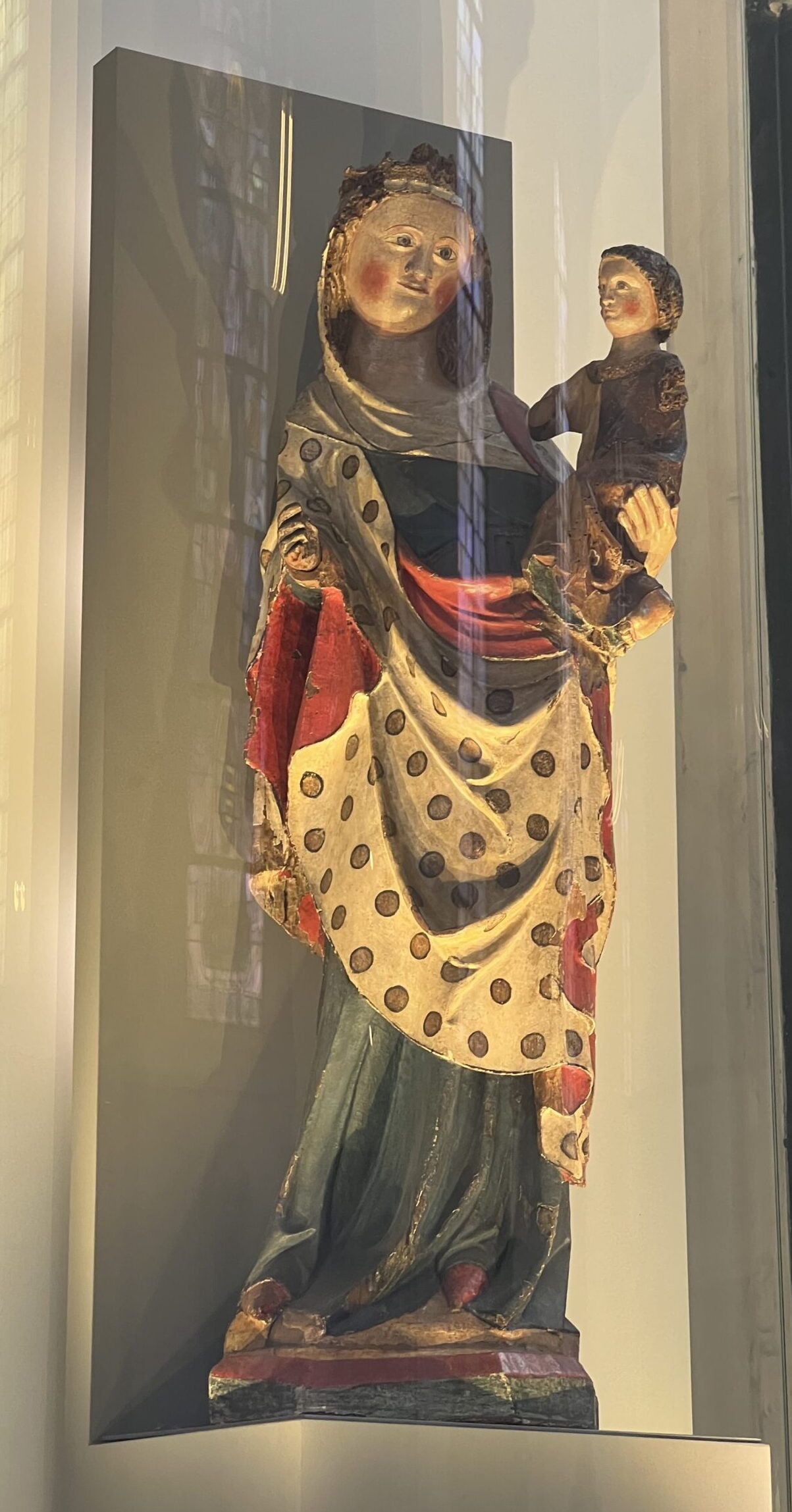
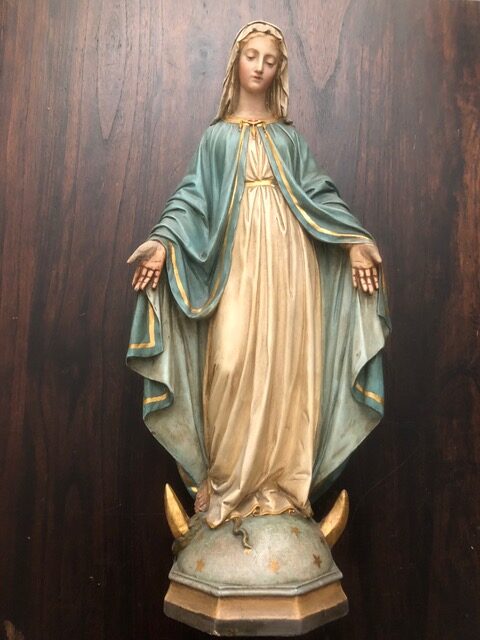
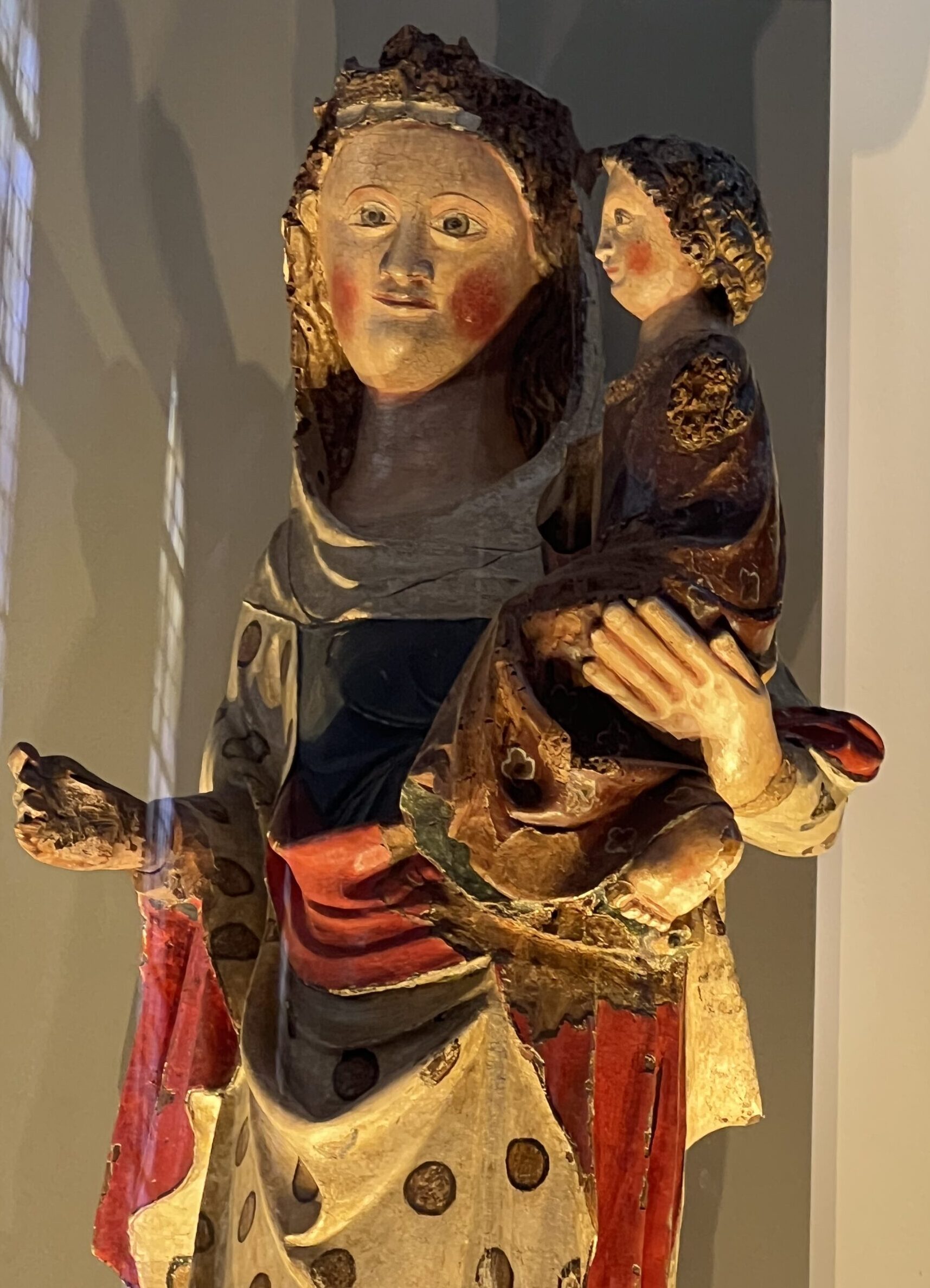
The Our Lady of the Lily statue, Virga Jesse, stands behind a transparent protection at the white and black marble high altar. The statue is 1 metre high, carved from a single piece of oak, and dates from the first quarter of the 14th century. Mary holds Jesus in her arms and both are crowned. Mary's head is turned slightly to the left. She wears a white veil over a blue dress and has a voluminous mantle. The Liège sculptor Jean Delcour (1627-1707) created the high altar, which comes from the Cistercian Abbey of Herkenrode. Many prayers are offered at the statue of Mary, and many candles burn before Our Lady.
Hymn in honour of the Virgin of Jesse:
“The Tree of Jesse has grown,
A Virgin sprung from King David
has brought forth the Son of God into the world,
the peace that has been brought
and has reconciled the Earth and the heavens.”
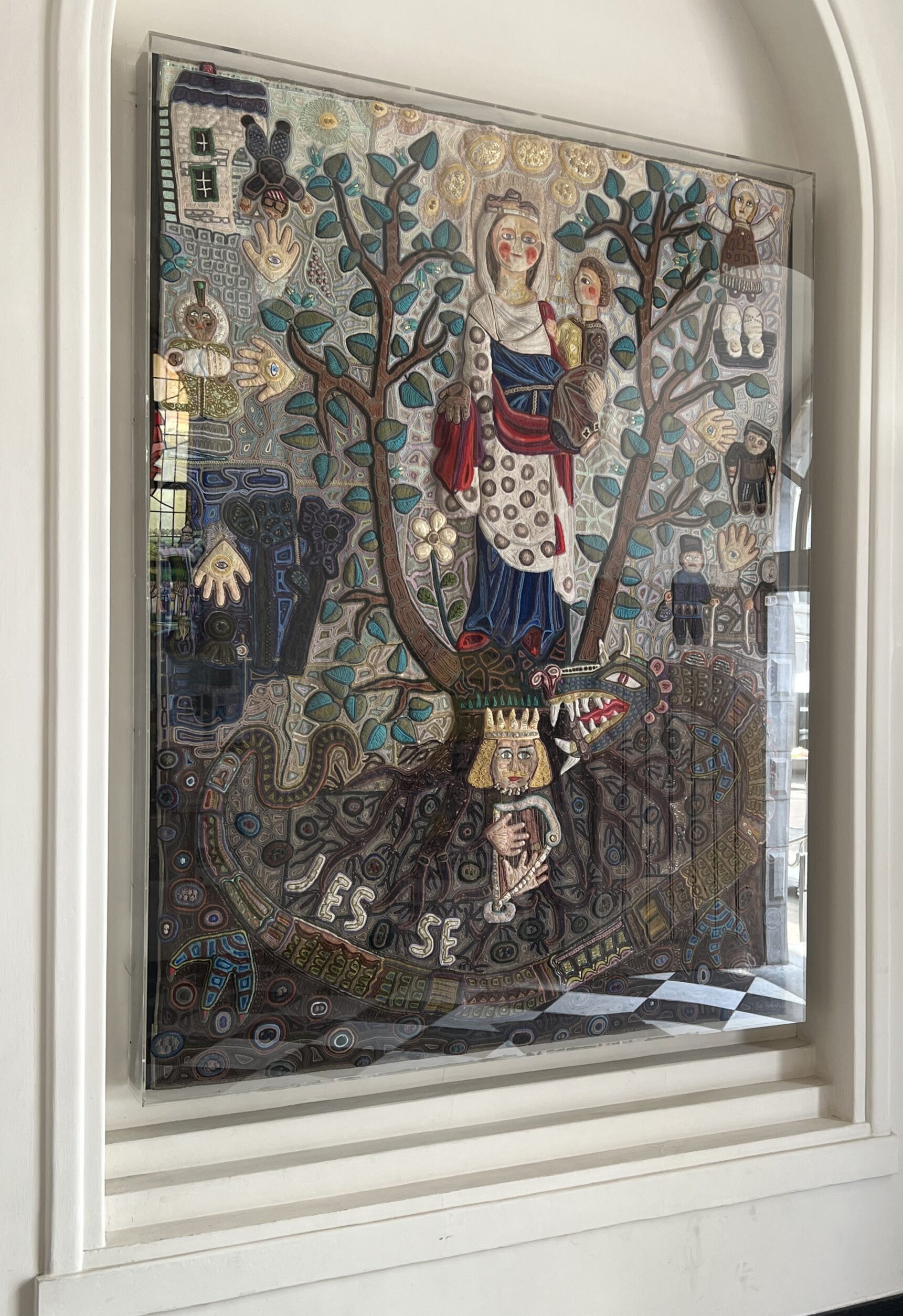
Every seventh year, when the procession takes place, the tree-huggers give a gift to their Virga Jesse. In 1989, artist Simone (Maria Germaine) Reynders (1924-2016) was commissioned to create a tapestry. The tapestry, measuring 230 cm by 180 cm, depicts Virga Jesse at the crown of the Jesse tree, and Mary is surrounded by miracles. The tapestry hangs in the narthex of the basilica.
The seven-yearly procession takes place on the 2nd, 3rd, and 4th Sundays of August. During this period, there are many activities in Hasselt.
The basilica is open every day.
ACCESSIBILITY
Address of the Virga Jesse Basilica: Kapelstraat 14, 3500 Hasselt. The basilica is located in the centre of the city.
Current information can be found at www.kerknet.be/organisatie/pastorale-eenheid-virga-jesse-hasselt and you can also read news there about the Virga-Jessefeesten, which are held every 7 years.
Experience
When I stand in front of the basilica and look up, I notice the high facade. What an impressive building in the centre of the city. Upon entering, I see a large, colourful tapestry depicting Virga Jesse. Now that's what I call a welcome.
Virga Jesse is the patron saint of the city of Hasselt. The statue stands at the front of the basilica by the main altar. I see Mary and the baby Jesus and both have rosy cheeks. This is a moment to pause, to admire the effigy, and then it's time for a few Hail Marys.
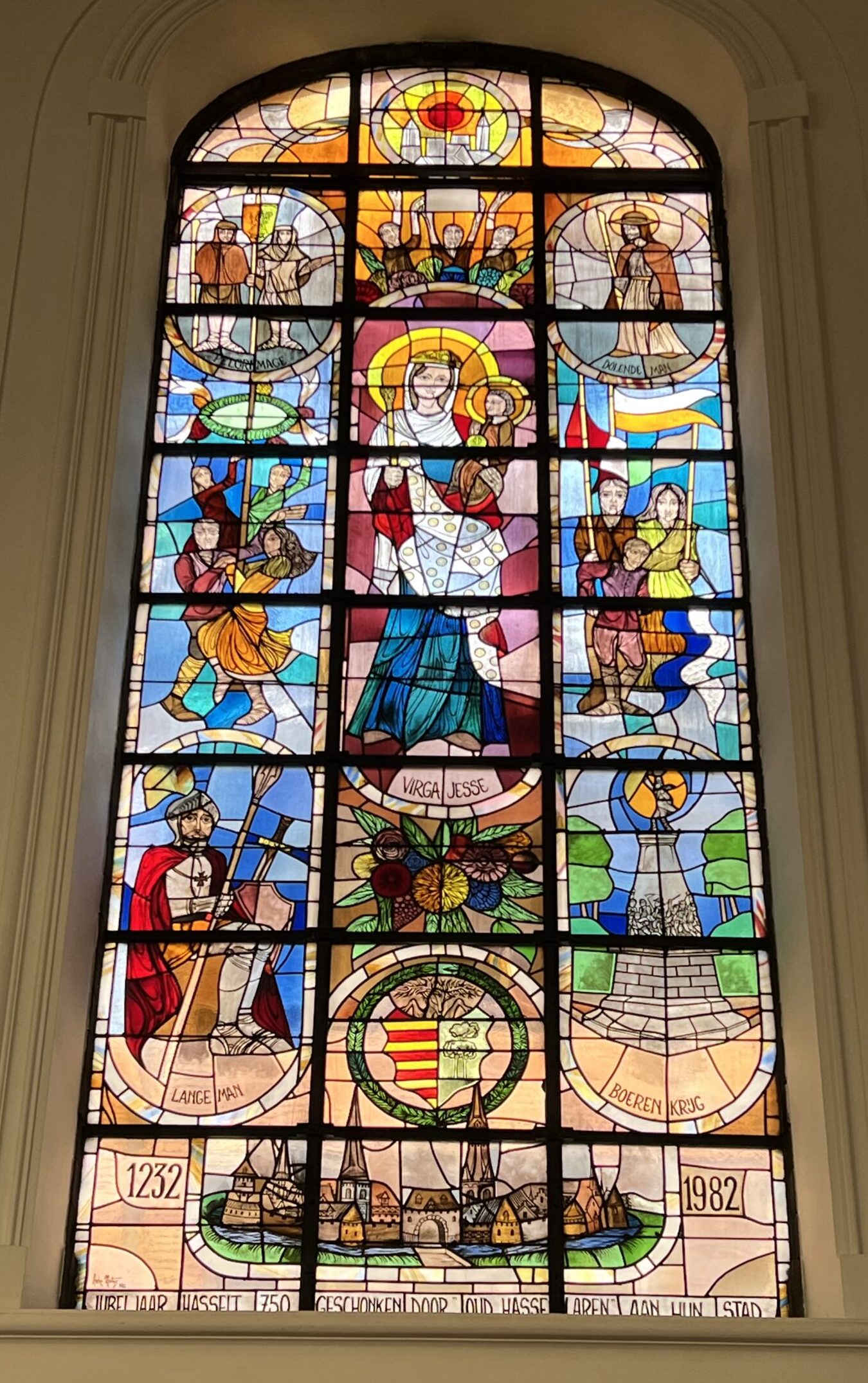
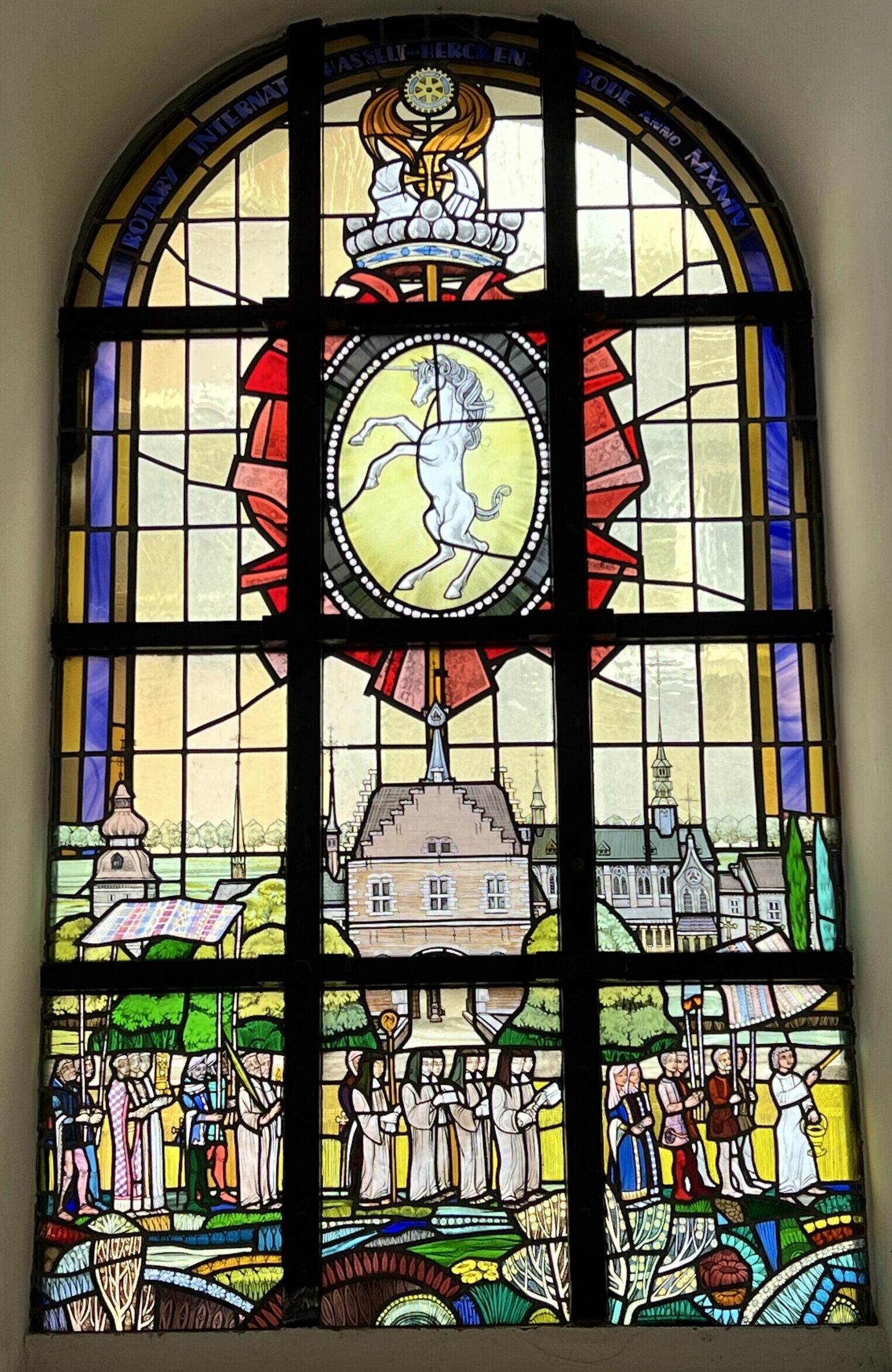
The stained-glass windows are beautiful, depicting, among other things, Virga Jesse and a procession. What a splendour of colours! It is so lovely to see. Next to the window with the image of Virga Jesse, I see the years 1232 and 1982. The artwork symbolises the 750th anniversary.
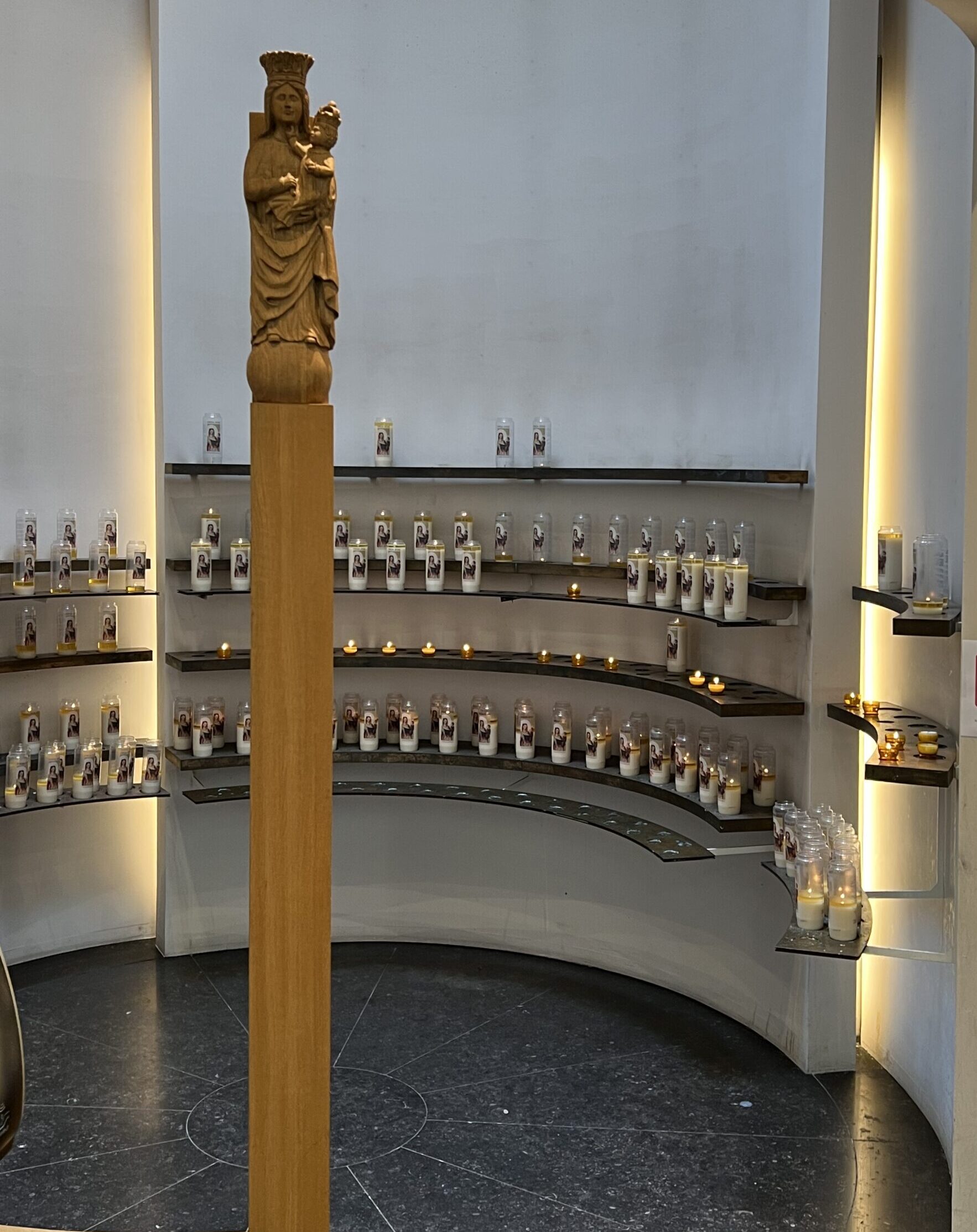
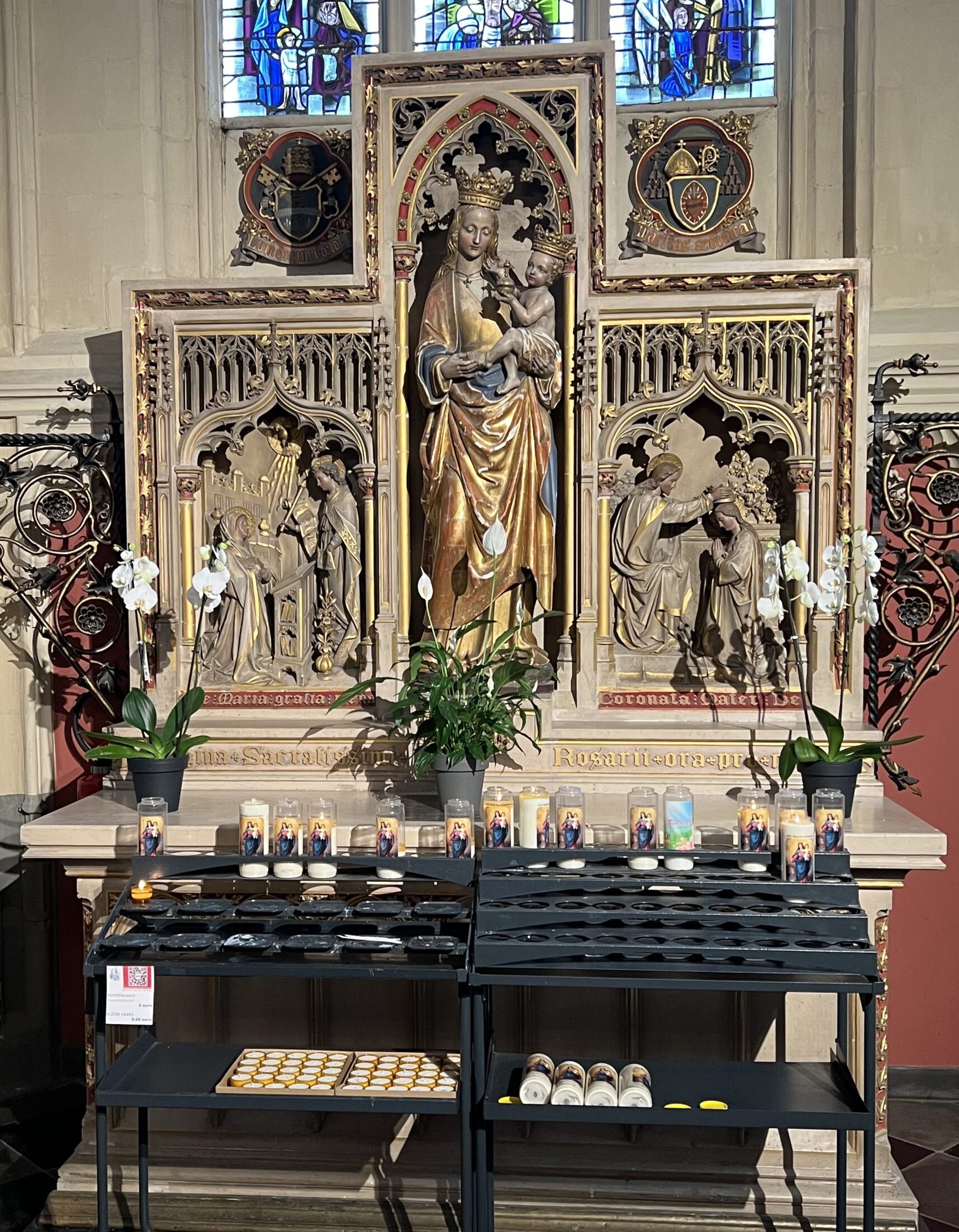
Next to the image of Virga Jesse is a chapel of candles. Upon entering, there is a statue of Mary with Child on a pillar. Many candles are burning, and a few more are being added. Along with this, I have intentions for good friends who want to take some steps in the right direction with their health.
To conclude, I take another stroll around the basilica. On a table, I see a prayer card. I read the text and I am deeply moved by it. The words touch me, such as “Mary, make us grateful and happy for the gift of each day.” I then take a seat and let the beauty of the basilica wash over me. The history of the basilica comes to mind, and I think of the centuries that the statue of Mary has held a prominent place in this city. What a magnificent building this is!
In Hasselt, I also visit the Sint-Quintinus Cathedral, which is located in the centre. The church was built over many years, from the 11th to the 19th century, and as a result, various architectural styles can be seen.
Saint Quentin (died circa 287 AD) is the patron saint of the cathedral and he was the son of a Roman senator. Quentin converted to Christianity and travelled as a missionary to various places including Gaul, leading many to his faith. He was captured, tortured, and beheaded. He died in the place where the French town of Saint-Quentin later arose. What a history!
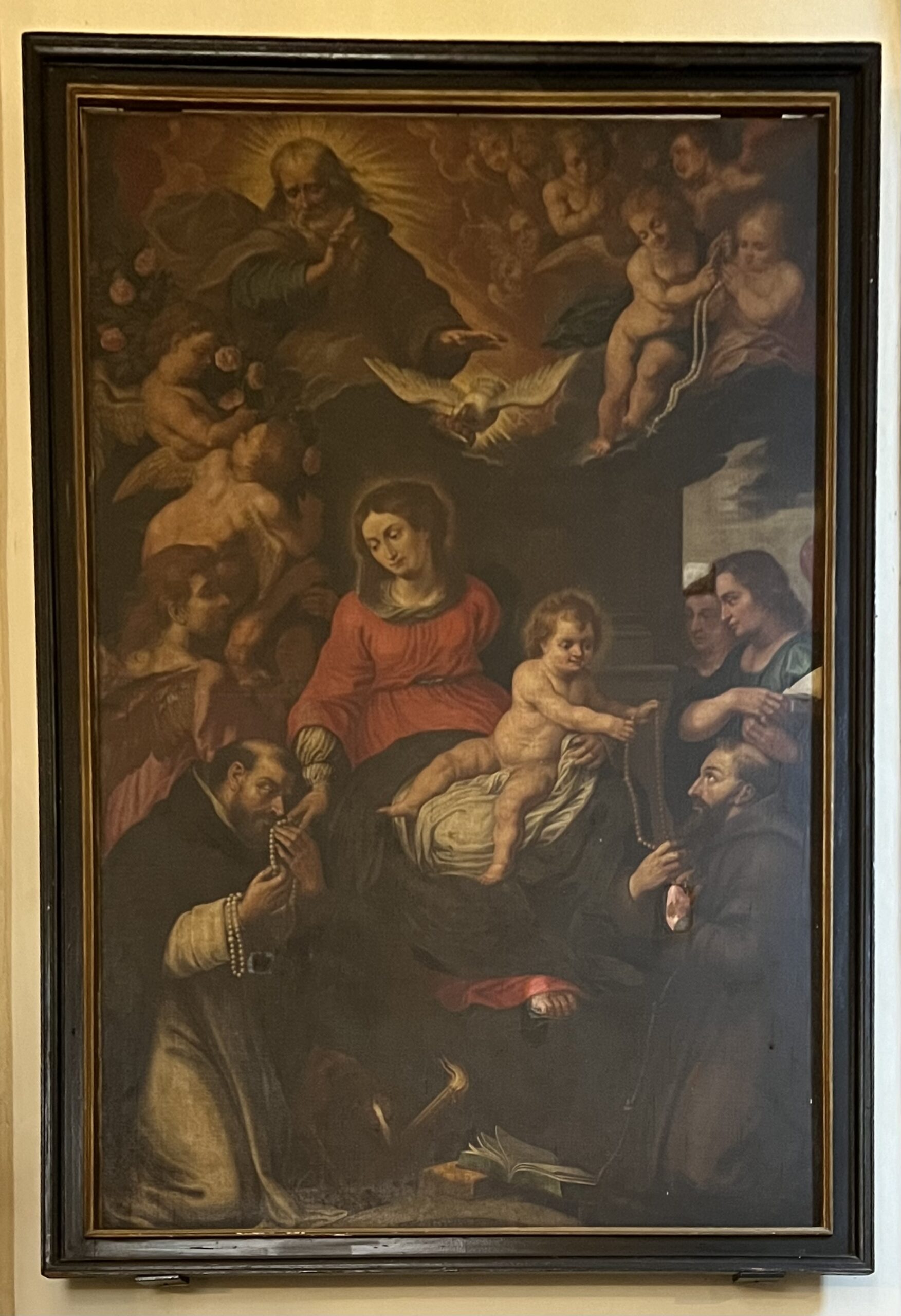
In the cathedral, beautiful images of Our Lady can be seen, including a 17th-century Baroque painting, depicting Mary handing the rosary to Dominic and Simon Stock.
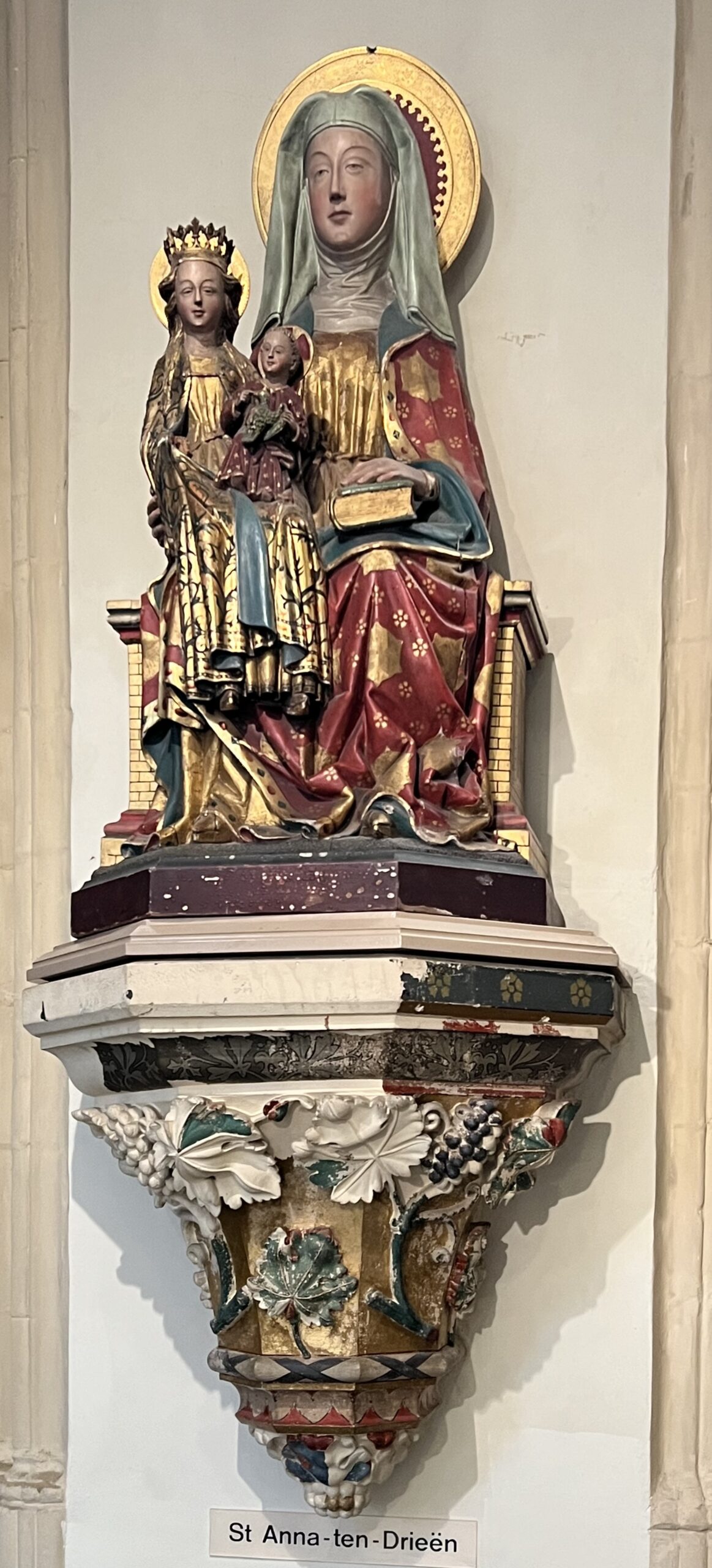
In the Chapel of Saint Anne stands a sculptural group of Saint Anne-in-threes, dating from around 1500, beneath a stained-glass window. Anne sits on a throne and wears a headscarf. On her right knee sits the crowned Mary, who holds the infant Jesus on her lap.
The cathedral also boasts magnificent stained-glass windows to admire. What expressions of art in this cathedral!
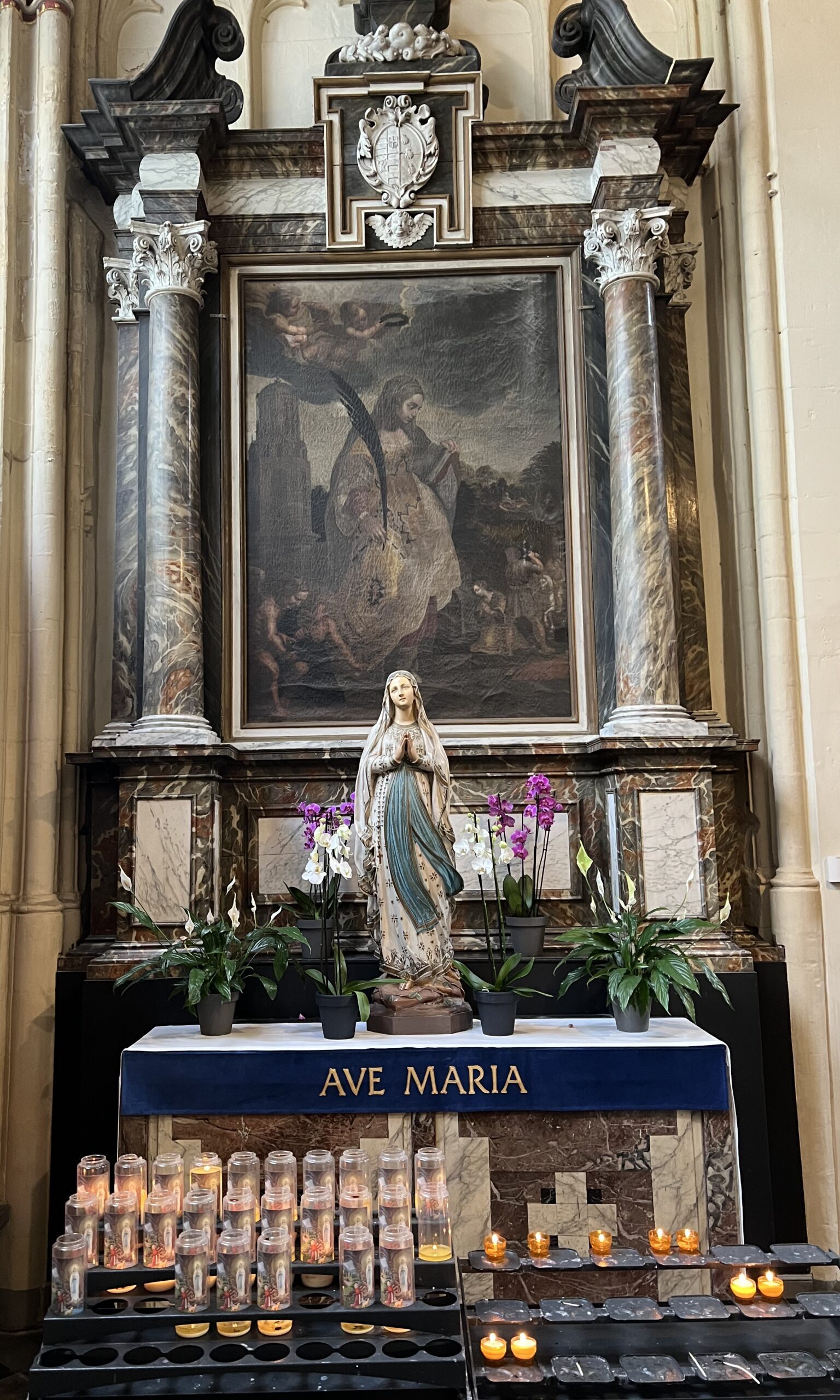
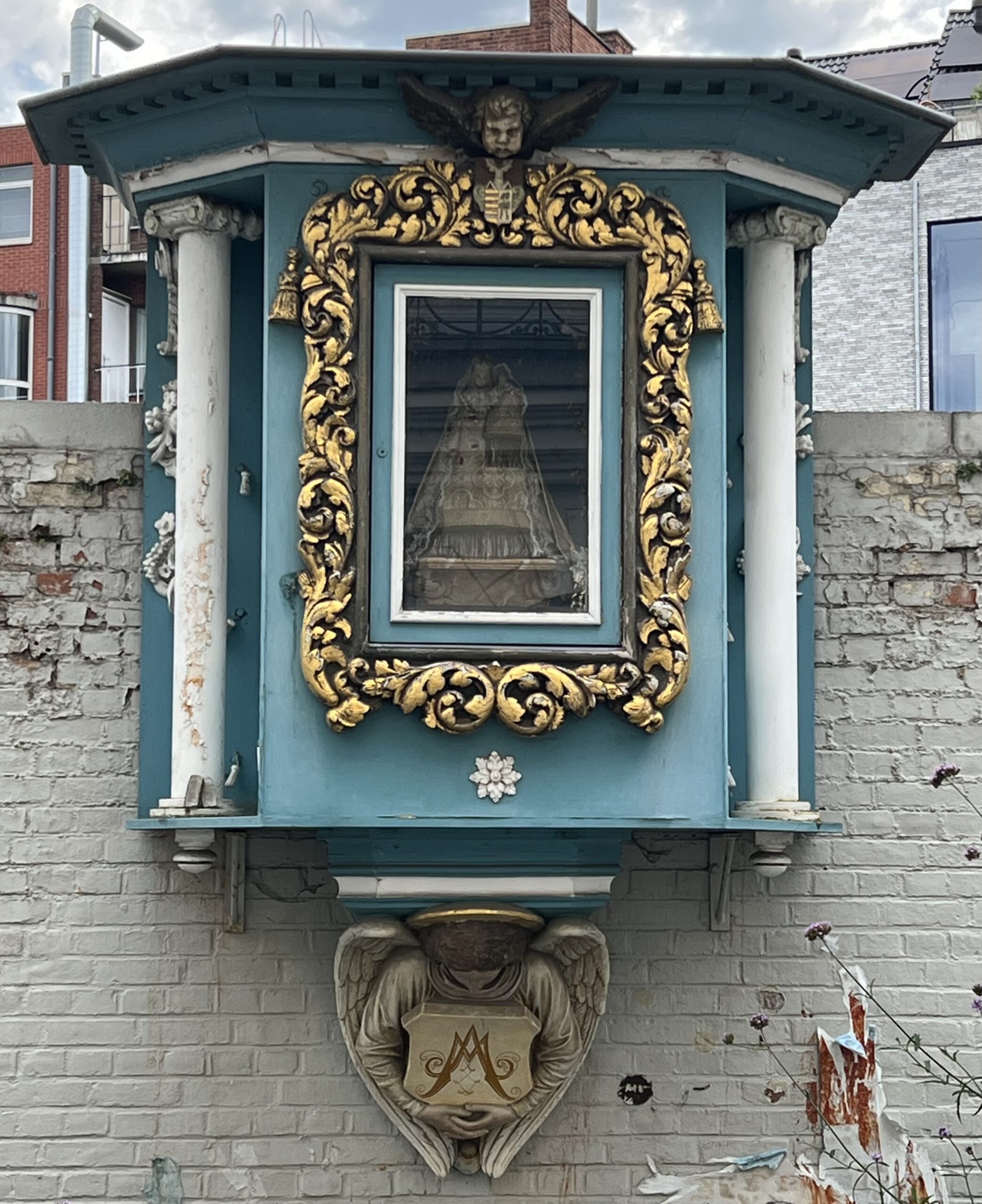
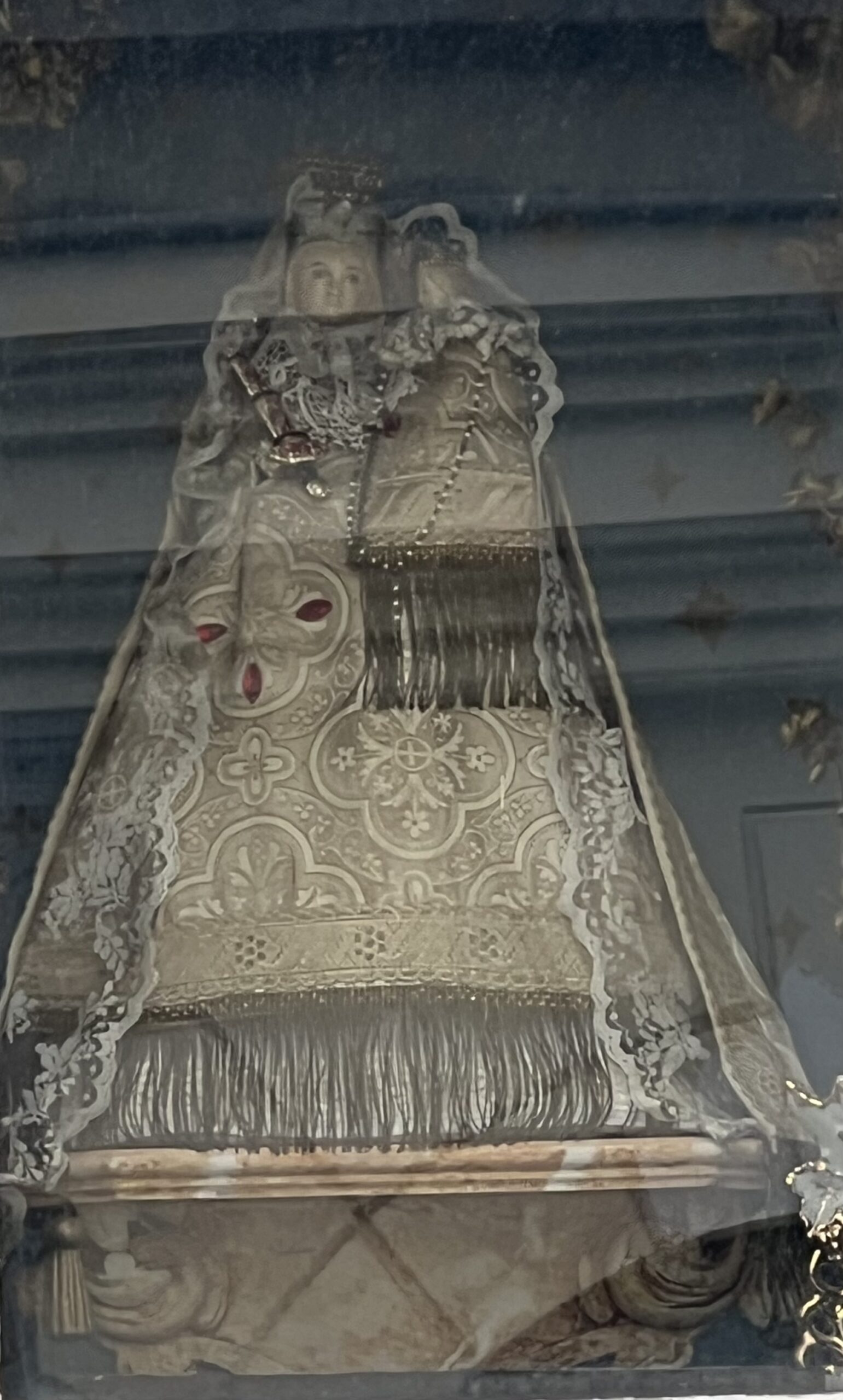
In the centre of Hasselt, Mary is depicted on many buildings and walls. How alive Our Lady is in this city!
Environment
In Hasselt, there is more to see than the basilica and the cathedral, such as a charming centre with many monumental buildings and museums.
Hasselt is located 78 km from Antwerp, 75 km from Aachen, 48 km from Maaseik, 44 km from Maastricht and 17 km from Genk.
In the Hasselt region, numerous cycling tours and walks can be made.
Posted: 5 July 2023
Last Modified: 12 November 2024
~~~

 Nederlands
  English (UK)
  Deutsch
  Français