Heppeneert
History

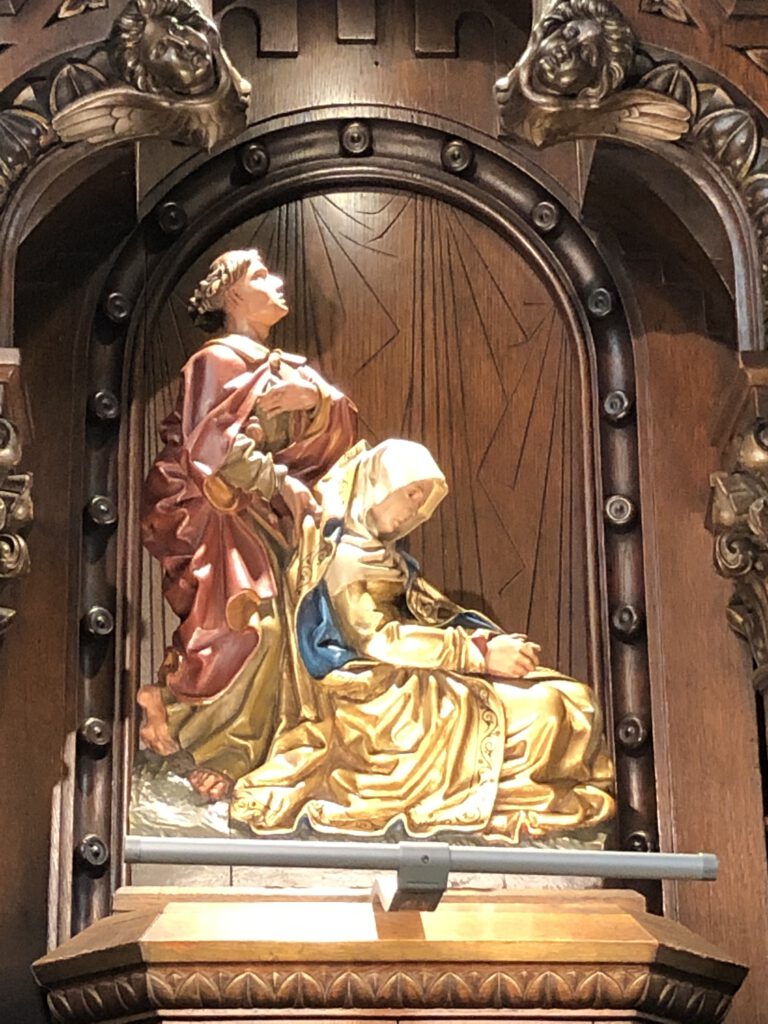
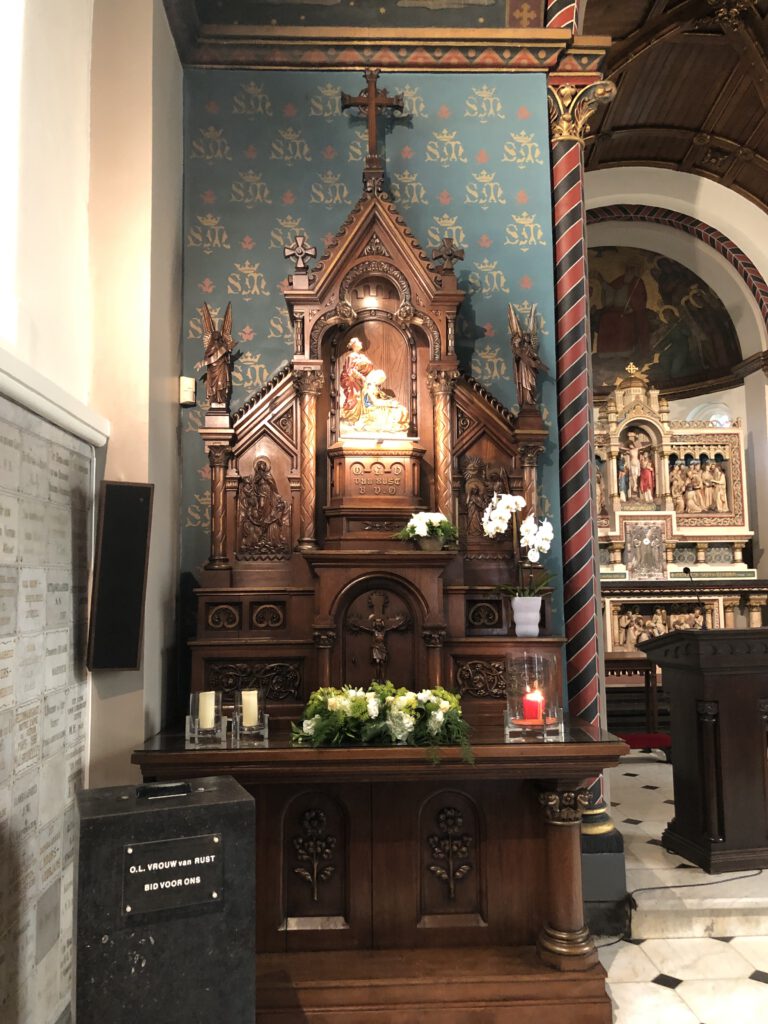
In Heppeneert, Limburg, Our Lady of Rest is venerated. The image of Our Lady of Rest is located in the church, dedicated to Saint Gertrude, which was built in 1873. The statuette depicts Mary in a resting posture. She is seated at the foot of a cross, her head slightly bowed and looking downwards, her hands folded and resting on her lap. The man behind her is presumed to be the apostle John. He adopts a protective pose, looking up at the cross. The fact that this man could be John is based on the presence of Jesus, Mary, and John together under the Cross on Good Friday. Jesus says to his Mother: “Behold your Son,” and to John: “Behold your Mother.”.
As early as 1202, mention is made of a little church in Heppeneert dedicated to Saint Gertrude. Since 1567, services in the church have been provided by priests from the Crosier Monastery of Maaseik. Crosiers are buried around the little church.
The history of the statue of Mary dates back centuries. A 14th-century legend tells that the small statue washed ashore on a sand dune near the nearby village of Elen. This happened during a flood of the River Maas. Afterwards, a chapel was built at the discovery site and the small effigy was placed inside. The chapel is dedicated to Our Lady of Rest. The discovery of the statue and the chapel led to the veneration of Mary. This chapel stands on the land of a tenanted farm. The owner of the farm was Petrus Curingen, a resident of Maastricht. In 1706, he sold the tenanted farm and its associated lands to the Crozier Fathers of Maaseik. These Crozier Fathers worked to give the chapel more publicity, which led to an increase in the number of pilgrims. Over the years, the place of grace received more and more visitors. Pilgrims came to pray to Mary, ask for Her help, and receive comfort from Her. Many skippers came to pray before the statue for a safe voyage. The Virgin Mary answered many prayers, and this led to an even greater stream of pilgrims to the chapel. Consequently, the chapel became too small.
In 1767-1768, a new, larger chapel was built. This was under the leadership of Prior Johannes Hendrik Vossen, the abbot of the Crozier Fathers of Maaseik. The chapel was built in the Neo-Romanesque style.
During the French Revolution (1789-1799), the region around the Meuse was very unsettled. In 1798, the monks were driven out. They lost their possessions to the French overlords. Some of their goods were forfeited, confiscated by the French, and some were sold. The chapel was destroyed by the French, but the statue of Mary remained beyond the reach of the destructive armies from France. During this turbulent period, Canons Regular Petrus Arnold Coopmans played an important role. As the parish priest of Heppeneert, he remained behind. He brought the statue to Heppeneert, where it was kept safe until the French departed and free life resumed. In 1801, after the French occupation, Parish Priest Coopmans placed the statue of Our Lady of Peace in the Saint Gertrude Church in Heppeneert.
It then takes nearly 100 years for devotion to the statue of Mary to resume. Especially through the efforts of Aloysius Froyen (1848-1907), who was parish priest in Heppeneert from 1883 to 1907, the pilgrimage is revived. This happens in 1883 and from that year onwards, Mary is venerated in Heppeneert as Our Lady of Peace. Parish priest Froyen also organises the establishment of the Mary Park, where the Seven Sorrows of Mary are depicted. Visitors to Heppeneert come primarily to pray for their own and others' spiritual and physical well-being. The pilgrims want to find peace and gain insight into their lives. The venerated grace image of Our Lady of Peace dates from the early 16th century and is part of a passion retable; the rear section of an altar.
The Confraternity of Our Lady of Rust was founded in 1889 by the Bishop of Liège, Victor-Joseph Doutreloux (1837-1901). On 14 March 1893, this organisation was elevated to an Archconfraternity of Our Lady of Rust at Heppeneert by decree from Leo XIII (1878-1903), who was born Vincenzo Gioacchino Raffaele Luigi Pecci (1810-1903). Members of this confraternity frequently recite the prayer they received upon registration. Furthermore, they wear the medal of Our Lady of Rust. Daily, they pray an Ave Maria for one another, followed by the words:
“Mother Mary,
together with all
The U you venerate as
Our Lady of Rest
we ask you,
consider us
as your children and let us
experience in all circumstances
the love of your Mother's heart,
Our Lady of Rest,
Pray for us.”
For registered members of the fraternity, a Eucharist service will be held at Heppeneert on Sunday morning.
Pilgrimage site
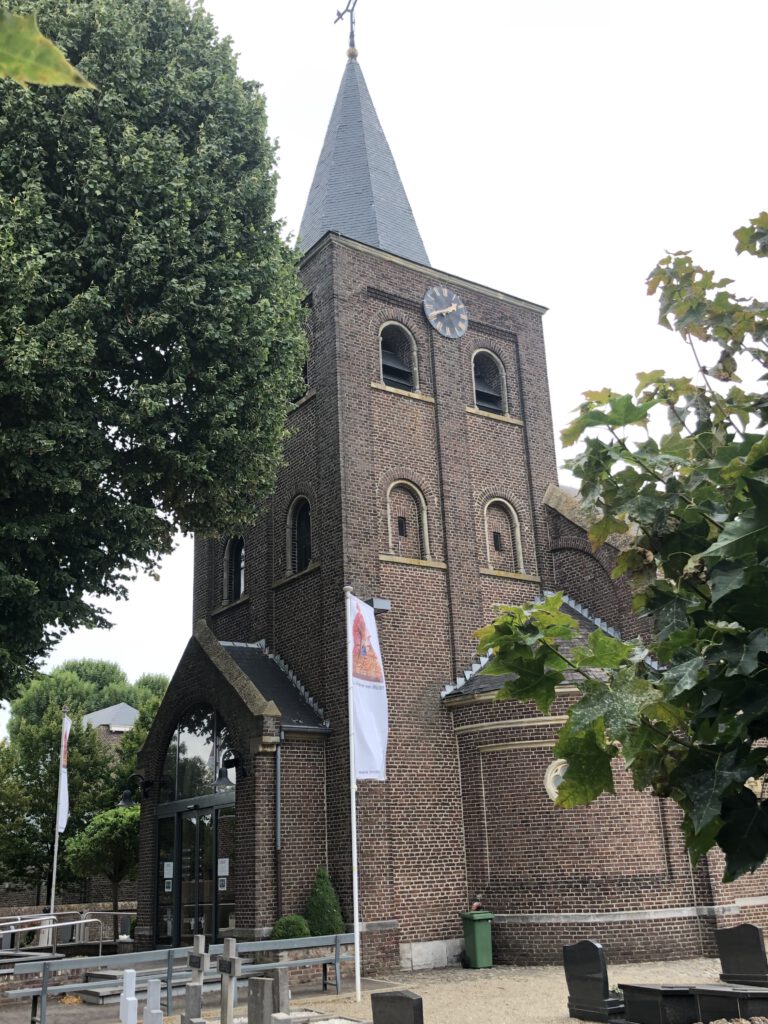
The special statue of Our Lady of Peace is located in the parish church, which is dedicated to Saint Gertrude. The miraculous statuette of Mary can be found in the left-hand altar. The polychromed effigy is made of oak and dates from the 15th century. It depicts a seated Mary who is supported from behind by John the Evangelist, who is looking upwards. Our Lady of Peace particularly offers protection against anxiety, stress and nervousness for students before exams. She is also invoked for the protection of nervous children.
The church was built in 1873 and is open all year round, both in the morning and in the afternoon. In Heppeneert, praying to Mary is possible throughout the year. The pilgrimage shop, with all sorts of devotional items, is located next to the church and is open daily in the afternoons.
In Heppeneert, a litany has been created, namely the “Litany in Honour of Our Lady of Rest”. The text states, among other things:
“Our Lady of Rest, pray for us,
Mediators of Peace, pray for us.,
Queen of Peace, pray for us.
…
To preserve or restore peace among all peoples –
Our Lady of Rest, pray for us,
To bring ourselves true peace –
Our Lady of Peace, pray for us.
…
To grant us peace and quiet –
Our Lady of Rest, pray for us,
To help us against the temptations of power, prestige and violence –
Our Lady of Peace, pray for us.
…
Fill us with comfort and strength in all circumstances.
Lead us to the divine Source of Love,
Be our special Protectress for our children,
in joy and sorrow, in sickness and health,
Wat zal er van ons worden in het uur van onze dood,
assure us of eternal peace
and eternal rest in the heavenly Father's home.”
Besides a litany, there is also a novena, an exercise, and a Prayer to Our Lady of Rest, which were specifically created for the Marian shrine in Heppeneert.
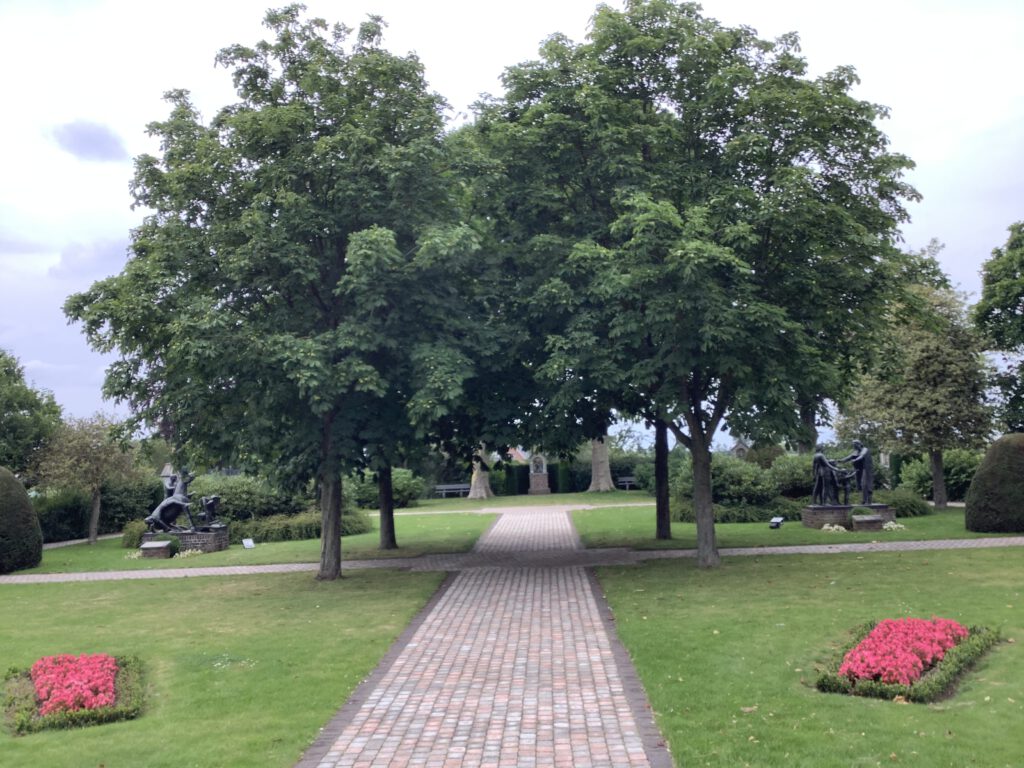
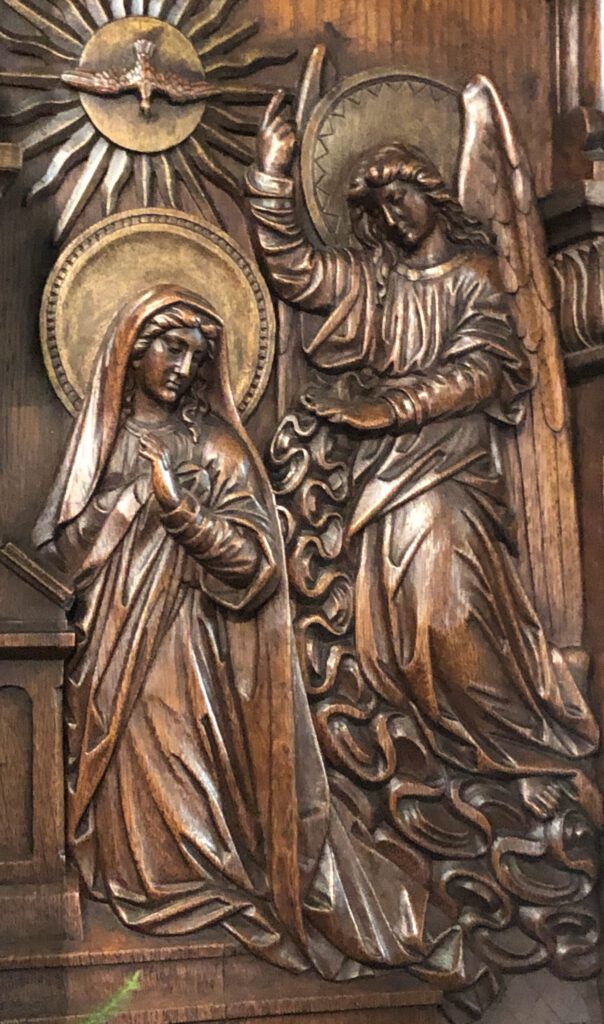
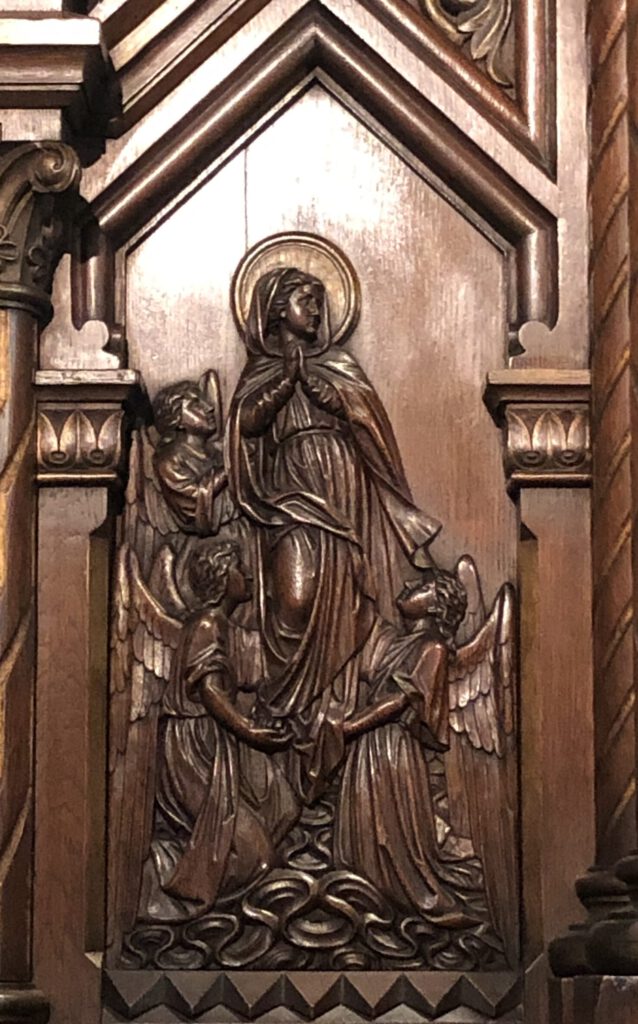
In the Maria Park, Mary's joyful and sorrowful secrets are depicted, such as the angel Gabriel's message to Mary, Mary's visit to her cousin Elizabeth, the birth of Jesus, and the Coronation of Mary in heaven.
Since spring 2019, in addition to the Maria Park, there has been a scattering meadow. Many believers have requested that the ashes of a dearly departed loved one be scattered in the pilgrimage site of Heppeneert. Pilgrims have also asked to be allowed to find their final resting place in Heppeneert with their ashes after their passing.
On average, 125,000 visitors come to the pilgrimage site annually.
ACCESSIBILITY
Heppeneert is located near the river Maas in Belgian Limburg. The Maas village belongs to the municipality of Maaseik and is situated in the northeast of Limburg, near the Dutch border. Heppeneert is about a kilometre from Maaseik.
Contact address: Vicarage, Heppeneert 21, B 3680 Maaseik.
The website www.heppeneert.eu provides the necessary information.
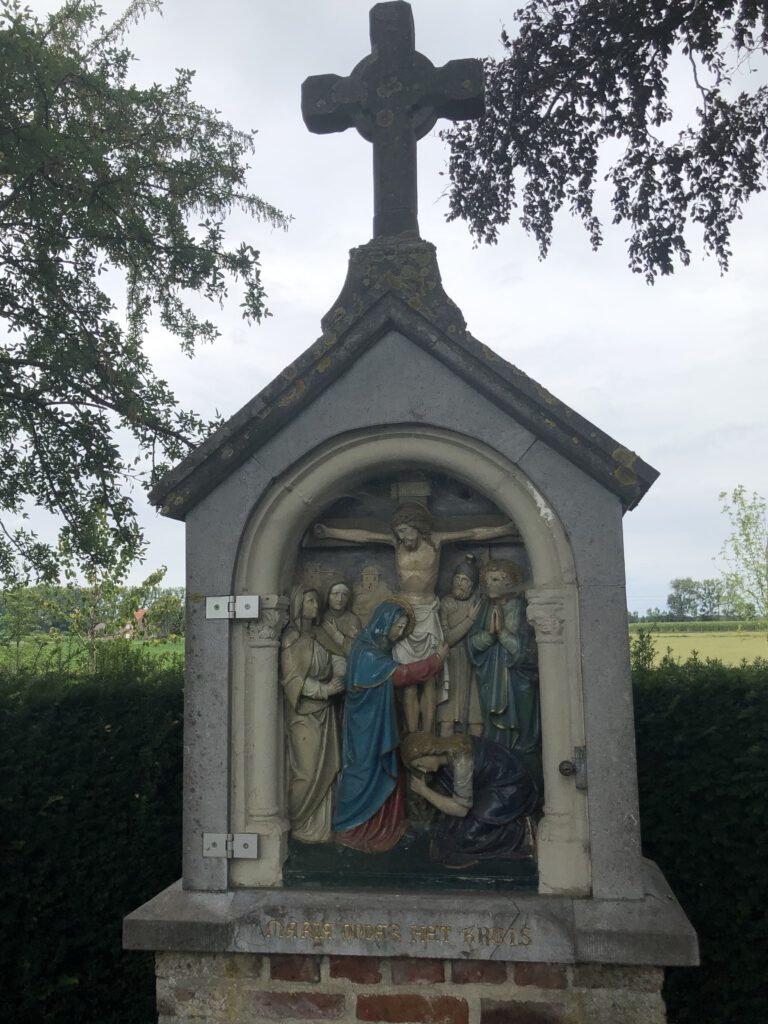
Experience
In Heppeneert, visitors pray to Our Lady of Rest: “Mother Mary, in You we place our hope. With You we seek comfort and security. Speak on behalf of all who are searching for the meaning of their lives, who are sick or burdened by trials.” During the visit to Heppeneert, I learn that Our Lady of Rest is particularly invoked for crying children, the sick, and the elderly who are afflicted by physical suffering.
In Heppeneert, it's not just about visiting the church and praying to Our Lady of Rest, but also about visiting the candle chapels along the candle gallery, the Mary Chapel, the scattering meadow, the Theresa Chapel, the Devil's Bridge, Saint James's Staff, Mary Park, and the pilgrimage shop.
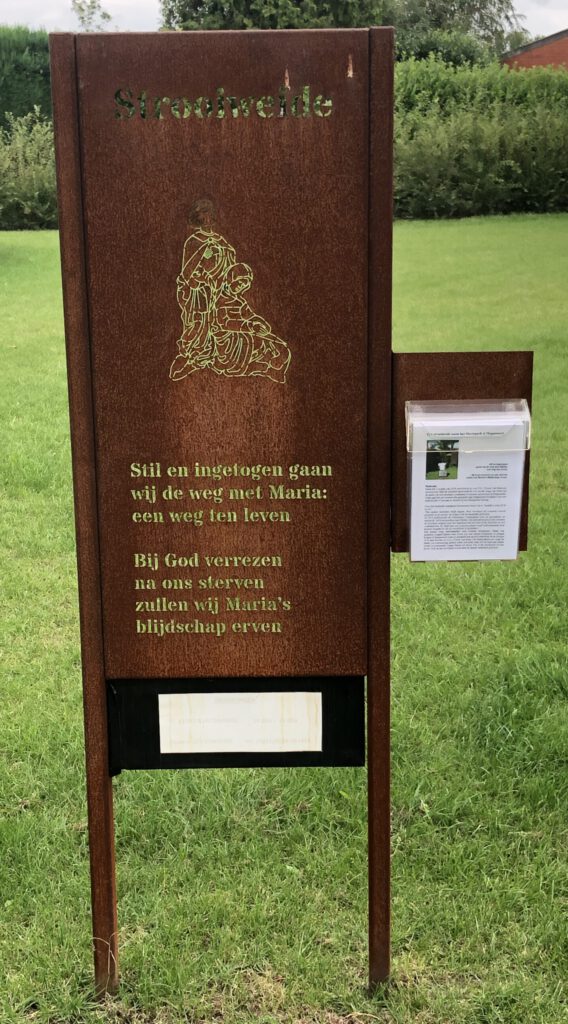
In the scattering meadow, I can see the seven biblical scenes, which depict the seven joys in the life of Our Lady. These joys have been given a very contemporary form. In the Maria Park, I view the seven sorrows of the Mother of God. This park was established in 1898 and is located at the candle gallery.
During the tour, I will also visit the Theresia Chapel. Thérèse of Lisieux reminds me of her saying: “I will rain down roses on earth”. Then I see the St. James' staff, which refers to a miracle. It is 1886 and Jacoba, a toddler, ends up under a falling tree. The little child survives as if by a miracle and is unharmed!
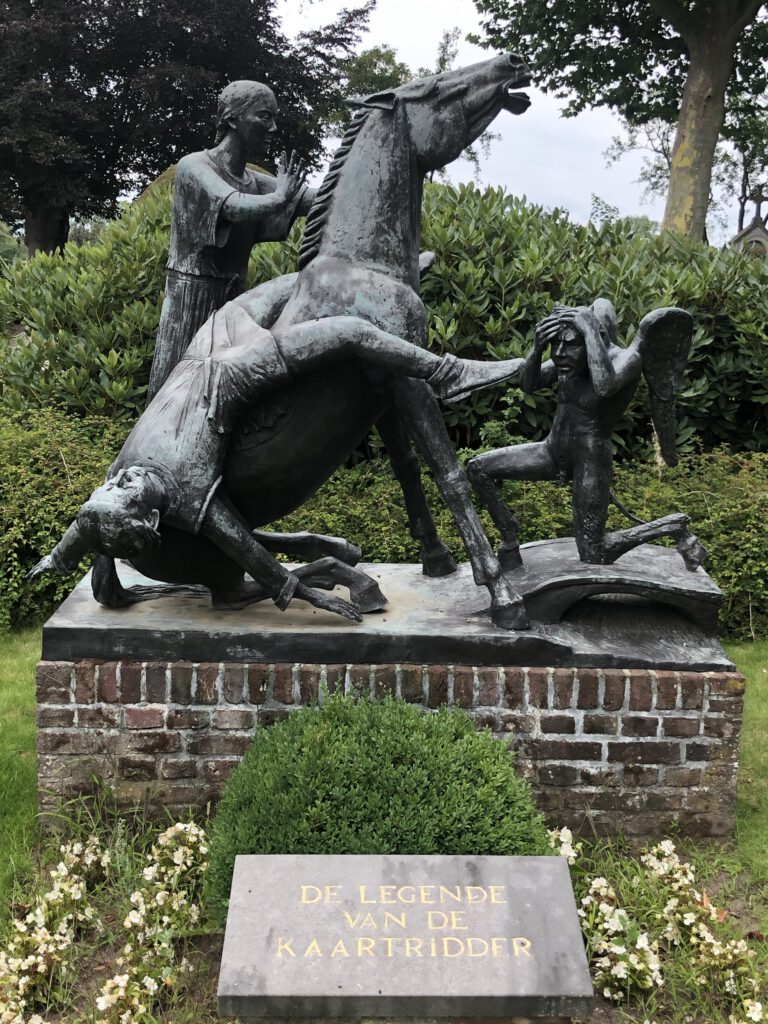
At the “Duivelsbrugske” (Devil's Little Bridge), the legend of the Card Knight applies. A striking bronze sculpture group symbolises the story of the “Card Knight”. Saint Gertrude of Nivelles saves the Card Knight, Riddart, who had to give his soul to the devil in exchange for seven years of entertainment. The Flemish writer Gerard Walschap (1898-1989) wrote and published the story “De Kaartridder van Heppeneert” (The Card Knight of Heppeneert) in 1966. I am delving into the legend of the Card Knight. The story originated from the weathering of a noble gravestone. This stone displays a quartered family crest, which resembles four playing cards, hence the name “Card Knight”. The gravestone can be seen near the church. Knight Riddart was a resident of Borckhoff Castle and, after his wife's death, became addicted to drink and card games. He lost all his money playing cards and sold his soul to the devil for years of pleasure. In return, the devil allows the knight to live in luxury for seven years. During this period, he lights a candle every evening in honour of Saint Gertrude, the patron saint of the parish church. After this period of earthly pleasure, the devil comes to claim the knight's soul. The knight sits on his horse, is in mortal peril, and prays. The devil wants to hold the knight to their agreement. The knight is about to give in to the devil, but feels far from safe. The devil says the knight has the black witch behind him and he must drive her away. Suddenly, Saint Gertrude appears and saves the knight on a small bridge as it strikes 12 o'clock. Saint Gertrude saved the knight just in time. Due to the encounter of the knight, the devil, and Gertrude, the bridge is named “Duivelsbrugske”.
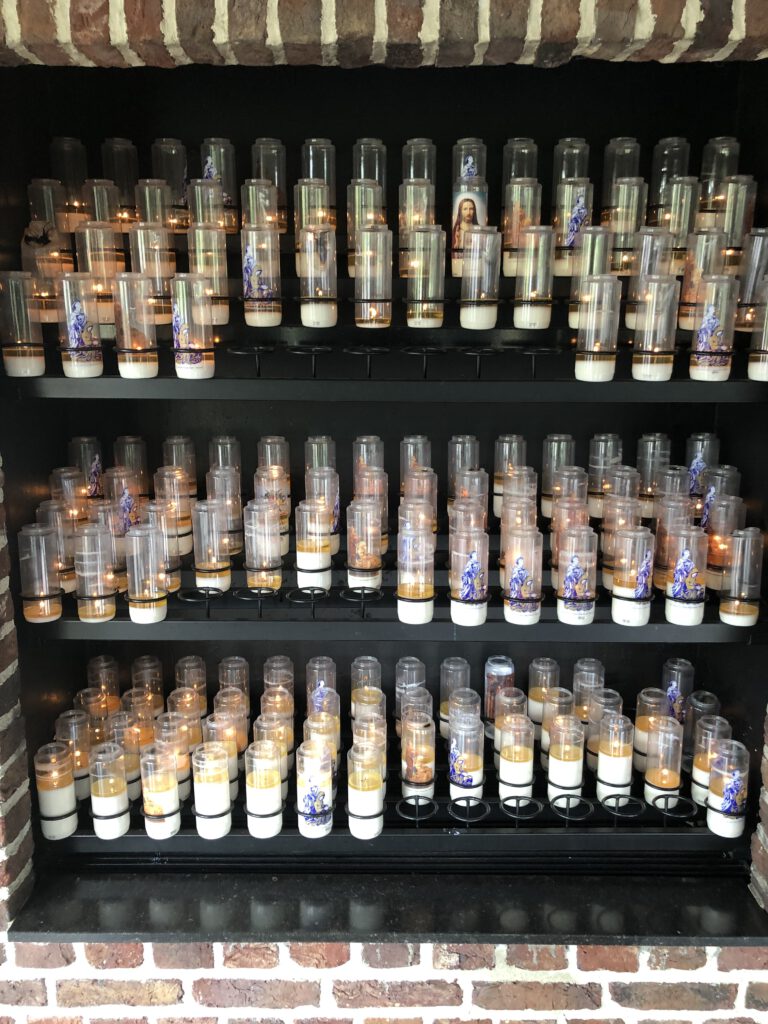
My visit to Heppeneert is almost over. I'm going to light a few more candles in the long candle chapels of the candle gallery. I'll light three candles; one with an intention for a good friend, one with a special prayer for a female friend, and one for hope and strength for an older lady I've known since I was very young. Afterwards, I'll go to St. Gertrude's Church. Next to the church, I'll pass the statue of “The Penitents” from 2005. Then, I'll say a final goodbye to Our Lady of Rest. Thank you, Mary, for this beautiful day in Heppeneert.
Environment
Heppeneert is located in Limburg on the river Maas. In the surrounding area, you can go on cycling tours as well as walks. The town of Maaseik is situated nearby, only 1 km away.
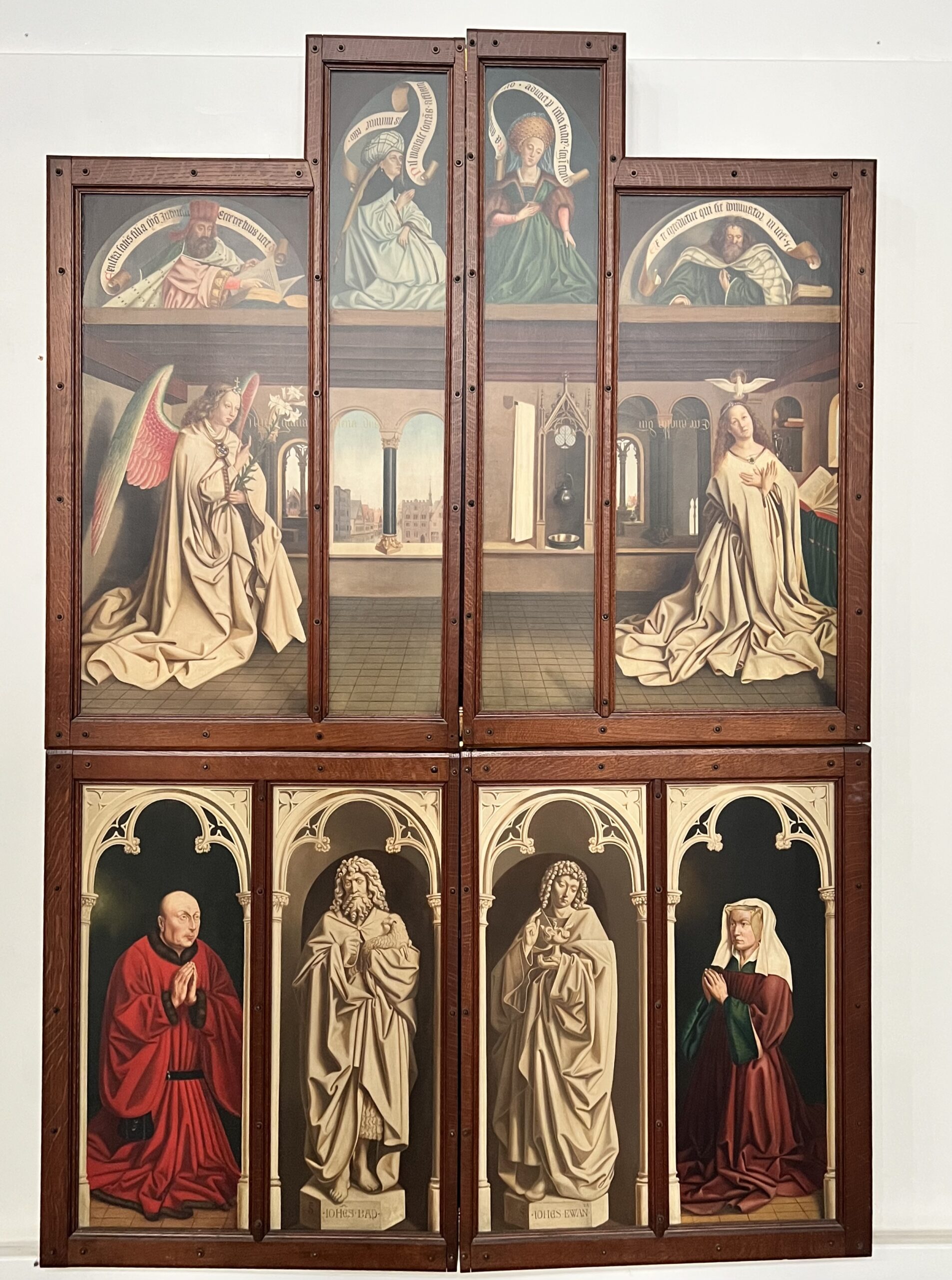
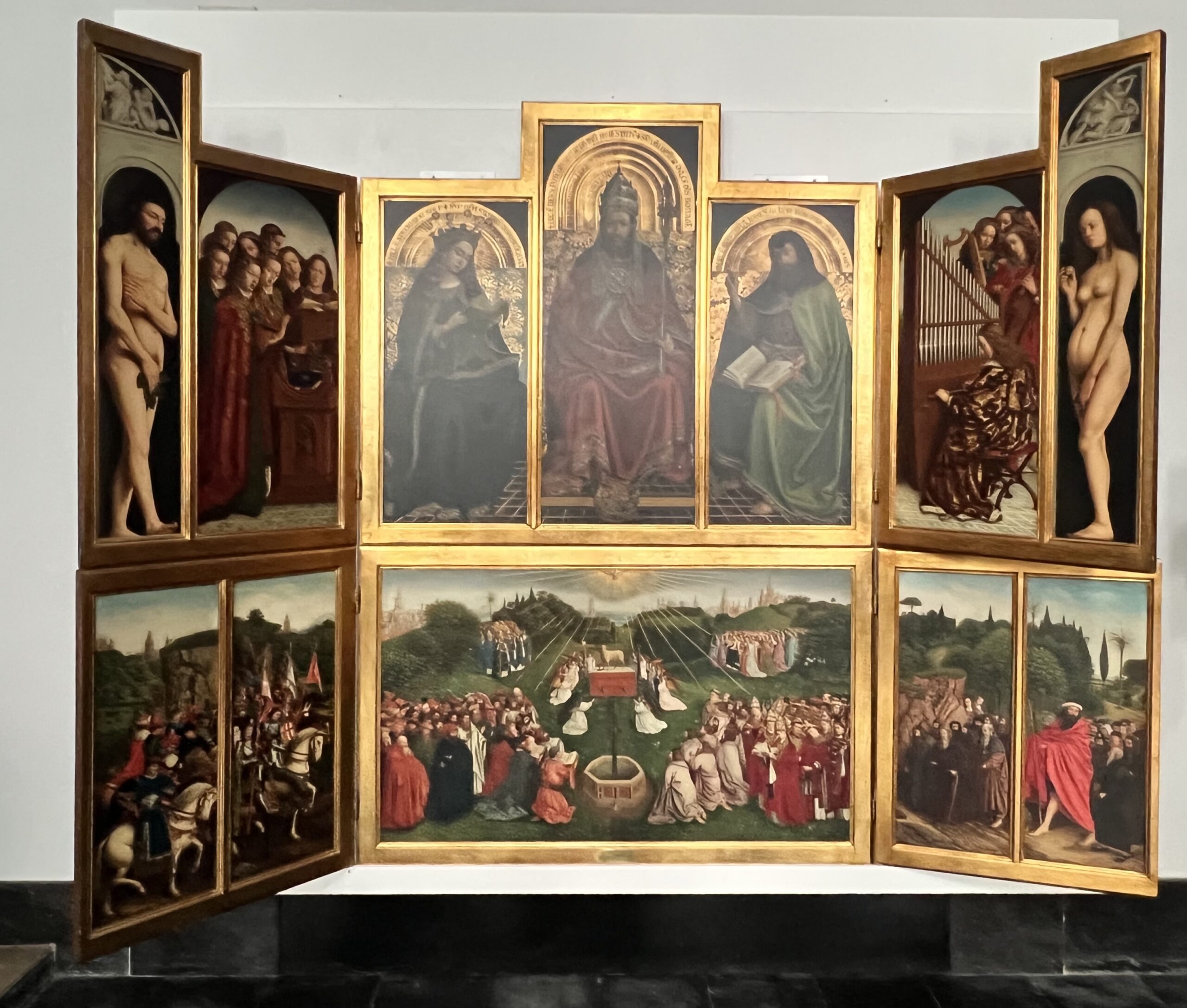
In Maaseik, a Lourdes grotto stands next to St. Catherine's Church, which was built between 1840 and 1845. The church was designed by architect Gustave Leemans, and the tower was designed by architect Herman Jamine (1826-1885). Inside the church is a large painting depicting the “Adoration of the Mystic Lamb.” It is a reproduction by the painter and restorer Fernand Aelman (1863-1927) from Ghent. His son, Paul Aelman (1899-1965), assisted him with this work. The extensive artwork was created between 1923 and 1926 and is displayed in both closed and open states.
Heppeneert is 28 km from the town of Genk, 48 km from Hasselt, and 63 km from Tongeren. The Dutch town of Maastricht is 37 km from Heppeneert.
Posted: 19 August 2020
Last modified: 4 March 2025
~~~

 Nederlands
  English (UK)
  Deutsch
  Français