A horn
History
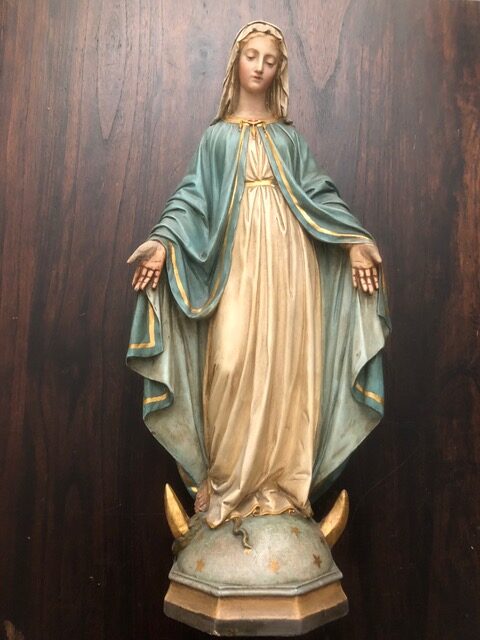
According to a legend, a shepherd in a hilly area heard a beautiful song. He went to investigate and found a statue of Mary and Child near a hollow tree, right beside a spring. He placed this statue in the tree. Subsequently, miraculous answered prayers occurred at the statue. These events led to a large influx of pilgrims and curious onlookers. The construction of a simple wooden chapel, in which the statue was placed, was the result. This caused the number of visitors to increase further. Over the centuries, the village of Lautenbach emerged as the pilgrimage site developed and became more well-known.
The first mention of a chapel, to which pilgrims came, dates back to 1233. The information is found in a charter from King Henry VII (1211-1242), who then owned the region of Lautenbach. In 1350, the area was struck by the plague. The pilgrimage site was then frequently visited to ask for Mary's help. In the 14th century, the area came under the possession of the Bishopric of Strasbourg. This ownership lasted until 1803.
In 1294, a papal decree permitted the burial of benefactors in chapels and churches. This later also occurred in Lautenbach.
In 1303, monks from the nearby All Saints' Abbey took over the care of the pilgrimage site, under pressure from the Bishop of Strasbourg. At this time, there was a small chapel which housed the statue of Mary.
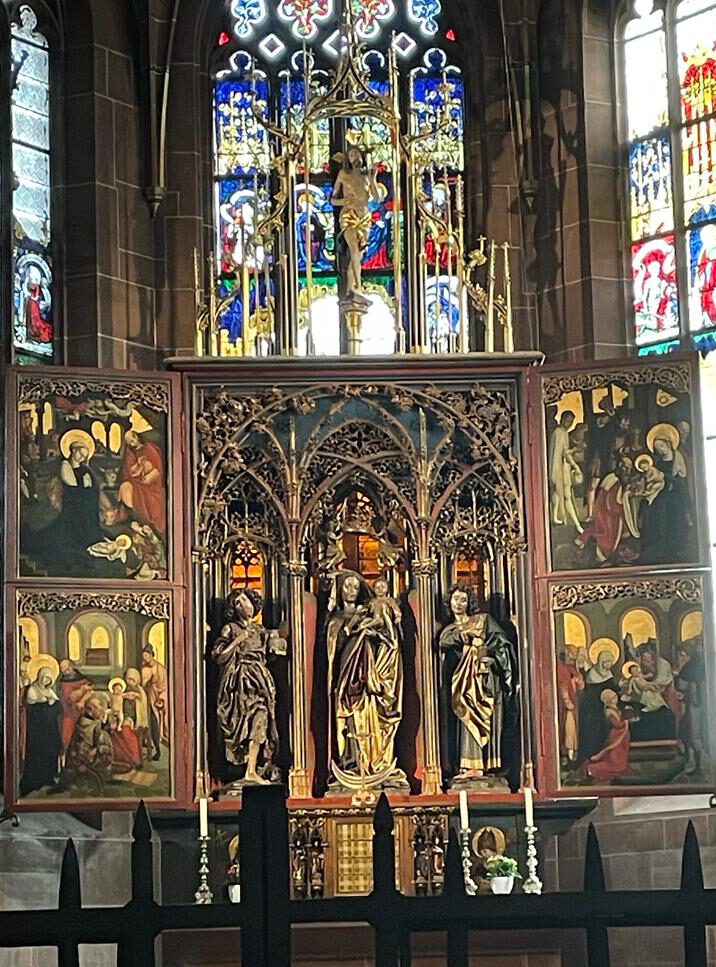
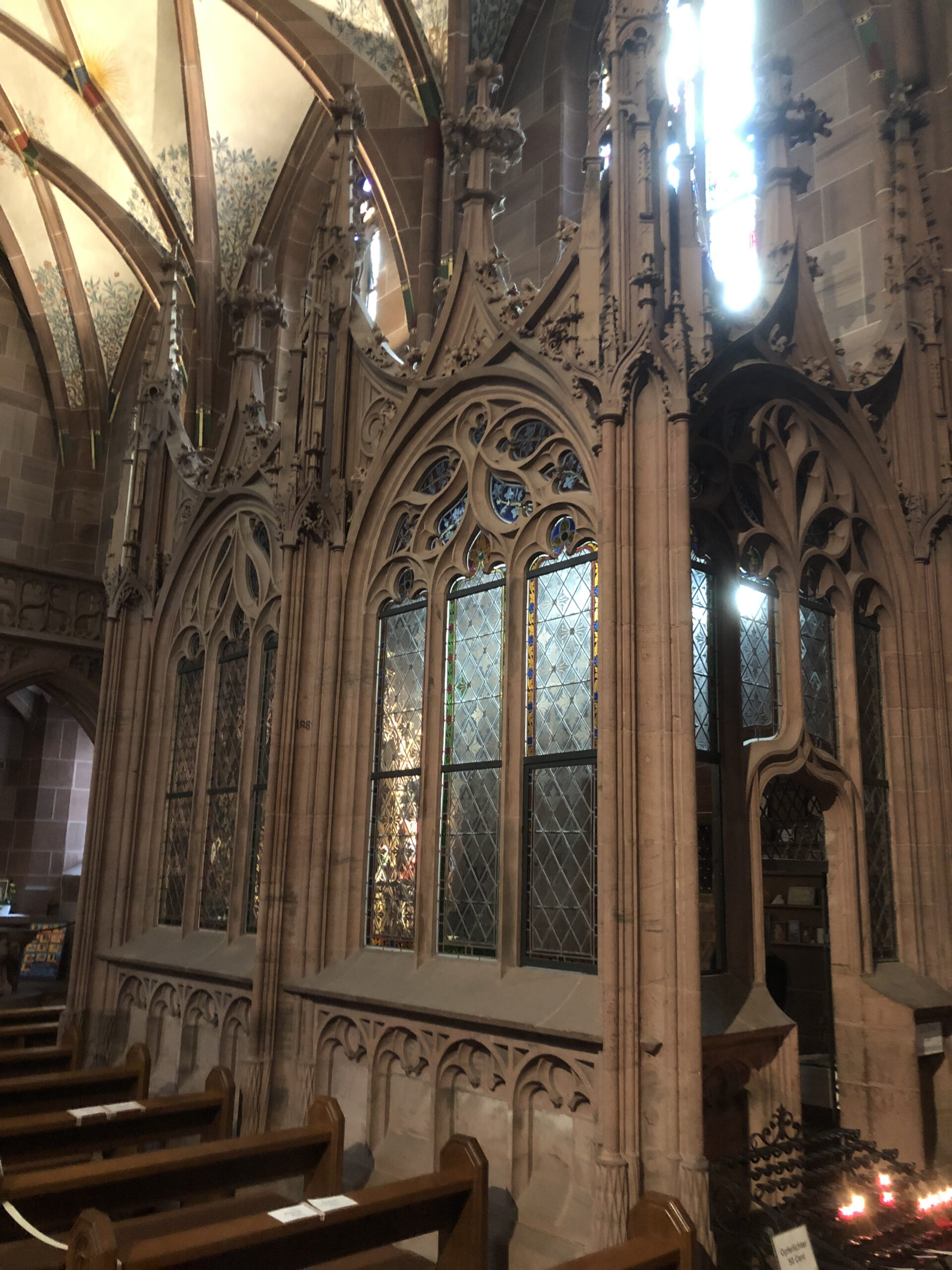
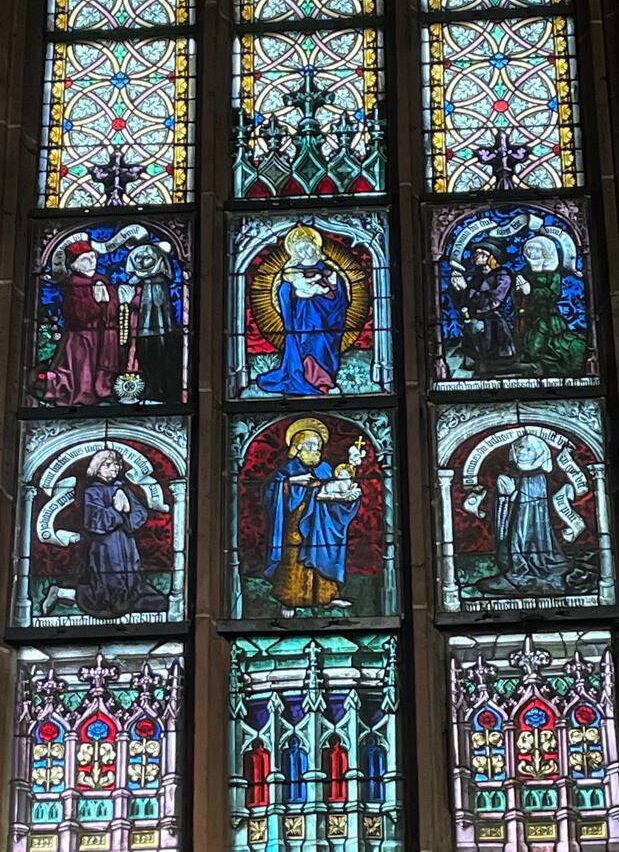
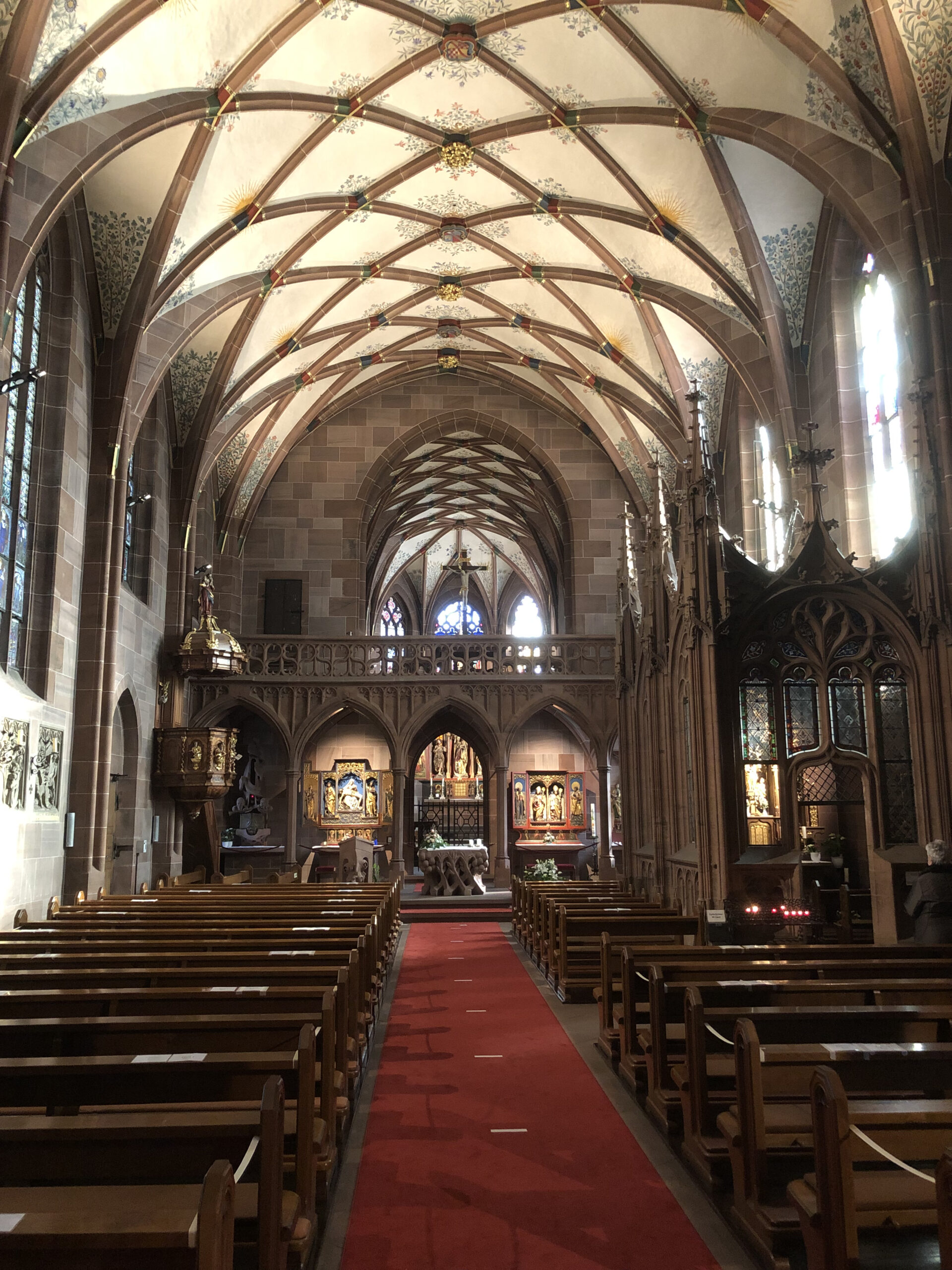
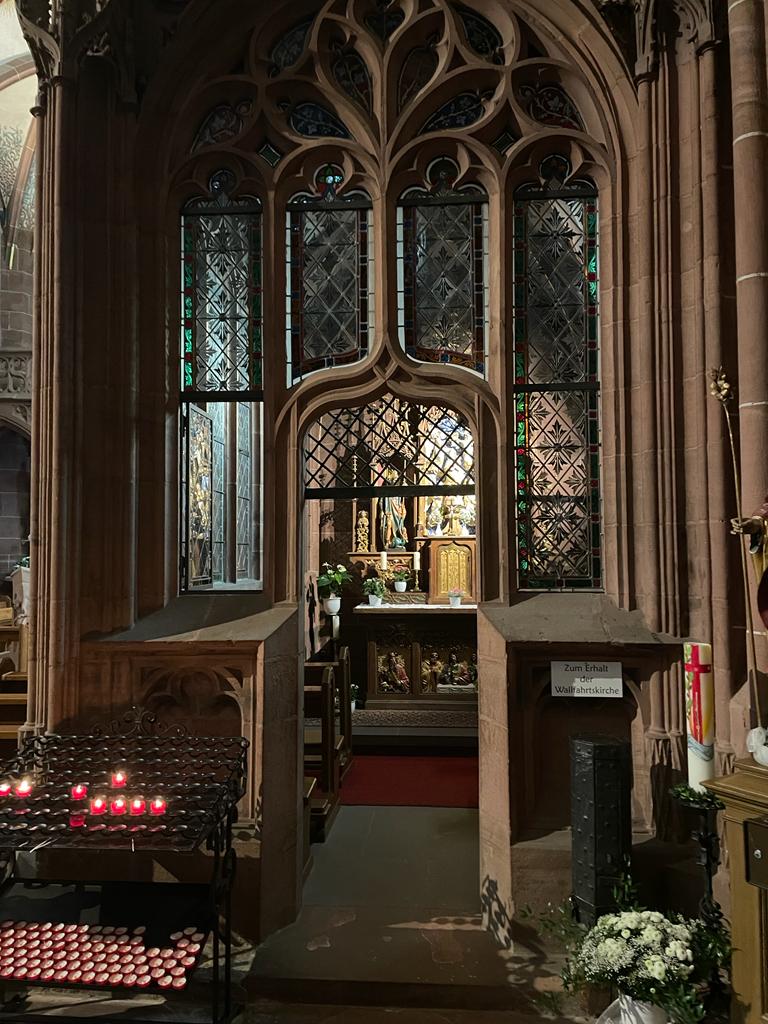
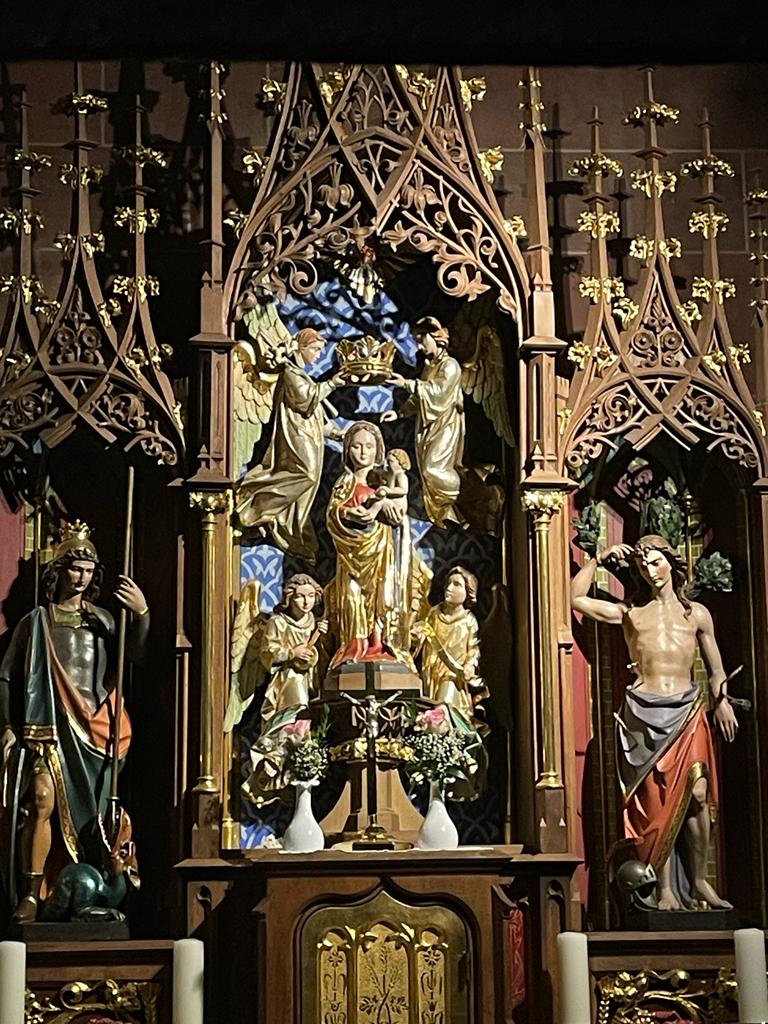
Construction of the church began in 1471. There was an uninterrupted period of church construction until 1482. However, progress then stagnated because of a disagreement over payments between the monastery's management and master builder Hans Hertwig from Bergzabern. The delay in further construction lasted from 1482 until 1485. The monastery of All Saints took responsibility for completing the church. A ceremony was held in 1483 to dedicate the partially completed church with its realised high altar. The high altar is considered one of the finest masterpieces of both wood carving and painting. The artists of the high altar and side altars are unknown. The high altar with a cross depicts Mary and her Child. Angels crown the Mother of God. The church was therefore named “Mary's Coronation”. Mary and the infant Jesus are flanked by John the Baptist and John the Evangelist. Subsequently, in 1485, the old, small chapel was demolished. Between 1485 and 1488, the new Chapel of Grace and rood loft were realised. The Chapel of Grace was built on the foundations of the first pilgrimage chapel and given the appearance of a baldachin. In 1488, the church was consecrated by Albrecht von Bayern (1440-1506), Bishop of Strasbourg from 1478 until 1506. The church is regarded as a jewel of late Gothic architecture. The church features 59 precious and colourful stained-glass windows, which were created between 1482 and 1488 in the workshops of the renowned artist Peter Hemmel (1420-1506) from Andlau.
The Bishop of Strasbourg, Albrecht von Bayern, wants to ensure the continued existence of Lautenbach. He is in contact with the Pope about this matter. In 1491, a ruling was made by Pope Innocent VIII (1484-1492), who was born Giovanni Battista Cybo (1432-1492). The All Saints' Abbey is to take care of the finances for the church in Lautenbach, as well as the daily Holy Mass, which is to be offered for the repose of the souls of the church's benefactors. Devout believers from the Renchtal, where Lautenbach is situated, and several noble individuals financed the construction of the church. Some major benefactors have been buried within the church.
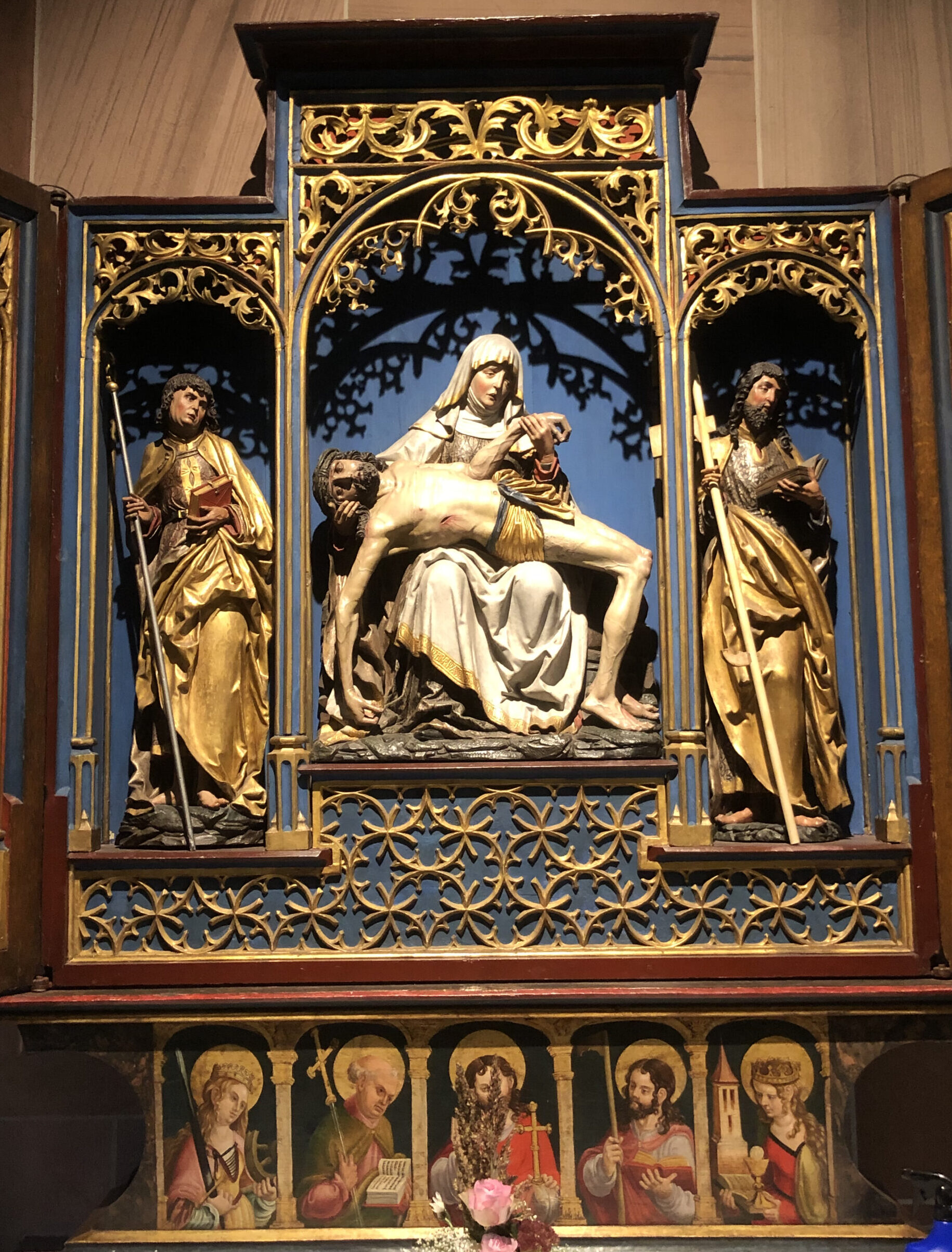
Particularly striking in the church is the rood screen (“Lettner”), which once had 4 altars. Now there are only 2. On the left side is the Pietà altar with Mother Mary and her dead Son. In 1523, this altar was made from a death altar. The right-hand altar is from 1521. The statues depict the Holy Bishop Wolfgang von Regensburg and Martin of Tours (St. Martin). The rood screen is one of the rare remnants from the Late Gothic period and separates the chancel with the high altar from the nave of the church. Scripture is read here, sermons are preached, and hymns are sung.
In 1525, a cross is added to the high altar. In the 16th century, a guesthouse is built next to the church to accommodate pilgrims. This later becomes the parish hall.
In 1796, the church is plundered by rebellious soldiers. Altars, statues, paintings, and documents are destroyed. The monastery of Allerheiligen ceases its activities in 1803, after 6 centuries of fruitful work. The clergy are expelled by soldiers of the political rulers, who have no regard for the Catholic faith. Consequently, the clergy from the monastery can no longer provide for the church in Lautenbach. A few years later, there is a bit more political calm, and only through influential persons can something be arranged for a church. This also happens for the church in Lautenbach.
Since 1815, the pilgrimage church has also been the parish church of Lautenbach. The priests then become pilgrimage rectors. These decisions came from the influential Bishop of Mainz, Karl Theodor Anton Maria von Dalberg (1744-1817), who, besides being a bishop, was also a Baron of the Holy Roman Empire, Arch-Chancellor, and Elector in 1802 and 1803.
In the period 1895-1898, the church was extended and the tower was built next to it. Architect Maximilian Emanuel Franz (Max) Meckel (1847-1910) from Freiburg supervised the construction. After the expansion, the complex consisted of 4 parts: the Chapel of Grace, the burial church, the priests' choir, and the rood screen. The church then comprised 6 bays, which are large vaulted sections.
Until 1973, the Chapel of Grace was the rightful place for the icon of grace, because in that year the icon was stolen. Subsequently, a copy of the icon of grace was made. The altar in the Chapel of Grace was restored, and in 1997 the icon was displayed in the refurbished chapel.
In 1979, the altar was renovated. The rood screen was restored, along with the baptismal font, ambo, and sacrament house. This is the work of sculptor Helmut Lutz (1941) from Breisach am Rhein.
Remarkably, the pilgrimage church has endured turbulent times with unrest and wars in recent centuries. The church has never been destroyed and is under special protection...

Pilgrimage site
Lautenbach is located in the Renchtal valley and belongs to the federal state of Baden-Württemberg. The town, with a population of about 2,000 inhabitants, lies in the Ortenau district and is part of the municipality of Gernsbach.
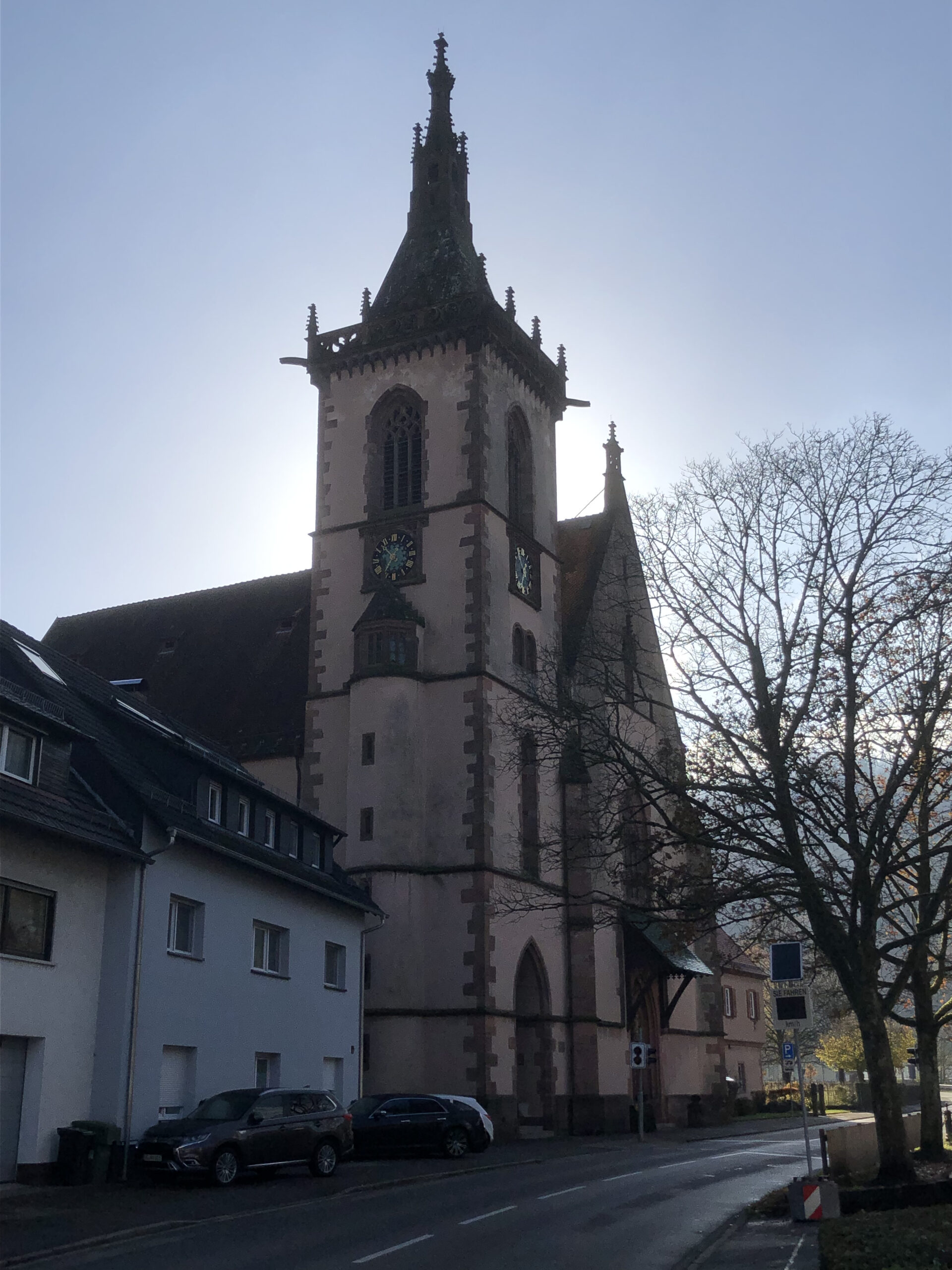
The eye-catcher in Lautenbach is the pilgrimage church “Mariä Krönung”. This church is one of the most important cultural monuments in Southern Germany.
In past centuries, miracles have occurred in the church, such as the healing of the incurably ill and those who had given up hope. Pilgrim's eye diseases have also disappeared, wounds have healed, pains have vanished, and the lame have been able to walk again.
There is much to see in the church, including the paintings on the closed high altar. These depict scenes from the life of Mary, namely her birth, annunciation, visitation to Elizabeth, and death. The interior of the high altar shows 4 paintings from the life of Jesus: his birth, circumcision, adoration by the three kings, and presentation in the Temple. The left side altar, both closed and open, displays true art, including the annunciation of the angel Gabriel to Mary.
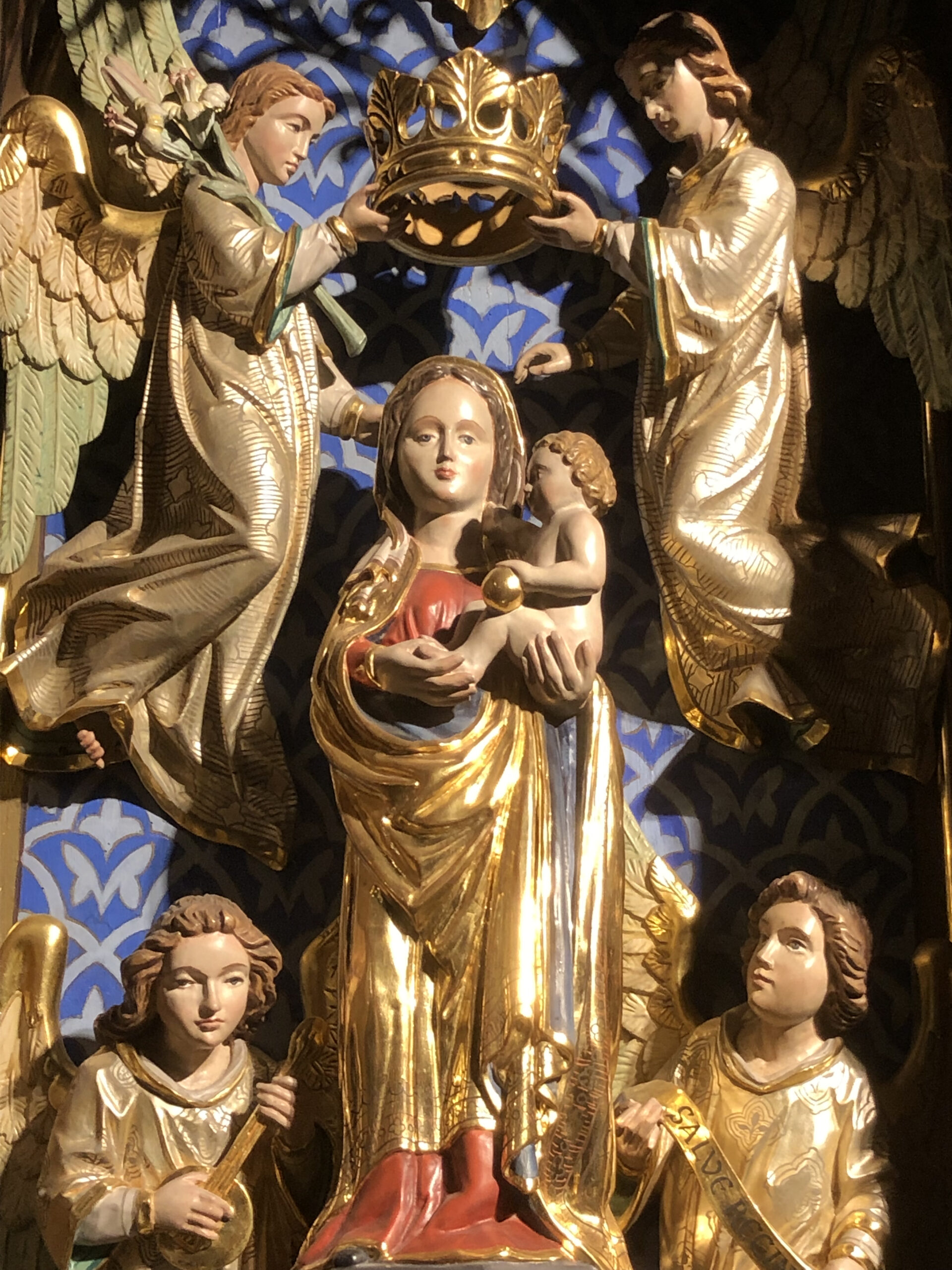
A special visit should be made to the Chapel of Grace. Here, the coronation of Mary is depicted. Testimonials of gratitude from pilgrims have been placed here. Candles are always burning here and Mary stands in the light.
Next to the church, a guesthouse for pilgrims and a rectory have been built. Later, the purpose changed to the parish hall. In the garden behind, pilgrimage springs can be visited. The water from the spring has performed numerous good deeds for pilgrims seeking help.
In Lautenbach there are holidays with celebrations, specifically on August 15th, the Feast of the Assumption of Mary. Additionally, there are all Saturdays, Marian days, and also the Portuguese Fatima days of the apparitions there in 1917.
ACCESSIBILITY
Lautenbach is located in the Renchtal and belongs to the state of Baden-Württemberg. The village is situated near Offenburg, not far from the German-French border.
The Catholic pilgrimage church “Mariä Kronung” is located on the Hauptstrasse in Lautenbach.
Parish Office Address:
Catholic Parish Office of the Coronation of Mary, Hauptstrasse 75, 77794 Lautenbach.
Up-to-date information can be found at www.lautenbach@kath-oberkirch.de.
Experience
I see the pilgrimage church as a wonderfully beautiful, late Gothic house of God, and Mary is its patron saint.
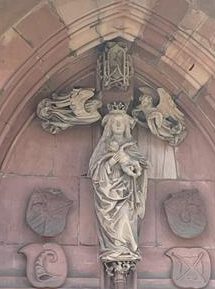
At the main portal, I see an almost life-sized, late Gothic stone statue of Mary and Child. Two crowning angels hover above Mary; this is where She is being crowned. This is the work of sculptor and woodcarver Nikolaus Gerhaert von Leyden (c. 1420-1473). Then I enter the pilgrimage church. Upon entering, the Chapel of Grace immediately catches my eye, followed by the rood screen.
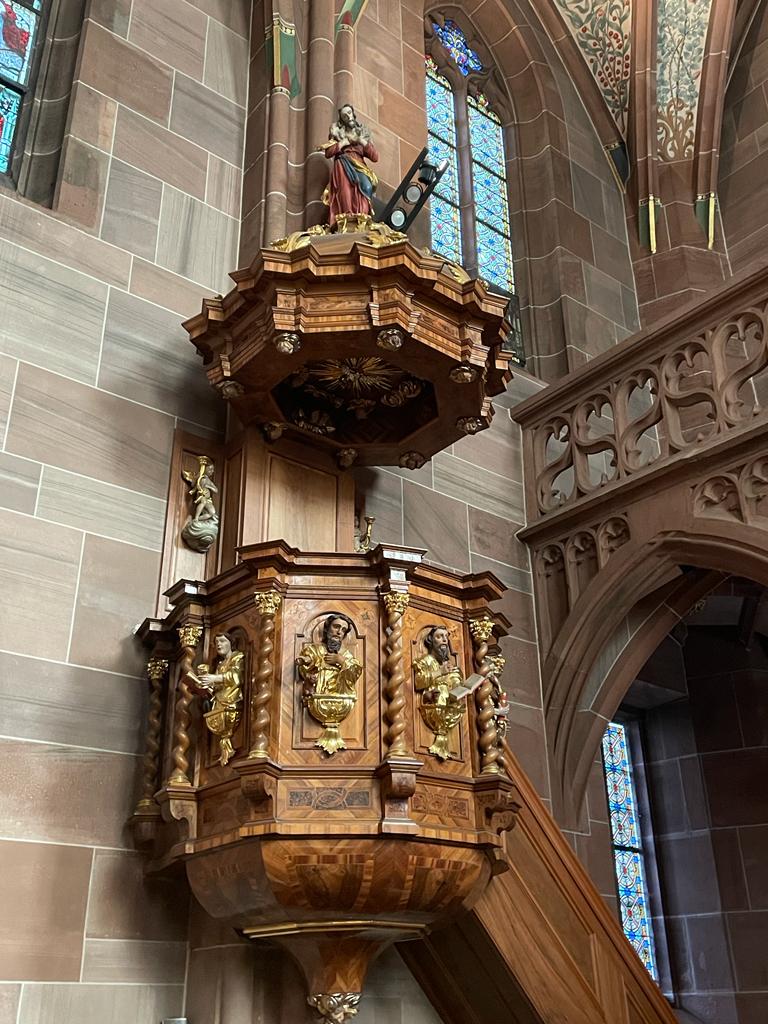
In the church, I see, among other things, statues of saints and images of Mary, including the enthroned Mother of God. The Pietà also impresses me, as does the angel Gabriel, bringing Mary an important message.
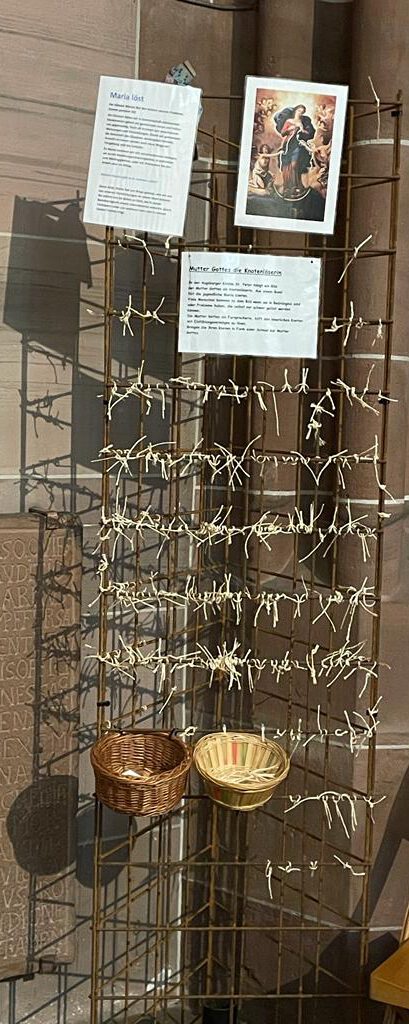
In the church, there is a depiction of Mary, Untier of Knots. A stand already has many strings with a knot. I am adding a knot.
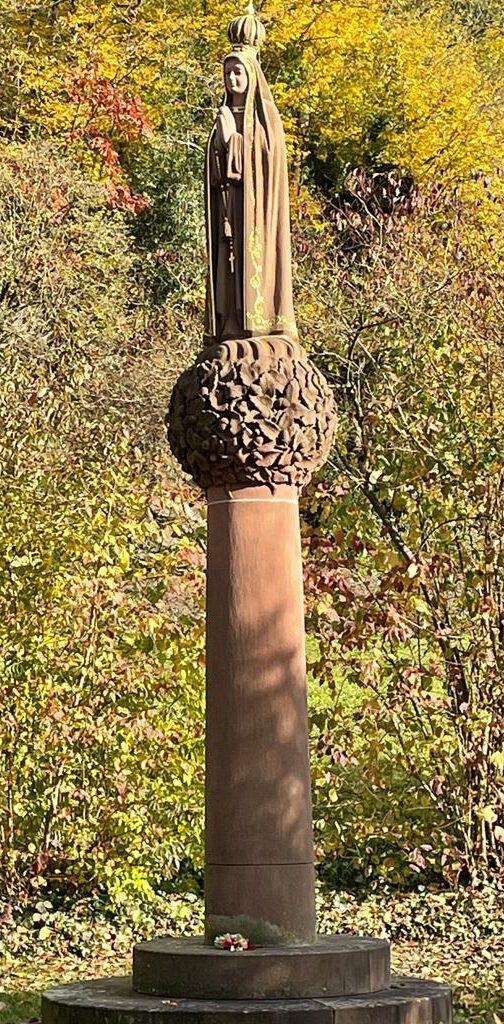
The stained-glass windows are impressive. What a splendour of colours. After a long stay with prayer and expressions of admiration, I go into the garden behind the church. There stands a particularly beautiful statue of Mary here.
Lautenbach has a gem to frame...
Environment
The French town of Rosheim is well worth a visit and is located 61 km west of Lautenbach. To visit the international city of Strasbourg, you need to travel 34 km to the west.
Posted: 16 November 2021
Last Modified: 20 February 2024
~~~

 Nederlands
  English (UK)
  Deutsch
  Français