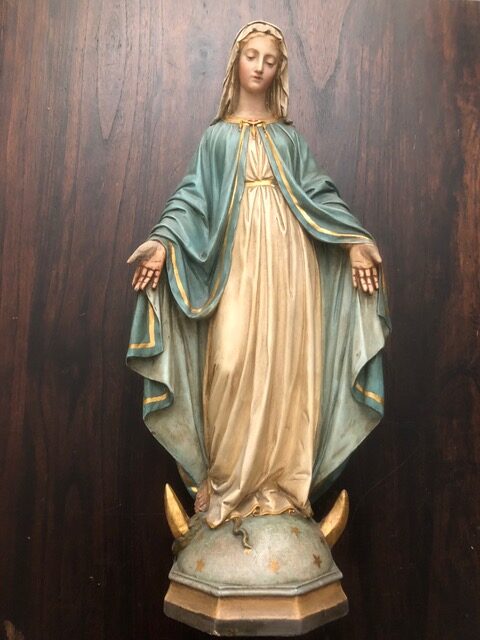
History
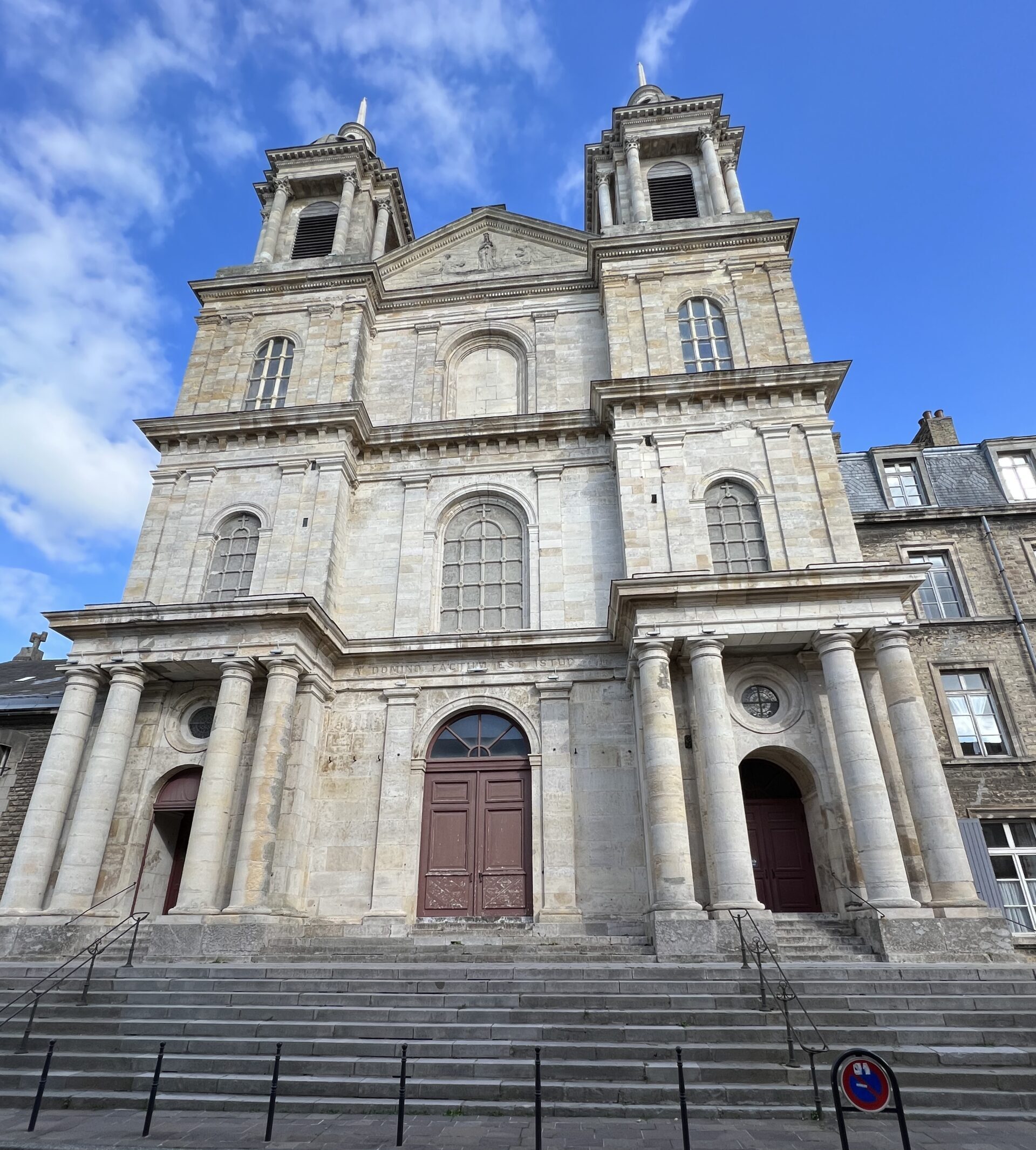
The history of the shrine dates back to the year 636. A legend tells of... Towards evening, Our Lady suddenly appears to praying faithful. She tells them to go to the riverbank where a special visitor awaits them. A strange, unmanned boat sails into the mouth of the river, where the port of Boulogne-sur-Mer is now located. In the unmanned little boat lies a 140 cm statue of Our Lady with the child Jesus on her left arm, surrounded by light. The vessel is guided by supernatural forces. Many people along the bank see the boat. When the little boat reaches the shore, people take the wooden statue from it and bring it to the chapel in the upper town. Thus, the Shrine of Boulogne-sur-Mer originated. Unfortunately, the statue has been lost.
The legend has characteristics of a miracle by Omer (c. 600–c. 670), also called Omaar or Audomarus, who temporarily resided in Boulogne and later became a saint. A young cleric from Omer's entourage ignores the prohibition against walking along the river. Subsequently, he takes the ferryman's rowing boat. Suddenly, a storm erupts. The severe weather carries the small boat out to sea. The young man finds himself in distress and repents his misstep. The young cleric begs for help. Then, the sea calms, and the little vessel brings him back to Boulogne. This story is mentioned in Omer's hagiography in the 8th century.
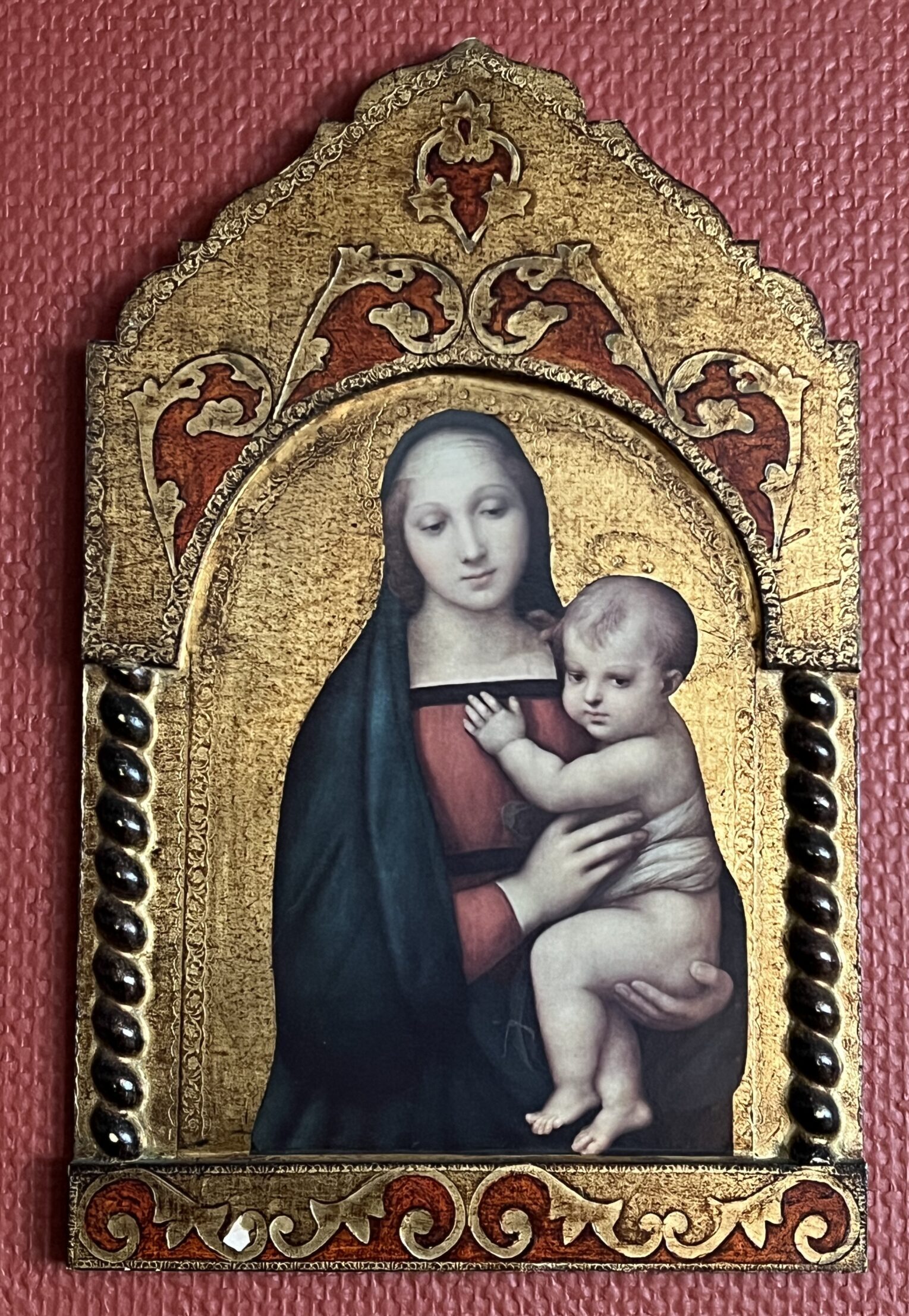
Over the years, interest in the image of Mary increased, and in 1090 a church was built to replace the chapel. In 1216, Countess Ida of Boulogne (c. 1160-1216) was buried here. In 1212, a pilgrimage is mentioned, and the Marian image present at that time dates from the second half of the 12th century. The pilgrimage site experienced great prosperity from the 13th to the 16th century, with pilgrims from all over Europe coming to Boulogne. These included not only monarchs and nobles, but also the poor visiting the shrine. During this period, Boulogne was also referred to as the city of “Nostre-Dame” due to the pilgrimages to Mary in the city. The counts of Boulogne used the slogan “À la bataille Nostre-Dame” (In the fight for Our Lady) when they went into battle. Local traders profited from the pilgrimages, enjoying higher incomes than the fishermen.
From 1544 onwards, interest in the pilgrimages waned. This was due to a pandemic that claimed many lives, and mercenaries of the English King Henry VIII (1491-1547) plundered the church and took the statue of Mary to England. After consultations, the statue later returned. In 1567, Huguenots destroyed the church. The statue of Mary was stolen by Jehan de Frohart (born around 1540), lord of Honvault. He married Madaleine de Marsille (born around 1540) around 1560, and this woman was Catholic. She saved the statue from destruction. In 1607, the statue was returned after 40 years.
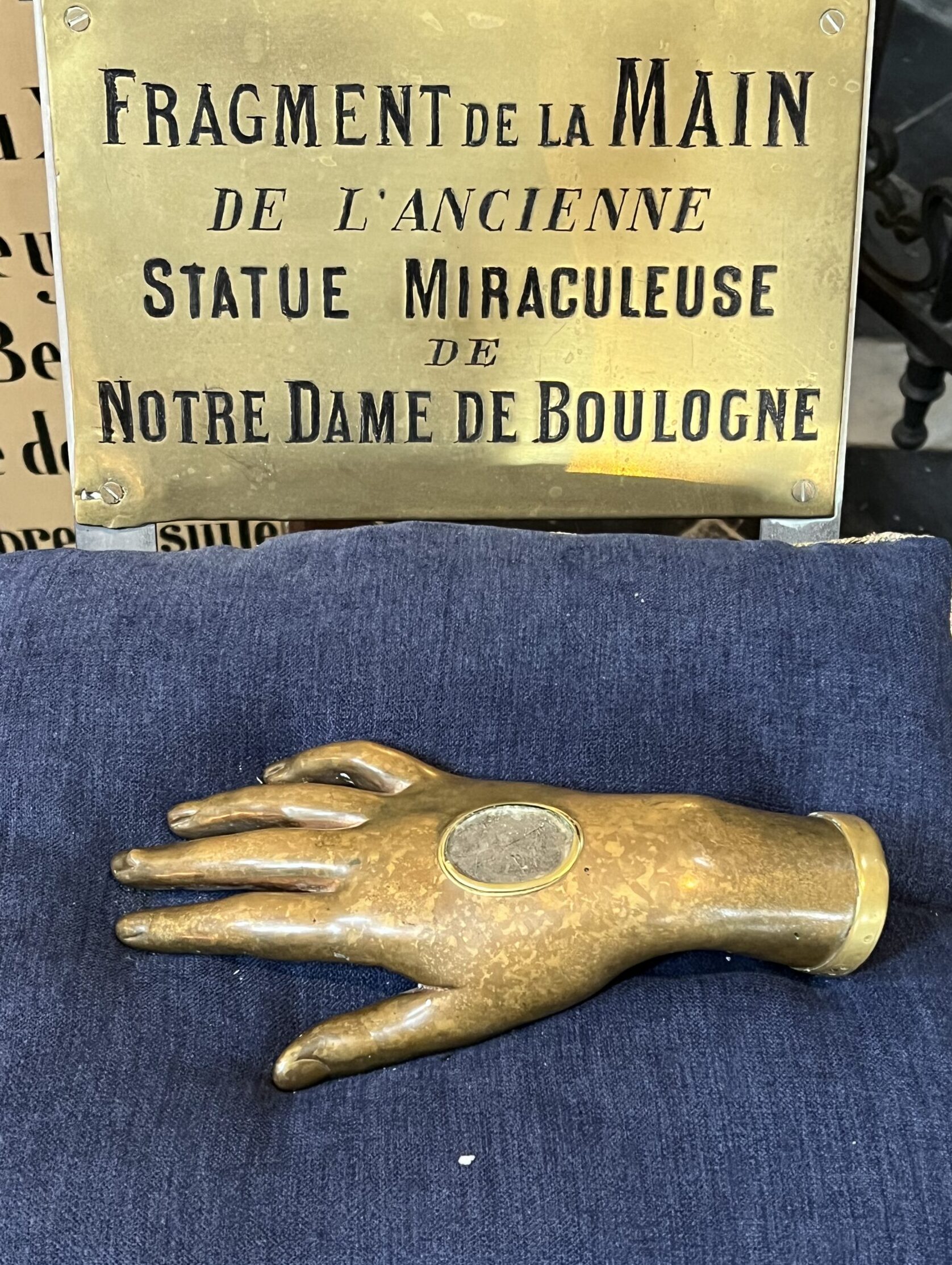
On 27 December 1793, during the French Revolution (1789-1799), the church and a statue of Mary were burned. Only a part of the hand remained of the statue. Today, this fragment is located in the cathedral, which was built in the 19th century on the remains of the destroyed church.
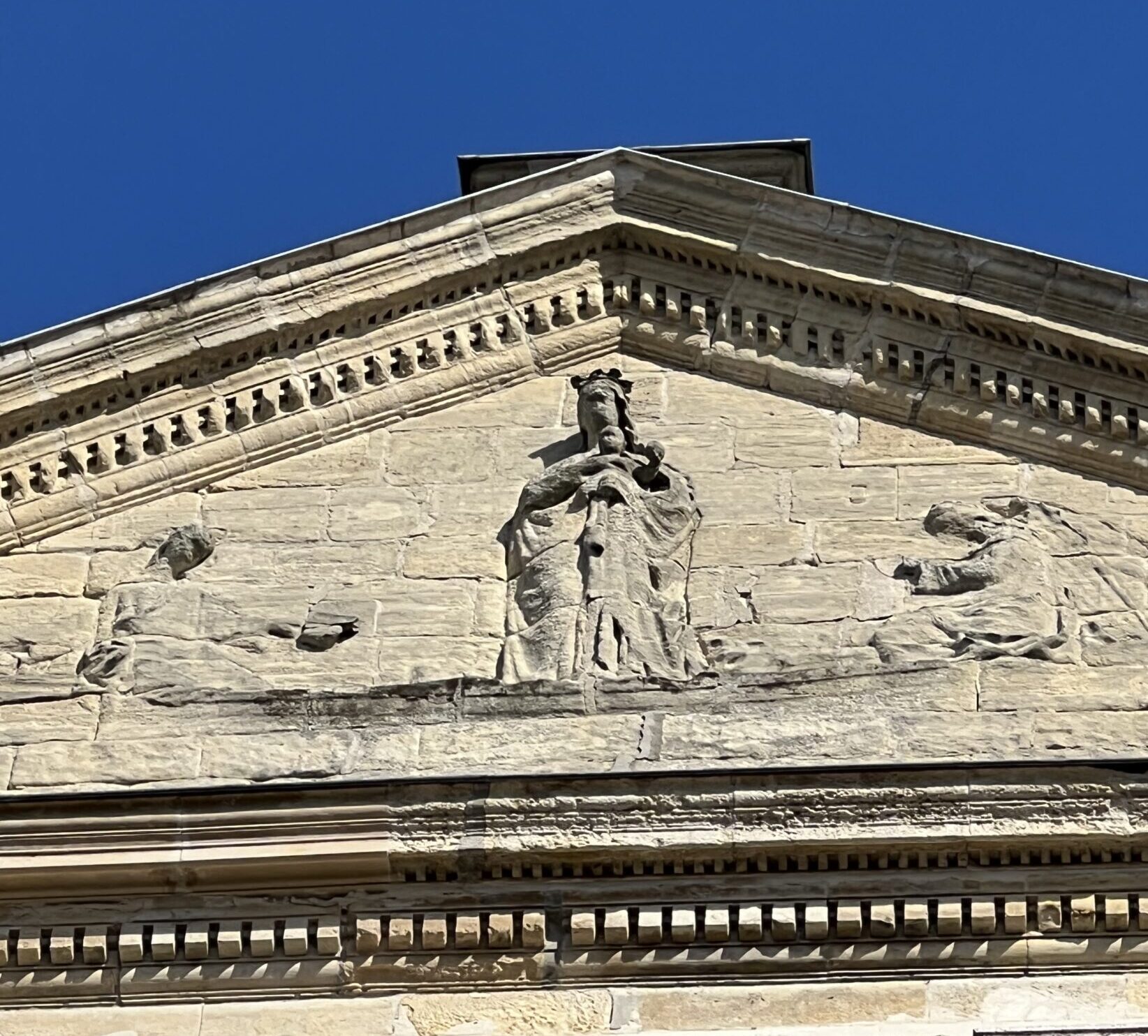
In the early 19th century, a turning point occurred. In 1820, the cathedral was designed by priest/architect Benoît-Agathon Haffreingue (1785-1871). Construction of the cathedral began in 1827, and the building was completed in 1870. There was a high-profile visit in 1853 when Empress Eugénie de Montijo (1826-1920), who married Emperor Napoleon III (1808-1873) that year, visited the pilgrimage site. In 1854, the first procession was held in the town. The statue of Mary, which stands high on the dome, was consecrated in 1857. In 1866, the church was consecrated. The church received the honorary title of basilica in 1879. The crowning of the statue of the sailing Virgin Mary took place in 1885.
In 1938, a Marian congress was organised in Boulogne from 20 to 24 July, attended by 200,000 visitors.
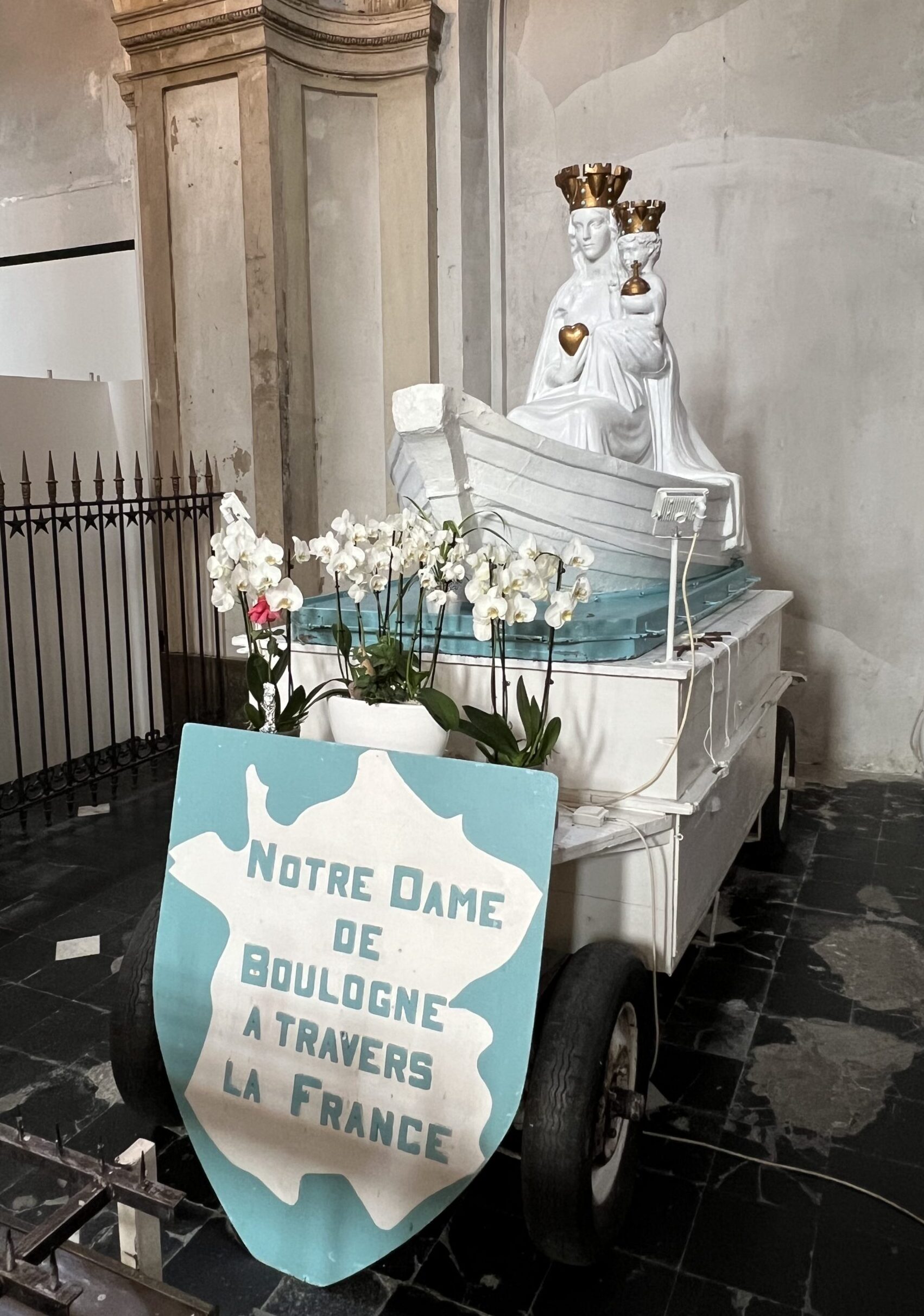
The image of the travelling Mary visited many places in France between 1943 and 1948. Four reproductions of the miraculous image of Mary travelled on separate floats through numerous cities and regions. In total, some 16,000 parishes were visited by a statue of Mary. This involved travelling over 100,000 kilometres. The reason for the French tour of the statue of Mary, named “Our Lady of the Great Return”, was to generate interest and enthusiasm during the period of German occupation during the Second World War (1940-1944). The lay movement “Catholic Action” was responsible for the entire tour.
Pilgrimage site
The current Sanctuary of Boulogne was built in the 19th century and offers views of the Liane River and the English Channel.
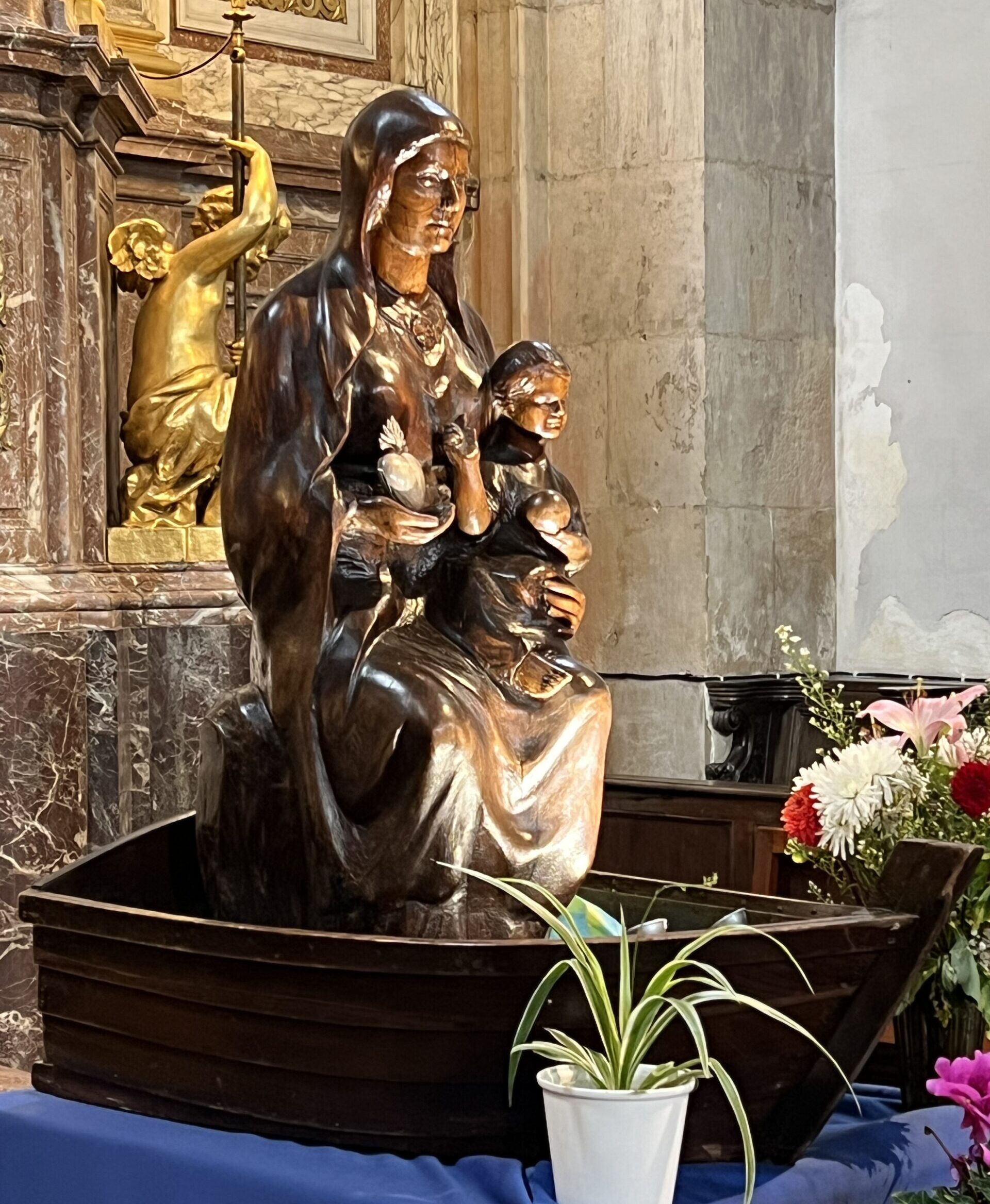
In the Neo-Classical/Neo-Renaissance cathedral stands the revered statue of Our Lady. The effigy is just over 1 metre tall and depicts a seated Mary with the child Jesus in her left arm.
The crypt of the large structure is enormous with many pillars and a lot of religious art.
The cathedral is open daily.
ACCESSIBILITY
Boulogne-sur-Mer lies on the English Channel in the northwest of France.
The address of the Cathedral of Our Lady is
Parvis Notre Dame 2, 62200 Boulogne-sur-Mer.
Current information can be found on the medium
www.boulonnaisautop.com
Experience
The high-lying, ancient city can be seen from afar and the cathedral stands out above all the buildings. The tall spire reaches over 100 metres.
I park the car and walk up to reach the impressive house of God. From there I have a beautiful view of the city, harbour, river and surrounding area.
Next, I'll enter the Cathedral of Our Lady of the Immaculate Conception. A little later, I'm standing by the statue of Our Lady of Boulogne. It feels like a privilege to be here. What a history this place has! When I get to the back of the church, I close my eyes and think about the history of this sanctuary. What experiences, from good to evil, with veneration and destruction. In the cathedral, I read a text about the great return of the statue of Mary, which made a tour of France in 1943. During the tour in the cathedral, I see the hand of the statue of Mary that was lost in a fire. This makes me silent.
After praying in the cathedral, I go down to the lower town and reach the river Liane for a walk. Many small boats lie on the bank. Then I look up and see the cathedral…

Environment
The harbour and the beach in Boulogne-sur-Mer are also worth visiting. Nearby the town are the harbour towns of Calais, 25 km away, and Dunkirk, 75 km away. The Flemish coast is not far, and the seaside resort of De Panne is 100 km away.
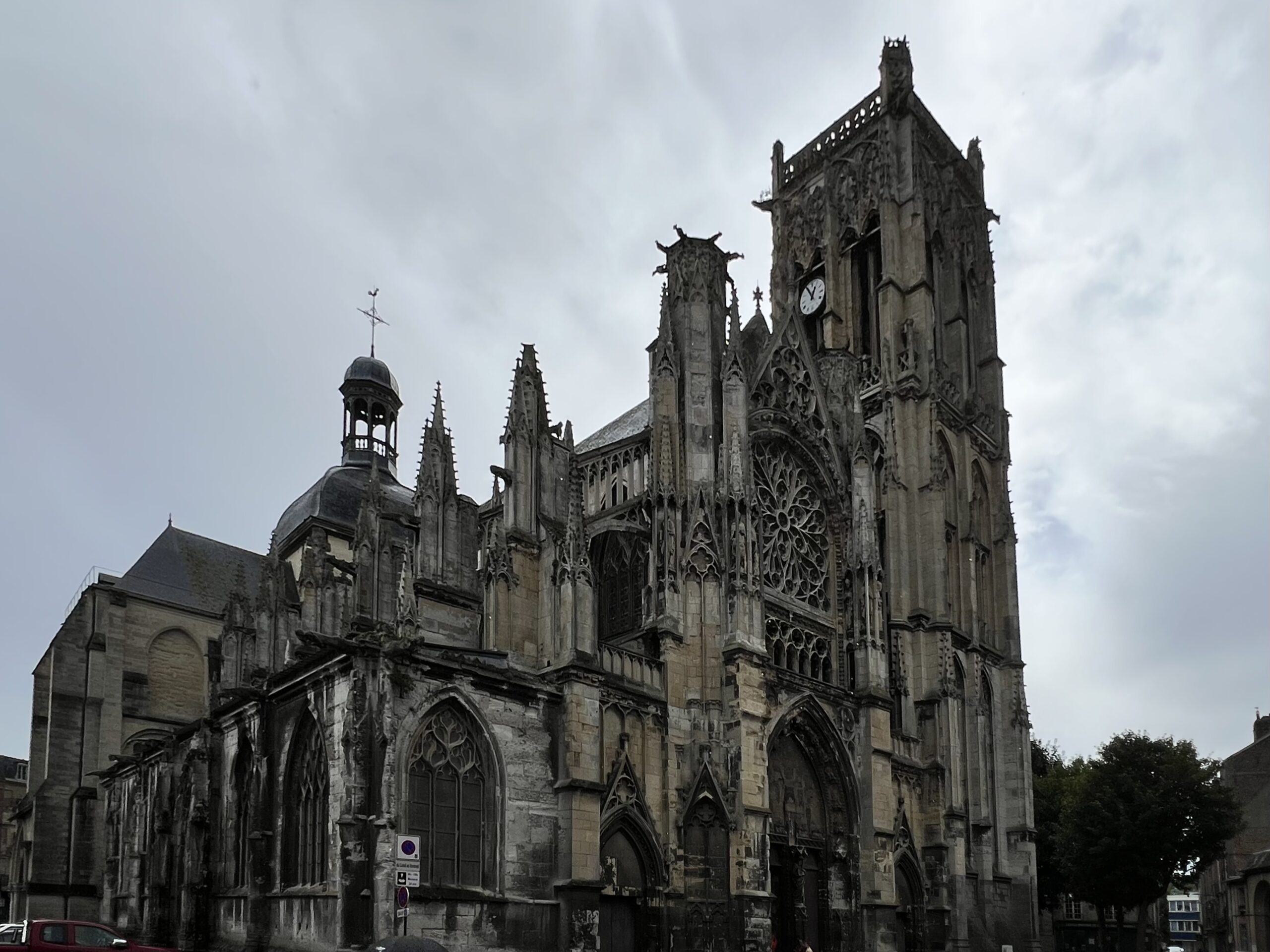
Travelling from Dieppe to Boulogne-sur-Mer means travelling 144 km north. In the centre of the port city, which suffered greatly in the Second World War (1939-1945), stands the church dedicated to Saint James. The large building was realised over several decades, namely from the 13th century until the end of the 14th century. The church lies on the route to the Spanish pilgrimage site of Santiago de Compostela. The church building has been a monument since 1840.
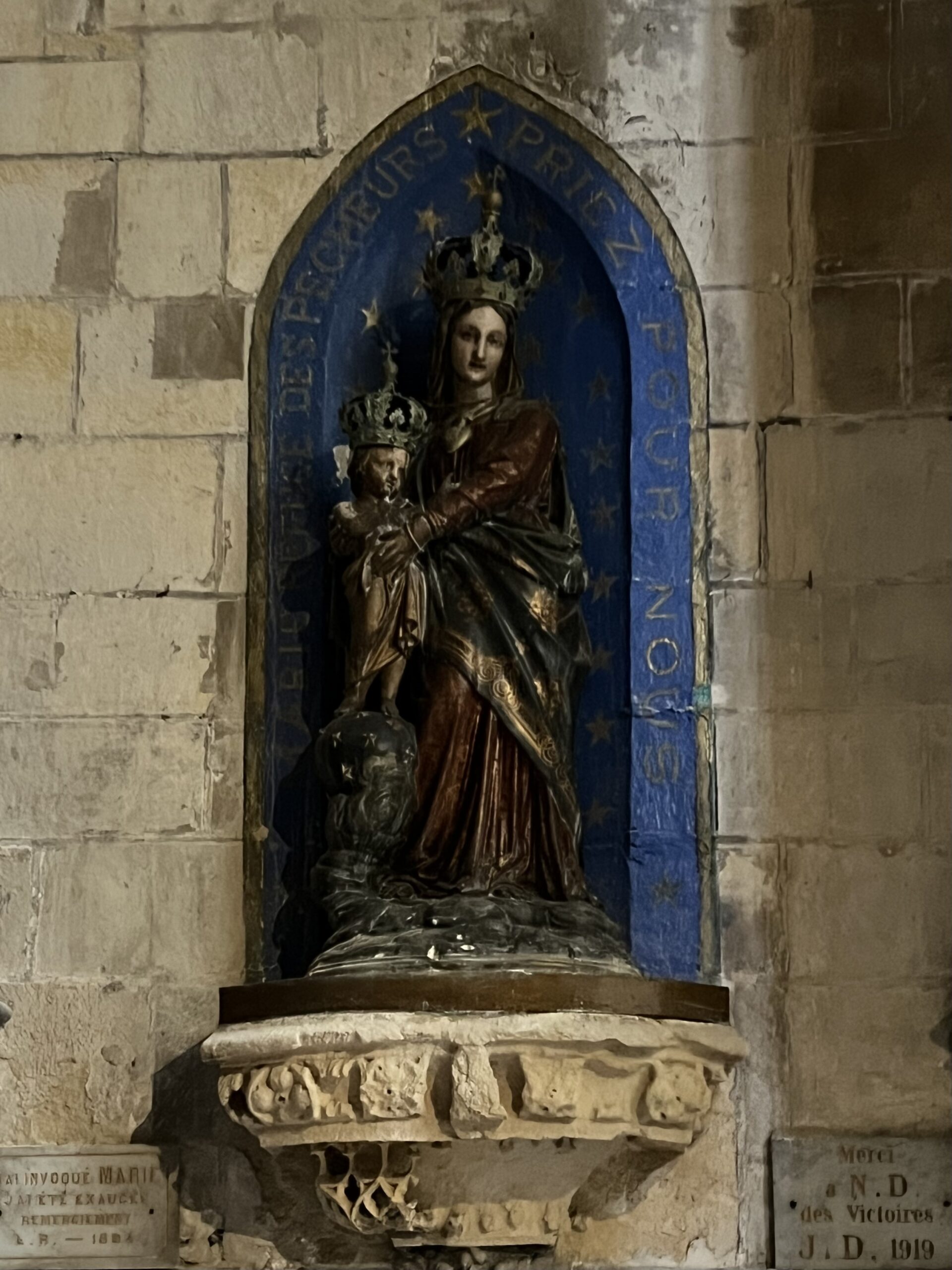
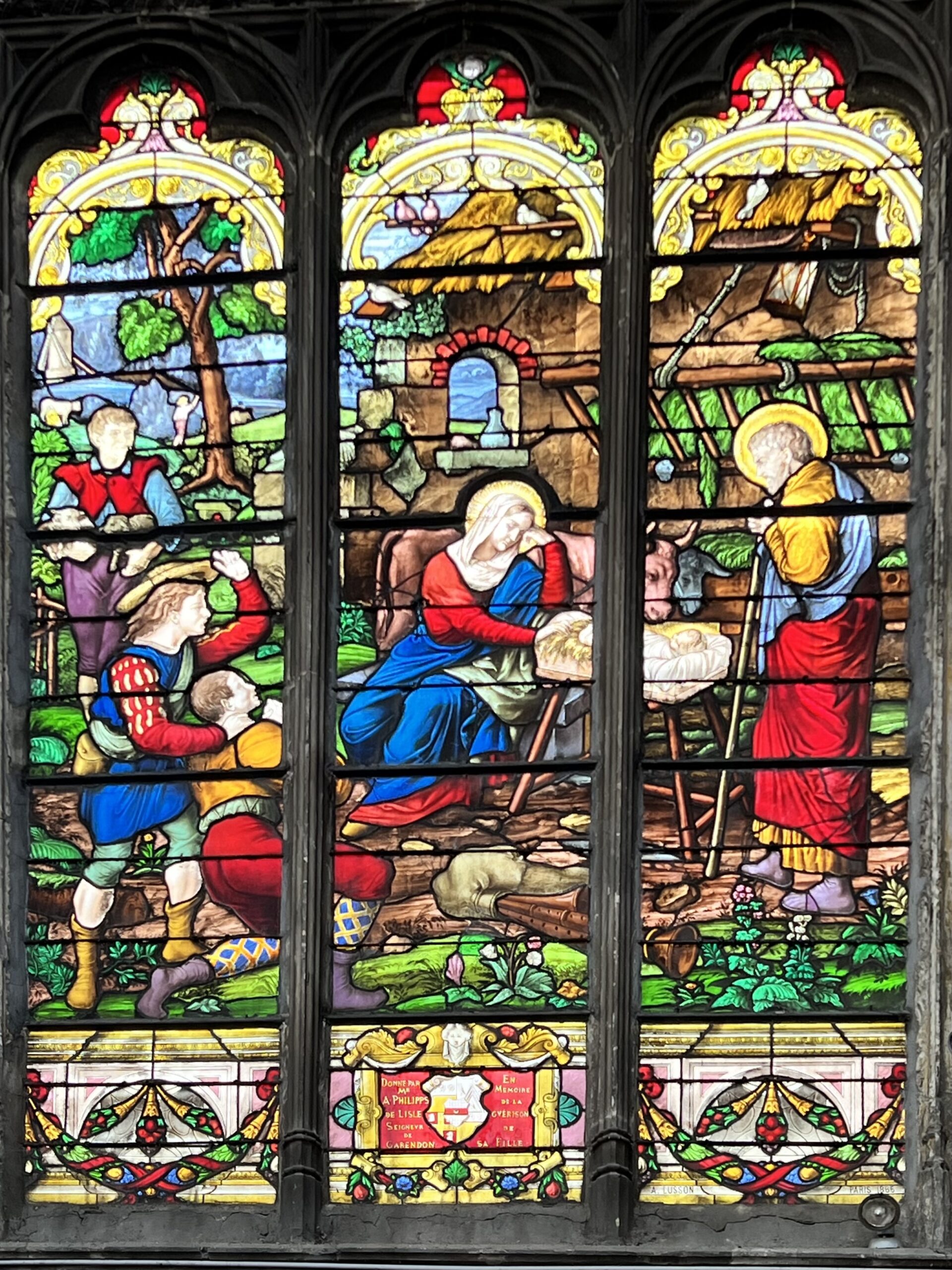
In the church at Dieppe, many statues can be seen, including some of Mary. In the large building, paintings hang depicting scenes such as Mary meeting her cousin Elizabeth. Colourful stained-glass windows show scenes from the life of Our Lady.
~~~

 Nederlands
  English (UK)
  Deutsch
  Français