History
The name Covadonga means “Grotto of Our Lady”. Originally the name comes from the Latin “Cova Dominica”. In Spanish it is “Cueva de la Señora”.
The Sanctuary of Covadonga has an ancient history. In 718, Pelayo (685-737) was proclaimed King of Asturias. He was the victor in the mythical “Battle of Covadonga” in 722. This battle against Moorish Muslim rule lasted from 718 to 722. Pelayo began the Reconquista, the Christian reconquest of the Iberian Peninsula from the Moors. This was achieved with the help of Our Lady of Covadonga. This victory saw the birth of the Kingdom of Asturias. Pelayo was the first king of Spain.
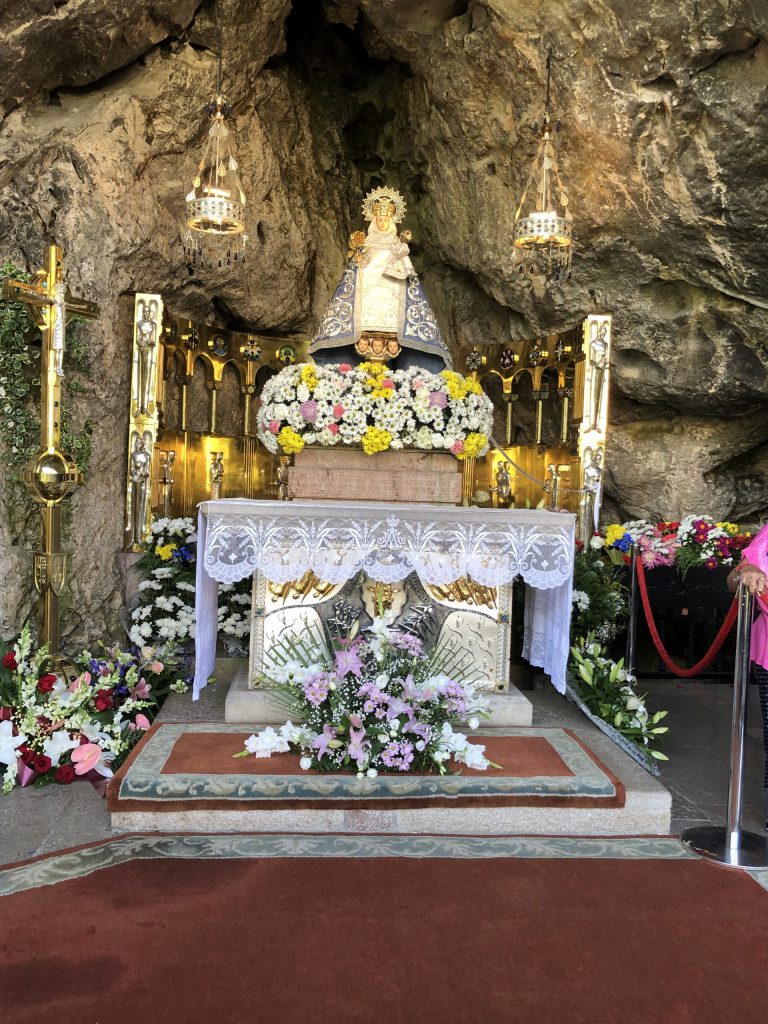
Our Lady of Covadonga is the official patron saint of Asturias and is deeply beloved by its residents. Our Lady of Covadonga is called “La Santina” (The Little Holy Mary). The image is located in the Holy Grotto.
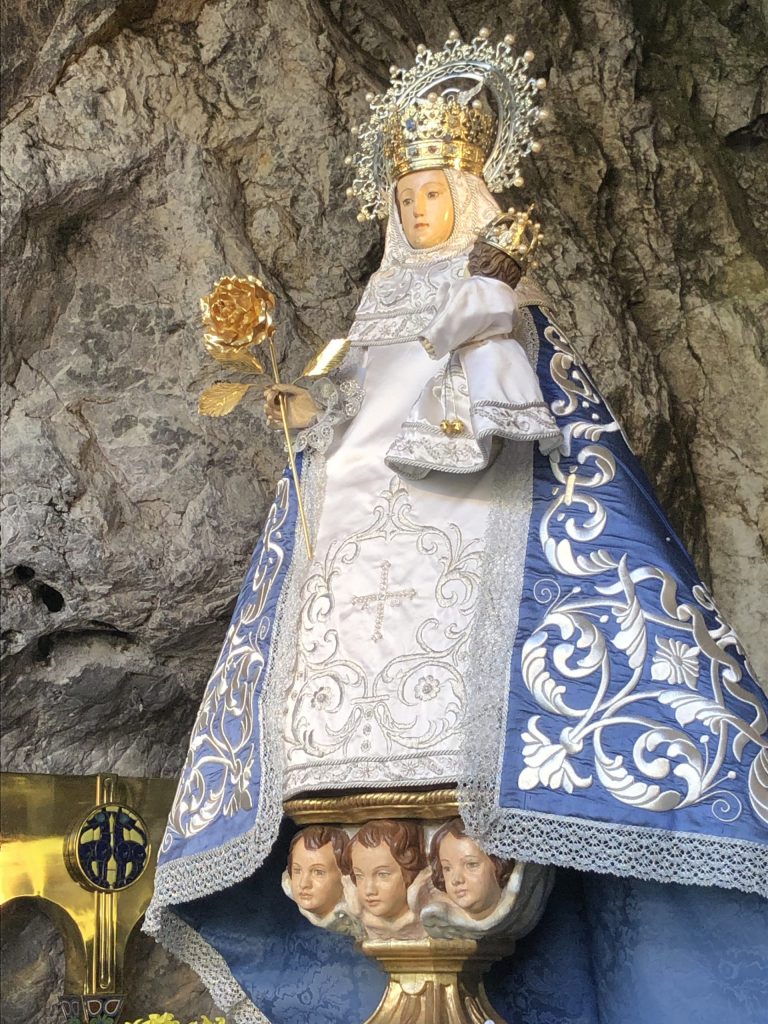
The original Grotto Chapel was made of wood. In 1777, it burned down, and everything was lost. The current statue of Mary dates from the 16th century and was donated in 1778 by the Chapter of Oviedo Cathedral as compensation for the statue lost in the fire.
The current monastery was built in the 16th century, on top of the no longer existing 11th-century building. The San Fernando Church was completed at the end of the 16th century.
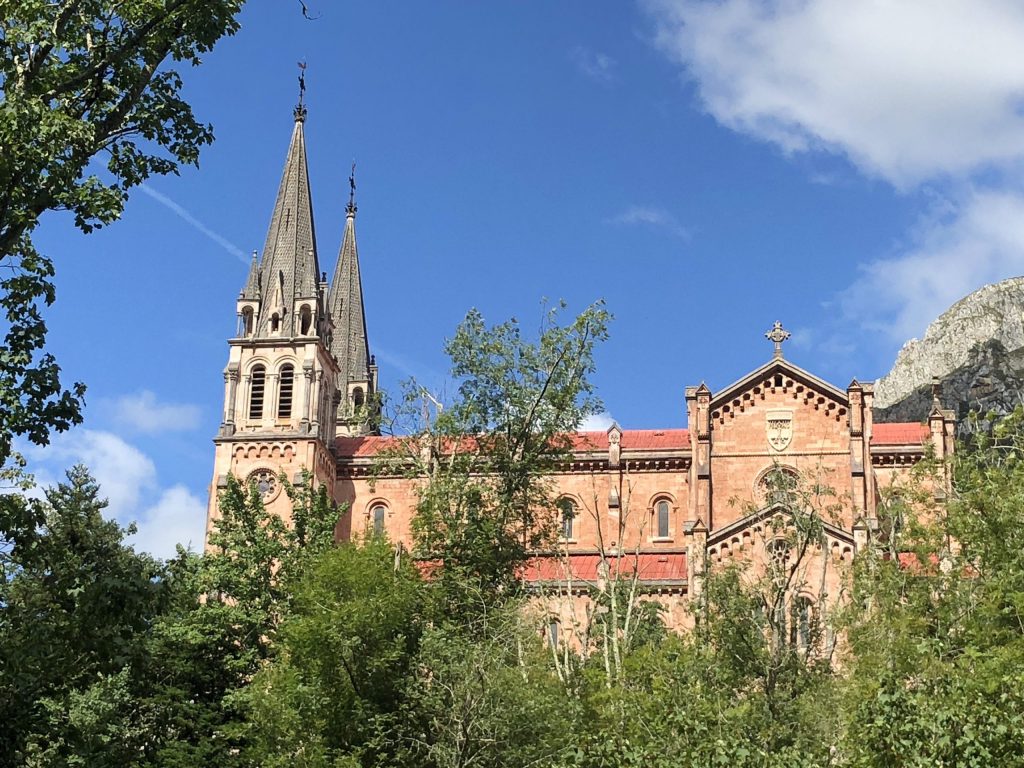
The imposing basilica stands near the monastery. The architect of this structure is Frederico Aparici, and the realisation was overseen by Ramón Martinéz Vigil. Work began in 1877, and the church was consecrated in 1901. The whole is constructed from light pink marble stones, which came from the mountains around Covadonga. Pope Leo XIII (1810-1903), whose papacy lasted from 1878 to 1903, elevated the church to a basilica. In 1918, the statue of the Virgin Mary was crowned by Pope Benedict XV.
In the 1940s, the Holy Grotto Chapel was realised. The chapel was built in the Neo-Romanesque style, with the architect being Luis Menéndez Pidal.
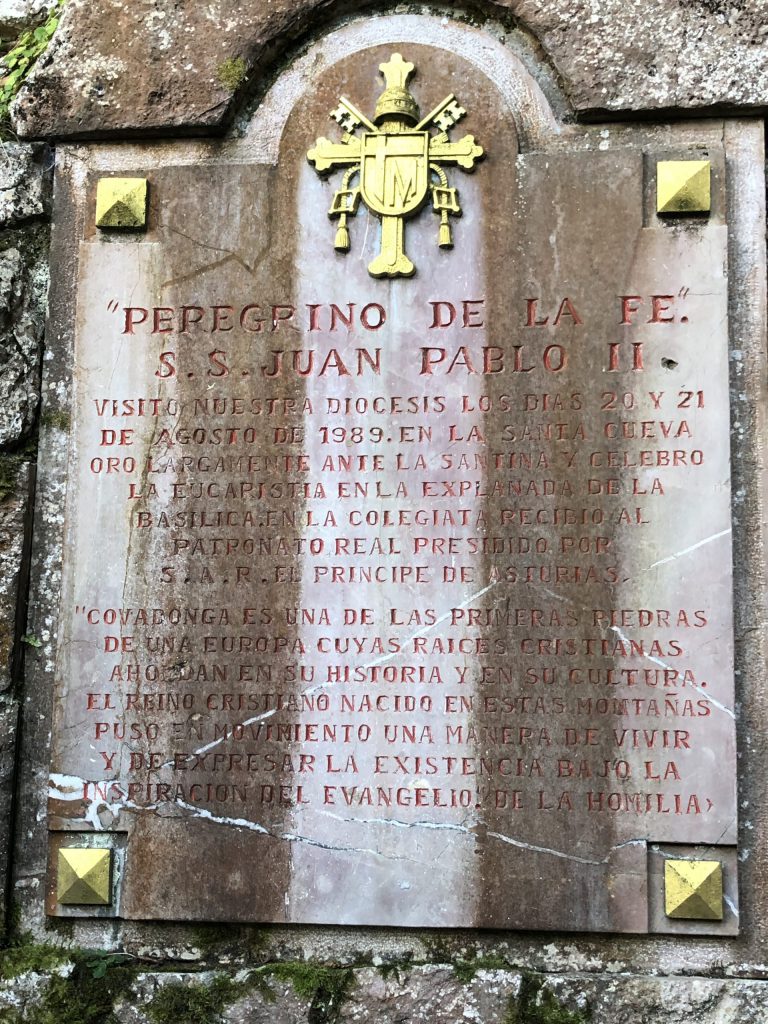
Cardinal Roncalli, later Pope John XXIII, visited Covadonga in 1954. The Spanish royal couple, Juan Carlos I and Sophia, along with their son Felipe de Bourbon, later King Felipe VI, visited the sanctuary in 1980. Pope John Paul II came to Covadonga in 1989.
The nearby town of Cangas de Onis is the seat of the kingdom of Covadonga.
Pilgrimage site
The Sanctuary of Covadonga is located in a steep and narrow valley, surrounded by mountains and limestone rocks, with the River Covadonga flowing between them. The sanctuary is a place where God meets people through the intercession of the Virgin Mary. The Sanctuary of Covadonga is the spiritual and religious centre for the people of Asturias. The sanctuary and its wide surroundings form Spain's natural paradise.
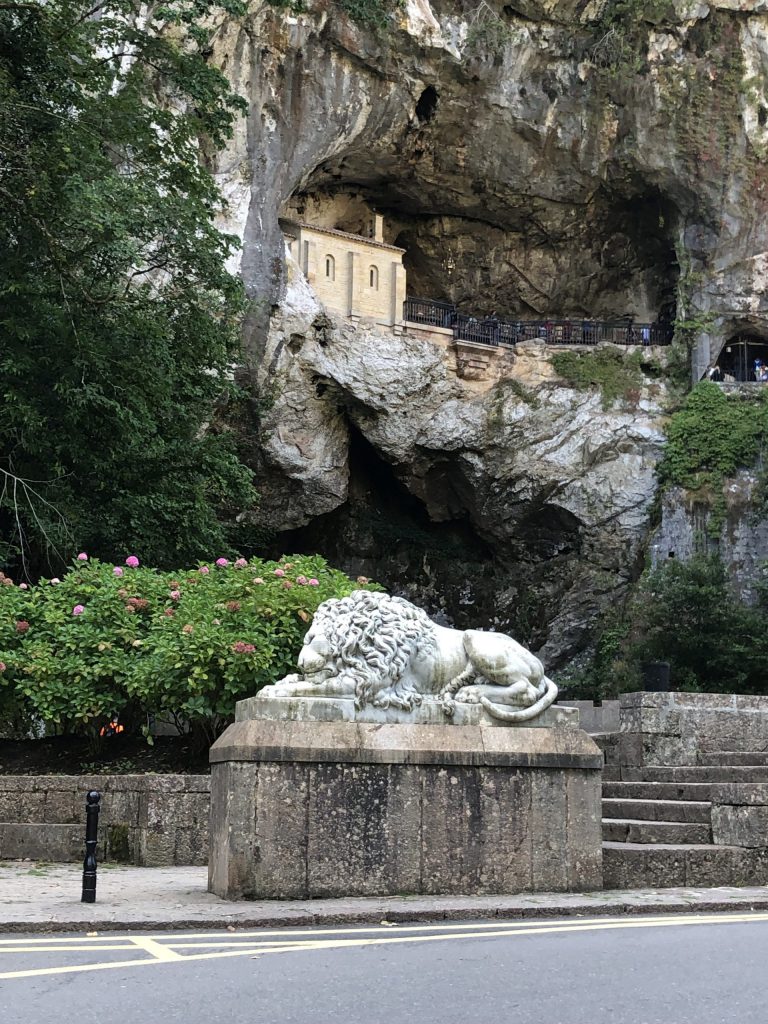
On both sides of the access road, a lion stands guard at the entrance to the sanctuary. Both lions are made of Carrara marble. Downhill from the lions lies a fascinating park.
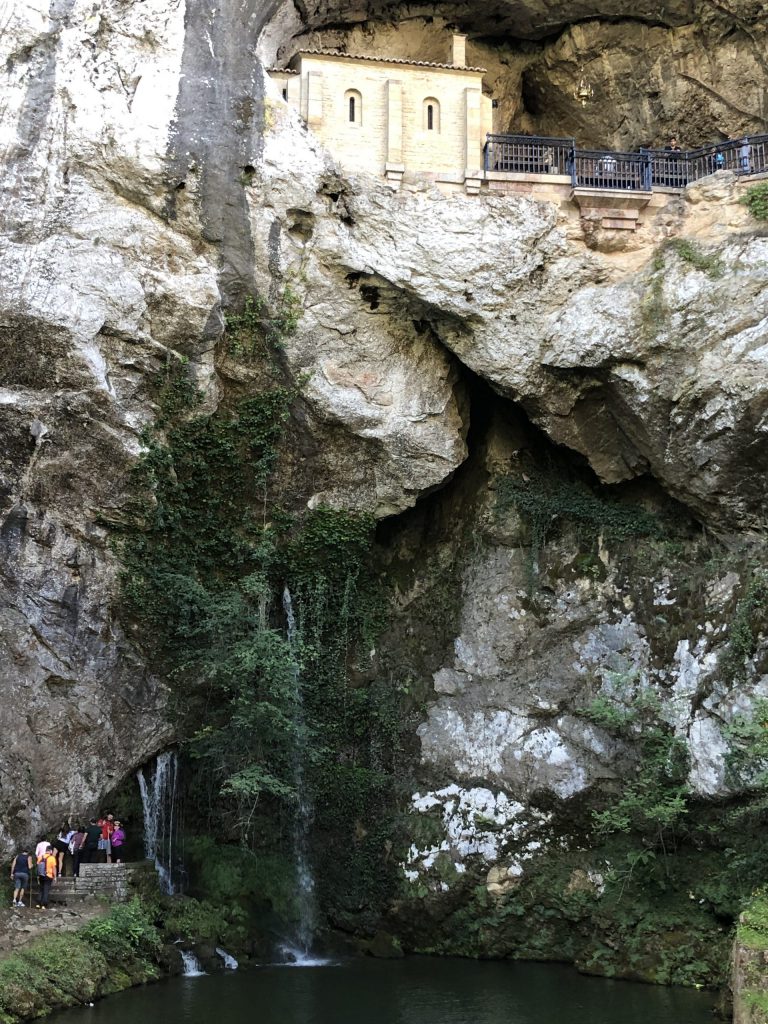
The fountain with seven jets is located below the `holy Grotto. It is a special place to cherish for young women of marriageable age. It is said that the Virgin of Covadonga has a real, clear fountain and young women who drink from it will become brides within one year.
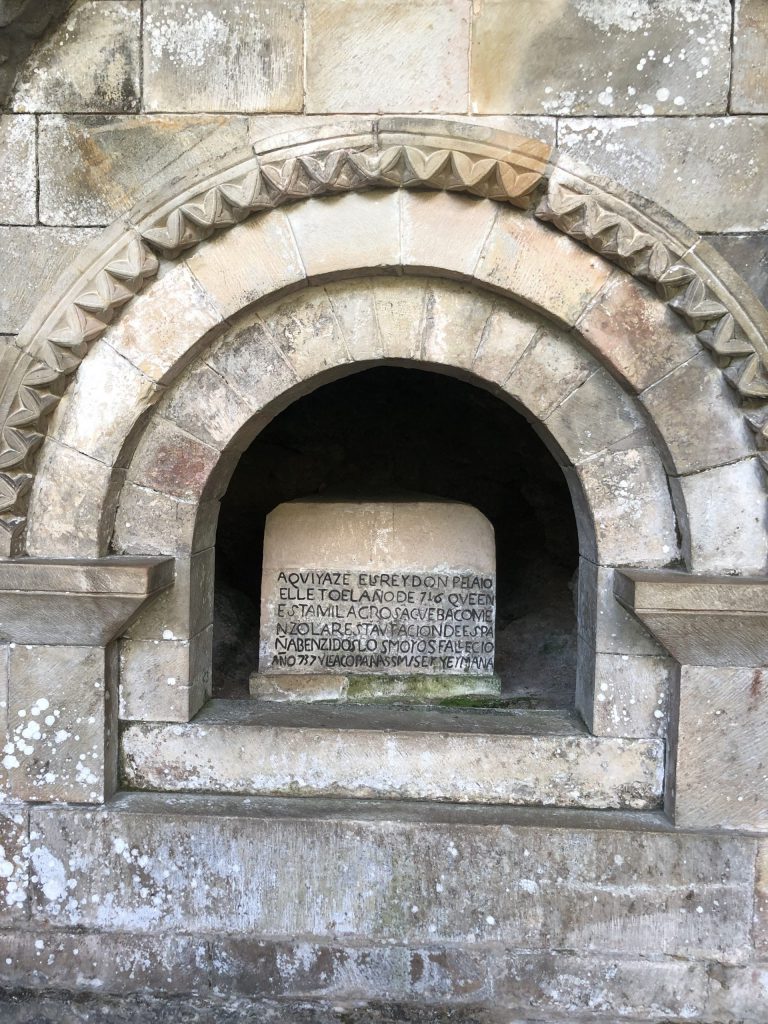
To reach the Holy Grotto, “the Stairway of Promise”, with 101 steps, must be climbed. The Holy Grotto is the most important part of the sanctuary. Just before the statue of Our Lady, the tomb of Pelayo, his wife Gaudiosa, and his sister can be seen. In the grotto stands “La Santina”. Here all visitors come to pray and greet Her.
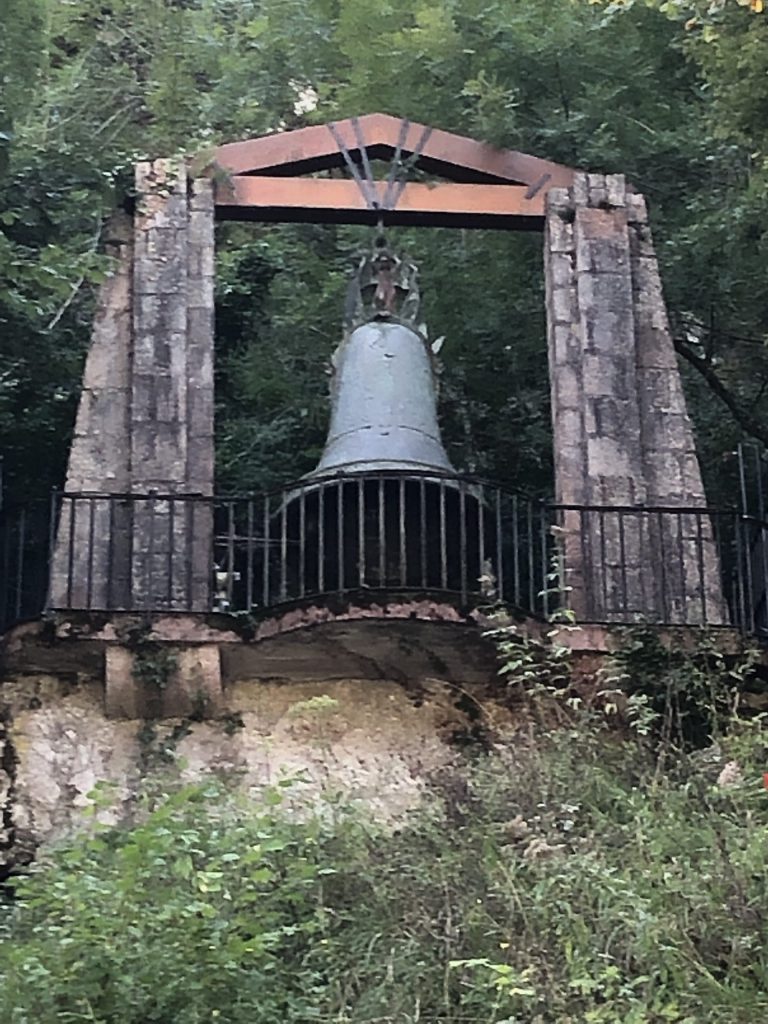
At the entrance to the passage leading to the Holy Grotto, a large bell can be seen at a height of approximately 10 metres. This bell was made at the end of the 19th century and weighs 5000 kilograms and is 3 metres high. The large bell won first prize and an honorary medal in Paris at the 1900 World Fair. The distinguished bell is a donation to the sanctuary.
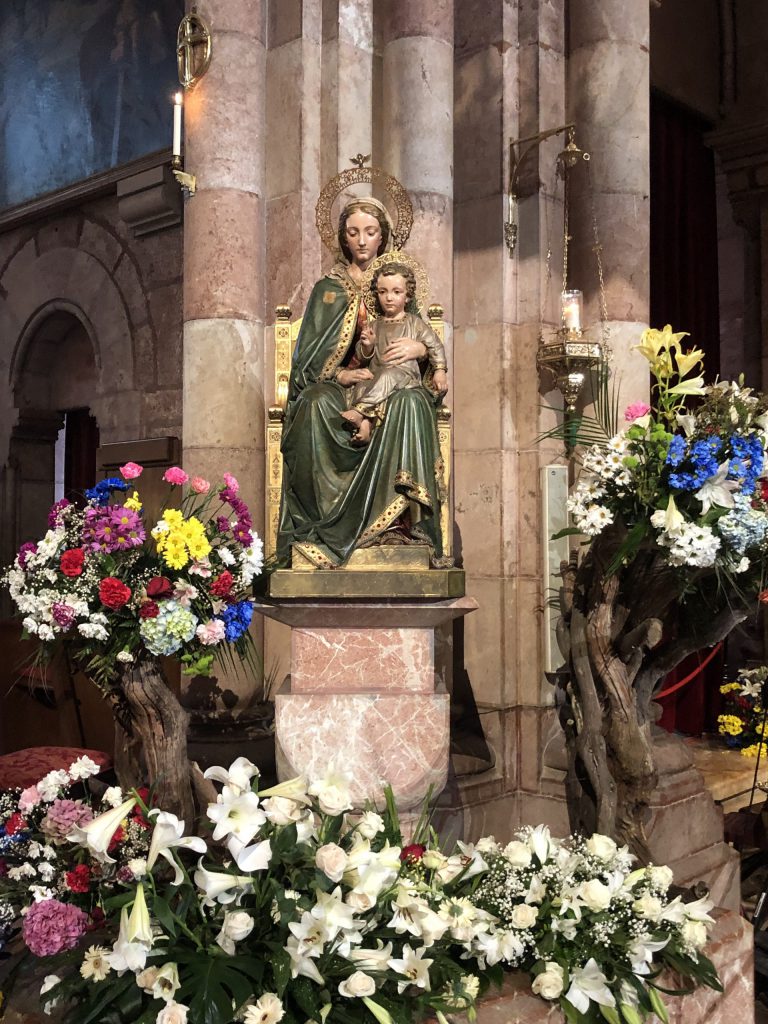
The immense basilica showcases the grandeur of Covadonga's past. In the large space, many artworks can be admired, including “The Annunciation” by Vicente Carducho and a statue of “Our Lady of Covadonga” by Juan Samsó. The monument in memory of King Pelayo stands to the right in front of the basilica. The work dates from 1965 and was created by Gerardo Zaragoza.
The Covadonga Museum is also located in the sanctuary. It was built as a hotel and later became a minor seminary. Nowadays, the school choir rehearses there and it is a museum.
The Sanctuary of Covadonga is Spain's most visited Marian pilgrimage site.
ACCESSIBILITY
Covadonga is located in the north of Spain, in the east of Asturias within the Picos de Europa National Park. Covadonga belongs to the municipality of Cangas de Onís and is situated 10 kilometres from this town.
Address: Sanctuary of Santa Maria de Covadonga, 33589 – Covadonga, Asturias, Spain.
www.realsitiodecovadonga.com
Experience
The two tall towers of the basilica invite me to come closer from afar. I know the invitation, as I have been here before.
After parking the car, I walk up the access road to the sanctuary. As I get closer to the Covadonga Sanctuary, I see about ten stalls offering devotional items. That's for later, and I continue onwards and upwards.
Two large lions welcome me at the entrance of the sanctuary. After these symbolic sentinels, I proceed to the Stairway of Promise, where 101 steps await me. Before reaching “La Santina,” I pass by the tomb of Don Pelayo, the first king of Spain. What a formidable warrior he must have been!
The Holy Grotto is impressive; a colourful, ancient beauty with rich views. It is busy, where every visitor to this sanctuary visits “La Santina”. This is the place for a prayer to Our Lady of Covadonga.
Next, I go through a somewhat dark rocky passage to the place where candles are burning, and I emerge into the open air again. To the left, at a height of about 10 metres, hangs the large bell, from which no sound emerges.
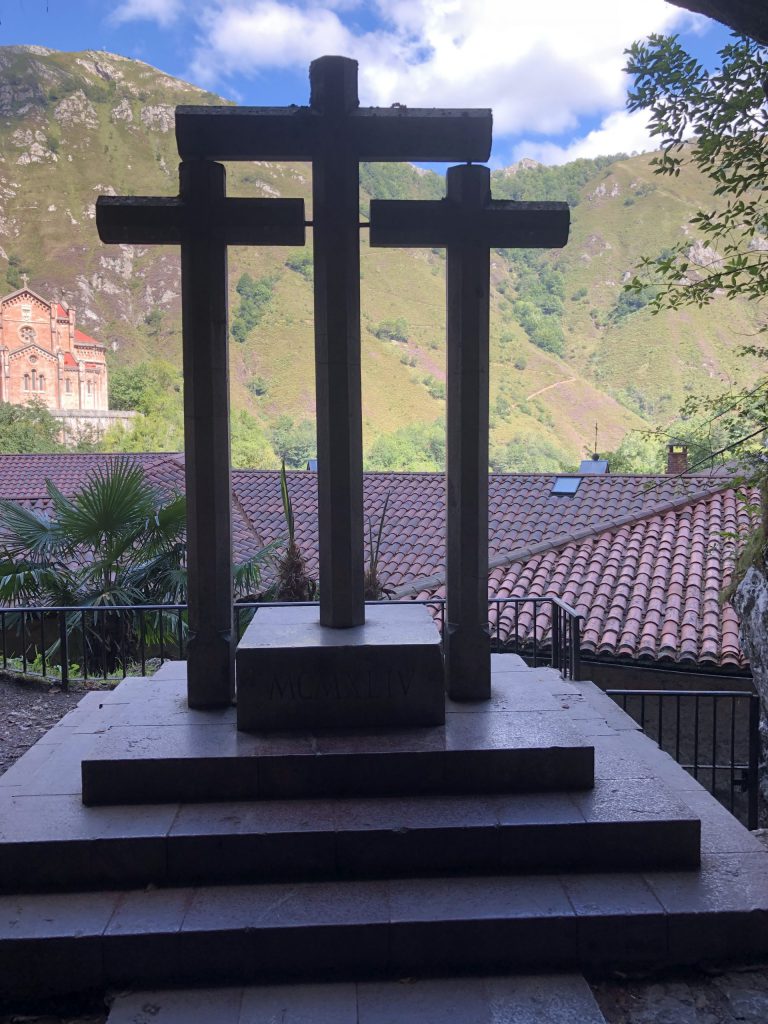
I walk further and step into a large square, where the basilica dominates. As I stand before the basilica and look up at the tall towers, the grandeur of the sanctuary becomes even clearer to me. Then I look to my left and see the more than man-sized statue of Don Pelayo. What a warlike warrior is depicted here.
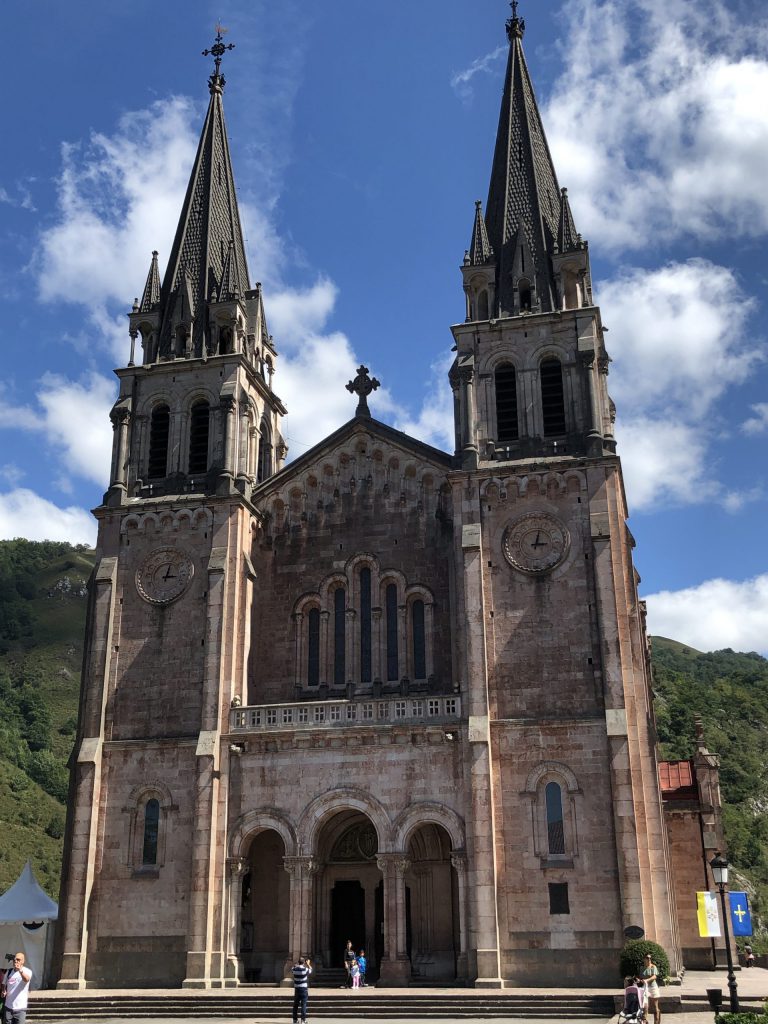
The basilica is the next station. Here too, there are many people, some praying and some looking around. Step by step, I make my way further into the basilica. What a grand house of God this is! What splendour there is to behold! Now is the opportunity to look closely and enjoy all this beauty. Afterwards, I will stand before an image of Mary and pray to Her.
After visiting the basilica, I'm going to the museum and afterwards I'll buy some candles and a booklet about this shrine.
When I'm back at the two watchful lions, I'll see the fountain with the seven streams. That's the opportunity for young women to get married within a year.
Before heading to the car, I’ll buy some more devotional items from a stall run by a driven saleswoman. A token of my visit to this shrine for my friends. Once again, I look back on a more than successful visit to the Sanctuary of Covadonga. Goodbye, “La Santina” …
Posted: 15 April 2020.
~~~

 Nederlands
  English (UK)
  Deutsch
  Français