History
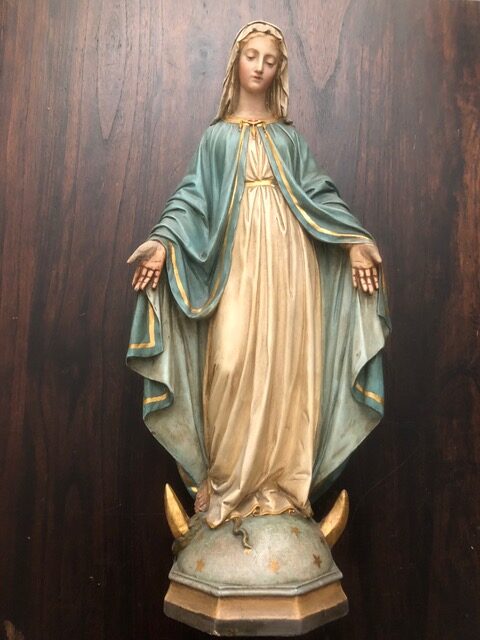
Tarazona has a history stretching back over 2,000 years, with the changing rule of various powers. Marian devotion gained significant importance in the 17th century. This came about through the discovery of the head of a 15th-century religious statue during maintenance work on the bank of the River Queiles.
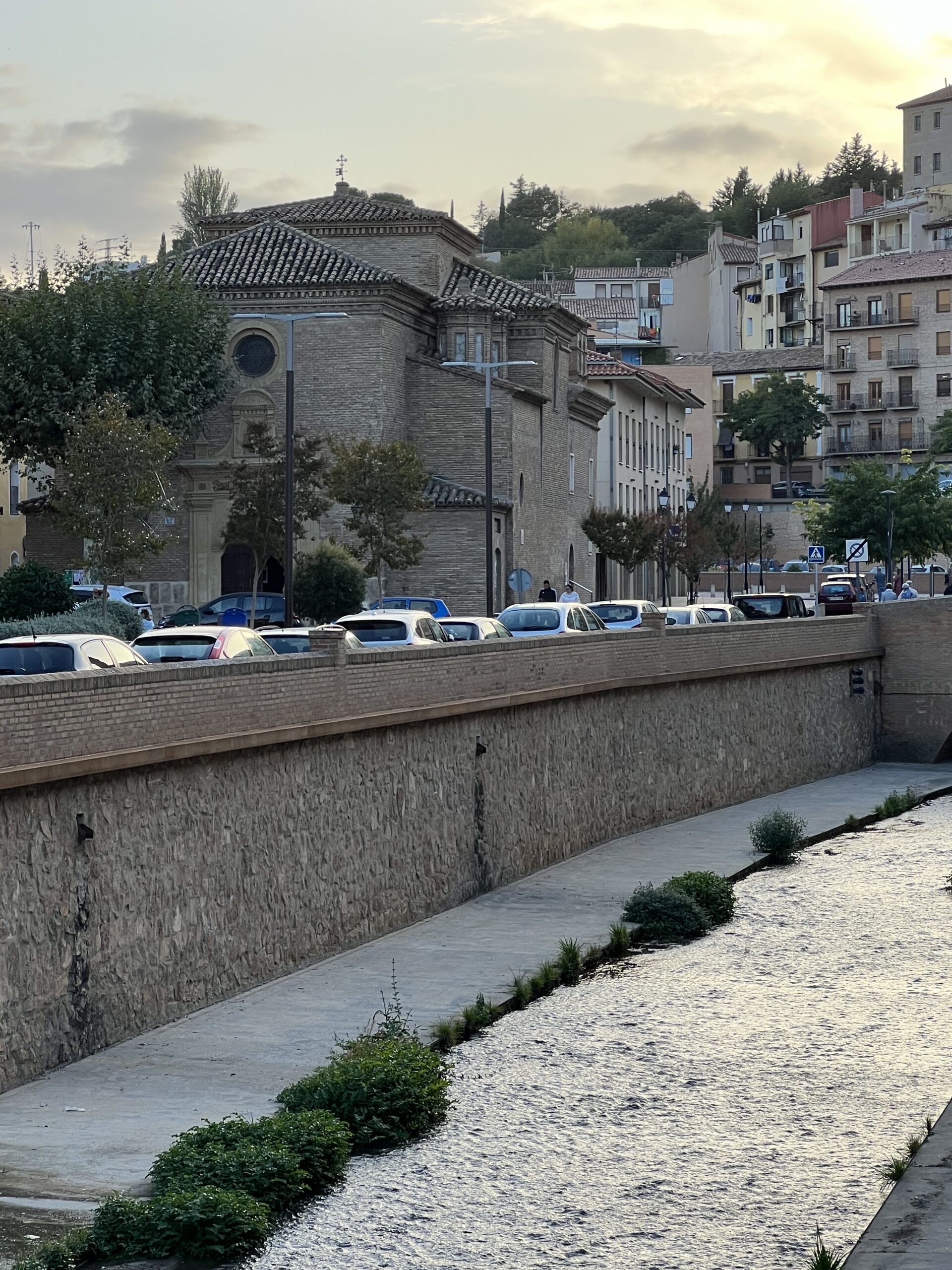
In 1658 and 1660 there were floods of the Queiles and the bridge over the river was also destroyed. Restoration works took place in 1667. On 7 November 1667, deep digging was carried out on the banks of the Queiles to repair the foundations of the quay wall and then to raise the walls. During the works, a stone is found on the left bank of the river. The face of Mary is immediately visible. It is a carved stone, crowned female head, dating from the second half of the 15th century. The stone with the head of the Virgin Mary is thoroughly cleaned and placed on a wooden carved statue. This is then polychromed, thus forming a whole.

It is said that the statue lay underground in the river for years so as not to hear the many insults against the Catholic faith by the ruling Moors (Arab anti-Catholics).
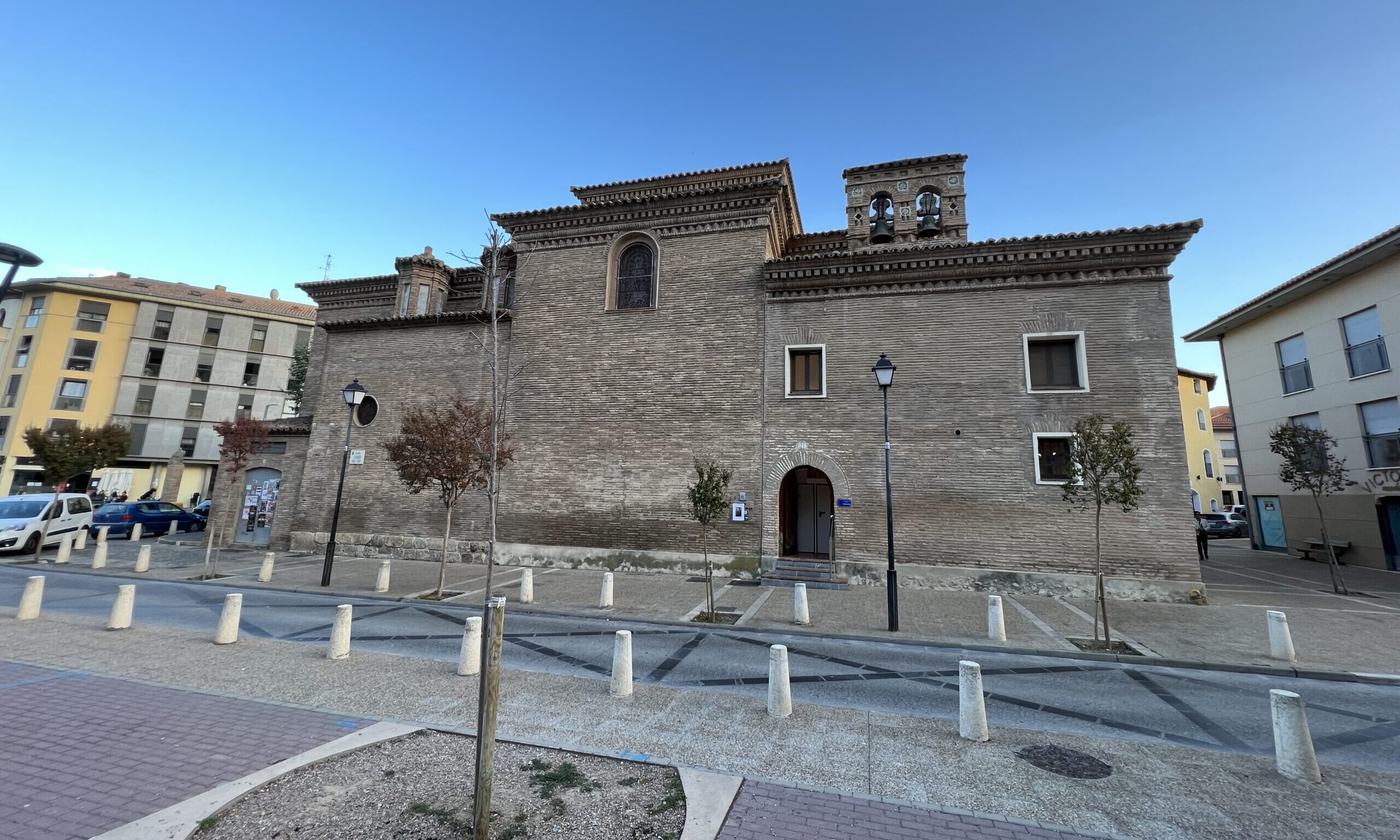
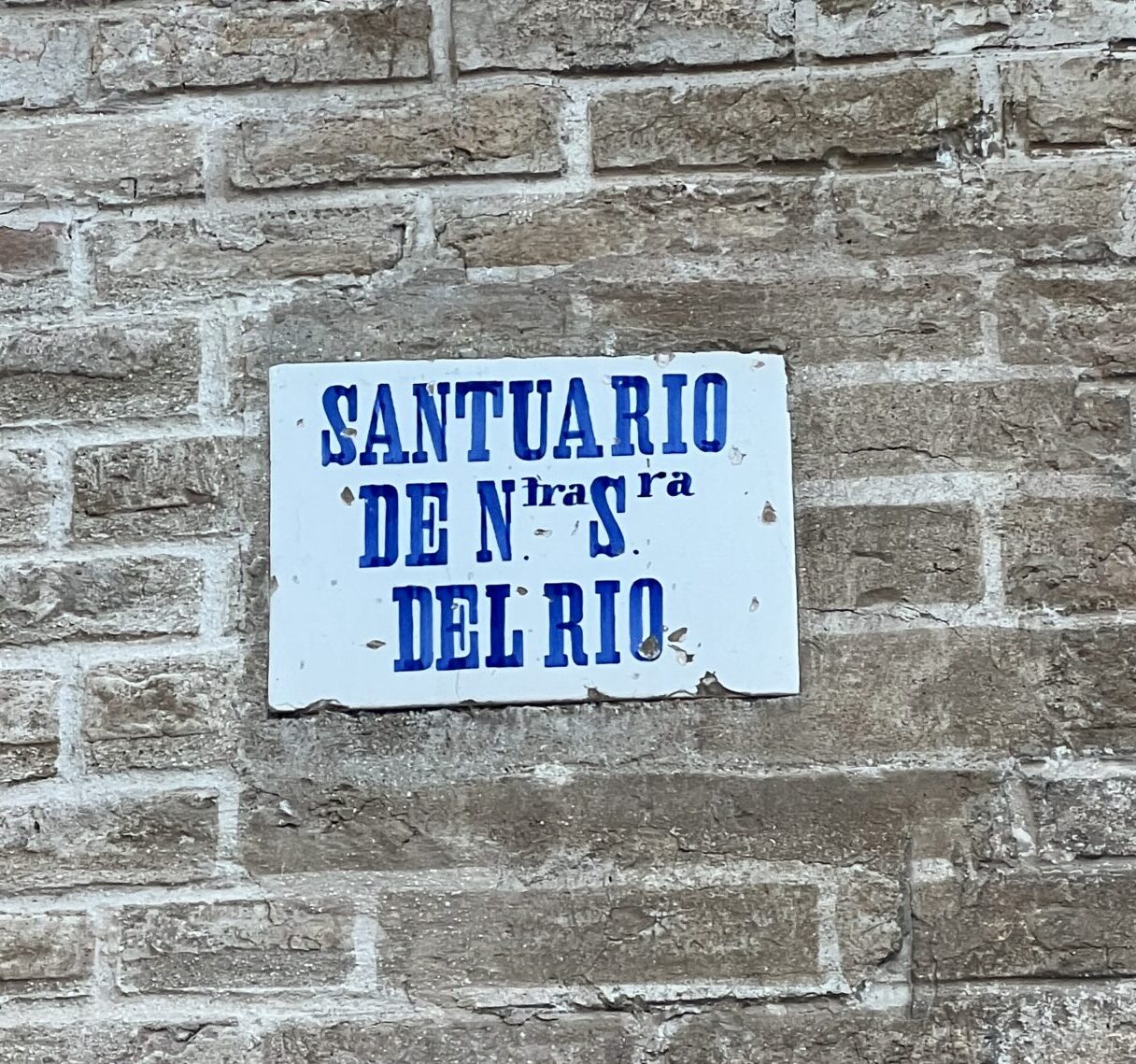
In 1668, the city council decided that a chapel should be built for the statue of “Virgen del Rio” (Virgin of the River). The decision was to build it on the other side of the river, specifically on the right bank. Ultimately, a sanctuary was built here, financed by donations from citizens and the city council. Miguel Escartín y Arbeza (c. 1587-1673), Bishop of Tarazona (1664-1673), was involved in the construction. A Baroque altarpiece was added to the church, featuring scenes from the life of Mary, including her birth, presentation in the Temple, annunciation, and assumption. On 28 August 1672, the statue of Mary was given a new place in the church of the newly completed sanctuary. The Virgin of the River (“Virgen del Rio”) was then the patron saint of Tarazona.
In 2009 and 2010, the church and altar were restored.
Pilgrimage site
The Church of the Virgin Mary of the River lies right by the Queiles river. Inside the church, the niche with the statue of Mary can be seen. Four columns flank the place of the image of Our Lady.
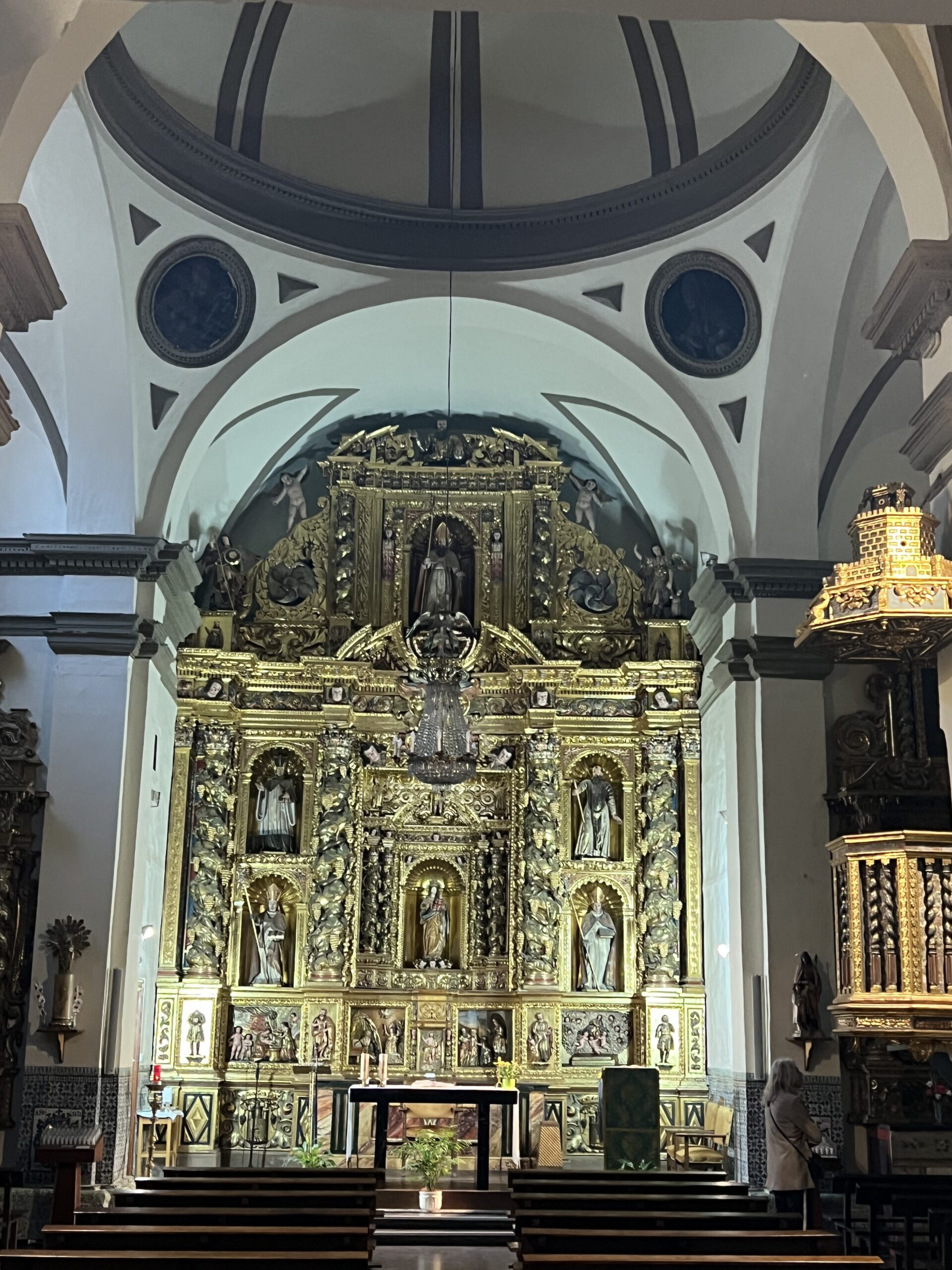
The feast day of the city's patron saint is November 7th, as it was on that day in 1667 that the head of the statue of Mary was found.
The church is a monument and the door is open to visitors almost daily.
ACCESSIBILITY
Tarazona is located in the province of Zaragoza, in the region of Aragon. The town is situated 90 km west of Zaragoza and 110 km south of Pamplona.
The church's address is Calle Virgen del Rio 17, 50500 Tarazona.
E-mailadres: turismo@tarazona.es
Experience

In Tarazona, I will visit the Gothic cathedral of Santa Maria de la Huerta from the 12th century and the old church “Iglesia de Santa Maria Magdalena”. Afterwards, I will go to the church of the Virgin of the River, namely the “Iglesia Virgin del Rio”.
Above the high entrance door stands a white statue of Our Lady. I feel that I am allowed to enter by Her blessing. In the church of Maria van de Rivier, I first go to the main altar and there I see four imposing columns. In the middle stands the much-venerated statue of Mary, which is called the Virgin Mary of the River here. The head was found centuries ago in the river that flows next to the church.
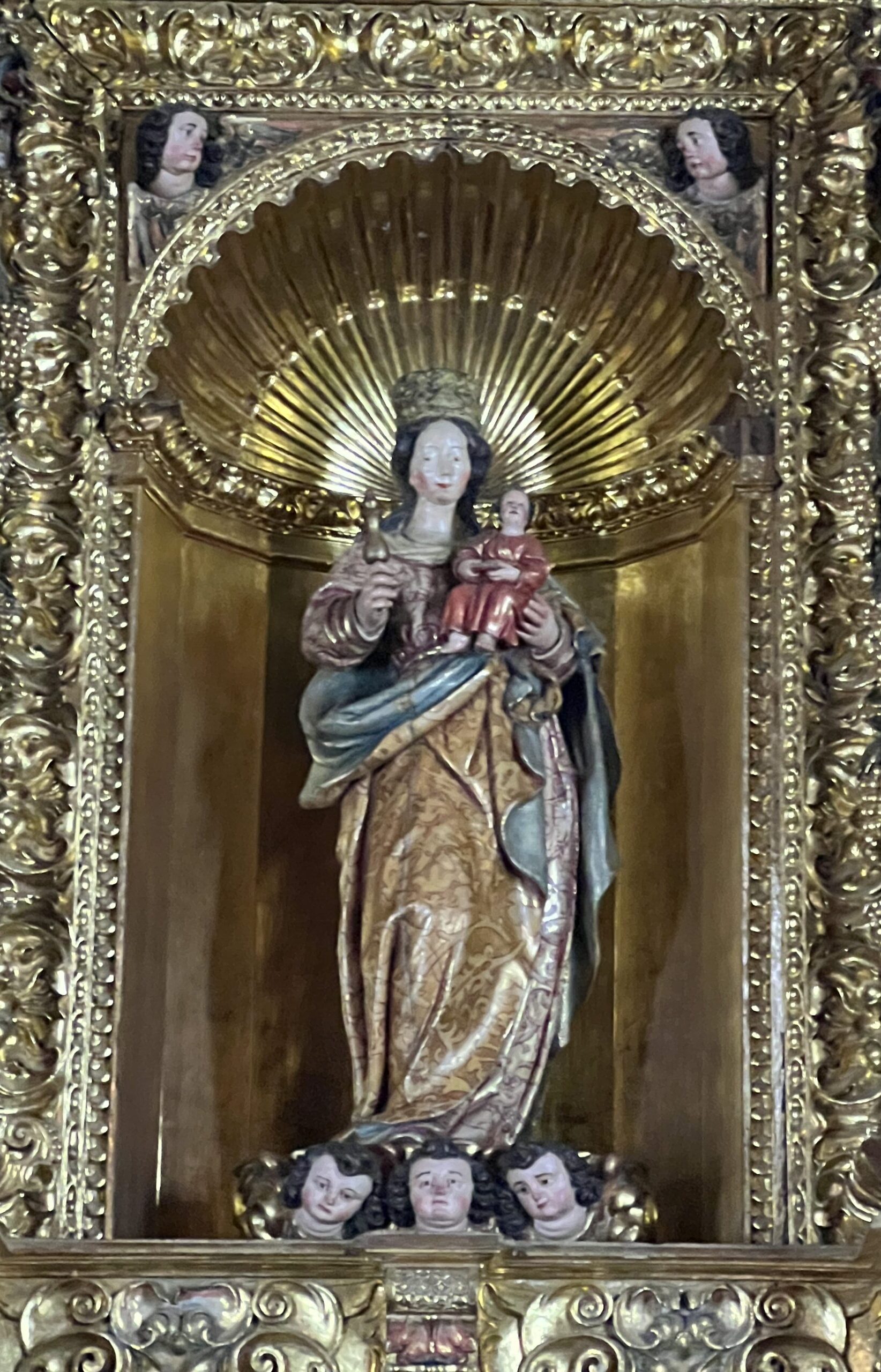
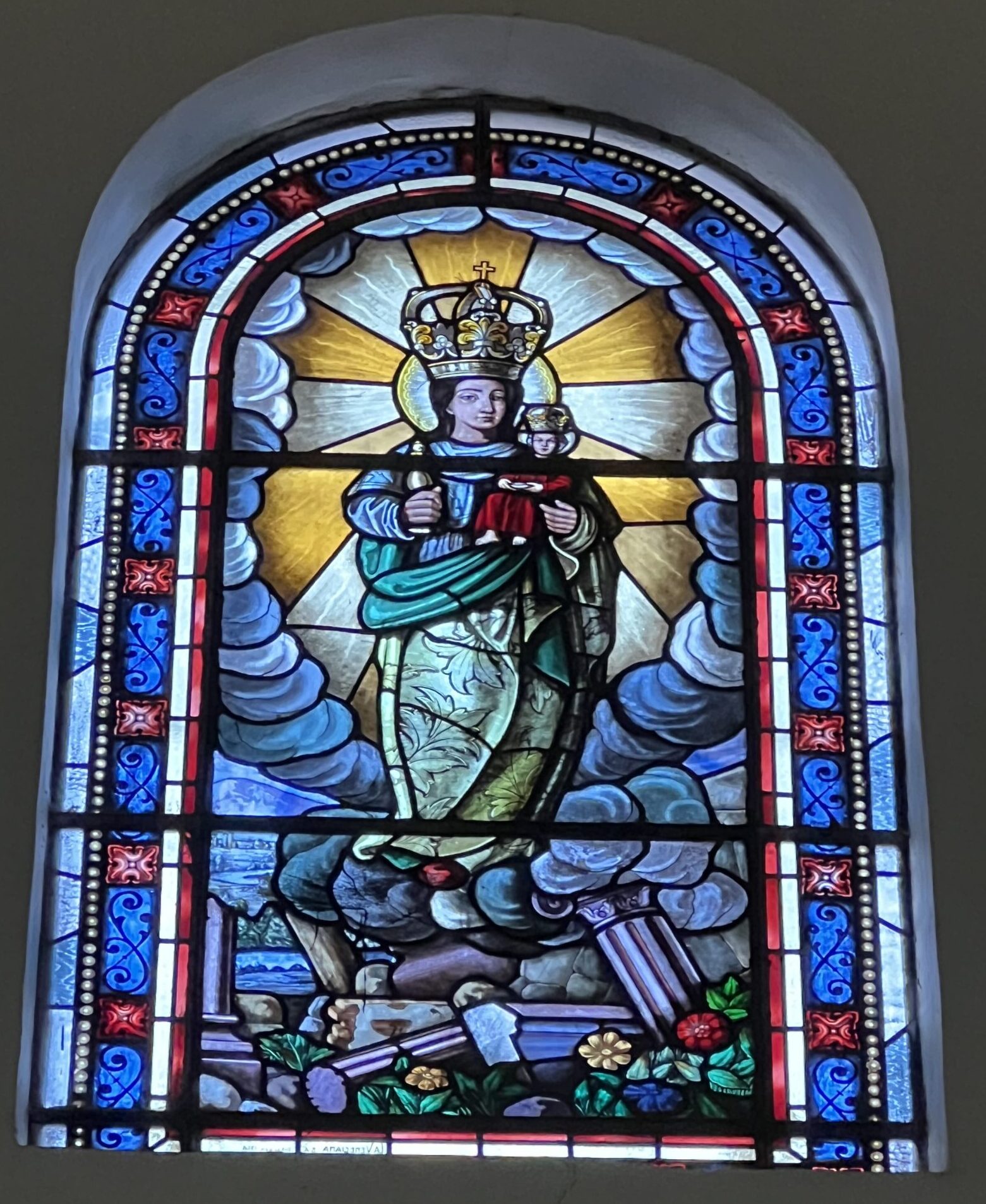
For a long time I stand before the impressive altar, contemplating its richly varied history and that of the church. Within the church, I see other images of Our Lady. A stained-glass window, in which the colour blue is strikingly prominent, also depicts a beautiful image of Mary. It adorns the interior of this building. Mary is crowned and holds her Child on her left arm. To be here is to experience beauty.
Environment
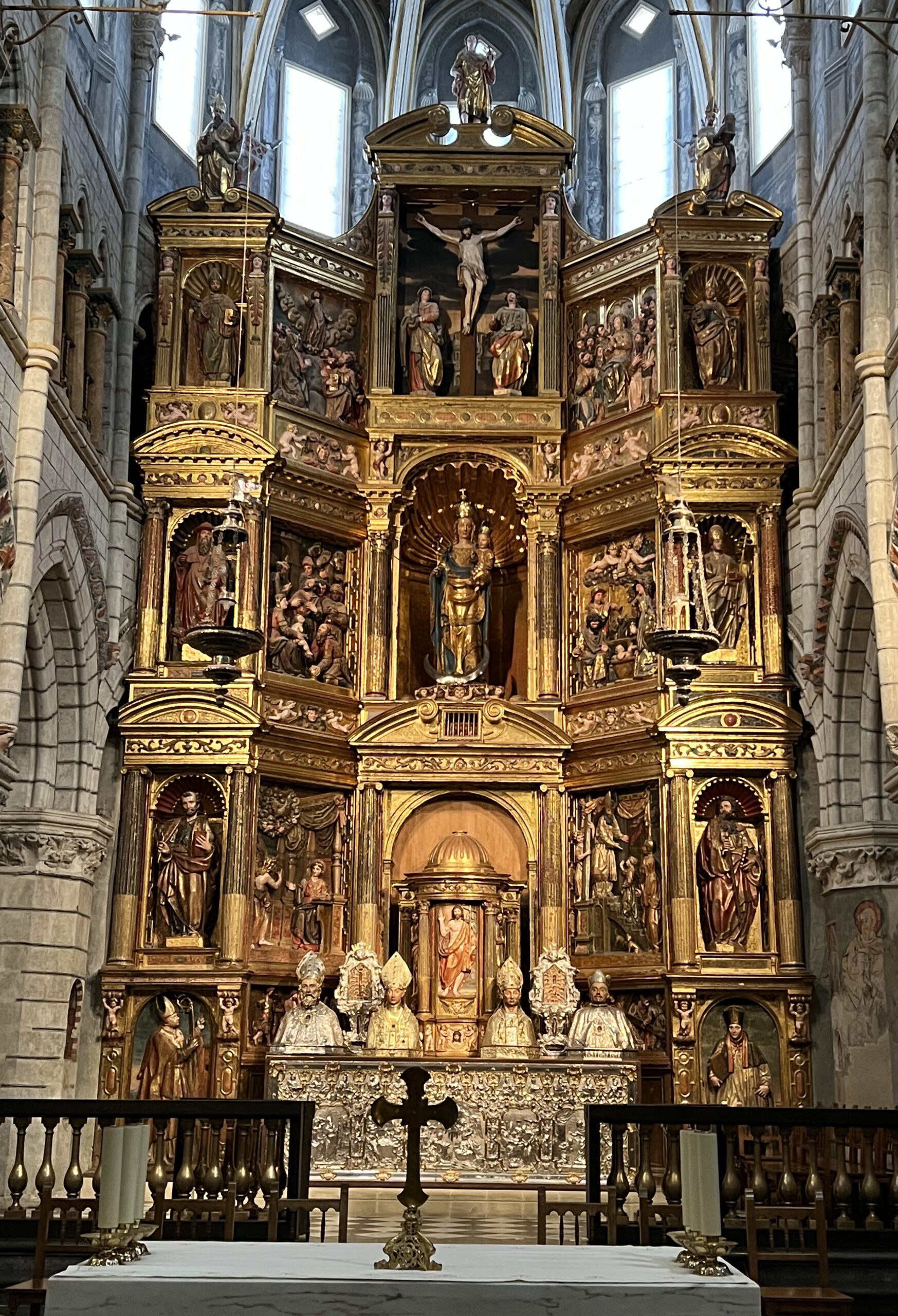
The old town of Tarazona has a lot to see; there are many monumental buildings, such as the cathedral with an impressive altarpiece. The large park “Parque Natural del Moncayo” lies a few kilometres south of Tarazona. It is still less than 100 km to drive to visit the city of Zaragoza.
Posted: 20 March 2023
~~~

 Nederlands
  English (UK)
  Deutsch
  Français