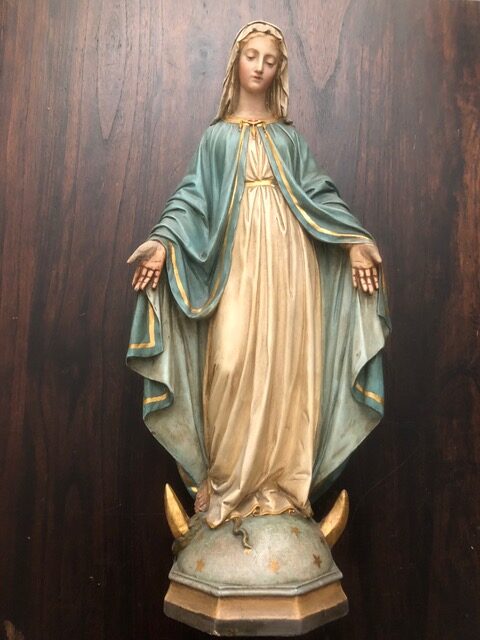
History
In the period 1425-1428, Vicenza was severely affected by a plague epidemic. On 7 March 1426, Mary appeared to the peasant woman Vincenza Pasini (1356-1431) and the second apparition took place on 1 August 1428.
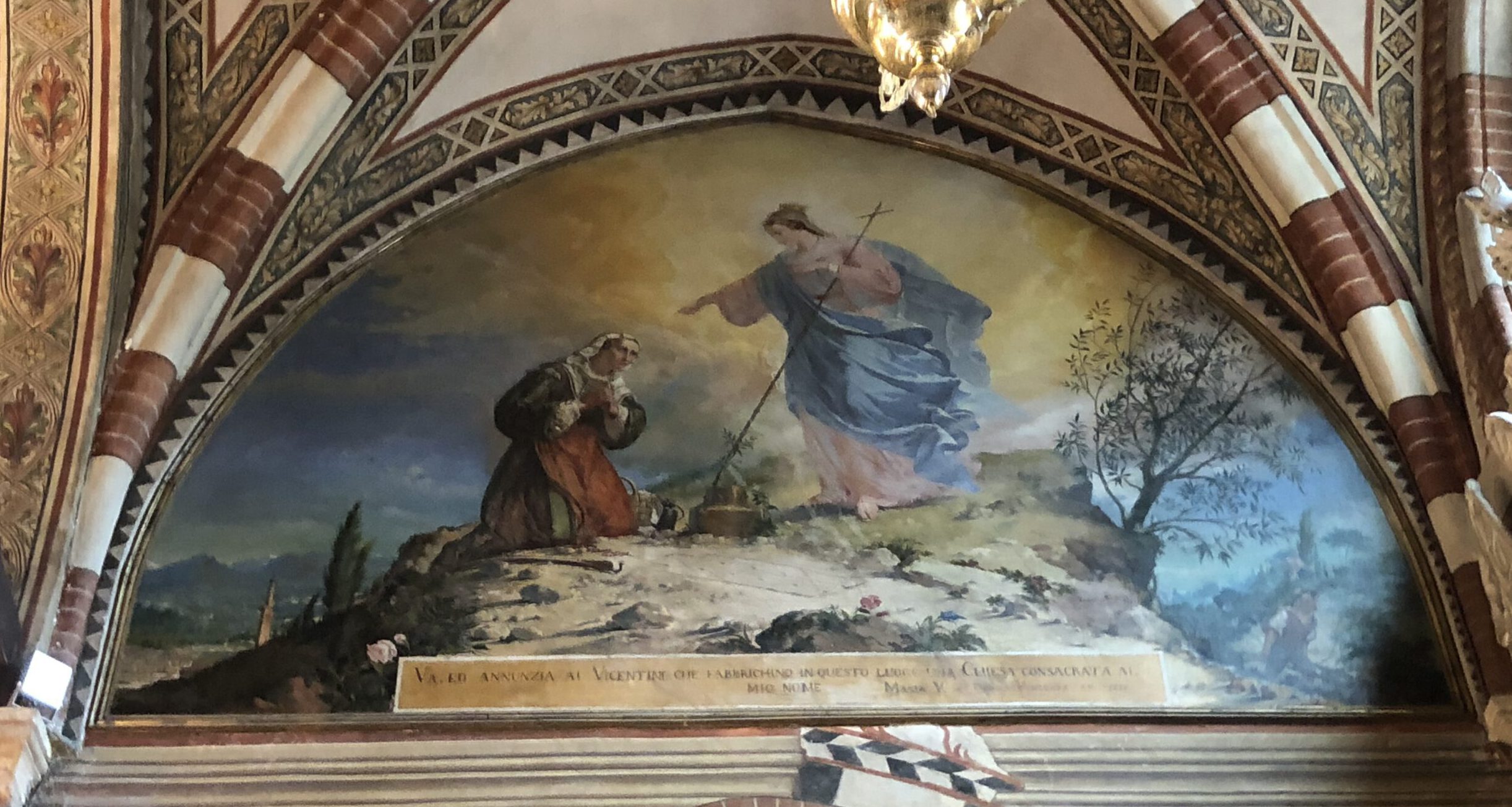
It is 7 March 1426... Vincenza Pasini walks up the hill of Monte Berico. She is bringing some food to her husband, who is working in a vineyard. Among the vines stands a wooden cross, and Vincenza kneels there to pray. Suddenly, she sees a Lady, shrouded in a circle of light. The Lady reassures her and says: “Do not be afraid, Vincenza. I am Mary, the Mother of the Saviour, who died on the cross for the salvation of mankind. Go and tell the inhabitants of Vicenza that they should build a church here, dedicated to me, if they wish to be delivered from the plague that afflicts them. If the people do not obey, then my Son will have to be severe with them, and all hope of deliverance from the pestilence will be in vain.” Then Mary takes the cross from the ground and draws the outlines of the sanctuary she desires. Mary then says: “Everyone who visits this church with reverence on my feast days and every first Sunday of the month shall receive an abundance of merciful graces as a gift from God, and the blessing of my motherly hand.” After this, the Apparition vanished. Vincenza quickly goes to her husband and tells him of Mary's apparition. Husband and wife go to the bishop of Vicenza and tell him what Mary said. They also tell the city's inhabitants. However, neither the bishop nor anyone else believes them. The couple return home, deeply disappointed. Vincenza and her husband say nothing more about the apparitions. Vincenza continues to pray daily to Our Lady, and the city's inhabitants continue to suffer from the plague.
It is two years later. The plague is still claiming lives daily. Vincenza continues to go to Monte Berico on the first Sunday of every month. She prays to Our Lady, begging Her to make the plague disappear. Her plea is not heard. On 1st August 1428, Mary appears to Vincenza again, bringing her the same message. Vincenza once more goes into the city and tells the people she meets what Mary wishes. Now the residents of Vicenza believe her, because the plague has not disappeared. The Bishop of Vicenza, Pietro Emiliani, who was bishop from 1409 to 1433, hears her and is convinced. A few weeks later, the bishop lays the foundation stone, and the site is dedicated to the Madonna of Monte Berico. Subsequently, the plague disappears. A few months later, the construction of the church is completed, and the epidemic has completely vanished.
The city council of Vicenza has investigated the two exceptional events. In 1430, a notarial deed mentioned the apparitions. Immediately after the apparitions of Mary to Vincenza Pasini, pilgrimages to Monte Berico began.
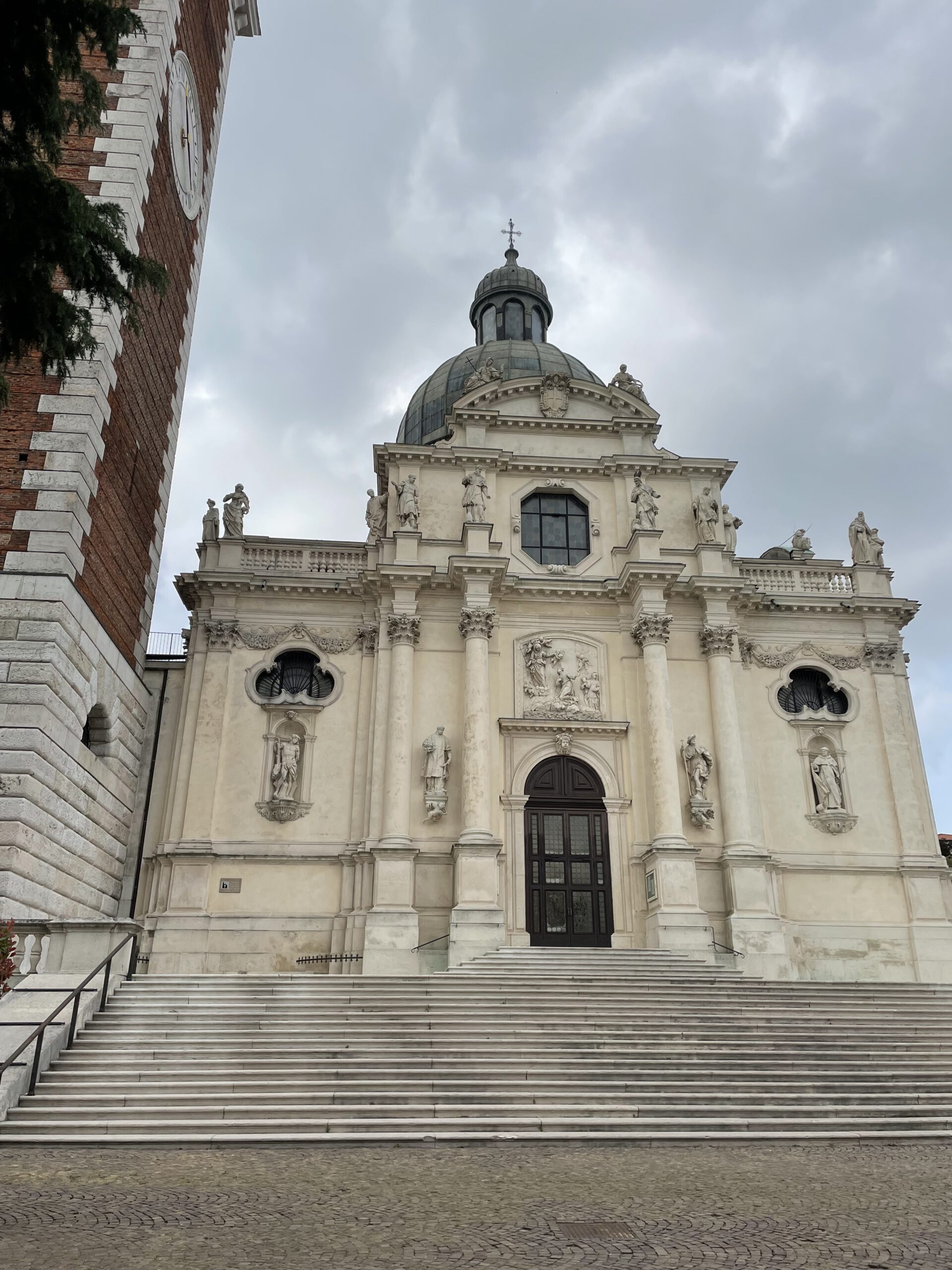
Construction on the older of the two churches began in 1428, shortly after the apparitions. The church was completed within 3 months, thanks to the hard work of people from Vicenza. They are grateful because Mary freed them from the plague. The current façade was created in 1860.
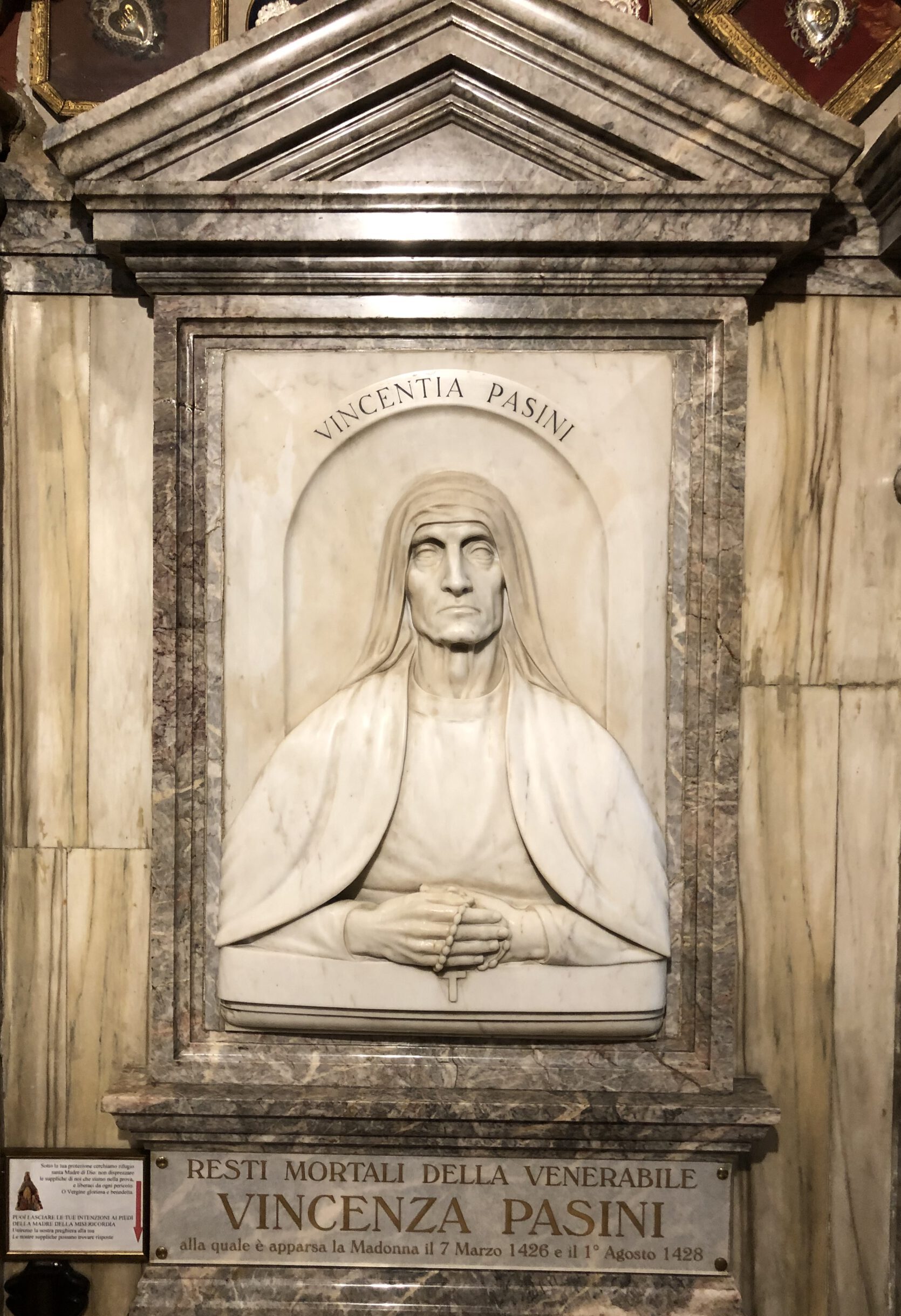
In 1431, Vincenza Pasini died. She rests in the crypt beneath the altar in the church.
In 1429, the spiritual care of the sanctuary was entrusted to the brothers of the Order of Saint Bridget by the city council. In 1435, the clergy had to leave by order of Pope Eugene IV (Gabriele Condulmer 1383-1447, Pope from 1431 to 1447), as the brothers were to limit themselves to their original works. In that year, the “Magnifica Comunitas Vicentiae” transferred the sanctuary and church to the Order of the Servants of Mary. In 1576, Andrea Palladio (Andrea di Pietro della Gondola, 1508-1580) was commissioned to expand the church. A renovation took place in the 17th century.
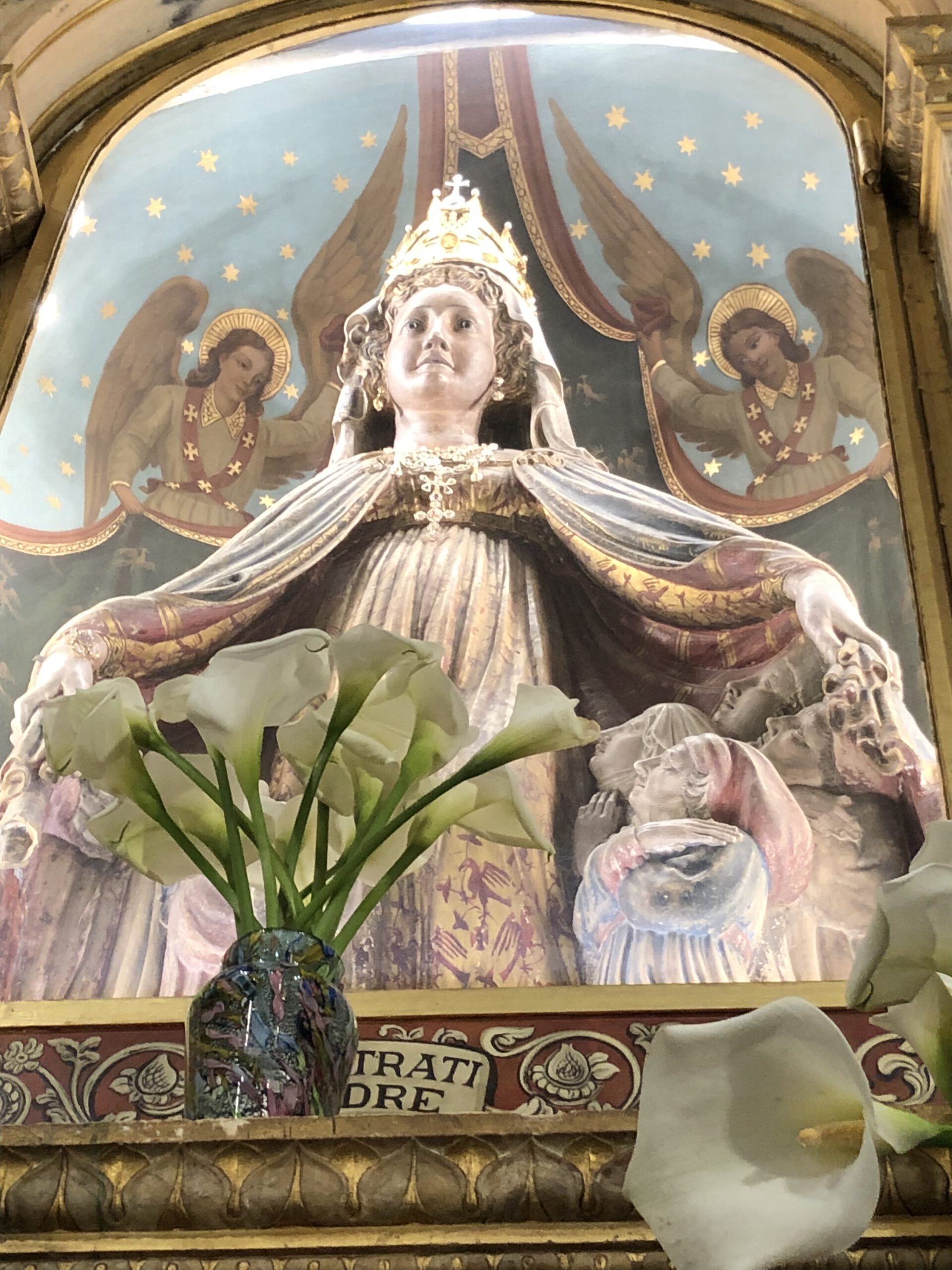
The statue of Mary, Mother of Mercy, with people under her mantle, has been in this pilgrimage site since 1430. This statue was festively crowned on 25 August 1900 by Giuseppe Melchiorre Sarto (1835-1914), the Patriarch of Venice (1896-1903) and later Pope Pius X (1903-1914).
The other, larger church was built between 1688 and 1703. The architect is Carlo Borella from Vicenza.
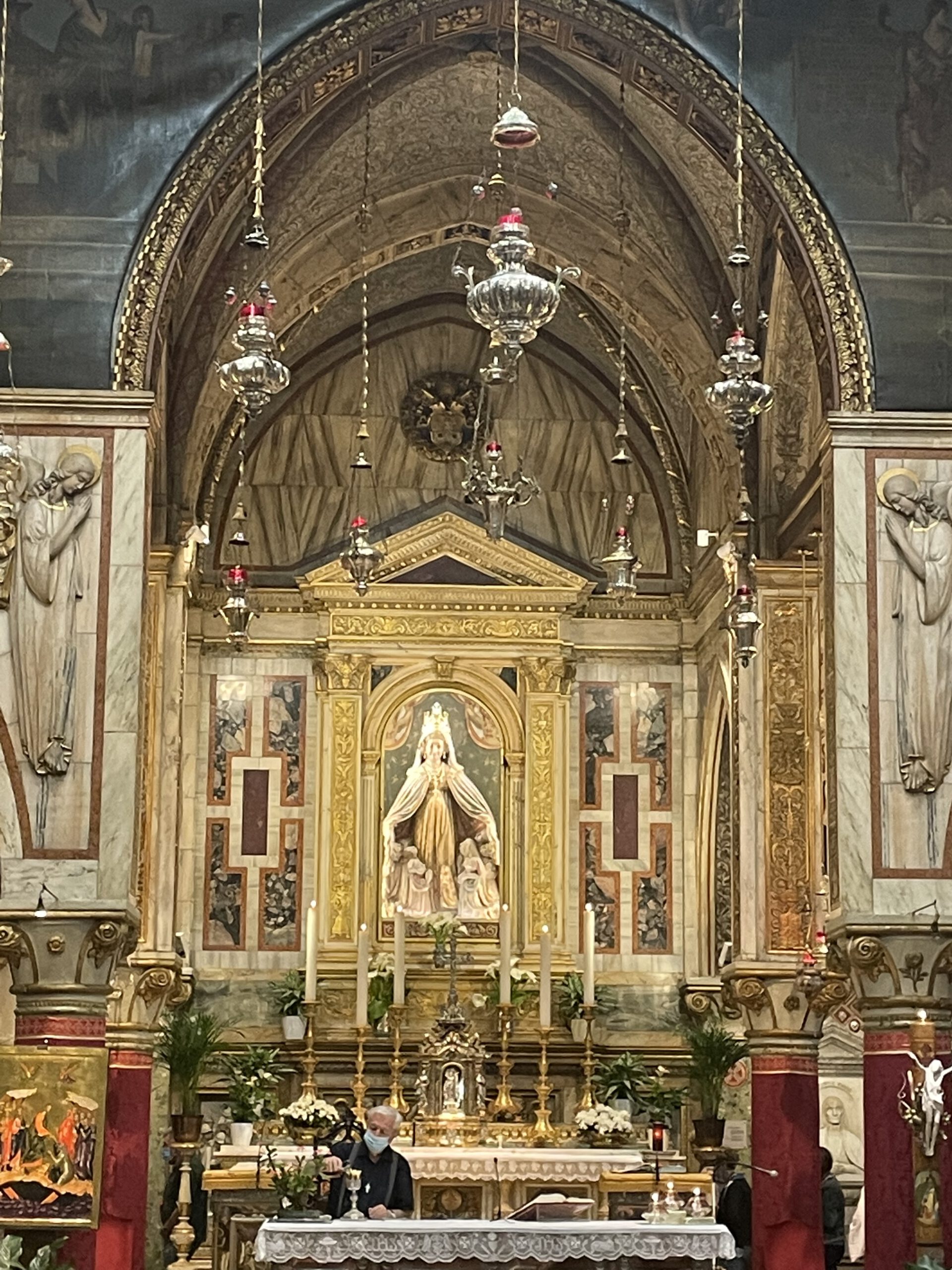
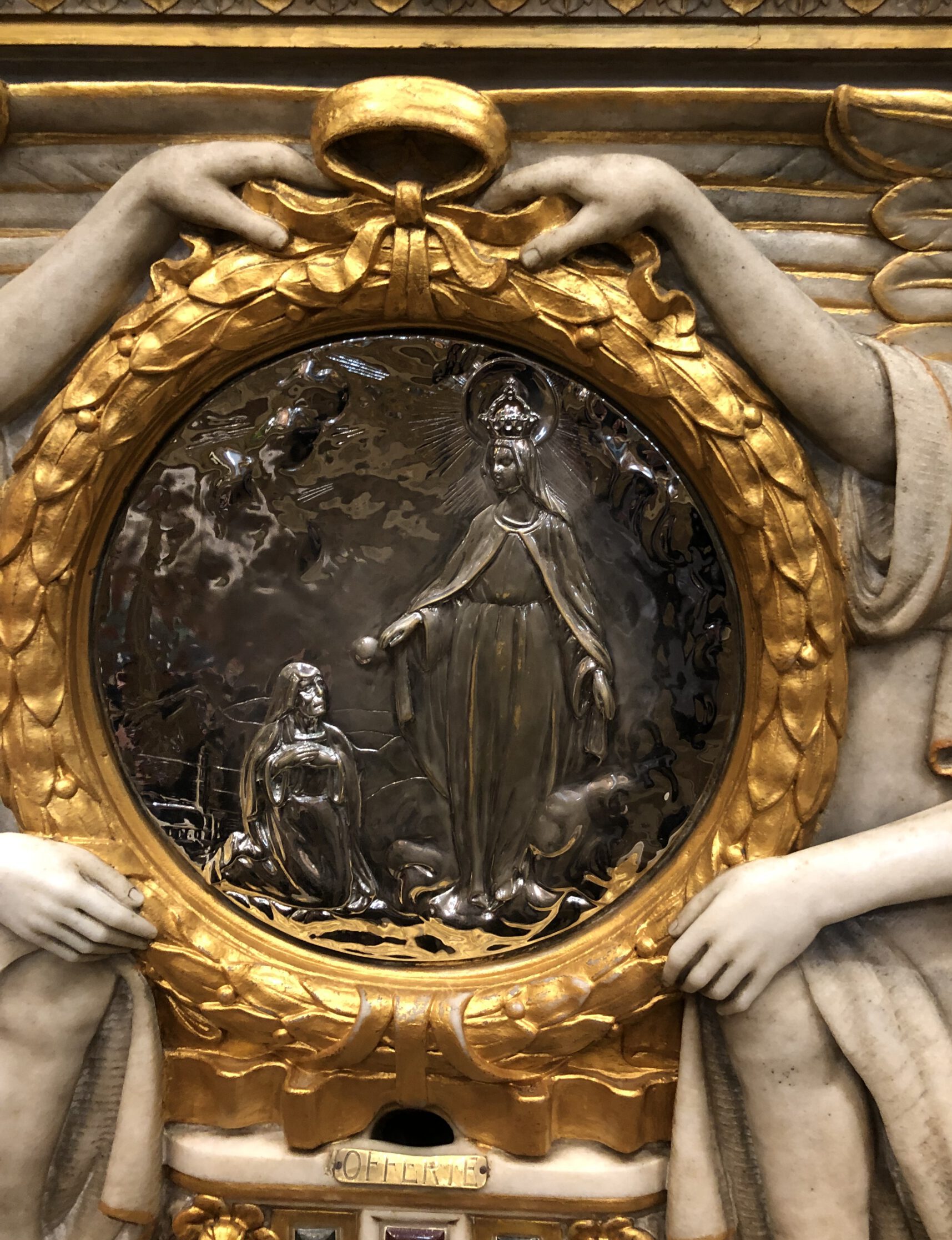
On 2 August 1928, to mark the 500th anniversary of the apparitions, a new monumental altar, made of Carrara marble, was consecrated. Set into the niche is a round, silver medallion depicting Mary and the seer. Two angels hold this medallion.
In 1983 the dome was repainted.
Pilgrimage site
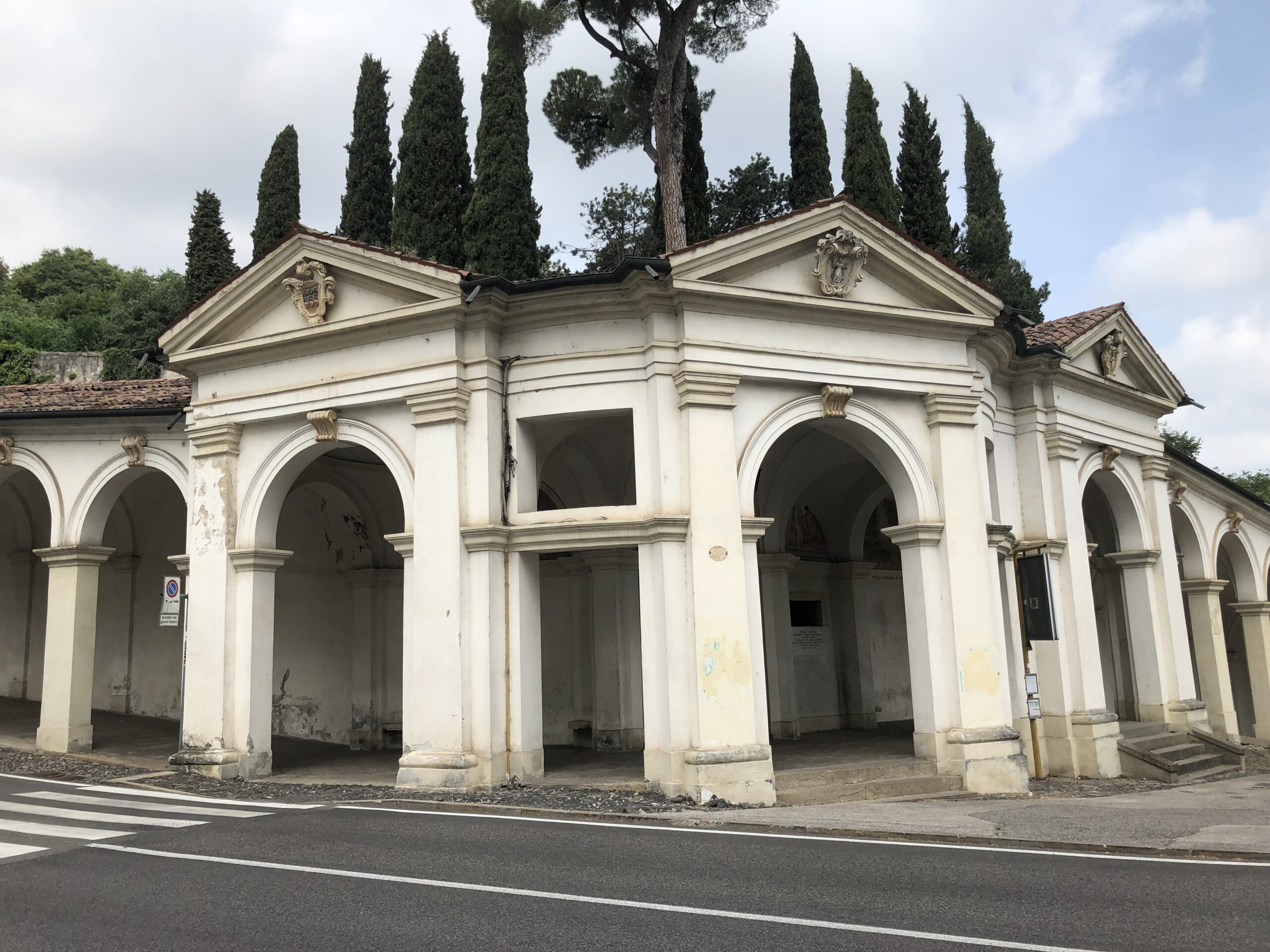
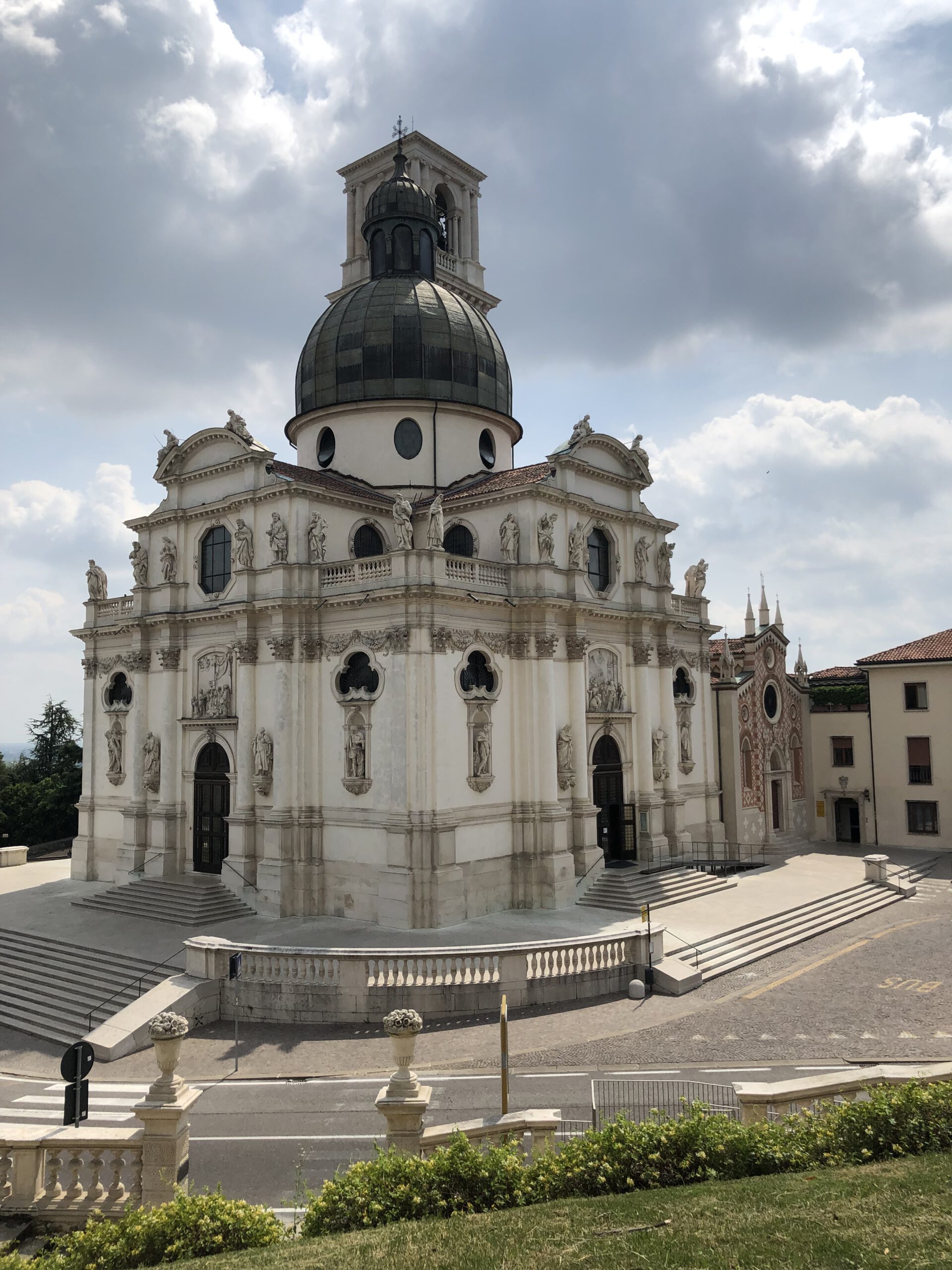
The sanctuary in Vicenza is called the “Sanctuary of Our Lady of Monte Berico” and is located on a hill to the southwest of the city. A 700m long portico with 150 arches connects the city to the sanctuary. The path on foot ascends gently towards the sanctuary. Inside the portico, frescoes depicting the 15 mysteries of Mary are displayed. Halfway along the portico, at the junction of the first and second sections, there is a wide view of the basilica.
On the hill, two churches are built adjoining each other. The large, Baroque basilica is a special sight with many statues, frescoes, and paintings.
In the basilica, many artworks can be admired, such as “The Last Supper of Saint Gregory the Great” from 1572 by Paolo Veronese (1528-1588).
The basilica also houses a Pietà. It is a masterpiece from 1500 by Bartolomeo Montagna (c. 1450-1523). The large canvas depicts the deeply saddened Mary and her dead Son. In this representation, Mary supports Jesus' head with her right hand, while her left hand rests on her Son's right arm. Mary Magdalene gazes at Jesus' wounds. The evangelist John and Saint Peter are also depicted.
The painting, which depicts the Virgin and Child with the 4 evangelists, attracts a lot of attention. Above the head of Our Lady, angels form a crown, with a white dove in the centre. The artwork was created in 1580 by Alessandro Maganza (1556-1630).
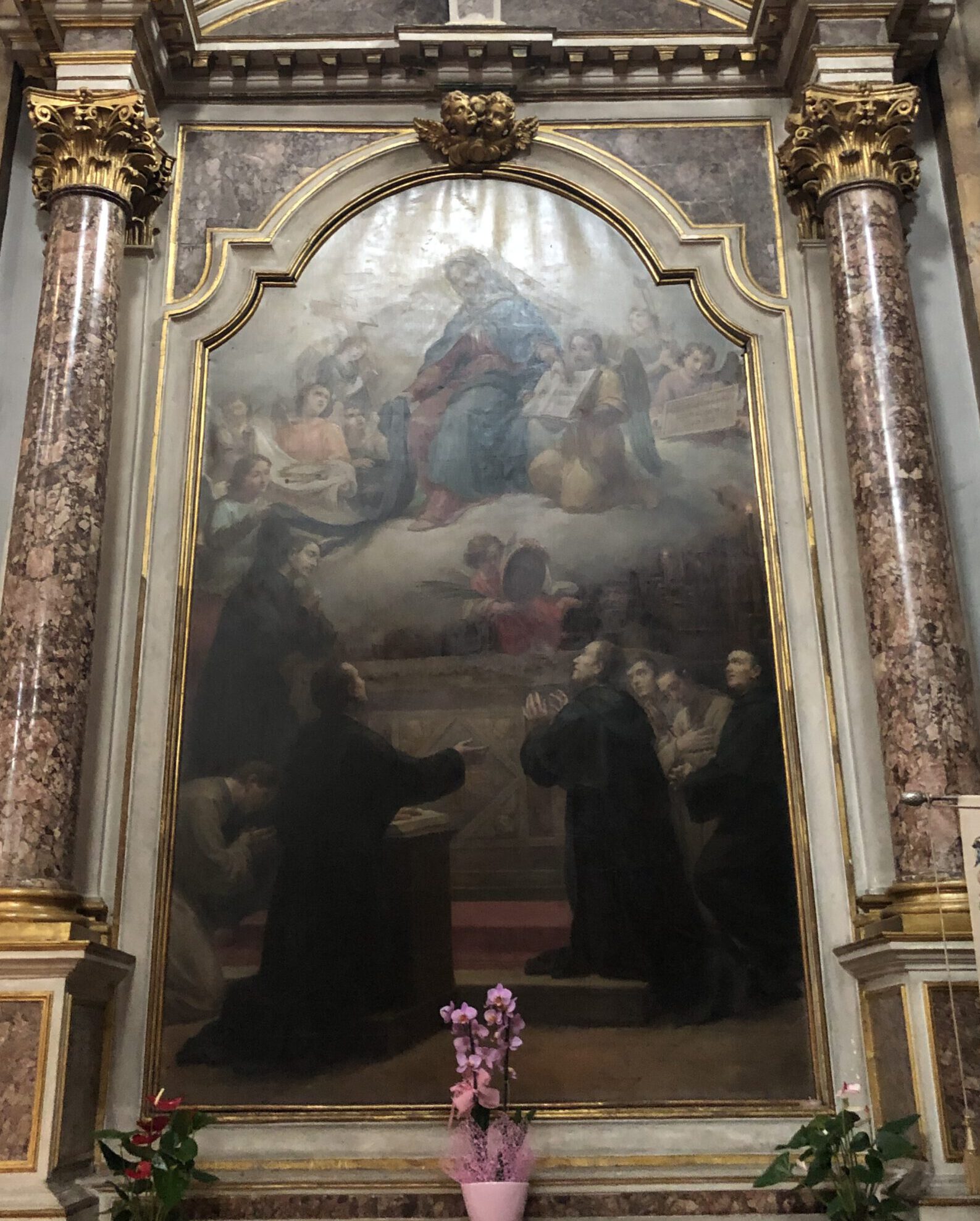
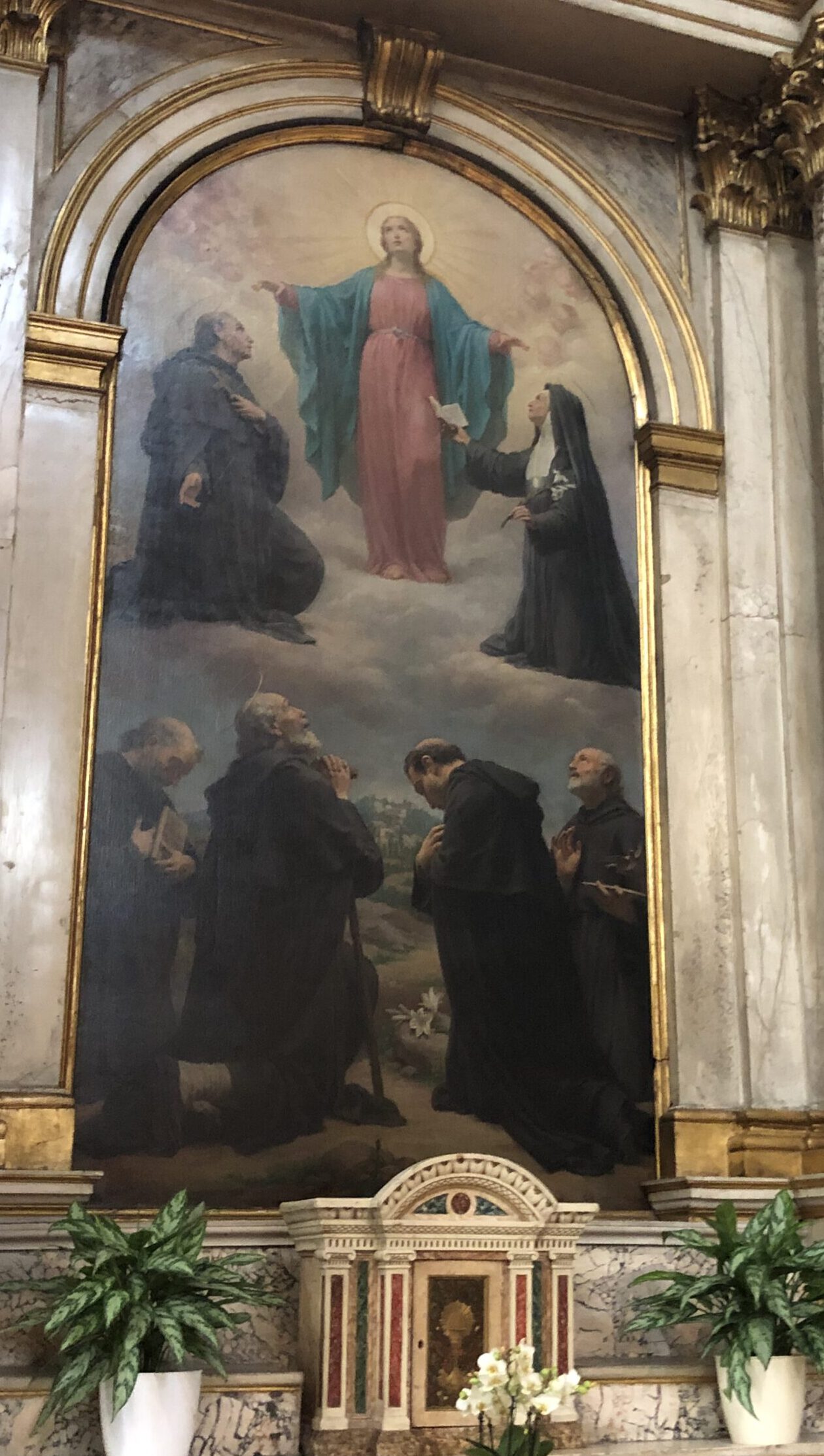
Another artwork is the altarpiece by Pietro Gagliardi (1809-1890). The theme depicts the 7 founders of the Order of the Servants of Mary. The canonisation of the founders was in 1888. Mary holds the black habit of a founder in her right hand and her left hand displays the rules they are to follow.
Outside the church is the cloister with pointed arches and in the centre a well has been placed. The cloister has been built onto the ambulatory and some cells are visible.

ACCESSIBILITY
Vicenza is located between the cities of Verona and Venice in northern Italy. The Sanctuary of Monte Berico is south of the city at Viale X Giugno 87.
Current information can be found on www.monteberico.it.
Experience
On the outskirts of Vicenza, diagonally behind the station, I'm going to Monte Berico. A long portico with triumphal arches turns right after about 350 metres. After covering a similar distance again, I arrive at the basilica after 192 steps, which lies on top of the hill.

In the basilica, many ex-votos bear witness to gratitude for healings and protections by Our Lady. In this beautiful space, my attention is particularly drawn to the altarpiece depicting the Holy Family with angels during the flight into Egypt. It was painted by Francesco Menageot (1744-1816). The painting was a gift from the city of Vicenza to the Sanctuary of Monte Berico in 1796. I stand for a long time before the painting of the apparition of Mary to Vincenza Pasini. It is here that the birth of this sanctuary took place.
Before leaving the church, behind the presbytery and following other pilgrims, I touch the round, silver medallion with the images of Mary and Vincenza Pasini.
Next to the basilica is the large confession hall from 1971. In the monastery's kiosk is a shop selling devotional items. There's so much on offer here! It's now time to buy some items to give away to friends and to keep something for myself.
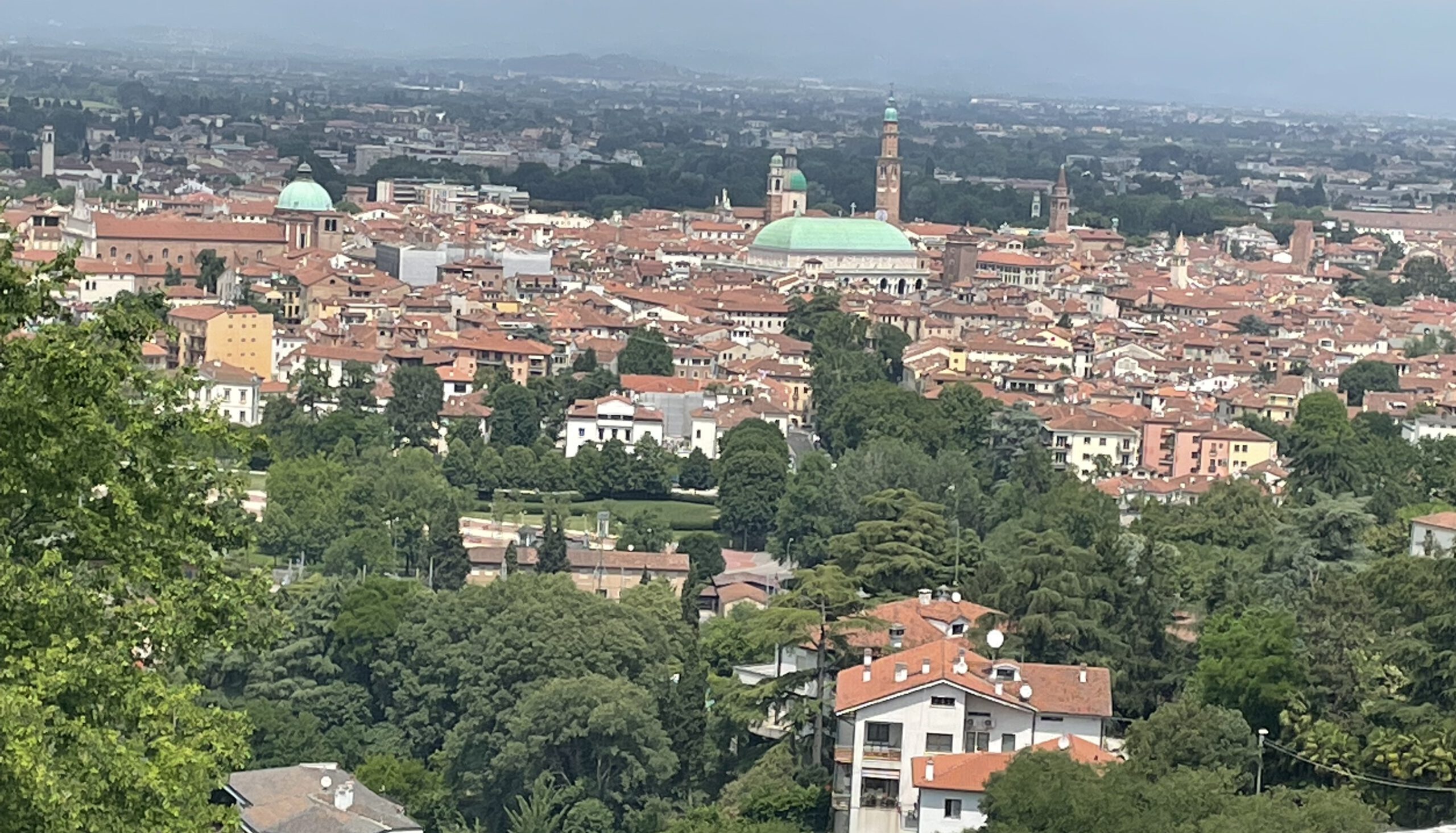
Before I leave, I'm going to the square in front of the basilica. On the edge of this square (Piazzale della Vittoria) every pilgrim has a panoramic view of the plain with the city of Vicenza and the Prealps of Veneto.
~~~

 Nederlands
  English (UK)
  Deutsch
  Français