~~~
History
Handel is the oldest Marian pilgrimage site in Brabant. Devotion to Our Lady began around the year 1220. A statue of Mary was found by a shepherd on a hawthorn bush. A spring with clear water emerged here, which people experienced as having healing properties. The statuette dates from the 13th century. Since then, there have been miraculous healings and answered prayers in Handel. For centuries, Our Lady of Handel has been represented by a miraculous statuette. A charter from 1368 mentions the veneration of Mary. An official document from 1391 makes the first mention of a chapel. Handel is the oldest pilgrimage site in the province of North Brabant.
One legend tells that the statue of the Virgin Mary was found on the heath. This is the place where the chapel now stands. Another legend tells of the statuette being found a few minutes' walk from the current chapel. The draught animals transporting the building materials do not stop at the chapel's location. They halt a little further on, where the Ossenkapel (Ox Chapel) now stands, on the road from Handel to Gemert.
In the early 15th century, Handel was famous and attracted many pilgrims who venerated the statue of Mary. Thousands of pilgrims came to Handel, especially in the month of May. They sought comfort and some guidance for life.
The chapel has a long history. The oldest parts of the chapel date back to the 14th century. However, nothing of it is visible anymore. At that time, it was referred to as a Chapel of Our Lady. In the mid-15th century, the chapel was elevated to an independent rectorship by the Teutonic Knights. This rectorship belonged to the parish of Gemert. A priest from this order was attached to the chapel. For decades, the chapel's ministry was carried out by a priest who celebrated Mass there twice a week. This priest was a member of the Teutonic Knights. He was appointed by the Grand Commander of “Alde-Biezen”, which included Gemert and Handel. From 1585 to 1600 were very turbulent years of theft, war, plundering, fighting, and destruction.
The States of Holland occupied Handel. The Eighty Years' War (1568-1648) drastically limited Catholic freedom of worship, and the chapel was closed until 1662. In 1649, the Handel chapel was plundered and its bells stolen. Pilgrimages to Handel were no longer organised. After the rule of the States, devotion to Our Lady of Handel was restored.
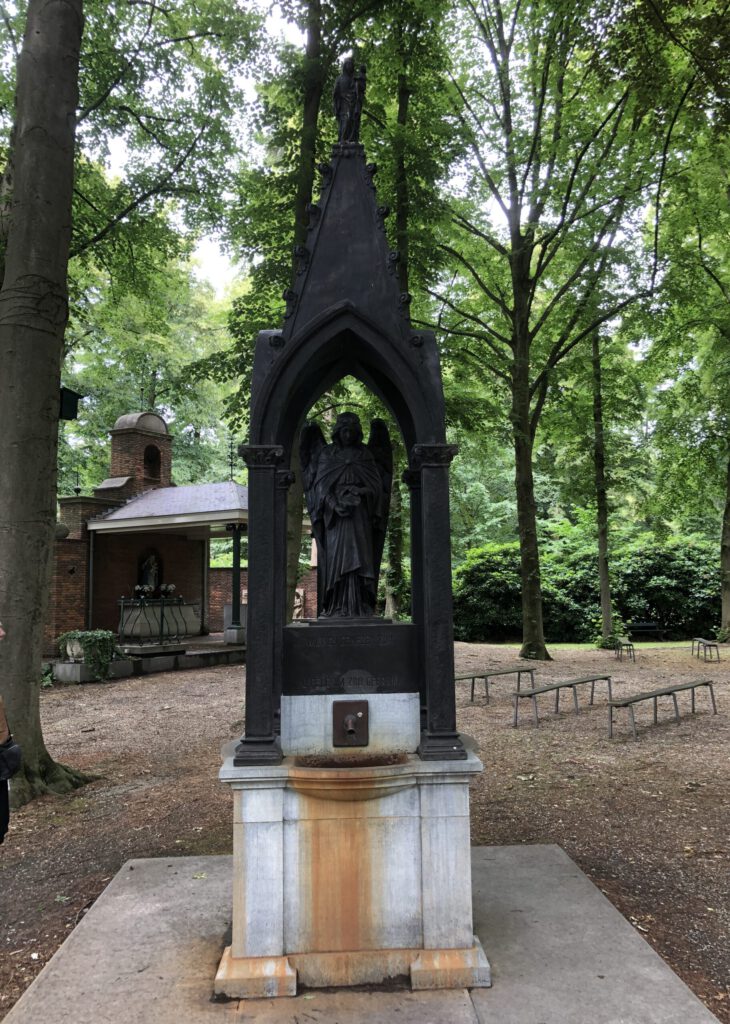
The spring is already mentioned in 1594. There is a legend about the origin of the spring. During the construction of the chapel, the water supply slowly dwindled. However, a spring suddenly emerged in the sandy soil. The spring began to yield water spontaneously through the intervention of Mary. A small well was then made and given the name “holy well”. This well continues to provide water to this day. The spring lies precisely on the location of a fault in the earth's crust, known as the Handel-West Fault. This causes the water to rise to the surface. After the church, this spring is the oldest feature of the pilgrimage site. In 1920, to celebrate the 700th anniversary of the devotional image, the “holy well” was completely renovated. The structure of the spring was named the “Pool of Bethesda,” which is a place by the Sea of Galilee in Israel.
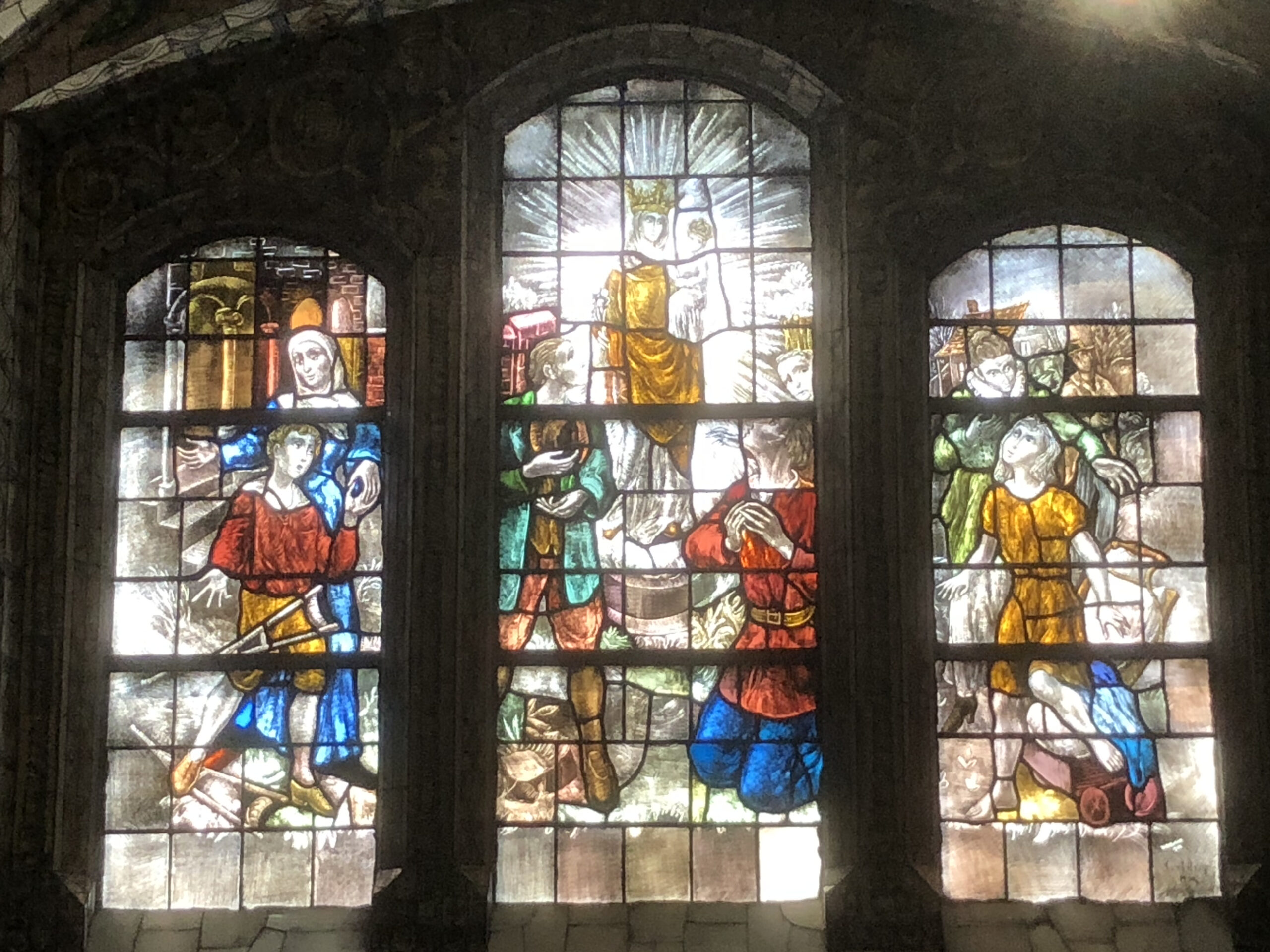
Many miracles have occurred at Handel. The miracles and the extraordinary favours granted form the reason for building a chapel for the statue of Mary. In the early period, three miracles had a great, positive influence on the veneration of Our Lady of Handel. These are the miracles of 1603, 1610, and 1626. In addition, Mary has answered many prayers. In 1603, a young boy suffered from a locked jaw and the child had been unable to eat for five weeks. Doctors saw no prospect of improvement, and death was imminent. Aunt of the boy gave Our Lady of Handel linen, washing, silver, and gold equal in weight to that of the child. The boy was cured the same day. In 1610, a sister of the boy was suddenly cured of a paralysed foot, also through the intercession of Mary. This young woman experienced further misfortune, and in 1626 she suffered severe pains in her right hand. She made a vow to go on pilgrimage to Handel, and immediately her hand was healed. Other miracles at Handel include:
– a boy recovers after being bedridden for three years,
– someone is blind for years and regains their sight in Handel,
A child has fractures and seizures and is recovering in Handel.
Furthermore, there are other answered prayers that lead to miraculous healings, such as the regaining of speech, the disappearance of a throat ailment, the healing of fractures, the ability to walk again after years of lameness, the disappearance of leg paralysis, wounds that are healed, and pains that vanish. The miraculous healings are recorded. This is done not only with an eye to the history of Handel, but also to generate the necessary publicity.
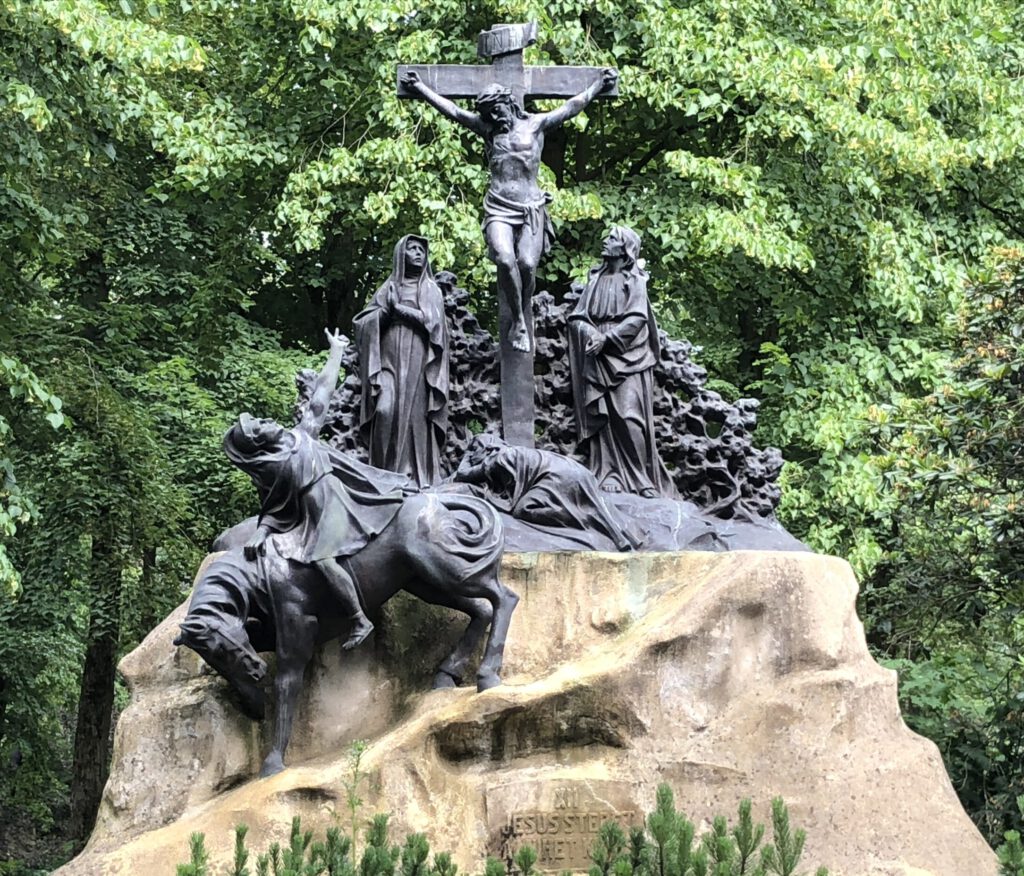
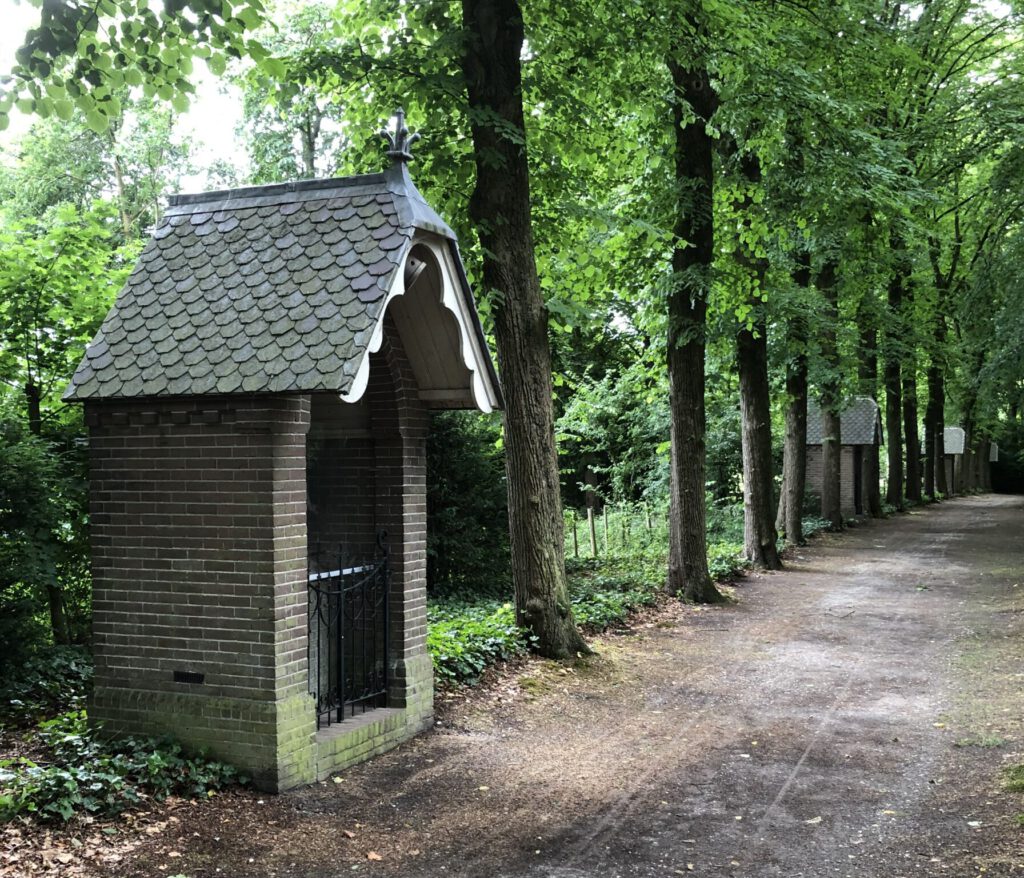
Part of the trading route is also the “Kèskesdèjk” from Gemert to Handel, which was already described in 1696. In honour of the Seven Sorrows of Mary, wayside chapels have been erected. Many pilgrimages also include the “Kèskesdijk” in their programme. The seven chapels feature sculptural groups on the Handelseweg. The current chapels were built between 1888 and 1891. These are wooden boxes, or “kèskes” in the local dialect. The Ox Chapel, also built between 1888 and 1891, is located along this route.

In 1709, there was a fatal fire which reduced the chapel to ruins.
The devotion to Our Lady of Handel reached its peak around 1730.
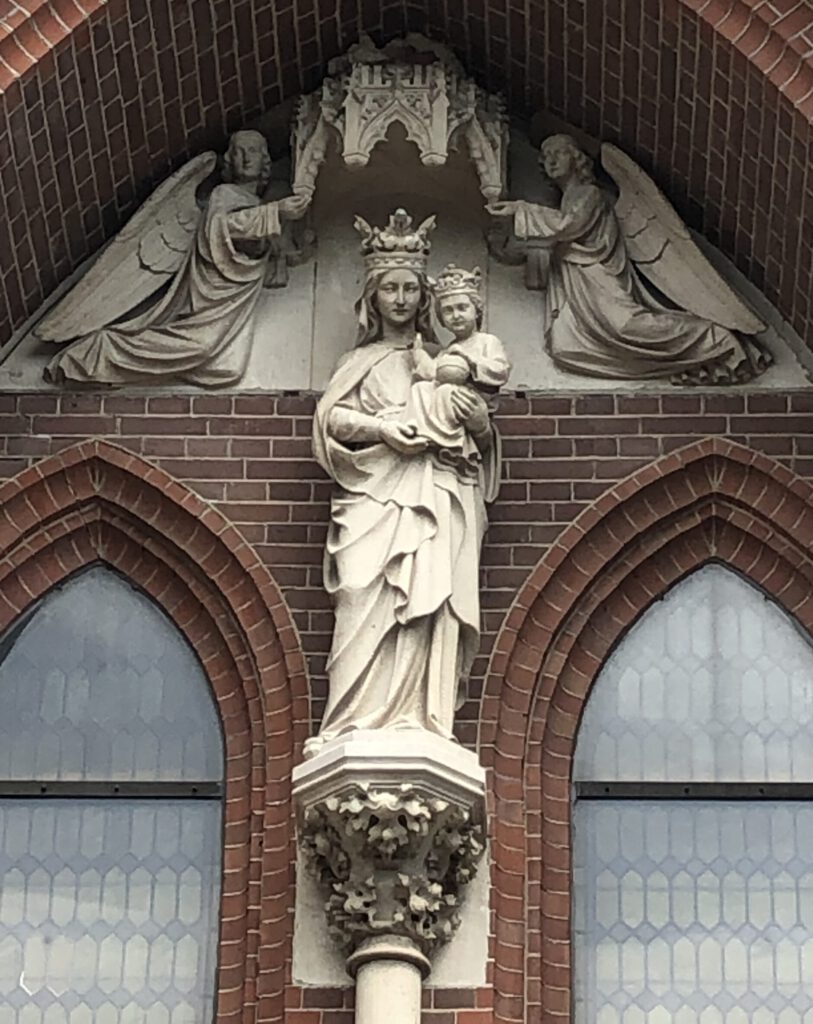
The current Church of Our Lady of the Assumption, in which the chapel with the miraculous image is housed, was built in 1747.
In 1854, the chapel was broken into. Much was stolen, namely the miraculous statuette and all the gold and silver jewellery. The sceptre of Mary was also stolen.
The second half of the 19th century saw a new, great period of flourishing for Handel, due to the many pilgrimages.
Between 1883 and 1916, the chapel was rebuilt and enlarged. Two side aisles, a large tower, and a new chancel were added. Furthermore, the chapels along the road from Gemert to Handel were renovated. The procession park, situated behind the church, was realised, as were the rosary chapels and the resting altar. In 1896, the renovated chapel was consecrated by Gerardus Stevens (1849-1911), the superior of the Capuchin monastery in Handel. This took place after receiving authorisation from Wilhelmus van de Ven (1834-1919), Bishop of ‘s-Hertogenbosch. In 1902, the statue of Our Lady was restored and gilded. Johannes van de Laarschot (1838-1916), rector of the chapel from 1883 until 1916, took many initiatives to improve the position of the pilgrimage site of Handel.
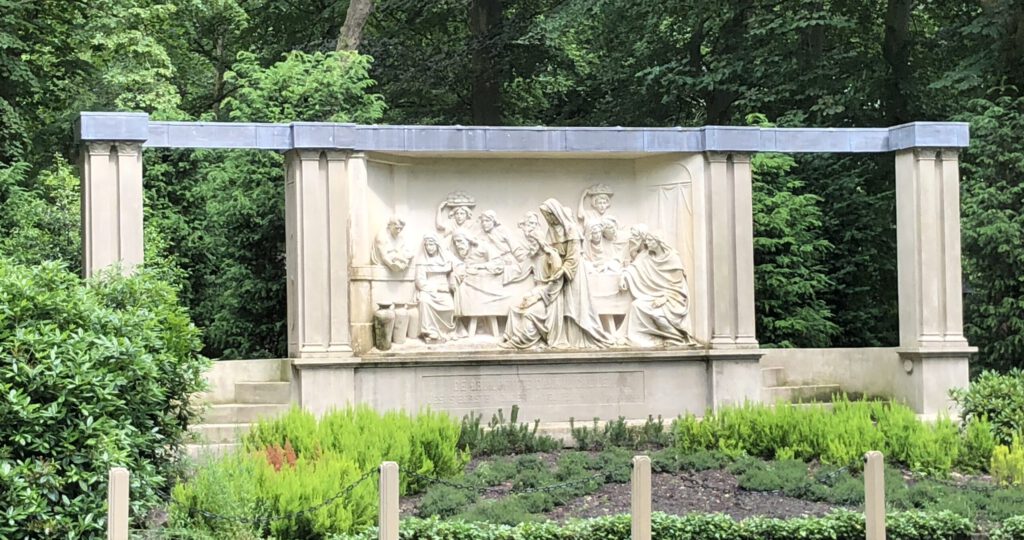
In 1920, the year of the 700th anniversary of the pilgrimage site Handel, the altar for the miraculous image is made. In that year, the procession park is enriched with 14 Stations of the Cross. The sculpture group “Christ in the Garden of Olives” is placed in the park, and the monument “The Wedding at Cana” is also realised. In the jubilee year, the miraculous image is crowned.
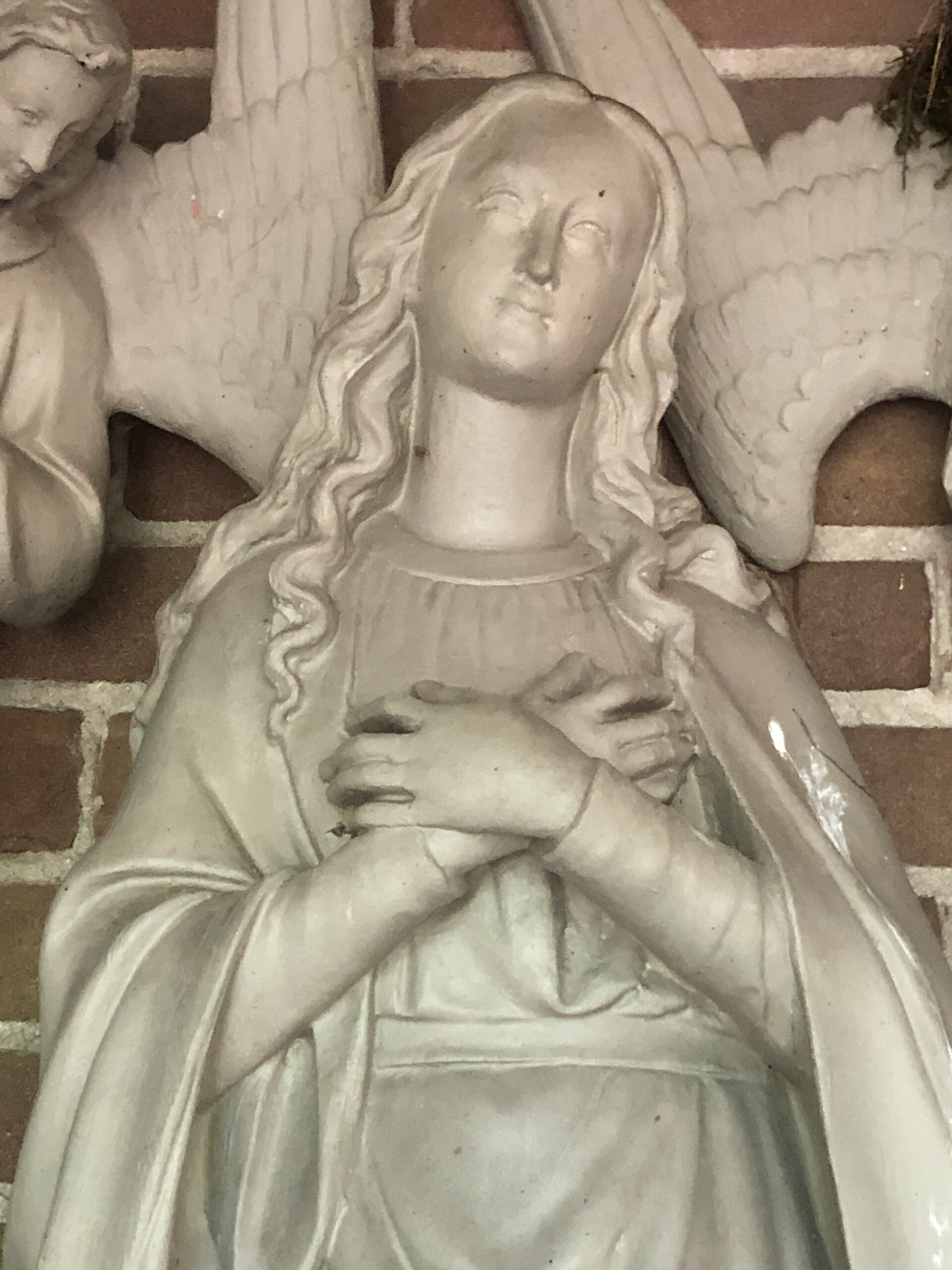
The rectorship is abolished in 1946 and Handel becomes an independent parish. The miraculous image is moved to the side chapel. In 1947, an open-air altar is erected in the procession park. This is in thanks to Mary for her protection of Handel during the Second World War (1940-1945).
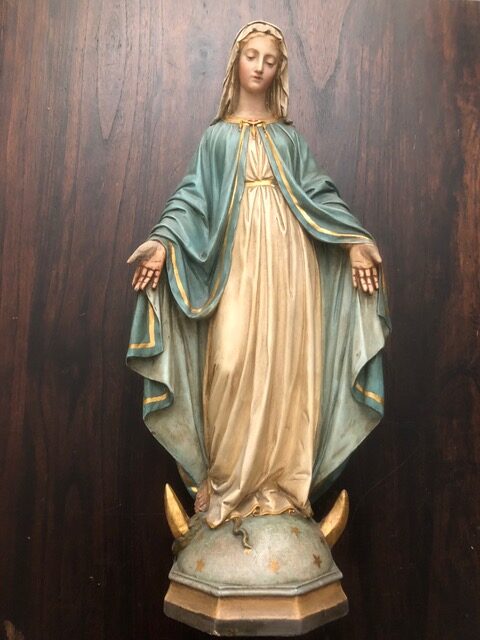
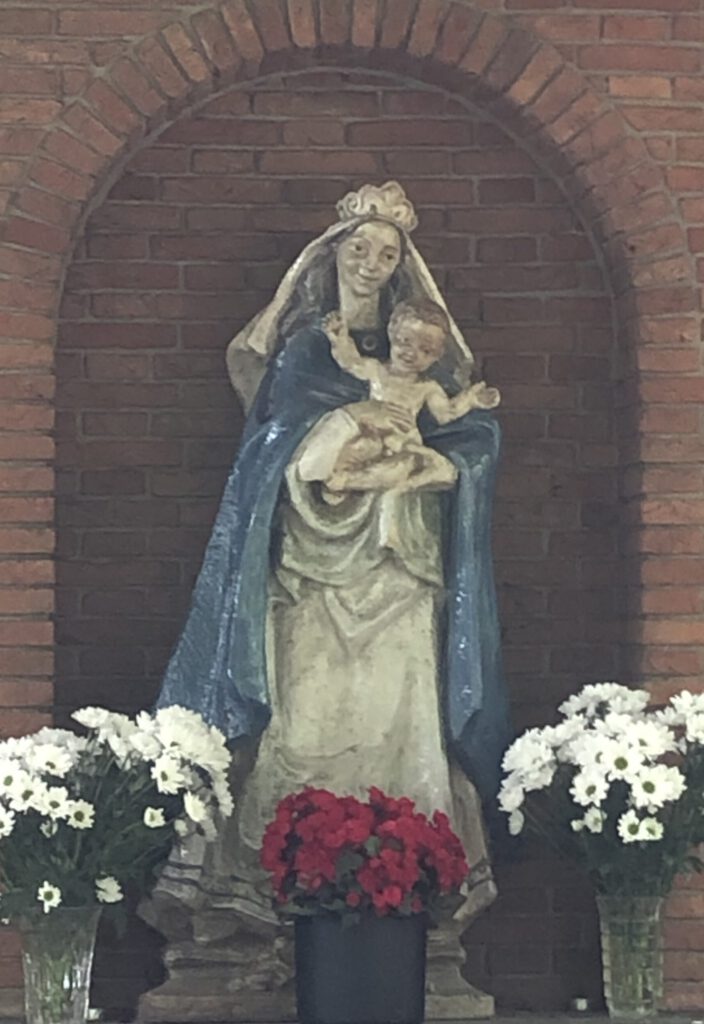
In 1948, the devotional image received a new sceptre, after the original was stolen in 1854. The image of Mary is carved from linden wood and measures 35 centimetres in height. Mary is standing and holds her Child on her left arm. The miraculous image is polychrome.
The southern aisle is extended in 1956. The architect is Martinus van Beek (1896-1962) from Eindhoven.
As a result of the Second Vatican Council (1962-1965), there has been a simplification within the Church and its liturgy. This contributes to the sharp decline in pilgrimages to Handel.
For many years, the Handel Procession has taken place. This is a long procession of pilgrims, followed by horses with covered wagons and a brass band. The procession is held on a weekend in June and departs from Valkenswaard on Saturday morning. Later in the day, there is the arrival in Handel. The following day is the return journey. The organisation is in the hands of the Stichting Broederschap der Handelse Processie (Foundation Brotherhood of the Handel Procession). In an “Statement of Intent of the Brotherhood of the Handel Procession, 2011” there is a text called “Dream Vision – Mother Intent”. The statement of intent concludes with: “I dream… then I wake up and I want to make my dream come true. I set off… towards that distant goal: Handel.”
The 800th anniversary of the pilgrimage site Handel cannot be celebrated, or can only be celebrated with difficulty, in 2020 due to the global coronavirus pandemic. After a two-year interruption caused by the pandemic, a procession will be held again in 2022.
Pilgrimage site
Our Lady of Commerce is worshipped as “The Comforter of the Afflicted” and “The Refuge of Sinners”. Particularly worth visiting in Handel are the Chapel of Our Lady and the Procession Park. In the church, the statue of grace holds a prominent place. This statue is located in the Chapel of Our Lady. Further eye-catchers in the church include the Stations of the Cross, several paintings, statues, the pulpit, a Pietà and stained-glass windows.
The procession park features, among other things, the spring, calvary group, Stations of the Cross, open-air altar, music kiosk, old and new cemetery, and the rosary walk. Grand in scale is the monument to the Wedding at Cana, which stands at the entrance of the procession park. It measures a full six by just over two metres. This monument dates from 1920; the celebration of 700 years of pilgrimage in Handel.
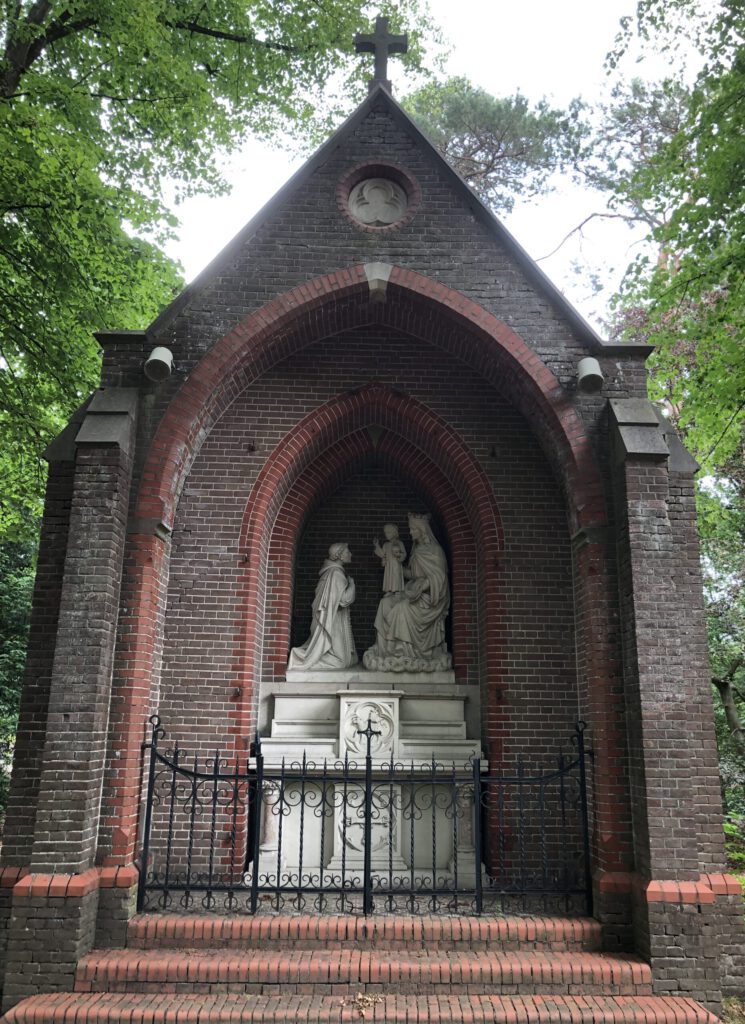
On the road from Gemert to Handel, there are chapels. These form the “Kèskesdijk” with the Seven Sorrows of Mary. Also on this road is the Ossenkapel, built in 1891.
ACCESSIBILITY
The pilgrimage site of Handel is located in the east of the province of North Brabant, about 25 kilometres east of Eindhoven and ‘s-Hertogenbosch. From Gemert and Boekel, it is a few kilometres further to arrive in Handel.
The oldest Marian pilgrimage site in North Brabant is located at OL Vrouwestraat 61 in Handel.
Experience
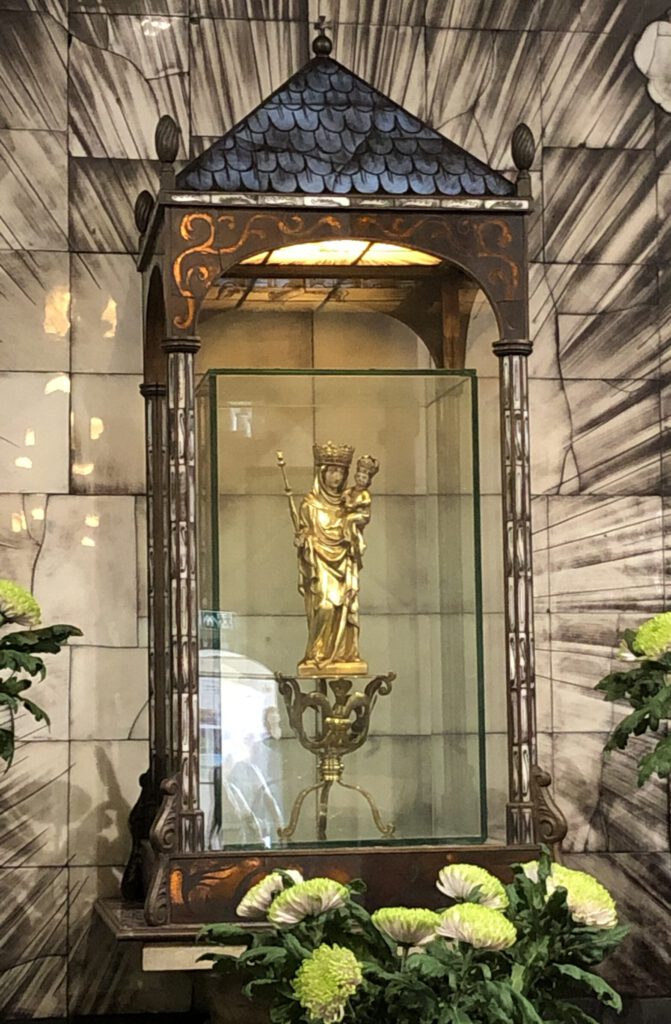
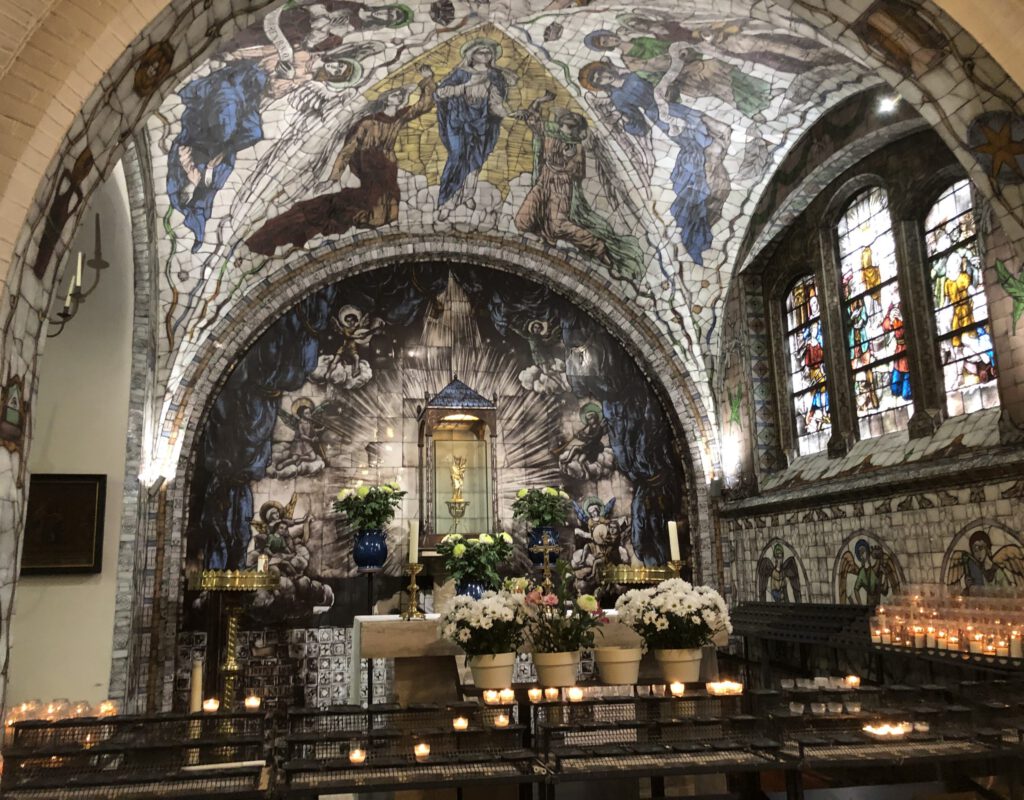
My primary interest is in the Mary Chapel, which prayer room is located in the side chapel of the church. In this beautiful Mary Chapel, I see the throne of the Mother of God on a marble column. I find the miraculous image so particularly beautiful to behold and to pray before. It is a standing Madonna with her Little Son on her left arm. In her right hand, Mary holds a sceptre. Both Mother and Child are crowned. The statue is carved from linden wood. I understand that the first statue in Handel dates from the 13th century. After all, in 1220, 800 years ago now, there was already mention of the veneration of Our Lady in Handel. In 1914, the miraculous image was restored and gilded.
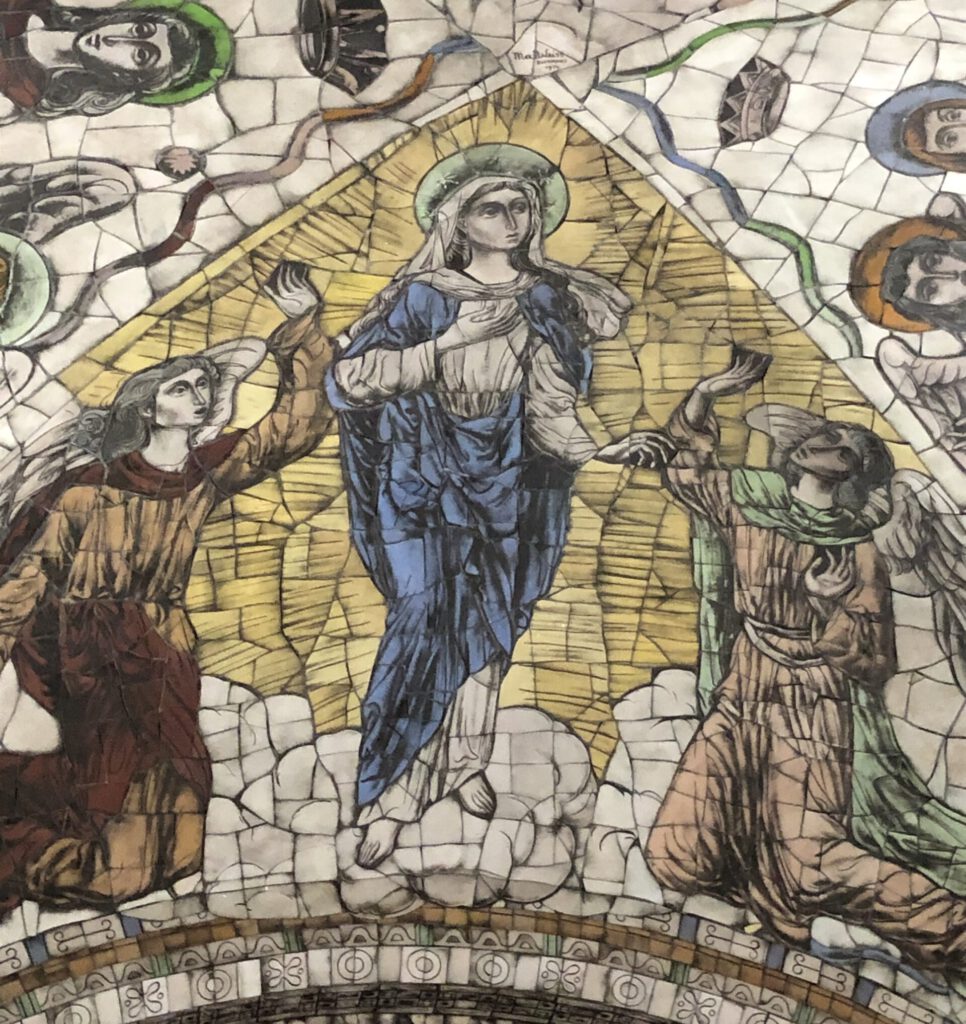
The wall decorations in the Marian chapel make a great impression on me. The Roermond glass artist Max Weiss (1910-1972) did particularly beautiful work here in 1954. I see Mary, angels and Saint John. The stained-glass windows from 1950 are also by Max Weiss. The veneration of Mary, miraculous healings and the emergence of the spring are magnificently depicted.
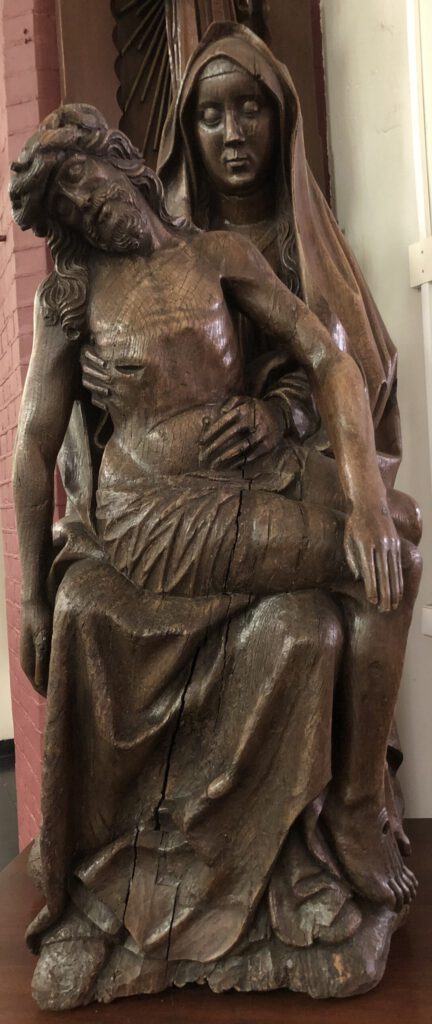
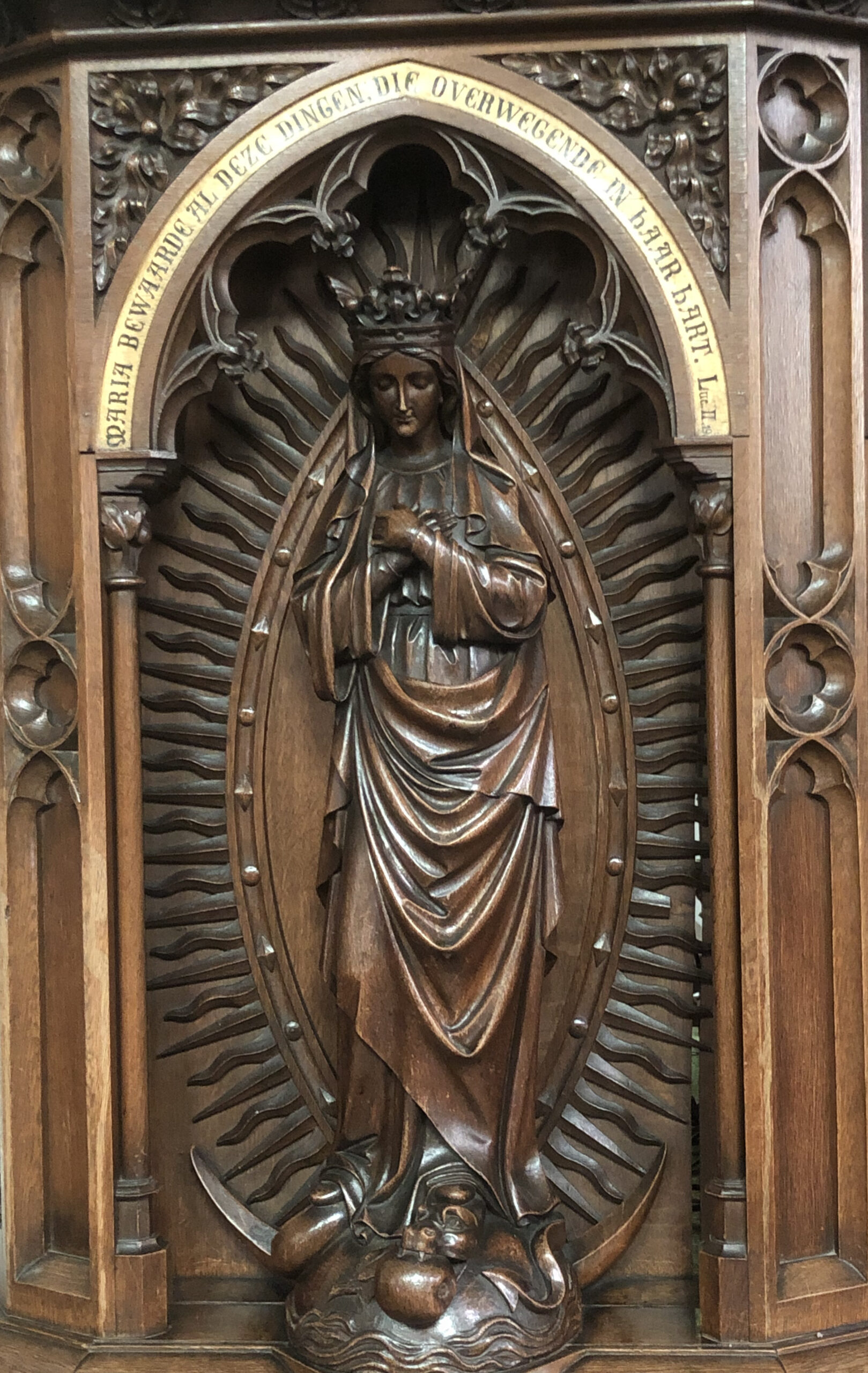
I find the church a jewel with its Lady Chapel and much more. I admire the beautiful interior and learn that most of the inventory dates from the 19th century. Many votive paintings, given as thanks for healing, remind me of the long history of this pilgrimage site. I see much more, such as the Stations of the Cross, the choir loft, statues of Mary, Joseph, and Christ, and the 17th-century Pietà. The particularly handsome pulpit from 1903 depicts the Annunciation to Mary, the Visitation, and the Coronation of Mary.
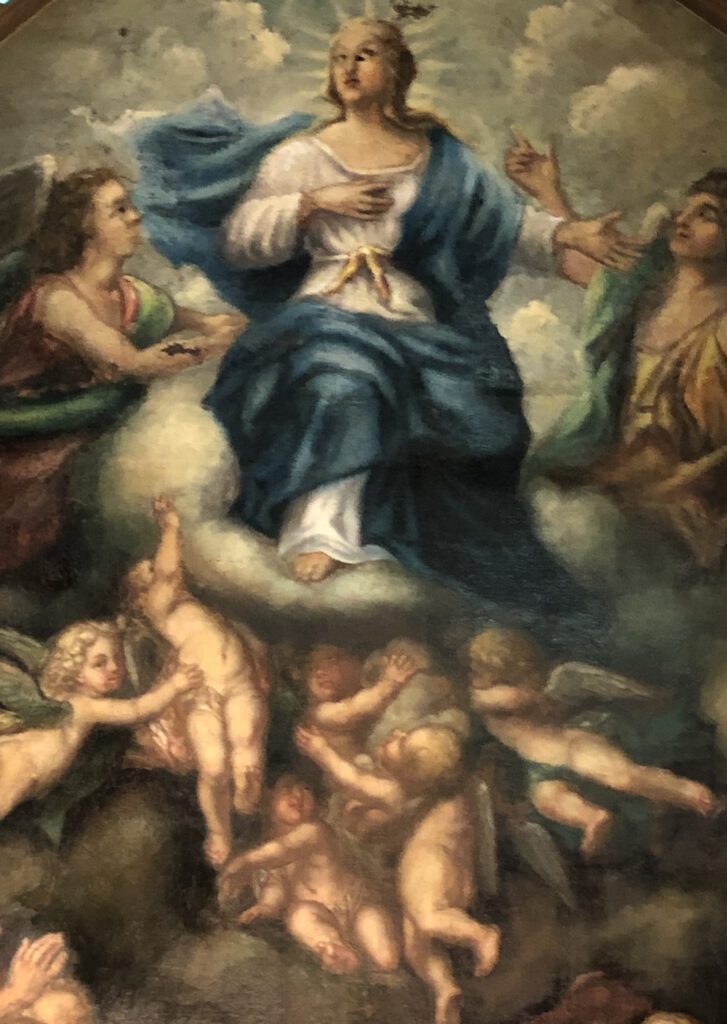
A large painting, “The Assumption of Mary,” is going for restoration. The canvas is 330 centimetres high and 237 centimetres wide. What a grand piece of art! Mary is surrounded by angels. Apostles and women are gathered around the open tomb. This artwork originates from the old high altar. What a painting! I want to see this again once it has been restored.
The high altar is Neo-Gothic in style and was made in 1898 by Atelier Lenaerts from Roermond. The tabernacle depicts the birth of Jesus and the wedding at Cana.
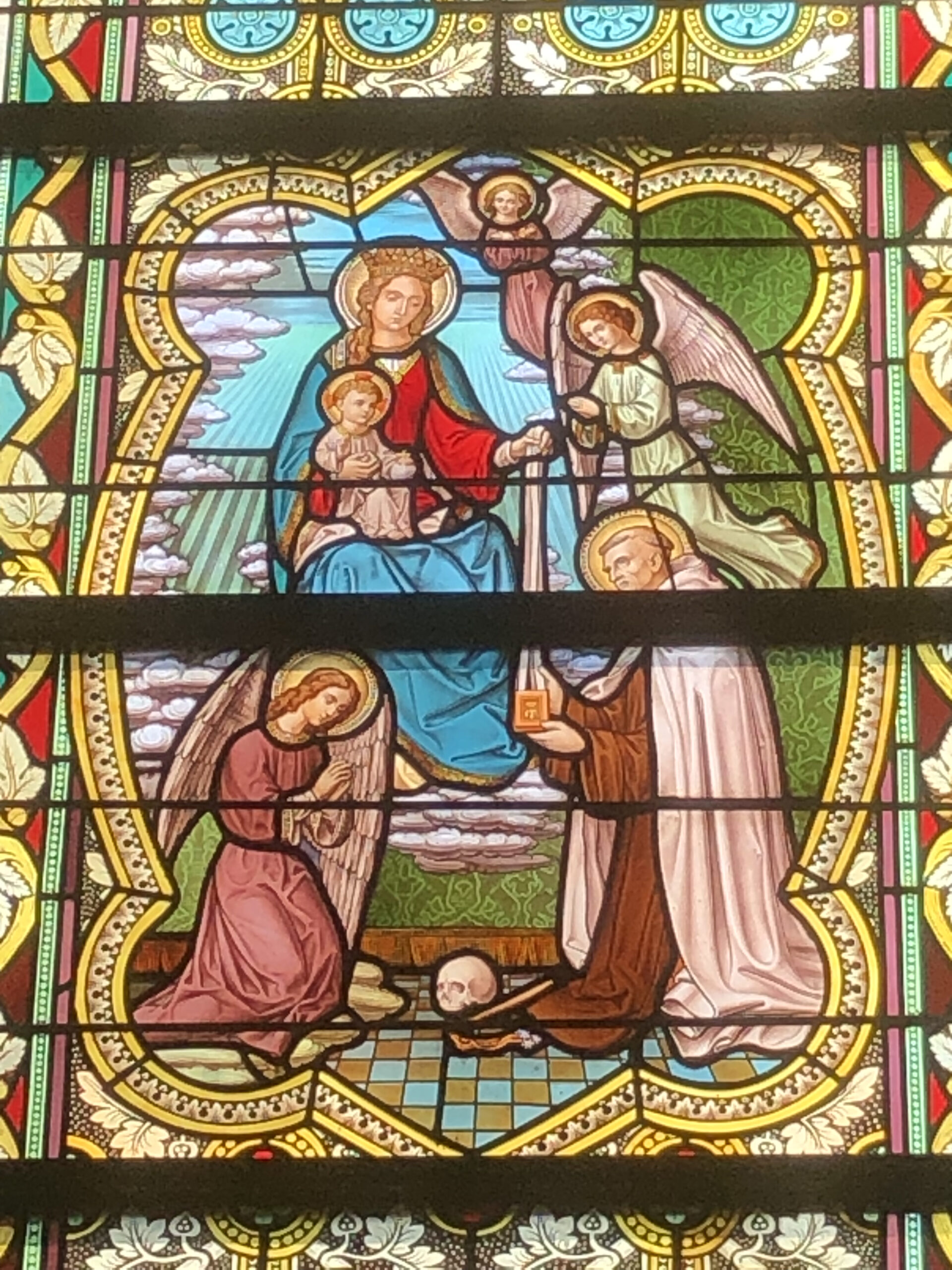
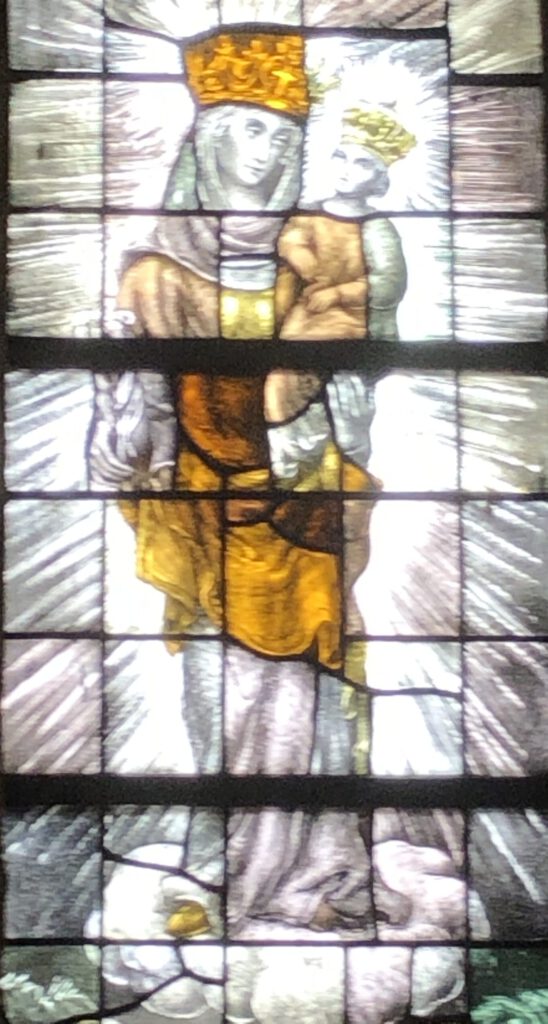
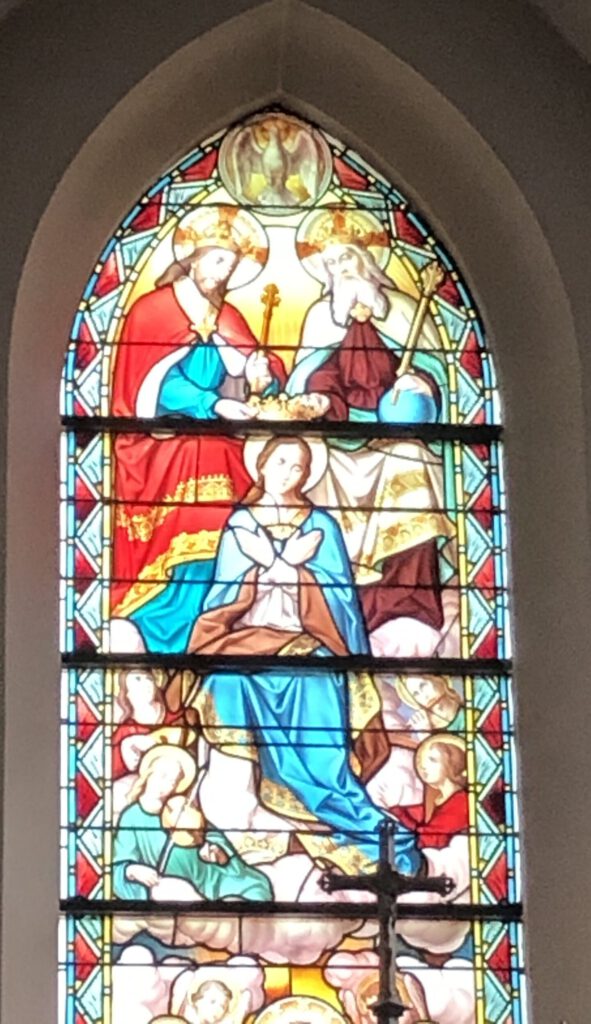
In the choir's apse I see three stained-glass windows from 1898-1899. These were made by the Nicolas art studio in Roermond. On the left I see Dominic of Osma (1170-1221), the founder of the Order of Dominicans, receiving the rosary from Mary. On the right, Simon Stock (1165-1265) is depicted; he is the superior of the Carmelites. In 1251, he is presented with the brown scapular by Our Lady of Mount Carmel. This vision takes place in the English city of Cambridge. As a result, the brown scapular becomes a permanent part of the Carmelites' habit. The central window shows the Assumption and Coronation of Mary.
The walk around the procession park is a real experience for me. I pass chapels and stations of the cross. On my walk, I see, among other things, the Holy Well, the altar of rest, Calvary, the Blessing Chapel, and the Wedding at Cana. In 2001, the park was declared a national monument.
What a gift this pilgrimage site is to be able to visit.
Environment
From Eindhoven to Handel is 28 km to the northeast.
Travelling from Roermond in Limburg to Handel means travelling 59 km to the northwest.
Setting off from ‘s-Hertogenbosch to go to Handel means driving 44 km east.
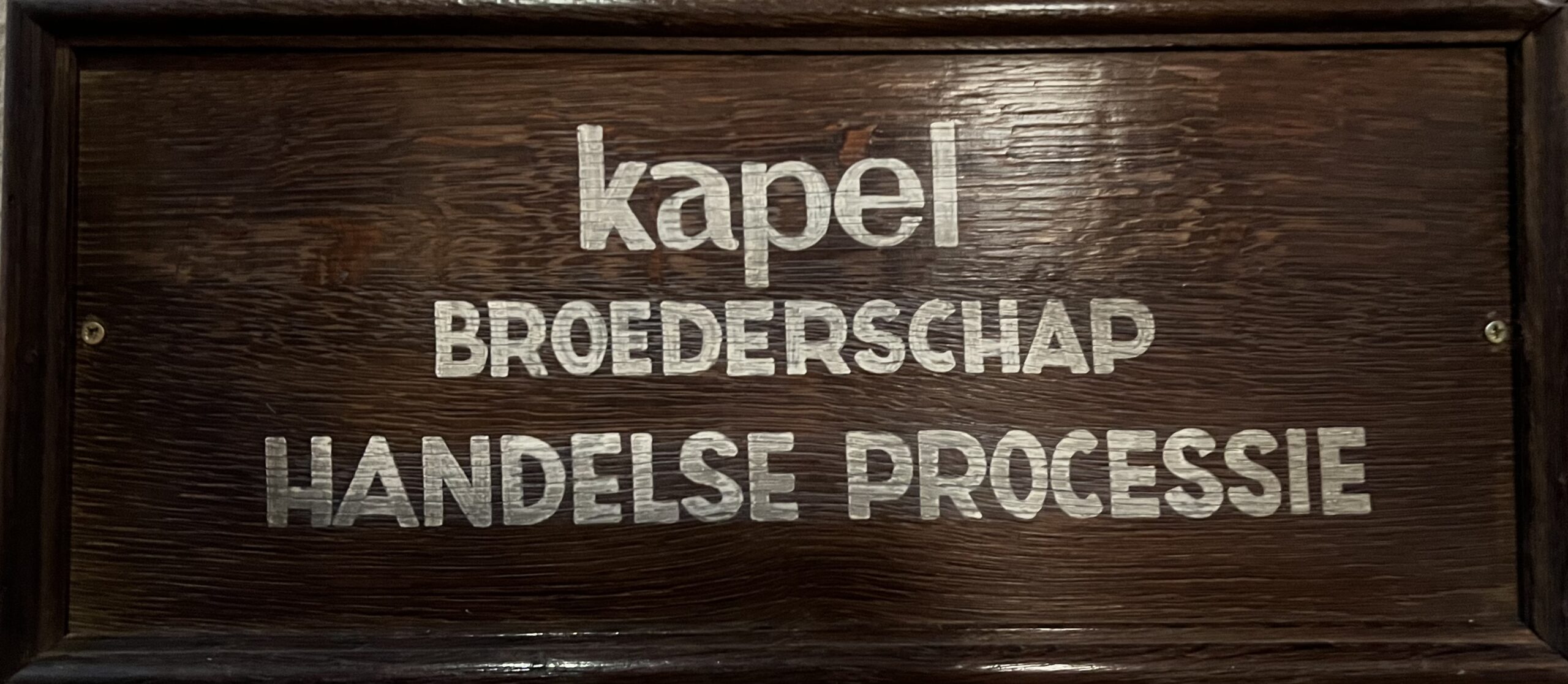
From Valkenswaard, a pilgrimage to Handel departs annually. It is a walking journey of over 40 km. In Valkenswaard, the Saint Nicholas Church stands on the Markt, and in this house of worship, a chapel has been set up, south of the tower, dedicated to “Our Lady of Handel”. This chapel is specially furnished for the “Brotherhood of the Handel Procession”. In the chapel, there are stained-glass windows, and beneath them, the text “AVE MARIA, OUR MOTHER, OUR ADVOCATE, HELP AND COMFORT. PRAY FOR US”. This chapel houses, among other things, a statue of Mary, a large pilgrimage candle, and many smaller candles.
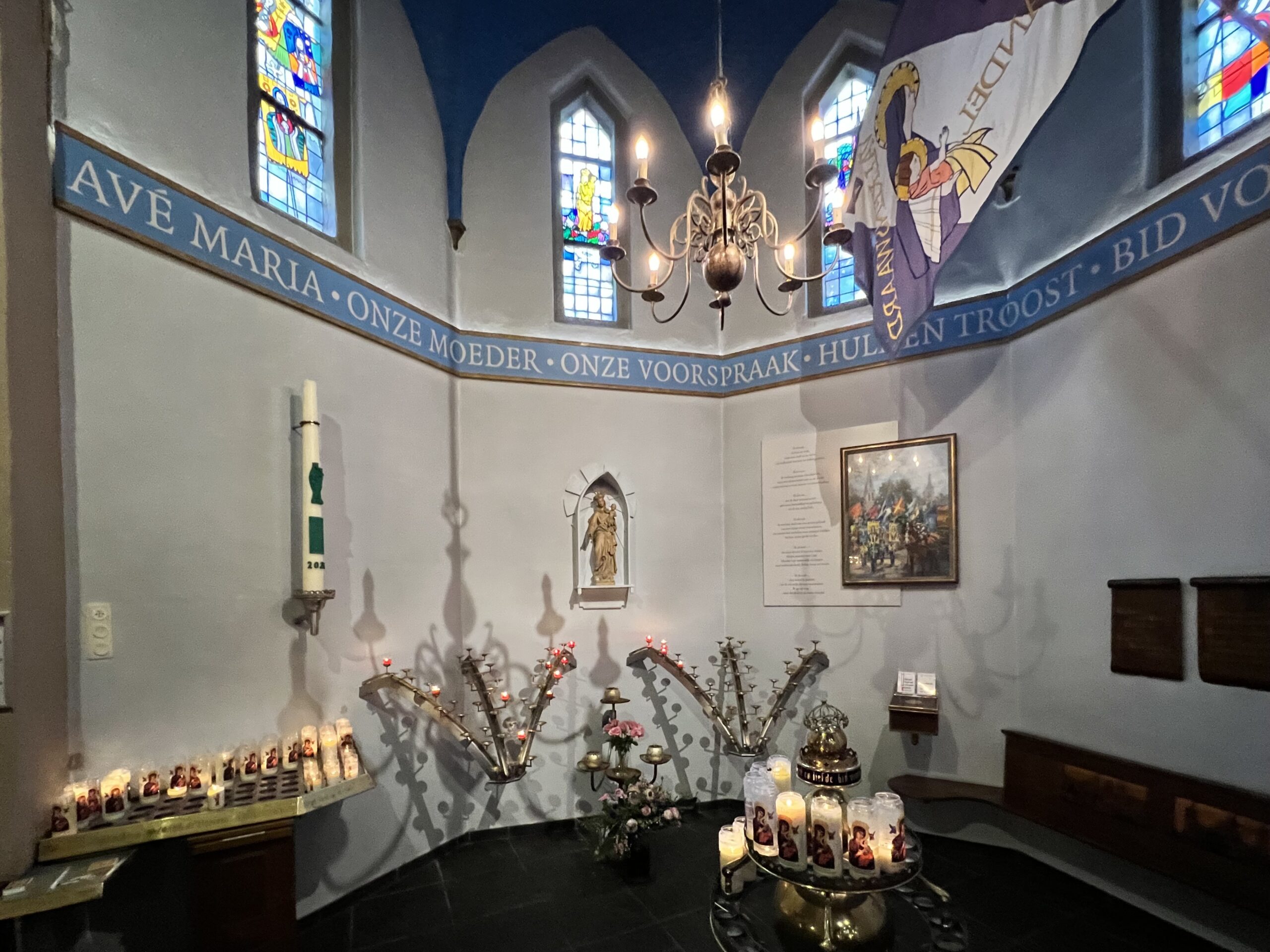
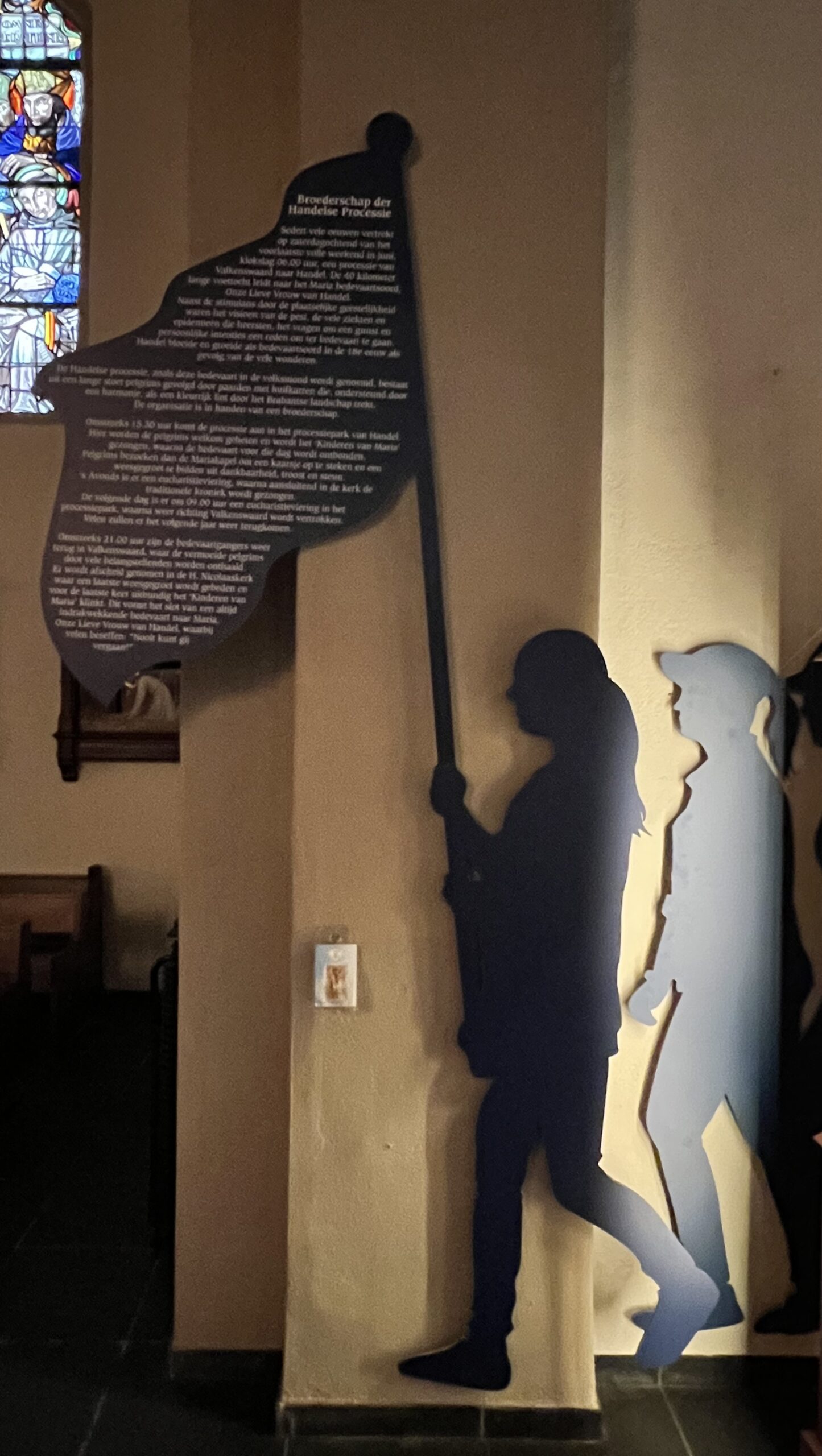
In St Nicholas' Church there is also a reference to the annual pilgrimage from Valkenswaard to Handel.
~~~

 Nederlands
  English (UK)
  Deutsch
  Français