History
In 1849, Mary appeared three times to three young Slovenian shepherdesses who were staying in the woods near Dolina with their animals. This happened on 17, 18, and 19 June 1849. Because Mary appeared in the woods, the pilgrimage site was later named “Maria im Walde” (Mary in the Woods). During the apparitions, the Apparition emphasised doing penance and converting. On 19 June 1849, the Apparition revealed herself as the Immaculate Virgin.
The three shepherdesses tell of the apparitions. This immediately leads to a rush of interested people to the forest, where Our Lady has appeared, right after the apparitions. The local population collects money from the pilgrims to build a small church. In 1861, Valentin Wiery, who was Bishop of Gurk from 1858 to 1880, permitted the construction of a church. In that year, the construction of the church began, which was never completed, with the architect Anton Bierbaum (1825-1907) involved. In 1863, the first part of the constructed church was consecrated.
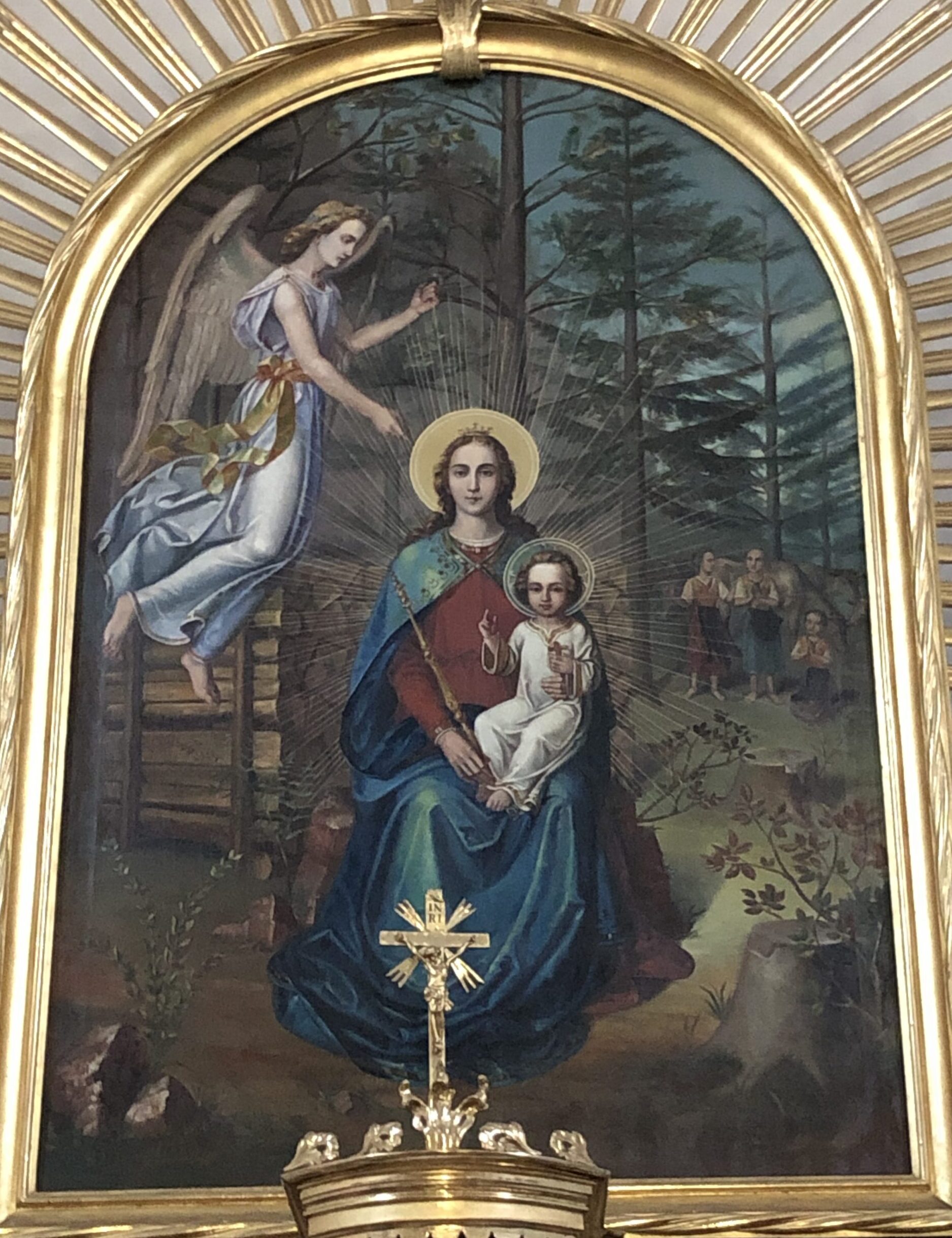
The painter Albert Chmielowski Tosf (1845-1916) created the painting of Mary in the woods, namely the “Madonna del Bosco”. He did this after receiving the necessary information from the three shepherdesses. This artwork became the most famous image of this sanctuary.
In 1882, the church acquired a tower, which collapsed in 1889, destroying part of the church. Only the chancel remained undamaged. Pilgrims continued to visit, even though the church had largely become a ruin. The reconstruction was delayed for many years. In 1957, the nave was completed and the enlarged church was consecrated.
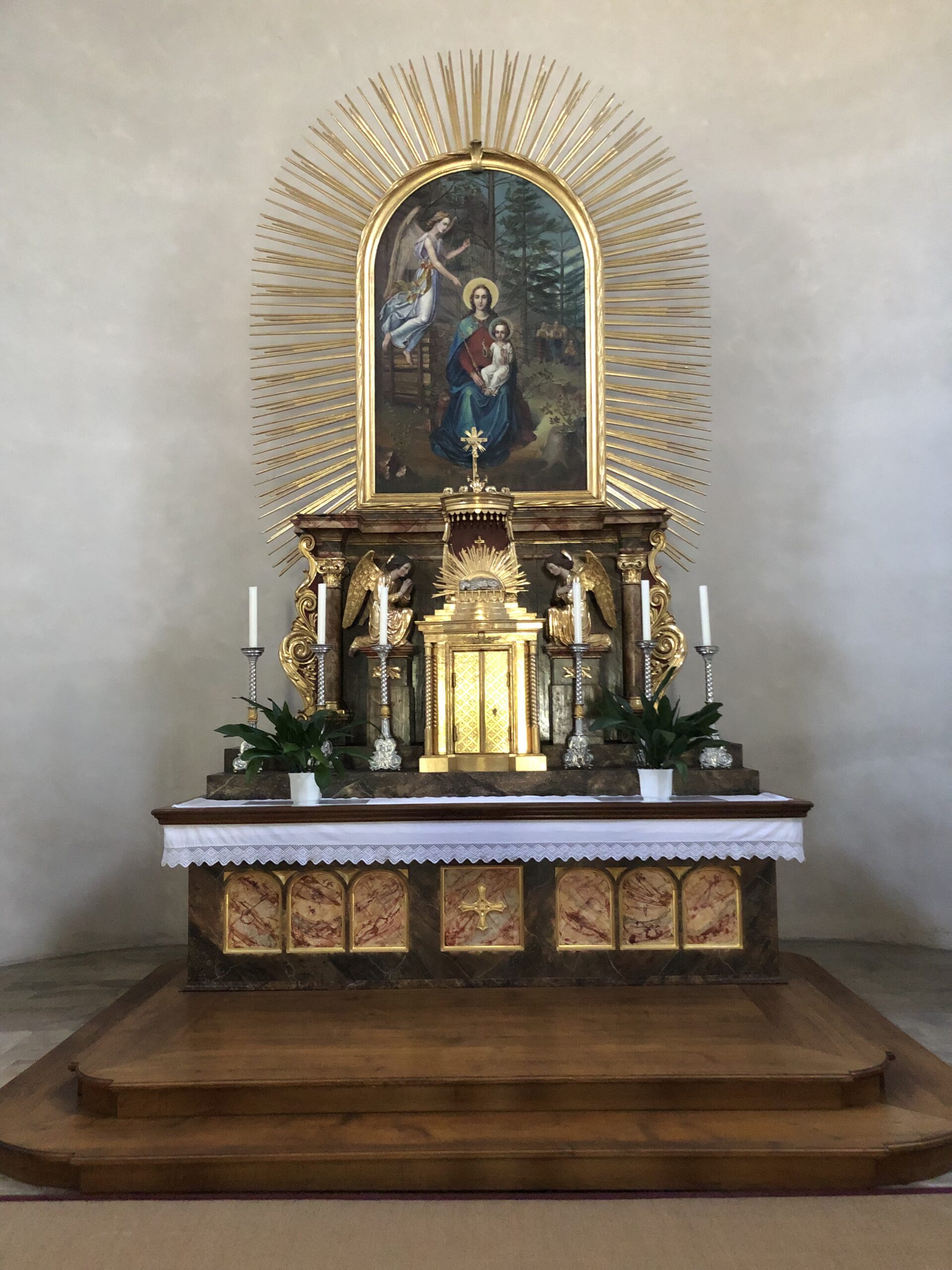
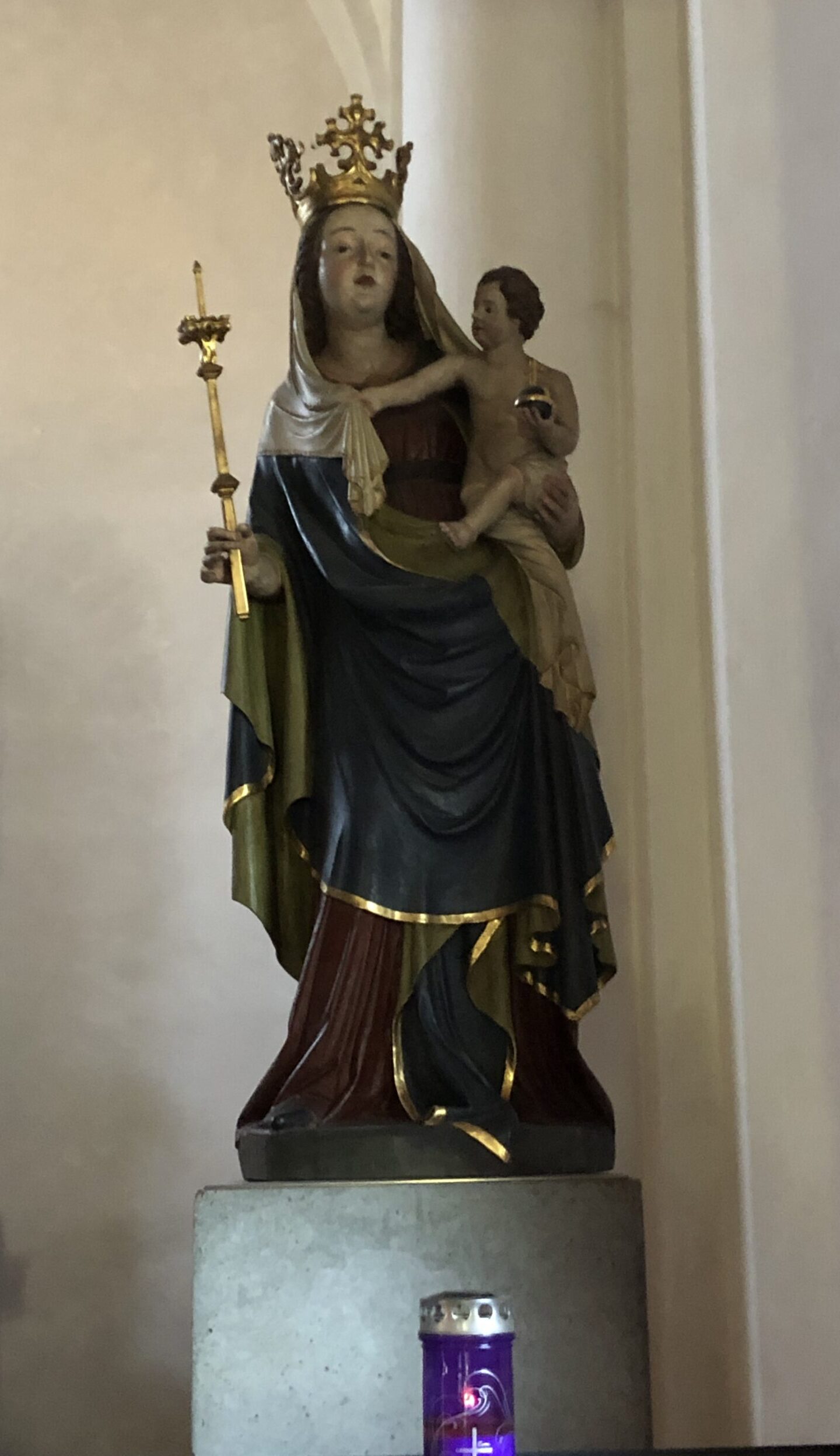
In the church's interior stands a wooden statue of the Madonna and Child from around 1420, which was later altered. The Slovenian Way of the Cross was created at the end of the 19th century. The Baroque high altar depicts the apparition of the Virgin Mary to the three shepherdesses. The artwork is from 1906 and is by the Slovenian painter Peter Markovic (1866-1929). At the beginning of the 20th century, the tabernacle was decorated with gold.
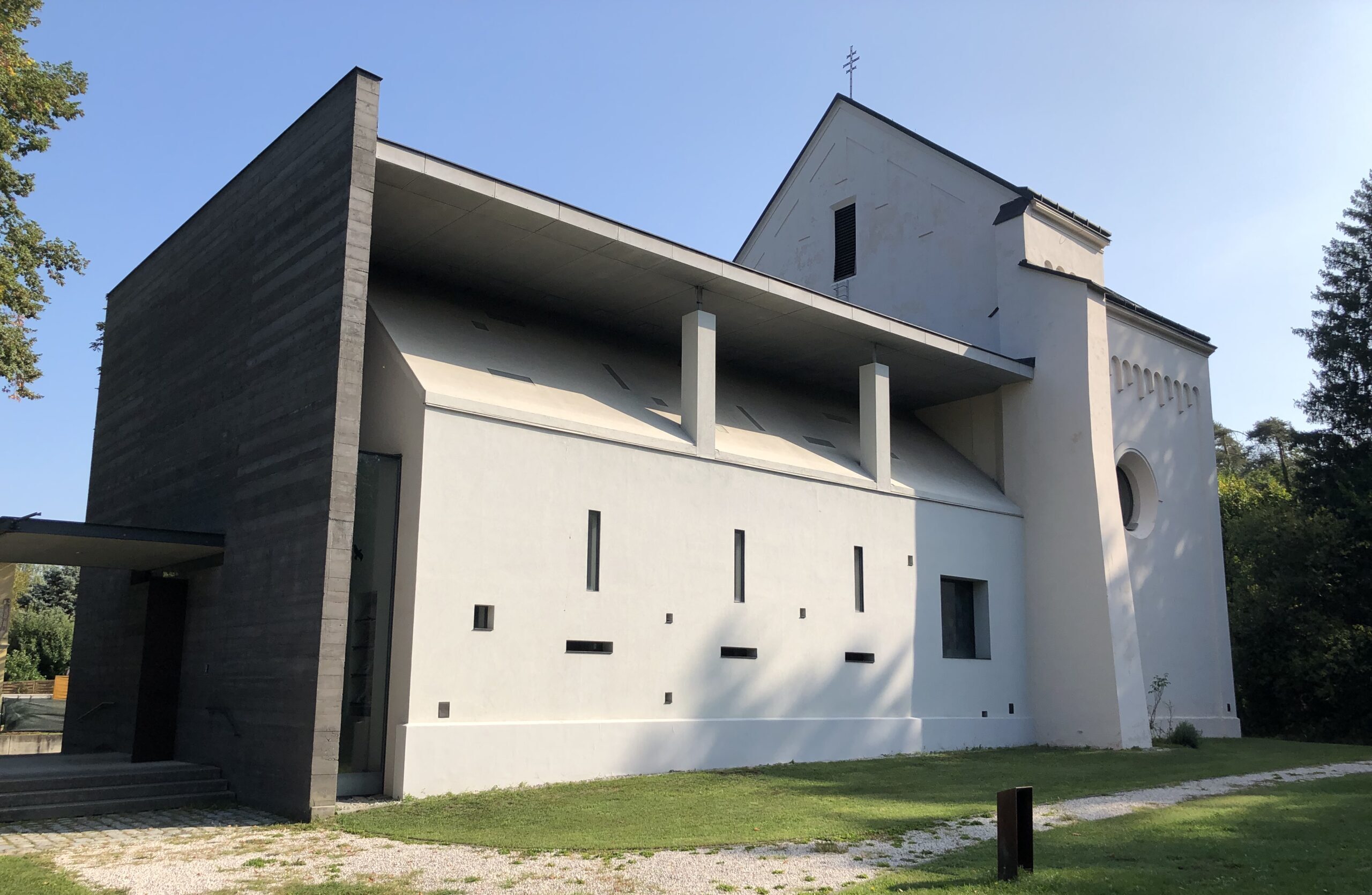
In 1999-2000, two architects from Graz, Certov/Morianz, redesigned the church, presenting a concrete building. It will be a church located near the motorway, specifically a motorway church. It is the first motorway church in Austria. Some paintings from 1999 are by Johannes Zechner (1953). In 2000, two stained-glass windows were designed by Giselbert Hoke (1927-2015).
Pilgrimage site
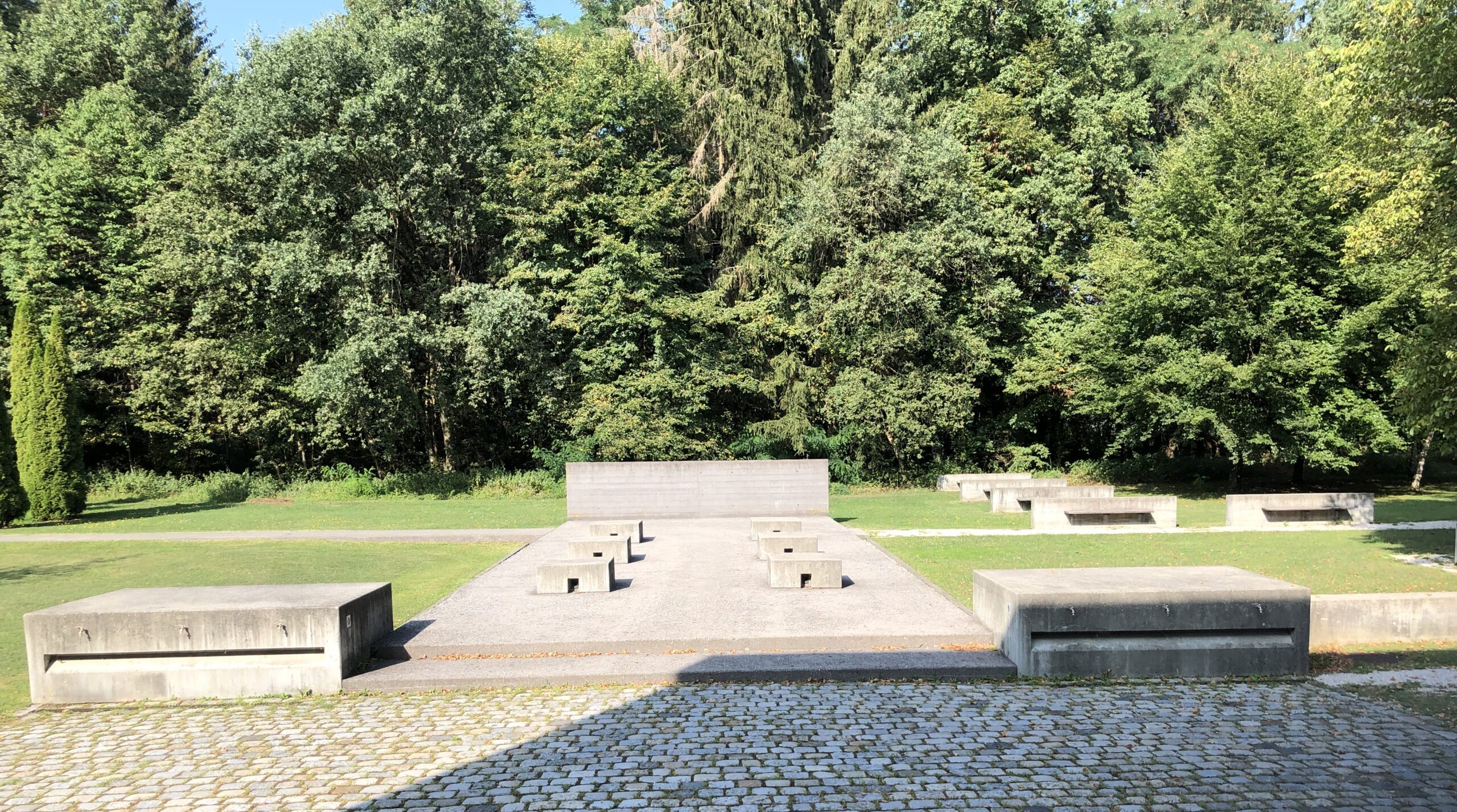
In front of the pilgrimage church is a large square, where plenty of pilgrims can take a seat. This church is a motorway church, but the sound of the motorway cannot be heard.
In the large, concrete church building, the venerated image receives daily visitors. The depiction of Mary with Child is old, as it was made around 1420.
The Baroque high altar displays a work of art depicting the apparition to the three shepherdesses. The devotional image of Our Lady with Child is located on the right side of the high altar. The crowned Mary holds her Son and a sceptre.
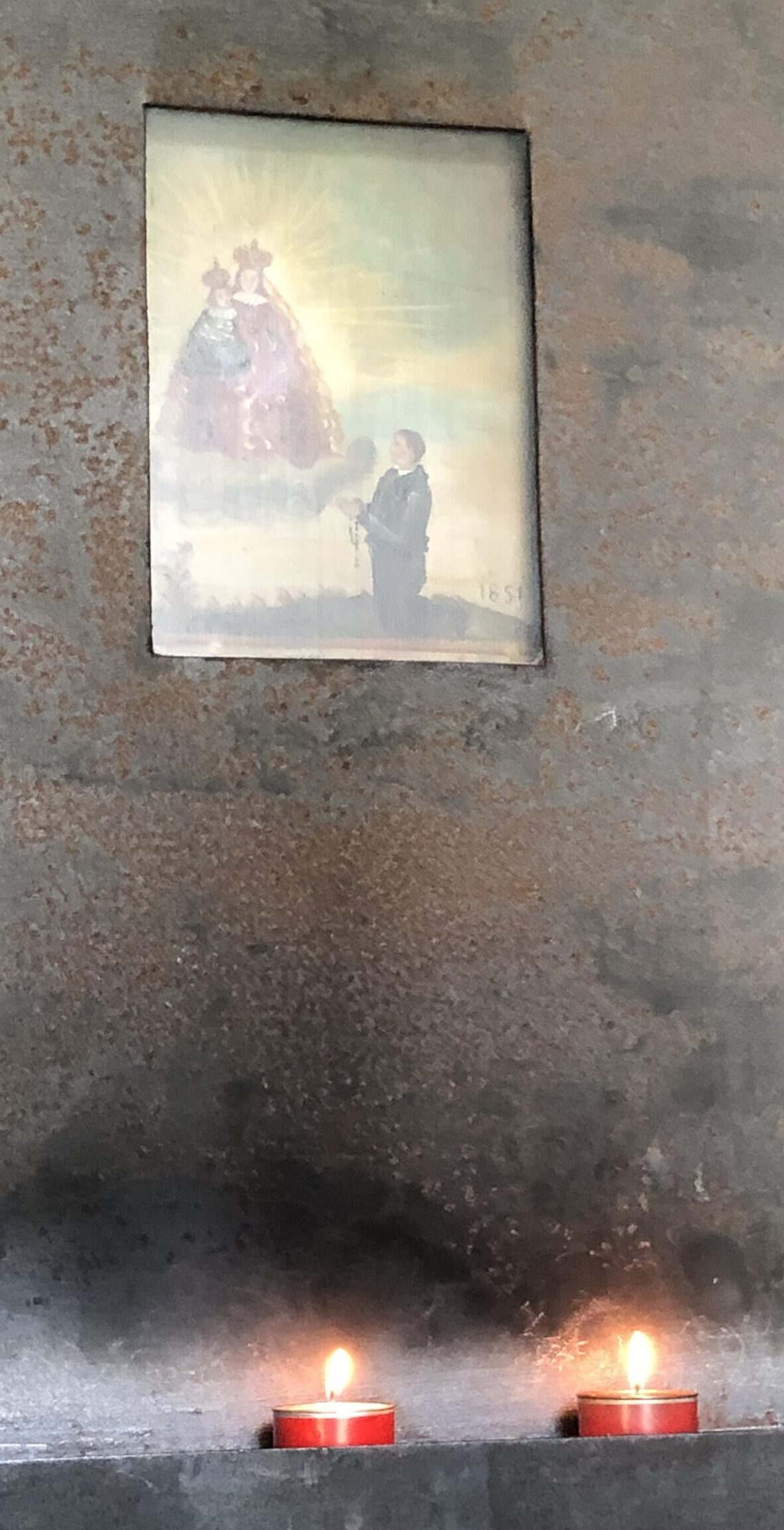
In the church, a Way of the Cross can be seen, which was made around 1880. Also hanging here are quite a few ex-votos, which are expressions of gratitude to the Virgin Mary.
ACCESSIBILITY
Dolina is situated between the villages of Grafenstein and Poggersdorf. Dolina belongs to the state of Carinthia and is part of the district of Klagenfurt-Land, in southern Austria. The church is located near the A2 motorway, exit 298.
The address of the “Maria im Walde” church is Dolina 34/3, 9131 Dolina.
Current information can be obtained via “www.kath-kirche-kaernten.at”.
Experience
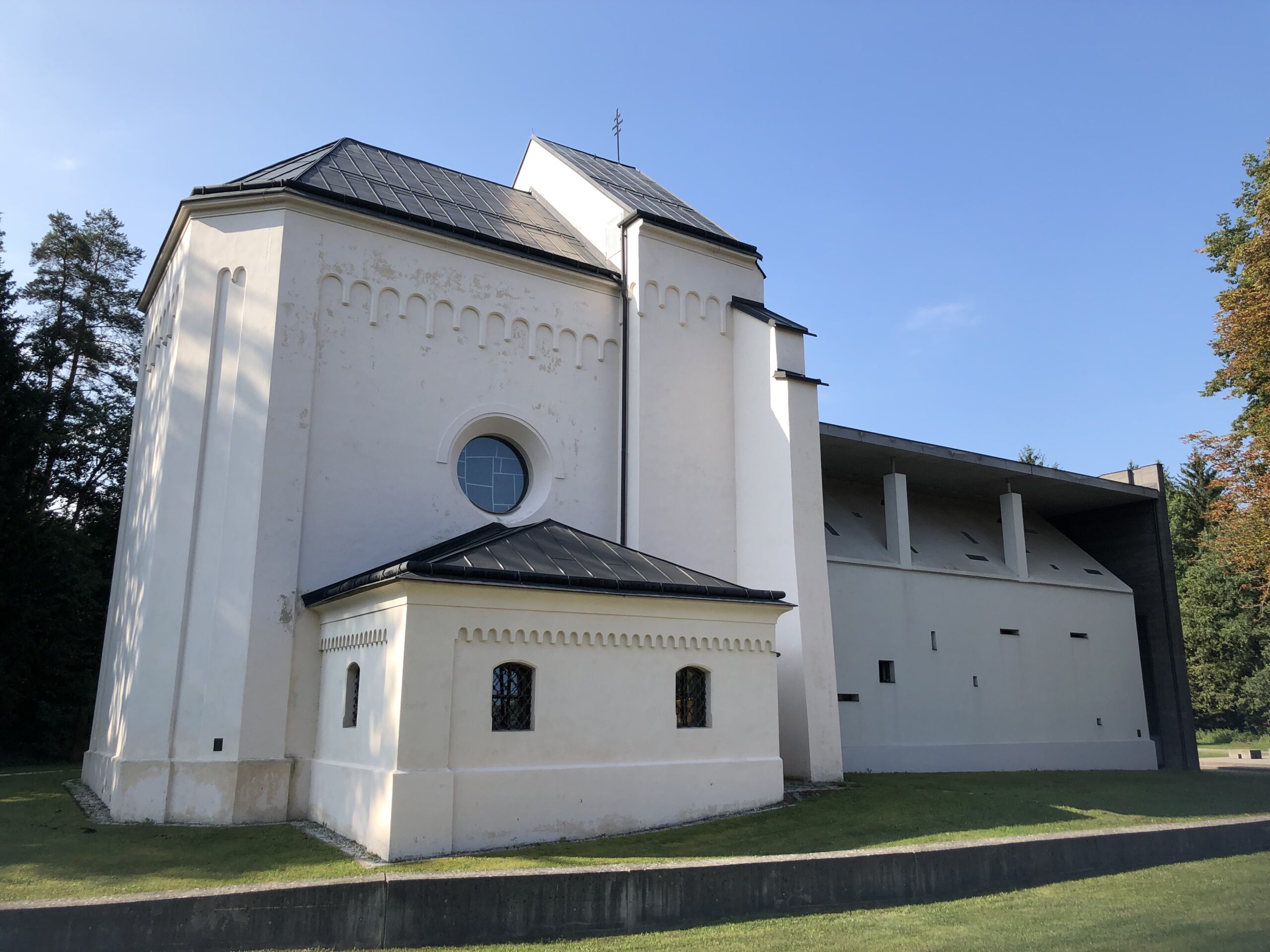
Near the motorway is a motorway church. It is the first church in Austria to be built near a motorway.

The large, concrete building stands firmly among trees and makes a tough impression on me. The exterior of the pilgrimage church is painted entirely white.
Next to the church, it's possible to have a dark experience. For me, it requires a significant crouch to get about 10 metres further.
Next, I go into the pilgrimage church and the interior strikes me as spacious and warm. The red colour of the walls and ceiling certainly contribute to this. I take a walk around and arrive at the front by the shrine and the main altar. That's where I stand still for more than a moment. I see the painting of the apparition to the three shepherdesses. What a history is depicted here.
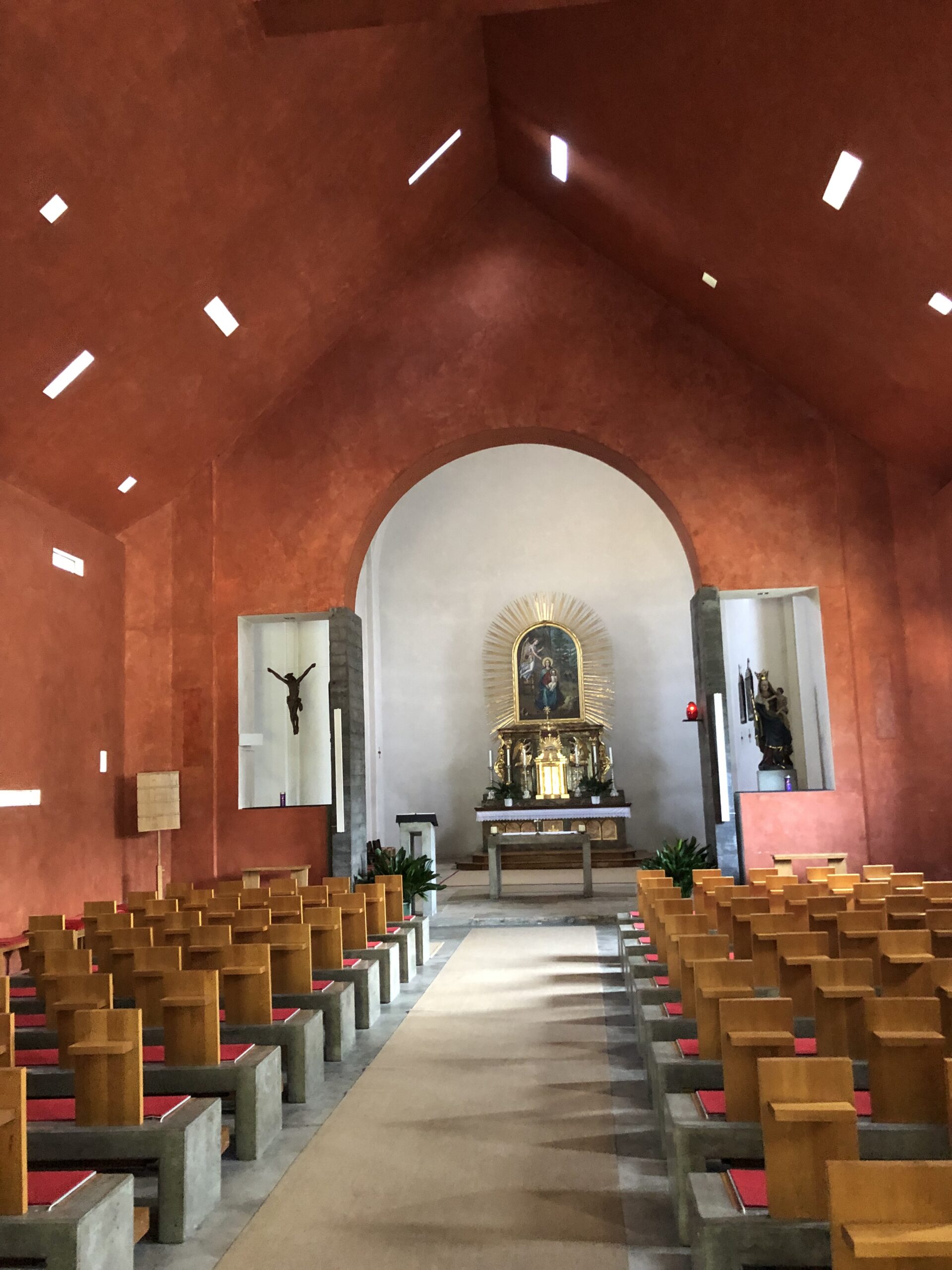
Finally, I take a seat on one of the concrete benches with wooden backrests. It's time to pray to Our Lady, and thoughts of friends come to mind. One is battling a creeping illness, and another is struggling with their daughter. What support from Mary might they need.
Published: 30 November 2022
~~~

 Nederlands
  English (UK)
  Deutsch
  Français