History
The Sanctuary of Maria Saal has a long history that began centuries ago. Emperor Claudius (10 BC – 54 AD) of the Roman Empire founded the city of Virunum, which lies in the area of present-day Maria Saal. In this place, in the early 4th century, Christians lived under the rule of the Patriarchate of Aquileia, with its episcopal see in northeastern Italy. In the 6th century, pagan Slavic tribes arrived in the region and dominated it for many years. In 767, the first people in the region converted to Christianity. The Irish bishop Virgil of Salzburg (c. 700–784) sent his compatriot and monk Modestus (c. 720–c. 772) to the area. Modestus is also called “the Apostle of Carinthia”. He had the first, wooden, Romanesque church built in Maria Saal and dedicated it to the Assumption of Mary. In 860, there is mention of “S. Maria ad Carantanum”. From the area of Maria Saal, the Christian faith spread throughout Carinthia.
In the period 753-945, the pilgrimage church of Maria Saal was a bishop's church.
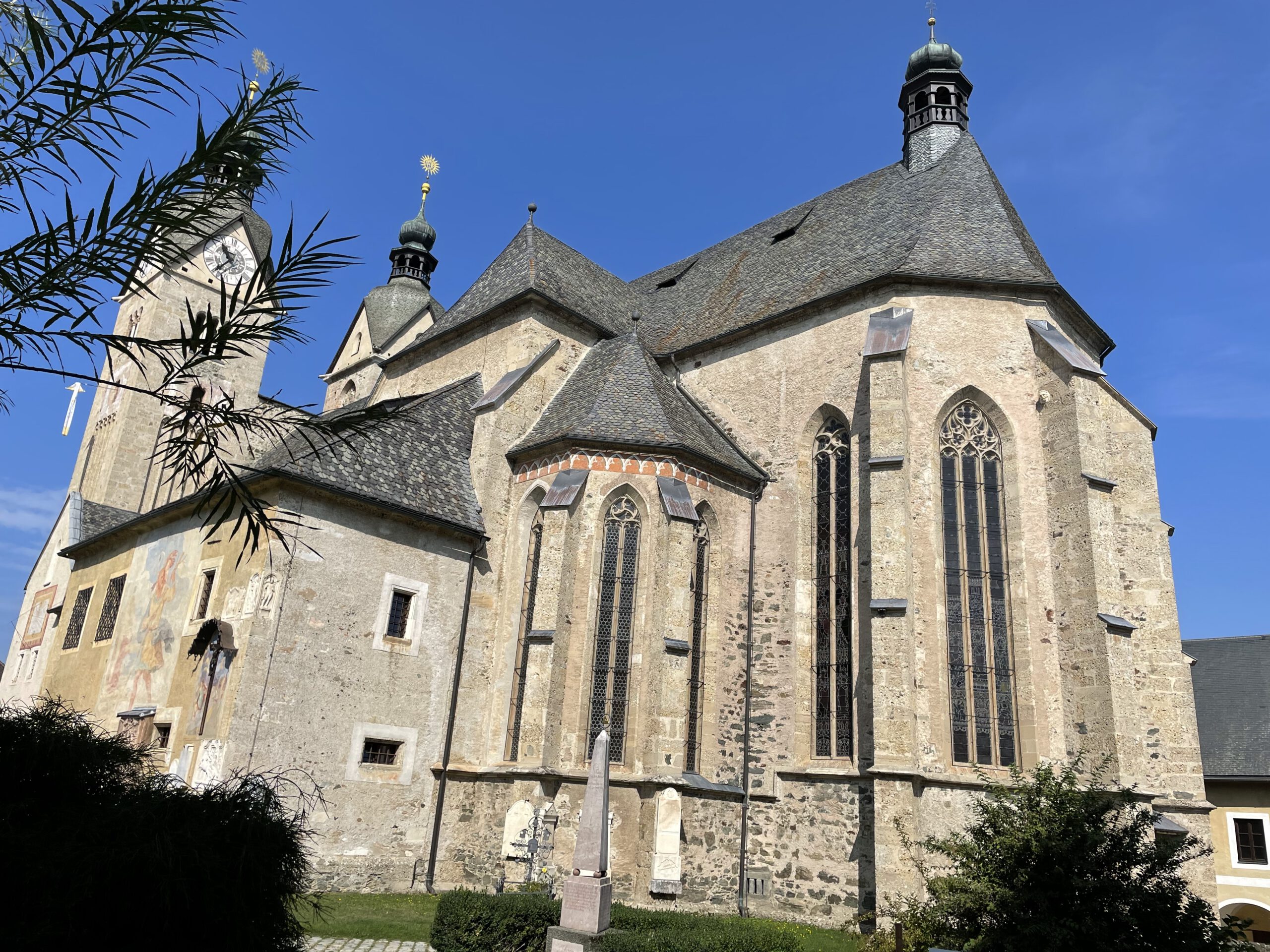
A Romanesque stone church rises, which is replaced a few hundred years later. The current Gothic church of Maria Saal was built between 1420 and 1460. Major defensive works were undertaken in the second half of the 15th century, with the complex being walled and thus further fortified with the aim of resisting Turkish and Hungarian incursions.
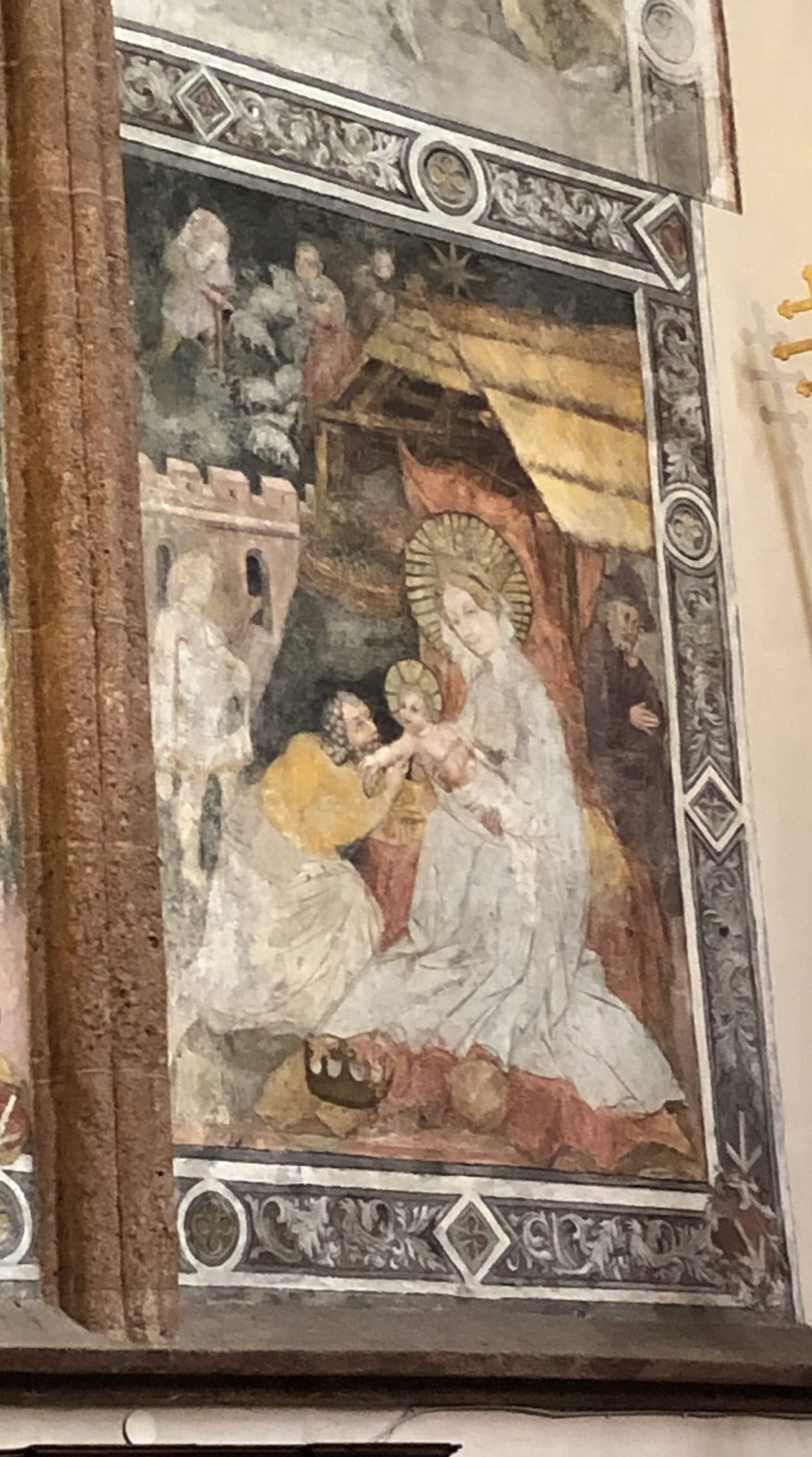
The cathedral has stained-glass windows from around 1450 which are in colour. A fresco of the Virgin and Child, 250 cm high and 280 cm wide, dates from the same period.
In the 16th century, the Reformation advanced further, but Maria Saal remained a Catholic stronghold.
In 1669 a great fire destroyed the church and after 20 years it was rebuilt.
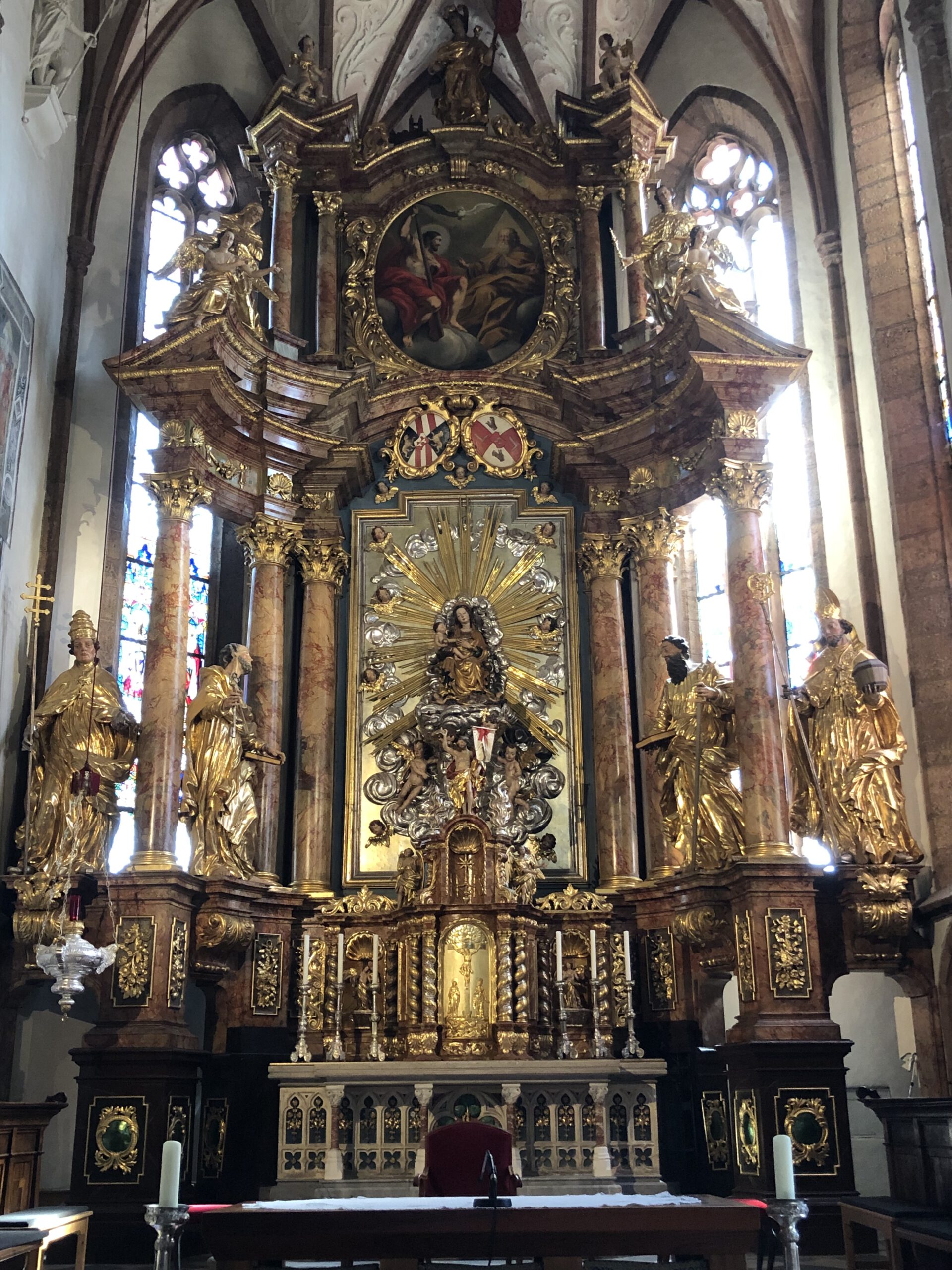
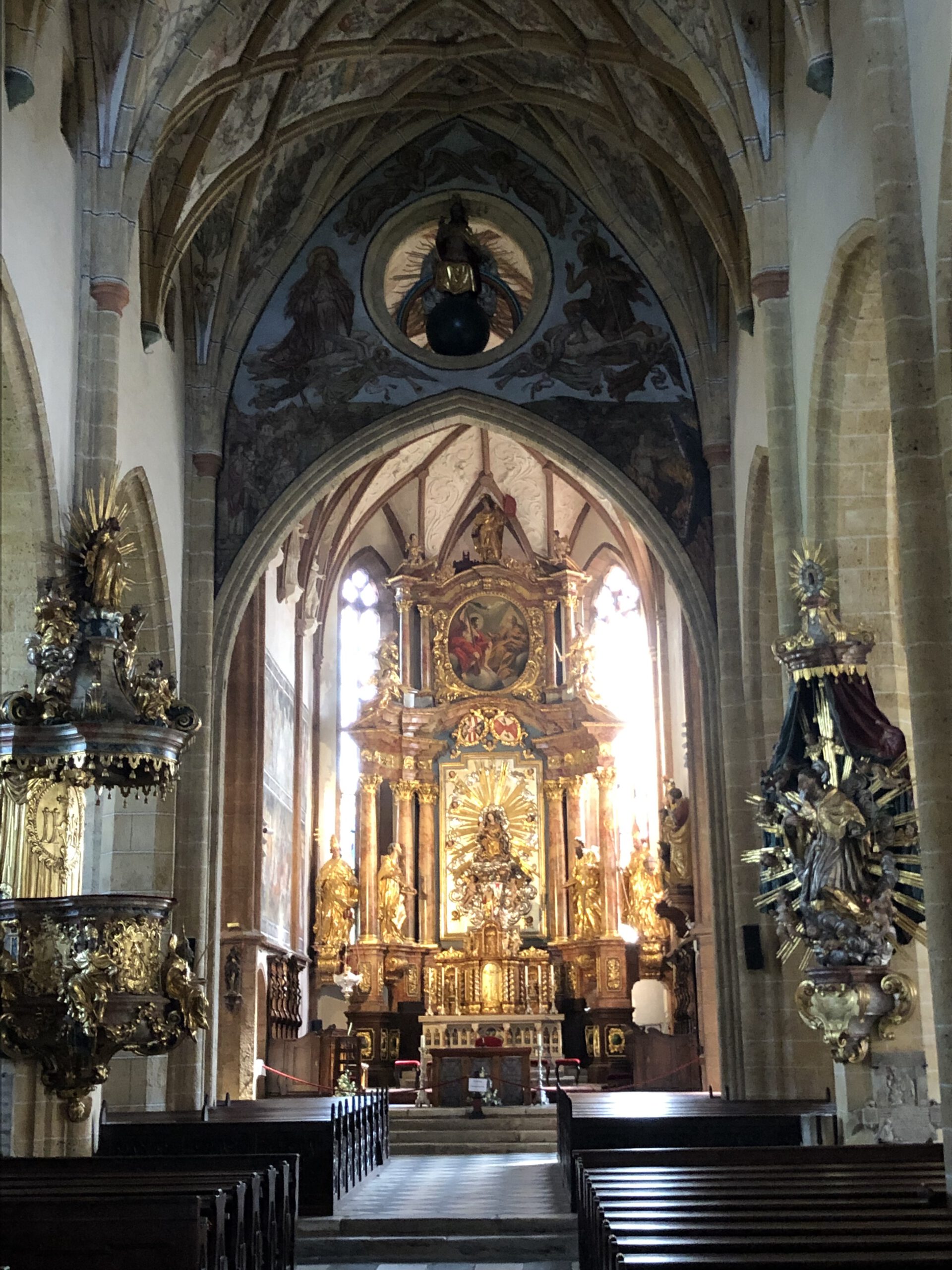
In 1714, the Imperial Count Clemens Ferdinand von Kaiserstein (1649-1724) and his wife gifted the current baroque high altar. This imposing altar reaches up to the vault.
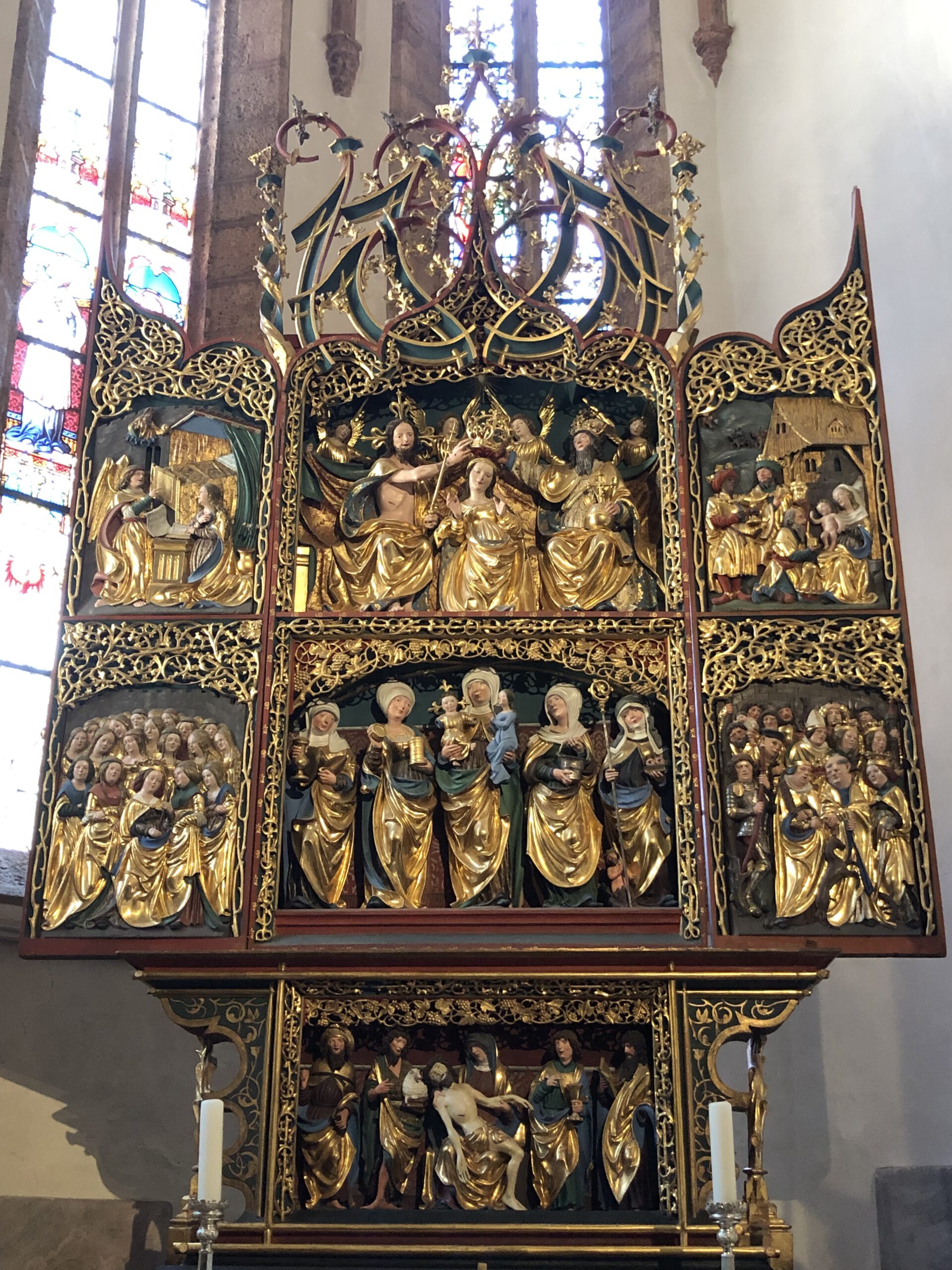
Also striking in the church is the late Gothic “Arndorf Altar” from 1520, which was purchased in 1884 and is approximately 500 cm in height. This side altar shows the Coronation of Mary at the top. The predella depicts the Pietà, with Mary, Jesus, and also John the Baptist, among others. This altar base makes the whole a special work of art.
Between 1982/1985, the cathedral underwent interior restoration. In 2011/2015, the exterior of the imposing building received the same treatment.
Pilgrimage site
The pilgrimage site of Maria Saal (Maria Zaal) is located at an altitude of about 500 metres. Visitors come for the Church of Our Lady of Maria Saal, which is dedicated to the Assumption of Mary. The cathedral can be seen from afar thanks to its two towers, which rise above the other buildings. Maria Saal is the ancient, spiritual heart of Carinthia.
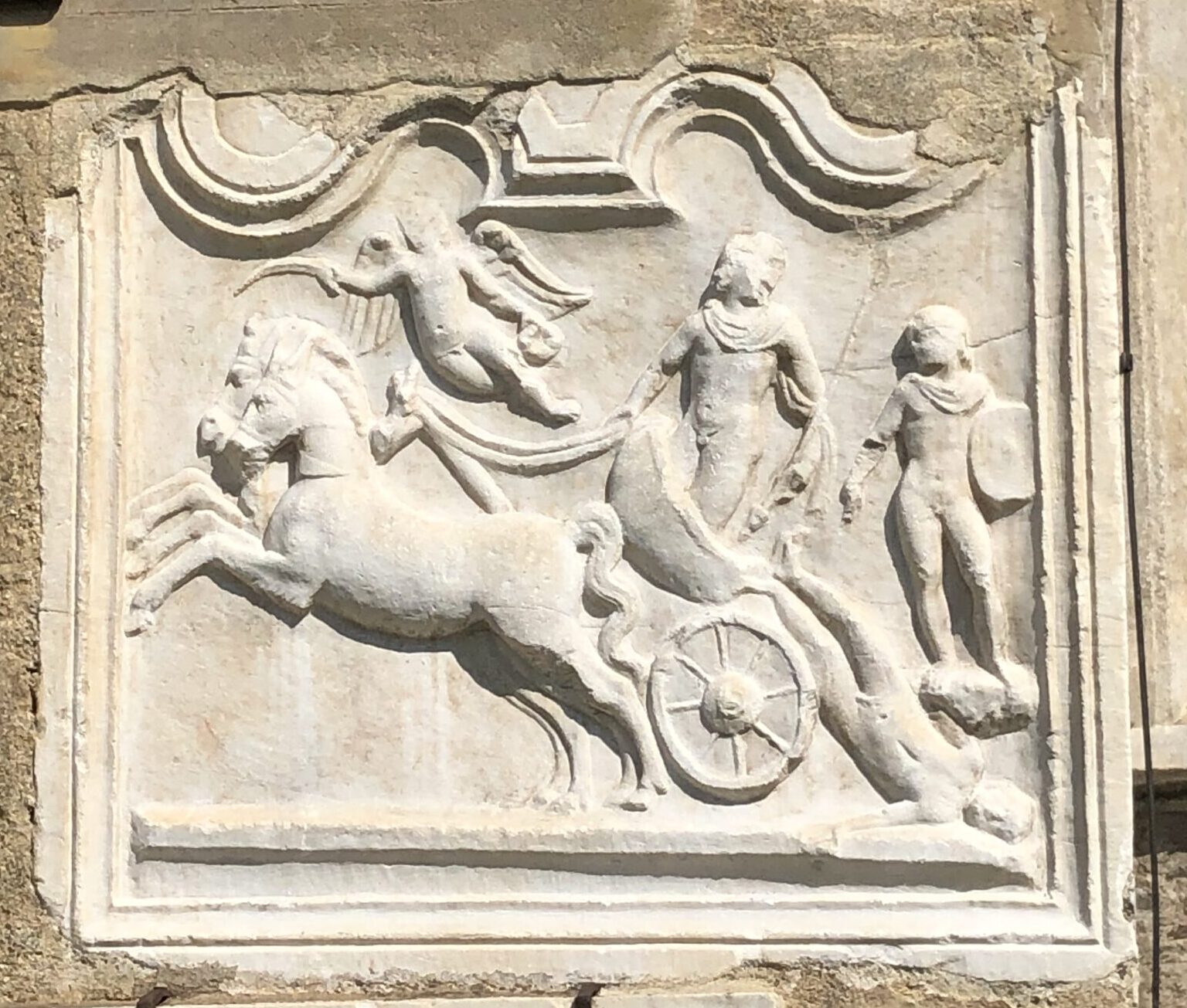

On the outer wall of the church is a 3rd-century relief, a stone depiction of a Roman chariot. Also attached to this facade is a red marble representation of the “Keutschacher Epitaphien” (Keutschach Epitaph) from approx. 1510. It depicts the coronation of Mary on a wreath of clouds and is 270 cm high.
The Cathedral not only has a noteworthy exterior, but its interior also has a lot to offer. The interior space is vast, measuring 50 m in length, 20 m in width, and 27 m in height. In total, 70 panels in the vault can be distinguished, featuring a variety of images.
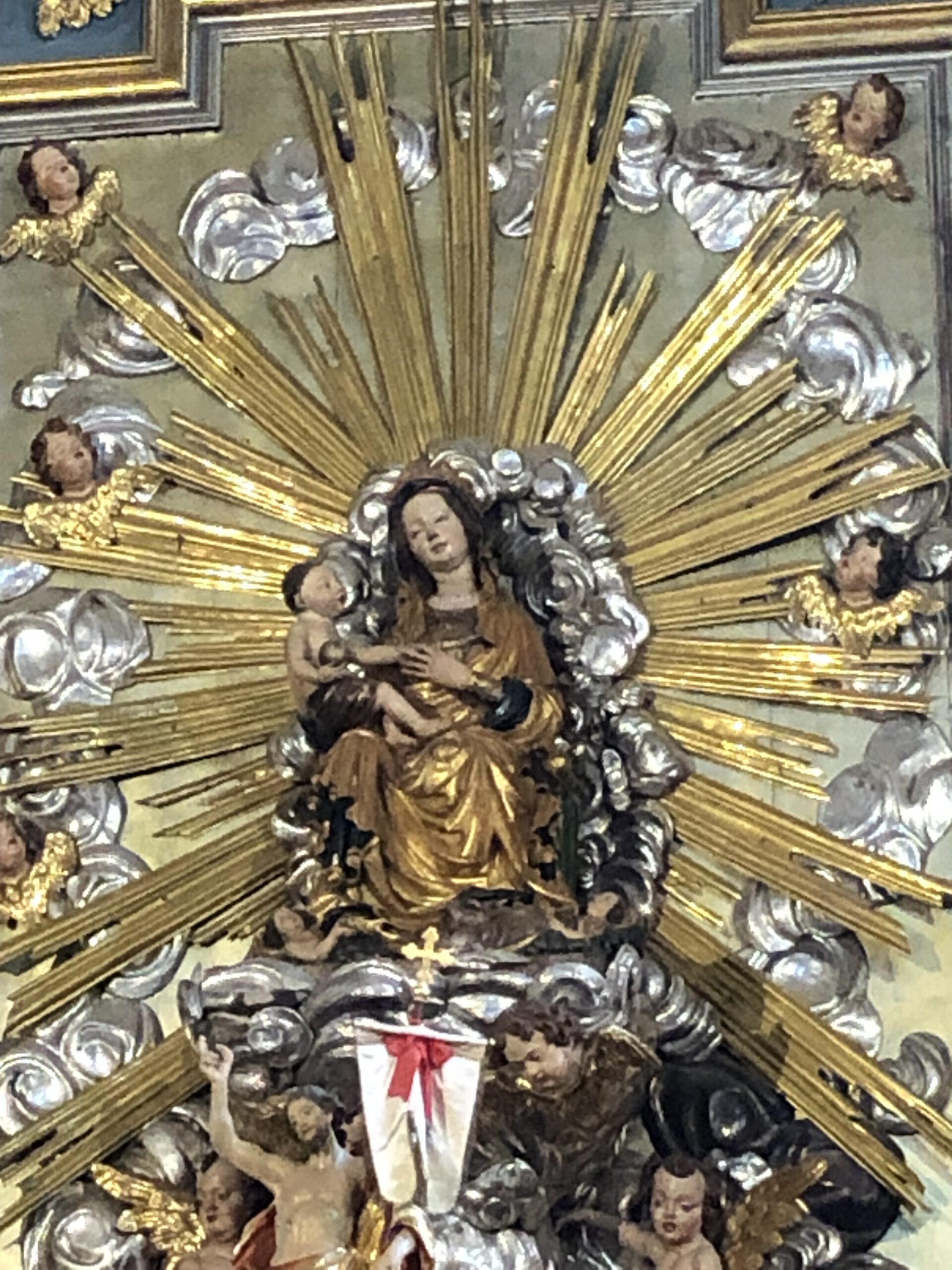
Central to the high altar is the shrine, created in 1425 by an unknown artist. The effigy is 130 cm tall and weighs around 500 kg. It was placed in this cathedral in 1787. The altar also houses saints such as Rupert, Paul, and Peter.
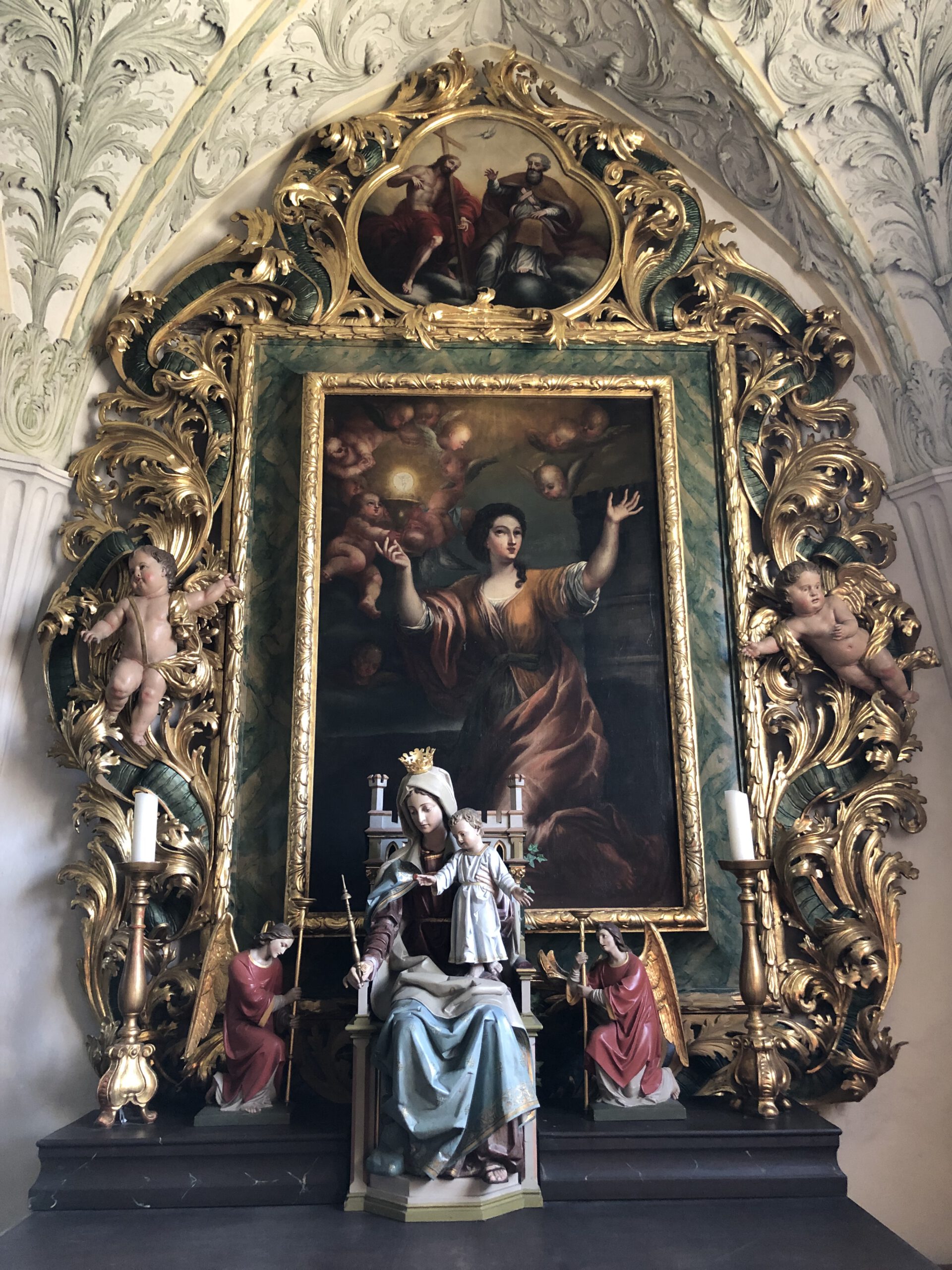
In the Chapel of St Barbara, there is a statue of the Mother of God with Child. On the altar table, a Gothic statue of the Madonna and Child from 1900 has been placed.
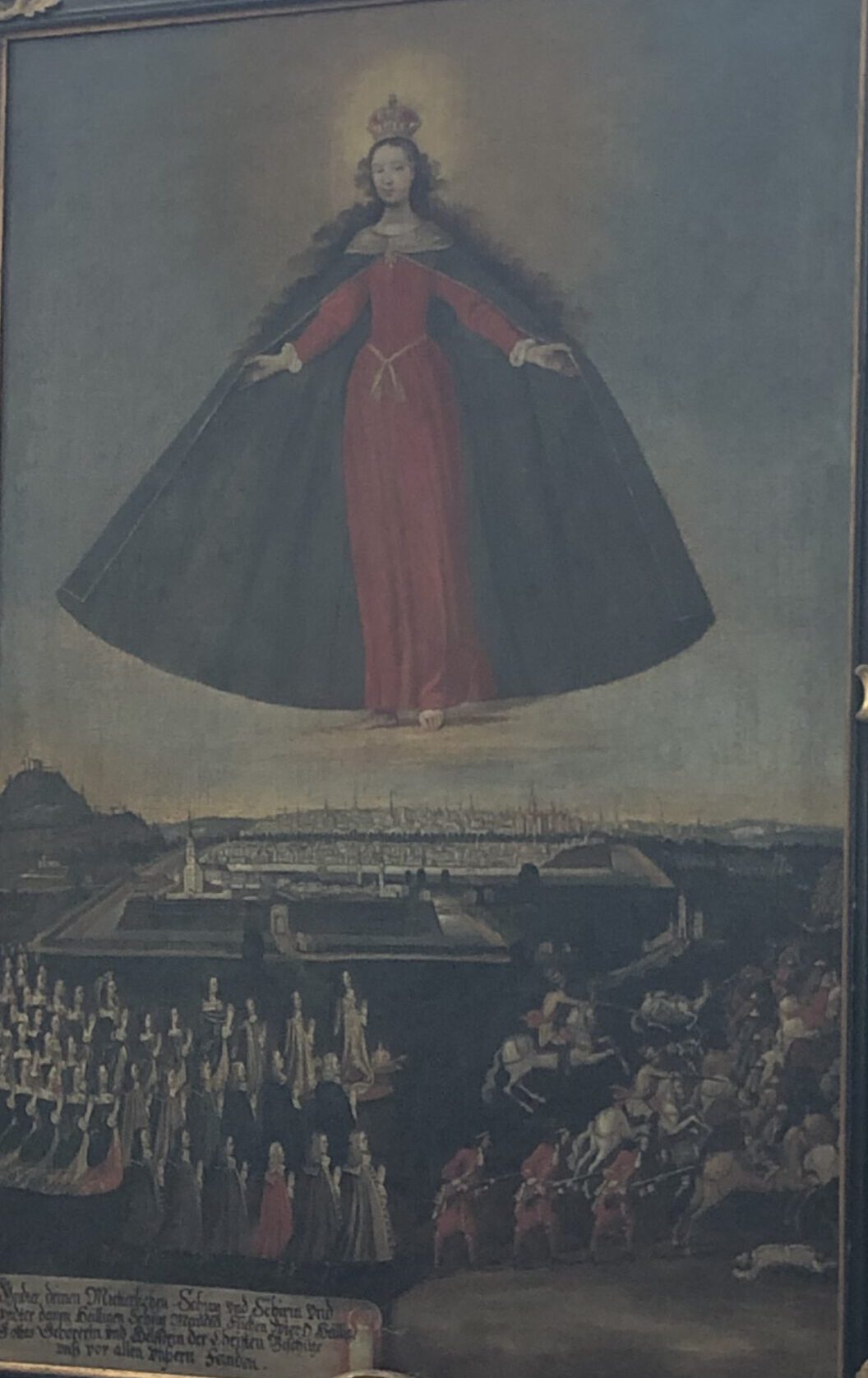
In the Cathedral, there are also votive offerings (ex votos) to Mary, including a devotional painting for withstanding the siege by the Hungarians in 1482 and the victory over the Turks in 1683.
Concerts are also held in Dom of Maria Saal.
There is a major Marian pilgrimage route in Carinthia that can be followed, with Maria Saal lying in the middle of it. The walk can be done in stages and goes from Maria Rodach, via Lamm, Diex, Brückl, Maria Saal, Maria Wörth, Maria Gail, Feistritz an der Gail, Watschig, Kötschach-Mauthen to Maria Luggau.
ACCESSIBILITY
Maria Saal is a municipality in the state of Carinthia and belongs to the district of Klagenfurt-Land. Maria Saal is located in the south of Austria, and to the northeast of Klagenfurt.
Address: Domplatz 1, 9063 Maria Saal.
Current information can be found at www.domverein-mariasaal.at. Information can also be requested via the email address mariasaal@kath-pfarre-kaernten.at.
Experience
Before the trip to Maria Saal begins, I delved into the history of this sanctuary and its origins are quite remarkable. A legend tells...
Adalbert of Prague (956-997) was Bishop of Prague (982-997). Shortly before his death, he commissioned two noblemen to return a statue of Mary to Recanati in Italy. This was because he had unlawfully taken the statue a few years earlier and now wished to rectify this.
The two gentlemen set off with the image of Mary. When they come near the Austrian town of Villach, they stay the night there. During the night, each has the same dream, namely the order to take the image to Maria Saal. The next day, the two gentlemen pay no attention to their dream. However, as they wish to continue to Italy, the horses refuse to move. Yelling and hitting the animals also does not help them to move forward. Because of this, the two gentlemen realise that they must put their dream into practice. They take the image to Maria Saal, the horses cooperate, and upon arrival, the statue of Mary is given a place in the cathedral.
In Maria Saal, I'll first view an octagonal structure, or octagon, which stands in front of the cathedral. In the centre is a Romanesque rotunda dating from the 13th century. Below this lies the former ossuary. In 1751, the Holy Sepulchre of Jerusalem was replicated on the ground floor. On the exterior, frescoes from 1521 have been applied, depicting the crucifixion, the descent from the cross, Lamentation, and the entombment.
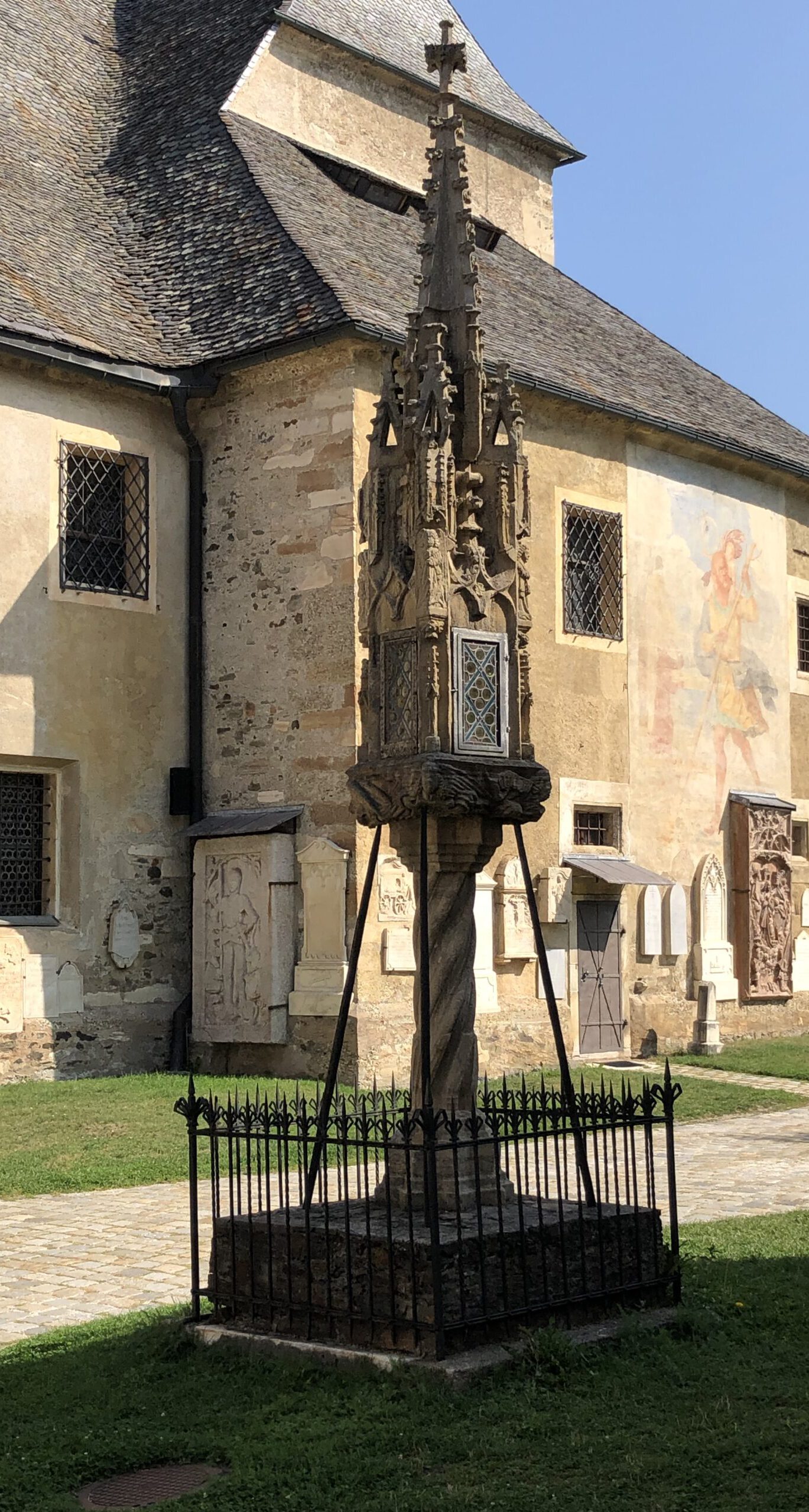
In front of the octagonal building stands the Gothic light column from 1497. Previously, this column served as a graveyard light, but the cemetery has disappeared.
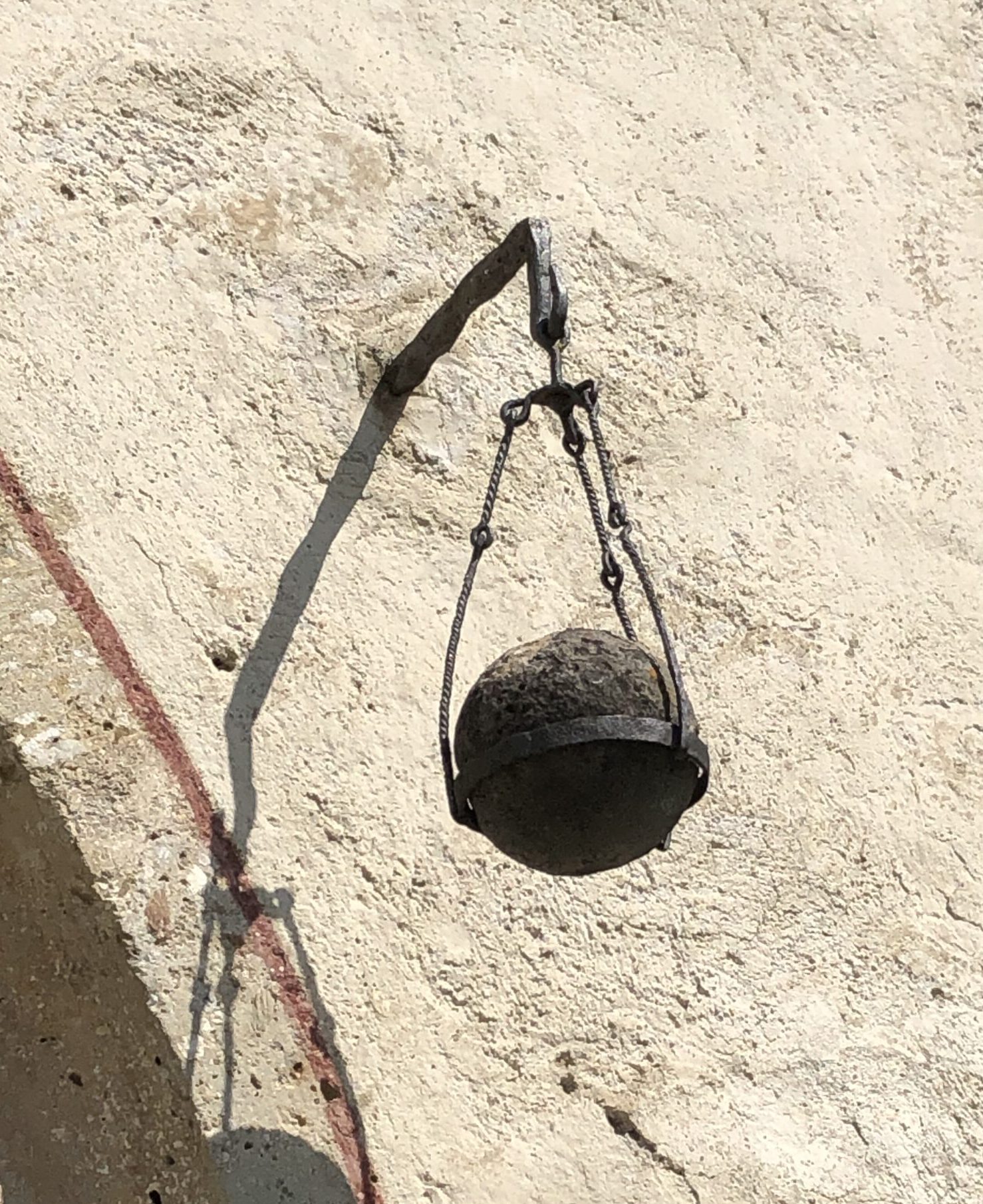
Near the entrance to the cathedral hangs a cannonball, a reminder of the siege by the Turks in 1482. This is former, heavy ammunition.
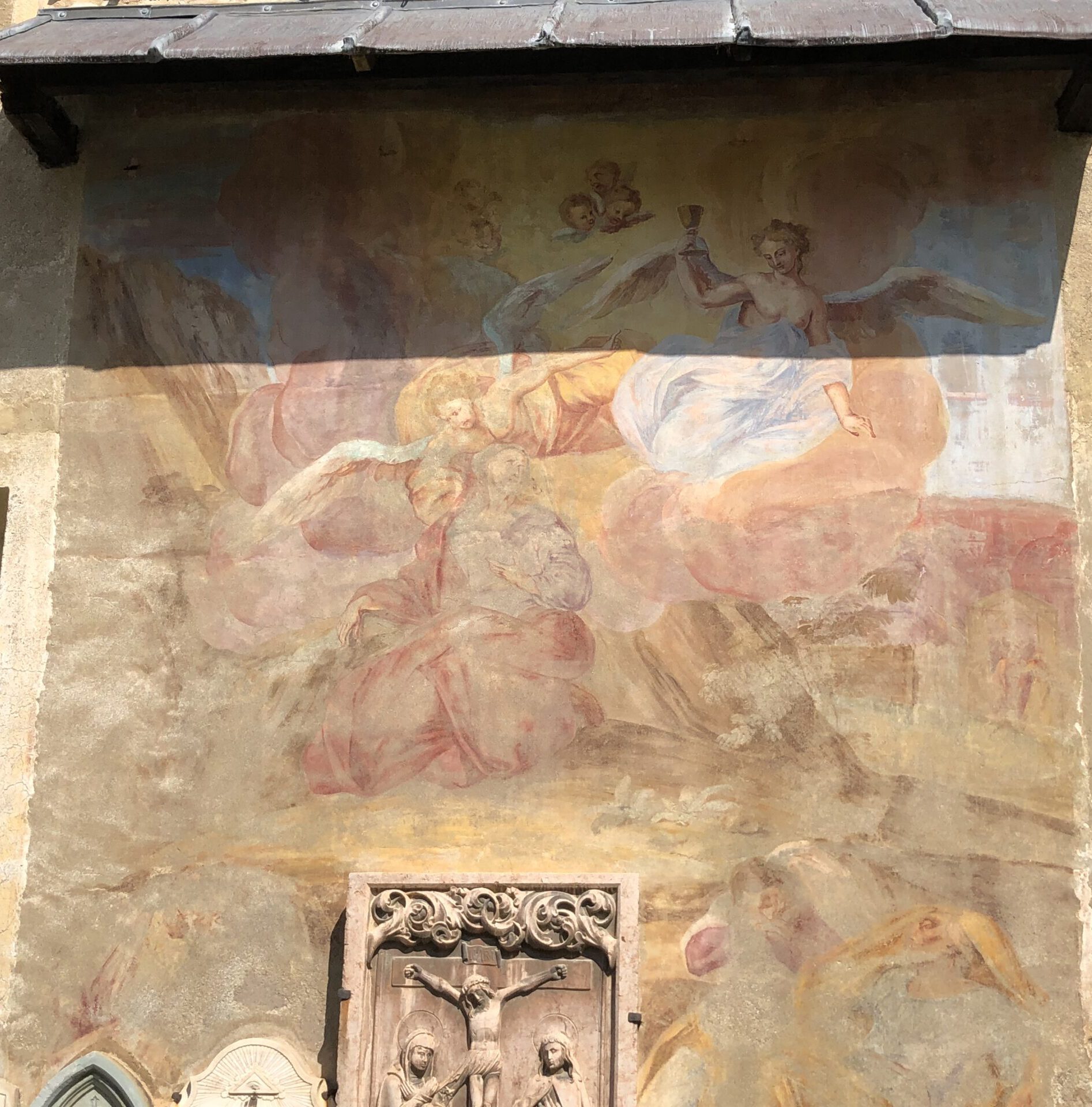
Against the wall of the side nave of the cathedral are stone reliefs, from the Roman city of Virunum, dating from 1510, which also served as epitaphs. Colourful frescoes from 1672 also impress me, depicting a scene from the events on the Mount of Olives. Then I go inside the cathedral. What splendour... I pray at the shrine of grace and light some candles for friends who could use a bit of support.
In the tower hangs a special, large clock, namely the “Maria Saalerin” with a diameter of 222 cm and a weight of 6,600 kg. A little later, I learn that it is the largest clock in Carinthia.
On leaving the cathedral, I realise that being allowed to be here is a gift on earth.
Posted: 9 September 2022
Last changed: 26 October 2022
~~~

 Nederlands
  English (UK)
  Deutsch
  Français