History
The Mariastein rock was formed by a landslide in prehistoric times, a period spanning from about 2.5 million years ago to 800 BC. The rock mass originates from the Köglhörndl, a 1645m high mountain near Kufstein.
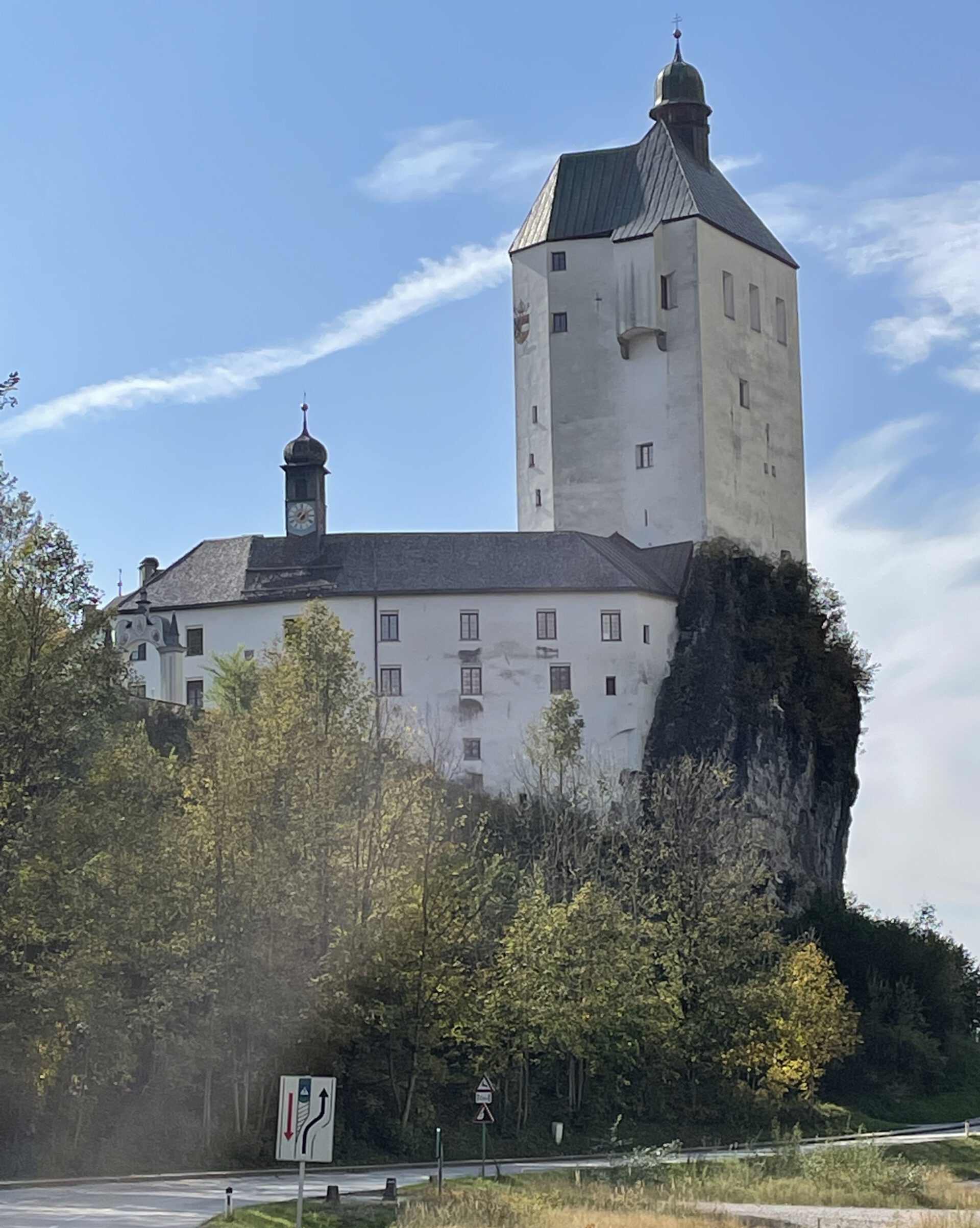
The church was built in 1360 on the orders of the noble Freundsberg family. The church is a castle chapel, erected on the banks of the River Moosbach. The original name of the castle is “Stein” and it was built on a strategically favourable location with road connections, free from marshes. “Stein” is situated on the old trade route from Innsbruck, via Rosenheim, to Regensburg.
In 1379, the castle was sold by the Freundsberg family and the complex came into the possession of the Lords of Ebbs. In 1470, a chapel was added to the church, and the 1450 linden wood image of grace was given a prominent place within it.
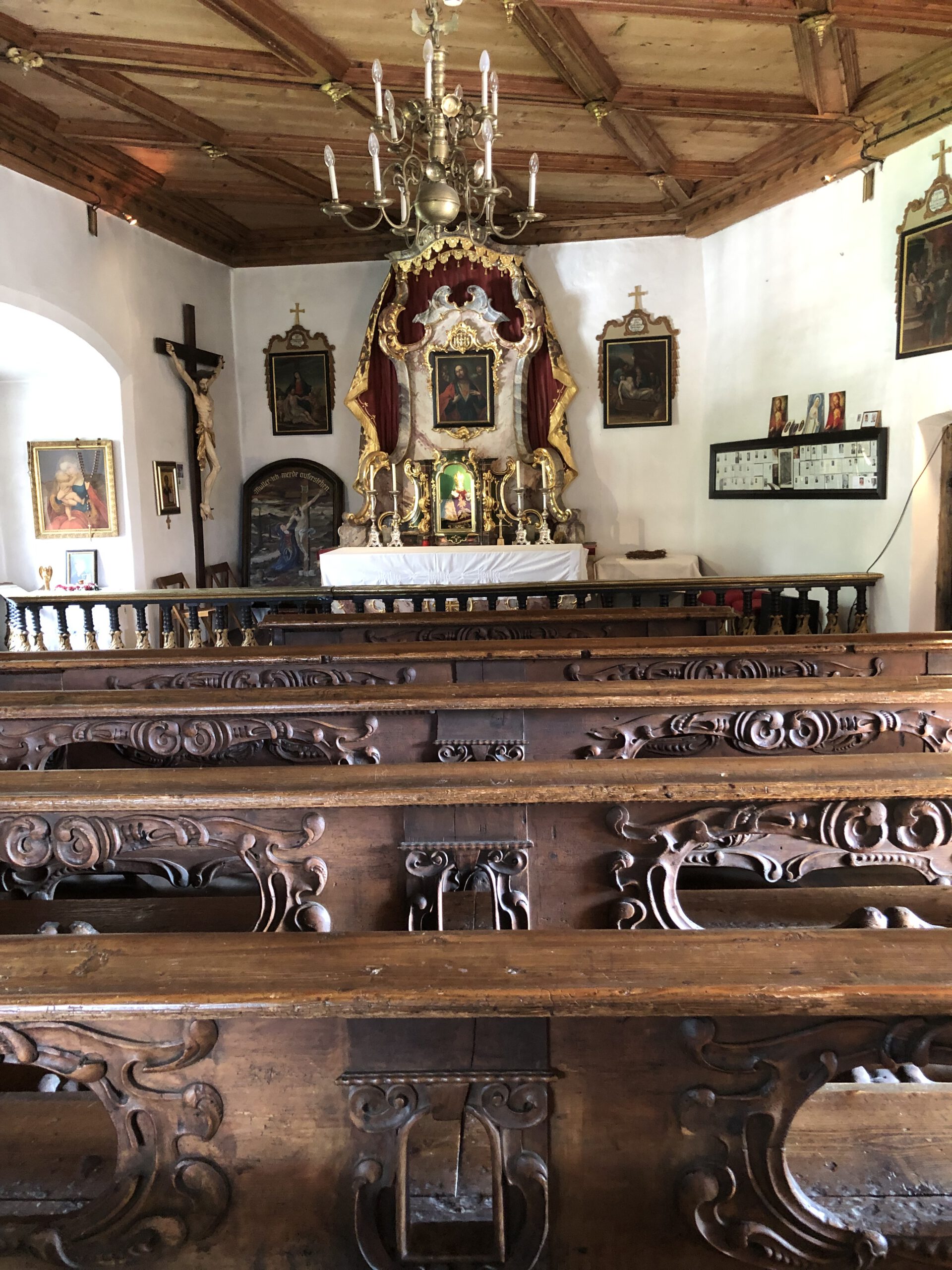
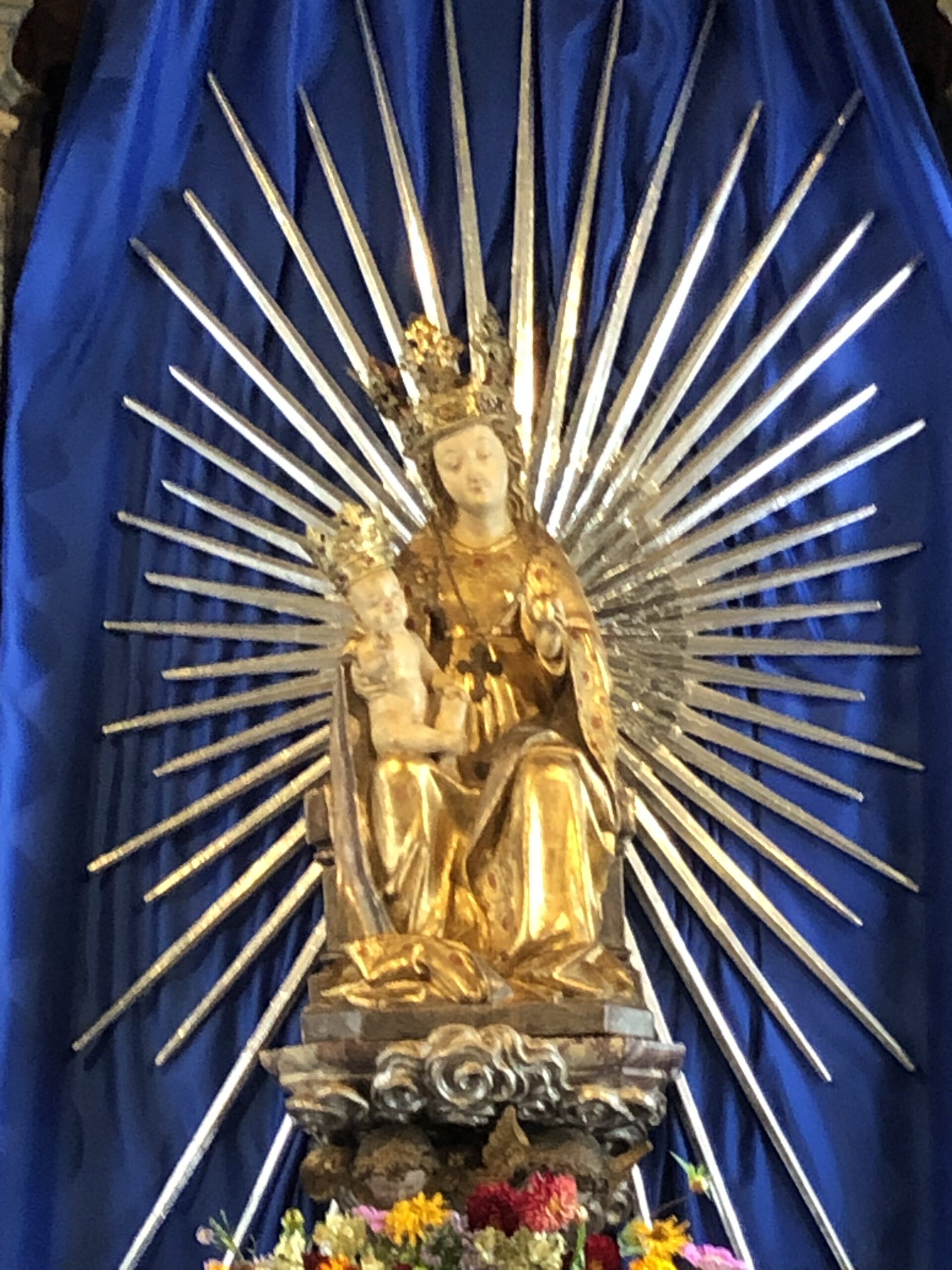
Later, two chapels were built one above the other in the church tower. The oldest chapel is the lower one, with a ceiling from 1550 and a Rococo altar. In the upper chapel stands the carved wooden statue of Mary and Child from 1450. The castle was then in the hands of the wealthy Georg Ylsung (1510-1580) from Augsburg.
A legend tells of wondrous events involving the statue of Mary... The statue of Our Lady is taken twice by the nobleman from Augsburg, but it returns to the chapel both times. This gives rise to the pilgrimage site.
In 1587, Georg Ylsung left the castle to his brother-in-law, Baron Karl von Schurff (1548-1626). This nobleman is the founder and driving force behind the pilgrimage site. In 1587, he changed the name “Stein” to “Mariastein” because the castle chapel was attracting more and more pilgrims who came to see the statue of Mary. In 1589, Karl von Schurff became governor of Kufstein, making him the highest-ranking official in the region. He restored the tower and built the horizontal residential section in its current form.
In the bell tower hangs a bell from 1587. It was cast by the bell and cannon foundry Büchsenhausen from Hötting, near Innsbruck, by Hans Christoph Löffler (c. 1530-c. 1595).
Up until 1688, the castle remained in the possession of the Schurff family. After several changes of ownership, it fell into disrepair. This was mainly due to various unrests, anti-Catholic rulers and wars, such as the Thirty Years' War (1618-1648), the War of the Palatinate Succession (1688-1697), the period of Emperor Joseph II (1741-1790) and the Napoleonic Wars, which banned pilgrimages (1803-1815).

Since 1834, the Archdiocese of Salzburg has owned the castle, which has fallen into some disrepair over time. In 1958, the diocese intervened to prevent further decay. The Archbishop of Salzburg, Andres Rohracher (1892-1976), then initiated the castle's reconstruction. The major work was completed in 1994.
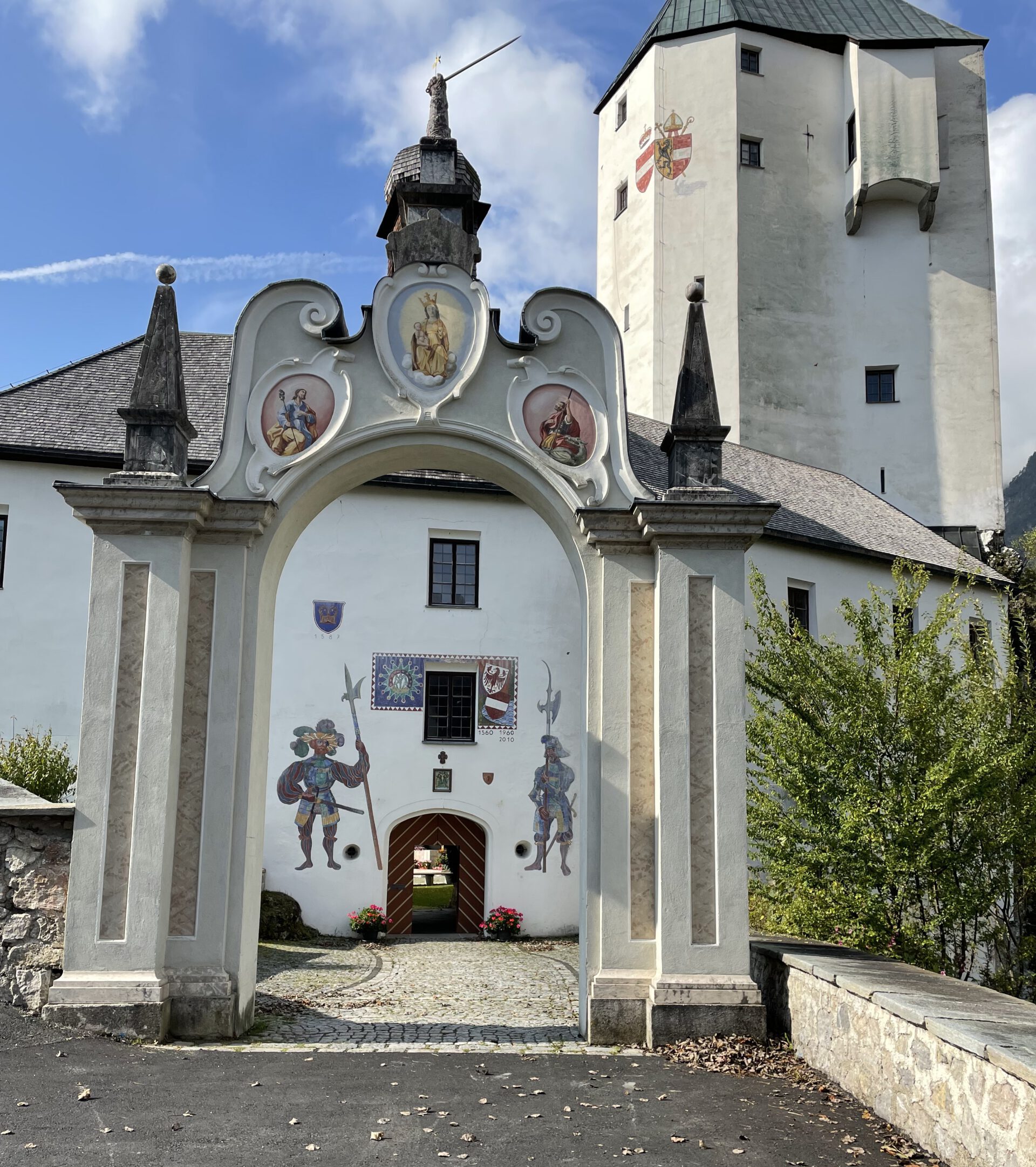
In 1959, Oswin Höfer (1887-1987) painted the two mercenaries, to the left and right, at the entrance of the east entrance.
In 2000, the interior and courtyard underwent a change, under the direction of Matthias Oberascher (1952). Since then, the folk altar, consecrated by Archbishop Georg Eder of Salzburg (1928-2015), has stood in the courtyard. The fountain and the war memorial of the Tyrolean Landsturm Regiment No. 1, 1914-1918, have also been placed there.
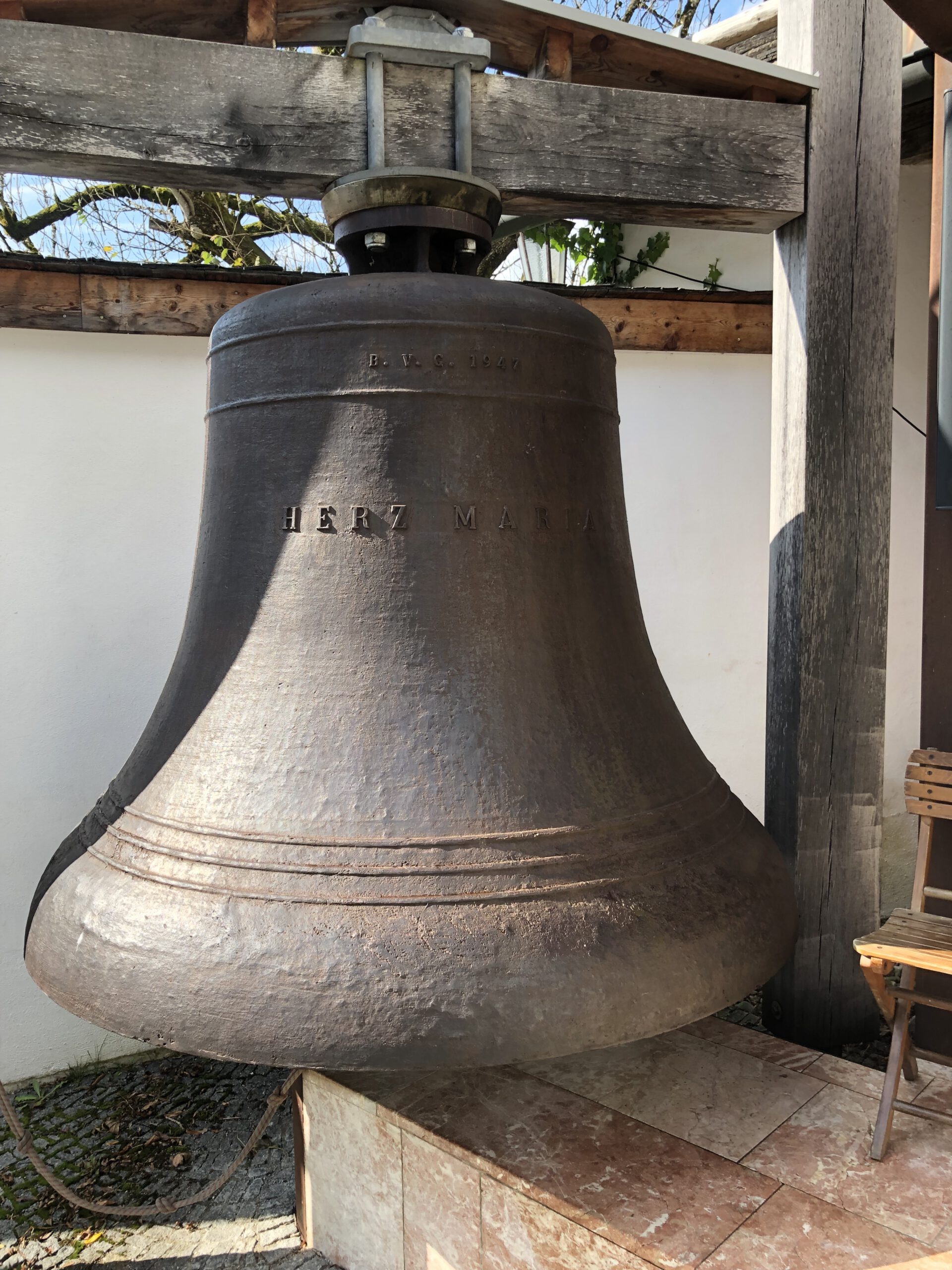
A large, cast-iron bell is the “Mariahart Clock”, which was cast in Bochum in 1947. Until 2009, it sounded in the tower of the monastery in Scheyern. Since December 12, 2009, the impressive bell has been located in the pilgrimage garden of Mariastein. The bell is a gift from the monastery of Scheyern and can be rung by pilgrims.
Pilgrimage site
The village of Mariastein is situated in the “Tiroler Unterland” on a plateau 575 metres above sea level. It is one of the smallest municipalities in Austria. The popular shrine is situated on a 14-metre-high rock and can be seen from afar. Mariastein is surrounded by dense forests and high mountains, including the “Hohe Salve”, which rises to 1,828 metres.
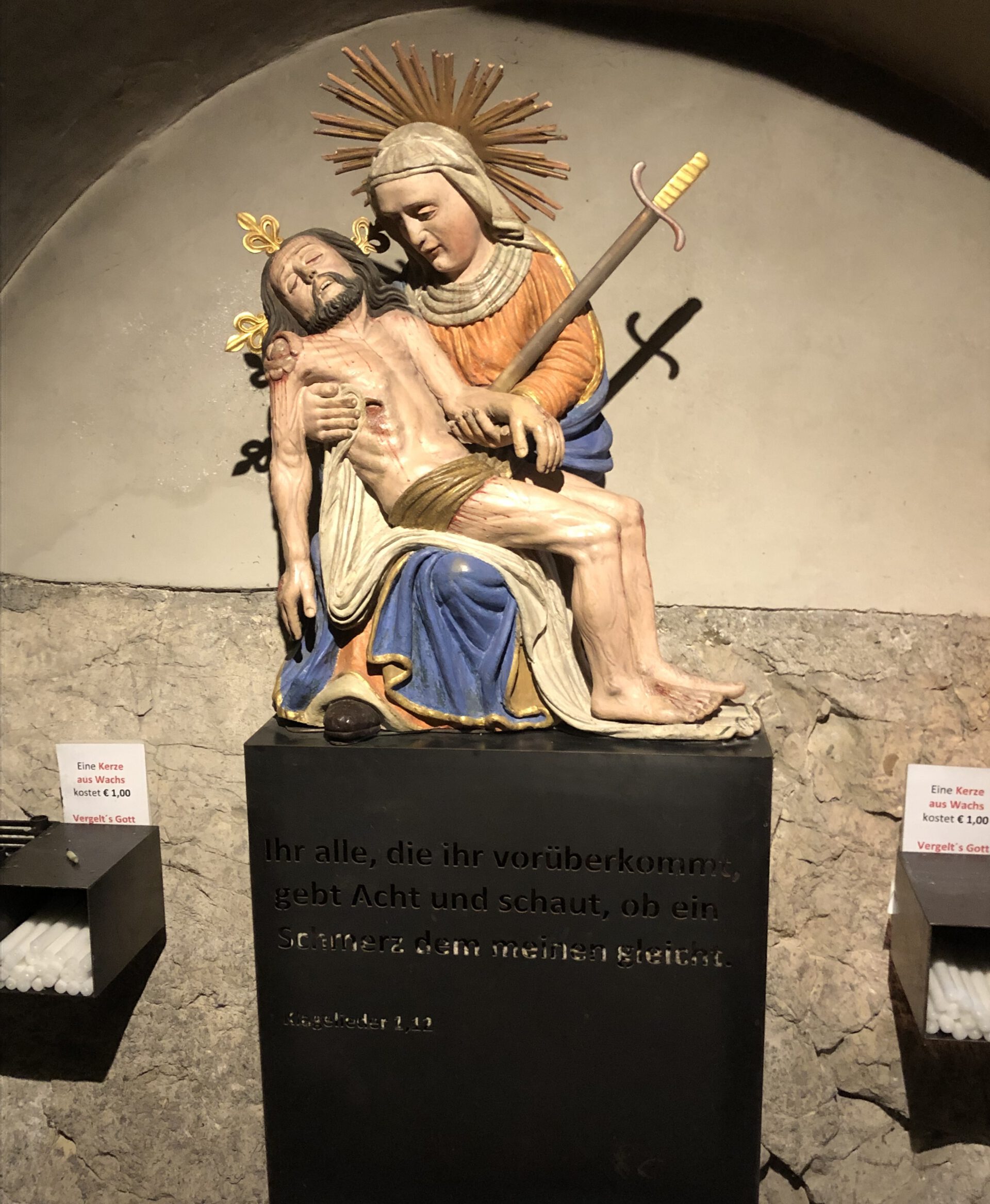
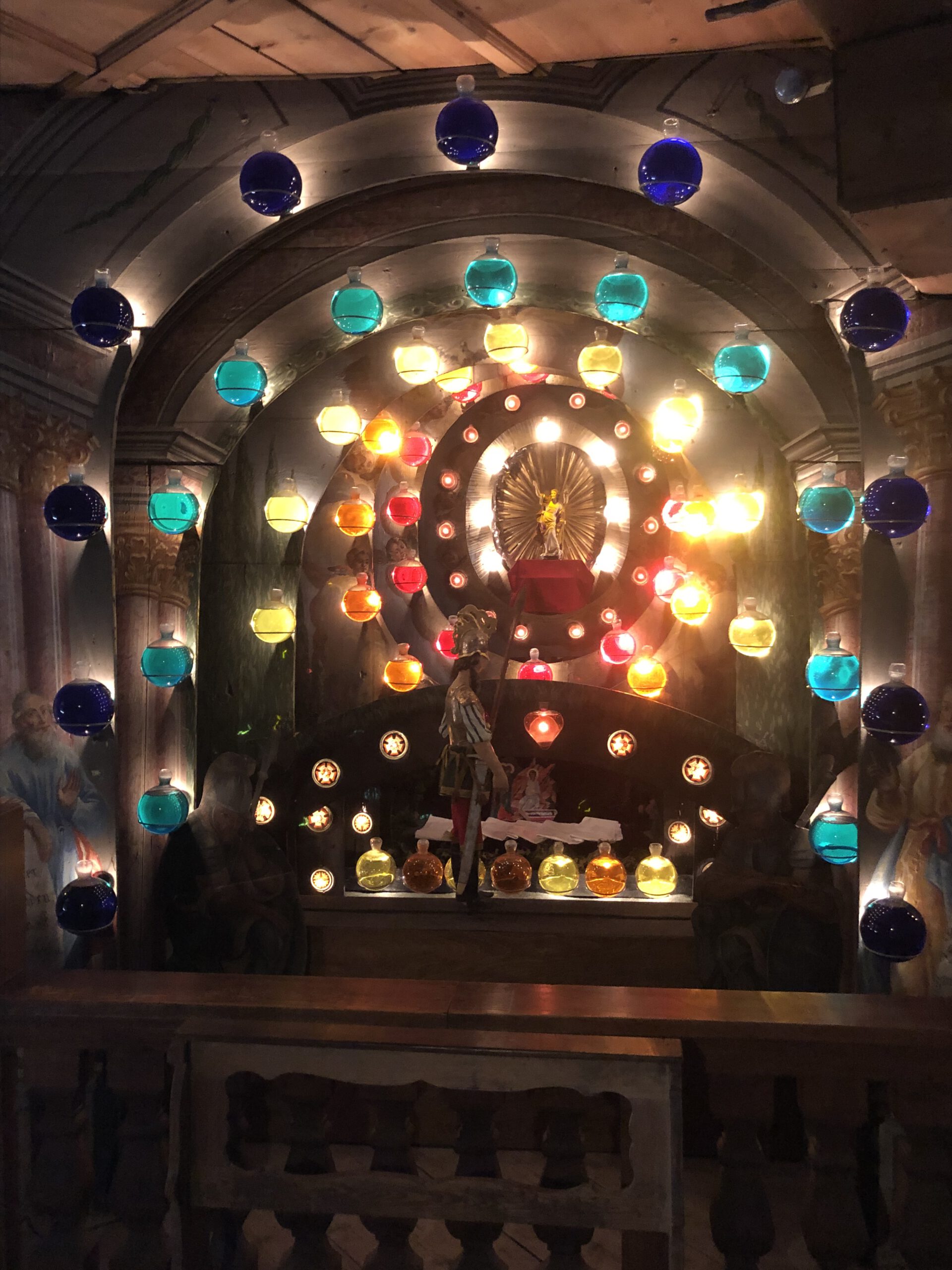
There is a chapel in the lowest part of the castle tower. This place of worship is partly carved out of the rock. Beneath the ribbed vault, a Gothic Pietà can be seen. In the room above there is a diorama.
In the richly decorated chapel of grace within the church, a statue of the Madonna has been placed, and this is the place to be visited by pilgrims. To be able to see the statue of grace, one must first climb 142 steps to reach a greater height. After all, the chapel is located 42 metres higher in the former pentagonal residential tower.
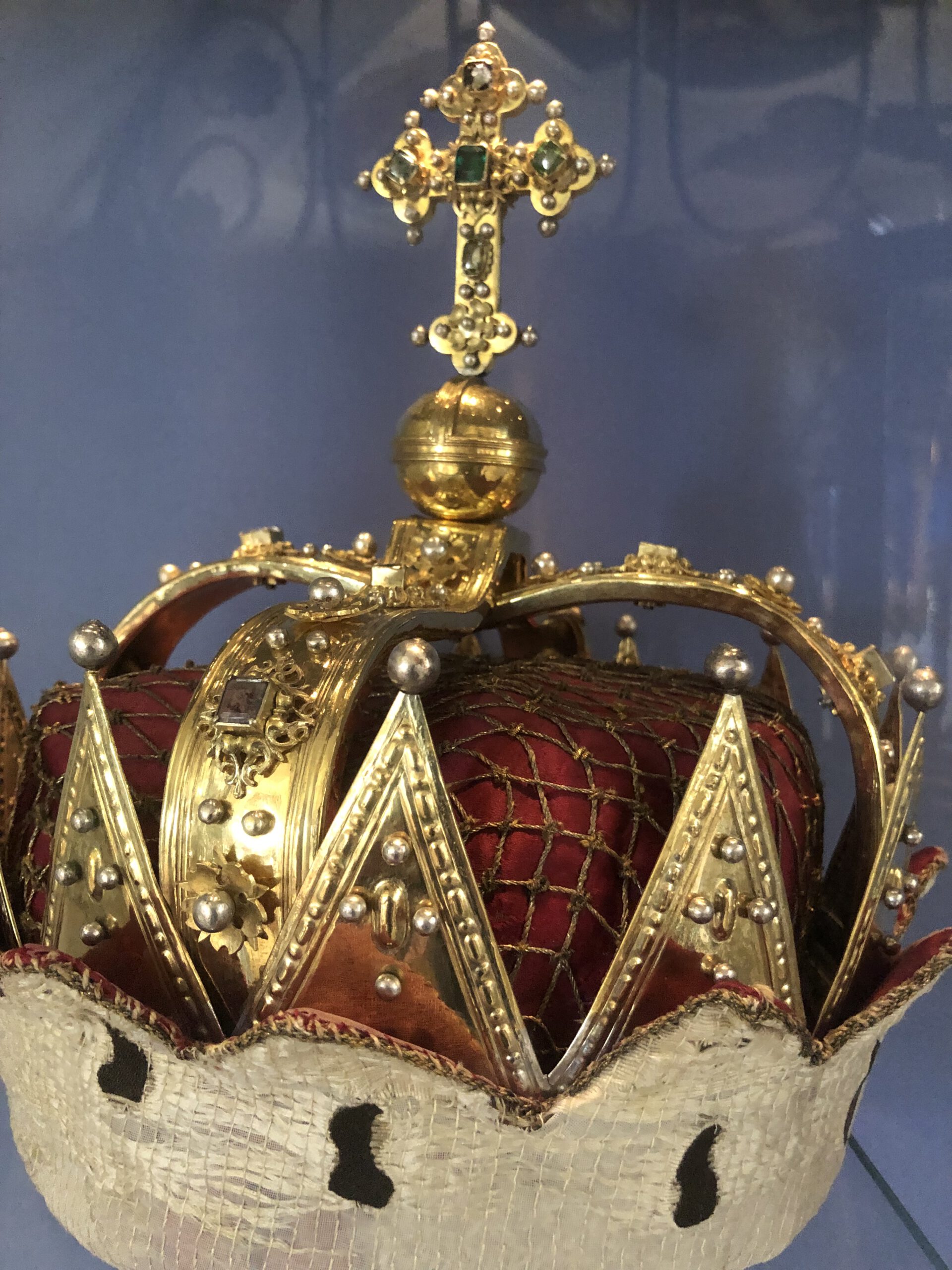
On the upper floor, a small knight's hall has been created, which now serves as the castle museum. The former knight's hall displays many royal treasures, which were donated in 1602 by Prince Maximilian III of Austria (1558-1618), Grand Master of the Teutonic Order. Valuable museum pieces include a crown and a sceptre, which are displayed in a glass case.
The church and chapel can be visited daily.
ACCESSIBILITY
The village of Mariastein is located in the Kufstein district, on the motorway from Kufstein to Innsbruck.
Address: Pilgrimage Church Mariastein, Mariastein 1, 6324 Mariastein.
More can be found by visiting:
www.pfarre-angath.at en www.hohe-salve.com.
Experience
From afar, I can see the snow-white church with its chapel. The church is beautifully situated.
As I approach the former castle, I see two painted mercenaries at the entrance. Does it look safe here...?
I have a particularly beautiful view of the castle church from the courtyard. I can't resist pulling the cast-iron bell in the courtyard.
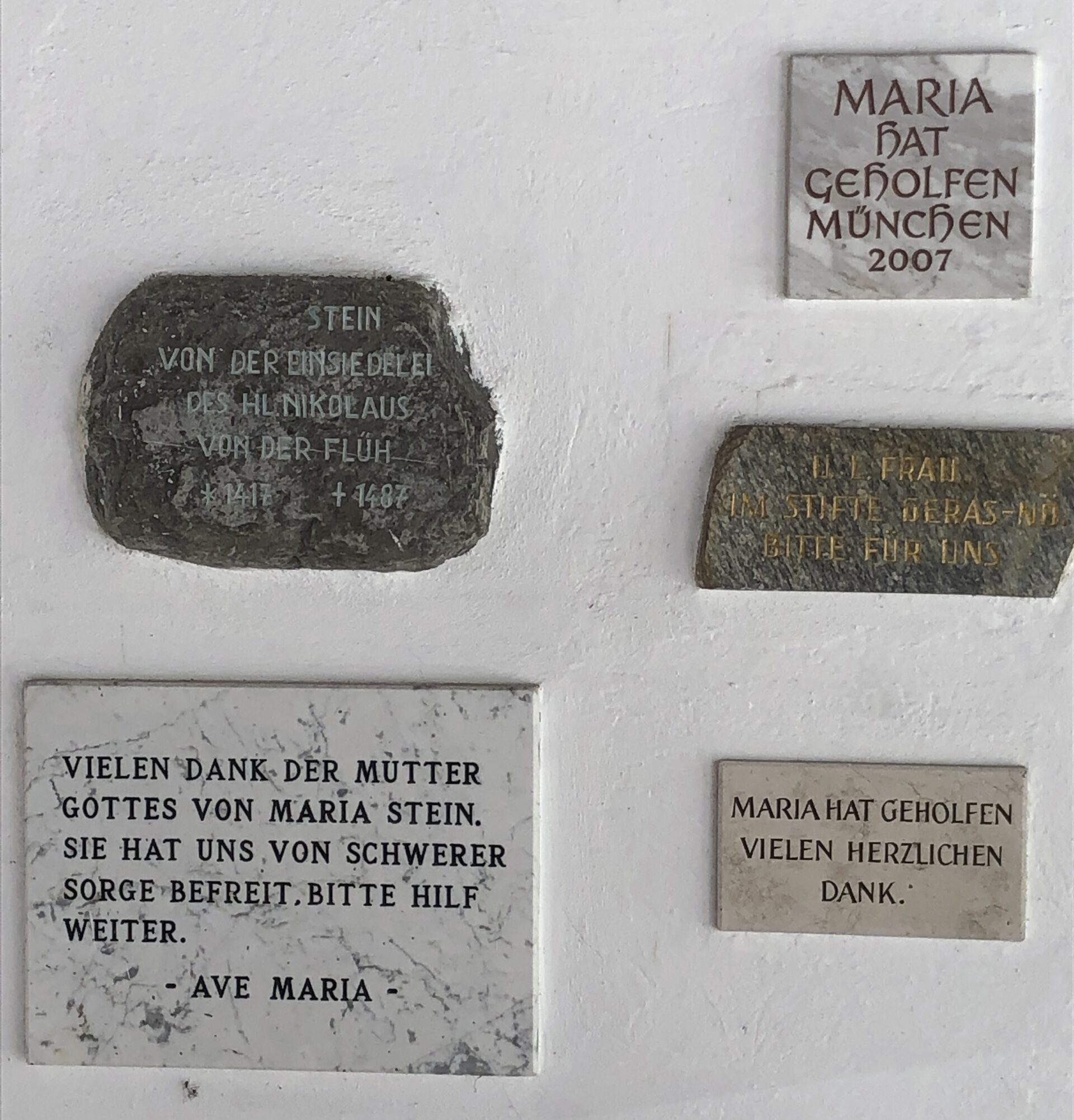
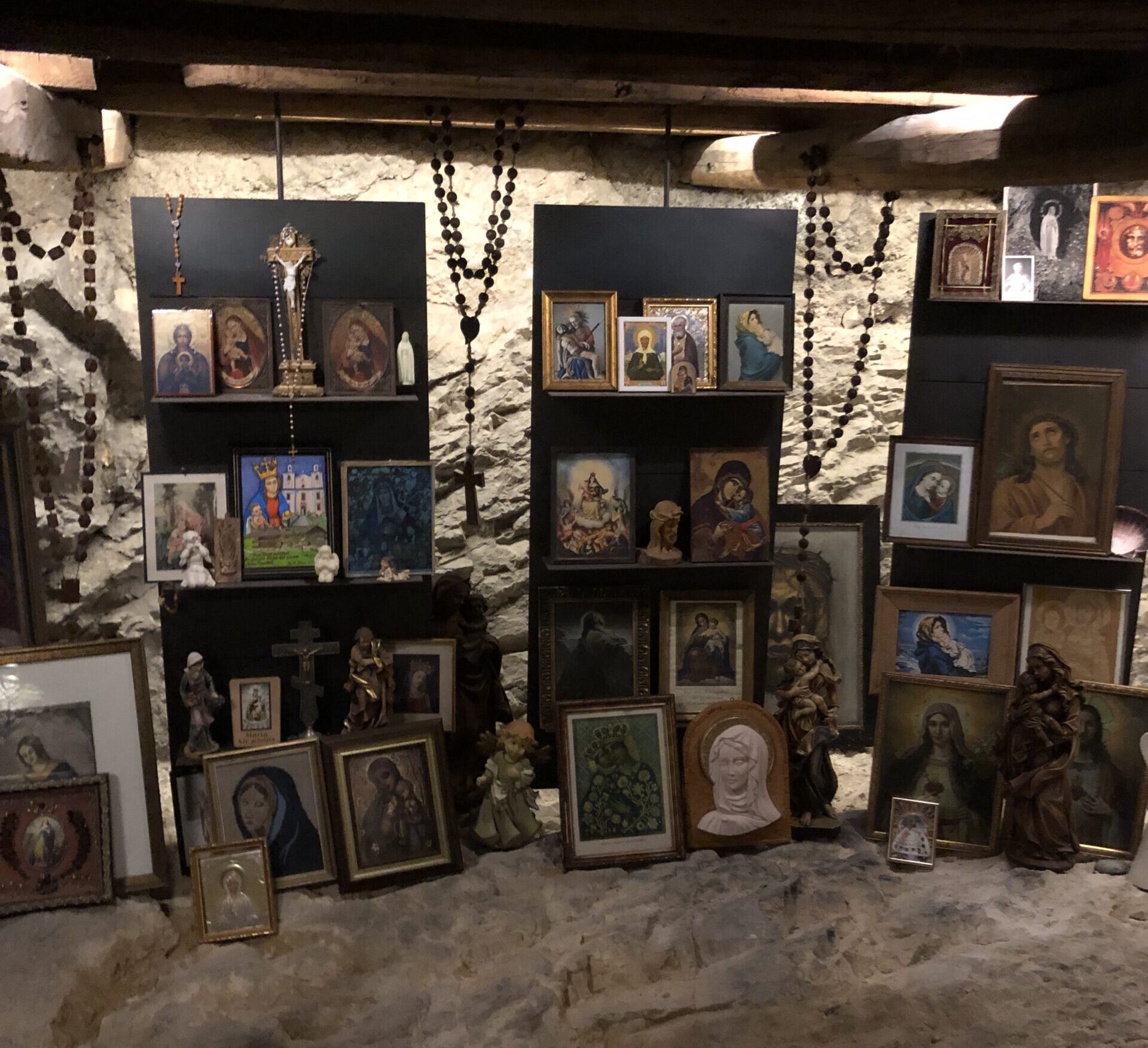
In the church, I see many thank-you notes to Mary, affixed to the wall with stones. In the old castle chapel, I come to the candle chapel. Then I go further up.
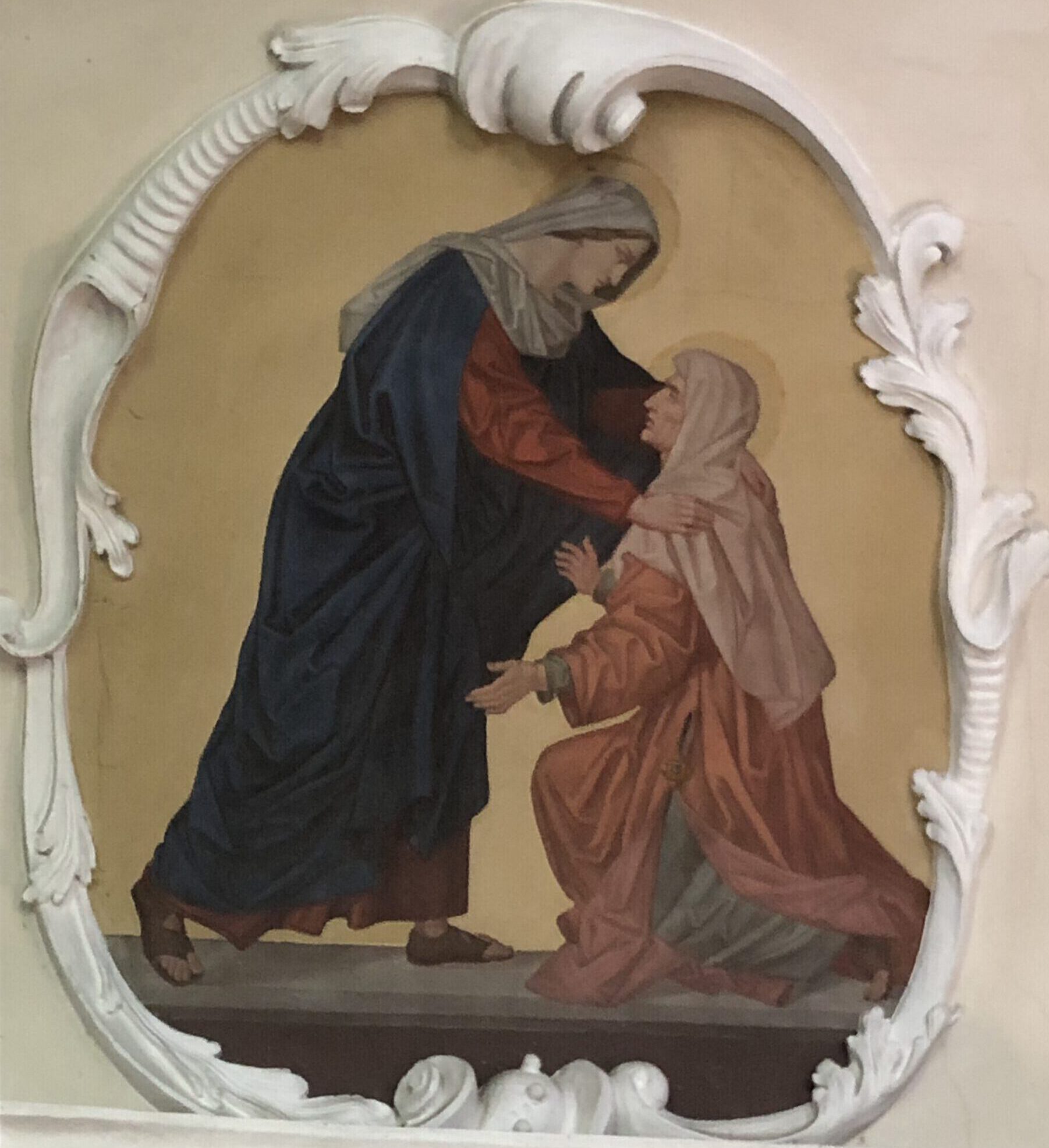
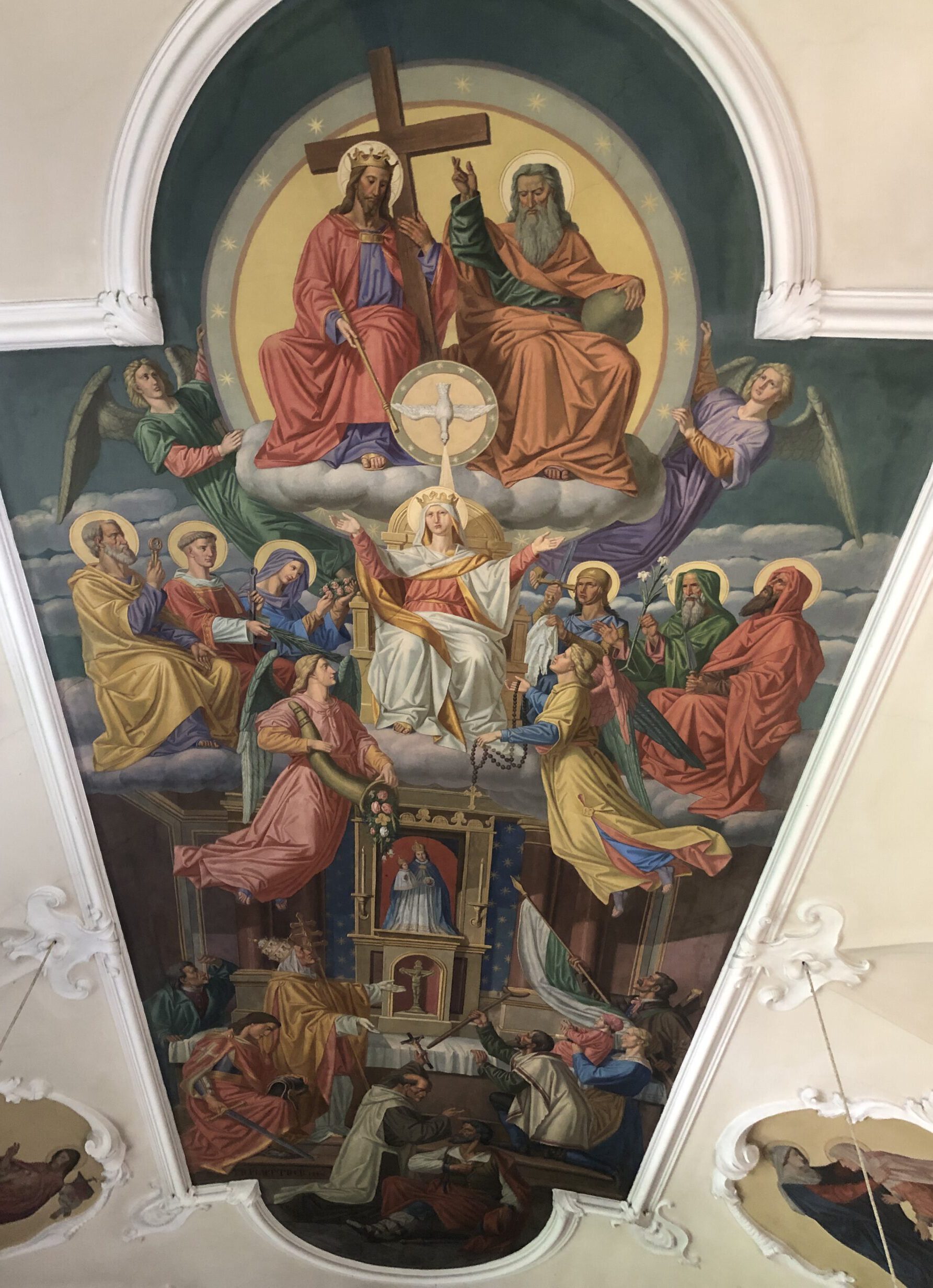
In the upper chapel, I look up, as there are magnificent wall and ceiling paintings. The old statue of Mary, dating from 1450, is also here. How many historical events has this devotional image witnessed.
Posted: 26 June 2022
~~~

 Nederlands
  English (UK)
  Deutsch
  Français