History
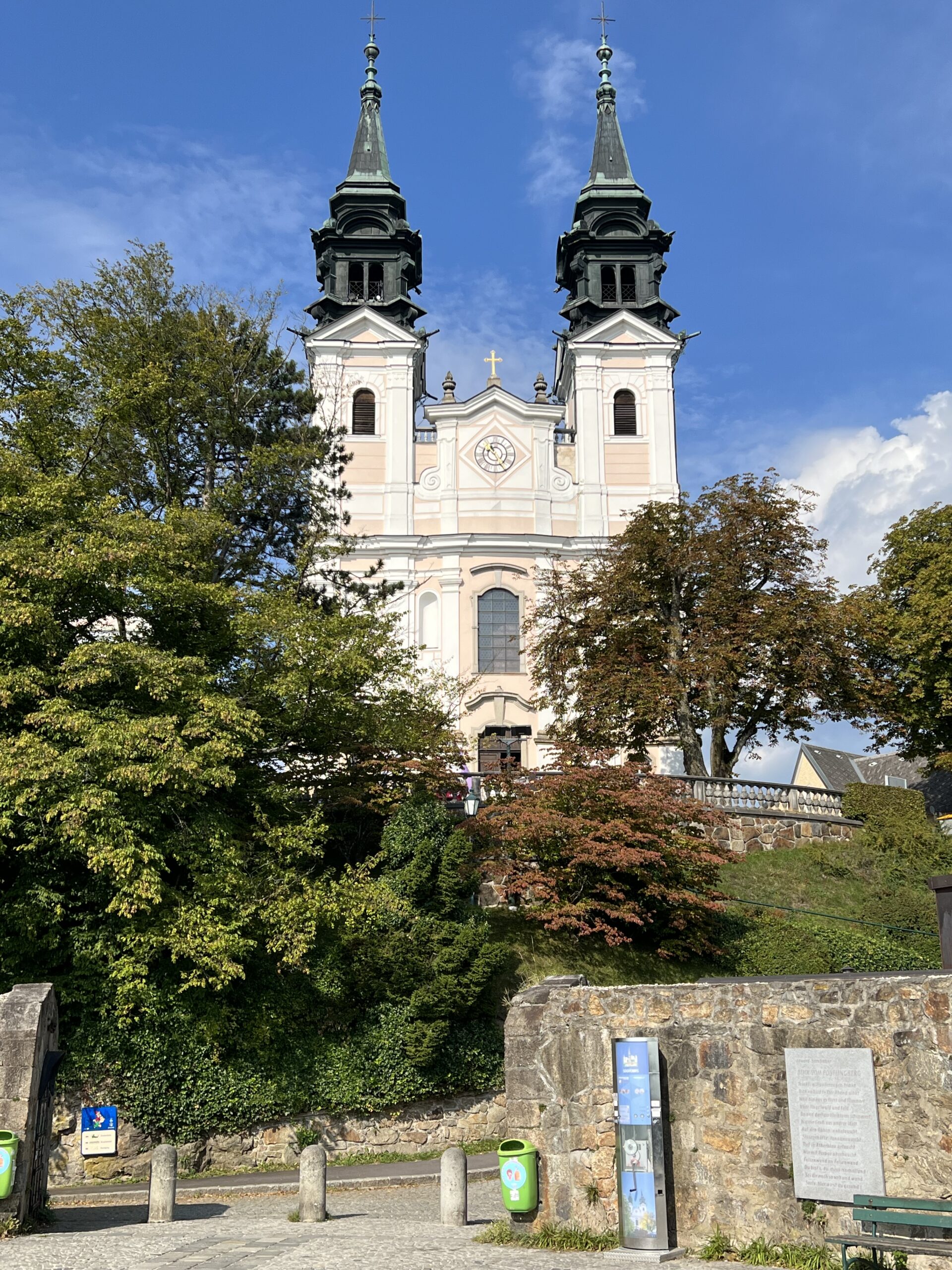
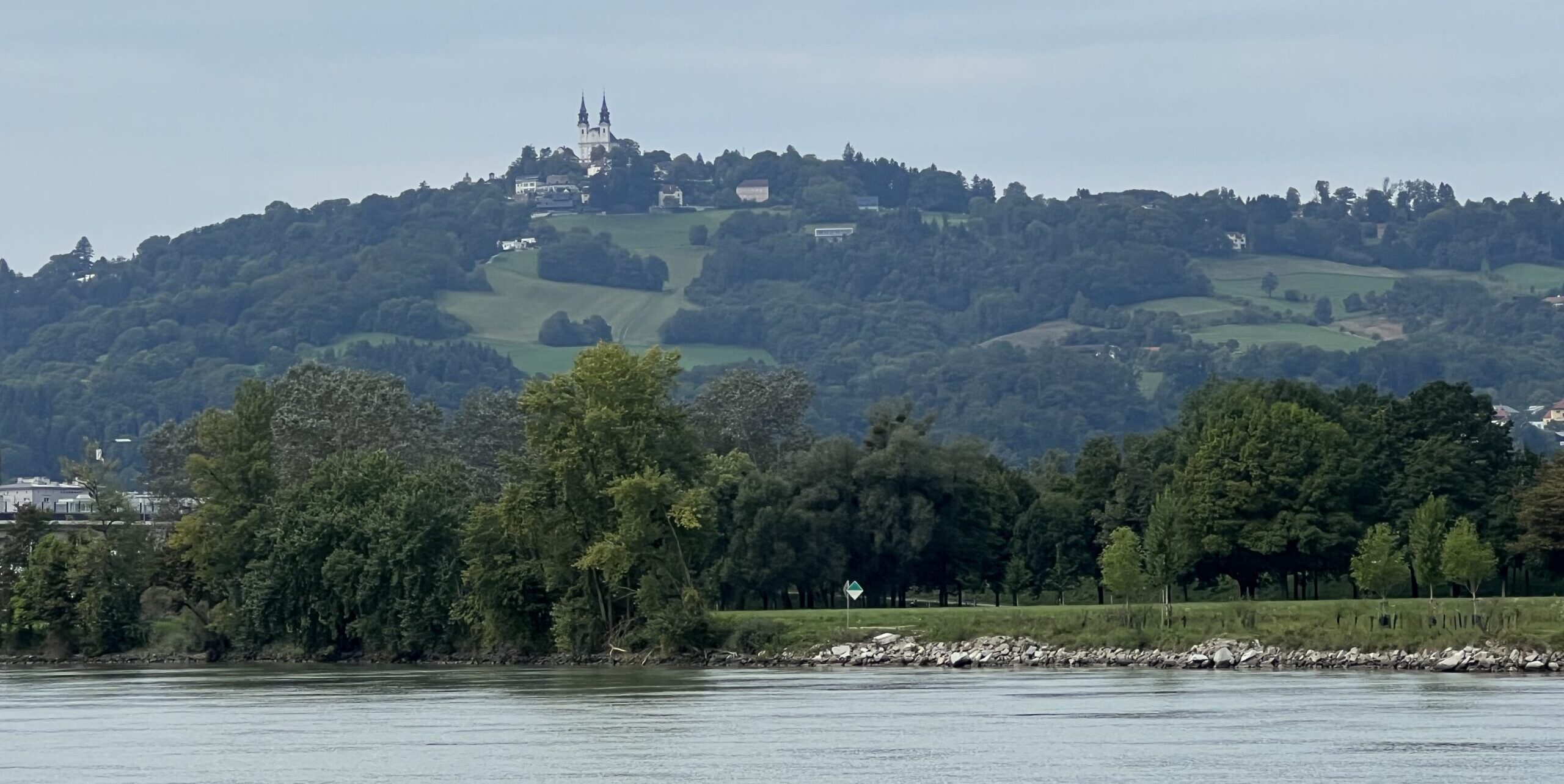
In 1716, a worker at the Capuchin friary in Linz had a statuette made depicting the sorrowful Virgin Mary and her dead Son. He took the pieta statuette to the Pöstlingberg and affixed it to a cross. Later, a wooden chapel was built around it.
The current pilgrimage church was built between 1738 and 1747 on behalf of the noble Starhemberg family and stands on the northern bank of the River Danube. Johann Adam Pruner (1672-1734), mayor of Linz (1718-1734), was the first to donate towards its construction in 1734. The main proponent and patron of the church is Count Joseph Gundomar Starhemberg (1679-1743), who obtained permission from the Diocese of Passau for the church's construction. The architect is Johann Mathias Krinner (1700-1784). He is assisted in his work by his son, Franz Xaver Krinner (+1806). On 15 July 1747, the miraculous image is solemnly brought into the church. On 9 December 1748, the church is consecrated by the dean of Eferding. On 2 July 1786, once the church is fully completed and furnished, the consecration of the parish church takes place. This is performed by Ernst Johann Nepomuk (1731-1788), Count of Herberstein and the first Bishop of Linz (1785-1788). In 1919, the church is struck by lightning, and in 1963, the building suffers severe damage from a fire.
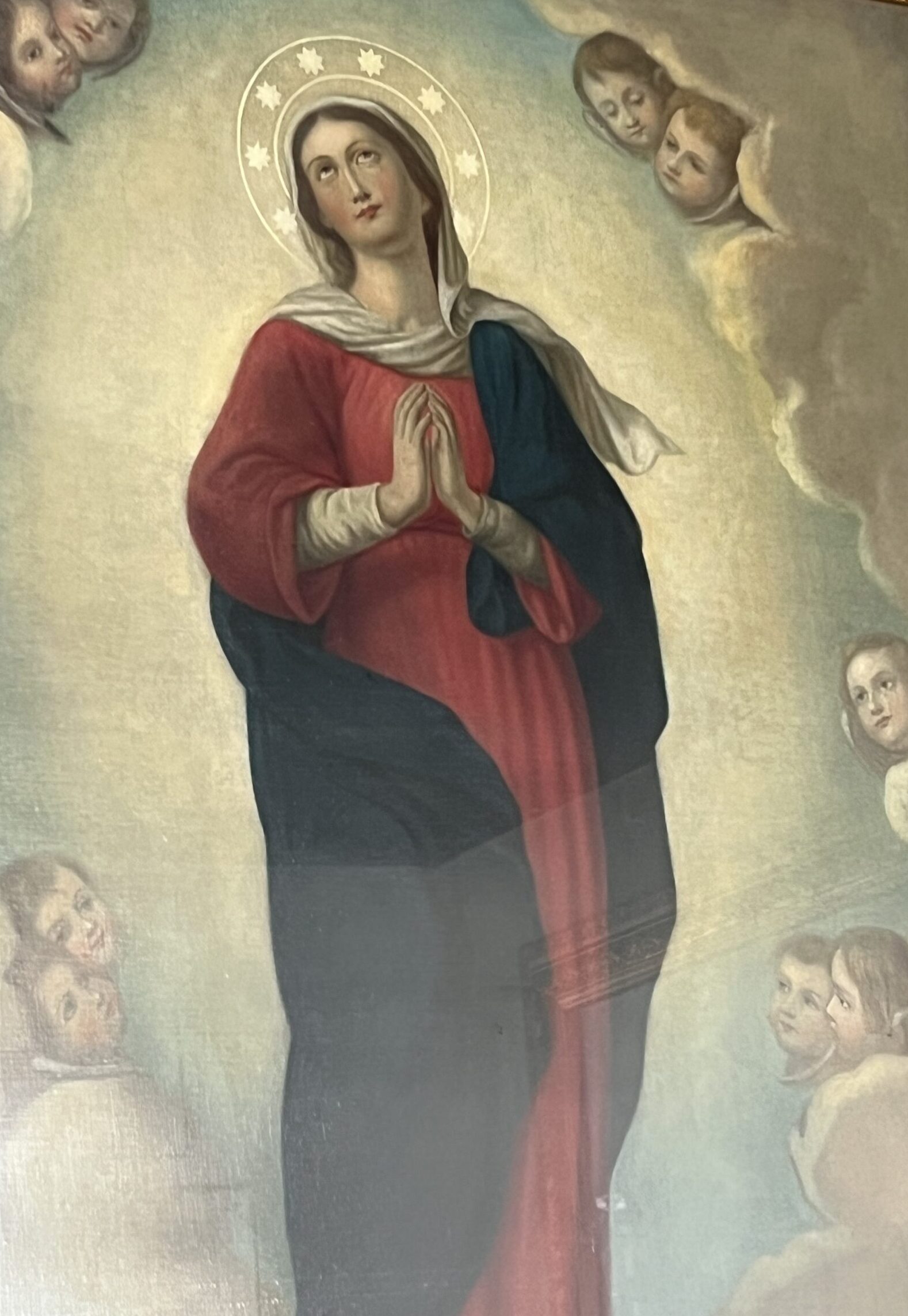
This church is seen as a great symbol of Linz.
In 1830, the town and Pöstlingberg were expanded into a fortress by order of Archduke Maximilian Joseph of Austria (1782-1863).
Since 1898, a mountain train has travelled from the centre of Linz to the summit of the Pöstlingberg. It is an ascending track with a maximum gradient of 11.6% and bridges an altitude difference of 255 m. In 2009, the tram line was renovated and the length of the track was extended to 4,140 m.
Pilgrimage site
Linz is the capital of Upper Austria, and there are beautiful churches to visit in this city, with the basilica on the Pöstlingberg in particular attracting many pilgrims.
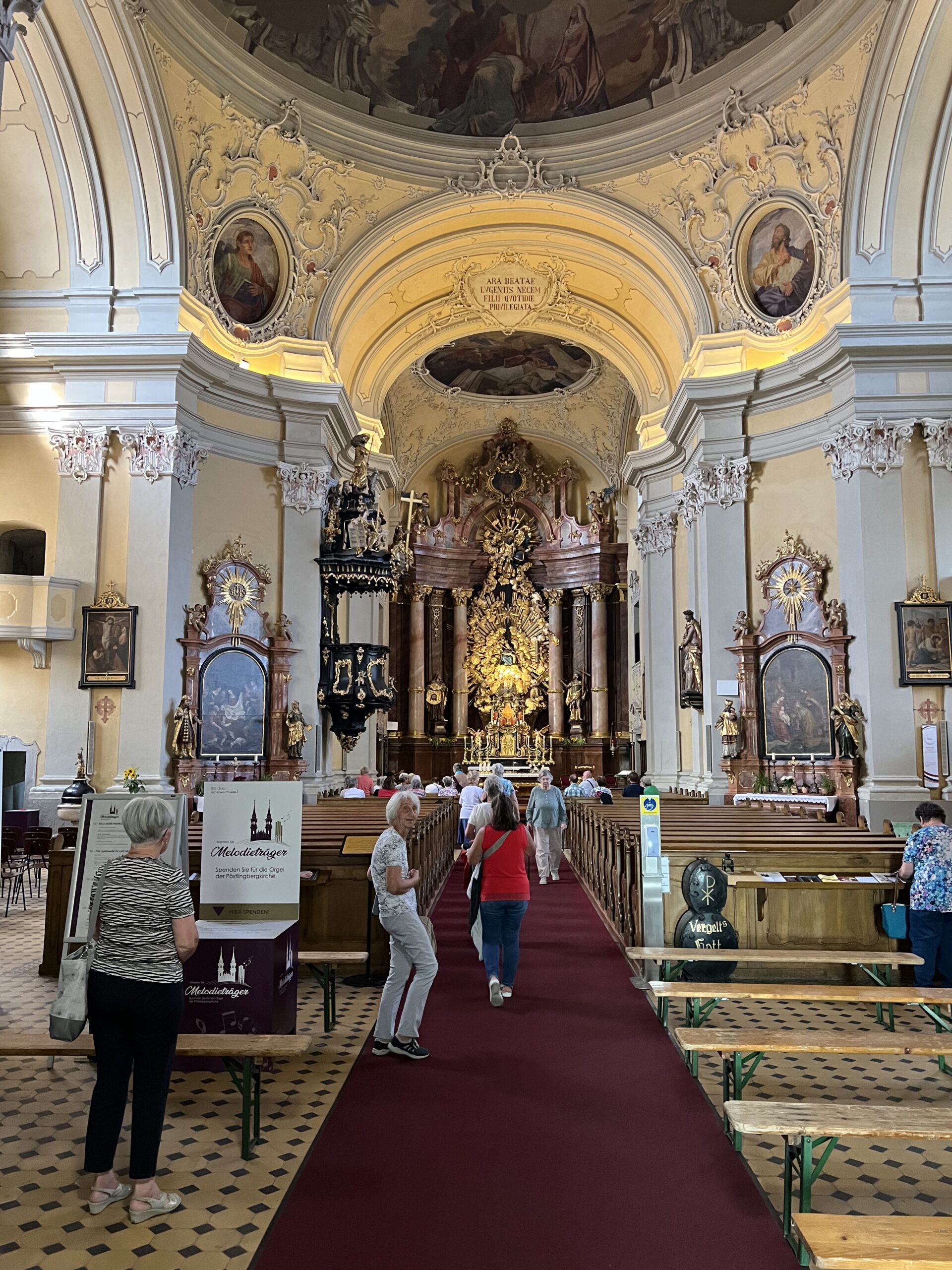
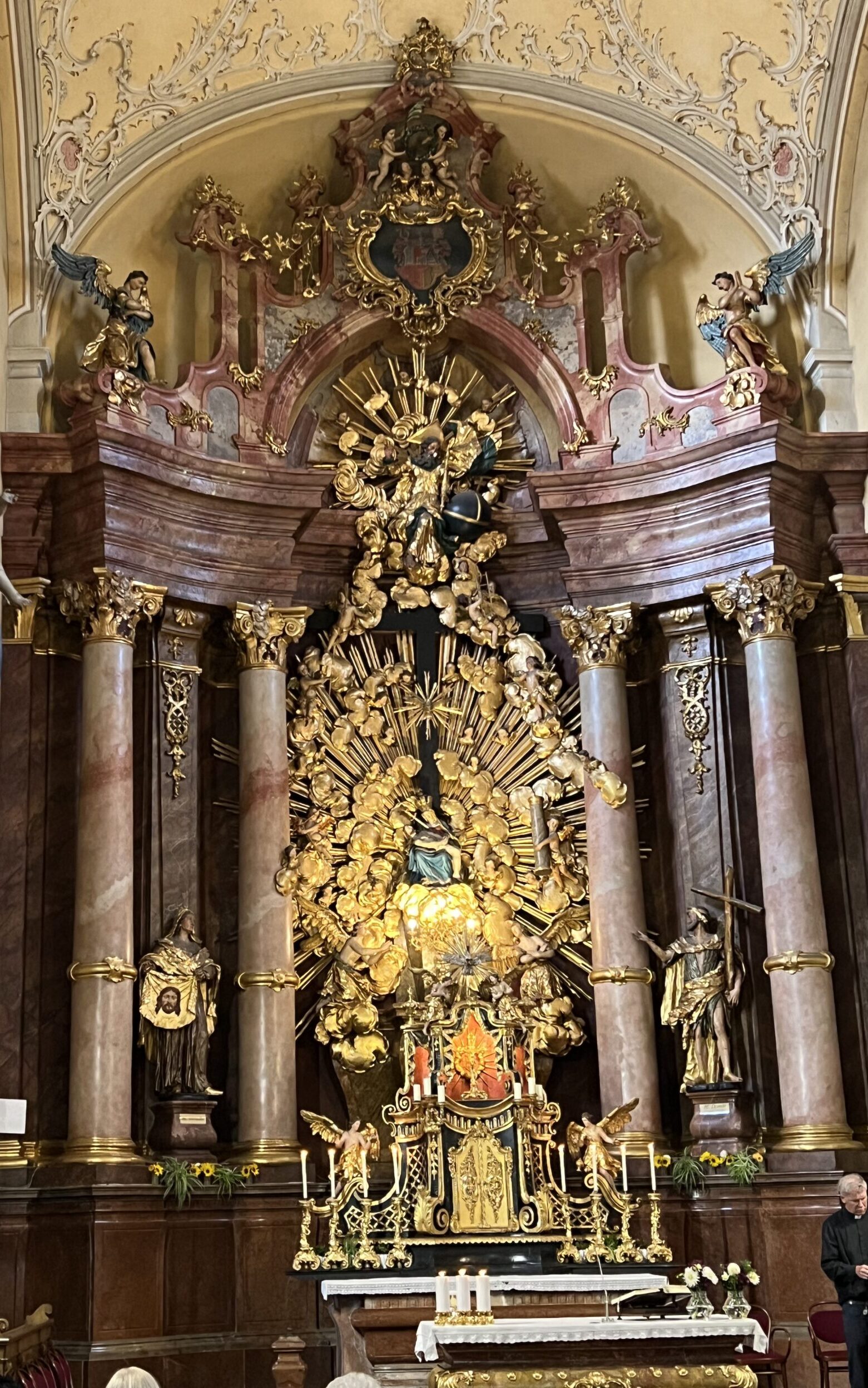
The pilgrimage basilica is dedicated to the Seven Sorrows of Mary and is called “Wallfahrtsbasilika Sieben Schmerzen Mariae”. The basilica displays many baroque decorations. The high altar, dating from 1747, depicts Mary full of sorrow in a Pietà. It is a wooden statuette, created in 1716. The crowned Mary is surrounded by golden angels and rays. A silver sword refers to the wounds of the Saviour and the grievous suffering of the Mother of God. The entire scene is surrounded by clouds. Above the Pietà, the Holy Spirit hovers in the form of a silver dove.
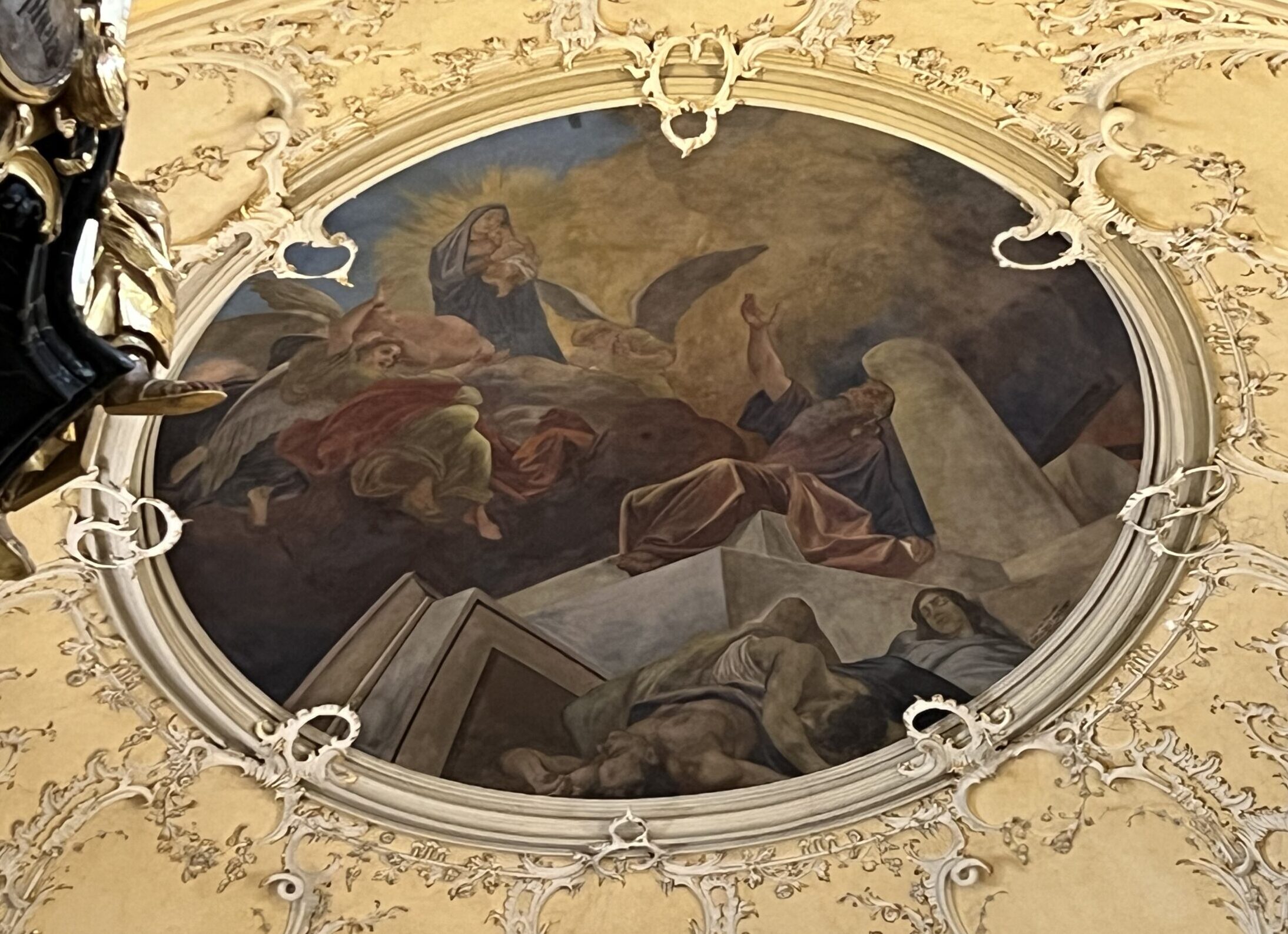
The church features many frescoes. Andreas Groll (1850-1907) created large frescoes on the ceiling between 1899 and 1900, including the dome fresco with the Seven Sorrows of Mary and this one of Mary with her Child.
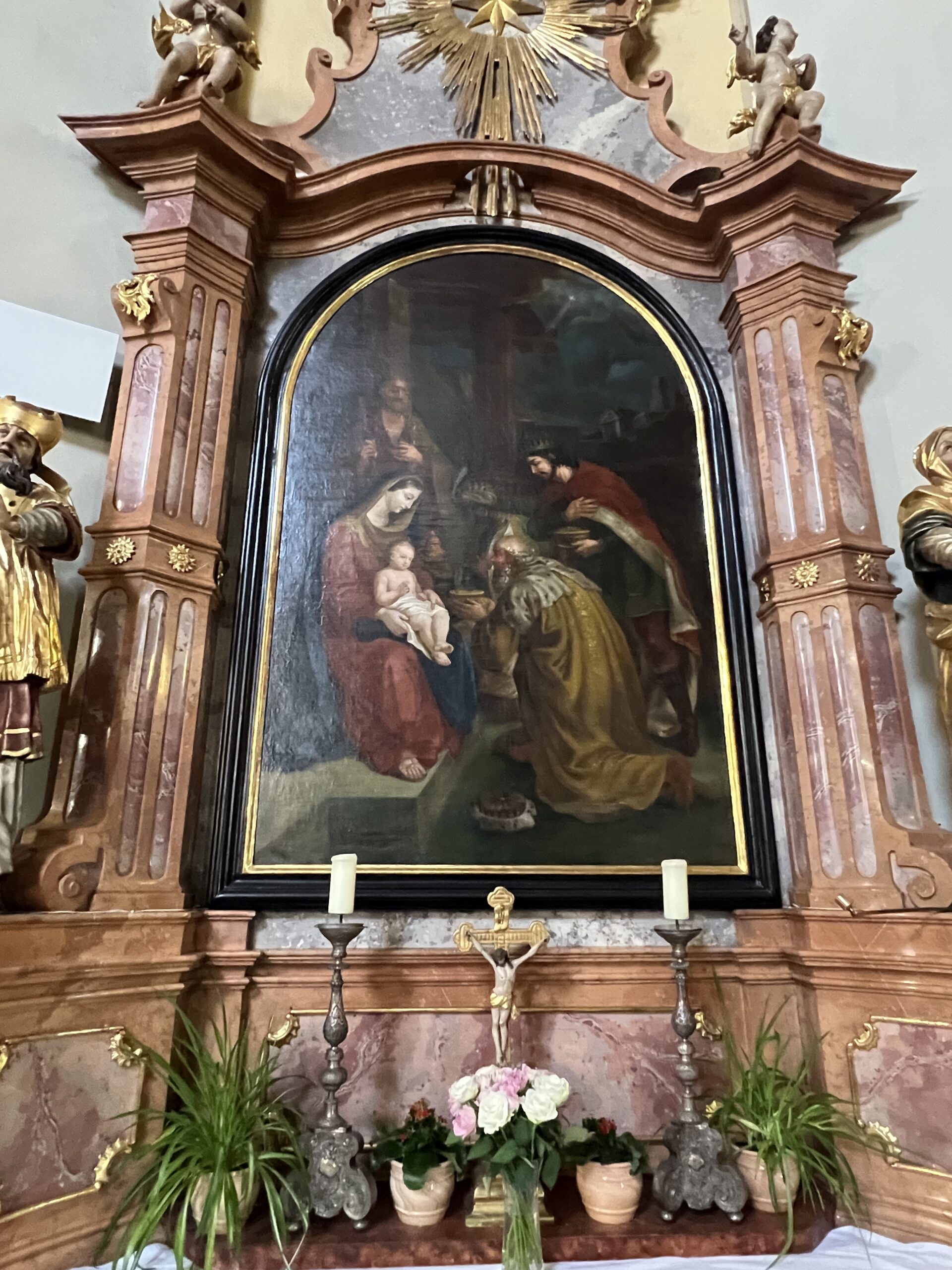
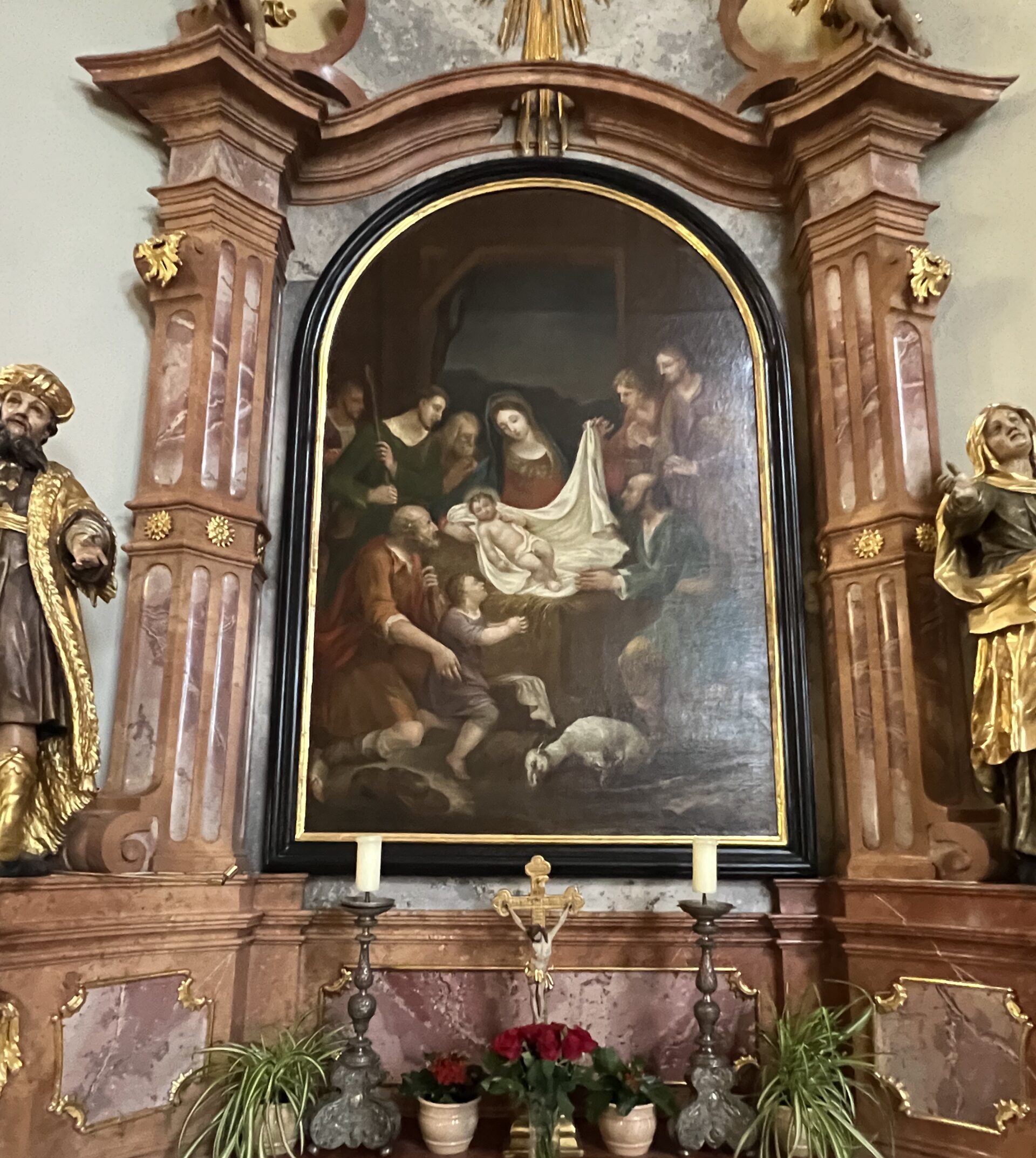
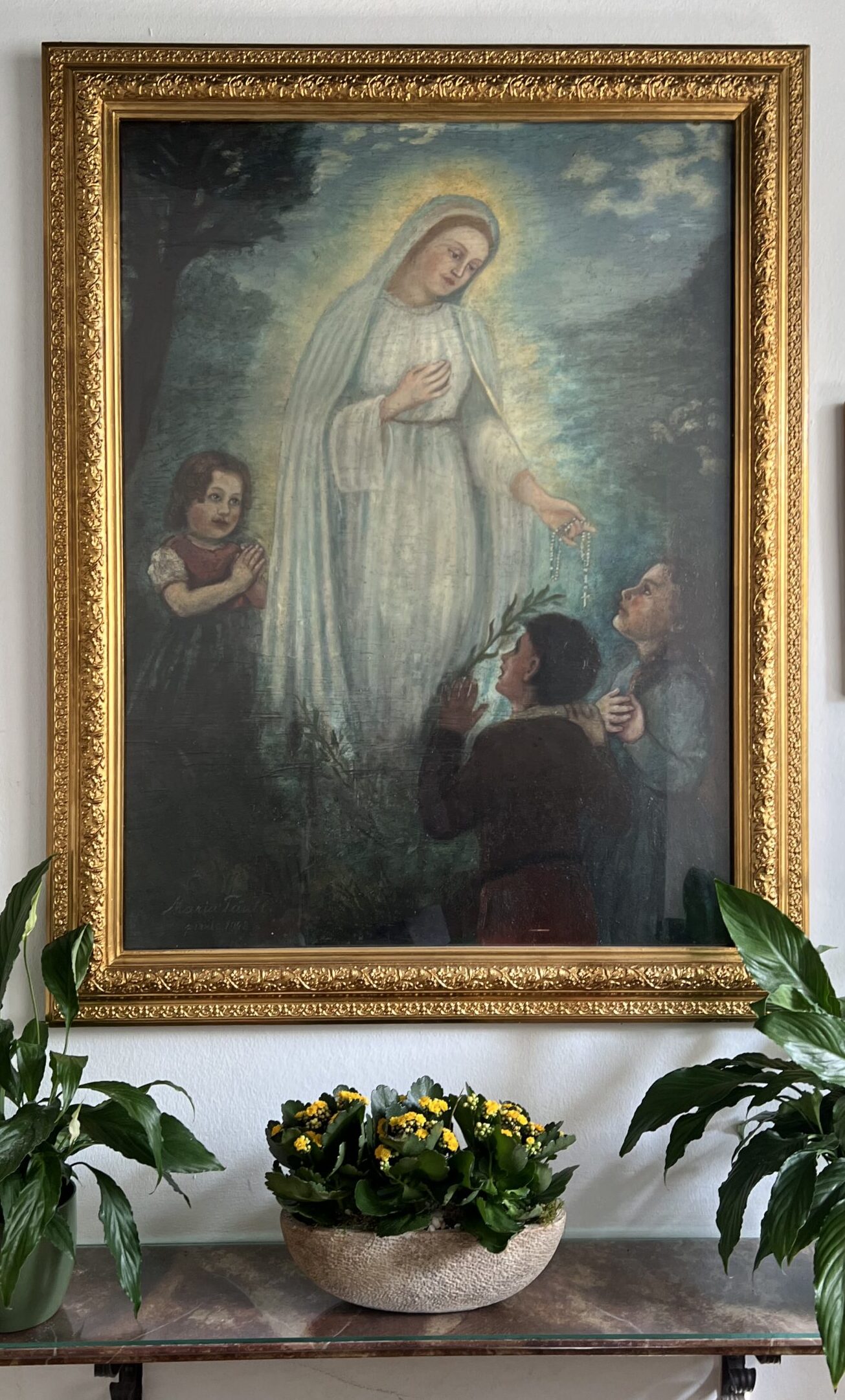
The paintings on the side altars were created by Anton Hitzenthaler the Younger (1788-1847) in 1819 and 1831. The left side altar depicts the adoration of the newborn Jesus by the shepherds. On the sides of the altar are the statues of Mary's parents; Anne and Joachim. The other side altar shows the adoration of Jesus by the Three Wise Men. The flanking statues are the parents of John the Baptist, namely Elizabeth and Zechariah. In the church, there is also a Fatima chapel, located under the northern tower, to the right of the main entrance.
The images of the Way of the Cross were created by the Austrian painter Andreas Strickner (1863-1949).
On the mountain, near the pilgrimage site, there is also a zoo.
ACCESSIBILITY
The pilgrimage site is located on the border of the city of Linz, in the north of Austria.
The address is: Am Pöstlingberg 1, A 4040 Linz.
Up-to-date information can be found at www.poestlingbergkirche.nl.
Experience
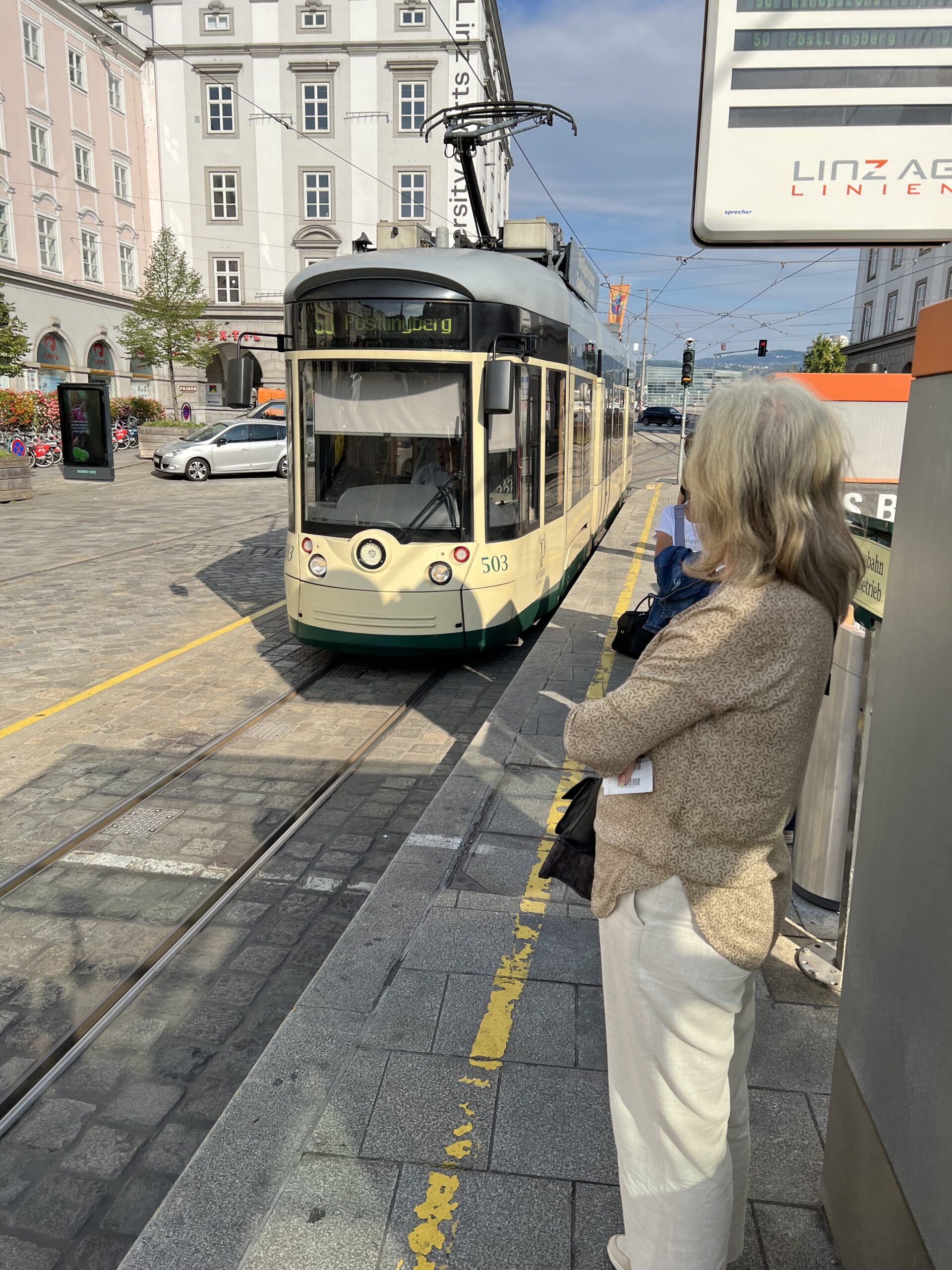
The journey begins on the Hauptplatz in the centre of Linz with the mountain railway up to the summit of the Pöstlingberg, where the Marian pilgrimage site is located and the end of the railway line. I'm taking the mountain train ride, and this route is among the steepest in Europe. After 20 minutes, the final station is reached, and it's still barely 150 m to the basilica.
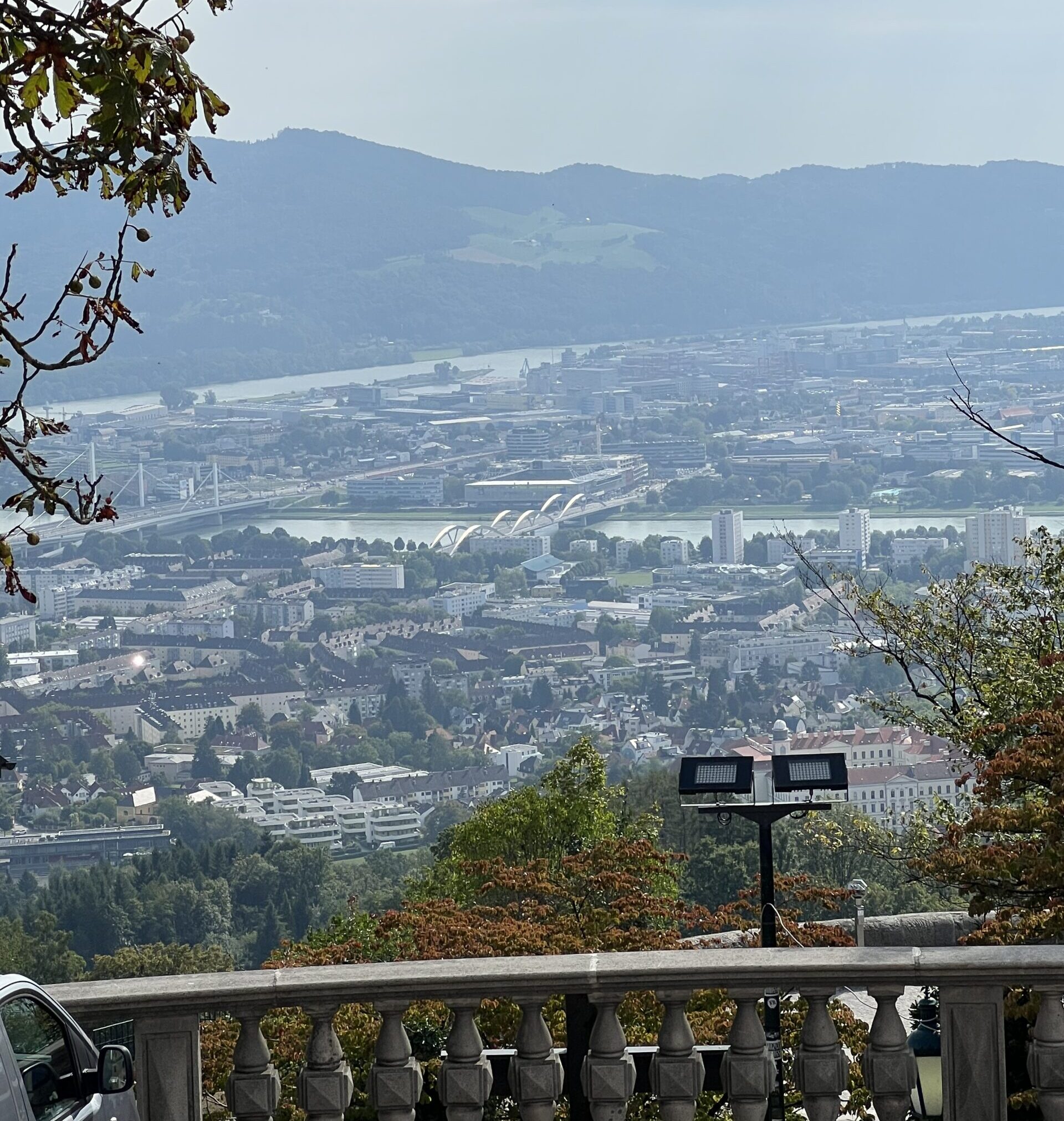
Before the church, I turn around and enjoy the sweeping view of the city of Linz and the surrounding area. I am then at an altitude of 537 m. The Pöstlingberg is the mountain of the city of Linz.
Then it's entering the pilgrimage basilica, which is dedicated to the “Seven Sorrows of Mary”. The main altar displays the statue of grace, which is surrounded by golden decorations.
The basilica displays great splendour in its statues and decorations, and the frescoes also impress me. The large, circular painting above the chancel particularly catches my eye. At the right side altar, I linger over a beautiful artwork depicting the adoration of the newborn Jesus by the three wise men. In the left side altar, there is an image of the shepherds with Mary's baby.
In a side chapel hangs a painting of the meeting between Our Lady and the three seers in Fatima. I hear that there are special services held here on the apparition days of Fatima in 1917. These are always on the 13th of the month, from May to October inclusive.
What a gift it is to be here.
Environment
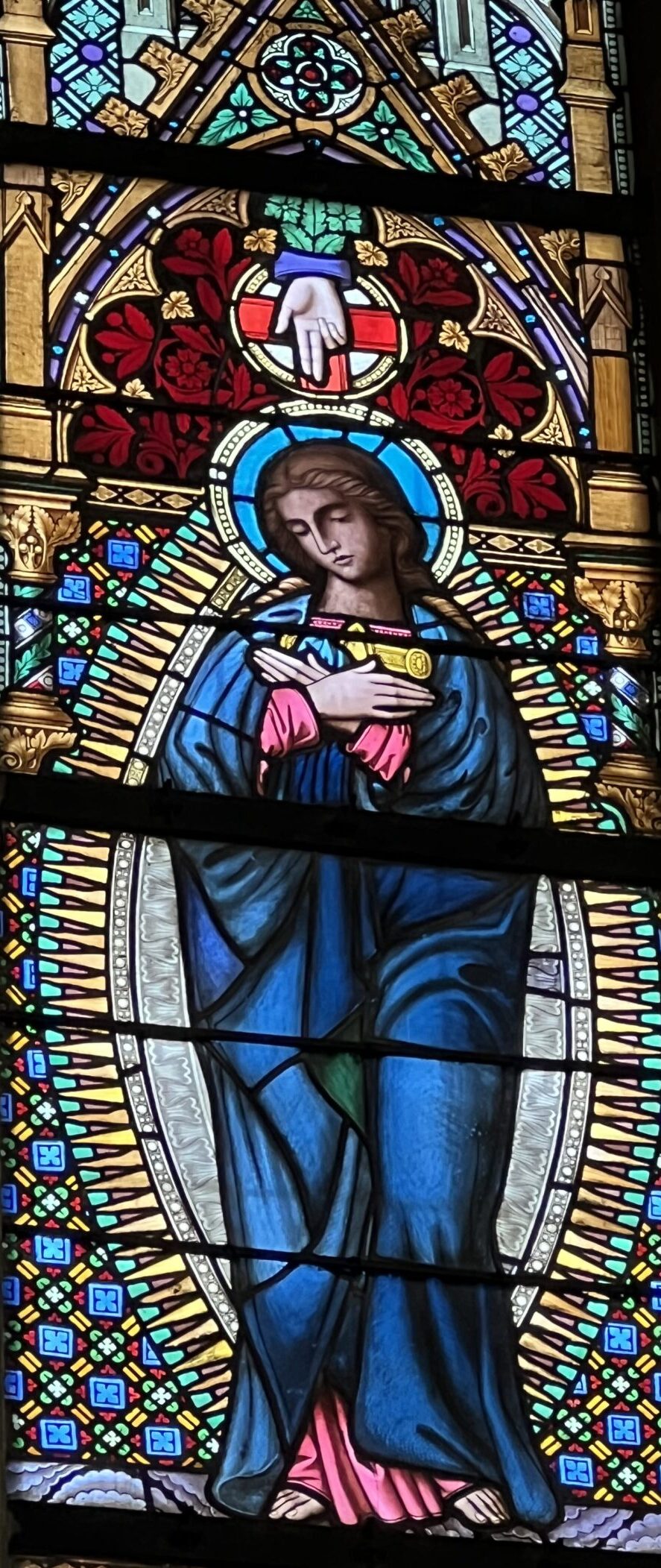
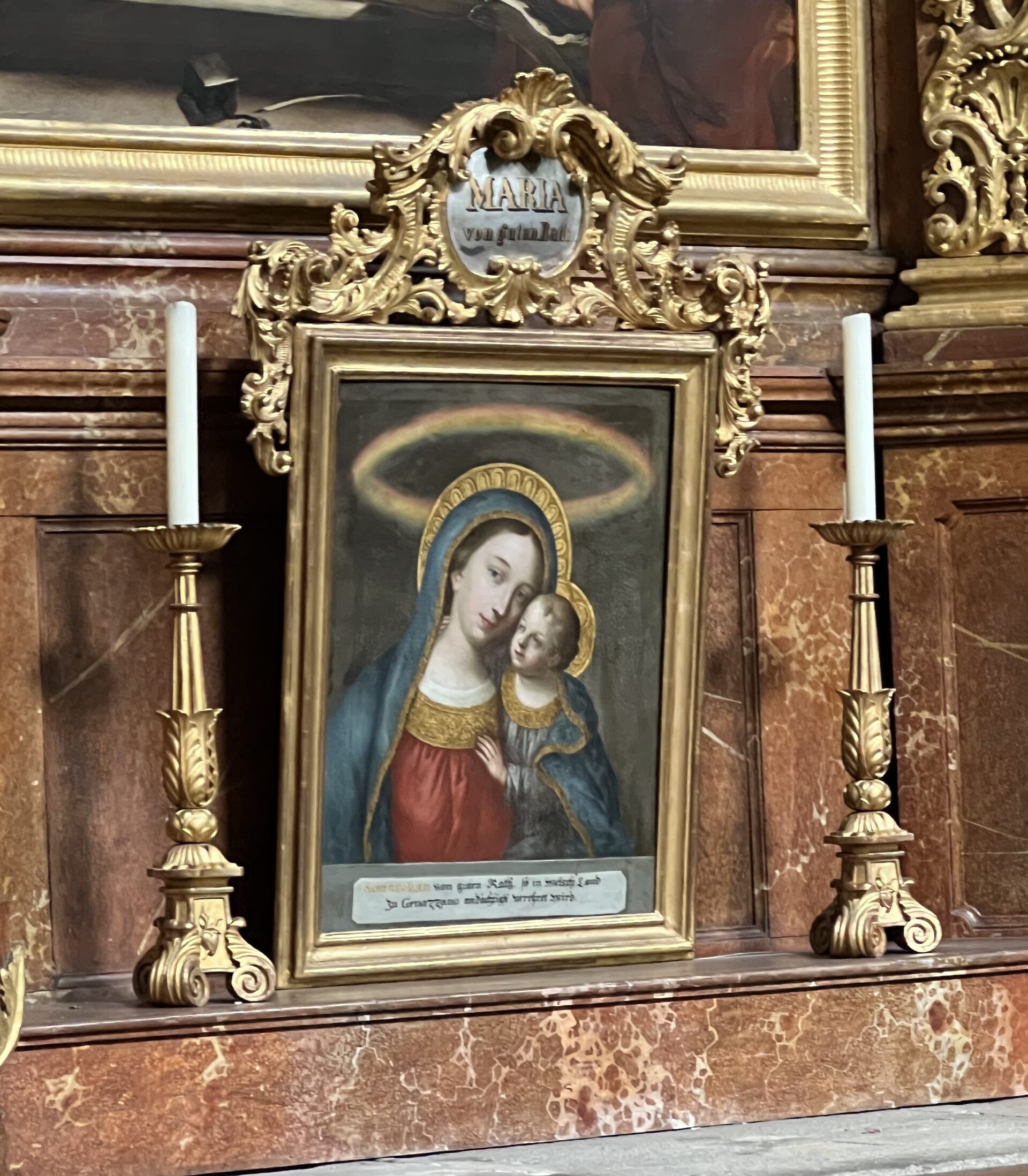
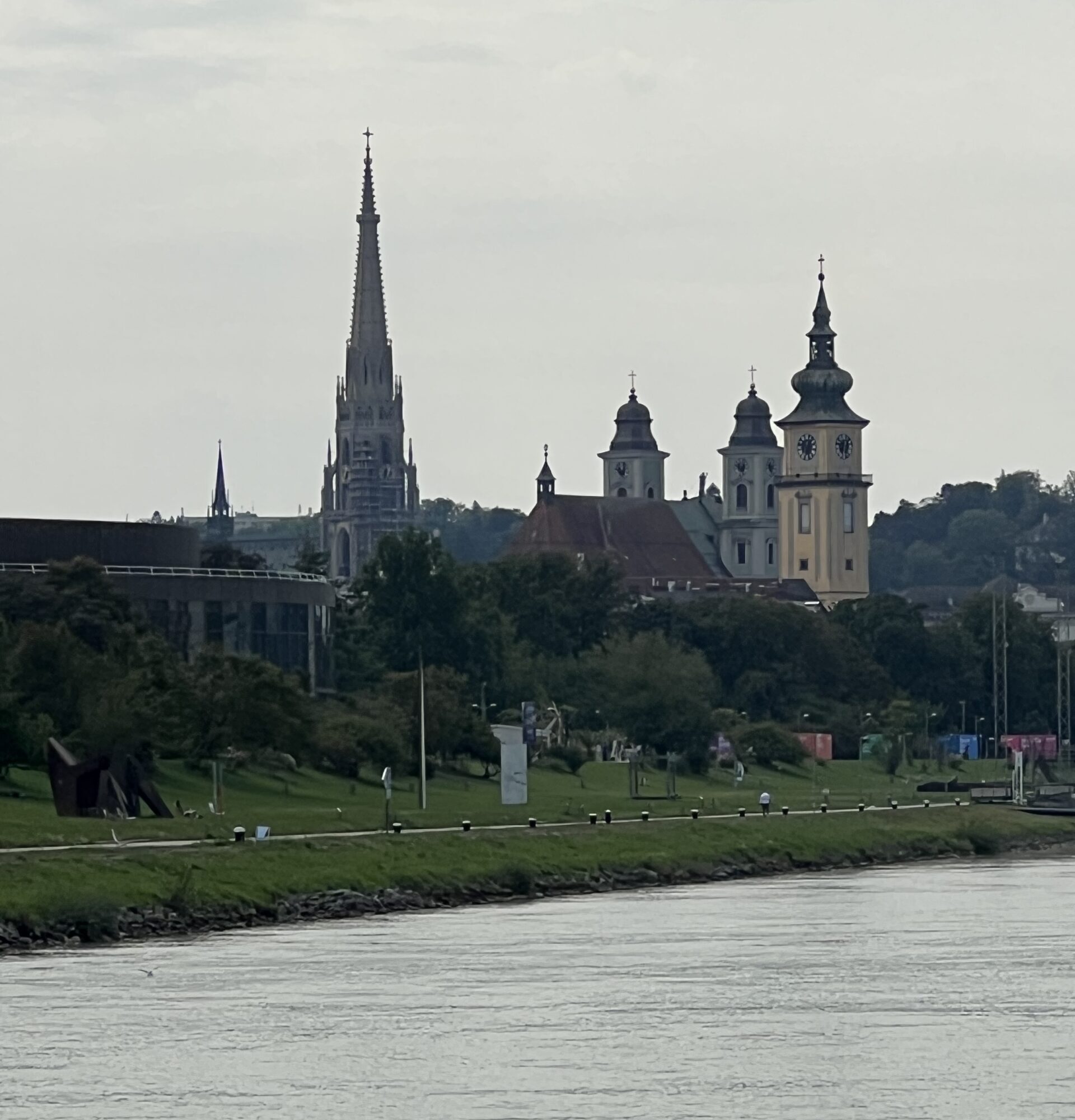
In the centre of Linz stands the Mariä-Empfängnis-Dom with a 135m high tower. In the Domgasse is the Alter Dom, now the Jesuit Church, built between 1669 and 1678 with two Baroque towers. The main altar depicts the Assumption of Mary. It was created by the artist Giovanni Battista Baberini (1625-1691) and later completed by Giovanni Battista Innocenzo Colombo (1717-1801). Also in the centre, at Landstrasse 31, is the Ursulinenkirche. Work began in 1736, and construction with its two towers was completed in 1772. On the right-hand side at the front of the church is the Maria altar from 1756. Mary is surrounded by angels, golden rays, and clouds. This church also contains a Lourdes grotto. Cultural activities are also organised in this church.
Posted: 28 September 2023
~~~

 Nederlands
  English (UK)
  Deutsch
  Français