History
Saint Euphrasius of Illiturgis (San Eufrasio) lived in the 1st century near Andújar. He was a disciple of the Apostle James and the first bishop of Andújar. He spread the Gospel in Spain and brought an image of the Virgin Mary with him. He venerated this image.
On 12th August 1227, Mary appears as the Virgin of the Cabeza of Sierra Morena. Juan Alonso de Rivas, a shepherd from Colomera, finds a statue of Mary on the Cerro de la Cabeza. He kneels before the effigy. Suddenly, he sees Our Lady and She says that a church must be built. Mary also says that there will be a sign and miracles will be performed. She instructs the man to go to the city and deliver her message there. Great events are to come, and as a sign of the authenticity of her presence, She heals the man's paralysed arm. Through this miracle, Mary has become the patron saint of Andújar.
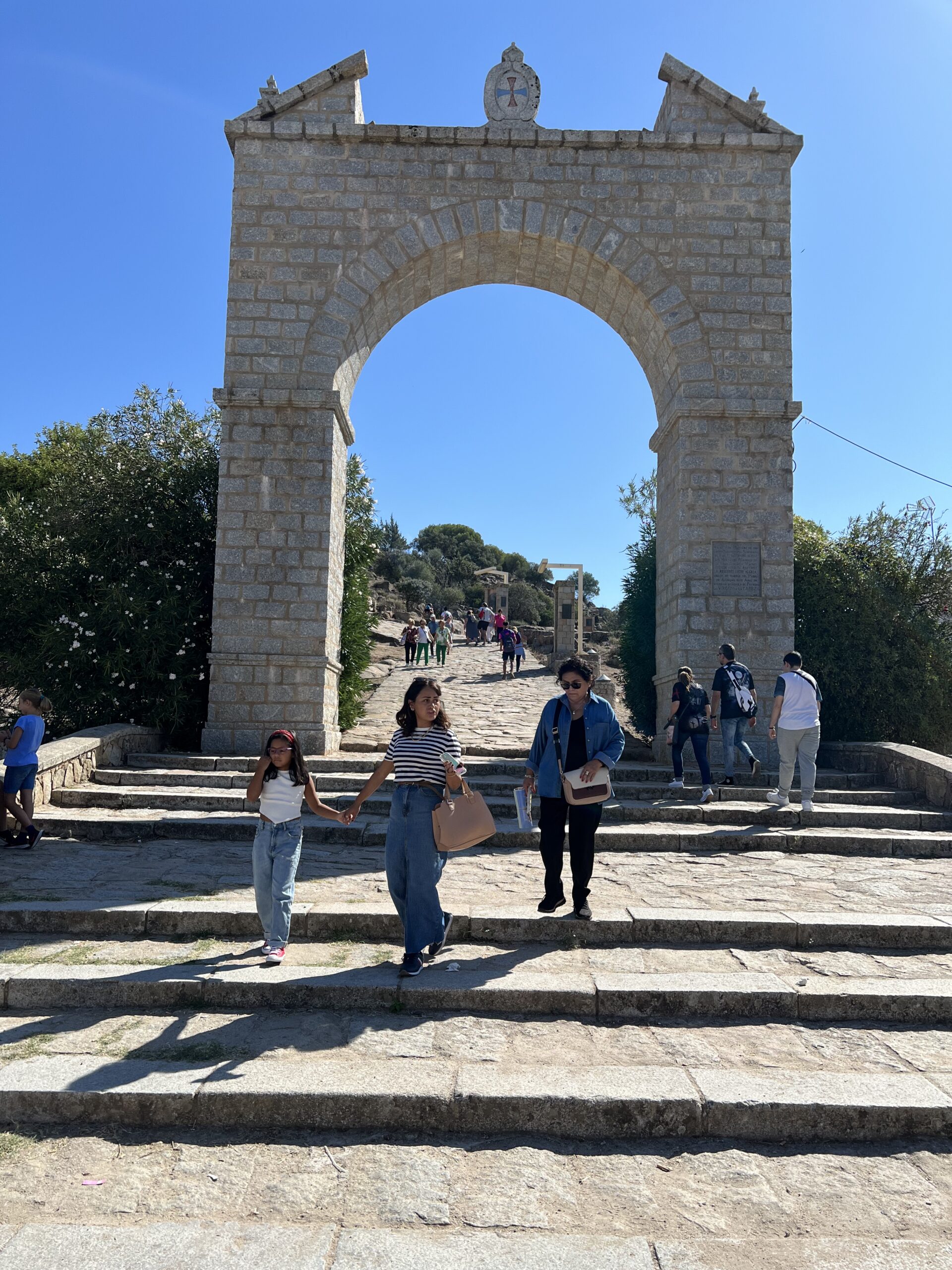
The pilgrimage site was built between 1287 and 1304 on the hill called La Cabeza (The Head). The Virgin Mary's name comes from the hill where the statuette was found in 1227, as the rock is shaped like a head. It is the highest point in the Sierra Morena, reaching 686 metres above sea level. In the second half of the 16th century, the buildings of the shrine were renovated in the Renaissance style under the direction of architect Andrés de Vandelvira (1505-1575). Later, the statues in the sanctuary needed replacing, and permission for this was granted in 1782.
In 1909 the miraculous image was crowned with the permission of Pius X, born Giuseppe Melchiore Sarto (1835-1914), Pope from 1903 to 1914.
During the Spanish Civil War (1936-1939) the shrine suffered greatly from the prolonged fighting for the pilgrimage site between civil guards and soldiers of the republic's government. In 1937, the shrine was destroyed and occupied by Republican troops. A film was made about these events in 1949 with the title “The Sanctuary Doesn't Surrender” in English and “El Santuario No Se Rinde” in Spanish (the shrine does not surrender). The director was the Spaniard Arturo Ruiz Castillo (1910-1994). After the Civil War, the shrine was rebuilt.
Members of the Trinitarian Order (Trinitarians) maintain the sanctuary. This is an organisation of the Holy Trinity and of captives, founded by the Frenchman Juan de Mata (c. 1150-1213).
Maria has been venerated here for centuries and later, with the permission of Pius X in 1909, and through a document in 1959 from John XXIII, Angelo Giuseppe Roncalli (1881-1963), who was Pope from 1958-1963.
On the occasion of the new coronation of the statue of Mary in 1960, Carmen Polo y Martínez-Valdés (1900-1988), wife of Spanish ruler Francisco Franco (1892-1975), visits the pilgrimage site.
In 1964, there was again a high-profile visit to the sanctuary. The then Prince Carlos and Sofia, Queen of Denmark and Greece, came to greet the statue of Mary. They formed the future Spanish royal couple: Juan Carlos Alfonso Victor María de Borbón y Borbón – Dos Sicilias (1938), later King Juan Carlos I of Spain (1975-2014) and Sophía Margaríta Viktoría Frederiki (1938), Sophia of Denmark and Greece (in Spanish: Sofía de Grecia y Dinamarca), Queen of Spain (1975-2014).
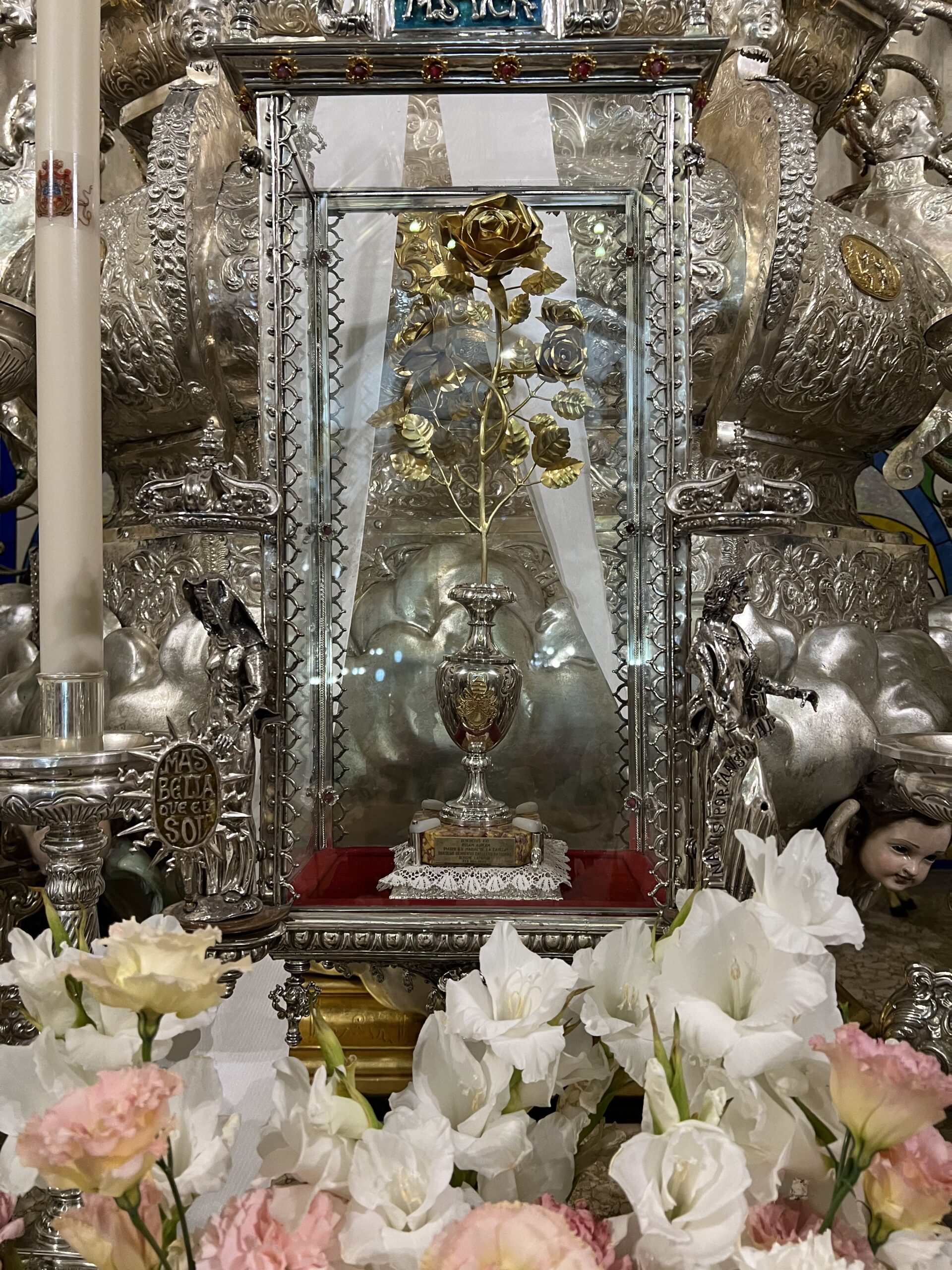
In 2009, Benedict XVI, born Joseph Aloisius Ratzinger (1927-2022), Pope from 2005-2013, awarded the Golden Rose to Our Lady of the Sanctuary in Andújar. This is a high papal honour and the first in favour of an image of Our Lady in Spain.
On 22 April 2010, the church was elevated to the status of a basilica. On 3 July 2011, the new altar of the basilica was consecrated.
Pilgrimage site
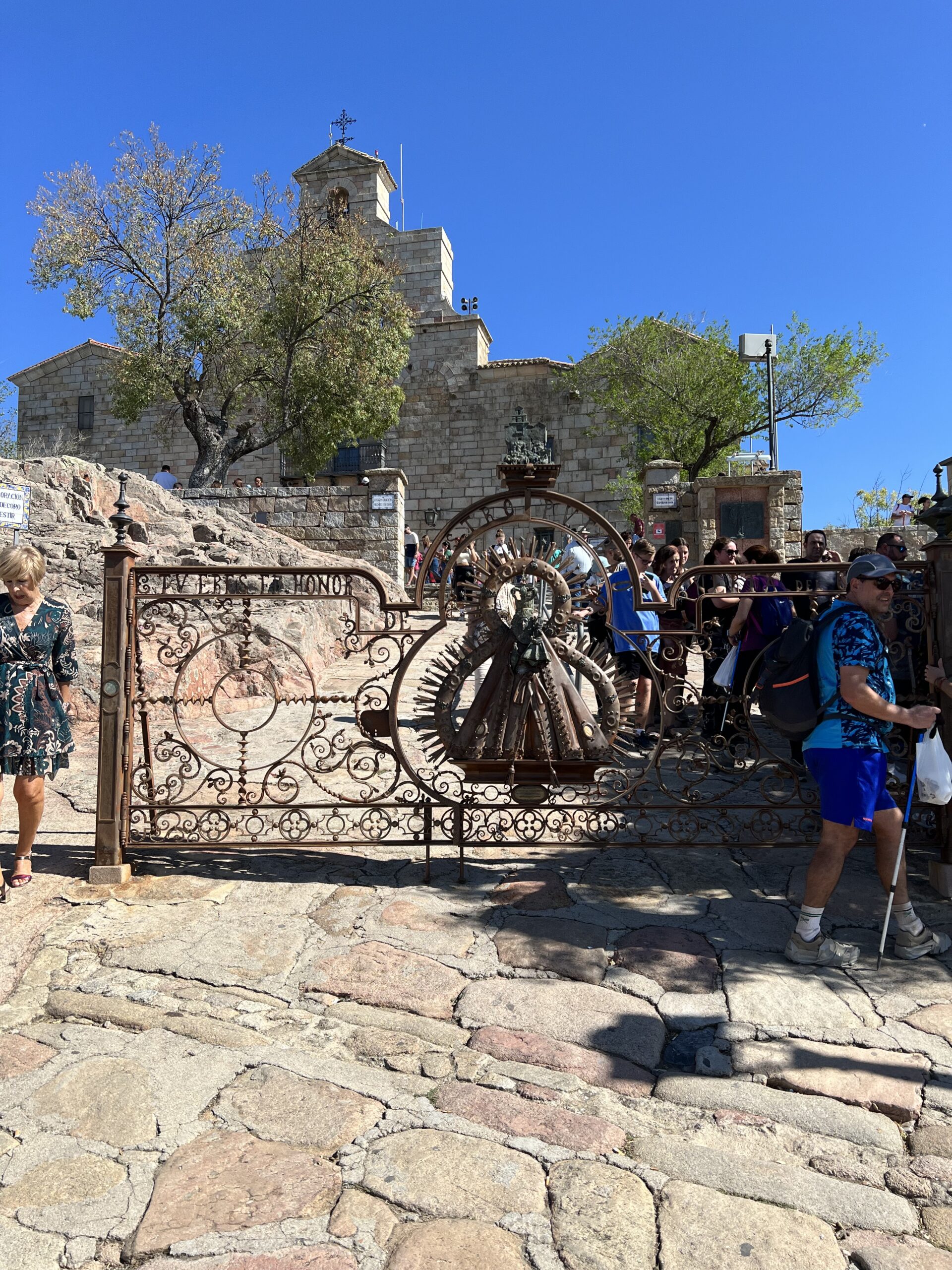
The pilgrimage site is located on a hill and can be seen from a distance.
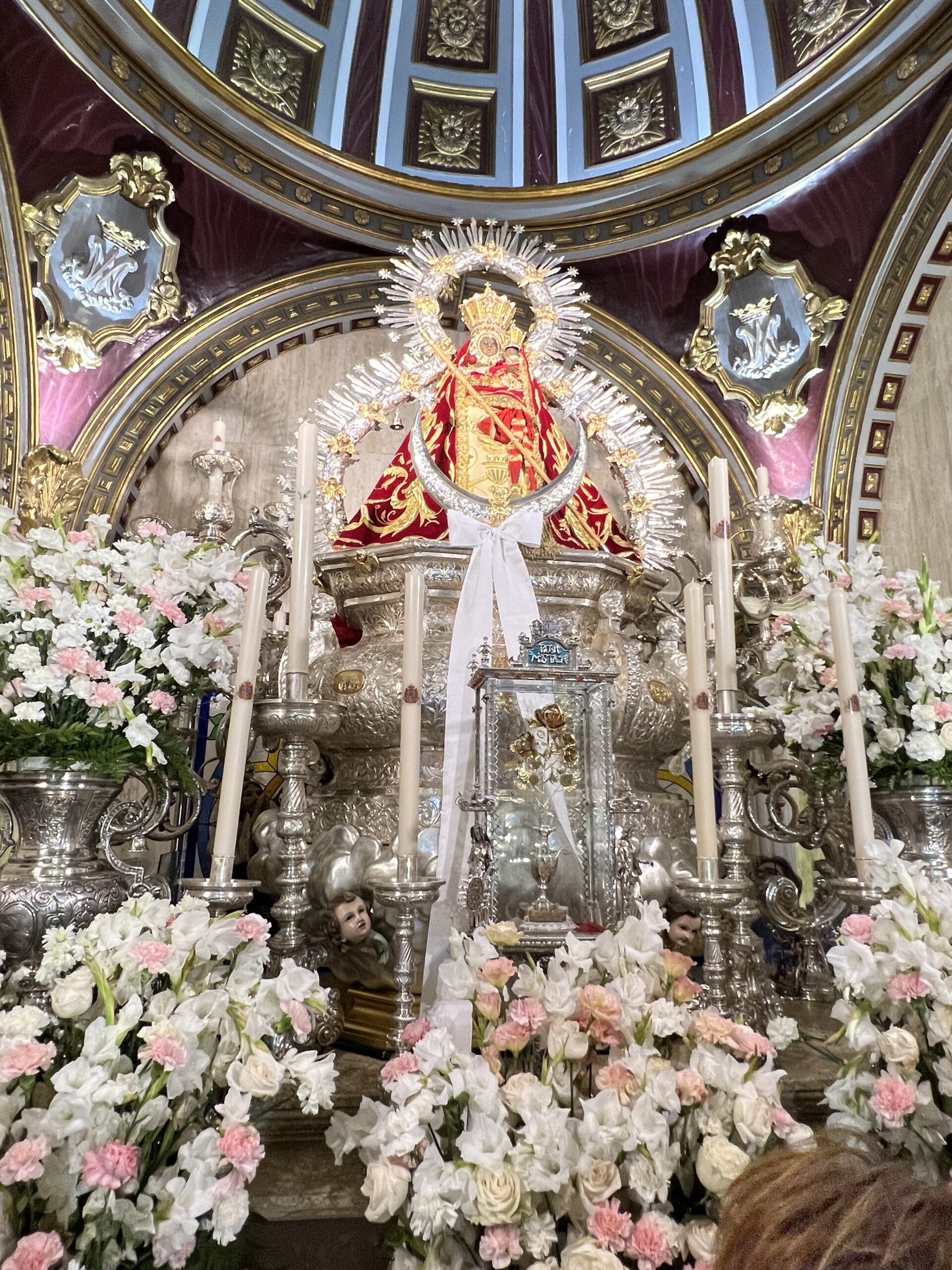
On the last weekend in April, there is a large pilgrimage called “Romería de la Virgen de la Cabeza“ (Pilgrimage of the Virgin of the Head). This is the oldest pilgrimage in Spain. The Holy Virgin of the Head is one of the most famous and celebrated Marian shrines in Spain. Here, Mary is referred to as the ”Most Holy Virgin of the Head“ (Santísima Virgen de la Cabeza), and the image is housed in the Basilica of Our Lady of the Head, ”Basílica de Nuestra Señora de la Cabeza".
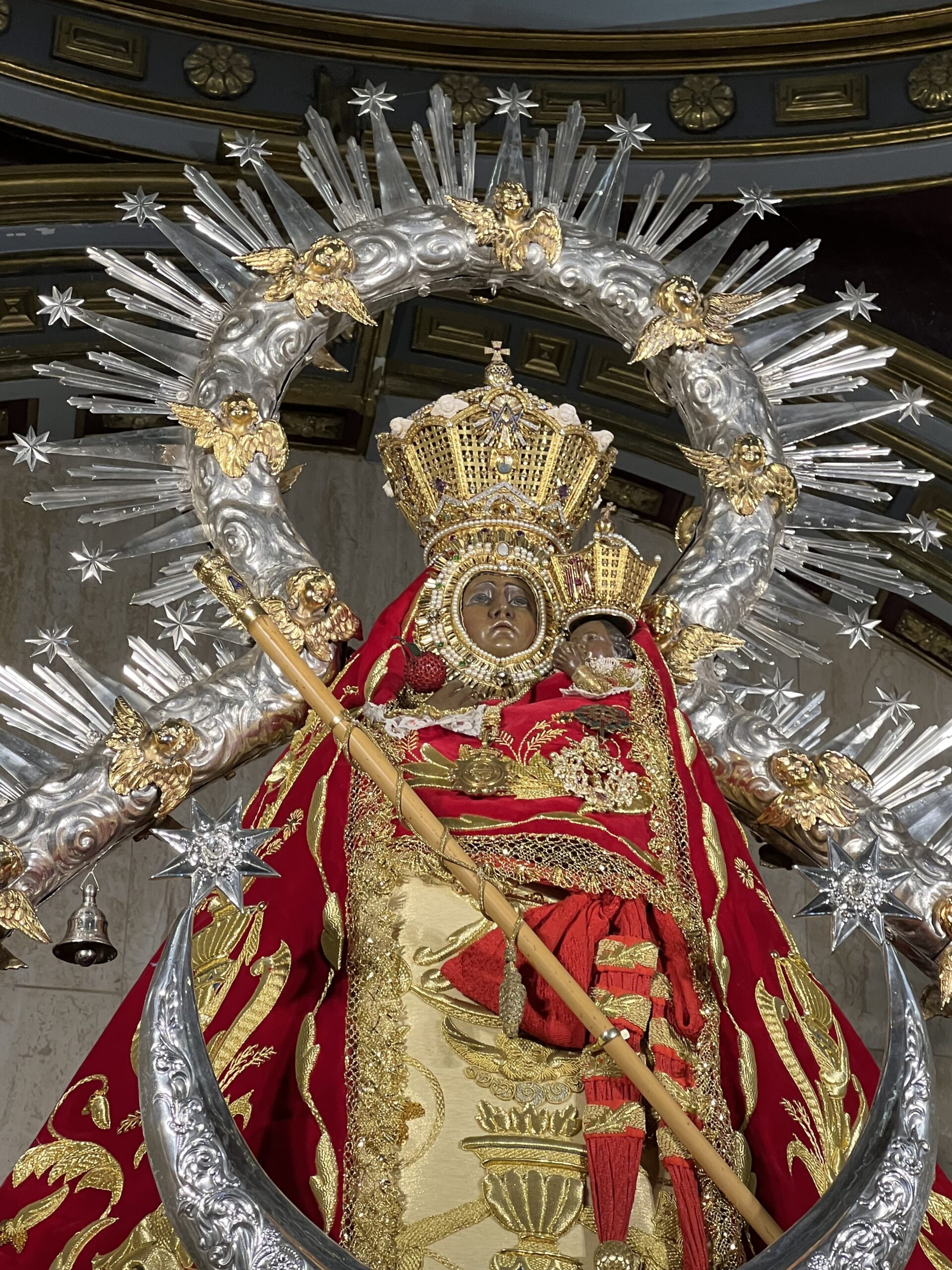
Since 1959, Maria van het Hoofd has been the patron saint of the diocese of Jaén, and she is also the patron saint of the city of Andújar.
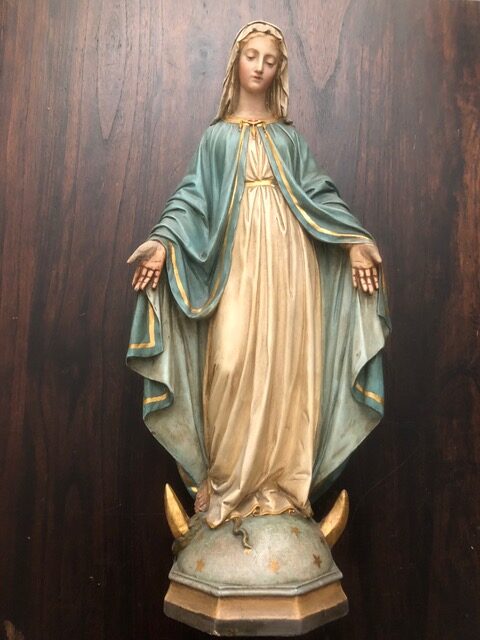
The original statuette is made of carved and polychromed wood, measuring 33 centimetres. The statuette wears a tunic, a long robe, fastened around the waist with a belt. The clothing also includes a mantle and a veil over the head. Many miracles are attributed to the effigy.
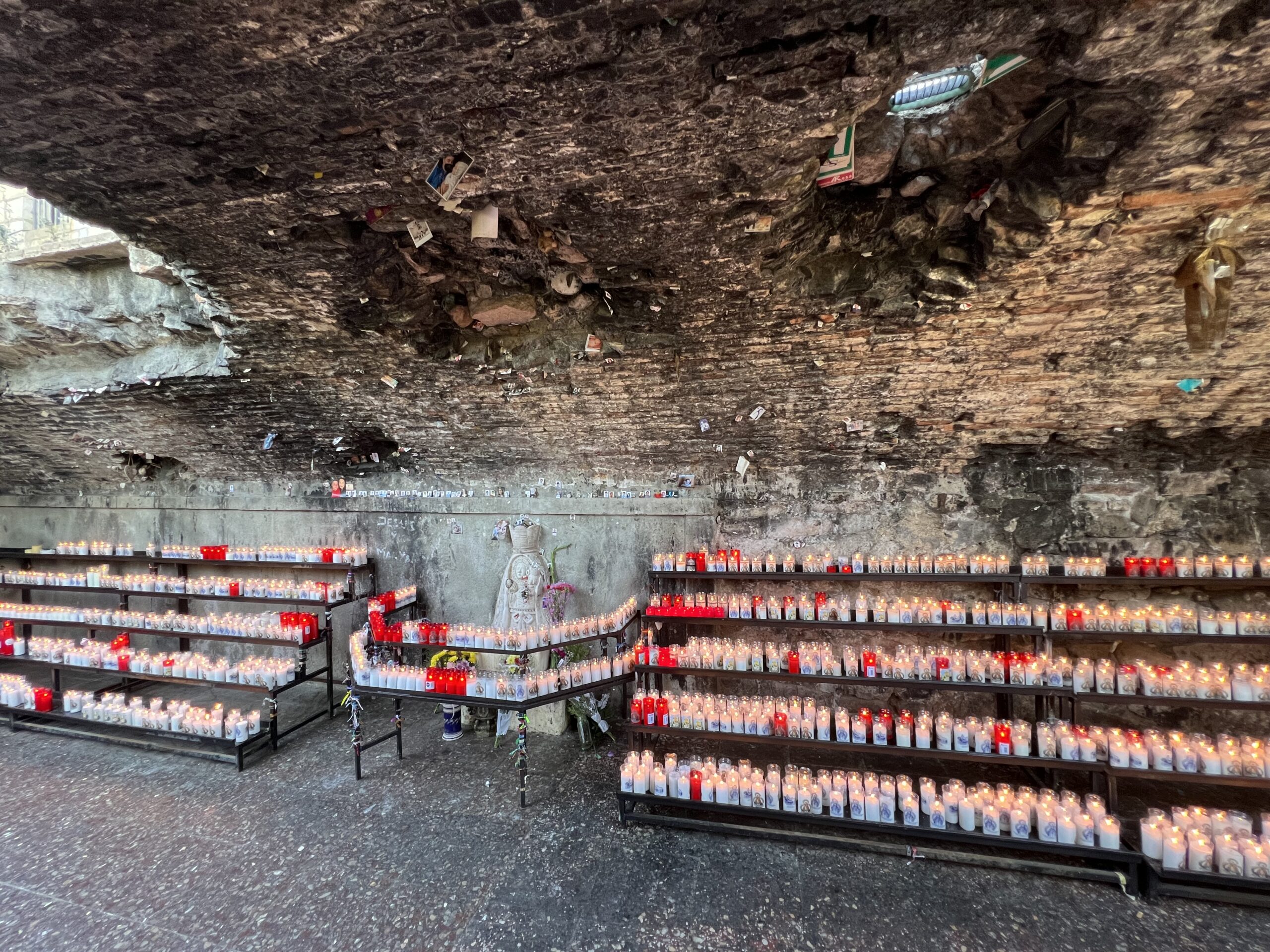
The pilgrimage site has a long cave, where countless candles burn.
The basilica is open daily.
ACCESSIBILITY
The basilica is located in the “Parque Natural de la Sierra de Andújar” national park, also called “Cerro del Cabezo”, at Poblado Santuario Virgen Cabeza 46 and Carretera Virgen de la Cabeza, 23748 Andújar, in the province of Jaén. The shrine is built about 30 km north of the town of Andújar.
Current information can be found on www.santuariovirgencabeza.org.
Experience
It's about a 30 km drive to Andújar, along roads with many bends, and I have to gain the necessary altitude as the pilgrimage site is situated on a high hill. As I get closer to the sanctuary, the road becomes busier. Many people surely have the same destination on this day.
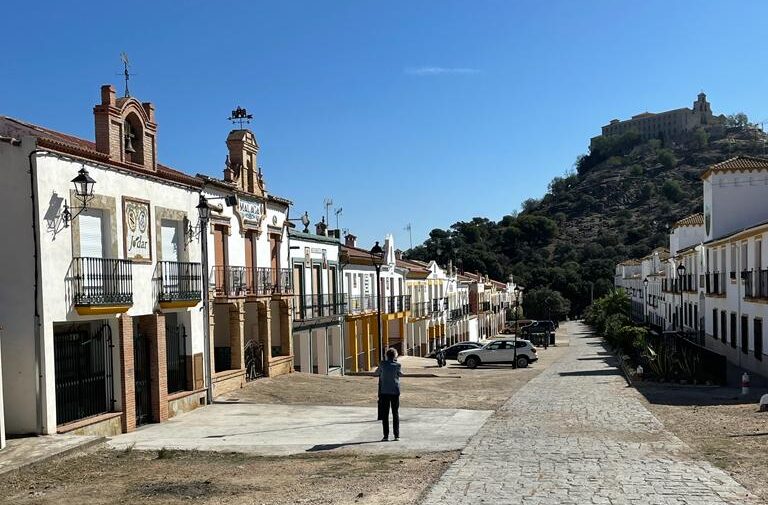
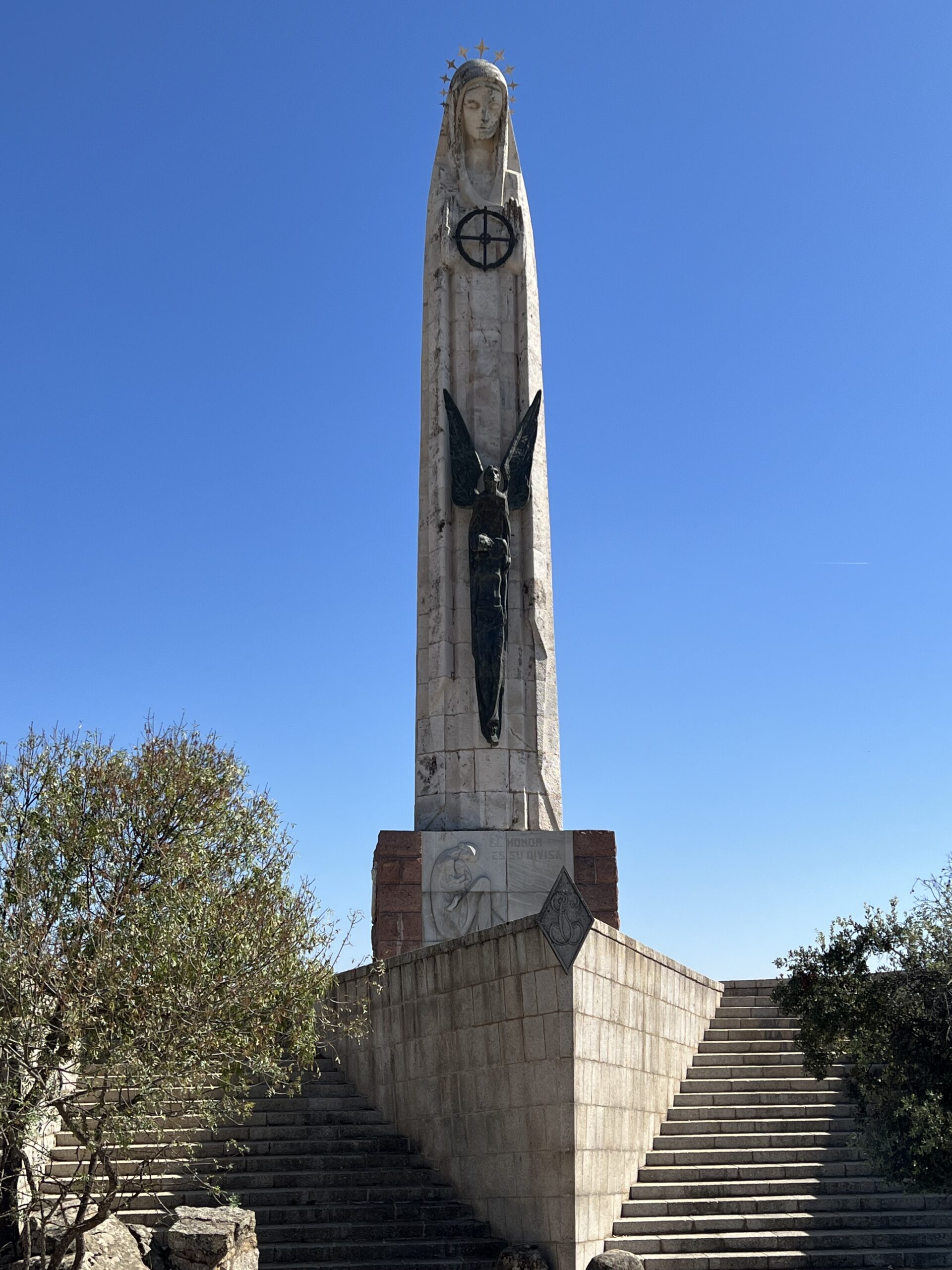
When I arrive at my destination, it’s a further walk uphill and I pass white houses. Each home has an image of Mary on its facade. After that, it’s climbing steps and then a steep path follows, paved with large stones. To the right stands a statue of Our Lady, larger than any I’ve seen before. The depiction of Mary is certainly the largest I have ever seen of Her. It seems as though Mary watches over a vast area from this spot. This statue is about 25 metres high and captures the attention of every visitor.
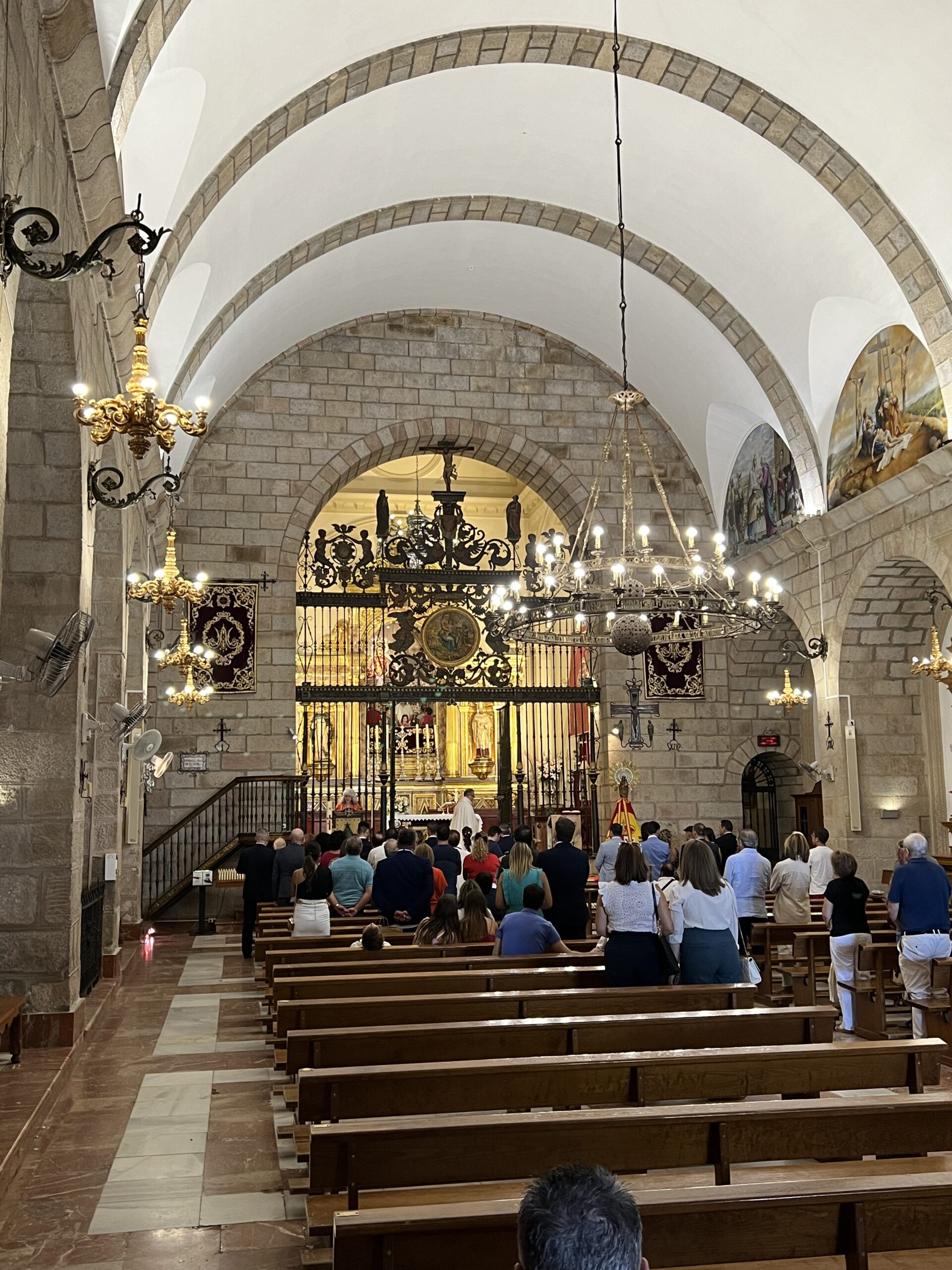
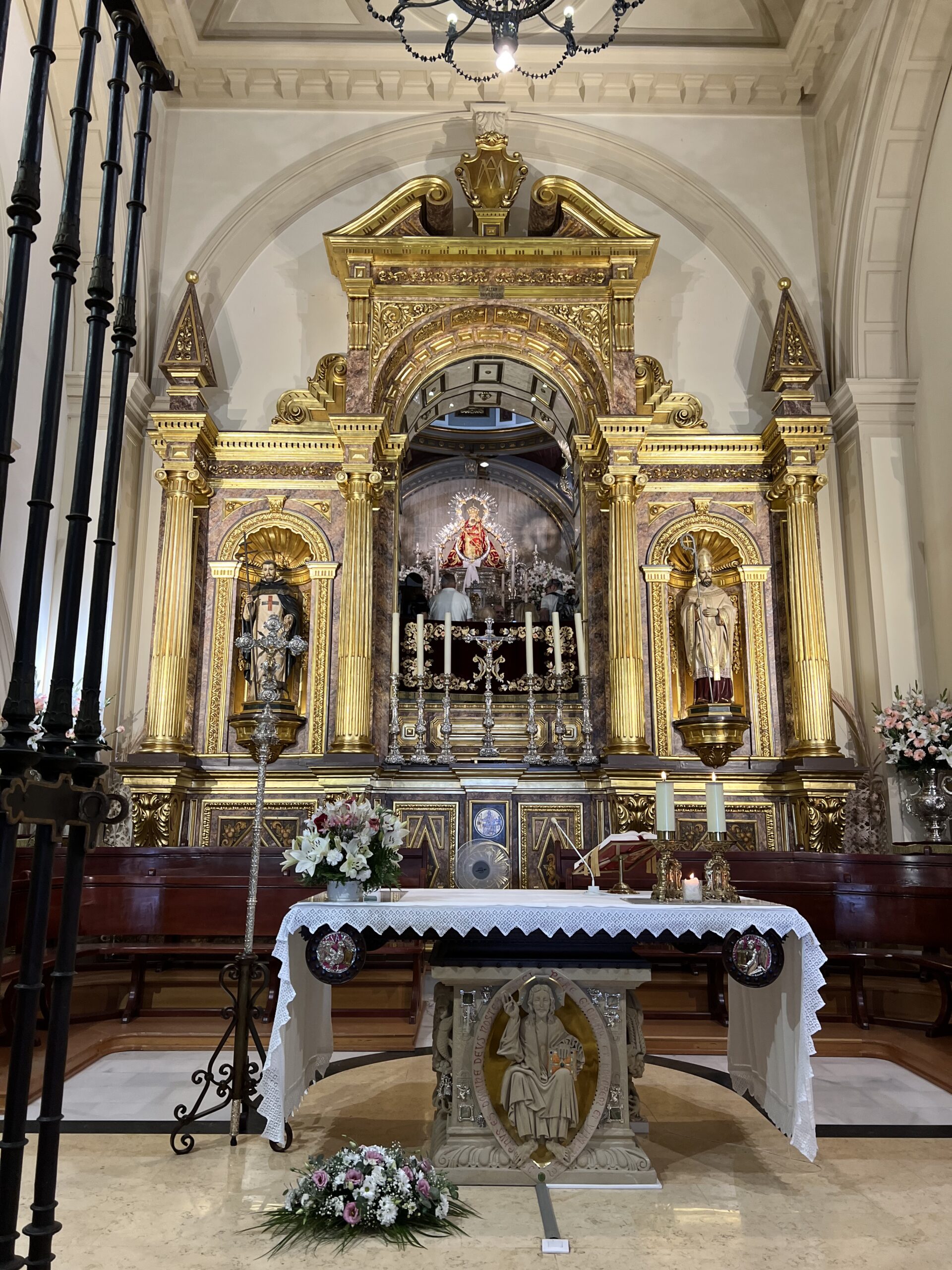
The church is busy because a wedding is being blessed. People still get married in church here, which has become a rarity in my country, the Netherlands. The pilgrimage church displays beauty through the interweaving of art and religion. The many images of Mary touch me. Phases from her life are painted at a respectable height. Numerous likenesses adorn this building, which exerts a great attraction on pilgrims. Halfway up to the tabernacle stands the miracle-working image of Our Lady, and when I look at it, I automatically start praying.
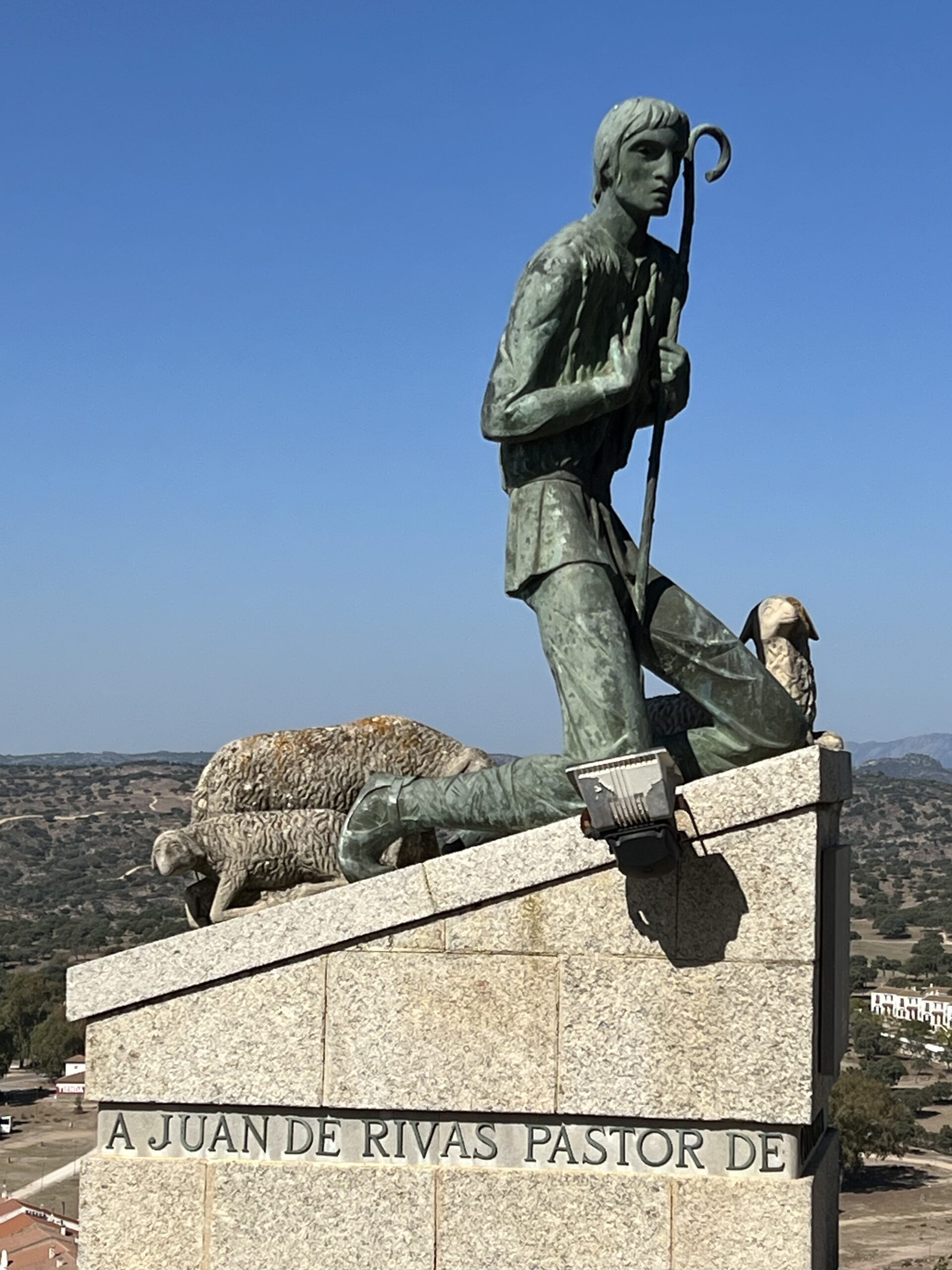
After a tour of the church, I go outside and join the queue leading to the depiction of Mary. First, I pass the image of the shepherd. Centuries ago, this man experienced the apparition of Mary and was tasked with establishing a church here. Next, I walk down a long corridor. On both sides, hundreds of images are displayed of Our Lady from places in Spain and a few from other countries. This corridor is a true museum! In this form, the collection can be called quite unique.
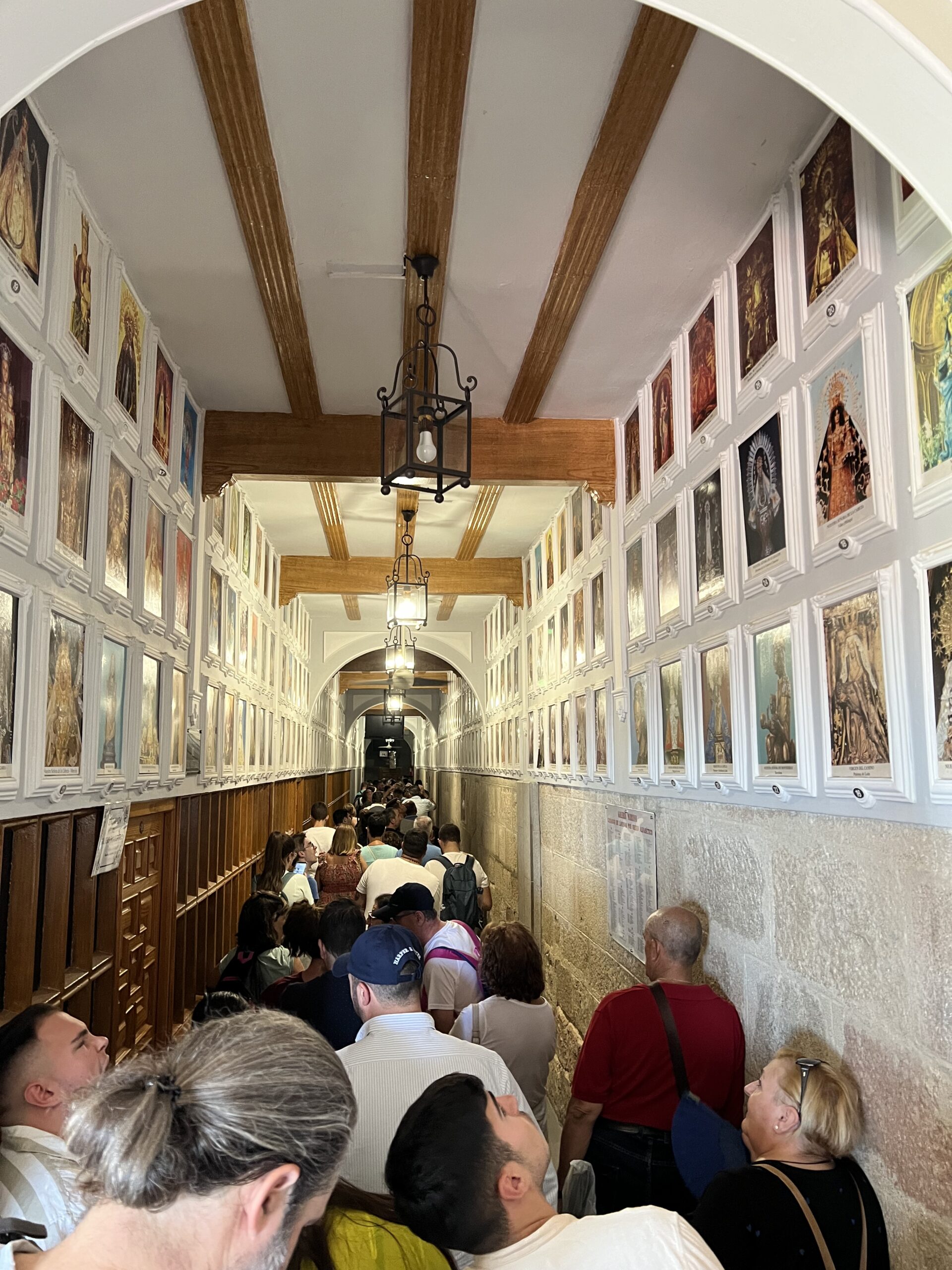
This museum also contains the dressing room of the Maiden of the Head and the metal and wooden throne from 1732, which has been restored.
Slowly I shuffle through the long corridor, eventually emerging at the illuminated image of Mary. She is wearing gold and red clothing and radiates love. Mary is surrounded by candles and flowers. Many people want to have their photo taken with Her here. I want to do that in heaven...
Environment
The pilgrimage site is located approximately 30 km from the town of Andújar. This place is situated 75 km east of the ancient city of Córdoba and is the same distance to travel from the more southerly Jaén. The town of Bailén is located barely 33 km west of Andújar.
Posted: 26 October 2023
~~~

 Nederlands
  English (UK)
  Deutsch
  Français