History
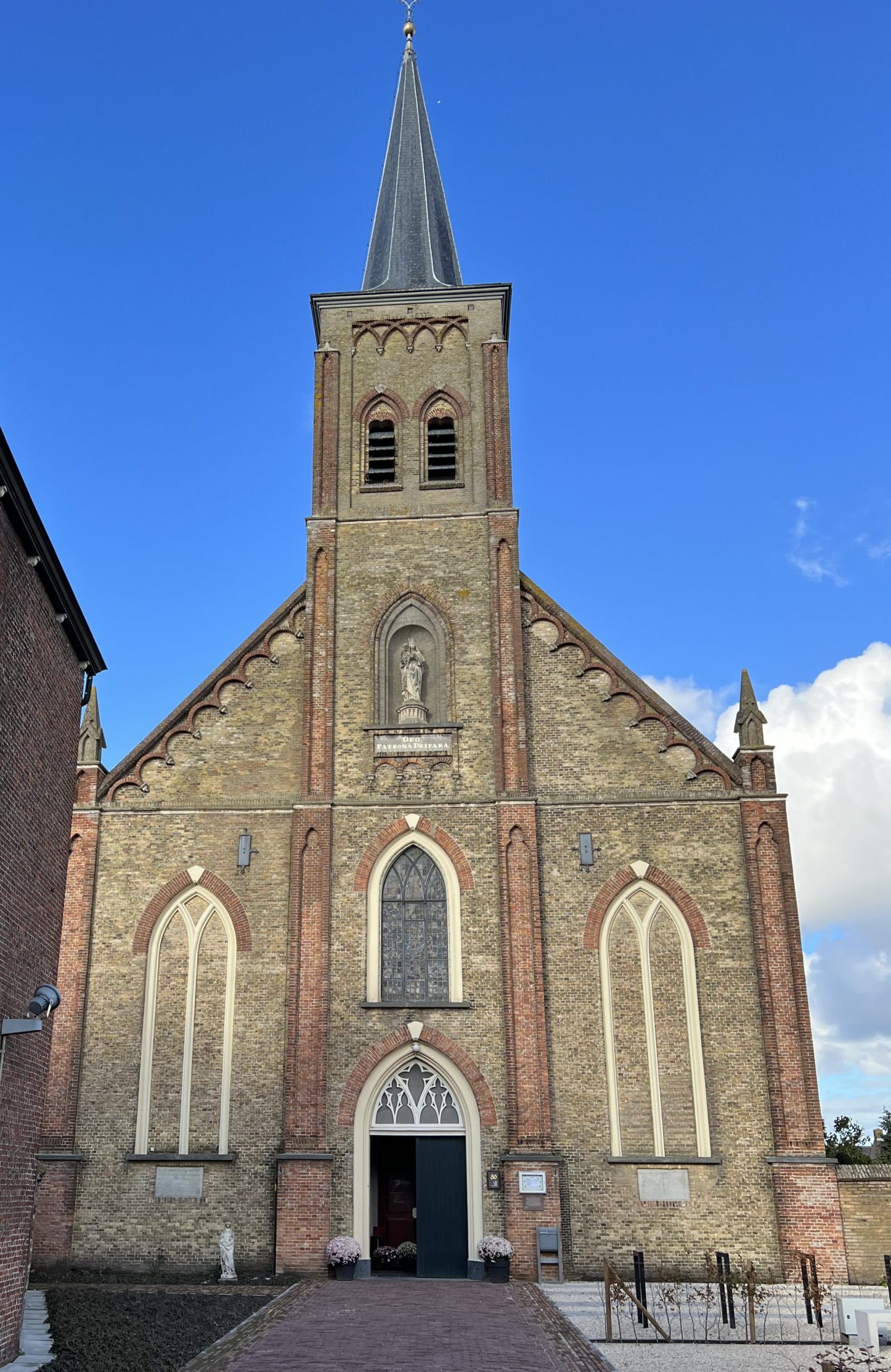
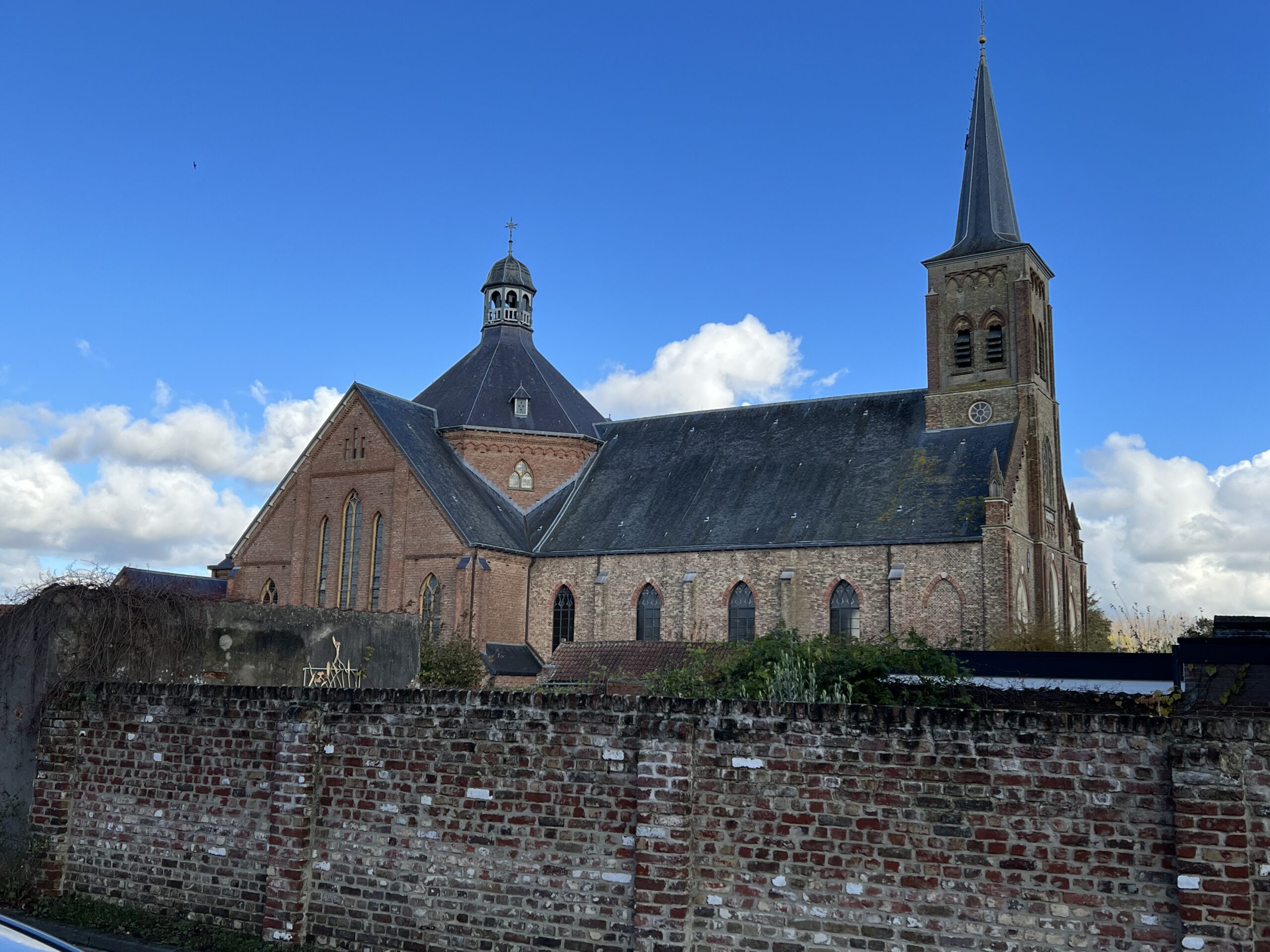
In the Zeelandic Flanders town of Aardenburg, on the border with Flanders, stands the Church of Our Lady of the Assumption. It was designed by 19th-century architect Petrus Soffers and built between 1850-1851. The church was consecrated by Johannes van Genk (1803-1874), Bishop of Breda (1869-1874), and who was previously the parish priest for this church. Within this church is the statue of Our Lady with the Inkwell. Many pilgrims come to this statue to greet Mary and to pray to Her. In 1925, the church was expanded to accommodate the growing number of pilgrims. The building is a national monument.
The name Our Lady with the Inkpot stems from a 13th-century legend. A condemned man is acquitted after his innocence is written on parchment, on the advice of Mary and Jesus. The statue of Our Lady with the Inkpot is reminiscent of a statue that stood in a church in Aardenburg in the Middle Ages. The church no longer exists as it was later demolished. The original statue refers to a miraculous event that took place in Aardenburg in 1273. The legend recounts the following event:
A poor wool weaver is accused of murder. It is said that he has killed a burgher, a free citizen. The man is sentenced to death by hanging. The condemned man continues to insist that he is innocent. However, he is not believed. On the evening before the execution of the death sentence, a priest visits him in prison. Again, the condemned man says he is innocent. The priest advises him to pray to Mary and place his hope in Her. The man follows the advice. In the night, he has a vision. Mary, the infant Jesus, and angels visit him. Jesus has writing materials, an inkwell, and parchment. Mary holds the inkwell, and her Son writes something on the parchment. The man receives the writing from Jesus. Jesus tells him that before the execution of the sentence, he must speak to the bailiff, the judge, high official, and hand him the parchment. Jesus promises the man that he will then be helped by God and his Mother. A few hours later, the man does as he was asked. The bailiff reads the text and immediately releases the man.
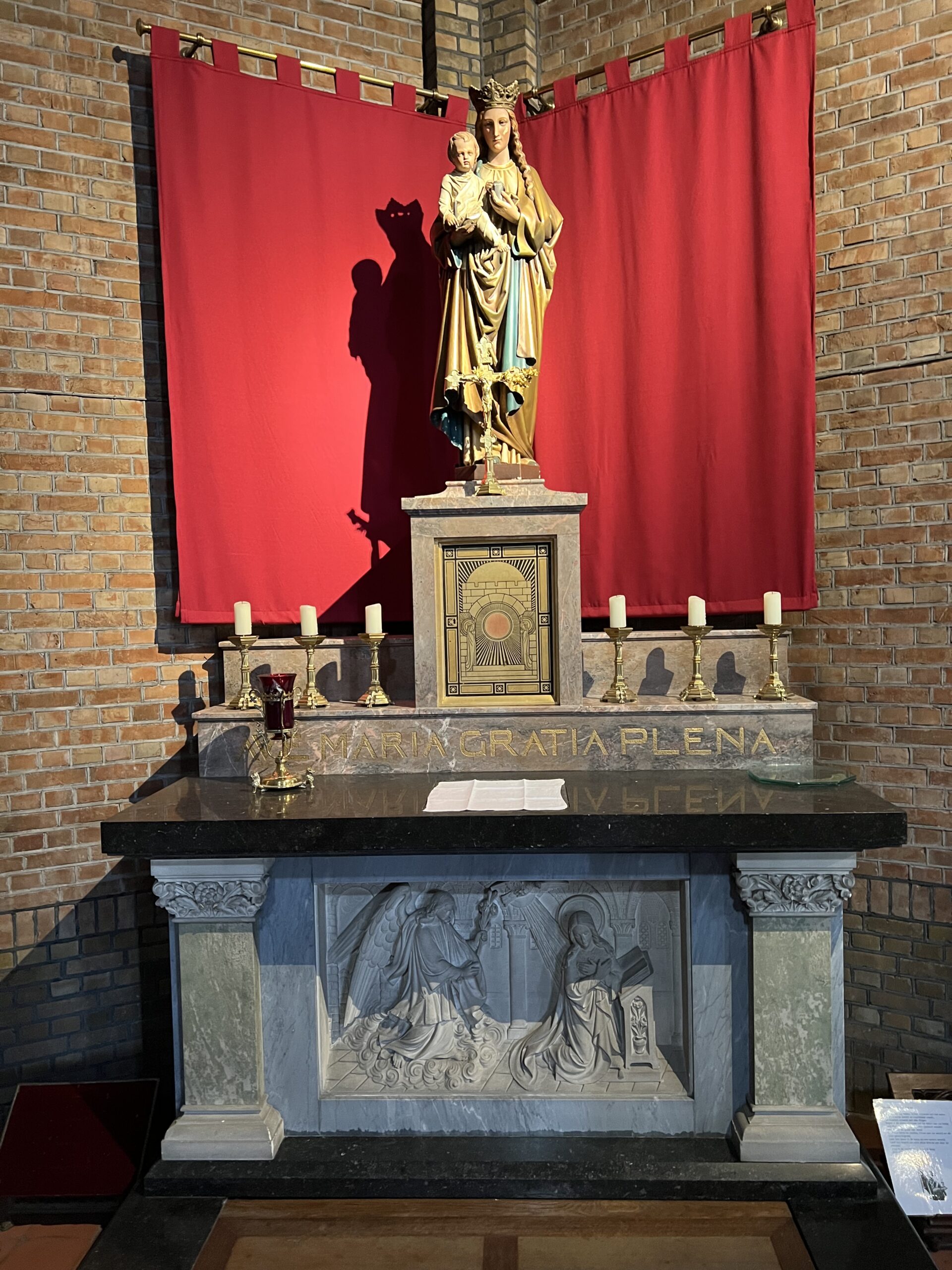
The statue of Our Lady with the Inkwell, dating from 1429, is a sanctuary for convicts and is also the patron saint of civil servants and writers. The original statue is carried in the Burgse Heilig Bloedprocessie (Procession of the Holy Blood of Bruges). Many have come to pray at the statue, including Philip the Good/Philip III of Burgundy (1396-1467), Charles the Bold (1433-1477), the English King Edward IV (1442-1483), and Philip the Handsome/Philip I of Castile (1478-1506). At that time, Aardenburg was an important trading city and, due to its waterside location, of particular strategic importance.
In 1604, public Marian veneration was stopped by the predominant Protestants during the Reformation. The church was then destroyed and demolished in 1625. The famous statue of Mary was timely brought to safety in Bruges.
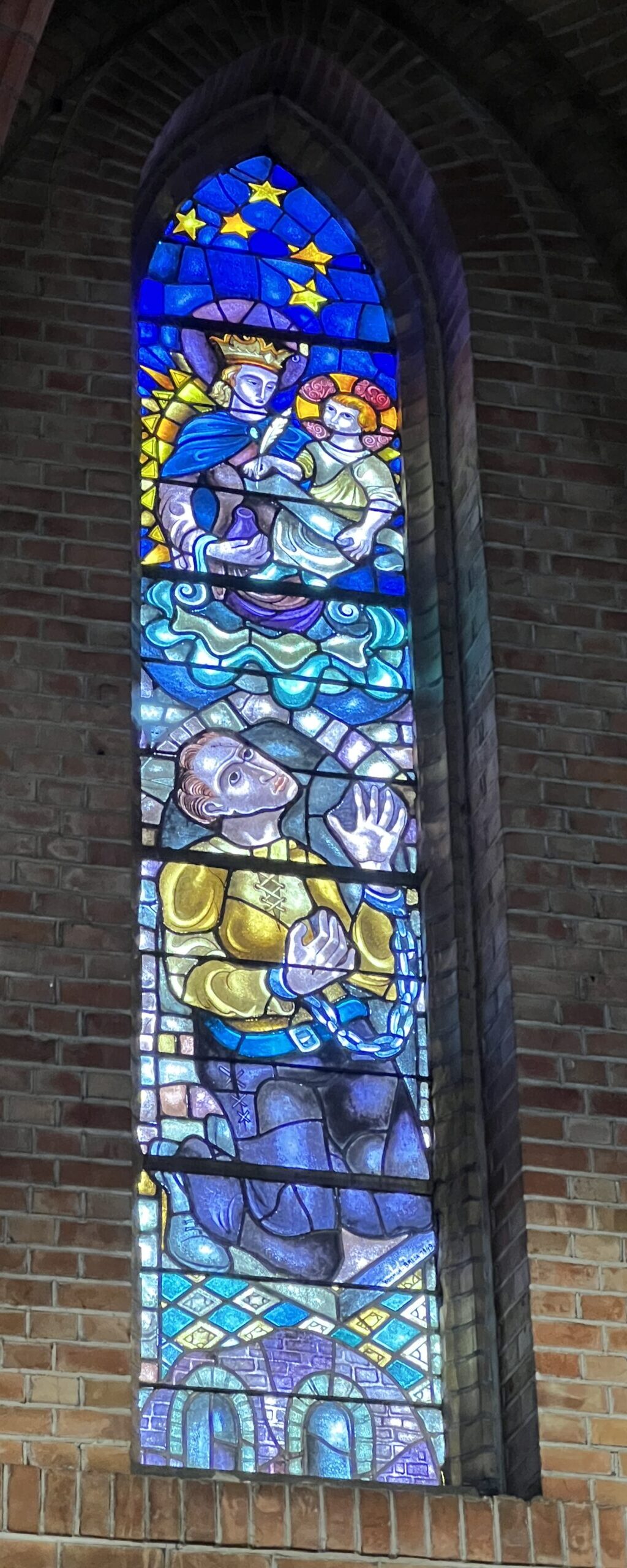
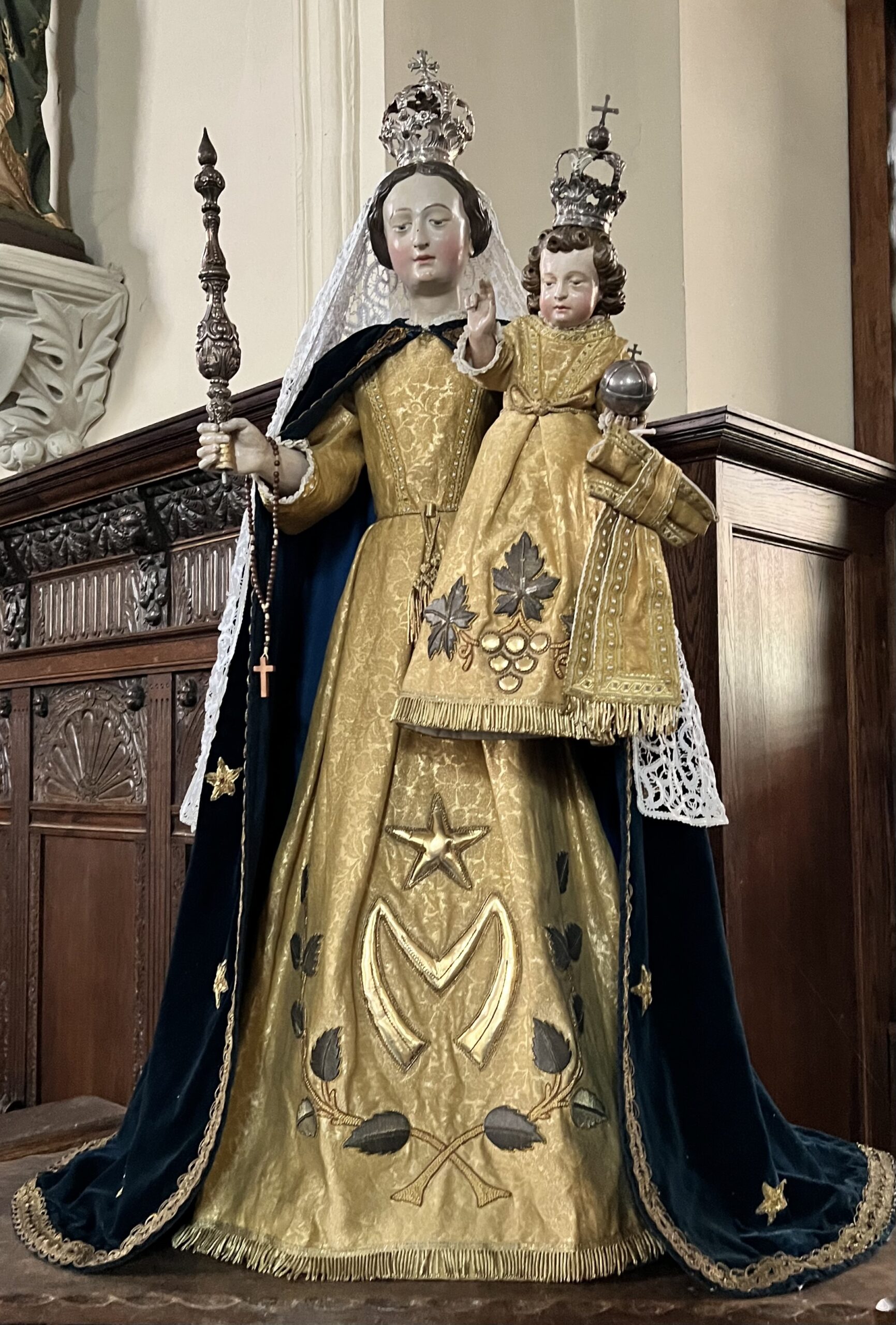
Only in 1804 was there again freedom to openly profess one's faith. At the end of the 19th century, a new statue of Our Lady with the Ink Pot was brought to Aardenburg. A statue was also placed in the front facade of the church. The statue of Our Lady with the Ink Pot is made of wood and is also polychromed. The statue is also referred to as Our Lady of Aardenburg. The statue was made in 1875, based on the model of the Bruges statue from 1853. On the original statue, the Child Jesus is sitting on Mary's left arm. This was only discovered after 1900. The current statue depicts Jesus on his Mother's right arm. In the stained-glass windows from 1948 at the Marian altar, the statue is depicted correctly.
In 2023, the celebration of 750 years of Aardenburg as a pilgrimage city (1273-2023) was held.
Mid-June 2026 saw the immediate closure of the pilgrimage church. The reason behind this is an ongoing dispute between the Parish Core Committee South and the AV (Aardenburg Viert) working group on one side, and the board of the Saint Andrew Parish and the Diocese of Breda on the other. The closure by the diocese is for one year to allow tempers to cool and to subsequently reach agreements. Fortunately, pilgrims will still be able to visit the statue of Our Lady with the Inkpot. The statue has been moved to a separate chapel within the church, which is accessible to visitors.
Pilgrimage site
The church is visible from afar due to its tall tower in the flat Zeeland-Flanders landscape.
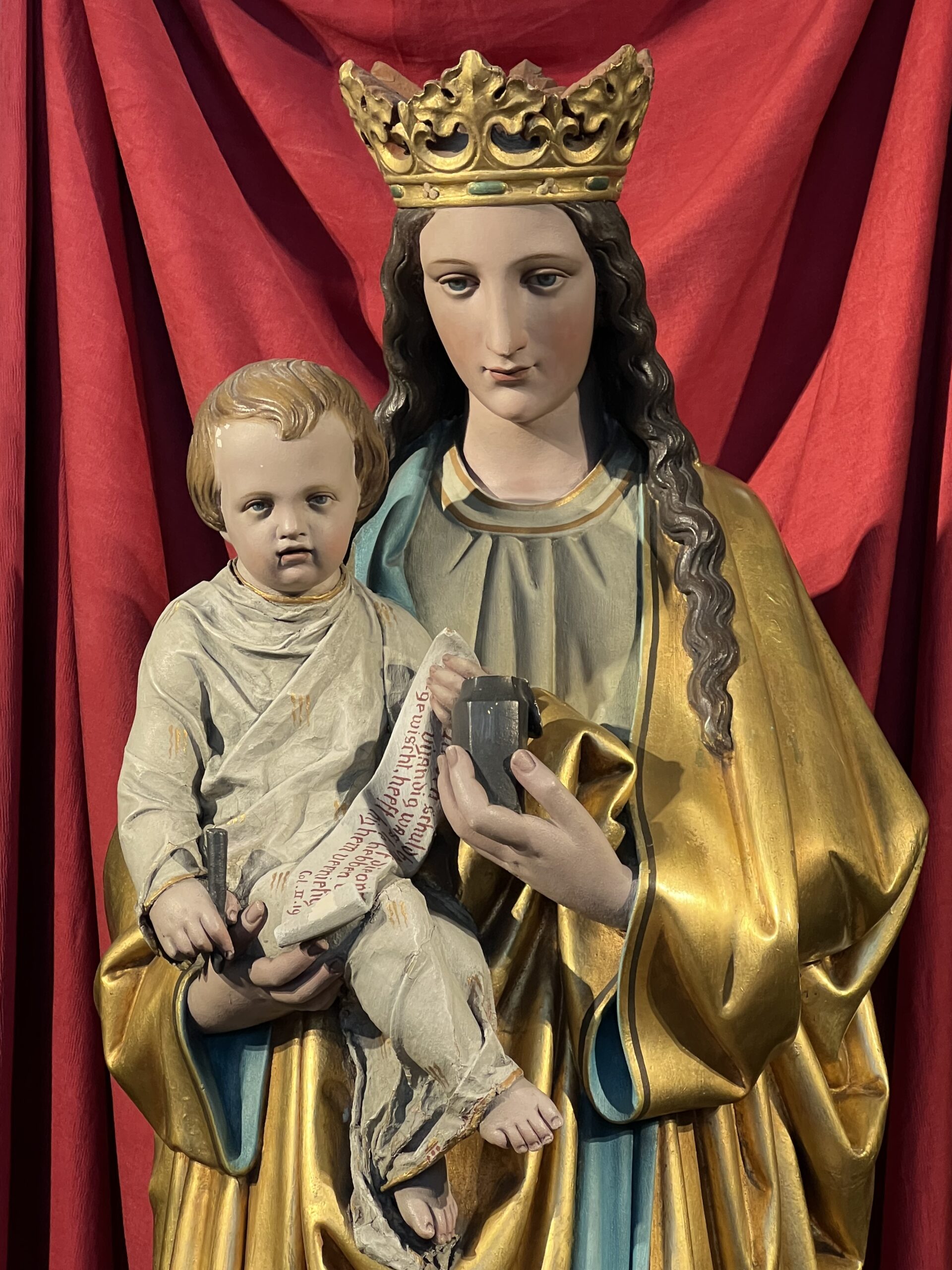
What's special about this church is that here stands the statue of Our Lady with the inkwell.
In the church, many statues can be seen, including a Lourdes statue. Mary is also depicted against a pillar.
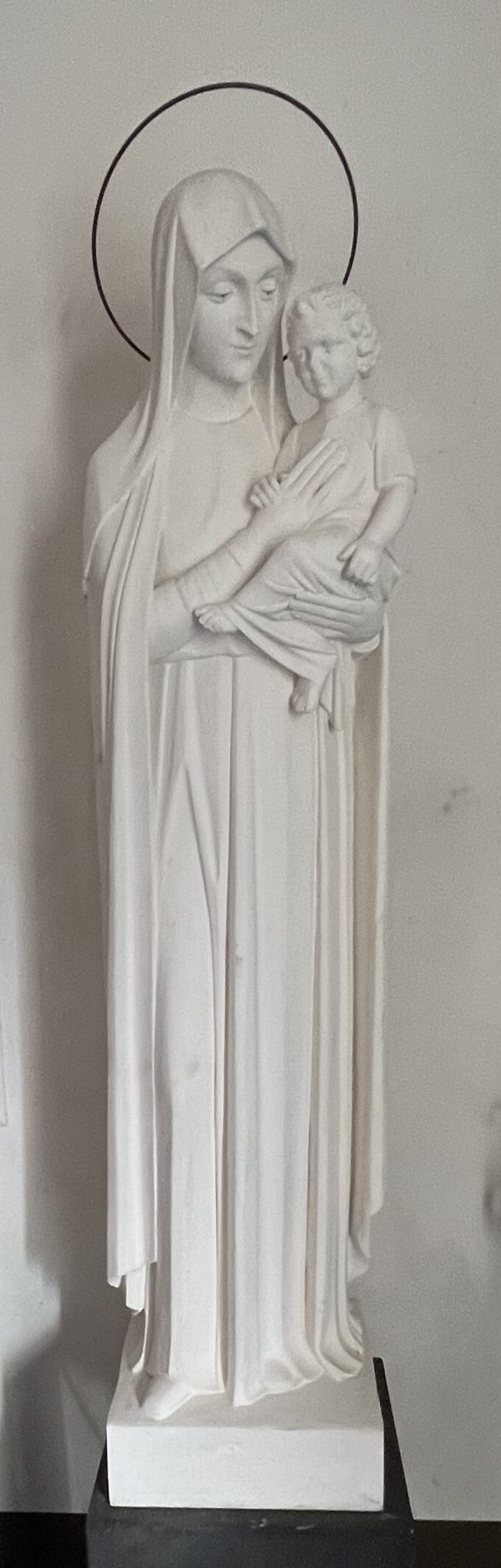
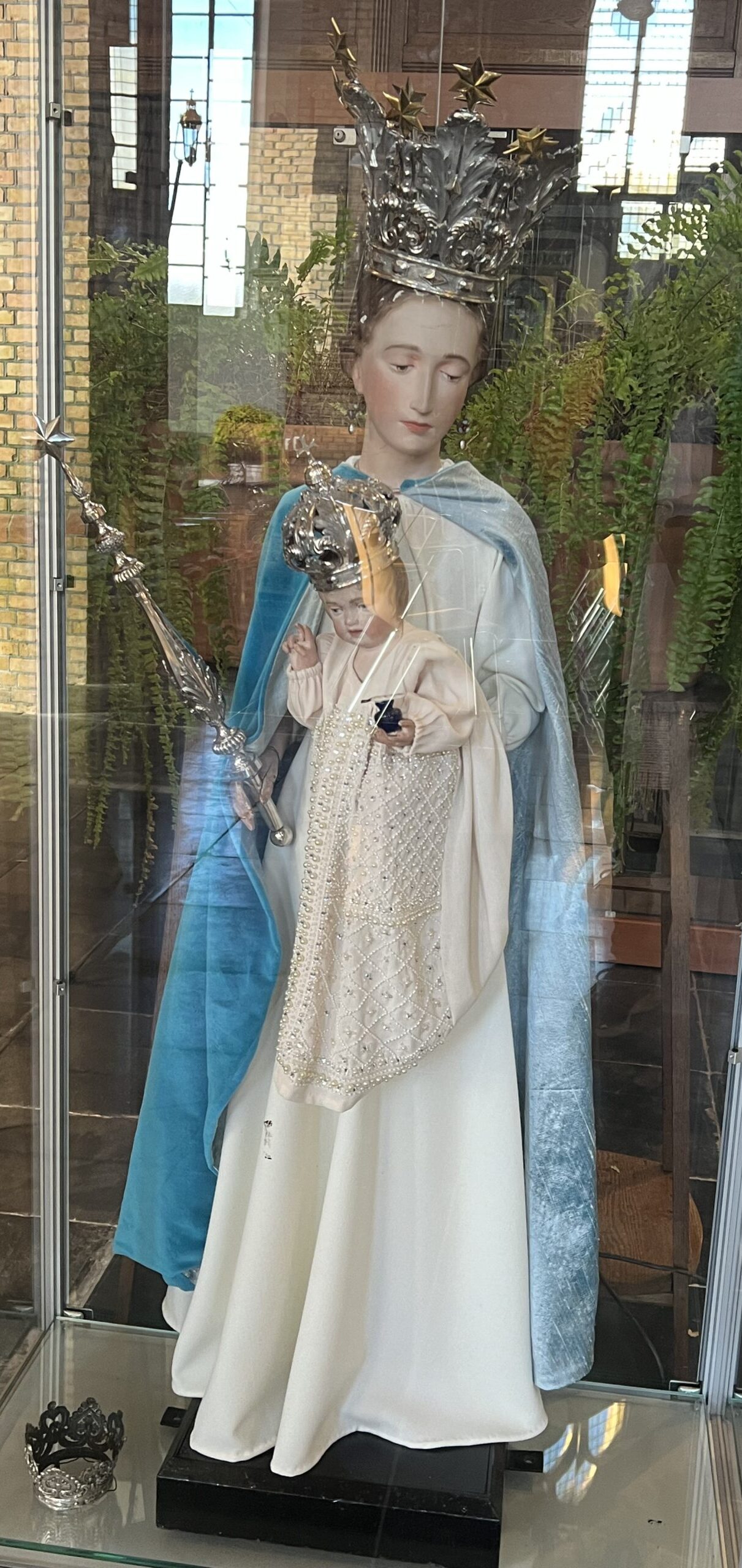
The Virgin Mary and her Child are also depicted here entirely in white.
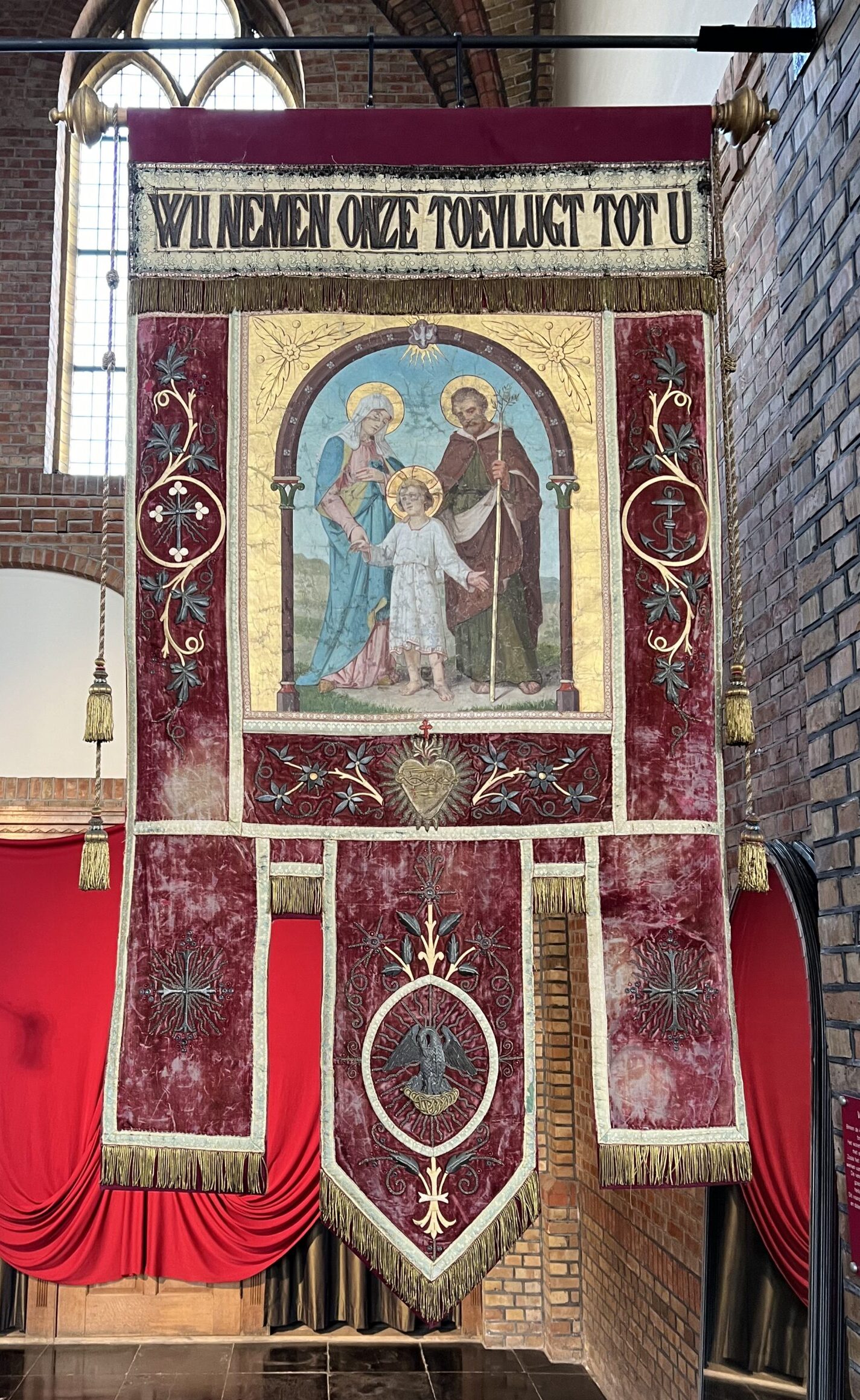
The stained-glass windows refer to the history of the legend of the inkwell. In the church hang several large banners.
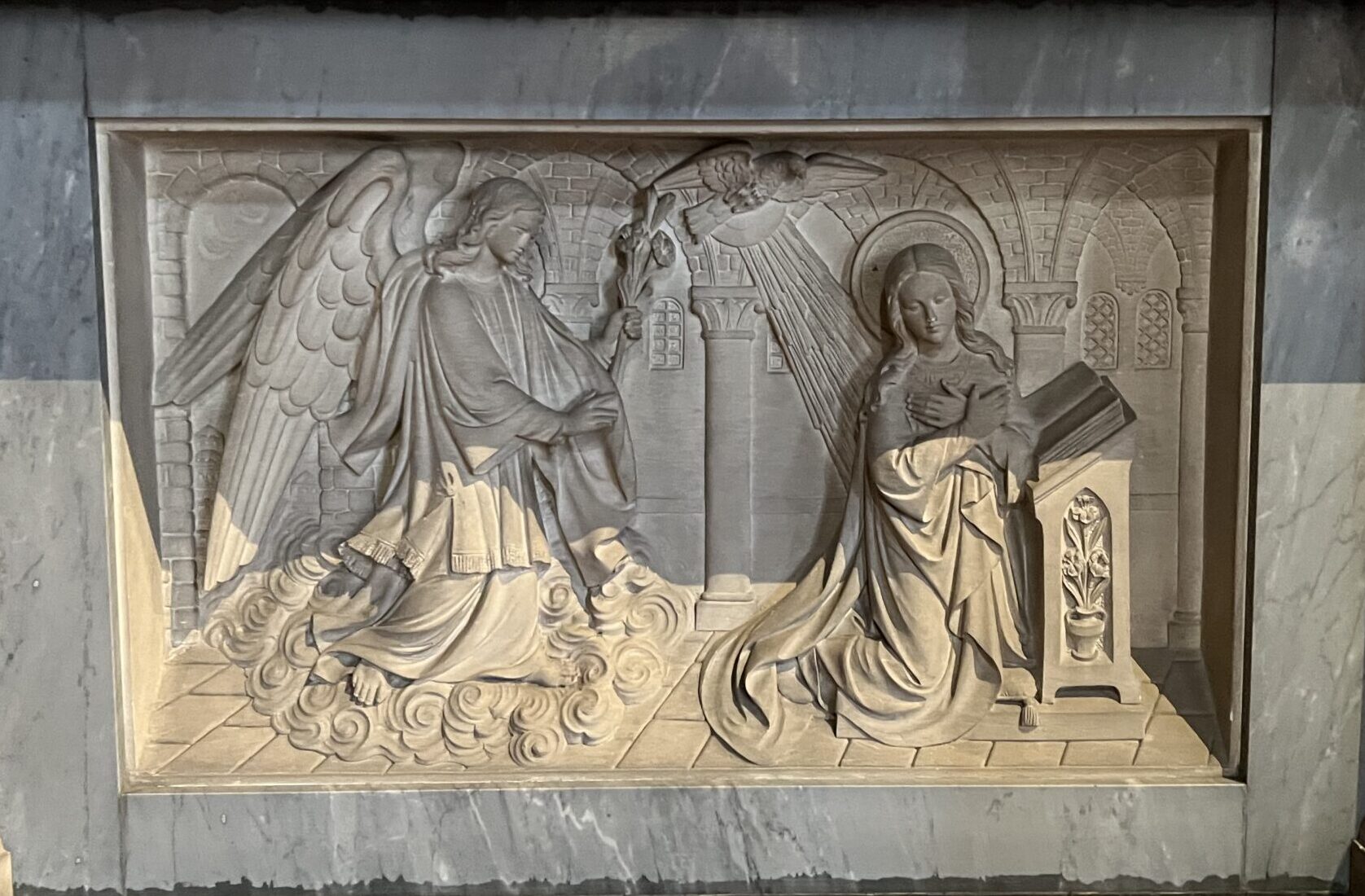
Under an altar is the image of the angel visiting Mary, which changes the young woman's life.
ACCESSIBILITY
Aardenburg is located in the west of Zeeuws-Vlaanderen. The Church of the Assumption of Saint Mary is located at Weststraat 80, 4527 BV Aardenburg.
Current information can be found at
https://kerkpagina.nl/kerk/heilige-maria-hemelvaart/.
Experience
The Zeelandic Flanders town of Aardenburg has a special pilgrimage site, namely that of Our Lady with the Ink Pot. The effigy of this is seen several times in the church, I've read. The journey goes to Aardenburg, which lies in the west of Zeelandic Flanders, near the border with Flanders.
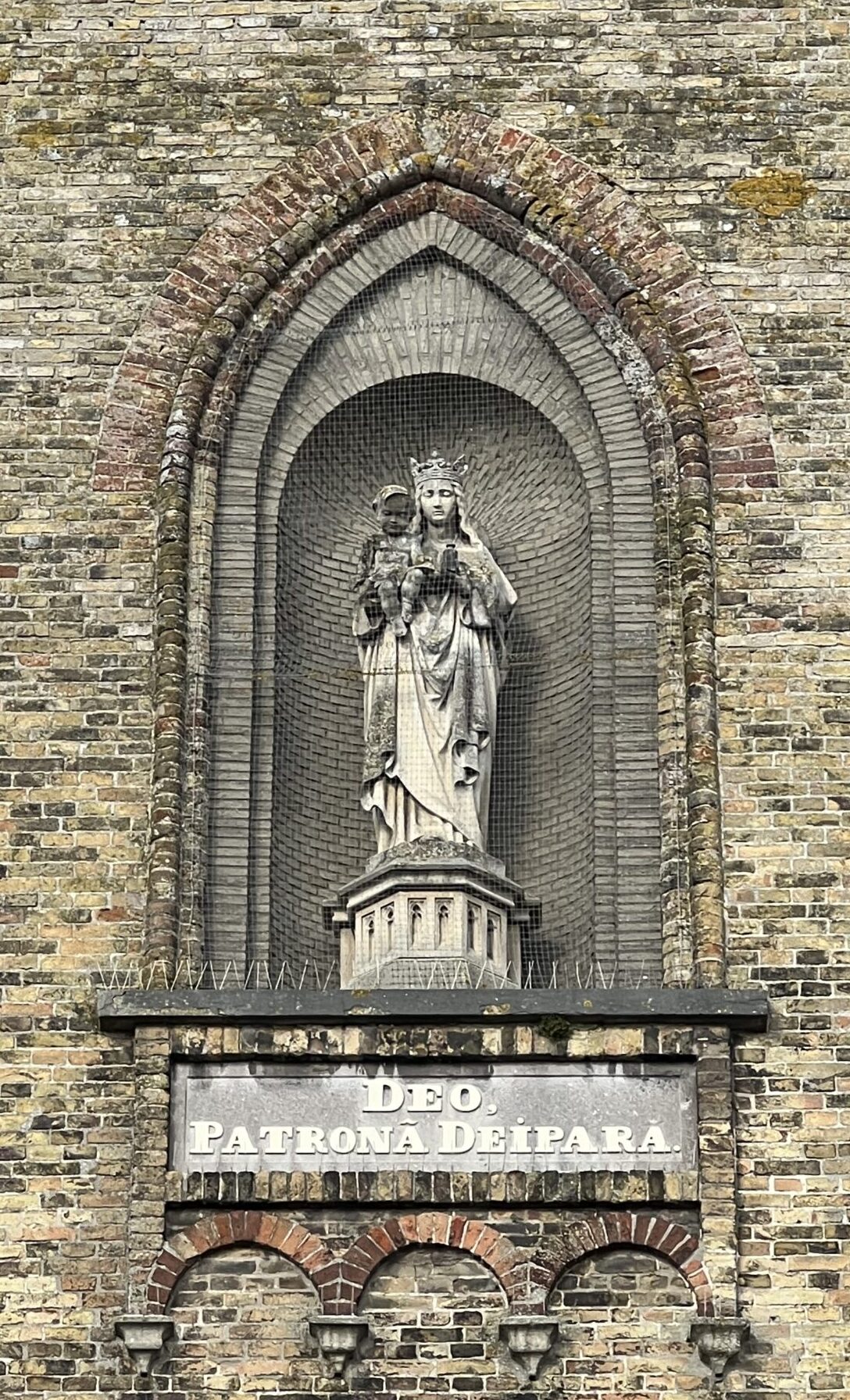
The front of the church impresses me. An impressive facade with a stately tower and in the niche, above the entrance gate, stands a depiction of Mary. It is Our Lady of Aardenburg. Our Lady does a lot of preparatory work for God, it states in Latin beneath the image.
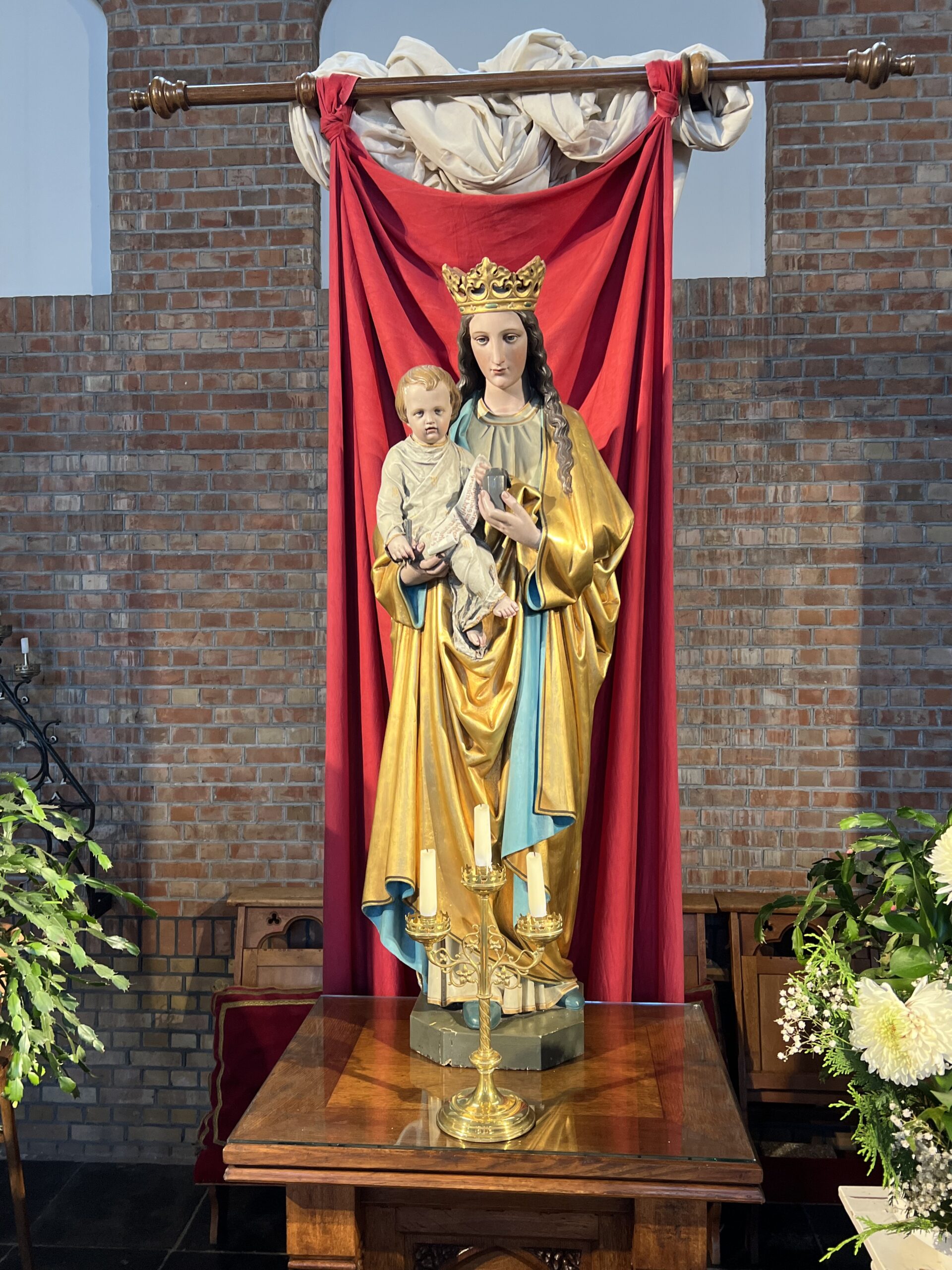
In the church, there are signs explaining the legend of the inkpot and the building. The statue of Our Lady with the inkpot reminds me of the legend from centuries ago.
In the church, there is also a stake Madonna, and this effigy has been carried in processions. Mary is behind glass in a display case.
In the church, I also see a statue of Our Lady of Lourdes, which immediately reminds me of the visits I've made to Mary in the famous Grotto of Lourdes in the south of France.
Colourful stained-glass windows refer to history with the inkwell, allowing a worker to escape conviction.
After visiting Maria with the inkpot, I'm walking through Aardenburg and suddenly I have a beautiful view of the side of the church. What a lovely place this is!
Environment
Walking and cycling tours can be enjoyed in and around Aardenburg. Near the pilgrimage church stands the monumental Sint-Baafskerk. Bruges, a city steeped in history, is 32 km from Aardenburg, and the Flemish seaside resort of Knokke is 16 km away. The fortified town of Hulst is 60 km eastwards in Zeeuws-Vlaanderen. Cadzand-Bad is 18 km from Aardenburg, and the tourist town of Sluis is 7 km from Aardenburg.
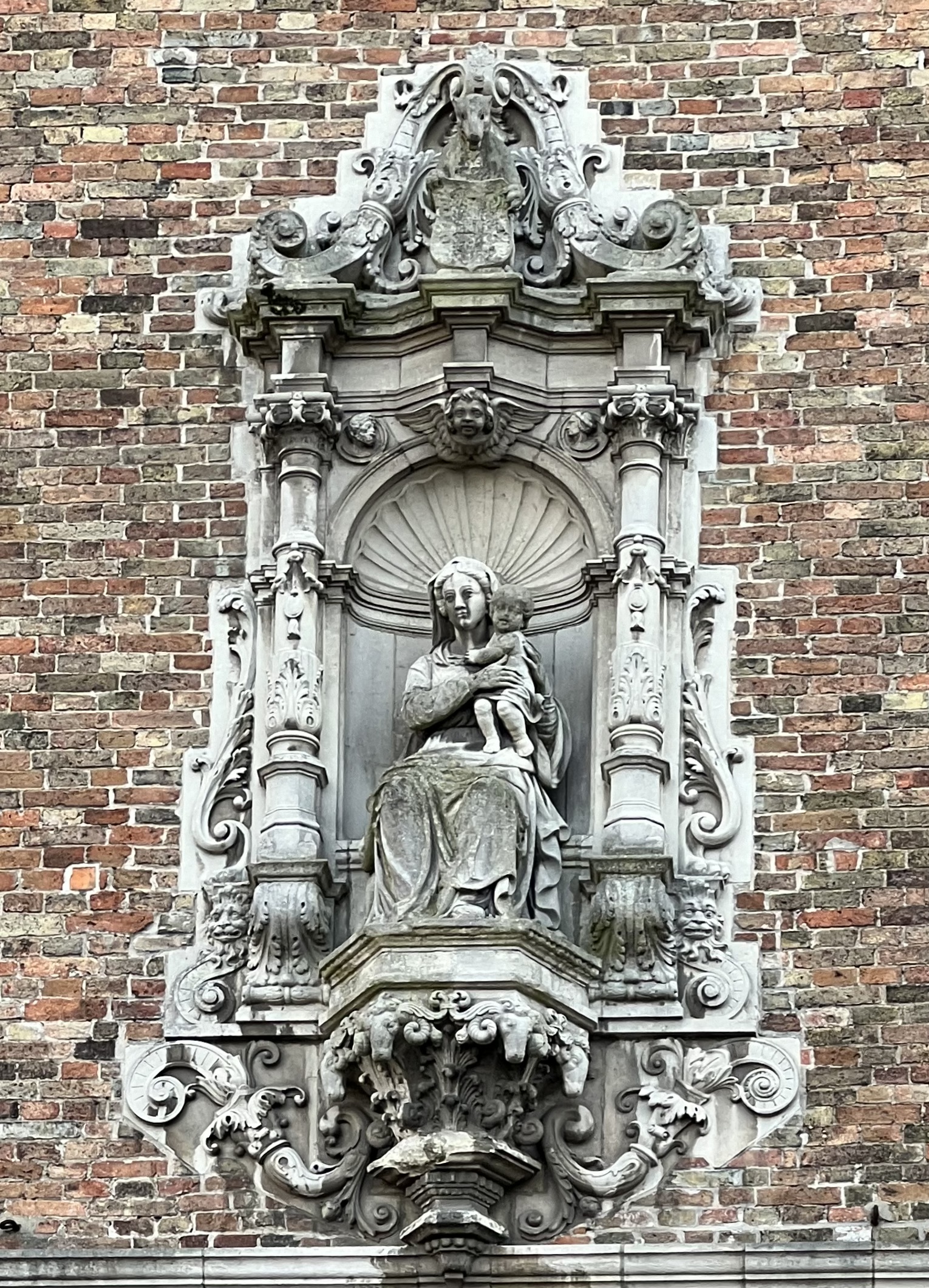
In Bruges, you'll find the Belfry, among other sights. This monumental building is located on Bruges' Market Square. Above the entrance arch, in a niche with Renaissance-style detailing, is a depiction of Mary and Child.
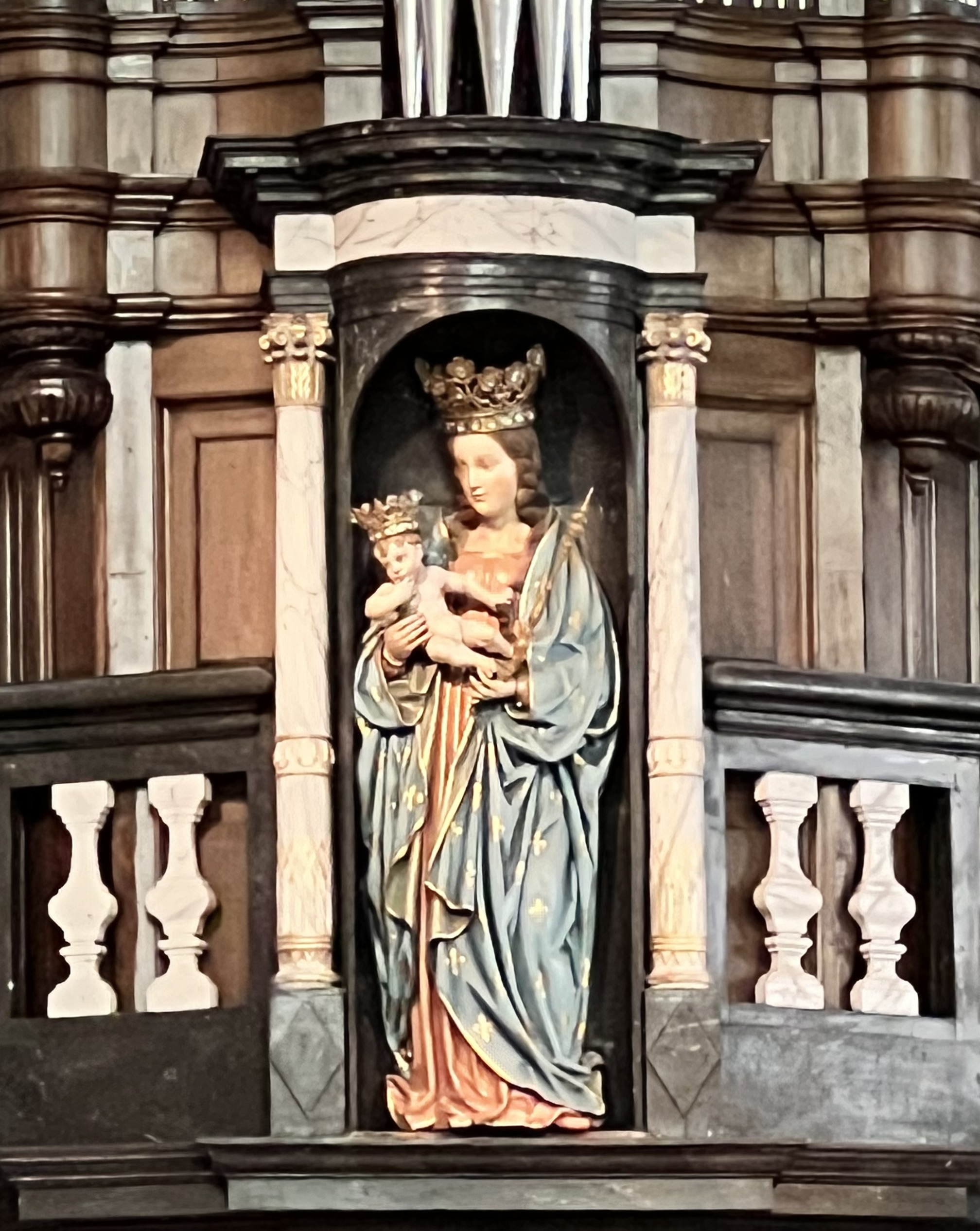
In the Church of Our Lady on the Dijver 12 in Bruges, there is much to be seen of Mary, including a statue of Mary near the organ.
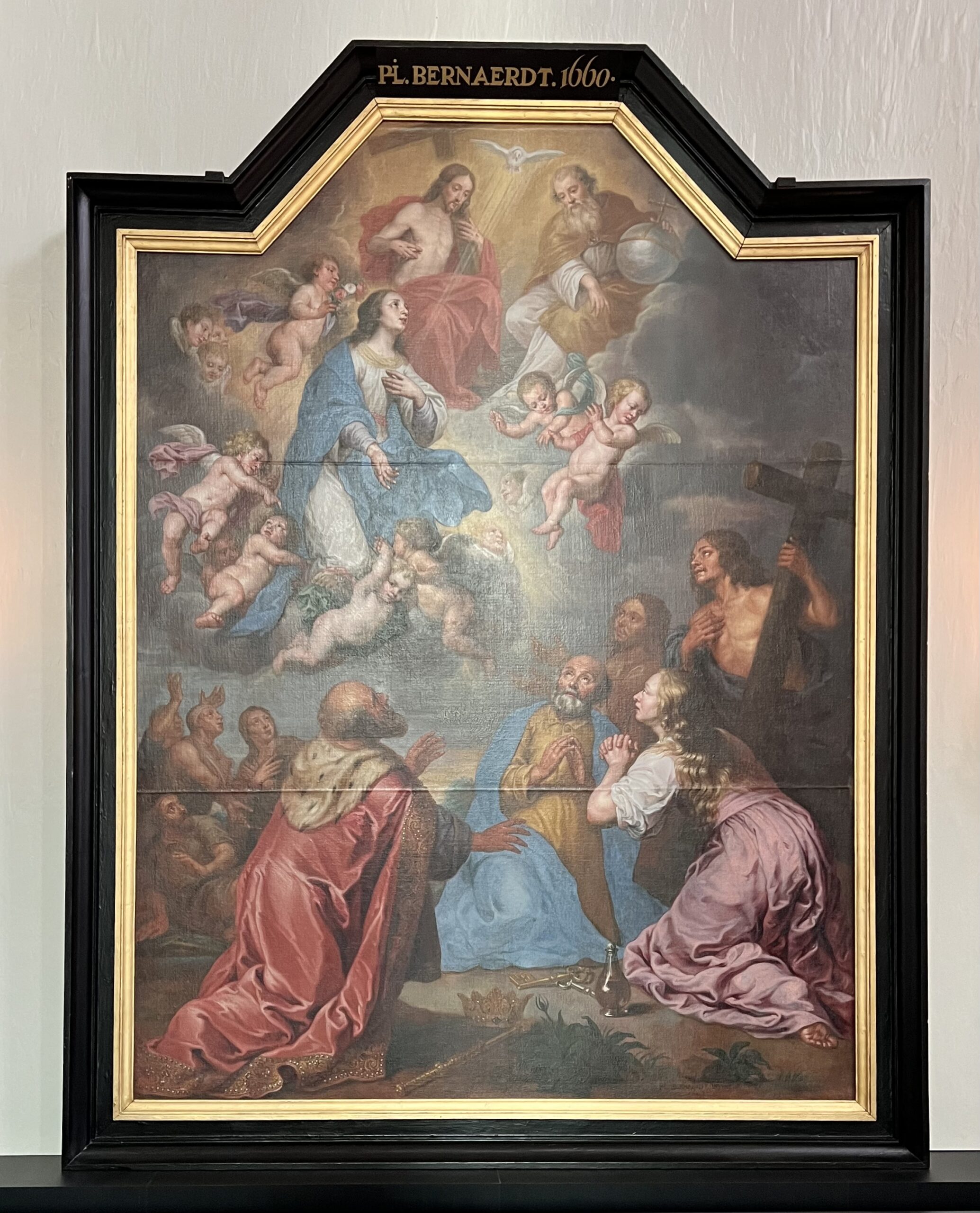
In this church hangs the large painting “Mary, Refuge of Sinners” from 1660 by Philippe Bernaerdt/Bernaerts (c. 1620-1683).
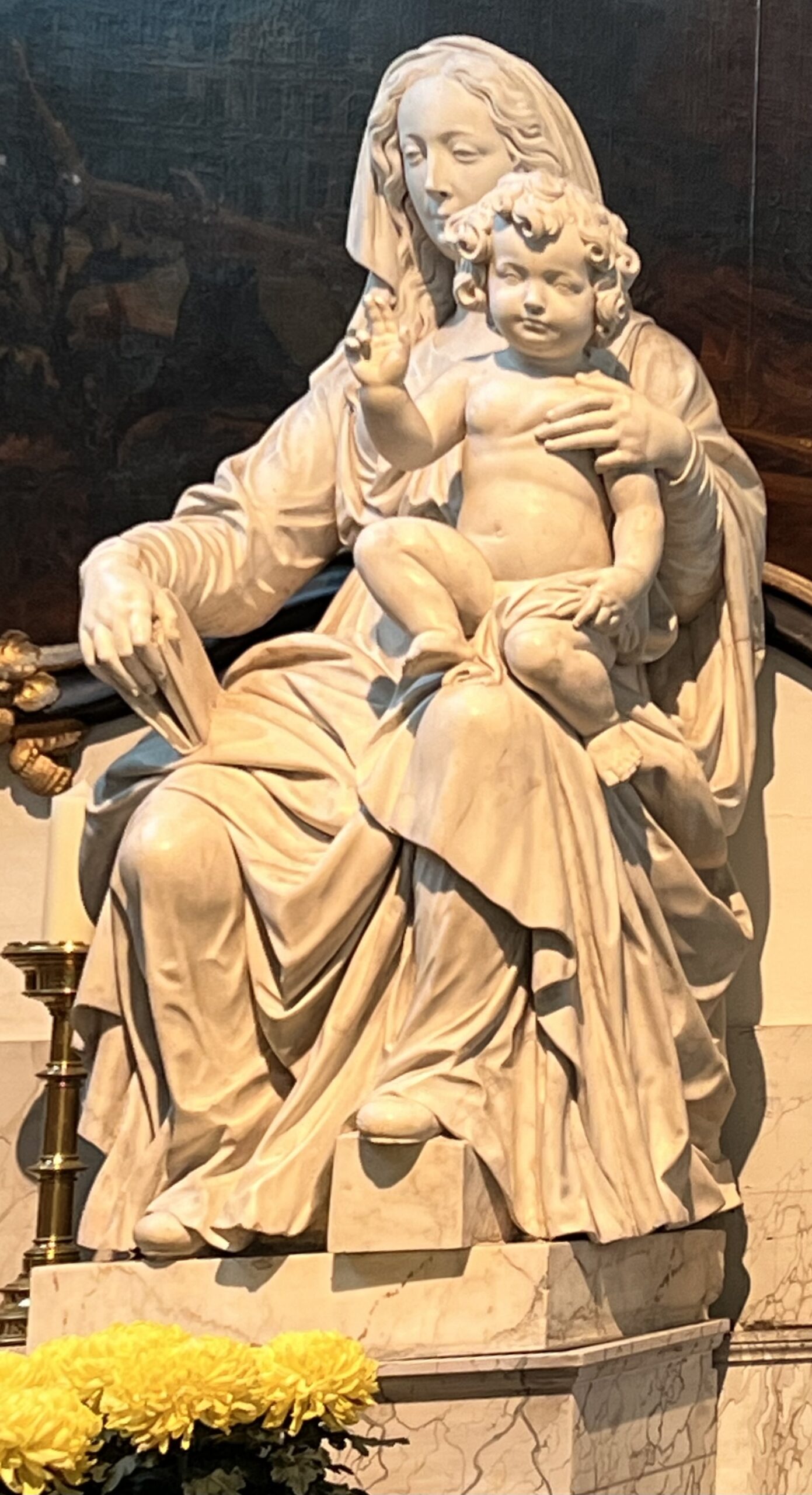
A large statue of Our Lady with Child, dating from 1763, is also in the church, which is dedicated to Mary. The artwork is attributed to Pieter Pepers (1730-1785).
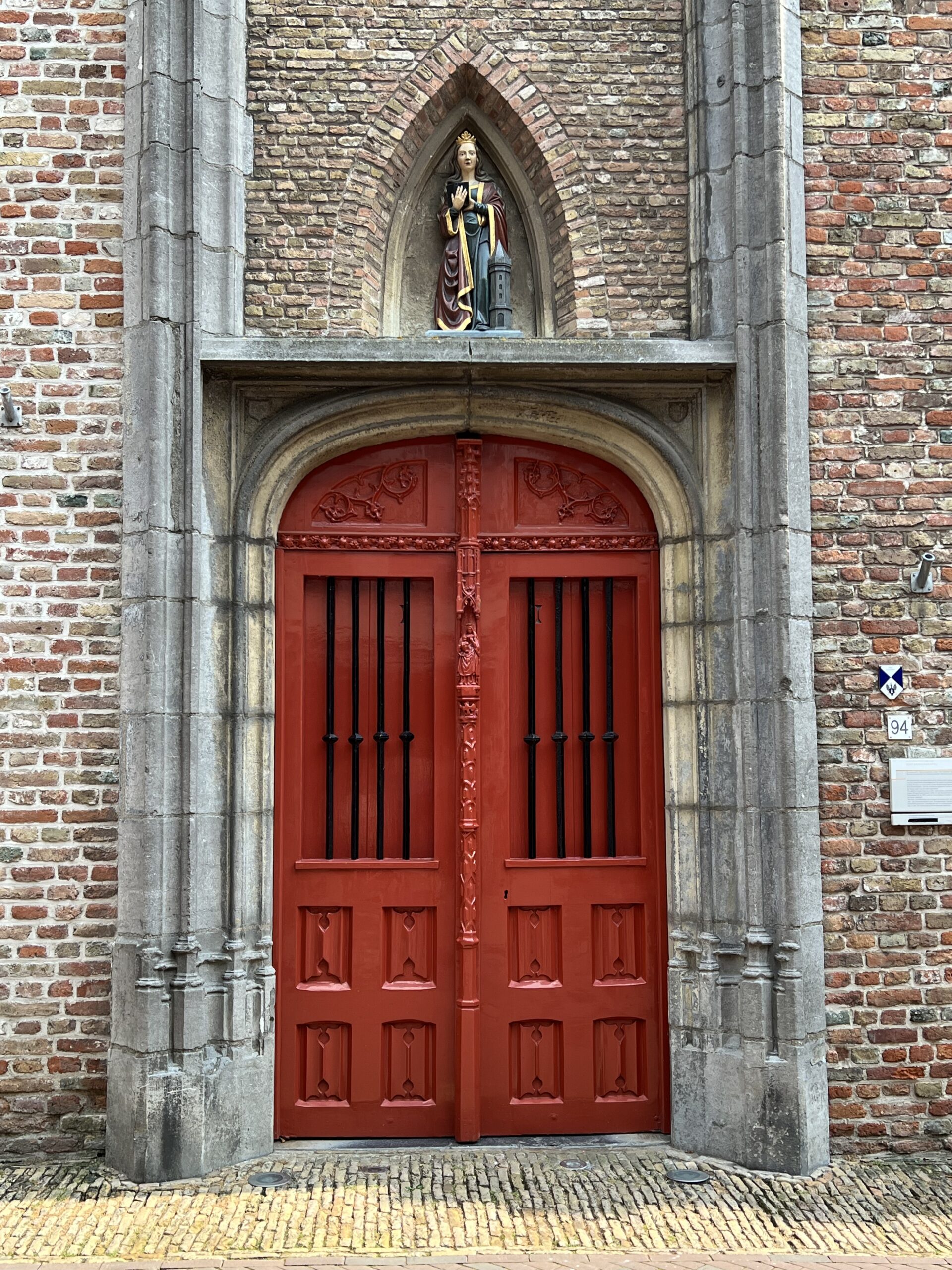
From Middelburg, the capital of the province of Zeeland with its diverse range of shops, it is 68 km to Aardenburg, via the Westerscheldetunnel. In the historic city centre of Middelburg on Walcheren, the Sint-Barbara chapel, or Gasthuiskerk, is located at Lange Delft 94. This chapel was built in 1493 as part of the Onze-Lieve-Vrouwegasthuis (Our Lady's Hospice) and is dedicated to Saint Barbara. The hospital complex was demolished in 1866, but the church was preserved. Over the centuries, the building has had various owners, and today it is a Protestant church belonging to the Reformed Churches in Middelburg.
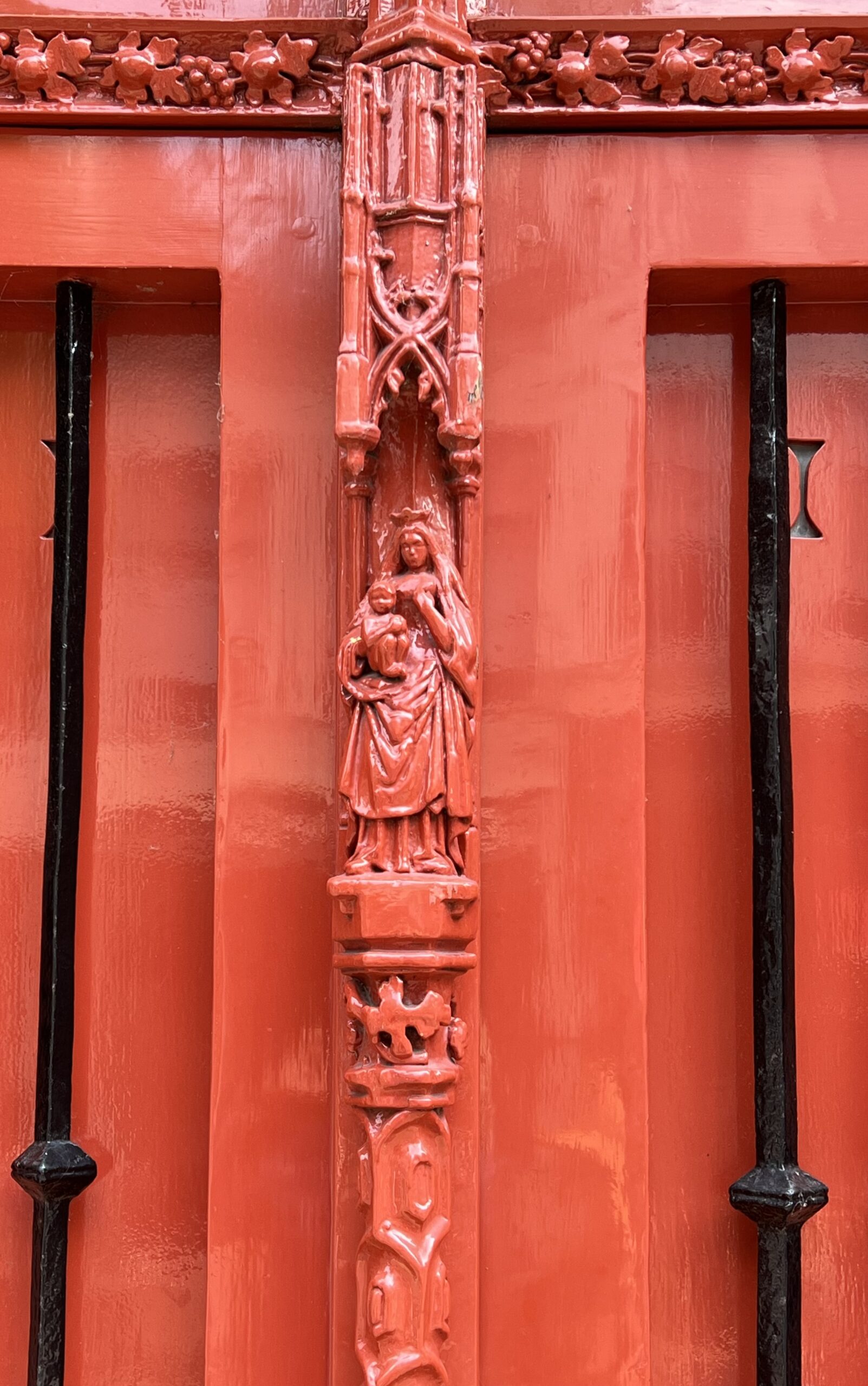
In 2018 the exterior was restored and in 2020 the image of Saint Barbara was placed above the entrance gate. The oak image was made by Lein Kaland (1954), who worked on it for 9 months. This entrance has a door knocker, with a wood-carved statue of Mary and Child on a canopy made of wood. The image of the Madonna is over 500 years old and the entrance gate is one of the oldest doors in the Netherlands.

Also worth visiting is the Saint Nicholas Church with its beautiful depictions in Waterland-Oudeman, West Flanders. This hamlet is located just 16 km from Aardenburg, right on the border of Flanders/The Netherlands. The church was built between 1670-1672. Inside the church, you can see stained-glass windows, predominantly featuring images of Our Lady. These are large, sponsored stained-glass windows dating from around 1922. The church also houses a crowned statue of Mary. The church, with its partly walled churchyard, is a protected monument. The history of the village, which has a Saint Nicholas Church, dates back to the floods and dyking in the 14th century.
~~~

 Nederlands
  English (UK)
  Deutsch
  Français