History
The region in and around Le Puy-Notre-Dame has been inhabited since prehistoric times. Activity has been rife in the region for centuries BC.
The word “Puy” means “rock” and comes from the Celtic word “peuch” which means “small mountain”. In the 11th century, this rock was known as “Mary's mountain”.
In the 12th century, there was a simple, small mountain chapel with the Latin name “Podium Beatae Mariae”, which in Dutch means “elevation of the blessed Mary”. This was a donation from the noble family of the Count of Poitou to the Benedictines of Montierneuf, near Poitiers. This donation was confirmed by Callixtus II, Pope from 1119 to 1124, born as Guido of Burgundy (1060-1124). The chapel was destroyed by war but was rebuilt.
The current church is Gothic in style and its shape is inspired by the church of Poitiers. Construction began in 1154 and was completed in 1243. In the early 15th century, the church was extended to continue to welcome the large number of pilgrims.
“Le Puy-Notre-Dame”, thus “Le Puy” with the addition “Notre-Dame”, owes its name to the relic, namely the sacred girdle of the Virgin Mary.
During the Crusades, knights returned with relics from the Holy Land. Relics were traded there at high prices. This was also the case with the girdle of Mary (Sainte Ceinture), which was consecrated by its wearer, namely Our Lady. The question is whether strips of Eastern fabric came into contact with later saints, including Mary. In 1101, Guillaume IX (William IX, 1071-1127) participated in a Crusade and brought back the girdle of Mary. He was Duke of Aquitaine, Poitiers, and Gascogne (1086-1126) and Count of Toulouse and Rouergue (1110-1120). This nobleman ensured the creation of a Marian shrine by having the girdle displayed.
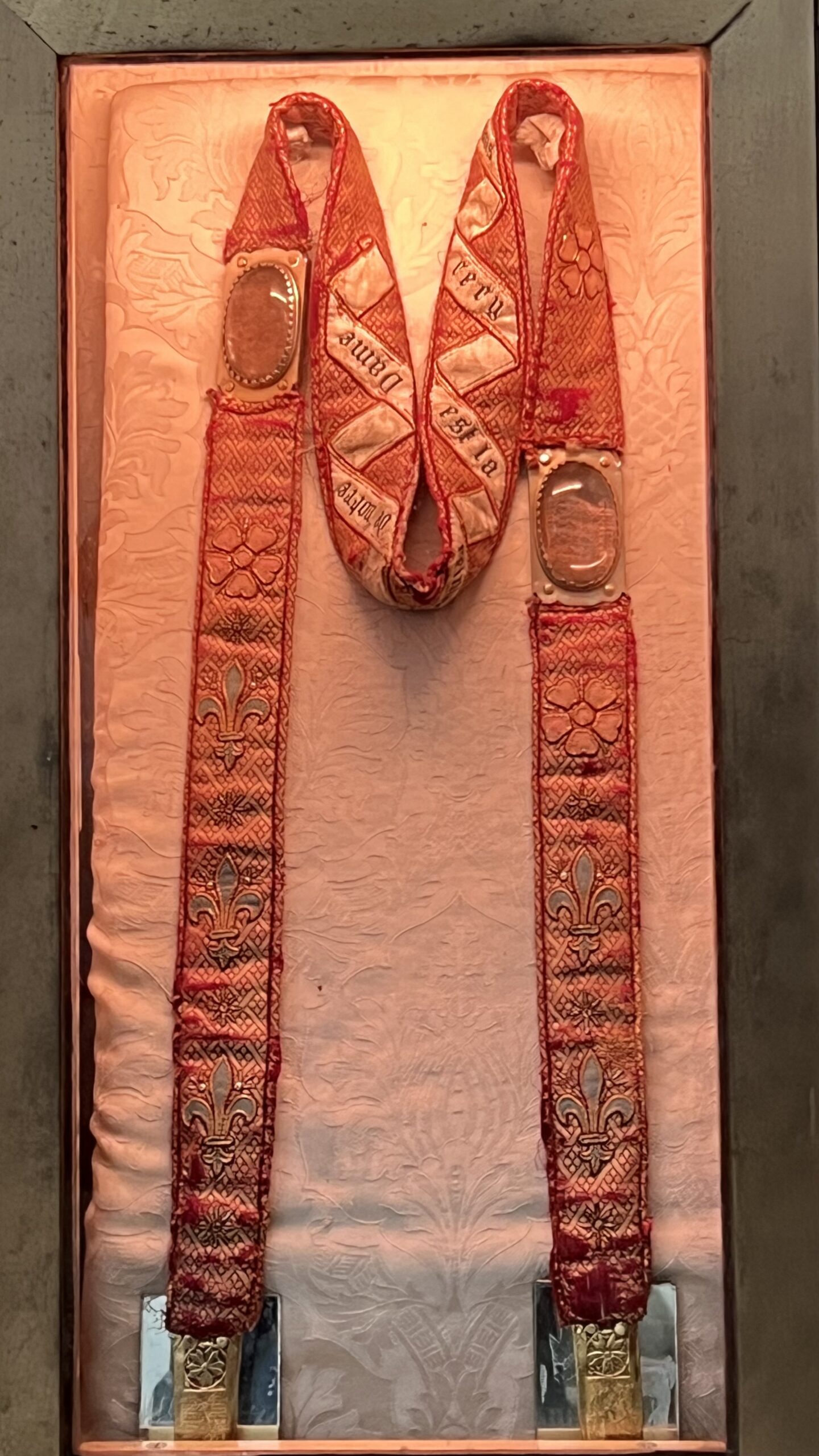
In 1391, it was confirmed that a girdle of Mary was present in the church of Le Puy-Notre-Dame. This decorative girdle is approximately 150 cm long and consists of three bands of crimson damask, joined by two gilded silver medallions. Each medallion is approximately 6 cm long and almost 4 cm wide. Within each piece of jewellery is a fragment of cloth with crystals, which is said to be part of the girdle of Mary. The medallions are dark red and the cloth within them is finely and densely woven. These were a gift from Louis XI (1423-1483), King of France (1461-1483). The king frequently visited the pilgrimage church. He not only made many gifts but also granted privileges to the parish of Le Puy-Notre-Dame. King Louis XI established a royal chapter of canons and chaplains, modelled on the Sainte-Chapelle in Paris. As a result, the large building became a collegiate church from 21 January 1481.
In 1562, at the start of the religious wars, treasures disappeared from the church.
A special power was attributed to the belt: a successful delivery for women who had been expecting for some time. This became known even at the royal court. Louis XIII (1601–1643), King of France (1610–1643), was married to Anne of Austria (1601–1666), Queen of France (1615–1643) and Queen of Navarre (1615–1620). King Louis XIII brought the relic to his pregnant wife Anne in 1638. In that year, their son was born, who was under the protection of the relic. This was Louis XIV (1638–1715), King of France (1643–1715), known as the Sun King. At birth, Louis XIV was named “Dieudonné” (God-given).
In the Middle Ages, the site became a well-known destination for pilgrims wishing to venerate the girdle of Mary. Many of them were on pilgrimage to Santiago de Compostela in Spain.
During the French Revolution (1789-1799) the pilgrimage site was given a new name: Puy la Montagne (rock of the mountain). During the turbulent years, valuables, including the relic, were stolen. In 1802, the valuable relic returned to the church.
The Spanish, devoutly Catholic, Eugénie de Montijo (1826-1920) has also come to the Cincture of Mary to pray there. She is the wife of Napoleon III (1808-1873) during the years 1853-1873 and therefore Empress of France (1853-1871).
It is marvellous that the precious belt withstands all adversities, such as destruction and plunder.
Pilgrimage site
Beneath the ground at Le Puy-Notre-Dame lie some 100 kilometres of tunnels, which were created at a time when the walled town was a strong fortress. Since the end of the 19th century, the underground passages have been used for mushroom cultivation.
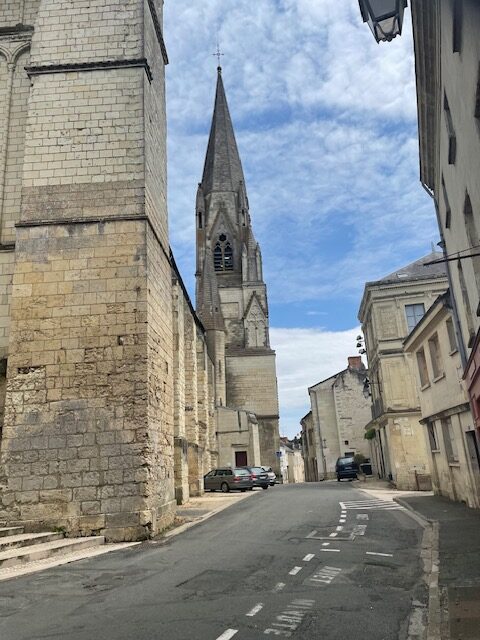
Le Puy-Notre-Dame is situated in a winemaking region spanning 800 hectares. It is an important location for the production of AOC Saumur wine. The addition of AOC stands for “Appellation d’origine Contrôlée,” and this has been a standard for defining quality wine since 1919.
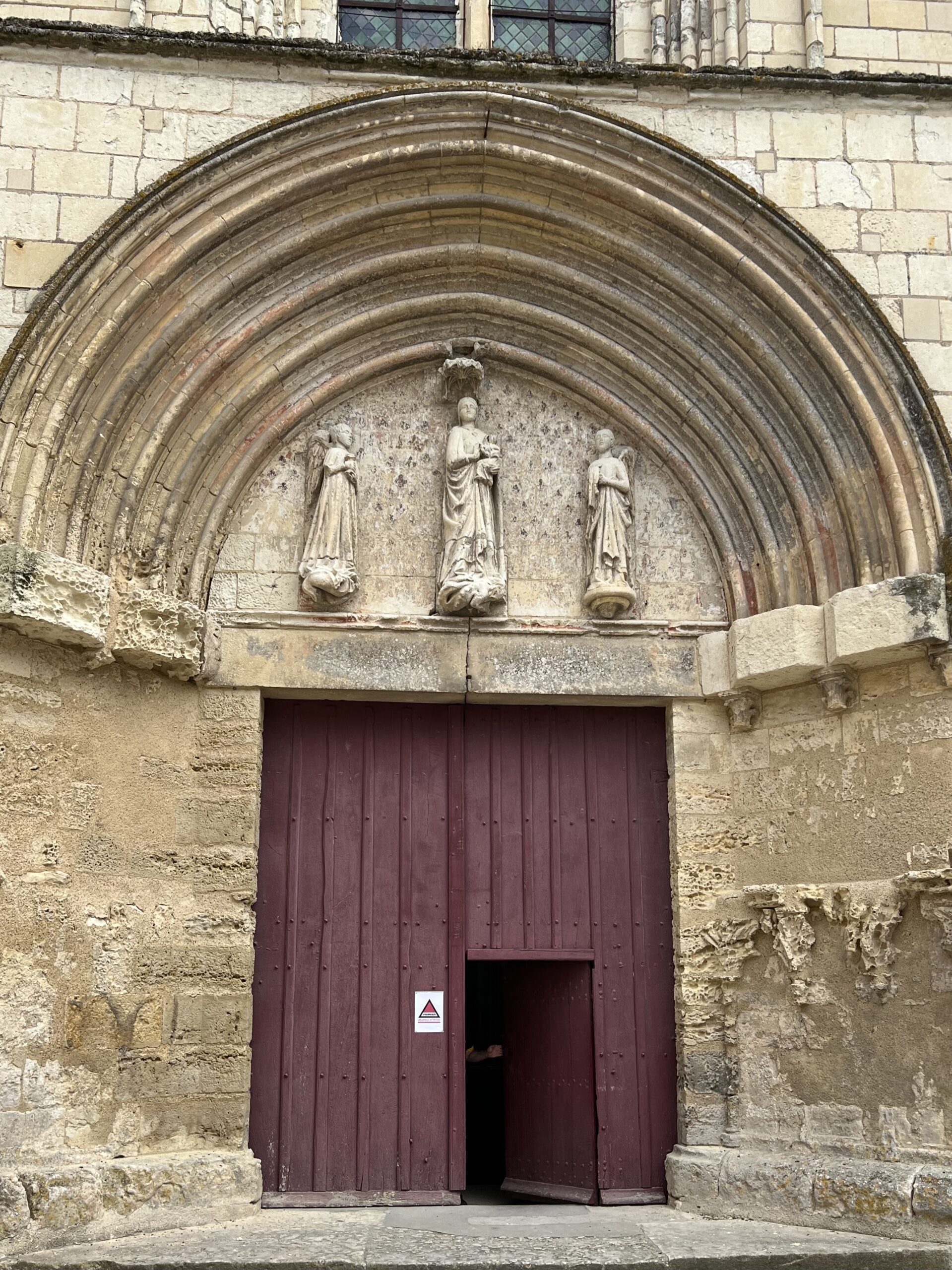
The large church stands in the middle of the village, which has a population of over 1000 and is situated at approximately 100 metres above sea level. It was once entirely walled. The façade is mainly formed by two robust towers and a large gate with 5 arches. On the tympanum, there is a large statue of Mary and her Child. Mary is trampling the dragon, and two angels surround Her.
The pilgrimage church is 50 metres long and has three slender naves.
In the church, the precious relic of Mary can be seen. It is a girdle, which is displayed in a wall cabinet. Many pilgrims come to view it and stand by it to pray. Women with an unfulfilled desire for children also come to pray at the red band to become pregnant.
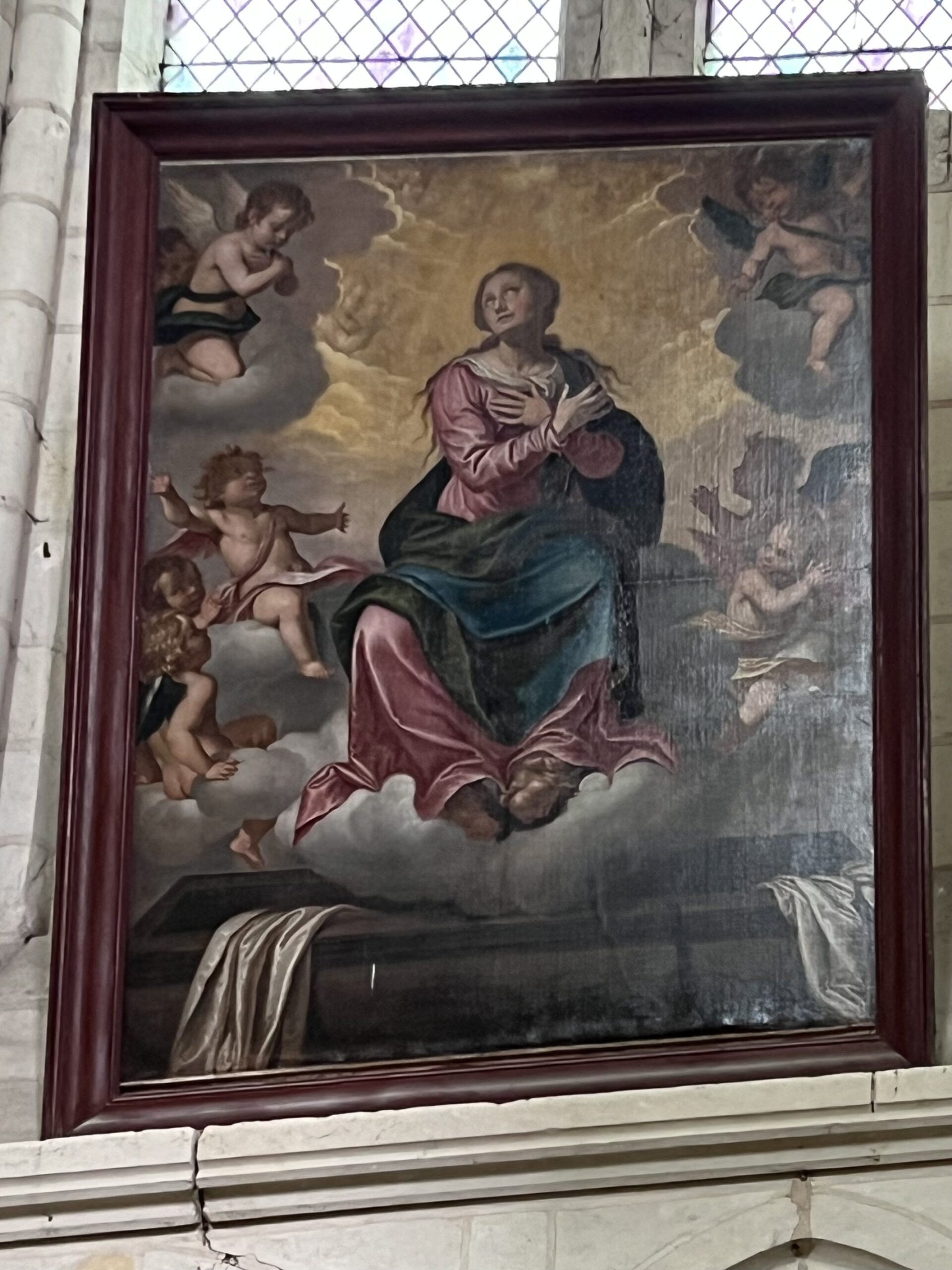
On the walls are several paintings, including "The Giving of the Rosary by Mary" from 1638 and "The Assumption of Mary" from 1621 by the French painter Jean Boucher (1575-1632).
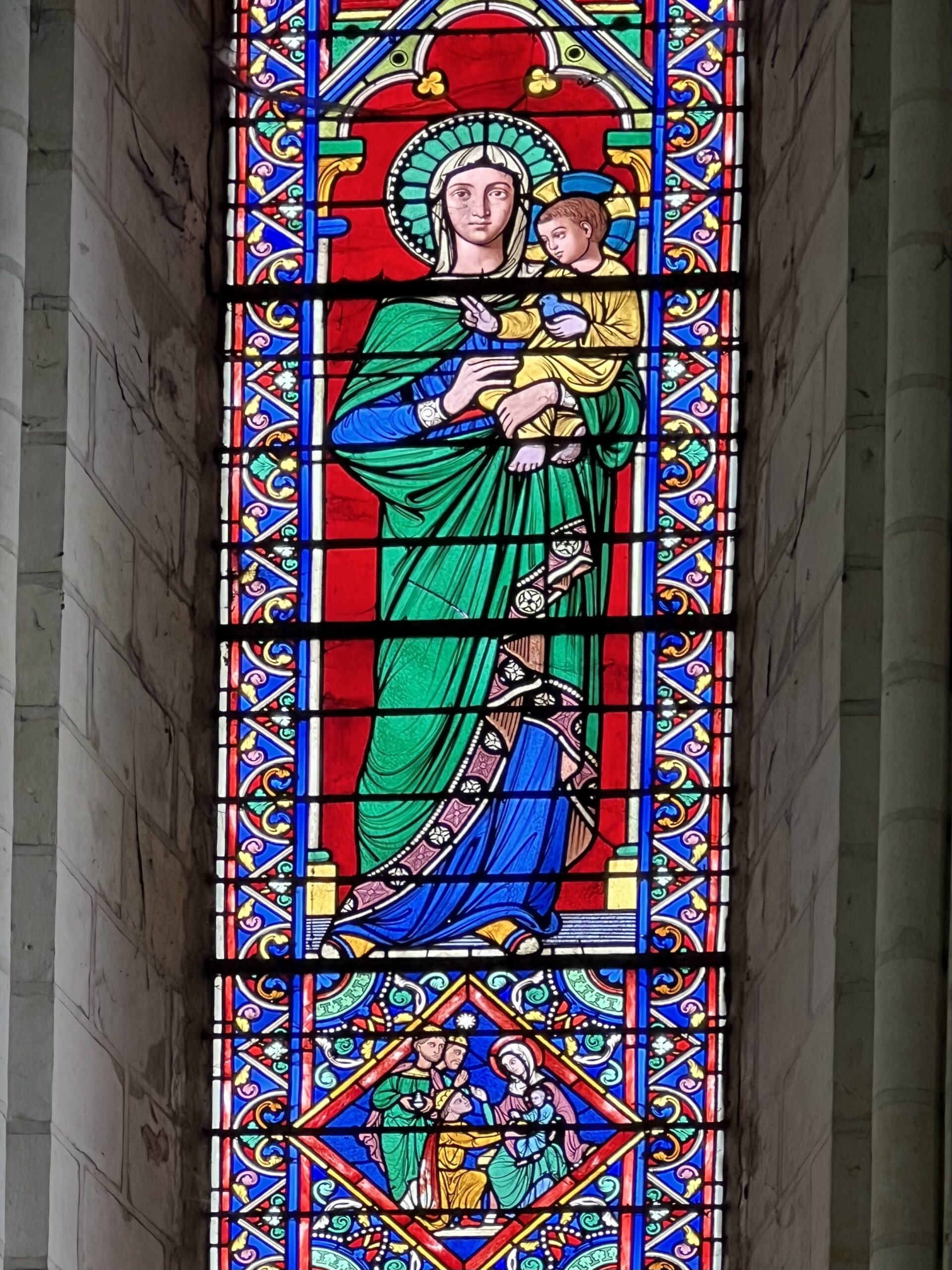
Another painting depicts the adoration by the shepherds and has a history. It is painted in the style of Bartolomé Murillo (1617-1682). In 1870, the artwork was given by Charles Louvet (1806-1882), Minister of Agriculture and Commerce (1870), Mayor of Saumur (1844-1869), Consul-General of Maine-et-Loire (1856-1869), Deputy of Maine-et-Loire (1849-1870) and resident of Le Puy-Notre-Dame. He did this on behalf of Charles-Louis Napoléon Bonaparte (1808-1873), Emperor Napoleon III (1852-1870). Charles Louvet also gave two stained-glass windows, which were placed in the chancel.
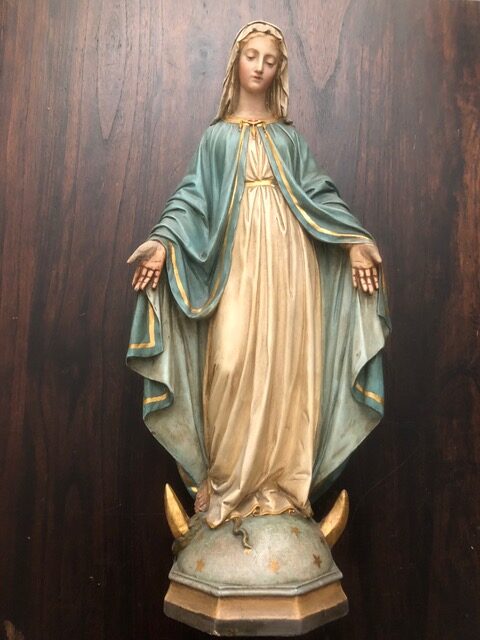
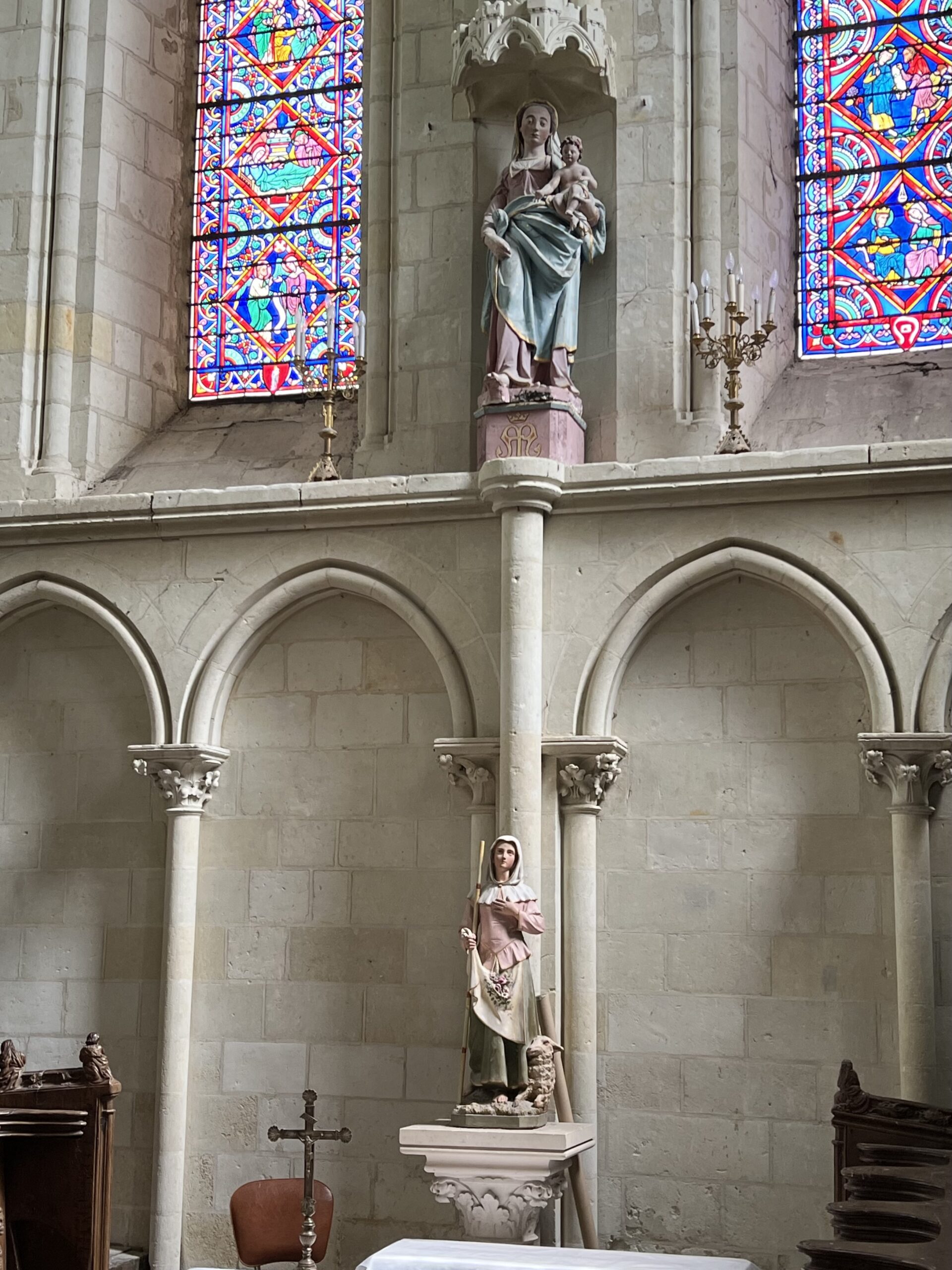
In the church, there are statues of Mary and Saint Bernadette, among others.
The pilgrimage church is open daily.
ACCESSIBILITY
Le Puy-Notre-Dame is located in the Maine-et-Loire department, in the Pays de la Loire region.
The address of the Église Collégiale Le Puy-Notre-Dame is:
Rue de la Collégiale, 49260 Le Puy-Notre-Dame.
The Tourist Office is located at 16 Rue des Hôtels, 49260 Le Puy-Notre-Dame, with the website www.saumur-tourisme.com.
Current information can be found at www.ville-lepuynotredame.fr.
Experience
After driving for a while through a region of arable farming and viticulture, I see the church of Le Puy-Notre-Dame in the distance. The colossal building is situated on a higher plateau, and the name “Le Puy” is therefore very appropriate. The church is built on a rock. This immediately reminds me of Peter, the apostle on whom the church would be built.
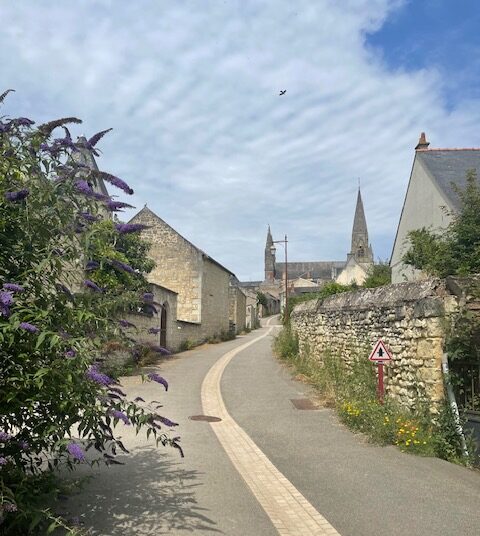
Le Puy-Notre-Dame is a small and ancient village. Small in terms of its population and ancient are the large stones. With these blocks, houses, walls, farms, a monastery and a church have been built here. I find some streets to be narrow and they give a peaceful impression. Hardly anyone is on the streets and many a car is having a day off.
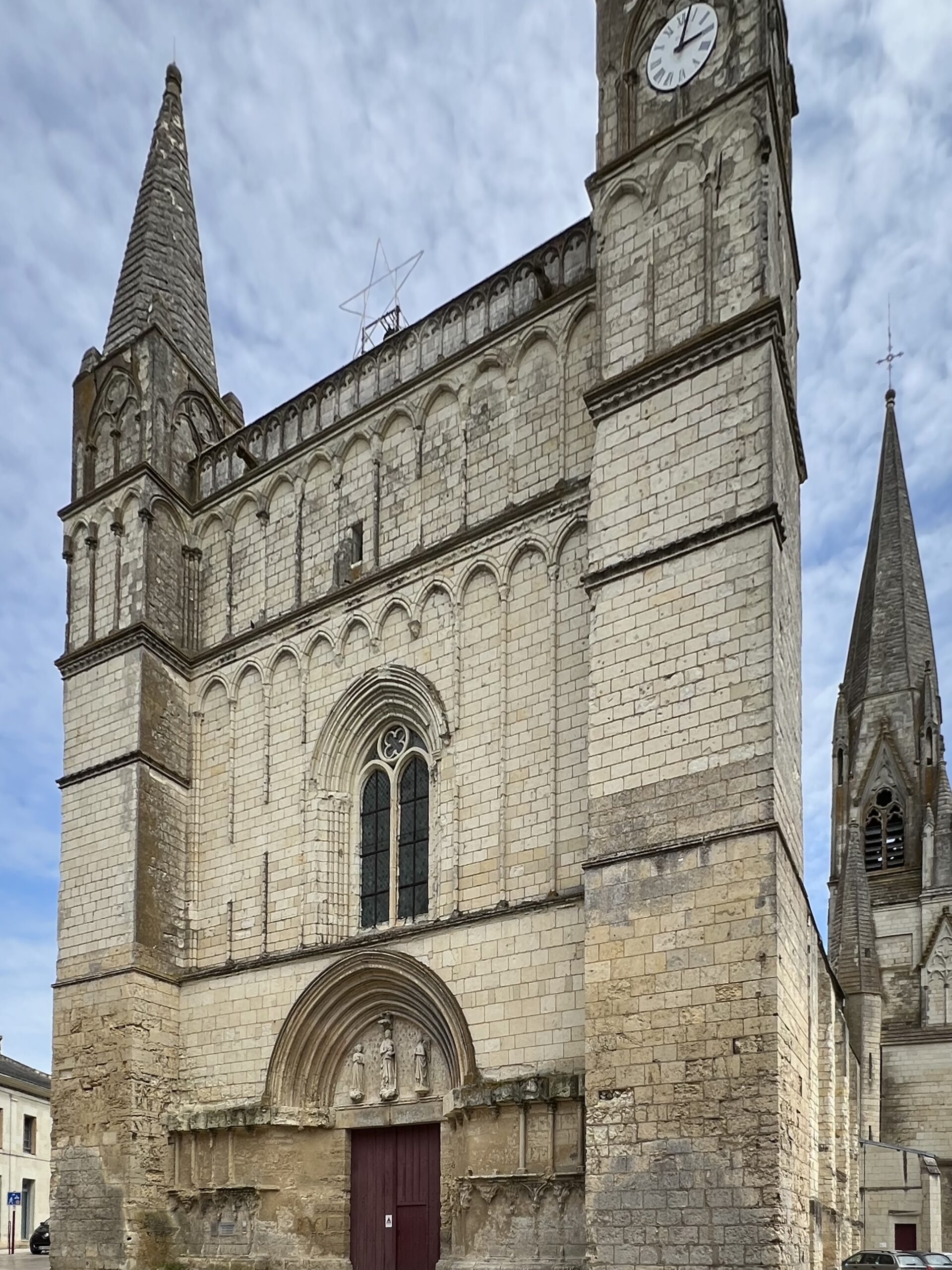
When I arrive at the church, the first impressions are of the high walls and stately towers. What an impressive structure this is! Undoubtedly, the construction must have been a lifelong endeavour for many. After greeting Mary, who stands above the entrance gate, I go inside. What a space receives me here! Centuries of history embrace me. Images greet me. After that, many depictions want to inform me about the phases of the church's history.
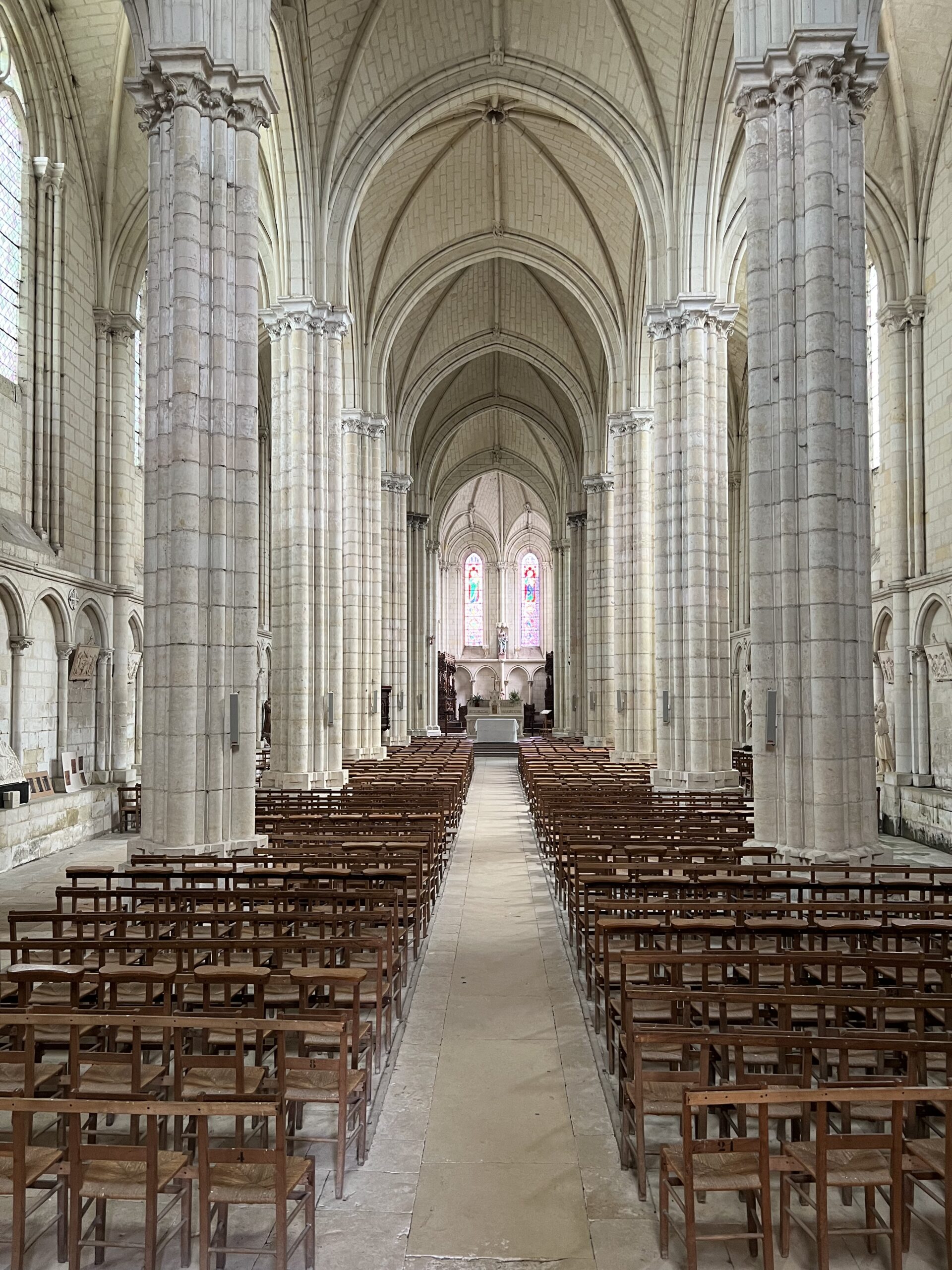
I take my time when I'm in the church. This allows me to admire the large paintings and to pause at a Lourdes scene with depictions of Mary and Bernadette. This is the place to light a few more candles.
In the church, I see altars and stained-glass windows. In the chancel, there is a statue of Mary with, beneath it, one of shepherdess Bernadette with a sheep. Lourdes is over 500 kilometres away from here, but I feel the presence of the Immaculate Conception and seer Bernadette Soubirous here.
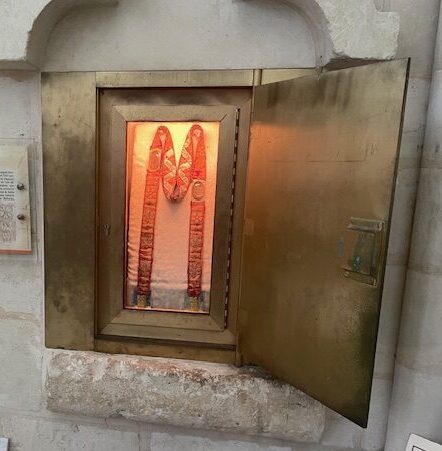
Next to the main altar is a side altar and next to that, in a corner, an open built-in cabinet stands. Behind protective glass, Mary's belt is visible. Unfortunately, it is a dark view. I close the cabinet door and suddenly notice a button and press it. Immediately the girdle of Our Lady is illuminated. This garment is about 2000 years old. Mary is often depicted in blue and white clothing. However, the decorative belt is reddish. Behind glass medallions of the belt, there is also dust. These are surely the relics of Mary.
In the back of the church I see a prayer card lying there and part of the text gives the translated words: “Holy Virgin Mary, You carried Jesus, the saviour of the world, help me to live as You did in faith and hope”.
After the round in the church, I take a seat at the back of the room. I sit and think about the belt. After that, it's praying to the Mother of God. I close my eyes and thank Mary for my life. How much I have been given!
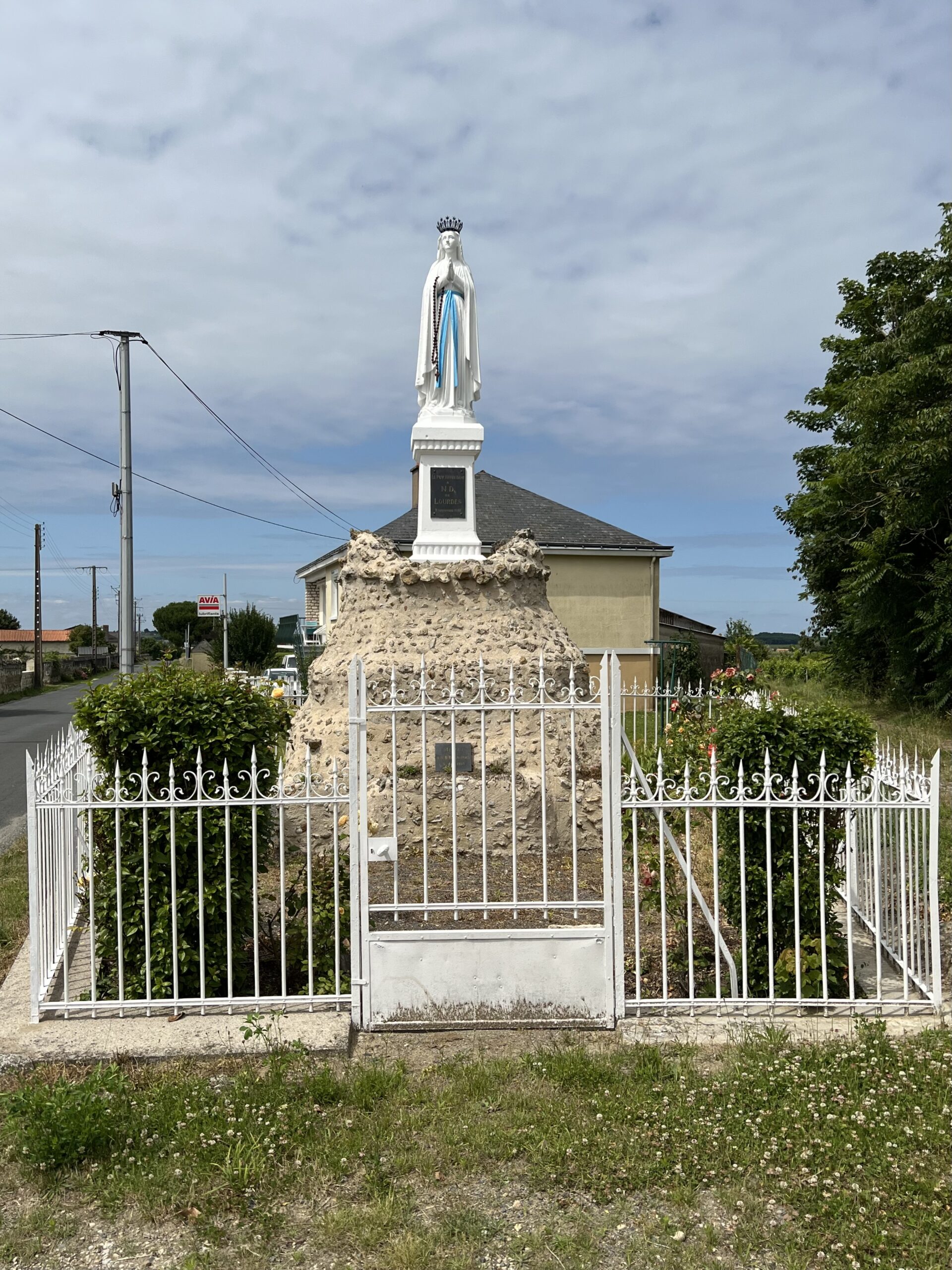
Upon leaving Le Puy-Notre-Dame, I encounter a large statue of Mary. It is a Lourdes statue standing on a tall plinth. Beneath the statue is the inscription: “Le Puy Notre Dame à N.D. de Lourdes 7 septembre 1941” (Le Puy-Notre-Dame to Our Lady of Lourdes, 7th September 1941). With Lourdes and Le Puy-Notre-Dame in mind, I head home.
Environment
In and around Le Puy-Notre-Dame there are many cycling, mountain biking and walking opportunities. A Saumur wine route can also be followed.
From the town of Saumur, it is 24 km to the south to get to Le Puy-Notre-Dame.
From Angers to Le Puy-Notre-Dame is 53 km south-east travel.
Travelling from Cholet to Le Puy-Notre-Dame means going 62 km east.
The distance is 18 km north from Thouars to Le Puy-Notre-Dame.
Posted: 22 July 2024
~~~

 Nederlands
  English (UK)
  Deutsch
  Français