History
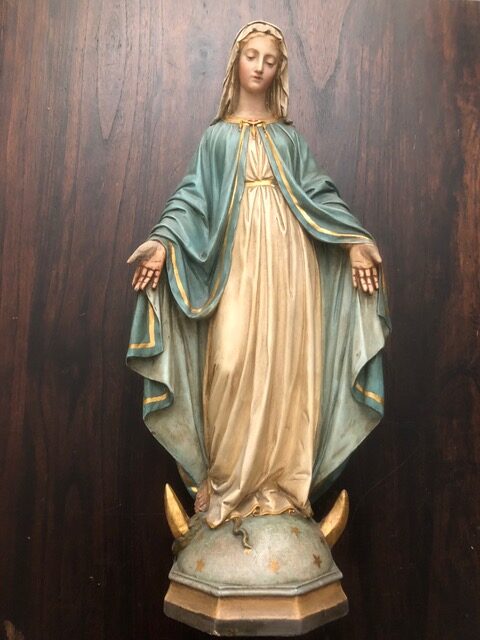
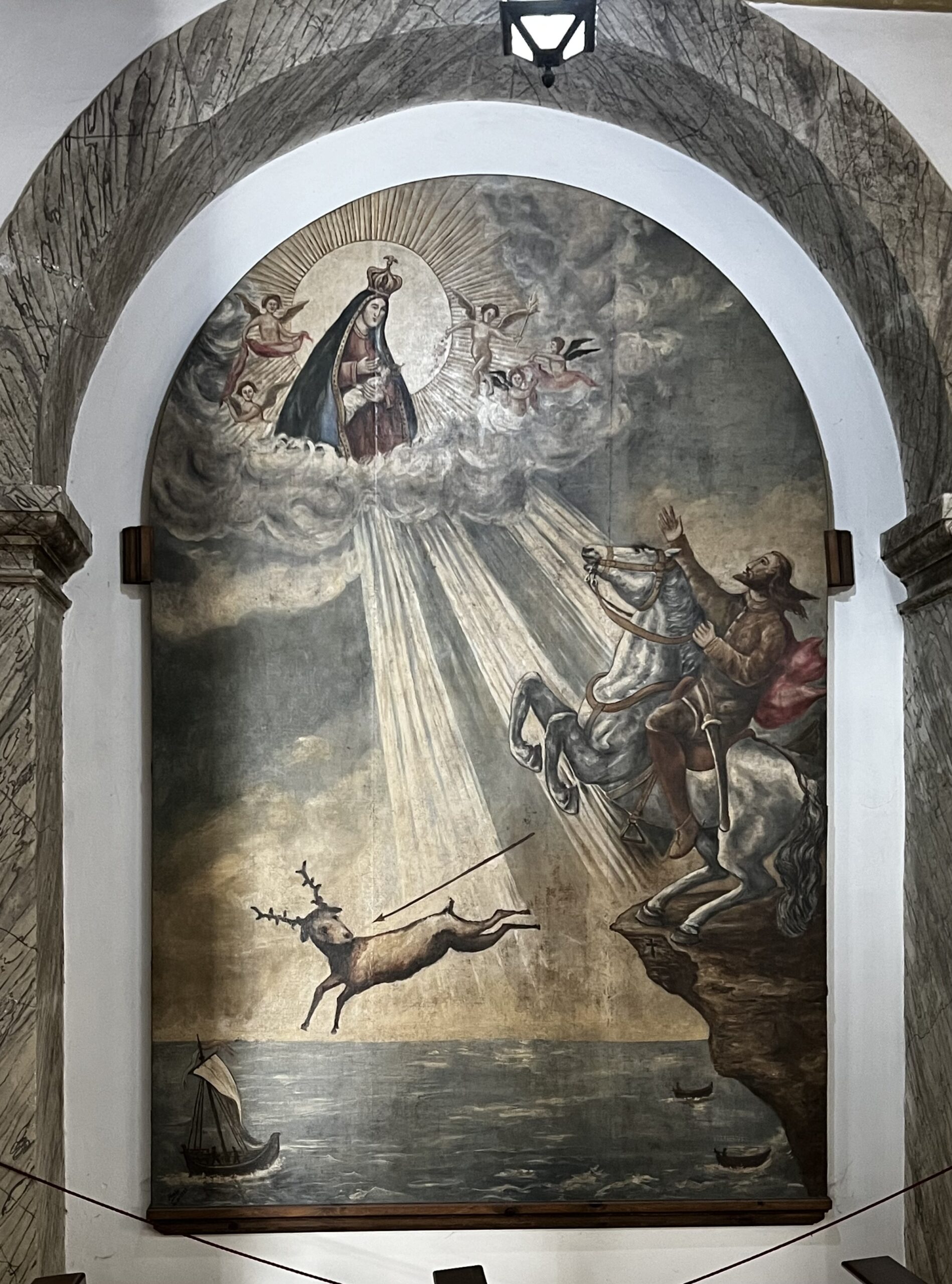
A legend lies at the heart of the pilgrimage site. It is September 14th, 1182, and in the early morning, Dom Fuas Roupinho, knight of the impressive castle/fortress “Porto de Mós”, goes hunting with some companions. He does this on horseback within his domain, near the coast. Suddenly, he spots a deer and prepares to kill the animal. Abruptly, a thick mist arises from the sea. He loses sight of the deer and his companions. The deer runs to the top of a rock. A little later, he sees the animal disappear into the abyss and then realises that he, astride his horse, is standing on the edge of the rock. One more step from the animal and he would fall dozens of metres down. He recognises this dangerous place, as nearby there is a cave with an image of Our Lady, which is venerated there. He cries out: “Our Lady, help me!” The horse stops short at the edge of the steep rock. The knight is saved just in time and does not fall 100 metres down. He goes to the cave with Mary. There, he prays and thanks Her. He then arranges for a chapel to be built above the site where the cave is located. The image of Our Lady is moved from the cave to the chapel, making it easier to visit. This legend was recorded by the monk and historian Bernardo de Brito, born Baltasar de Brito e Andrade (1569-1617). He was the Royal Chronicler from 1614 to 1617.
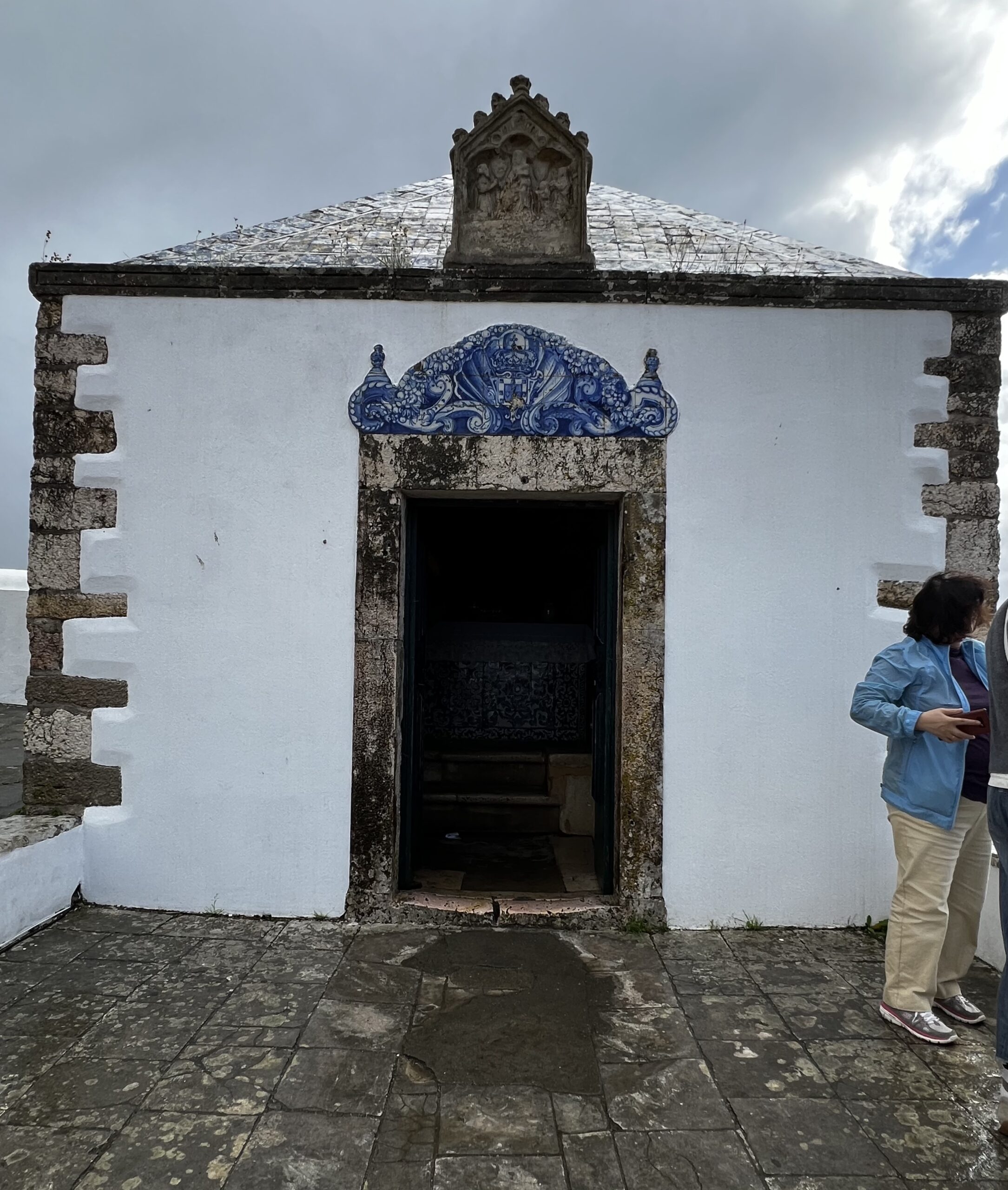
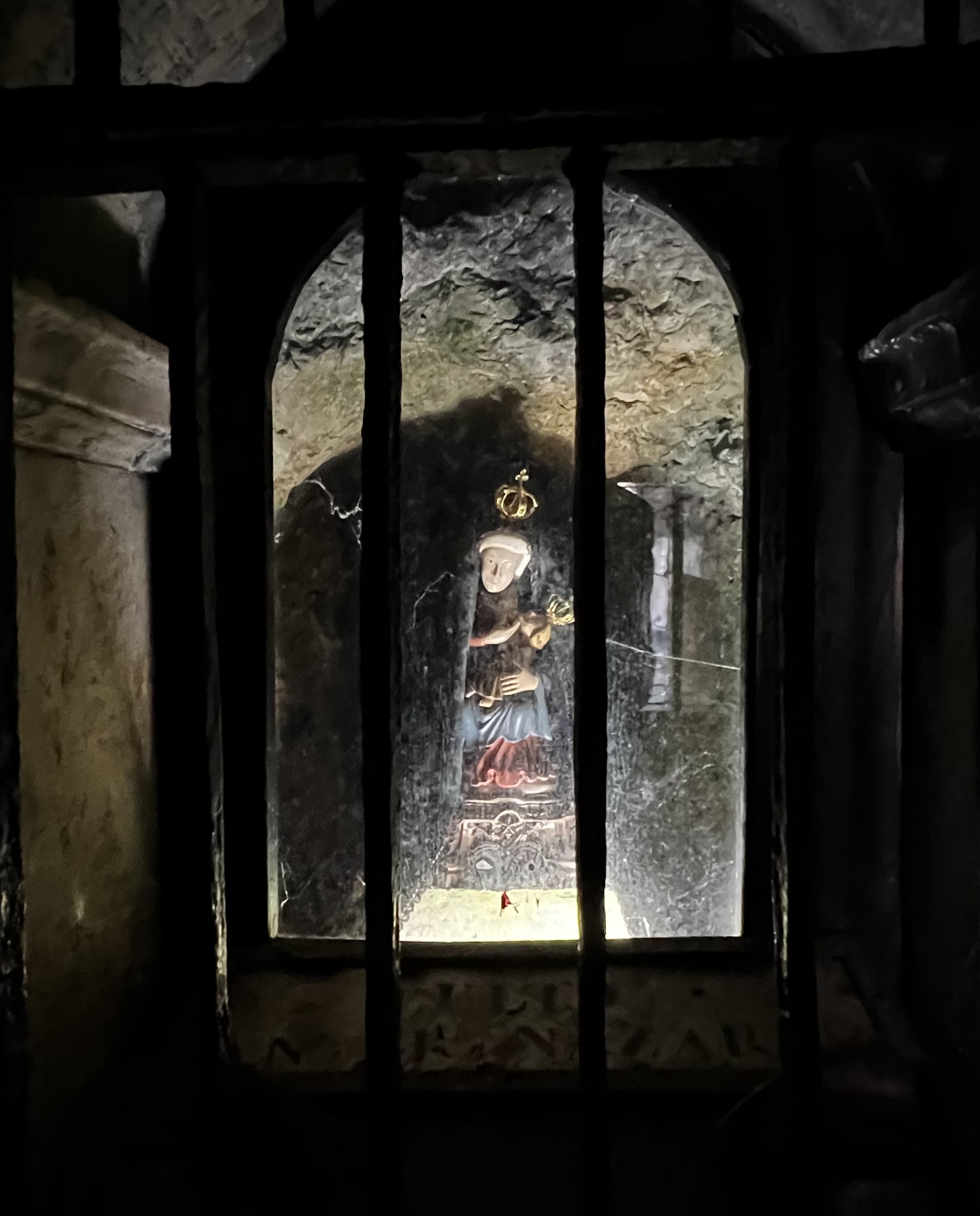
At this spot, a small chapel will later be built, facing the pilgrimage church. This chapel has a pyramid-shaped roof and stands on the edge of the rock, where Dom Fuas Roupinho was saved from a fatal fall by Mary just in time. The image of Our Lady, found in 1182, will be housed in this chapel.
In 1377, Fernando I (1345-1383), King of Portugal (1367-1383), also known as “O Formoso” (“the Beautiful”), decided to build a simple church where the image of Our Lady of Nazaré could be visited.
On the site of the current 17th-century church, there was a smaller one from the 14th century. A larger church was built due to the increase of many pilgrims. Over time, this became the most famous pilgrimage church in Portugal. This continued until 1917 when Mary appeared several times in Fátima.
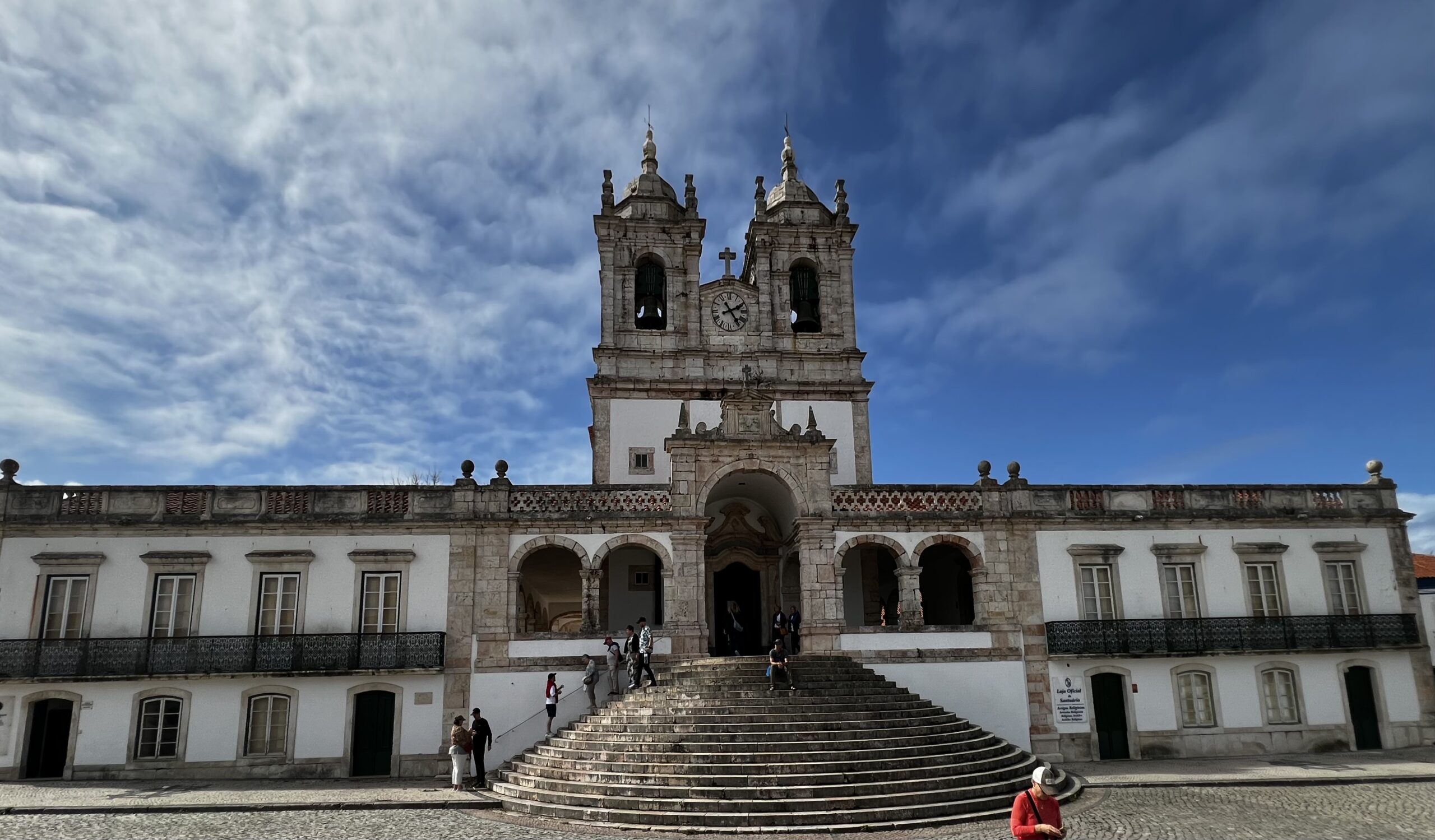
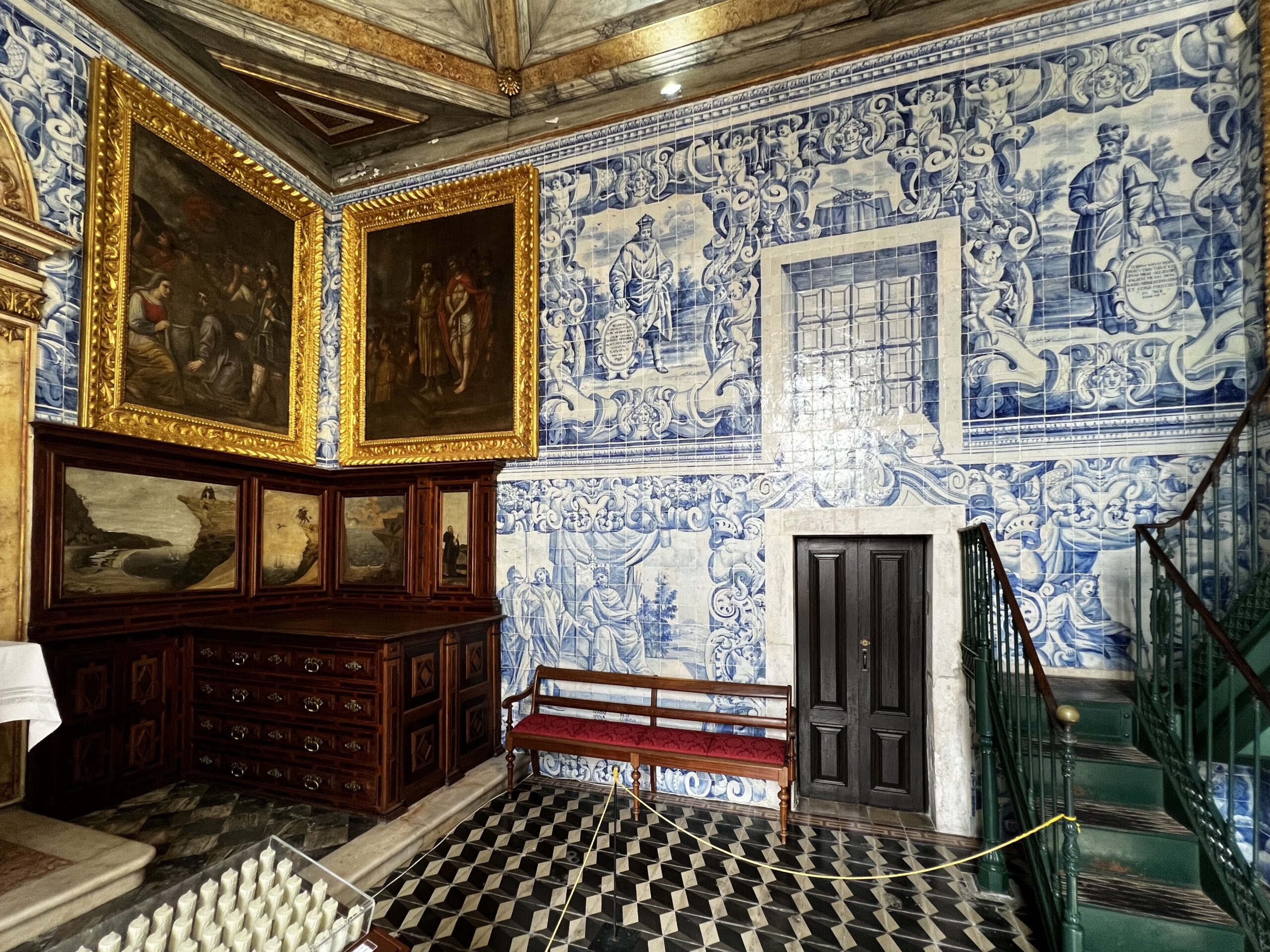
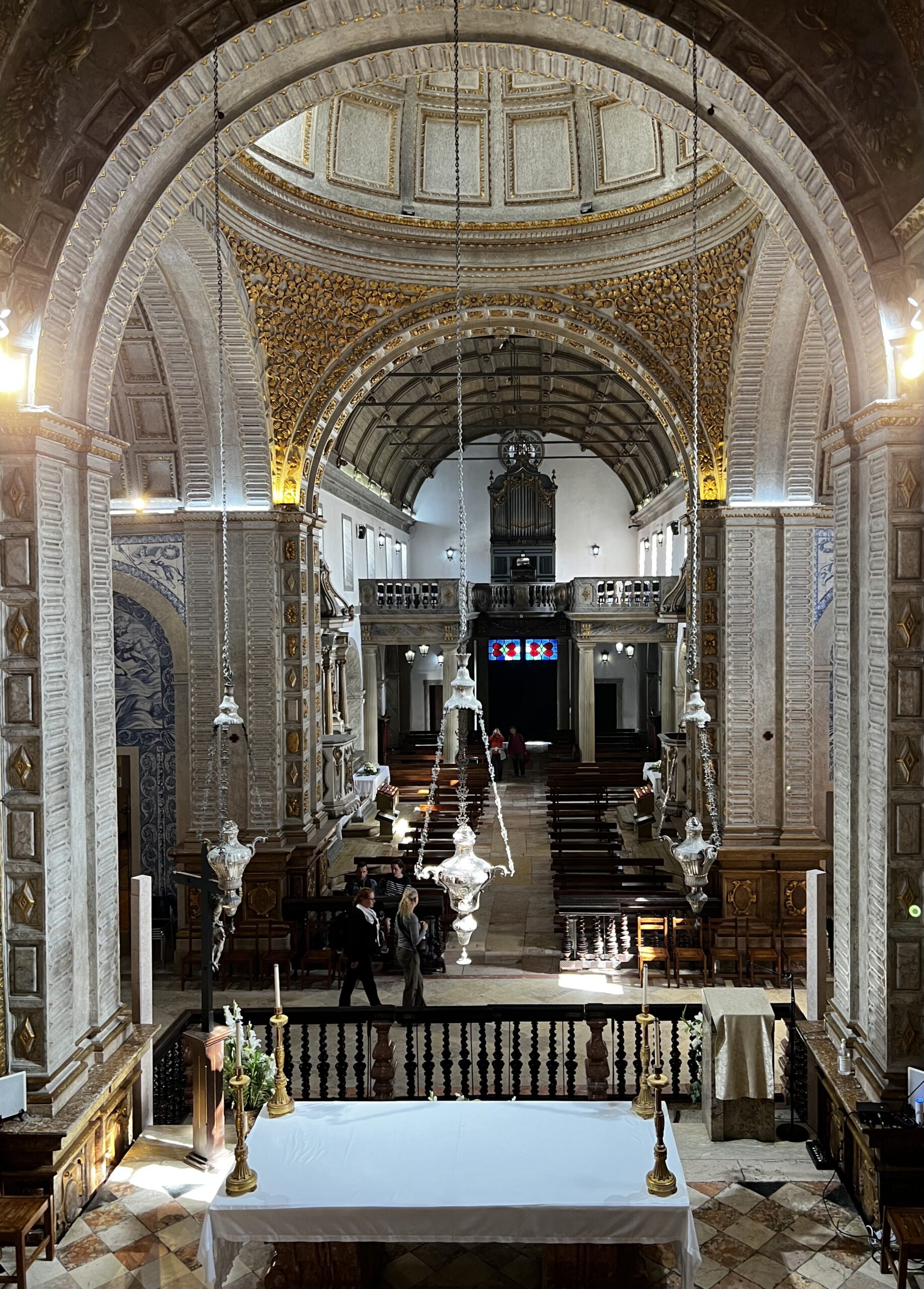
The current church building displays Baroque structures and has tall 17th-century bell towers. The high walls feature 18th-century tile panels by the Dutchman Willem van der Kloet (1666-1745). The tiles, painted in white and blue, depict scenes from the Old Testament, among others. In the sacristy, there are 17th-century paintings that illustrate the legend of Our Lady of Nazaré.
Pilgrimage site
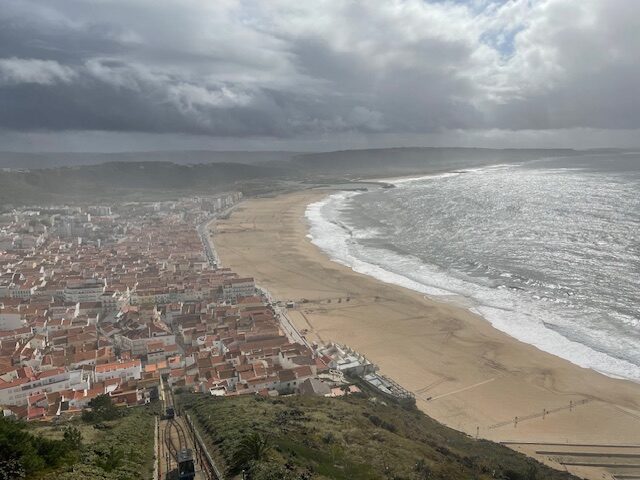
The pilgrimage site is located on a square over 100 metres above sea level. The pilgrimage site is named “Santuario de Nossa Senhora da Nazaré”. The “Sitio da Nazaré” (place of Nazareth) is located above the centre of Nazaré on a high rock formation.
The pilgrimage church has an impressive façade with two bell towers and buildings on either side, namely a hospital and a former palace. Nobles stayed in the palace when they visited the Marian shrine.
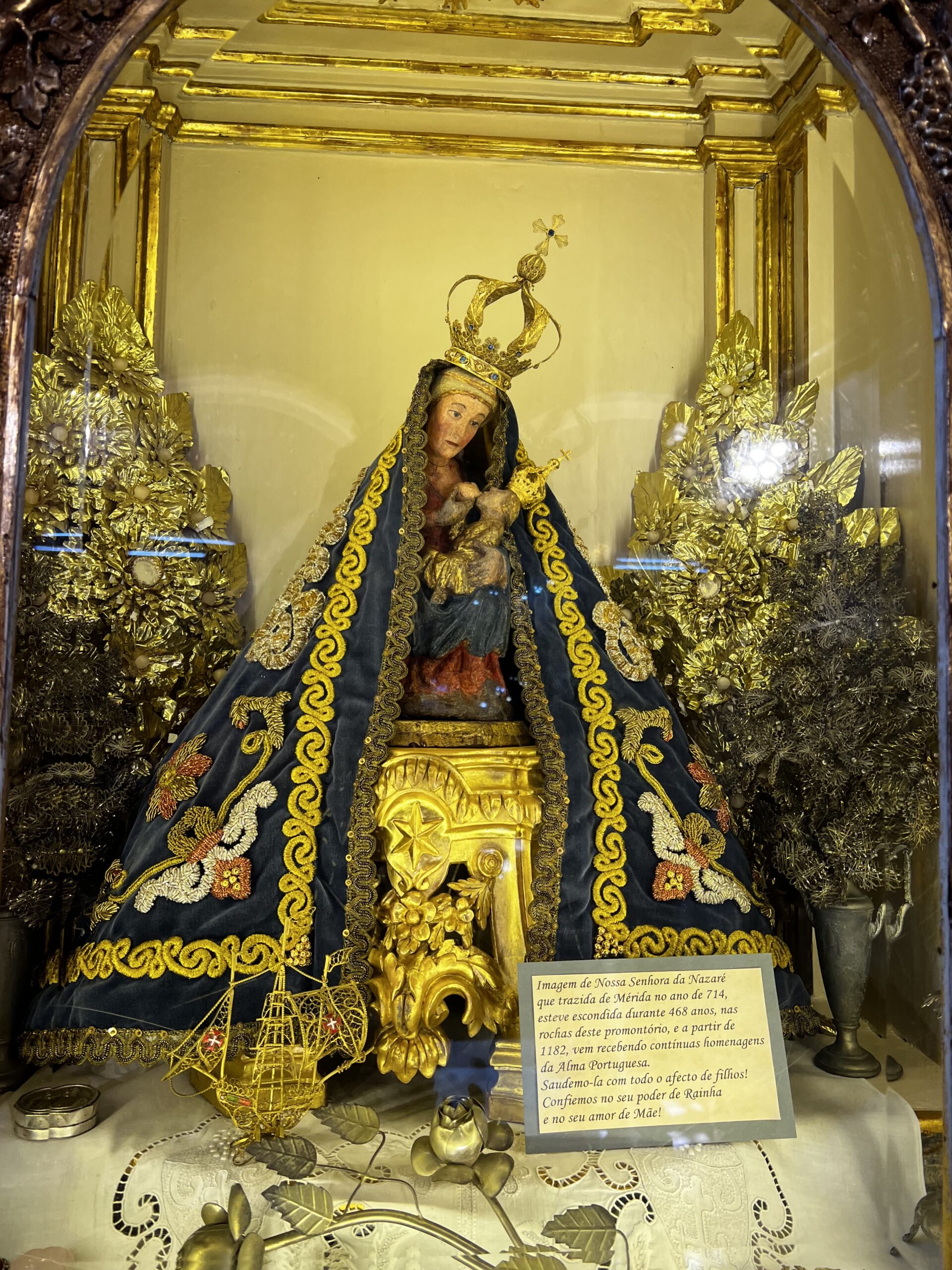
The sanctuary possesses a 17th-century church. In this pilgrimage church, there are 17th-century floor tiles. Paintings depicting miracles can be seen in the church building and sacristy. The image of Our Lady of Nazaré is an original work of art and is located at the main altar. The tiles on the walls and ceiling are in the typical Portuguese blue colour.
Opposite the pilgrimage church stands a special, small chapel. At the entrance of this little building, two panels can be seen, depicting the legend of 1182. Blue and white tiles from the 17th and 18th centuries characterise the building.
Every year on 8 September, the feast day of the Nativity of Mary, there are many pilgrims in Nazaré.
ACCESSIBILITY
The pilgrimage site is located on the coast at an altitude of about 100 metres. The “Sitio da Nazaré” (Place of Nazareth) belongs to the larger town of Nazaré.
Address: Largo de Nossa Senhora da Nazaré, Sitio da Nazaré, 2450-065 Nazaré.
Further information can be found at www.tourismnazare.com and also at www.findoutnazare.pt.
Experience
There is a great hustle and bustle at the pilgrimage site of Nazaré with countless tourists. It seems like everyone wants to be on holiday here. I drive around a bit to find a parking space and suddenly, near the pilgrimage church, a car leaves. That's lucky!
The pilgrimage church is splendidly situated on a rock plateau of over 100 metres in height. When I stand in the square in front of the church, there is a beautiful view of the façade of the inviting building. I also see the small chapel where centuries ago Mary saved a knight on horseback in the year 1182.
At the pilgrimage church, there's a queue because many visitors are interested in this building. After a few minutes, I move further into the building. What statues there are, and every visitor offers a greeting to the statue of grace. Mary tenderly nurses her baby. The inscription at this statue reads: “Statue of Our Lady of Nazaré, brought from Mérida in the year 714 and hidden for 468 years in the rocks of this promontory and receiving constant veneration from the Portuguese soul since 1182. Let us greet Her with all the affection of children. Let us trust in Her strength as Queen and in Her as Mother.”
At the back of the space is a staircase leading up, and then I enter a room where there are even more tile mosaics to admire. Upstairs, there is a magnificent view of the church's interior.
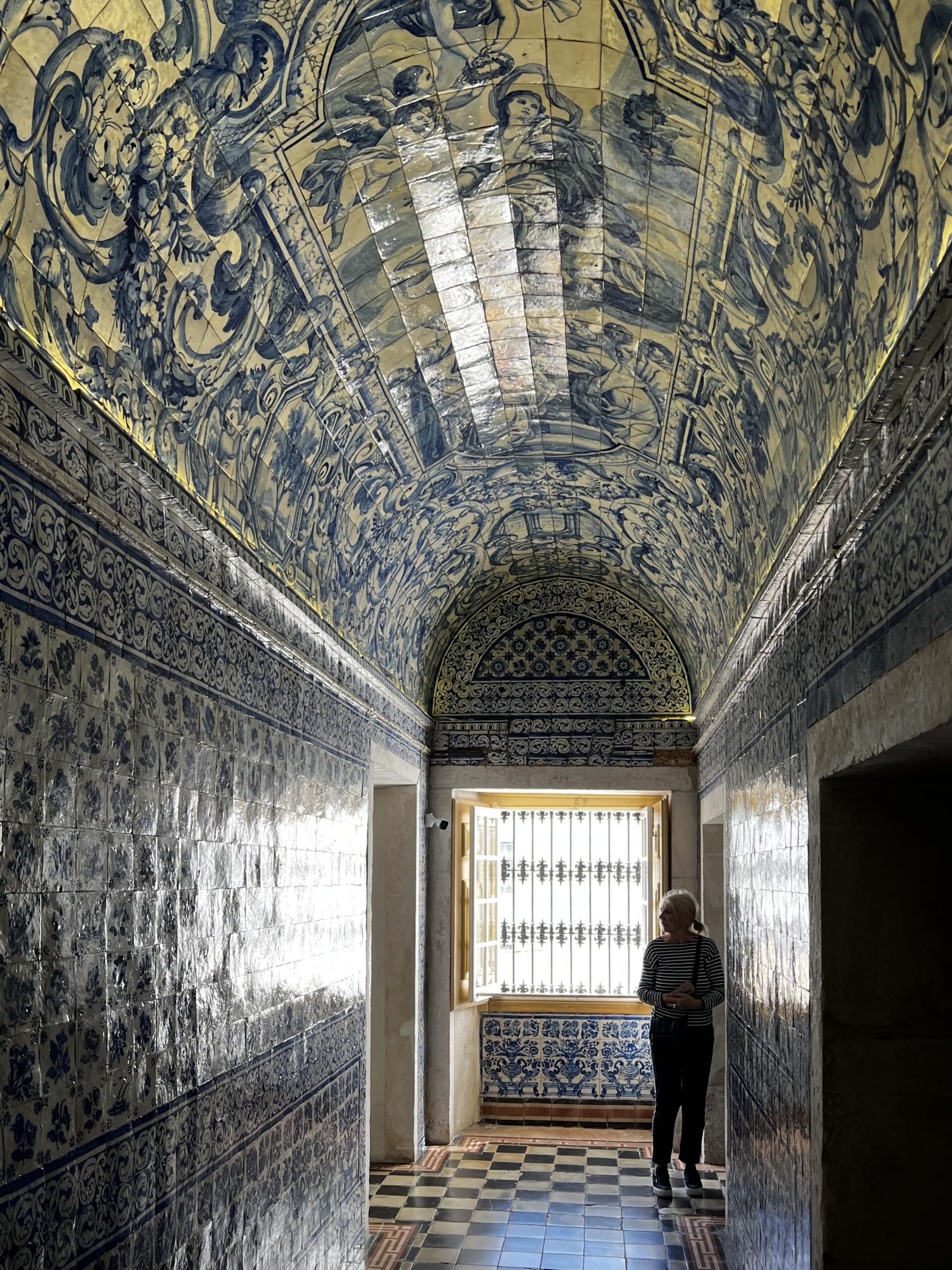
Next, I will go downstairs and let the beauty of the building, statues, paintings and tile panels wash over me. Then I realise how wonderfully beautiful this pilgrimage church is.
After visiting the pilgrimage church, I'll go to the chapel, which is opposite the church. The history here dates back centuries. The legend of the knight, on horseback, hunting a deer and being saved by Our Lady, has made history here. This chapel is a gem. In this chapel, there is also an old statue of Our Lady of Nazaré, which is kept behind sturdy bars. What a magnificent place of pilgrimage this is!
Environment
From Alcobaça to Nazaré it is 16 km to the northwest.
The journey from Batalha to Nazaré means travelling 33 km to the west.
Going from the pilgrimage site of Fátima to that of Nazaré is travelling 63 km westwards.
Travelling 124 km north from the capital Lisbon will bring you to Nazaré.
Leaving the pilgrimage site of Peniche to get to that of Nazaré is travelling 65 km north.
Travelling from the large city of Porto to Nazaré involves travelling 215 km southwards.
Posted: 1 January 2025
~~~

 Nederlands
  English (UK)
  Deutsch
  Français