~~~
History
The name Kalwaria Zebrzydowska originates from the construction of a Calvary mount (Kalwaria) by architects of the father, son, and grandson surname Zebrzydowski. The sanctuary's beginnings date back to 1600. Mikolaj Zebrzydowski (1553-1620) is on Zarek mountain. At the end of 1600, he had a small Holy Cross Chapel built there, modelled on the Chapel of Golgotha in Jerusalem. He also founded a Cistercian monastery. The Holy Cross Chapel was built between 1600 and 1601. On 4 October 1601, the chapel was consecrated by Claudio Rangoni (1559-1621), Bishop of Reggio Emilia (1592-1606) and Nuncio (1598-1606). Following this, the Chapel of the Tomb of Jesus was built, using the tomb chapel in Jerusalem as its model. The architect was the Italian Jesuit Giovanni Maria Bernardoni (1541-1605). The Flemish architect and goldsmith Paulus Baudaert (Paul Baudarth, Pawel Baudarth, c. +1680) was also involved. A foundation charter from 1602 states that the buildings were transferred by Mikolaj Zebrzydowski to the Order of Saint Bernard. This marks the true beginning of this pilgrimage site. The first Bernardine monks arrived in 1604, when plans for the construction of the church and monastery were being made.
In the period 1604-1609, a church was built in the Baroque style and in the form of a Greek cross. Such a cross (“crux quadrata”) has four arms of equal length. The church was designed by architect Giovanni Maria Bernardoni (1541-1605). On 4 October 1609, the church was consecrated by Piotr Tylicki (1543-1616), Bishop of Krakow (1607-1616).
The Maria-Hart Chapel dates from 1615. Other chapels are from the 17th and 18th centuries.
After the death of Mikolaj Zebrzydowski in 1620, the work on the Calvarienberg was continued by his son Jan Zebrzydowski (1583-1641). Between 1623 and 1641, this son commissioned chapels, including eight Marian chapels, as well as the Entombment of Mary in 1623. Also realised were the Chapel of the Crucifixion (1623), the Chapel of the Deposition with Saint Helena (1623-1632), and the Praetorium of Pilate (1633). Other chapels include the Chapel of Jesus' First Fall, the Chapel of Simon of Cyrene, and that of Veronica.
Michal Zebrzydowski (1613-1667), grandson of Mikolaj and son of Jan, had the northern part of the monastery built (1654-1655). The Chapel of Our Lady of Kalwaria was built by Michal Zebrzydowski on the southern wall of the current presbytery. The miraculous image of Mary is housed here. The paintings in the chapel were created in 1887 by Antoni Gramatyka (1841-1922), who was born in this locality. There is a crypt in the basement of this chapel where the founders of Kalwaria are entombed, including Jan Zebrzydowski, Michal Zebrzydowski, and Magdalena Czartoryski (Konopacka).
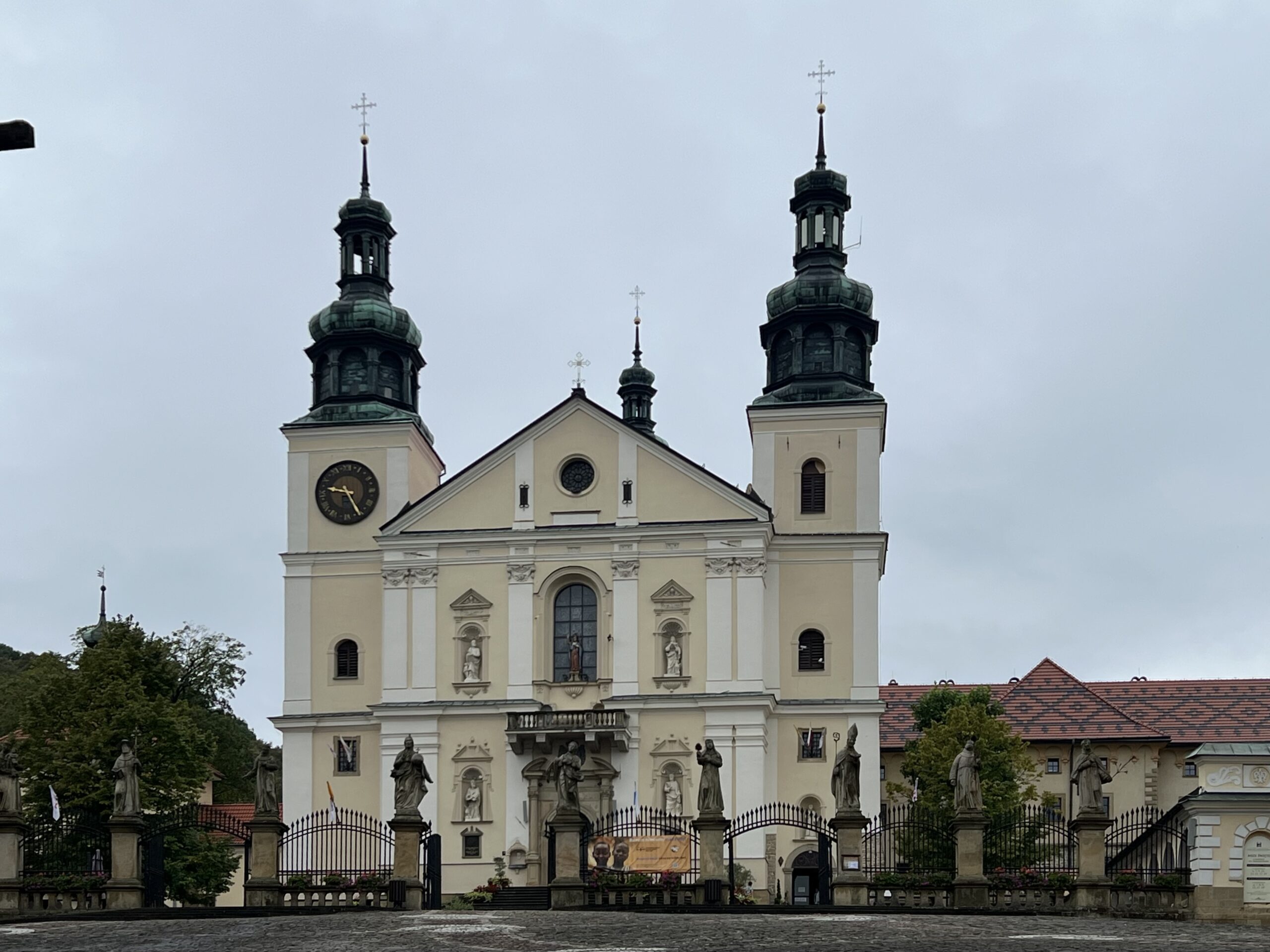
Jan Zebrzydowski's daughter is Anna Zebrzydowski (c. 1630-1668) and she marries Jan Karol Czartoryski (1626-1680), thus the monastery complex's possession comes into the hands of the Czartoryski family after Michal Zebrzydowski's death in 1667. After Anna's death in 1668, Jan Karol remarries Magdalena Konopacka (1638-1694). The nave of the church is enlarged and was completed in 1702 in the Late Baroque style. The two towers at the front are built and completed in 1720.
In 1628, the first pilgrimage to this place took place.
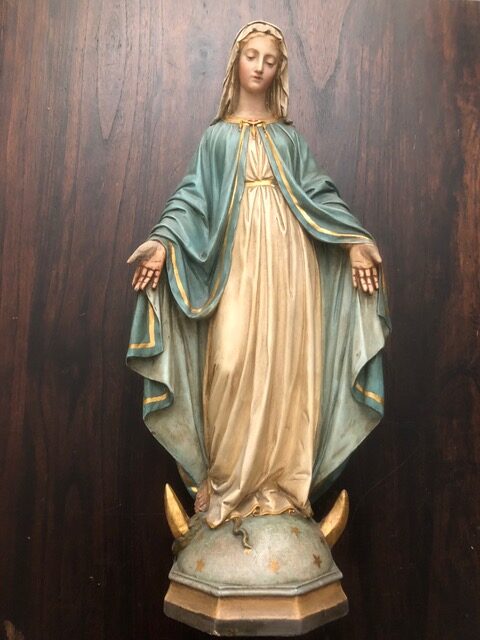
The image of Mary initially belonged to a priest from the nearby village of Krzywaczka. Over time, the statue came into the possession of the Paszkowski family. One day in 1641, a family member discovered blood and tearful moisture on the image. Subsequently, the miraculous image of the sorrowful Mother of God was donated to the monastery. This happened in 1641. In 1656, the special incident from 1641 was recognised by the church. A separate chapel was then built for Saint Mary of Kalwaria (Matka Boska Kalwaryjska). Construction took place between 1658 and 1667. The Polish word “Kalwaria” means “Golgotha”. This chapel, with the crowned image of Mary and Jesus, became a destination for pilgrims, and the pilgrimage site grew considerably.
The current basilica is largely the work under the leadership of Magdalena Konopacka. Her stepson Józef Czartoryski (+1750) continued the work on the monastic complex.
In the basilica, there is also the chapel of the Immaculate Conception of Mary from 1749.
In 1816-1812 the monastery was enlarged. This work was adapted in 1897-1901 under the leadership of Abbot Felicjan Fierek (1850-1910) and Karol Knaus (1846-1904), an architect from Krakow. Prior Fierek also ensured a further enlargement of the church in the years 1906-1910.
The Way of the Cross was laid out between 1823 and 1834 and stone statues can be seen here. Also located here is a tomb church of Our Lady.
On 15 August 1887, the icon of “Our Lady of Kalwaria” was crowned by Albin Dunajewski (1817-1894), Bishop of Krakow (1879-1894).
In 1906–1910, the pilgrimage church was enlarged once more.
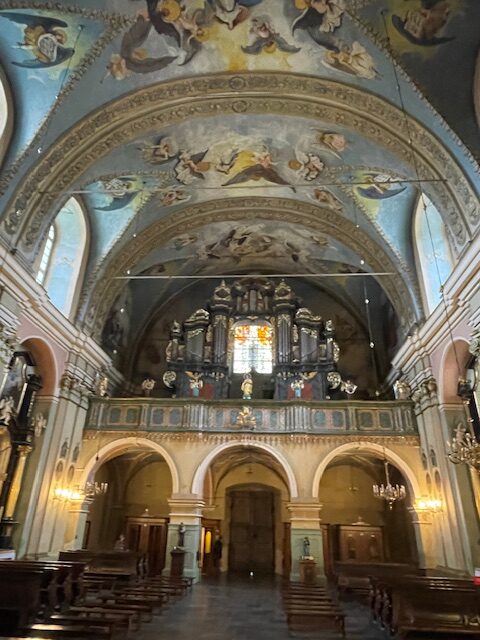
Around 1914, Włodzimierz Tetmajer (1861-1923) painted frescoes in honour of Mary on the vaults of the nave and on the walls of the basilica.
Papal visits occurred in 1979, 2002, and 2006. In 1979 and 2002, John Paul II, pope from 1978 to 2005, and born Karol Józef Wojtyla (1920-2005) in the neighbouring town of Wadowice, visited. During his visit on 7 June 1979, he bestowed the title of basilica upon the church. Among other gifts, the pope presented a monstrance and a candle in 1979, a golden rose in 1987, and a pearl rosary in 1997. In 2002, this pope visited again, this time for the 400th anniversary of the pilgrimage site. Karol also made several pilgrimages to Kalwaria Zebrzydowska as a child, teenager, young man, and priest. Later, he also visited as a bishop, cardinal, and pope. Images of these visits can be seen in the procession around the basilica.
On 10 June 1987, for the 100th anniversary of the crowning of the image of grace, the church is elevated to the status of a basilica. A golden rose is also received from Pope John Paul II as a gift for the 100th anniversary of the crowning of the statue of Mary.
In 2006, Benedict XVI visited, Pope from 2005-2013, and born as Joseph Aloisius Ratzinger (1927-2022).
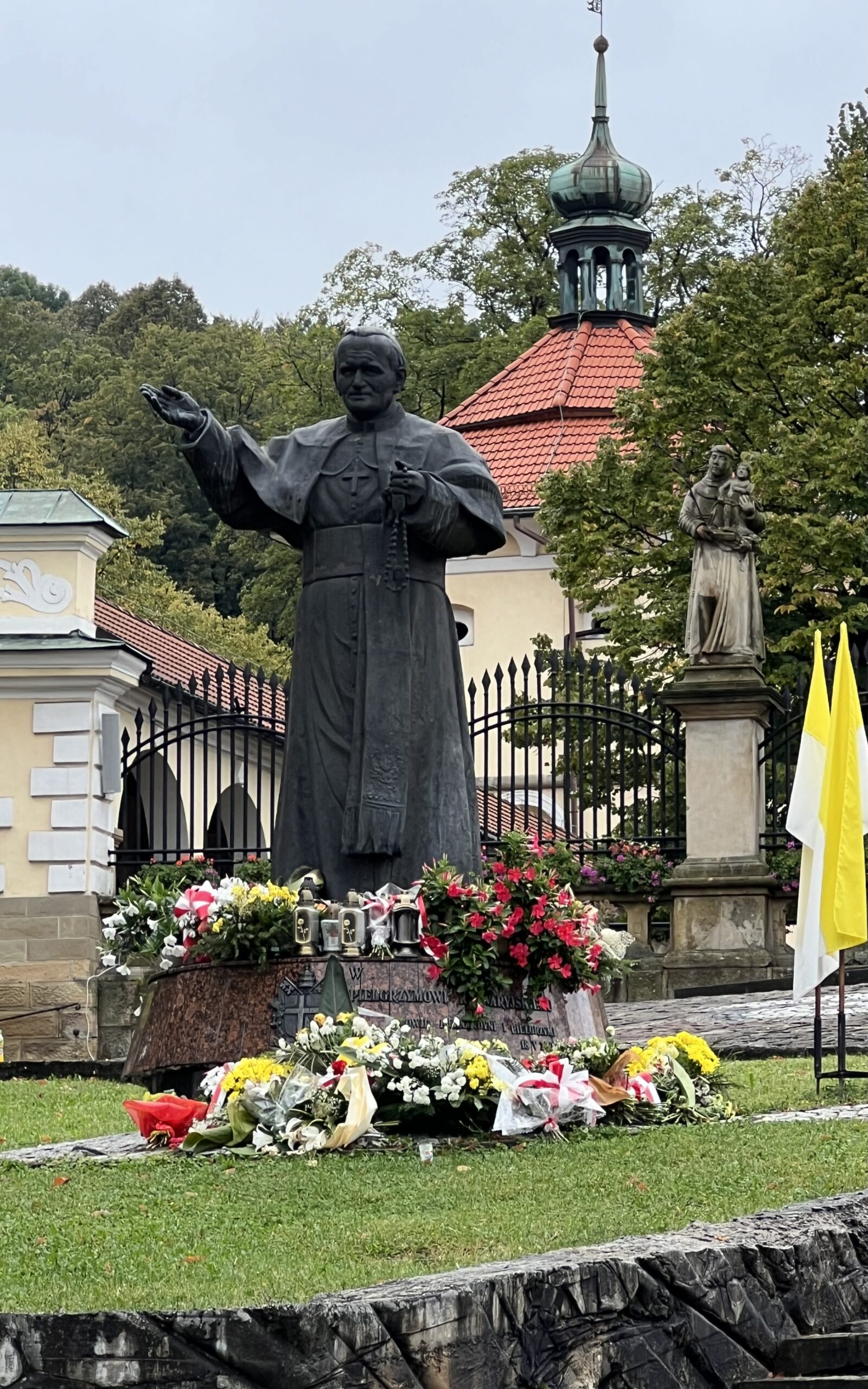
Since 1 December 1999, the church, monastery, and surrounding estate have been part of the UNESCO World Heritage. In 2000, the pilgrimage site became a monument to the history of the Polish nation. A statue of Pope John Paul II was unveiled and consecrated on 27 May 2000.
Pilgrimage site
After Czestochowa, Kalwaria Zebrzydowska is the most visited pilgrimage site in Poland. The Marian shrine has the Polish name “Sanktuarium Pasyjno-Maryjne-Kalwaria Zebrzydowska”, which translates to “Shrine of Marian Devotion on Golgotha Zebrzydowska” in Dutch. The shrine comprises a basilica, convent, churches, and chapels with a Calvary.
The image of grace is an oil painting of the Mother of God and is a donation to the monastery.
The ceiling of the basilica features frescoes depicting the Nativity of Mary, the Annunciation by the Angel Gabriel to Mary, the Assumption, and the Coronation of Mary in heaven. The basilica's walls also display artworks, such as the procession of Mary's burial in Kalwaria.
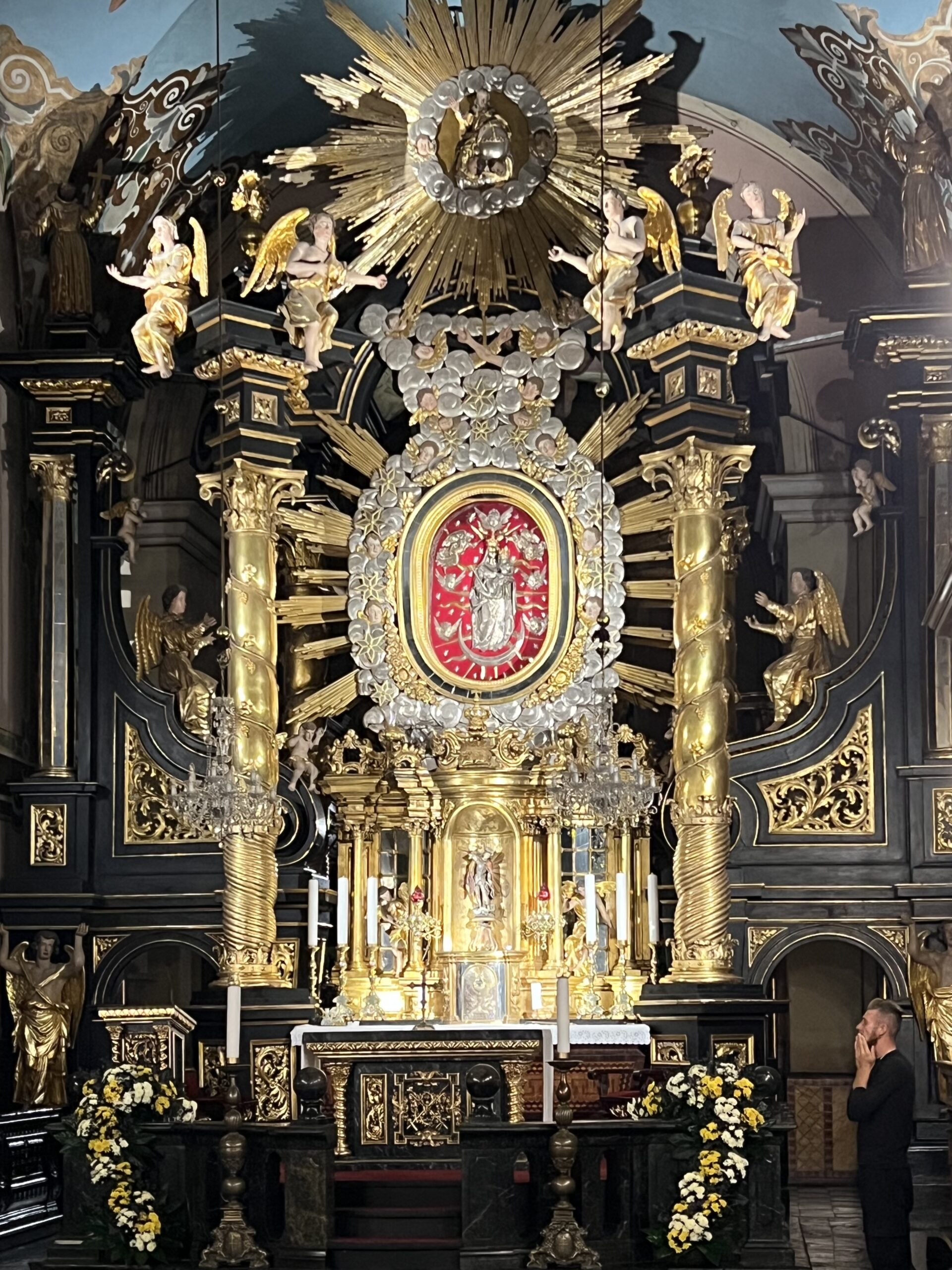
At the altar stands a silver image of the Angelic Mother of God. This comes from Loreto, Italy, and was purchased in 1590 by Bernard Maciejowski (1558-1608), Bishop of Lutsk (1588-1600), later Bishop of Krakow (1600-1605) and Archbishop of Gniezno (1606-1608). He gifted this image to the founder of the sanctuary: Mikolaj Zebrzydowski.
Against a wall in the presbytery is a painting by Karol Gustav Politynski (1870-1944). The work, dating from around 1887, depicts the crowning of the statue of grace.
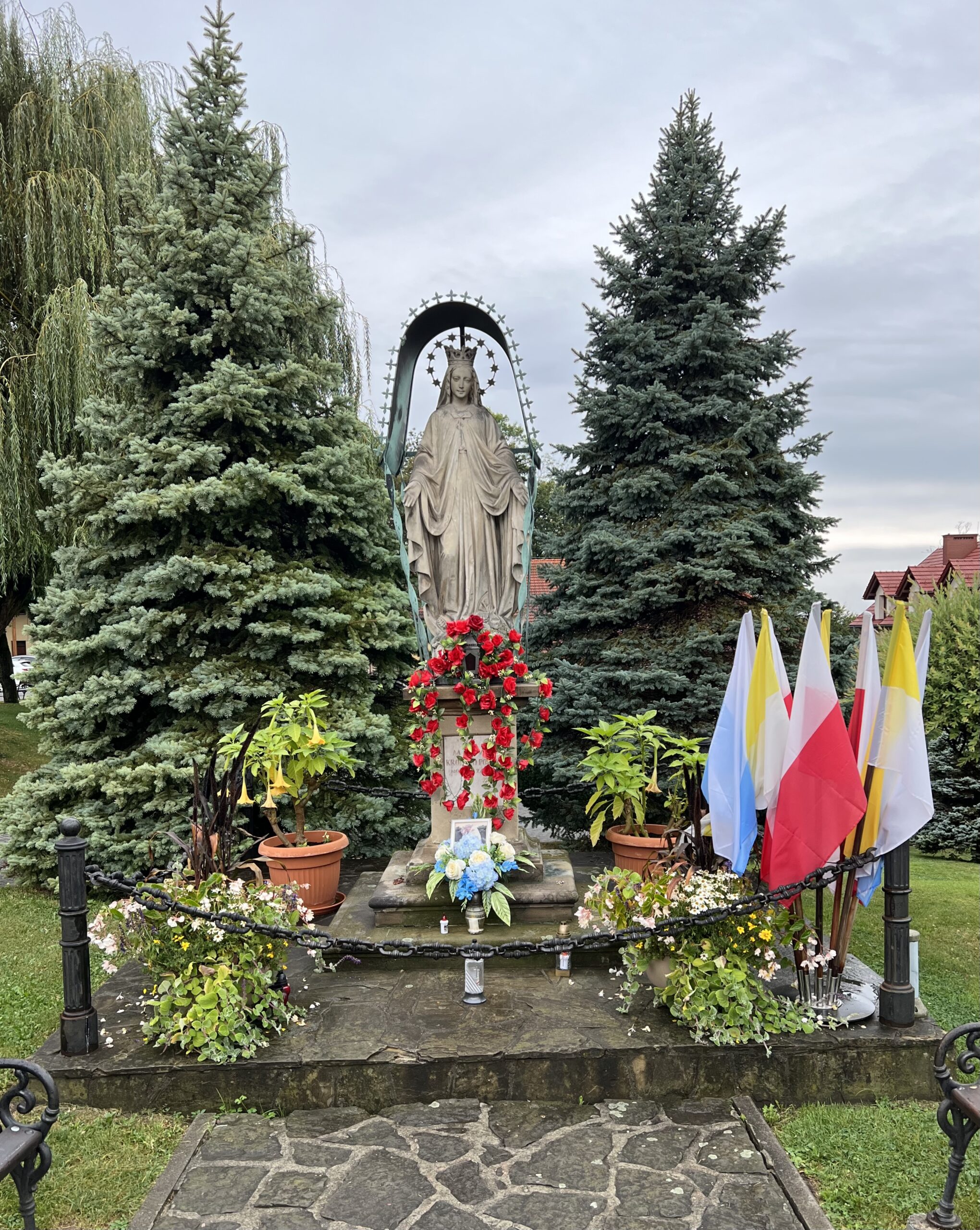
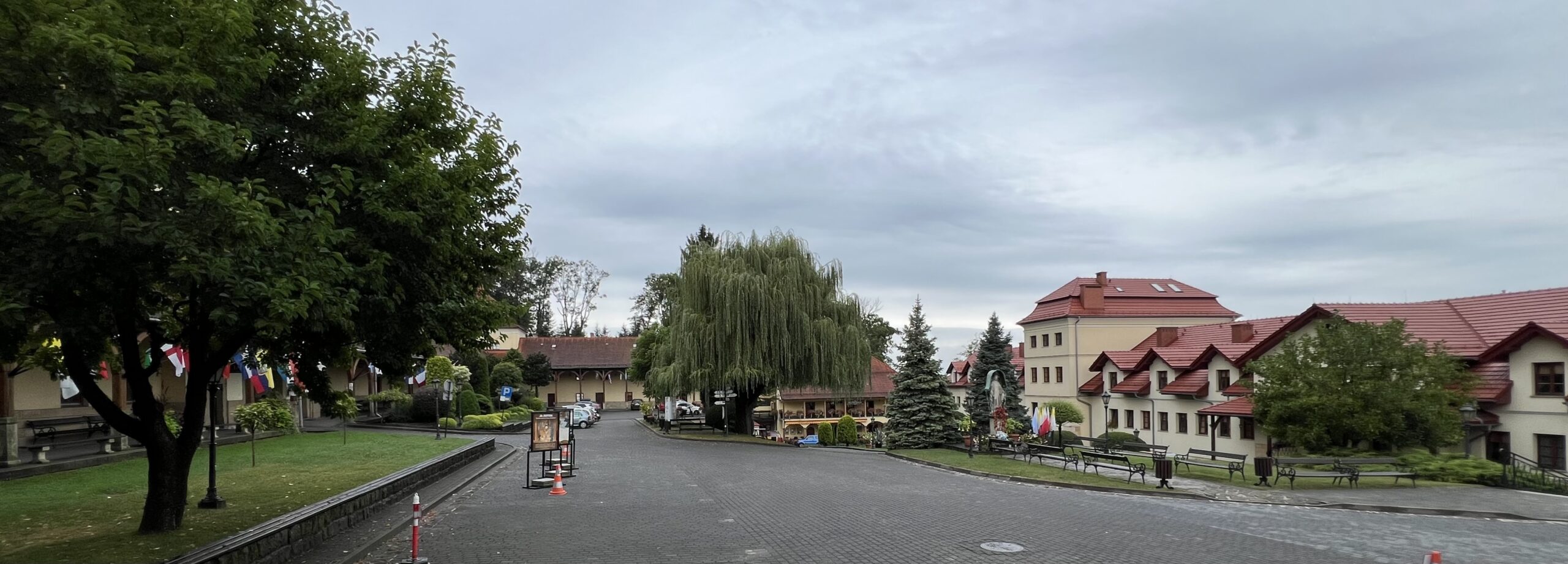
In the middle of the large square, next to the basilica, in front of the building for overnight stays and reception, stands an effigy of the Mother of God, created in 1913 by Wojciech Samek (1861-1921).
Around the monastery, there are 6 km of paths, which ascend through a forest, with a route of 42 chapels laid out. This represents Jesus's walk to Golgotha. This Golgotha was a donation.
During Holy Week (the week before Easter), there are passion plays, which are very popular. On the birthday of Mary, 8 September, and 15 August, the feast of the Assumption of Mary, many visitors come to the sanctuary. 2 August is also a busy day because then the feast day of the Angel of the Mother of God, as the miraculous image is also called, is celebrated.
The pilgrimage site offers opportunities for overnight stays. There is a shop for purchasing devotional items and a restaurant with a café.
The pilgrimage site receives more than 1 million visitors annually.
The basilica is open every day.
ACCESSIBILITY
The pilgrimage site of Kalwaria Zebrzydowska is located about 35 km south-west of Kraków.
Address: Ul. Bernardynska 46, 34-130 Kalwaria Zebrzydowska.
For current information, the source is: www.kalwaria.eu.
Experience
I've been told it's a major pilgrimage site. That's Kalwaria Zebrzydowska. While preparing to visit this place, I delved into all sorts of information sources. As a result, a clear picture has emerged on paper for me of this extraordinary Marian shrine. I've become convinced that I can spend the necessary hours there to immerse myself in the spiritual experience of this pilgrimage site.
The last few kilometres to the sanctuary go uphill, and a little later I see the high walls of the monastery complex, which suggest that much is still hidden from me. When I reach the entrance to the imposing monastery complex, I am completely awestruck. It's certainly a large village. This thought strikes me as I enter the grounds. At reception, next to the entrance, I book a room and then head for the basilica.
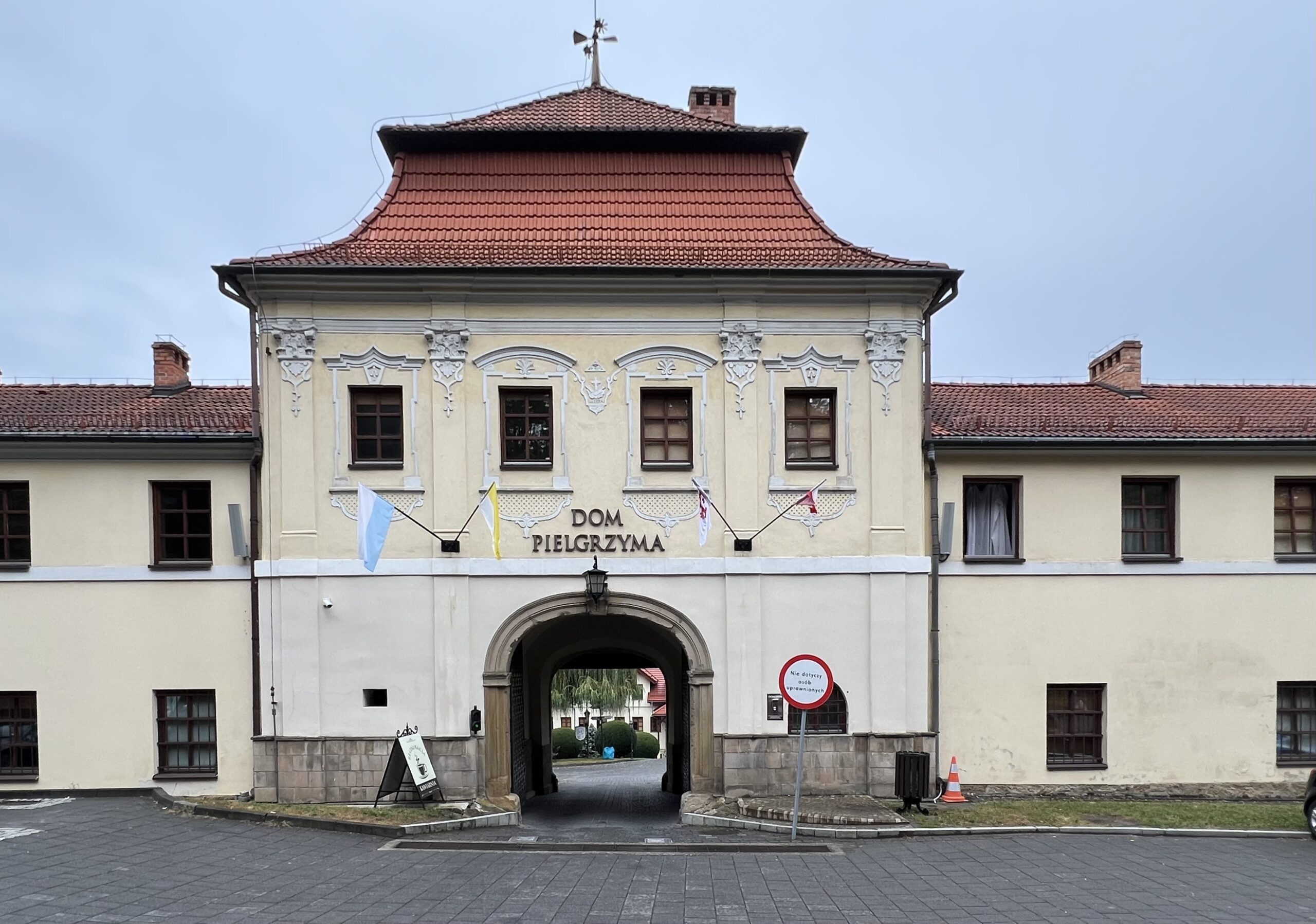
The church building is not only large, but also extensively adorned with ex-votos, paintings, frescoes, and many statues. This house of worship is a true museum where hundreds of thousands are welcomed annually. To the basilica, it has corridors, which are full of mementos and depictions of all sorts of memorable events, such as the visits of Pope John Paul II, both in his youth and in his later years.
The main altar in the basilica is high and wide. Centrally placed is the silver image of Mary. The chapel for Mary of Kalwaria is busy. Miracles have been attributed to this image of Mary. This is where the pilgrims come. Here they pray to Our Lady. Here Mary is close to the visitors. Here the pilgrim is touched. For me, this is the place to pray to Our Lady, with intentions for friends and acquaintances who are going through difficult times. PHOTO!!!
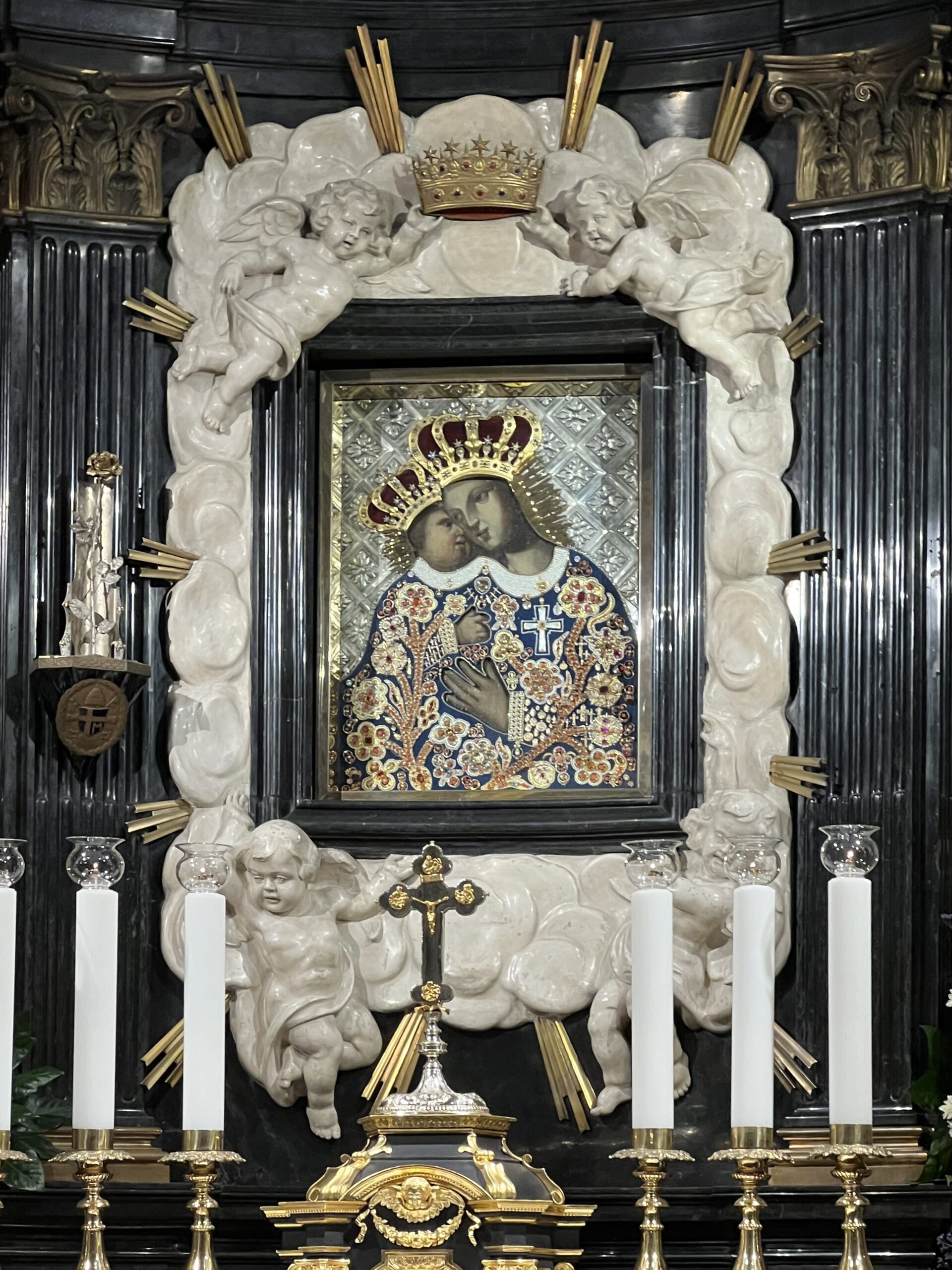
In the church, I find a prayer card. The front of the card features a photograph of the miraculous image of the Mother of God of Kalwaria Zebrzydowska, and the back has a German text which reads in Dutch:
“Prayer for all requests.
Holy Mary,
Our Mother of the Calvary, our Lady, our greatest Comforter to God. We come to you in deep humility and childlike trust and flee to you. Present us to your Son.
Mercy for our sins and His help in our requests.
On this holy place chosen by you, you have so often helped the suffering, the mourning and the unhappy ones. Therefore, we also hope that you will not abandon our worries and needs, and that you, as the best Mother, will take us under your protection.
Holy Mary, Mother of God, pray for us sinners, now and at the hour of our death.
Amen.”
After visiting the basilica, I'll tour the monastery complex and visit some chapels, a restaurant, and a souvenir shop. I'll then leave the monastery and head to the works on Golgotha. Along the route, I'll pass many chapels. I'm increasingly impressed by this pilgrimage site.
With many cherished memories, I depart from the pilgrimage site. What a beautiful gift of experience I have received here!
Environment
The town of Kalwaria Zebrzydowska is located near the pilgrimage site.
Wadowice, the birthplace of Karol Józef Wojtyla, who would later become Pope, is nearby. To get to Kalwaria Zebrzydowska, travel 15 km to the east.
From Kraków to Kalwaria Zebrzydowska is a journey of 35 km to the southwest.
Arriving from the great pilgrimage site of Czestochowa to Kalwaria Zebrzydowska means travelling 188 km south.
Travelling from the Polish capital, Warsaw, to Kalwaria Zebrzydowska is a journey of 331 km southwards.
~~~

 Nederlands
  English (UK)
  Deutsch
  Français