~~~
History
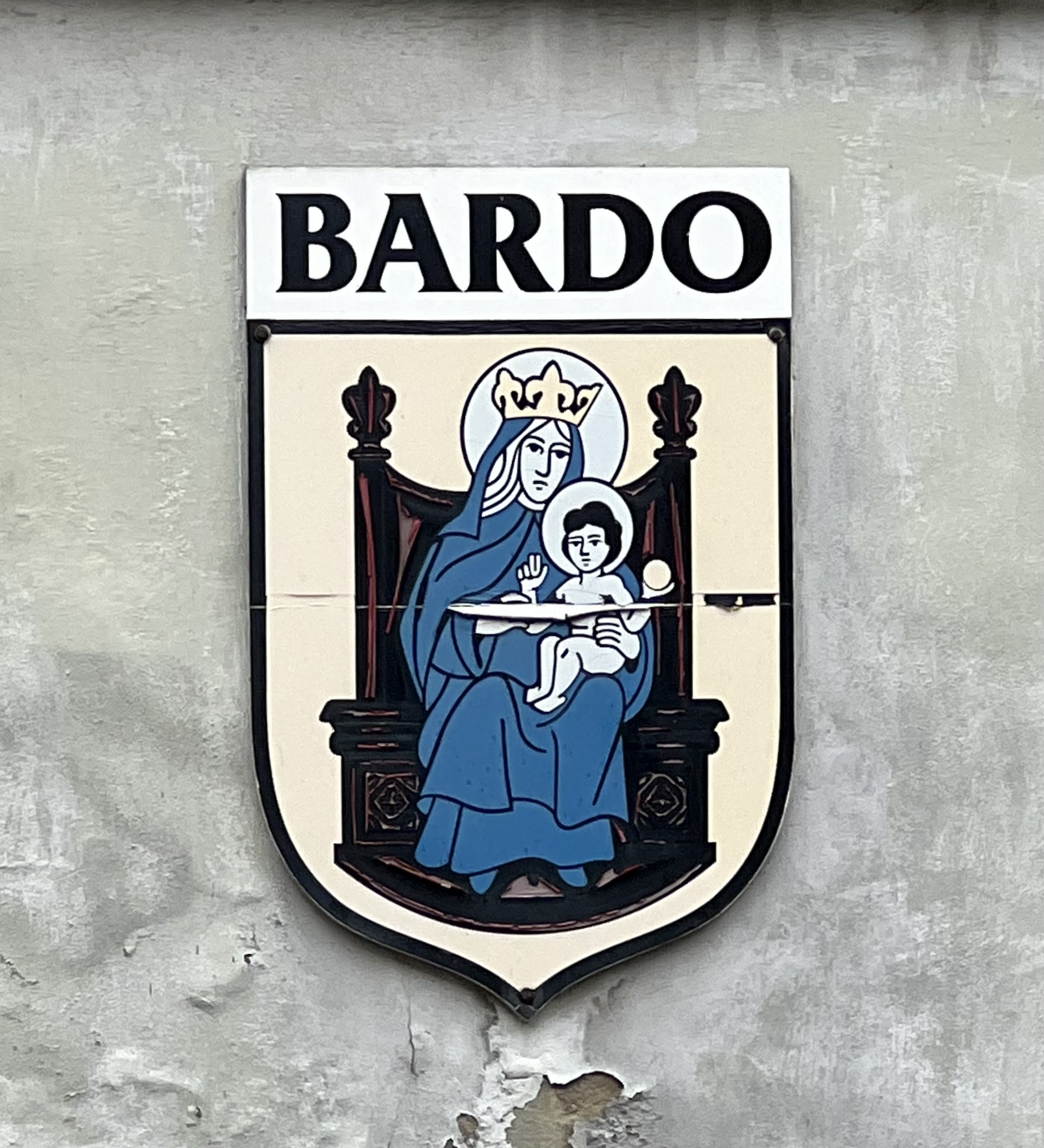
The name Bardo came shortly after the Second World War (1939-1945) and replaced the German name for the place, Wartha. The word “Bardo” means hill. The place's coat of arms features Mary with Child. The name Wartha originated in 1318. The place now has about 3,000 inhabitants.
From the 12th century onwards, it is known that the Catholic faith was strongly represented among the people. In 1189, Siroslaus II (+1201), Bishop of Breslau (1170-1198), donated a chapel, situated on the hill, to the Order of St John, a Protestant group. Laurentius, Bishop of Breslau (1207-1232), donated a chapel to the newly established Kamenz monastery of the Augustinians.
Twice it is said that Our Lady appears in Wartha, namely around 1200 and on 5 May 1400. A legend tells that Our Lady appears to a young man who is praying. She gives him her image with the words: “Take with you, my son, your Mother”. Mary commissions him to look after a chapel to Her.
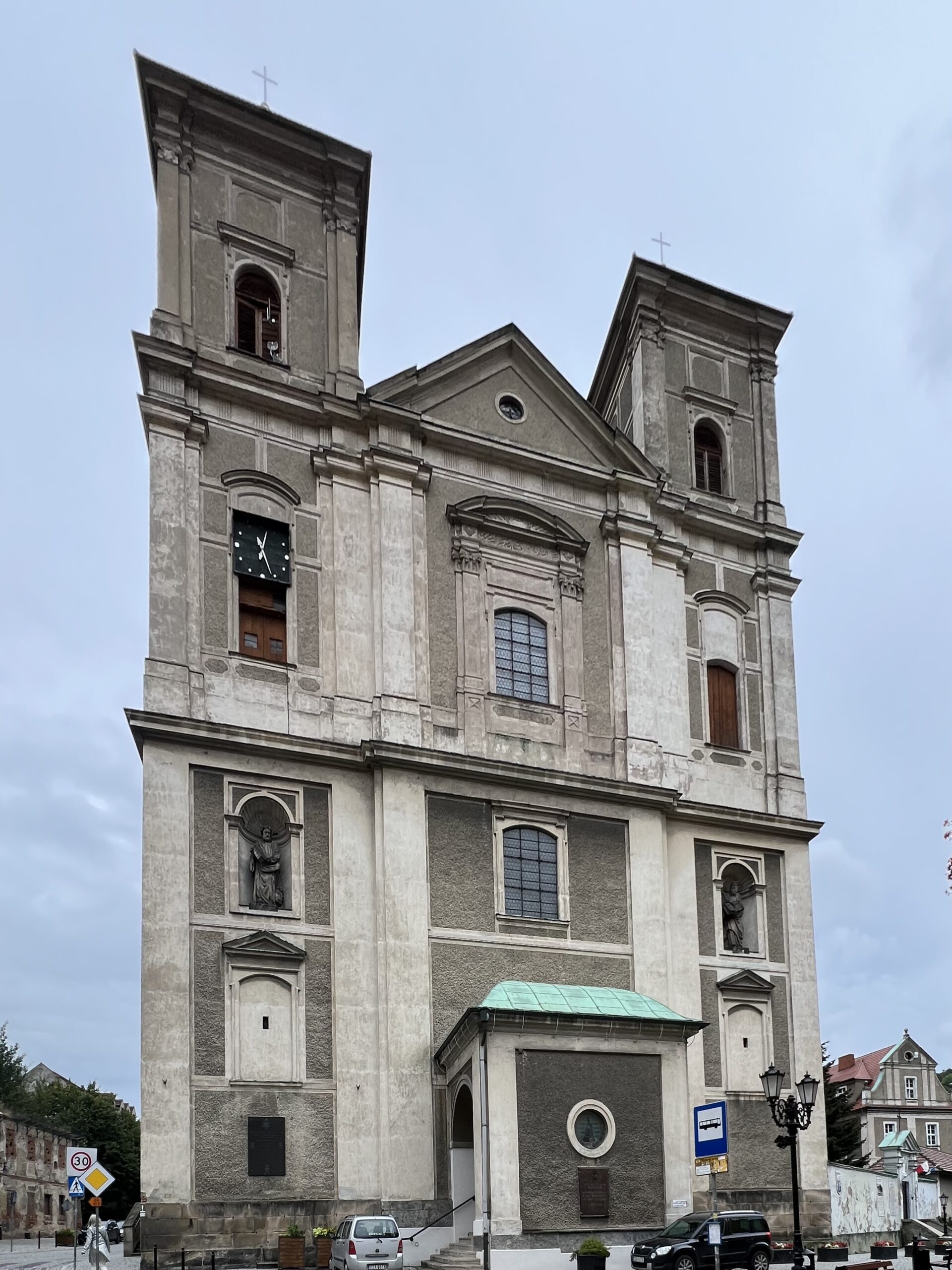
One source mentions the year 1270 as the start of the pilgrimage. Over the centuries, miraculous healings have occurred and these have been recorded in a book of miracles.
Around 1350, a church was built, which was destroyed by the Hussites.
Between 1408 and 1411, another church was built, and this one was also destroyed by the Hussites. In 1440, the church was rebuilt and Cistercians from the convent of Kamenz arrived to lead the pilgrimages.
Around 1617, a Mary chapel was built on the Warthaberg.
In the years 1617-1619, the Calvary mountain is put into execution.
Following the Thirty Years' War (1618-1648), which saw much violence between Protestant and Catholic states, the reconstruction of the church took place. All the previously mentioned chapels and churches had disappeared.
The current Baroque church was built between 1686 and 1704 due to the ever-increasing number of pilgrims. This was done under the leadership of initiator Augustin Neudeck (1640-1702), abbot of the Kamenz monastery (1682-1702). His successor was Gerhard Woywoda (1659-1732), abbot of the Kamenz monastery from 1702-1732, who saw to the completion of the church in 1710. The high altar was created by Michael Willmann (1630-1706), a German Baroque painter also known as the “Silesian Rembrandt”. The statue of the Madonna is the oldest Marian image in Silesia, believed to be from the 11th century, with its maker unknown. On 28 September 1704, the building was consecrated by Franz Engelbert Barbo von Waxenstein (1664-1706), auxiliary bishop (1703-1706), even though construction was not yet fully complete.
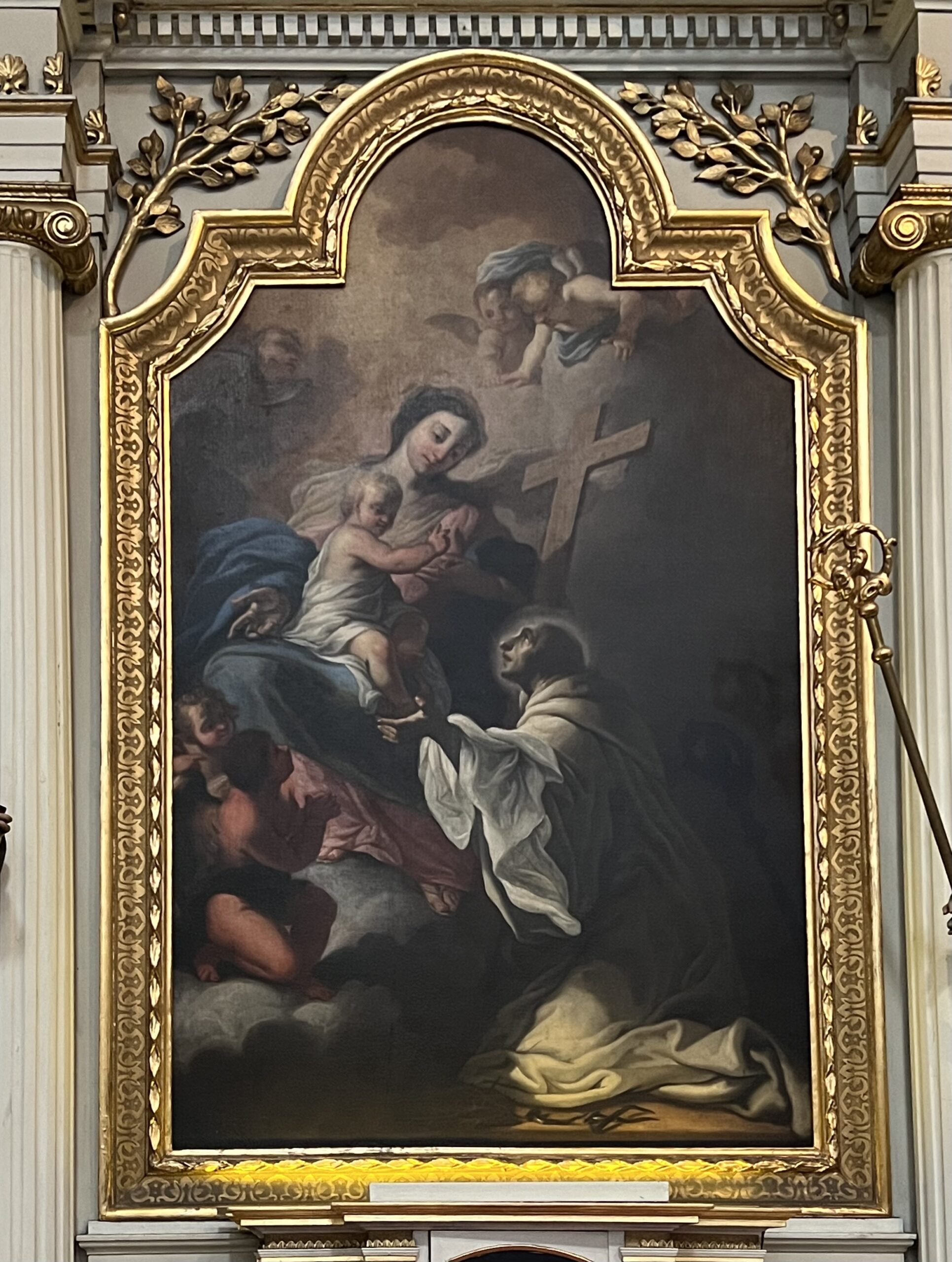
The two towers of the church date back to 1711.
In 1712-1716, the monastery was realised.
In 1759 the organ was installed in the church; it was a gift from the Kamenz monastery.
In the period 1873-1875, the front facade of the church was embellished with statues of evangelists.
The Redemptorists have been organising pilgrimages since 1900, and a museum is housed in the monastery.
Between 1902 and 1939, the Redemptorists on Rozenkransweg built several chapels with scenes from the mysteries of the Rosary. The architect was the German Ludwig Ignatz Anton Schneider (1855-1943).
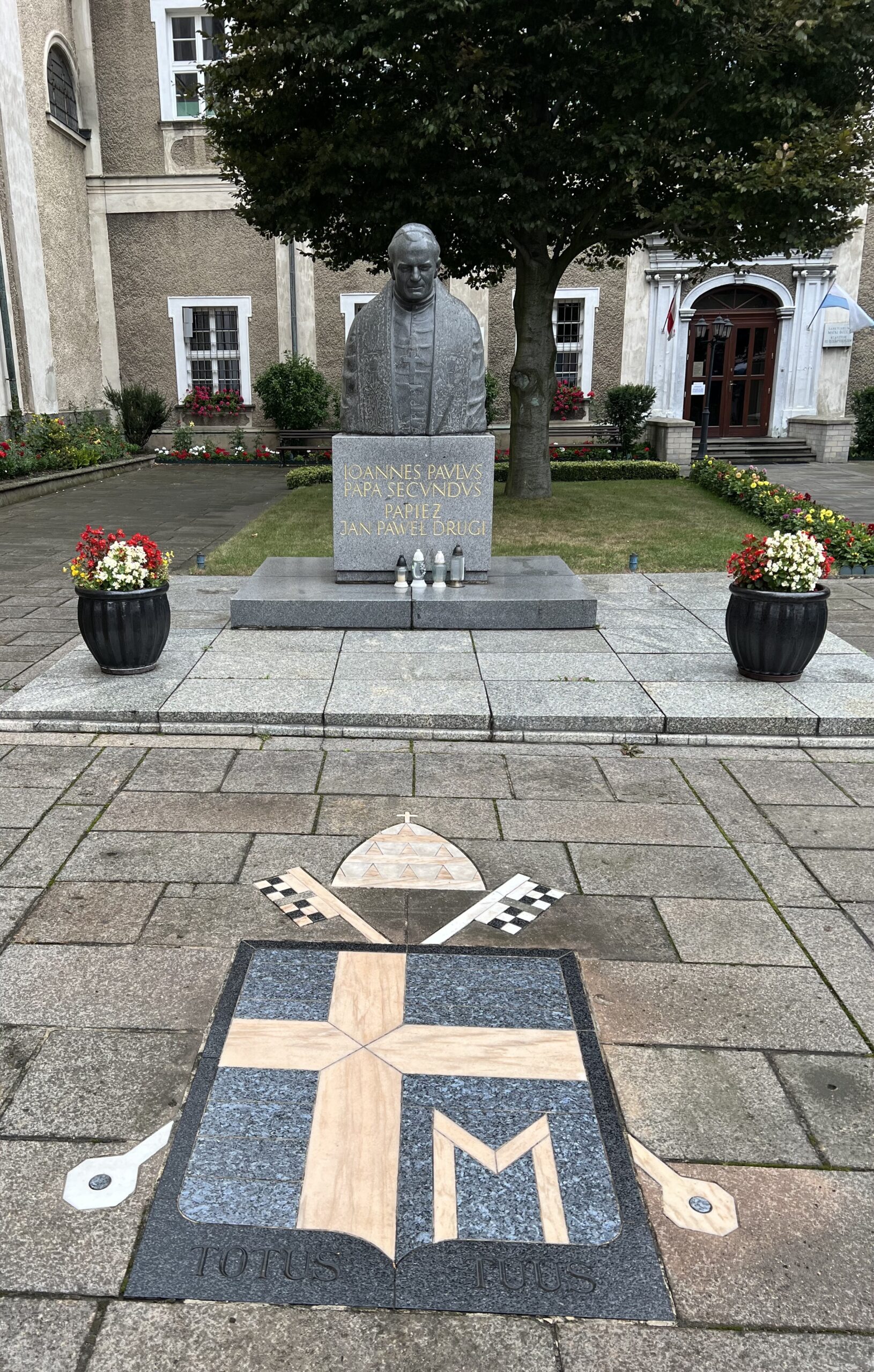
The pilgrimage site is visited twice by Karol Józef Wojtyła (1920-2005), namely in 1957 and 1978. In 1978 he becomes John Paul II, Pope during the period 1978-2005.
A monument to Pope John Paul II was erected in the pilgrimage site in 1981.
In 1989, another chapel was built on Rozenkransweg.
In 2008, the church was elevated to the status of a basilica. This title was bestowed by Benedict XVI, Pope from 2005-2013, born Joseph Aloysius Ratzinger (1927-2022).
Pilgrimage site
The pilgrimage church is located on a mountain about 500 metres above sea level and is called “Maria Visitatie”. It is a protected monument.
The basilica features about ten chapels, as well as particularly large paintings. The space is well utilised here.
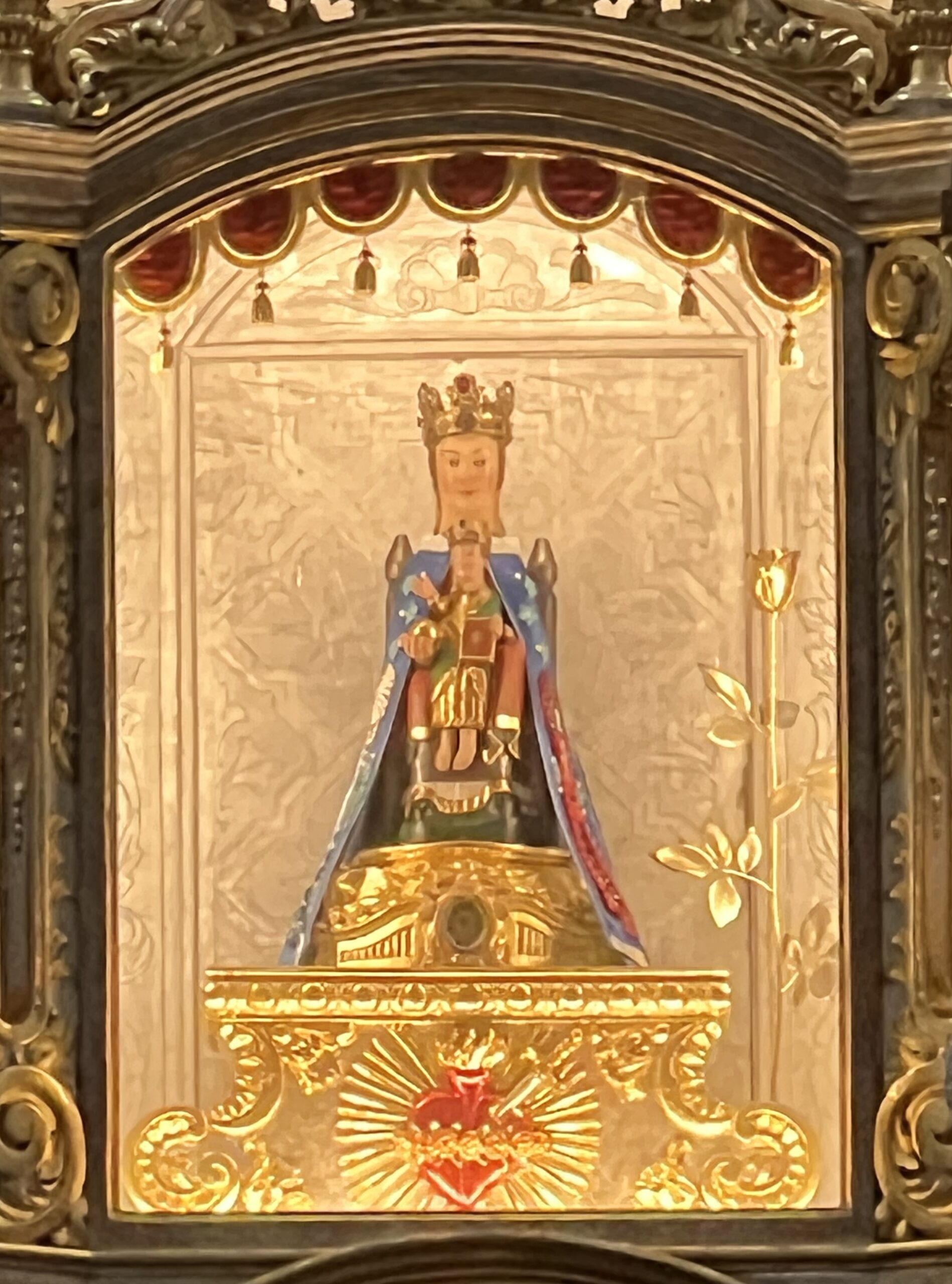
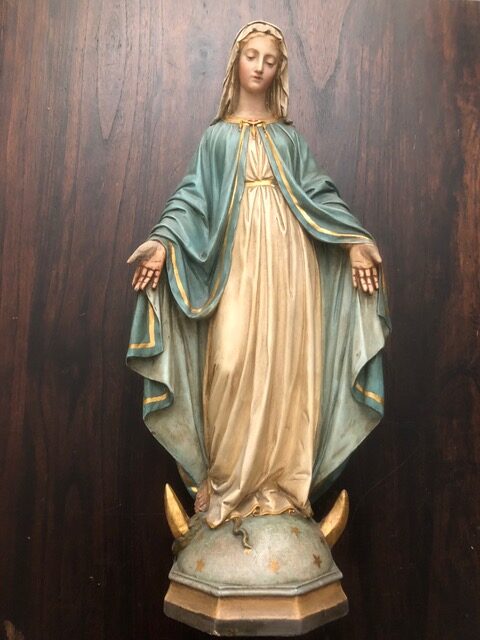
In the high altar stands the colourful image of grace, which is 42 cm high, depicting a enthroned Madonna and Child. The effigy is carved from linden wood in the 11th or 13th century. Mary holds an orb in her right hand and Jesus is on her lap.
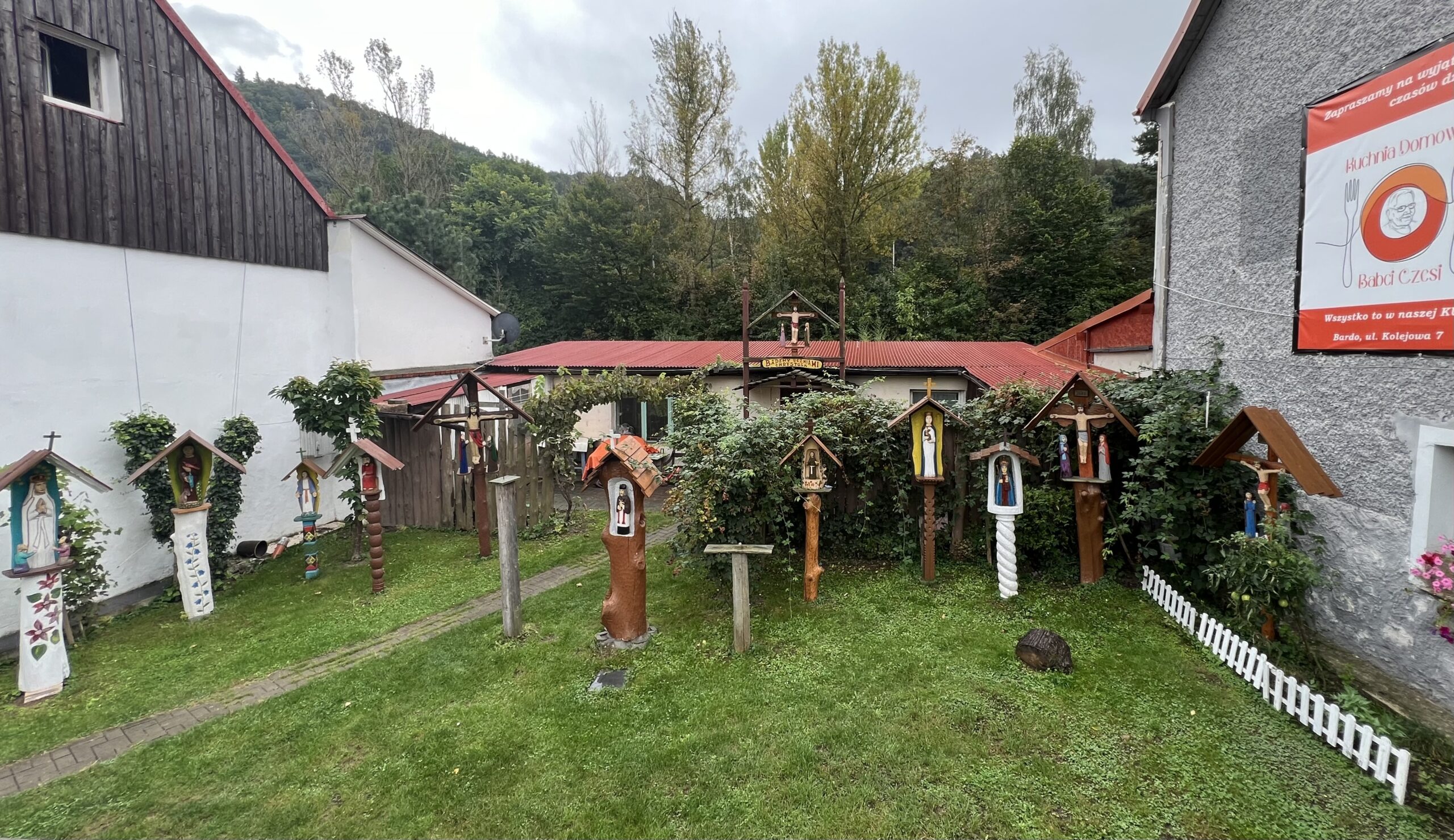
Catholic devotion is also found outside the basilica, as likenesses or chapels have been placed in some of the gardens.
ACCESSIBILITY
Bardo/Wartha is located south of Wrocław, in southwestern Poland, in Lower Silesia.
The address of the pilgrimage church is Plac Wolnosci 5, 57-256 Bardo/Wartha.
More information may be found at www.bardo.pl.
Experience
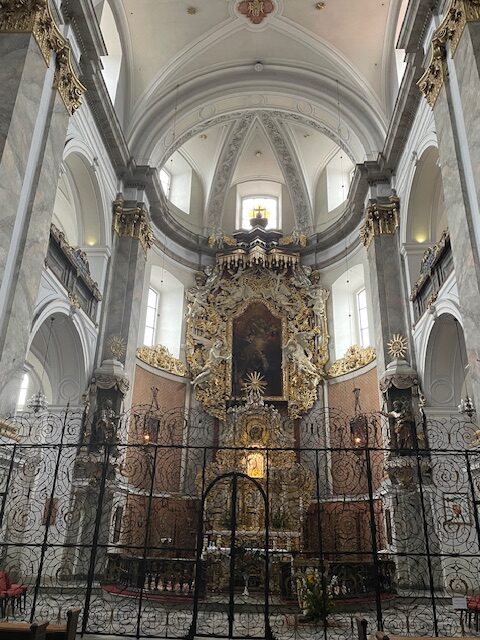
The two blunt towers of the basilica are visible from afar and that's where I'm heading.
The car will be temporarily parked on the outskirts of the village, and then I will walk to the basilica to greet Mary there.
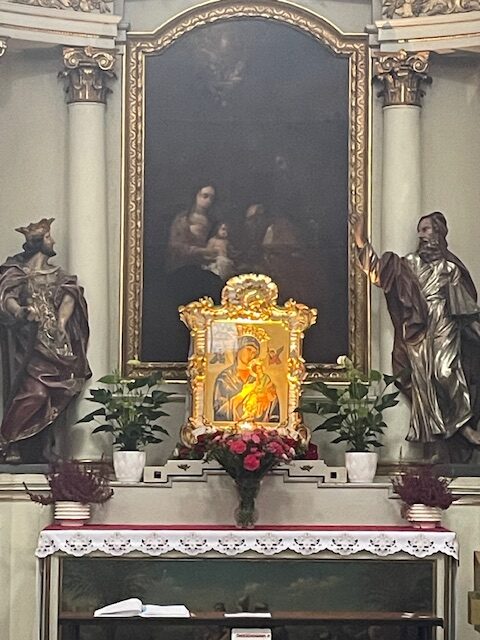
When I enter the basilica, the Baroque style stands out. What a beautiful interior this is!
In the basilica, I take a stroll and when I reach the magnificent high altar, I see the statue of grace in a glass case. Mary is well protected here. The effigy depicts a enthroned Madonna. Mary has her little Son on her lap. In the basilica, an icon of “Our Lady of Perpetual Help” can also be admired. The artwork stands in front of a large painting.
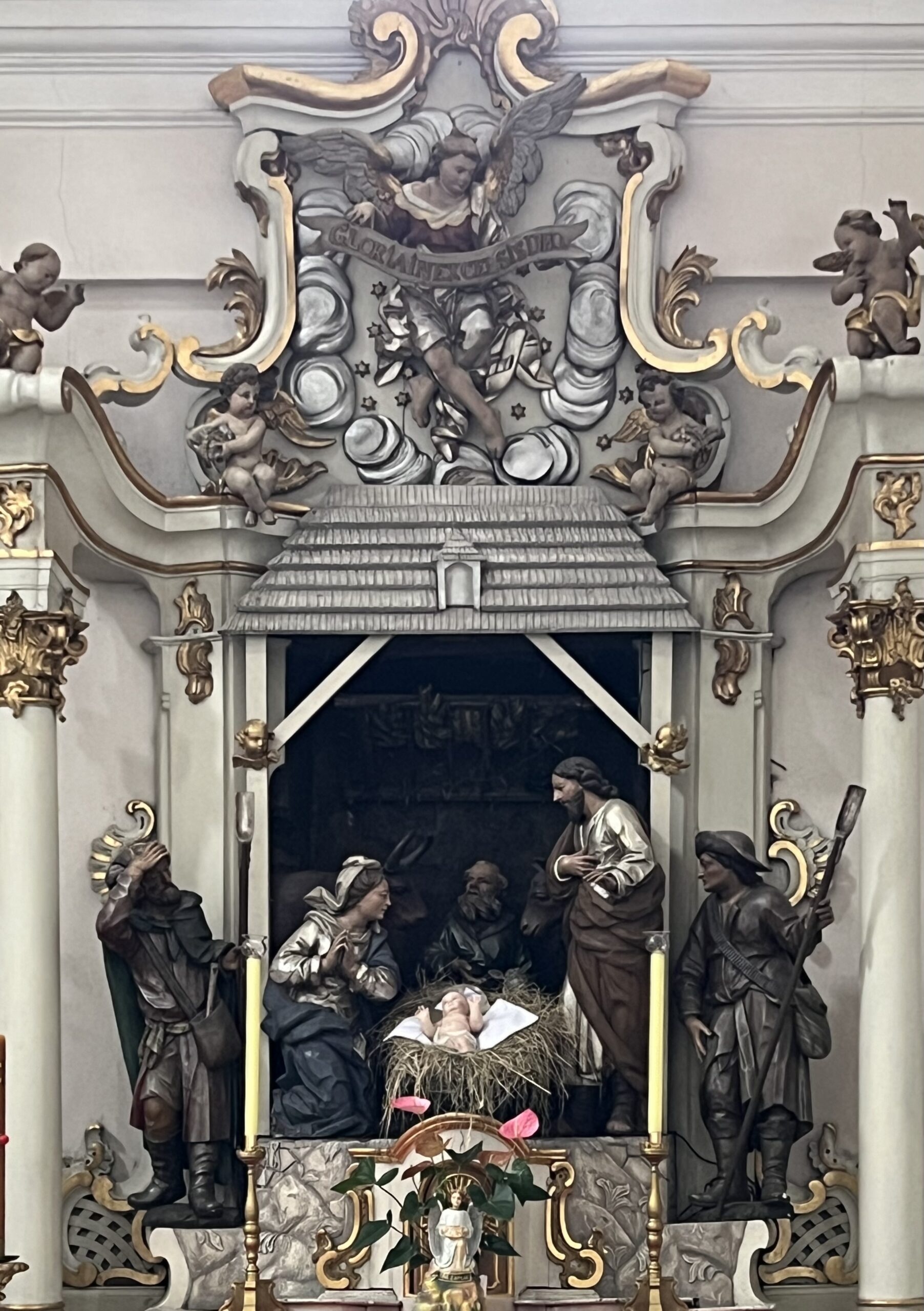
I notice that so many chapels have been created in this building, and that there is always a call for attention to Christmas here with a magnificent scene featuring charming figures.
A large statue of Pope John Paul II also stands out just outside the basilica. This Polish Pope is clearly beloved here.
Next, I’ll take a walk around the village and come across a rosary with quite a few chapels. As I continue walking, the coat of arms of Bardo can be seen on a street. It depicts the seated Virgin Mary with her Child on her lap.
Environment
Travelling from Wroclaw to Bardo is a journey of 80 km in a southerly direction.
Travelling 205 km west from Katowice will bring you to Bardo.
Leaving the great pilgrimage site of Czestochowa to arrive in Bardo means travelling 277 km to the west.
The pilgrimage site of Wambierzyce/Albendorf is only 33 km from Bardo. Departing from Wambierzyce/Albendorf to arrive in Bardo means travelling westwards.
From the pilgrimage site Piekary Śląskie, it's a 211 km journey west to reach Bardo.
~~~

 Nederlands
  English (UK)
  Deutsch
  Français