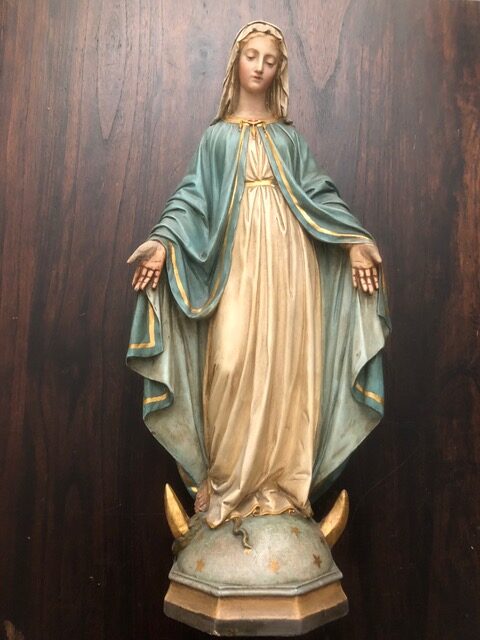
In Roosendaal, in North Brabant, you'll find De Kapelberg. Here stands the Marian chapel, which is dedicated to Our Lady of Seven Sorrows.
A legend tells of a skipper sailing on the Steenbergse Vliet. He gets into trouble on 19 November 1421, the day of the St. Elisabeth’s Flood. The skipper promises to build a chapel to Mary if he arrives safely ashore. This happens, and the veneration of Mary begins here.
In the course of the 19th century, a statue of Mary was placed on a small ”hill”, hence the later name De Kapelberg. This “hill” was surrounded by seven small hillocks, and an iron cross stood on each elevation. The seven crosses are a reference to the Seven Sorrows of Mary.
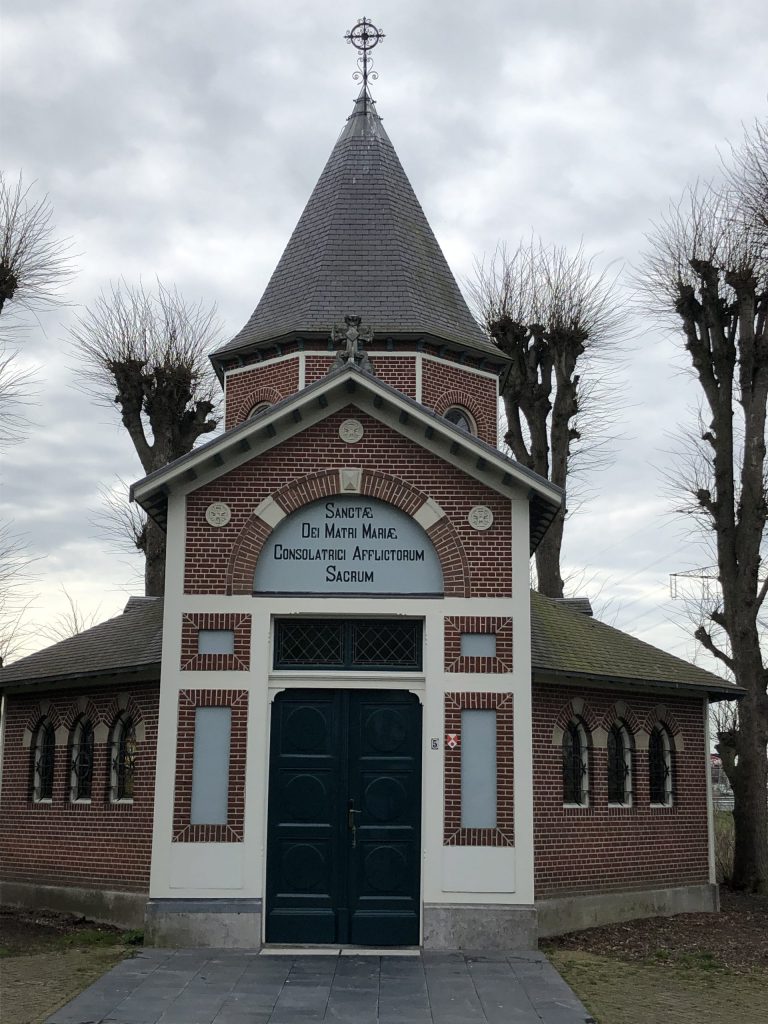
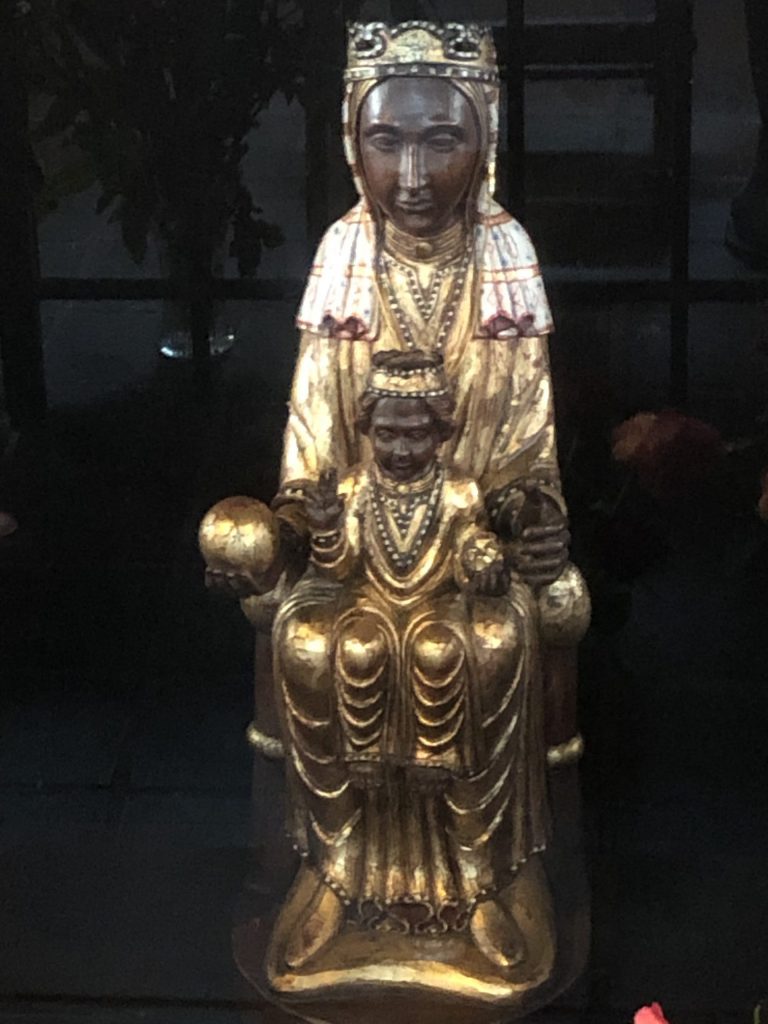
I am standing before the chapel and learn that the current, octagonal Marian chapel was built in 1896/1897. The chapel has a Romanesque appearance. On the facade, above the entrance, I read the text: “Sancta Dei Matri Consolatrici Afflictorum Sacrum”, which means “Shrine to the Holy Mother of God, Comforter of the Afflicted”. In the chapel, watercolour engravings can be seen, depicting the Seven Sorrows of Mary. The history of De Kapelberg is depicted on three stained-glass windows. In the small place of worship, a copy of the Black Madonna from the Spanish pilgrimage site of Montserrat can be seen.
The Maria Chapel is located alongside the A17 motorway, on the edge of the Borchwerf Noord industrial estate, at Deurlechtsestraat 5, 4704 RP Roosendaal. The chapel is open daily and is unique within the religious landscape of West Brabant.

 Nederlands
  English (UK)
  Deutsch
  Français