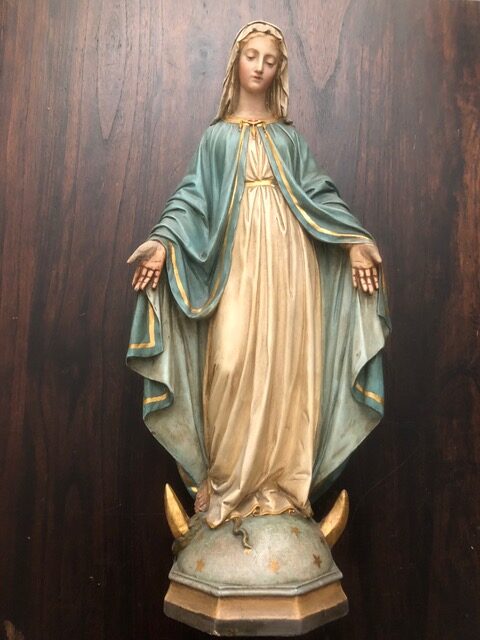
Countless artists have chosen the depiction of Mary and scenes from her life as subjects for their works for many centuries. The number of scenes is so numerous and extends beyond her birth, childhood, pregnancy, motherhood, death, assumption and coronation. Images of Our Lady can be admired worldwide in thousands of churches and museums. In addition, she is omnipresent in many town squares, on hillsides, and in living rooms. Is that not a miracle?
Mary is the most chosen woman to be depicted. She has been represented on canvas, wall, ceiling, panel, as a drawing or painting. She has also been shaped into sculpture countless times. When looking at paintings, frescoes, stained-glass windows, icons, statues, and Stations of the Cross featuring Mary, the viewer's attention is drawn. This also applies to expressions of feeling about Mary through music, poems, stories, and sayings. It has always been a well-intentioned attempt at ultimate beauty, as imagination says a great deal in thought and subsequently as expression. Virtuoso artists practice the play of light, shadow, and darkness. They choose colours, determine positions, depict joy, emphasise suffering, and make faces speak. The same applies to poets, writers, and composers who imbue words, turns of phrase, sounds, and tones with feeling. The artist tries to represent magic and convey wonder. Then, through a variety of compositions, art and faith merge, and perfection is sought.
For many a painter, sculptor, draughtsman, poet, writer or composer, trying to depict Mary is a form of prayer to convey creative faith. The artist's idealisation reaches great heights, and sensitivity aims to touch the heart. There is no limit to the depictions and imaginings of Mary, and they are full of soul. Artistic expressions characterise Mary, but no one is entirely able to master portraying her beauty. Genius possesses talent, which has limitations in imagining the pure beauty of Mary. Thus, every creative expression remains unfinished.
Many an image, painting, text or piece of music about Mary speaks a language that is understandable to many. This also applies to those who do not know or understand the meaning of Our Lady. Mary in art conveys messages and allows Her to be known and understood. Religious art thus has significance in making the language of faith in Mary understandable. This can already happen in the local church, where visitors can linger a little longer at images of the Virgin Mary or by listening to a Marian hymn performed by a church choir.
From the 4th century onwards, Mary is depicted in art, and in the guise of an empress of Byzantium. The development of artistic depictions continues and has never ended. Thus, imagination reaches for eternity.
Infrequently seen depictions of Mary relate to her pregnancy. Our Lady of the Annunciation is a rare iconographical theme in art. It is unusual for Mary to be depicted with a swollen belly during the Visitation when she is visiting her cousin Elizabeth. This also applies when Mary is on a donkey and looking for a place in an inn to give birth. There are also few artistic representations of Mary breastfeeding her Son.
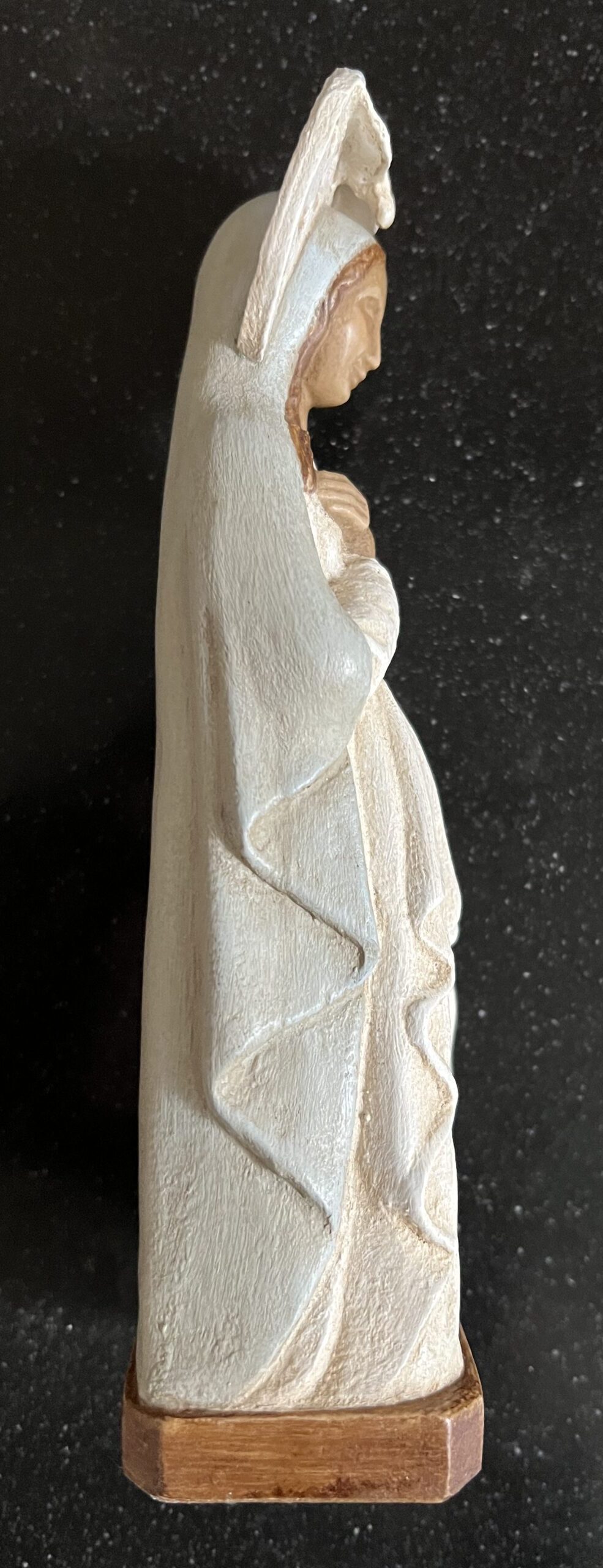
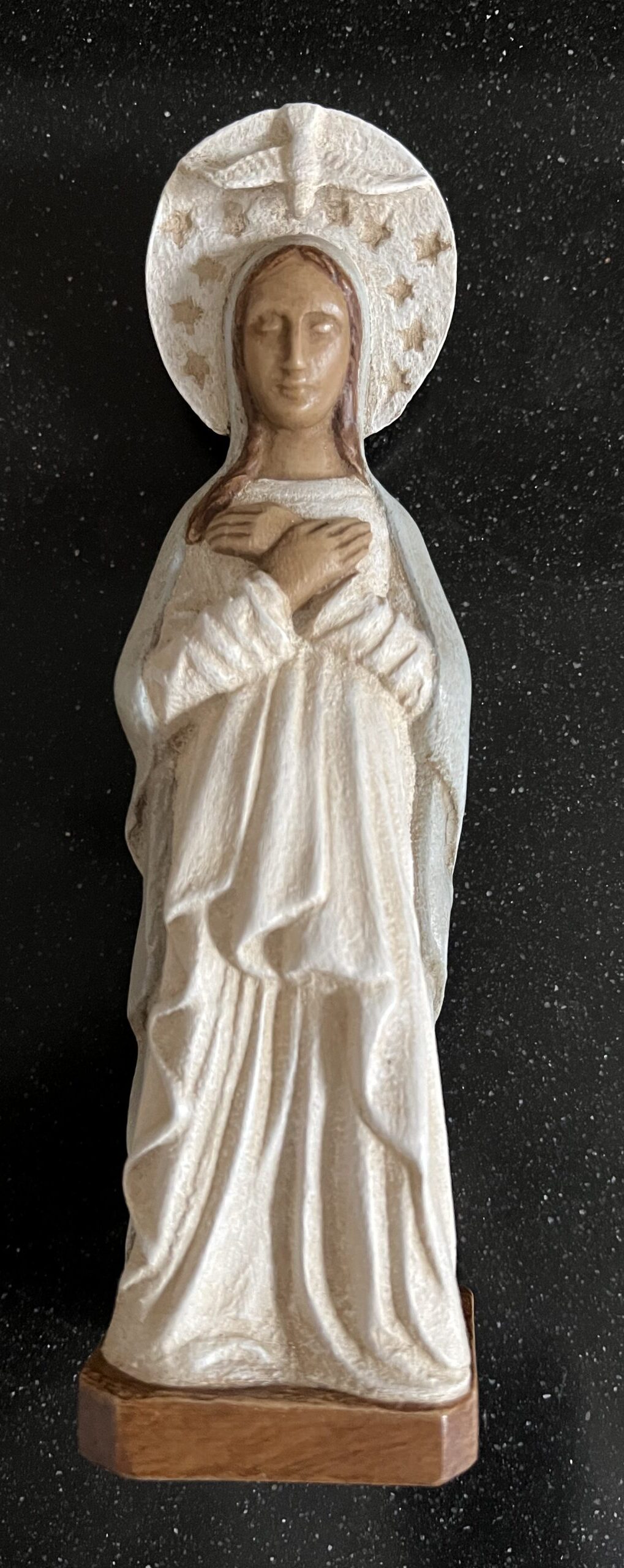
An image of pregnant Mary, therefore, is not so common. Consequently, there are also not many depictions of Our Lady in joyful anticipation. At the pilgrimage site in Lourdes, there is an art studio where statuettes of Mary with a protruding belly are for sale. In “Atelier d’Art, artisanale des Monastères de Bethléem” (Art Studio Crafts from the Monasteries of Bethlehem), located at Boulevard de la Grotte 87, there is a statuette of the expectant Mary.

 Nederlands
  English (UK)
  Deutsch
  Français