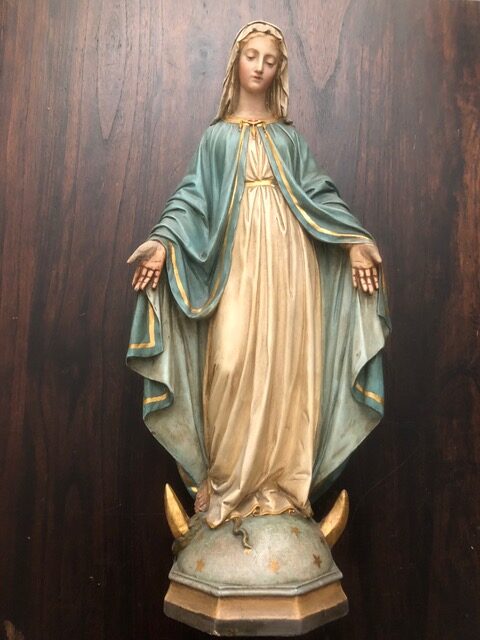
Etymologically speaking, the word 'Kerstmis' is a compound word. The etymology relates to the words 'Christus' and 'mis'. It is the mass (celebration) for the birth of Jesus. Kerstmis is an official public holiday, which is why the word is capitalised.
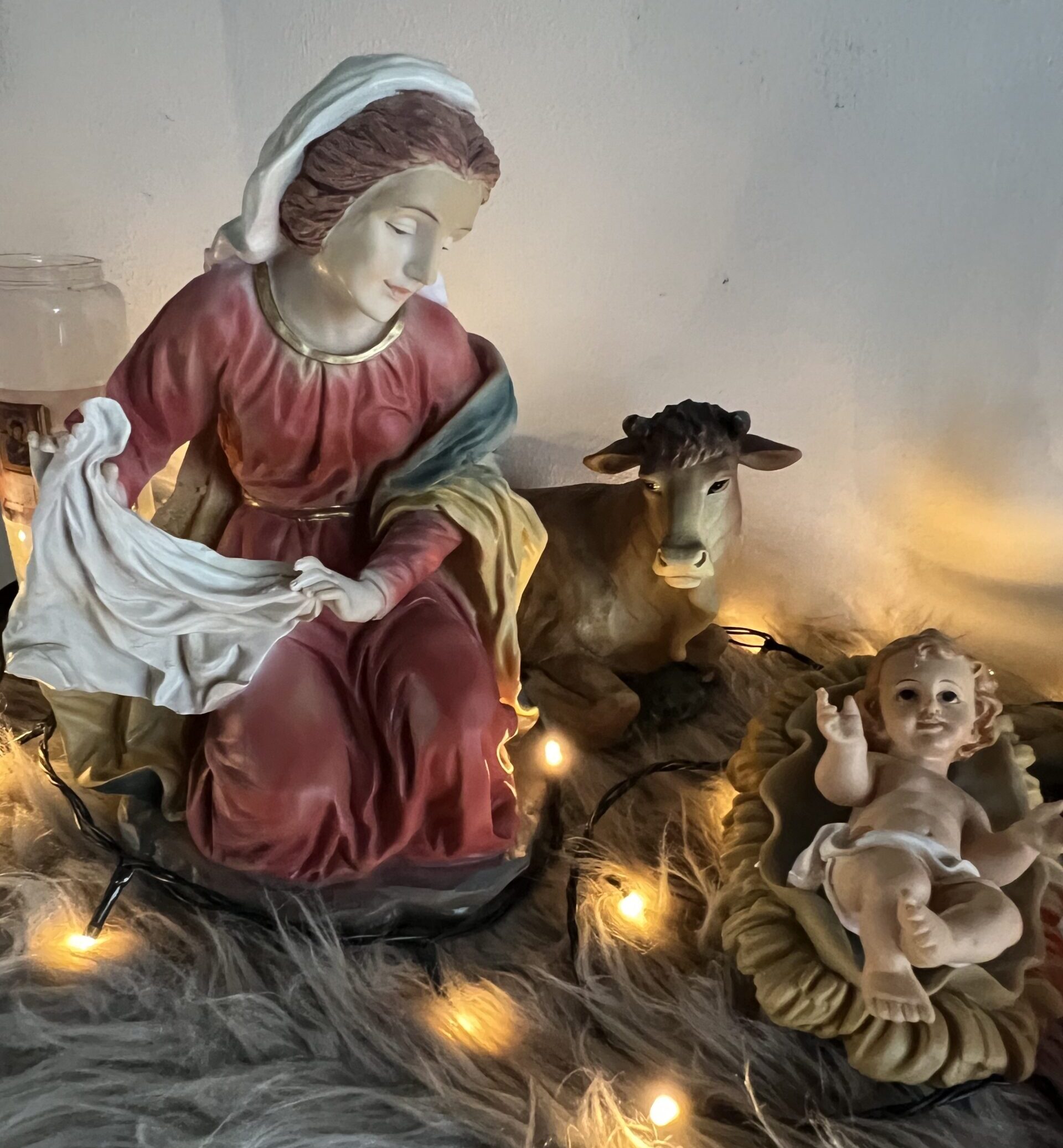
The traditional Christmas story comes from the Gospel of Luke, specifically chapters 1 and 2. Emperor Augustus (63 BC – 14 AD) decides that people must register. To this end, Joseph and the heavily pregnant Mary travel from Nazareth to Bethlehem. There they find no room in an inn, and a humble space is a last resort. In the makeshift accommodation, Mary gives birth to a Son. Shepherds hear the special news from an angel and they are the first visitors to the newborn. Luke continues to write about the shepherds, because after hearing of the birth, the shepherds immediately set off and find Mary, Joseph, and the Child lying in a manger.
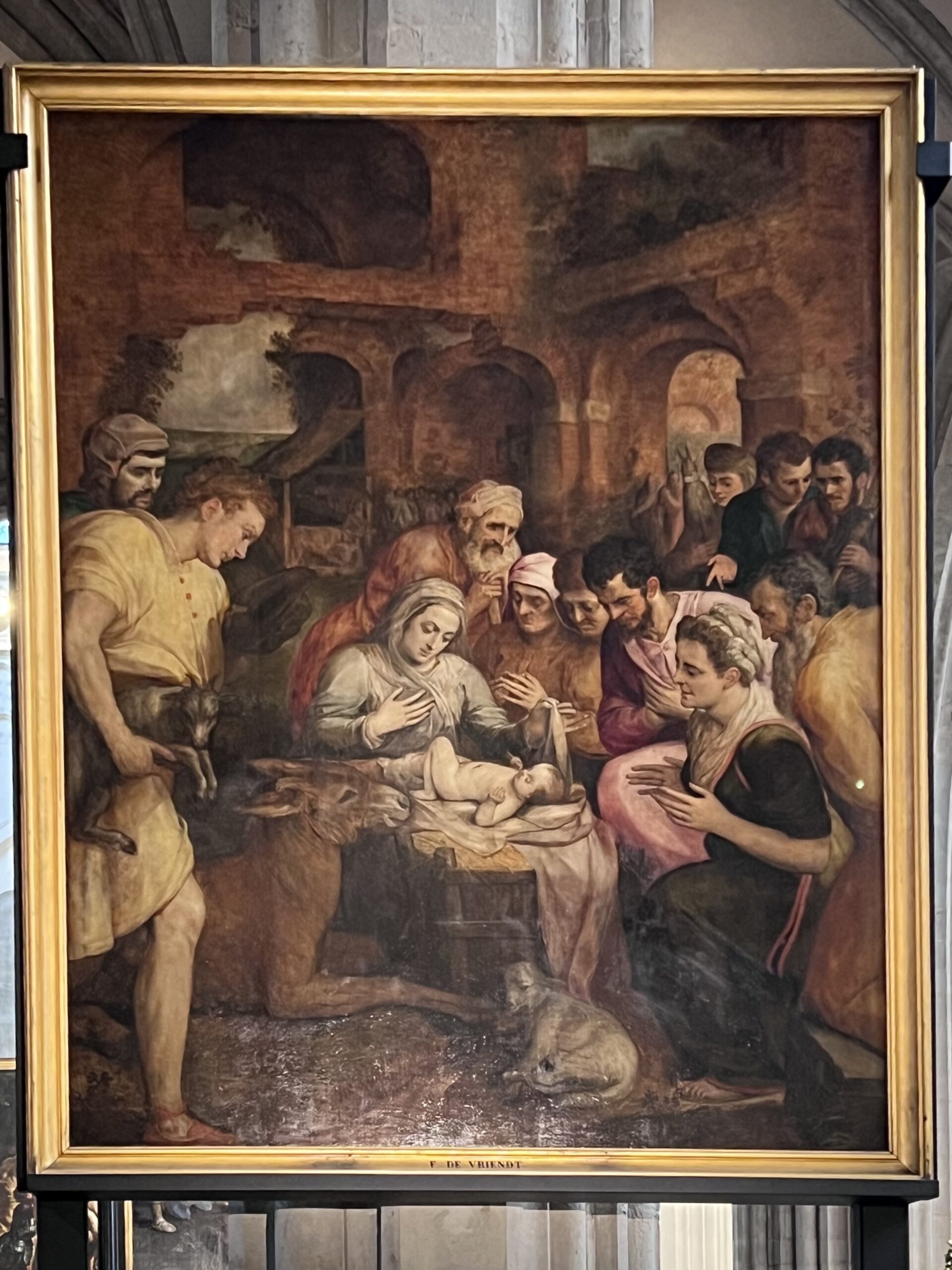
In the Gospel of Matthew, chapter 2, the arrival of the three wise men is described. They see a star, follow it, and come to Mary, Joseph, and Jesus. The star of Christmas night is a reference to Jesus, as he is called the bright Morning Star and also the light of the world. Subsequently, the wise men go to visit King Herod, but do not report on their visit to the infant Jesus. Nevertheless, the wicked Herod senses trouble and decides to have the newborn saviour killed. However, it is unknown who the infant saviour is. Therefore, many newborn children are murdered. However, to escape the murder plot of the king who feels threatened, Joseph, Mary, and Jesus flee to Egypt.
At the end of the pontificate of Innocentius III, Pope from 1198 to 1216, born Lotario dei Conti di Segni (c. 1160-1216), the birth of Jesus is celebrated at midnight mass in the Santa Maria Maggiore in Rome. This takes place in a setting similar to a painting by an unknown artist depicting the Nativity scene in a crib.
The figures in the Nativity scene are an invention of Francis of Assisi (c.1181-1226) in the year 1223. He came up with a Christmas scene in a cave near Greccio, which is seen as a vivid tableau that is still emulated worldwide. Franciscus is therefore not the originator of the Nativity scene, but he did introduce the figures.
Old sources do not state that Jesus was born on December 25th. Perhaps Mary gave birth to Him in the year 5 BC and He died in April of the year 30. It was Mary who most greatly desired the coming of Jesus. Mary gave birth to her Son at a young age; this happens around her 15th year, which was a common age at that time.
Christmas falls on 25 December because from the last days of December there begin to be more daylight. The choice of date has to do with the winter solstice. The day of Christmas is therefore exactly 9 months after 25 March, the day of the Annunciation. The church's celebration of Jesus' birth is on Christmas Eve, 24 December, and on the morning of 25 December there is a morning mass. The Christmas period lasts for several weeks. The run-up to Christmas is called Advent in the church, lasting for the 4 Sundays before Christmas. After Christmas, on 28 December, is the feast of the Holy Innocents, who were murdered by King Herod's soldiers. 6 January is Epiphany, the day of the visit of the three wise men from the East, and on 2 February is the feast of Candlemas (Presentation of the Lord in the Temple). 2 February then marks the end of the Christmas period, which began with Advent at the end of November.
The fact that Christmas falls on the 25th of December can be deduced from a few hypotheses.
A treatise from around 215 by Clement of Alexandria, church father, teacher and writer, born Titus Flavius Clemens (c. 125-215) suggests the possibility that the birth date is 6 January. The Eastern Orthodox Church chooses this day as the date of Christmas.
On 25 December, the festival of “Sol Invictus”, which is Latin for “unconquered sun”, was celebrated. This is the sun god of the later Roman Empire during the period from 753 BC to 476 AD. Incidentally, there was a continuous cult of the sun in ancient Rome. On 25 December, a festival is held and horse races are also organised in honour of the sun. In 336, Christmas may have been placed on 25 December. This happened during the time of the first Christian emperor of the Roman Empire, Constantine I the Great (306-337), born Flavius Valerius Aurelius Constantinus (c.273-337). At that time, there was acculturation, where the pagan culture made way for the Christian doctrine without banishing the older culture. Later research shows that this hypothesis is incorrect. Another assumption is the cellar hypothesis. Jesus' date of death is probably 6 April in the year 30, but his date of birth is unknown. In the 4th century, 25 December was chosen as Christmas.
In the middle of the 5th century, the celebration of Christmas begins on the night of December 25th in the church of Santa Maria Maggiore in Rome.
In the 11th century, the Eucharist on 25 December was called the Christ Mass. In English this is Christmas, and this is called Kerstmis in Dutch.
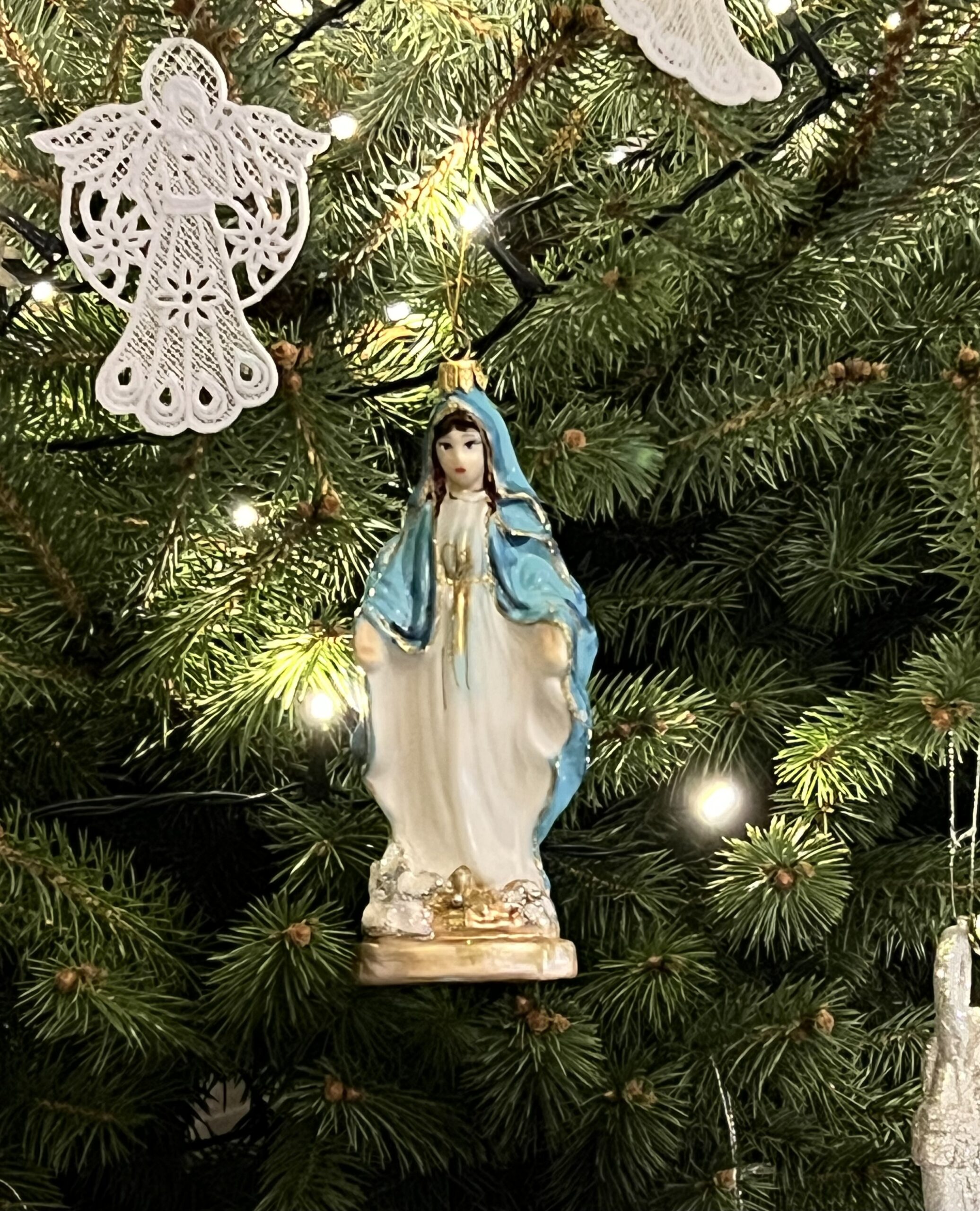
Bringing a Christmas tree into the home around the Christmas period is an old tradition dating back to the Middle Ages and has been passed down through Germanic culture. A pine tree has green needles and the colour green symbolises hope.
Then there's also Father Christmas during the Christmas period. Father Christmas originated from Dutch emigrants, who went to America to build a new life there. They also took traditions with them to the other side of the ocean, including the feast of Sinterklaas. In America, Sinterklaas was transformed into Santa Claus and later became known in many countries. However, Father Christmas has little in common with Sinterklaas. Although, like Sinterklaas, he gives presents, solidarity, sharing with each other, and caring for each other are present with Sinterklaas and are absent with Father Christmas.
~~~

 Nederlands
  English (UK)
  Deutsch
  Français