For centuries, relics have been venerated. It is an old tradition among believers to cherish the remains of a saint in prayer. Relics become of particular interest in times of hardship, such as war, famine, floods, or epidemics.
Relics are ranked. A piece of bone from a saint, even if it is just a splinter, belongs to the highest order. Lower in importance are, for example, minute particles from the clothing and utensils of a saint.
To venerate a relic with religious conviction is to want to ward off evil, to cause a miracle to happen, to heal someone, to give people courage, to protect them, and to be inspired. A supernatural power from a saint can bring about a revolution. This is how believers give meaning to relics, and they offer them solace. For instance, I had been looking forward for months to the arrival of relics of Saint Bernadette Soubirous from Lourdes to Belgium and the Netherlands. However, unfortunately, this could not go ahead due to the global fight against the coronavirus.
We have been dealing with a terrible pandemic for weeks; the highly active coronavirus. Many are praying for the sick, where the virus has been detected. People are also praying that the virus does not visit them. They also pray for the many people in care homes, hospitals, and for those working hard there to help others. They then pray at a relic or, in its absence, at a statue or candle.
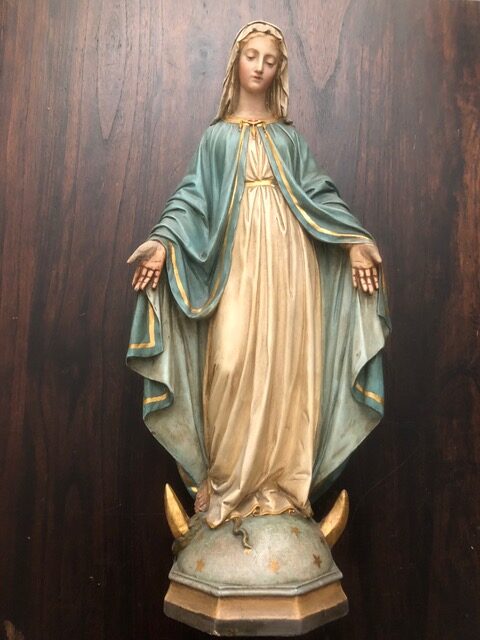
Due to the rampant virus everywhere, I am experiencing the great fragility of existence. I light a candle, look at the image of Mary, and pray.

 Nederlands
  English (UK)
  Deutsch
  Français