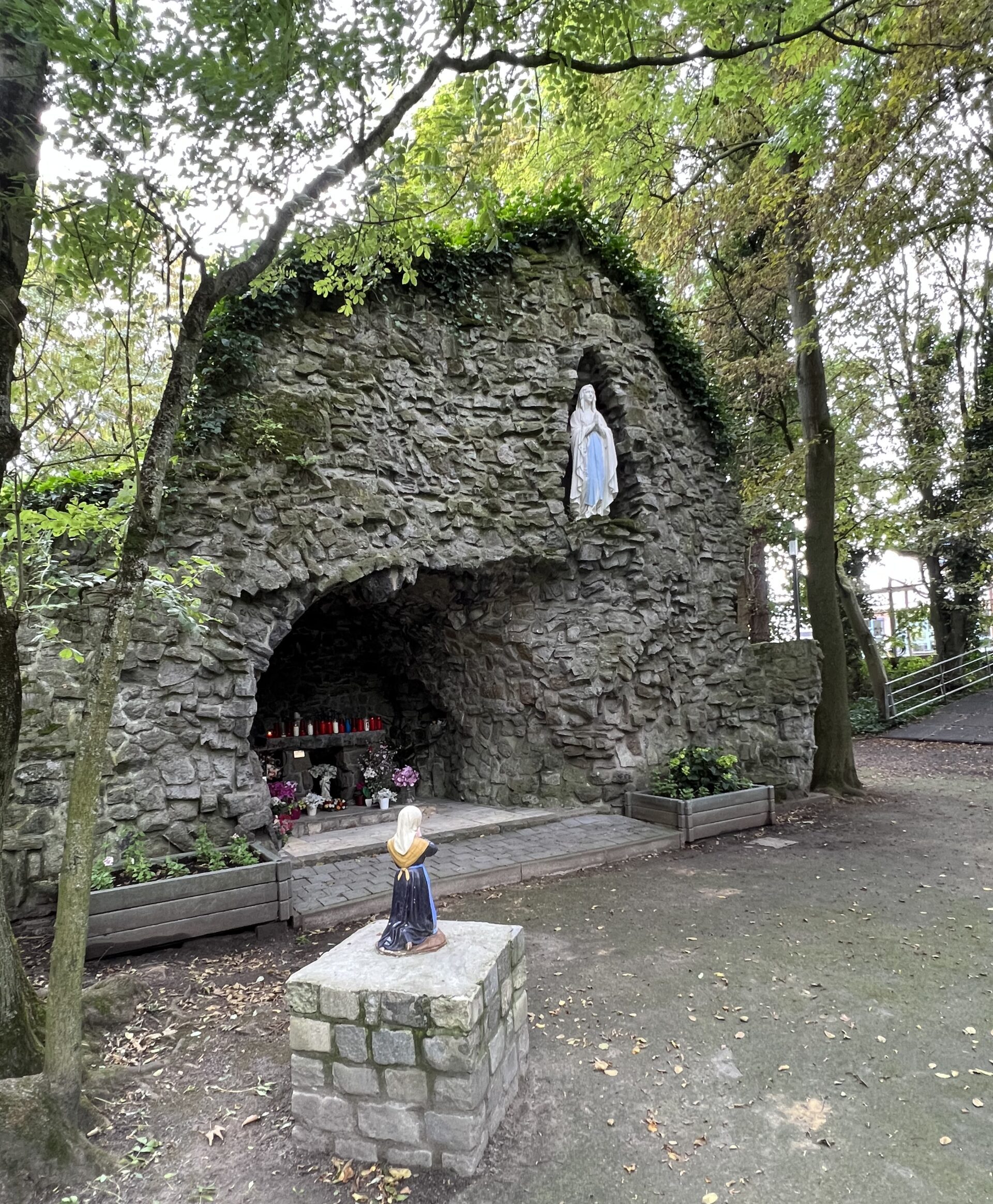
The Lourdes Grotto in Ruisbroek is situated in a magnificent setting with abundant greenery and striking, tall, old trees. This is the Hof ter Zielbeek estate, where a park in the English landscape style has been laid out with undulating terrain, bridges, and meandering waterways. It is an excellent opportunity to enjoy nature and go for walks.
The grotto was built in 1941 on land made available by the then castle lady. The grotto was created out of gratitude for the safe return of parishioners from the mobilisation, which was announced just before the outbreak of the Second World War in 1940.
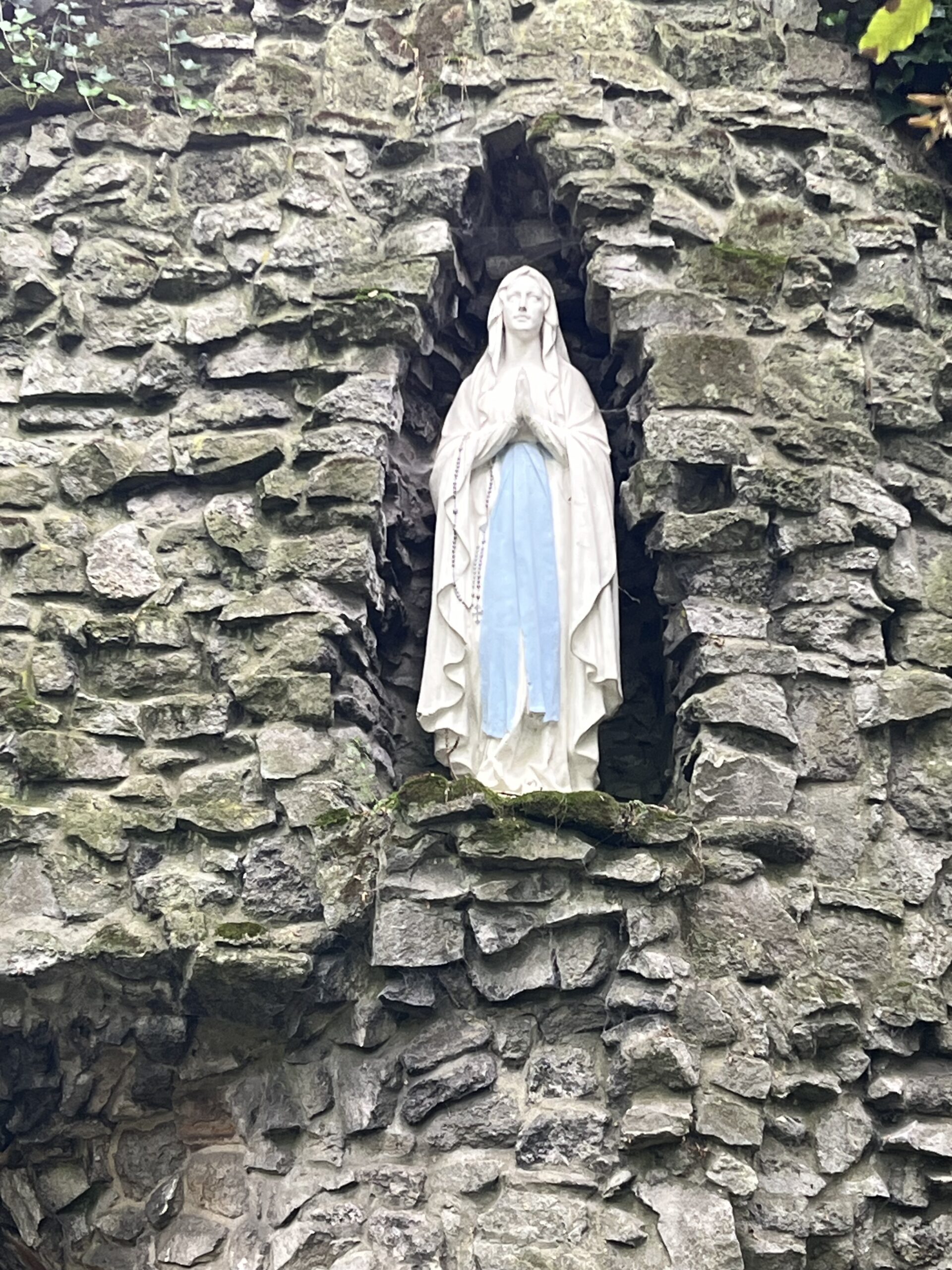
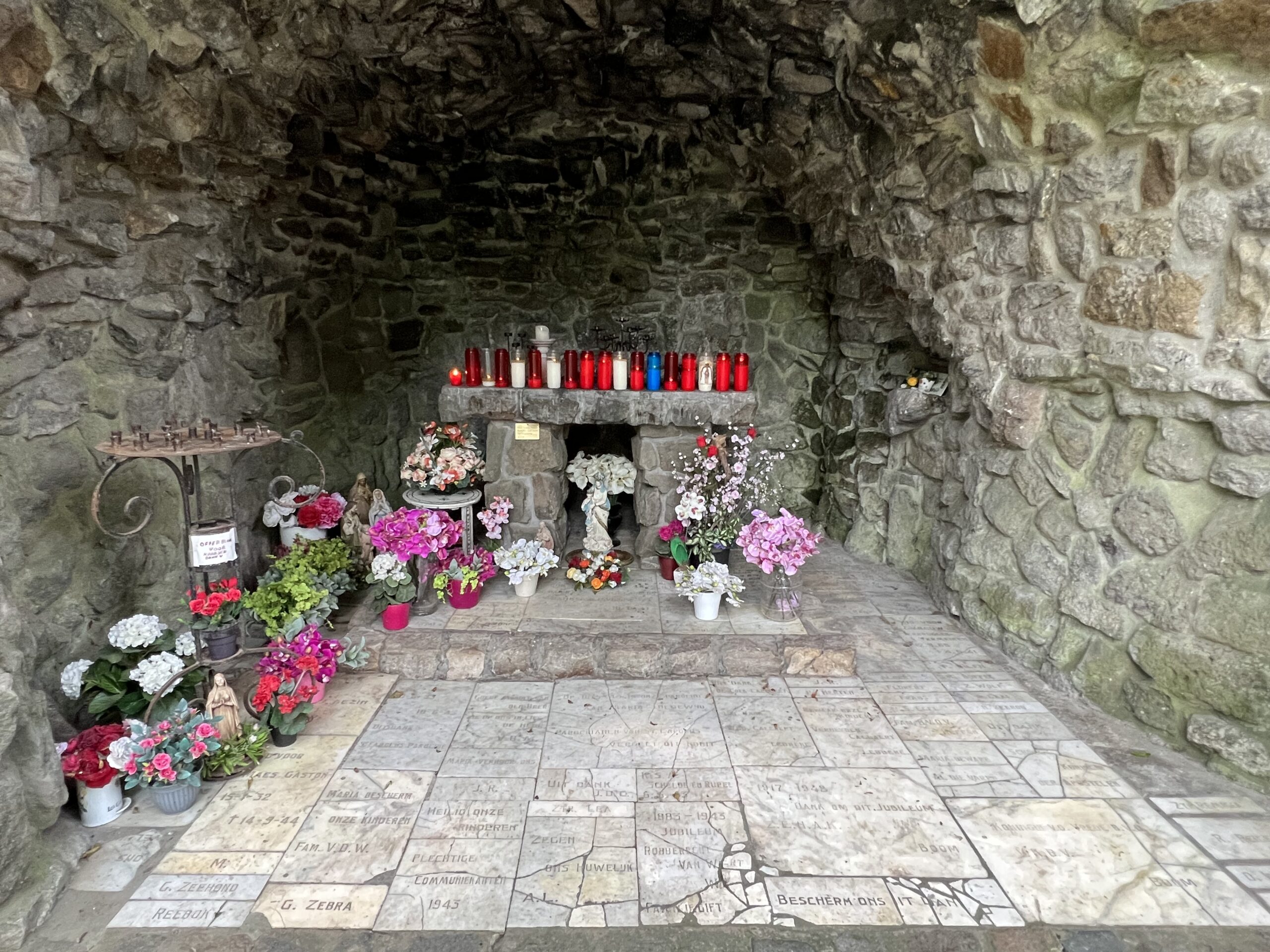
A large statue of Mary stands in the niche of the grotto, and at a suitable distance is a small effigy of Bernadette Soubirous, who saw Mary in 1858 in Lourdes, in the south of France. On the floor of the grotto are tiles that underscore the relationship with Mary. Candles, lit by many visitors, burn in the Lourdes grotto.
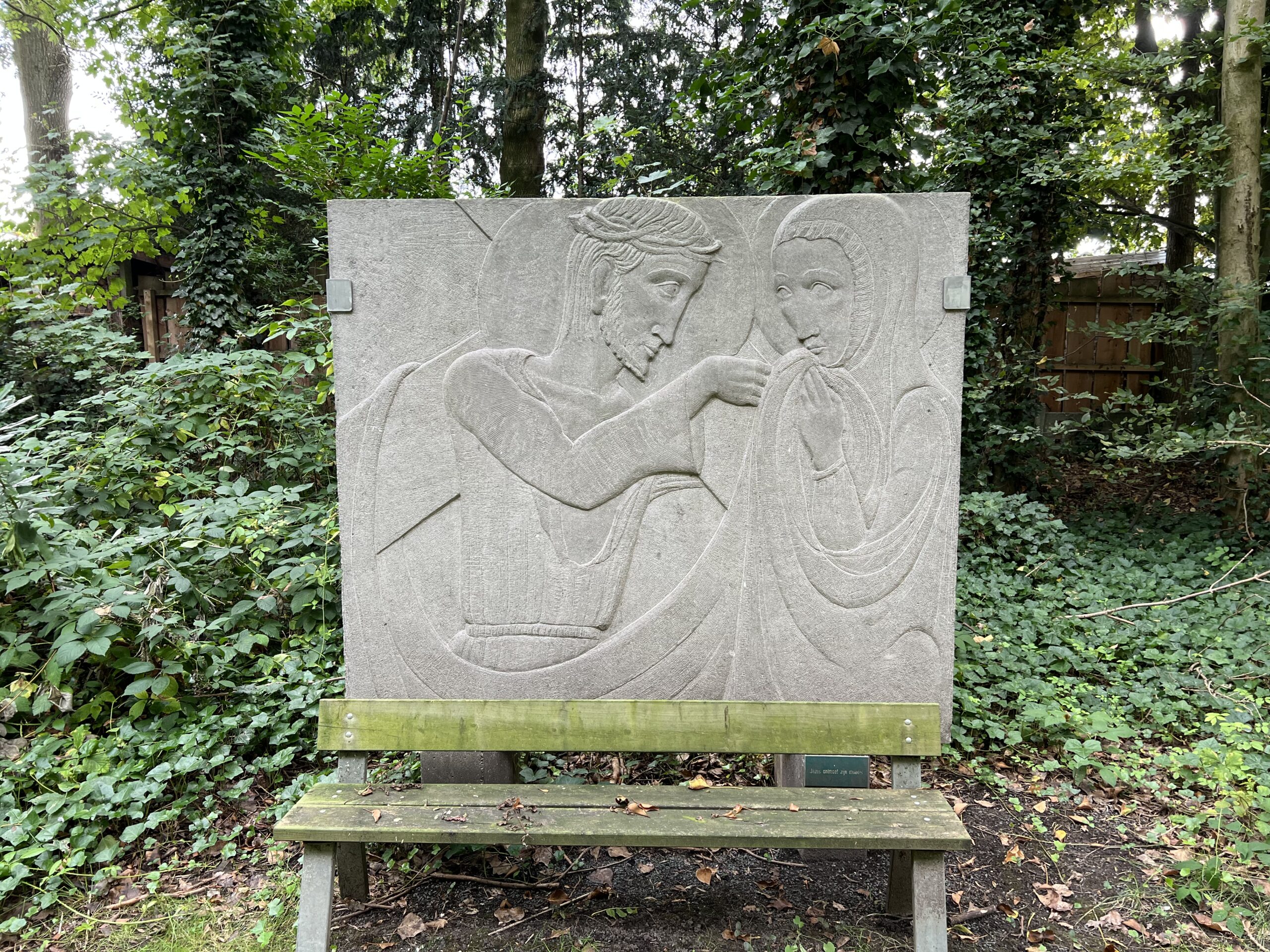
Behind the Lourdes Grotto, a Way of the Cross has been created on large bluestone slabs. The stations were made in 1942 by artist Herman De Cuyper (1904-1992). Pastor Vincent D’Heu (1904-1997) was instrumental in the initiatives of the Lourdes Grotto and the Way of the Cross.
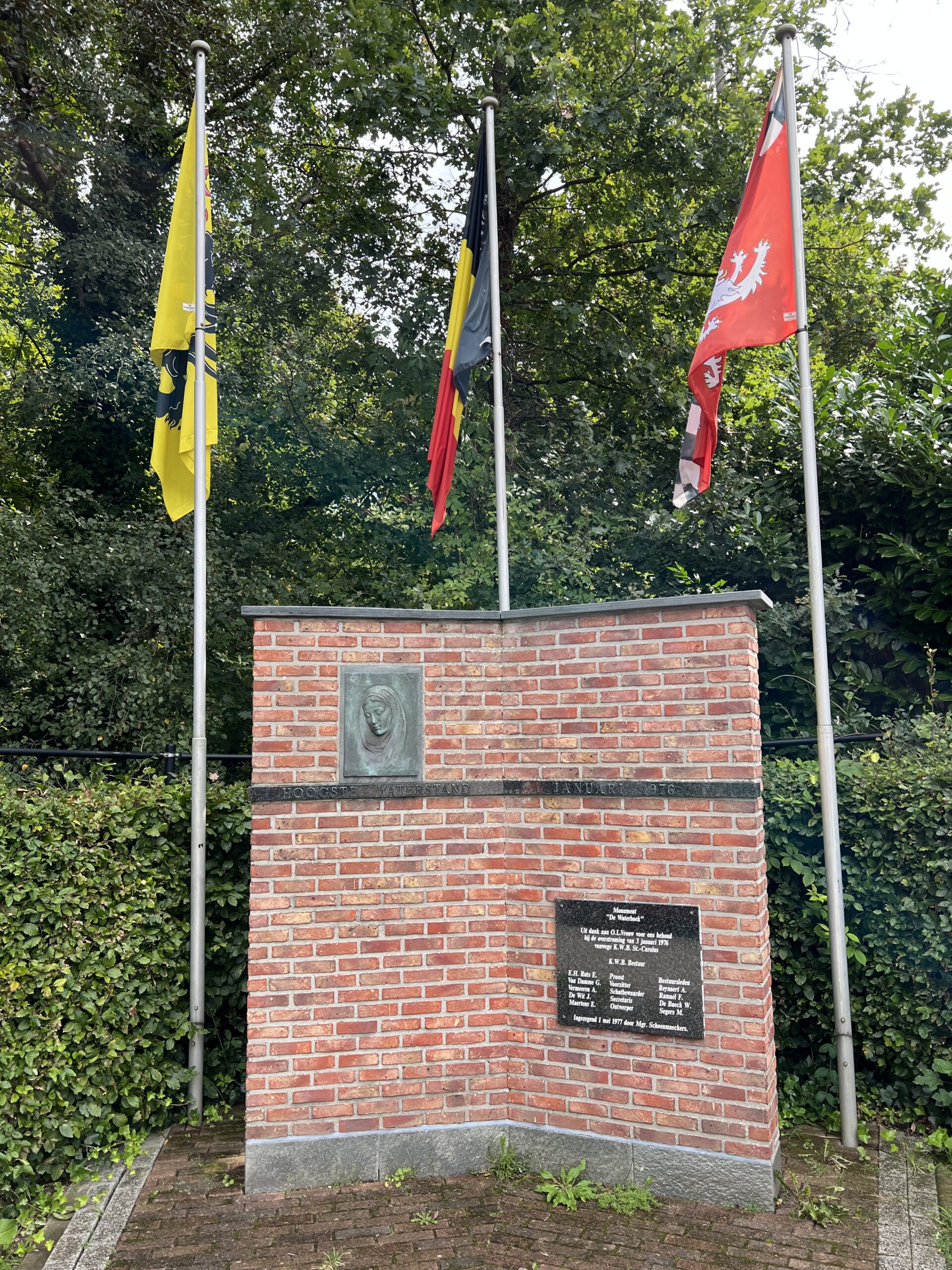
At the entrance to the Hof ter Zielbeek estate, a plaque commemorates the great flood in 1979. The flooding of the Vliet, a small tributary of the Rupel, caused much misery and loss. The monument “De Waterhoek” bears the inscription: In gratitude to Our Lady for our preservation during the floods of 3 January 1976.
The consecration took place on 1 May 1977 by Paul Constant Schoenmaeckers (1914-1986), Auxiliary Bishop of the Diocese of Mechelen-Brussels (1952-1986).
The Lourdes Grotto, Way of the Cross, and park are located at Kaardijkstraat 51, 2870 Ruisbroek, near Puurs.

 Nederlands
  English (UK)
  Deutsch
  Français