In Nijmegen, a Lourdes grotto has been built at Hatertseweg 113. This grotto is located next to the Church of Our Lady of Lourdes. This is very fitting and unique in the Netherlands. The structure is a copy of the well-known grotto of Massabielle from the pilgrimage site of Lourdes in the south of France.
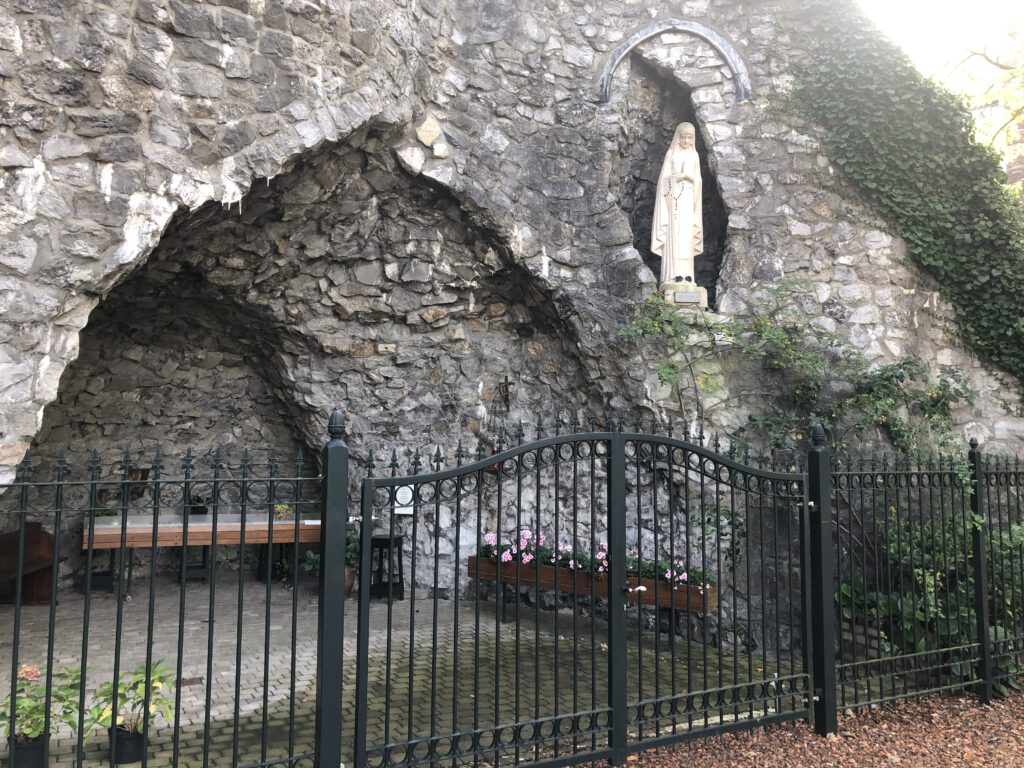
The grotto was built immediately after the church was completed in 1925. The Lourdes grotto was damaged during the Second World War and was later fully restored.
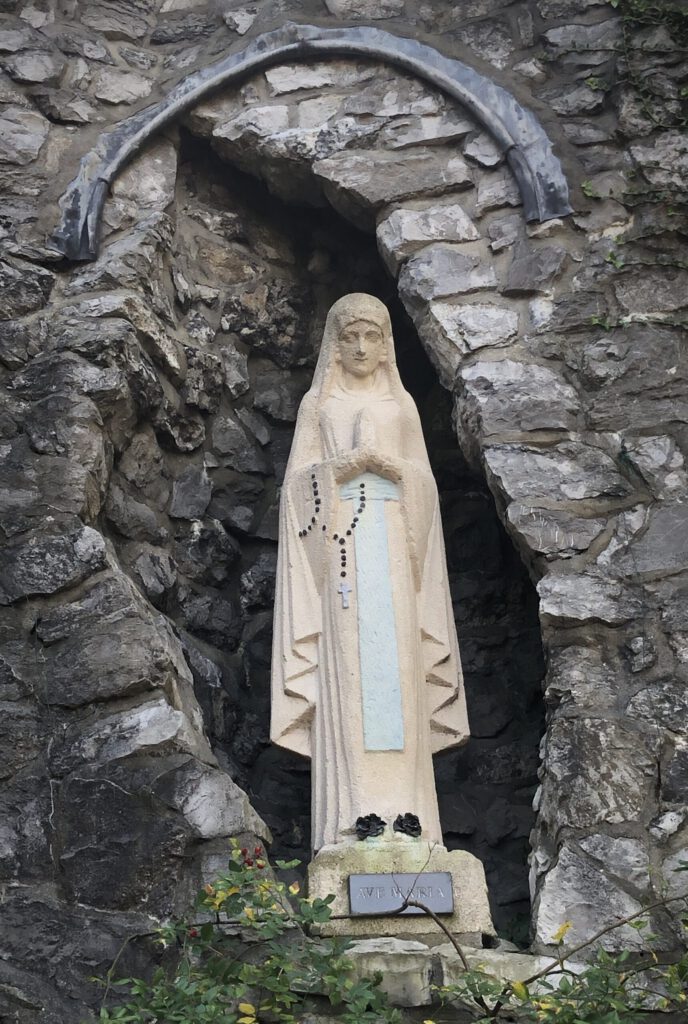
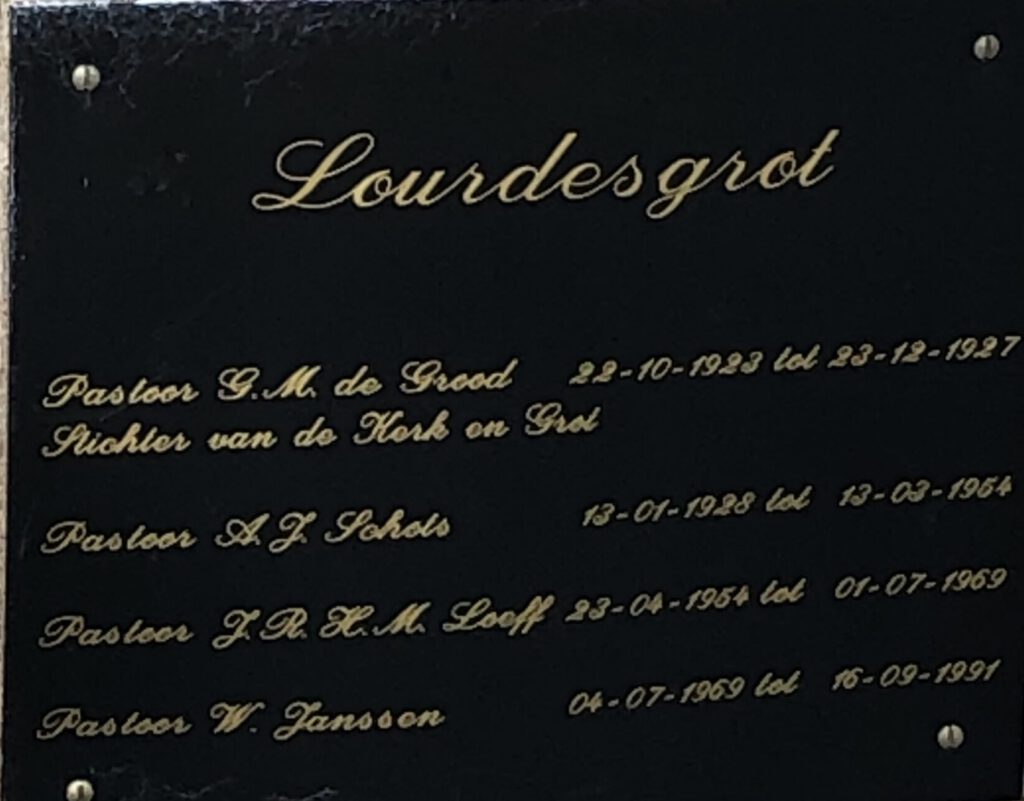
A dark plaque is attached to the wall of the grotto. The text on it reads: “This stone from Lourdes was immured by Pastor G.M. de Grood in 1925”. Pastor Gerardus Marinus de Grood (1885-1927) is the founding pastor of the church and grotto.
A special Marian chapel is situated in Nijmegen at Molenstraat 37, next to the Petrus Canisius Church, under the church tower. The chapel is dedicated to the miraculous image of Our Lady of Nijmegen.
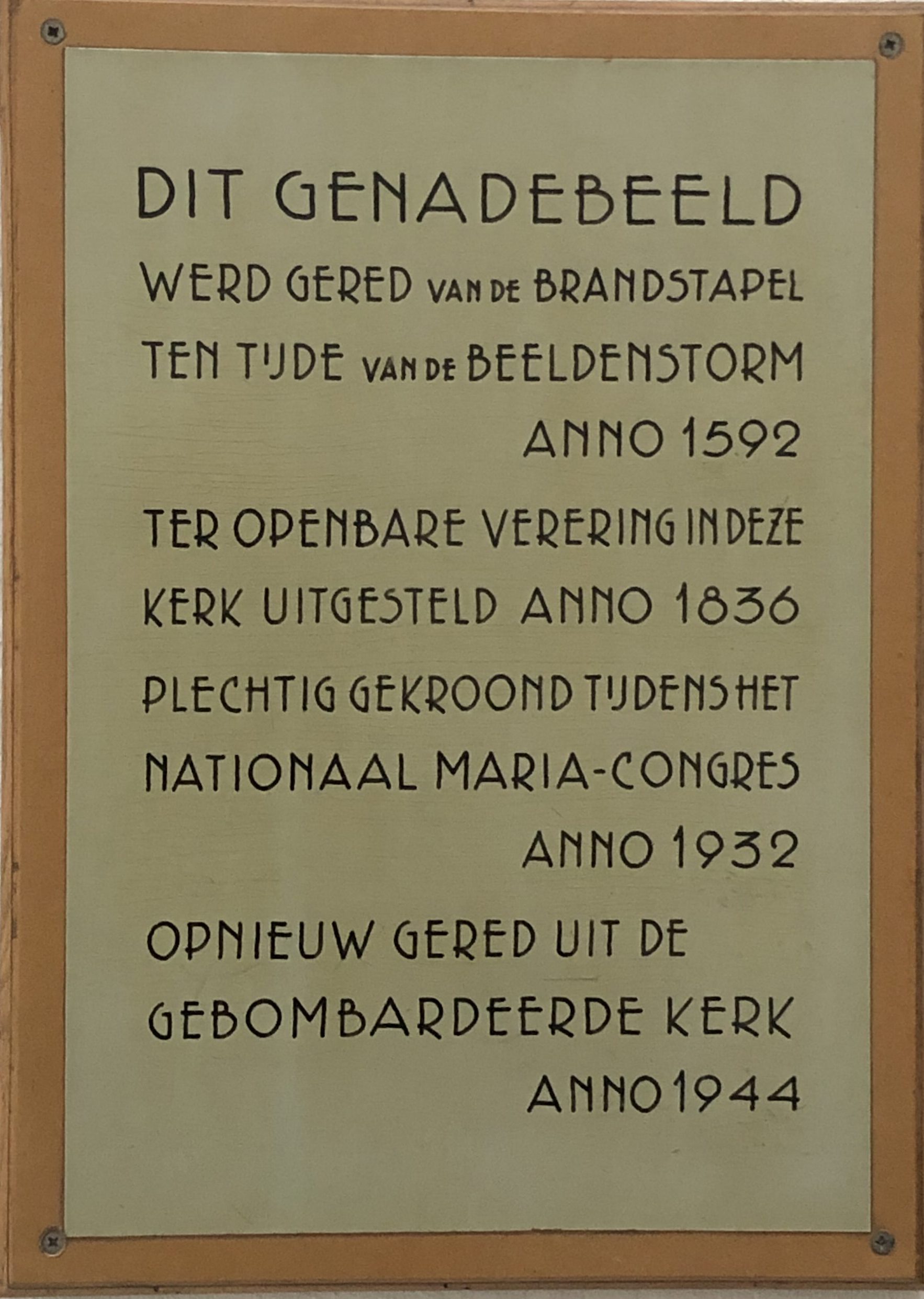
This statue of Mary has a tumultuous history... The veneration of the figurine came to an end with the Reformation, which began in 1517. The original location of the statue of Mary was in the northern side choir of the church. The Gelderland Lady of Sorrows had an extensive wardrobe and a wealth of jewellery, which were adapted to the different feasts and seasons. Unfortunately, these valuables disappeared during the Iconoclasm of 1566. In 1579, the church came into the possession of Protestants. The figurine had then disappeared. In 1585, the church was once again put into use by Catholics, and the figurine was then back in the church. In 1591, the Protestants took possession of the church again. The figurine was then taken to safety for a time. In 1592, during the Reformation, the statue was saved from the stake by members of the Van Verssen family. However, the population believed the figurine had been burnt. This is also stated in a council decision. In 1836, the figurine was donated to the church by Antonius van Verssen so it could be displayed to the public. From this year, a great veneration of the figurine Our Lady of Nijmegen began. Devotion to Mary then experienced a great flourishing.
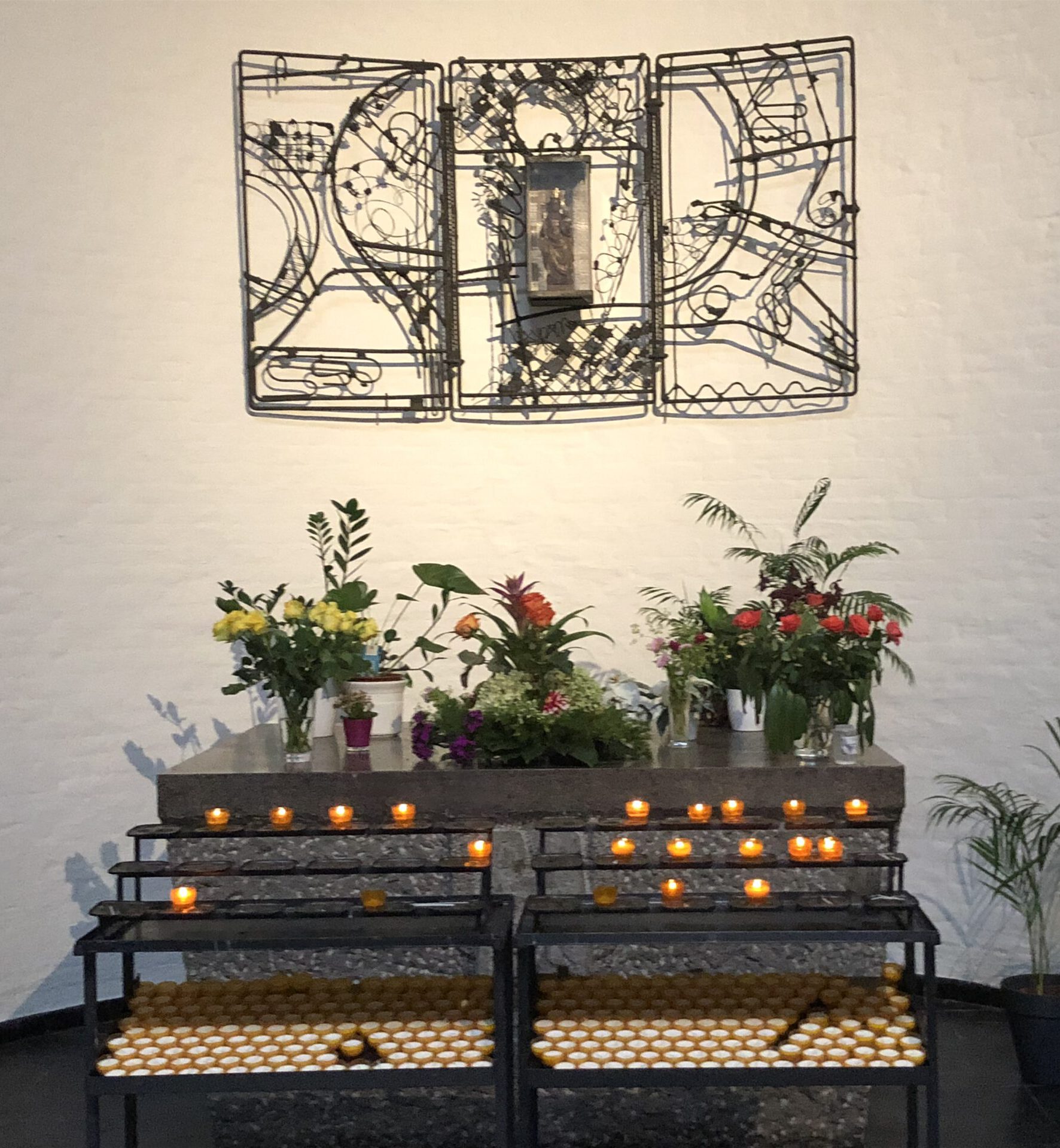
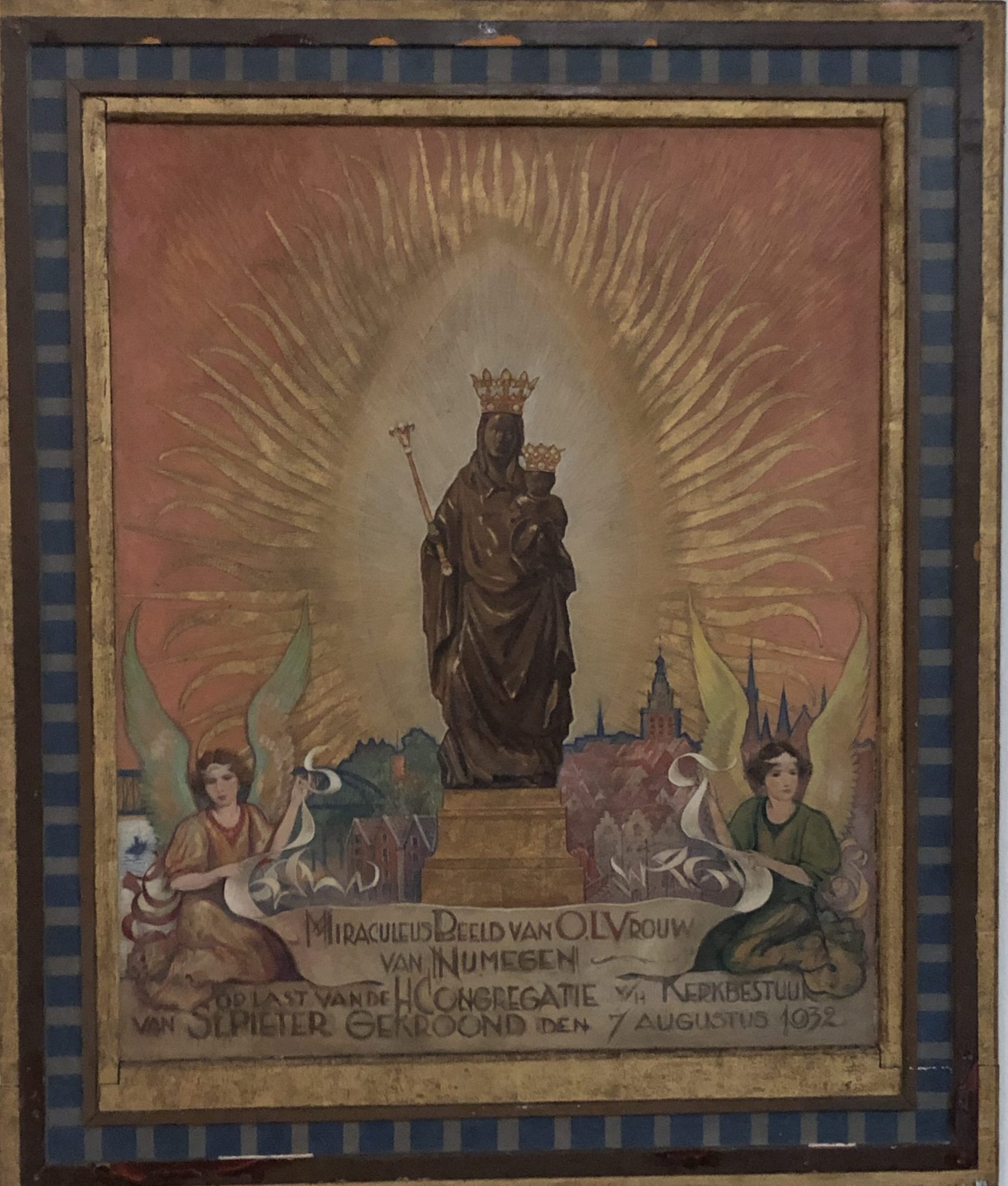
After the theft of beautiful ex-votos in 1923, the statue was placed in a forged cabinet for safety reasons. In 1925, when the Molenstraat Church was renamed the Petrus Canisius Church, the statue received the title “Our Lady of Nijmegen”. After papal permission, the statue was crowned by Bishop Arnold Diepen (1860-1943). This took place during a Marian congress in Nijmegen in 1932.
The statue of Mary also emerged unscathed from the Second World War (1940-1945). This is highly remarkable, as the bombings of Nijmegen were very severe. Especially on 22 February 1944, the church and the chapel suffered enormous damage. In the years 1957-1960, a new chapel and church were built on Molenstraat.
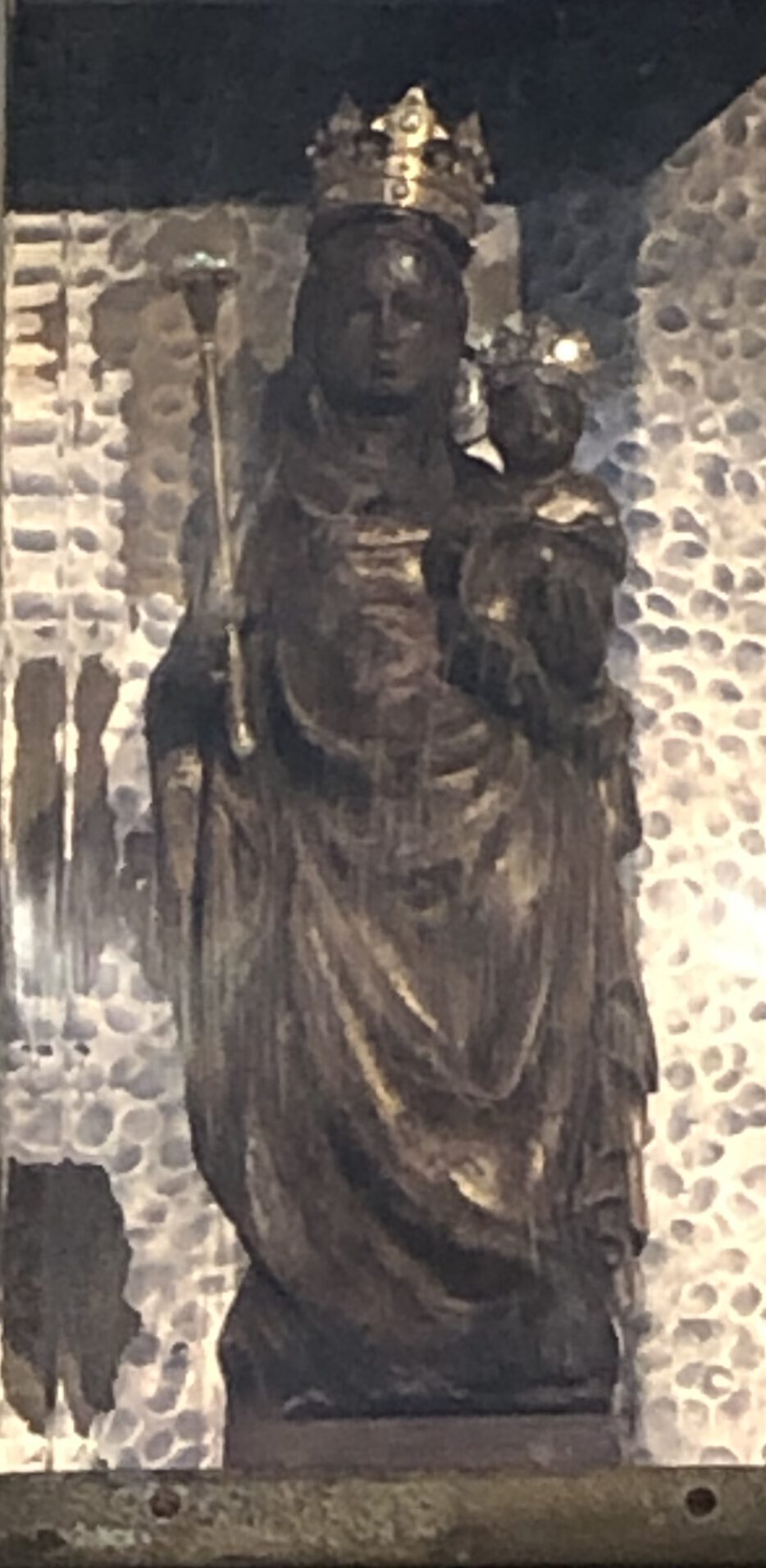
The figurine is approximately 20 centimetres high and is made of dark oak in the Renaissance style. This is why the small effigy is also called the “Black Madonna”. In one hand, Mary holds a sceptre and in the other, her Son. It is assumed that this figurine is the same as that of the Lady of Nijmegen from Gelderland, which was placed on the pyre in the Grote Markt in 1592.
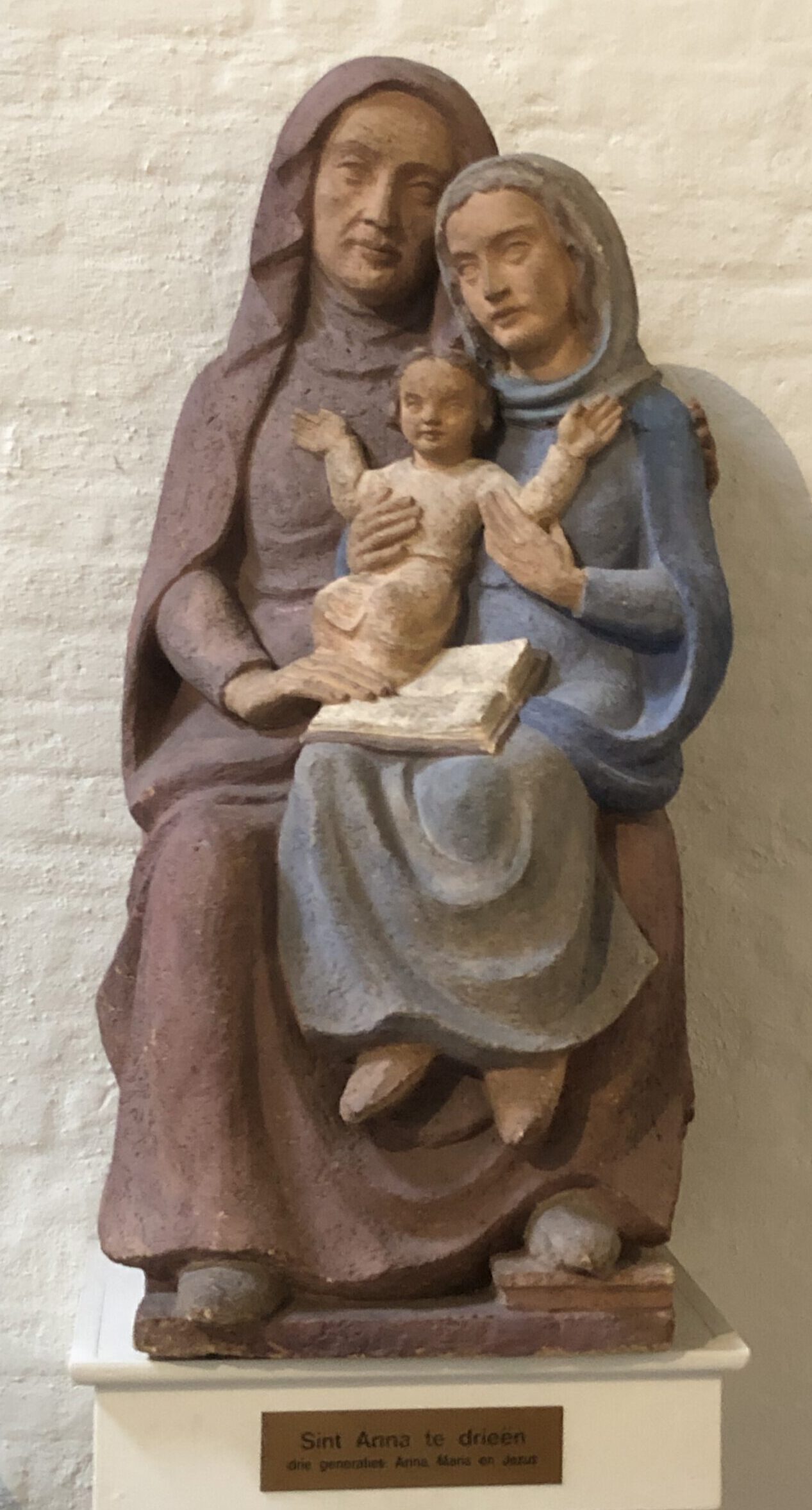
The Mary Chapel is open every day for the many visitors who come to Mary there and light a candle.

 Nederlands
  English (UK)
  Deutsch
  Français