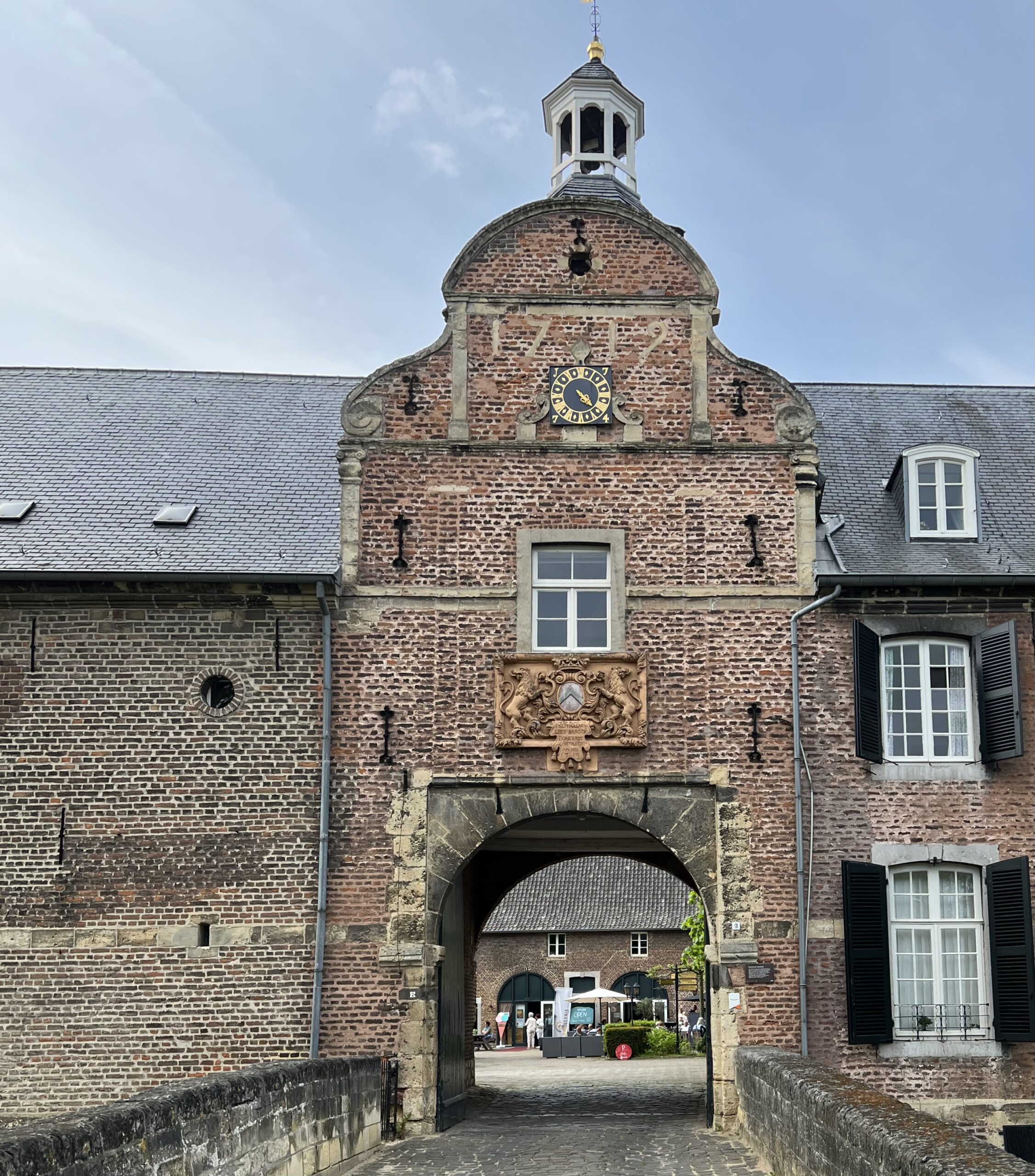
In the south of Dutch Limburg lies the village of Wijnandsrade, where a Marian grotto can be visited on the castle grounds. The castle was realised after expansions in the 16th century. Residents over the past centuries have included nobles and clergy, among others. The Jesuit fathers lived in the castle from 1872 to 1910, during which time there was also a seminary. They were expelled from Germany due to the unfavourable regulations for clergy during the “Kulturkampf” (1872-1879) and came to Wijnandsrade. In 1928, Conventual friars used the castle. They are also known as friars and belong to a Franciscan order, whose members are dressed in black.
In 1990, the Foundation for the Preservation of Wijnandsrade Castle became the owner of the estate. Following restoration, parts were leased out for business activities, such as offices and hospitality.
The history of the grotto begins in December 1873. Since that month, Joseph Schmidt of the German Jesuit order has been seriously ill. Doctors see no hope of recovery. In February 1874, the German priest Wilhelm Nikolaus Eberschweiler (1837-1921) SJ (Societas Jesu, Jesuit order) travels to Lourdes. He is also rector of the “juniorate,” a gap year between novitiate and philosophy studies. The priest takes water from the French pilgrimage site with him. Upon his return, he gives the spring water to his sick fellow brother. The friar drinks this and also washes himself with the water. Three days later, the clergyman is completely recovered, and this is a miraculous healing. Out of gratitude for the divine healing, a grotto is built with a statue of Mary inside. In the period 1906-1912, Schmidt was also rector of St. Ignatius College in Valkenburg.
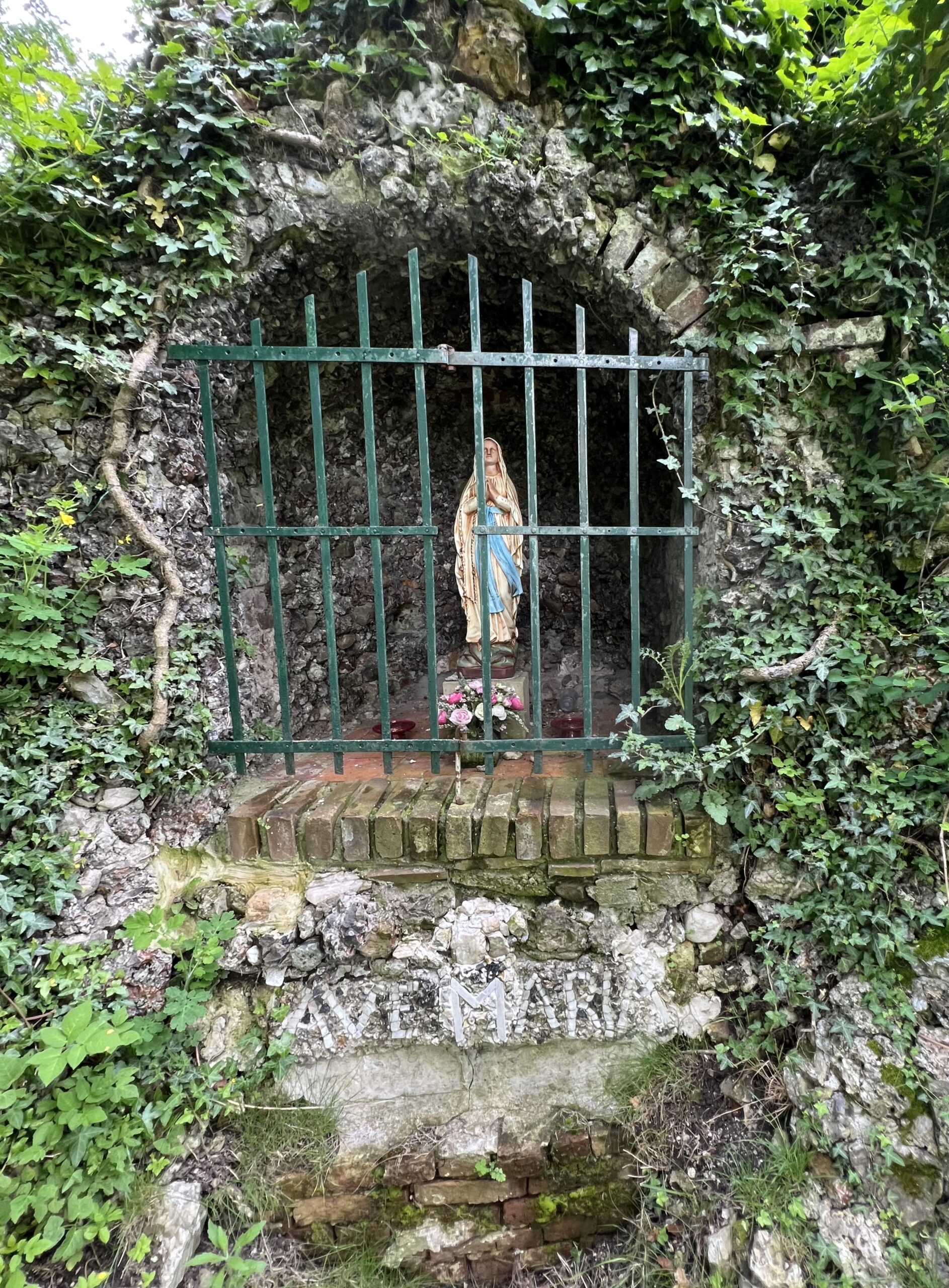
The cave is called “Maria on the motte” because the cave stands on a motte, which is a flattened, artificial, earthen hill. Together with the one in Maastricht, the Maria cave is one of the oldest caves in the Netherlands. Beneath the image of Mary are the words “AVE MARIA”.
The grotto was restored in 1998 in consultation with the owner, the Foundation for the Preservation of Wijnandsrade Castle, as the Maria Grotto is located on the grounds of the large complex. The restoration of the grotto was an initiative by Peter Jozef Marell (1917-2007). For his 80th birthday (1997), he had one wish: to thoroughly renovate the grotto, a gift that was duly realised. The restoration was carried out by three Marell family members: Peter Jozef Marell, his daughter Ria Marell (1945), and nephew Math Marell (1940). Access to the Maria Grotto is now protected by a gate to prevent vandalism. A new statue of Our Lady of Lourdes was installed because the previous statue had been stolen. The new statue of Mary is made of a specific type of rubber from recycled car tyres, making it weather-resistant.
In 2022/2023, the Maria Grotto was refurbished once again, this time by the “Friends of Wijnandsrade”, with the text “Ave Maria” appearing beneath the grotto.
This detailed information was gratefully received from Ria Marell.
The castle with its accompanying grounds are a national monument.
The Grotto of Mary is accessible daily, provided the castle gate is open. Proceed through the first courtyard of the castle to the right, arriving at the second courtyard, and after approximately 25 metres, the grotto will be visible on your left.
Address: Opfergeltstraat 2-3, 6363BW Wijnandsrade.
~~~

 Nederlands
  English (UK)
  Deutsch
  Français