~~~
History
In the early Middle Ages, Delft was already a city of Mary for those living nearby and those in the wider region. There is mention of a small wooden church around the year 1000, which stood on the site of the later Old Church.
In 1240, William II of Holland (1227-1256), Count (1234–1256), commissioned the replacement of the wooden church with one of stone. Devotion to Mary was already great, and the church was a place of pilgrimage.
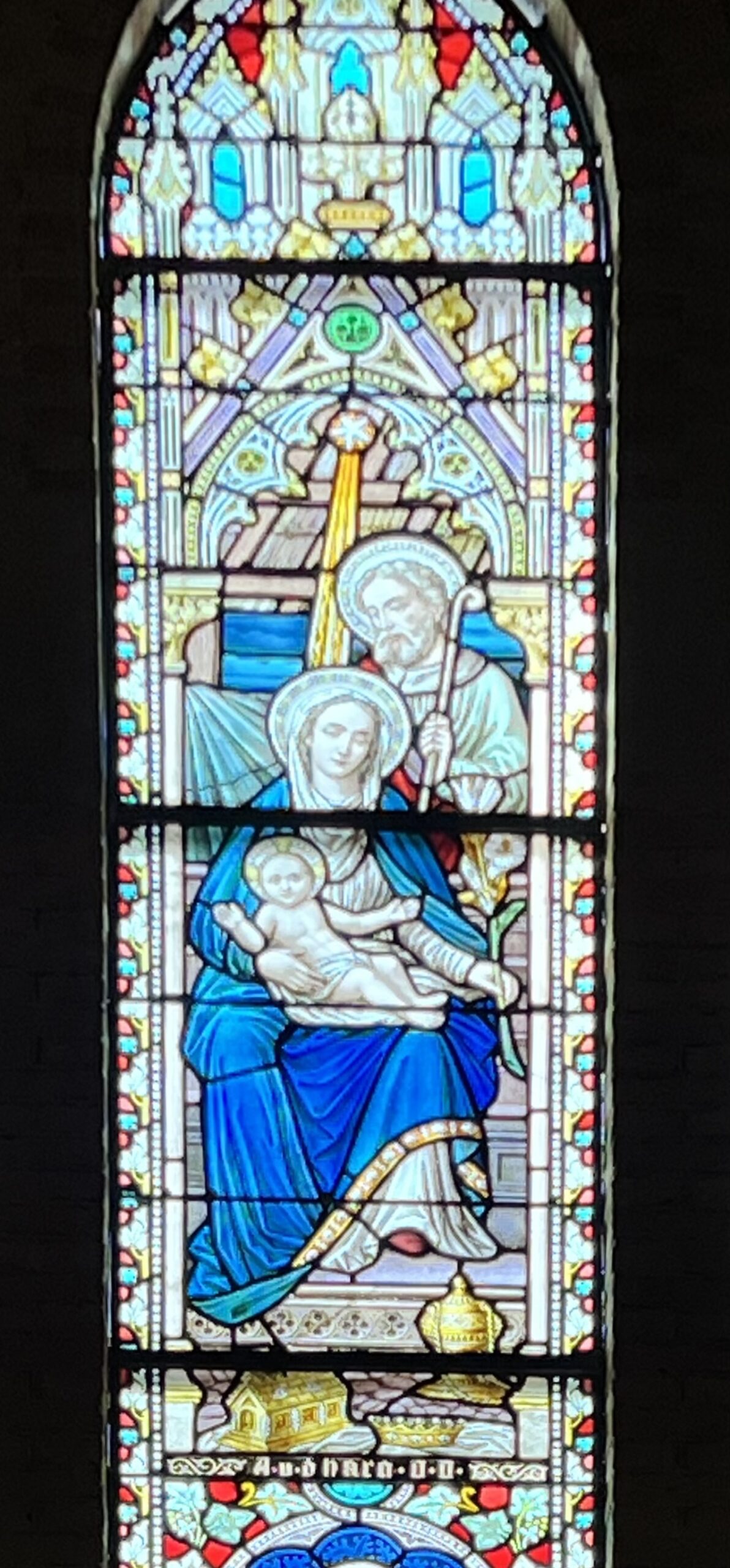
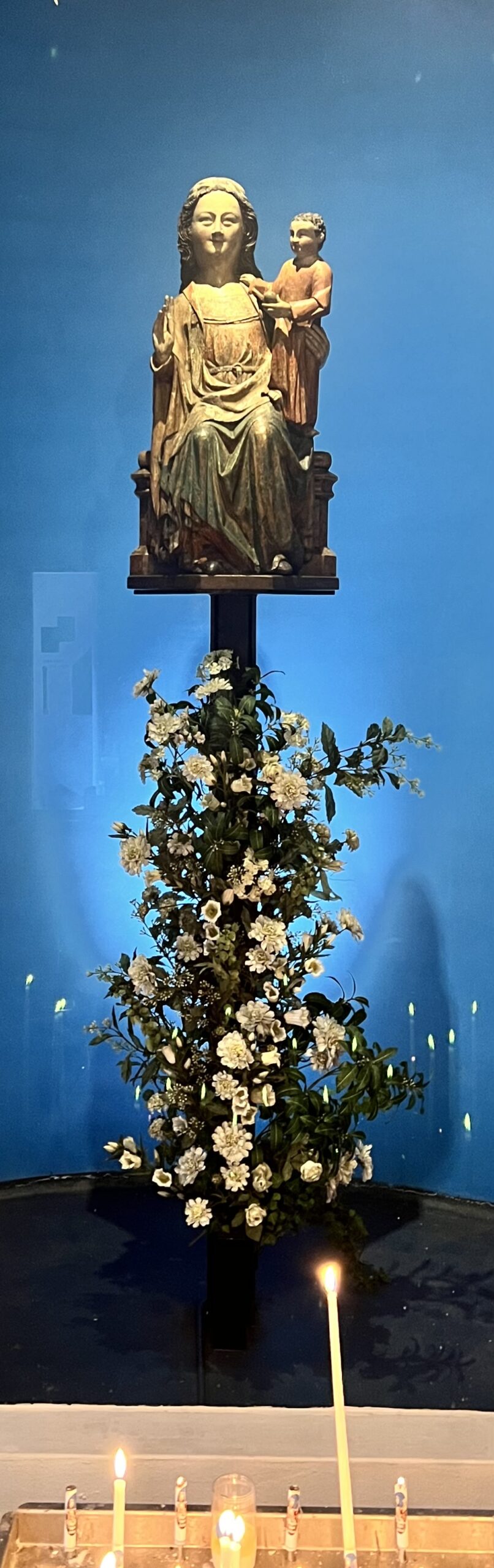
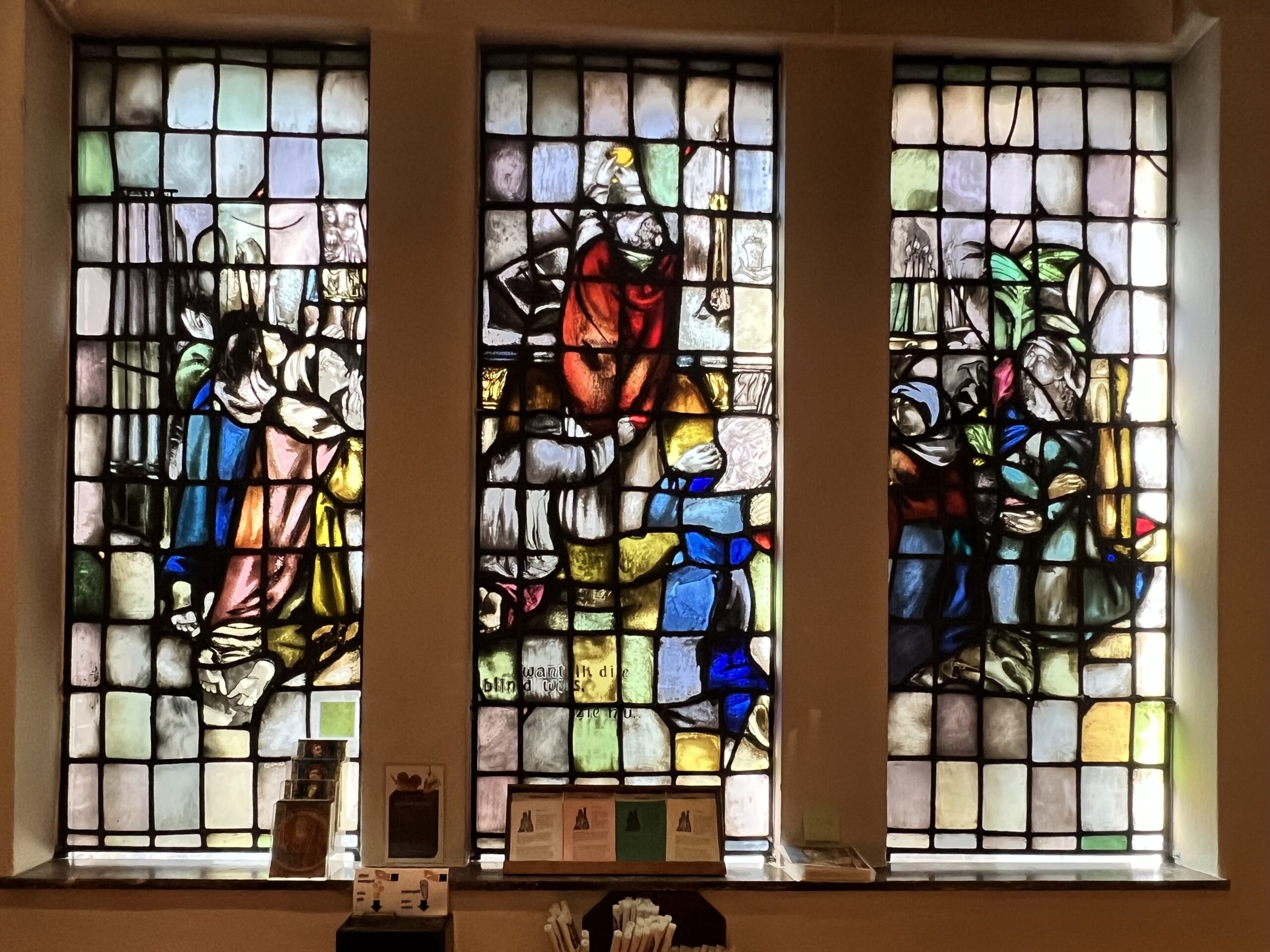
In 1327, a procession takes place and a new, wooden statue of Mary is brought into the Roman Catholic Church of Saint Bartholomew, later also known as the Old Church, Old Jan, and Crooked Jan. It is assumed to have been made in Cologne, Germany. It replaces an older image of Mary. A miracle occurs during the consecration, with many in attendance. Also present is the blind Machteld from The Hague, her son Willem Jansz, and a few friends, who are accompanying the elderly woman on her pilgrimage to Delft. Then, a miracle happens. It is quite remarkable that during the consecration of the image, Machteld falls to her knees and begins to pray to Mary. Suddenly, she is healed and can see again. Due to this miracle at the statue of Mary, an annual procession is established. Due to the Reformation, which began in the early 16th century, the Protestants banned the religious procession. As a result, the procession does not take place in Delft for centuries.
The statue of Mary was probably destroyed in 1573 during a repercussion of the Iconoclastic Fury of 1566.
Where the choir of the Church of Mary of Jesus now stands, a Roman Catholic church was located in 1733.
The church, later named Maria van Jesse, was designed by architect Everardus Joannes (Evert) Margry (1841-1891) and the interior was drawn up by Jos Tonnaer (1852-1929). Construction took place from 1875 to 1882.
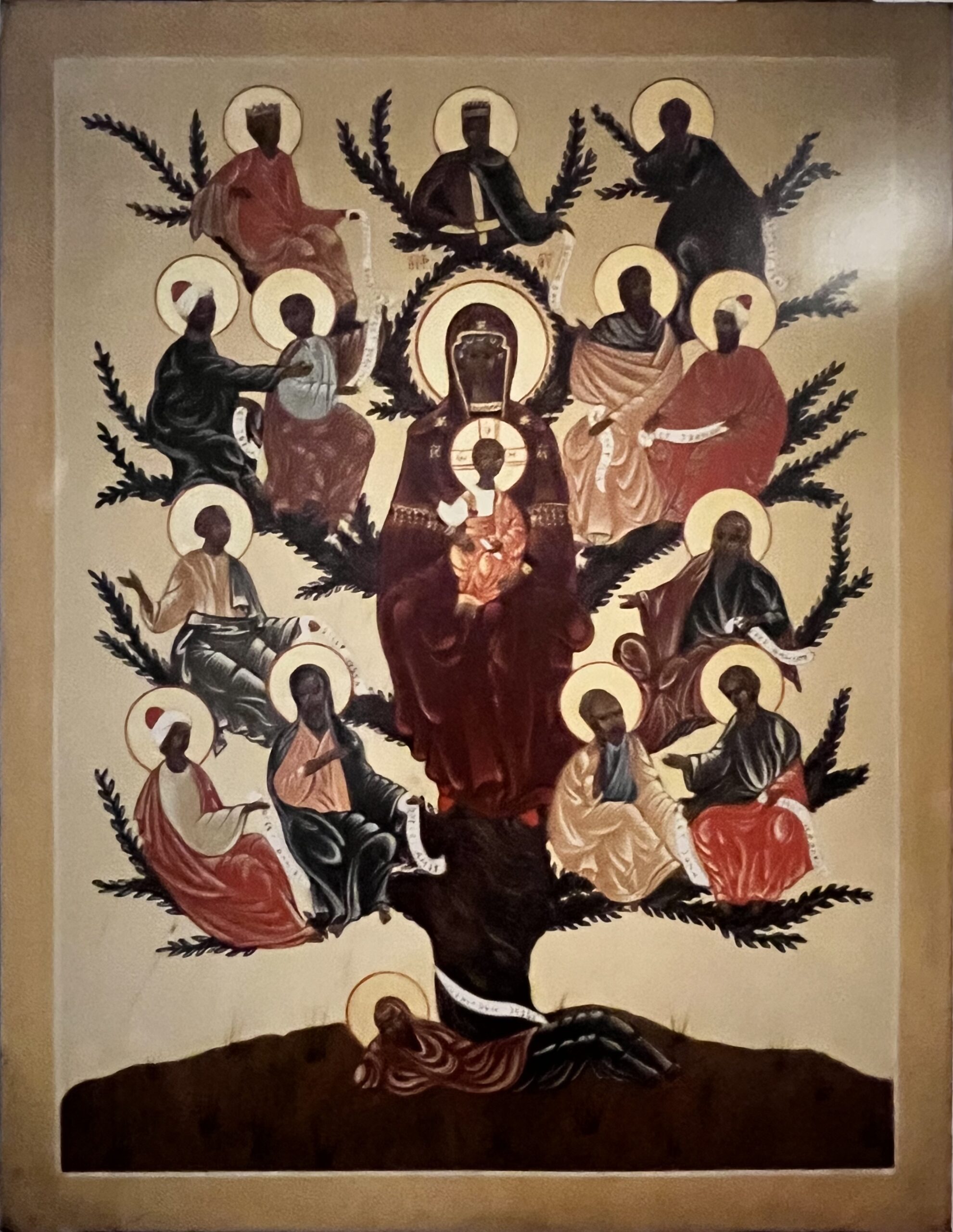
The Dutch name Jesse refers to the lineage of Mary, namely Jesse, the father of King David (c. 1040-970 BC), the second king of the United Kingdom of Israel. He is the progenitor of the house of David. The name Jesse means gift of God. The name Jesse appears in the Old Testament and the name Jesse is mentioned in the New Testament.
Jules Henri Froger (1903-1976), born in Utrecht, a student of architecture at the Delft University of Technology and later an architect, was instrumental in the renewal of the procession. In 1928, the student read about the old Ommegang and the promise to hold it every year. In 1929, he presented a proposal to the Catholic Student Association “Sanctus Virgilius” to reform the procession and thereby revive the annual tour. He proposed a “Silent Procession” and in 1930, four centuries after the last procession, the Marian procession returned to the streets.
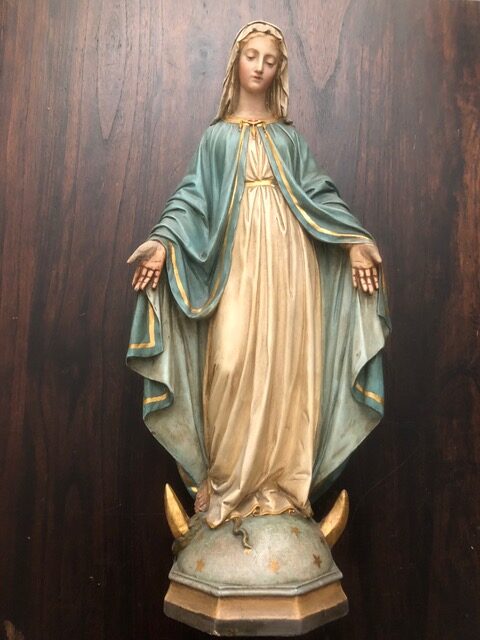
In 1939, a new effigy of Mary emerges, one that conforms to ancient descriptions and dates from the same period as the original statue from 1320. On 15 August 1939, the new statue, Maria van Jesse, is consecrated and placed in the side chapel of the church on the Burgwal.
In 1971, the Jozefkerk and the Hippolytuskerk merged to become the Maria van Jesse church.
Since 2006, the Ommegang has been a little more festive with a banner and the lighting of candles.
The Maria van Jesse Church is undergoing a multi-year restoration, which will finish in 2007.
The Maria of Jesse Church is a national monument.
Pilgrimage site
The Maria Church of Jesse stands in the centre of the old town. Centrally positioned on the chancel is the altar with an altarpiece containing a large statue of Mary with Child. Surrounding the image of Mary are depictions of the birth of Jesus, the Annunciation by the Angel Gabriel, Joachim as the father of Mary, Anne as the mother of Mary, Mary as a child in the Temple, Mary visits Elizabeth, and the Coronation of Mary.
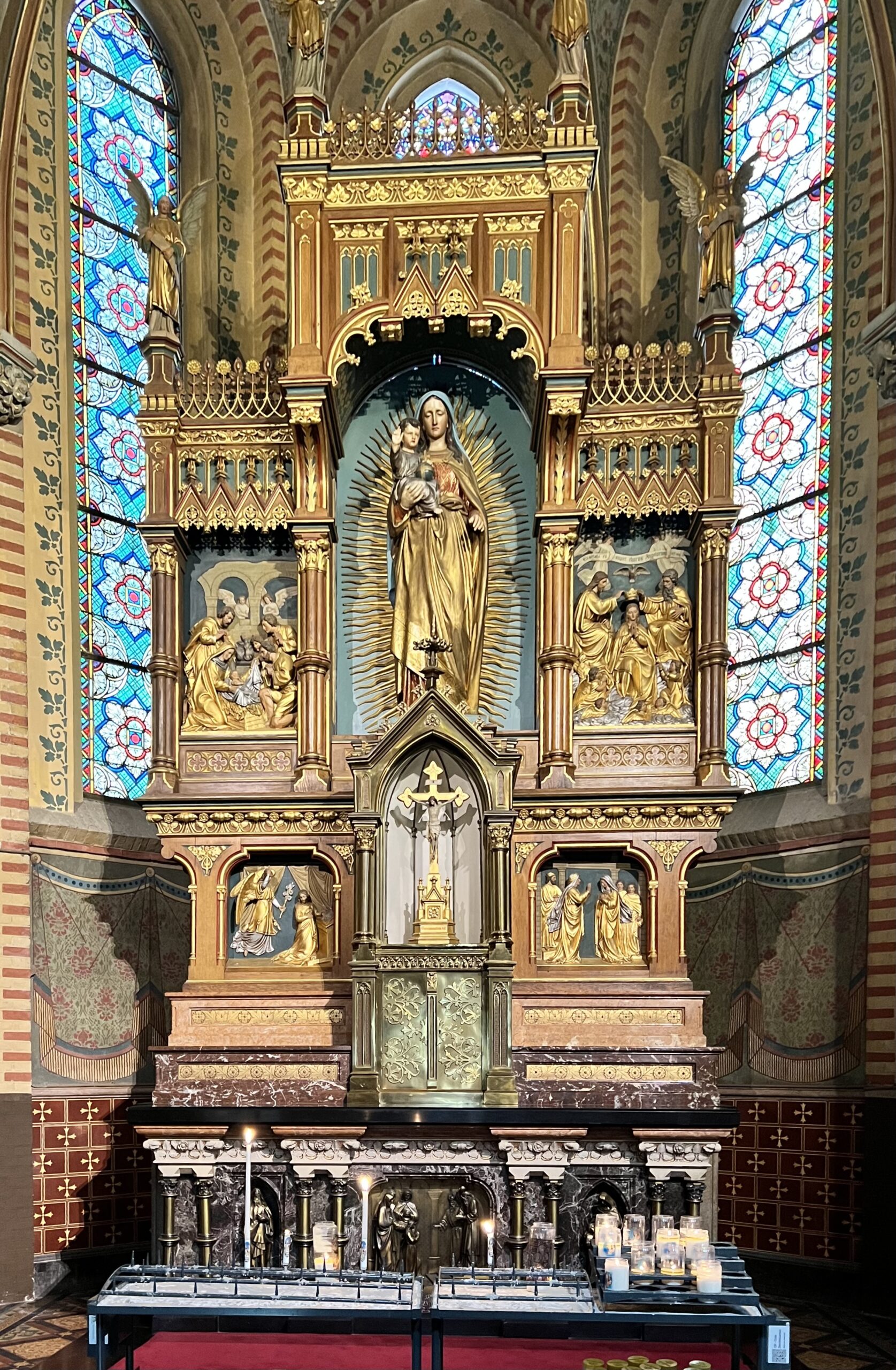
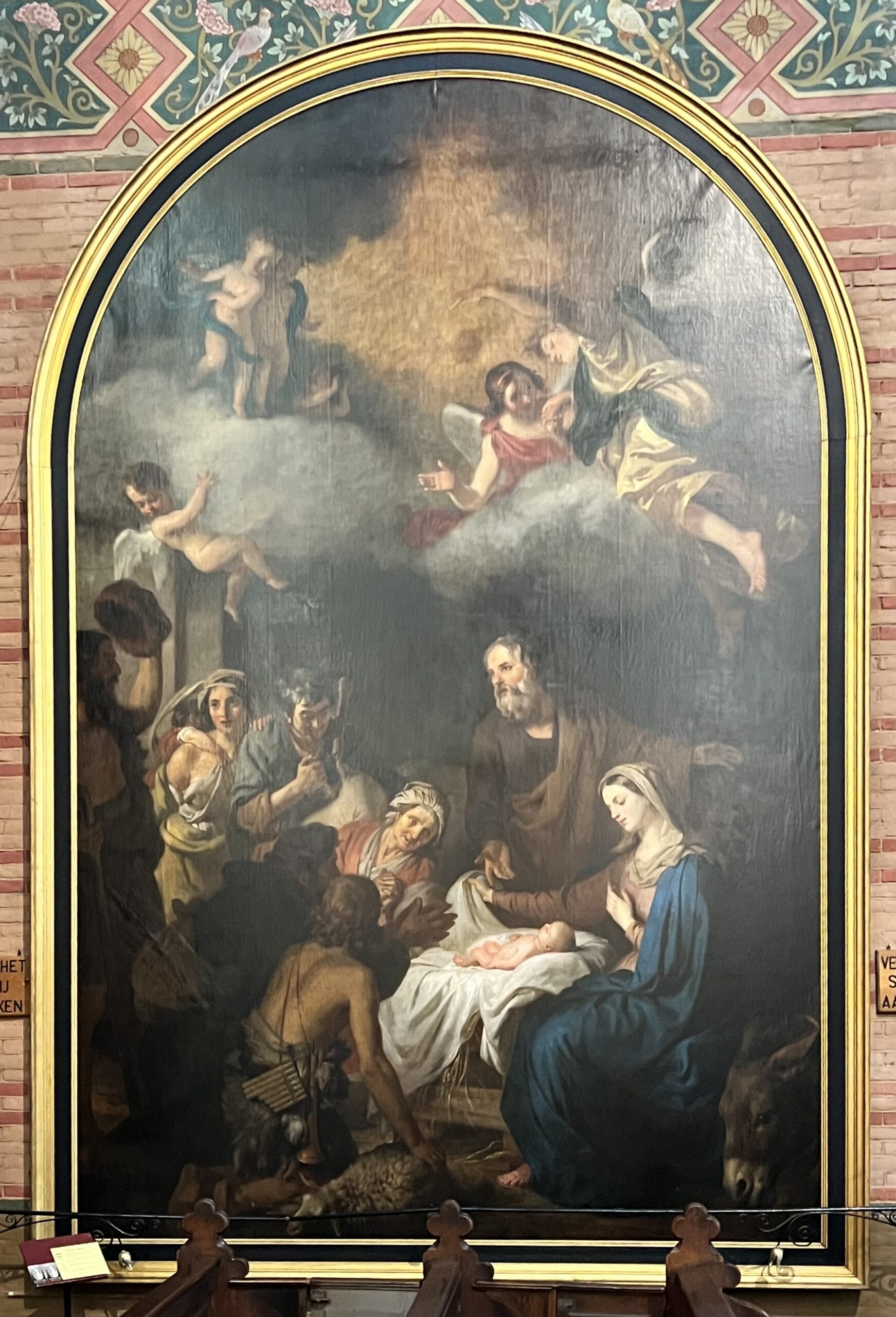
The church features stained-glass, colourful windows, rose windows, and wall paintings. Icons by Jantsje Jetske Witteveen – Van der Zee (1936-2010) can be seen. In the Maria van Jesse church there is a very large painting, “Christ Adored by Shepherds”, by Antoon Van IJsendijck/Ysendyck (1801-1875). This is a former altarpiece from the first Sint-Jozefkerk on the Oude Langendijk. In 1840, the church council purchased the painting by the renowned Antwerp painter. After the demolition of the Waterstaatskerk, the council did not know where to place the large artwork, resulting in it being sent to the Bishop's Museum in Haarlem. In 1921, the painting returned to Delft and was placed in the church, now called Maria van Jesse, in the north transept, opposite the Antonius altar.
The statue of Mary stands in the chapel of the Maria van Jesse Church, where candles are burning.
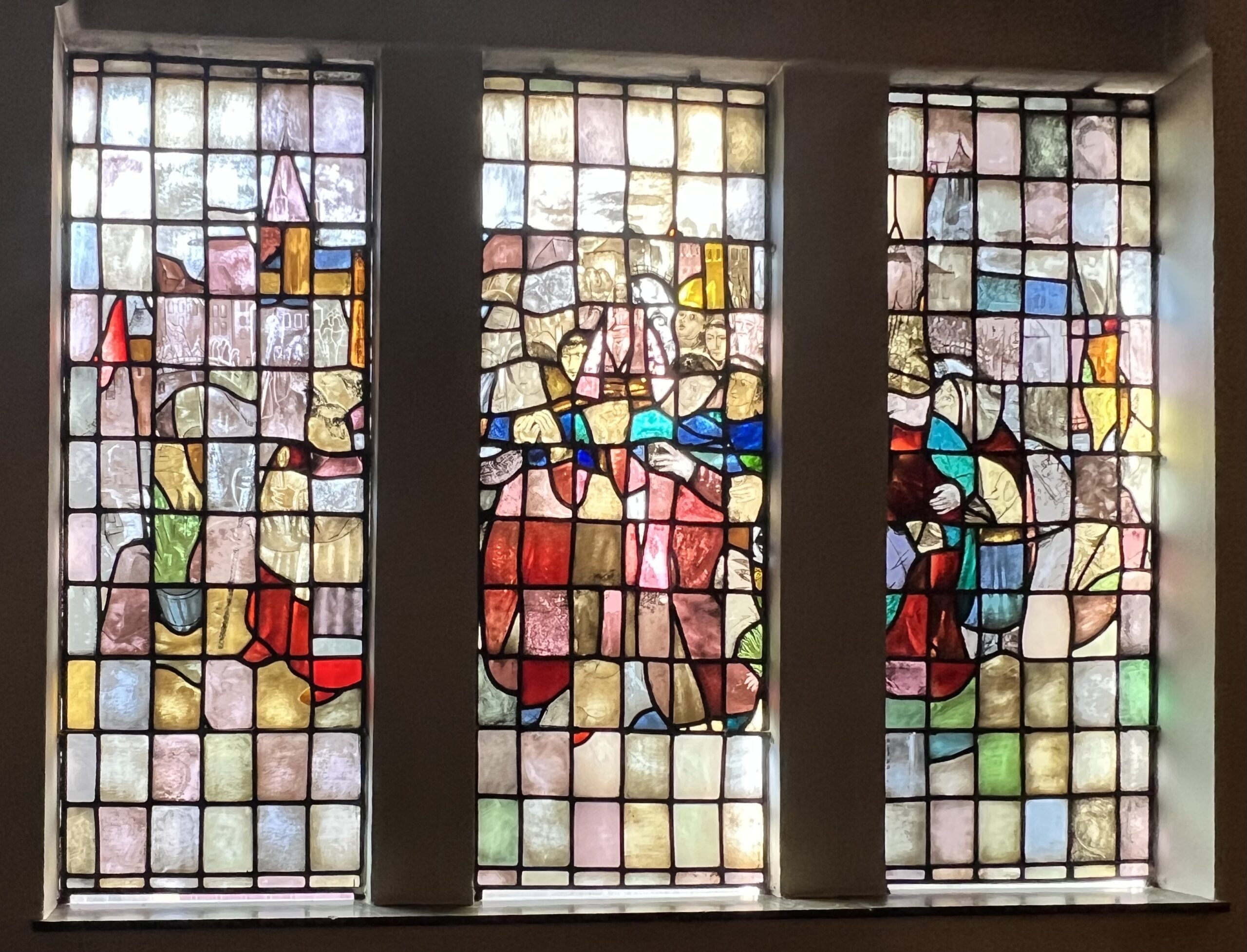
In the chapel, there are two stained-glass windows, namely of the miracle and the procession. The maker's signature reads “Cosmas ’49”. Both windows were made in 1949 by Frederik Tap (1903-1981). The artist was a painter and draughtsman and entered the monastery. There, he chose the name Brother Cosmas Tap O.F.M. (Ordo Fratrum Minorum) and belonged to the friars minor.
The chapel is open daily, and the Maria van Jesse Church is accessible from Tuesday to Sunday in the afternoon.
ACCESSIBILITY
The Maria of Jesse Church is located in the centre of Delft. The address is Burgwal 20, 2611GJ Delft.
The chapel of the Maria van Jesse Church has its entrance next to the church in Jozefstraat.
Current information can be found at www.rkdelft.nl.
Experience
In Delft, the veneration of Mary is quite unique. Here, the emphasis is placed on “Mary of the Tree of Jesse”. The prophet Isaiah describes the human lineage of Christ by writing: “A shoot will come up from the stump of Jesse, from his roots a new growth will emerge. The Spirit of the Lord will rest on him.” First, I visit the Church of Mary of Jesse. The high altar is particularly beautiful with a large image of Mary and Child. Around this image are depicted, among other things, the birth of Jesus and the coronation of Mary.
An immense painting by Antoon van IJsendijck catches my eye, on display in the north transept. What a work of art!
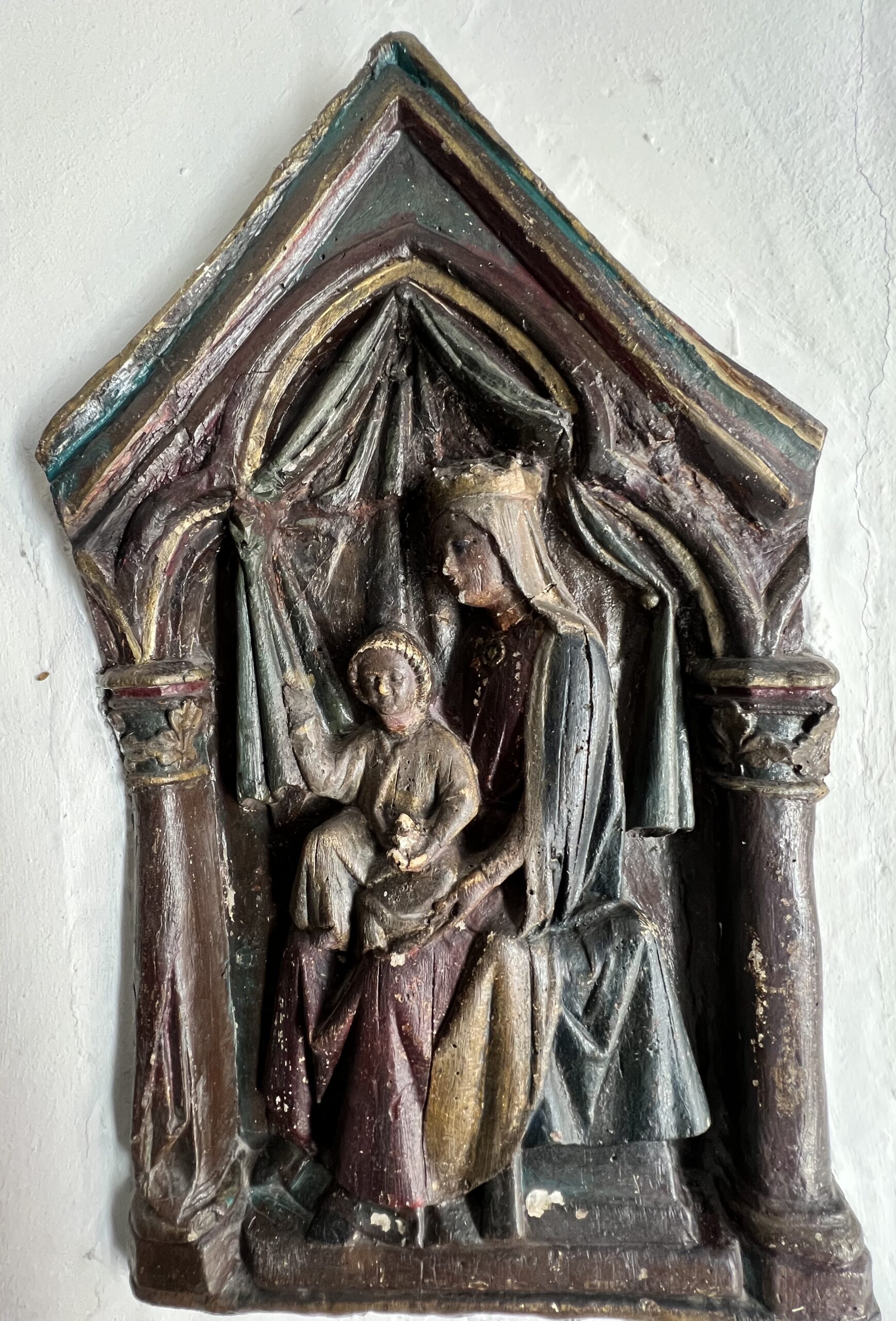
After visiting the church, I will go to the Mary's chapel, which can be reached in an alley next to the church. At the entrance, an old statue is placed against the wall, and I see Mother with Child. It is exceptionally beautiful in the chapel. How gorgeous the old statue is!
On the left side of the chapel, there are two large stained-glass scenes. One depicts the miracle of the blind woman suddenly being able to see, and the other shows a procession.
In the Chapel of Mary, I see a leaf lying there with a prayer printed on it. Part of the text reads:
“Mother Mary,
For centuries, you have been revered here in Delft as “Mary of Jesus”.
Encouraged by your smile, many found strength, support, and answers with you.
In the utmost confidence, I too lay my concerns and desires before You.
Show me the way to the Child on your hearth.
Tell me again and again: “Do whatever He tells you”.
Environment
From the centre of The Hague to the Burgwal in Delft is a 15 km journey south.
Leaving from the centre of Rotterdam to arrive in Delft at the Burgwal is travelling 16 km to the northwest.
Leaving Hoek van Holland to arrive at Burgwal in Delft is a 22 km drive to the east.
First placement: 15 April 2025
~~~

 Nederlands
  English (UK)
  Deutsch
  Français