~~~
The Miracle of Empel (Spanish: El Milagro de Empel) took place on 8 December 1585. This happened during the Battle of Empel in the Eighty Years' War (1568-1648).
On 20 November 1585, the Spanish army crossed the River Maas. The men were led by commander Francisco Arias de Bobadilla (1537-1610). The soldiers entered the polder named Bommelerwaard. Shortly afterwards, the Spanish encountered a Dutch war fleet, and the cannons on the ships destroyed the polder's dikes. As a result, the polder was flooded. The Spanish intended to proceed to ‘s-Hertogenbosch. However, they were unable to do so because the Maas was being guarded by Dutch troops. This trapped the Spanish soldiers near Empel for 5 days.
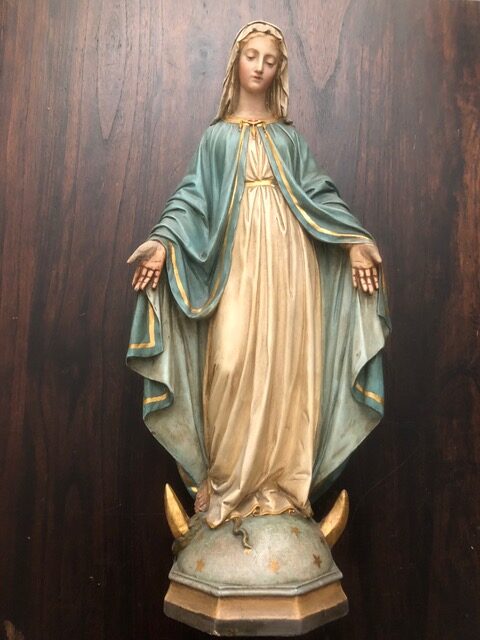
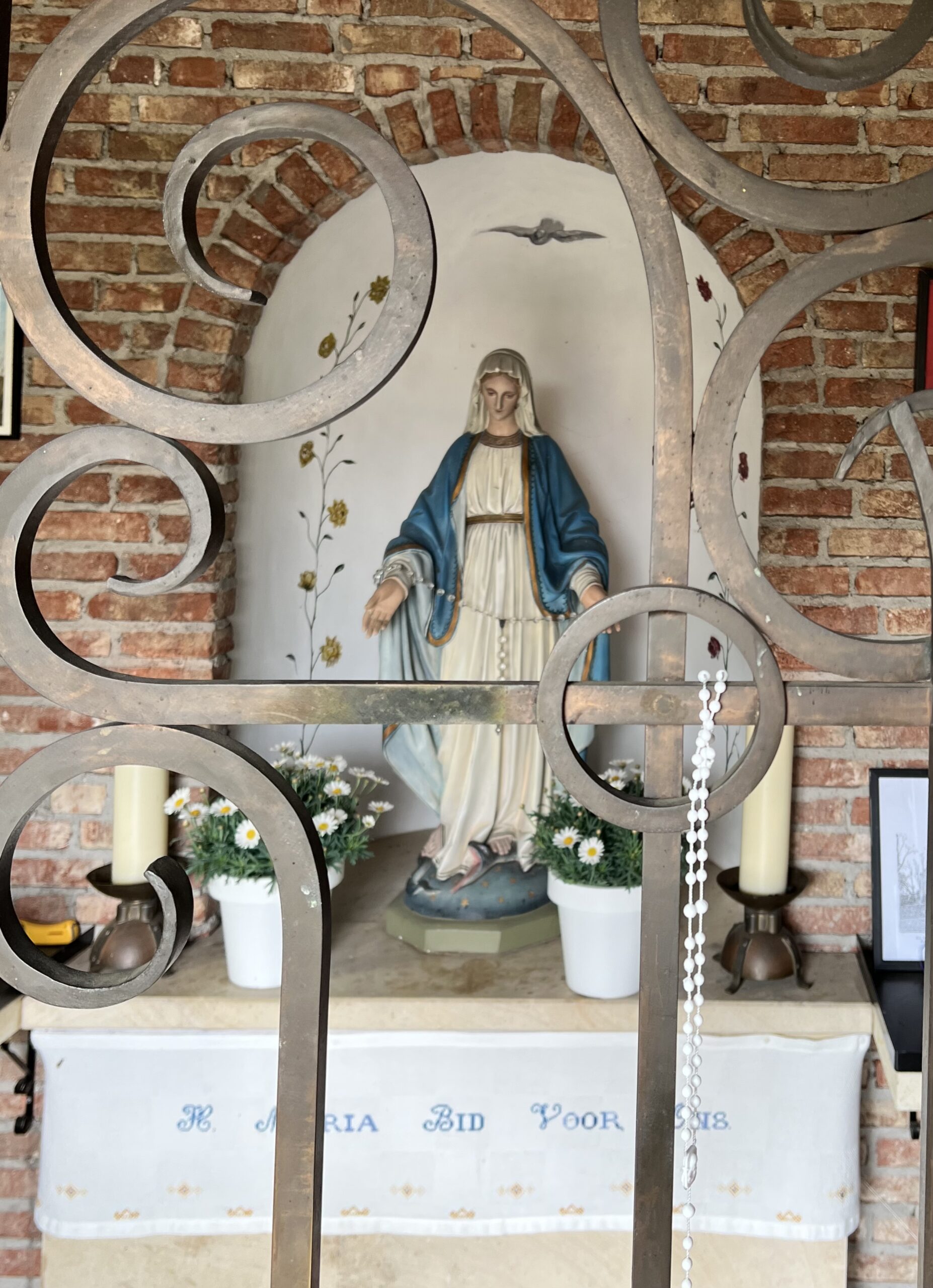
On 7 December 1585, the “Tercios” (Spanish soldiers) dug in around the church of Empel. During this digging, a Spanish soldier found an undamaged image of the Immaculate Conception of Mary. This artwork was carried in procession to the church of Empel, and the Spaniards prayed before it to be saved.
The following day, 8 December 1585, the feast of the Immaculate Conception of Mary is celebrated. The Brotherhood of Our Lady from ‘s-Hertogenbosch holds a procession to invoke God's help through Mary to save the besieged Spaniards. The members of the brotherhood and the Spaniards have a fervent faith in Mary. As 8 December 1585 progresses, it begins to freeze hard. Ships of the State troops sail into the open water of the River Maas to prevent them from freezing over. This allows the besieged Spaniards to escape. Two days later, the thaw sets in, but the Spanish troops have safely arrived in ‘s-Hertogenbosch. By fleeing across the frozen water, 4,000 Spanish soldiers escape the State troops near Oud-Empel.
This miraculous event led to an increase in the veneration of Mary among Spanish soldiers. Spanish believers attribute the Miracle of Empel to Our Lady. Since 1892, Mary, Immaculate Conception, has been the patron saint of the Spanish army.
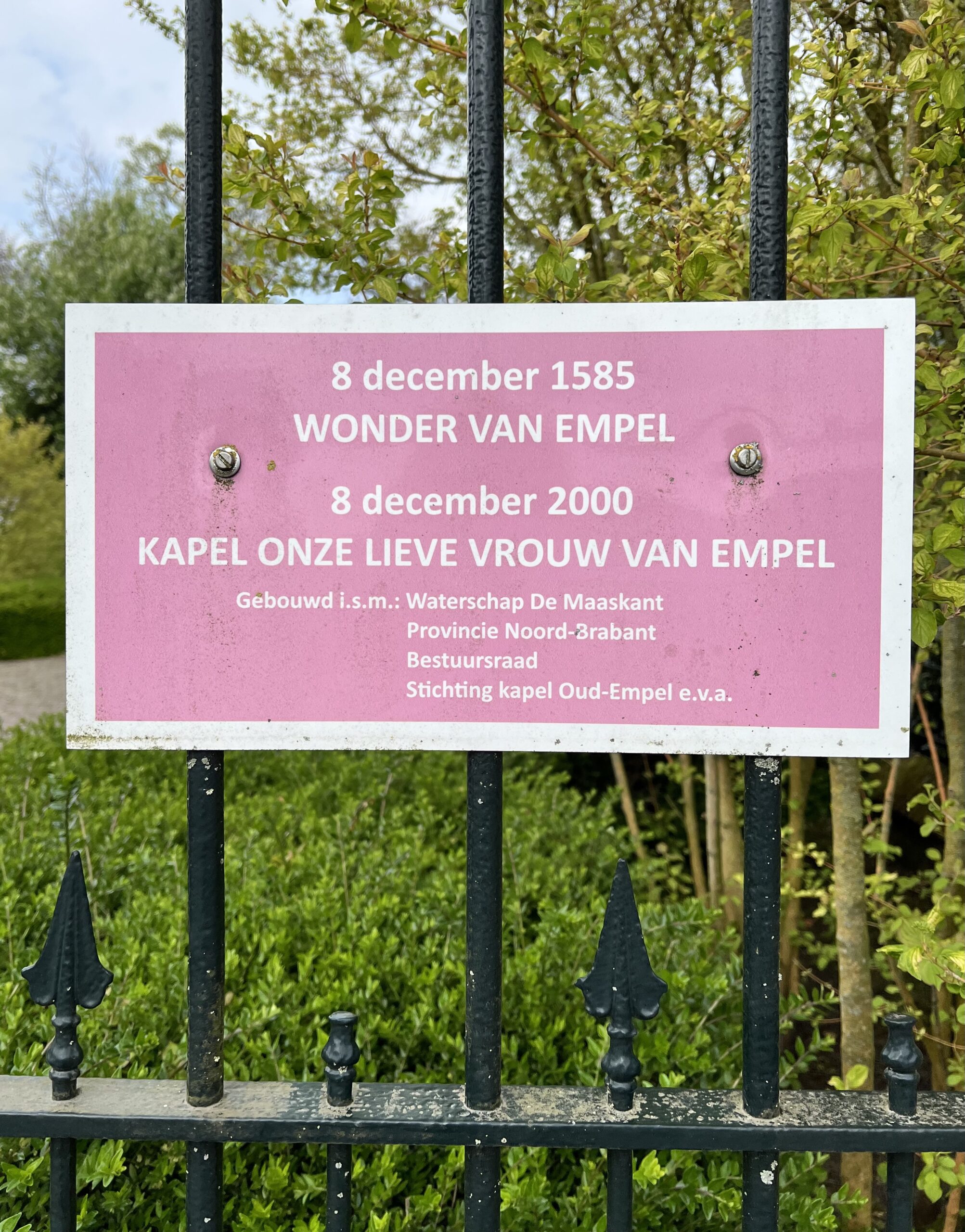
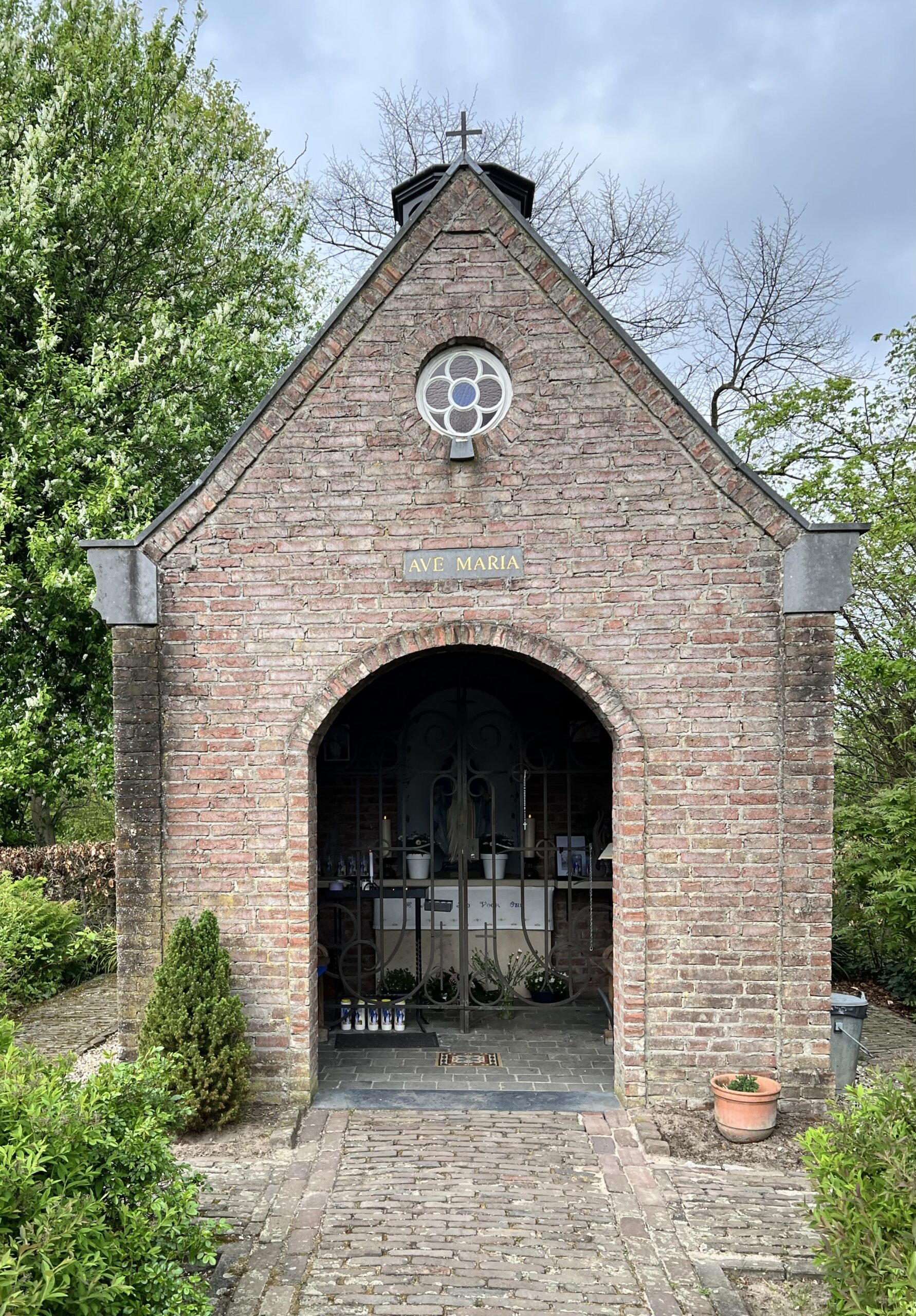
The chapel of Our Lady of Empel, located in Oud-Empel on the site of the former church, was built in November 2000. The chapel was created on the initiative of the “Stichting Kapel Oud-Empel” (Oud-Empel Chapel Foundation) and this took place during the dyke reinforcement works. This chapel is situated near the site where the Spanish forces dug in during 1585. Churches have stood on this site since around the year 800, and the last church was destroyed in November 1944, during the Second World War (1939-1945). The chapel was consecrated on December 9, 2000.
Annually, the Miracle of Empel is commemorated in Spain. Spaniards also come on pilgrimage to Oud-Empel to commemorate the miracle and thank Mary. They go to the Landelinus Church in Empel and visit the Mary Chapel in Oud-Empel. Children in Spain are taught about the Miracle of Empel in schools. This miraculous event is therefore better known in Spain than in the Netherlands.
In a side aisle of the Landelinus Church in Empel, there is a small museum themed around the “Miracle of Empel”.
Address Landelinuskerk: Proosdijstraat 14 in Empel (5236AT ‘s-Hertogenbosch).
Address of the “Chapel of Our Lady of Empel”: Empelsedijk, Oud-Empel (5235AE ‘s-Hertogenbosch). This chapel is located between the old cemetery and number 20 Empelsedijk.
~~~

 Nederlands
  English (UK)
  Deutsch
  Français