~~~
History
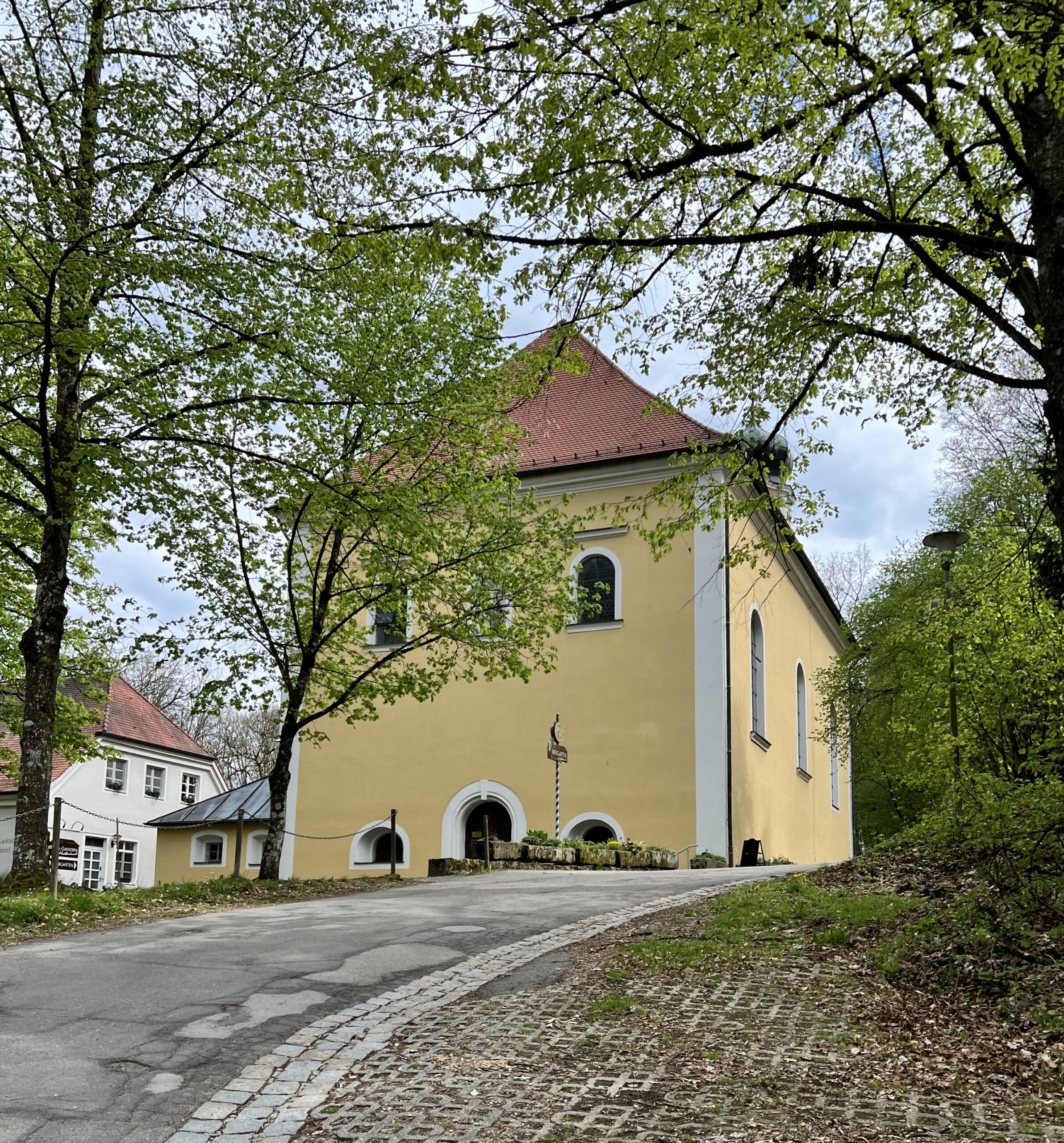
A legend lies at the heart of the pilgrimage site. The story goes: A statue of Mary is found by a shepherd in a spring, but the man cannot grasp it. The effigy escapes his hold and sinks deeper into the water. The man informs the priest of nearby Roding. Later, the priest is able to retrieve the statue from the water. The clergyman declares the following day a processional day at the spring. The statue of Mary is placed in a shrine. Healings occur at the statue, and this is why pilgrimages began in 1660.
The first chapel at Heilbrünnl was built in 1668 and visitor numbers steadily increased. Due to the rise in pilgrims, the chapel became too small, and between 1684 and 1691, the space was enlarged. From 1690 onwards, it was referred to as a pilgrimage site with the chapel of “Our Lady at the Heilbrünnl”. The location is therefore named after “Our Lady of the healing spring”.
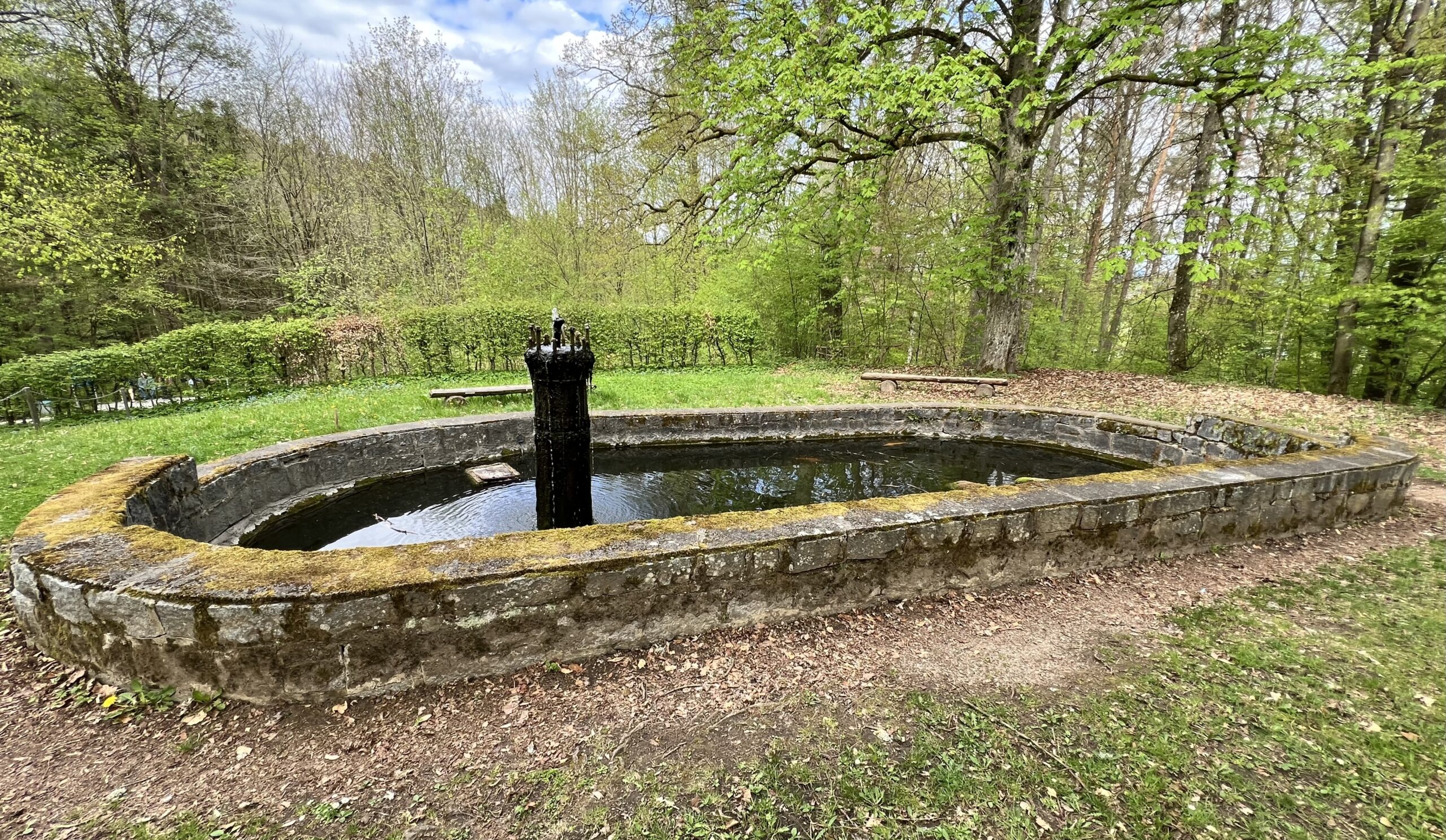
In 1730, the construction of the current Rococo-style church began on the site where the chapel previously stood.
In the summer of 2022, the spring dried up for the first time.
In 2024, the renovation of the church's exterior was completed. Subsequently, significant savings will be made to also restore the interior of the pilgrimage church.
Pilgrimage site
The pilgrimage church is situated on the River Regen. Besides a church, there is also a spring and a Stations of the Cross. The Marian shrine is called “Wallfahrts-Gaststätte Heilbrünnl” (pilgrimage site and guesthouse Heilbrünnl).
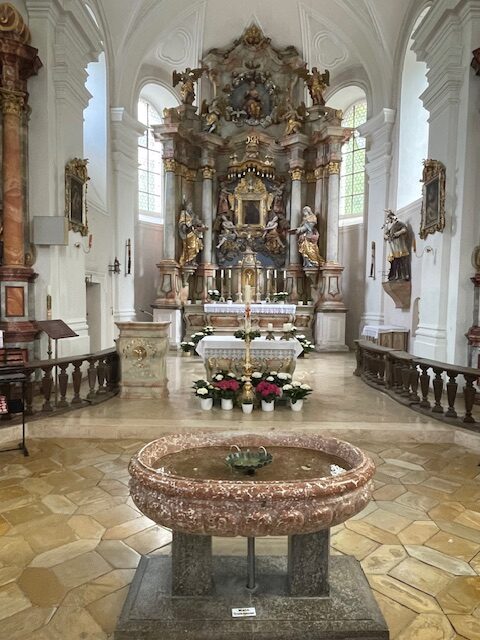
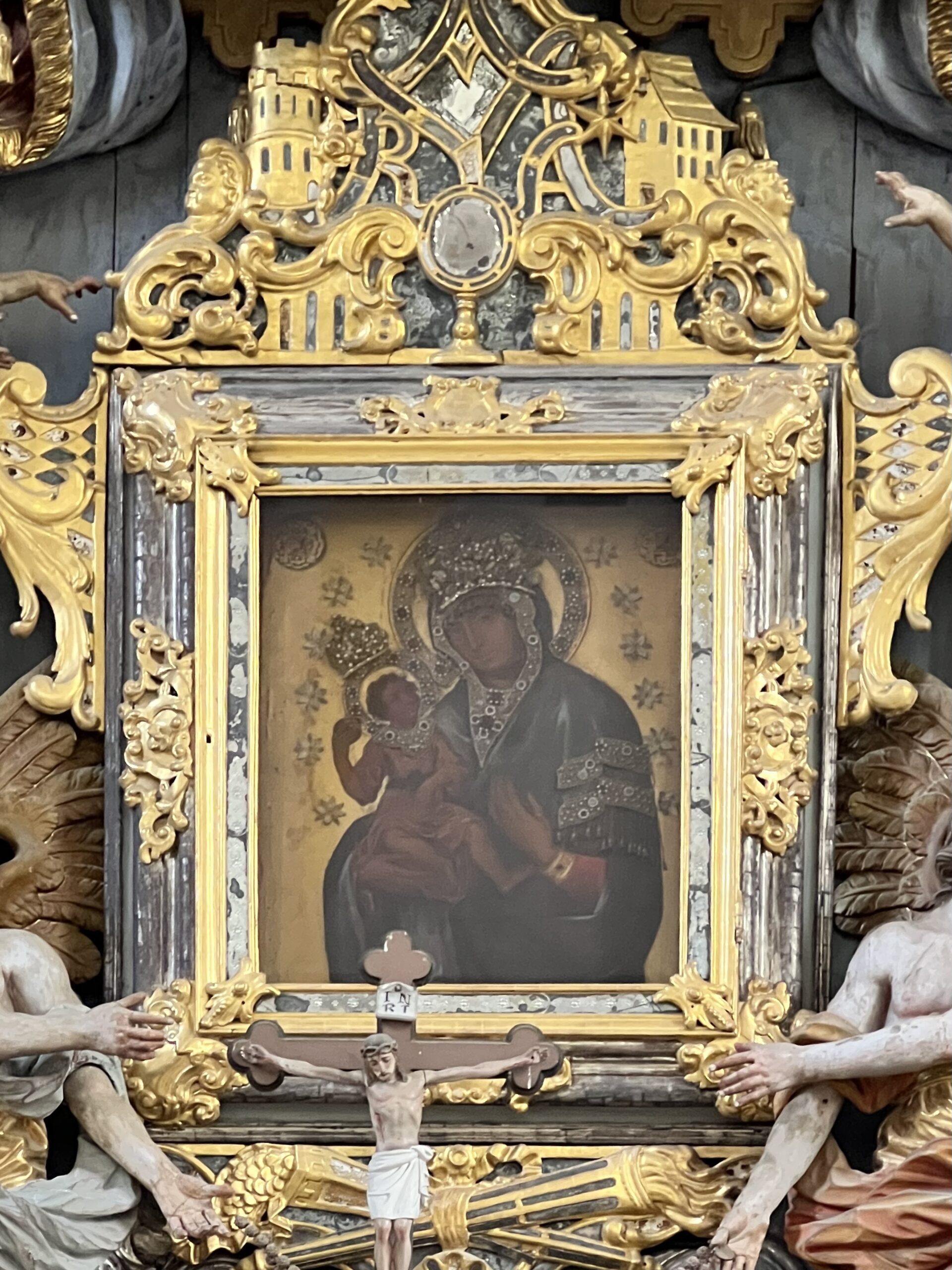
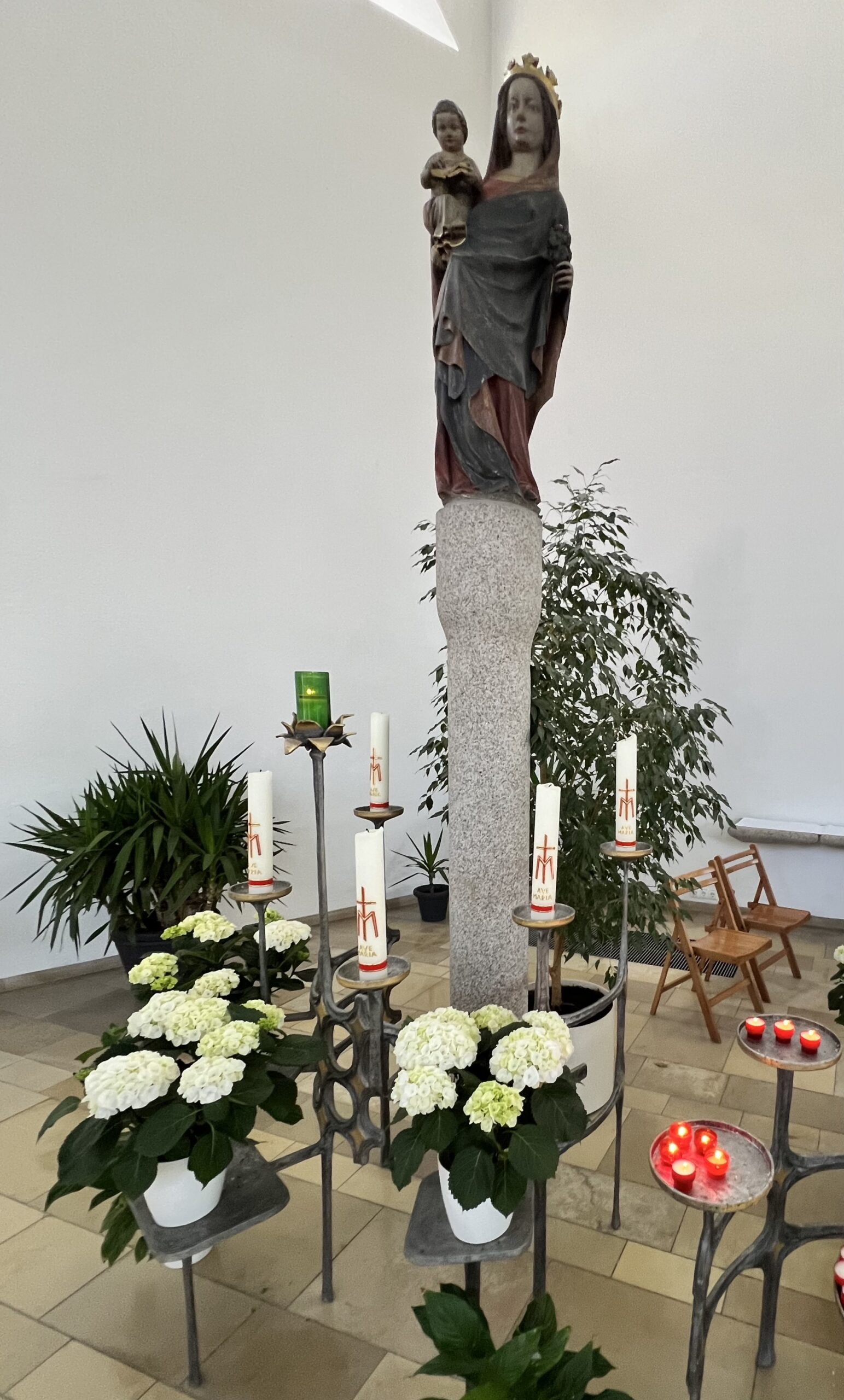
The 17th-century statue of grace stands between four columns in the chancel of the pilgrimage church. Mary holds her Child on her arm, who is holding an apple and looking at his Mother. The clothing of Mary and her Child is set with precious stones. Between the columns stand life-size statues of Mary's parents, namely Anne and Joachim. Anne holds the Old Testament and Joachim is depicted with a pilgrim's staff and doves.
The devotional image is a copy of the icon of the Mother of God by the German architect, etcher, and painter Albrecht Altdorfer (1480-1538) from Regensburg. The original is in an old chapel in Regensburg and is painted after the artwork in the Basilica of Sancta Maria Maggiore in Rome. There it bears the name “Salus populi Romani,” which is Latin for “the safety of the Roman people.” The devotional image in this church is held aloft by two large angels, and two small angels tend to the curtain behind the image.
In the left side altar, the cross with Christ is depicted, with Mary Magdalene at his feet. The other side altar is dedicated to Saint Sebastian.
In the middle of the church there is a marble basin with water from the spring.
In the church, many ex-votos can be seen; these are thank-you plaques and paintings. Frescoes on the ceiling also adorn the church.
Next to the pilgrimage church is a pilgrims' inn.
ACCESSIBILITY
The pilgrimage church is located to the west of the town of Roding, in the “Upper Bavarian Forest” nature park and in the east of the Free State of Bavaria. The Czech border is not far from the Marian shrine.
The address of the pilgrimage church is Heilbrünnl 2, D-93426 Roding.
Experience
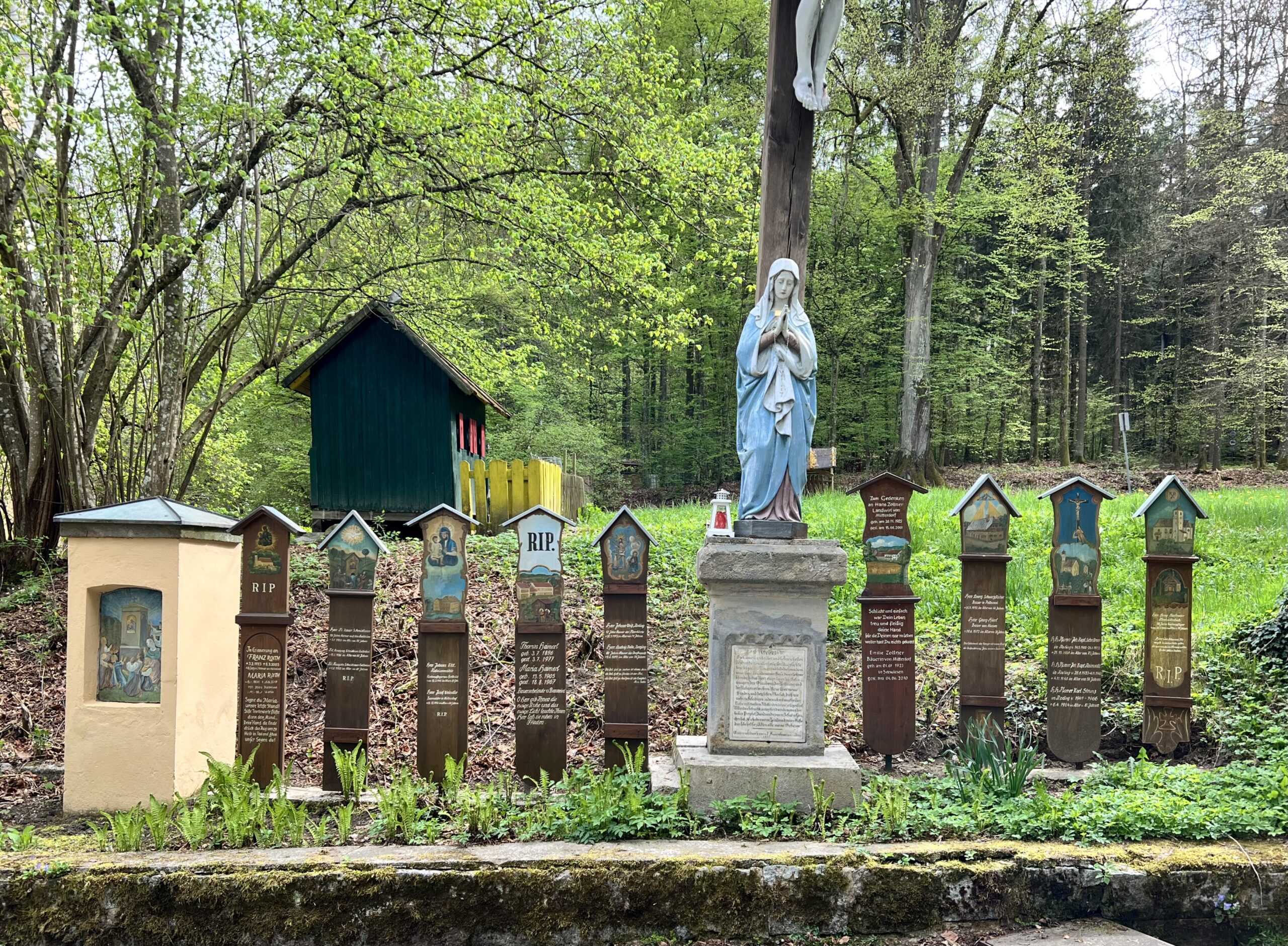
The pilgrimage church near the town of Roding is called Heilbrünnl and is situated on a hill. There is space for parking cars, which takes place opposite a special expression of welcome. I see Mary standing under the cross, and next to her are wooden images of deceased members of farming families. Beneath the depiction of Our Lady is the text of a prayer from 1876.
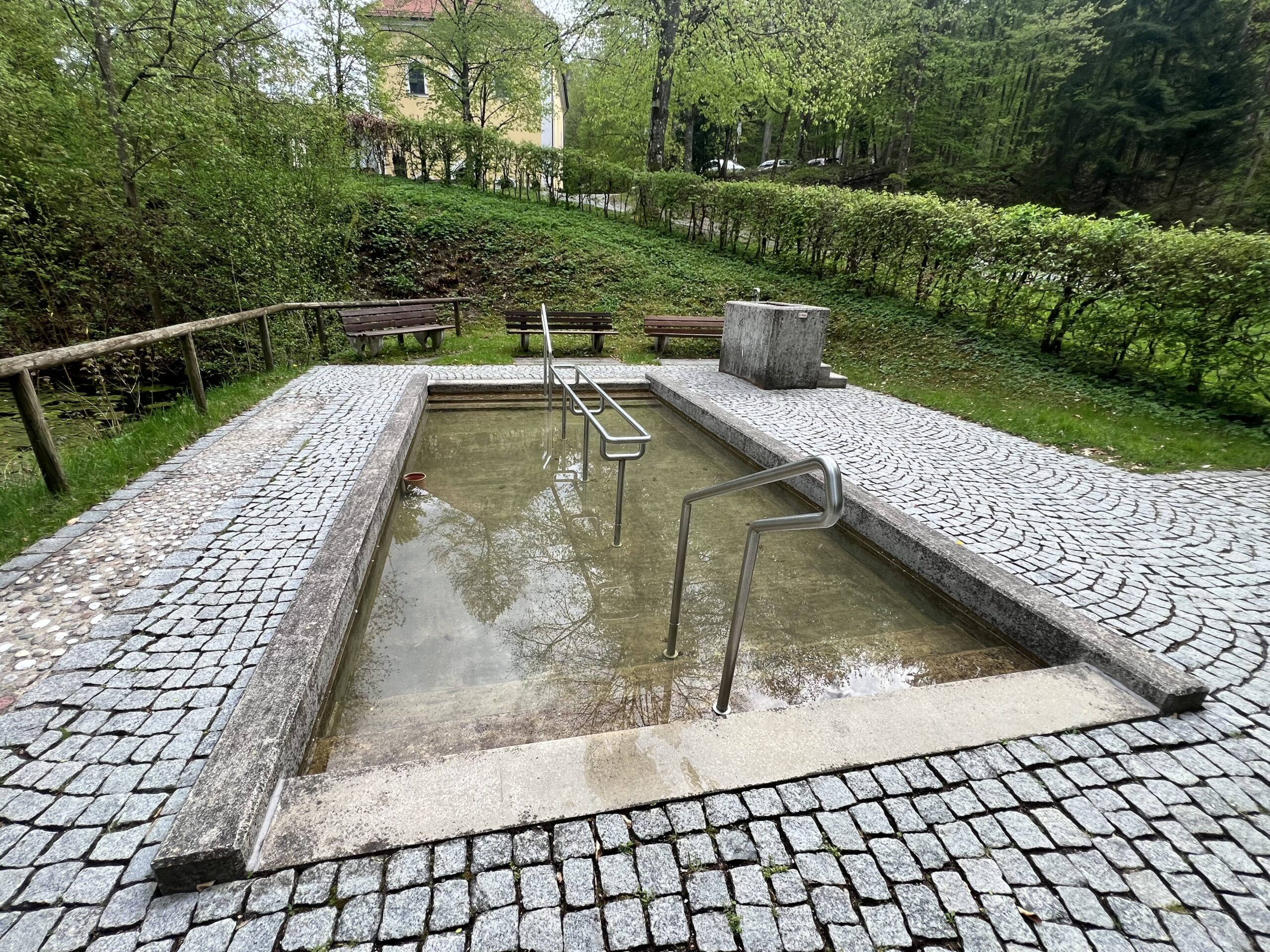
A few dozen metres in front of the church is the old Maria spring fountain, which refers to the name of this Marian shrine. Nearby is a foot bath, in which visitors can walk a few steps. This is a double wellness walk, as stepping into the water and then drinking water from the Maria spring offers healing.
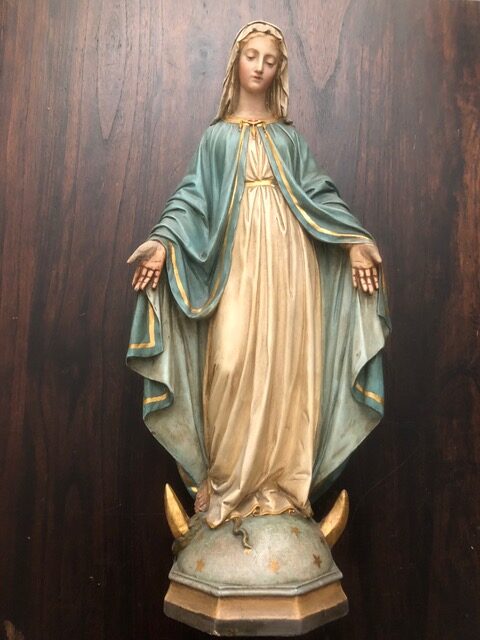
Above the main entrance of the church, a statue of Mary has been placed. Mary stands on a crescent moon and holds her Son and a sceptre.
I am here on a weekday and lucky that the church is open. Today access to the church is via the side door and as I step inside, the interior reveals itself in full beauty. What a warm ambience! The statue of grace can be seen at the main altar. The image is framed and Mary and Child are crowned.
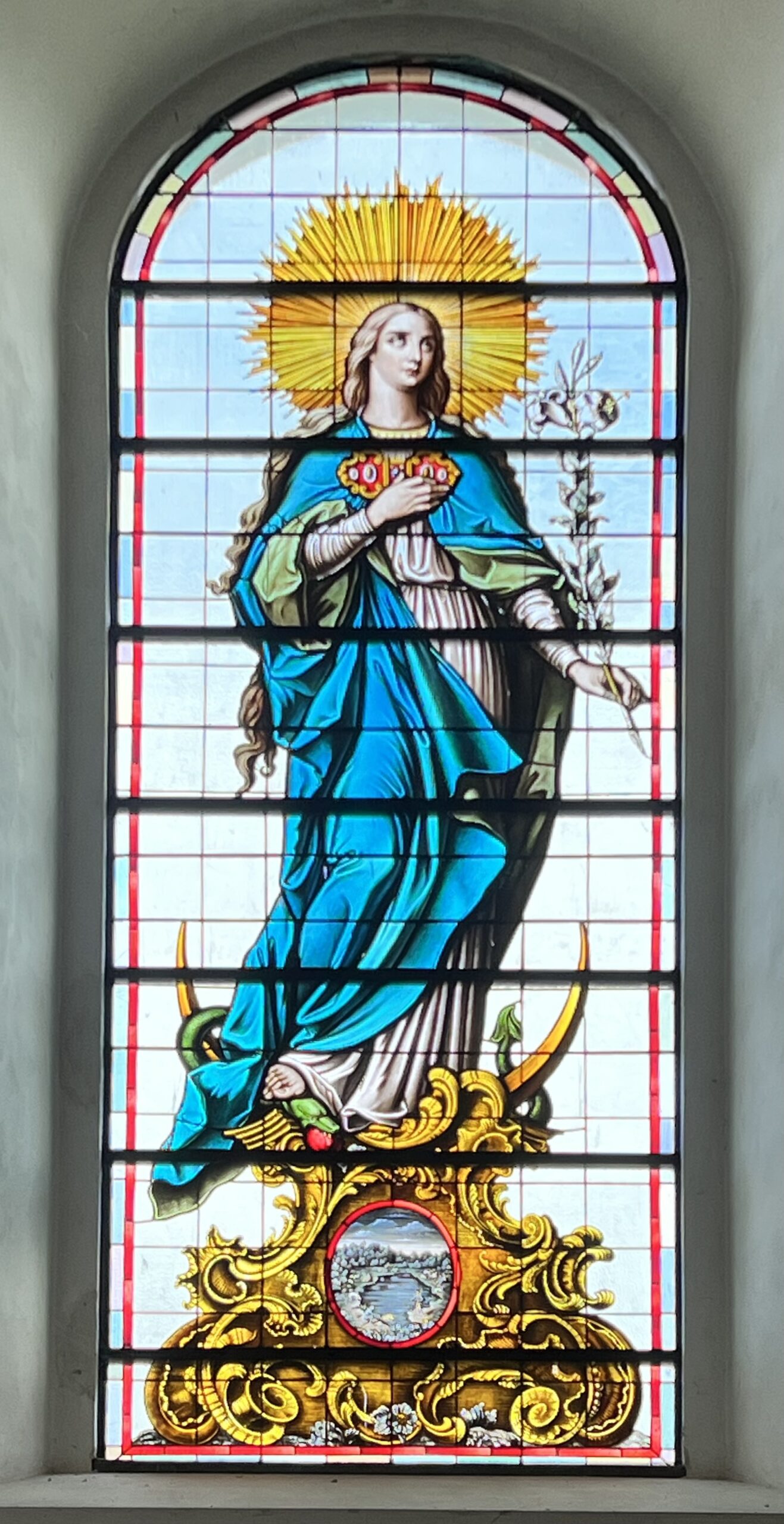
In this church too, I see frescoes on the ceiling. I pause for a little longer at two large stained-glass windows, depicting Our Lady of the Immaculate Conception and Mary Magdalene. What impressive works of art these are! Then it's time to pray, and as I do, I think of good people I know; one has recently lost her father and another is struggling with a long-term illness. They could certainly use a little support from Mary.
I see offering boxes in every church, as every church is short of money. This money box, however, has a very special shape. The offering box is square and has an image of a saint on each side. Here, it feels like a privilege to experience beauty. How happy I am to be able to visit here.
Environment
In the vicinity of Heilbrünnl, you can go for walks and bike rides. Near the pilgrimage site lies a nature park called “Oberer Bayerischer Wald”.
A few kilometres from Heilbrünnl lies the town of Roding. The town parish church of St. Pankratius also houses a shrine of Heilbrünnl. The statue was consecrated on 13 May 1988. Mary of Heilbrünnl is the patroness full of goodness, who always protects people.
Leaving the pilgrimage site of Amberg to arrive at that of Heilbrünnl means travelling 63 km to the southeast.
Travelling from the pilgrimage site of Bogenberg to Heilbrünnl involves moving 48 km northwards.
From the large city of Regensburg to Heilbrünnl, it's 49 km to the northeast.
The distance from Nuremberg to Heilbrünnl is 132 km, then head east.
Travelling from Pilsen in the Czech Republic to Heilbrünnl means travelling 109 km to the southwest.
~~~

 Nederlands
  English (UK)
  Deutsch
  Français