~~~
History
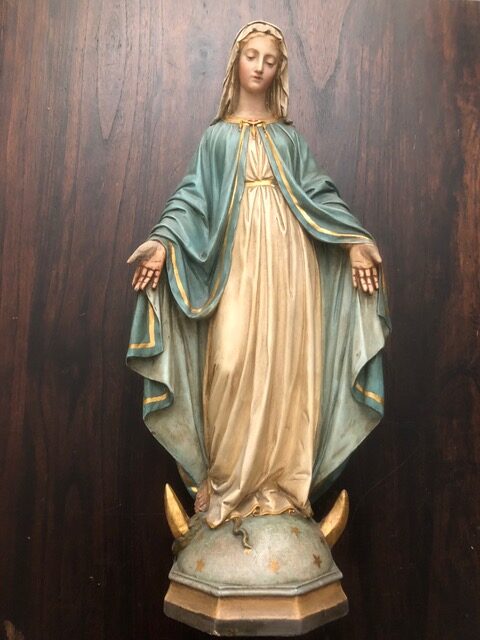
The history of the pilgrimage site begins in 1680. A young man named Franz Forell went on a pilgrimage to Rome and bought a statue of Mary there. He brought this image to Wemding. There it was venerated at home. In 1681 he left the town for good, but the statue remained in Wemding. The image became known when a Protestant, suffering from severe headaches, prayed to the depicted Mary and received an answer to his prayers. The priest was not pleased with the interest in the statue and did not want a private shrine. The clergyman took the statue to the rectory garden. Subsequently, the image of Mary fell into obscurity.
In 1692, the young man's brother-in-law, Franz Forell, is on his way home with the statue. Suddenly, a strange apparition blocks his path. This happens near a water basin, which turns out to be a spring. Filled with fear, the man makes a vow that if he gets out of this unharmed, he will have a chapel built on this spot for the forgotten statue of Mary. The man remains uninjured and fulfils his promise. He also ensures that the statue of Mary is taken to the chapel. In time, the chapel gains more and more attention.
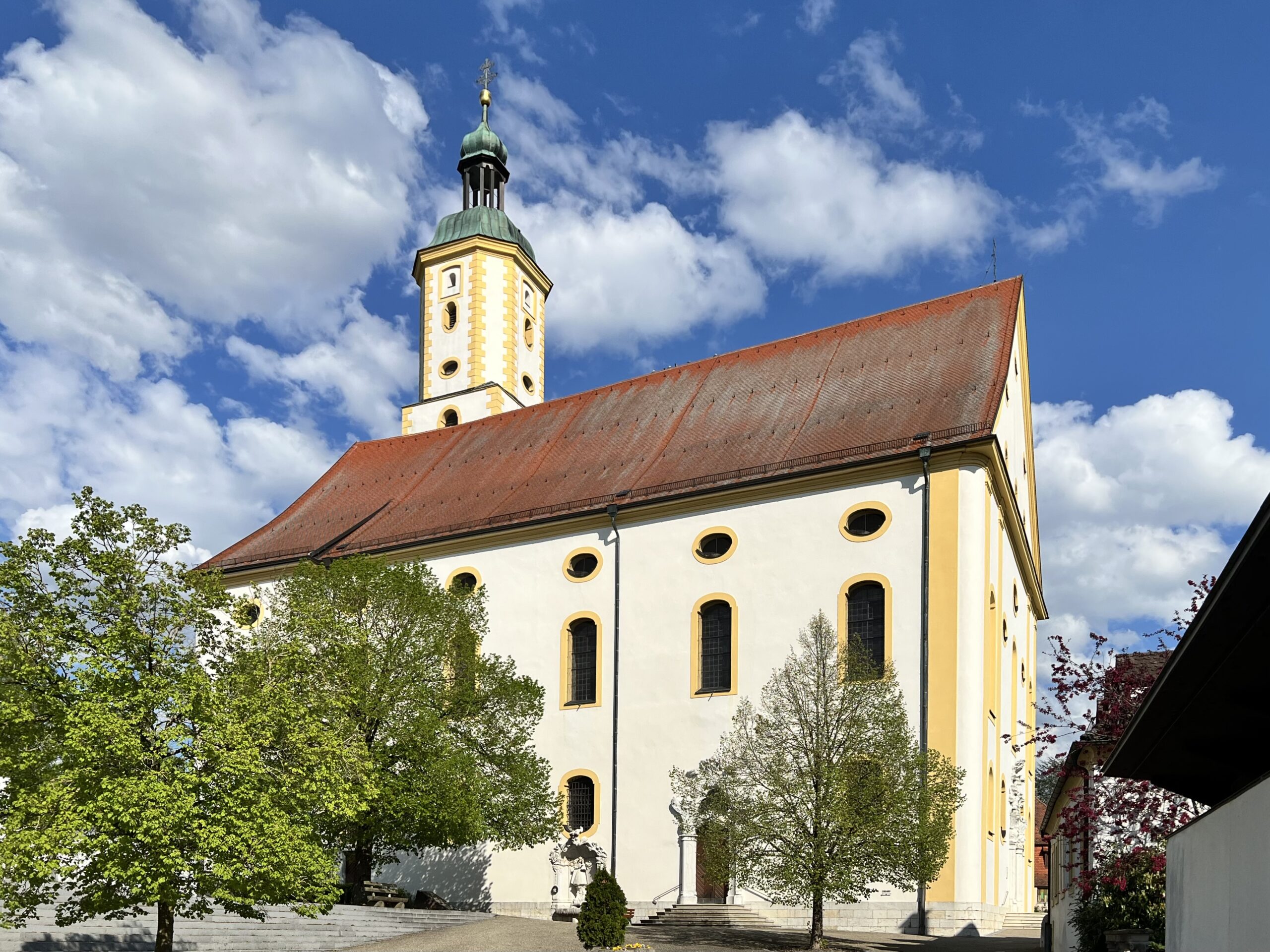
On 25 June 1735, the statue of Mary in the chapel is decorated by 15-year-old Maria Regina Forell, a niece of Franz Forell, who owned the statue in 1680. She suddenly notices that the statue is moving. She sees that Mary is looking towards the town of Wemding. She then tells the inhabitants of Wemding about this. Clergy hear of this and do not approve at all, but for laypeople it is clear that it is a new message from Mary. In 1741, the chapel is enlarged because the number of interested visitors is constantly growing. In 1746, it happens for the second time that the eyes of the statue of Mary turn. Numerous pilgrims observe the turning eyes of the figure. There are more than 70 witnesses who have seen the miraculous event. In 1748, the construction of a new, larger church begins. The design of the church is by Franz Josef Roth (1690-1758). Approximately 8,000 people work on it. Its completion is delayed due to a lack of funds.
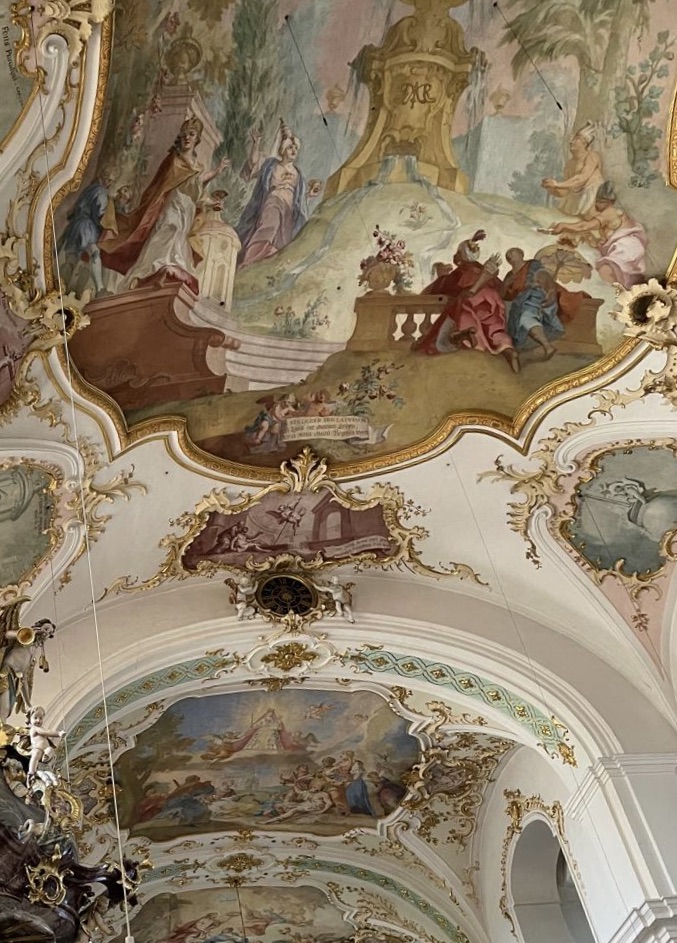
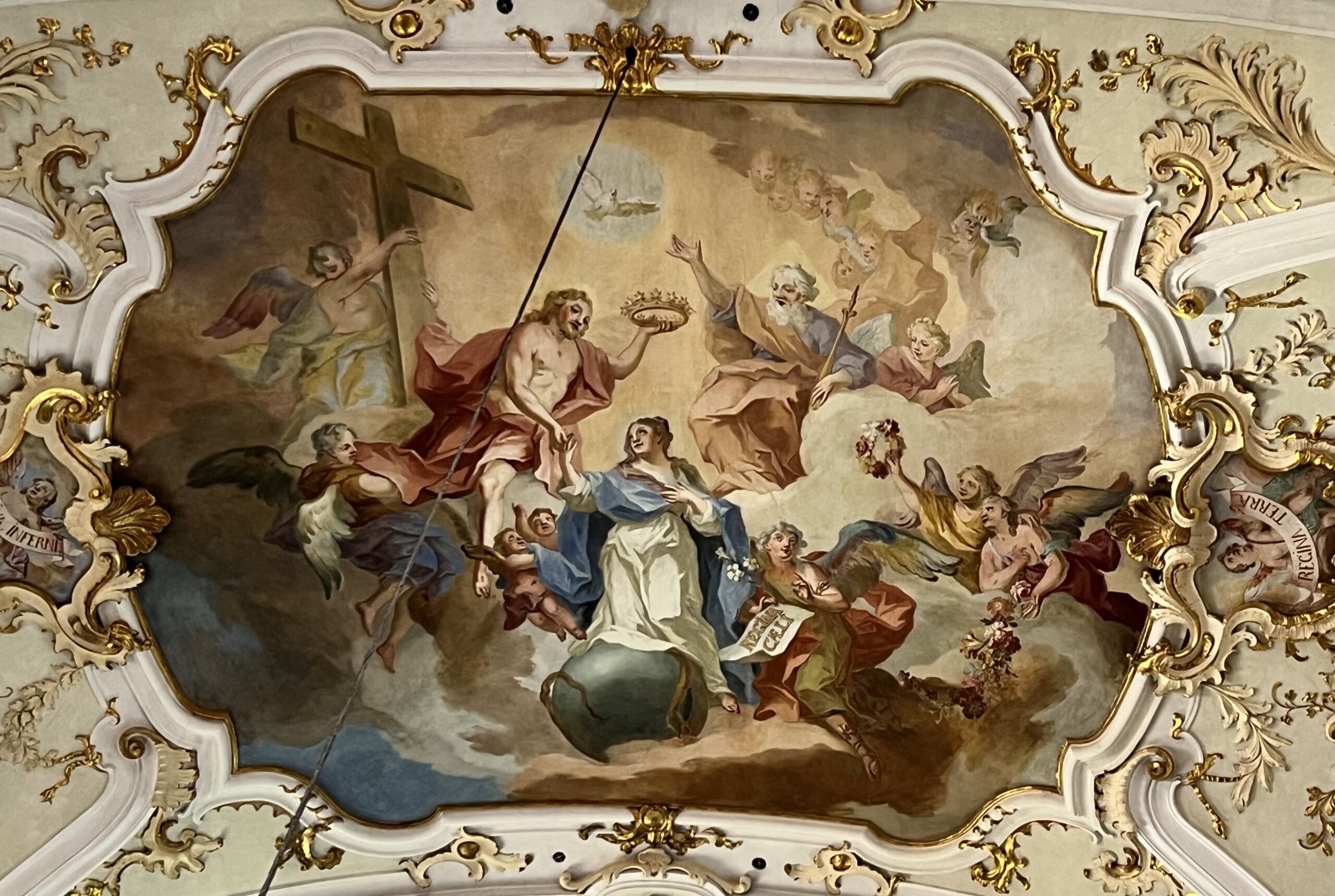
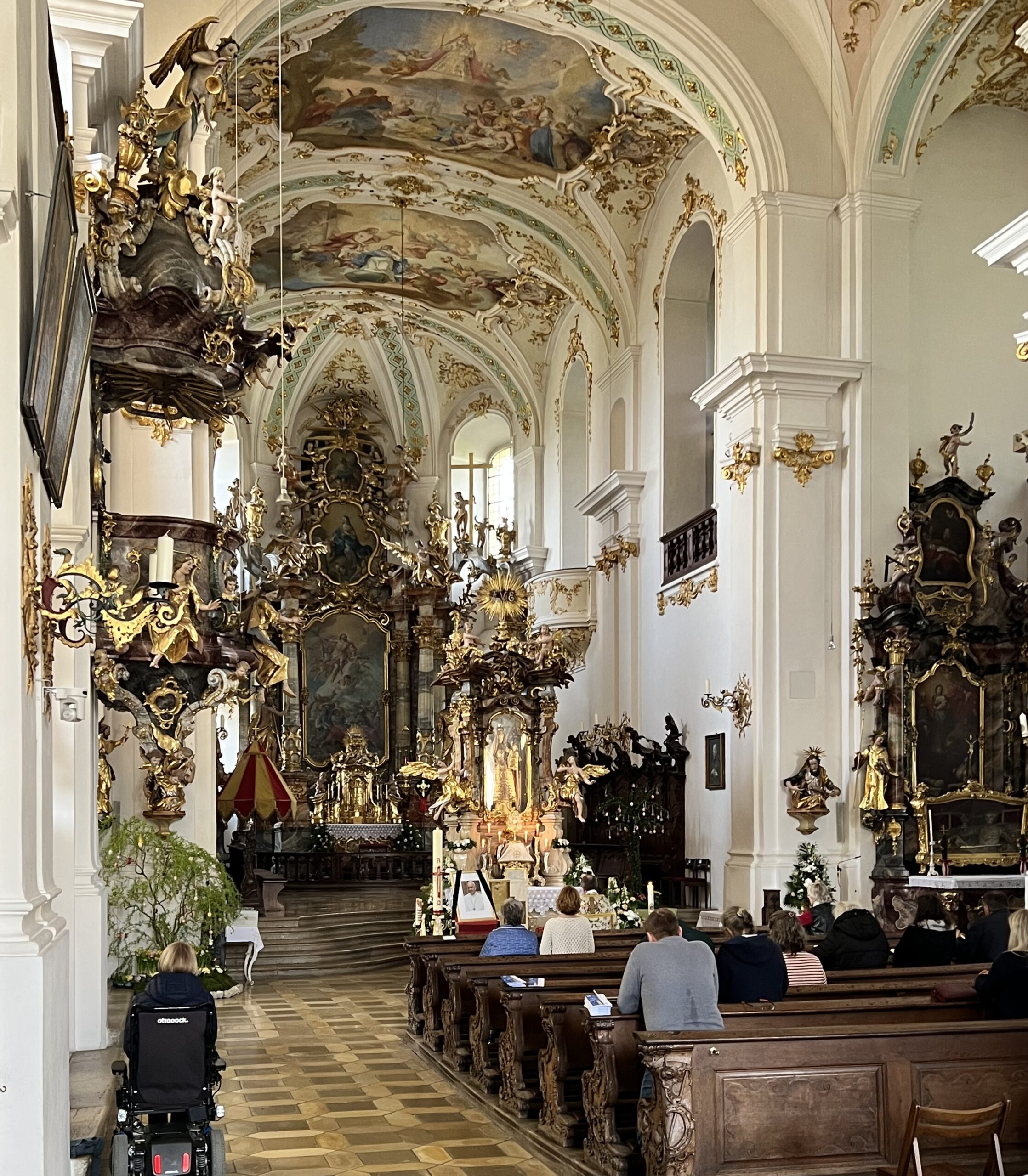
In the period 1748-1754, the frescoes were applied by painter and ornamental plasterer Johann Baptist Zimmermann (1680-1758).
In 1756, the devotional image arrived in the church. The consecration of the church took place on 21 April 1782 by Joseph Graf von Stubenberg (1740-1824), who was then auxiliary bishop and later Bishop of Eichstätt (1791-1821), and subsequently Archbishop of Bamberg (1821-1824).
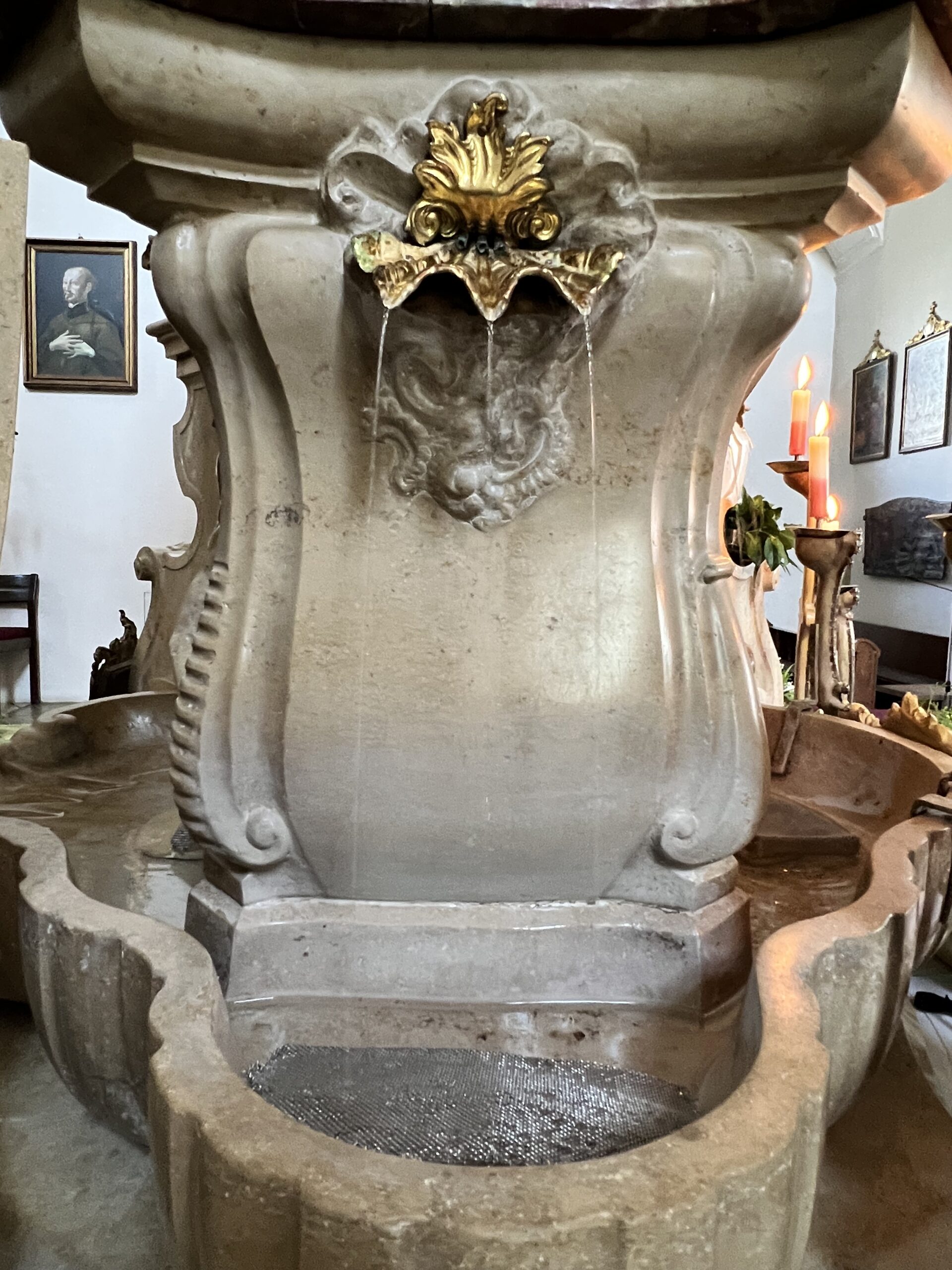
The altar table and fountain were made in 1953 by the local sculptor Ernst Steinacker (1919-2008).
By decree of 12 September 1998, the church was elevated to a basilica with the approval of John Paul II, Pope from 1978 to 2005 and born Karol Józef Wojtyła (1920-2005).
In the years 2000-2003, renovation works were carried out in the basilica.
Pilgrimage site
The pilgrimage site Maria Brünnlein vom Trost (of comfort) is one of the most important Marian sites in Bavaria.
The shrine bears the name “Unserer Lieben Frau von Wemding” (Our Lady of Wemding).
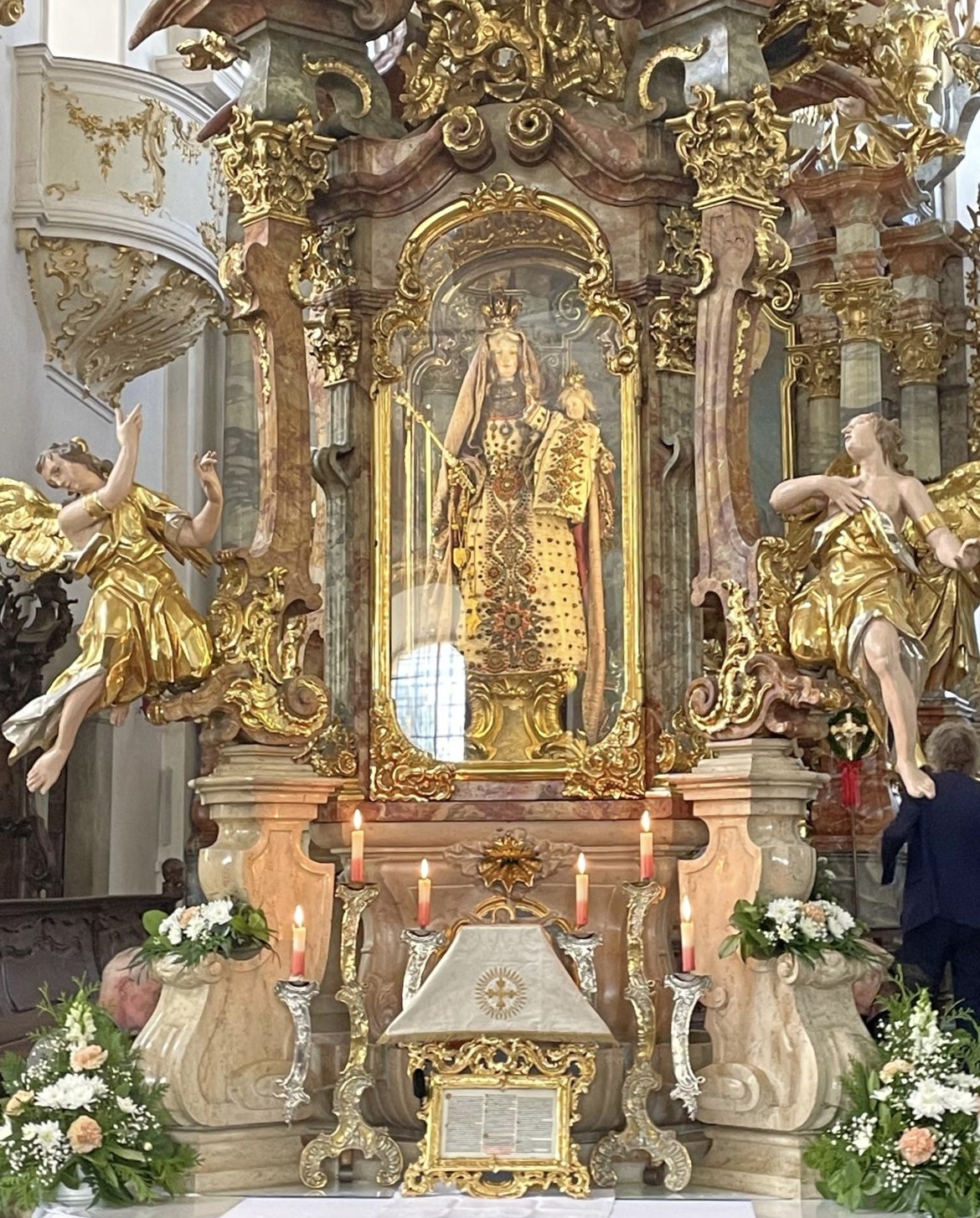
The name “Brünnlein” stands for "little spring", and this can be seen in the basilica. This spring is located next to the shrine.
The church displays frescoes. On a ceiling painting are the words: “he who hopes not for salvation here, the fount of grace is open”.
There is a Fatima Day on the 13th of every month.
Next to the basilica stands the “Haus Maria Brünnlein”, which offers pilgrims accommodation for a longer stay. Days of reflection, Bible evenings, and preparation courses for pilgrims and those planning to marry are also organised here.
Around 200,000 pilgrims visit the basilica annually, which is open daily.
ACCESSIBILITY
Wemding is located in the state of Bavaria. The place of pilgrimage is located just outside the town.
The pilgrimage site address: Oettingerstrasse 103, D-86650 Wemding.
Current information can be found by visiting www.maria-bruennlein.de, www.wemding-wallfahrt.de and www.wemding.de.
Experience
As I leave the town of Wemding, I see the pilgrimage church “Maria Brünnlein”. It's barely two kilometres from the town to the Marian shrine.
When I arrive at the pilgrimage church, I see a lot of churchgoers leaving the large house of God. A service has just ended, and this makes it possible to walk around the church. Inside the church, the great beauty immediately comes into view. What magnificence! What paintings! What statues! Decorations aplenty! This building is a true work of art! The impressively beautiful depictions, especially of Mary, leave me speechless. It already feels like a great gift to be able to experience this. Everything is captivating, right down to the pews.
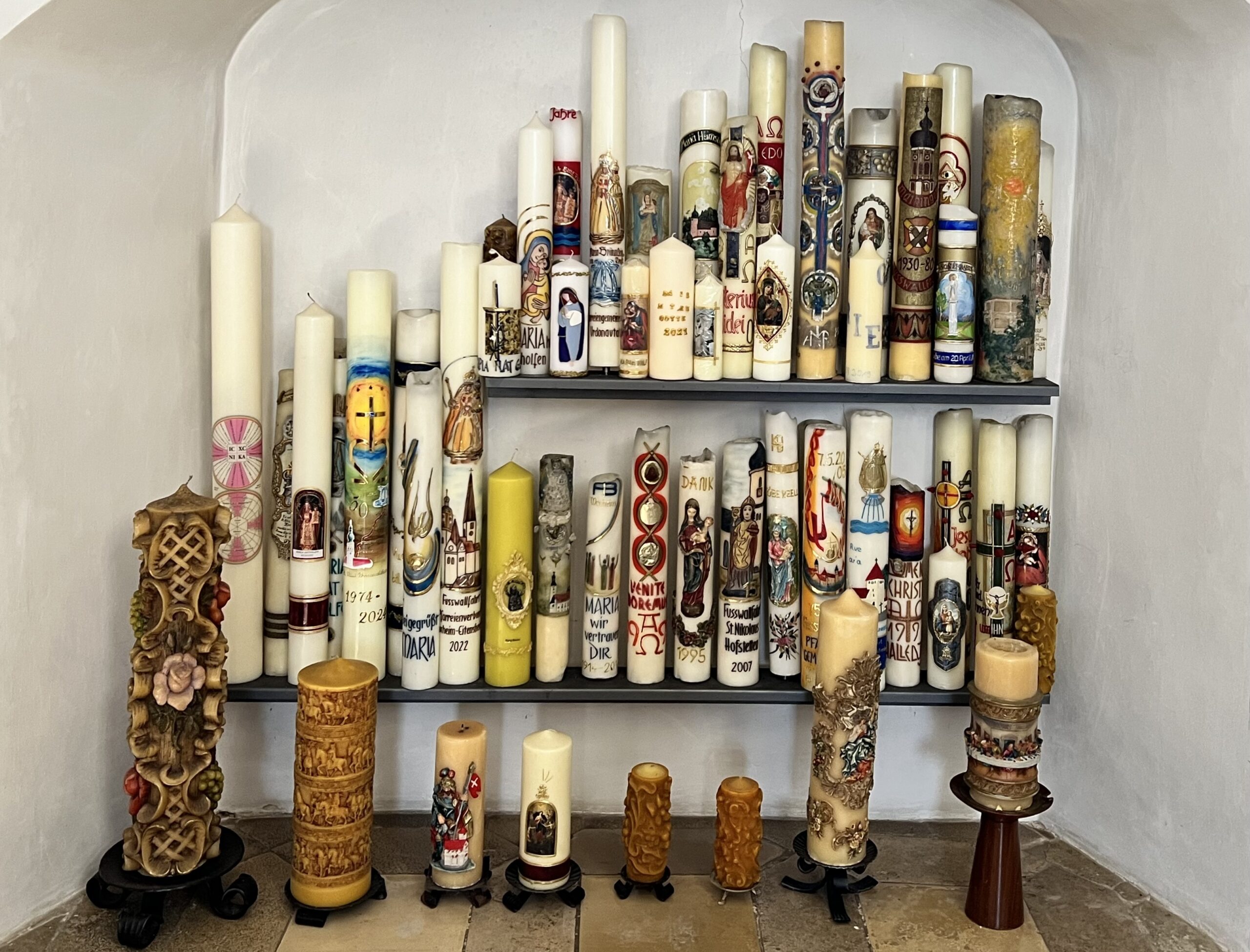
The tour of the basilica passes by ex-votos, large, colourful candles, frescoes and statues, among other things. The frescoes, including the “rosa mystica”, offer long-lasting enjoyment. Miracles are depicted here. Experiencing this leaves me speechless.
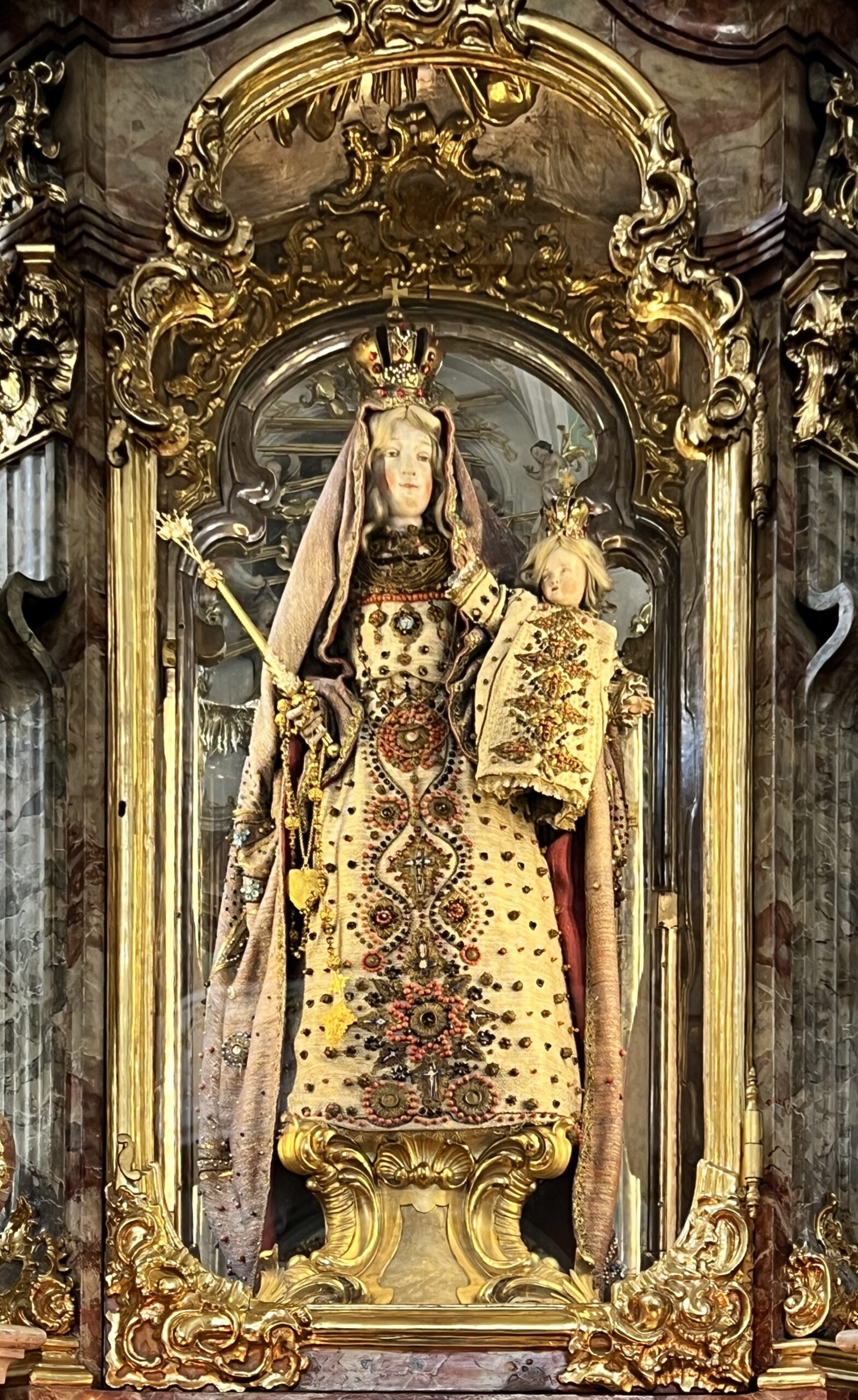
Mary is depicted above the spring. This representation, is testament to gifted talent and high-class craftsmanship. The miraculous statue stands centrally in the room, behind glass. Mary and her Child are wearing golden clothing, and both are crowned. Mary wears a veil that reaches her feet. This is a rare depiction of Our Lady. Below the miraculous statue is the spring, from which water emerges in small streams.
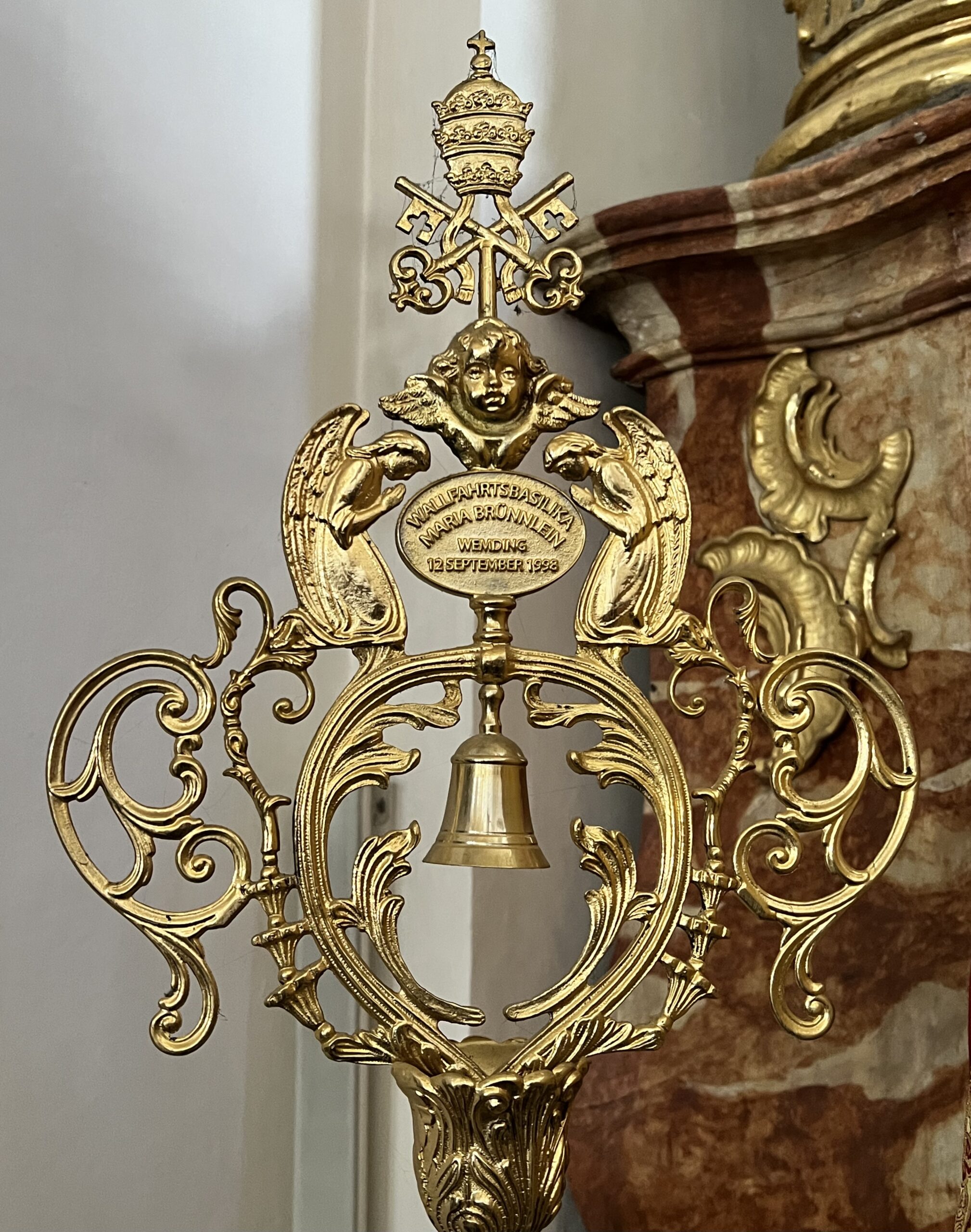
To the left of the altar are displayed the features of a basilica, namely the tintinnabulum and conopeum. The Latin tintinnabulum stands for bell and the Latin word conopeum means hood, canopy and resembles a half-folded umbrella. The date 12 September 1998 can also be read here.
In the basilica, I found a prayer card with, among other things, a prayer to Our Lady of Wemding. The text states:
“For the icon of Our Lady of Wemding, we pray:
We fly to your protection and refuge, O Holy Mother of God;
Do not disdain our prayer in our needs,
but deliver us at all times from all dangers.
O, thou glorious and blessed Virgin, Our Lady,
our Mediatrix, our Advocate.
Reconcile us with your Son, recommend us to your Son,
”Introduce us to your Son."
This church is a gem! Experiencing this is a special event. How much I get to experience from Our Lady!
Environment
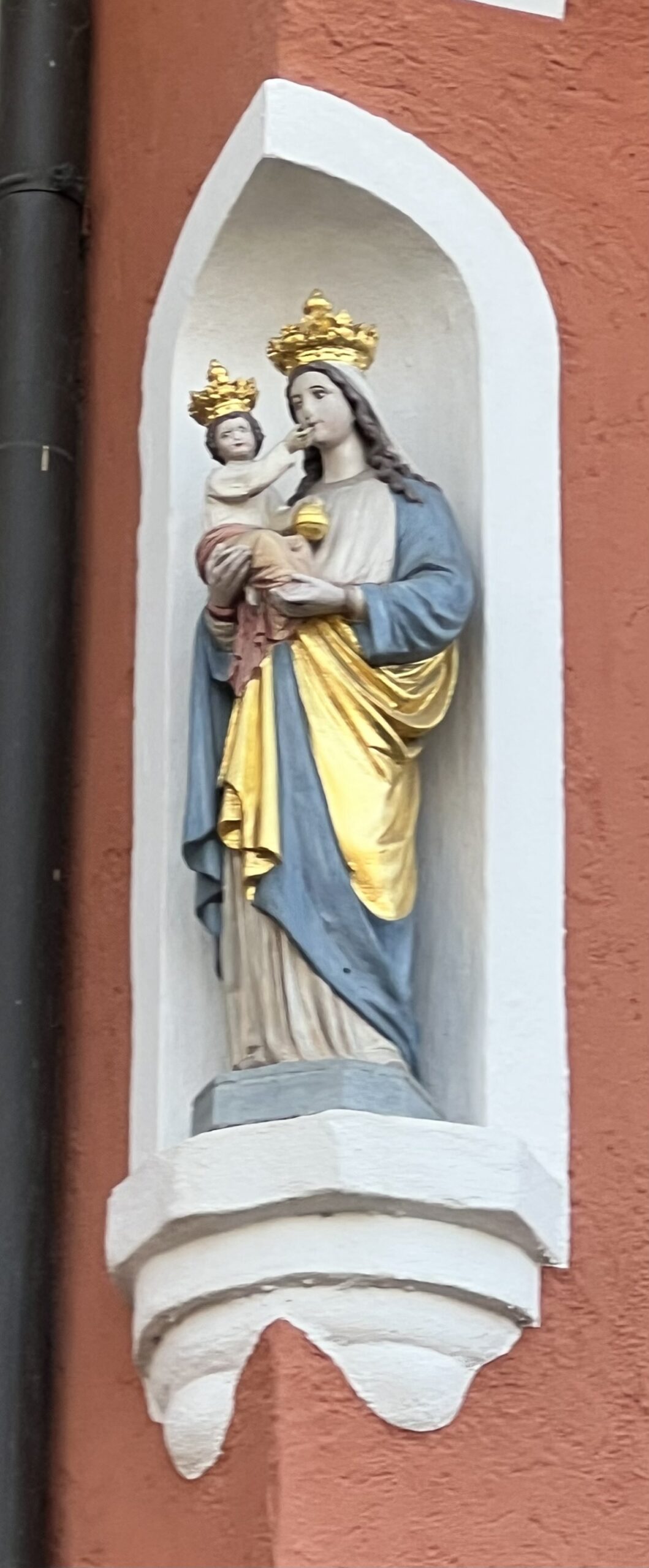
The historic centre of Wemding features many old buildings and squares, such as the town hall, town parish church, market square and towers. Several images of Mary can be seen on facades in Wemding, including on the corner of a hotel at Nördlingerstrasse 16.
Travelling from Nördlingen to Wemding means travelling 24 km to the east.
Departing from Ingolstadt to get to Wemding involves going 63 km to the west.
Leaving Augsburg and arriving in Wemding requires travelling 69 km north.
Travelling from the pilgrimage site at Allersdorf to the one at Wemding is 113 km to the west.
Leaving the pilgrimage site in Amberg to go to that of Wemding involves travelling 141 km to the southwest.
~~~

 Nederlands
  English (UK)
  Deutsch
  Français