History
In 1312, monks of the Cistercian order from the German Abbey of Kamp laid the foundation for the devotion to Our Lady of Divine Mercy on the Kapelberg.
The emergence of devotion at the Chapel Hill is preceded by a remarkable story from around 1500. A man is missing an arm and has two uneven legs, consequently being seen as a deformed person. For 30 years, the man attempts to be admitted to the monastery. Unfortunately for him, he is repeatedly rejected by the prior of the Cistercian monastery. Eventually, he is allowed to show a brother-miller that he can work. The miller takes the man inside. There, the man sees a large block of wood and within this piece of wood, he perceives Mary in a sorrowful state with a sword in her heart and her dead Son on her lap. Immediately, the man takes his knife and begins to carve into the wood. He creates the statue he has just seen in a vision. A few hours later, the man has carved Mary with her Son. The brother-miller falls to his knees in astonishment and requests the monastery's prior if the woodcarver can be welcomed. The woodcarver is admitted to the monastery and goes on to carve many more statues from wood. The statue made by the man, depicting Mary and her Son, is placed in the brothers' chapel. Subsequently, devotion to the Pietà arises.
In 1586, the Geuzen arrived and destroyed the chapel and statues on the mountain with the mill. The chapel was demolished in 1621. This occurred during the Reformation, under a government with an anti-Catholic stance. The statue of grace was quickly placed behind a tree and thus saved. Subsequently, the effigy was taken to safety at Hernen Castle, located 2 kilometres away. Later, the statue moved to the parish church. Around 1660, a Linden tree was planted on the site of the destroyed chapel, and a small chapel was erected. The tree was considered a “fever tree” because if someone hung a piece of clothing in the tree, there was a chance of healing. The tree would take away the fever. During a spring storm in 1964, the tree fell. All those years, believers continued to visit Kapelberg; they considered it a holy place where heavenly graces could be obtained.
In 1795, religious freedom was re-established. The wooden statue still stood in neighbouring Hernen at that time. Several attempts to retrieve the statue of grace back to the Kapelberg failed. In 1927, the senior clergy intervened in the matter. Arnoldus Franciscus (Arnold) Diepen (1860-1943), Bishop of ‘s-Hertogenbosch (1919-1943), made an urgent plea for the statue to be returned to Bergharen. This had an effect, as on 3 August 1927, the effigy arrived at the Kapelberg on a donkey cart and was enthusiastically received.
The Stations of the Cross were created by sculptor and muralist Walter Jacques (Jac.) Maris (1900-1996) and the sculptor Els Tervoort (1927-2002), who lived with him and his wife.
In 1935, a simple chapel was built, but it soon became too small for the many visitors. On 23 May 1948, the current, large chapel with two chapels for candles was consecrated. The design is by architectural firm Hugo Antonius van Oerle (1905-1994) and Jacobus Johannes Schrama (1913-1999).
In 2003, the Catholic Foundation for the Management of Kapelberg Bergharen was established, which manages the grounds. This organisation came about on the advice of Antonius Lambertus Maria (Antoon) Hurkmans (1944), bishop of ‘s-Hertogenbosch (1998-2016).
Pilgrimage site
The chapel on Kapelberg is named “Our Lady of God's Distress” and is situated at the highest point of the Land van Maas en Waal. This is at just over 20 metres above sea level.
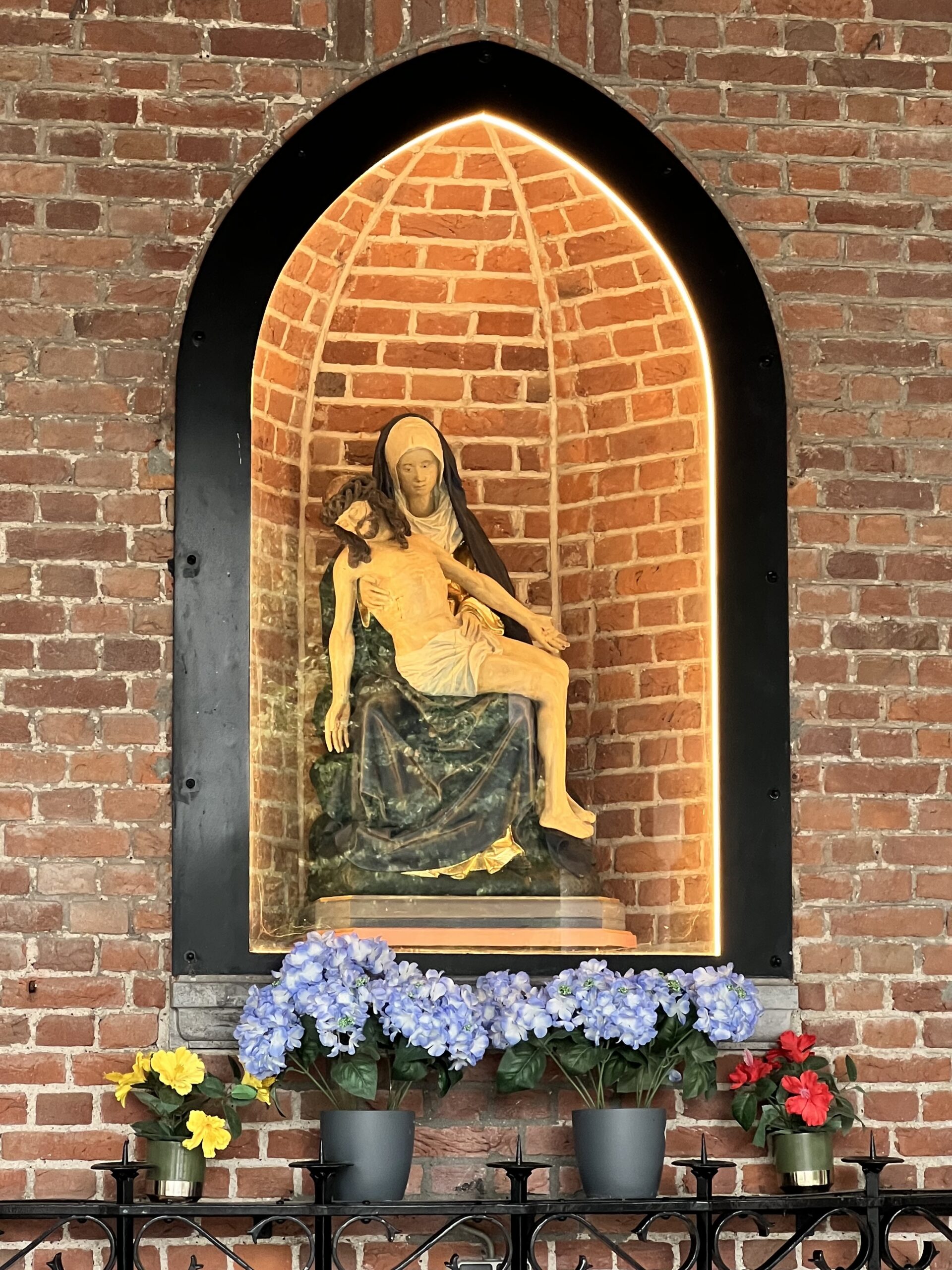
The effigy of the Mater Dolorosa and her dead son is 87 cm high. It is made of oak and polychromed, giving the statue a colourful appearance. During a later restoration, the sword was removed from Mary's chest. A replica stands in the chapel's niche, while the original is in the local church.
The Stations of the Cross are arranged in a large circle at and around the chapel, which is situated at a higher elevation.
Pilgrims come to the Kapelberg in Bergharen every day, both in groups and individually. There is considerable interest in May. Annually, there are pilgrimages, including a well-attended Maas and Waal Marian pilgrimage around 15 August, the Feast of the Assumption of Mary. The Eucharist is accompanied by singing and music. The benches placed in front of the chapel are particularly useful at such times.
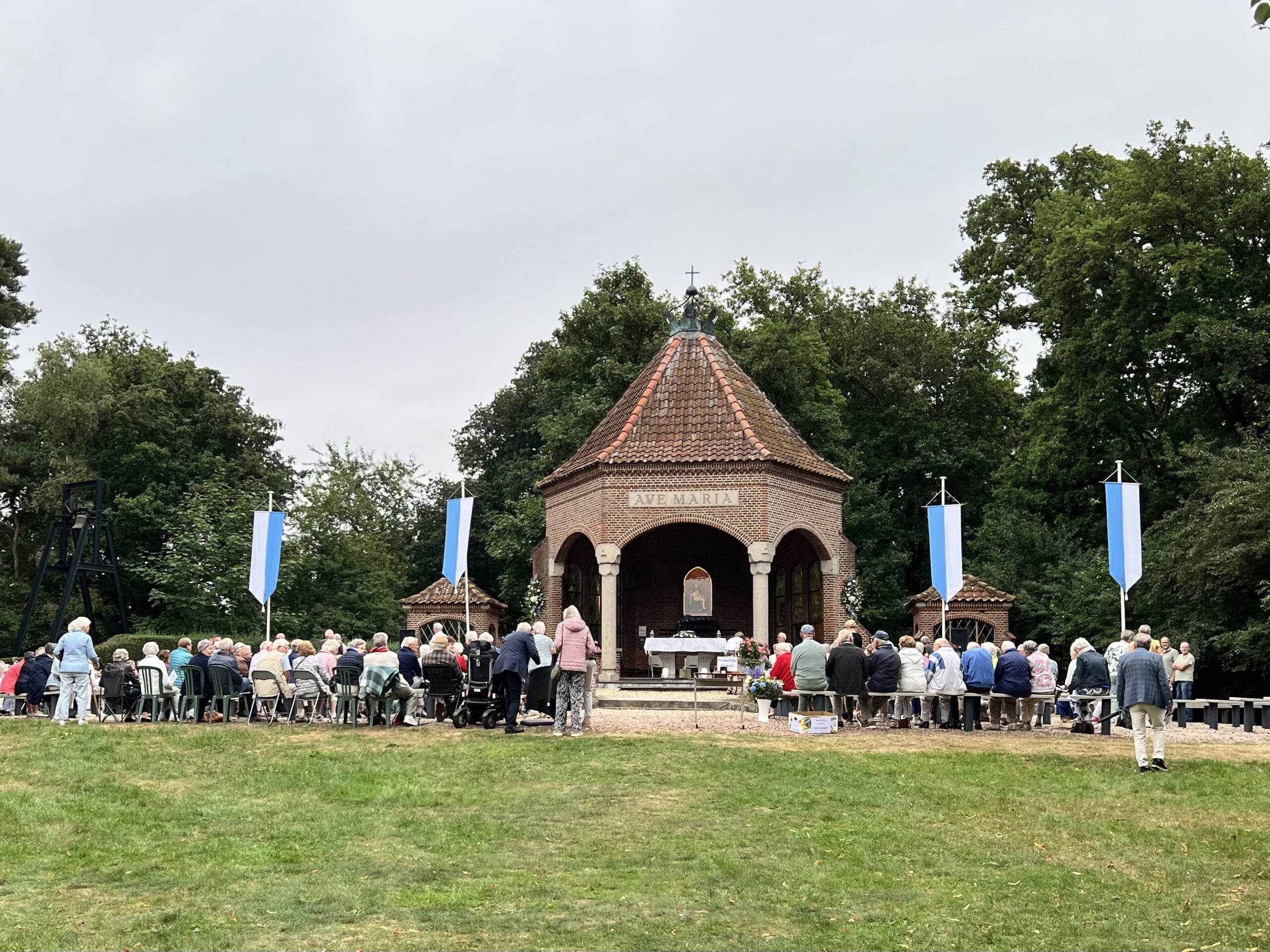
The Kapelberg is not only used for Eucharistic celebrations and praying the Rosary, but also for baptisms, wedding ceremonies, anniversary celebrations and funerals.
Donations are welcome at the Catholic Foundation for the Management of the Kapelberg Bergharen.
ACCESSIBILITY
Bergharen is part of the municipality of Wijchen in the province of Gelderland.
More information can be found at www.mariakapelbergharen.nl.
The email address info@mariakapelbergharen.nl can also be used.
The Kapelberg is located behind the mill “De Verrekijker” on the corner of Molenweg and Elzendweg.
The address of the Kapelberg is: Molenweg 55, Bergharen.
Experience
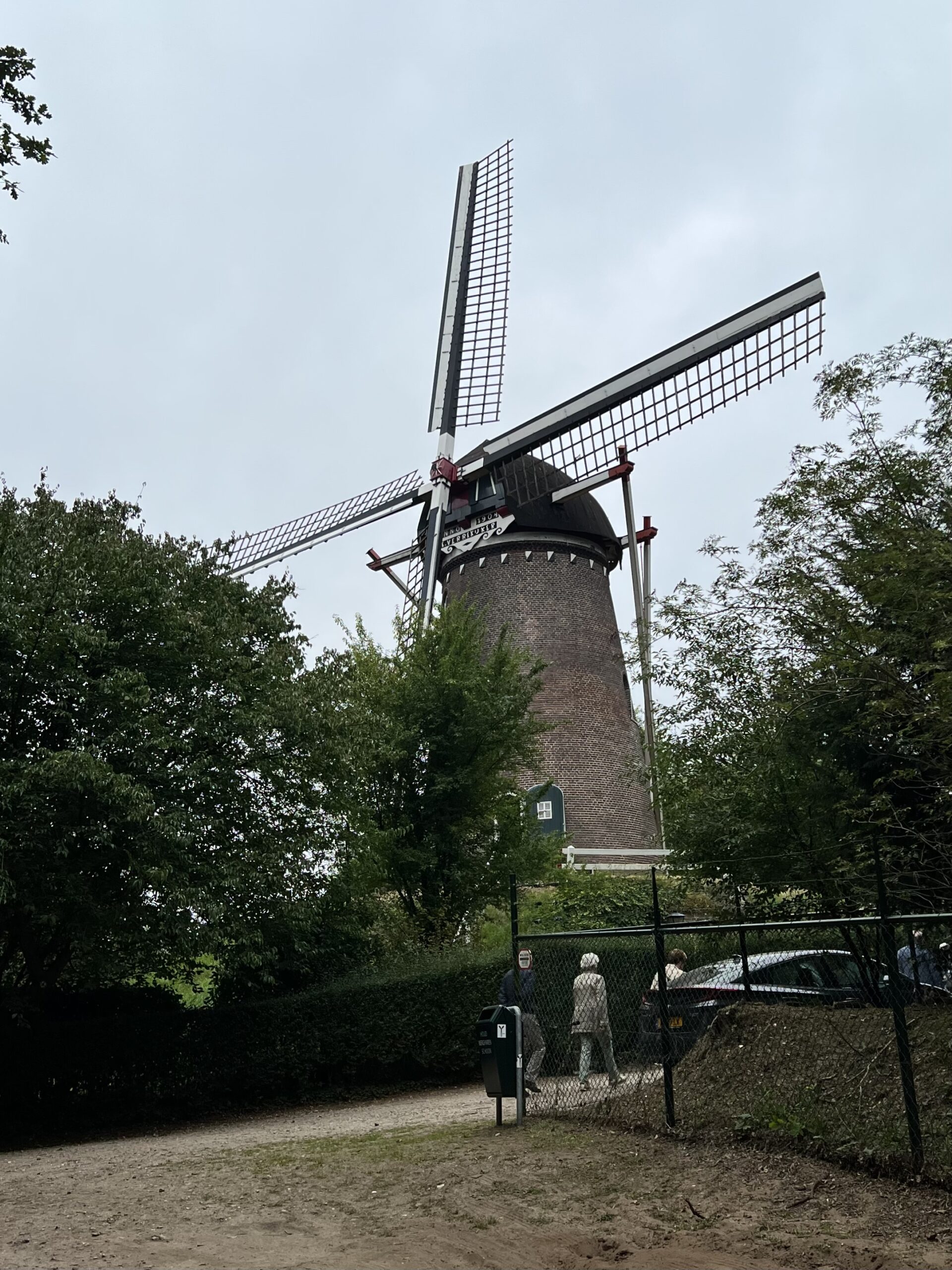
The windmill on Kapelberg can be seen from a great distance and that is where I am going to attend a service. As the windmill comes into view, the story from around 1500 comes to mind. I think of the man who made such an effort to get into the monastery and who possesses creative gifts.
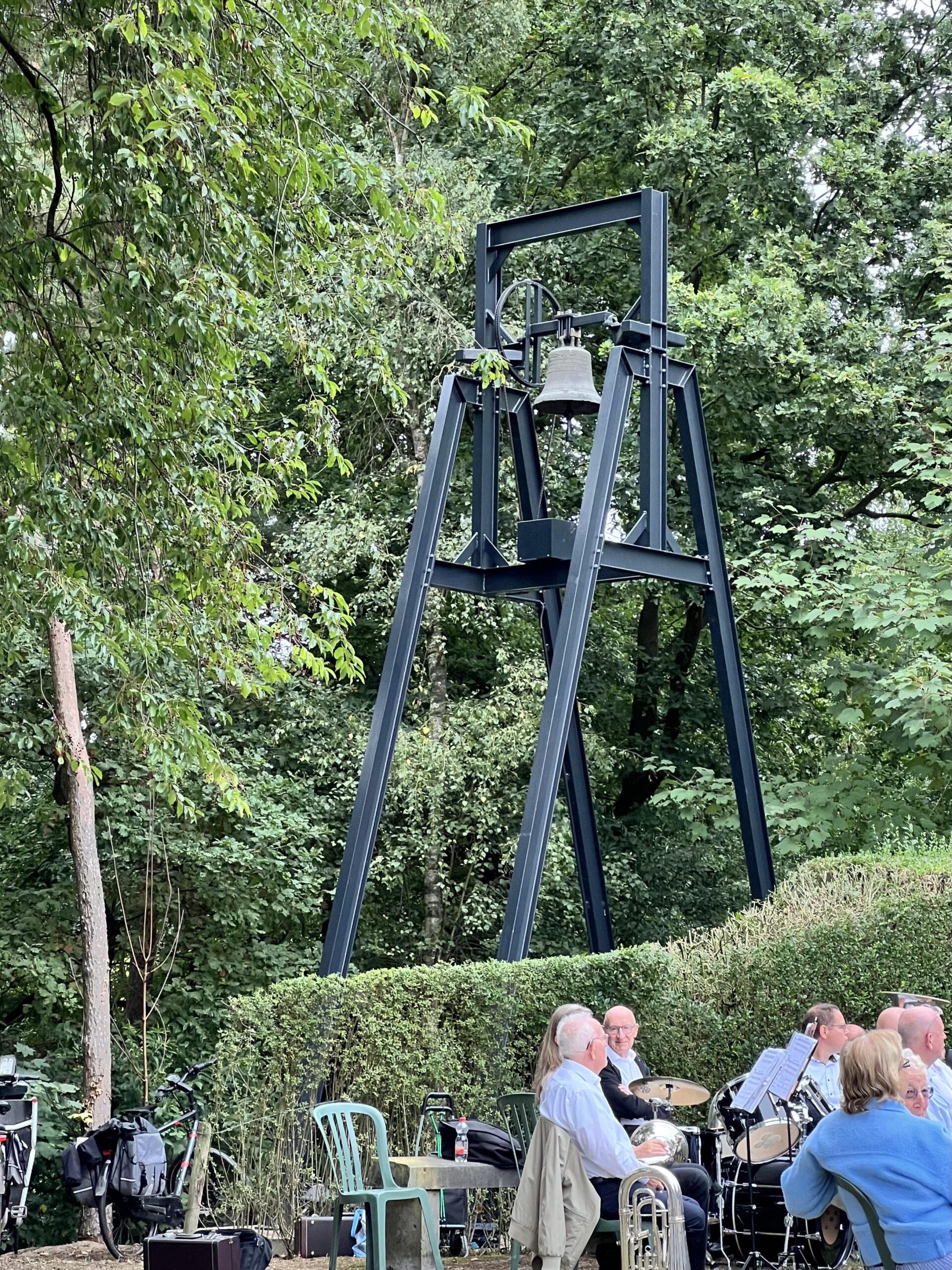
When I arrive at the Kapelberg grounds, many believers are already seated in front of the chapel, and I choose a spot under a large tree with a view of the chapel and the attendees. Next to the chapel, I see a tall bell tower, and to see more, I'll wait until after the eucharistic celebration.
After more than an hour, there is an opportunity to have coffee or tea, which I take advantage of. I get into conversation about this Marian site and learn about activities on this mountain. Afterwards, I go for a walk and come to the chapel. I see the Pietà with Mary and her deceased Son. Here, then, is the inclination for an extra prayer.
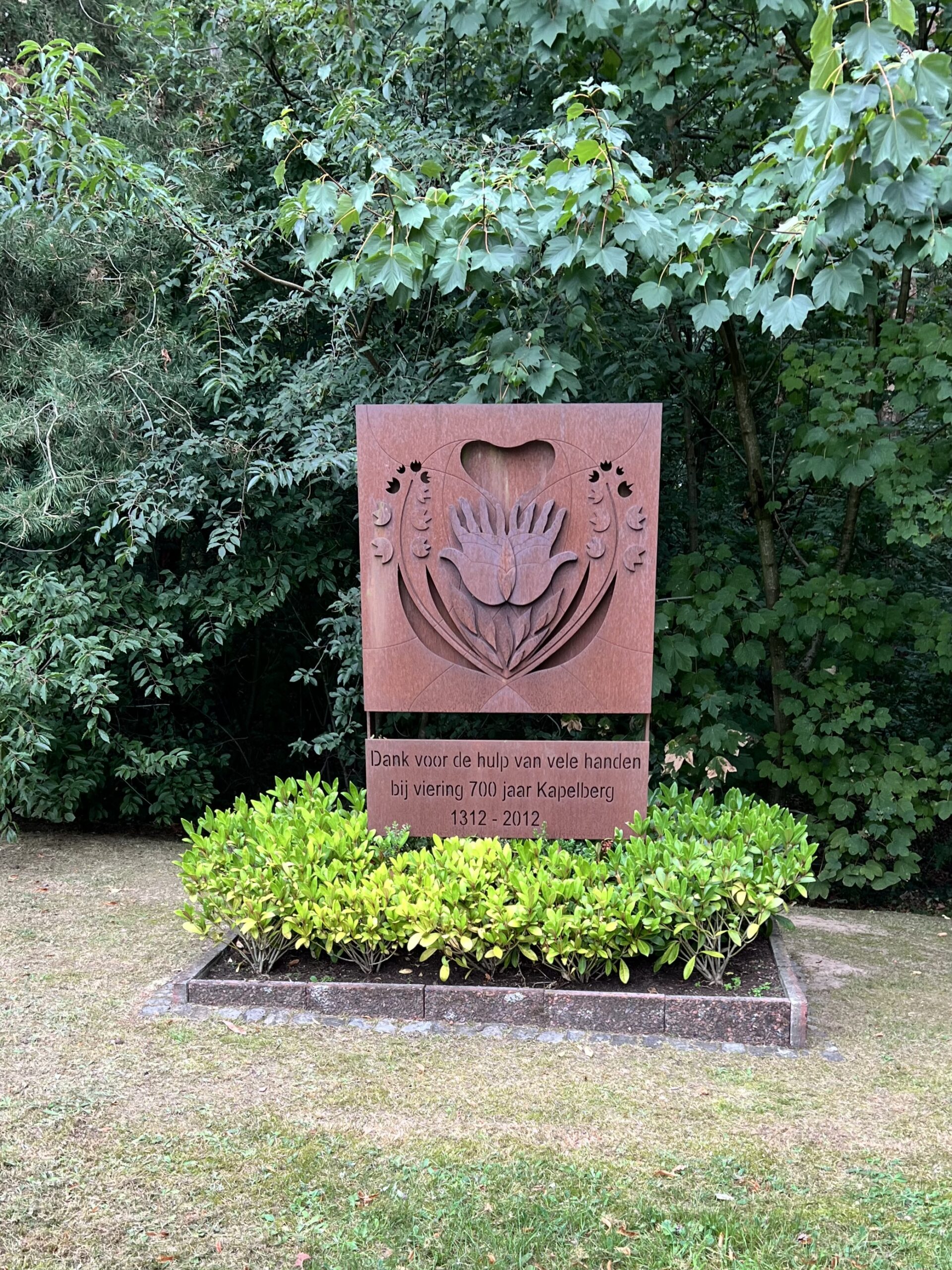
Then I am going to a candle chapel and lighting some more candles. This includes intentions for good people from my circle of friends and acquaintances.
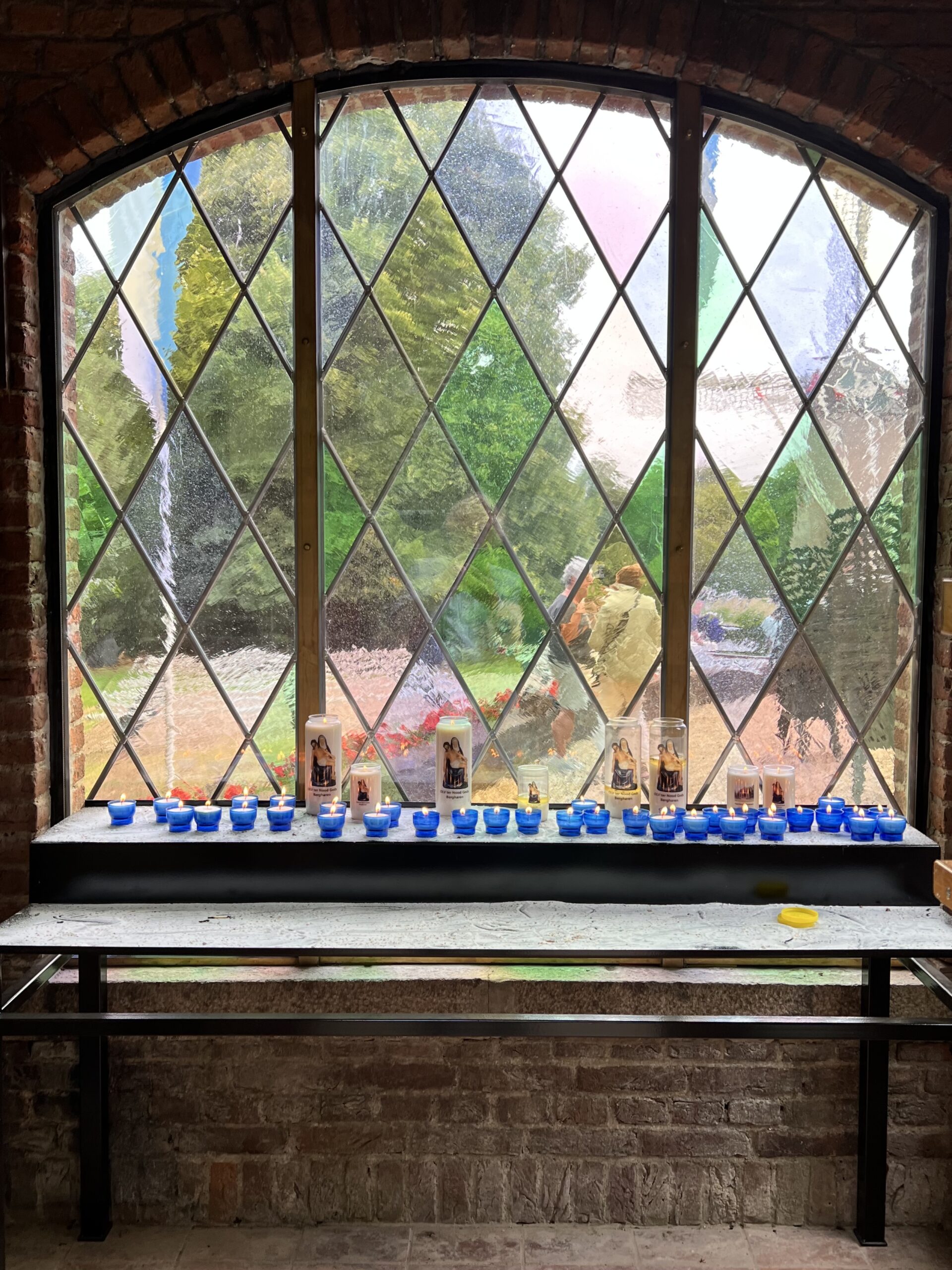
On the Kapelberg, I see a monument commemorating 700 years of Kapelberg (1312-2012). For a remarkable 700 years, all sorts of expressions of faith have taken place here. What a history this place has built.
Finally, I make a round of the stations of the cross and let the familiar scenes sink in. Afterwards, I return to the chapel and thank Mary. What a beautiful place this is and then I understand why so many people come here.
Environment
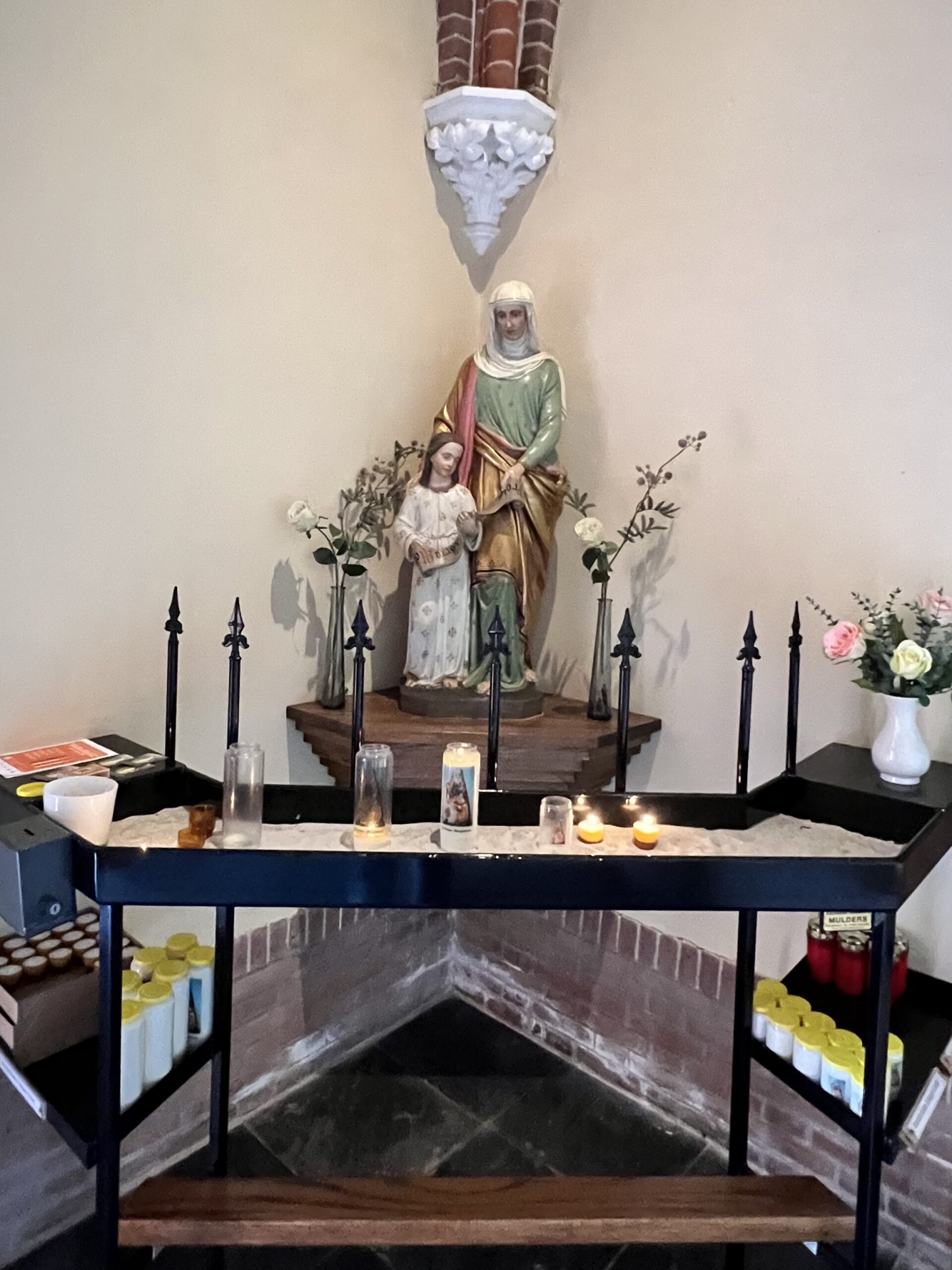
In Bergharen, the St. Anna Church can also be visited. This is the parish church and is dedicated to Saint Anne, the mother of Mary. The church has a three-nave, Neo-Gothic design and was completed in 1895. In the church's portal stands a 19th-century terracotta statue of Mother Anna, teaching Mary. There is also a depiction of St. Anne's Trinity, namely Mother Anna, daughter Mary, and grandchild Jesus, dating from the 14th century. The building has 7 towers and the architect is Caspar Johannes Hubertus Franssen (1860-1932). Address: Dorpsstraat 48, 6617AE Bergharen.
The church of St. Jodocus is located near Bergharen, specifically in Hernen, 2 km further away. This church is a neo-Romanesque cruciform basilica and was consecrated in 1893. The architect-contractor was Pier Stornebrink (1853-1910). In the portal there is a statue of Mary with the infant Jesus. The building is a national monument. Address: Dorpsstraat 35, 6616AE Hernen.
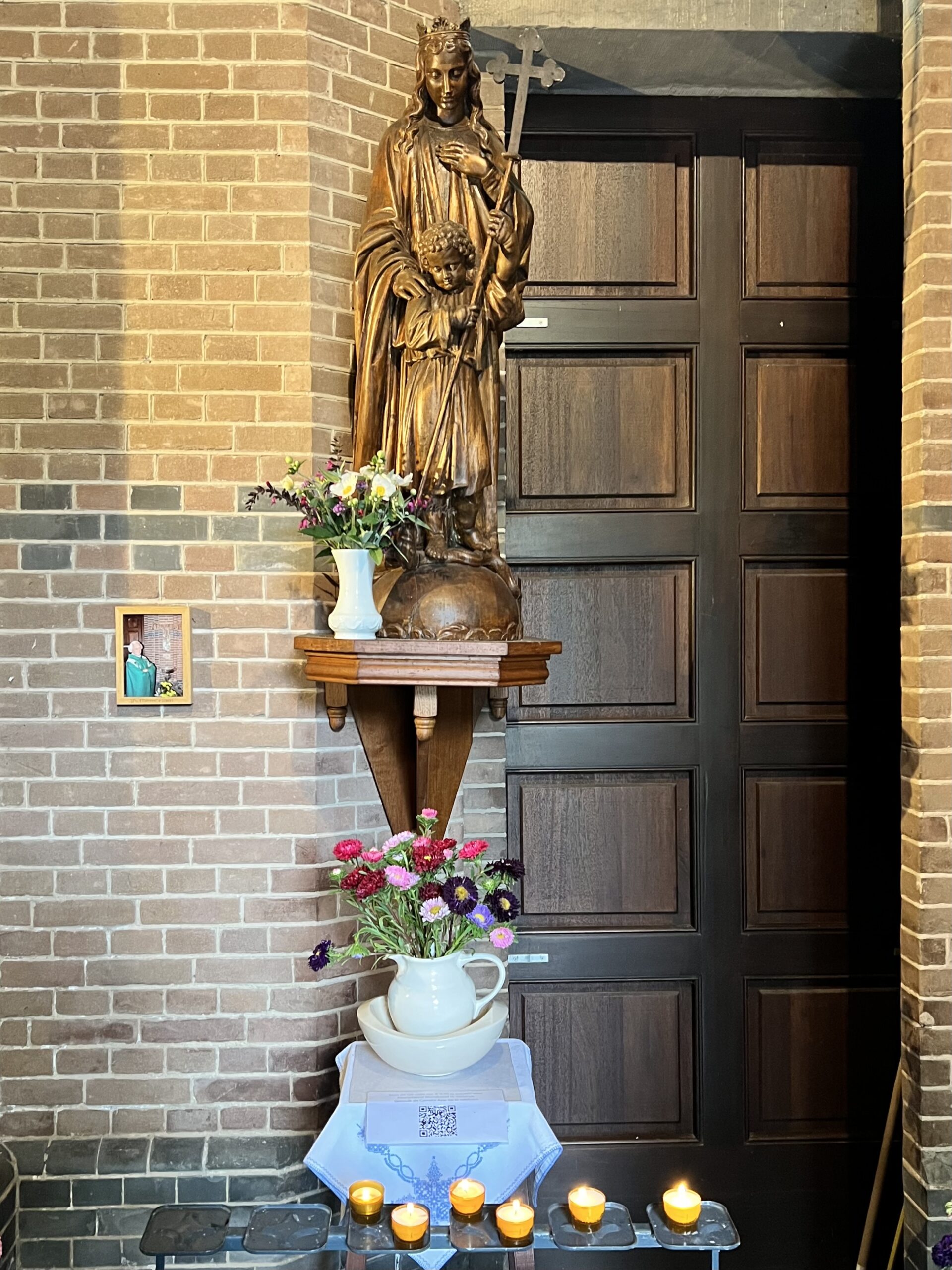
In Wijchen stands the St. Anthony Abbot Church, which was consecrated in 1854. The design of the house of worship is by Gradus Gradussen (1798-1880). Inside the church is, among other things, an image of Mary with Child on her right arm. Address: Oosterweg 2, 6602HD Wijchen. In Wijchen, there is also a Lourdes Grotto. From Wijchen to Bergharen is a 10 km journey northwest.
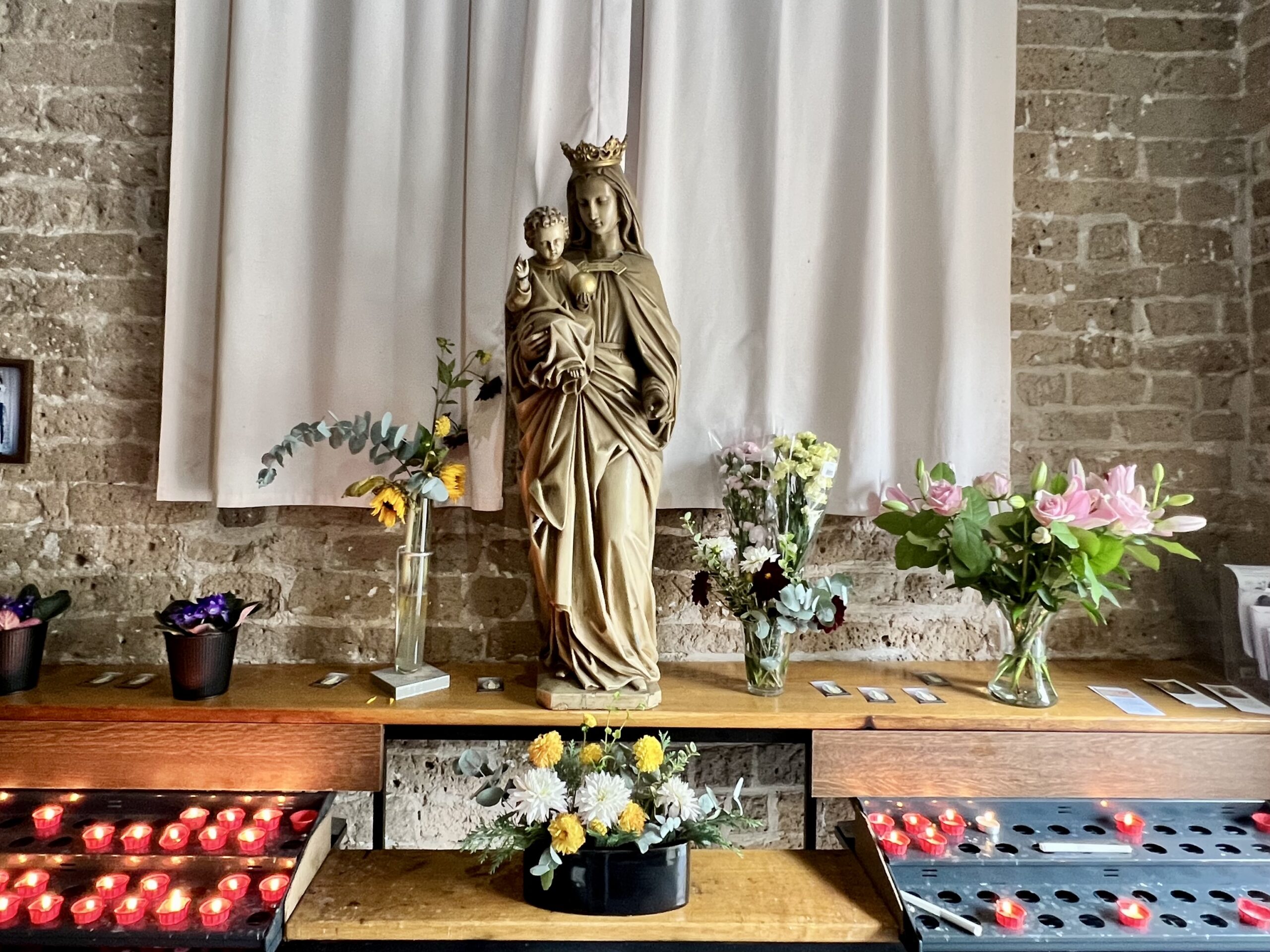
From the old city of Nijmegen to Bergharen means travelling 16 km to the west.
Departing from Grave and arriving in Bergharen requires covering 14 km to the north.
Leaving the Brabant capital ‘s-Hertogenbosch and arriving in Bergharen means travelling 46 km northeast.
~~~

 Nederlands
  English (UK)
  Deutsch
  Français