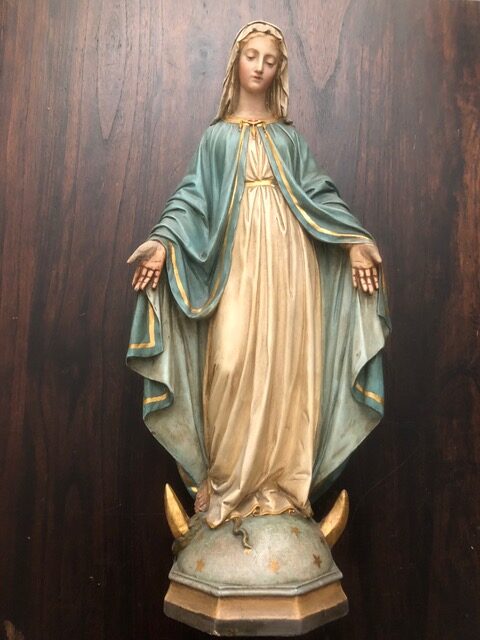
The development of this pilgrimage site is very special, as this is the 200th pilgrimage site in the Maria Chapel.
History
The origin of the pilgrimage site is due to an apparition of Mary. The story goes that the Franciscan friar Bartolomeo d’Ivrea (c. 1450–c. 1512), who belonged to the influential Piatti family, had an intense devotion to Mary. On the evening of 14 August 1480, the friar prayed to Our Lady, and suddenly the heavens opened, and many rays of light shone down. Then Mary appeared to him, carrying her Child in her arms. Mary appeared to thank him for watching over those sleeping on the mountainside and for strictly fasting before Marian feasts. Bartolomeo d’Ivrea remained in ecstasy until morning. A fellow friar saw him and wanted to know what was happening. Bartolomeo explained that Our Lady had appeared to him from the mountain. After this miraculous experience, the friar wanted to commission a statue of Mary and build a chapel at the spot where he met the Virgin. Bartolomeo took up residence as a hermit in a cave at the foot of the mountain. He is the founder of the pilgrimage site of Orselina. In 1487, a chapel was built on the mountain, and it became a famous pilgrimage site for the Virgin Mary. The former church is dedicated to the Assumption of Mary, and the later church to the Annunciation. This refers to the announcement by the Archangel Gabriel to Mary that she would conceive and give birth to a Child, who is the Saviour.
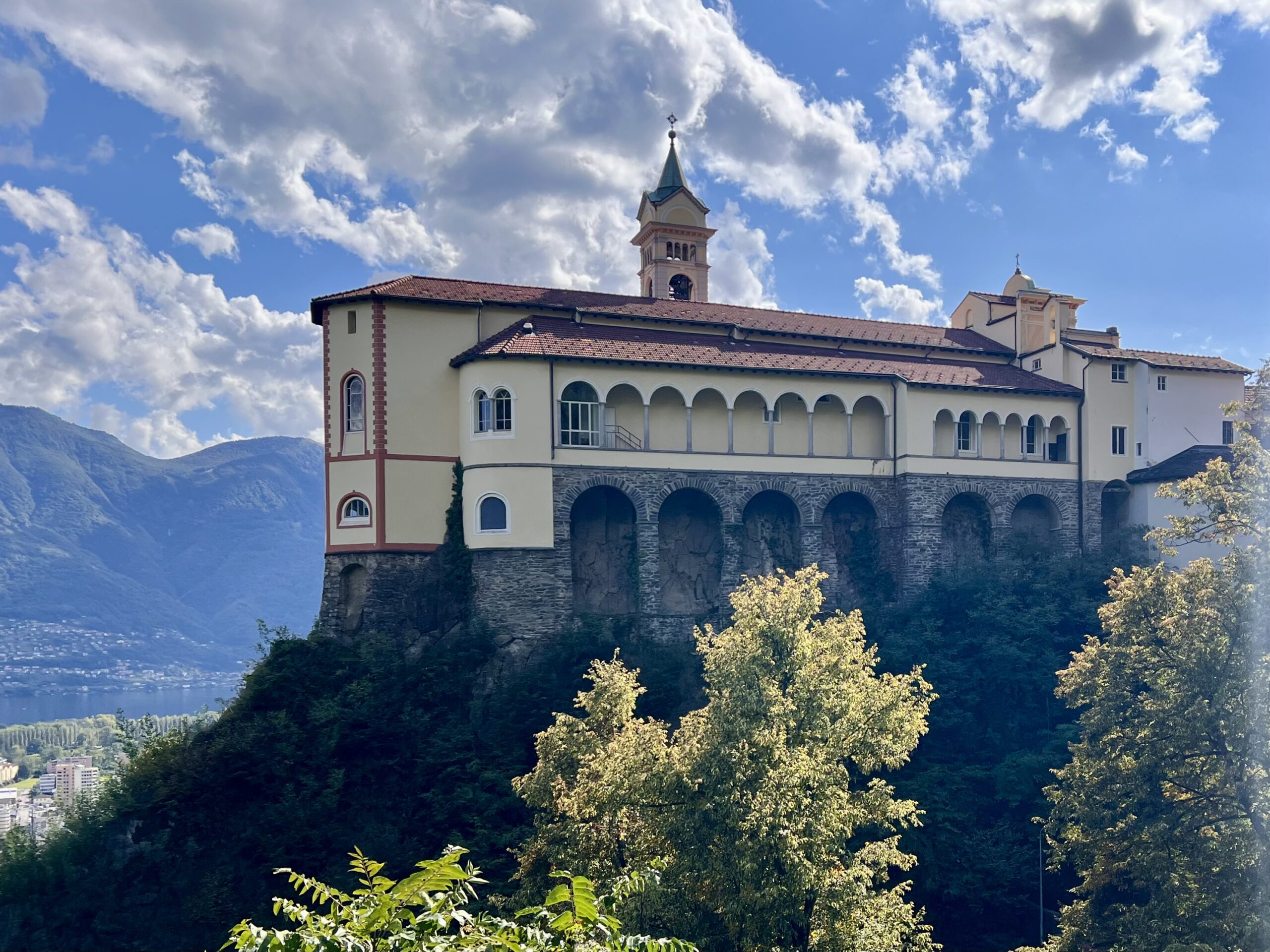
In 1502 the church was consecrated. Visitor numbers continued to increase, leading to the need for a larger building. In 1616 a new, larger pilgrimage church was built, dedicated to the Assumption of the Blessed Virgin Mary. In 1617, the 15th-century miraculous image was crowned by Ludovico di Sarego (1558-1625), who served as the Pope's nuncio in Switzerland from 1613 to 1621.
Until 1848, Franciscans were active in the sanctuary, when they had to leave by the authorities. In 1852, it was possible again to be active in a place of pilgrimage. In that year, Capuchins arrived to manage the place of pilgrimage and guide pilgrimages.
Between 1864 and 1870, a side chapel was added to the church, featuring the Entombment of Christ. The Swiss-Italian artist Antonio Ciseri (1821-1891) was responsible for this.
In 1919, the church was elevated to the status of a basilica.
In 1949, the miraculous image made a journey through the canton of Ticino to bring Mary closer to the people and draw attention to the pilgrimage site. In 2012, extensive restoration work was carried out on the church and associated buildings.
Pilgrimage site
The Sanctuary of the Madonna del Sasso (Our Lady of the Rock/Stone) is the most famous pilgrimage site in the Italian-speaking part of Switzerland. The pilgrimage church stands at almost 400 metres above sea level and overlooks the town of Locarno. This is also known as the “Sacro Monte Madonna del Sasso” (the Holy Mountain of Our Lady of the Rock/Stone). Within the sanctuary, visitors can explore the pilgrimage church, the monastery, and the museum, which houses numerous icons (Museo Madonna del Sasso). The museum has limited opening hours between May and October.
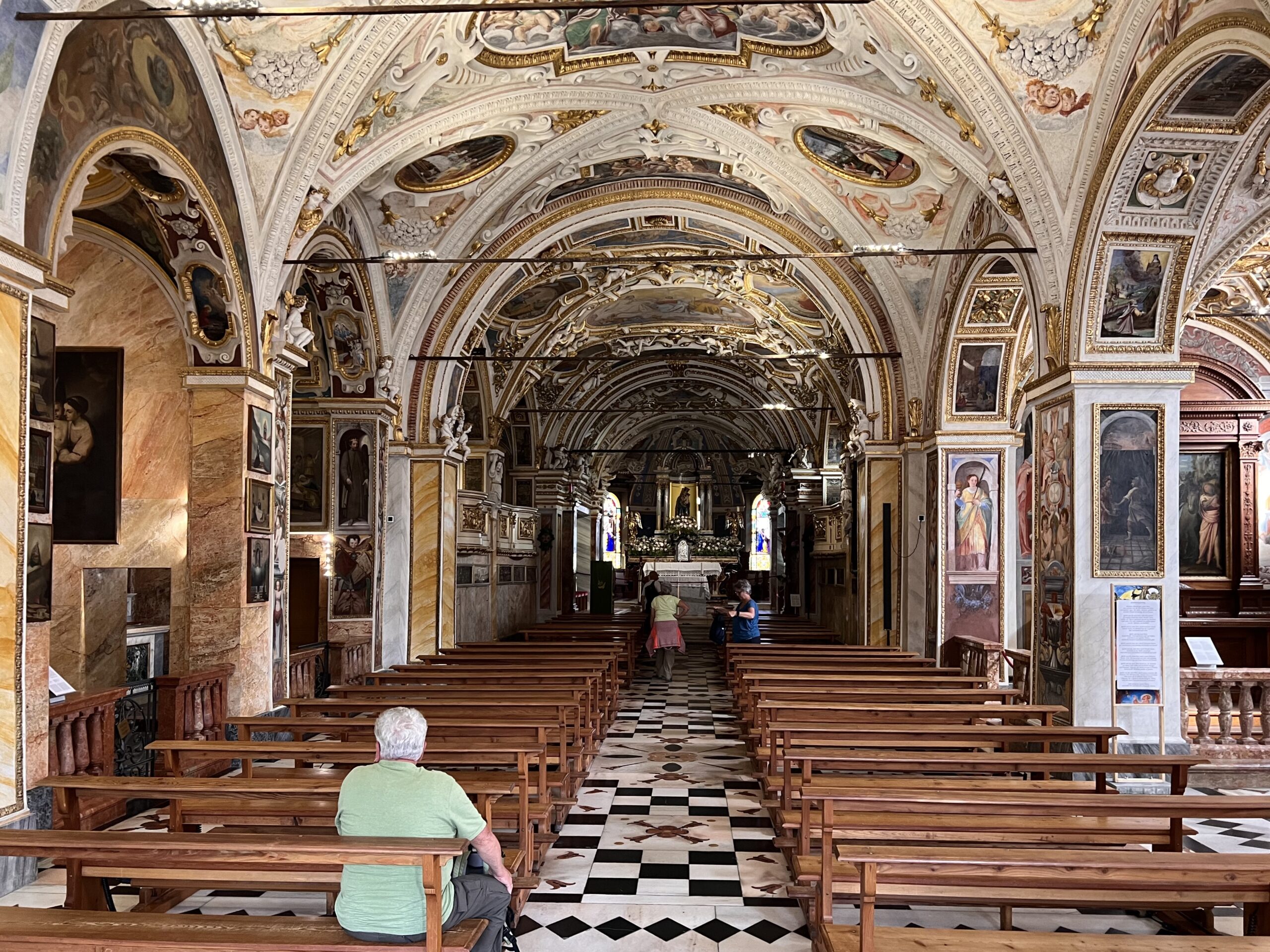
The image of grace can be seen on the high altar. On either side of the depiction of Mary and Child are colourful images of the visit of the Archangel Gabriel to Mary and that of Mary to her cousin Elizabeth.
In the church hangs a work of art depicting the Flight into Egypt (150 cm by 131 cm), which was created by the Italian Renaissance painter and architect Bramantino Suardi (c. 1465-c. 1530), better known as Bramantino. He made it between 1520 and 1522 using durable tempera on canvas.
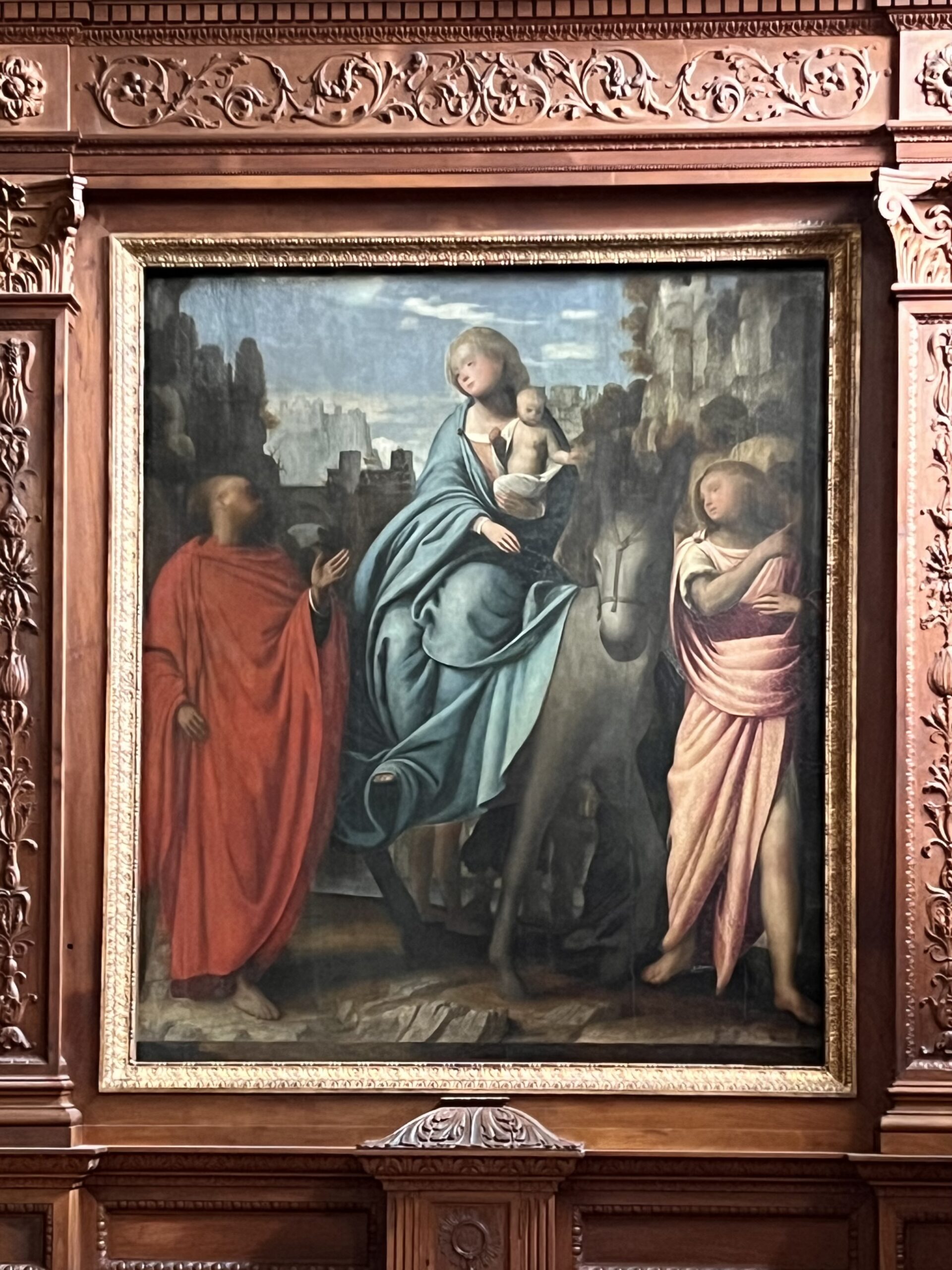
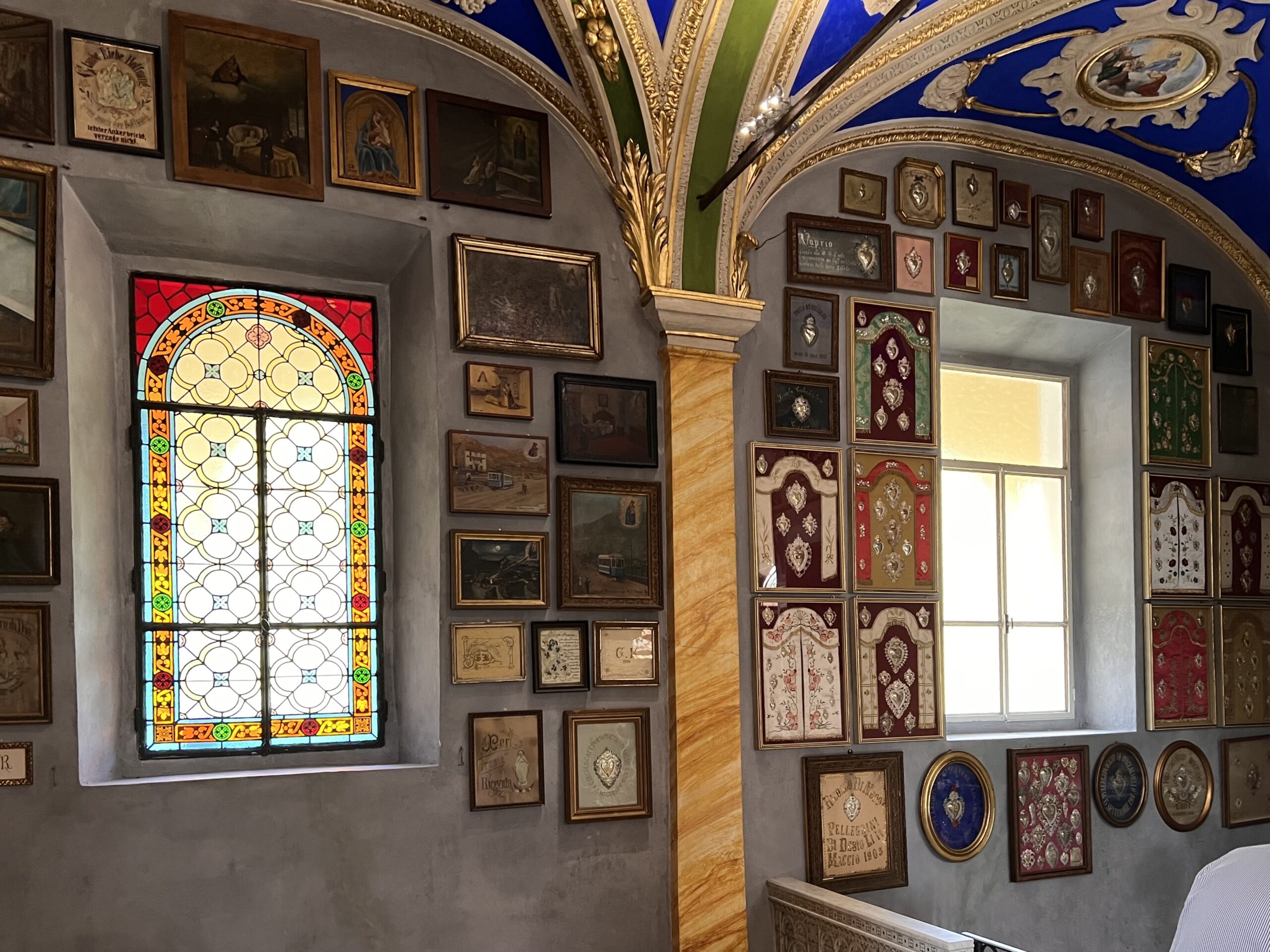
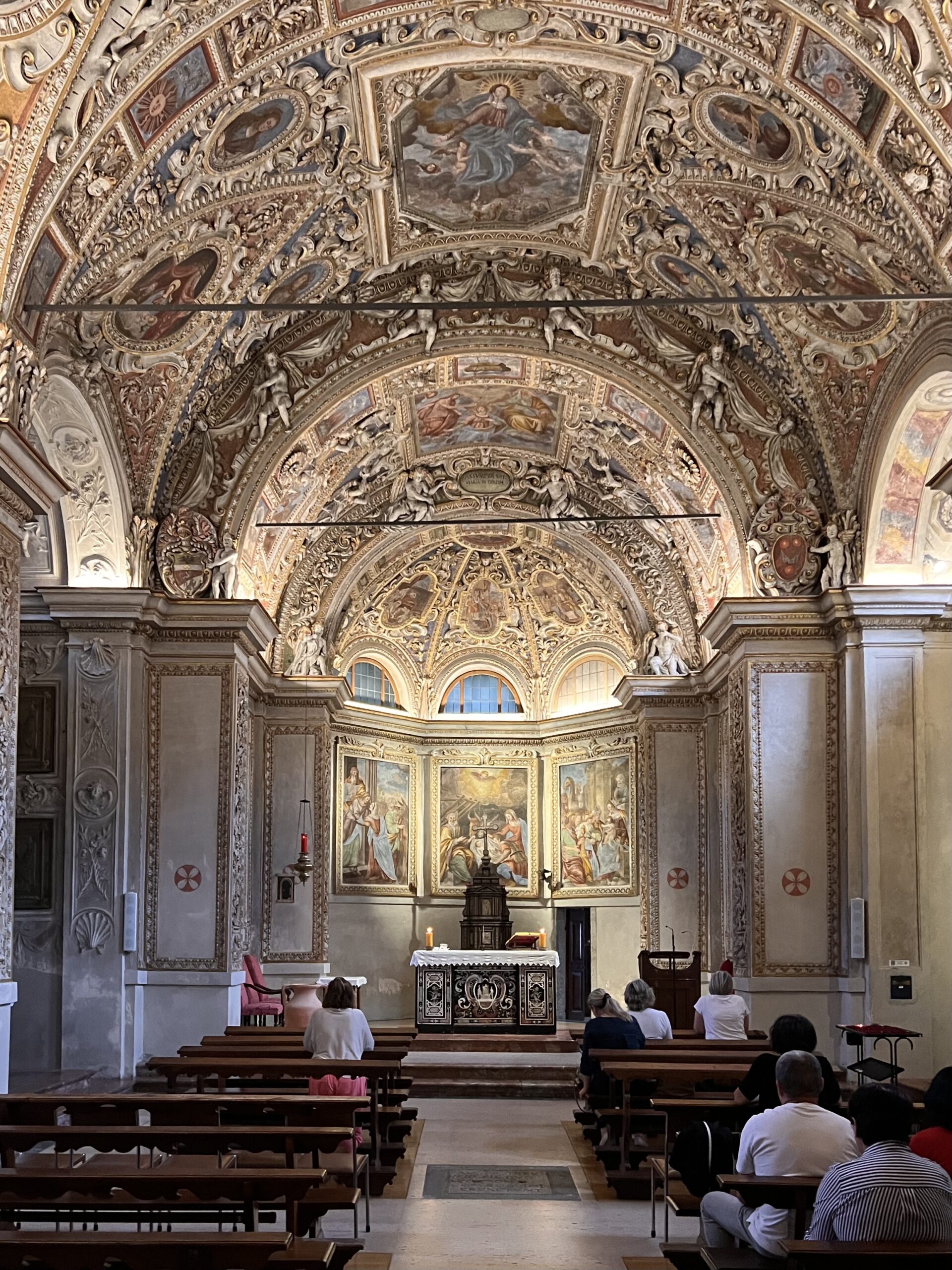
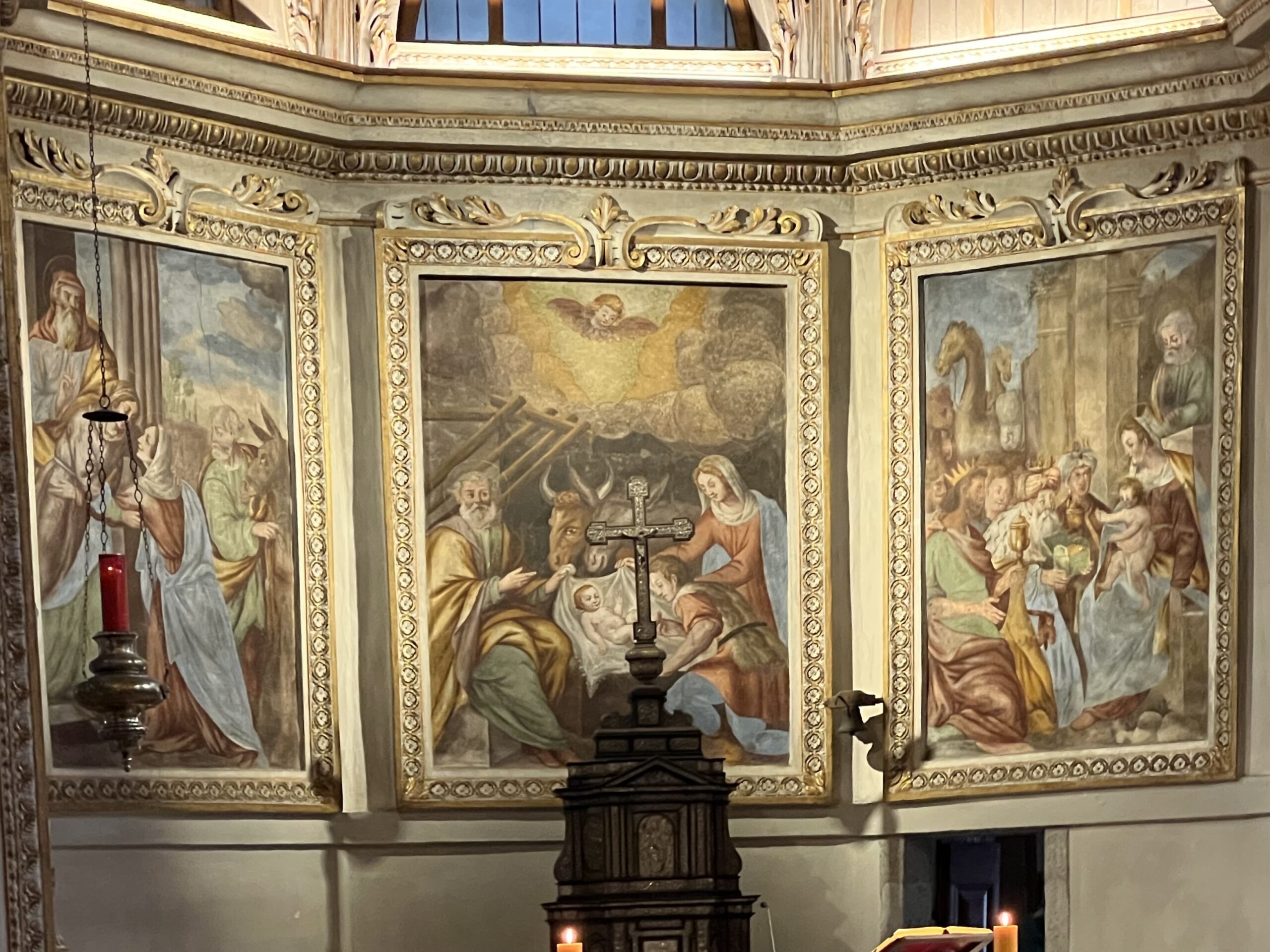
The church features numerous ex-votos on its walls and frescoes on its vaults.
There is an association to ensure the sanctuary's survival and restoration, namely the “Associazione Pro Restauro”.
The pilgrimage church is open daily.
ACCESSIBILITY
Orselina is located in the Italian-speaking part of Switzerland, just above Locarno, on Lake Maggiore in the south of the country. Orselina belongs to the canton of Ticino.
The address of the Santuario della Madonna del Sasso is: Via Santuario 2, 6644 Orselina.
You can find up-to-date information on www.madonnadelsasso.org.
Experience
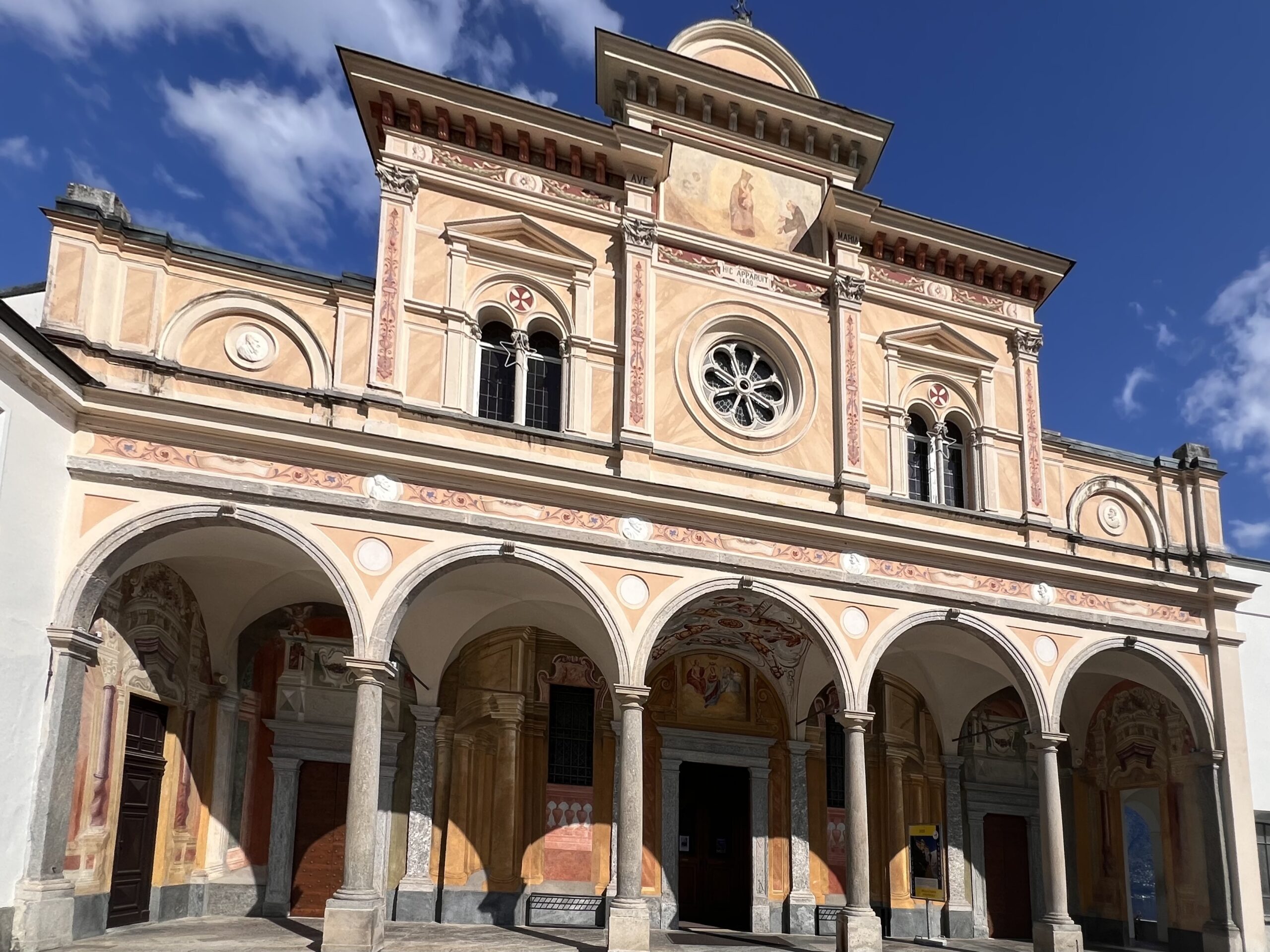
Whilst preparing for my visit to the shrine, I immersed myself in this Marian site by reading about its history and looking at photographs of the church and its surroundings. I am now experiencing the impact the visit is having on me.
After a few kilometres of uphill driving, I arrive at the Marian sanctuary of Orselina. The village is situated higher than the town of Locarno, which shimmers in the distance on the shores of Lake Maggiore. In this Italian-speaking part of Switzerland, there is a well-known Marian pilgrimage site with a remarkable church. Today, I am going to explore it.
By following a path, I descend several metres and later ascend again to a slightly higher elevation. This road is called “Vicolo della Madonna”. Stations of the Cross are placed along another, long road. I see that the sanctuary lies on a route to the Spanish Santiago de Compostela. According to a sign, the remaining distance to be covered is 2500 km.
An image of Mary stands at the entrance of the sanctuary, and many candles are burning there. Now, some more will be added to devotionally support friends and acquaintances.
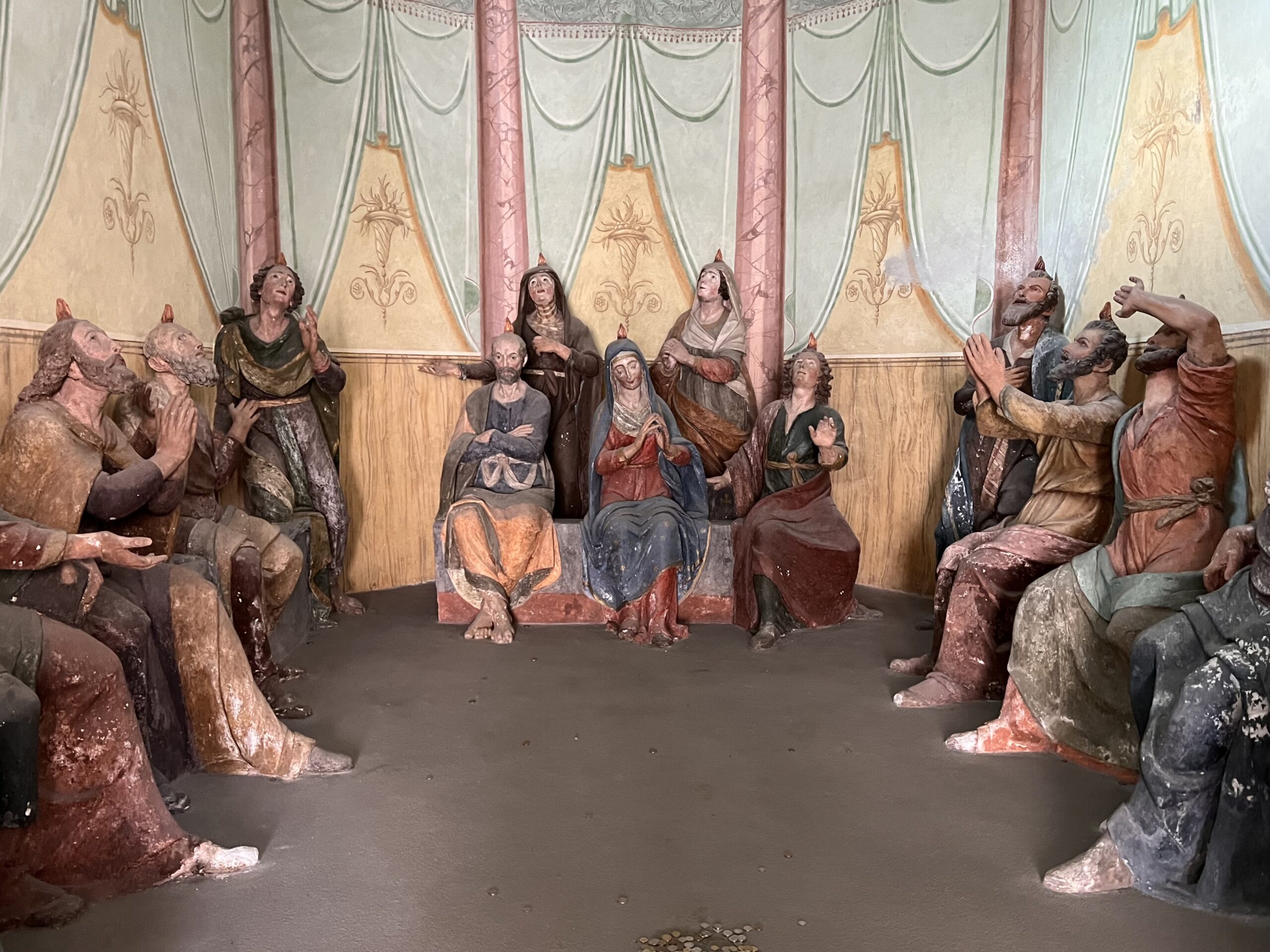
An image of the ascension of Christ is depicted with many witnesses and Mother Mary sits in their midst. Then I come to the square in front of the church and five high arches provide a majestic vestibule, where paintings are applied. Then I enter the church.
The church is a veritable feast of colourful decorations. Every inch of wall, pillar and ceiling has been utilised. What a magnificent blend of art, religion and devotion this is. The statue of Our Lady takes centre stage in the chancel, and I can see that Mary and her Child have been crowned. They are holding each other close and gazing into one another’s eyes. Nothing can come between them. I find the scene magnificent, and this is also due to the attire. Mary is wearing a blue cloak and a gold-coloured gown beneath it. There are flowers in front of Her, lending the whole scene a festive air.
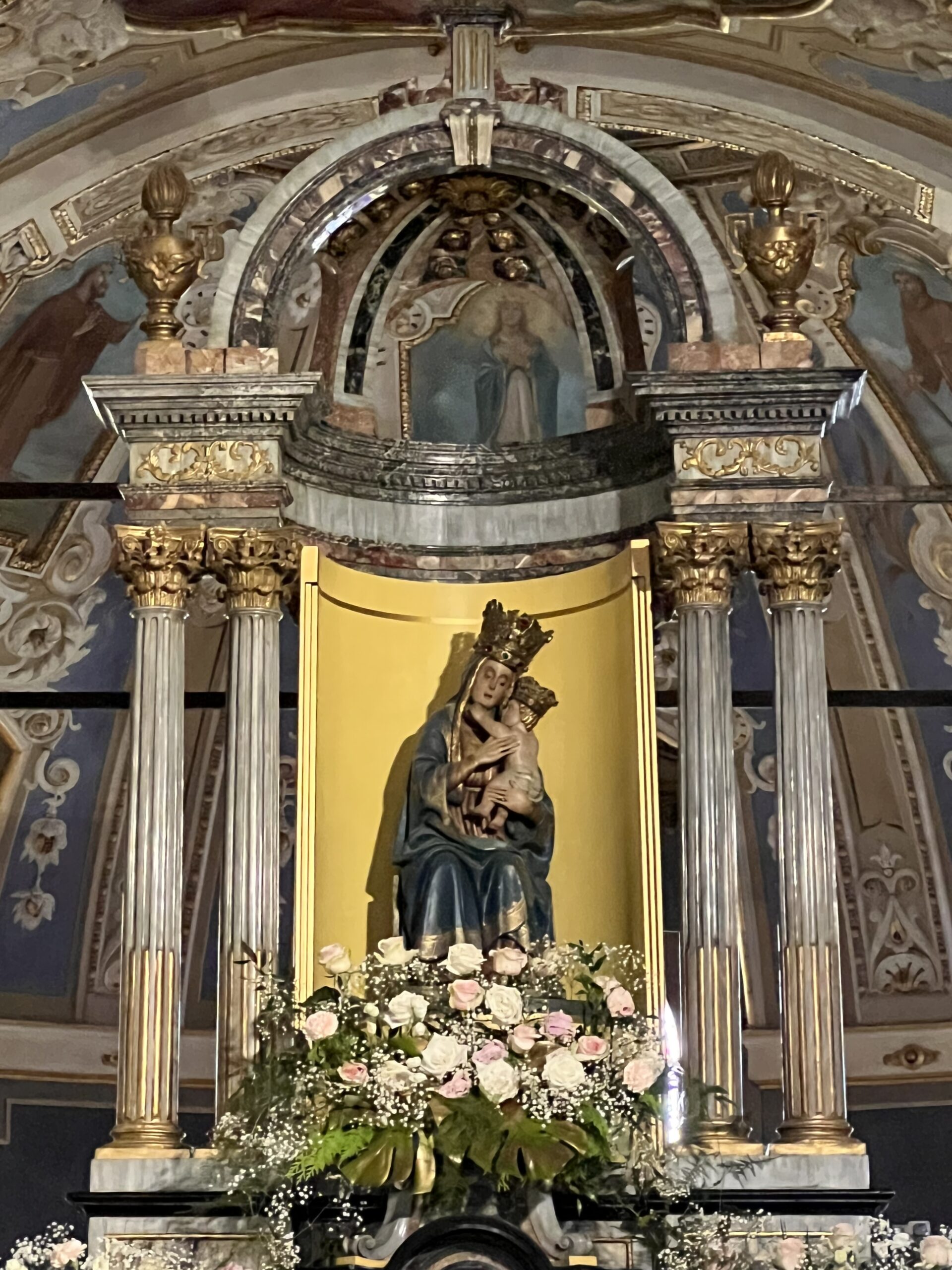
Many paintings and sculptures hold my attention for a long time. Countless ex-votos, hanging on the walls, also want my eyes to focus on the folk art.
When I am here, I see a poster for the 800th anniversary of “Cantico di Frate Sole” (Song of the Sun). My mind immediately goes to Francis of Assisi (c.1181-1226), who wrote the Song of the Sun in 1225 when he was seriously ill. This is his first song in Italian, as I recall.
In the pilgrimage church, I see a prayer card with an image of the devotional icon and on the reverse side, a prayer is printed. If I translate the Italian words into Dutch, it results in:
“Our Lady of the Rock. From the rocky heights where the Lord has placed you, for His glory, for the salvation of the world.”.
Therefore we lift up our eyes and hearts and thank You, Mother, in unison for every blessing.
You know and love what God wants for us. Therefore, we trust in you and remain silent.”
Environment
The pilgrimage site in Orselina is beautifully situated with a particularly lovely view of the town of Locarno and the lake of Lago Maggiore.
From the town of Locarno, it is possible to walk to the pilgrimage church of Orselina via the Way of the Cross. It is also possible to reach the pilgrimage site by cable car or a small train.
In Locarno, the “Chiesa Santa Maria Assunta” (Church of the Assumption of Saint Mary) can be visited. The church was consecrated in 1636 and is one of the most beautiful buildings in the city.
Travelling from the city of Lugano to the pilgrimage site of Orselina means travelling 40 km to the northeast.
To get from Bellinzona to Orselina, you need to travel 25 km west.
Travelling from the pilgrimage site of Morbio Inferiore to that of Orselina involves covering 65 km to the north.
To leave the pilgrimage site of Einsiedeln to go to that of Orselina means travelling 170 km to the south.
~~~

 Nederlands
  English (UK)
  Deutsch
  Français