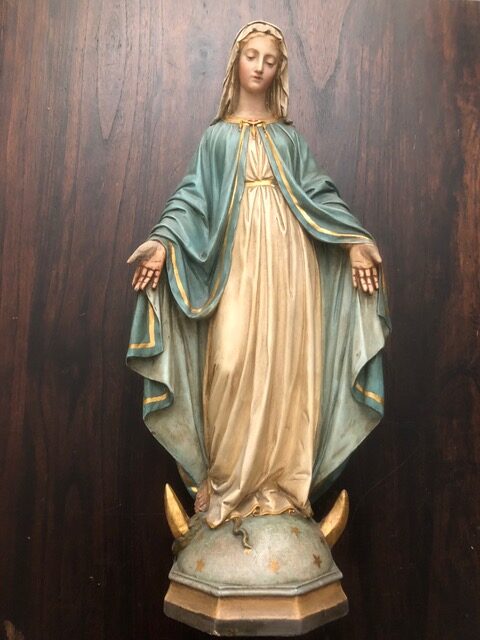
History
On July 2nd, 1717, Jean Paillé (1703-1780), a 14-year-old shepherd from the hamlet of Paulhac, was tending a flock of sheep belonging to local farming families on the hill of Puech de Besse, near Lescure-Bas, 4 kilometres from Valuéjols. He was with the sheep at the top of the hill and was praying the rosary. Suddenly, Mary appeared with her Son in her arms. This happened on the feast day of Mary's Visitation. In the following days, the apparition repeated itself several times.
The appearance of Mary to Jean Paillé in 1717 occurs at a time of strong anti-clerical currents, such as the Enlightenment (European, cultural-philosophical, and intellectual mindset), Jansenism (a reform movement as a political and strict Catholic organisation), and anti-Catholic politicians. It follows from this that the appearance of Mary is a remarkably powerful sign against anti-religious groups.
On her first appearance, Mary leads the shepherd to a cross on the hill, where he finds a small statue of Our Lady. Mary says that She wants a place of pilgrimage here and that She will bless the pilgrims who come. The young shepherd responds by saying that the people will not believe him. Mary tells him to keep repeating her words, and then the people will believe.
As he expects, the inhabitants of the region will not believe him. Thereupon he makes a small field chapel from found stones, and in it, the little statue of Mary is placed.
The ecclesiastical authorities are not launching an investigation. Joachim Joseph d’Estaing (1654-1742), Bishop of Saint-Flour (1693-1742), is well-informed. A little later, he agrees to the construction of a chapel dedicated to Our Lady of the Visitation. On 2 July 1724, the chapel is consecrated by the vicar-general of the diocese, after Jean Paillé had worked for seven years to make it happen. Pilgrims flock to the site; the building soon proves to be too small. Visionary Jean Paillé raises money for a larger church. He dies in the monastery in Saint-Flour in 1780. A larger church is not built until 1869, and it is consecrated on 2 July of that year.
On 14 June 1934, the crowning of the statue takes place by Paul-Augustin Lecoeur (1848-1942), Bishop of Saint-Flour (1906-1942).
Pilgrimage site
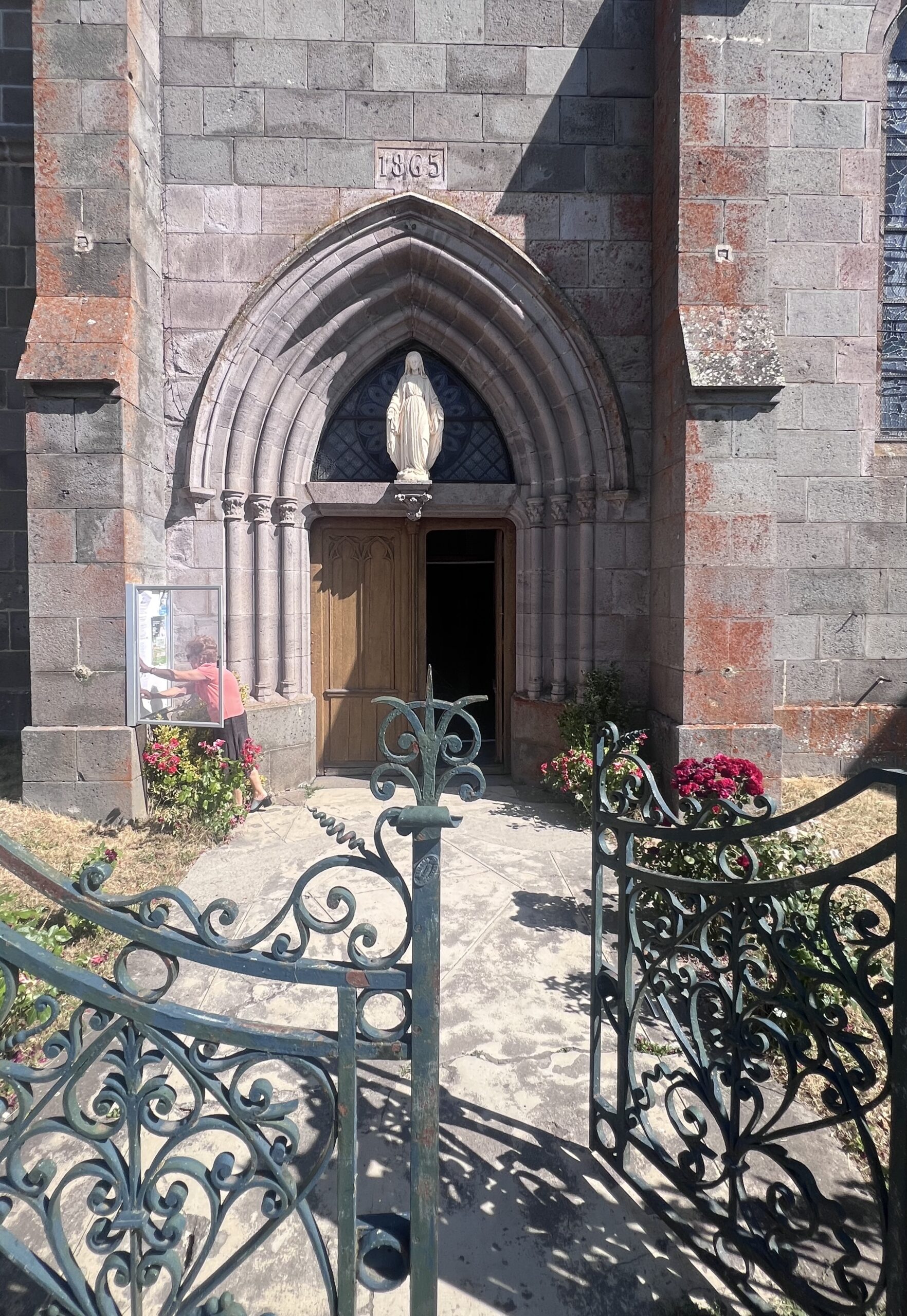
In the village of Lescure is the sanctuary of Notre-Dame de la Visitation (Our Lady of the Visitation). There is limited parking at the church.
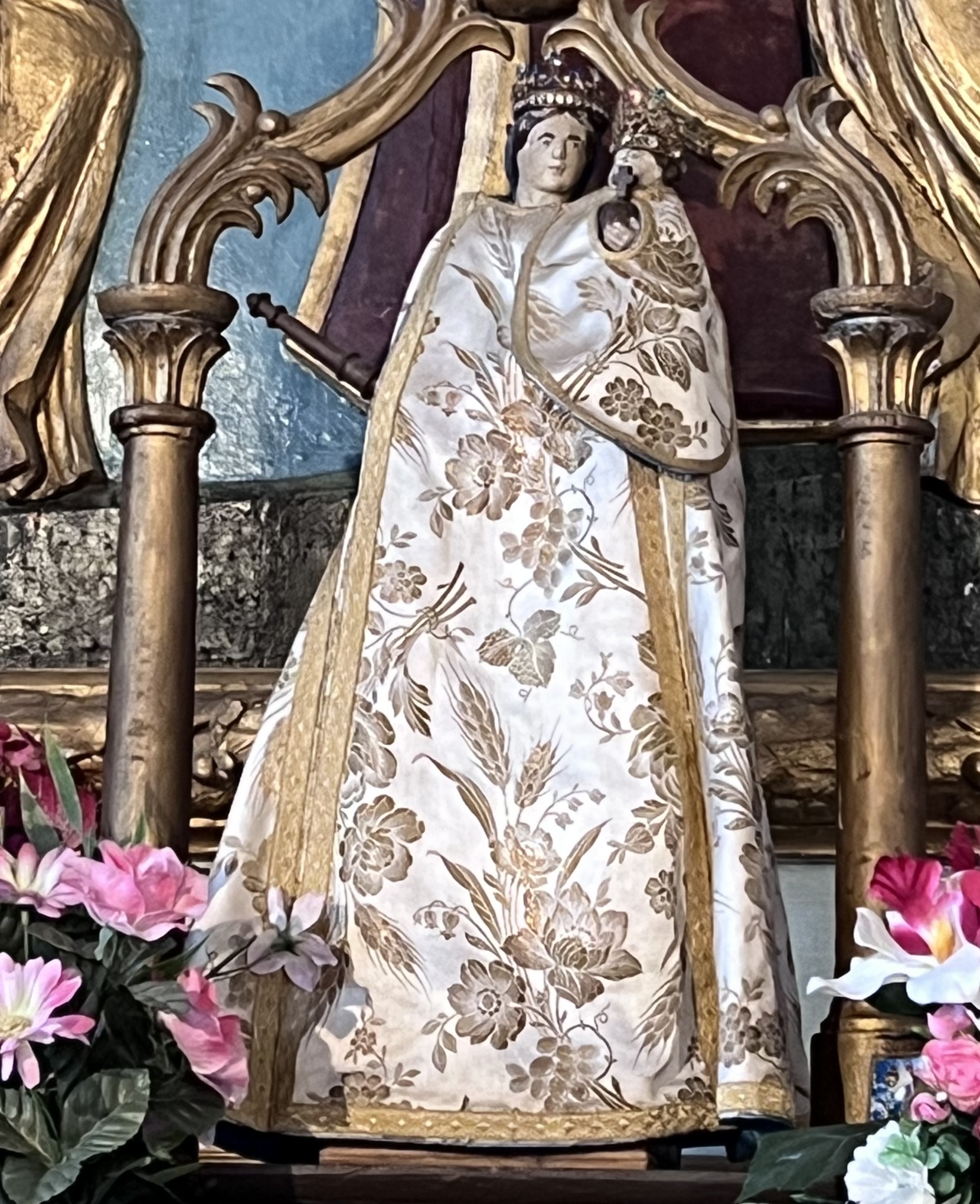
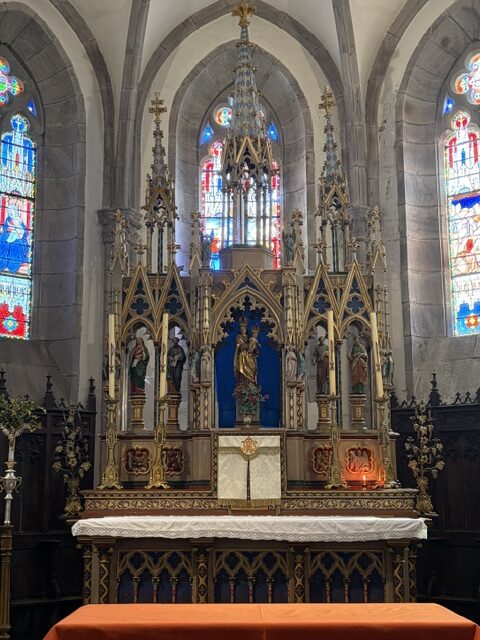
On this spot, Mary appeared in 1717 and said: ”My friend, count at your feet. There you will find my image. In that place I want a chapel where thousands of pilgrims can kneel to ask for health of body, peace of soul and happiness of heaven.” Mary's image is in the church on the altar, immediately to the left upon entering the church.
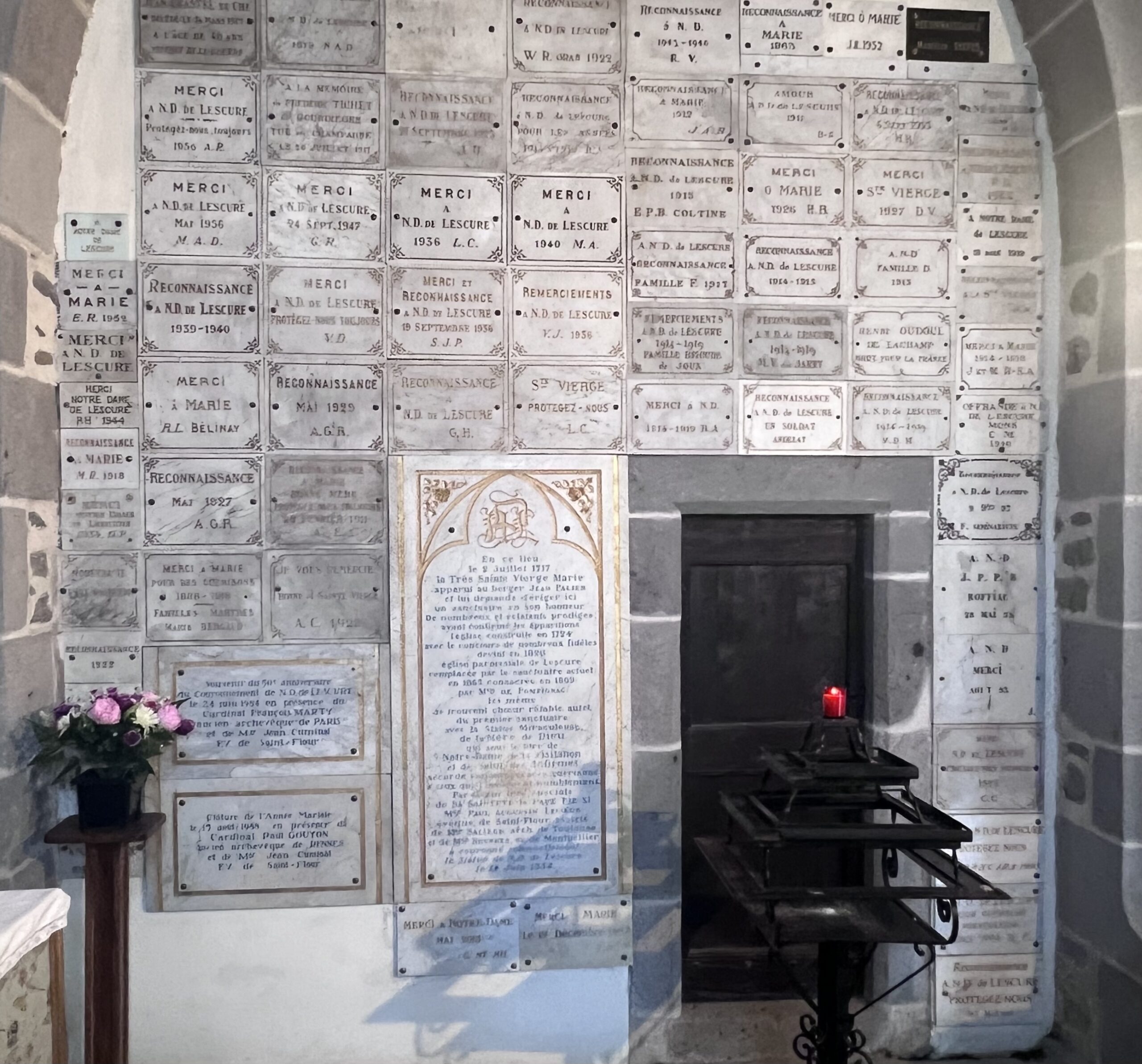
In the pilgrimage church, many ex-votos are displayed on the walls.
On the other side of the place of worship, there is also an altar. In the centre of the church, you can read information about the apparitions.
A hundred metres from the church is a pilgrims' hall where an event takes place twice a year. Paintings hang in this space, including one of the apparition of Mary to Jean Paillé.
Lescure is a small, beautiful pilgrimage site.
ACCESSIBILITY
Lescure belongs to the municipality of Valuéjols and the diocese of Saint-Flour, in the Auvergne-Rhône-Alpes region, belonging to the Cantal department.
It is located near the A75 motorway.
The nautical base is 4 kilometres from Valuéjol and is located on the D134 road.
Address: Lescure Haut, 15300 Valuéjols.
Experience
After driving a few kilometres through the agricultural hinterland in the region of Lescure, I arrive at the hamlet. Here stands the church with memories of the apparition of 1717.
Upon entering the church, an older, enthusiastic lady greets me. When I mention the apparition, she launches into a lengthy explanation in rapid French. This is a bit too fast for me, so she then repeats, at a slower pace, what happened in this place over 300 years ago. Afterwards, the guide explains the church in detail. I'm so glad to have met this guide. She asks if I'd like to take photos and after a “yes, please,” she switches on the lights in the church.
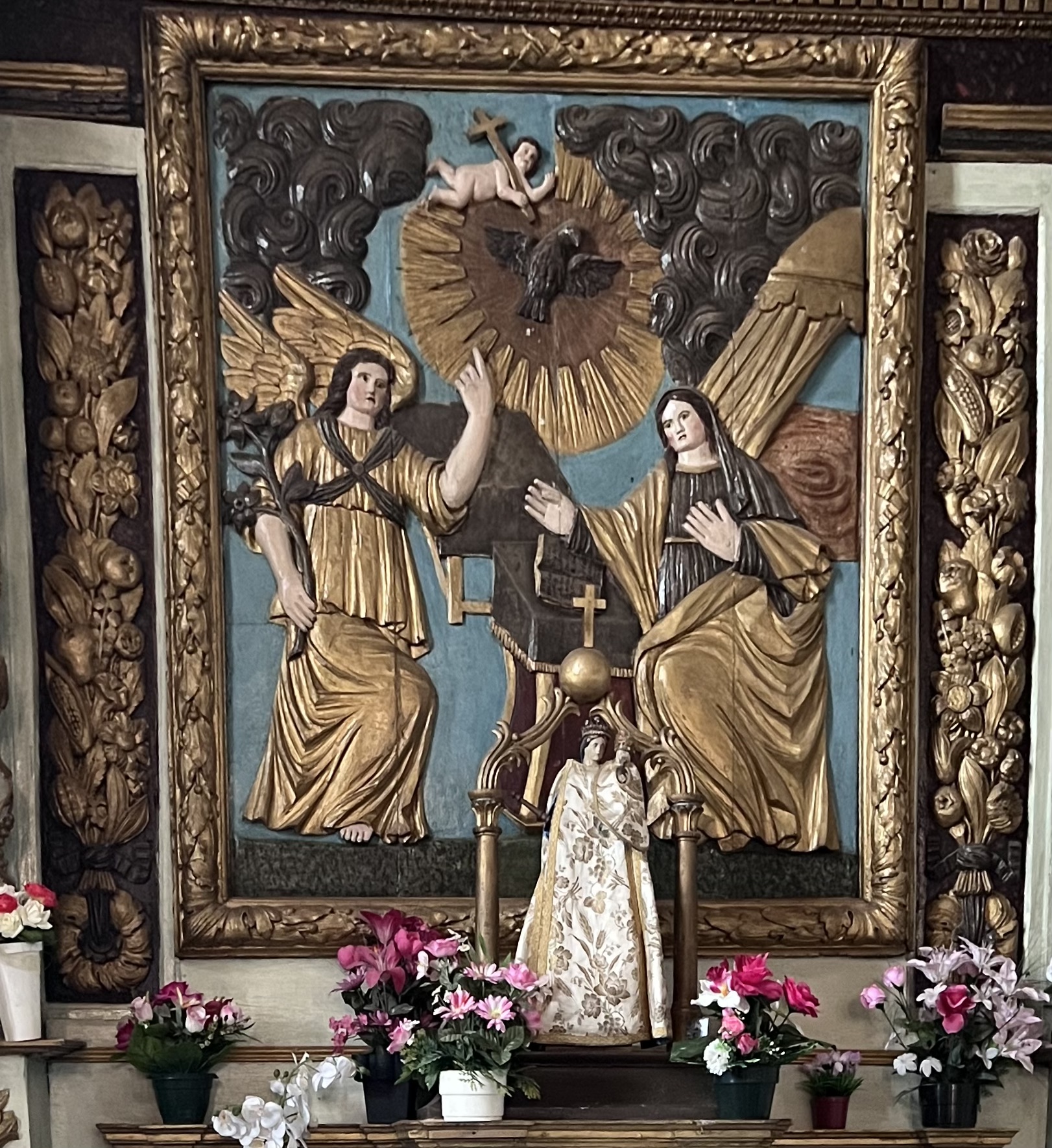
The next step is to take more photos. To this end, my enthusiastic guide invites me to accompany her to the building opposite the church. Large meetings are held there twice a year. The hospitable woman has the key to that building.
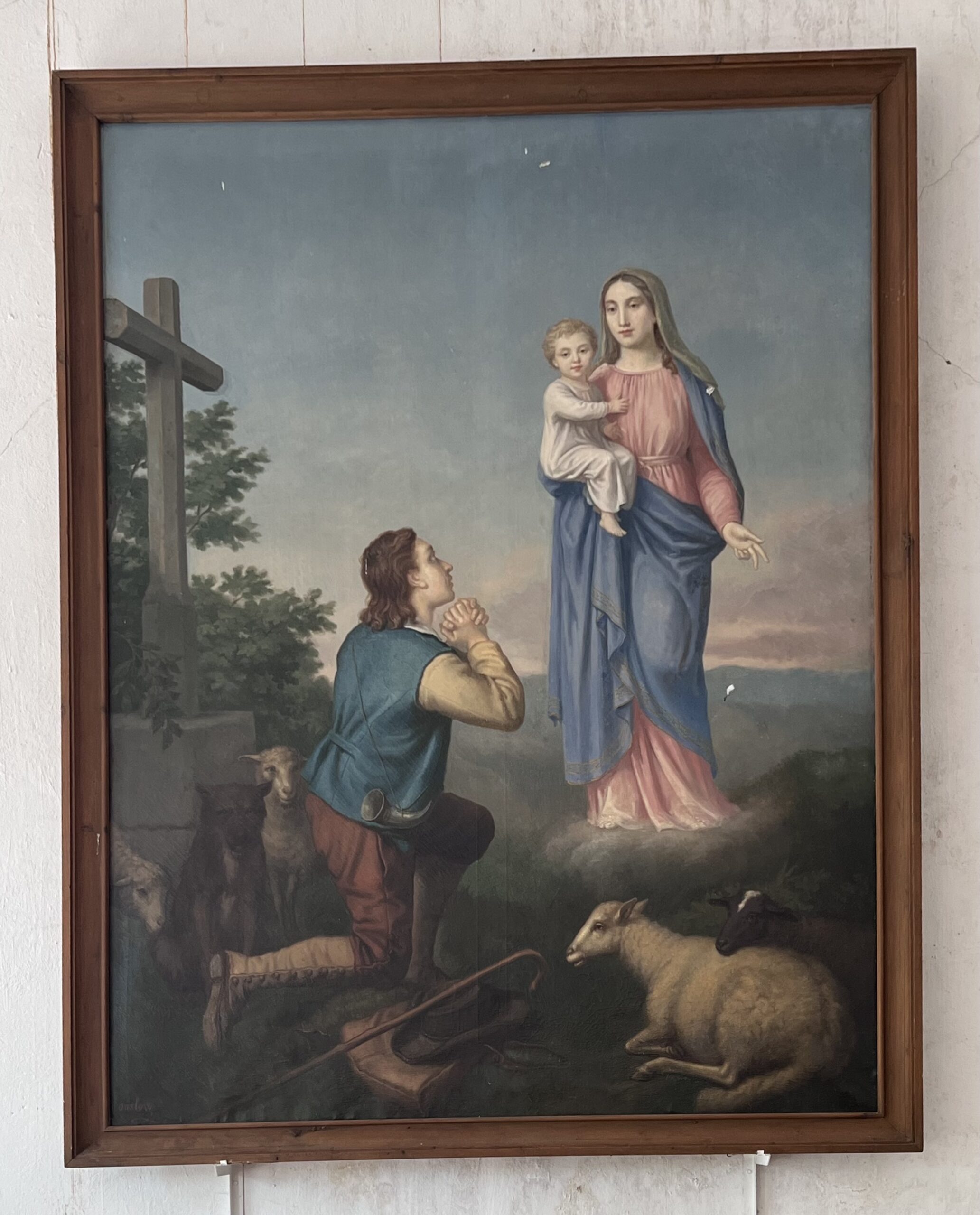
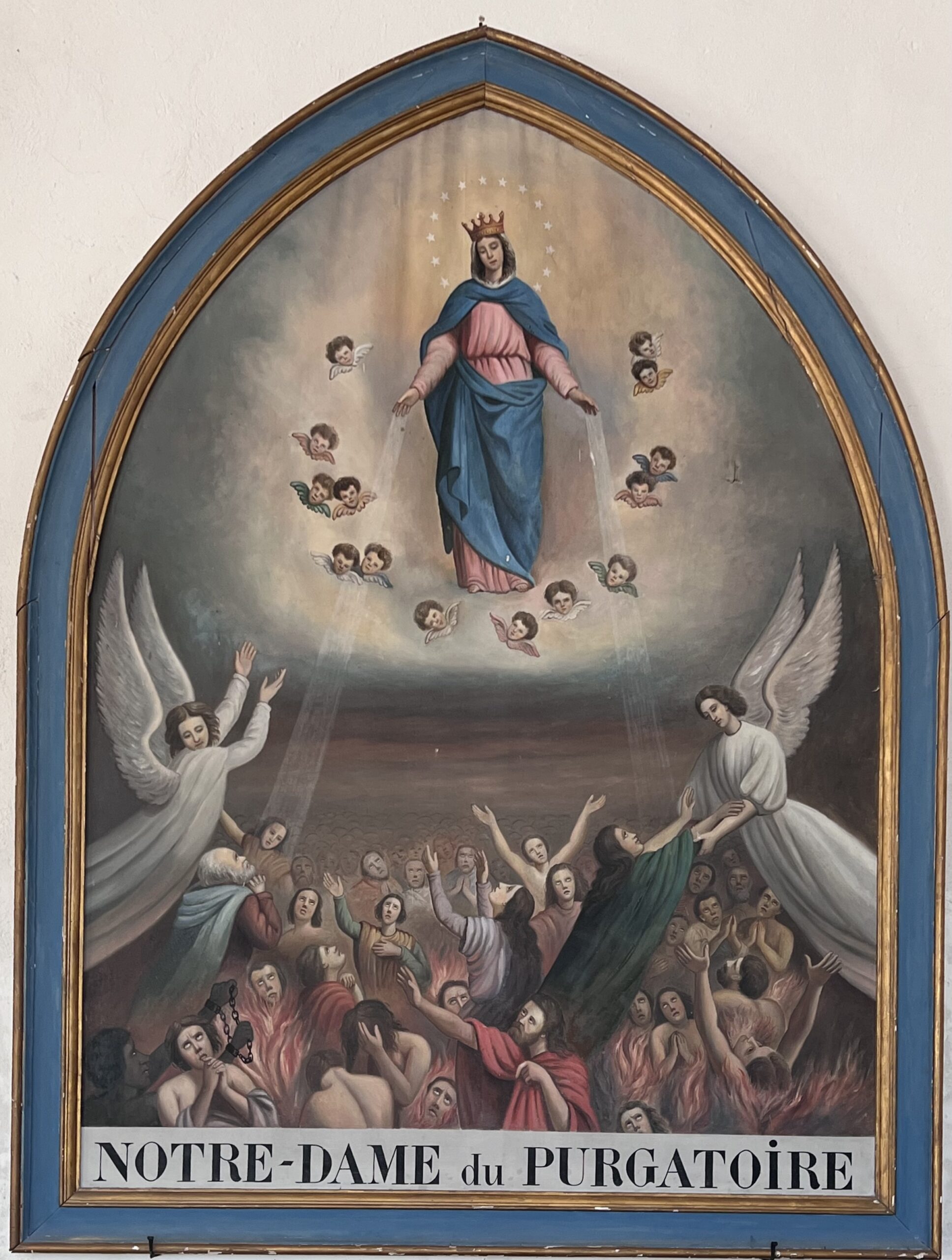
There are about 200 chairs arranged in the pilgrim room. Large paintings hang on the walls, including a large depiction of the 1717 apparition at the back of the room. I see more images in the pilgrim hall and a throne for the grace image stands on a raised platform, which can serve as an altar area. The enthusiastic woman also shows me a photograph of the image of Our Lady on the altar. She then points me to a painting of “Our Lady of Purgatory.” How grateful I am for her explanation.
Finally, at the hospitable guide's, I buy a booklet about the history of Our Lady of the Visitation in Lescure. Afterwards, I give her a tip, for which she thanks me very heartily. With this visit, I am enriched by another special experience.
Environment
To go from Val Valuéjols to Lescure is to go 4 km west.
Travelling from Saint-Flour to Lescure means travelling 20 km to the west.
Leaving Aurillac to arrive in Lescure requires travelling 60 km to the northeast.
Leaving Rodez behind and arriving in Lescure means covering 115 km to the north.
Driving from Clermont-Ferrand to Lescure is 120 km southwards.
~~~

 Nederlands
  English (UK)
  Deutsch
  Français