History
In 1027, “Lissewega” was mentioned for the first time. The proper name is “Liss” and “wega” comes from “wegha”, which means house.
A legend lies at the root of the place of pilgrimage. At the end of the 12th century, fishermen originating from Koudekerke, present-day Heist-aan-Zee, find a wooden statue of Mary in their nets in Lisputwege. They take the effigy with them to their village and place it in the church. The next day, the fishermen are working at the same place again and find the statue there once more. In total, this happens three times. The fishermen see this as a sign that Our Lady wants a chapel or church at the site where it was found. Subsequently, the fishermen go to build a chapel. A place of pilgrimage comes into being in Lisputwege. Later, Lisputwege is changed into Lissewege.
From the end of the 12th century there have been pilgrimages, with pilgrims coming for the miraculous statue of Mary: Our Lady of the Visitation. The church, with the well-known statue of Mary, increasingly becomes a bustling place of pilgrimage.
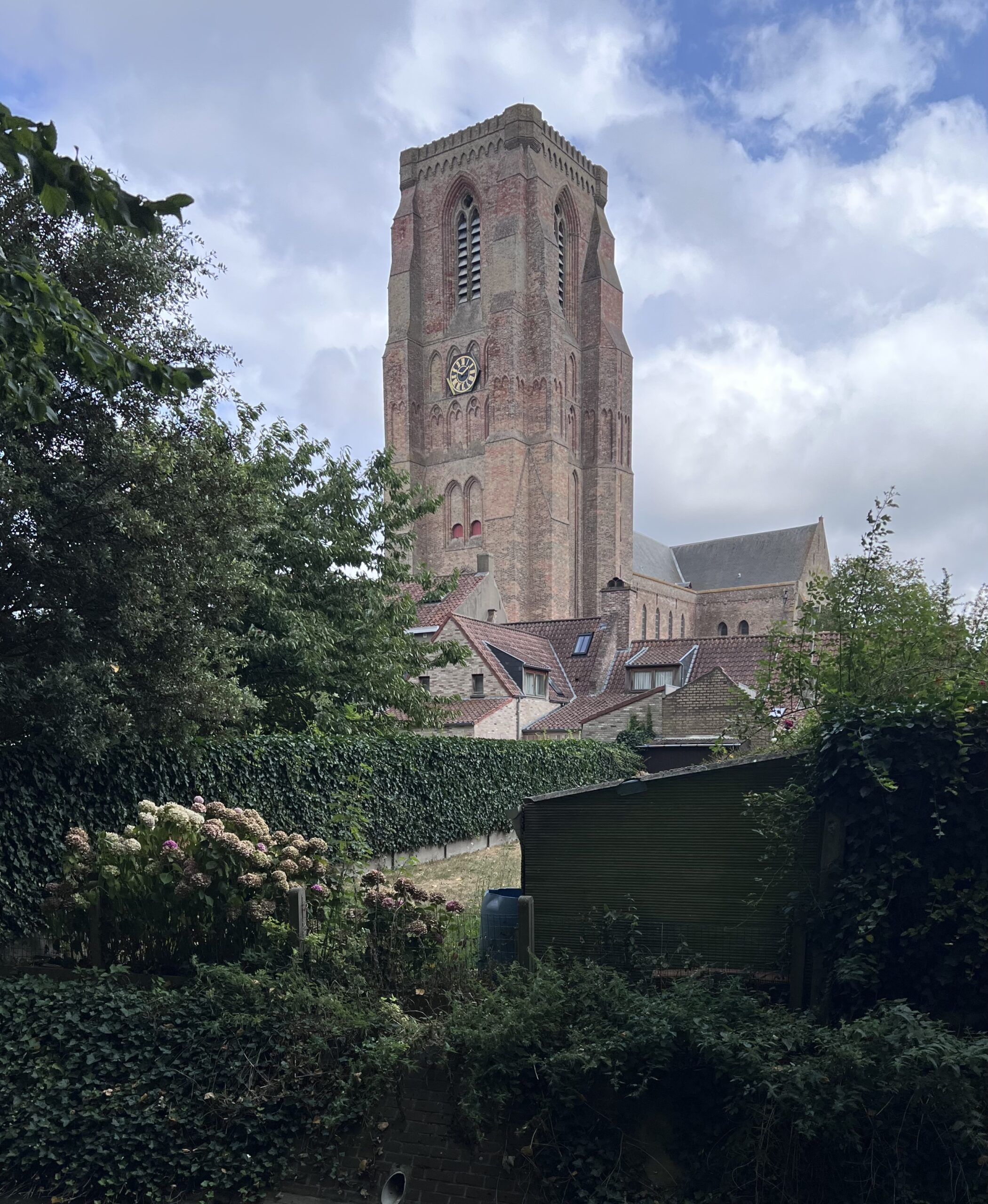
The great abbey barn dates from c. 1275. The church was built in the period 1225–1275, is a brick structure and features a Gothic style. The square tower was constructed in the second half of the 13th century and measures around 50 metres.
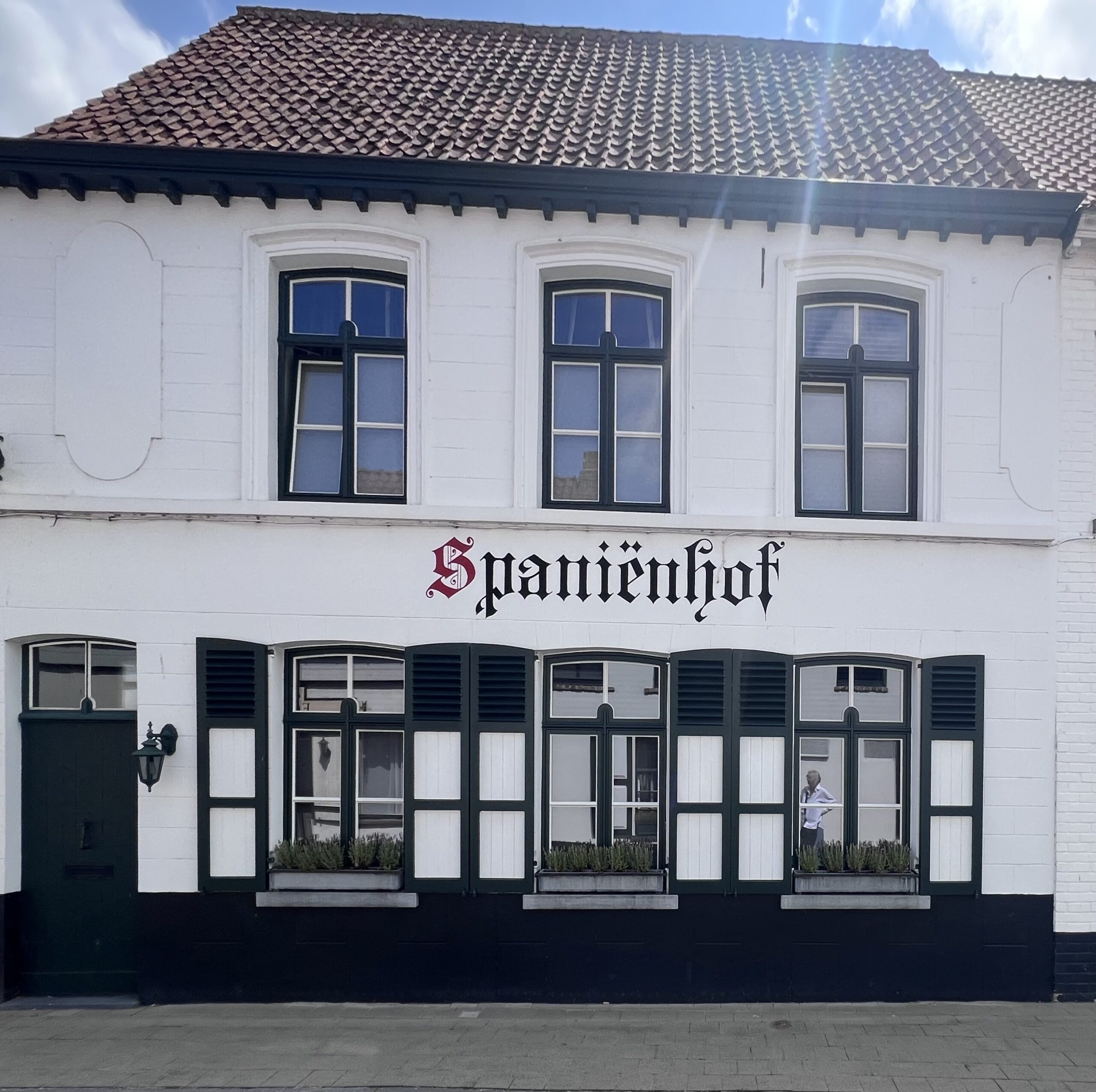
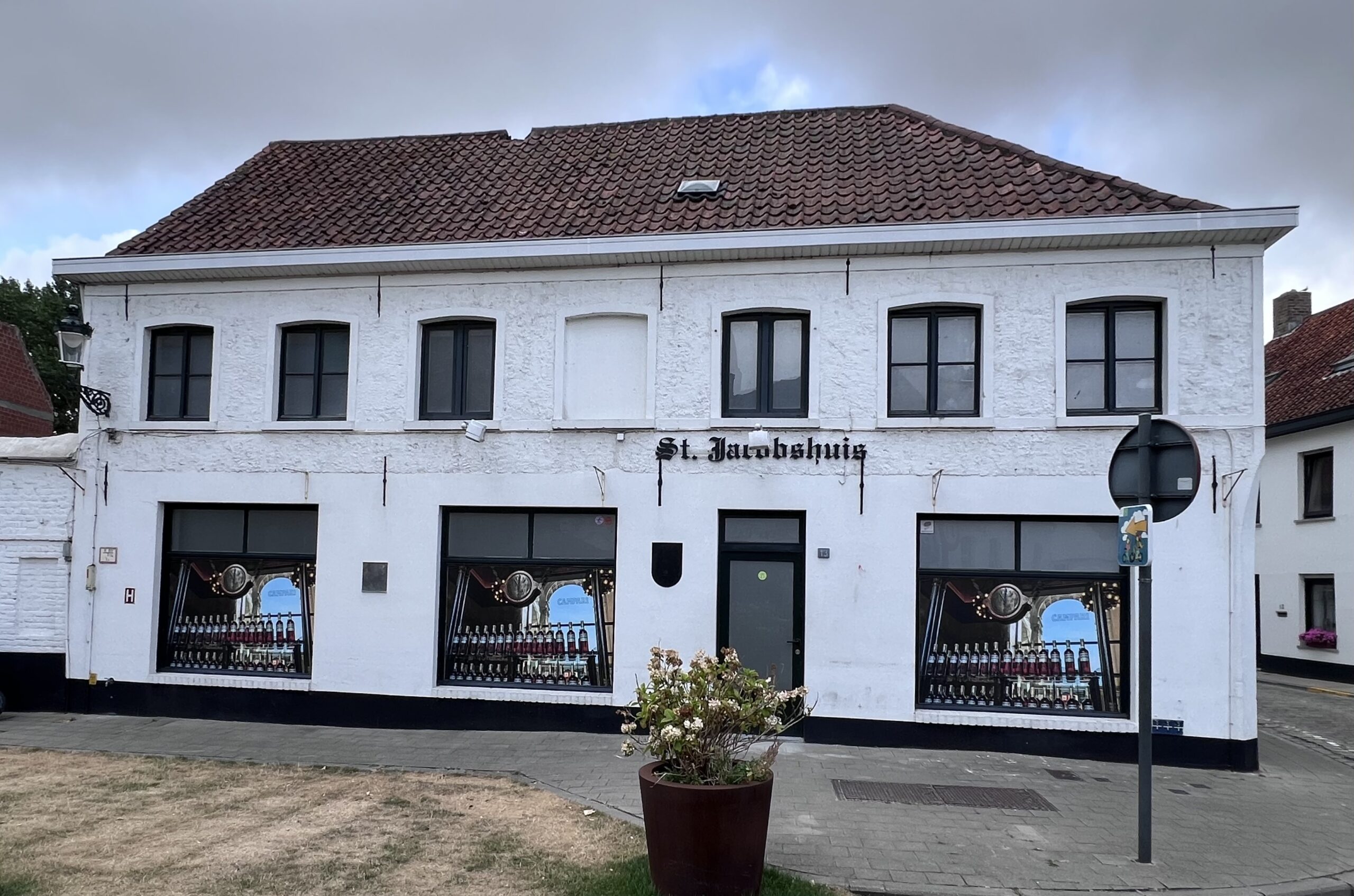
Lissewege was once a stopping place on the pilgrimage route to Santiago de Compostela in Spain. Pilgrims could stay overnight at the Sint-Jakobshuis and the Spaniënhof.
During the Iconoclasm, on 20 July 1586, the image of Mary was destroyed by the Gueux during a great fire. Major restorations to the church took place in the period 1597-1616. In 1624, the destroyed statue was replaced by the lime-wood image of Mary. This statue still stands in the main church today. The restoration work on the church began in 1624, following some time spent on consultations and the required approval and funding by the Archdukes Albert and Isabella. Albert VII of Austria (1559-1621) was Governor-General of the Southern, Spanish Netherlands (1595-1598) and the Habsburg Netherlands (1598-1621). Isabella Clara Eugenia of Spain (1566-1633) was Governor-General of the Southern, Spanish Netherlands (1598-1621) and Regent of the Southern Netherlands (1621-1633).
Major restoration of the church took place in 1890-1912 under the direction of Auguste Van Assche (1826-1907), a Ghent architect, publicist and restorer.
Since 1986, the church has been a listed building.
Pilgrimage site
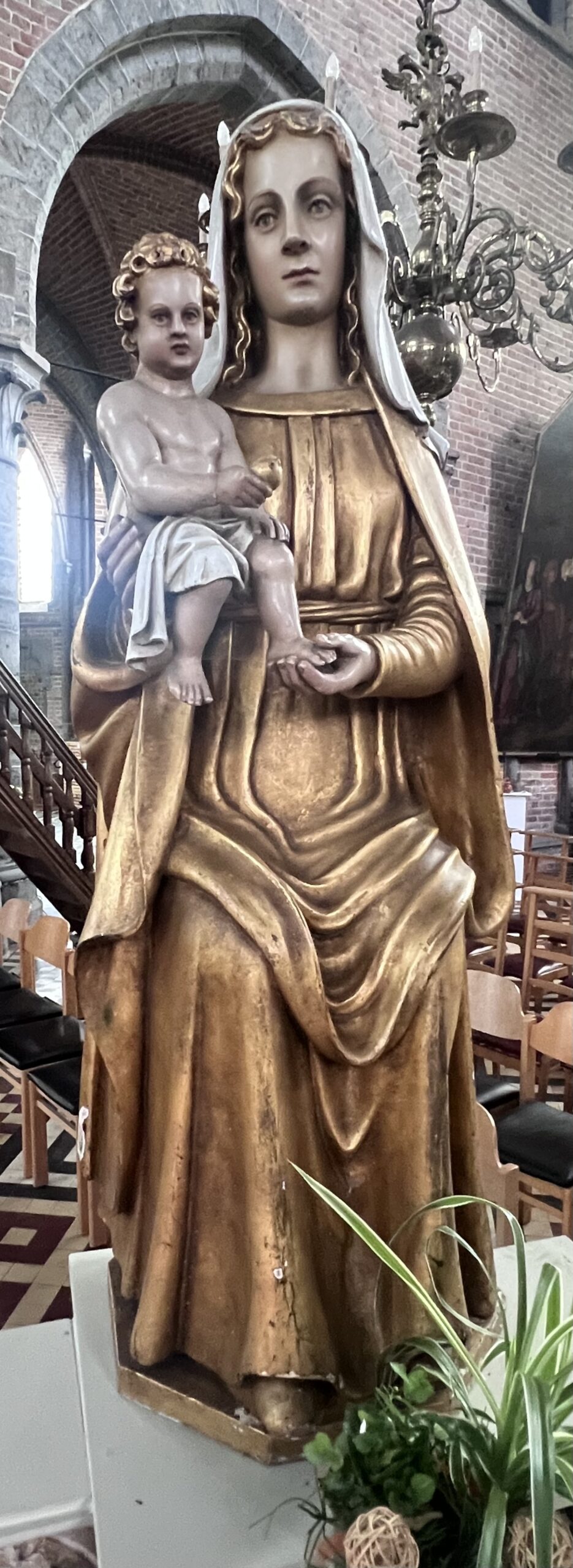
Lissewege is one of the more picturesque villages in Flanders. Centrally located in the village is the Church of Our Lady. The visitation refers to Mary’s visit to her cousin Elizabeth. The miraculous image is situated near the chancel. Candles are frequently lit near this image.
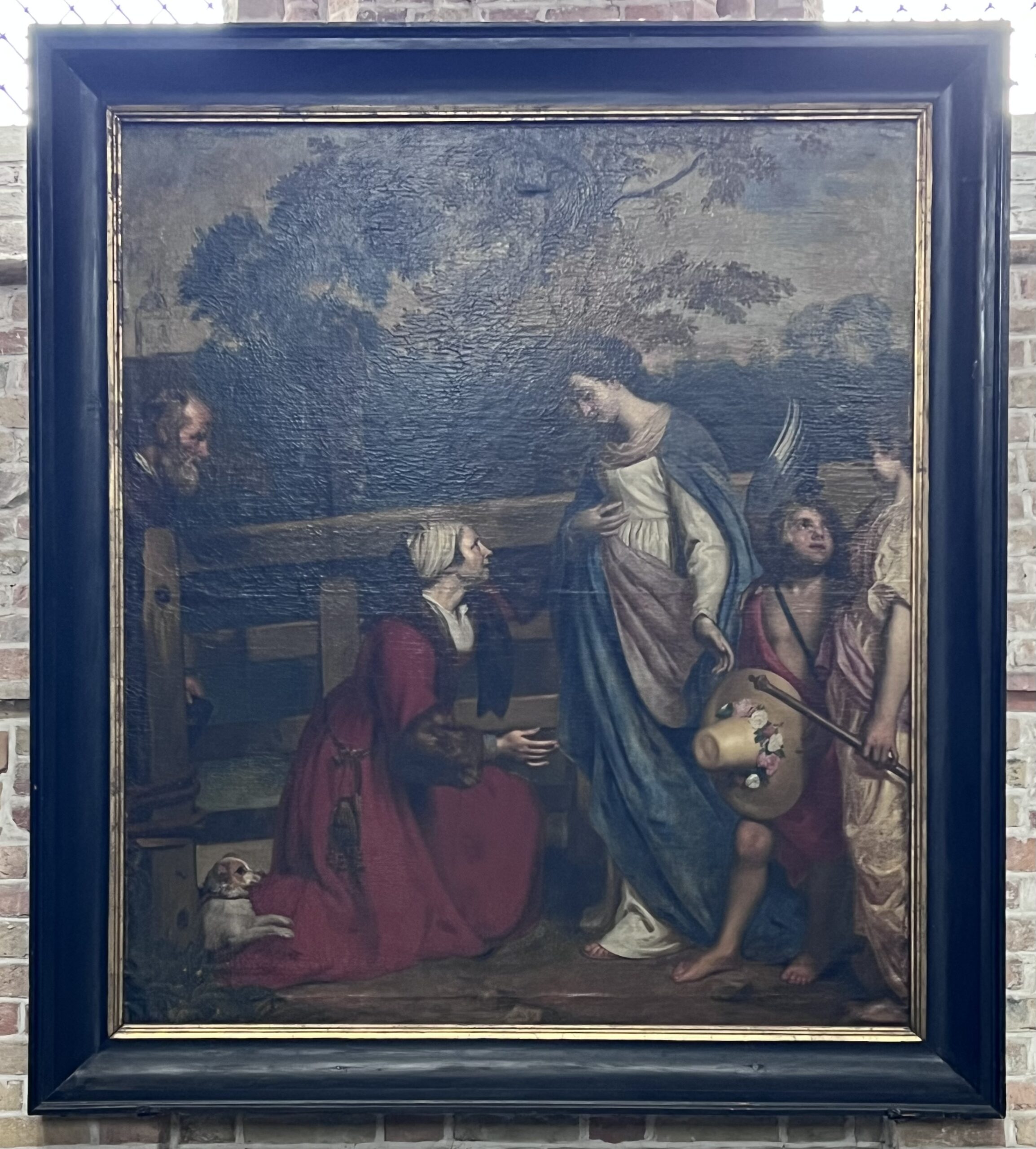
In the enormous church hangs a painting from 1652 of the Visitation of Mary to Elizabeth. It was created by Jacob I van Oost (1603-1671), the best Baroque painter in 17th-century Bruges.
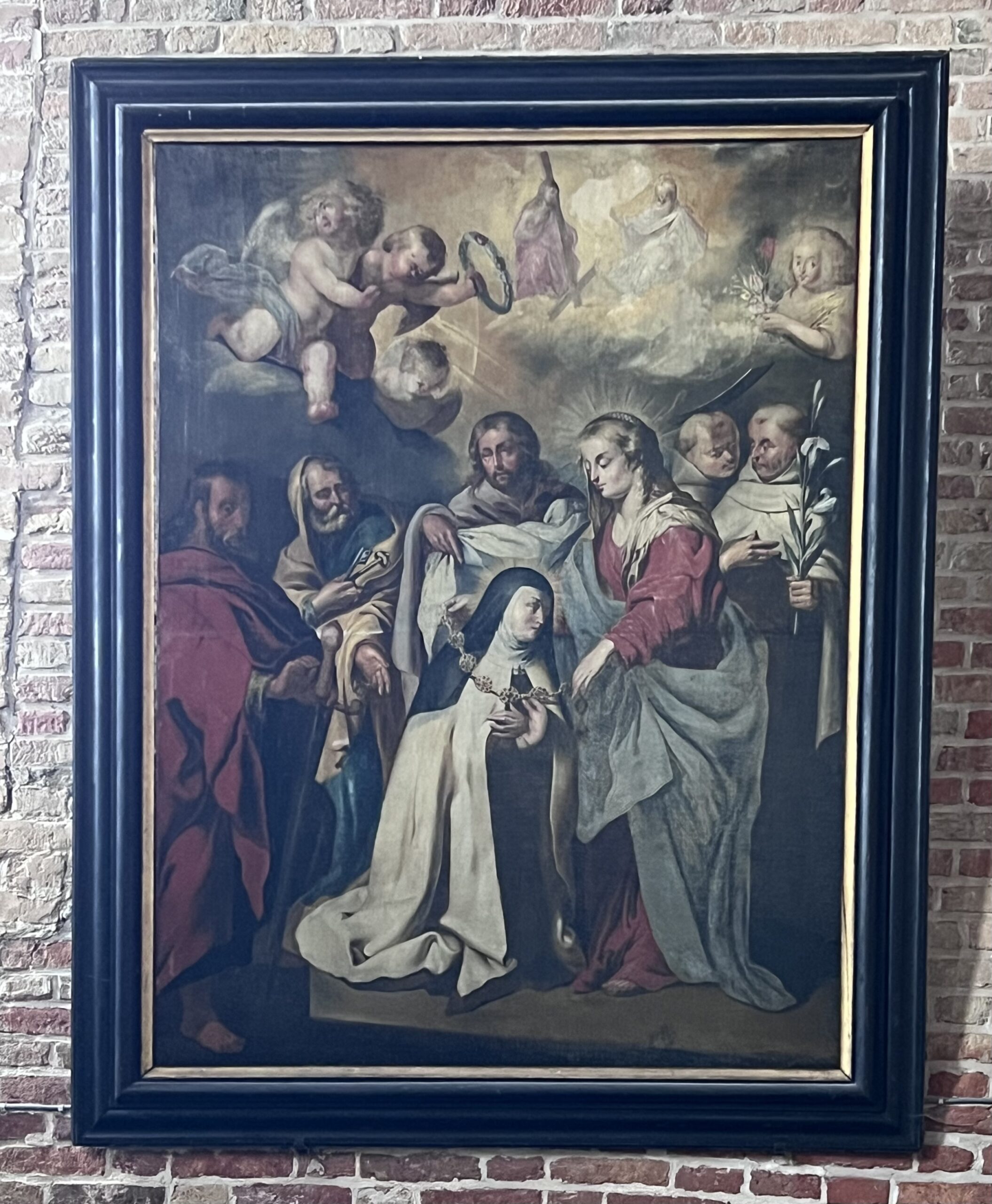
Another large painting is the one depicting Saint Teresa of Avila. She is being adorned with a necklace by Mary, while apostles look on. Members of the Carmelite Order are presenting the lily of purity, and angels are bringing a rosary. The artwork dates from the 18th century and the painter is unknown.
The church also contains a triptych depicting, amongst other things, Mary and Jesus on a donkey and Joseph in front; it is the “Flight into Egypt”.
The large influx of pilgrims is gone, but people still come to greet Mary every day and many candles are lit daily.
ACCESSIBILITY
Lissewege is a tourist village in West Flanders and is a sub-municipality of Bruges, located a few kilometres from Blankenberge.
Address of the church: Onder de Toren 1, 8380 Lissewege.
Current information is available via www.visitlissewege.be.
Experience
In the lovely village of Lissewege, with its many white houses, I first visit the imposing church. I think the tower radiates power and therefore enjoys great prestige far and wide. I hear that the square tower has 264 steps. This is out of the question for me right now, as my lungs are wheezing a noticeable amount.
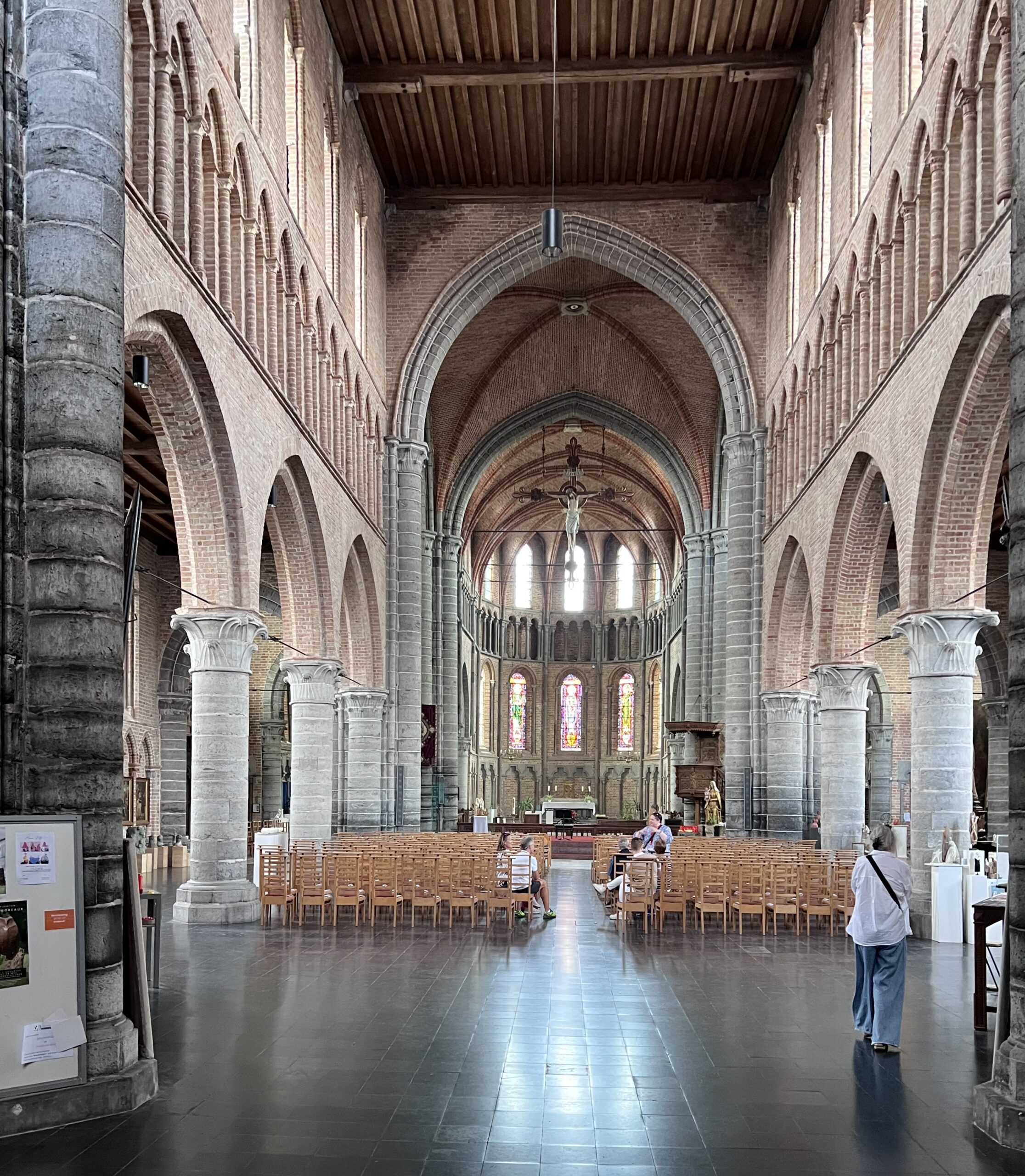
The large natural stone columns in the church really catch the eye. They certainly bear a great deal of weight!
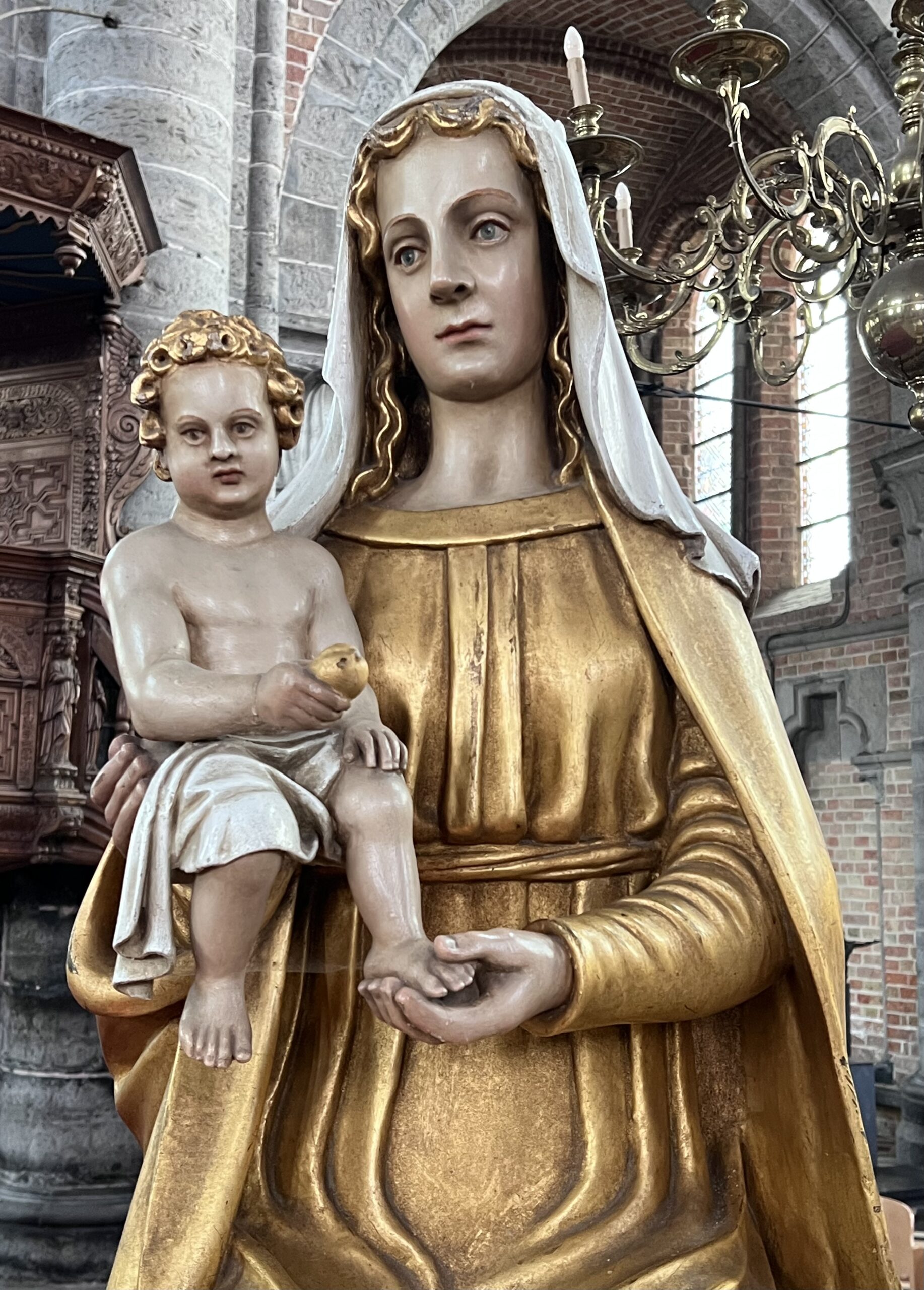
At the miraculous statue of Our Lady of Lissewege, I light a few candles and pray for the well-being of a couple of friends. How beautiful this miraculous statue is. What an expressive, open face Mary has! Mary looks at the visitor with wide eyes. Mother and Child have blonde hair. Mary has a white veil around her head and wears a golden-coloured robe. She holds her little Son on her right arm and, with her left hand, holds the Child’s left foot. I am told that during the annual Ommegang procession in Lissewege, the statue of Mary is carried in a Rococo sedan chair from the church to the Ter Doest Chapel, dating from 1687, situated at Ter Doeststraat 6 in Lissewege. This takes place on the first Sunday in May, as I am told by the guide.
In the church I see paintings often featuring Mary, such as her visitation to her cousin Elizabeth, in which Elizabeth's husband can also sometimes be seen. Often he does not feature in a depiction of the Visitation.
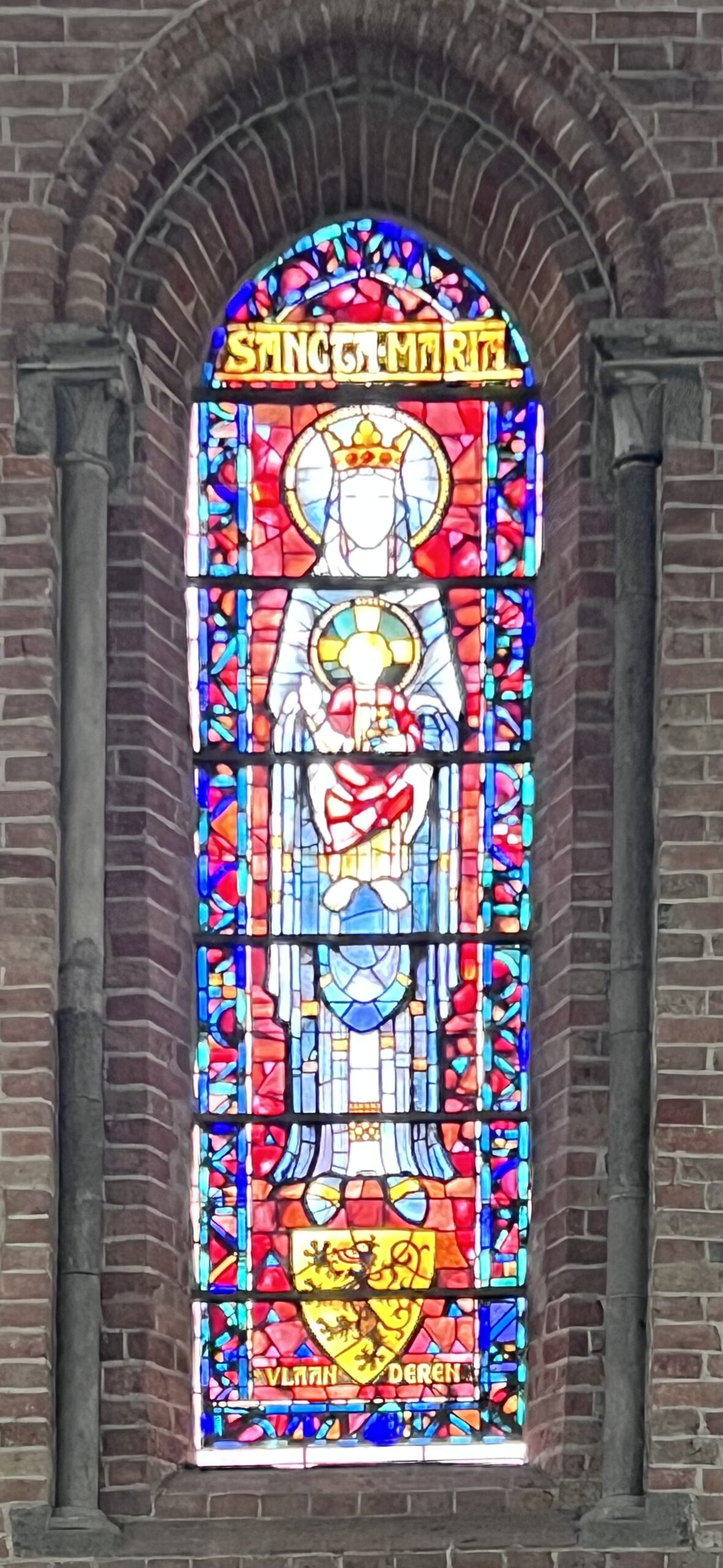
A large stained-glass window depicts the Crowned Virgin Mary. At the top, I can see the words “Sancta Maria”, and at the bottom of the window is the word ‘Flanders’ alongside a Flemish lion.
On the tour of Lissewege I see the old, large, former inns of the Sint-Jakobshuis and the Spaniënhof. Countless pilgrims have eaten and slept here. What a history Lissewege has!
Environment
From Blankenberge beach to the church in Lissewege is an 8 km journey eastwards.
Leaving touristic Bruges to arrive in Lissewege means travelling 15 km to the north.
Departing from the port town of Oostende and arriving in Lissewege requires bridging 40 km via the motorway in a north-easterly direction.
Leaving the tourist town of Sluis in the Netherlands behind to get to Lissewege involves travelling 22 km westwards.
~~~

 Nederlands
  English (UK)
  Deutsch
  Français