History
A legend from 1309 forms the basis of the pilgrimage site. A huntsman named Hecker Henn is in the service of Lord Hans Schaffrait von Oppelsheim. The huntsman has an accident and loses his sight. Doctors are unable to help him. The man goes to a statue of Mary that is attached to a tree. He prays by the statue and a short time later the man can see again as before. This remarkable healing leads the lord to build a small chapel, which houses the statue of Mary, which is a Vesperbild or Pietà. Interested people come to the small chapel and pray by the statue and ask Mary for help.
The chapel built in 1313 was enlarged into a church in 1326-1330. On 8 September 1330, the feast day of the Nativity of Mary, the church was consecrated by Baldwin of Luxembourg (1285-1354), Archbishop of Trier (1307-1354).
In 1463 the pilgrimages come to a standstill. This lasts for a short time, as changes come in 1465. From that year onwards, “Brothers of the Common Life” take over responsibility for the monastery and pilgrimages. In 1468 they establish the world's first monastic printing press. Due to the Reformation, the brothers come under pressure and are forced to leave Marienthal in 1550. Shortly after this, Augustinians arrive in Marienthal. In 1568 they are assigned pilgrimage duties by Daniel Brendel von Homburg (1522-1582), Archbishop of Mainz (1555-1582). Somewhat later the pilgrimages become very uncommon and the dissolution of the monastery in Marienthal has been discussed.
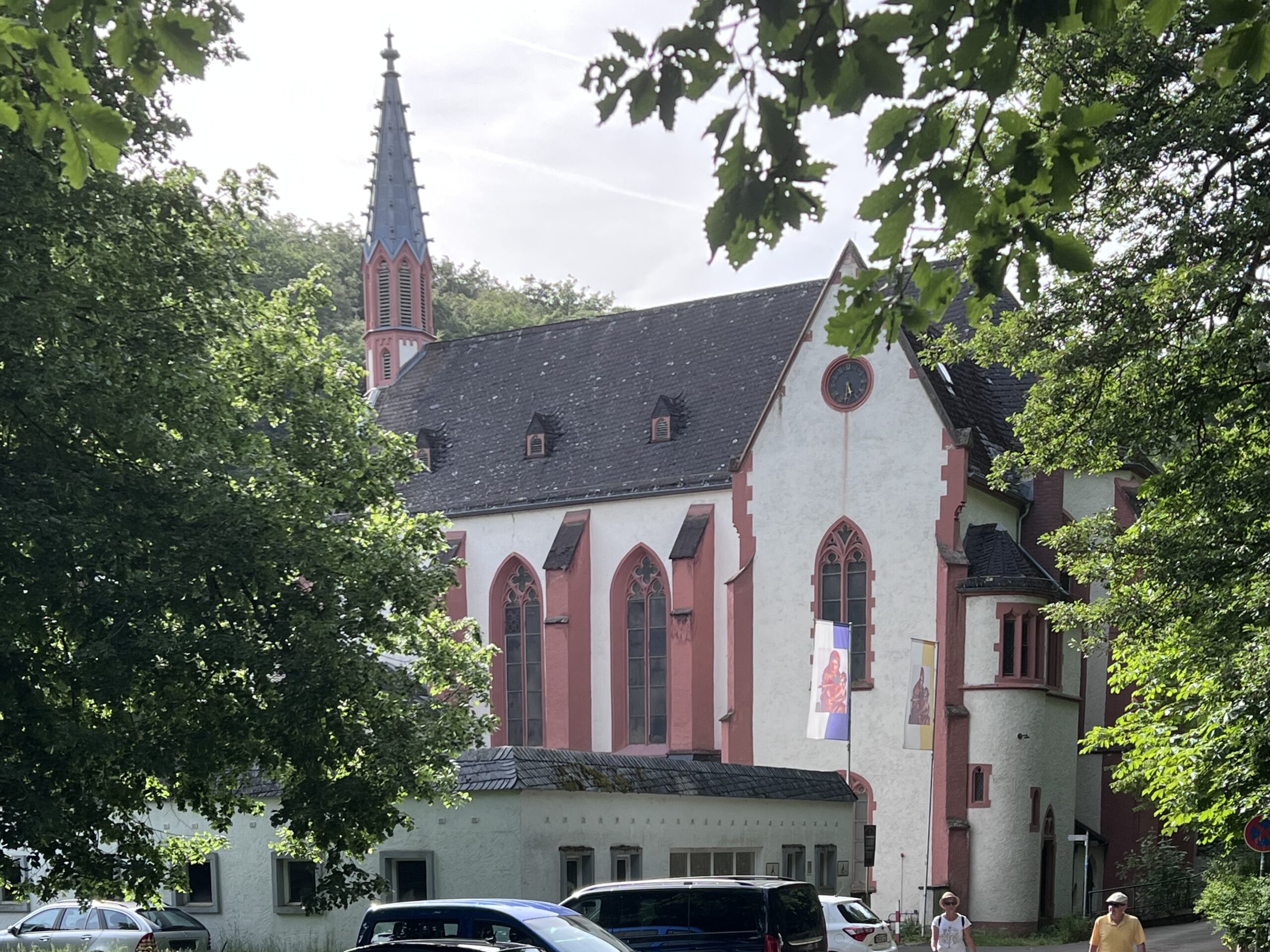
In 1612 Jesuits arrive in Marienthal at the instruction of Johann Schweikhard von Kronberg (1553-1626), Archbishop of Mainz (1604-1626). From 1612 until 1773 Jesuits are active in Marienthal and pilgrimages revive. In 1626 the plague is rife and many perish due to this highly contagious disease. Our Lady of Marienthal is appointed patron saint and the epidemic soon ceases. Fire and the Thirty Years' War (1618-1648) are major setbacks and in 1773 the Jesuits leave. Following their departure, the church falls into decay and pilgrimages drastically decline. The miraculous image is moved to the parish church in Geisenheim by order of Emmerich Joseph von Breidbach zu Bürresheim (1707-1774), Archbishop of Mainz (1763-1774). The buildings in Marienthal are scheduled for demolition, but a severe accident occurs during the demolition work and it is halted. What remains in 1782 is a ruin and the buildings pass through successive owners.
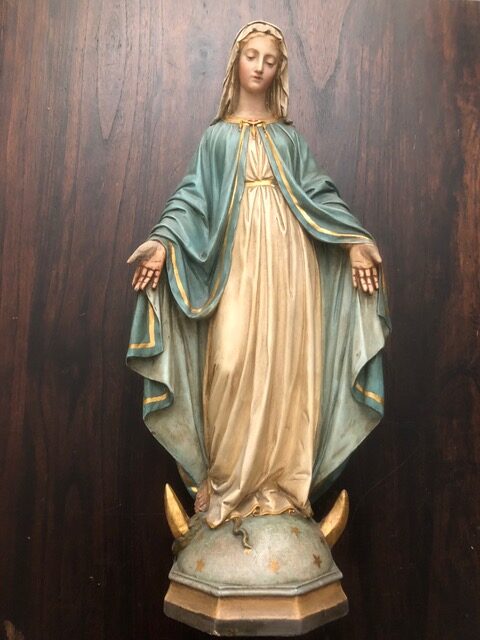
In 1857 Apollonius von Maltitz (1795-1870), baron, diplomat and writer, offers Peter Joseph Blum (1808-1884), born in nearby Geisenheim, Bishop of Limburg (1842-1884), the funds for the reconstruction of Marienthal. This bishop is a great benefactor and promoter of the Marienthal pilgrimage site. In 1857, therefore, the church can be restored and the miraculous image returns to the church. On 8 September 1858 the church is reconsecrated, this time by Bishop Blum. Subsequently, the pilgrimage site experiences a revival in visitor numbers. The Jesuits briefly return. From the lime tree that has grown within the ruin, a statue of the Immaculate Conception is carved and placed in a niche of the monastery.
Since 1873, Franciscans have looked after the monastery with its church and the pilgrimages, but in 1875 the Franciscan organisation was dissolved by the regulations of the Kulturkampf (1871-1879). In 1888 the Franciscans returned to Marienthal.
The images of the mysteries of the rosary were made in 1890 by August Franz Konrad Martin (1837-1901) from Kiedrich. He also designed the stained glass windows, which were made by an unknown artist.
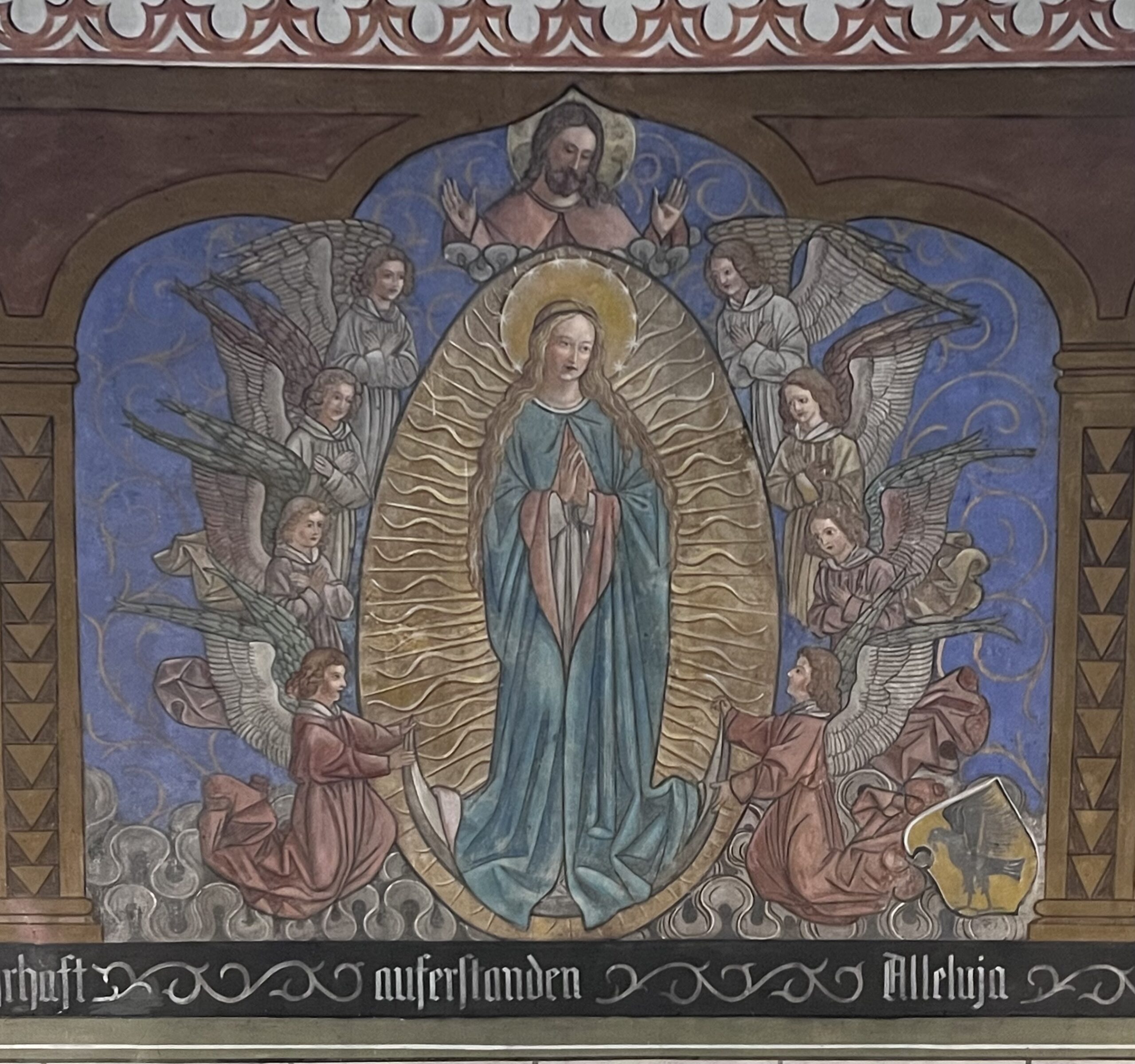
In 1909, the miraculous image was crowned.
In 1951 the church was extended with a confessional chapel and sacristy.
The large pilgrimage site behind the pilgrimage church dates from 1966.
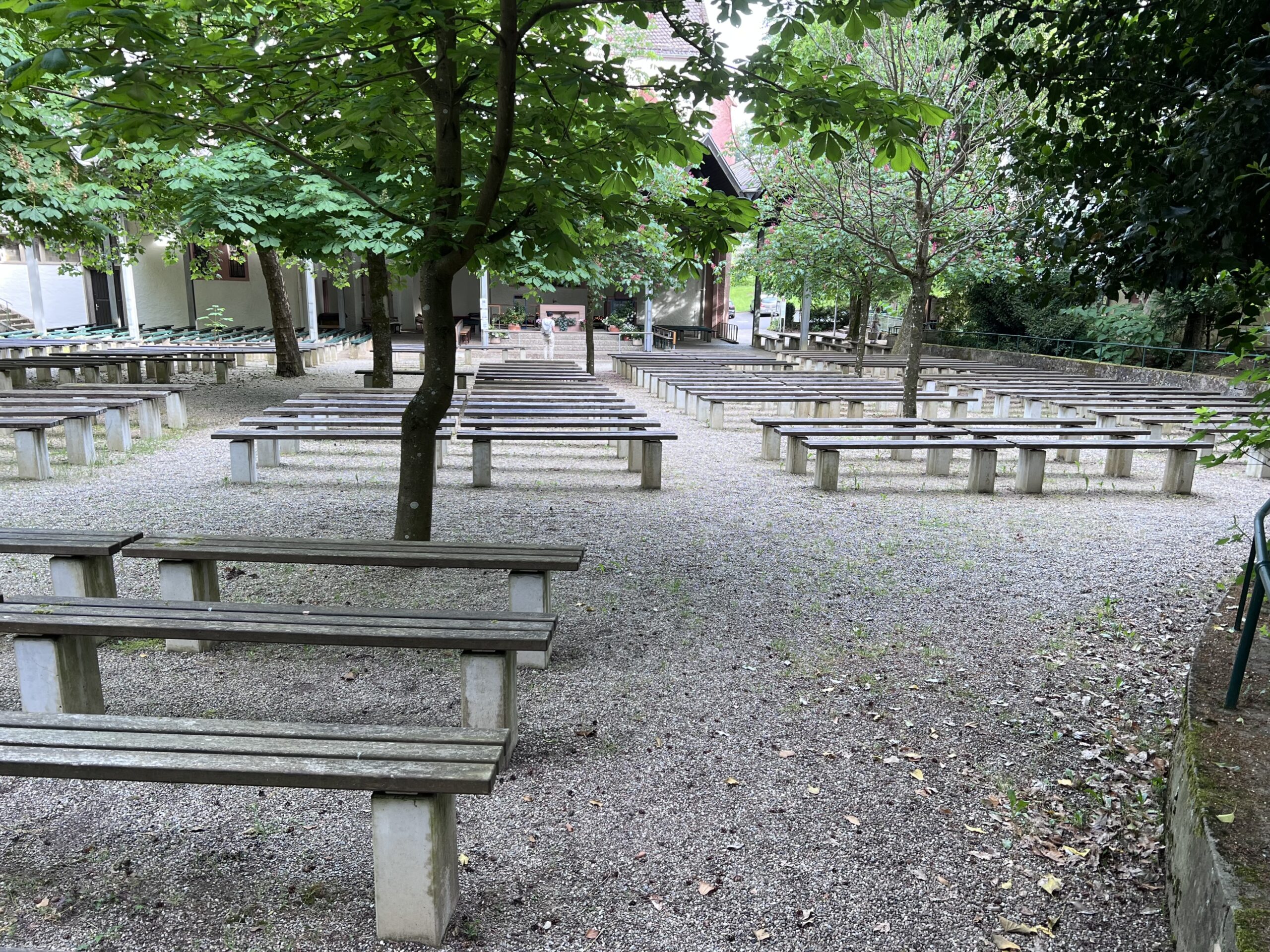
Pilgrimage site
Marienthal is one of the oldest pilgrimage sites in Germany. Since the beginning of the 14th century, extraordinary answered prayers have taken place here.
In front of the church stands a fountain, which was placed as a token of gratitude to Mary.
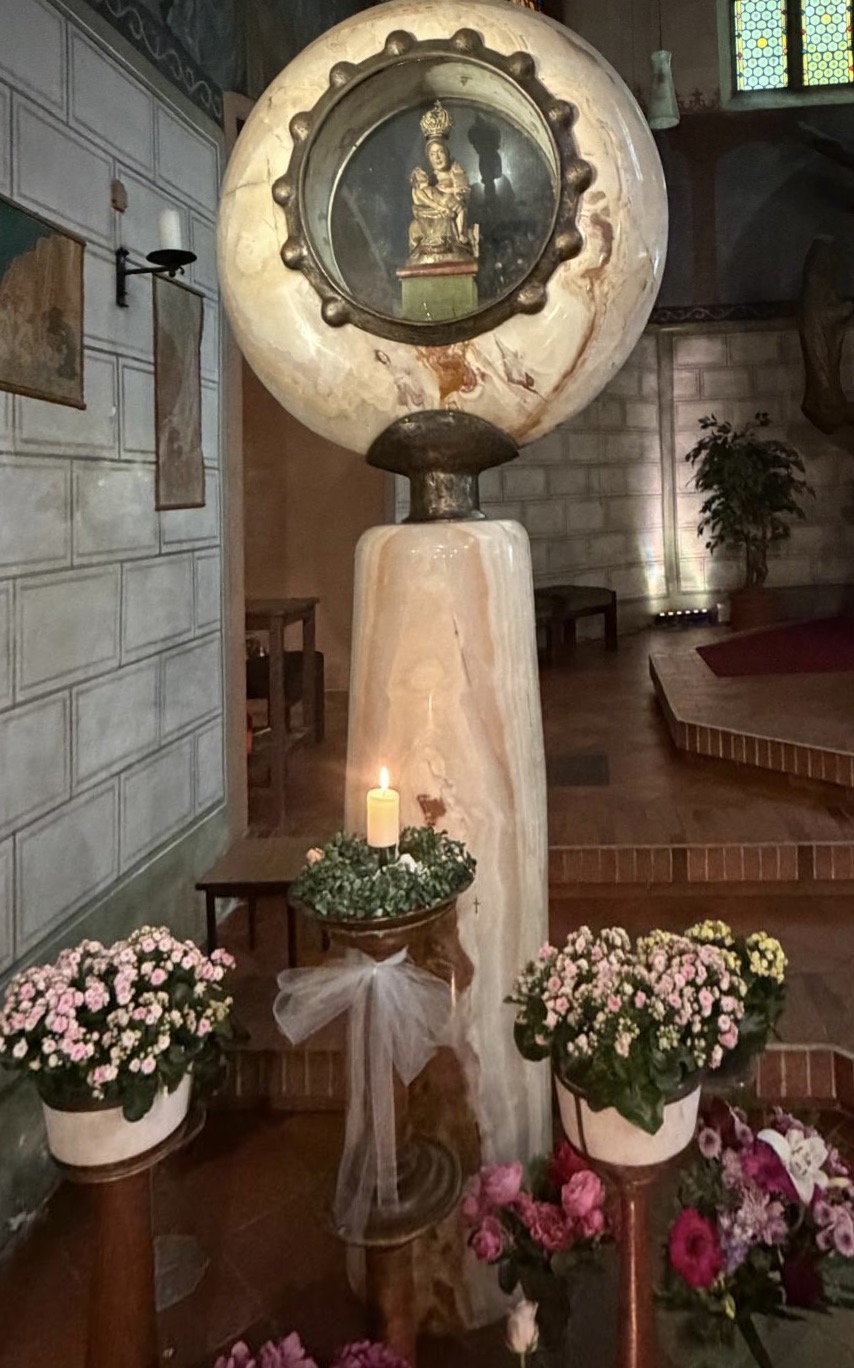
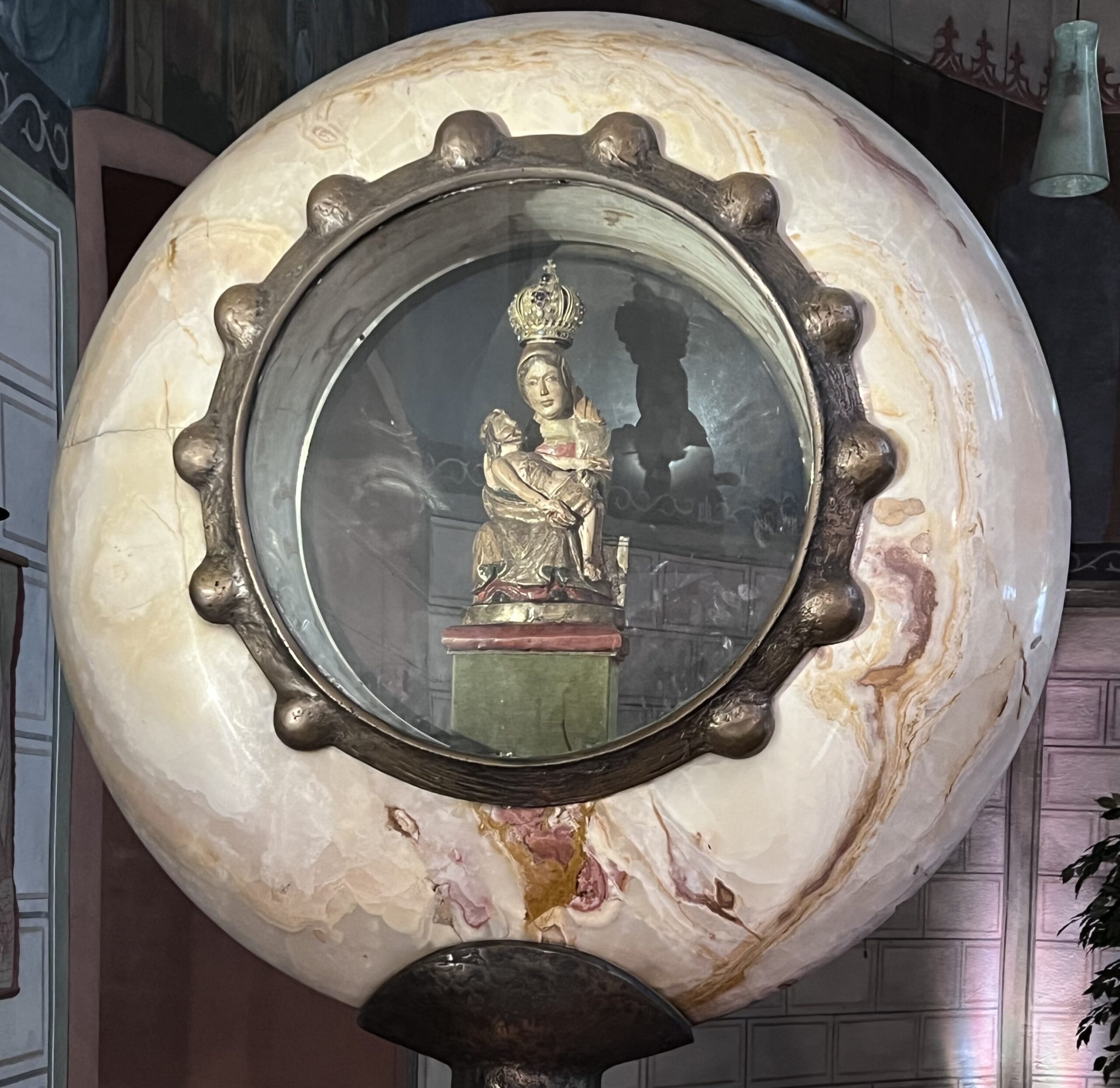
In the pilgrimage church stands the miraculous image, a small pietà.
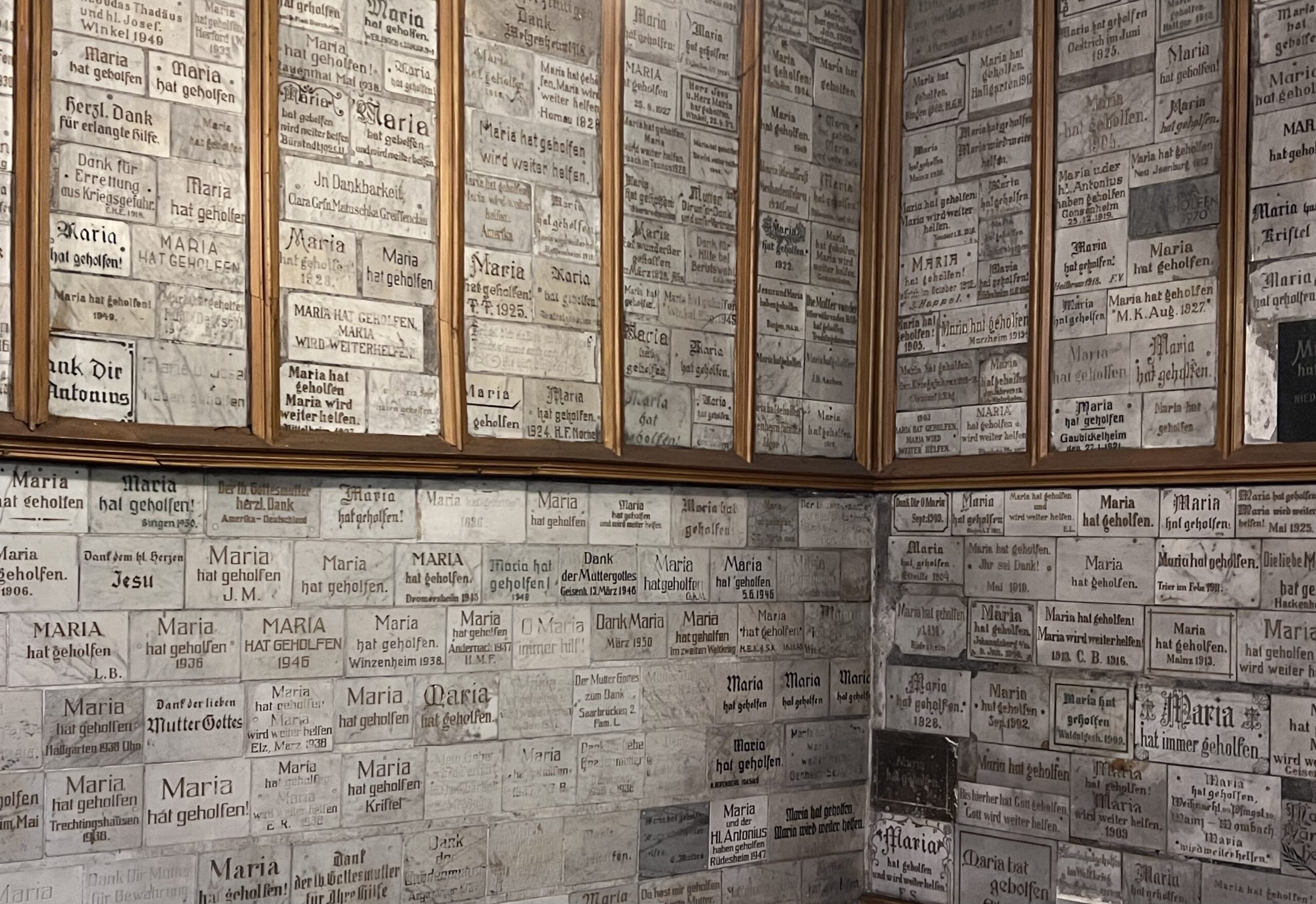
In the pilgrimage church there is a chapel where an altarpiece has been placed featuring Mary, Jesus and the dying Joseph. Many ex-votos adorn the walls in the church.
A Stations of the Cross has been created.
Services are held daily at the Marian shrine. Confession is also available every day.
ACCESSIBILITY
A few kilometres from the town of Geisenheim and Johannisberg with its castle lies the Marian shrine of Marienthal. This place of pilgrimage is surrounded by vineyards and forests.
Address: Kloster Marienthal 1, 65366 Marienthal/Geisenheim.
Current information can be found at www.marienthal.de and www.marienthal.franziskaner.de.
Experience
In the late afternoon I arrive in Marienthal and still see many cars parked in the car parks. A well-visited place of pilgrimage this certainly is! People come here for Mary and not a few also to walk, because in the surrounding area there are quite a few kilometres to be made and plenty of magnificent natural beauty to enjoy.
At the entrance to the sanctuary, I see a sign listing the services in the pilgrimage church. One or more gatherings are held here every day. What an organisation!
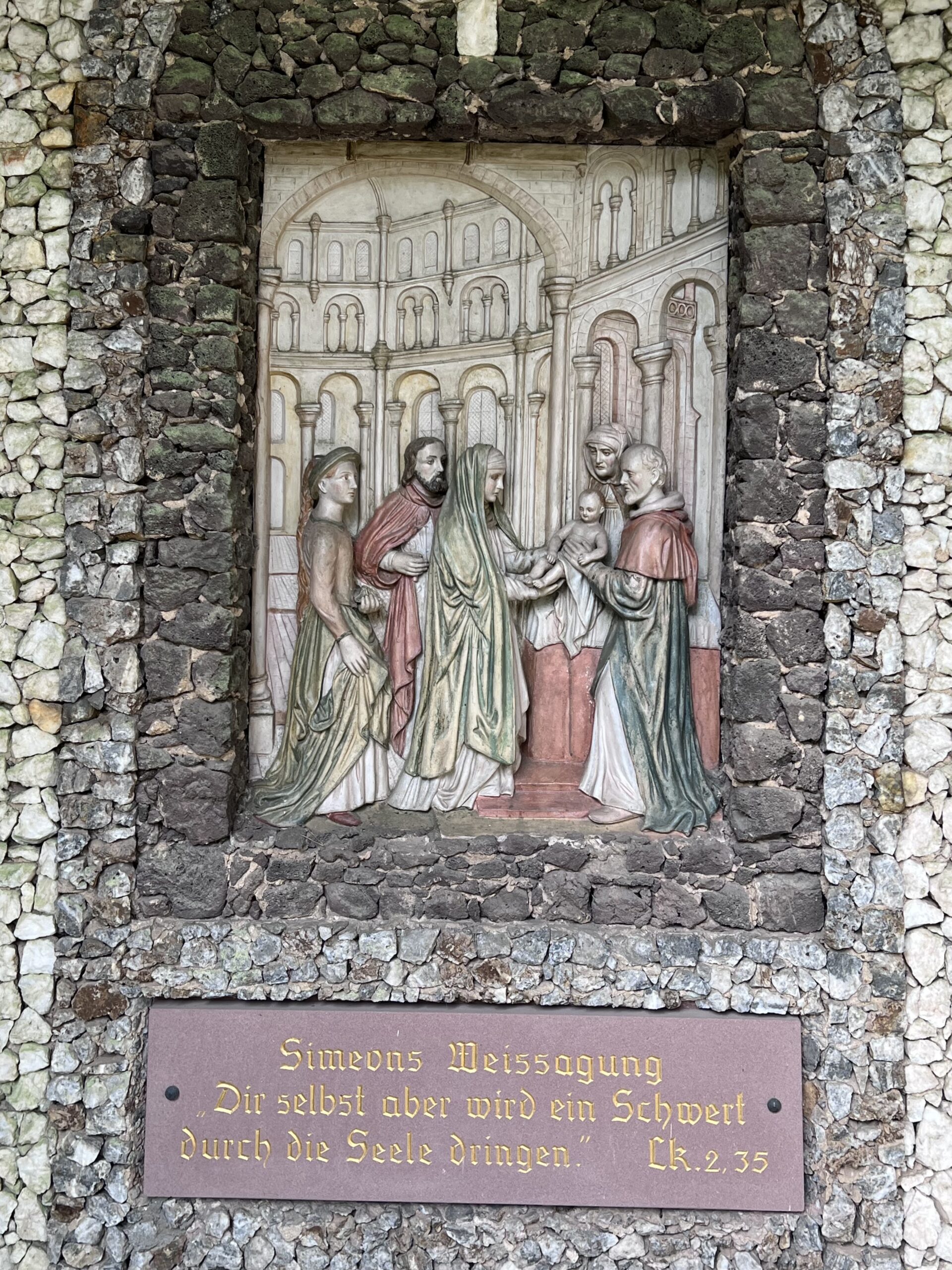
On the way from the car park to the pilgrimage church, I pass a chapel that is enclosed by a gate. The image of Simeon can be seen as he holds the child Jesus and says to Mary that a sword will pierce her soul.
In the garden, next to the church, under a small shelter, stands a light brown statue of Mary and Child. Flowers grow near this statue, which makes the whole scene even more complete. Next is to enter the pilgrimage church. Above the open door, a relief has been placed depicting, among other things, the archangel Gabriel's announcement to Mary that she will conceive.
In the pilgrimage church I am struck by the pietà, the miraculous image. With her right hand, Mary supports the head of her Son. Mary is in intense grief; she suffers upon seeing and feeling her Child. A sense of peace prevails over Jesus' face. This depiction appeals to the pilgrims and to me as well.
At the back of the church I see a text with the Marienthal prayer. It begins:
“Maria here with your Son,
queen with noble crown,
Mother, sister, mediatrix,
the sorrowful comforter”
After church, I take a tour of the large grounds of this sanctuary. I see statues and a large outdoor area for receiving many visitors. Finally, I go back into the pilgrimage church to thank Mary for this stay. I am glad to be visiting here and, with thoughts of this visit, I leave Marienthal.
Environment
In and around Marienthal there are many walking opportunities, such as the Mühlen – Wanderweg along the Elsterbach monastery mill, which was used by Jesuits and later leased out. Other walking routes are marked by a green leaf and a blue butterfly.
From Geisenheim to Marienthal it is 5 km heading north-west.
Johannisberg is close to Marienthal, being 4 km to the west to reach the Marian shrine.
Leaving Rüdesheim am Rhein to arrive in Marienthal requires travelling 10 km northwards.
From the major city of Mainz to Marienthal means bridging 35 km to the west.
To travel from the town of Boppard on the Rhine to arrive in Marienthal is a distance of 110 km in a south-easterly direction.
~~~

 Nederlands
  English (UK)
  Deutsch
  Français