History
The history of the statue of Mary of Smarten is very special. In the 13th century, a deeply religious hermit lived in the area around Blieskastel. Next to the friar’s closet, an old, large oak tree stands. In a niche in the tree, he places a statue of Mary of Smarten; a pieta. One day, marauding soldiers shoot arrows at the statue. The arrows remain stuck in the statue and blood flows out of the wounds. After seeing this, the bandits flee, but one of them kneels and begs God for forgiveness. He converts. After a blind beggar covers his eyes with the blood of the statue, he is suddenly healed! The man tells this to Countess Elisabeth von Blieskastel (approx. 1214-1273), who suffers from an eye disease. She goes to the miraculous statue, wipes some blood off the eyes and can see again! Out of gratitude, the Countess builds a church and a monastery named “Gräfinthal” (gravindal) in the adjacent valley of Letschenbach. The monastery is named Gräfinthal and the Countess invites Wilhelmieten to come there. Since 1243 the image of Our Lady with the Arrows has been venerated in the church of Gräfinthal.
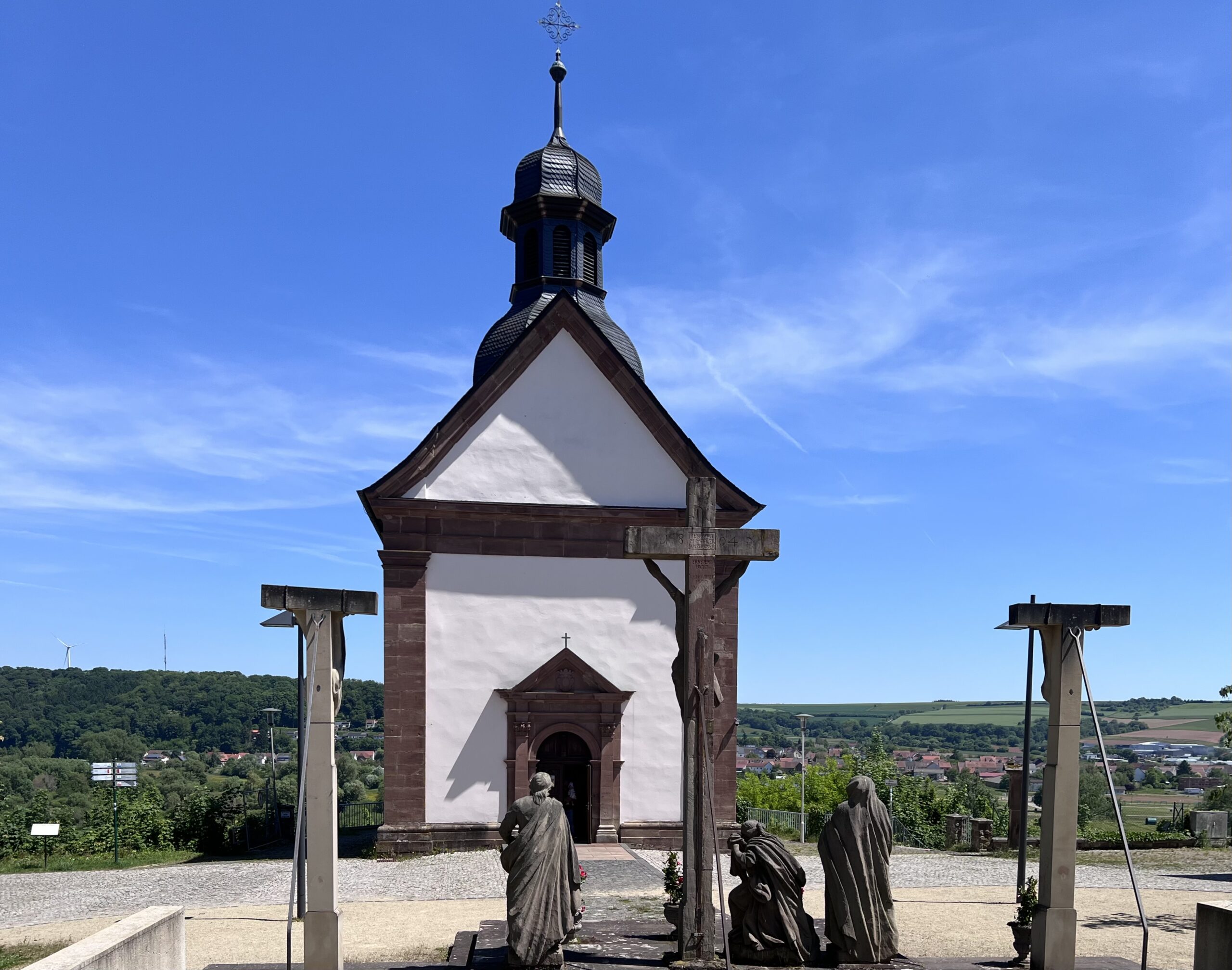
With the construction of a chapel by “Master Thomas Gampfer” in 1682/1683, there arose much veneration for “Our Lady with the Arrows”.
The noble family von der Leyen is of great importance for the development of Blieskastel. In 1773 Count Franz Georg Karl Anton von der Leyen and his wife Countess Marianne von der Leyen (born Maria Anna Helene Josephine Freiin von Dalberg (1745-1804)) came to the castle of Blieskastel (1736-1775). They became regents after the death of their husband.
After the closure of the Gräfinthal monastery in 1787, the image of the patron saint came to the parish church in Blieskastel. In 1792, French soldiers arrived and the chapel was looted and then used as a storage place for ammunition. In 1804, the Franciscans returned to Blieskastel. In 1829, the image was given a central place in the chapel. There it fell into disuse. In 1913, it was rediscovered, restored and placed on the altar of the chapel. This created a new pilgrimage movement and the number of pilgrims within a few years increased significantly. Ludwig Sebastian (1862-1943), bishop of Speyer (1917-1943), promoted the pilgrimages and called Capuchins from Bavaria to Blieskastel to accompany the pilgrimages. To build the monastery, architect Hans Herkommer (1887-1956) from Stuttgart was involved in the planning. The monastery was built and was ready in 1925. In 1929, Ludwig Sebastian (1862-1943), bishop of Speyer (1917-1943), consecrated the new church.
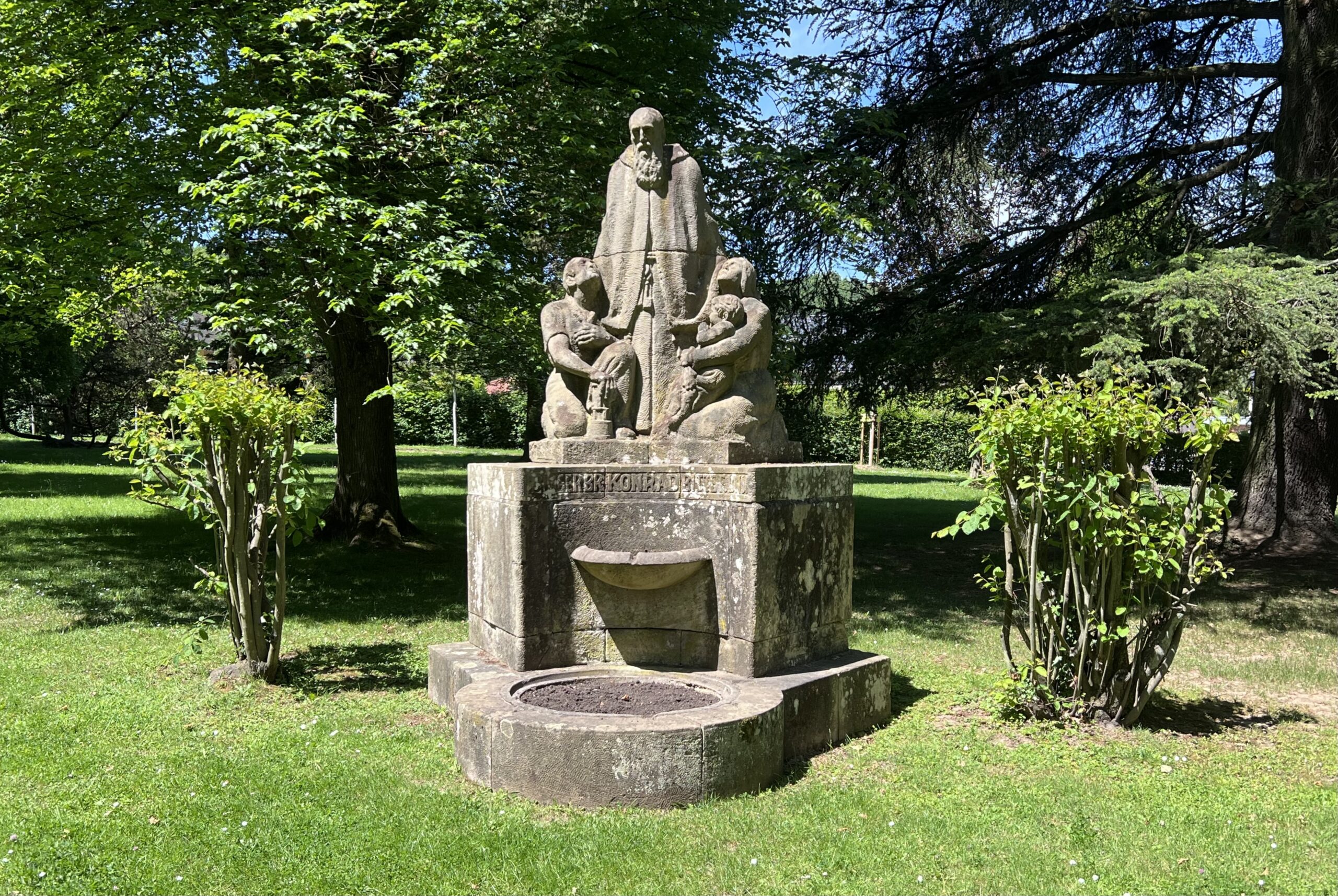
The monastery park was created in 1930, featuring sculptures by the artist Karl Riemann (1889-1945), which depict the life of Francis of Assisi (±1181-1226) and Konrad von Parzham (1818-1894), the gatekeeper in Altötting.
In 1966, a relic of the cross was discovered in the chapel during renovation work.
In July 2005, Franciscan minorites from Krakow, Poland, arrived at the monastery, who succeeded the Capuchins. Since then, they have been working on the pilgrimage site.
In 2013, the vault of the 13th-century brother was renovated by students from Homburg.
Pilgrimage site
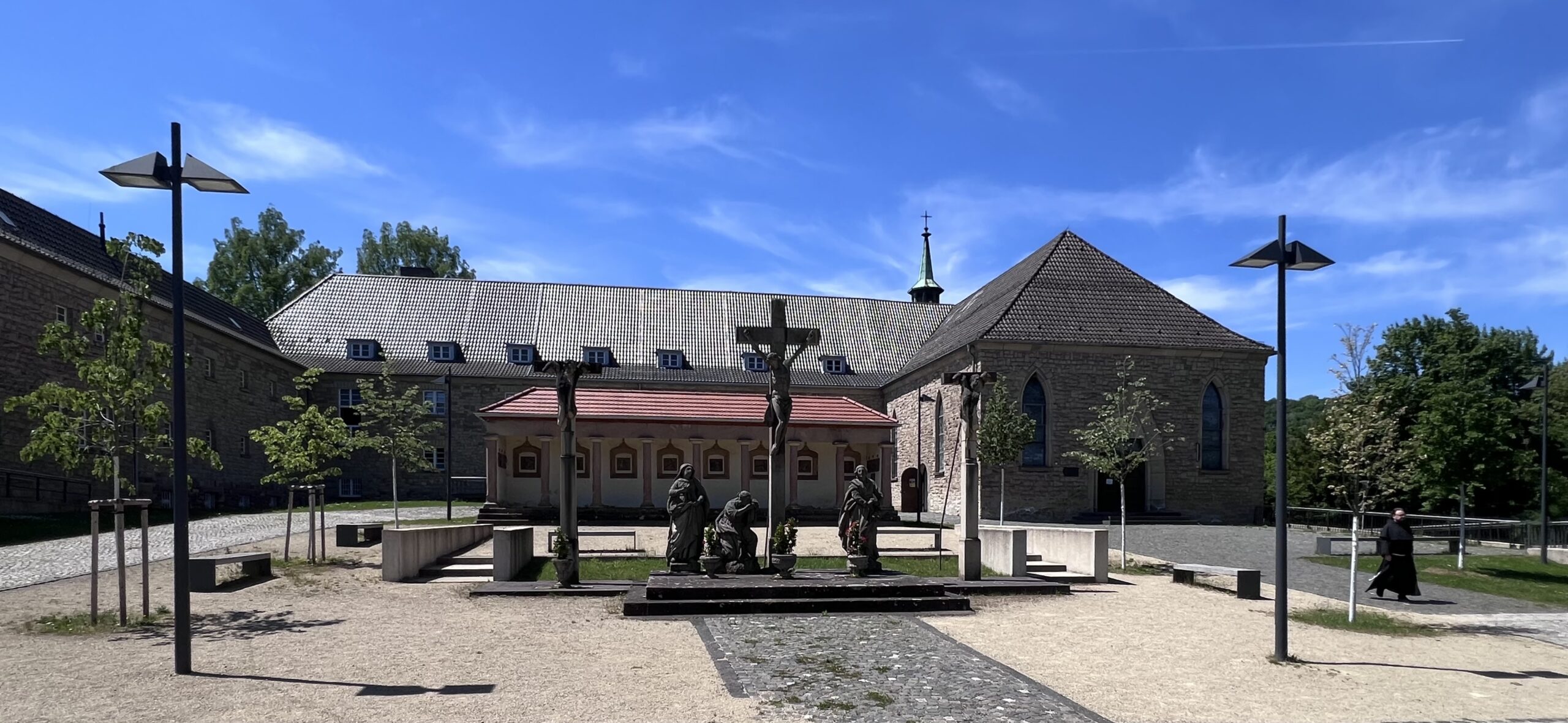
The chapel and monastery are located on a hill, which gives a beautiful view of the surrounding area.
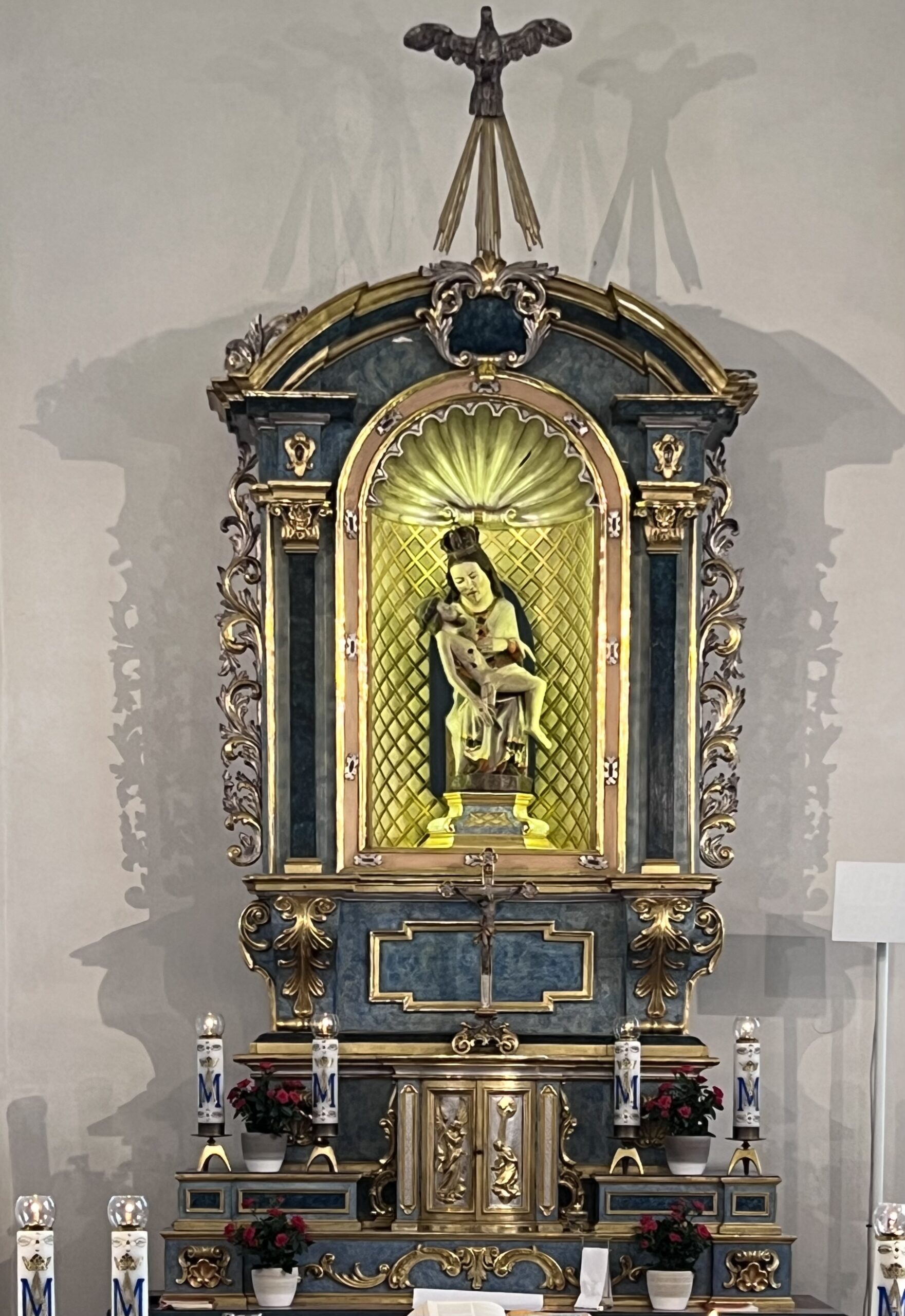
The heart of the pilgrimage site is a small chapel with a pieta inside, surrounded by angels and flowers. The pieta is the effigy of the Vespers. Ex vota are placed on the wall of this chapel to express thanks to Mary.
In front of the pilgrimage chapel stands the imagination of an impressive scene of the crucifixion.
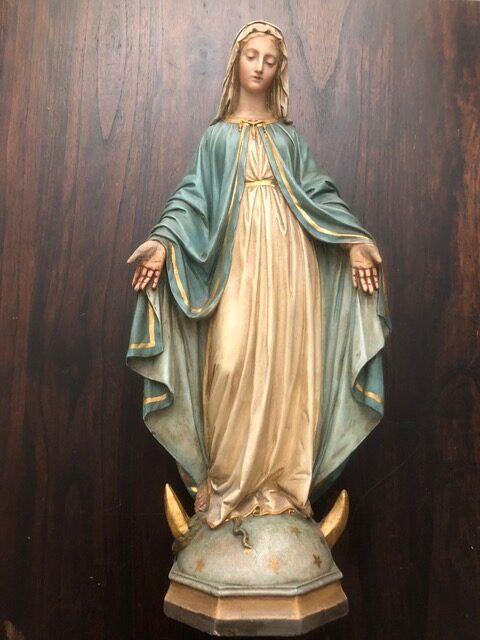
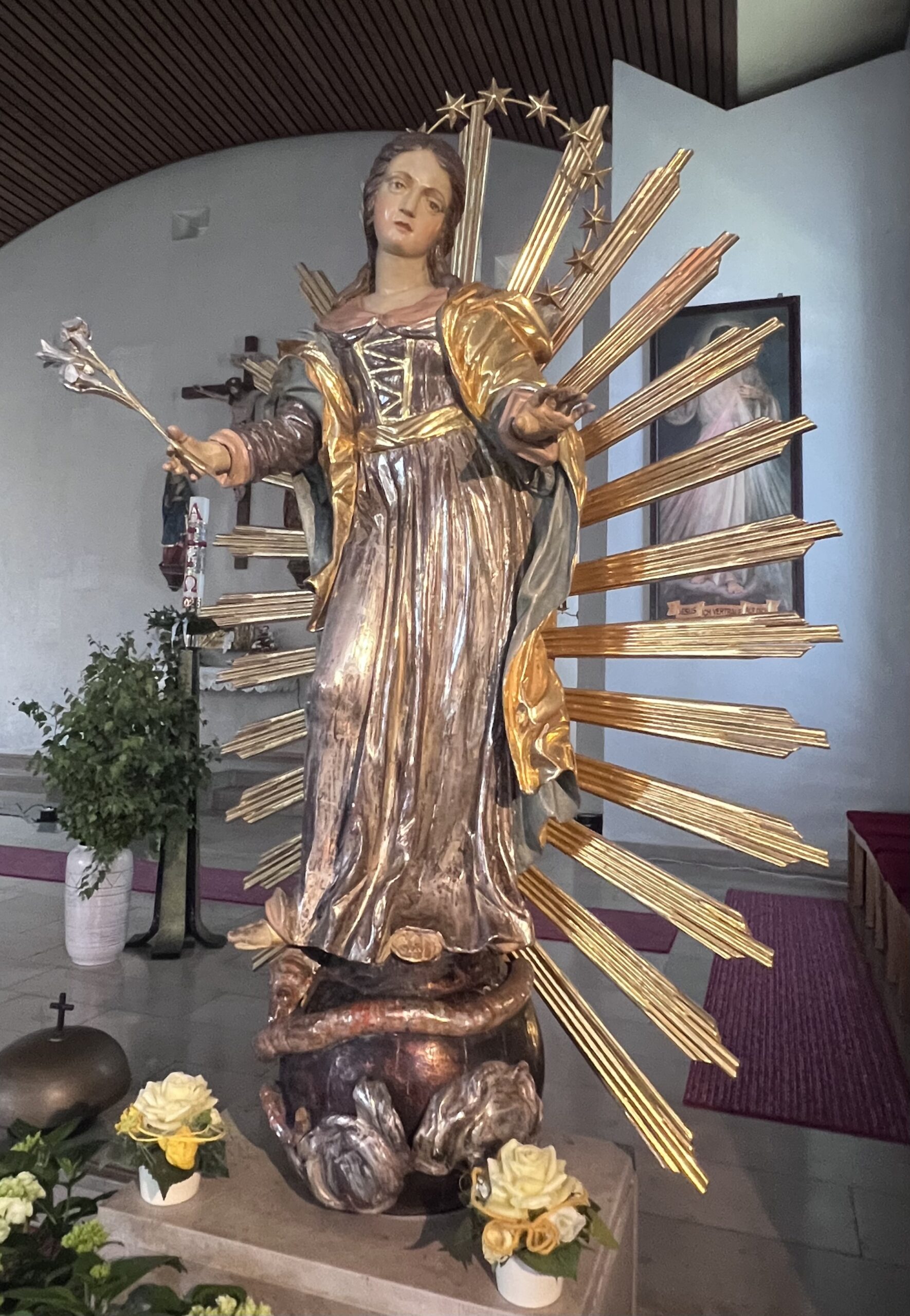
In the church there is a large statue of Mary. She has a halo in her right hand and a wreath of stars around her head. Many rays emanate from Mary and the snake is trampled by Her.
In the large park stands an ex voto from 1930. It is a cross with a text to Mary asking her to share some of her Son’s suffering. Statues have been placed in the vast park.
Next to the monastery is the restaurant “Rosmarin”, where you can also stay the night.
To obtain additional financial resources, the “Katholischer Kreuzkapellenverein Blieskastel e.V.” was established. The goal of this organization is to protect and maintain the pilgrimage chapel.
Every year there is a monastery festival at the end of May. During this month, many activities take place, including the high festival of the dedication of the pilgrimage chapel.
Every day there are celebrations in the monastery, which are also broadcast on the YouTube channel “Wallfahrtskloster Blieskastel”. The broadcasts are especially welcome for the sick, the elderly and those who are less mobile.
ACCESSIBILITY
Blieskastel is located in the Saarland. The pilgrimage site is called “Wallfahrtskloster der Minoriten”.
Address: Klosterweg 35, 66440 Blieskastel.
Up-to-date information can be found at www.wallfahrtskloster-blieskastel.de.
Experience
In the German Saarland I visit the Marian shrine of Blieskastel, where the statue of the Virgin is a pieta and stands in the pilgrimage chapel.
The pilgrimage site is much more than the pilgrimage chapel. To reach this conclusion, I already arrived when entering the grounds of an extensive monastery complex. Among other things, there are statues in the garden, a Holy Cross chapel, a monastery, the pilgrimage chapel, the cemetery, and a restaurant.
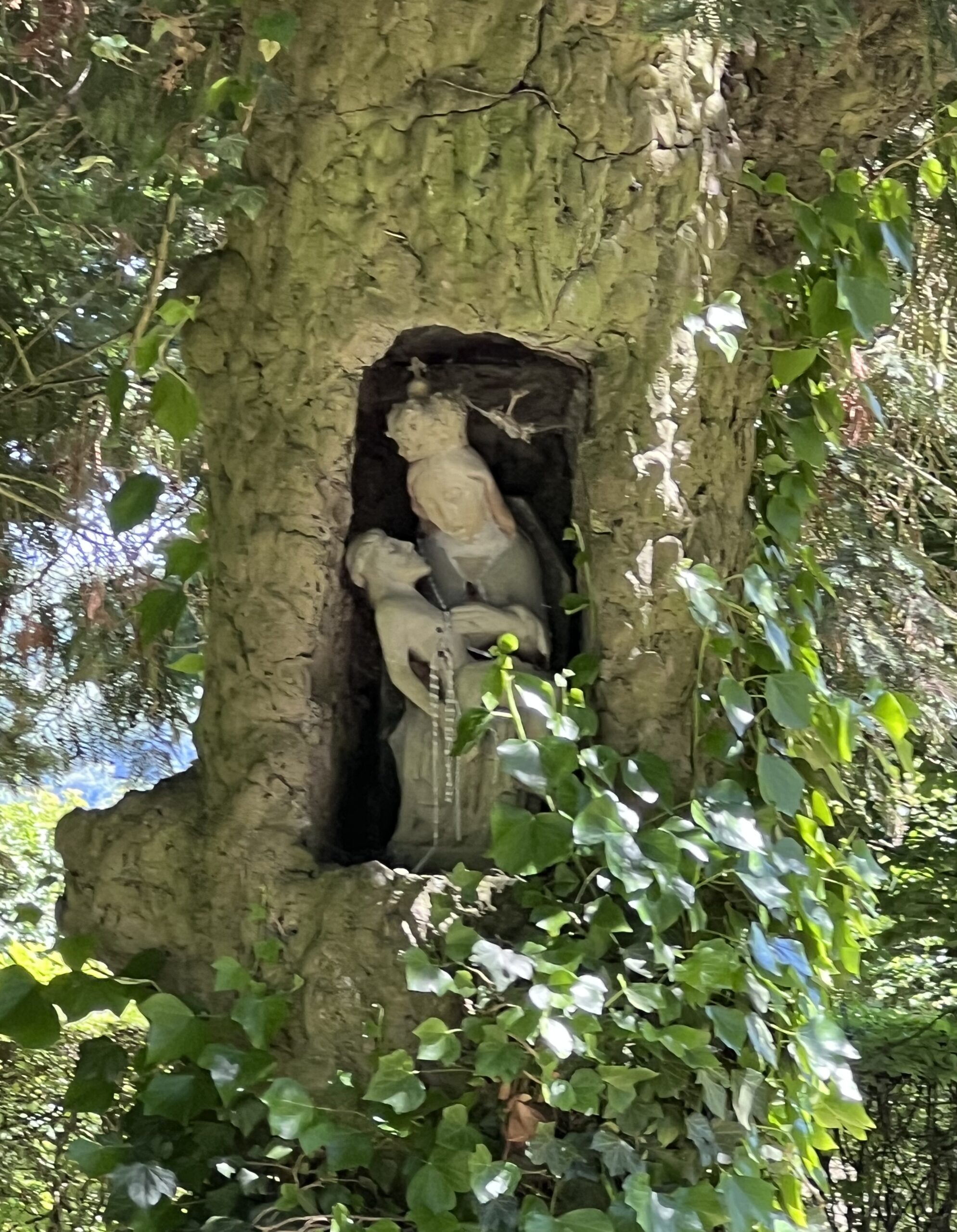
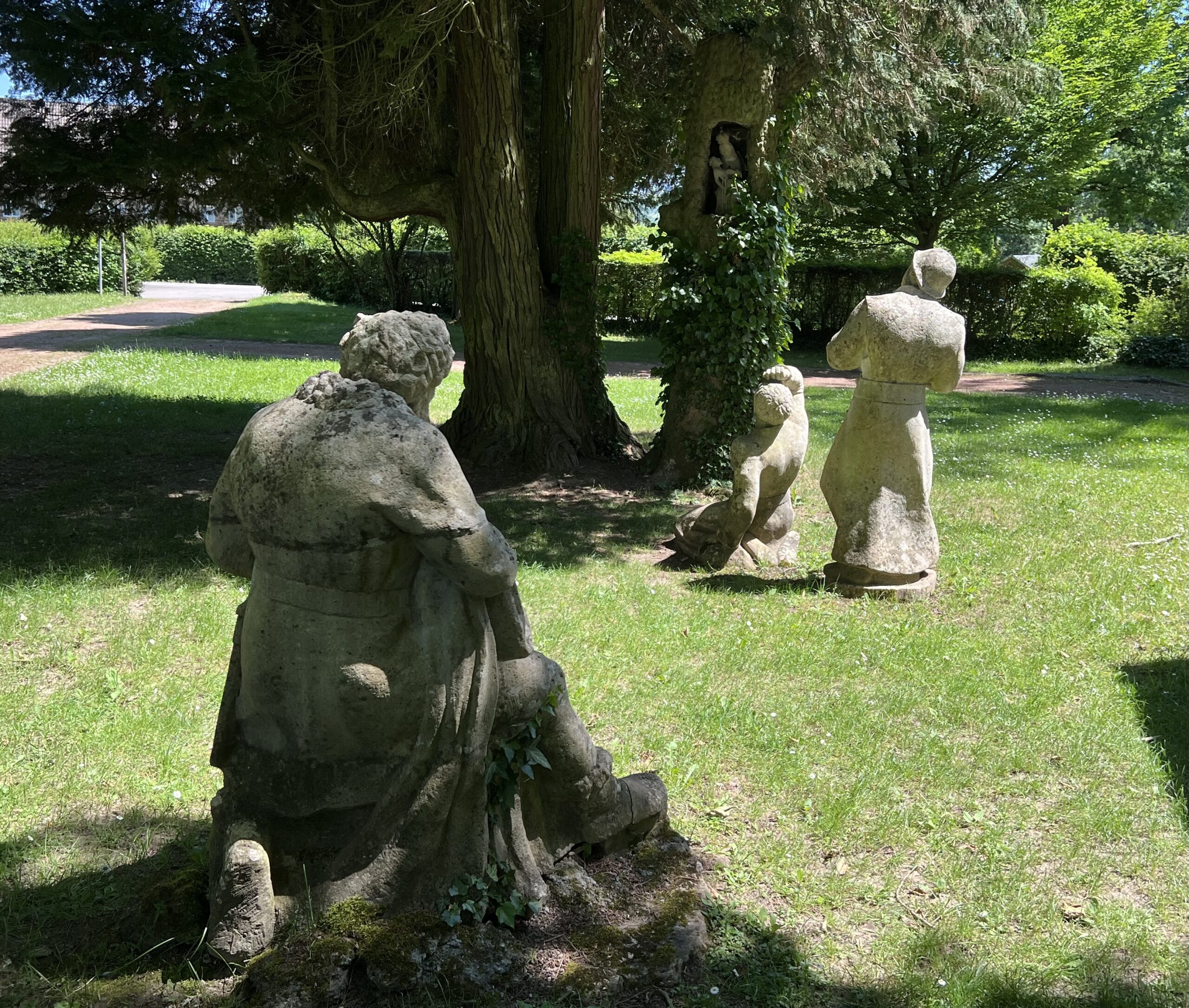
The Franciscans are active here and that is clearly visible in the large cloister garden. An image of Saint Brother Konrad has been placed there. This is the man who for many years served as gatekeeper at the Capuchin monastery of St. Anne in Altötting, the largest pilgrimage site in Germany. In the garden, which is better described as a park, attention is paid to the origins of this pilgrimage site. The special oak tree stands out with the vesper image in the niche. In the park, attention is paid to the origins of this pilgrimage site with a vesper image in the niche of the oak tree and those involved from the 13th century. The history is clearly depicted here. The image of Francis of Assisi also emphasizes this shrine.
Next I come to the chapel for the pilgrimage. It is busy here, because in a few minutes a baptism will take place. Then I look at the icon of grace that stands in the center of the altar.
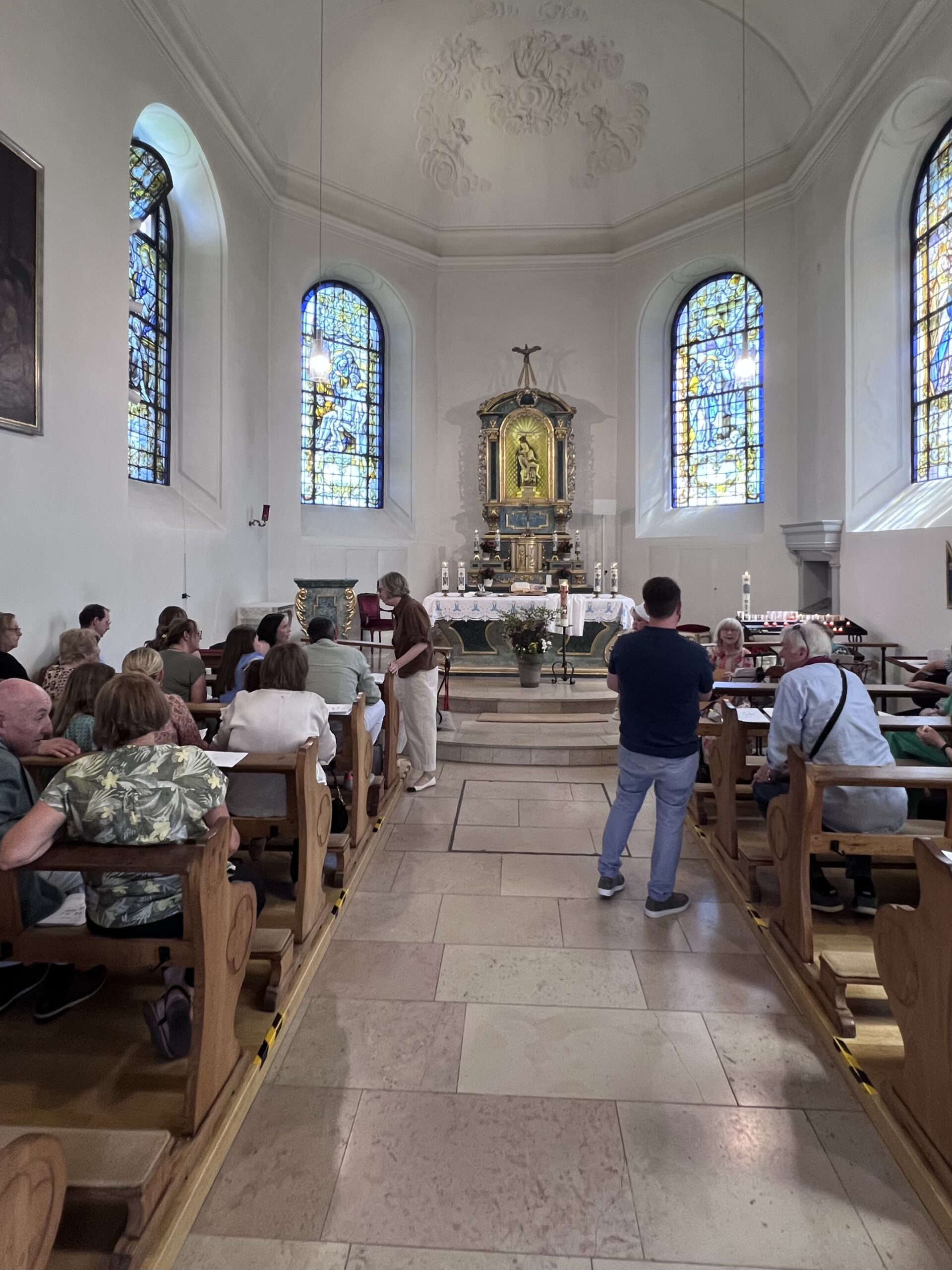
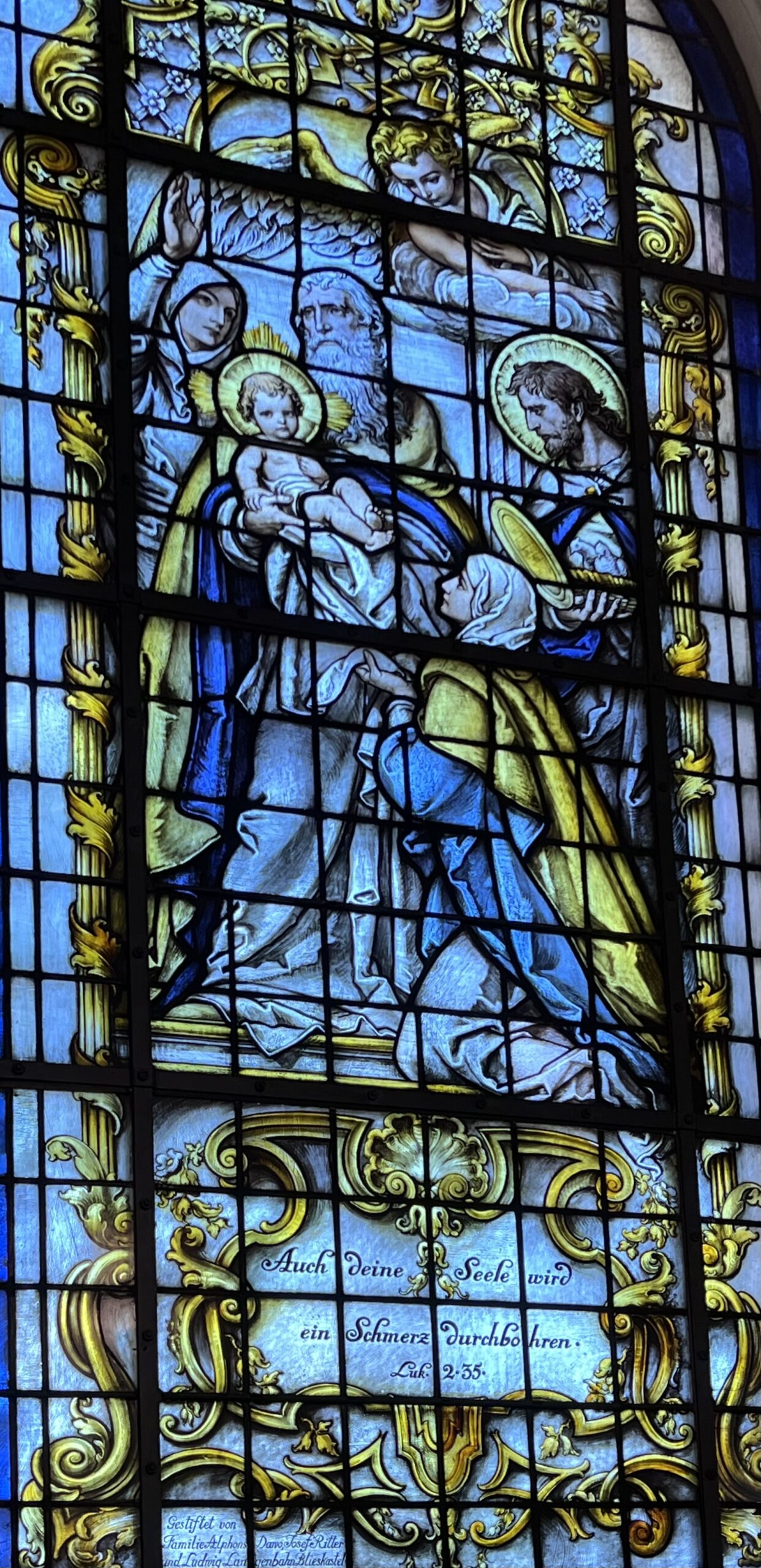
In the chapel, large, colorful stained-glass windows can be seen featuring mainly depictions of Mary. Beneath the window depicting Jesus“ mission in the temple, Mary is shown with Joseph and Simeon holding the Child. He says to Mary: ”Your soul will be pierced by a sword as well.” The Flight into Egypt is beautifully depicted. The same applies to the return to the temple and Mary’s encounter with the crucified Jesus. It leaves an impression on me and touches my heart. What a chapel full of experience this is.
After visiting the chapel, having a drink on the terrace lets me absorb the impressions. I am grateful to be able to come here. Blieskastel is a must-visit for pilgrims.
Environment
There are cycling and hiking opportunities in and around Blieskastel.
From Saarbrücken to Blieskastel, it takes 32 km to go east.
Leaving Kaiserslautern and arriving in Blieskastel is a 60 km journey to the southwest.
Leaving Sankt Ingbert to get to nearby Blieskastel means going 17 km southeast.
Leaving Trier and arriving in Blieskastel involves covering 115 km to the southeast.
~~~

 Nederlands
 English (UK)
 Deutsch
 Français
 Español