Altötting
History

As early as the year 831, there is mention of a chapel in Ötting. Around 860, Karlmann (±830-880), King of Bavaria (864-876), great-grandson of Charlemagne (747-814), founded a monastery and church of St. Mary in Altötting.
In the 11th century, another chapel was built, the remains of which are still visible today. Two centuries later, a trading centre developed a few kilometres to the north. Since then, this place has been called Neuötting and the religious centre Altötting.
In 1330, the icon of grace arrived in the Chapel of Grace.
The first miracles of Altötting took place in 1489. A three-year-old boy drowned in a stream and remained underwater for about 30 minutes. The desperate mother carried her farmer's son to the Chapel of Grace. She placed the lifeless body on the altar, beneath the image of Mary, and began praying to Mary. The woman asked Mary for help, and shortly afterwards her child came back to life. The second miracle concerns a six-year-old boy who fell off a horse and was run over by a harvest cart. This resulted in life-threatening injuries and bruises for the child. His mother begged Mary to help her son. Through Mary's intercession, he was allowed to live, and the next day the lad was perfectly healthy.
Through these two miracles, the Place of Grace becomes famous at lightning speed. Pilgrims continue to flock from Southern Germany, Austria, Bohemia, Hungary, and Switzerland to pray at the Black Madonna. Emperors and dukes also visit the pilgrimage site. In 1494, the chapel is enlarged. The number of miracles increases. The open ambulatory of the Chapel of Grace is built in 1517. The sacristry is added in 1686. Votive images are increasingly affixed in and around the Chapel of Grace.
The Reformation and plague epidemics inhibited the development of the pilgrimage site. However, in 1623, Elector Maximilian I placed Bavaria under the protection of Mary and elevated Altötting to a National Shrine. As a result of all these developments, the Elector's wealthy field marshal, Count von Tilly, gifted Altötting a large sum of money. Later, the hearts of, among others, the field marshal and the princes were laid to rest in the Chapel of Grace.
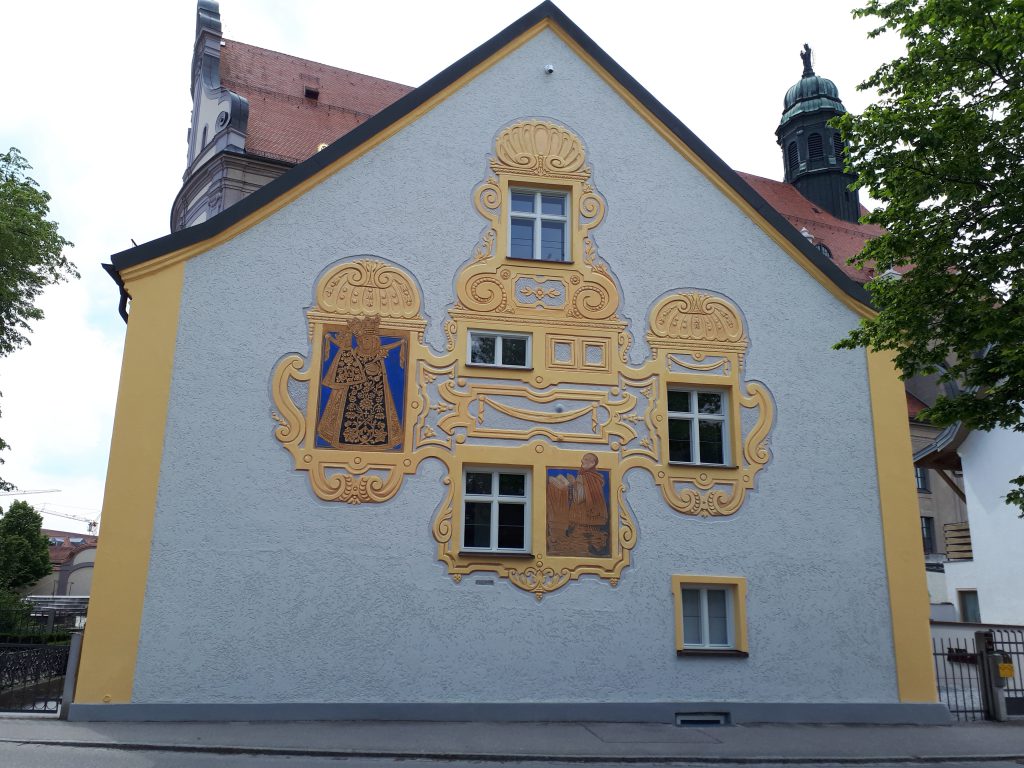
In the 17th, 18th, 19th, and 20th centuries, the Sanctuary expanded further and several churches were built. This was due to the numerous pilgrimages by groups and individuals. The Church of Saint Anne was elevated to a basilica in 1913.
Altötting has had the honour of receiving visits from three popes. In 1782, Pius VI, pope from 1775 to 1799 and born Giovanni Angelo Braschi (1717-1799), came to the pilgrimage site as a pilgrim. John Paul II, pope from 1978 to 2005 and born Karol Józef Wojtyla (1920-2005), visited Altötting in 1980. On 11 September 2006, Altötting received a visit from Benedict XVI, pope from 2005 to 2013, born Joseph Aloysius Ratzinger (1927-2022). During the visit, he said: “Altötting is the salon of the Mother of God”. Before becoming Pope Benedict XVI, Joseph Ratzinger visited as a young child. After all, he was born and raised in the very nearby Marktl am Inn. As pope, he donated his episcopal ring, which has been incorporated into the sceptre of the Miracle Icon.
On 15 August 2018, the Feast of the Assumption of Mary, Pope Benedict XVI grants the pilgrimage site the Golden Rose; a high papal distinction. He does this, because Altötting holds particular prestige for millions of people.
In 2013, on the day of his declaration to abdicate as Pope, Pope Benedict XVI had a relic of Pope John Paul II transported to Altötting.
In the pilgrimage site, an association is active for celebrations and other activities, namely the “Altötting Marienwerk”, which was founded in 1955. From 1946 to 1955, a different organisation was active. The “Altötting Marienwerk” strives to promote, deepen, and spread the veneration of Mary. Interested parties can join this association.
Pilgrimage site
Altötting is the pilgrimage site of Our Lady in Bavaria.
For many centuries, people have succumbed to the allure of Altötting. Thus, for many, the place of pilgrimage to Mary has gained an important place in their lives. After all, Altötting is called “the heart of Bavaria”. Furthermore, after their deaths, electors and kings had their hearts interred in silver urns in the space of the Chapel of Grace.

Central is the Chapel of Grace with the Black Madonna of Altötting. This statue stands above the altar, in a niche.
The Chapel of Grace is rich in “Votive Tablets” as an expression of gratitude and a plea for help. Around 2,000 votive images are attached to the Chapel of Grace. Still, a few dozen more are added each year as a sign of trust in Mary. Many silver hearts hang in and around the Chapel of Grace. Urns containing hearts are preserved from, among others, Prince Maximilian I (1573-1651) and his wives Elisabeth Renata (1574-1635) and Maria Anna (1610-1665), Emperor Charles VII (1697-1745) and Maria Amalia (1701-1756), King Otto I of Greece (1815-1867), King Ludwig I (1786-1868) and King Ludwig III (1845-1921) and Marie Therese (1849-1919).
In the chapel, there are wax images of legs and feet, and also large votive candles. There is also a bronze image of the Mother of God. The statue of Mary and Jesus is central to the chapel. In her left hand, Mary holds a sceptre with a lily, as a sign of her virginity. In her right hand, she holds Jesus, who holds an orb. This symbolises his omnipotence.
The pilgrimage site also features Saint Brother Konrad of Parzham (1818–1894). He is the selfless patron saint of Altötting. Konrad served as the porter at the former St. Anna Monastery, which has since been renamed in his honour, for 41 years. There is also a Konrad Church with a silver figure of Brother Konrad in a glass reliquary. The silver effigy of Brother Konrad houses his relics. Brother Konrad of Parzham was canonised in 1934, which led to a further increase in the number of pilgrims visiting Altötting.
Haus Papst Benedikt XVI, at Kapellplatz 4a, houses the treasury and the pilgrimage museum. The first miracle of Altötting is depicted here. The most special item in the collection is the “Goldene Rössl” (the golden horse). This goldsmith's work dates from 1404. There are more museums in Altötting, as well as the Jerusalem Panorama from 1902. This is a large, cylindrical painting and it depicts the city of Jerusalem on the day of Jesus' crucifixion in the year 33. The painting is 12 metres high and has a wide circumference of an impressive 95 metres.
In Altötting, there is also an Adoration Chapel. This was reopened in 2006 as a lasting reminder of the pastoral visit of Pope Benedict XVI.
Between the end of November and mid-December, there's the Christkindlmarkt to get you into the Christmas spirit. Many activities take place then.
Throughout the year, there are festivities and commemorations in Altötting, some of which are dedicated to the annual pilgrimage theme. The busy cultural calendar is well-programmed each year. Altötting is the largest and most visited Marian shrine in Germany. Annually, Altötting receives one million pilgrims.
ACCESSIBILITY
The pilgrimage site of Altötting is located in the southeast of Germany, in the large federal state of Bavaria. This place is situated in the middle of the Munich – Passau – Salzburg triangle.
From Munich, follow the A94 in the direction of Passau. After about 90 kilometres, take exit 22. Altötting will be reached a few kilometres further on.
Address: Kapellplatz, 84503 Altötting, Bavaria.
For more information, the website“www.bischoefliche-administration.de”to visit.
The association “Altötting Marienwerk” is located at Kapellplatz 18, 84503 Altötting and information can be obtained via: www.altoettinger-marienwerk.de.
Experience

As a pilgrim, I am going to Altötting to visit the shrine. In my backpack, I carry some worries, and with these, I turn to Mary, the Mother of the Lord. I also have some wounds, and these require Marian therapy. After all, my faith in Mary is strong. As my journey progresses towards Bavaria, Mary is increasingly on my mind.
Arriving in Altötting, I head straight for the Chapel of Grace. The octagonal chapel, also known as the Holy Chapel, sits in the South German sunshine. As I reach the chapel, I am immediately impressed by the more than 2,000 “Votive Tablets”. These personal expressions from people are displayed both on the outside and inside of the chapel. They are precious testaments to the trust in Mary's intercession and in Jesus's healing power. These declarations include paintings and inscribed stones, expressing gratitude to Mary or making requests of Her. As I move further into the chapel due to the crowds, I see Mary standing centrally on the altar from 1670. Here, Mary is a Black Madonna. The reason for her dark appearance is the soot from candles, which has darkened the statue over the centuries. Two large silver statues stand to her left and right. To the left of the altar is the statue of Brother Konrad von Parzam, canonised in 1934. Opposite Konrad is a life-sized depiction of a 10-year-old kneeling prince. He was miraculously healed of a life-threatening illness. This prince was Maximilian-Joseph, later Prince Max-III-Joseph. As I look for longer, I also notice the silver Tree of Jesse. I don't see the ring that Pope Benedict XVI gifted during his visit to Altötting on the sceptre of the Mary statue. He wore this ring during his time as a cardinal. The ring is invisible to me because so many people are standing in front of the statue for extended periods, and after more than half an hour, I still haven't managed to get any closer.
Next, I visit St. Anna's Basilica. I learn that this is the largest church building in Germany from the 20th century. The building's Neo-Baroque style is beautifully reflected here.
In this basilica, I hear a prayer with the words:
“Holy Mary,
Gracious Mother of Altötting,
You source of salvation,
Bless the sick.
to the refuge of sinners,
The help of Christians:
Please for me with your son
And lead me to him!”
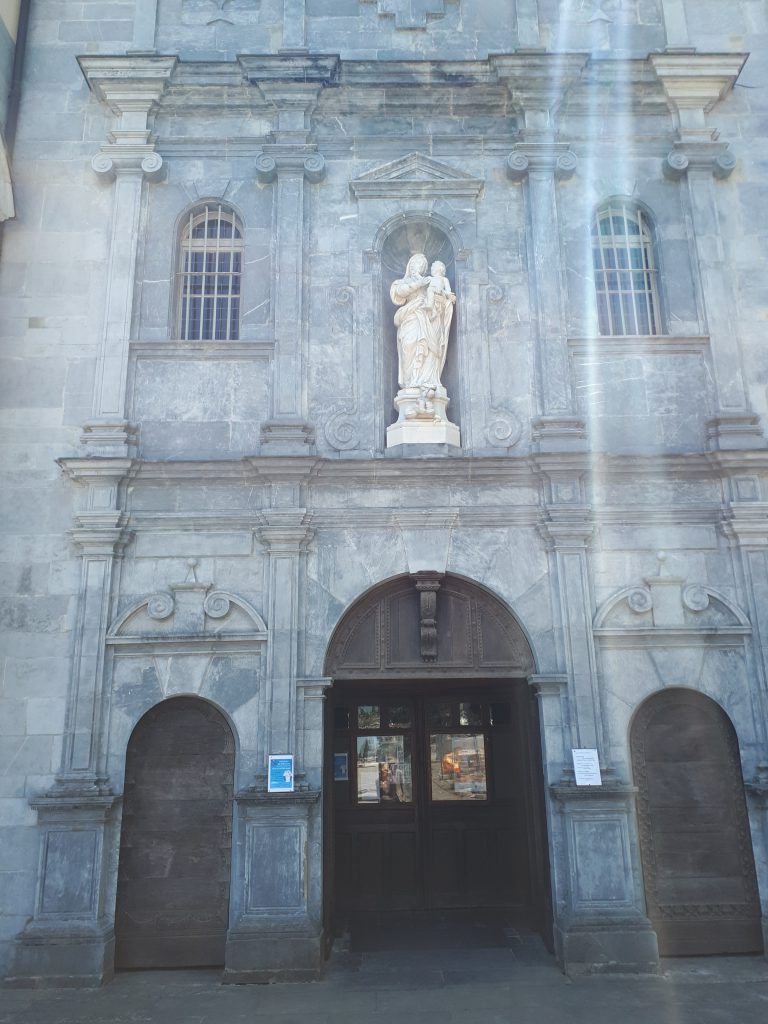
Then I'll head back to Kapellplatz. This place offers a good view of the beauty of the buildings lining this square. What a wonderful experience this is turning out to be again. I take a seat on a bench under a tree and strike up a conversation with an employee of the Maria Sanctuary. She tells me about her involvement in guiding pilgrims.
Later, I am in the parish church, which was built between 1499 and 1511 and is dedicated to Saints Philip and James. There are so many pilgrims in this late Gothic hall church. I am told that this building may be the fourth church on this site.
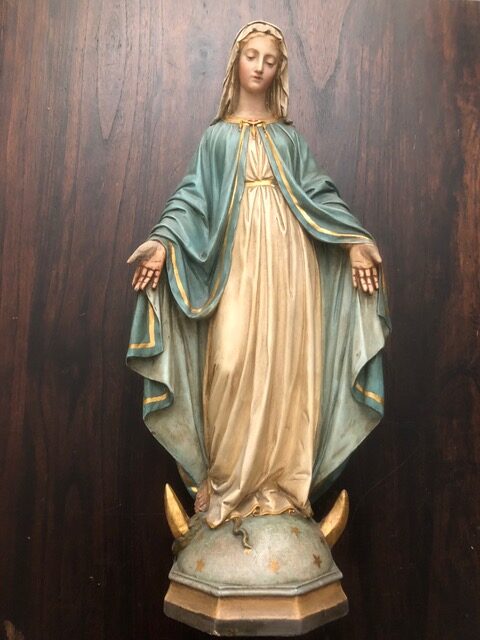
Before I leave, I'm going to visit a few devotional shops. Bringing back souvenirs for friends is a habit of mine, and for myself, I'll buy a statuette of the Black Madonna of Altötting.
I am glad that I was able to stay in the religious Mary centre of Bavaria. What a grand Marian pilgrimage site this is. What a great experience full of Marian devotion there is here.
Environment
Travelling from Altötting to Rosenheim is 86 km Southwest.
ROSENHEIM – GERMANY – LORETO CHAPEL
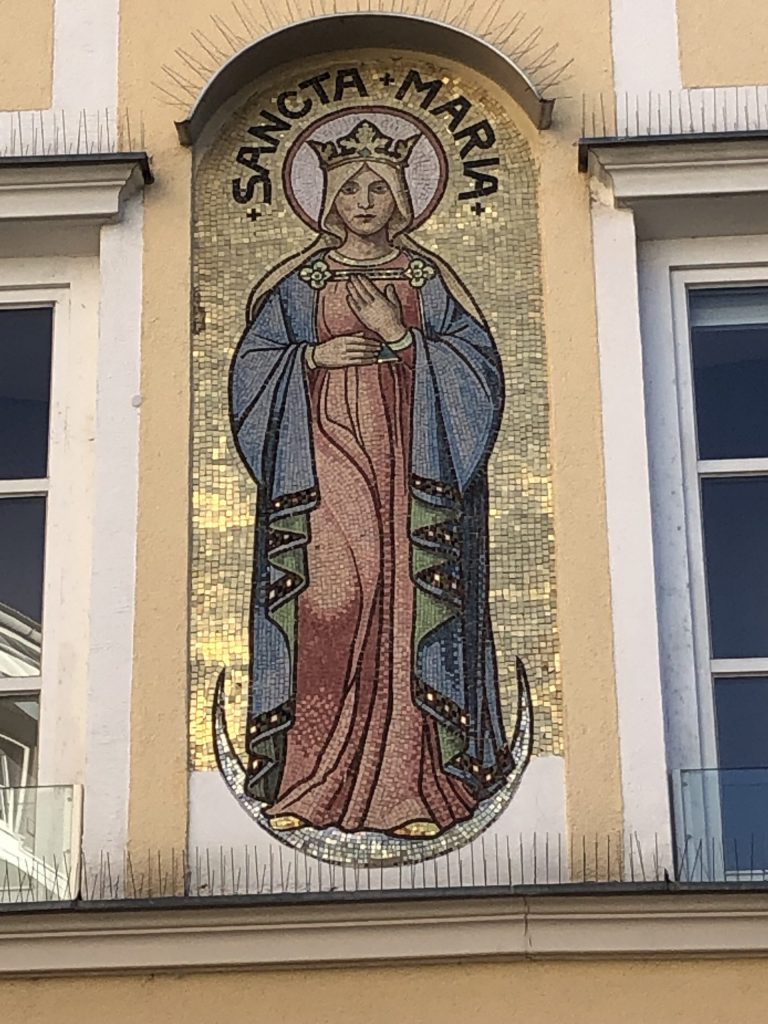
In the south of Bavaria, between Munich and Salzburg, lies Rosenheim. I visit the old town for Saint Mary and Saint Nicholas. There is much to see of Mary in the centuries-old centre (Altstadt). Mary is depicted, among other places, in the Sankt-Nikolauskirche and the Loretokapelle. I also see her image on the Max-Josefs-Platz above a chemist's shop.
In the St. Nicholas Church, consecrated in 1514, Mary is depicted in paintings and stained-glass windows. I find one window particularly striking: Mary is dedicated to God in the temple by her parents, Anna and Joachim, and St. Nicholas receives them in Neo-Gothic attire. The "Maria Consolatrix" (Our Lady of Consolation) statue, dating from around 1750, is also worth admiring for the comfort, peace, and tranquillity it radiates. On the south side of the church, a large artwork from 1896 is mounted on the outer facade; it's a mosaic depicting the weeping Mary. The Baroque altarpiece (1667-1669) shows St. Nicholas and St. Lawrence bestowing the protection of Mary and Child upon Rosenheim.

The Loreto Chapel on Ebersberger Straße is a beautiful building and was consecrated in 1636. It is a particularly fine building, both on the outside and on the inside. The example for this chapel is the Loreto Chapel of the Holy House in Loreto, Italy. The ceiling paintings are by local artist Joseph Anton Höttinger.

The story of the chapel's founding begins in 1600. In that Holy Year, Georg Schaur (1579-1652) from Rosenheim made a pilgrimage to Rome and Loreto. When this man, the later innkeeper and mayor, fell seriously ill in the pilgrimage town of Loreto, he vowed to build a chapel in Rosenheim upon his prosperous return home, similar to the one in Loreto. After 30 years, Georg and his wife Margaretha Kall had managed to gather the necessary funds. However, the invasion of enemy troops during the Thirty Years' War prevented the start of construction in 1632. In 1634, it was the plague epidemic that still prevented construction. Finally, the chapel’s construction began in 1635, and it was consecrated a year later. Over time, the chapel was enlarged, further embellished, renovated, and also restored.
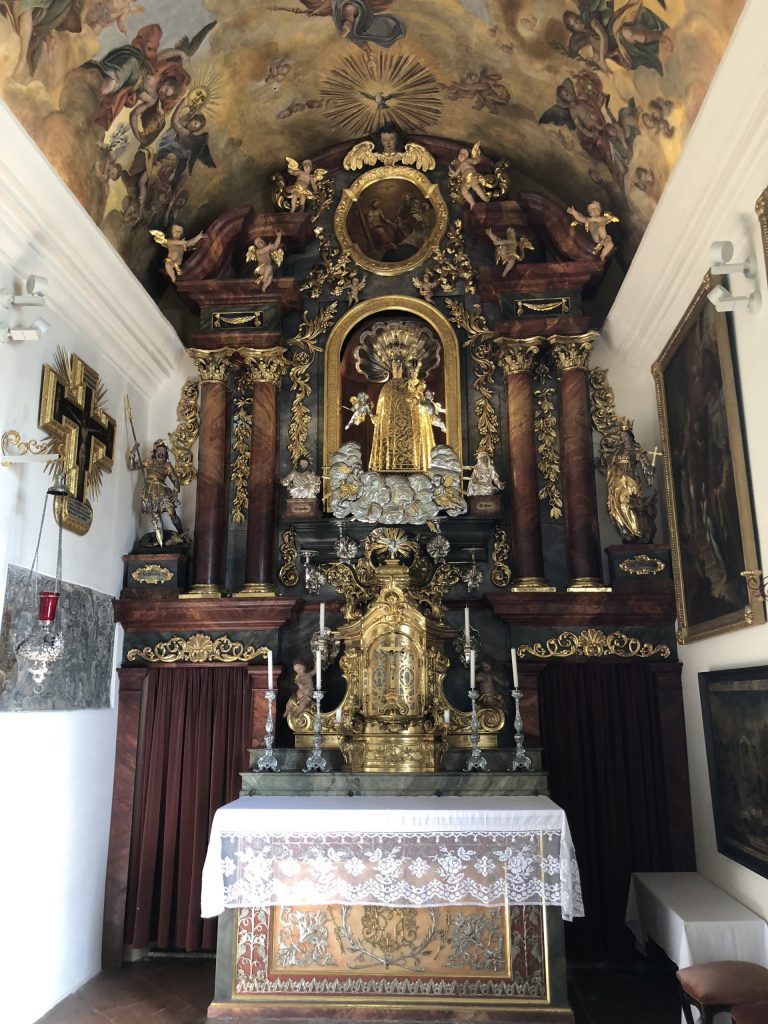
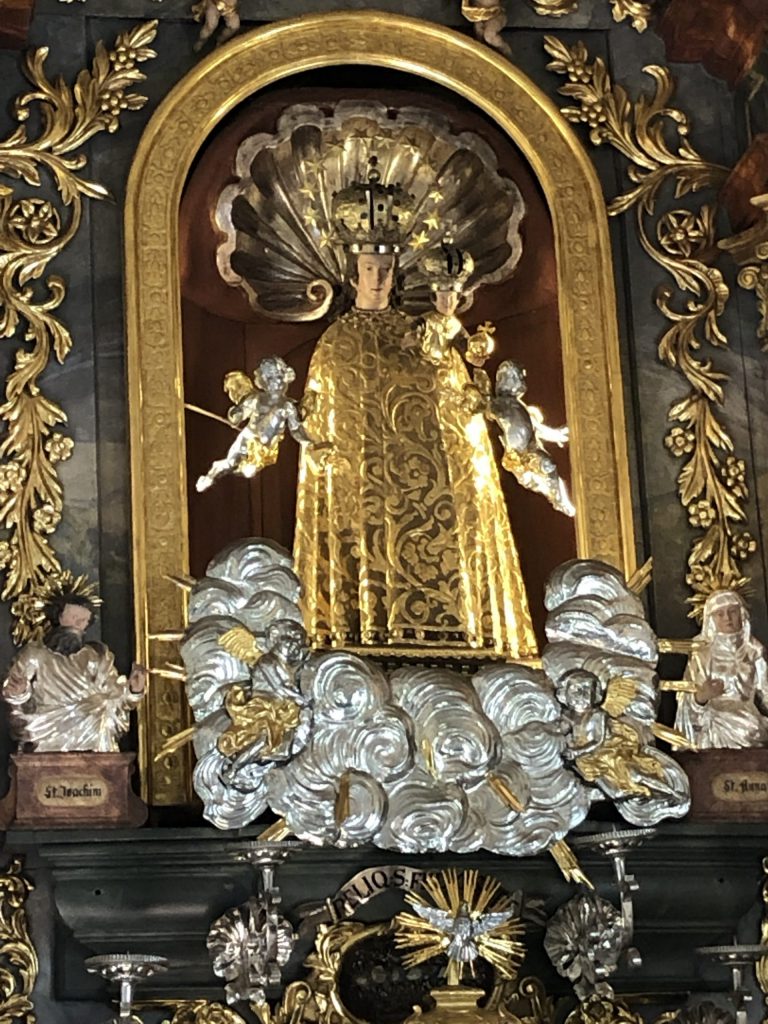
Furthermore, there are more beautiful churches to visit in Rosenheim where Mary is depicted. These include St. Joseph's Church (1619), Holy Ghost Church (1449), Holy Blood Church (1508), and Rossacker Chapel (1737). The St. Joseph's Hospital Church (Spitallkirche Sankt-Joseph) from 1691 displays old statues, which are located behind heavy bars.
~~~

 Nederlands
  English (UK)
  Deutsch
  Français