History
Around 1000 BC, the region around Mötz was already inhabited. In the 12th century, the place Mötz is first mentioned. Due to its location on the river Inn and trade routes, the place is an international transport hub.
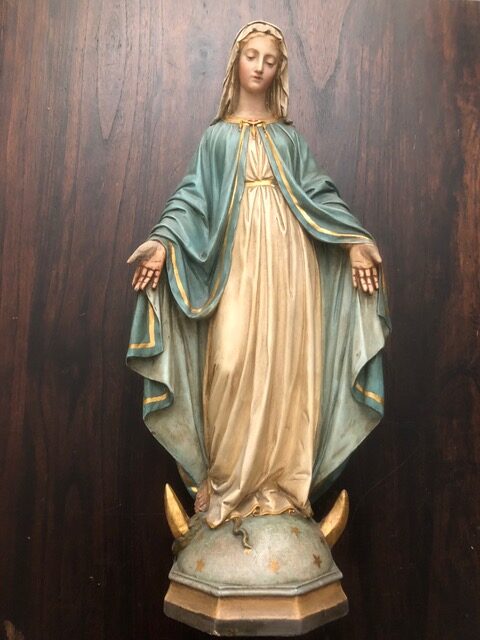
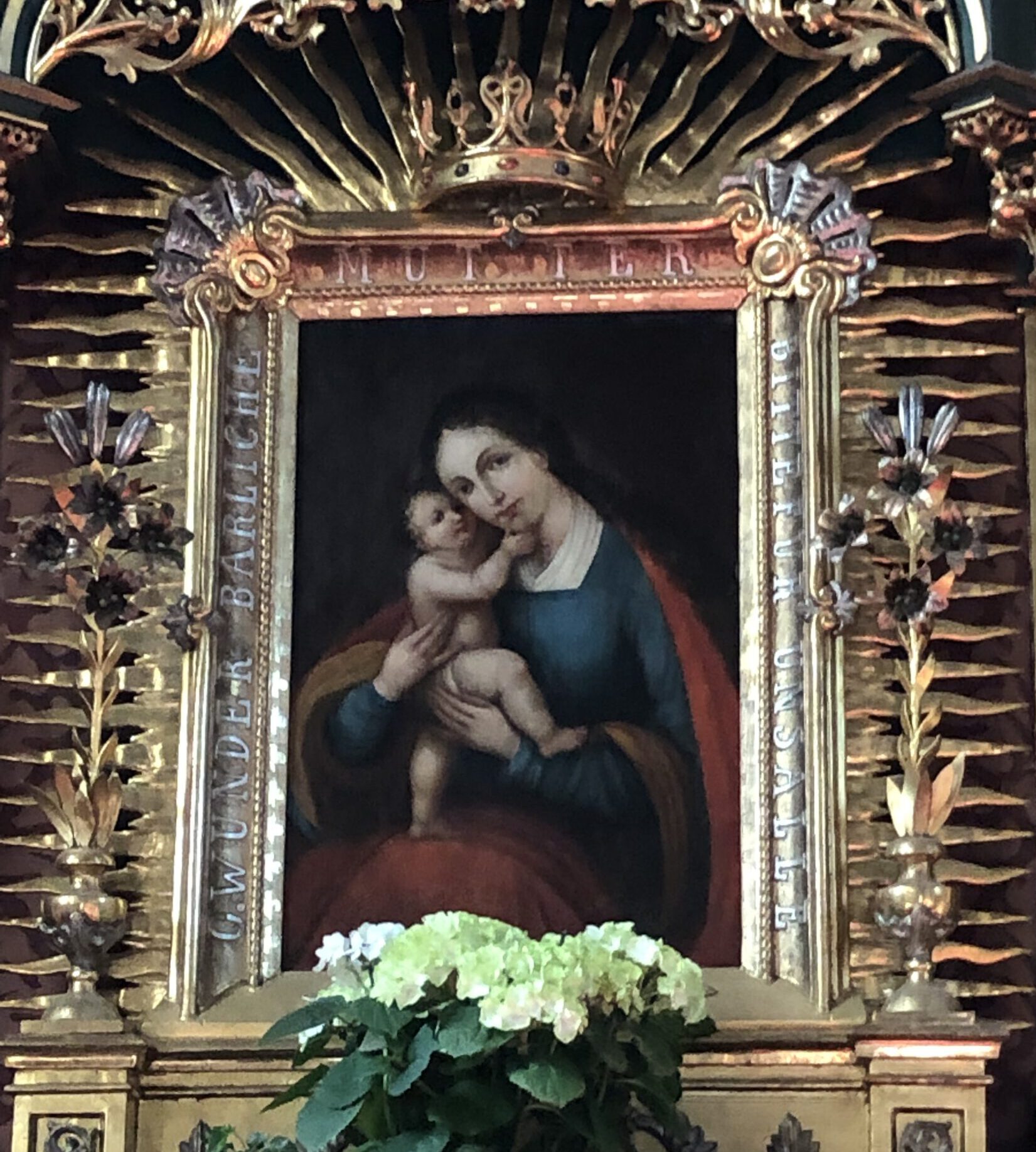
Since 1740, the statue of Mary has been located at the entrance of the cave that provides access to the mine shaft. In that year, there was a miraculous rescue of the miner Thomas Kluibenschädl. The man was trapped in the mine by a tunnel collapse, but was rescued. The large rock in front of the cave was miraculously removed, freeing the man. The statue was placed there in gratitude.
In 1854, the grotto was enlarged and a new path to the statue of Mary was created, as the statue of Mary Help of Christians was being visited more and more frequently. In 1860, a plan was made to restore the statue. However, the artist who was approached found that the statue could not be restored. Following this, he decided to create a new and larger statue on a linen cloth. This painting is still in the church today. Alongside the statue of Mary Help of Christians, an image of the Mother of Sorrows was placed.
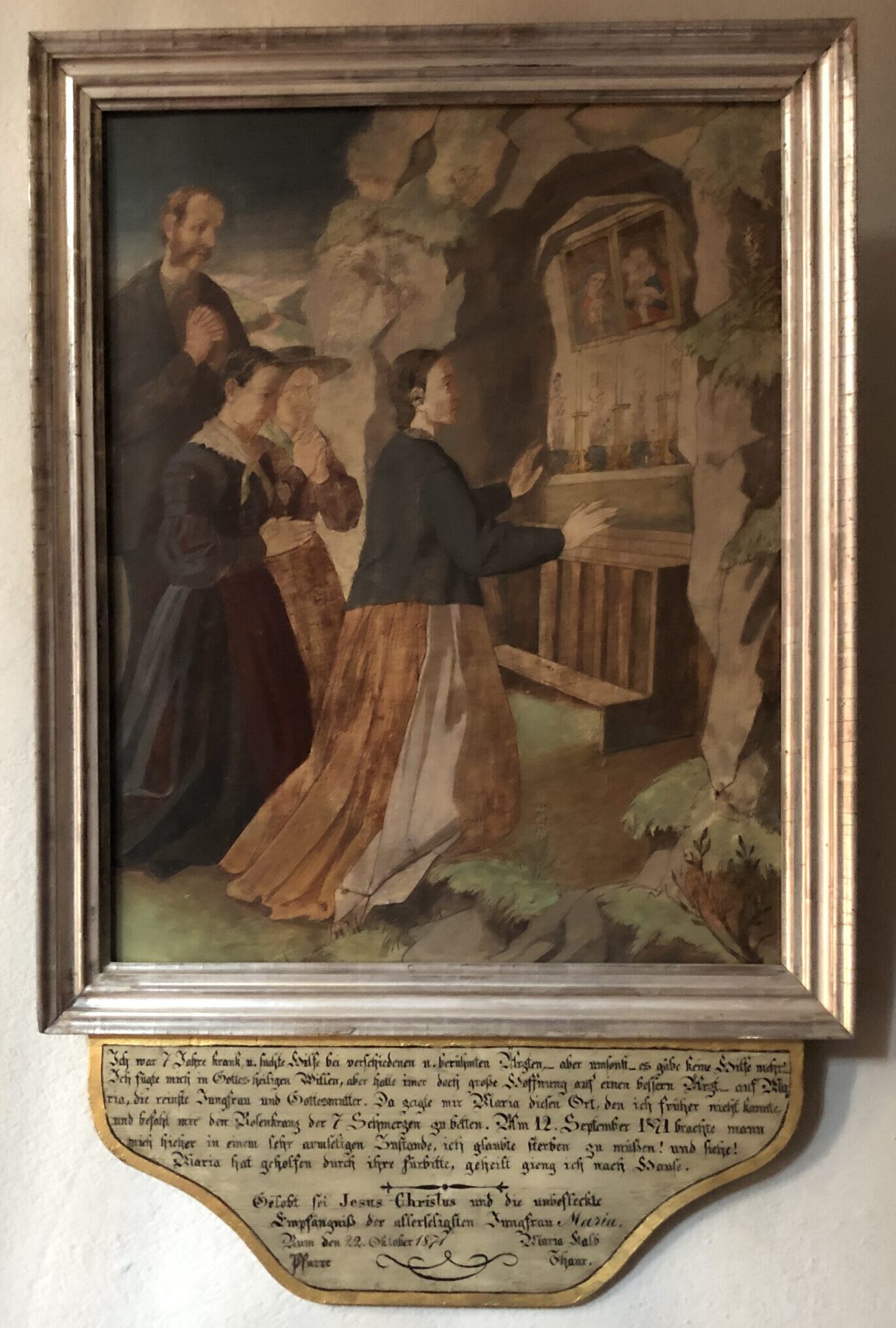
In the 18th and 19th centuries, answered prayers took place, leading to miraculous healings, including that of Maria Kalb from Rum in 1871. Maria Kalb (1842-1925) from Rum was carried to the grotto with the statue of Mary on 12 September 1871. Maria Kalb was incurably ill, death seemed imminent, and she showed hardly any signs of life. After praying the rosary, her eyes opened. The prayer had been answered, as she was suddenly healed and walked down the hill, on which the statue stood, without assistance. After her healing, Maria Kalb often returned to the site of the statue, chapel, and church. Later, Maria Kalb said that she had had more apparitions.

By rescuing miner Thomas Kluibenschädl from Mötz and particularly healing Maria Kalb, the number of pilgrims grew enormously.
In 1881 a chapel was built, and it still stands at the entrance to the mine. However, the stream of pilgrims continues to grow and the need for a church arises.
The pilgrimage church is named “Maria Locherboden” (Maria's hollow ground) because of the mining entrances in the region.
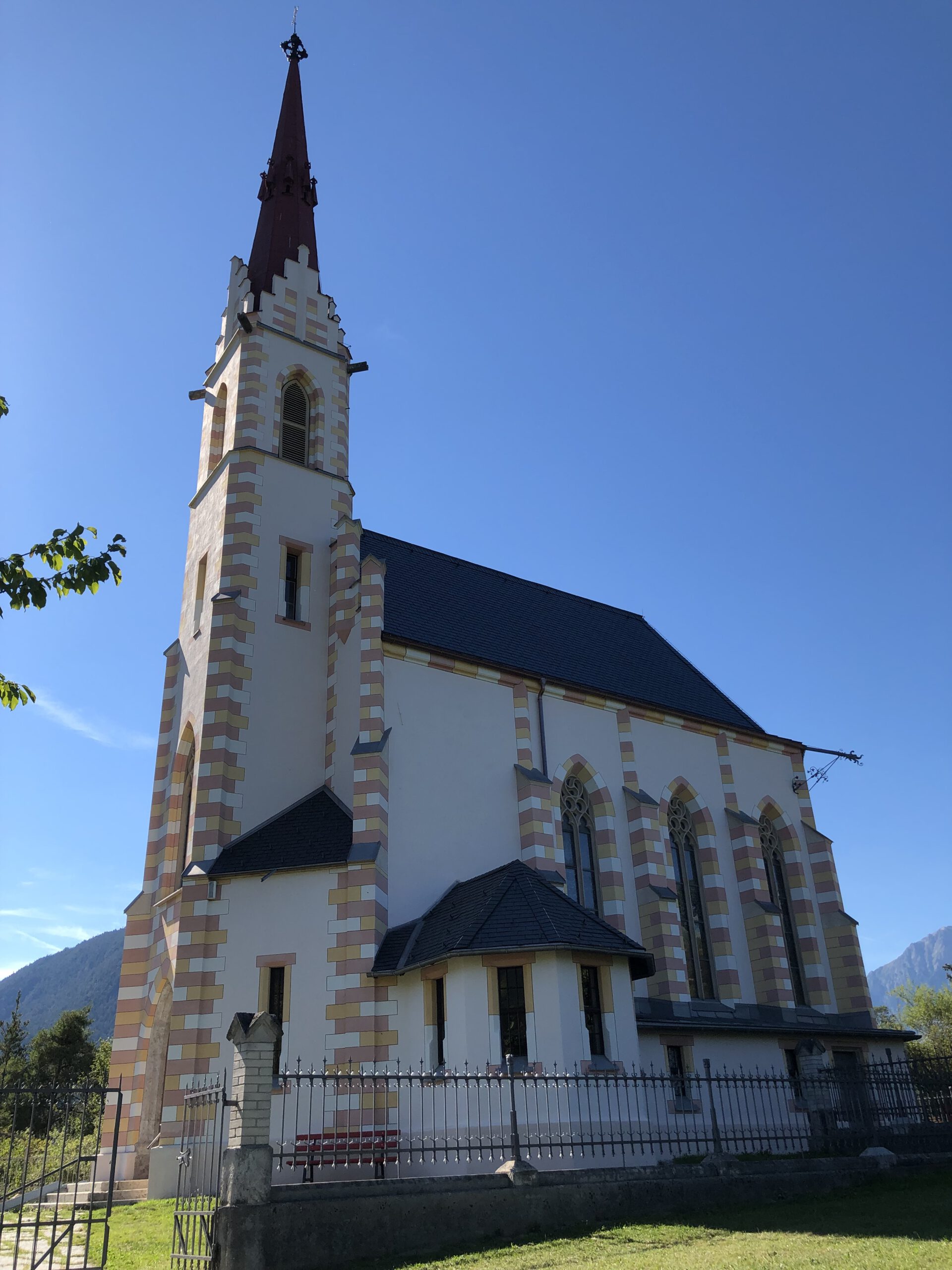
Construction of the church began in 1896. On June 30, 1901, the statue of grace of Mary was placed in the church from the pilgrimage site Maria Locherboden in Mötz. On July 6, 1901, the church was consecrated by Simon Aichner (1816-1910), Bishop of Brixen (1884-1904). In the sanctuary stands a Pietà by sculptor Josef Bachlechner the Elder (1871-1923) from Hall (Tyrol), who also made the altar structure. The frescoes in the church are by Anton (Toni) Kirchmayr (1887-1965), a painter and restorer from Innsbruck, who painted them between 1914 and 1916. On May 24, 1916, the feast day of Mary Help of Christians, all works were completed.

Pilgrimage site
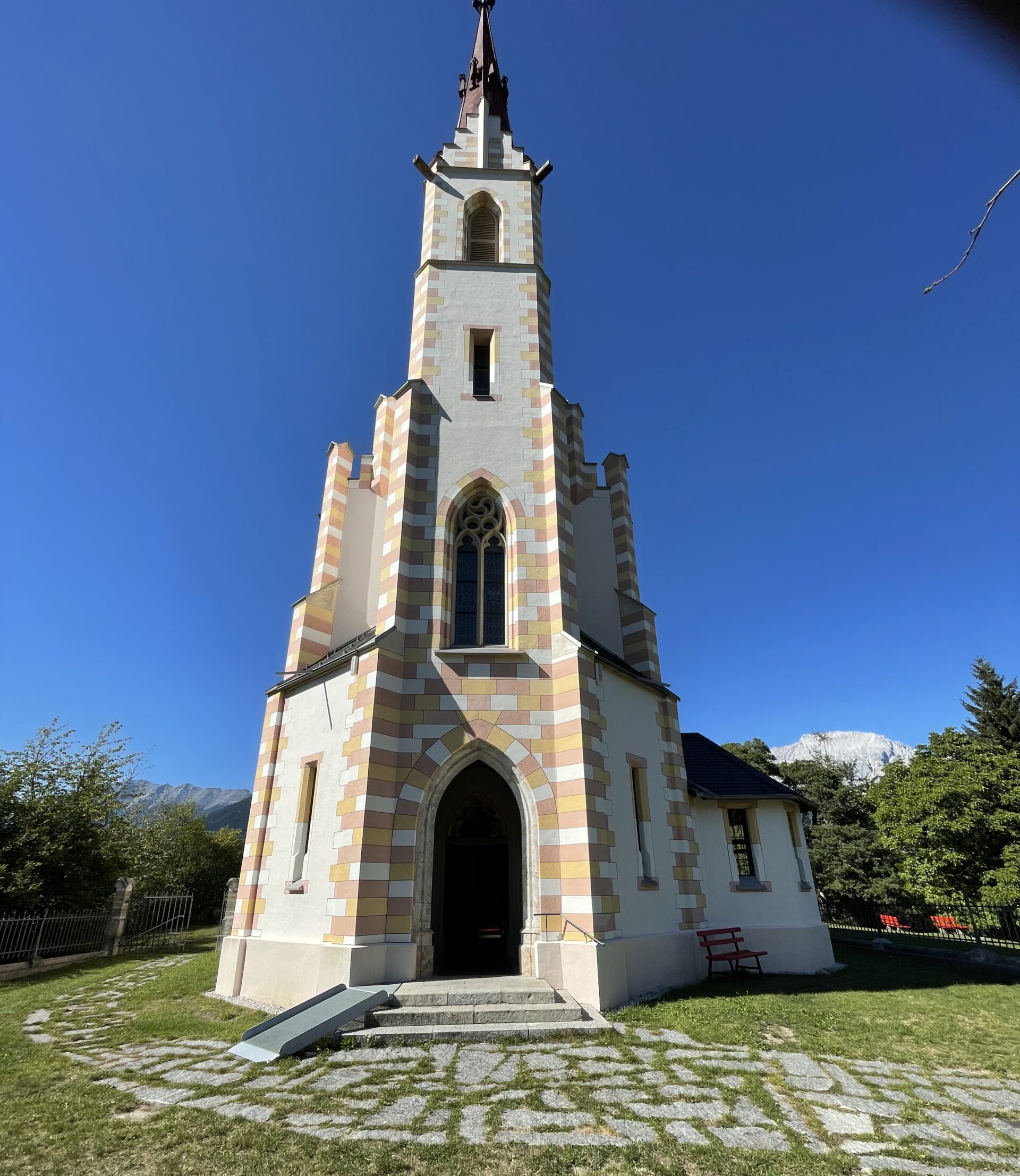
The neo-Gothic pilgrimage church of Maria Locherboden stands on rocks of the Mieming Plateau. The beautiful church is worth a visit. A fence has been erected around the church.
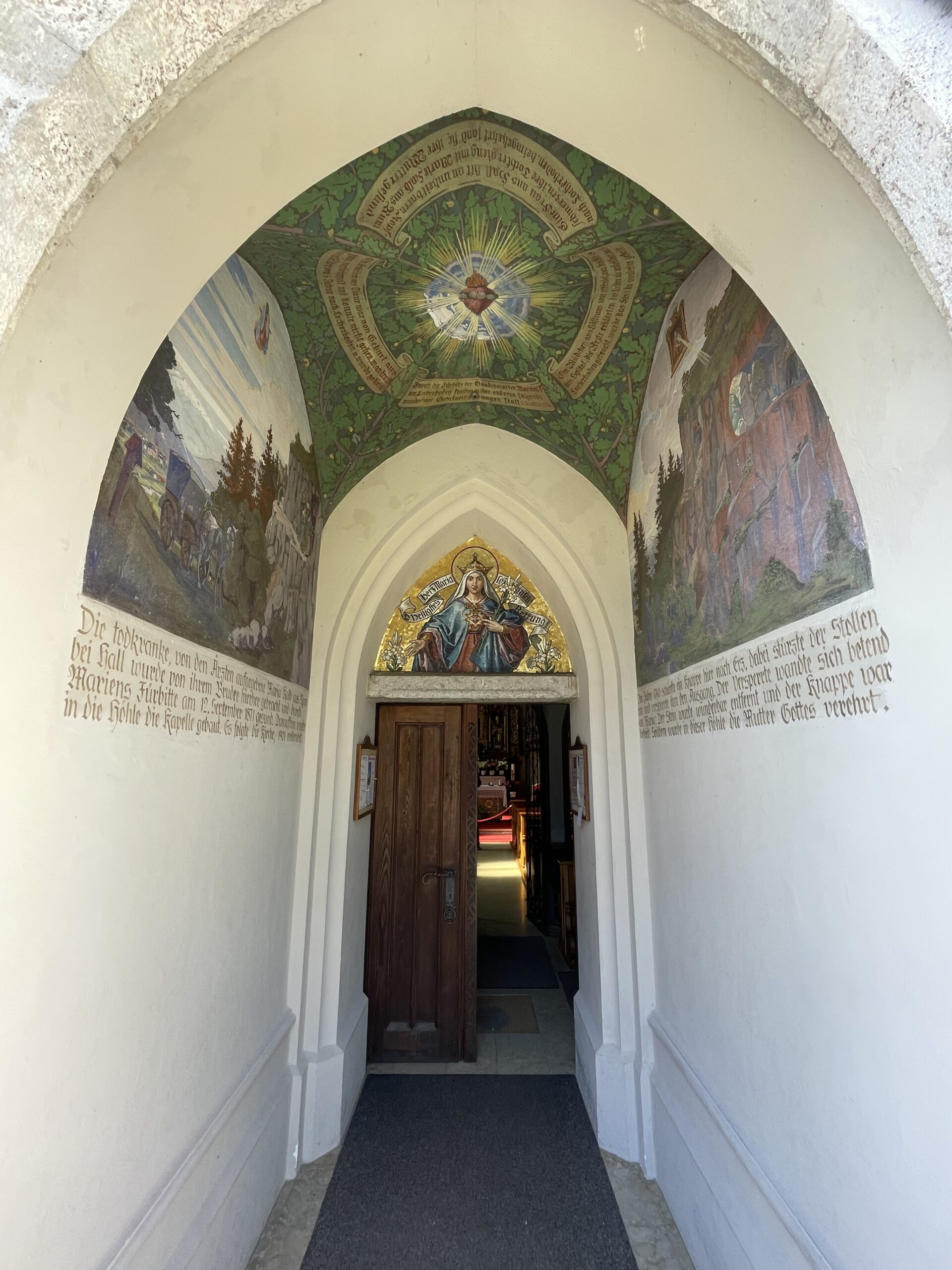
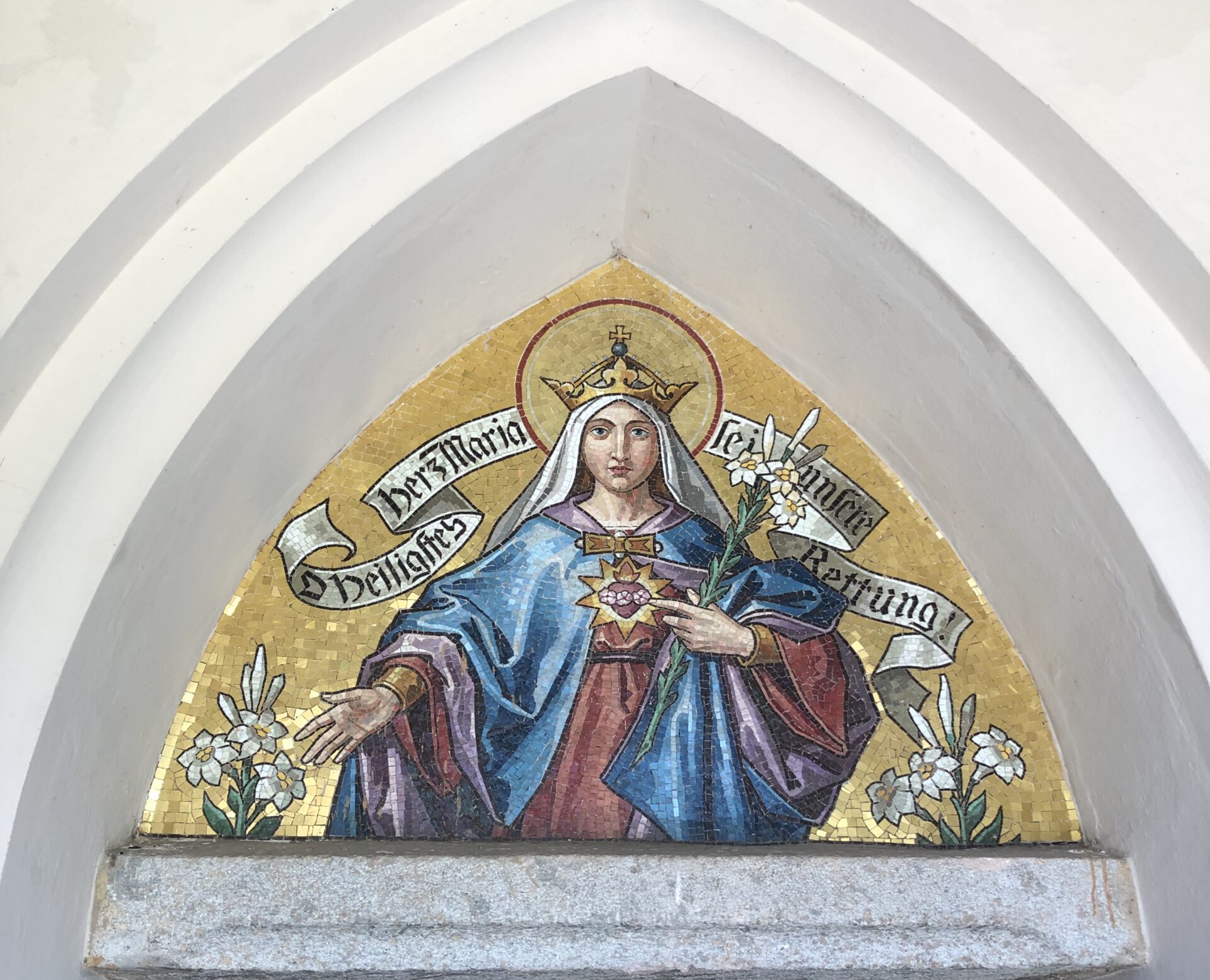
Above the church entrance, Mary is depicted in mosaic with a lily, as a symbol of chastity. The text reads: “Sacred Heart of Mary be our salvation”. The walls and vaults are decorated with ornaments and paintings.
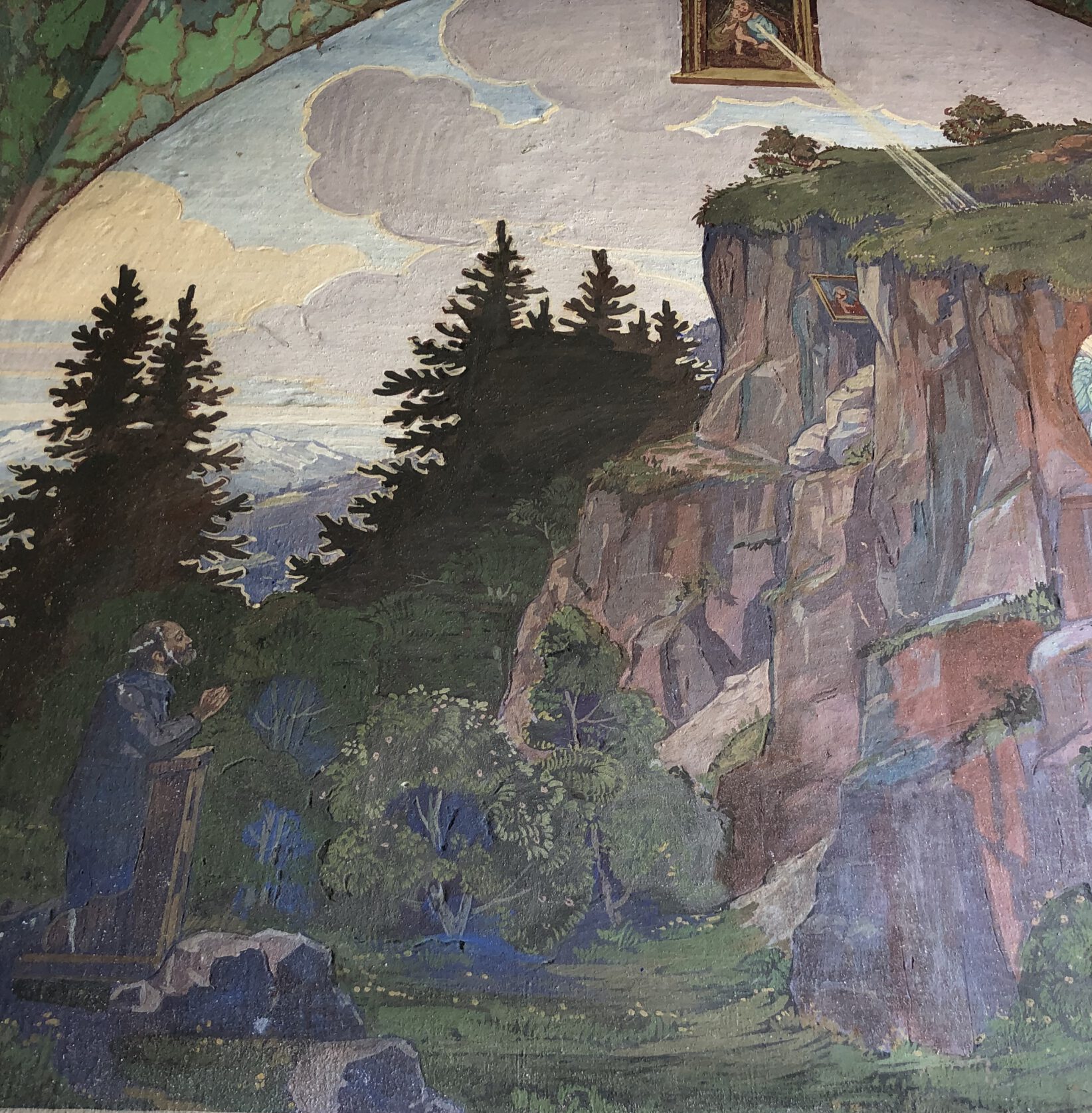
The origin of the shrine is depicted in the church as the miner being rescued from a collapsed mine and calling on Mary for help. Also portrayed is the gravely ill Maria Kalb, who was carried to the grotto by her brother on 12 September 1871. It is also shown that she prays before the altar of Our Lady, who appears at the top of the image.
In the period May-October, there is a monthly evening pilgrimage with a procession and many candles. This takes place on the 11th of the month.
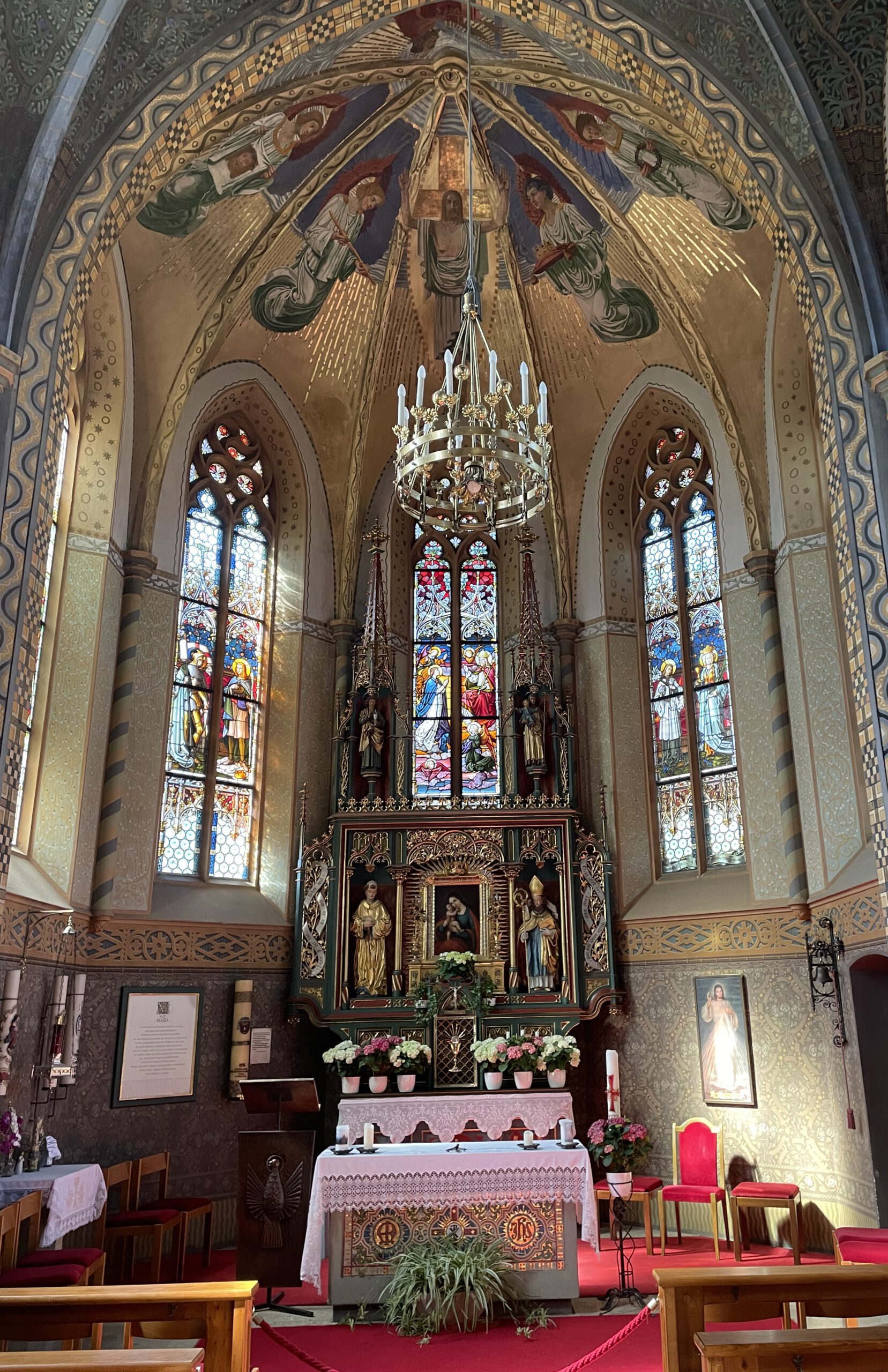
The pilgrimage church is open all year round and parking is available.
The parish church “Maria Schnee” in Mötz is also worth seeing.
ACCESSIBILITY
The Pilgrimage Church of Mötz is located at an altitude of over 800 m on the Mieminger Plateau, in the state of Tyrol, in the Oberinntal valley. The village is situated between the towns of Telfs and Imst, approximately 40 km west of Innsbruck.
Address: Locherboden 1, 6423 Mötz.
The municipality's website www.moetz.tirol.gv.at provides the necessary information, which can also be found on www.innsbruck.info and www.dibk.at of the diocese.
Experience
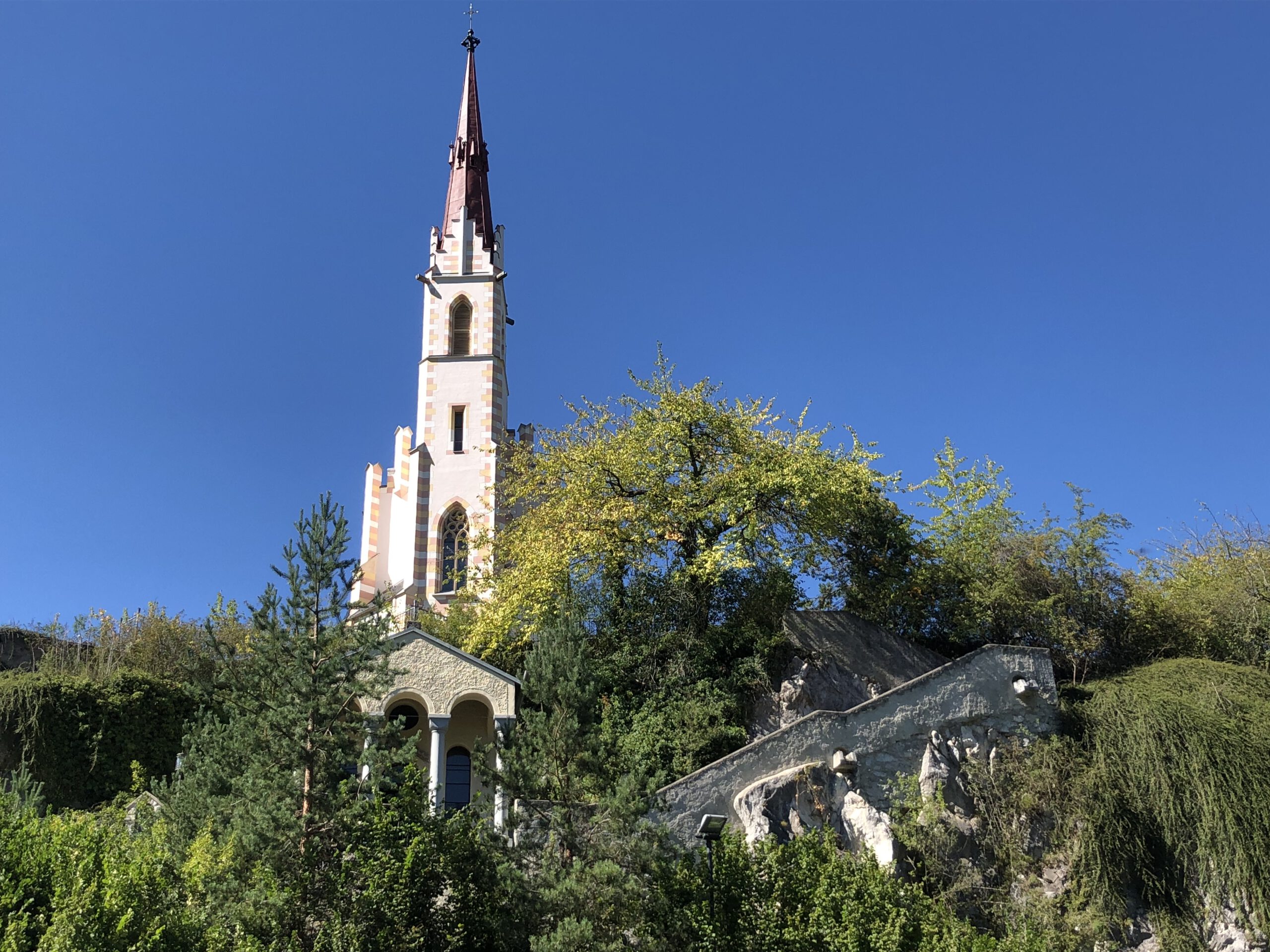
The Neo-Gothic pilgrimage church beckons me from a great height and from a great distance. When I reach the sanctuary at an altitude of over 800 m, I am on top of the Sassberg. There, I can enjoy a panoramic view of the wide surroundings. The Maria Locherboden church, dedicated to “Mary, Help of Christians,” truly towers over the region.

First, I visit the chapel, where the nocturnal pilgrimages begin. Next to this chapel is the entrance to the grotto, which leads to the mine. This is where the sanctuary originated, as a miner was saved by Mary.
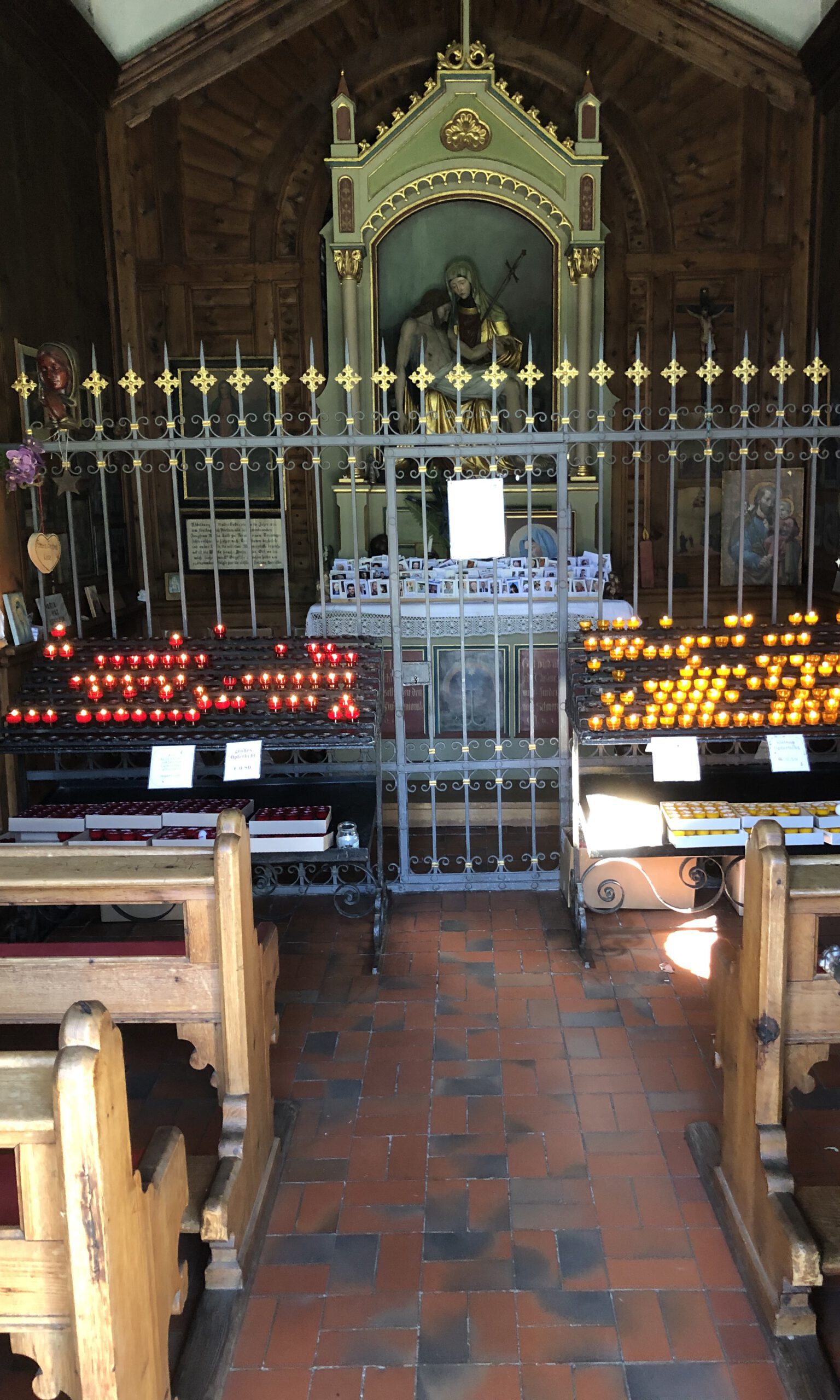
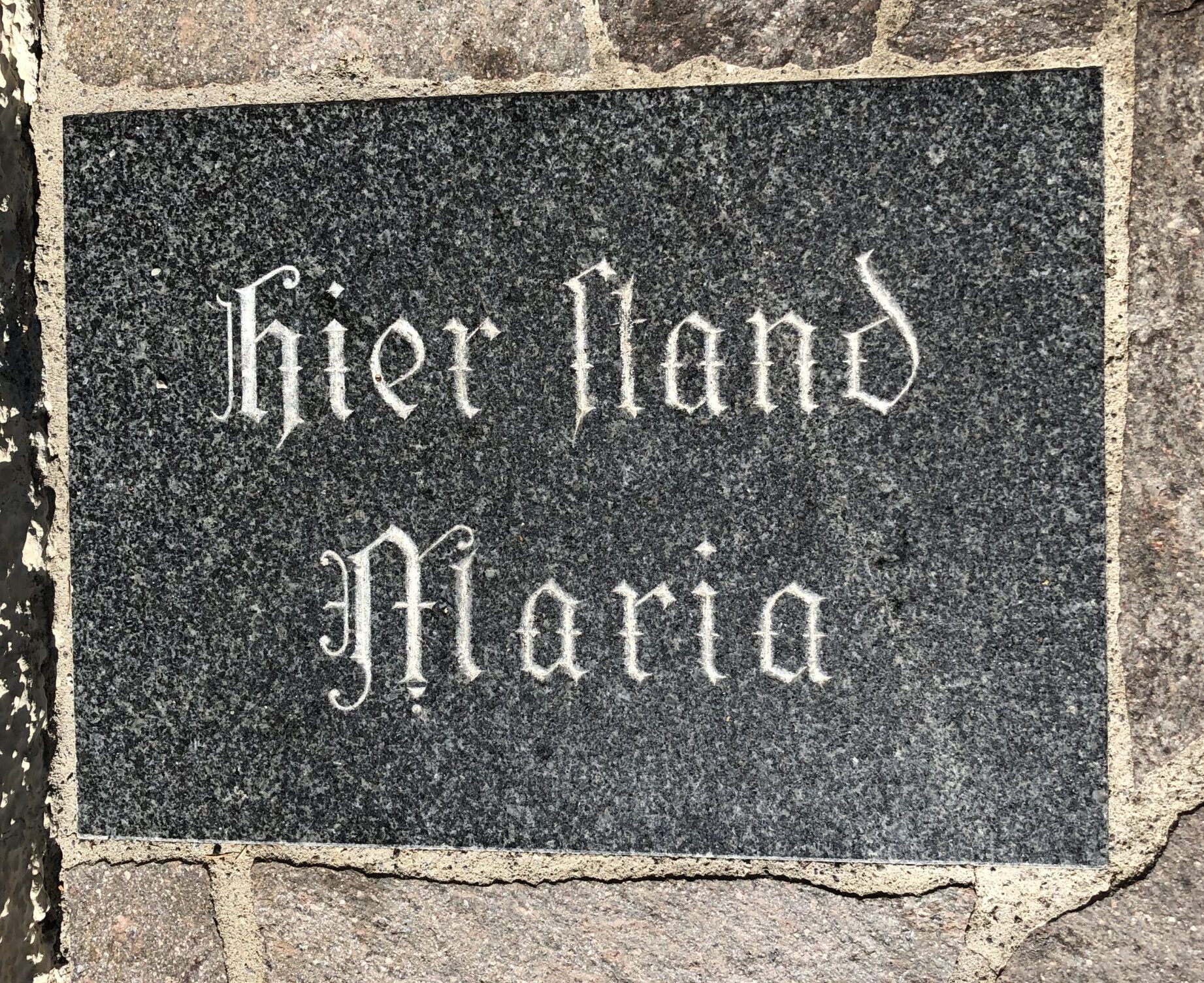
Next, I will go to the Chapel of Grace and see the Pietà with Mary and her dead Son. The most special part of the visit to this pilgrimage site for me is seeing the stone on which Mary stood, near the Chapel of Grace. Our Lady appears here to Maria Kalb.
At the entrance to the chapel, the entryway impresses me. Mary looks at me... Indeed, she is my salvation!
The church is a jewel. Full of admiration, I look at the colourful stained-glass windows and see the depiction of the coronation of Mary and Mary's visit to Elizabeth. I also see the events depicted that represent the pilgrimage history of Maria Locherboden. These murals tell of the origin of this sanctuary with the miner who is saved and the first visit of Maria Kalb to Maria Locherboden.
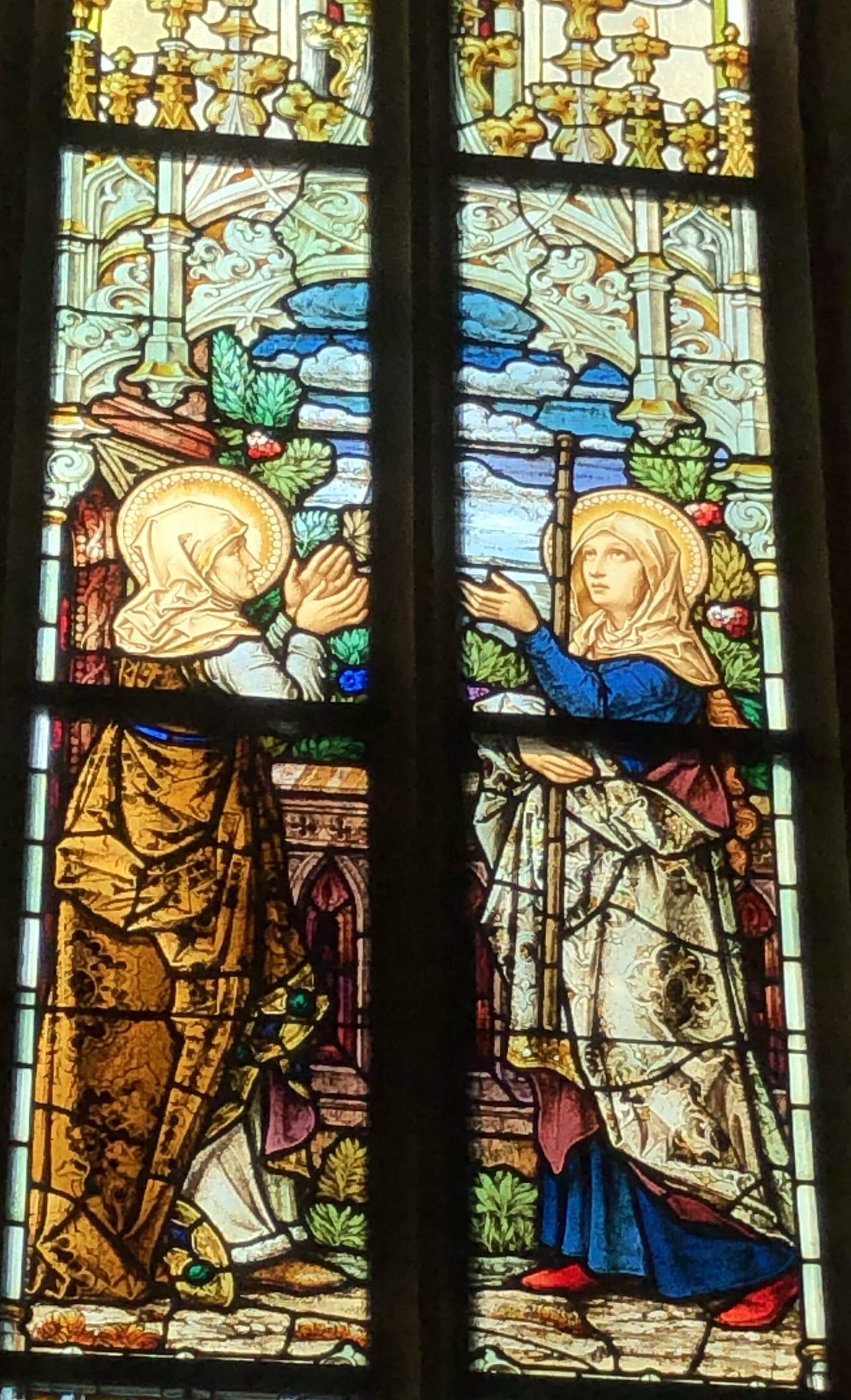

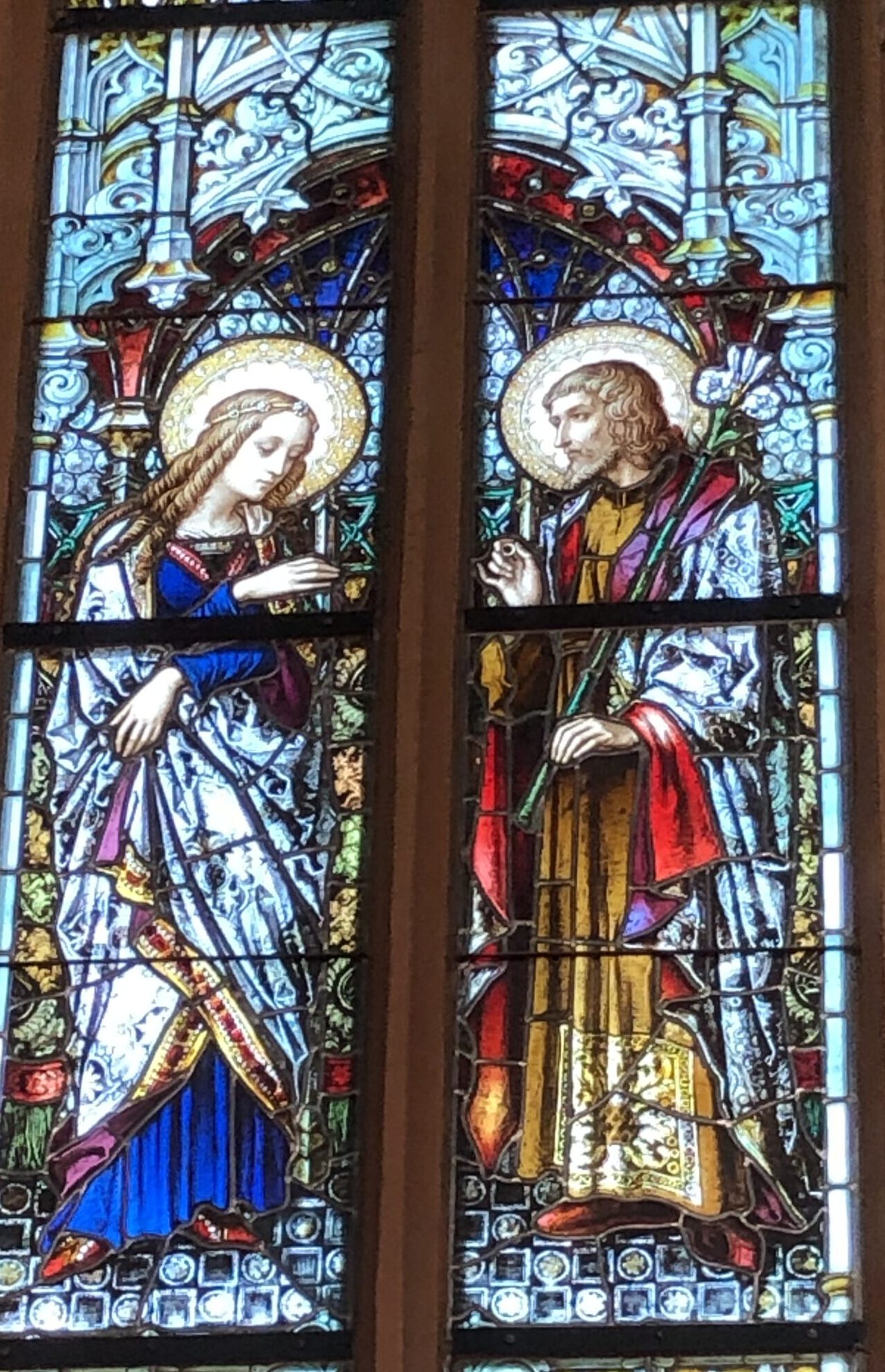
The visit to the Pilgrimage Church in Mötz gives me unforgettable memories.
Environment
From Mötz, it is a 120 km journey westwards to visit the historic city of Feldkirch.
Feldkirch
On Domplatz 6, right in the centre of Feldkirch, stands the St. Nicholas Cathedral, dating from 1478. It is a Gothic church with remarkable altarpieces. The church was elevated to the status of a cathedral in 1968.
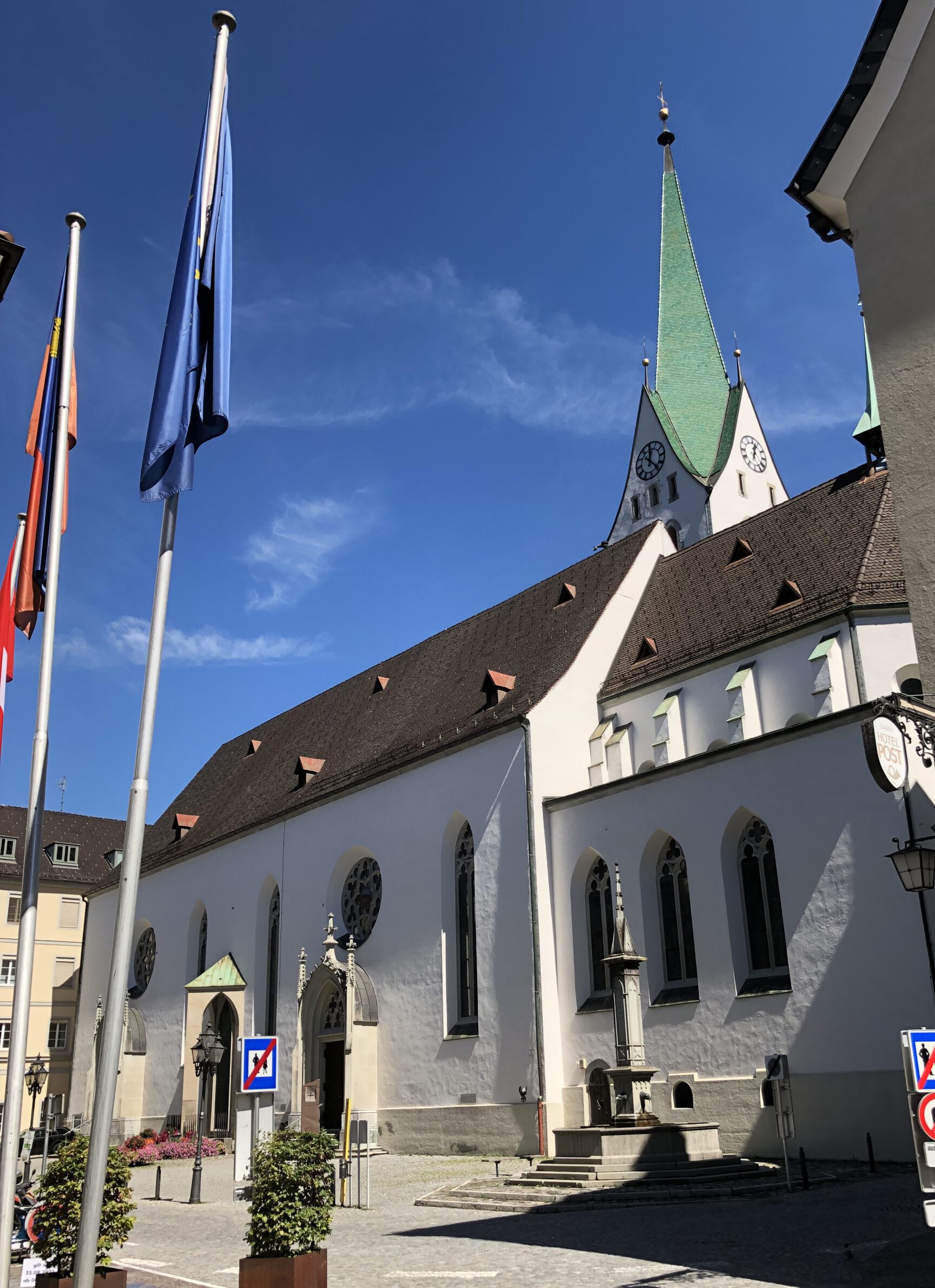
The first mention of a St Nicholas' Church is in 1287. This church sustained significant fire damage several times, and the current church was built after a devastating fire in 1460.

The altar of Mary is in the side aisle. The Gothic statue of Mary with Child was made around 1420. Saint Nicholas is to the left of Mary.
The high altar is unveiled to mark the end of a major restoration in 1872. In the choir there is a statue of Mary from around 1450.
The new, limestone high altar is from 2006 by sculptor Herbert Albrecht (1927-2021).
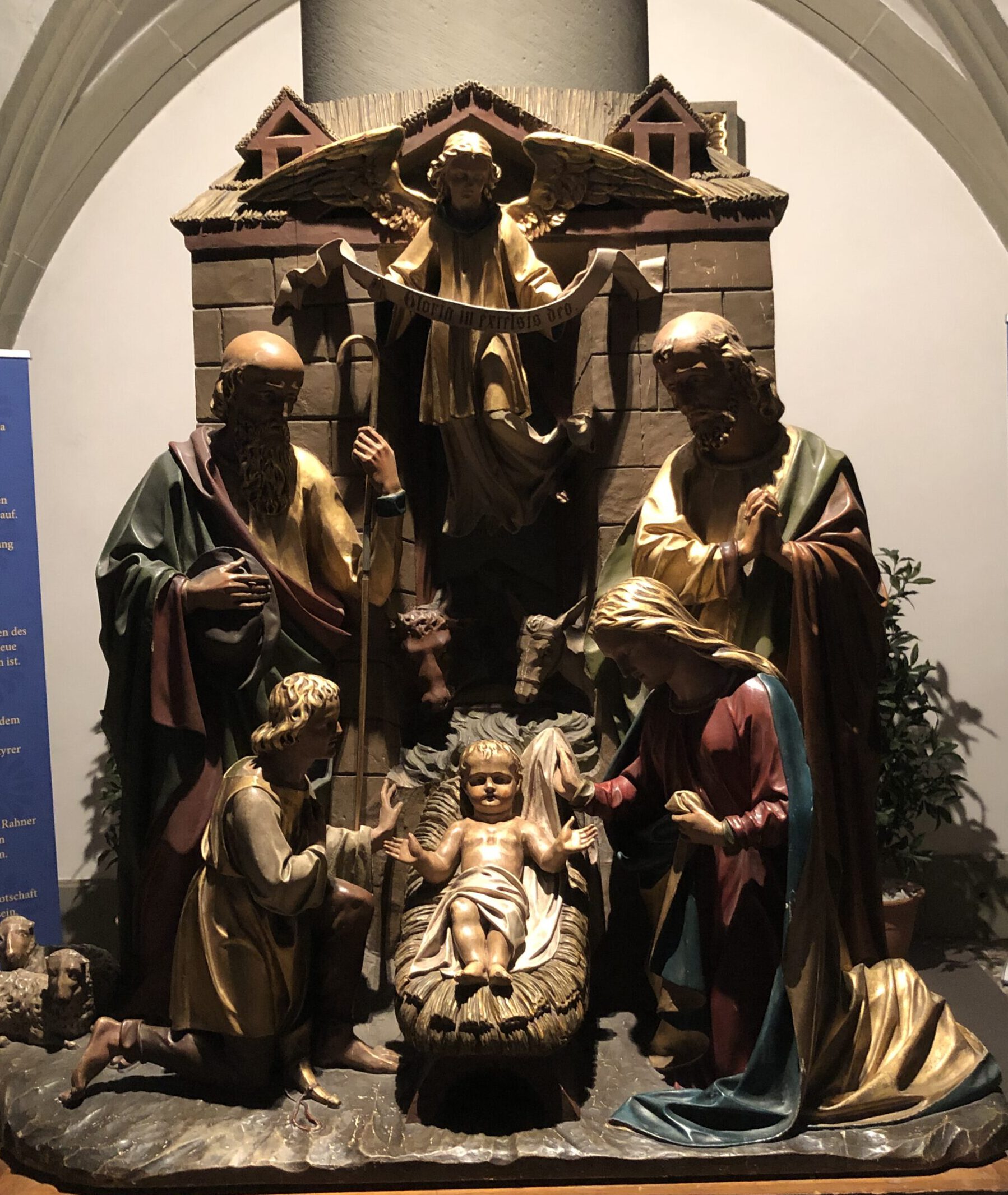

Beneath the choir loft, behind the last pillar, stands a statue of Mary as protectress with a cloak. The statue dates from 1615 and the whole was made by Matthias Schiestl (1869-1939) in 1930.
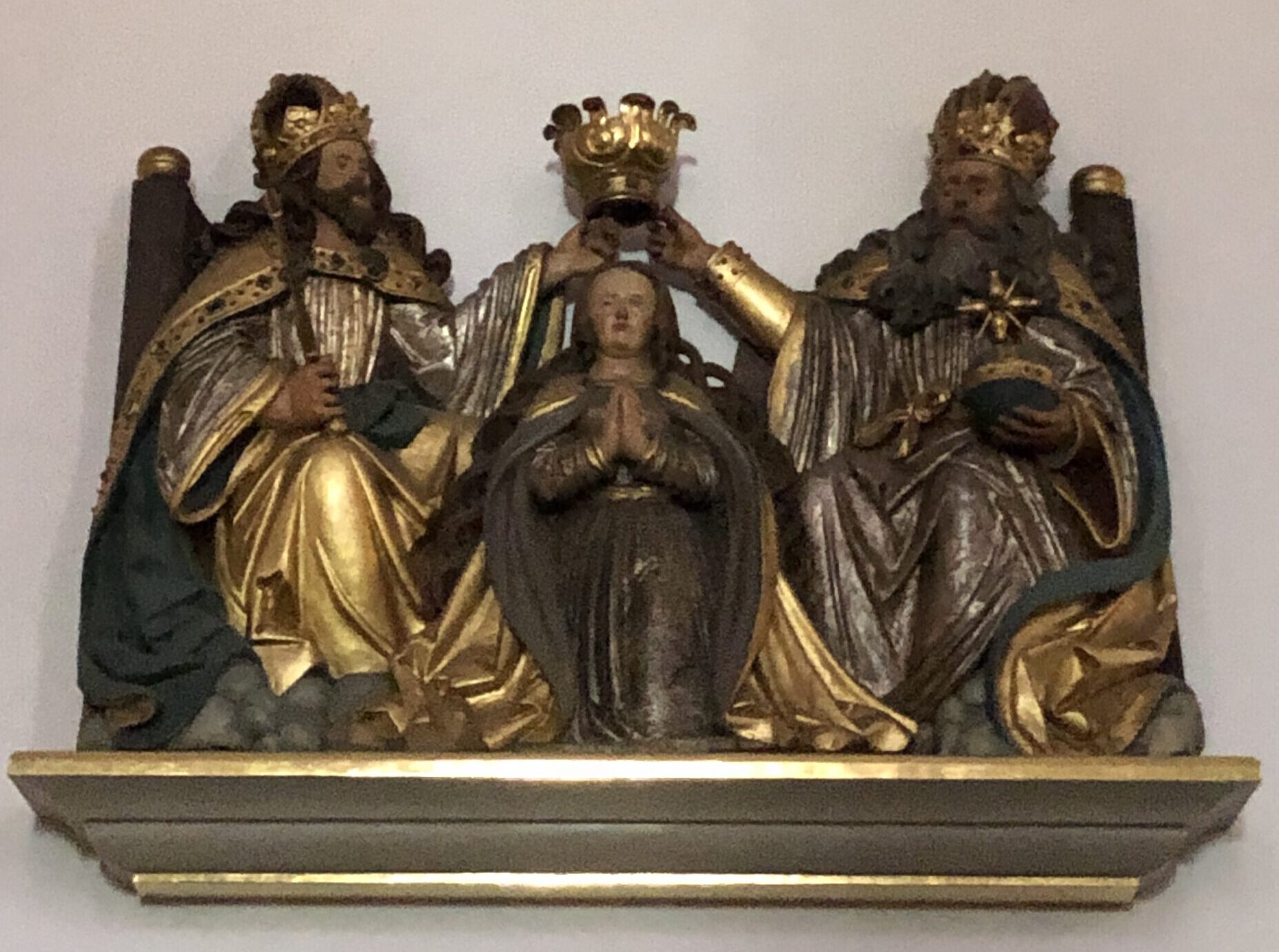
On the left side wall of the nave, there is a sculpture group of the crucifixion from around 1550, standing on a console. Mary kneels between Christ and God the Father under the Holy Spirit.
The stained-glass windows were installed in the years 1960-1961 and made by Martin Häusle (1903-1966) from Feldkirch.
Posted: 2 September 2022
Last modified: 21 February 2024
~~~

 Nederlands
  English (UK)
  Deutsch
  Français