History
The oldest pilgrimage site in the state of Styria is Maria Buch. The area now called Maria Buch is first mentioned in 924. Adalbert von Salzburg (884-935), who was Archbishop (923-935), is named as the owner. The area changes hands many times. For instance, Duke Berthold of Bavaria (c. 890-947) and Count Markwart II von Eppenstein (905-950) were among those who held the estate. A Mary's church is first mentioned in 1074. In the 12th and 13th centuries, there was a great devotion to Mary in that church. The construction of the current, Gothic church began in 1455. The church was built on the initiative and with the help of Empress Eleanor Helena of Portugal (1434-1467), wife of Holy Roman Emperor Frederick III (1415-1493).
A legend tells...
During a hunt, Empress Eleonora Helena loses a prayer book in which she had placed a note from a knight who admired her. She does not reciprocate his advances but keeps the note. Because of the book's loss, she fears that her innocence, as an honourable wife, will be doubted. The Empress pledges that if she gets her prayer book with the note back, she will have a church built in honour of Our Lady as a thank you. Suddenly, a hunting dog begins to bark and continues to do so for some time. Through its barking, the dog points out the location where the Empress's book lies. Eleonora Helena receives her prayer book back and finds the knight's note within it. Subsequently, the Empress fulfils her vow. This legend gave rise to the name “Maria Buch”.
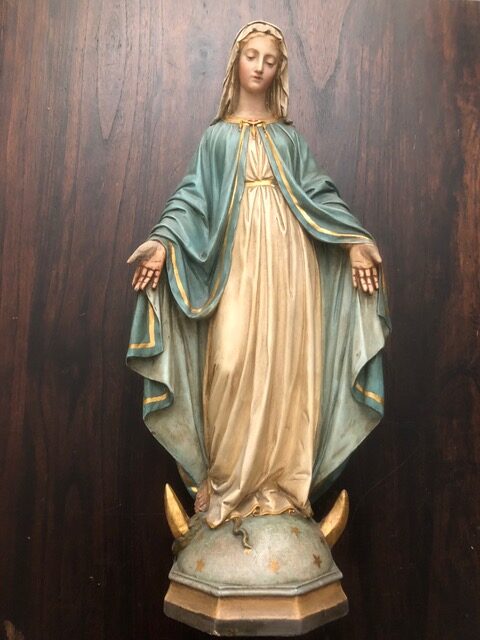
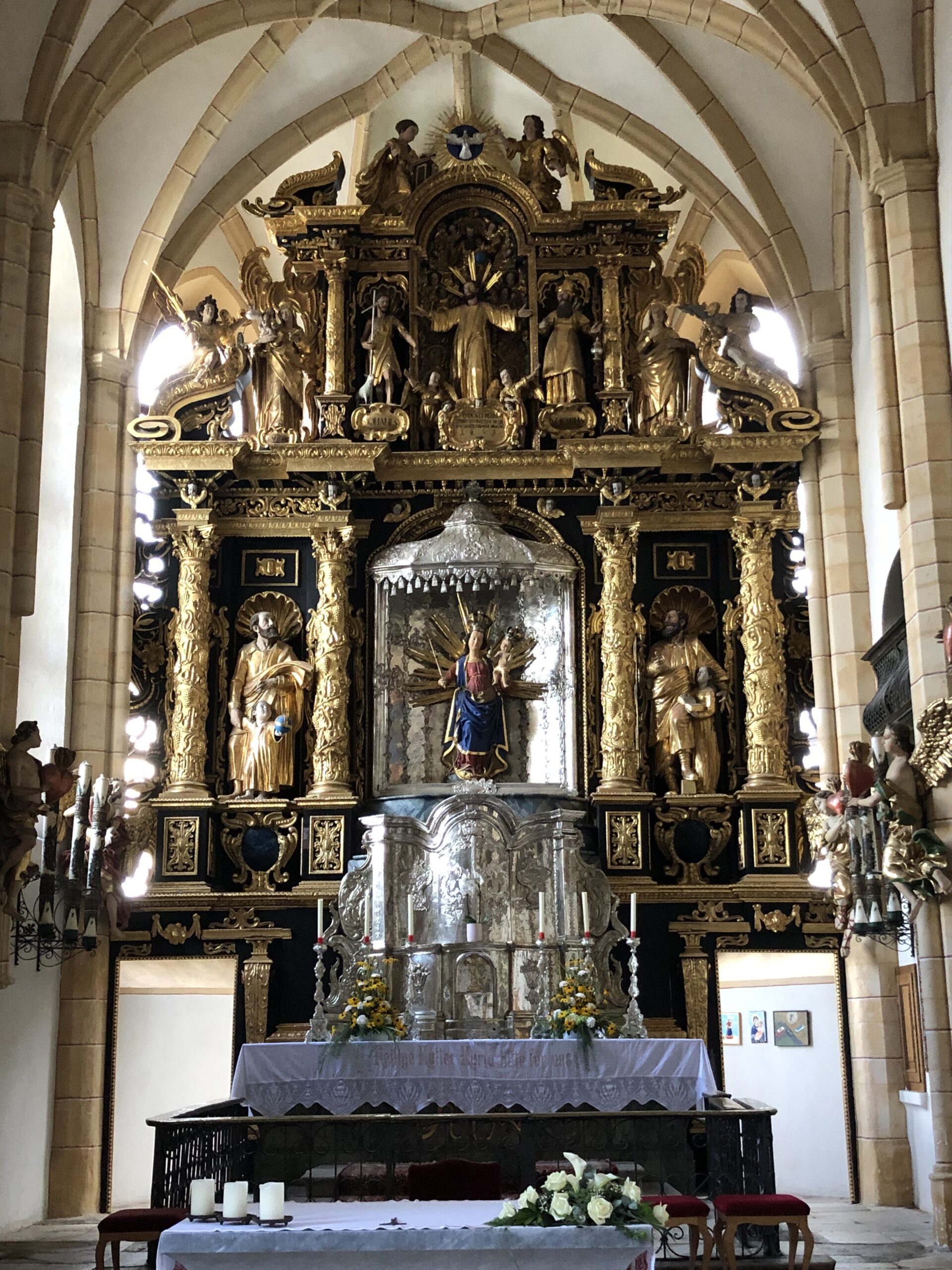
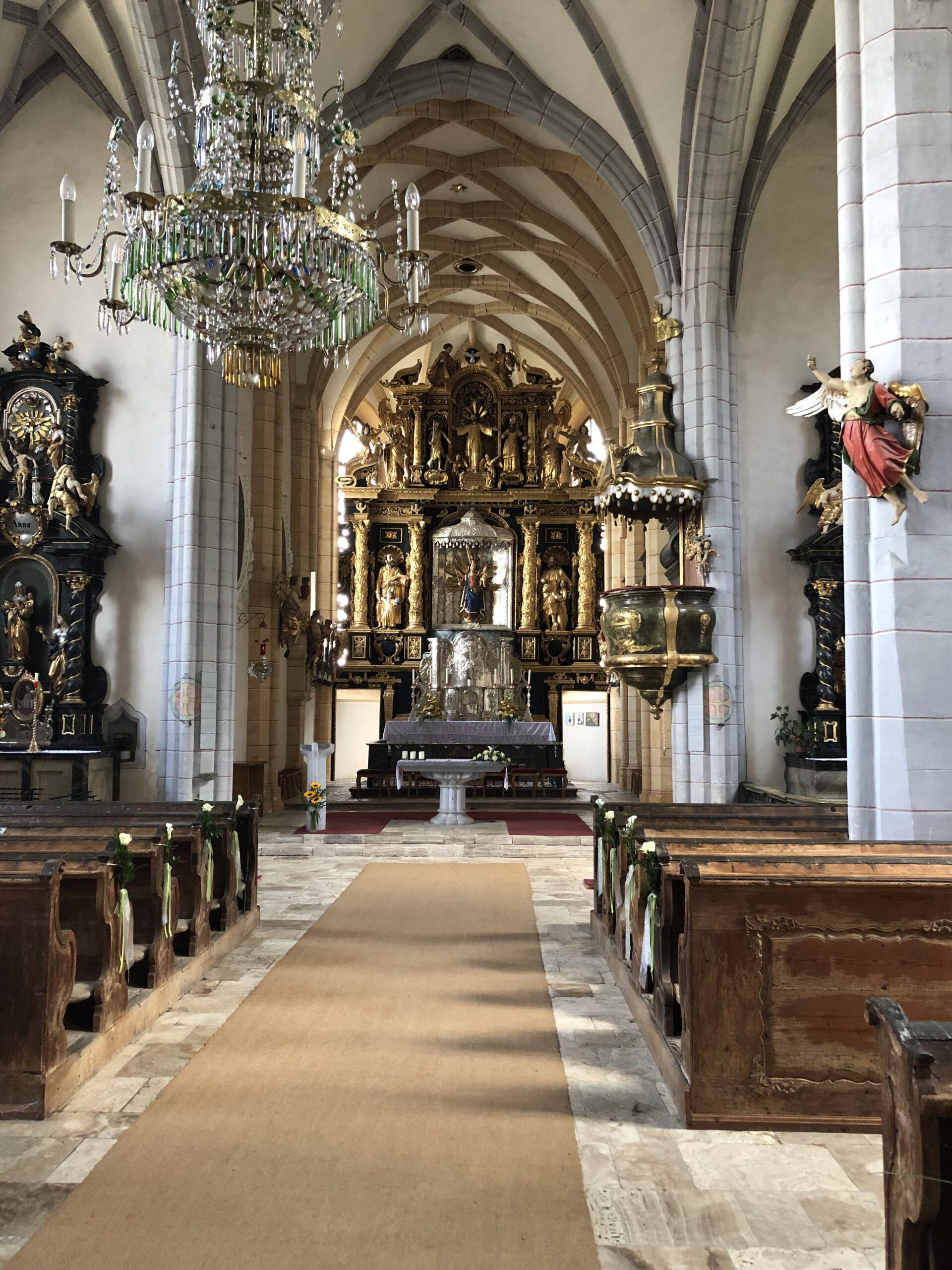
The church features a Baroque, black-and-gold main altar from 1651, and this year is inscribed on the altar stone. Michael Hönel (1590-1653) contributed to the creation of the main altar. Above the tabernacle, in the centre, is the statue of the Mother of Grace of Maria Buch from 1480. It is a life-sized effigy, predominantly in blue and red. This statue of grace is the most precious item in the pilgrimage church.
The church also features very large candles. These are Turkish candles and refer to a legend from 1480. In that year, Turkish warriors caused great damage by pillaging Maria Buch. However, the painted candles are from a later date, namely 1682. In that year, there was great fear of a new, Turkish threat. The memory of 1480 was still strong. Therefore, about 200 years later, in 1682, large candles were offered to Our Lady and the threatened people prayed extensively. The candles are almost 1.5 m tall and are decorated with images of Mary. In 1983, the candles were cleaned and restored.
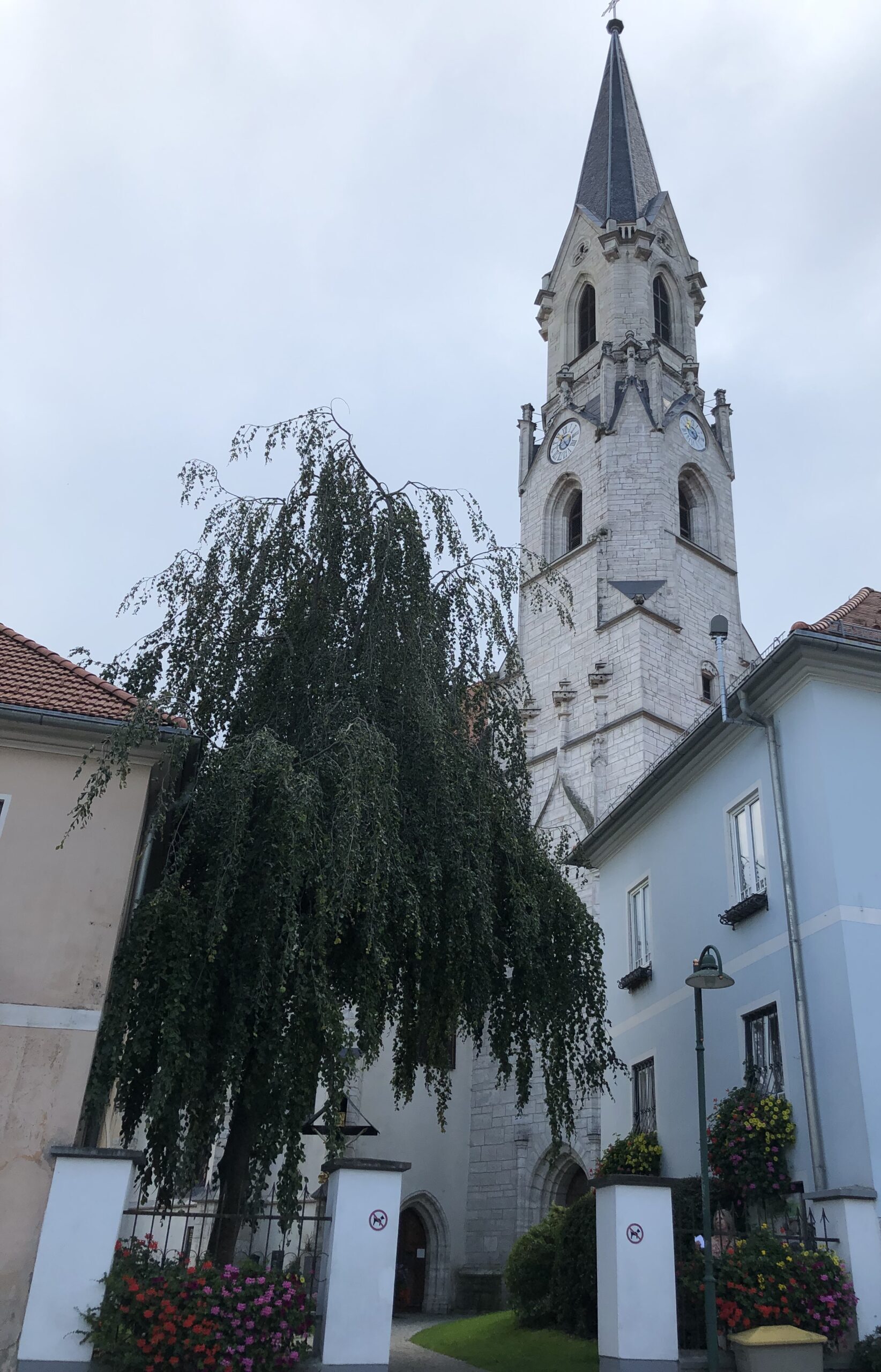
The church tower dates from 1509 and is 67 m high. In 1982, the impressive structure was renovated. The interior of the church was restored between 1988 and 1989.
Since 1773, the church has been run by Jesuits, who also organise the pilgrimages.
Pilgrimage site
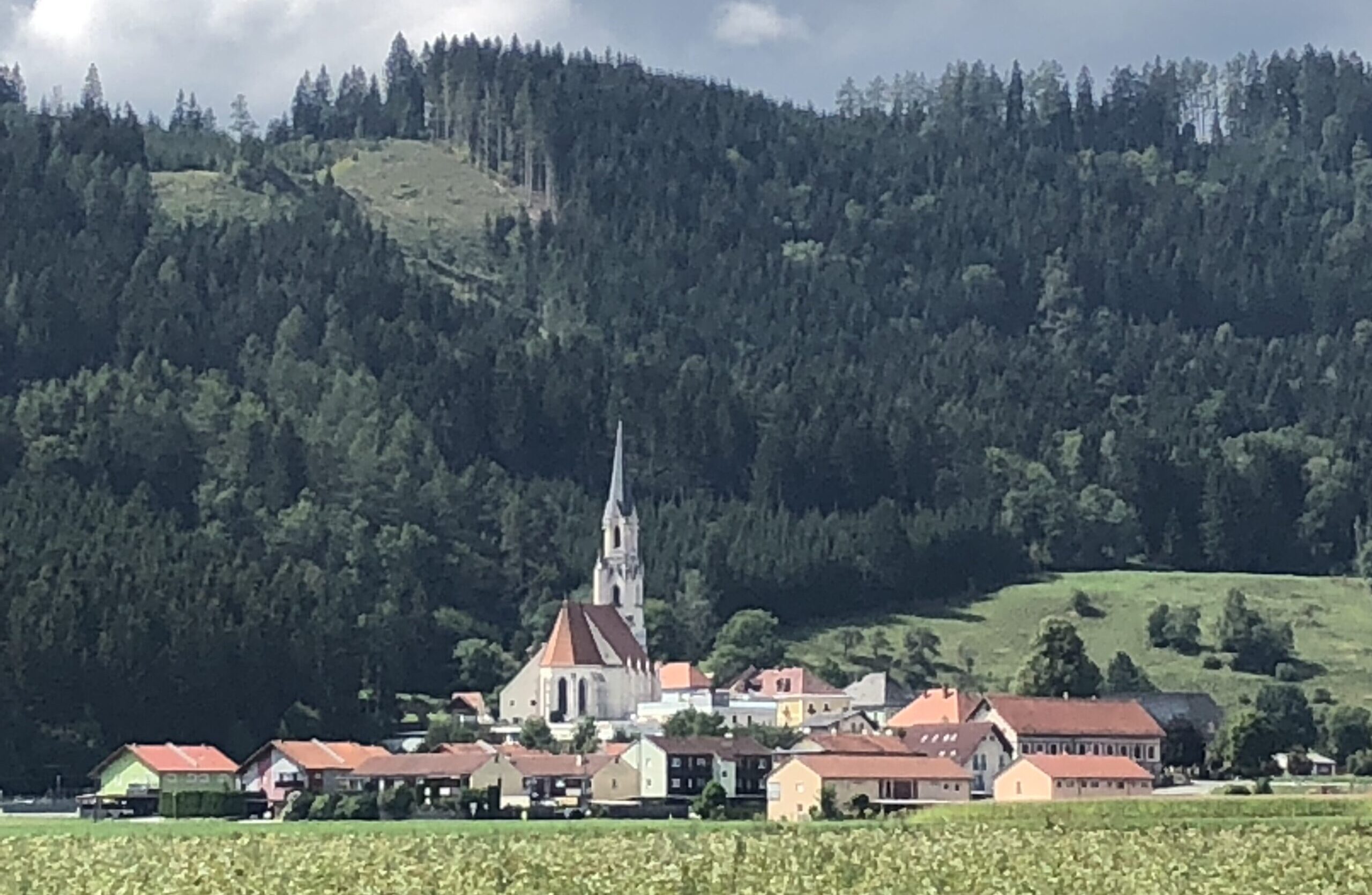
The imposing church tower can be seen from afar. The tower has sections with four and eight sides. The year 1509 can be seen in the tower's portal. The hall church is 36 m long, 16 m wide and 12 m high. The house of worship is built with stones from the region.
In the pilgrimage church, the 1480 image of grace occupies a central place. It stands in the middle of the main altar. The silver-plated structure of the tabernacle from 1762 also attracts visitors' attention.
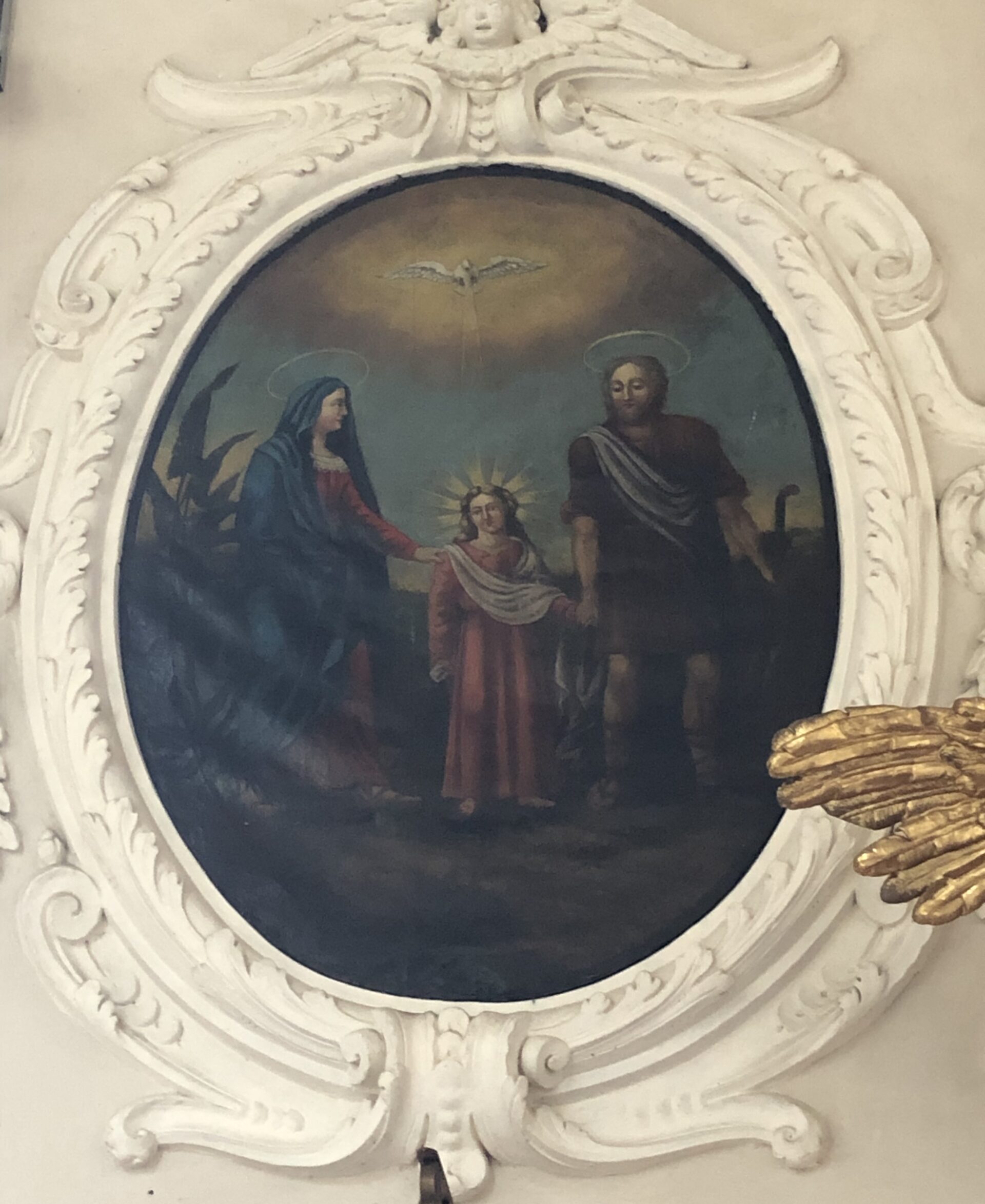
A side altar is dedicated to Saint Anne and was created in 1695. Alongside Mother Anne, daughter Mary, and grandson Jesus, stand two female martyrs. The women who sacrificed their lives with great suffering are Saint Catherine with a broken wheel, by which she was martyred, and Saint Barbara with a chalice in her hand, from which she was not permitted to receive communion from her executioners.
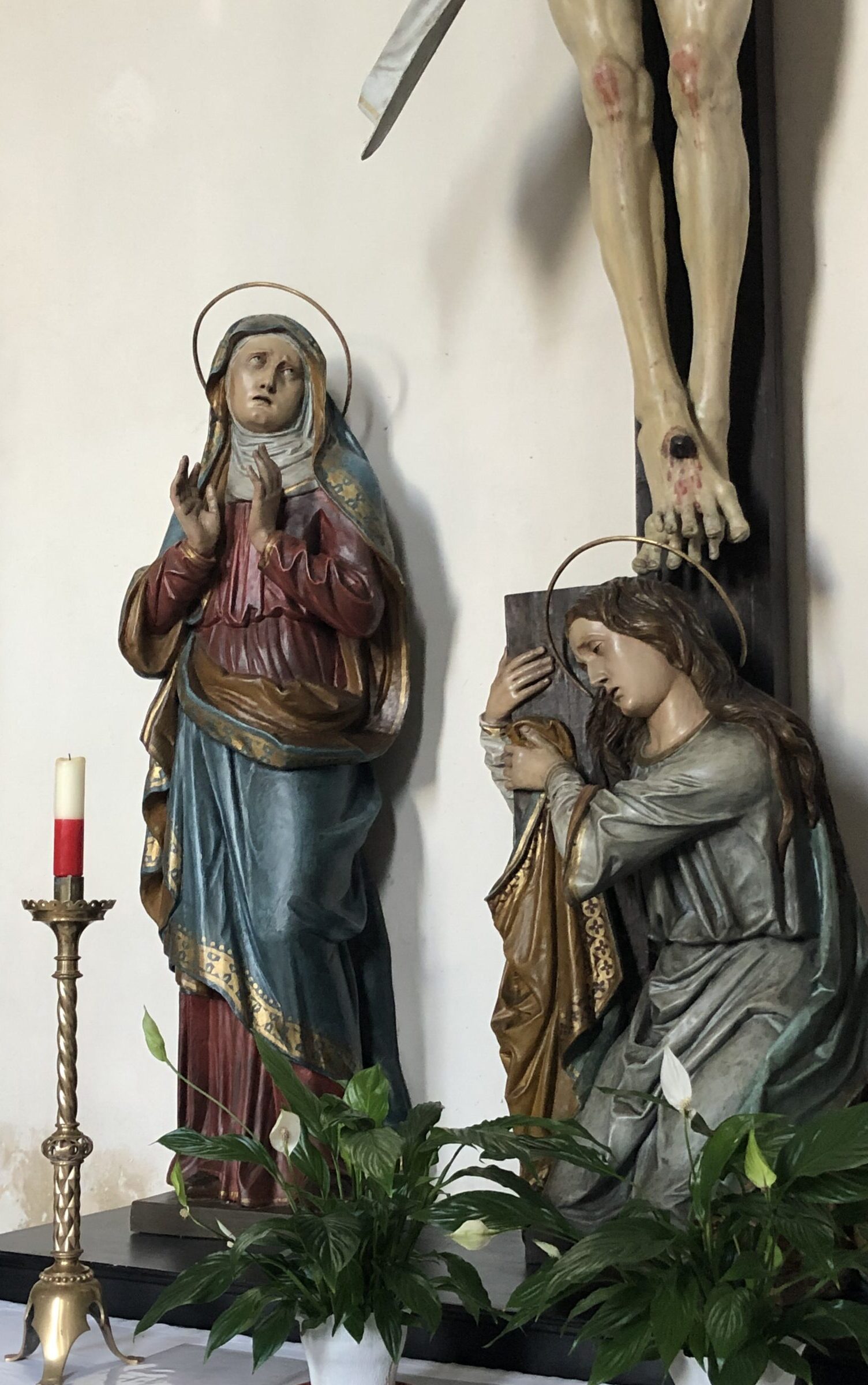
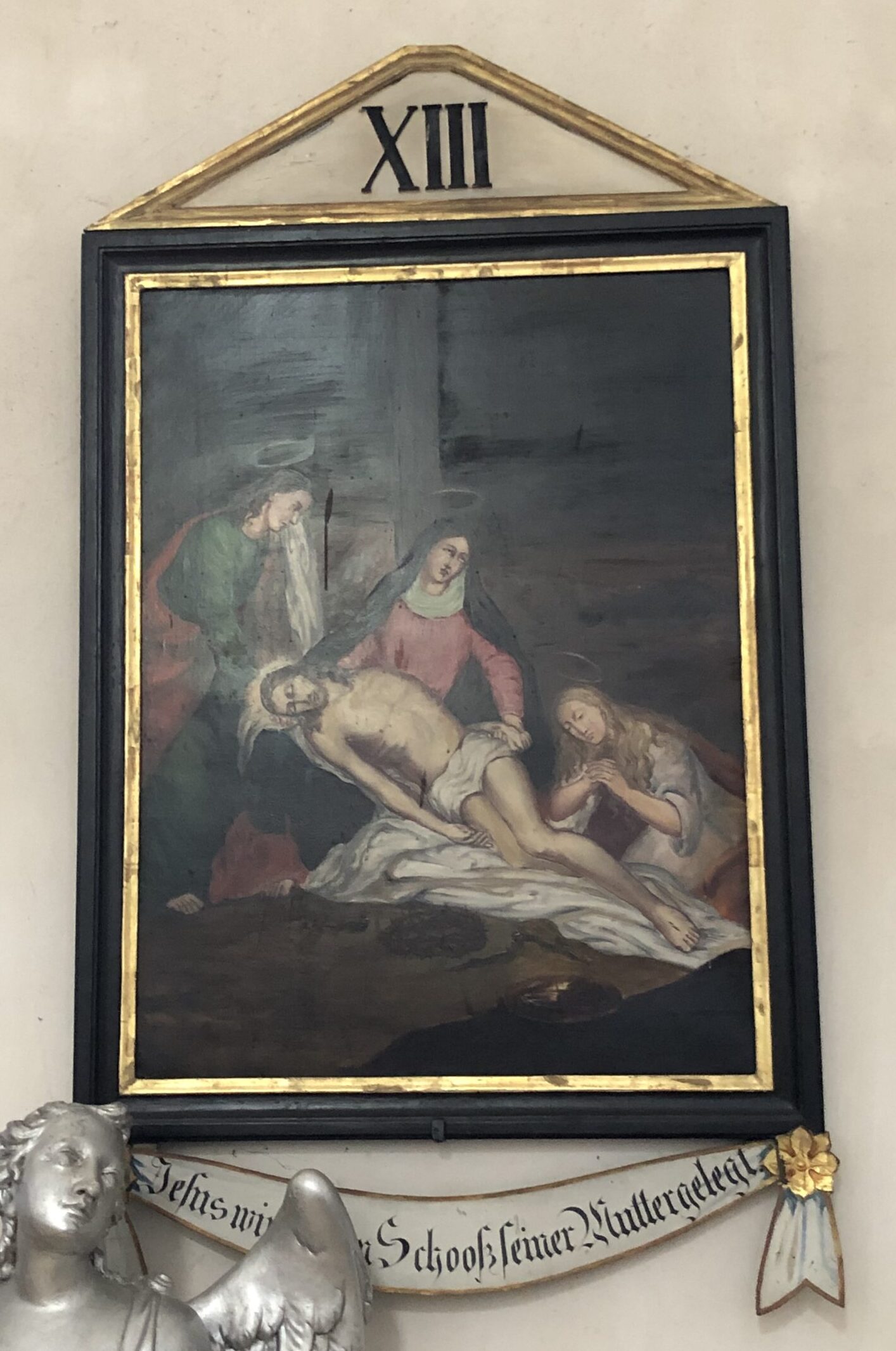
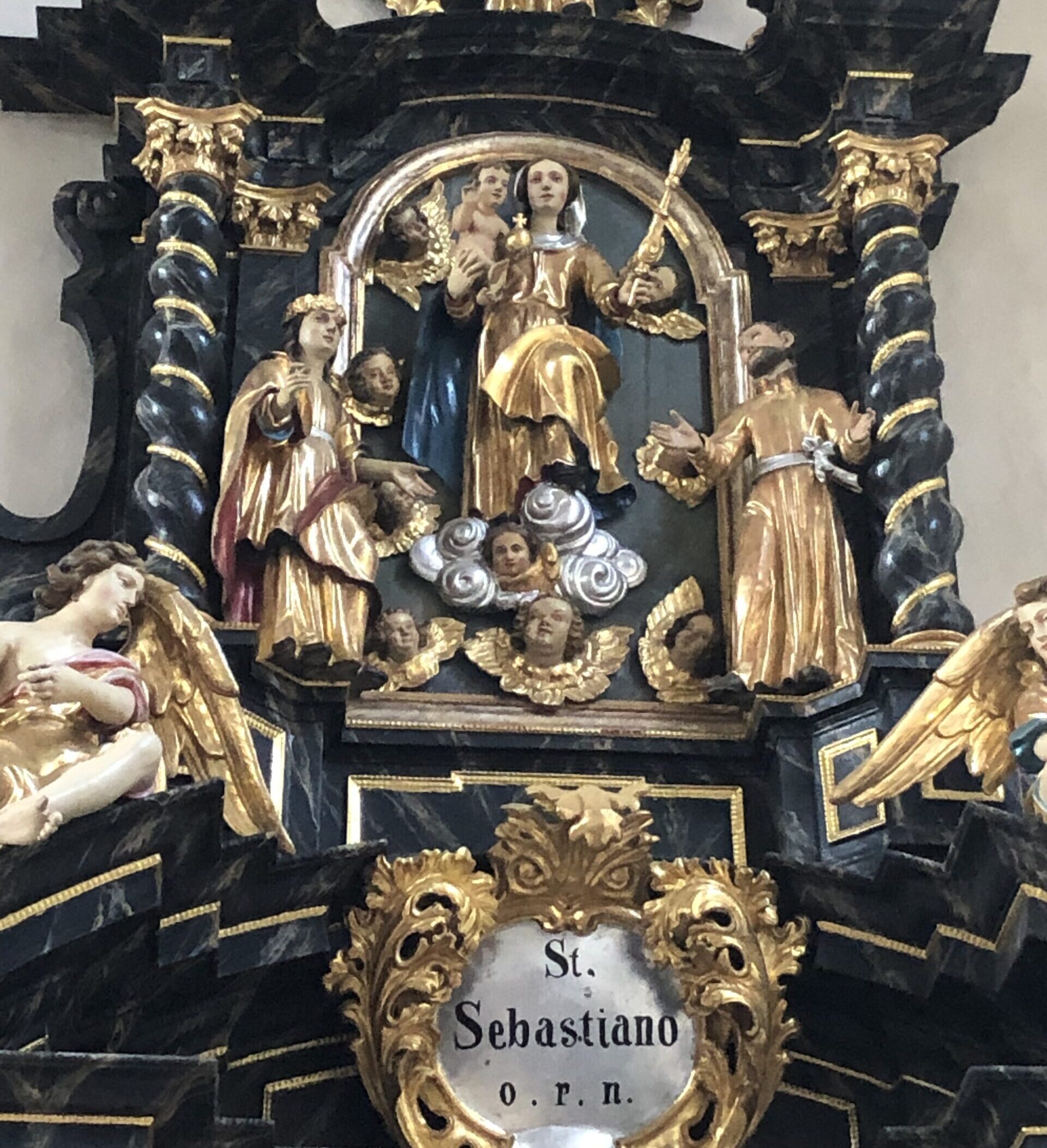
The pilgrimage church also contains a processional altar from 1500 and an altar from 1702 dedicated to Saint Sebastian. A monumental pulpit from 1730 holds a prominent place in the house of worship. Also on display are 14 Stations of the Cross from 1842. The organ was built in 1853 by Georg Friedrich Wagner (1818-1880). The altar of Saint Joseph, dating from 1884, is situated against the left wall.
The feast days of the Sanctuary of Maria Buch are 1 May, 15 August and 8 September. The church is open daily.
ACCESSIBILITY
Maria Buch is located a few kilometres from the town of Judenburg in the state of Styria. The shrine is situated in the middle of Austria, north of Klagenfurt and west of Graz.
The address is: Maria Buch 4, 8750 Maria Buch.
You can find current information on www.wallfahrtskirche-maria-buch.at.
Experience
On the way to the oldest Marian pilgrimage site in Austria, I am thinking about the eventful history of this sanctuary. My thoughts also turn to the origin of the name Maria Buch. Empress Eleonora Helena has kept her word…

Later I stand before the high altar and see the miraculous image from 1480. The small Jesus sits on his Mother's hand. She offers her Son to the world in an unnatural pose. Mary gives her Child away to the people. In her right hand, the Virgin Mary holds a sceptre. Both Mother and Child are crowned. I am told that this way of presentation by Mary is unique in Austria.
On the high altar, I can see more figures, such as Joseph and Child. Father Joachim with his little daughter Mary are also depicted here. In the church, I also notice that Anne with her daughter and grandson are conspicuously represented here.
I notice that many angels are depicted in the pilgrimage church. I can already enjoy the glory in heaven! I understand that some angels were made in 1726 by the Austrian sculptor Balthasar Prandstätter (1690-1756). Other angels were made by his successor Johann Nischlwitzer (1722-c.1776).
In the pilgrimage church, large, Turkish candles stand on the sides of the main altar. These are a reminder of the threat of Turkish violence and the fear of destruction.
After the tour of the pilgrimage church, I take a seat and my prayers to Mary are mainly about the well-being of friends.
Posted: 26 November 2022
Last modified: 4 March 2024
~~~

 Nederlands
  English (UK)
  Deutsch
  Français