History
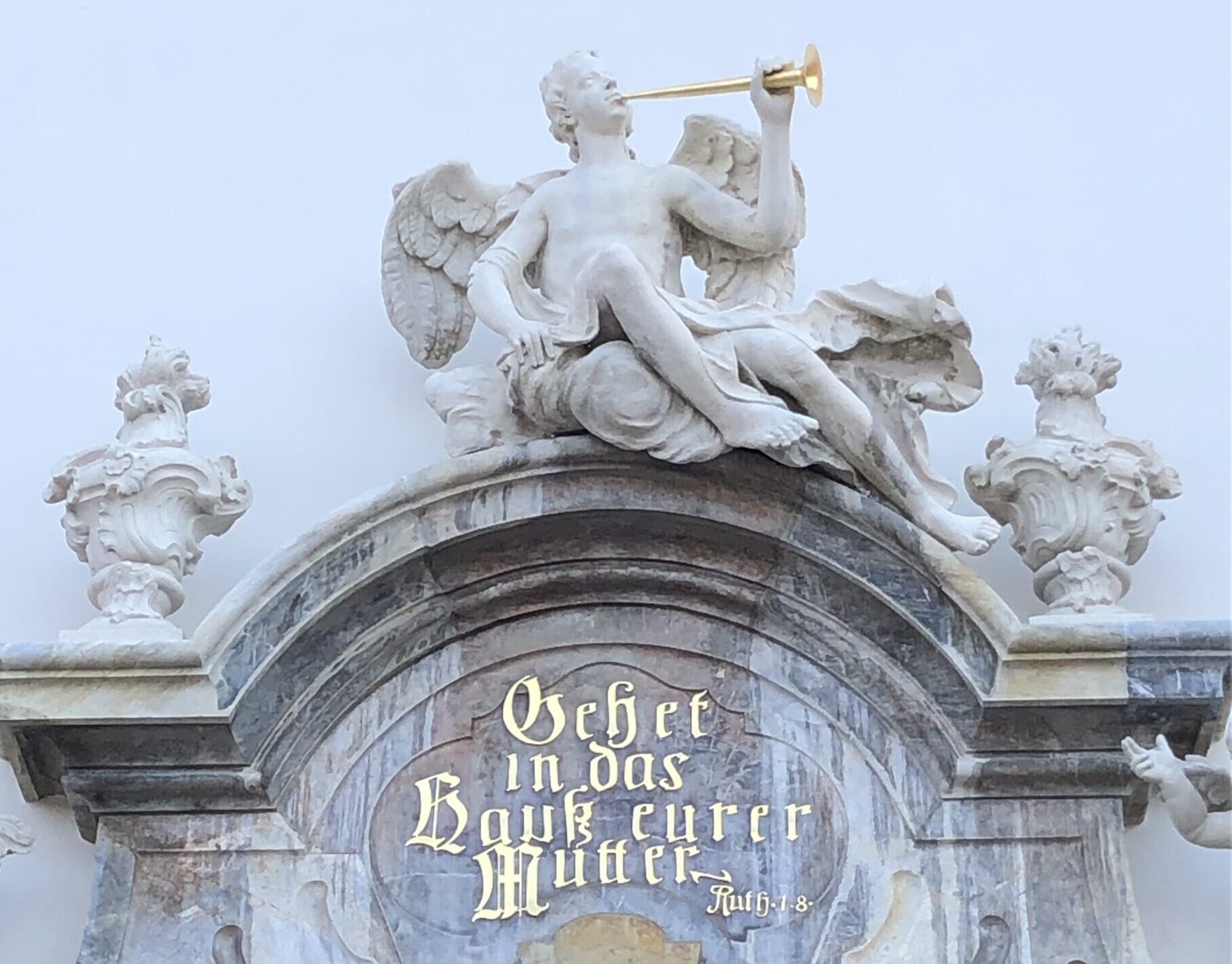
The Sanctuary of Mariatrost stands on the Purberg, near the city of Graz, where a castle once stood. In 1636, the then lord of the castle commissioned a small private chapel within the castle. He did this to honour Mary's parents, Anne and Joachim. In 1676, a statue of Mary was brought into the chapel. The statue was a gift from Abbot Candidus (Johann Friedrich) Schillinger of Rein Abbey. He was abbot there from 1673 to 1684. The castle lord's daughter suffered from a serious illness for a long time. She prayed fervently before the statue of Mary on several occasions and was cured. Because of this, the statue became known to the family as the “Consoler of the Afflicted” and was of great value to the family. This is where the name “Mariatrost” originates.
The influx of pilgrims continues to grow and in 1693 the chapel is enlarged and embellished. The lord of the manor notices the increasing meddling of ecclesiastical authorities, which limits his freedom to act concerning the chapel. He decides to transfer his property to an order. In 1695, the devotional image takes on a baroque appearance.
In 1708, members of the Order of St. Paul largely took possession of this. In 1710, it became apparent that the enlarged chapel still offered insufficient space for the many visitors. A church and monastery were needed. The funding for these came from Charles VI (1685-1740), Holy Roman Emperor (1711-1740) and Archduke of Austria, and father of Maria Theresa (1717-1780).
Around 1700, the plague raged in Graz and the surrounding area. In the chapel, 60 day labourers are staying. Before the image of Mary, they promise to bury those killed by the plague and thereby save the inhabitants of Graz from further misfortune. They also pray for a good death for themselves during this highly contagious work. They promise Mary that, if they succeed in their endeavour, they will hold a pilgrimage every year in thanks to Mariatrost. The day labourers succeed in their endeavour and they hold the pilgrimage for more than 200 years. The origin of this pilgrimage dates back to 1711. This also shows that the image is known for miraculous answers to prayers.
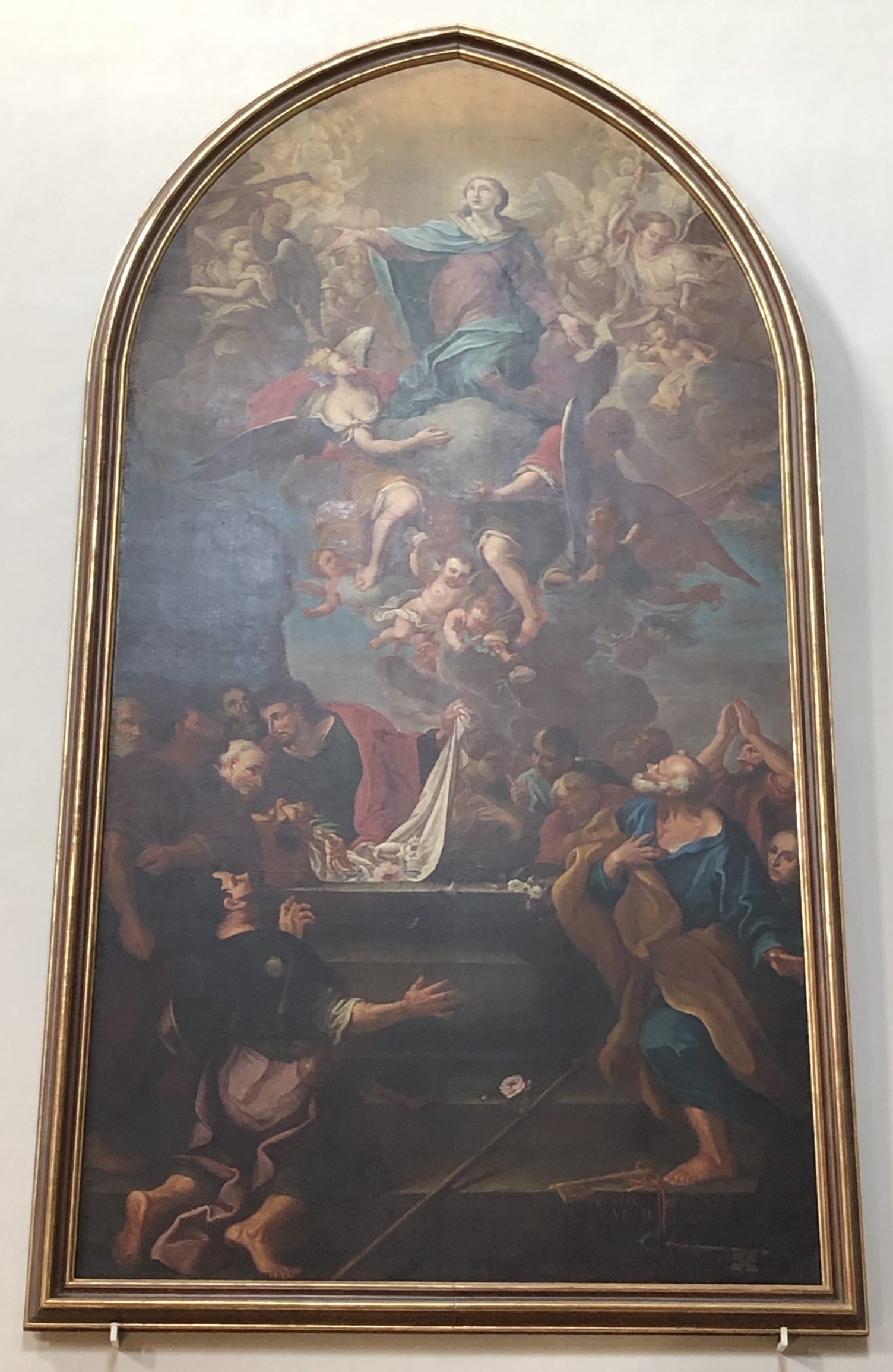
Construction of the church began in 1714 under the direction of architect Johann Georg Stengg (1689-1753). On 18 September of that year, Count Karl Weikhard von Breunner, also known as Karl Wichard Anton Graf von Stübing-Fladnitz (c. 1656-1729), laid the foundation stone for the church's construction. He was Landeshauptmann of Styria (Governor of Styria) from 1715 to 1729. In 1718, Johann Veit Haukh (1663-1746) painted the oil painting “Assumption of the Virgin Mary”.
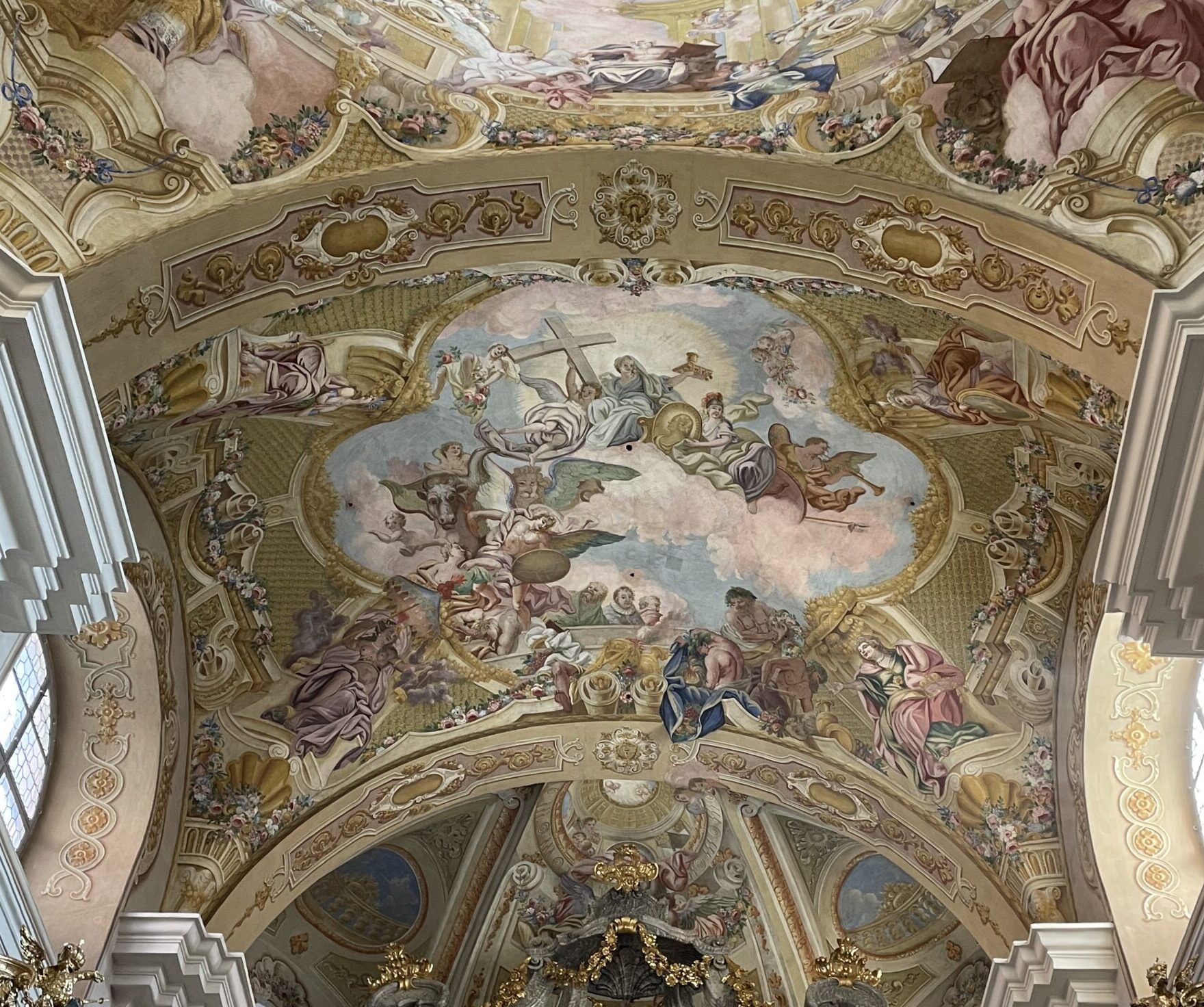
The statue of grace arrived in the as-yet-unfinished church in 1719. This was done by Joseph Dominikus von Lamberg (1680-1761), prince-bishop. The high altar stands on the spot where the old chapel once stood. Between 1733 and 1741, considerable work was carried out on the church's interior, including a lot of painting. Lukas von Schram (1702-1765), a painter at the imperial court, created decorations by making frescoes for the dome, chancel, side chapels, and sacristy during the period 1733-1741. The sculptors Veit Königer (1729-1792) and Joseph Schokotnigg (1700-1755) were active in the church for a long time. The construction of the high altar was completed in 1746, and the church was finally finished in 1779.
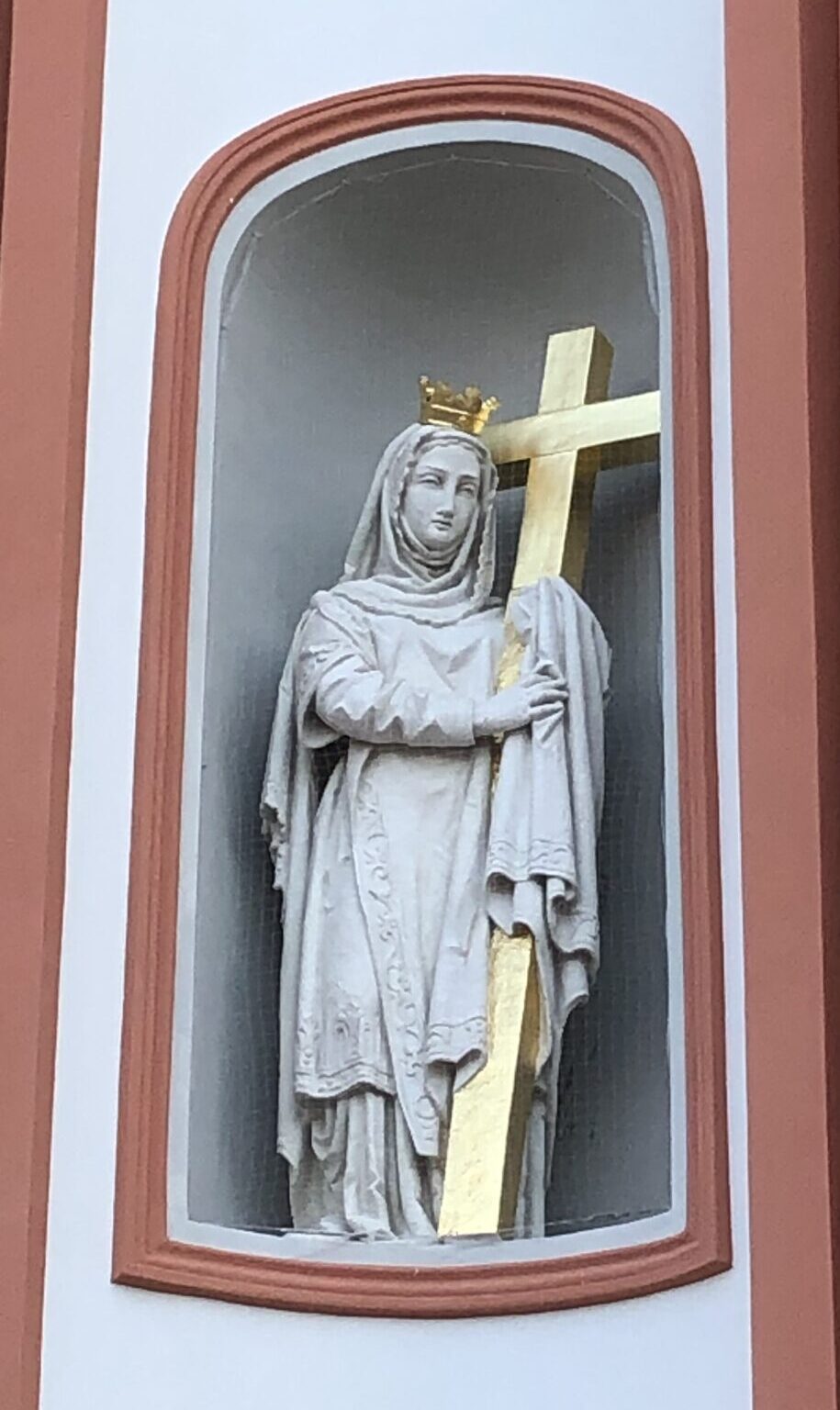
In 1786, the Order of Paul and the pilgrimages were banned by Emperor Joseph II (1741-1790), and he appointed the pilgrimage church as the parish church. This significantly hampered the development of the sanctuary. This situation changed in 1846 when the Franciscans took over the care of the church and the facilitation of pilgrimages. This marked the beginning of a new period of prosperity for Mariatrost. The Franciscans also took care of the restoration of the church. This order remained in Mariatrost until 1966. Subsequently, the spiritual work in the place of pilgrimage was transferred to employees of the parish church.
In 1890, Austrian sculptor Peter Neuböck (1855–1928) created a Lourdes grotto in the tower chapel.
During and just after both World Wars, there was silence in the sanctuary. Around 1950, there was a lot of pilgrim attendance in Mariatrost again.
In the period 1975-1977, the exterior of the church and monastery was restored. The interior of the church was restored to its former glory between 1981 and 1984. Members of the Order of Franciscans left Mariatrost at the end of October 1996. On 1 November 1996, priests took over the sanctuary and the parish from the Franciscans.
On 28 October 1999, the church was elevated to a basilica and dedicated to the Nativity of Mary.
Pilgrimage site
Mariatrost lies on a mountain and is situated 469 metres above sea level. The Baroque basilica can be seen from a great distance.
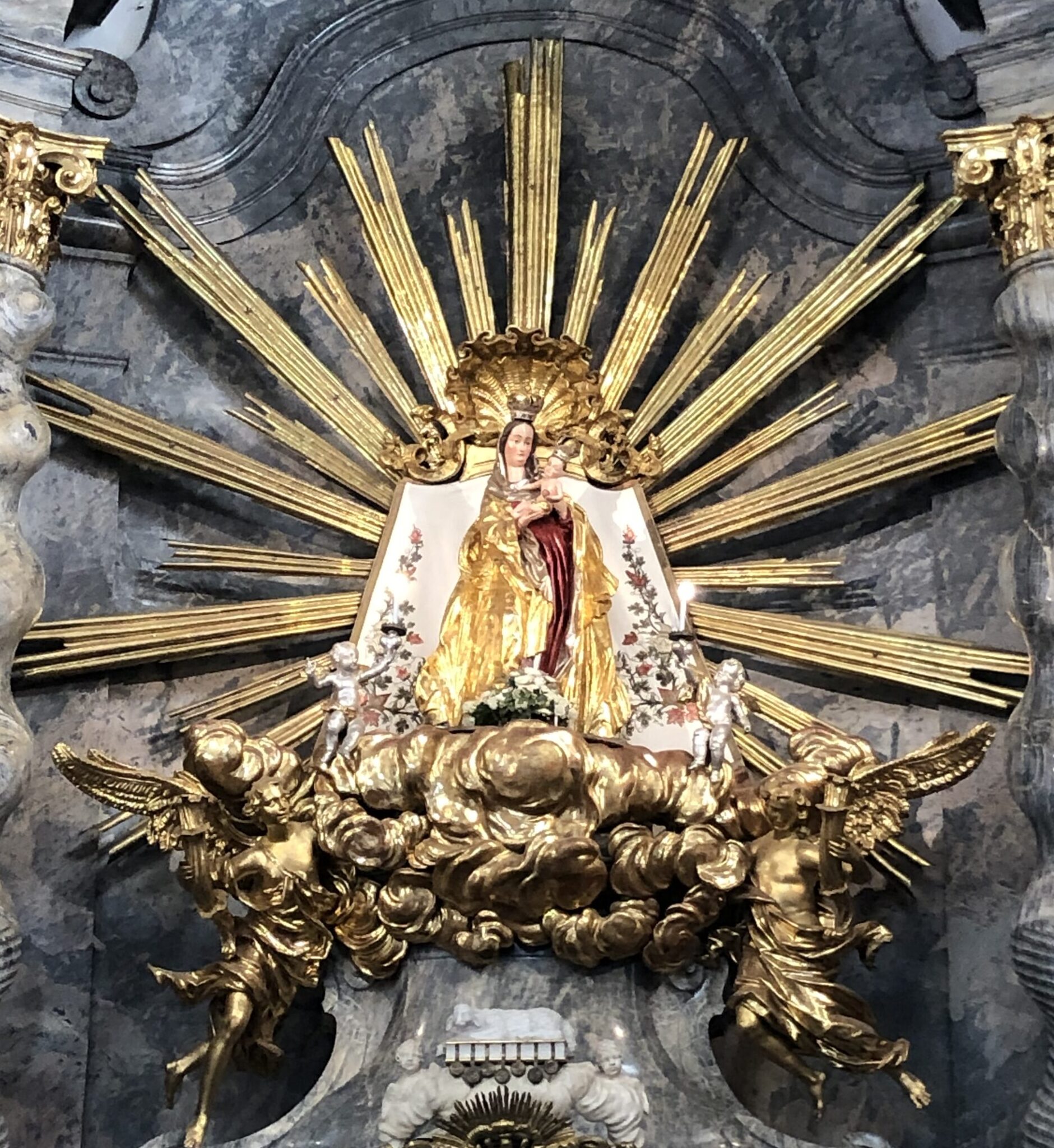
In Mariatrost, the late Gothic, almost life-sized statue of grace is most important to the many pilgrims. The depiction of Our Lady dates from around 1465. Until 1665, it stood on the altar of the Rein monastery church. The image shows Mary tenderly carrying her Child in both arms. The child clutches a fold of Mary's headscarf with its right hand. With its left hand, Jesus holds an apple. Mother and Child are crowned.
In the basilica, many ex-votos can be seen as thanks to Our Lady, as well as information on the pilgrimage history. The expressions of folk art are painted on canvas, wood, cardboard, paper and metal plates, among other things. The oldest ex voto dates from 1693.
Most pilgrims come from Austria, Germany, and Slovenia. After Mariazell, Mariatrost is the most popular pilgrimage site in Austria. It is not only a spiritual centre, but also a cultural centre where concerts are held.

The basilica can be visited daily.
Together with Mariazell, Mariatrost belongs to the most popular pilgrimage sites in Austria.
ACCESSIBILITY
Mariatrost is located a few kilometres north of the city of Graz in the state of Styria.
The basilica is located near Angelusstiege, at Kirchplatz 9, 8044 Graz.
Current information can be found at www.pfarre-mariatrost.at and www.graz-mariatrost@graz-seckau.at.
Experience
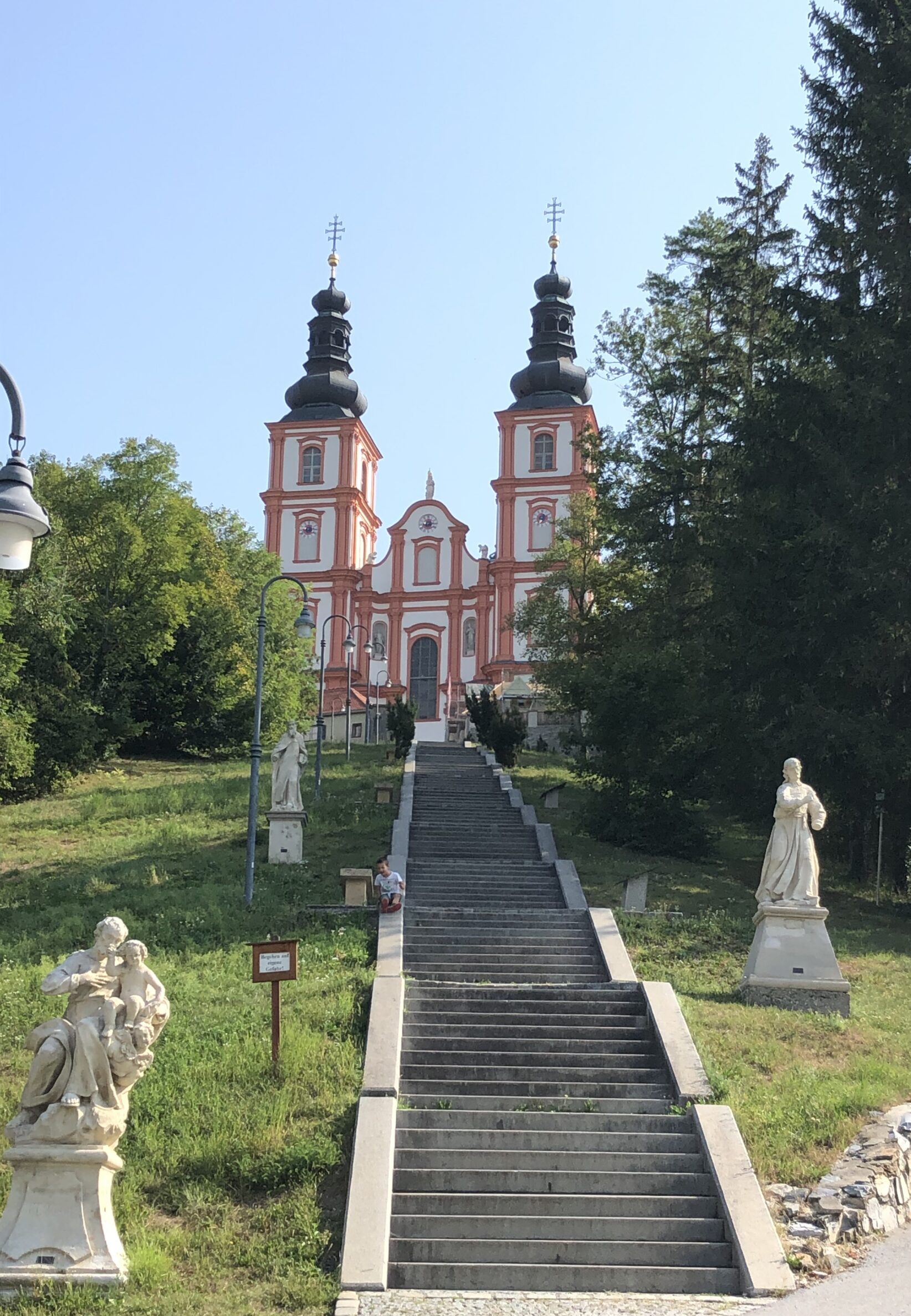
Just outside the built-up area of Graz, I can see the basilica perched at an altitude of around 500 metres. As I make my way up the Purberg, I realise that the road leading to the basilica is steep. The gradient is a staggering 141 per mille. I decide to park the car and take the 216-step staircase.
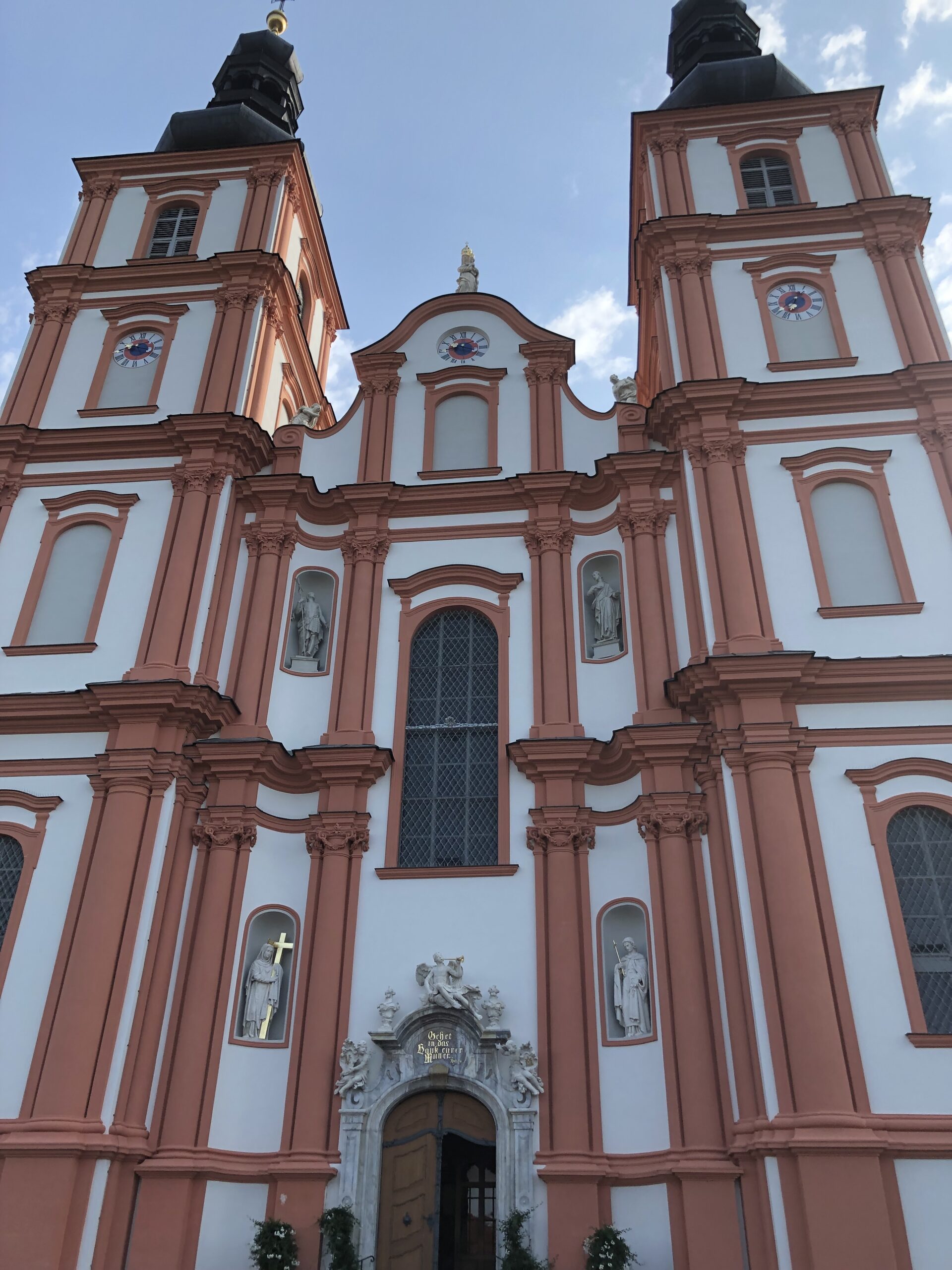
When I stand before the basilica, I feel very small. I look up at the towers. Such height! The Baroque basilica is painted in yellow tones. What a job was done here at the beginning of the 18th century! Then I go inside and see that all the space on the ceilings is painted. The walls are also adorned with many paintings and pictures. I am impressed by the amount of woodwork and quite a few artworks are covered in gold leaf.
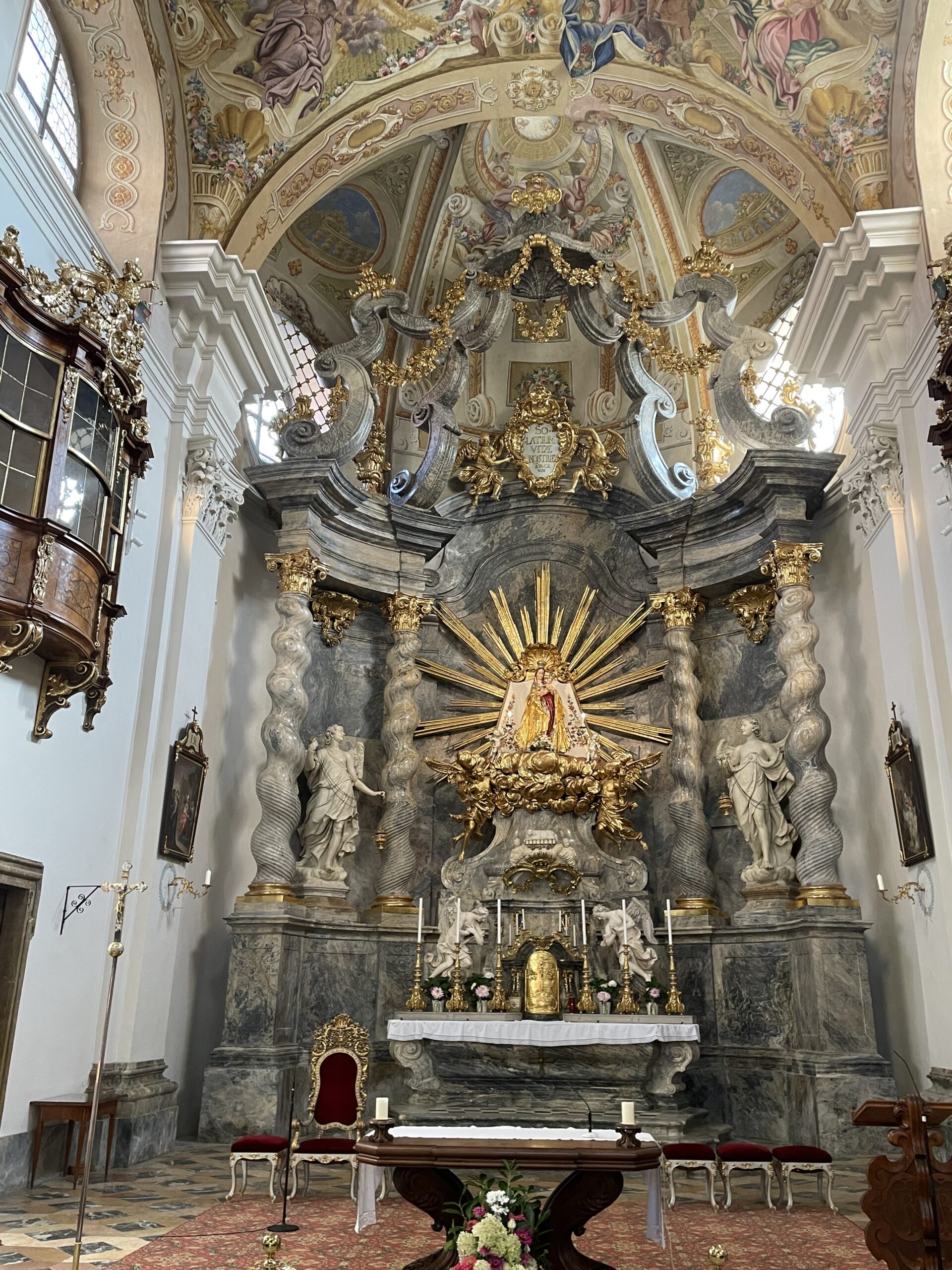
Then I come to the main altar and see the image of grace from 1465. How many visitors this effigy has had. How many thoughts have been shared here with Mary?
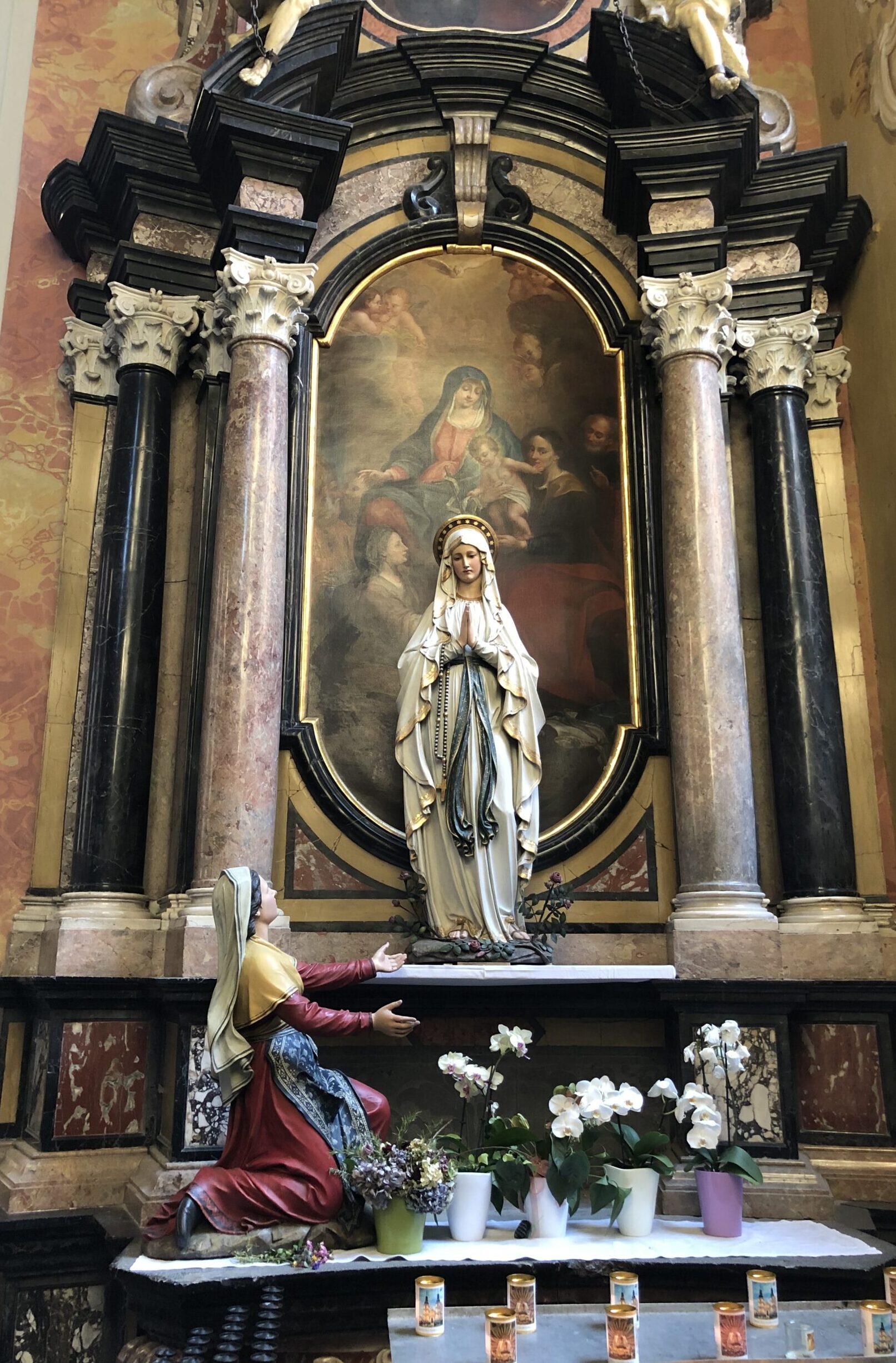
In the basilica, I pause for a long time before the images of Our Lady and Bernadette. Seeing this reminds me of a stay in the pilgrimage site in the south of France.
I am very impressed by the many frescoes. Constantly looking up, seeing so much beauty. It is so high, but feels so close.
Next, I'll take another walk around the basilica and admire the paintings and pulpit. What great craftsmen have been at work here. What beauty they know how to create. Being here feels like a privilege.
~~~

 Nederlands
  English (UK)
  Deutsch
  Français