History
Maria Wörth was founded by missionaries from the Benedictine monastery of Innichen in Northern Italy, South Tyrol. This happened around 830 on the initiative of Hitto, the Bishop of Freising in Bavaria (811-835). The construction of the church was completed in 875. In 894, the first mention of a church, dedicated to Mary, appears.
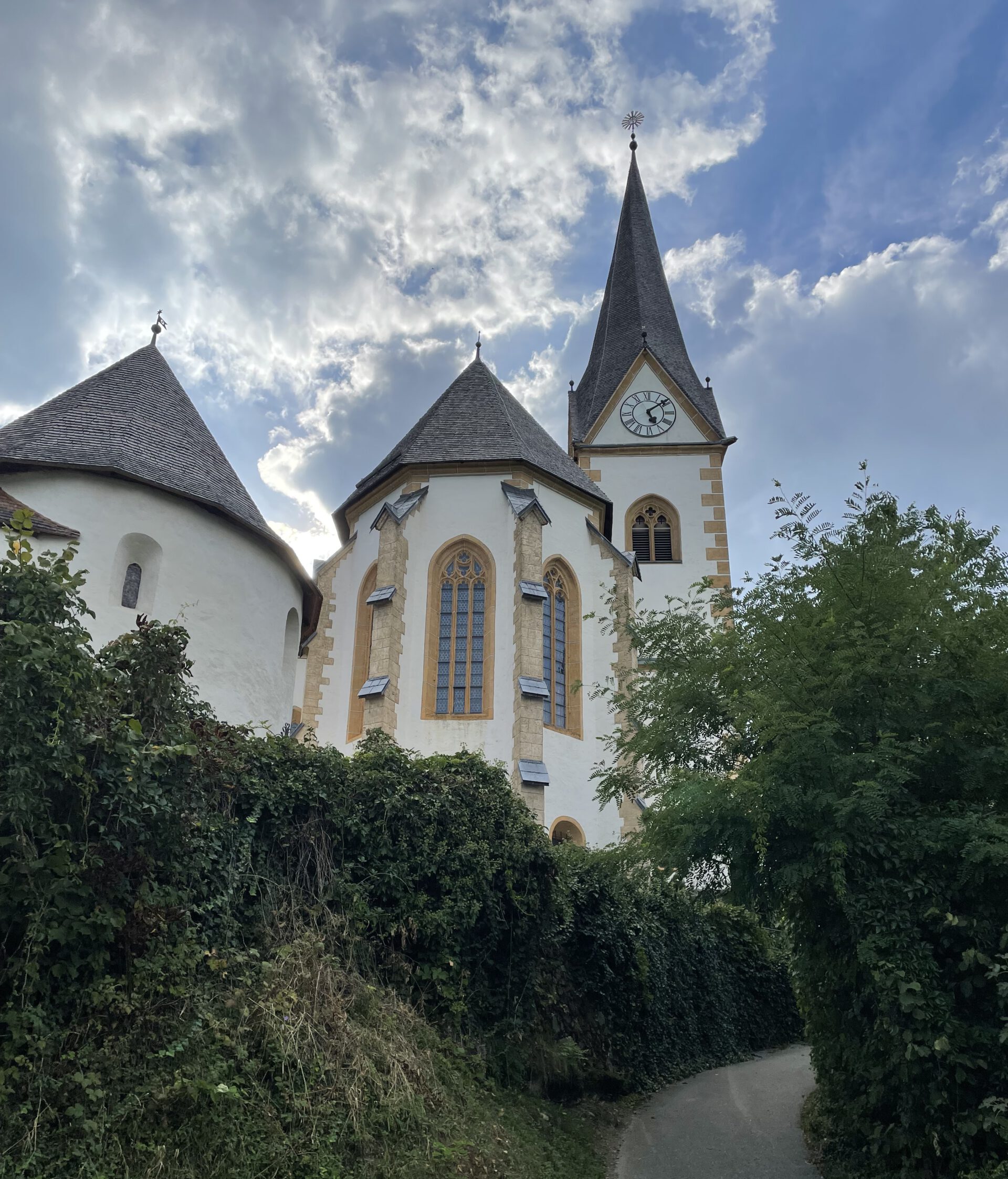
In 1151, a monastery and a second church, namely the Small Winter Church, were founded by Otto of Freising (1112-1158), bishop from 1138 to 1158.
In 1399, a great fire ravaged the church and monastery, and everything was destroyed by the flames. A slow reconstruction then took place on the remains of the Romanesque building. Some of these remnants can still be seen today in the crypt and the southern arched portal.
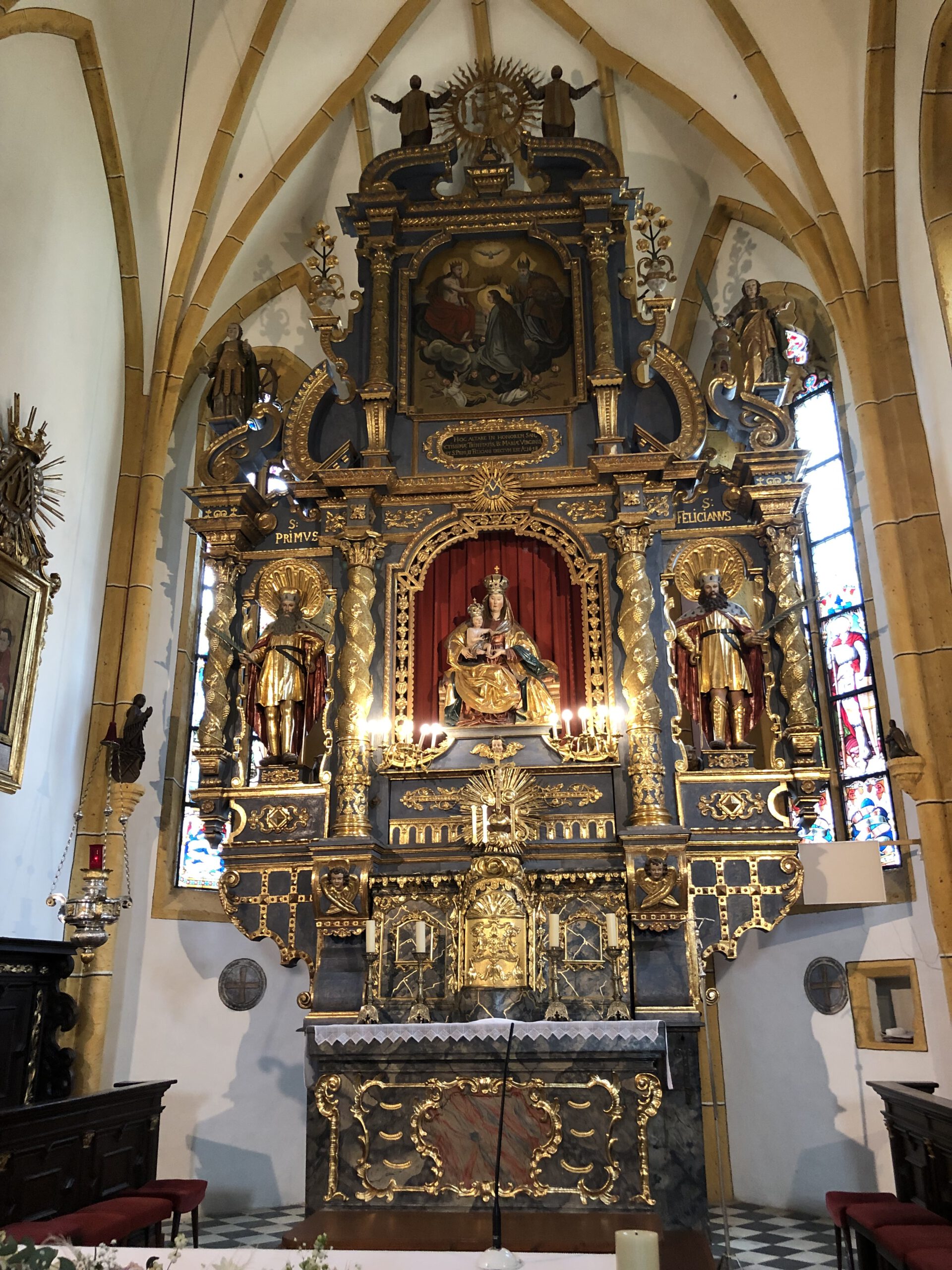
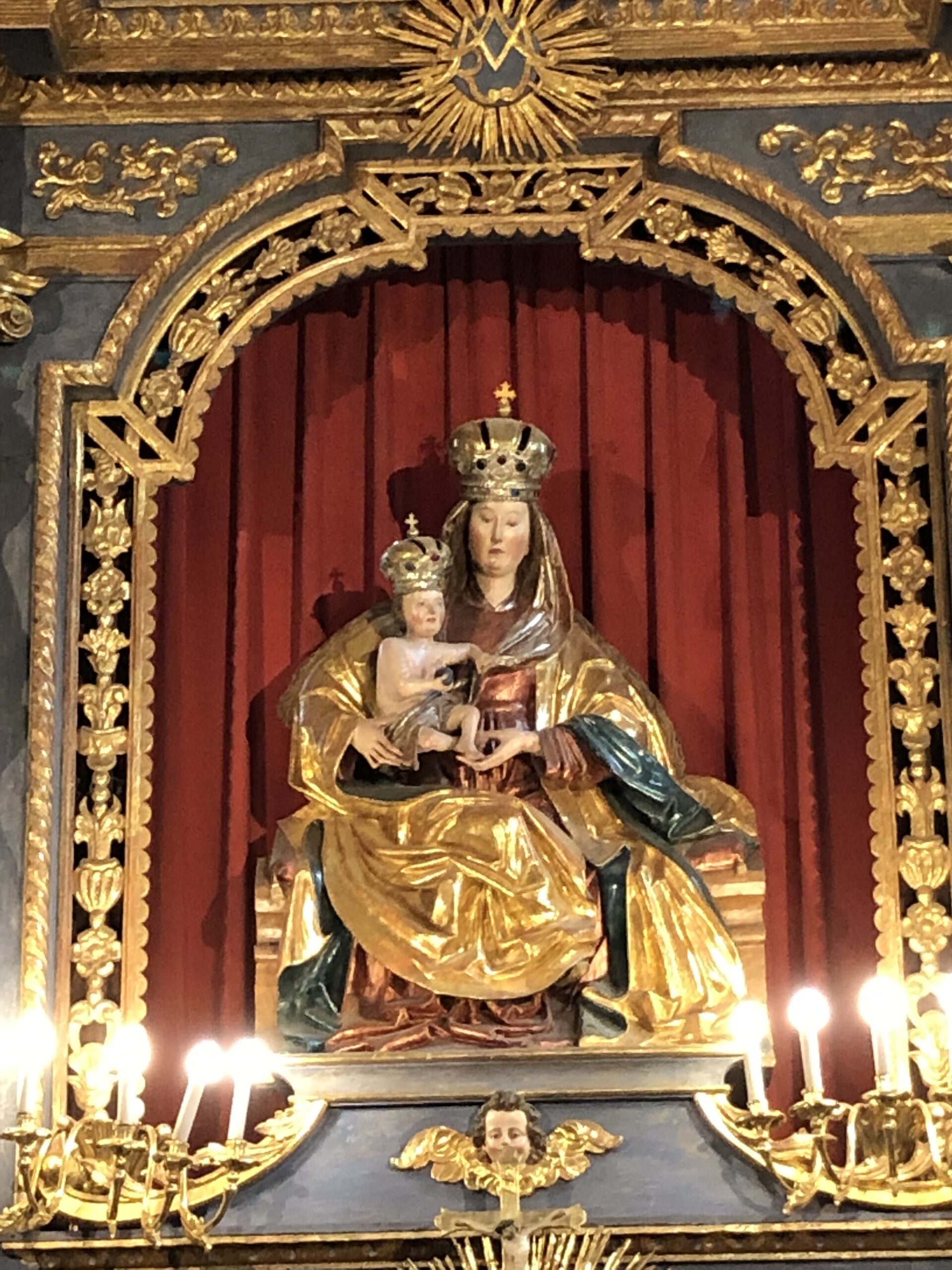
The Baroque high altar dates from 1658 and centrally features the enthroned Virgin Mary with Child from 1460. The marble font dates from 1682. The tower houses 5 bells, one of which is from 1640, three are from 1959, and the newest bell is from 1994.
For many decades, the Jesuits managed the church. In 1773, following the dissolution of the Jesuit order, pastoral care in Maria Wörth was undertaken by priests. From 1808 until 1969, Benedictine monks were active in the sanctuary.
Pilgrimage site
Maria Wörth is situated on a peninsula in the Wörthersee, at an elevation of 450m above sea level.
In the parish church, which is dedicated to Saints Primus and Felician, stands the high altar, spanned by the nave. An old Baroque pulpit from 1761 can also be seen there. In the centre of the high altar is the miraculous image of Mary. Her presence makes this church a place of pilgrimage.
The Baroque side altar was made in 1740 and depicts the Mother of Sorrows and a late Gothic crucifix from the early 16th century. The parish church tower has 5 bells, and one of them dates from 1640, with the other bells dating from the 20th century.

Vocal and organ concerts take place in the parish church. Every year, on August 15th, the Feast of the Assumption of Mary, is the highlight of the pilgrimage season. This church is romantically situated and therefore a popular wedding church.
Next to the parish church stands the Rosary Church, also called the Winter Church, with medieval frescoes.
ACCESSIBILITY
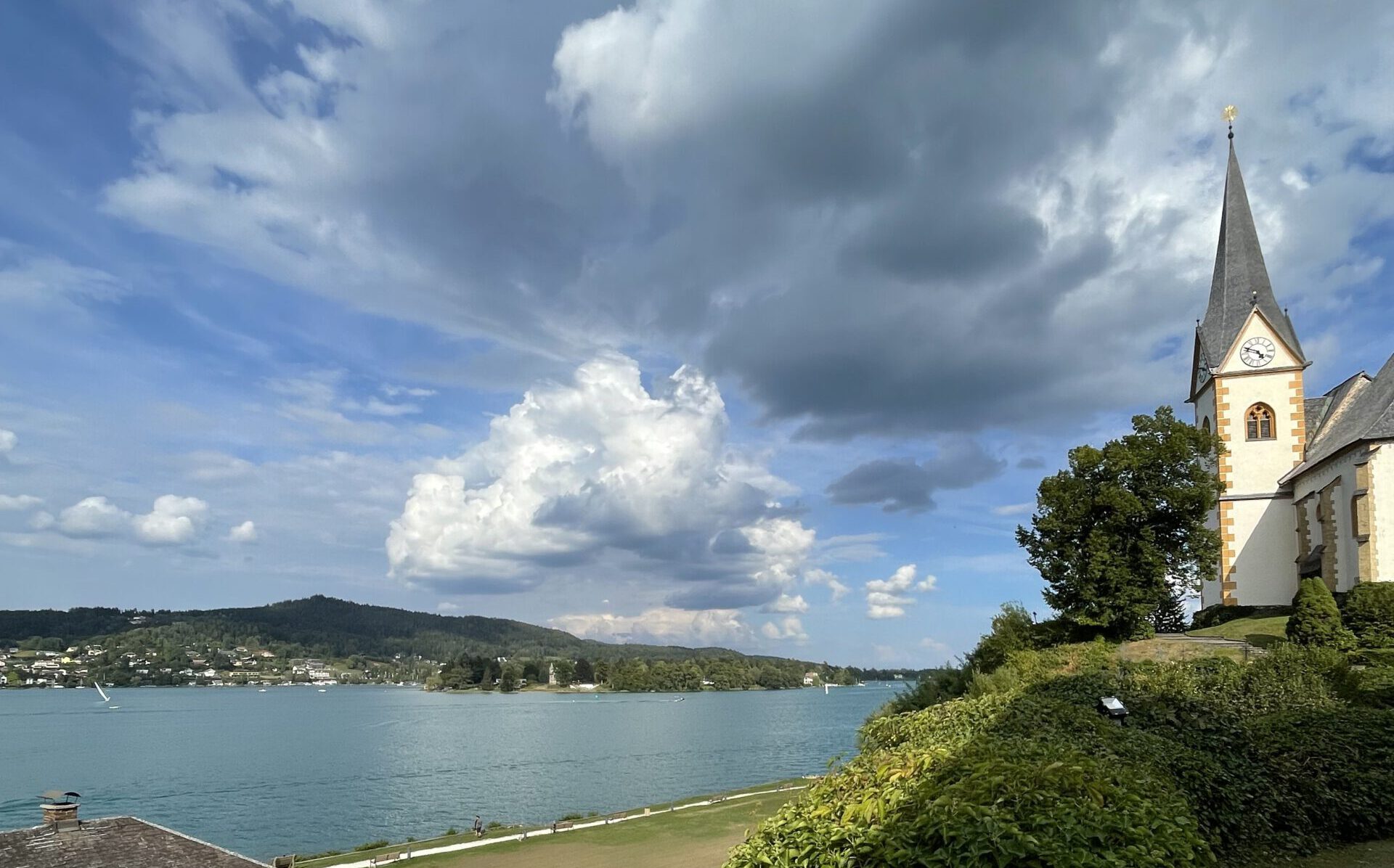
Maria Wörth is located in Carinthia, in southern Austria, approximately 12 km west of the city of Klagenfurt, on the southern side of the 17 km long Wörthersee.
The parish church of Saints Primus & Felizian is located at Pfarrplatz 1, 9082 Maria Wörth.
The Rosary Church, also known as the Winter Church, is located at Lindenplatz 4, 9082 Maria Wörth.
For current information, please visit www.maria-woerth.info and www.kath-kirche-kaernten.at/mariawoerth.
Experience

In the south of Austria, I'm driving along Lake Wörthersee. Many tourists are on and in the water of the elongated lake. What a crowd! After driving a bit further, I see the churches of Maria Wörth. After all, two churches stand side by side here.
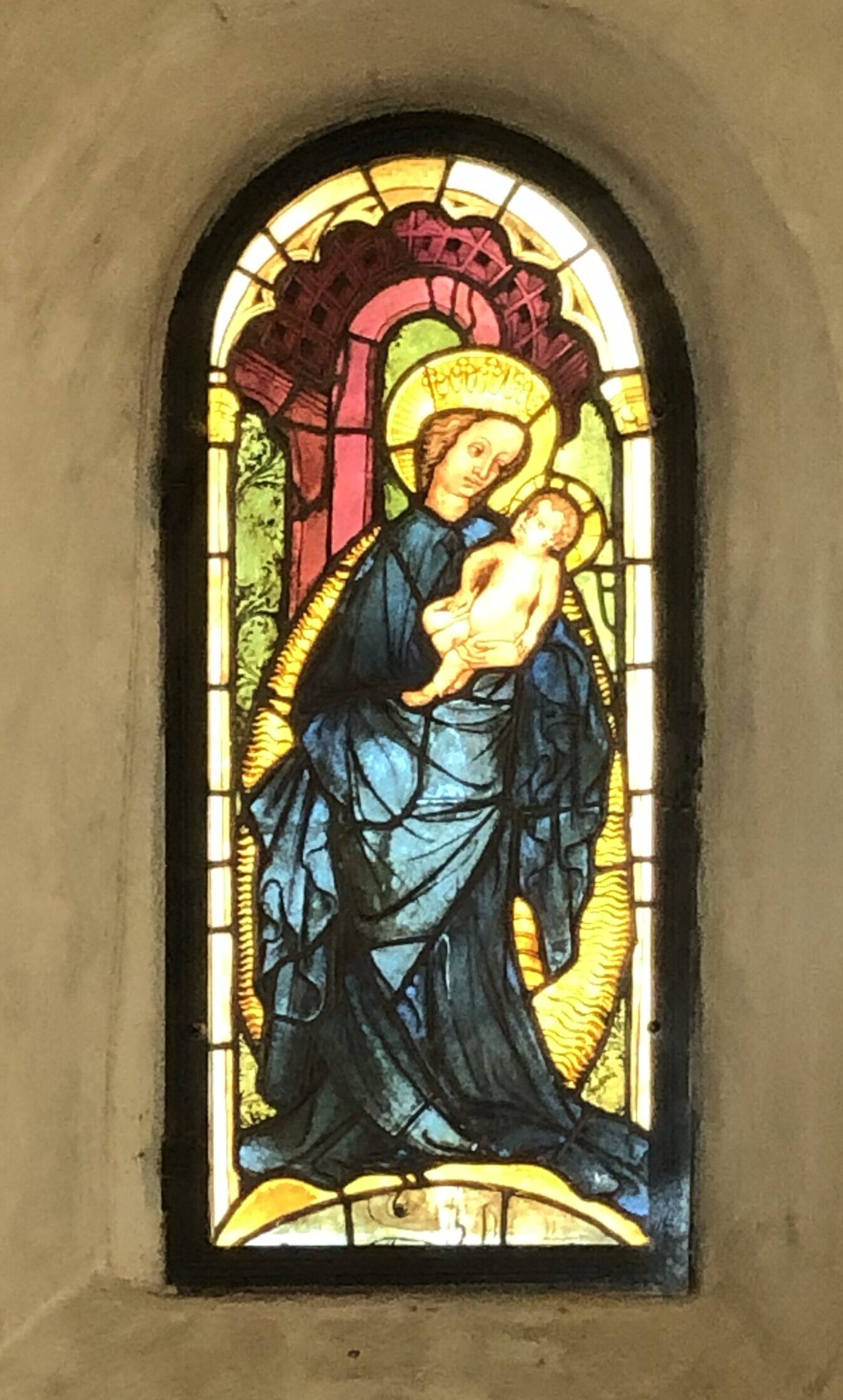
First, I will go to the Winter Church to greet not only Mary but also Saint Nicholas. This church has a history, as pilgrims have been coming here since the 12th century. I stand for a long time in front of the depiction of Saint Nicholas. Above this statue, Mary with Child is depicted in a heart shape. In this church, there is also a statue of Our Lady with her naked Son. In the Winter Church, also called the Rosary Church, I admire the medieval frescoes and a beautiful stained-glass window with the Virgin Mary and her Child. Our Lady is depicted with a halo and stands on the crescent moon, which symbolises the transience of the world. Mary carries her naked Child on her left arm and looks lovingly at her Son. Mary is wearing a blue, pleated dress. The window presumably dates from 1420. The stained-glass window measures 103 by 46 centimetres. This late Gothic artwork is among the important works of Austrian stained-glass art. So much splendour in this busy house of worship.

Next, I'll visit the pilgrimage church, which can be reached via a high, wide staircase. At the top of the stairs, there's a very beautiful view of the Wörthersee. In the parish church, the high altar immediately catches my eye, with Mary and the baby Jesus on her right leg at the centre. Both figures are crowned. Mary is looking slightly down, wearing a golden mantle, and holding her Child with both hands. Jesus has his left hand on his Mother's left breast and with his right hand, he holds a small globe with a cross. Afterwards, I stand before the altar and see Mary, and her heart is pierced by seven swords. This moves me, and then I look back at the high altar, where Our Lady is enthroned. I take a seat in the church and let the impressions sink in. How happy I am to be visiting here.

Posted: 3 November 2022
Last modified: 25 July 2023
~~~

 Nederlands
  English (UK)
  Deutsch
  Français