History
The origin of Mariazell dates back to the 12th century, as the town was founded on 21 December 1157. Otker, abbot from 1155 to 1159 of the Benedictine monastery of St Lambrecht, sent a monk to the region now known as Mariazell. A legend tells...
In the 12th century, there were monks in the region of what would later become Mariazell. In 1157, monk Magnus was sent to Mariazell by Abt Otker, and he also brought a linden wood statuette of Mary. On 21st December 1157, Magnus was on his way there when a rockfall suddenly blocked his path. The monk placed the image of Mary before the rock, and the rockfall split open, allowing the monk to proceed. Late in the evening, he placed the statuette in a hollow tree trunk, built a wooden hermit's cell, and continued to live there. This cell, due to the statuette, became a small chapel and, over the years, grew into Austria's largest Marian shrine, attracting many pilgrimages annually. Sadly, the statuette was lost; a replica was later placed in the basilica. This legend is the origin of the pilgrimage site of Mariazell.
Mariazell comes from the name of the Mother of God and from the Latin “cella”, which means monk's cell. In German, that's “Zelle”.
The first prominent pilgrims were Count Vladislav Heinrich (c.1160-1222), Count of Moravia and Duke of Bohemia, along with his wife, who visited the cell. The Count suffered greatly from gout. By visiting the cell and praying at the statue of the Virgin Mary, the Count was healed. In thanks, the Count had a chapel built near the cell around 1200.
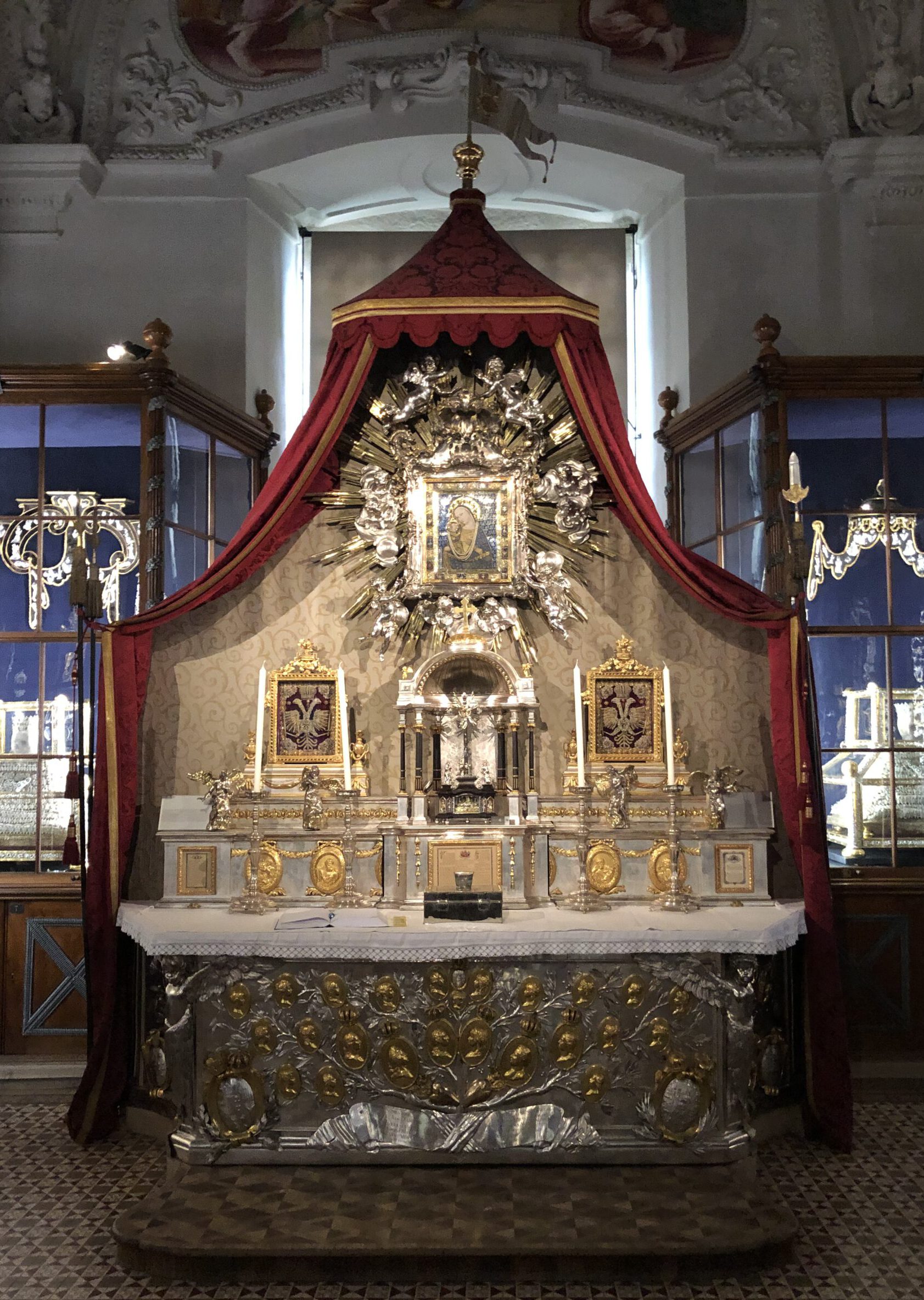
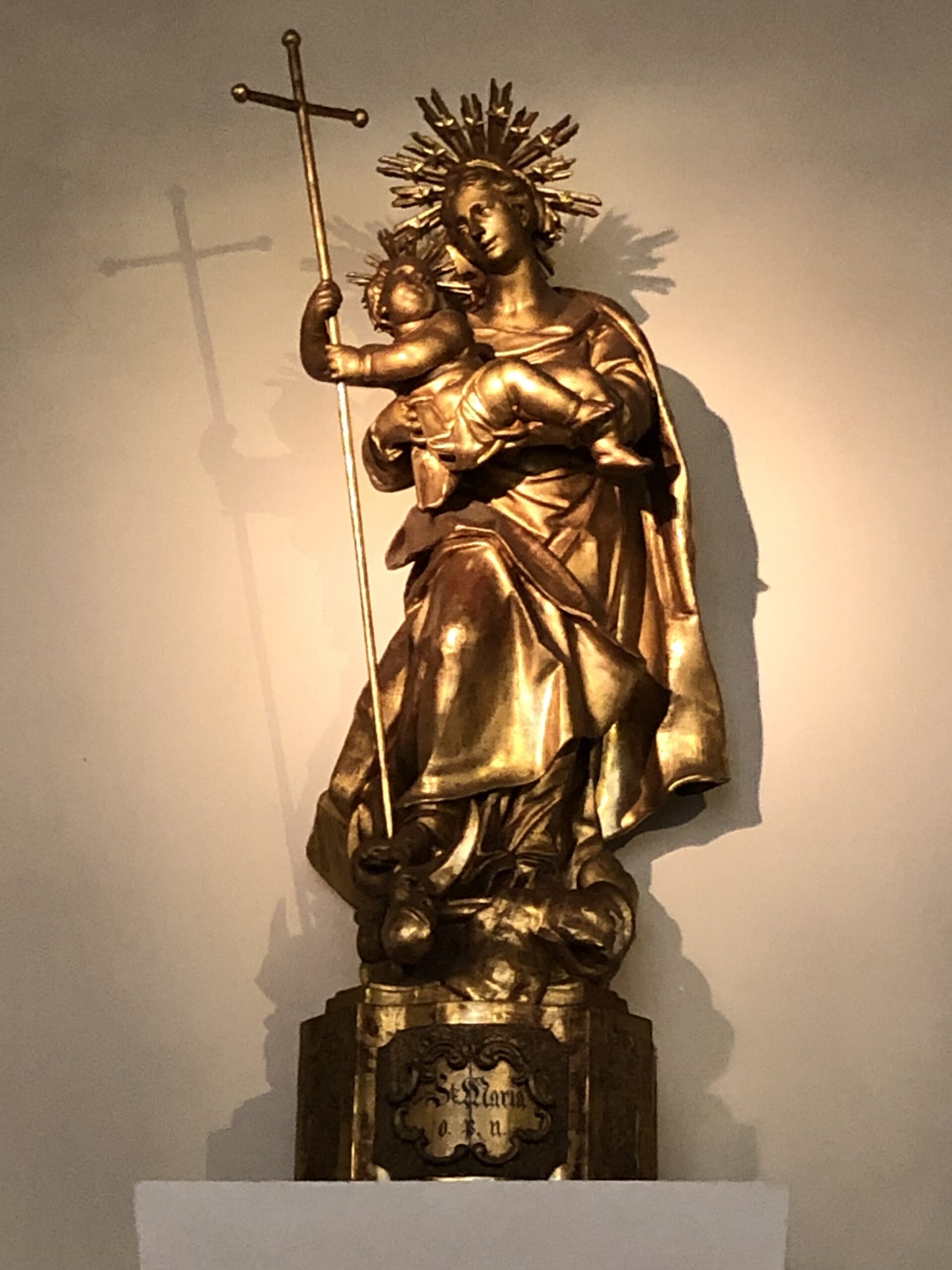
Around 1300, there is mention of the church of “Our Lady in Cel”. In 1365, there is a new development for Mariazell. Louis I of Hungary (1326-1382) wins a battle against the Turks and dedicates the victory to Our Lady. He donates the Madonna statue, which still stands on the altar in the Treasury and is venerated by Hungarian pilgrims. It was made around 1355 and is attributed to the Italian painter Andrea Vanni (1332-1414). Of great importance for the development of Mariazell is the granting of a full indulgence in 1399 by Boniface IX, Pope during the period 1389-1404. The number of pilgrims increases considerably as a result. Around 1500, Mariazell is an internationally renowned pilgrimage site, and this not only for nobles but also for citizens and peasants.
Mariazell is a pilgrimage site that was not even influenced by the Reformation in the 16th, 17th, and 18th centuries. During that period, pilgrims from all over Europe came to the Austrian pilgrimage site.
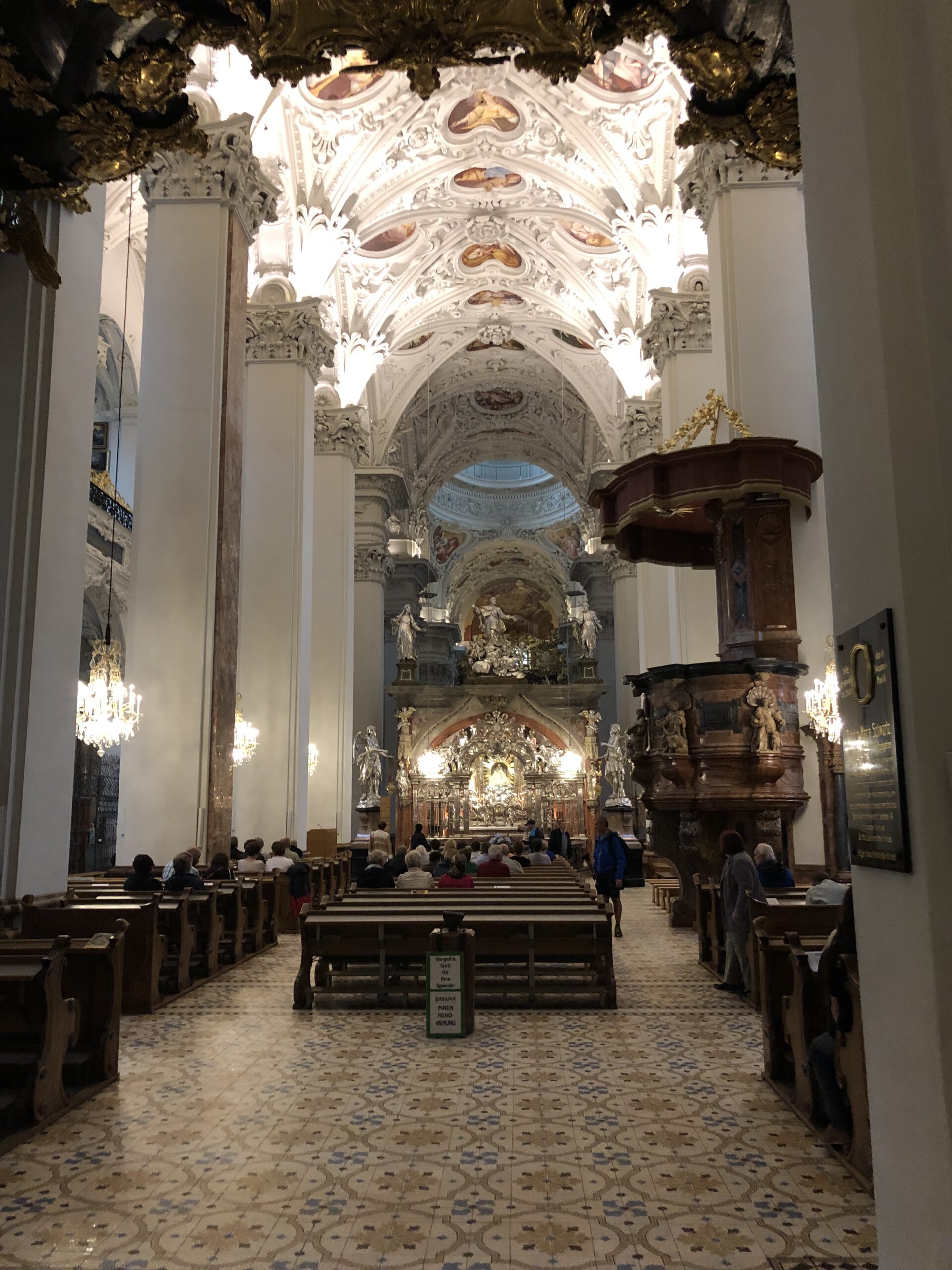
Originally, the basilica was a Gothic hall church. In the 17th century, Swiss architect Domenico Sciassa (c. 1599-1679) introduced the Baroque style to the building. Construction on the church's expansion began in 1644 and was completed in 1683. The church was then not only lengthened, but two towers were added to the front. In addition to the tall tower, two smaller 60m towers were built on either side. The total length of the church is 84m and the width is 30m. The consecration took place on 31 August 1704, when the high altar was installed, by Franz von Kaltenhausen (1634-1707), abbot of St. Lambrecht's Abbey. The town of Mariazell grew up around the pilgrimage church.
The current design of the altar in the Chapel of Grace was installed in 1726. Among those involved in its production were architect Joseph Emanuel Fischer von Erlach (1693-1742) and silversmith Philipp Jakob Drentwett IV (1686-1754). In 1756, Drentwett IV processed the silver in the Chapel of Grace, which was donated by Maria Theresa of Austria (1717-1780), Archduchess of Austria, Queen of Hungary and Bohemia (1740-1780), and Holy Roman Empress (1745-1765).
Around 1800, many art treasures had to be surrendered to the government to help finance the Second Coalition War (1792-1802). A large fire in 1827 destroyed the roof, bells, and dome. The entire kingdom contributed to repair the damage. The First World War (1914-1918) also demanded sacrifices by handing over the copper roof to aid the war effort.
In 1907 the church was elevated to the status of a basilica. In 1908 the miraculous image was crowned.
After the Second World War (1939-1945), the town grew due to its increasing religious and cultural appeal. Mariazell became a major religious and cultural centre with international renown.
The largest groups of visitors to Mariazell are Austrians and then Hungarians. The reason so many people of Hungarian nationality visit the pilgrimage site is that many Hungarians live in Austria. Another explanation is the “Iron Curtain” (1945-1989), behind which Hungary disappeared in 1947. Mariazell was still accessible to Hungarians then. This made the Marian shrine a symbol of Hungarian resistance against the atheism of the ruling Russian overlords and their country's dictatorship.
Mariazell receives a Pope on two occasions, namely in 1983 from John Paul II, Pope from 1978 to 2005, born as Karol Józef Wojtyla (1920-2005), and Benedict XVI in 2007, Pope from 2005 to 2013, born as Joseph Aloysius Ratzinger (1927-2022).
Pilgrimage site
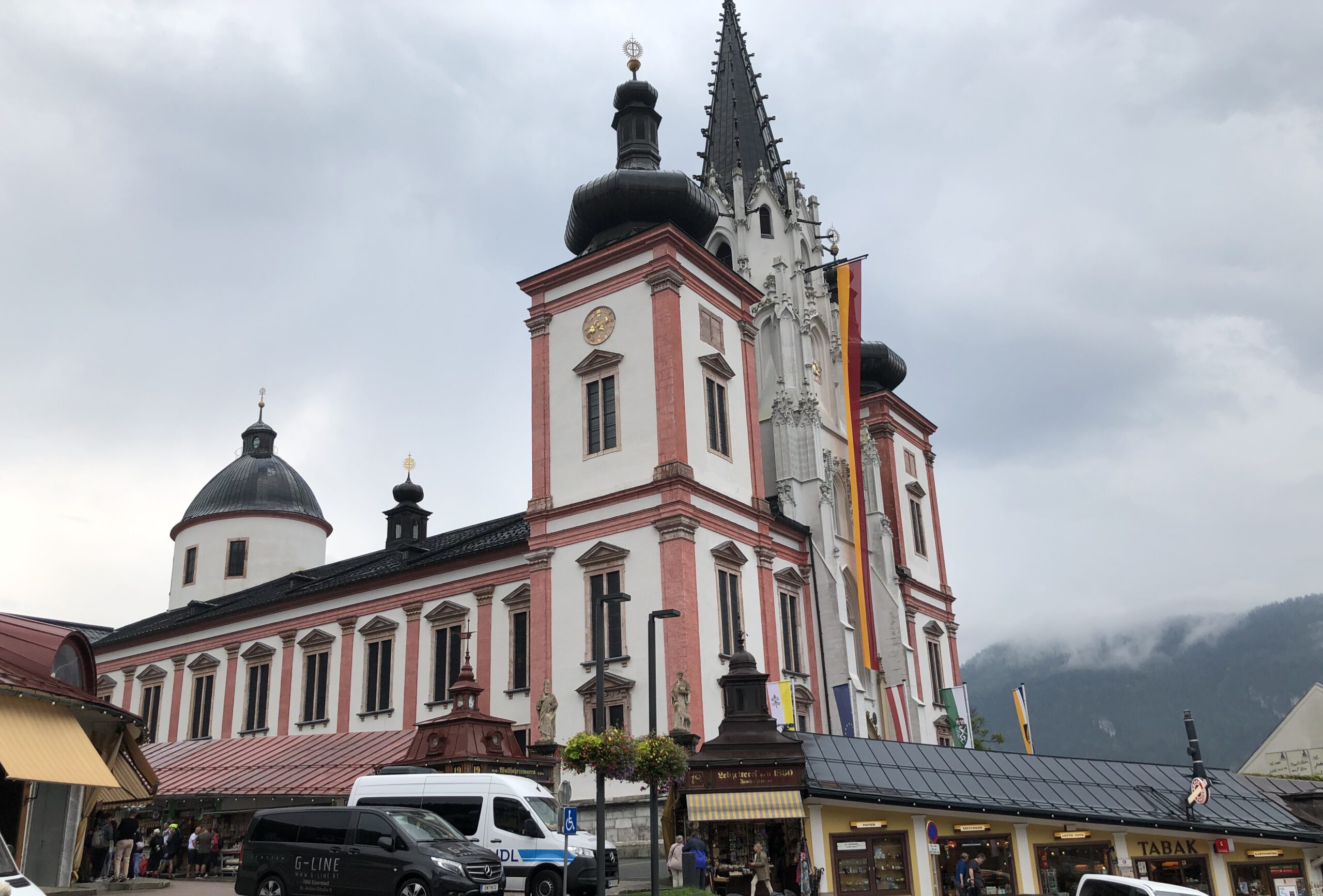
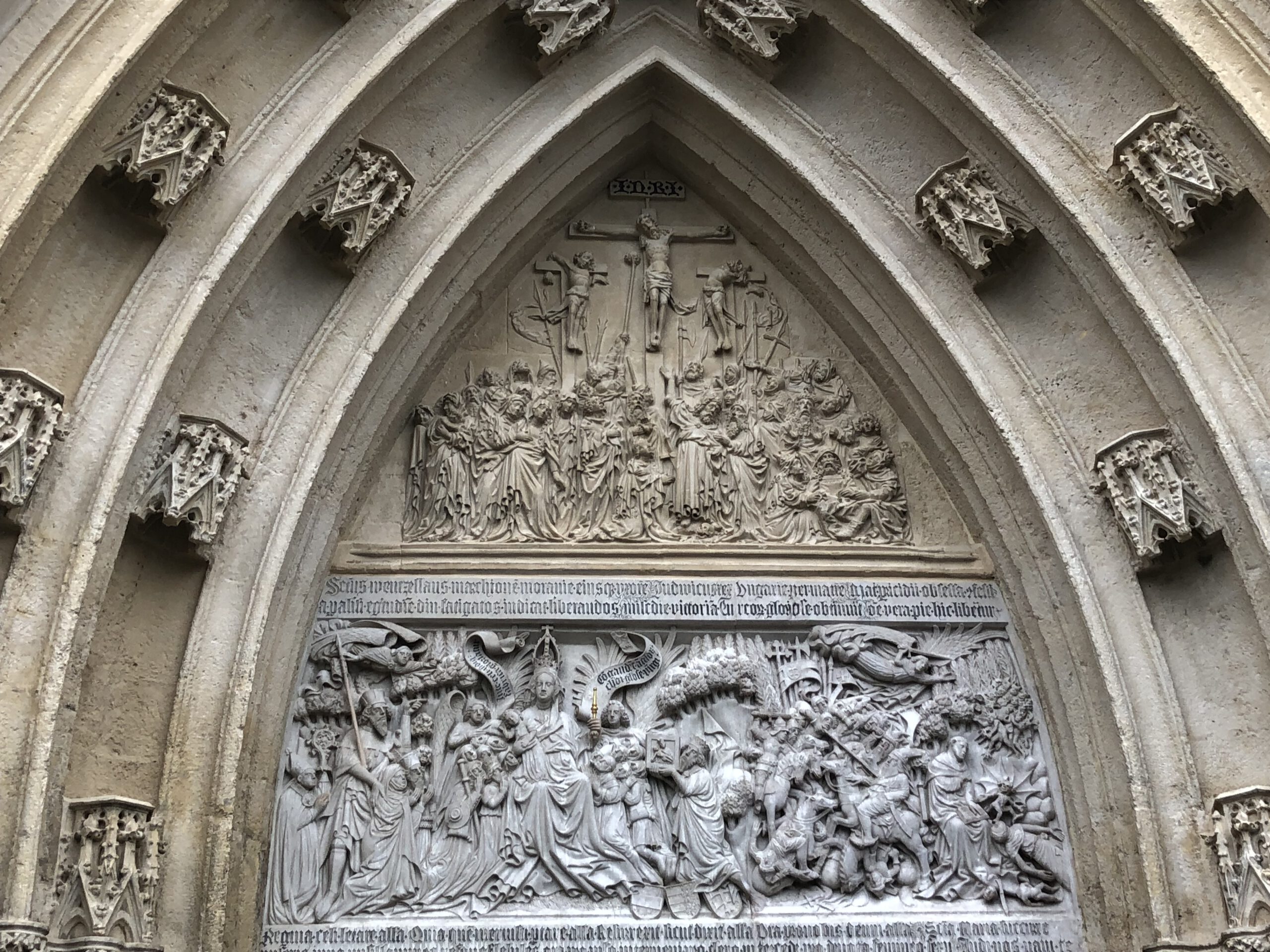
The Gothic-Baroque basilica is visible from afar and is dedicated to the Nativity of Mary. The characteristic three-towered façade welcomes visitors from a distance. The large, curved main portal bears words in Latin. The text refers to the visit of the Count of Moravia and his wife. The Count is freed from gout by Mary. It also shows that Louis I, King of Hungary, donated a statue of Mary as thanks for his victory over the Turks.
The image of mercy in Mariazell has three titles, namely Great Mother of Austria (Magna Mater Austriae), Great Lady of the Hungarians (Magna Domina Hungarorum), and Great Mother of the Slavic peoples (Alma Mater Gentium Slavorum).
In Mariazell, many people undertake pilgrimages from numerous countries. Traditional pilgrimages also take place, such as those of Croats from Austria's Burgenland, who have been coming to the shrine since 1923.
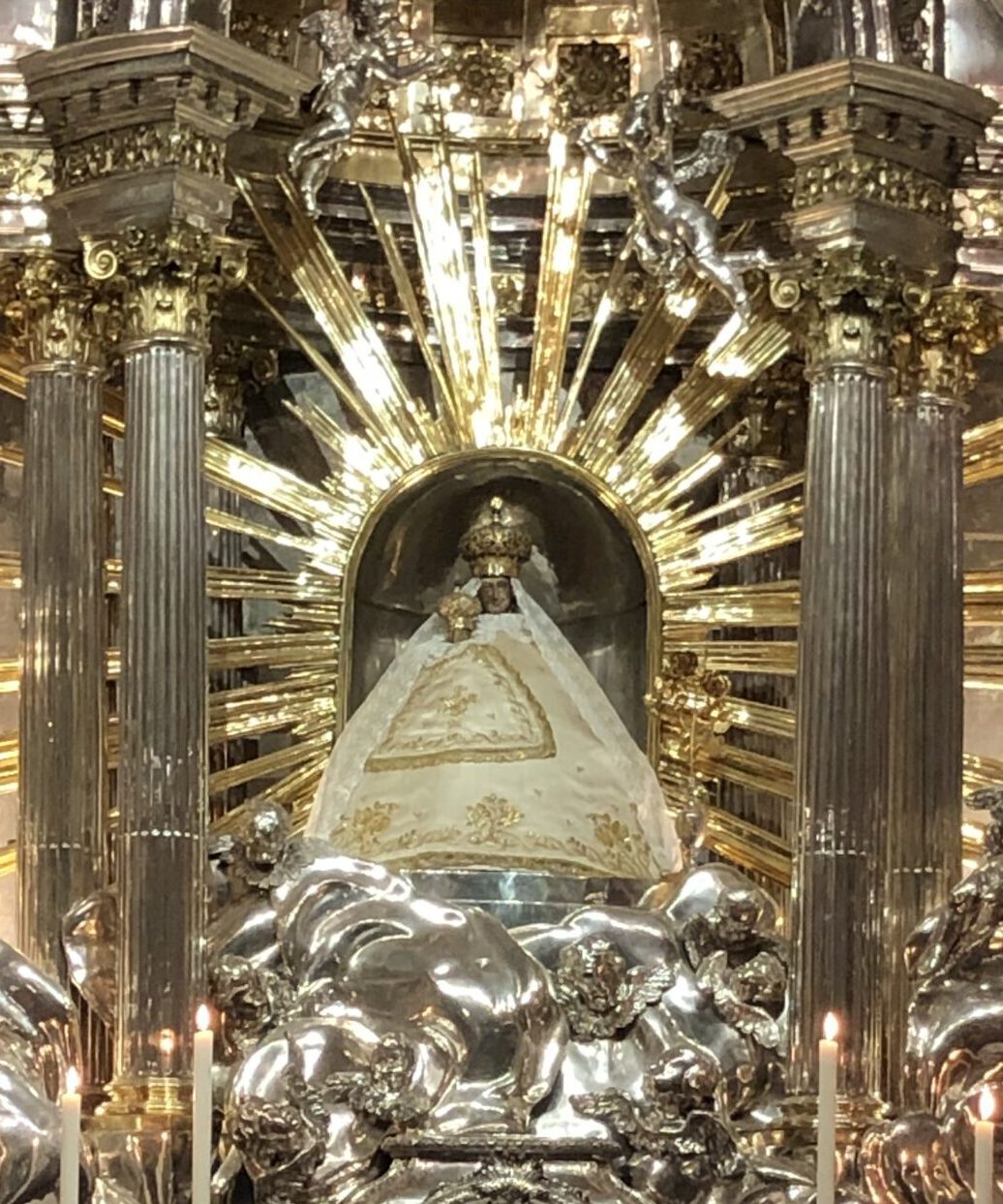
Visitors come specifically for the image of Mary. The effigy is in the chapel of grace, surrounded by silver columns and a silver canopy. This late Romanesque image is 48 cm high and carved from linden wood. Only two days a year does the image not have its special Our Lady's clothing on, which is on 8th September, the feast of the Nativity of Mary, and on 21st December when the founding of Mariazell is celebrated. Mary holds Jesus, who has an apple in his left hand, as a sign of original sin. His other hand reaches for a fig, the symbol of death and resurrection, which Mary offers him. The meaning of this is that Jesus takes on all suffering to free people from their sins. Mary points to Jesus with her left index finger. Mary therefore does not want to be central, but in the background as the intercessor for the people.
In the Chapel of Grace, the images of Joseph, Joachim, and Anne can also be seen. These were made in 1734 by the Italian sculptor Lorenzo Mattielli (c. 1678-1748).
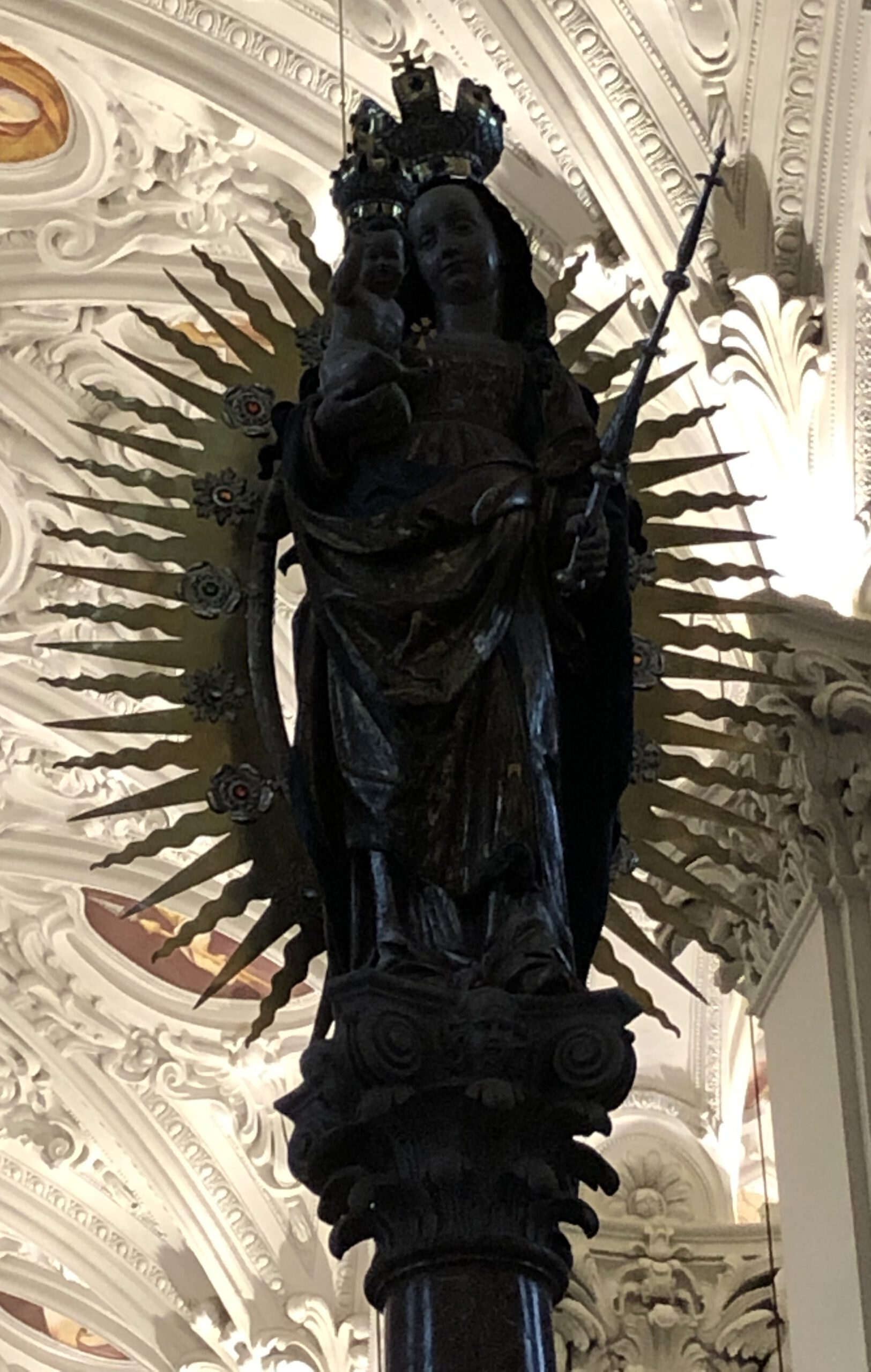
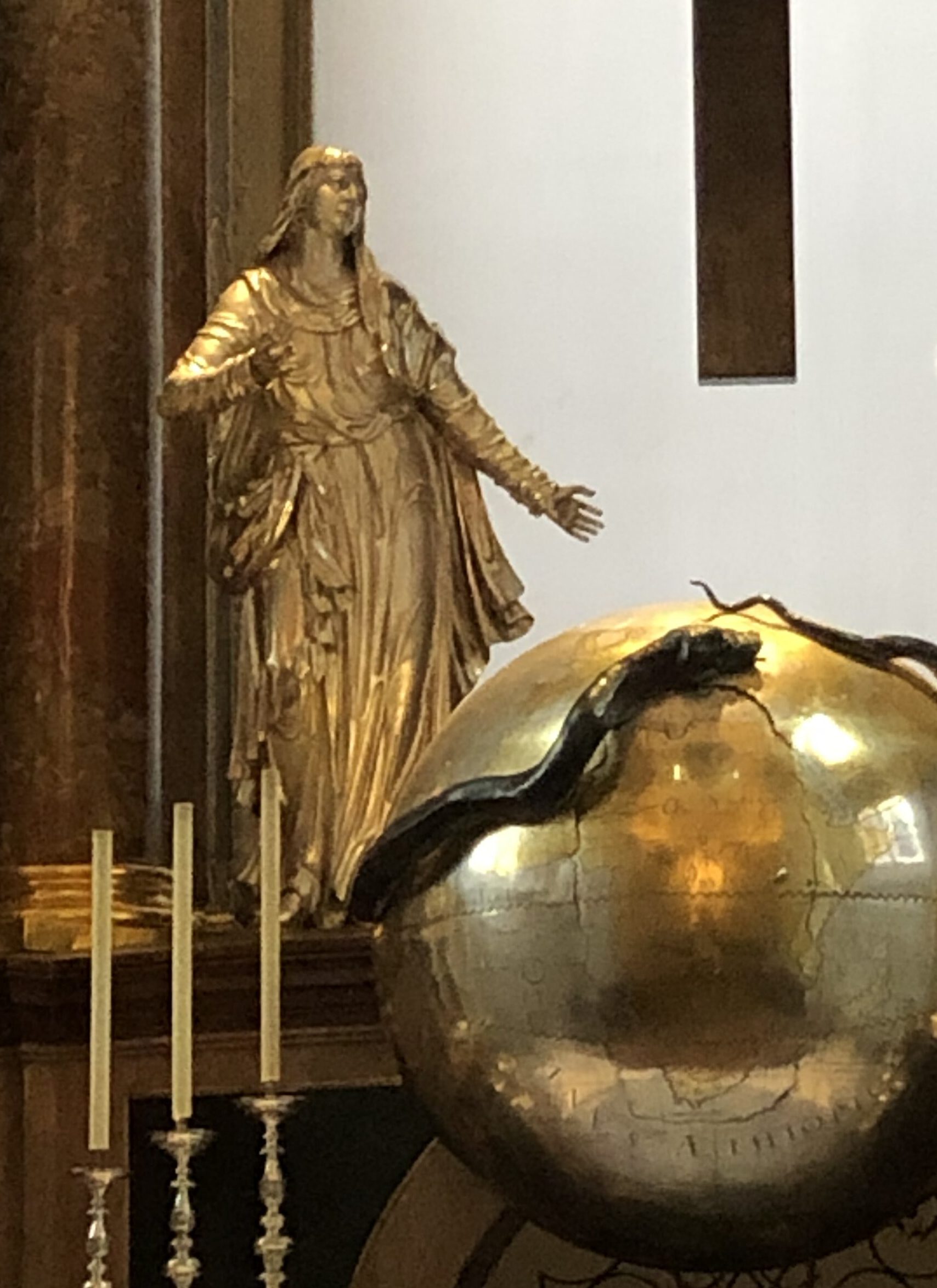
Behind the Chapel of Grace, in the part of the church built in the 17th century, there is a 2-metre-tall statue of Mary on a 5-metre-high marble column. The statue dates from 1520. Mary is depicted as the heavenly queen and holds the blessing Jesus with a globe on her right arm. In her left hand, she holds a sceptre.
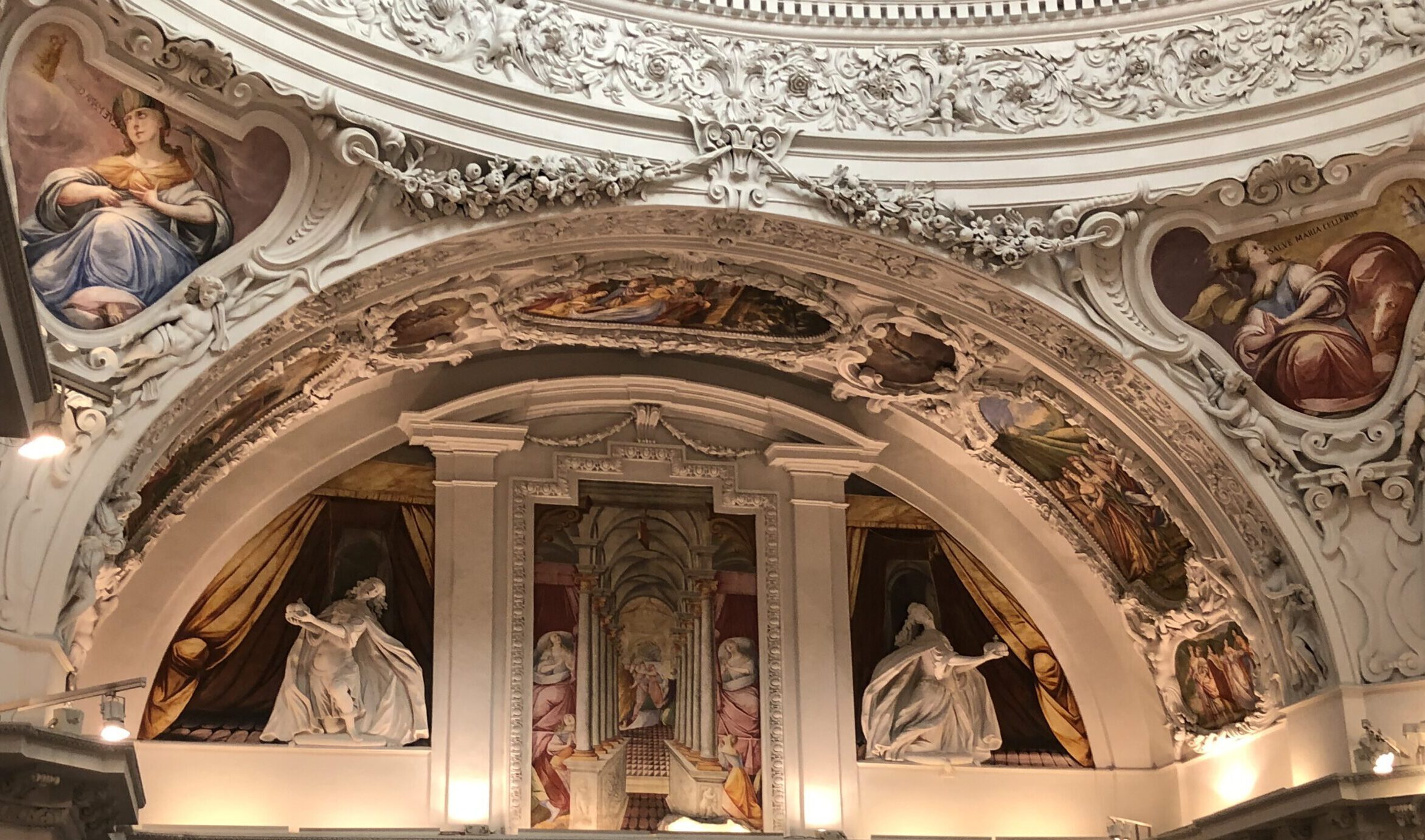
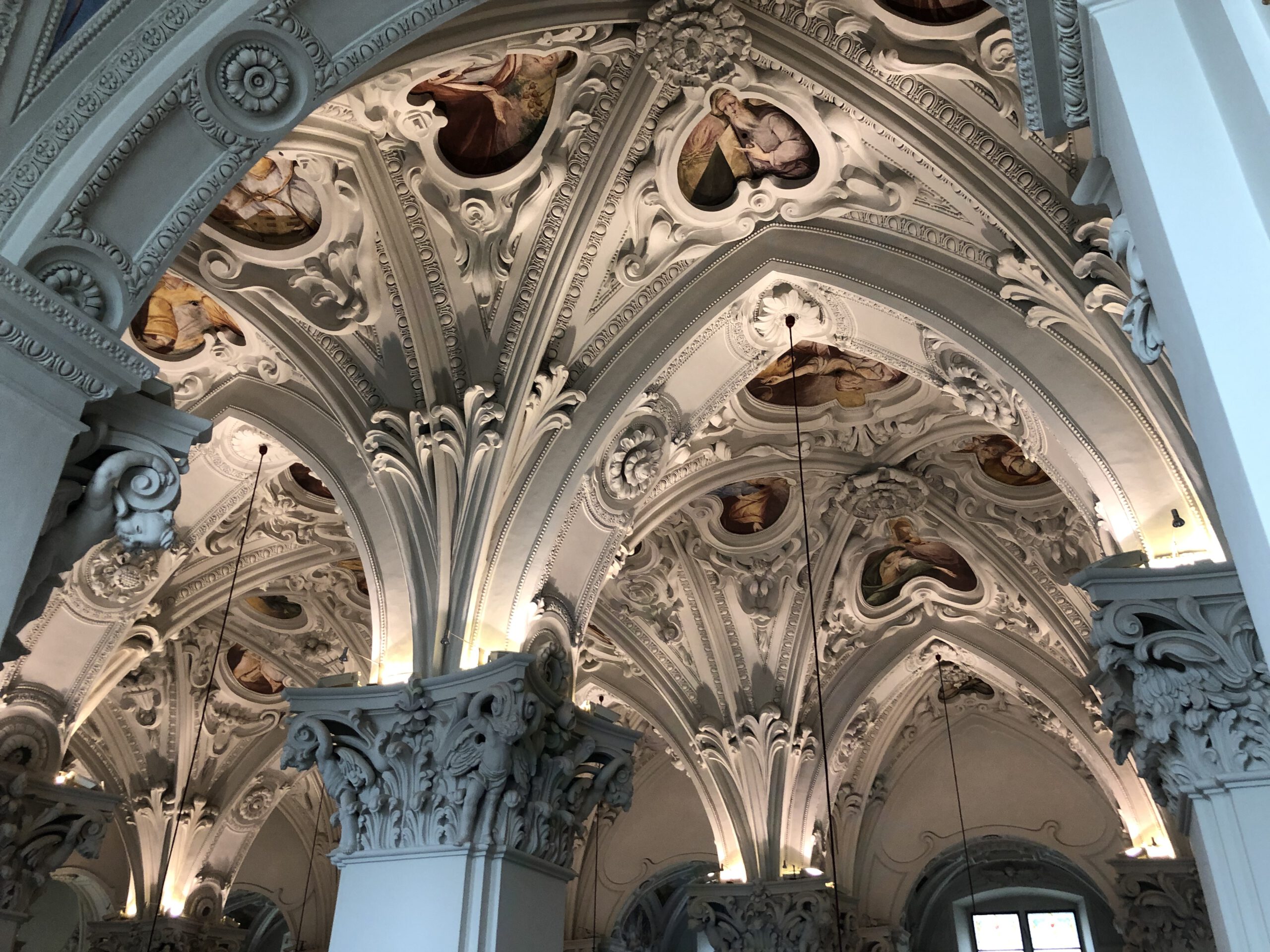
The frescoes on the vaults are impressive, especially those in the high dome.
On both sides of the nave, six chapels were built.
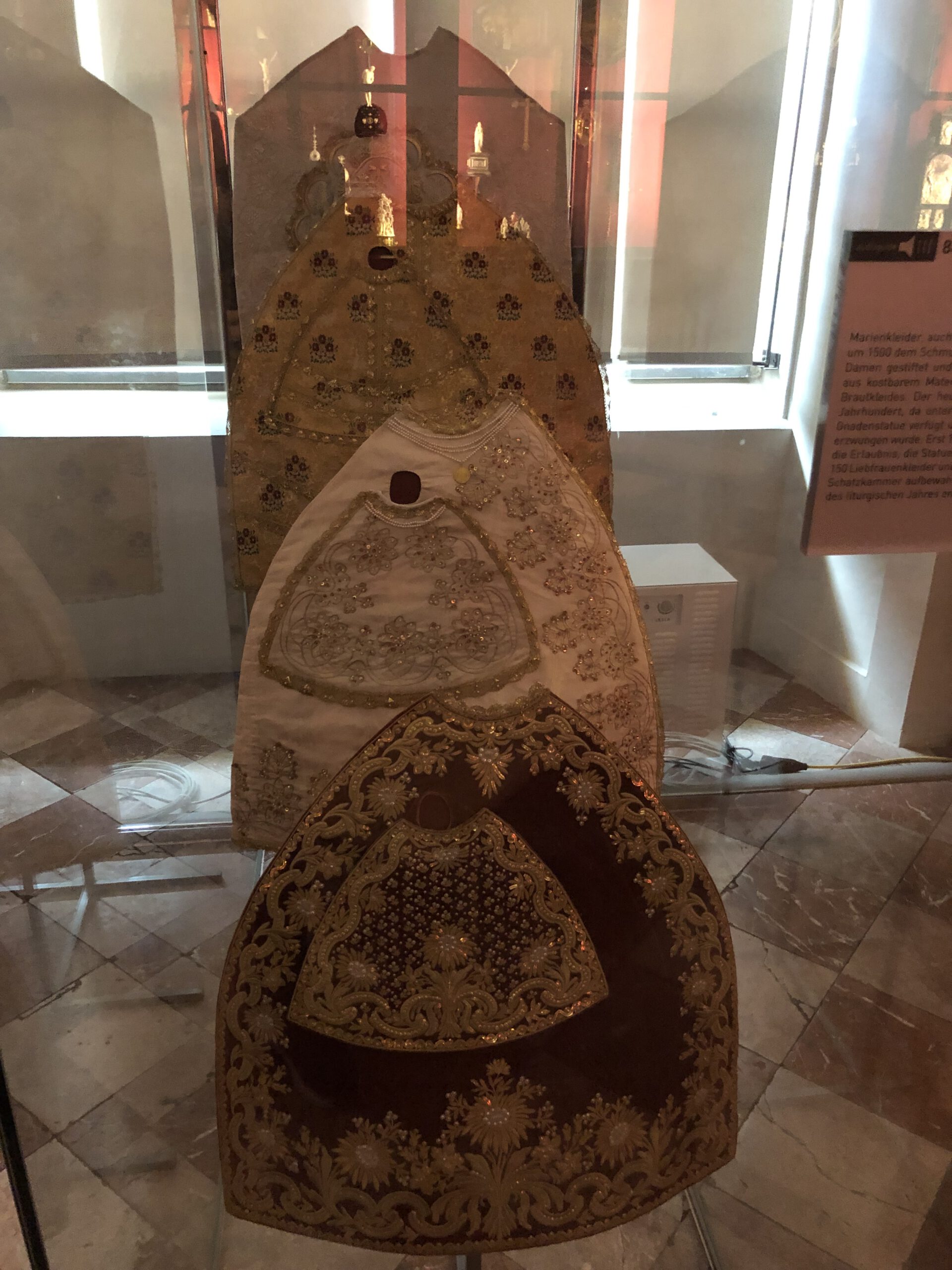
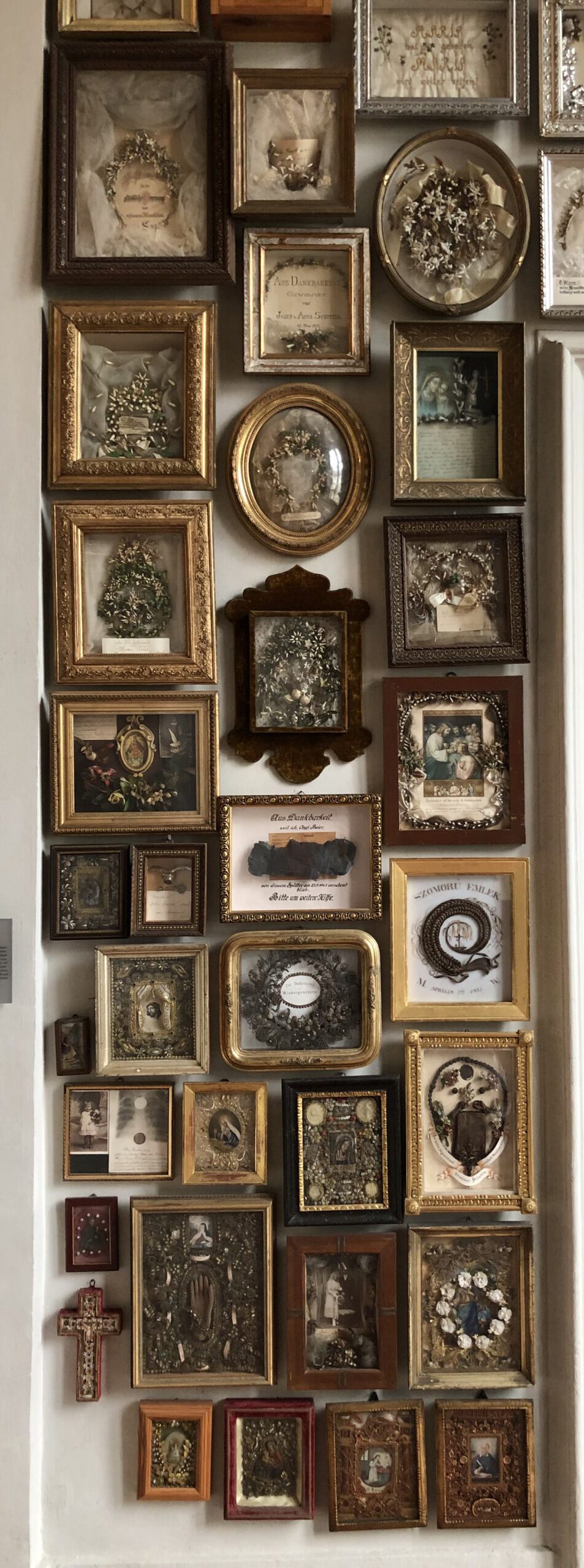
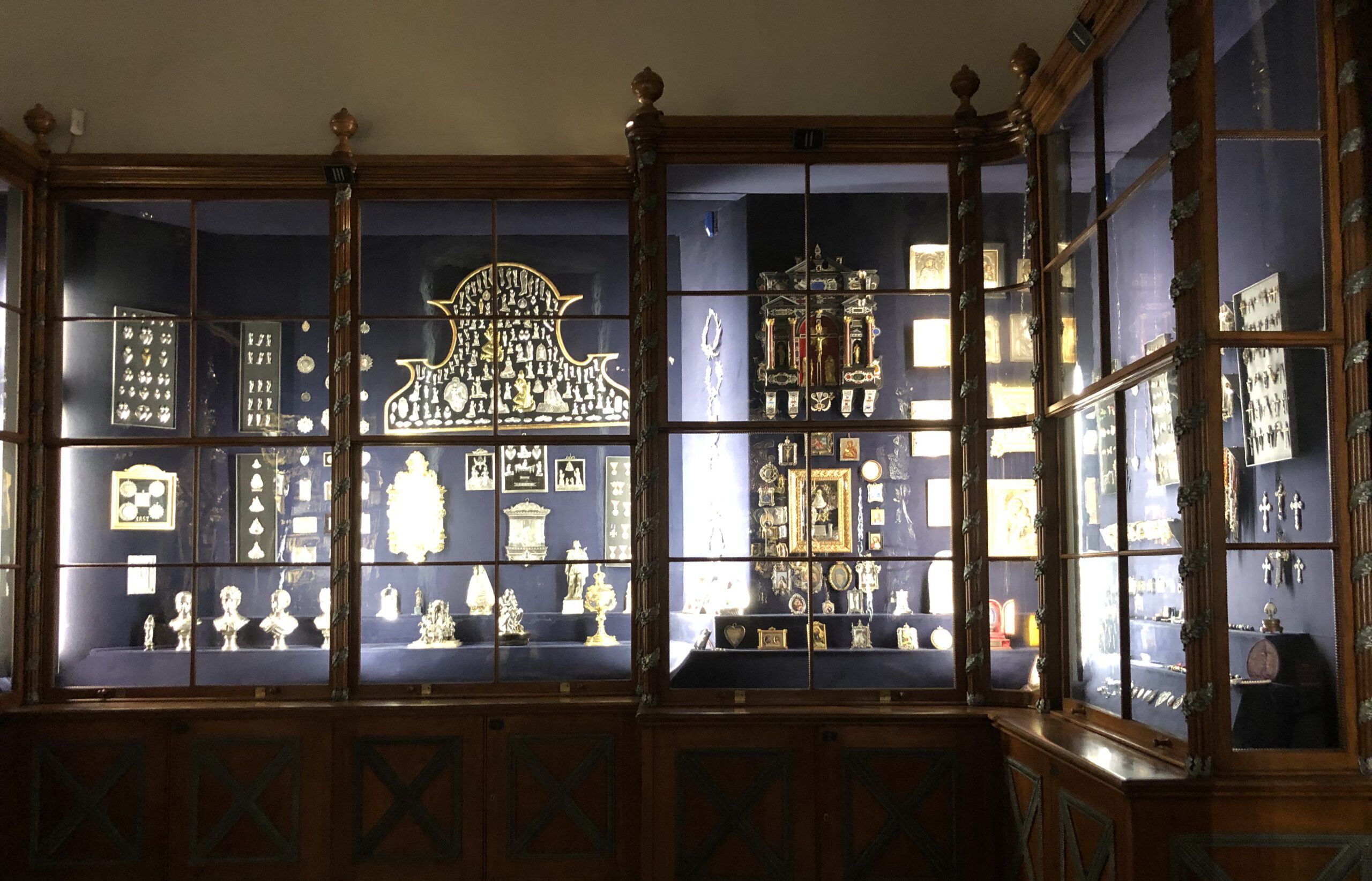
The basilica boasts an extensive treasury, which can be reached via the staircase by the northwest tower. Upstairs are many treasures, and the galleries display hundreds of personal tributes to Mary. Above the archways of the galleries are 32 wondrous events depicted between 1622 and 1626 by Markus Weiss (+1641) from Graz. Numerous valuables are displayed in glass cases, such as crosses, monstrances, and crowns for the venerated image. The northern treasury also houses the altar with the old venerated image, which dates from around 1360. Furthermore, many paintings hang here, including the depiction of the King of Hungary's battle against the Turks. Thanks to Mary's help, the king wins the battle and donates the statue of Mary that now stands on the treasury altar. This image is still widely venerated. In the treasury, clothing items for the venerated image can also be seen.
In the period May-October, there is a light procession every Saturday evening. The basilica is open all year round and there are daily Eucharistic celebrations.
In Mariazell, an association of friends is active, namely “die Vereinigung der Freunde”. During Mass on Sundays, friends and benefactors are commemorated upon request. It is possible to become a member of the “Friends of Mariazell Basilica”. The periodical “Gruss als Mariazell” (Greetings from Mariazell) is sent to the friends. The association supports the basilica and its filial churches by funding repair and maintenance work.
The graces of Our Lady in Mariazell are particularly peace in restless, suffering hearts.
ACCESSIBILITY
Mariazell is located in the north of the state of Styria, in the district of Bruck an der Mur, southwest of Vienna and north of Graz.
The basilica is located in the heart of Mariazell, at Benedictusplatz 1, 8630 Mariazell.
Current information can be found at www.basilika-mariazell.at.
Experience
On a Sunday, I arrive at the basilica at 8:00 AM and attend the Eucharist. Afterwards, I take a tour of the magnificent building. During this, I encounter Mary frequently in paintings and as likenesses. It's so beautiful here! I am even more impressed when I am near the shrine. Pilgrims come to Mariazell for this image.
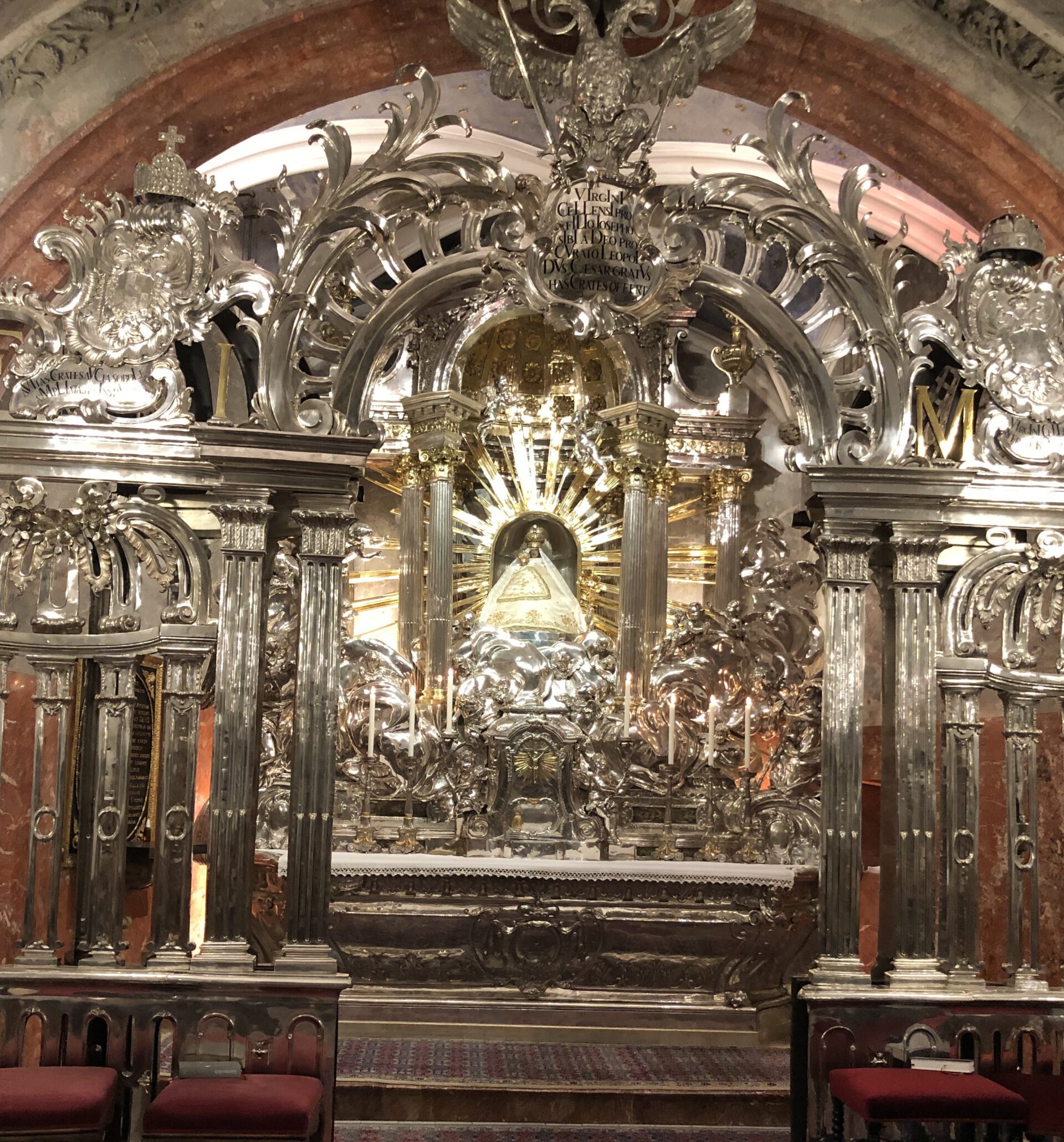
After walking around the basilica, I go upstairs and reach the Treasury. Countless votive offerings hang on the high walls. There are also paintings here, depicting visits of nobles to Mariazell, showing scenes of battle, and illustrating apparitions of Mary.
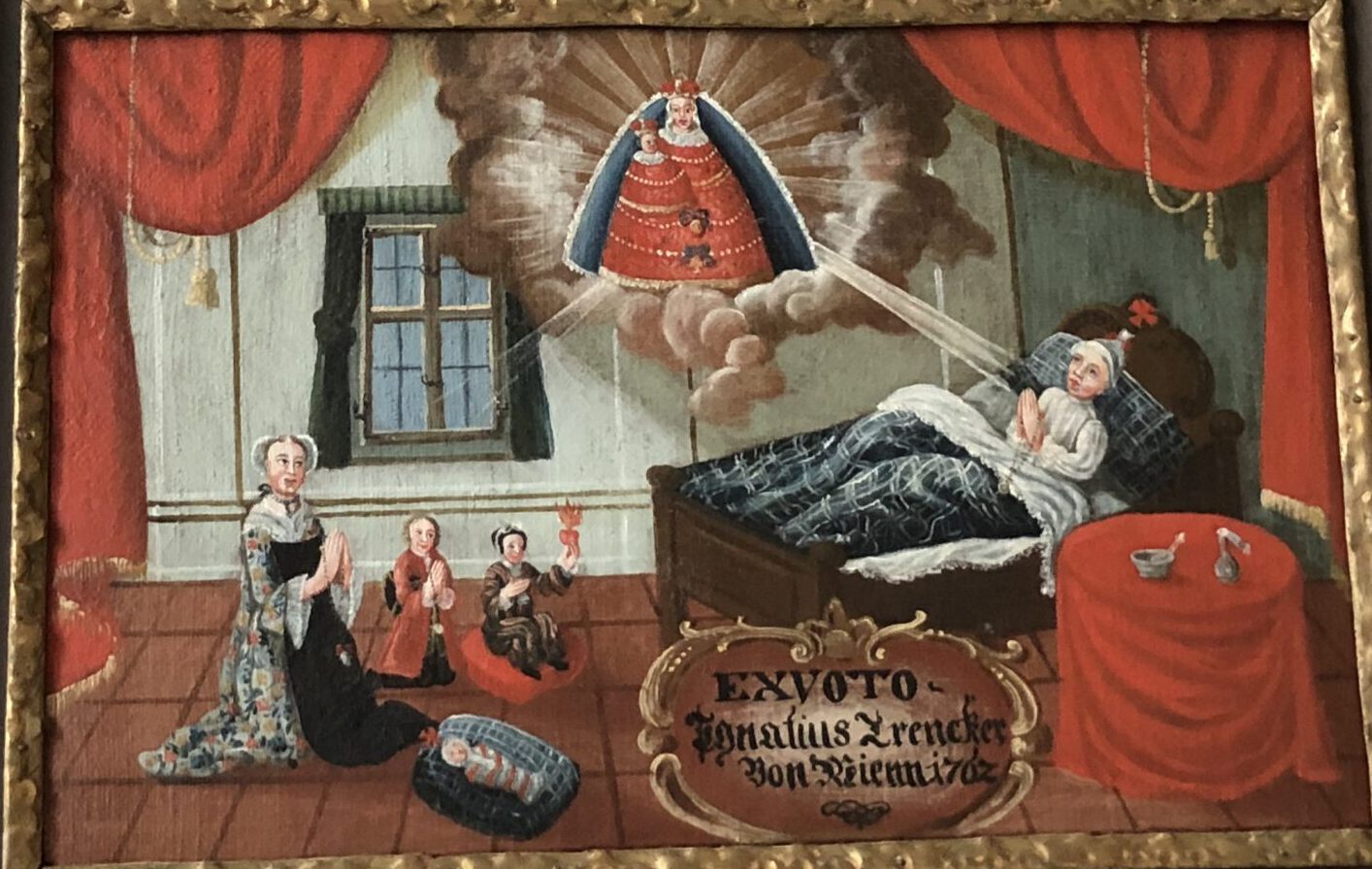
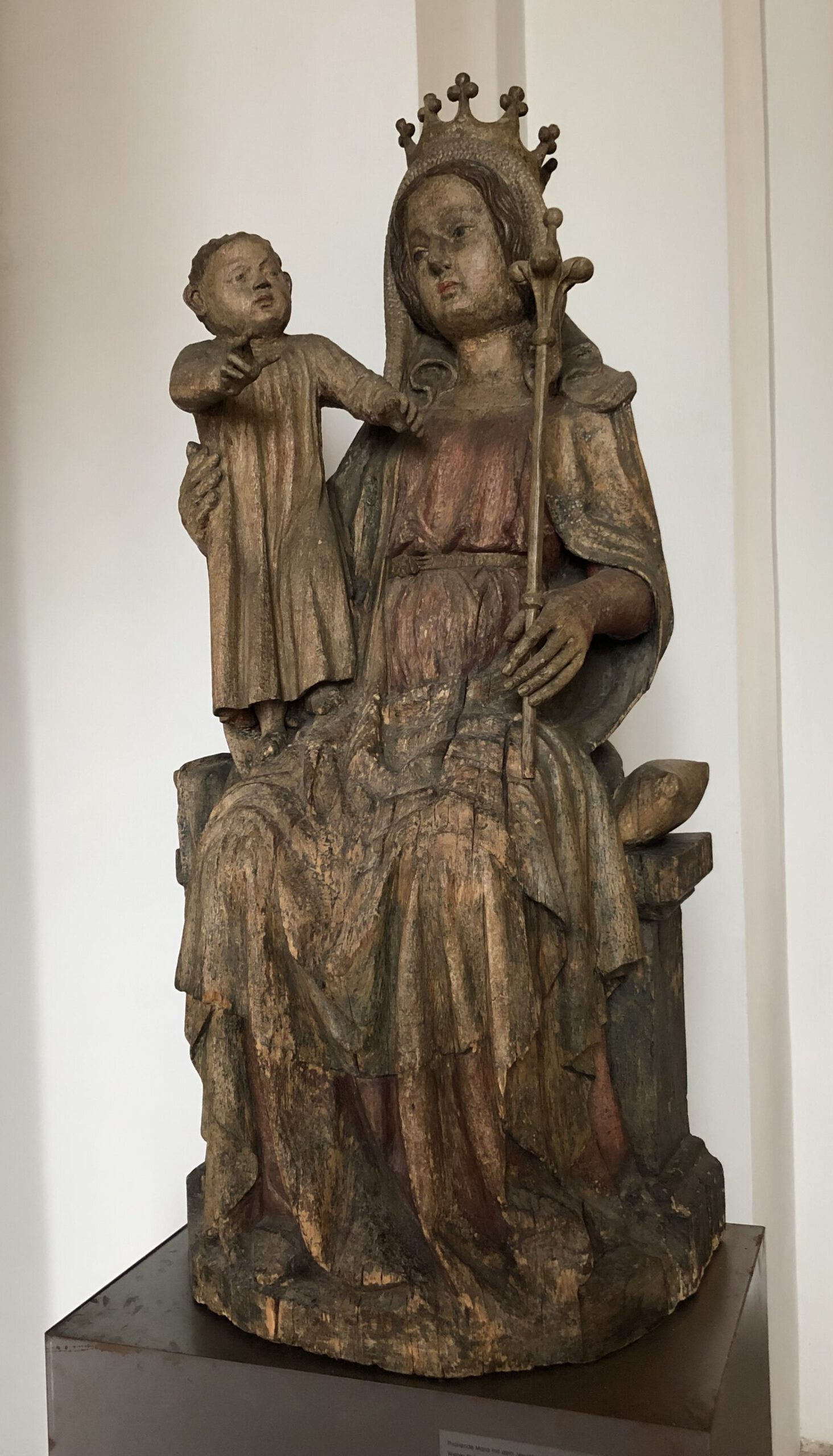
In the Treasury, there is also a large, old, wooden statue of Mary. This effigy has made history by welcoming millions of visitors. What would the pilgrims have said to Her? The large statue was made around 1360. Mary is depicted sitting with her Child on a throne, wearing a crown and holding a sceptre. Before being placed in the treasury, the statue stood in the sacristy chapel. The statue may have originated from the former Carthusian monastery in Gaming, and is therefore known as “Kartause Maria Thron”.
In a stall, near the basilica, I am buying devotional items for friends, acquaintances and myself, including a number of cards with the image of the Madonna and on the back the text with the words: “Mary helps in all suffering. Mary helps at all times, She helps when no one else can, therefore She is invoked with full confidence.”
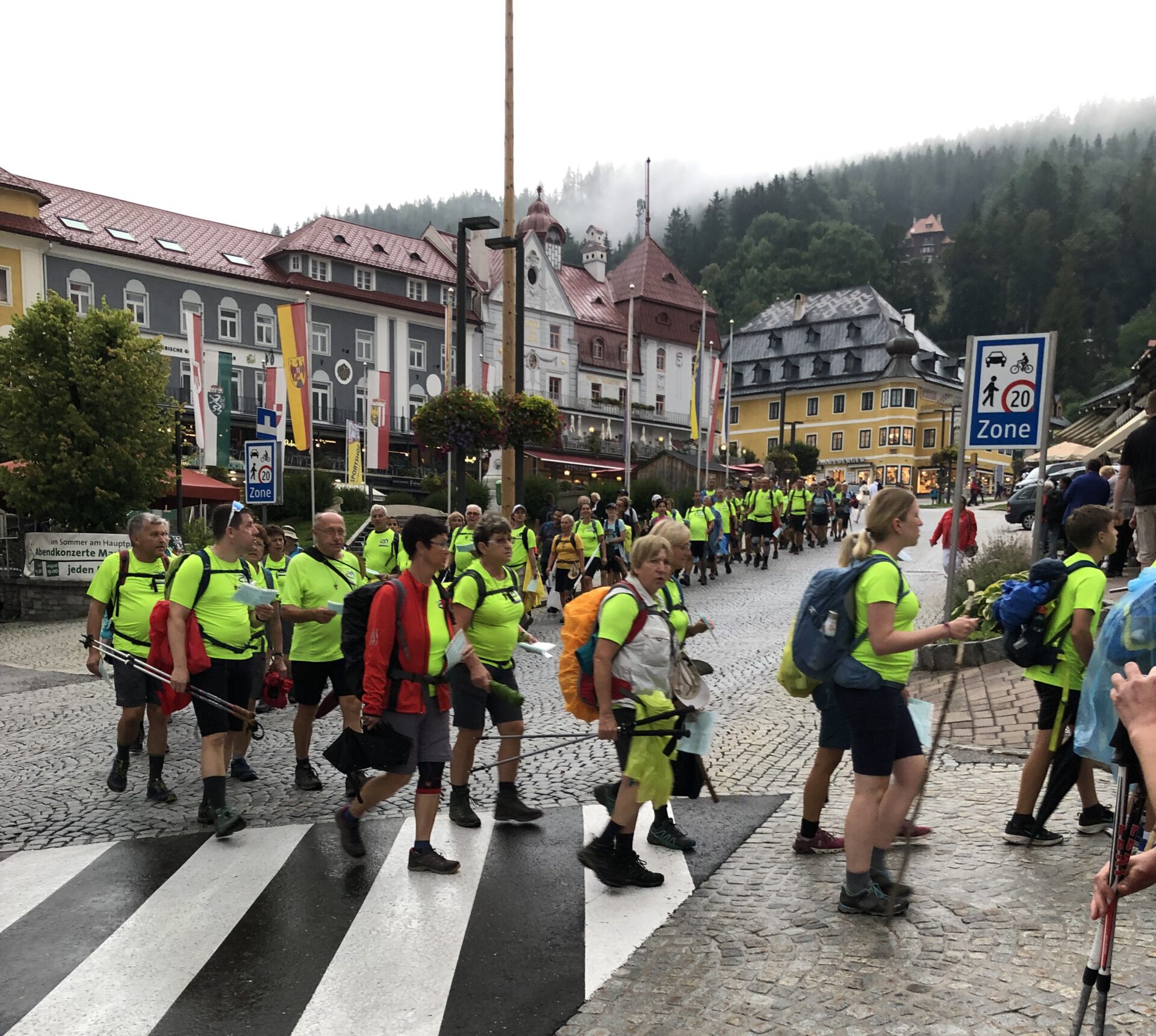
During my visit to Mariazell, it is busy with many pilgrims. I see groups of Hungarians who have organised their pilgrimage for this weekend. Among them are those who fled their country to Austria in 1956. Most have a walking stick with them to ease the prolonged walking. One group is dressed entirely in the same way. I notice that each group enters the basilica singing.
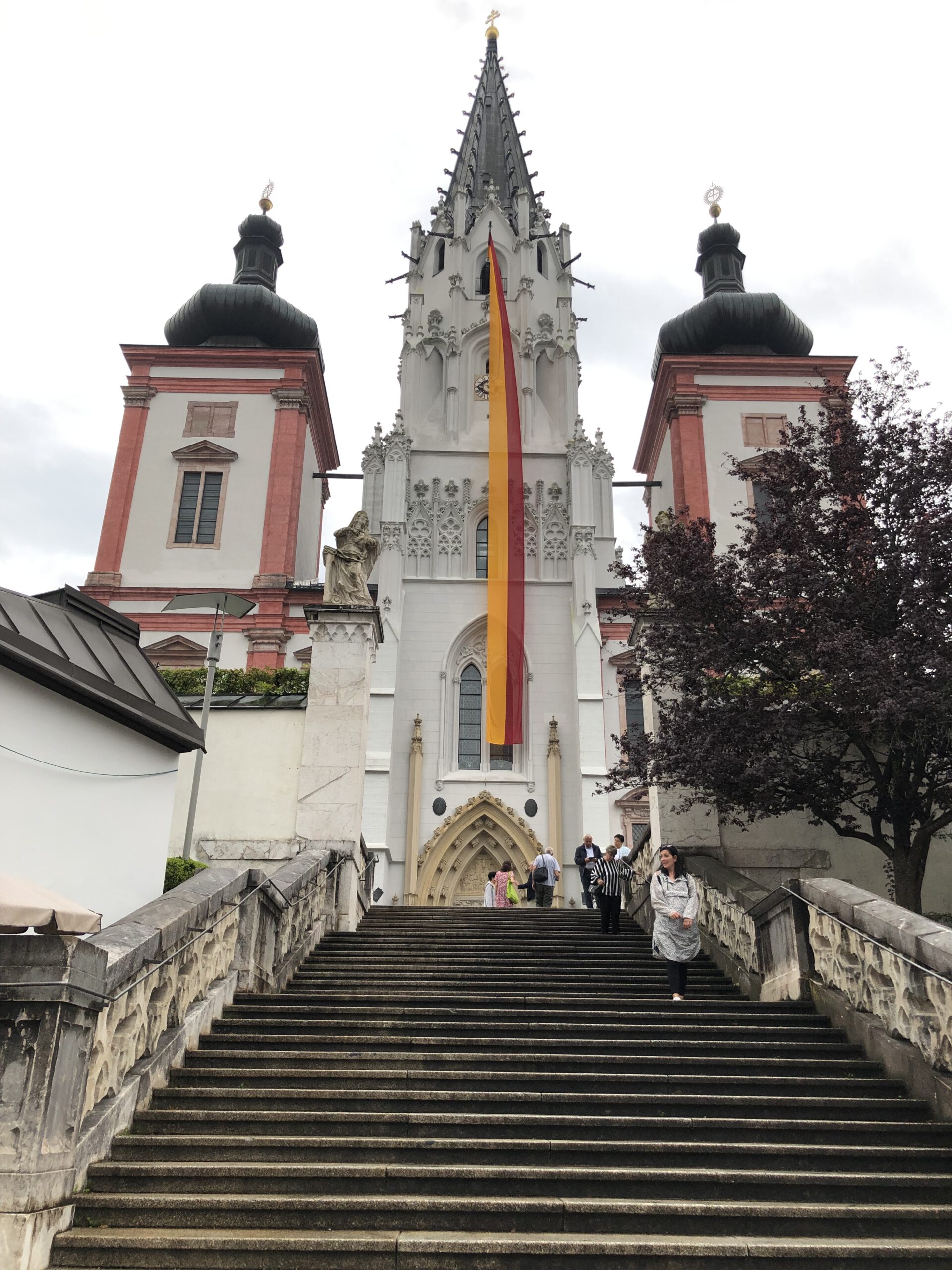
The fact that Mariazell is an internationally beloved pilgrimage site is particularly evident from the countless visitors from many countries. I see and hear pilgrims not only from Austria but also from countries such as Germany, Hungary, Croatia, Italy, and Poland. Consequently, many brochures and booklets in various languages are available in the basilica. However, publications in Dutch are absent. Perhaps the consideration is that Dutch and Flemish people are multilingual.
At the end of my visit to Mariazell, the conclusion is that many people meet Mary here. They are predominantly deeply religious people and those who have less to do with the Catholic faith, such as atheists and Protestants. What a great appeal the Blessed Virgin has! What also strikes me is that many pilgrims come here in large groups. It does me good to be able to come here.
I think Mariazell is definitely a place worth visiting to meet Mary, and beyond that… There are terraces at cafés and restaurants, plenty of hotels, clothes shops, souvenir shops and stalls selling local liqueurs with an alcohol content of 40%. These drinks are typical of the town, and the labels reflect that. However, the most special thing about this place is the miraculous statue in the basilica, which attracts around a million visitors every year. Mariazell is one of the major European pilgrimage sites dedicated to Mary. It is a gift to be able to visit Mary here.
Environment
Travelling from the capital Vienna to Mariazell means covering 138 km to the southwest.
Leaving the big city of Graz to arrive in Mariazell requires travelling 115 km northwards.
Travelling from the well-known Melk Abbey to Mariazell involves covering 90 km southwards.
In Melk, the original castle has been converted into a fortified abbey. In 1297, the complex was almost entirely destroyed by fire and subsequently rebuilt. The monastery has a library with more than 100,000 works. Current information: www.stiftmelk.at.
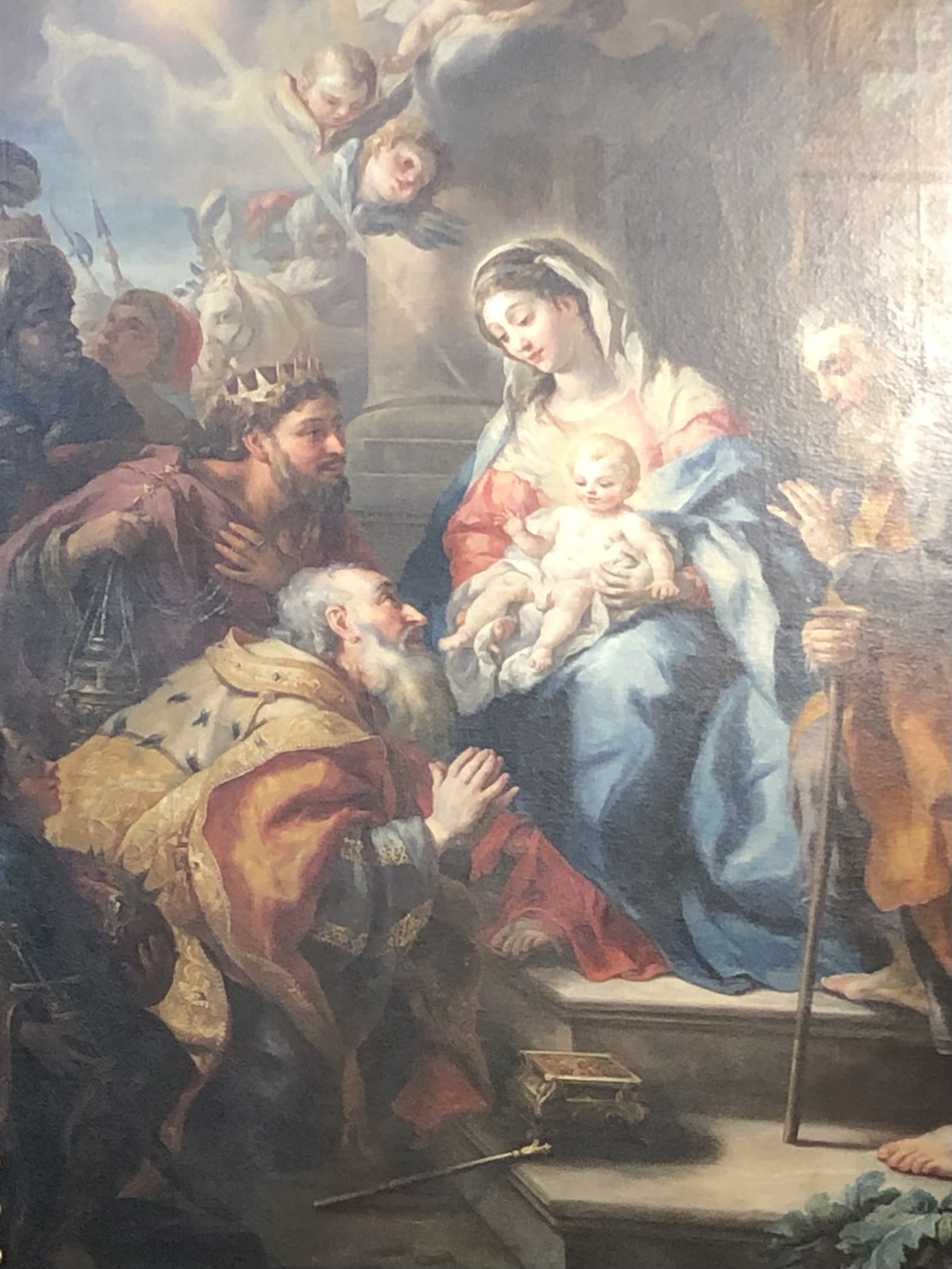
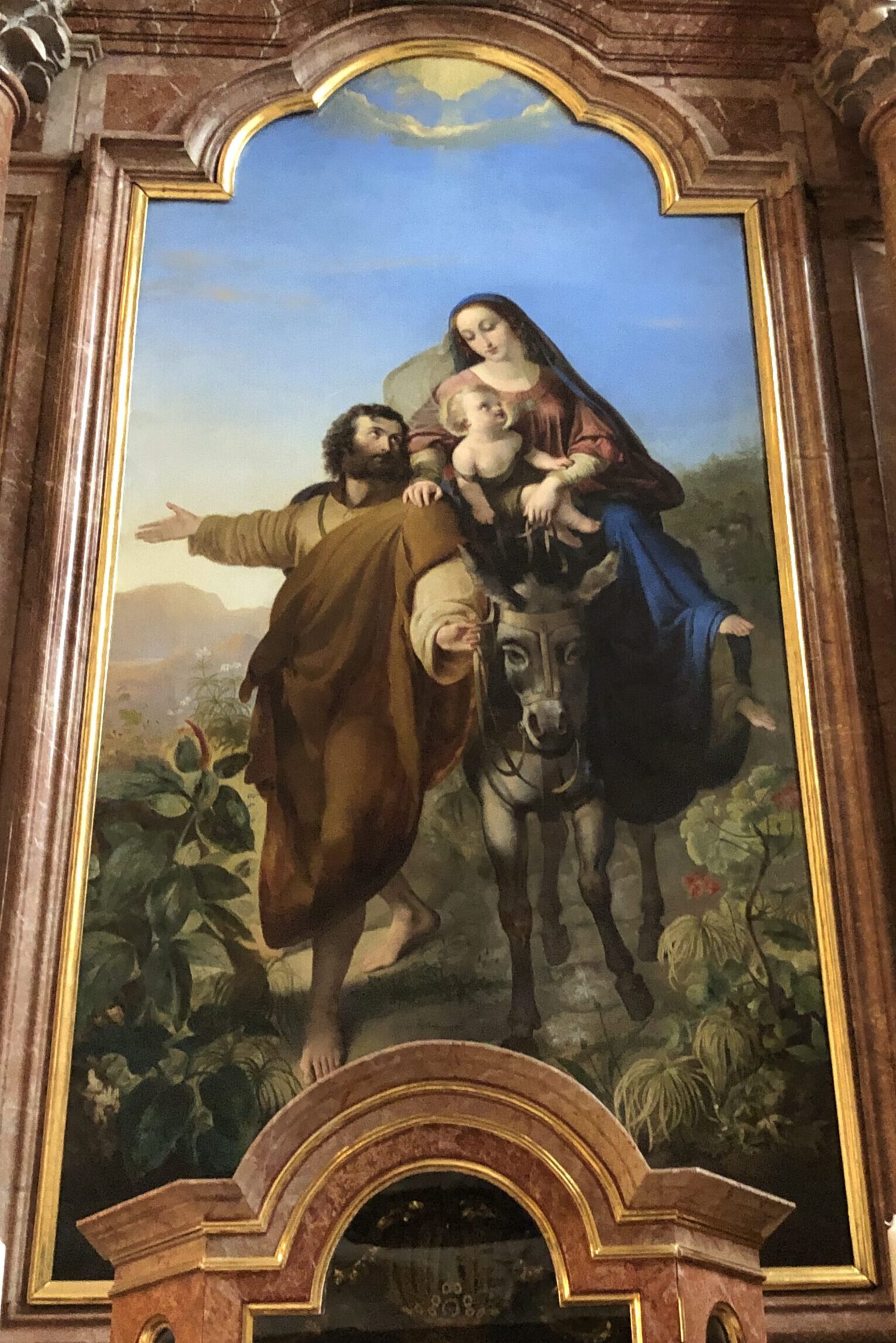
In the abbey church of Melk, there are many chapels, including one dedicated to Saint Nicholas. In this church, many paintings can be seen, depicting Mary. Works of art include, among others, the Adoration of the Magi and the Flight into Egypt.
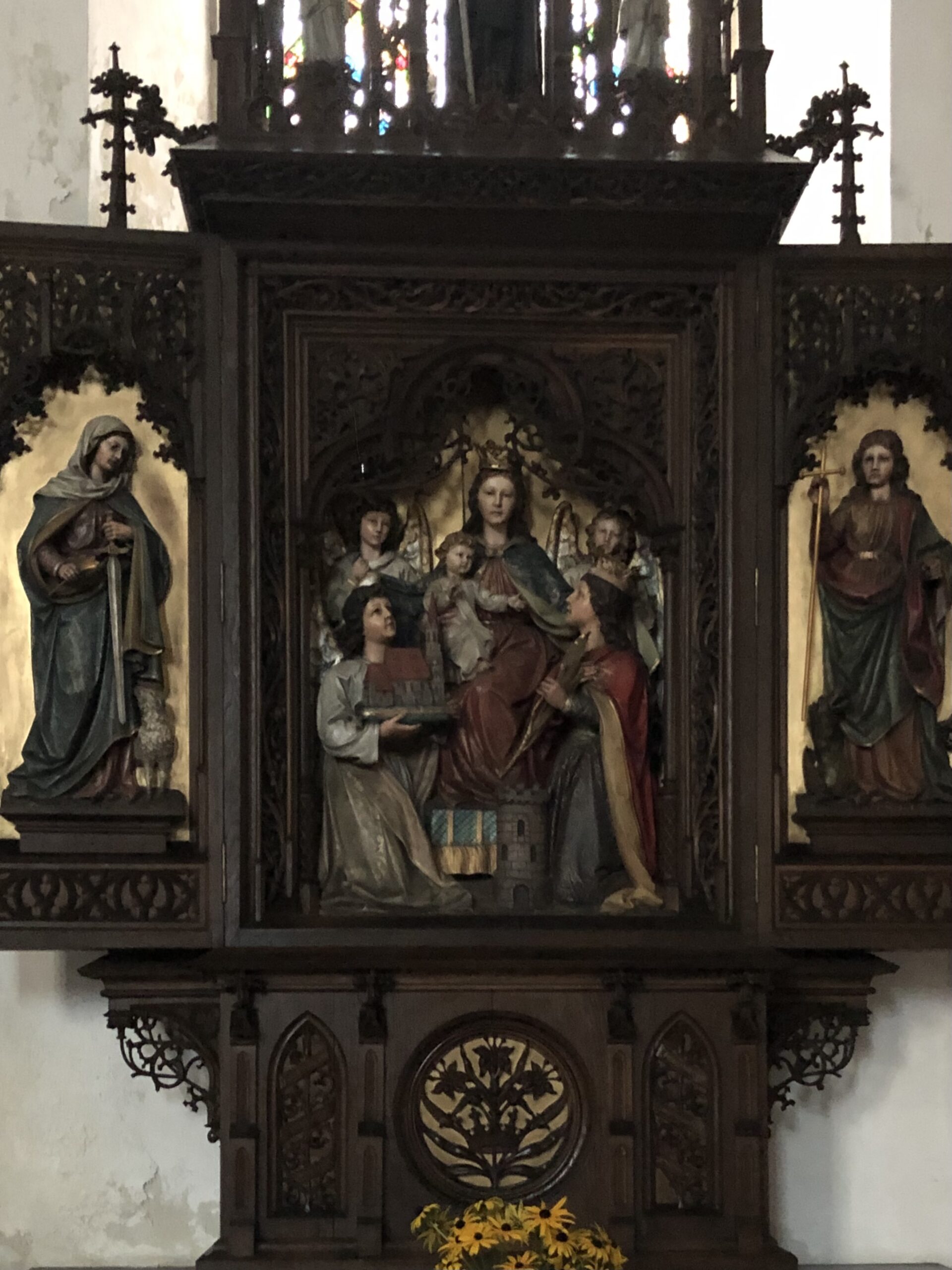
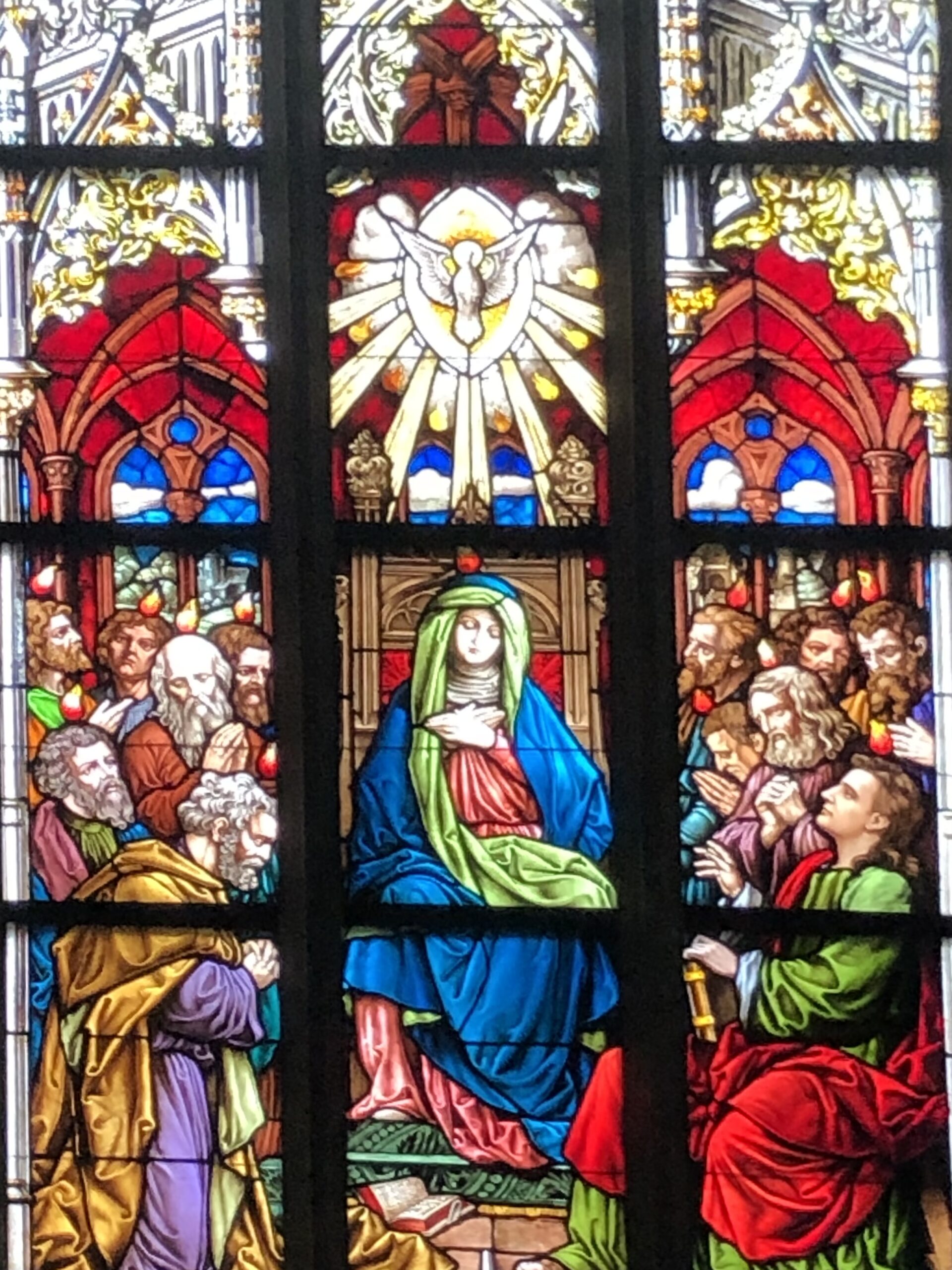
A visit to the parish church in Melk is also more than worthwhile. There too, images of Mary can be seen, including colourful stained-glass windows.
~~~

 Nederlands
  English (UK)
  Deutsch
  Français