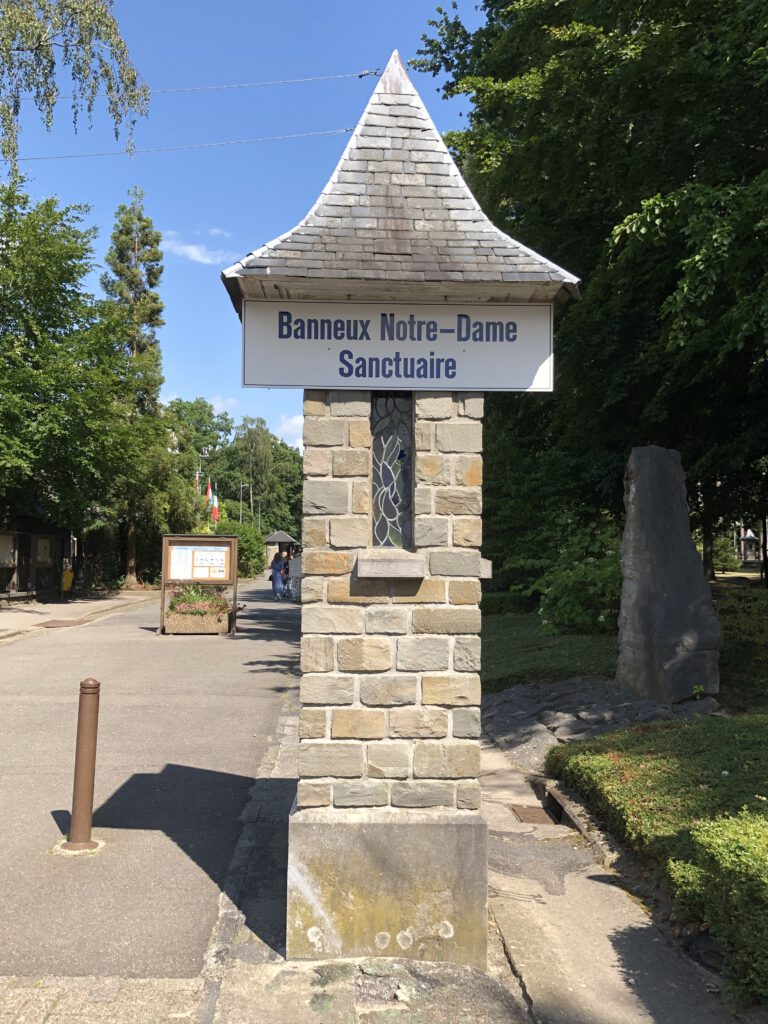
The name Banneux Notre-Dame originated during the First World War. The inhabitants of the village of Banneux added “Notre-Dame” to the name of their village. This happened after a promise was made to Mary to offer them protection during the war, and Mary provided the requested cover. Subsequently, this promise was put into action. Banneux then became Banneux Notre-Dame, or Banneux N.D.
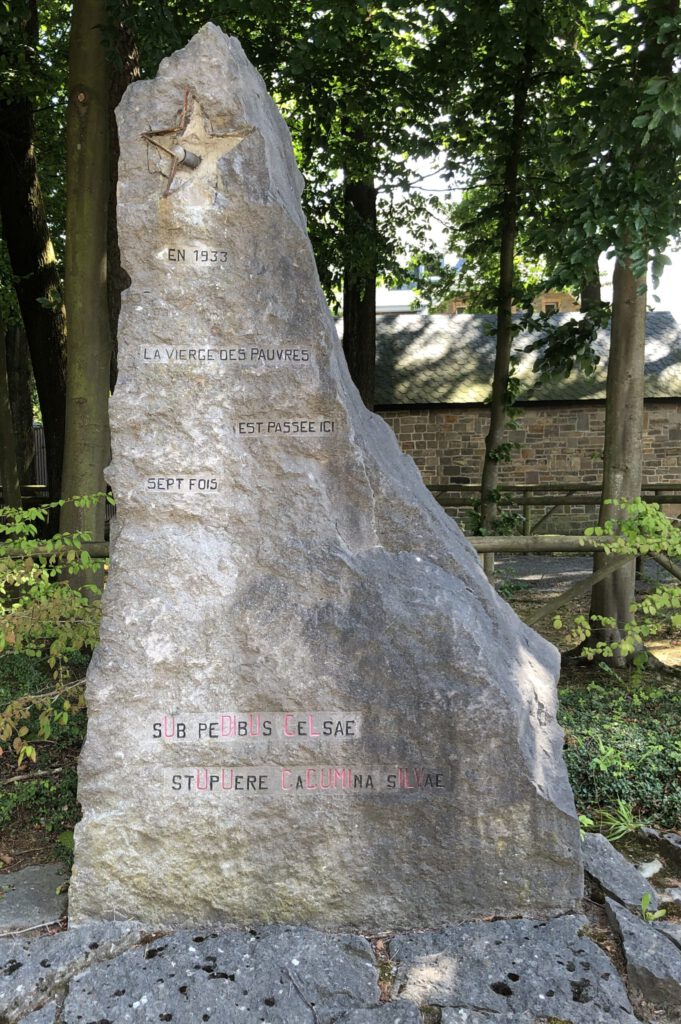
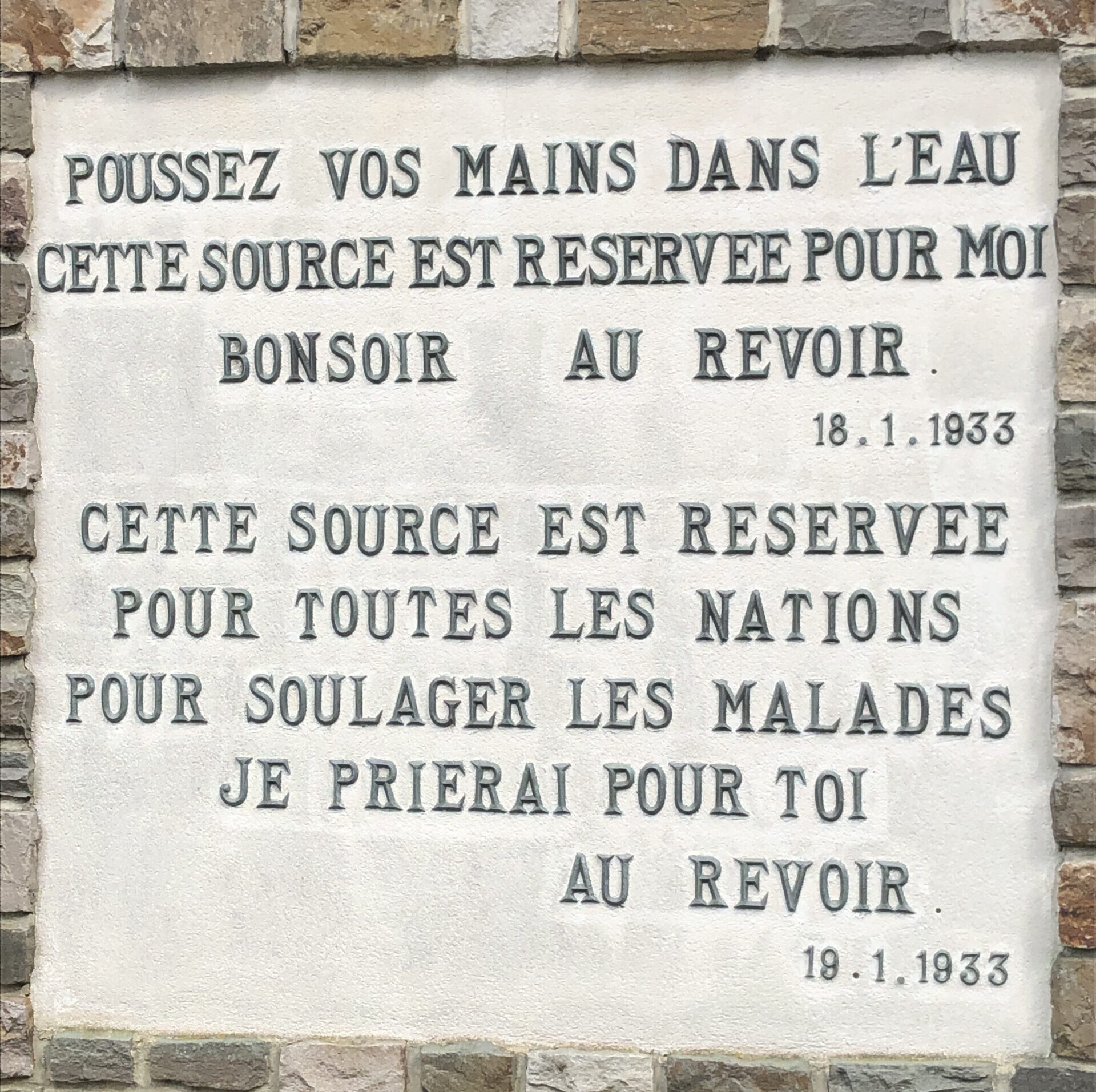
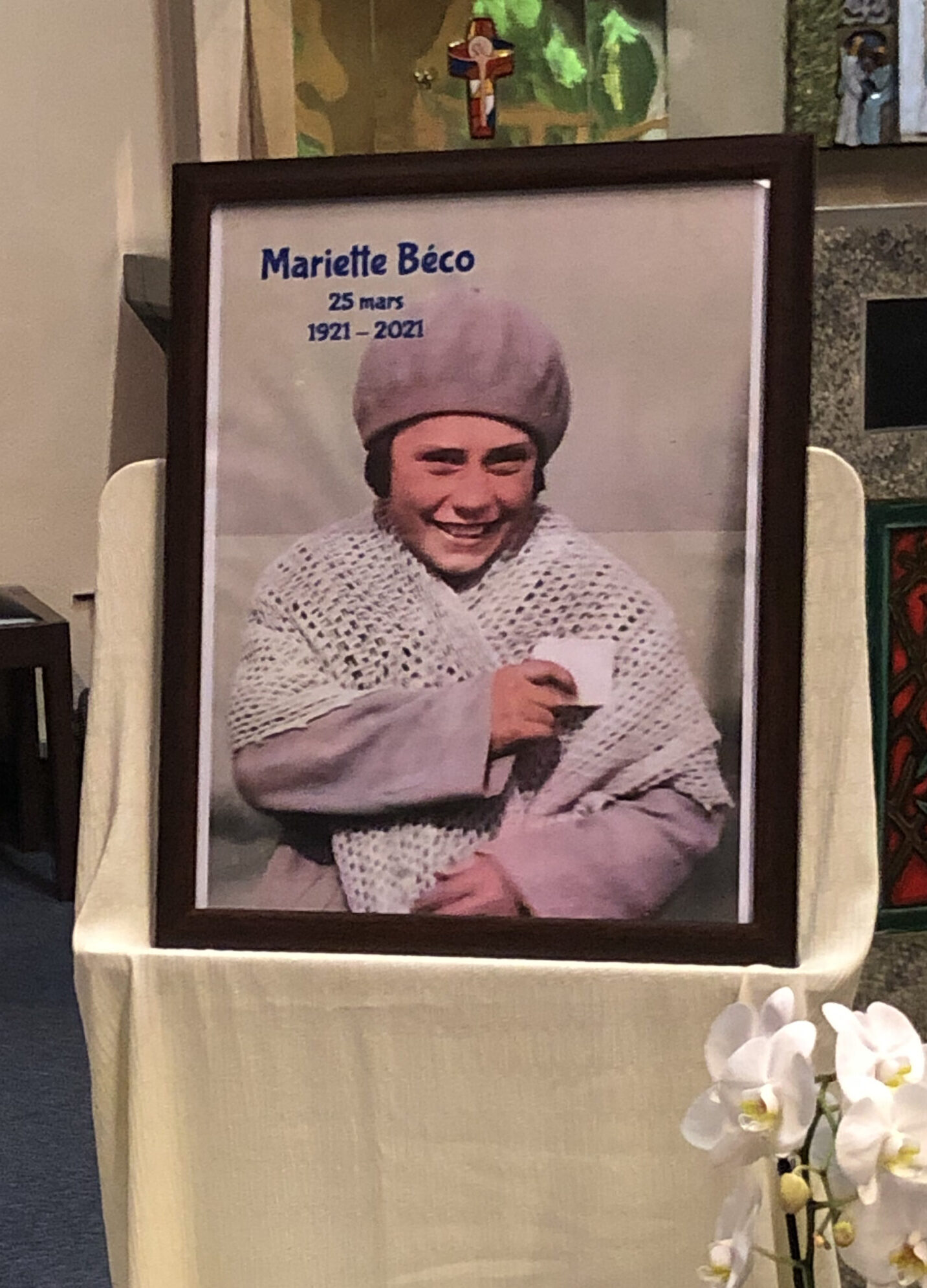
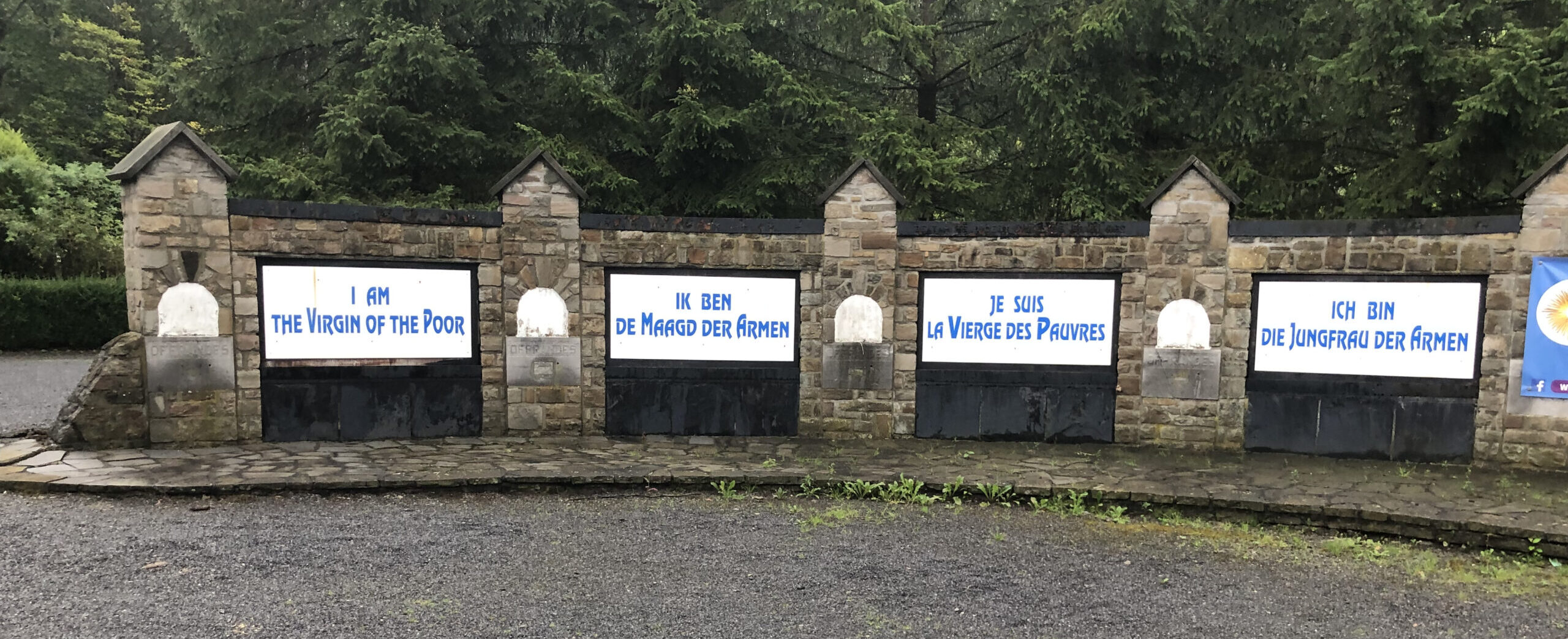
Mary appeared to Mariette Beco (1921-2011). She is the eldest child of the poor Beco family. Father, mother and their seven children live in a modest house just outside the village. Mariette helps her mother with household chores, including cooking and washing. She also looks after her brothers and sisters. The children were not raised as devout Catholics. In 1933, Mary appeared 8 times to Mariette Beco between January 15th and March 2nd. At the time, the visionary was 11 years old. Mary introduced herself as the “Virgin of the Poor”. This name has a special meaning by referring to the crisis years before the apparitions. It means being poor by having no or very little financial resources. Poor can also apply to attention and care for one another. Mary shows herself to be compassionate! Mary’s visits occurred as dictatorial regimes were emerging in Europe, such as in Germany. The encounters between Mary and Mariette took place on the outskirts of the village, near the home of the Beco family. Mary said, among other things: “Put your hands in the water.”, “This spring is reserved for Me.”, “I am the Virgin of the Poor.”, “The spring is for all nations.”, “For the sick.”, “I will pray for you.”, “I would like a small chapel.”, “I come to alleviate suffering”, “Pray a lot.”, “I am the Mother of the Redeemer, Mother of God” and “Goodbye.”
On 15 January 1933 at 7:00 PM, Mariette is sitting by the window. She is keeping vigil by her sick little brother. Suddenly, she sees a beautiful Lady standing in the light in the garden of the Beco family's cottage. The Apparition beckons her to come closer. Mariette doesn't understand. She wants to go outside, but her mother does not allow it.
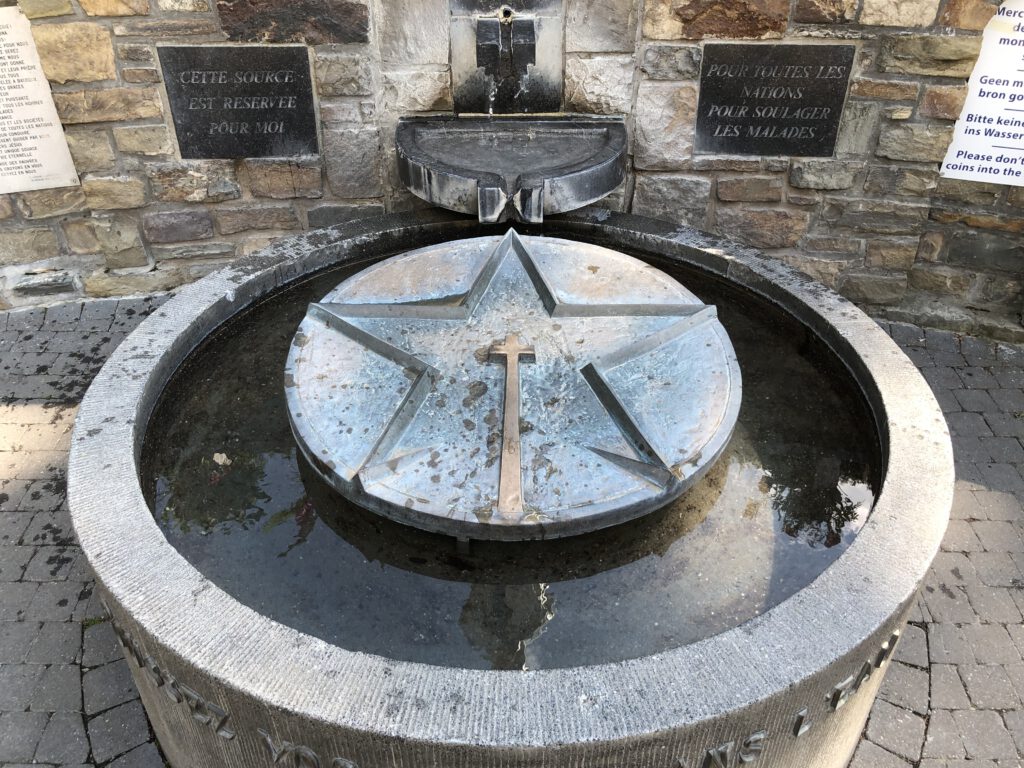
Three days later, on January 18th, 1933, at 7:00 PM, the second apparition takes place. Mariette goes outside, and her father follows her. He sees Mariette kneeling and praying. A little later, Mariette stands up and walks on. She follows the path the Apparition indicates to her. Mariette kneels down three times and arrives at a small spring. Then she kneels, and the Apparition asks her to put her hands in the water. She hears the Apparition say: “This spring is reserved for me. Good evening. Goodbye”.
The next day, January 19th, 1933, again around 7:00 PM, Mariette goes outside to pray. Two people are witnesses. After praying for a while, Mariette stretches out her arms and says: “Oh, there She is!” Mariette asks: “Who are you, beautiful Lady?” The Apparition says: “I am the Virgin of the Poor.” Mariette goes to the spring and hears the Virgin of the Poor say: ”This spring is intended for all peoples to relieve the sick.”
The fourth apparition is on 20 January 1933. At approximately 6:45 PM, Mariette goes outside and twenty interested onlookers join her. Mariette kneels and sees the smiling Apparition. Mariette asks Her: “What do you desire, beautiful Lady?”. The Lady smiles and replies: “I would like a chapel.” Thereupon, the Apparition opens her arms, stretches them out completely, and blesses Mariette. The Apparition is expected again the following day, 21 January 1933, but does not appear. The “beautiful Lady” does not appear on the following days either. Mariette still goes outside every evening to pray. This is noteworthy, as she has not prayed much until recently. Three weeks go by without an apparition.
On 11 February 1933, Mariette knelt in the garden of her parents“ home. Six onlookers watched. She then went to the spring, knelt, dipped a hand in the water and made the sign of the cross. Then it was silent. Mary appeared for the fifth time. Mariette heard the Beautiful Lady say: ”I have come to relieve suffering. Goodbye.“ Mariette replied twice: ”Thank you.“ She did not understand the word ”relieve" and later that day her father explained it to her.
During the sixth apparition on 15th February 1933, Mariette prays with a few people, and for the first time, her mother is present. Suddenly, the Apparition stands before Mariette. At the request of chaplain Louis-Marie Jamin (1898-1961), she asks Mary for a sign. Mary says: “Believe in Me. I will believe in you.” Mary then entrusts her with a secret. She disappears, saying: “Pray a lot, au revoir.” The secret has never been revealed.
On 20 February 1933, the seventh apparition takes place. Mariette prays and falls to her knees. She then prays more quickly and more fervently. Mariette goes to the spring, kneels, prays, falls silent, and weeps. Mary says: “My dear child, pray a lot... goodbye.”
On 2nd March 1933, it rained a lot and heavily. Mariette prayed under an umbrella with 5 interested onlookers. After praying for a long time, the rain stopped. This is the day of the eighth and final apparition. Mary said: “I am the Mother of the Redeemer, Mother of the Son of God. Pray a lot.” Mary looked sad and said again: “Pray a lot.” After this, Mary spoke the farewell word “Adieu”. She placed her hands on Mariette and blessed her. Then the Apparition disappeared. Mariette understood that this was the final apparition, because on previous occasions, Mary had always said: “See you soon.”
Mary appears on the spot where the Chapel of Apparitions is later built. This is about 8 metres away from the Beco family home, where the forest begins. The Virgin of the Poor walks the path from the place of apparition near the Beco house to the Spring four times to guide Mariette to this spot.
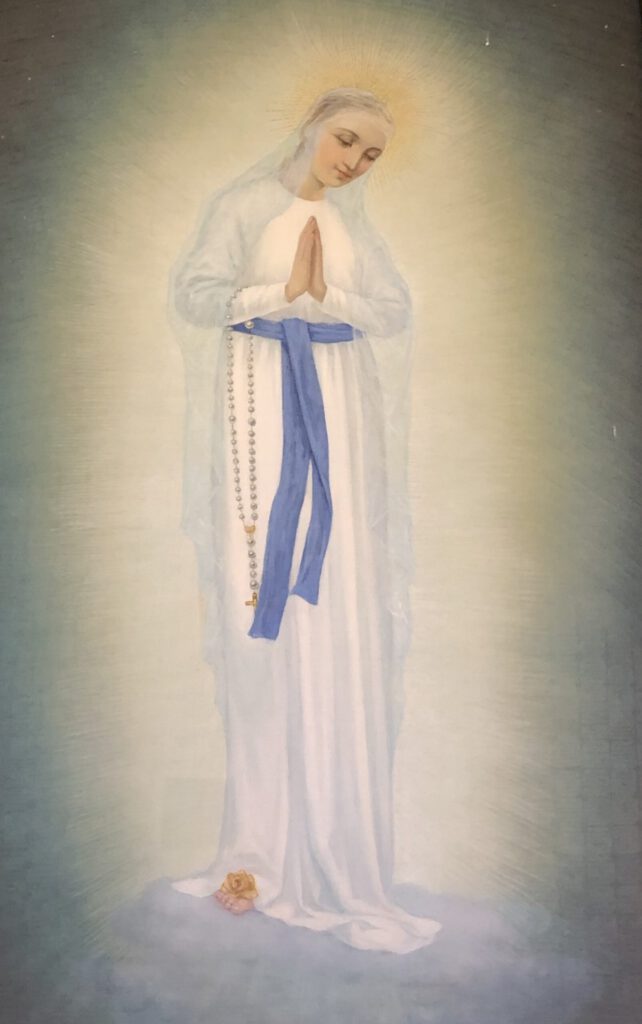
The chaplain of Banneux, Louis-Marie Jamin, spends a lot of time with Mariette Beco, but initially he has doubts about the apparitions. These reservations disappear when Mary, via Mariette, tells him: “Believe in Me. I will believe in you.” After hearing this, he stands firmly behind the seer. He hopes for a second Bernadette. Later, he understands that Mariette is different from Bernadette Soubirous of Lourdes.

After the apparitions, Mariette Beco is subjected to all sorts of tests on more than one occasion. Doctors and psychiatrists examine her, but they find no trace of hysteria or deceit.
Miracles have occurred in Banneux, such as with an unbelieving man who has been paralysed by congestion for 15 years. This has left him half paralysed and doctors have declared him incurable. The man heard about the events of Mariette Beco and in March 1933 he went to the spring. He arrived there, limping, drank the spring water, prayed and was completely healed. Following this, more inexplicable healings occurred, such as with a nun in 1937. This nun suffered from osteoporosis, internal fractures and a deformed spine. She refused to take medication. In July 1937, she drank water from the spring of Banneux every day. A month later, the nun was completely healed. Investigations showed that all the fractures had healed. The Diocese of Liège launched an investigation into this incident, which was inexplicable to doctors.
The Chapel of the Apparition, also known as the Little Chapel, was built in the garden of the Beco family's home, specifically on the site of the apparitions. Adjacent to this chapel stands the family's residence. The chapel was inaugurated on 15th August 1933, which was quite soon after the apparitions. From the outset, the modest Chapel of the Apparition was too small for the number of pilgrims. As a result, an Esplanade was constructed in 1937.
In the period 1935-1937, an ecclesiastical investigation is held into what happened in Banneux in 1933. Investigating committees are formed. The investigations last for 9 years, as there are doubts about the apparitions. The question is also: Why did Mary appear in two places in Belgium within one year, namely first in Beauraing and then in Banneux? These places are quite close together and that also raises questions. The decision to launch an investigation comes from Louis-Joseph Kerkhofs (1878-1962), Bishop of Liège (1927-1961). He wants to verify the authenticity of the apparitions. During this time, Mariette is questioned several times and other involved parties are also asked questions. The first committee's report is positive. In early 1942, the findings of the second committee emerge, and its judgment is negative. Bishop Kerkhofs does not let the matter rest. He assigns the Jesuit René Rutten (1878-1948) the task of further investigating all witness testimonies. Rutten immediately gets to work and produces a study of around 600 pages. Subsequently, the third committee begins its work. Now, the advice to the bishop is to recognise the apparitions as authentic. On 22 August 1949, 16 years after the apparitions, Bishop Kerkhofs confirms the authenticity of the apparitions. He gives permission for Mary to be venerated as “Our Lady of Banneux, the Virgin of the Poor”.
The first Hospitality building was constructed in 1938. Due to the increasing number of visitors to Banneux, a second Hospitality building was realised in 1993.
During the Second World War, the Sanctuary served as a reception centre for poor victims of wartime violence. These people came from the region of Liège.
Bishop Louis-Joseph Kerkhofs recognised the services at Banneux in honour of the Virgin of the Poor in both 1942 and 1949. On 22 August 1949, the bishop again confirmed the supernatural nature of the events and acknowledged the authenticity of the apparitions to Mariette Beco. The Vatican followed this in 1952 with a statement from the Congregation for the Doctrine of the Faith in Rome.
There is a 9th apparition in Banneux on the night of 29 to 30 August 1942; this is halfway through the Second World War (1939-1945). Mary, the Virgin of the Poor, appears to Joseph Lepkifker (1906-1990), head of the Jewish community in Liège. She assures him and his family of her protection. He goes into hiding with his wife Tzivica and 2 children; sons Mendel and Elie. The family is separated while in hiding, staying with civilians, then in the convent in Huy and afterwards in the one in Liège. The Bishop of Liège, Louis-Joseph Kerkhofs, arranged the hiding places.
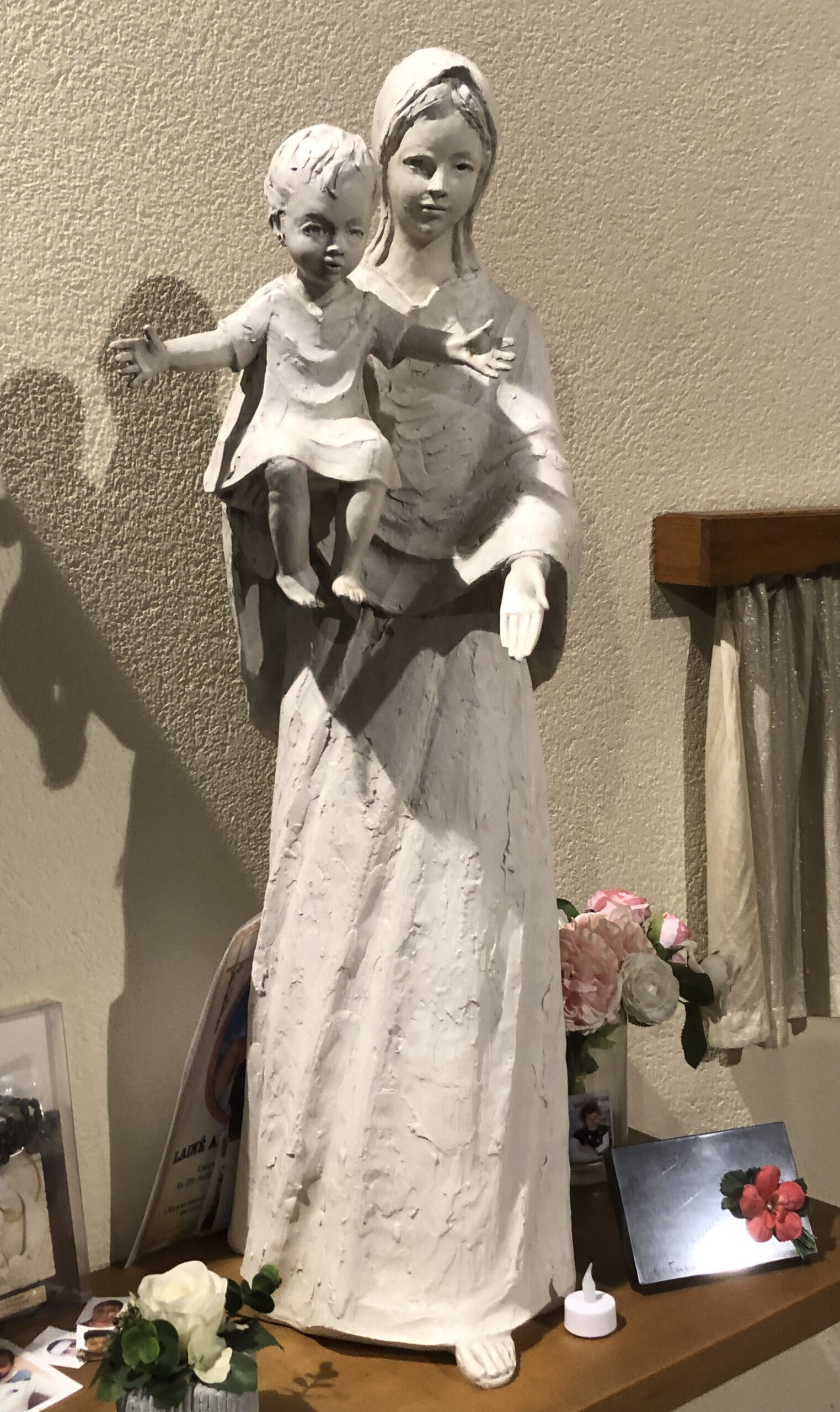
In the Sanctuary stands the chapel of Saint Michael, patron saint of Germany. This place of worship has German origins. Konrad Adenauer (1876-1967), the German Chancellor, wished to promote unity and peace between peoples. He received a statue of the Virgin of the Poor from the chaplains of Banneux, Georg Jacob and Louis-Marie Jamin. In Rhöndorf, Adenauer's home village, about 20 kilometres from the city of Bonn, there is a chapel. This place of worship is dedicated to the Virgin Mary. During the Second World War, the villagers came to this chapel to pray for prisoners of war of all nations. In Banneux, a copy of this chapel was built, as a gift from German pilgrims. This gift is a sign of reconciliation after the terrible war years. On 19 April 1960, the first stone was blessed by the Chancellor's son, Monsignor Paul Adenauer.

Further on at the Sanctuary, behind the Esplanade, stands the church “Virgin of the Poor”. The large pilgrimage church was opened in 1984.
On 21 May 1985, Pope John Paul II came to Banneux. The Pope prayed in the Chapel of Apparitions. He also went to the Spring and dipped his hands in the water. On this day, there were over 100,000 attendees at the Shrine, including people with disabilities, the sick, members of the German-speaking community, and gypsies.
In 1999 the renovated guesthouse is ready.
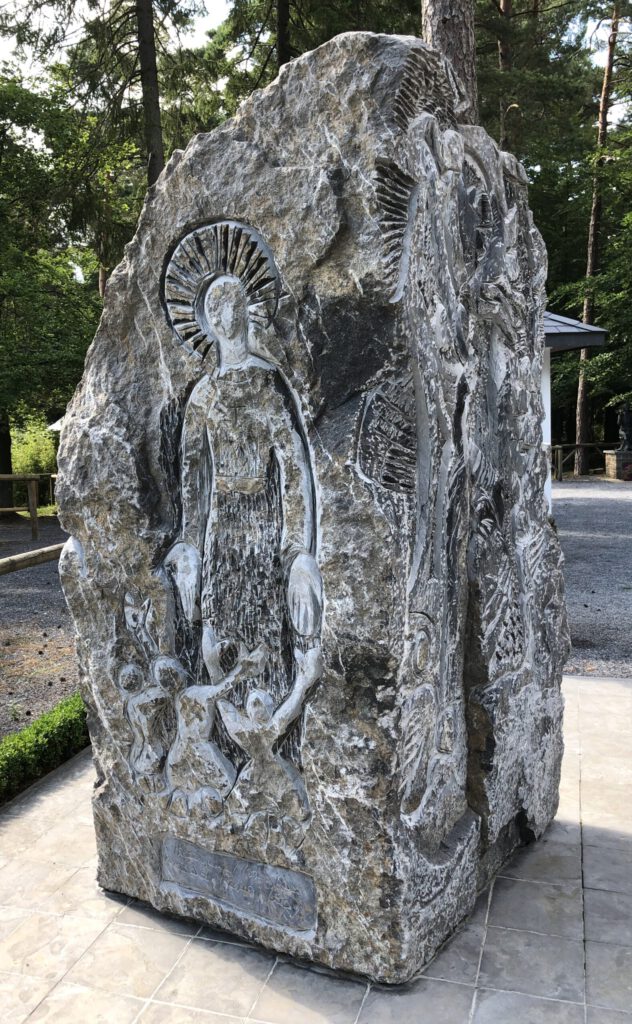
Mariette Beco has had to endure prolonged and frequent reproaches. Slander has been spread about her and her private life has been tarnished. She has also been mocked and bullied on several occasions. One reason for this is that she did not remain in the convent. Mariette was there for a while, but convent life did not suit her. Another reason is that she is entering into marriage. She is not a second Bernadette Soubirous; she remains Mariette Beco.
Mariette Beco passed away in 2011 at the age of 90 in the nursing home “Hôme de la Vierge des Pauvres”, which is named after the apparitions in Banneux.
Pilgrimage site
In Banneux, Mary appeared 8 times to Mariette Beco, namely in 1933 on January 15th, 18th, 19th and 20th, February 11th, 15th and 20th, and finally on March 2nd. Our Lady did not speak much. She did, however, answer Mariette's questions. In addition, Mary said three times: “Pray a lot.” Many thousands of people visit Banneux every year. The number of visitors amounts to around 220,000 per year. Much prayer still continues here. Mariette sees herself as a conduit for Mary's words. After passing on the words, her role was fulfilled, and she neither wished to nor was able to provide any further information.

The name of the small town of Banneux means “common” or "open to all." This signifies an area that could be used by poor people. In 1933, Mary states that she is the Virgin of the Poor. She places herself among the poor people, showing solidarity with them. This demonstrates humility, and fittingly, Mary requests a small chapel.
In the Chapel of Apparitions, a large, impressive triptych stands against the back wall. It is by the painter Leon Jamin, and he is an uncle of the chaplain, whose work is of great value in gaining recognition for the apparitions.
Because of the increasing number of pilgrims there is a need for a large space to receive them for attending services. This resulted in the construction of the large church named “Our Lady of the Poor.” The capacity of this church is enormous and this house of worship can accommodate 5000 pilgrims.
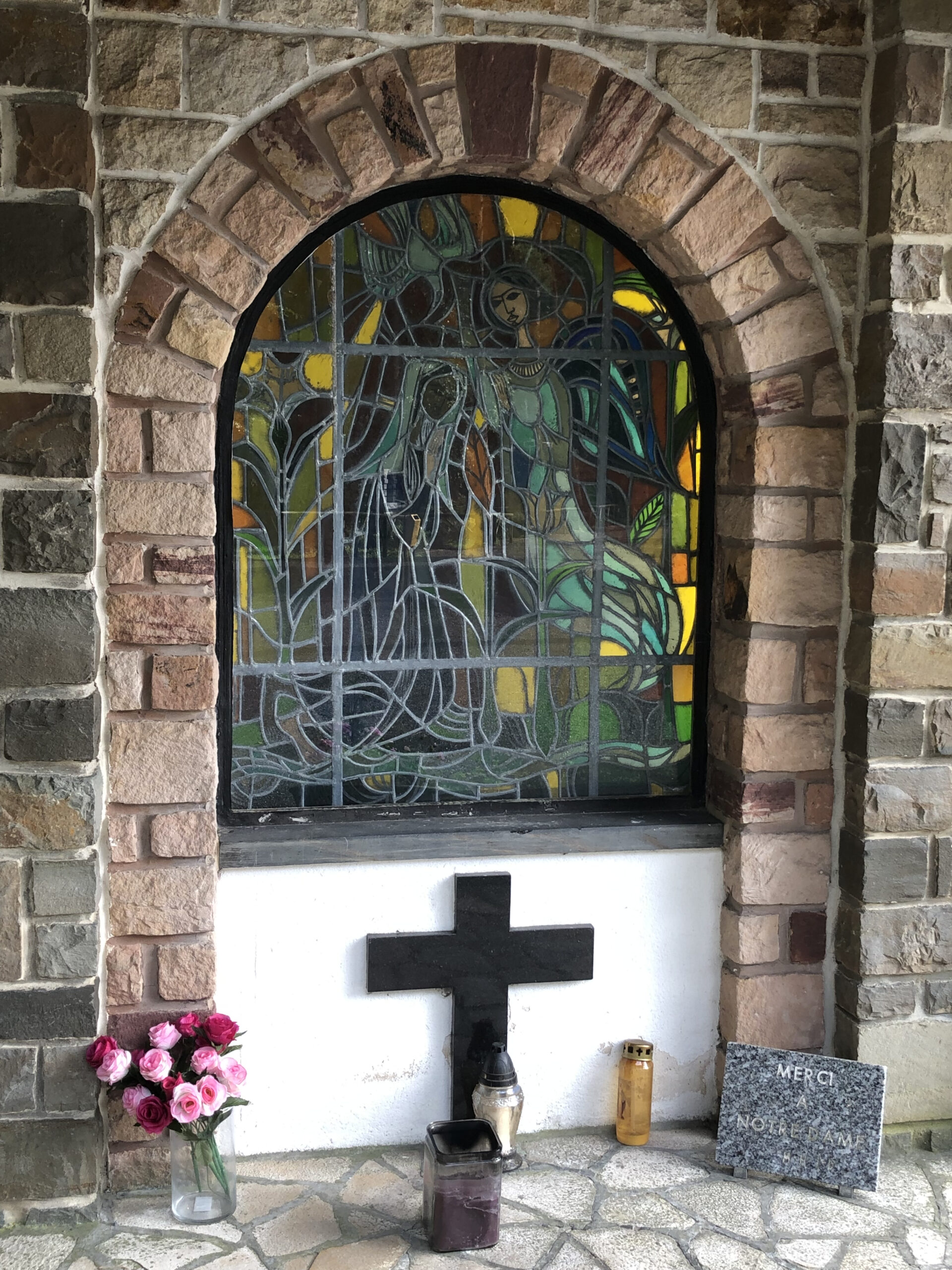
Next to St. Michael's Chapel, the Stations of the Cross begin. There are 16 Stations of the Cross here, including “The Last Supper” and “The Risen Lord”. All the stations are formed by small stained-glass windows.
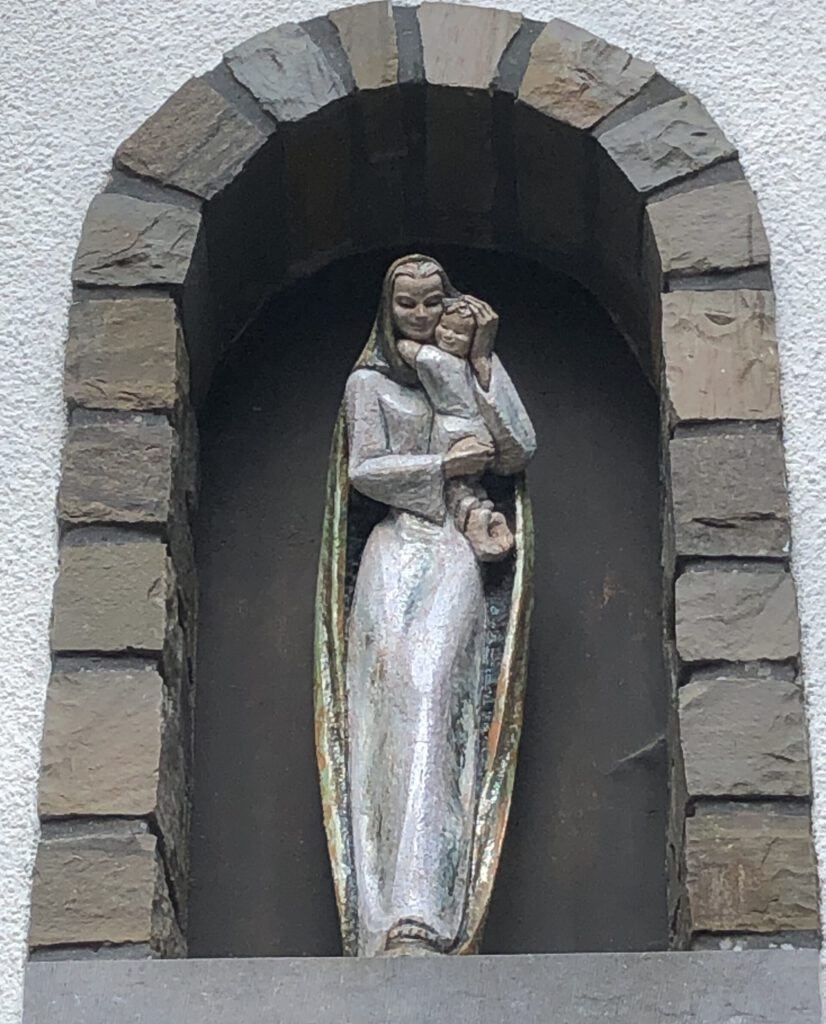
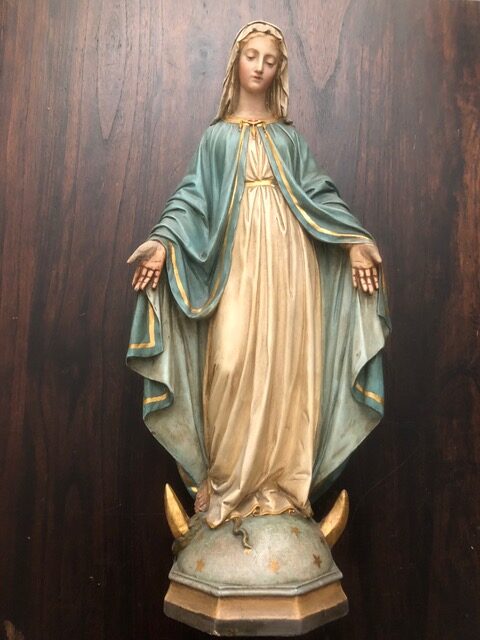
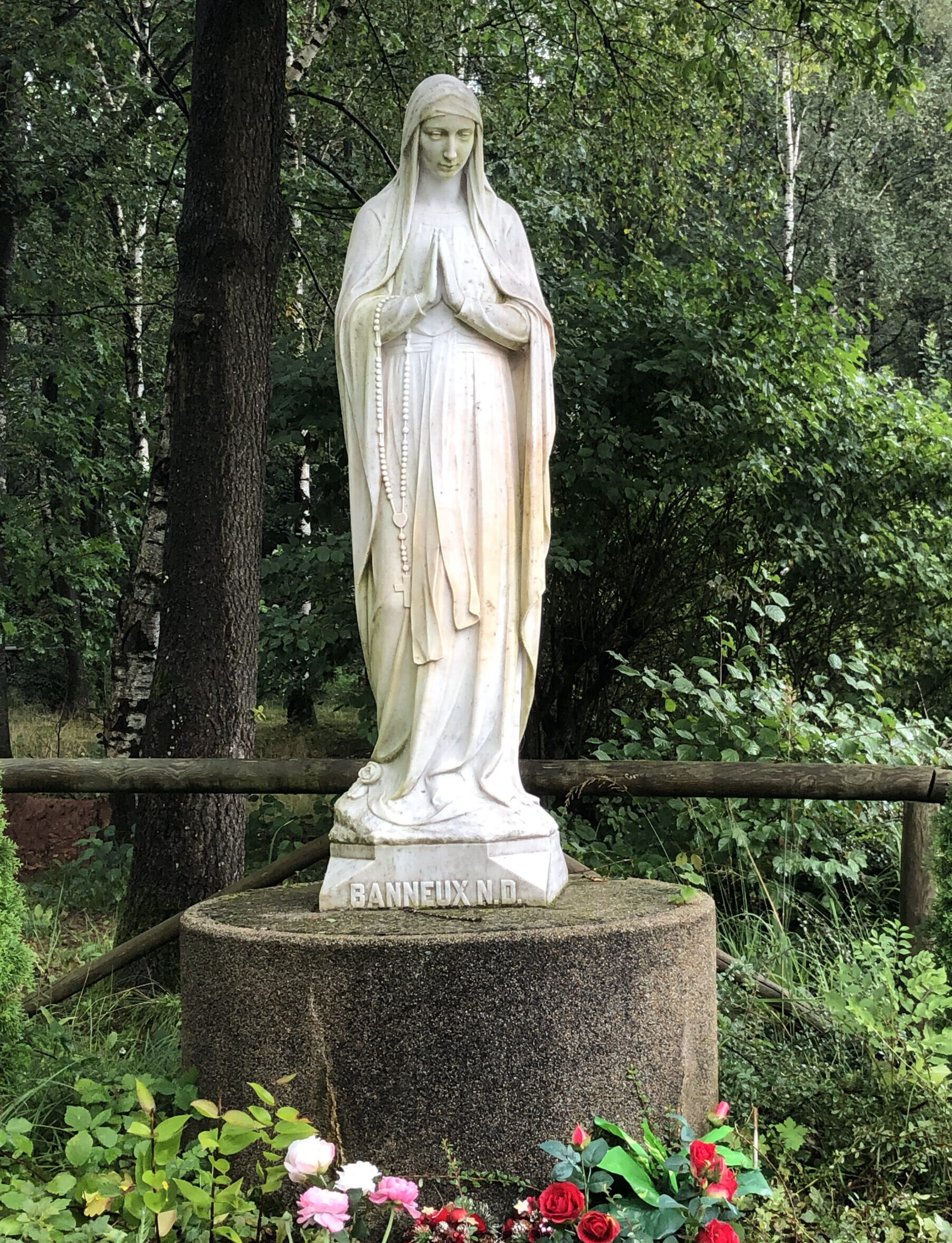
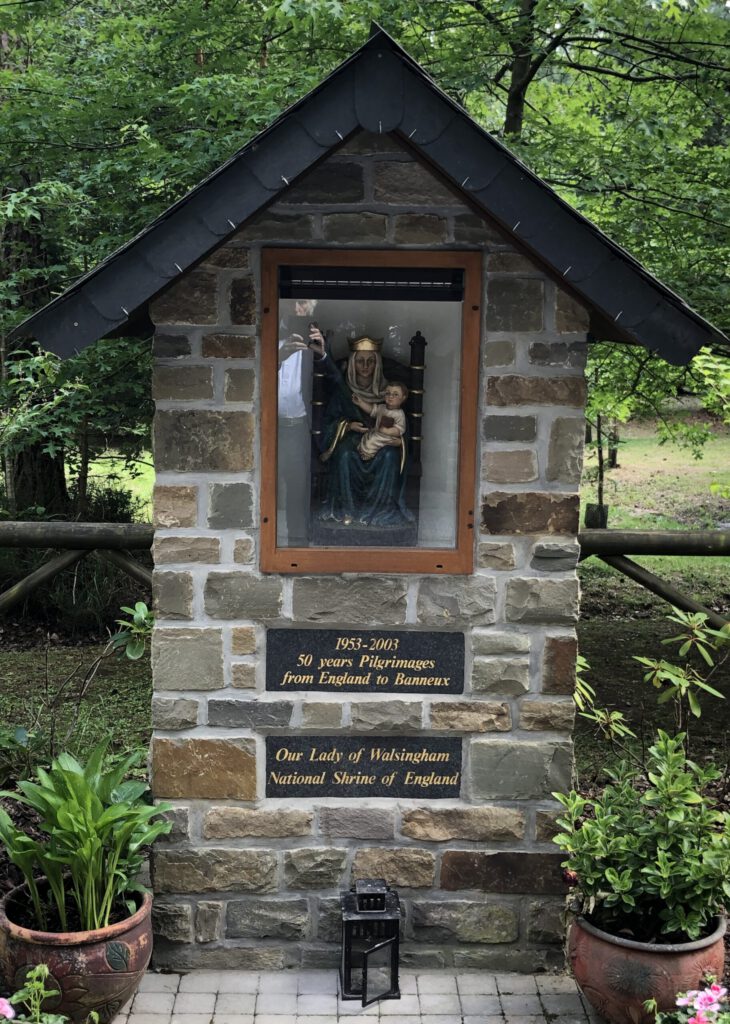
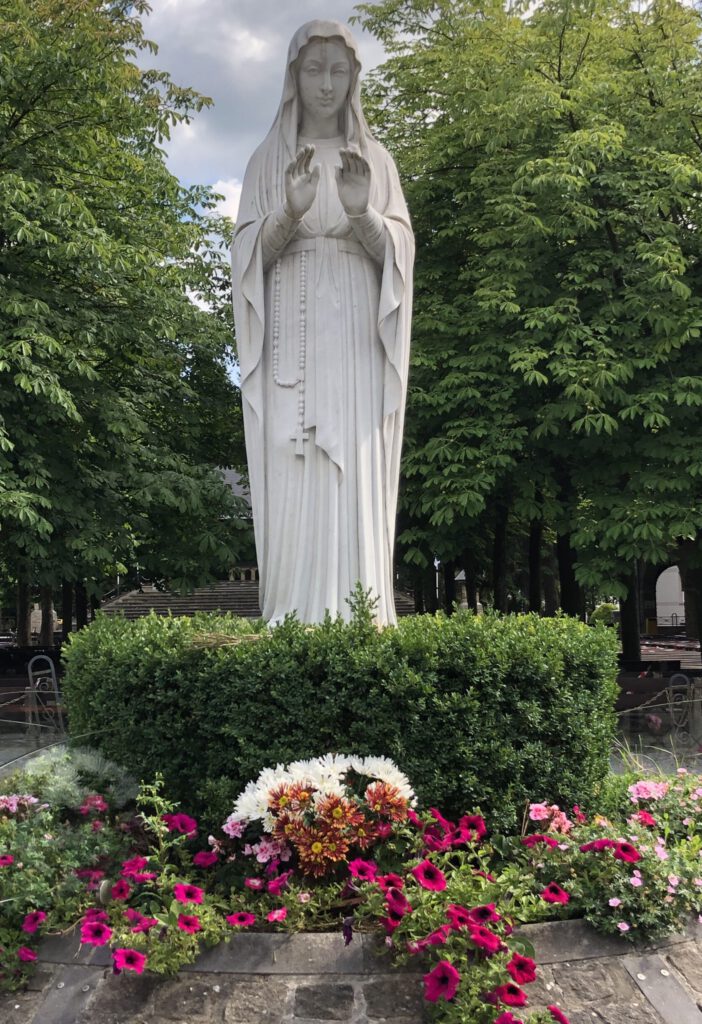
The Shrine contains a great many statues of saints. All these effigies have a special relationship to Mary or the poor. Among the statues are Our Lady of Walsingham, the Blessing Virgin and Saint Bernadette. In the Shrine, at the start of the Esplanade, stands a large statue of Mary, over 2 metres high. This statue depicts the Blessing Our Lady. The effigy is made of marble from the Italian region of Carrara. This statue was donated by Italian pilgrims and was blessed in 1999. Many pilgrims pause at this statue of Mary.
The Sanctuary of Banneux is open every day of the year. The majority of visitors come during the pilgrimage season, which begins on 1 May and runs until mid-October.
ACCESSIBILITY
The village of Banneux N.D. is located just over 20 kilometres south of Liège. Take exit 45 signposted Sprimont on the E25 motorway from Liège to Luxembourg. Then follow signs for Louveigne/Banneux-ND.
Address
Banneux Our Lady,
57 Esplanade Road,
B 4141 Banneux N.D.
For more information, please visit the website: www.banneux-nd.be. This website provides the necessary information in five languages: German, English, French, Italian, and Dutch.
Experience
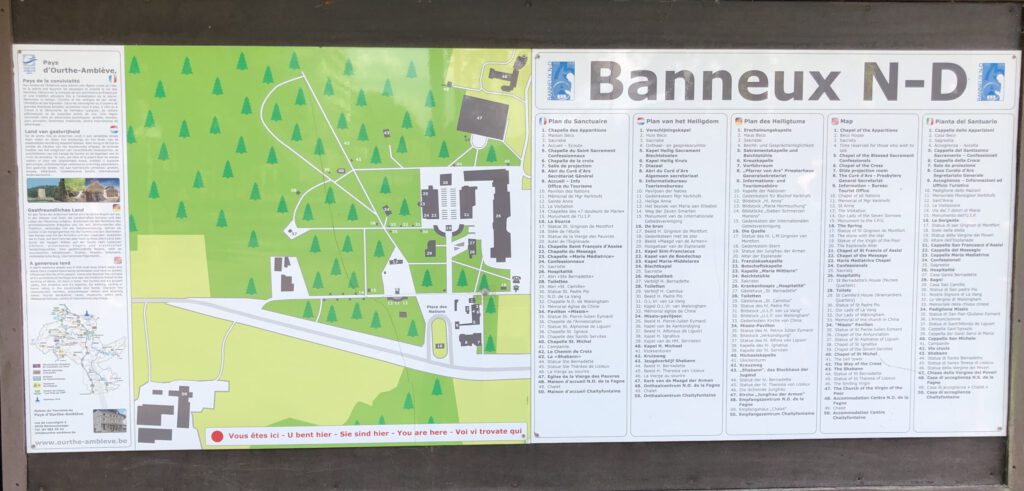
I am standing by the simple home of the Beco family. Next to me, on the edge of the wood, Maria has appeared. In this spot, I now see the Chapel of Apparitions. It was here that Mariette Beco saw “a lady” in the garden. What extraordinary ground this is. I understand that the house has not changed since the apparitions in 1933. In essence, Maria has been here, visiting. So, I stand on a place steeped in history, a place of Marian devotion. I shall pray here at two historic spots: the Chapel of Apparitions and the spring.

In the small Chapel of Apparitions, I am in the place where Mary appeared. I see the large image before me. This is what really happened. Here Mary opened her Motherly Heart. I believe she also does this for the many pilgrims who come here on pilgrimage. I feel this very strongly here and it feels as though I may be present as a witness in the great work of art.
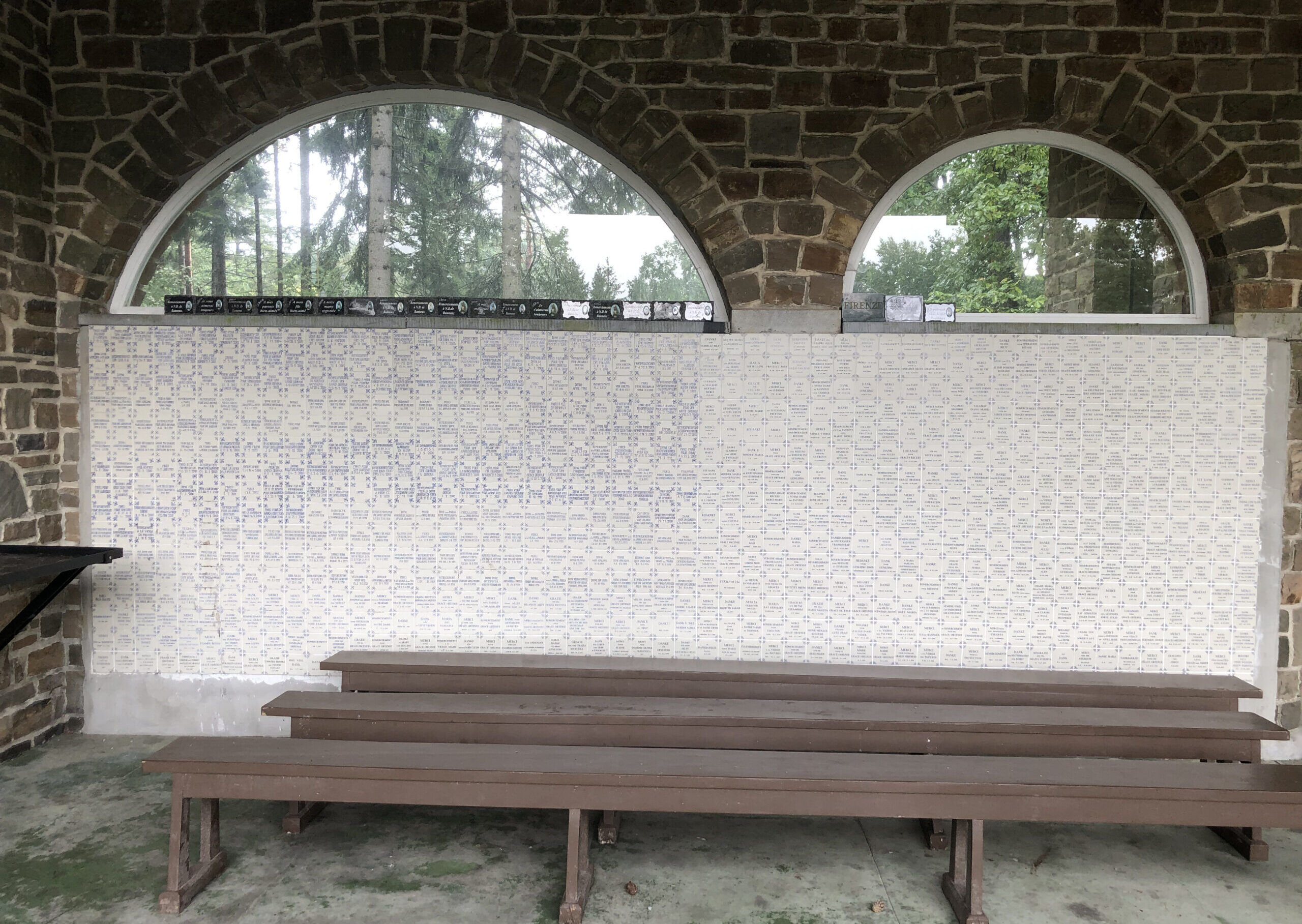
On the way to the Spring, I see three tiles with the coat of arms of Banneux incorporated into them. These tiles mark the spots where Mariette Beco knelt, as she followed Mary on her way to the Spring. I notice that pilgrims kneel at each tile.
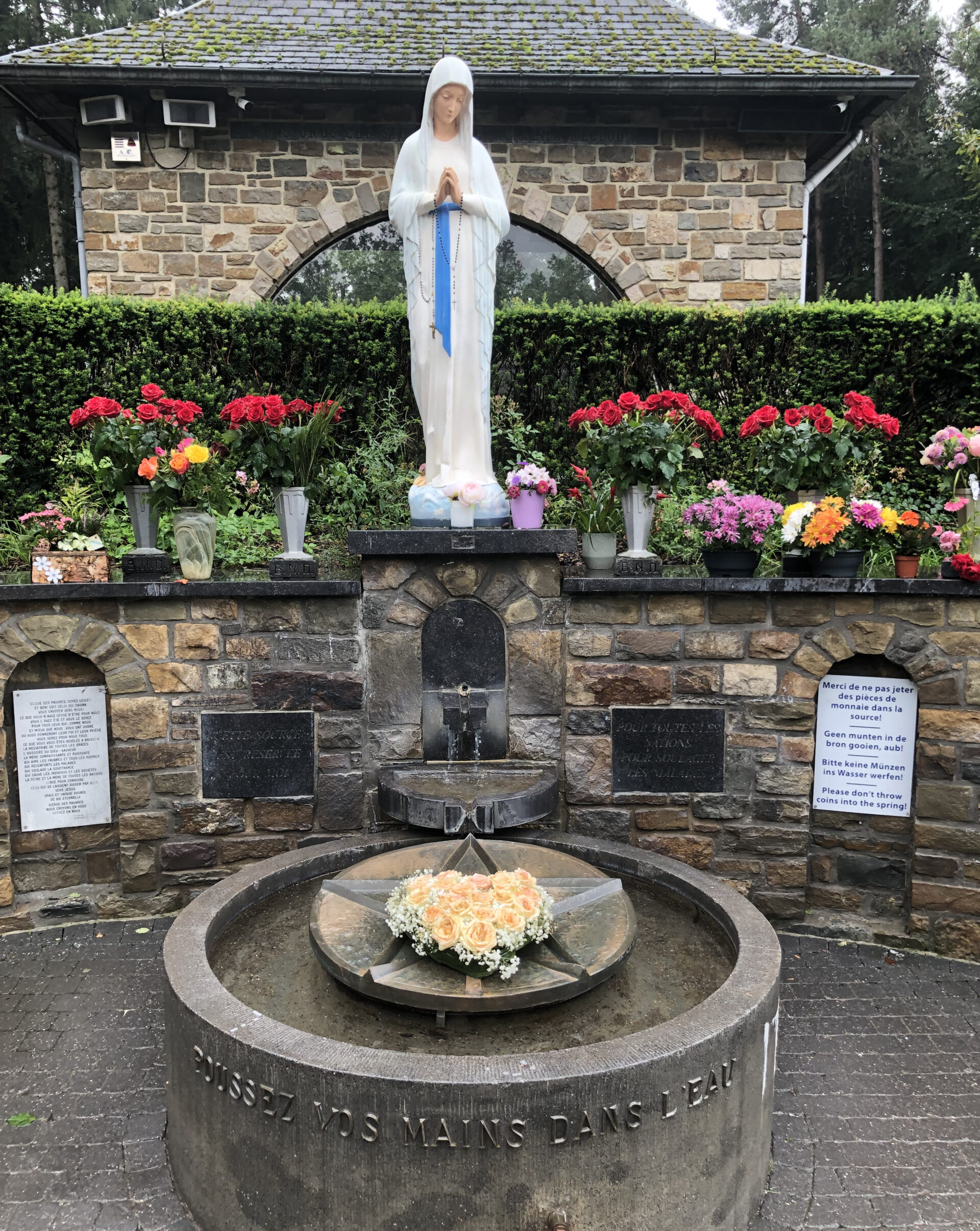
At the Source of “Living Water” it's a hive of activity. It seems everyone wants to be here at the same time. People are kneeling, praying, wetting their hands and faces with the water and laying flowers at the statue of Mary. Mary has led Mariette here. She has since done this with many people, and now with me too.
In the Sanctuary, besides French and Dutch, I also hear a lot of German. I notice that the German significance is quite large in Banneux. This becomes even stronger when I come to the Chapel of Saint Michael and learn about the origin of this building. In this house of God, special prayers are made to Mary for peace among nations. Other chapels that attract my attention include Mary Mediatrix and Queen of Prophets.
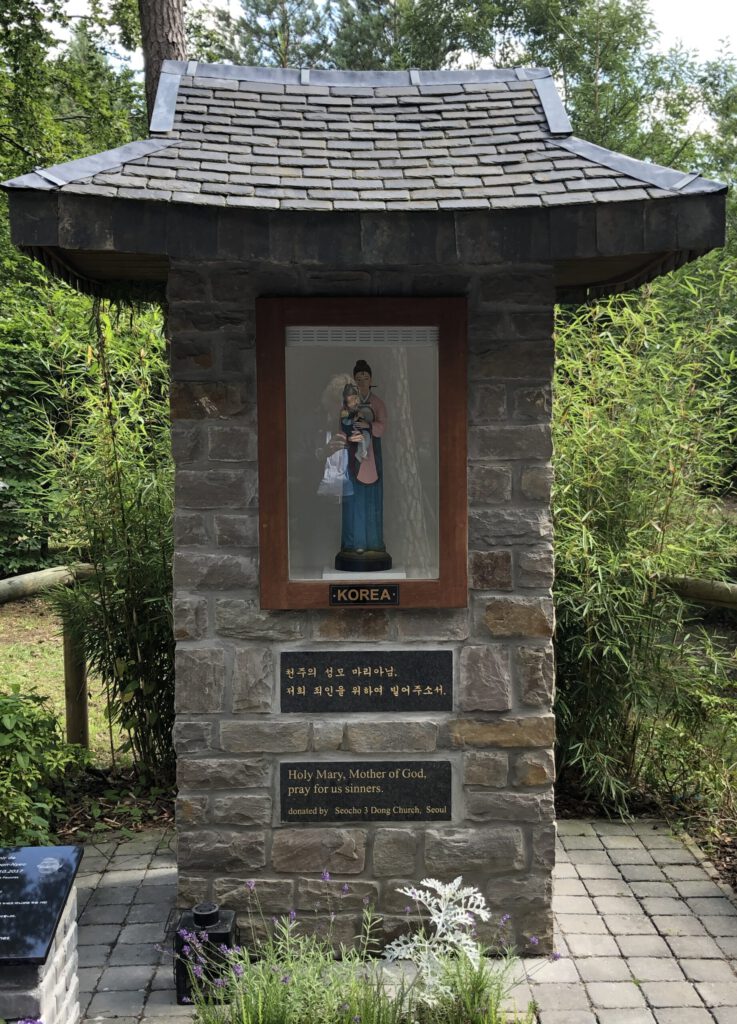
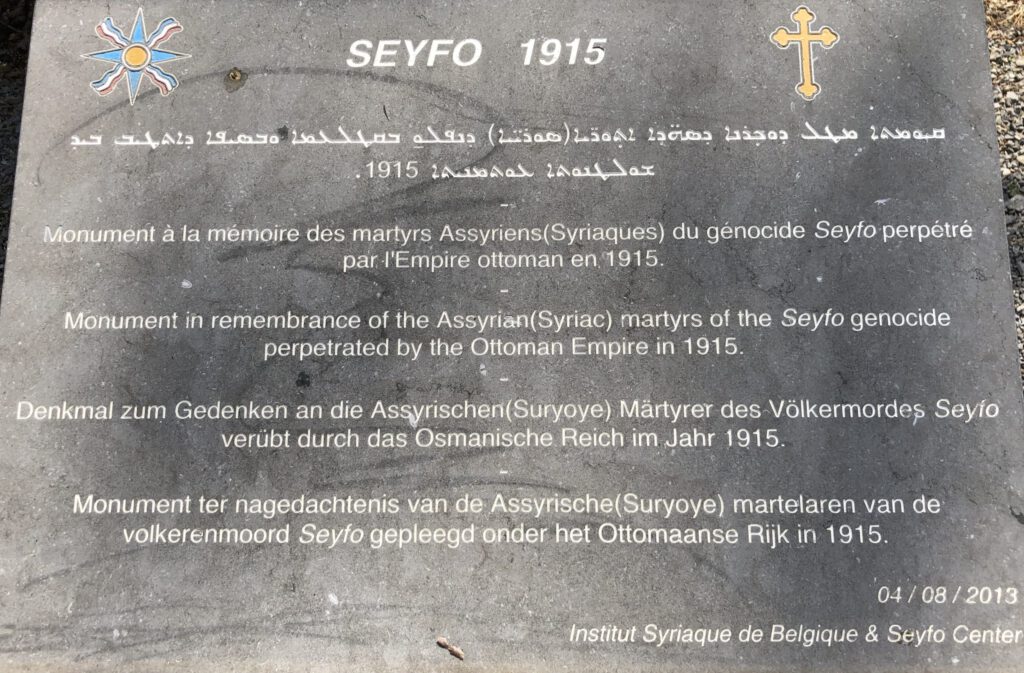
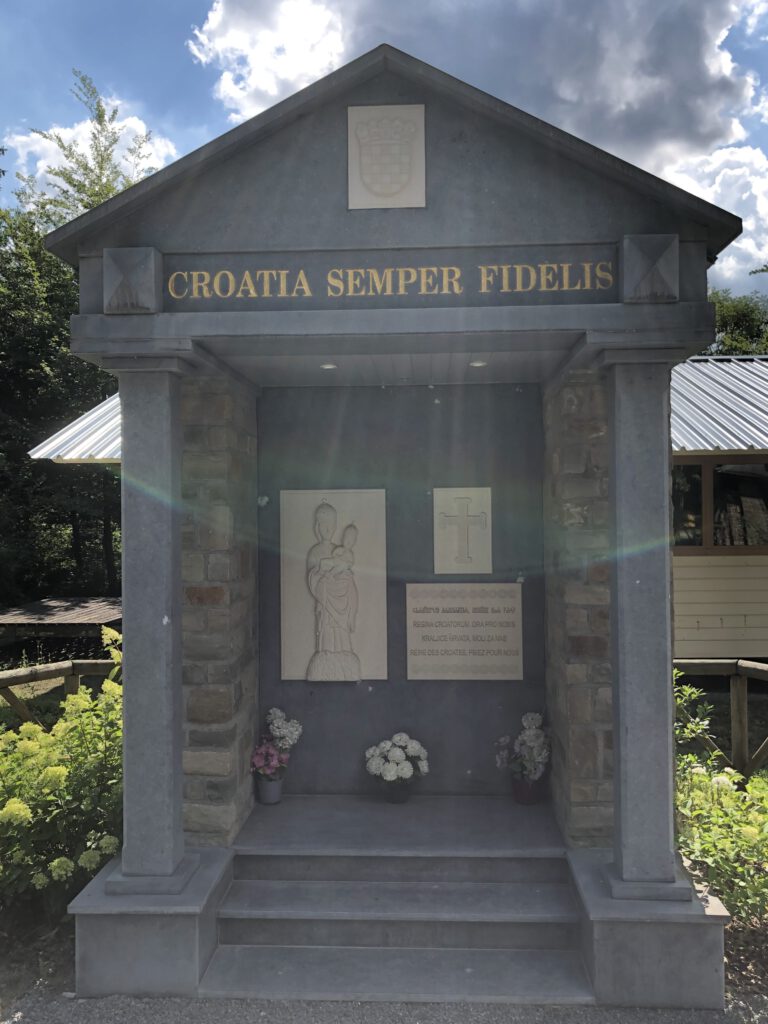
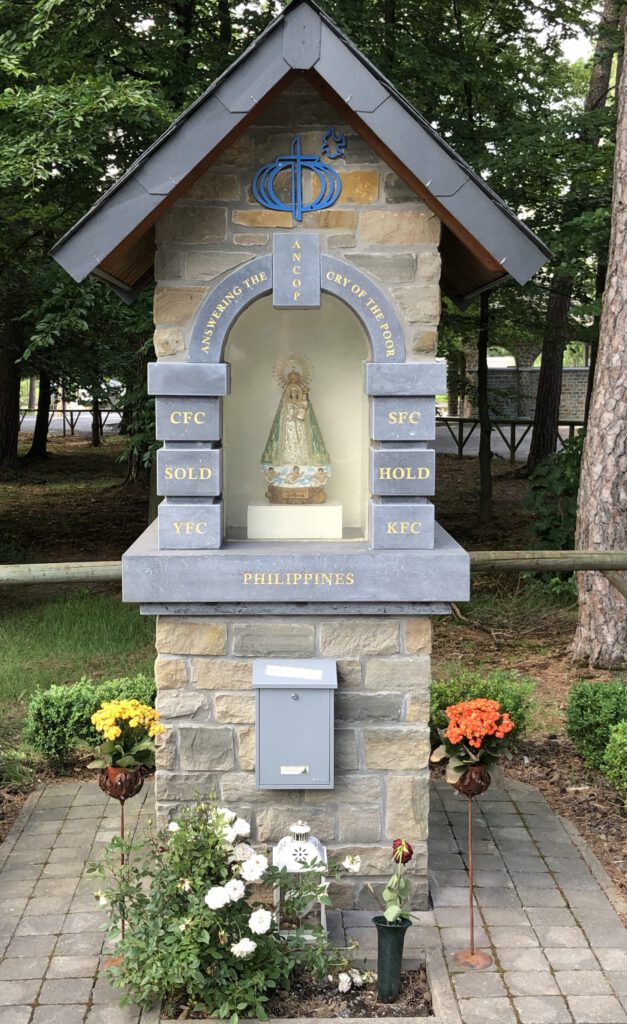
I feel that the sanctuary of Banneux is forging more and more links with other countries. For example, in the 21st century, chapels have been built with references to the belief in Mary in countries such as England, the Philippines, Korea, Croatia, and Vietnam. There is also a monument erected in memory of Seyfo 1915. In that year, genocide of Syrian Christians in Assyria took place by Turks.
In the 21st century, a statue of the widely known Mother Teresa (1910-1997), who worked for the poor, was also placed in the pilgrimage site. There is also an effigy of the Lebanese Maronite, the popular saint Charbel Makhlouf (1828-1898). Through these initiatives, the Marian Shrine is working to acquire an even stronger position in Belgium.
I'm doing another tour of this beautiful Marian shrine. My thoughts are once again with Mariette Beco. What terrible times she must have endured. Many would have liked to see her follow the path of Bernadette Soubirous of Lourdes. However, Mariette is so different, and she did not let herself be forced. Scorn, mockery, and slander befell her, when she did not definitively enter a convent and later get married. “It's good that you've stayed true to yourself, strong girl,” flashes through my mind.
On the Esplanade, I reach the large, marble statue of the Blessing Virgin of the Poor. Mary blesses everyone who comes here. I too let myself be blessed here…
I have visited the sanctuary in Banneux several times, as for me it is a special, spiritual pilgrimage site. The small scale of the pilgrimage site creates an intimate atmosphere. This always gives me the pleasant feeling of being close to Mary. This is typical of a smaller Marian shrine. It is possible to pray here with great devotion. In Banneux, I feel in dialogue with Mary and this gives me the strength to contribute a little in my surroundings to the work I do in her service. Therefore, it is good for me to come here.
Environment
From Durbuy, Belgium's smallest monumental town, it is 54 km to the northeast to Banneux.
From Liège to Banneux is a journey of 29 km towards the southeast.
To get from the picturesque German town of Monschau to Banneux is 59 km to the west.
Departing from Maastricht in the Netherlands involves travelling 61 km in a southerly direction to reach Banneux.
~~~
