History
The pilgrimage site of Our Lady of the Steps in Montenaken has a long history. The name “Steps” comes from the chapel's location in the fields of Steps. Steps is a county, established around the year 1000. At the end of the 12th century, the county was split into three parts, and one part went to Montenaken, belonging to the County of Loon. The first mention of a chapel dates back to 1179. It is assumed that the statue of Mary was already present in the prayer room at that time.
On 13 October 1213, the image of Our Lady of the Steps gained renown for its role in the Battle of Steps. The statue of Mary was removed from the church in Montenaken and brought to the battlefield. When the statue arrived on the battlefield, the sun shone very brightly. This blinded the eyes of the Brabantian adversaries, and they surrendered. A sun miracle had occurred. As a result, Montenaken became a pilgrimage site.
In 1465 there were disturbances in and around Montenaken, but the pilgrimage chapel remained unharmed.
On 11 October 1467 the statue of Mary travels to Liège and arrives in St. Lambert's Cathedral. Subsequently, the effigy accompanies Liège soldiers to a battlefield, where the Liège forces are defeated on 27 October 1467 by the troops of Charles the Bold (1433-1477), Duke of Burgundy, Brabant, Limburg, and Count of Holland, Zeeland, and Hainaut, among others. The miraculous image of Mary cannot be taken away quickly enough by the fleeing Liège fighters and disappears without a trace. The statue stood there from before 1180 until 1467.
The current image of Our Lady of the Steps dates from the period shortly after 1467.
In 1475, the Brotherhood of Our Lady of the Steps was founded; in 1962, it was re-established under the name “Our Lady, Patron Saint of Road Users”.
In 1477, Maria Sweerts bequeathed land to the people of Montenaken, instructing them to sell it and use the proceeds to build a new chapel for “Our Lady of the Battle of Steps”. In 1478, the heavily damaged village of Montenaken was rebuilt. A new chapel was constructed between 1478 and 1482. Another generous donor to the chapel of 1478 was Mary of Burgundy (1457-1482), Duchess of Burgundy (1477-1482). The organisation of the chapel's construction was overseen by Louis of Bourbon (1438-1482), Prince-Bishop of Liège (1456-1482).
In the 18th century, there were prolonged conflicts and the wars lasted for years. This led to the chapel falling into disrepair, and Jean Demasqué, the parish priest of Montenaken (1741-1749), made enormous efforts towards its restoration. In 1796, the chapel was closed by order of the French revolutionaries, but believers still wanted to come to pray the rosary.
In 1853, work began on the current chapel. At the start of the work, remains of the old 13th-century chapel and old coins dating from 1478 were found. The current chapel dates from 1853, designed by architect John Philip and constructed from bricks and marlstone in the Neo-Gothic style. On 10th May 1853, the first stone was laid by the parish priest. Due to insufficient funds, the progress of the construction was delayed, and the chapel was only completed in 1856.
From the end of the 19th century, miraculous healings have been recorded, and the data from all previous miracles have been lost due to unrest. These troubles have led to the disappearance of archives.
In 1962, the statue of Mary received an additional title: Our Lady of the Road, and in 1963, the first car blessing took place.
Pilgrimage site
The pilgrimage site at Montenaken is called Our Lady of the Steps.
Through the story of the Battle of Steps, the pilgrimage site is one of the oldest in Belgium. The pilgrimage chapel of Our Lady of Steps is also called the Steps Chapel. The chapel also has a sacristy and a small bell tower. Our Lady of Steps also carries the title “Salvation of the Sick”, due to the many extraordinary cures that have occurred through her intercession. There is mention of “Salus Infirmorum”, which in Latin means making the sick healthy, such as people with illnesses and ailments, but especially healing of fractures in small children.
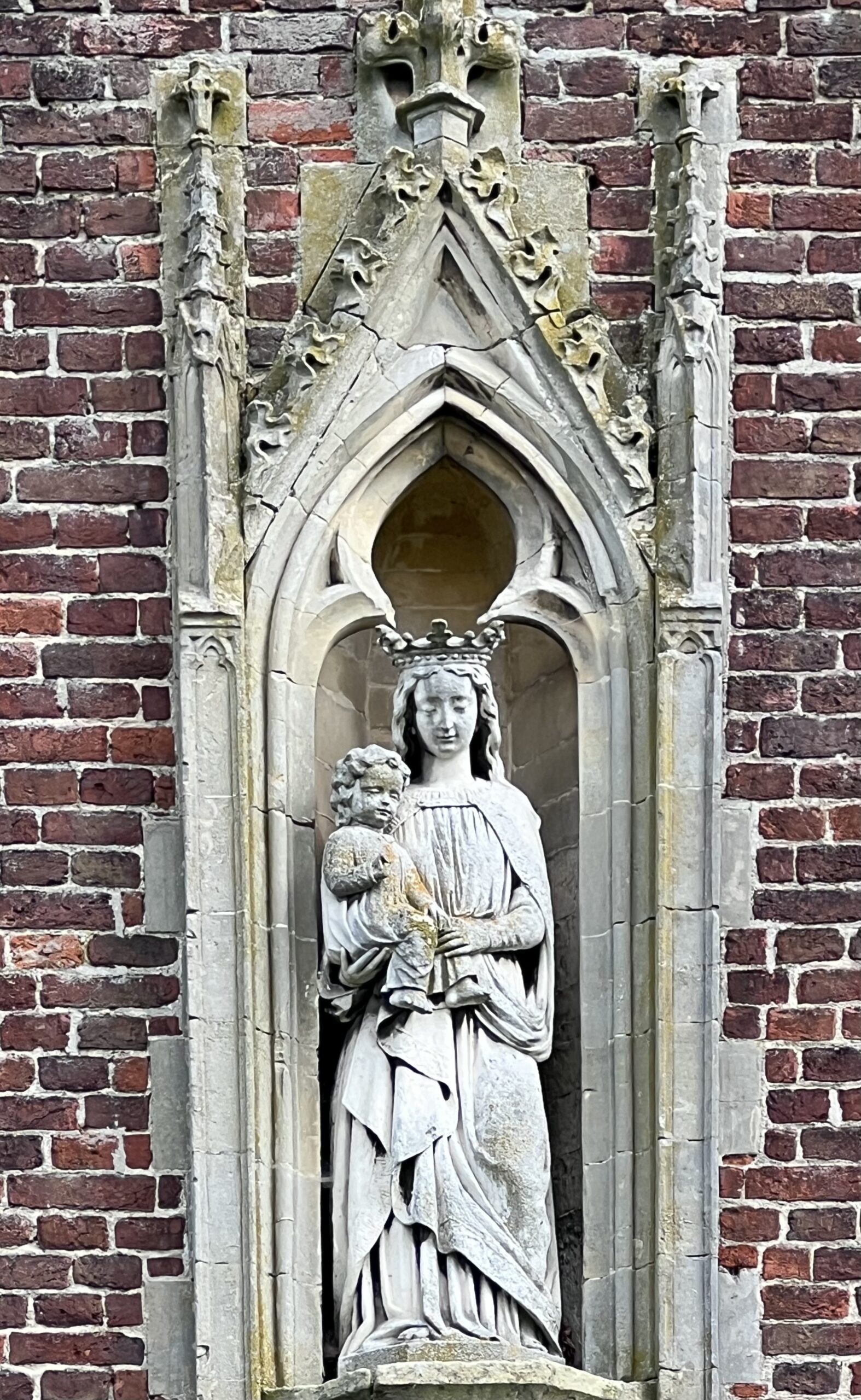
Above the entrance door, in a niche, is a depiction of Our Lady of the Steps with Child.
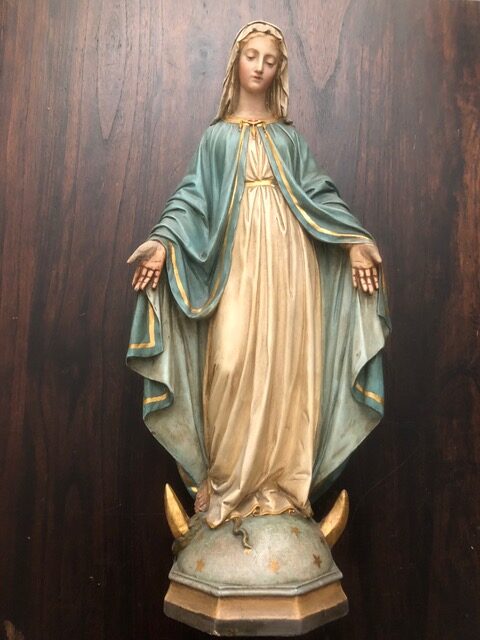
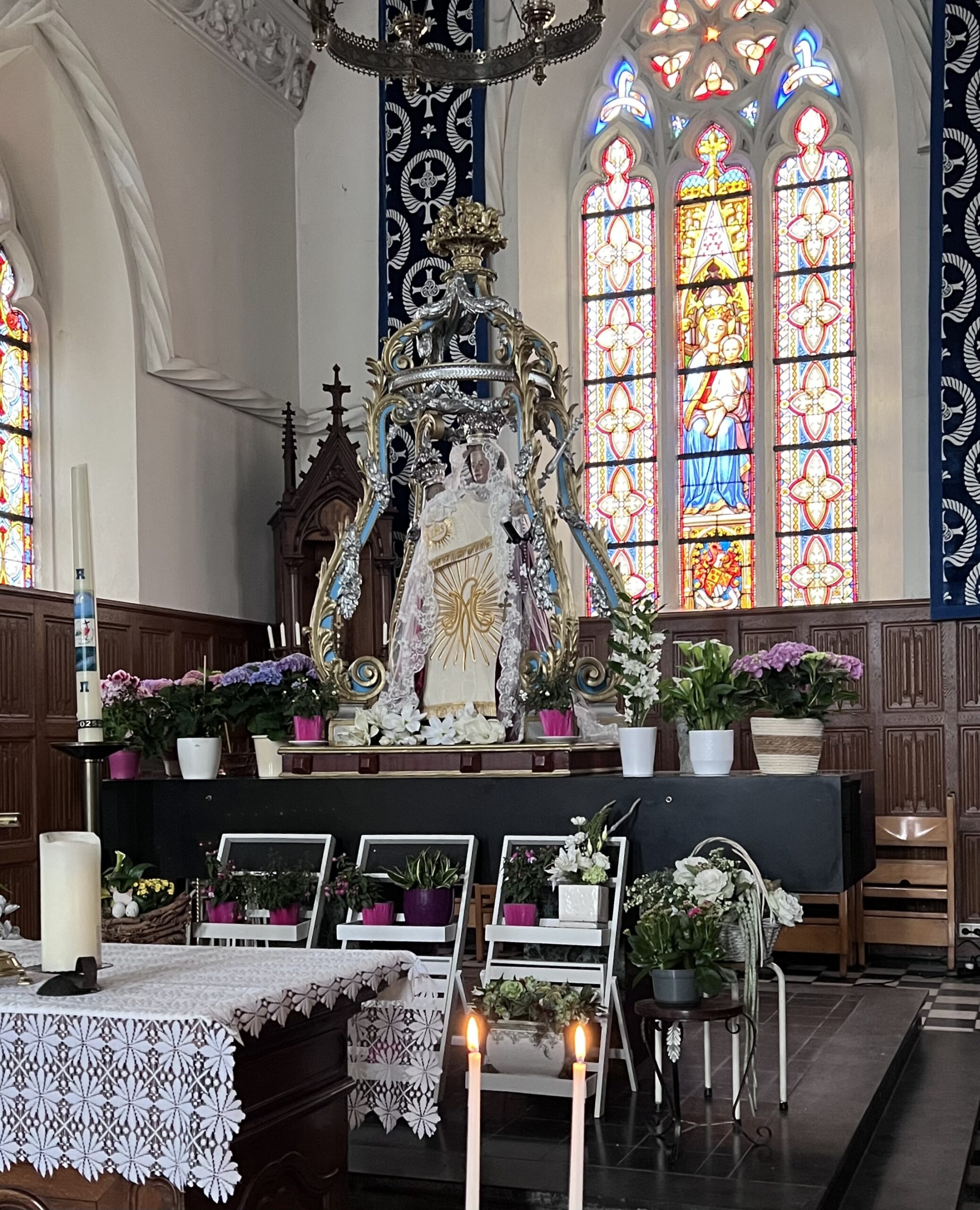
The current statue of Mary dates from the 15th century and stands in the chancel. It is a late Gothic, standing, wooden statue of Mary with Child. It is noteworthy that Mary is carrying her Son on her right arm, as this is usually her left arm, which now supports the other. Mary wears a stately mantle.
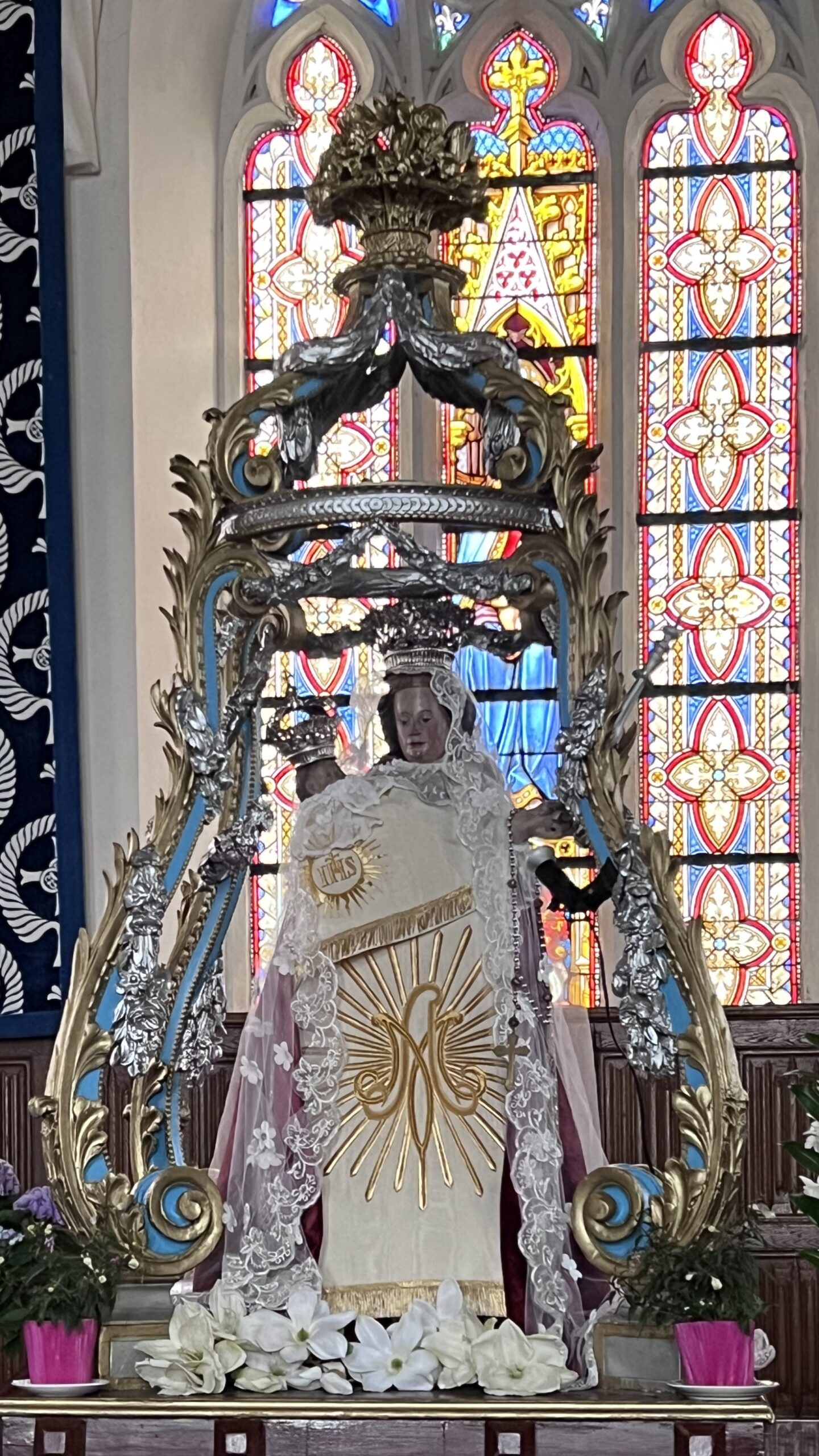
The chapel has a large marble altar. The ceiling features oak panelling. At the top of the side walls are escutcheons, referring to benefactors and titles of Mary.
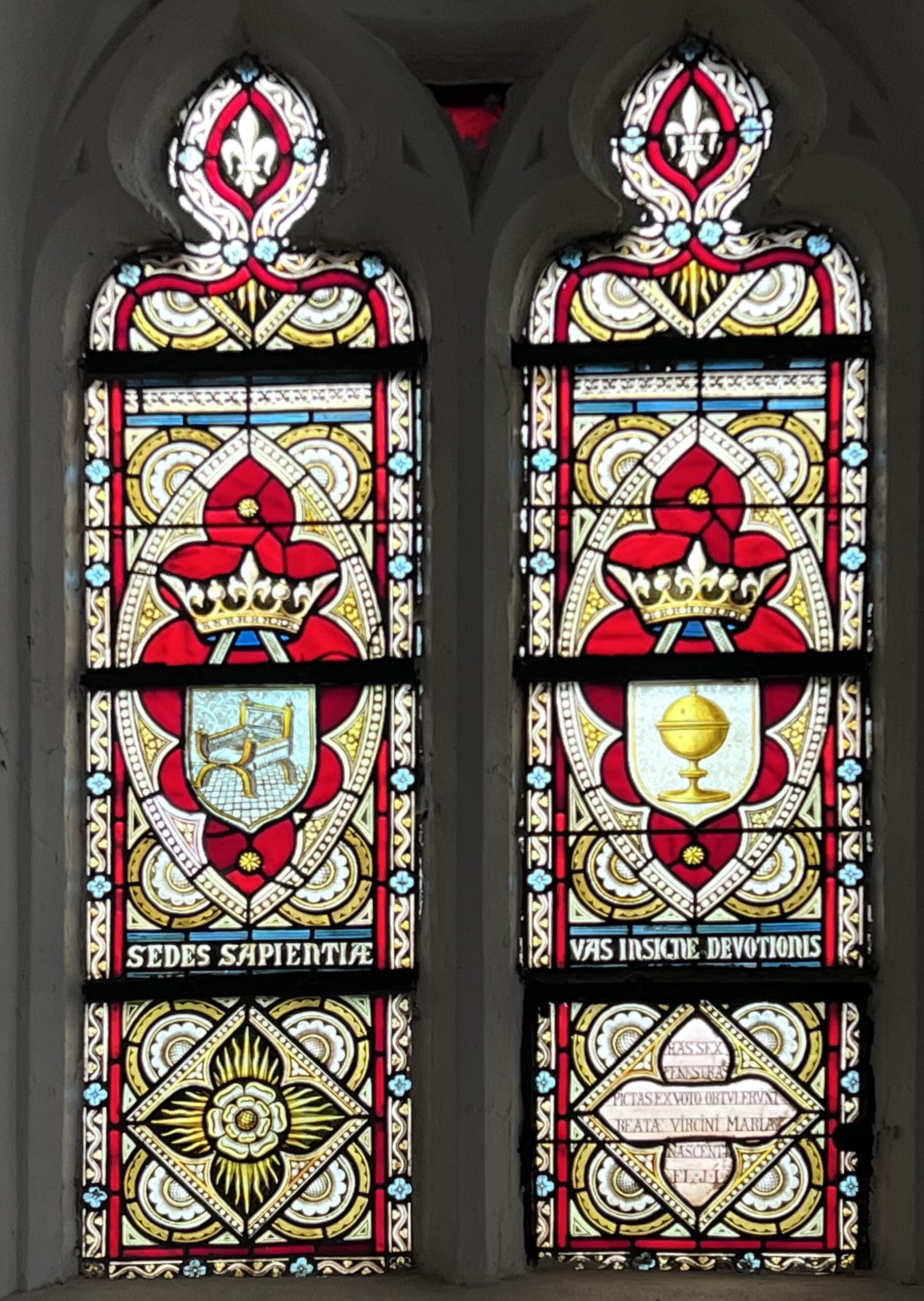
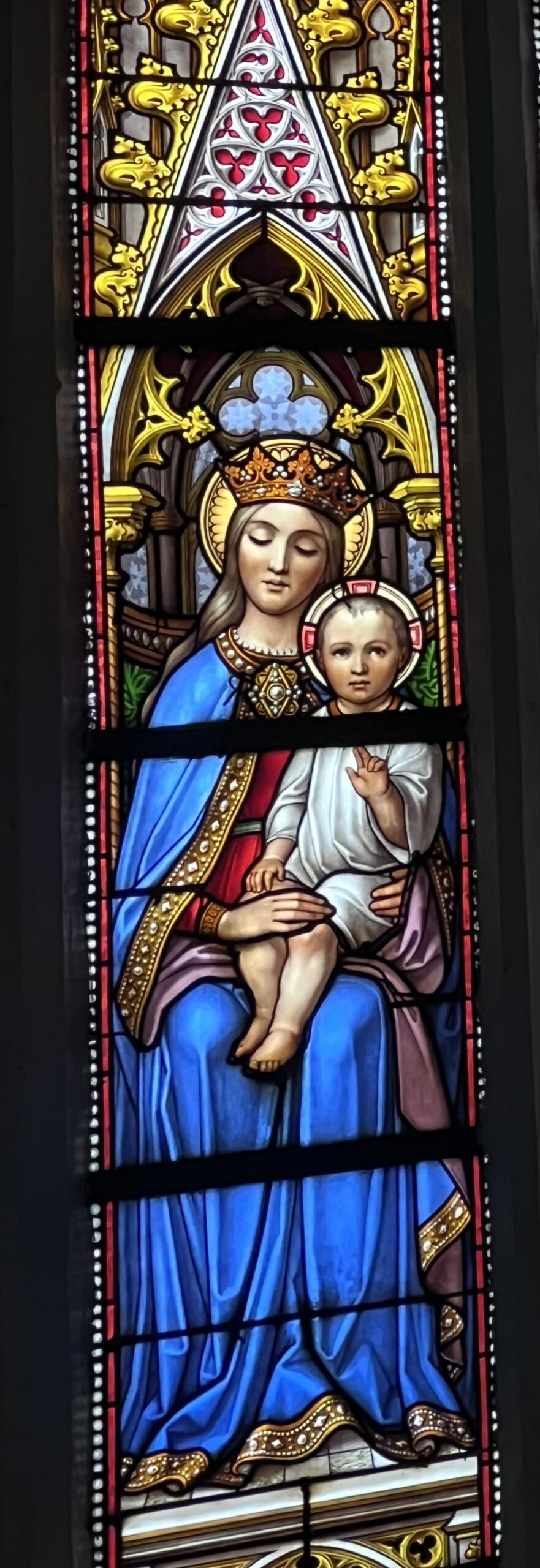
The chapel features a large, colourful stained-glass window of Our Lady with Child in the chancel. The artwork was created in 1857 by Jean-Baptist Capronnier (1814-1891). The two other large stained-glass windows date from 1858.
The chapel has a Stations of the Cross with beautiful, small stations.
In the period 1 May – 15 September, there are celebrations from Monday to Saturday.
ACCESSIBILITY
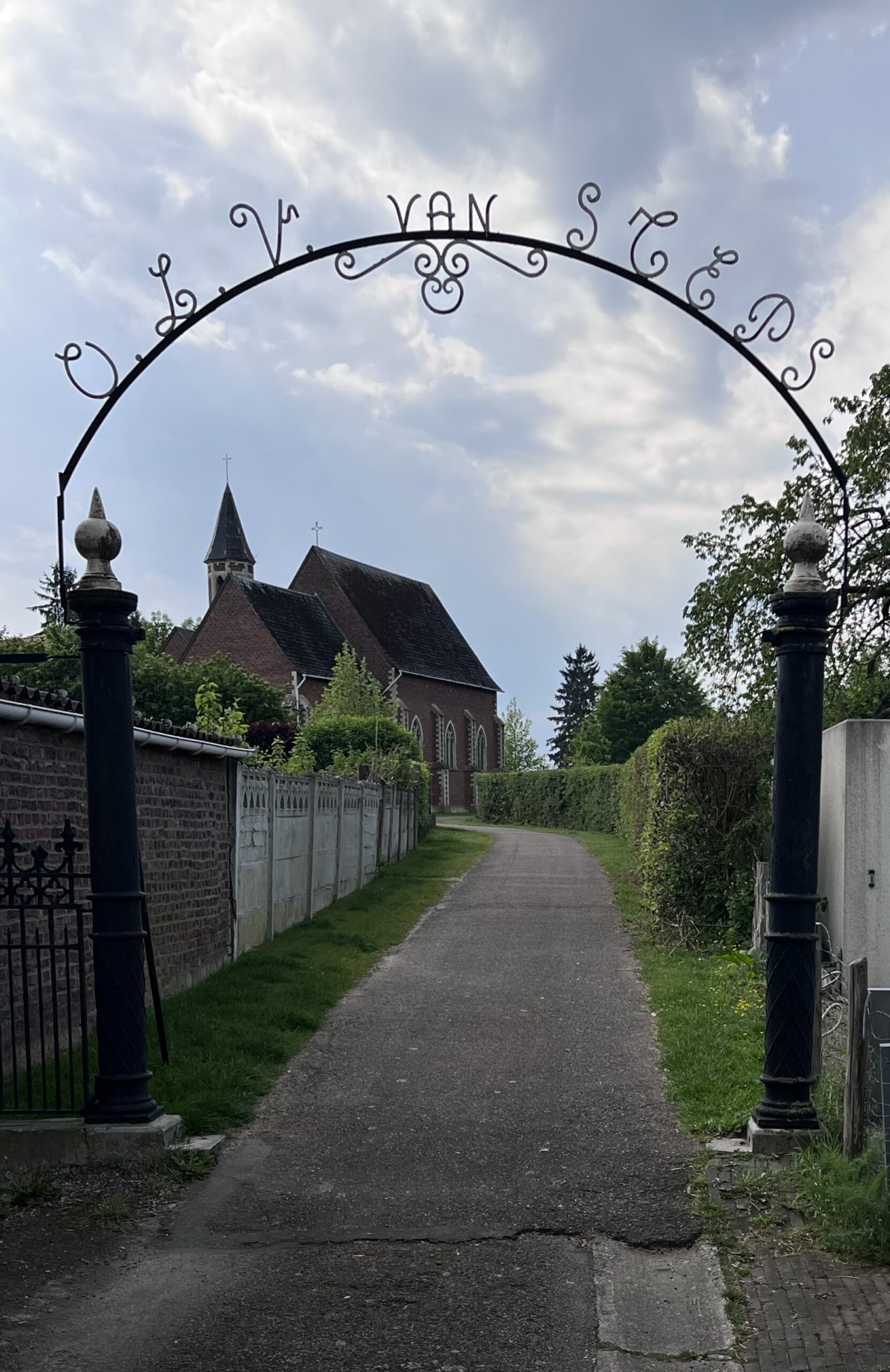
Montenaken is a sub-municipality of Gingelom, located in the Haspengouw region and the province of Limburg. The pilgrimage chapel lies to the west of the Oude Markt, near Stepsstraat, where a path leads to the pilgrimage chapel.
Address: Stepsstraat 1, 3890 Montenaken/Gingelom.
Experience
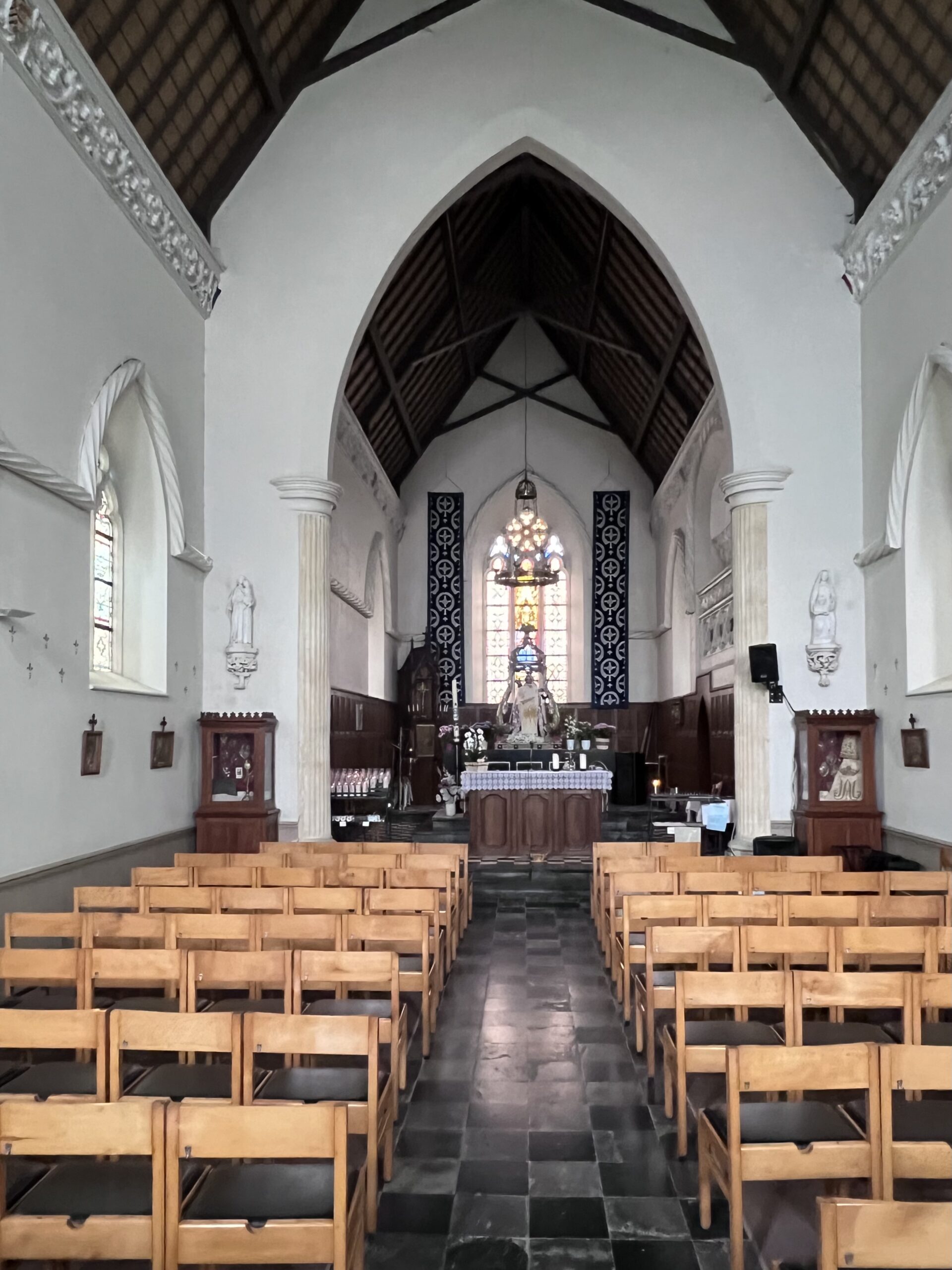
In the centre of the village of Montenaken there is a market square, and here the car finds the necessary space. The chapel can be seen from the market square. At the path to the chapel, a sign points me in the right direction. This is the second time I've been here; a few months ago, I found the chapel door locked. Today, it's unlocked, I open the door and step inside.
I am immediately impressed by the beauty of this building. What a stunning interior! When I am at the choir, I gaze at the miraculous image for a long time. What a remarkable effigy this is! It is then time for a prayer of thanks and to invoke the help of Our Lady because a friend's health leaves much to be desired.
In the chapel, I see colourful windows, which refer to symbols of Mary. The stained-glass window at the back of the chancel is also a jewel to behold.
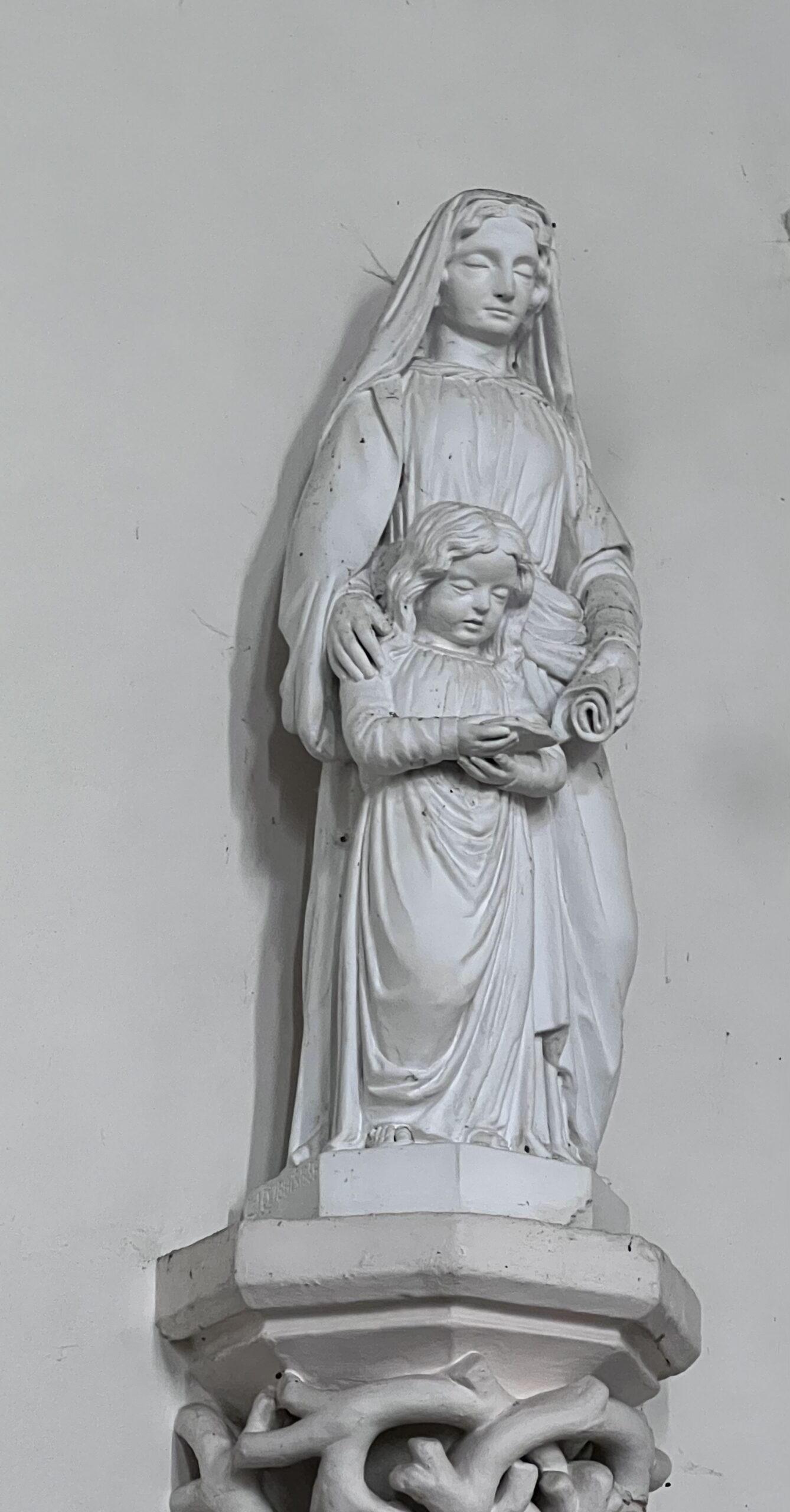
During the tour of the chapel, I see other statues, including one of Mother Anne and her daughter Mary. I also see a statue of foster father Joseph.
In display cabinets, both to the right and left of the chancel, many votive offerings to Mary are displayed. Seeing the ex-votos makes me think of grateful people.
In the chapel I found a text of a prayer to Our Lady of Steps from 1897; it was written by Victor-Joseph Doutreloux (1837-1901), bishop of Liège (1879-1901). It begins: “Beloved, O Virgin Mary, to hear the wishes and prayers of your children who come to You in this sanctuary of Steps where You have so often shown Yourself, and even before 1213, that You are a tender and merciful Mother and the salvation of the sick.” What beautiful words these are!
I am also reading the lyrics of the “Hymn to Our Lady of Steps”. The chorus gives the words:
“Oh, Heavenly Mother! so sweet and so tender,
You who see our misery, our lamenting;
Do not abandon your pleading children.”
With these impressions, I leave the chapel, enriched by a marvellous experience.
Environment
Going from Gingelom to Montenaken is going 5 km to the south.
Leaving Sint-Truiden and arriving in Montenaken requires travelling 15 km southwards.
Leaving Landen to arrive in Montenaken means covering 7 km to the southeast.
Departing from Tongeren and arriving in Montenaken involves travelling 32 km south-westwards.
From Leuven to Montenaken is 44 km in a south-easterly direction.
~~~
