History
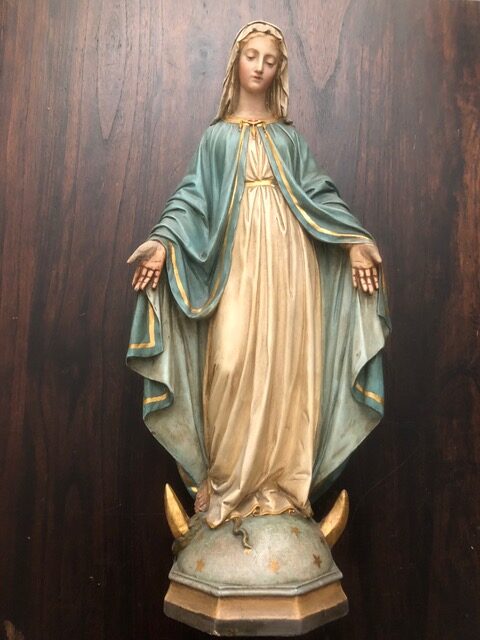
The origin of the pilgrimage site lies in a story. In 1440, day labourer Eberhard (c. 1393-1451), who worked for the Lords of Esch, placed a statuette of Mater Dolorosa (Our Lady of Sorrows) in a hollow of a tree and prayed to it. He chose a spot for the statuette so that he would pass it on his way to and from work. He would take a short break there and pray. He had a vision of Our Lady, and she instructed him to build a small chapel on the spot where the statuette stood. At first, Eberhard thought it was a dream, but Mary appeared to him again with the same message. The Lords of Esch granted him a few square metres of land to build a chapel. He got to work, built a chapel and a hermitage to live as a hermit. In 1442, his chapel and hermitage were completed. People named the chapel and hermitage “Ort Eberhards-Klause” (place of Eberhard's hermitage). Subsequently, miracles occurred at the statuette, and people were healed of their ailments. These events became known in the region and beyond. Many then came to the statuette. The small image is a Pietà, at which prayers were recited several times daily. The higher clergy in Trier were far from impressed with what Eberhard was doing with the chapel and hermitage. Pressure was put on him to move the image to the church, but Eberhard refused. The Lord of Esch briefly had him imprisoned. In Trier, opinions were revised, and Eberhard was released. Afterwards, the statuette returned to the chapel.
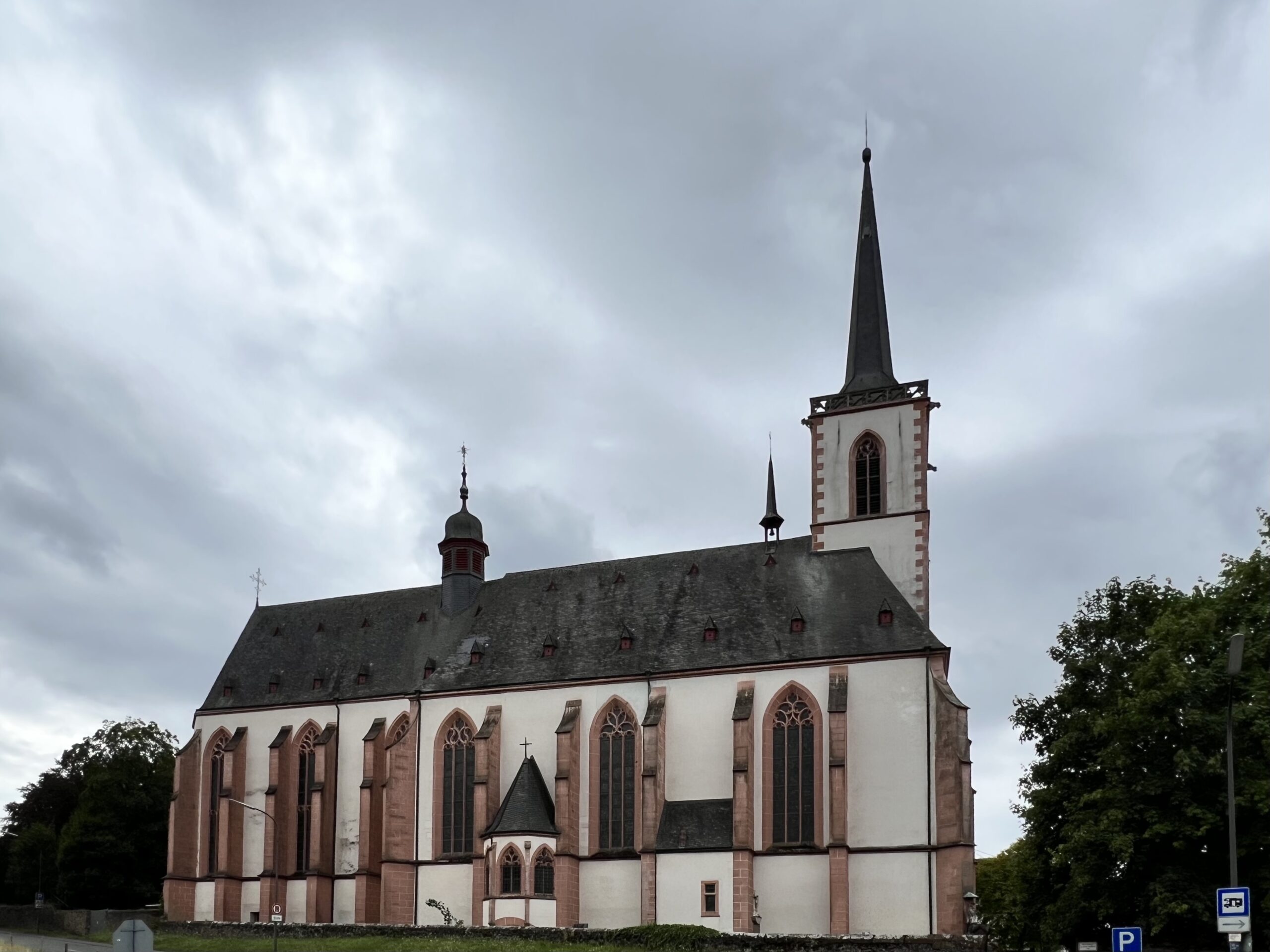
Eberhard commissions a larger figurine. Interest in the effigy continues to grow, and in 1445-1446 Eberhard builds a slightly larger chapel. A few years later, Eberhard builds a small church. This building is consecrated by Jakob von Sierck/Jacques de Sierck (1398-1456) on 25 March 1449. He is the Archbishop and Elector of Trier (1439-1456) and recognises the new shrine. The Archbishop conceives the plan to have a larger pilgrimage church built. Eberhard dies in 1451.
In 1456, the bishop founded an Augustinian monastery next to the church. With donations from pilgrims and nobles, the construction of the monastery church began. The land for the foundation of a monastery was donated in 1459 by Gottfried von Esch (1408-1465). In 1474, the chancel was completed. The sacristy and the library above it, with wall paintings, were finished in 1491. The monks had a great task in transcribing books. Given the large number of visitors to Our Lady, the Mary Chapel was enlarged.
The church was consecrated on 4 September 1502 by Johannes (Johann) van (von) Eindhoven (1439-1509). In 1458, he joined the Augustinian monastery in Klausen and became its prior in 1473. He was also an auxiliary bishop of Trier (1483-1508). Van Eindhoven was also responsible for the Late Gothic high altar, which measures approximately 4 metres wide and over 6 metres high.
In the church's Chapel of Grace, the old Pietà from 1440 stands at the top, with the new Pietà below it. The old sculpture measures 20 cm high and 16 cm wide. The new Pietà is larger, standing 115 cm high and 83 cm wide. This sculpture dates from the 17th century and is considered the actual image of grace.
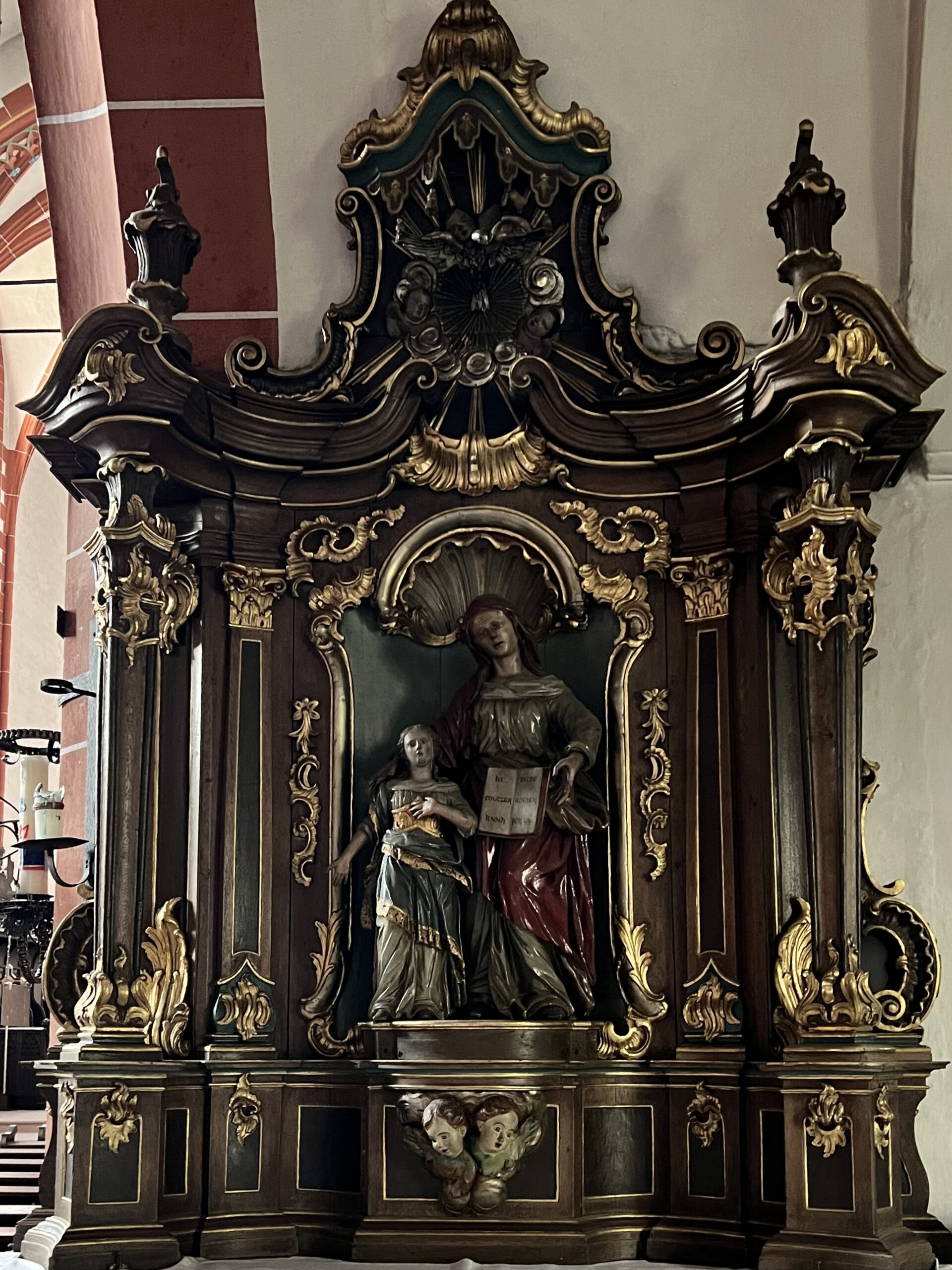
The church features a late Baroque style.
In 1802, French troops occupied the Rhineland. The monastery church then became the parish church, and the monastic community was dissolved. The library also disappeared.
In 1878, the stained-glass windows were installed by the choir, including Our Lady of Sorrows, Flight into Egypt, and Jesus is presented in the Temple.
In 1902, the Chapel of Grace was renovated and extended. The bones of hermit Eberhard were found near the Chapel of Grace. In 1903, a Way of the Cross was also created in the park, which lies next to the pilgrimage church.
In the period 1992-1996 restoration work took place.
The Friends of the Old Monastery Library “Freundeskreis der alten Klosterbibliothek der Augustiner Chorherren in Klausen” was founded in 1999. The library was thoroughly restored between 2002 and 2005.
Pilgrimage site
The pilgrimage church is the most important Late Gothic building in the southern Eiffel and the Moselle region.
The main portal is located beneath the 60-metre-high tower. This portal consists of sandstone walls and arches. Beneath the tower can be seen the oldest part of the church, which was built in the mid-15th century.
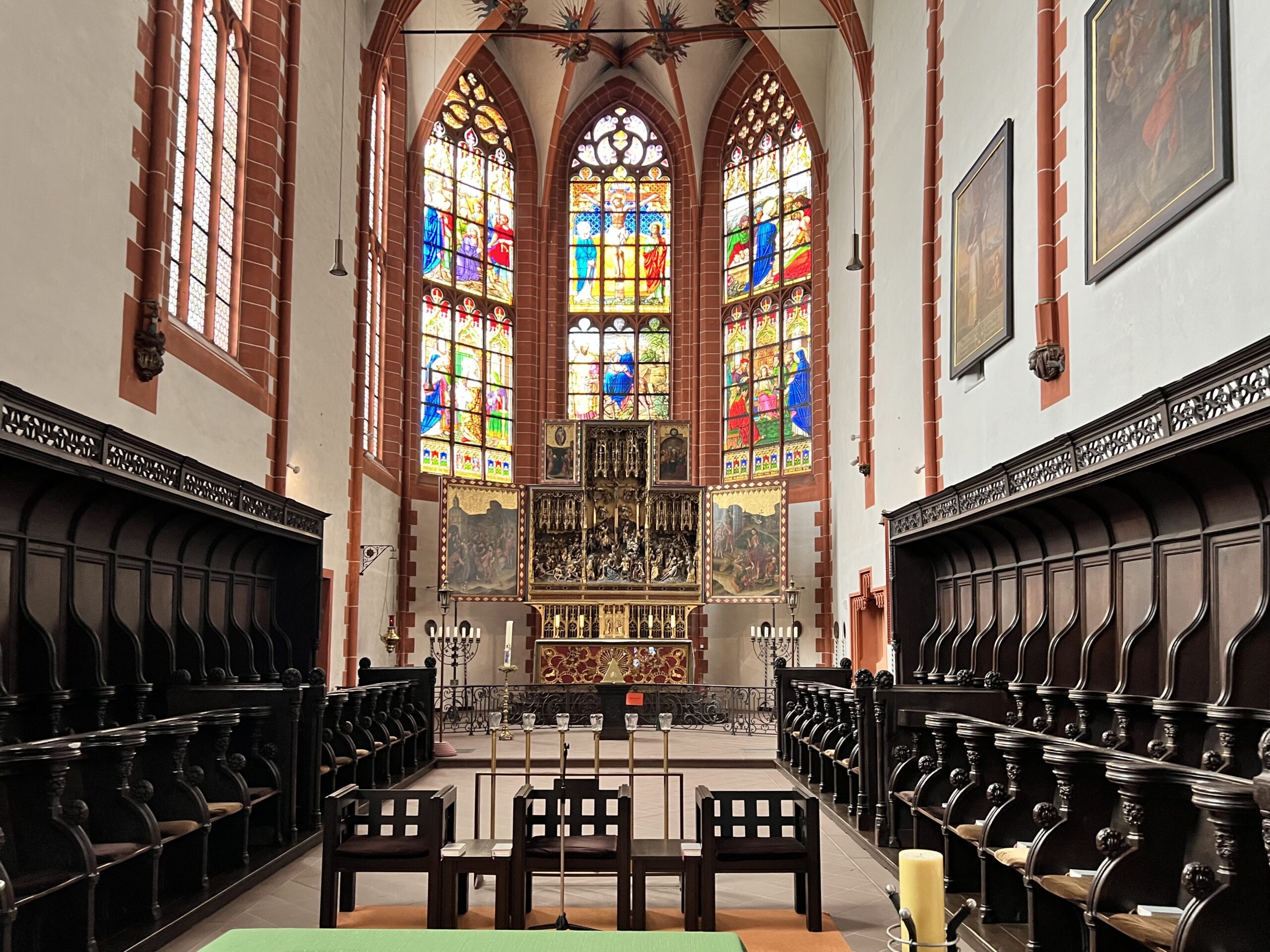
In the church is the “Passion Altar” by an unknown Antwerp artist. This high altar dates from 1480 and reaches a height of 620 cm. The images depict the Passion of Christ. The painted side panels show, among other things, the birth of Jesus, the adoration by the Magi, and the death of Mary.
The Chapel of Grace displays two effigies of Our Lady of Sorrows: the old, small statue at the top, and below it, the later, larger effigy. In fact, it is these statues that are central to the pilgrimage church. The large statue of grace is surrounded by four angels. Seven red lamps on the upper part of the altar structure symbolise the seven sorrows of Mary.
Eberhard's mortal remains lie in a wooden shrine, beneath the altar, in the Chapel of Grace.
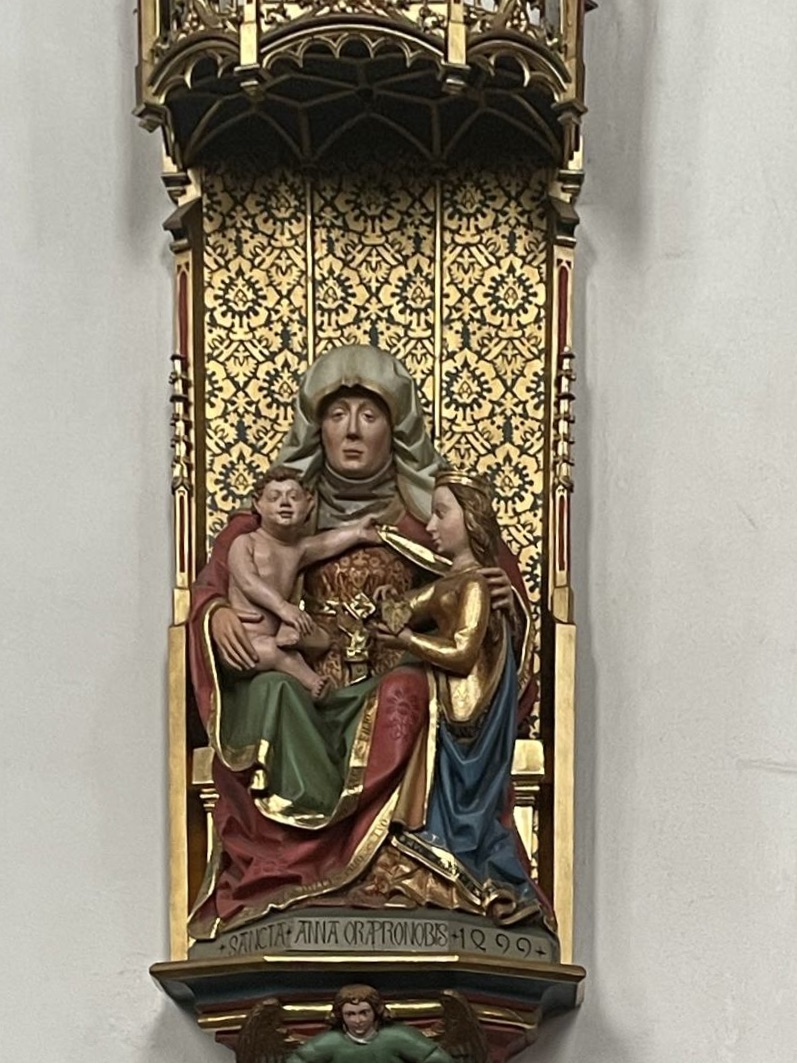
In the nave hangs an oak effigy of Anna ter Drieën, over 1 metre high, depicting Anna, Mary, and Jesus from the 15th century.
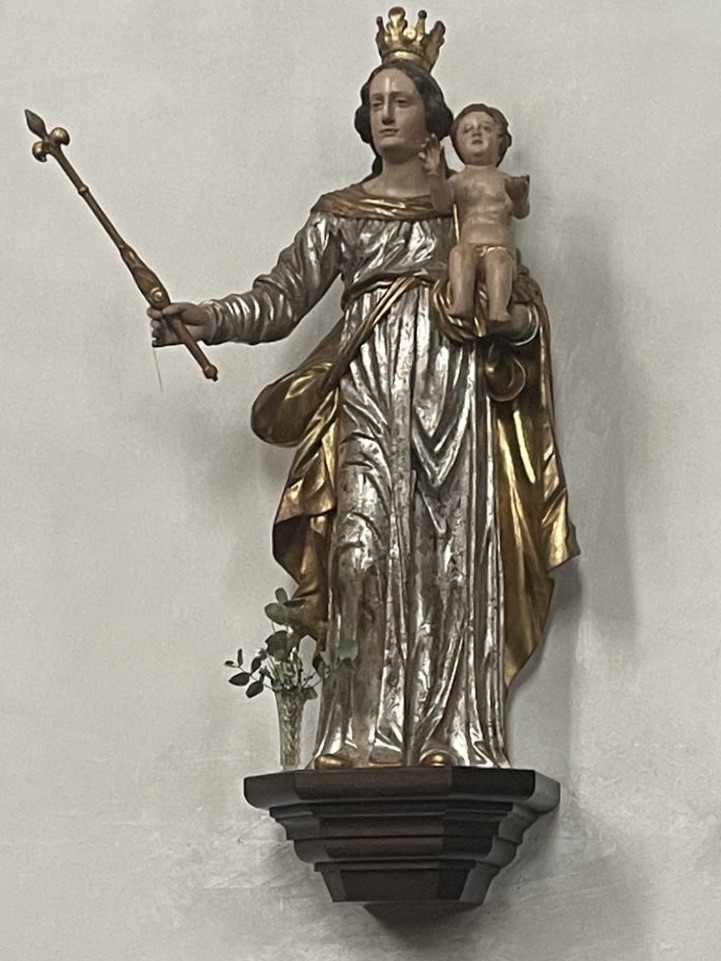
In the nave, a wooden statue of Mary with child is also mounted. The crowned Mary wears a silver dress and a golden cloak over it. In her left hand, she holds her Son, and her right hand holds a sceptre. The image of Mary as Queen dates from around 1700.
The Way of the Cross, which can be seen in the right aisle and is made of bronze statues, was created around 1960 by Johannes (Hanns) Scherl (1910-2001) from Wittlich. Here too is the red sandstone gravestone of Gottfried von Esch (1408-1465).
In the left aisle is the replica of Eberhard's treasury. Nearby is also the pilgrimage statue from 1646 with scenes from Eberhard's time.
Cultural events take place in the church.
Next to the pilgrimage church, a park has been laid out and there is also a Stations of the Cross there.
Approximately 100,000 pilgrims visit the church annually on pilgrimage.
The pilgrimage and parish church is open every day.
ACCESSIBILITY
Klausen is situated in the heart of the Moselle and Eifel region.
The address of the parish office Maria Heimsuchung is Augustinerplatz 2, 54524 Klausen.
Email Address: mariaheimsuchung.klausen@t-online.de.
Information about the monastery library can be found at www.Klosterbibliothek-Klausen.de.
The address of the pilgrimage church Maria-Visitatie (Maria Heimsuchung) is Augustinerplatz 1, 54524 Klausen.
Current information can be found at www.wallfahrtskirche-klausen.de and also at www.pfarrei-klausen.de.
Experience
In Klausen, you can experience what the hermit Eberhard went through in the 15th century.
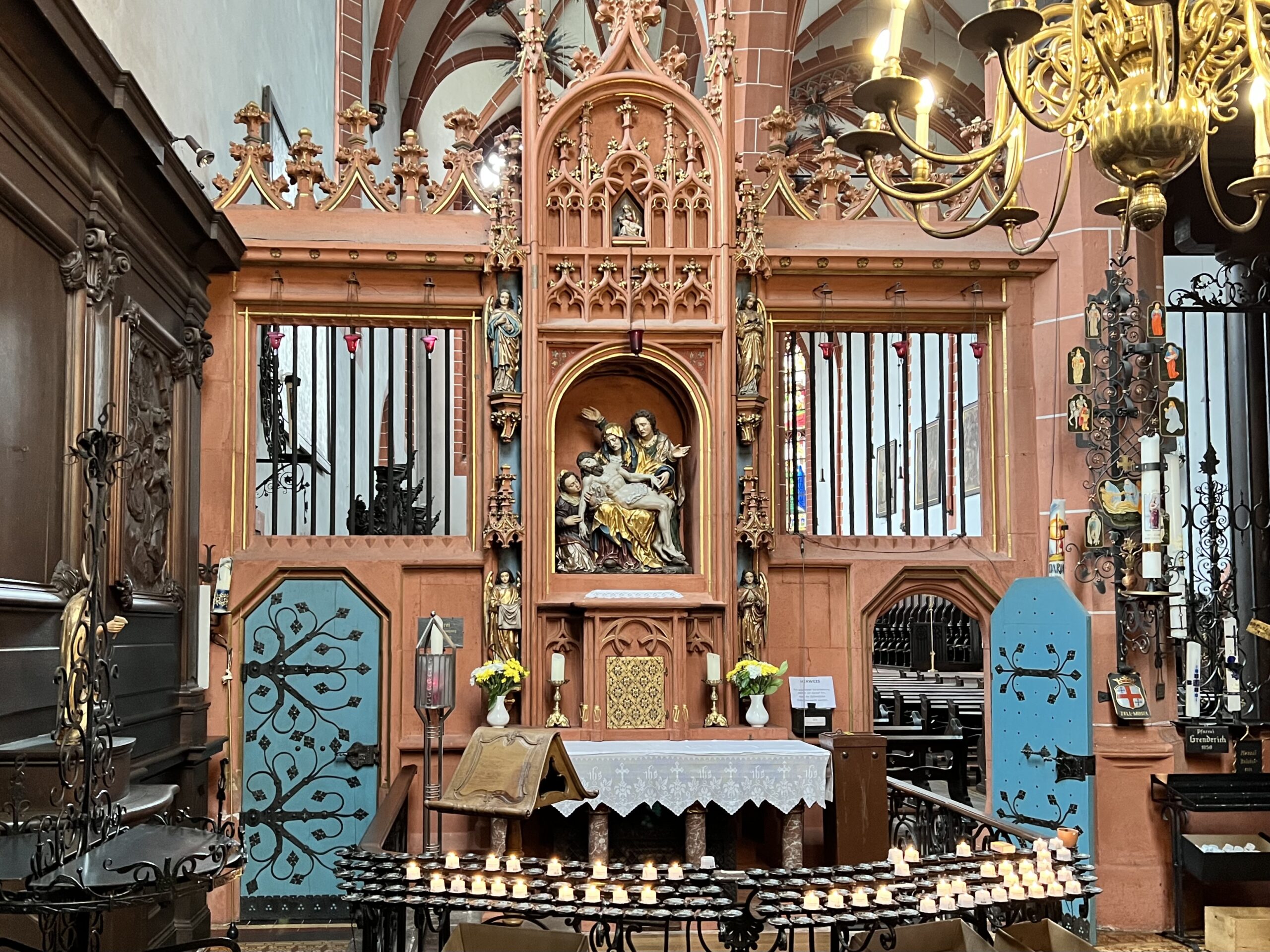
Upon arrival, visit the pilgrimage church, which is built on a plateau. When I enter the church, my attention is immediately drawn to the Chapel of Mary, and there I see the Mother of Sorrows depicted twice. The oldest statue stands at the top of the altarpiece, and the image, which is called the grace image, is located below it. If only these statues could talk... I stand here for a long time, reflecting on the history of the two depictions.
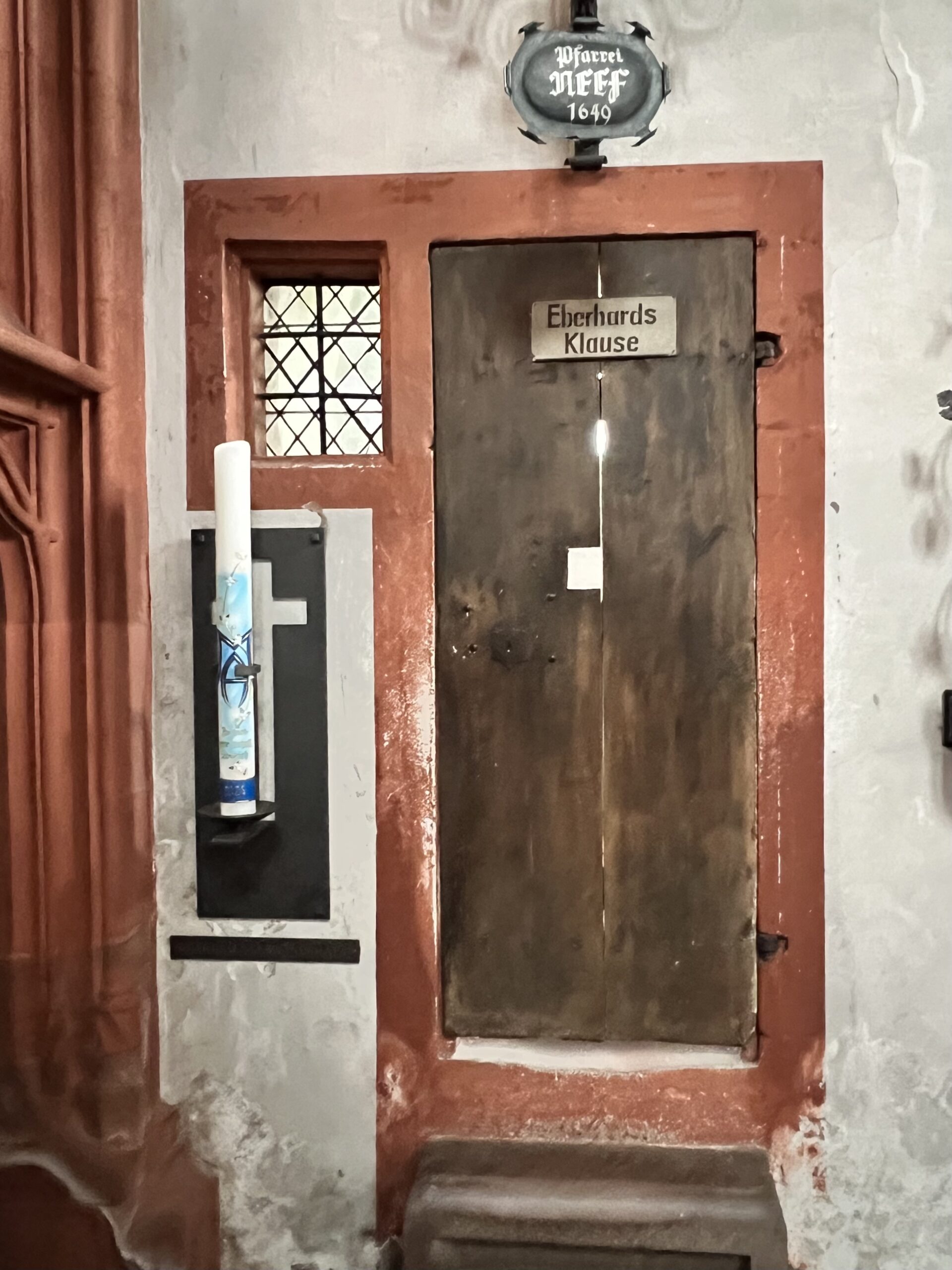
I then finish my tour of the church and come across statues of Mary, ex-votos, and a cabinet with relics. When looking at the statues of Mary as Queen and those of Anne, Mary, and Jesus, I gaze at these works of art with reverence. Finally, I return to the entrance, and next to it is the reconstructed cell of Eberhard. The door opens, and I stay in the small space where Eberhard lived for so many years. What an extraordinary man and what a peculiar room.
Then I light some candles and pray for the well-being of friends.
After the visit to the church, I will go to the nearby park and come to the Way of the Cross to then visit the stations. Afterwards, I will take a seat on a bench and let the impressions I have gained pass by again. What a particularly beautiful experience I have had. Thank you, Mary.
Environment
Going from Trier to Klausen is 32 km to the northeast.
Leaving Wittlich to arrive in Klausen is a 17 km journey southwards.
Leaving Bitburg to get to Klausen requires travelling 47 km to the east.
Leaving Koblenz for Klausen involves covering 106 km to the southwest.
~~~
