History
Bétharam (Lestelle) is a very old place of worship of Our Lady. For centuries, many pilgrims have visited this site. Many miracles have taken place here. For instance, historian and clergyman Pierre de Marca (1594-1662) had no fewer than 82 miracles registered during the period 1620–1640. He was president of the Parliament of Pau (1621–1631), intendant (head) of Béarn (1631–1641) and later bishop of Couserans (1641–1652), archbishop of Toulouse (1652–1662) and, for 3 weeks in 1662, archbishop of Paris. In Bétharam, the blind, disabled, and seriously ill have been healed.

The pilgrimage church of Our Lady of Bétharram was set on fire by Huguenots in 1569. A new house of worship is to be built on the site of the old, destroyed church. This requires a long period of almost a century, namely from 1614 to 1710.
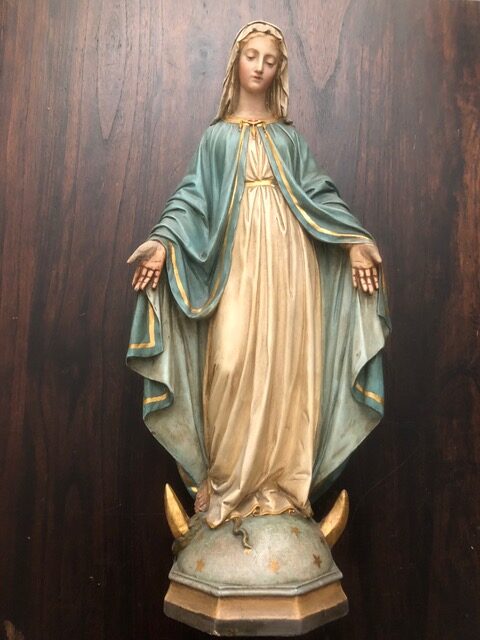
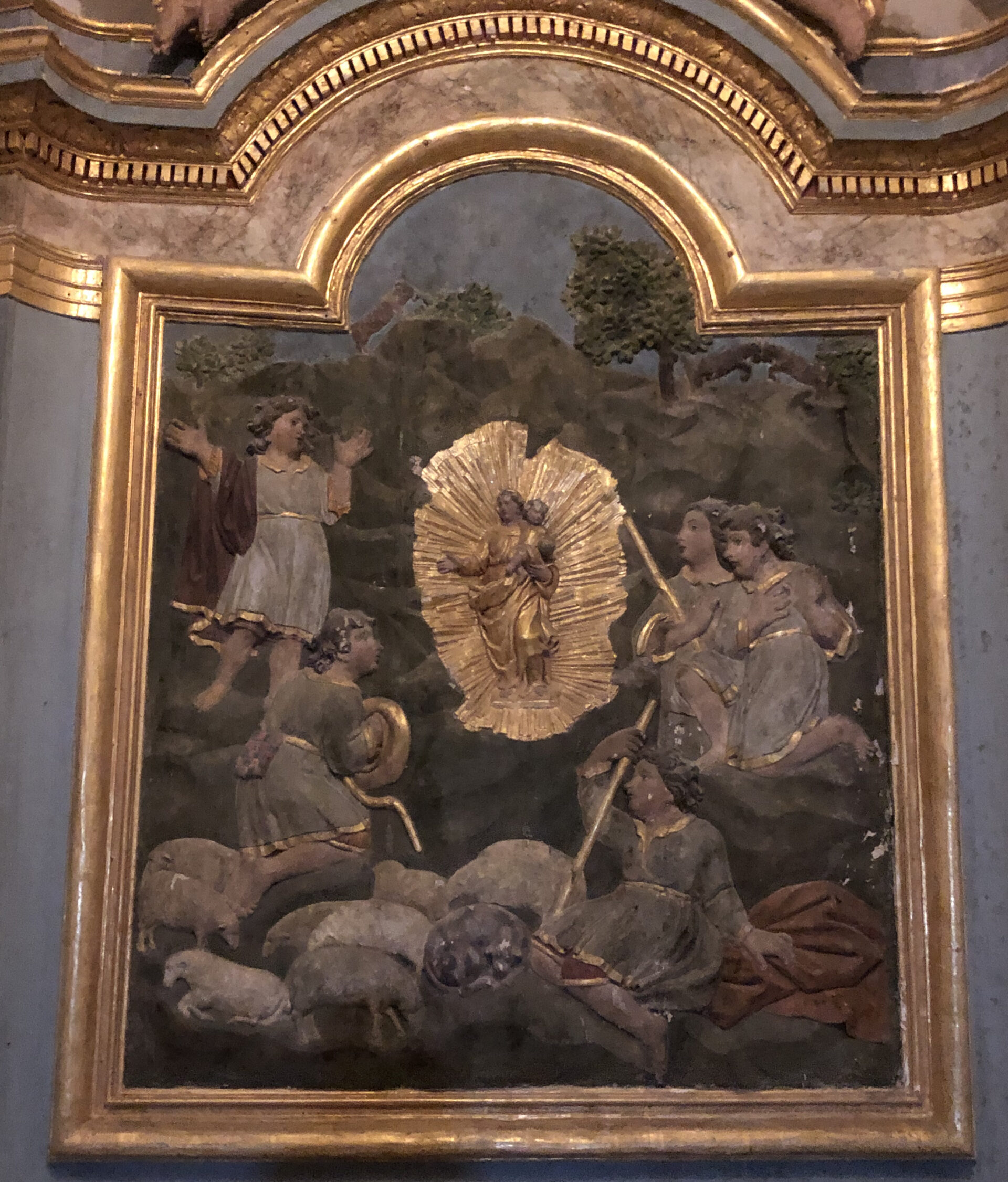
For many centuries, Mary has been venerated in Bétharram under three titles. These honorary titles, in successive order, are Our Lady of the Star, Our Lady of Calvary, and Our Lady of Bétharram. The title Our Lady of the Star stems from the discovery of a statue of Mary. Young shepherds found the statue in a hedge. Mary also appeared to them. The remarkable aspect of this is that the statue was surrounded by a magnificent light.
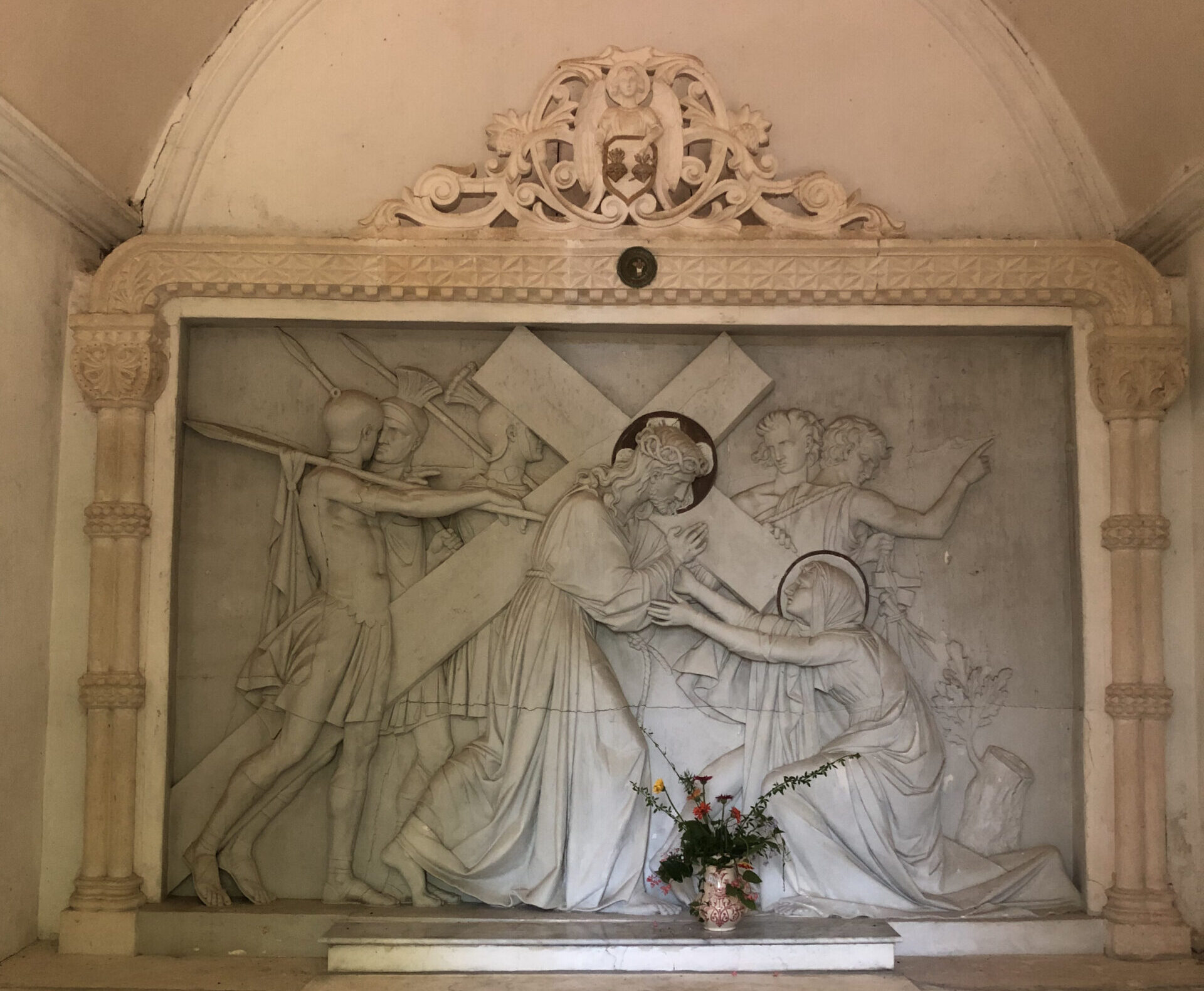
The designation Our Lady of the Hill of the Cross comes from a cross placed on a hill. This cross stands far above the Sanctuary of Bétharram. However, in September 1616, a violent storm raged, and the cross fell down. Miraculously, the cross raised itself up under its own power and emitted light. Subsequently, the sanctuary was named Our Lady of the Hill of the Cross. The impressive Stations of the Cross on the hill in Bétharram therefore originate from this event. Sculptor Joseph Alexandre Renoir (1811-1855) designed many of the reliefs for the stations.

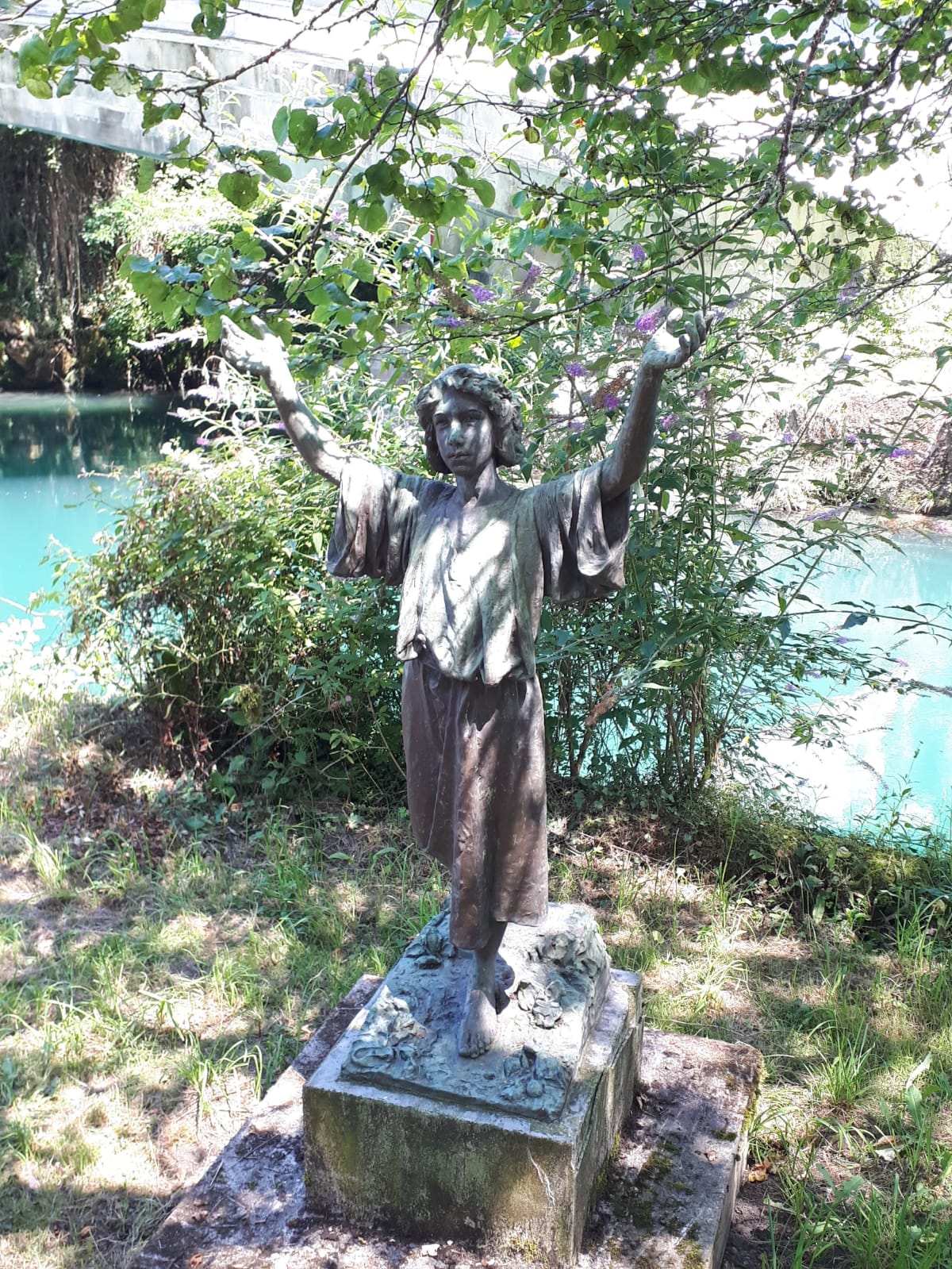
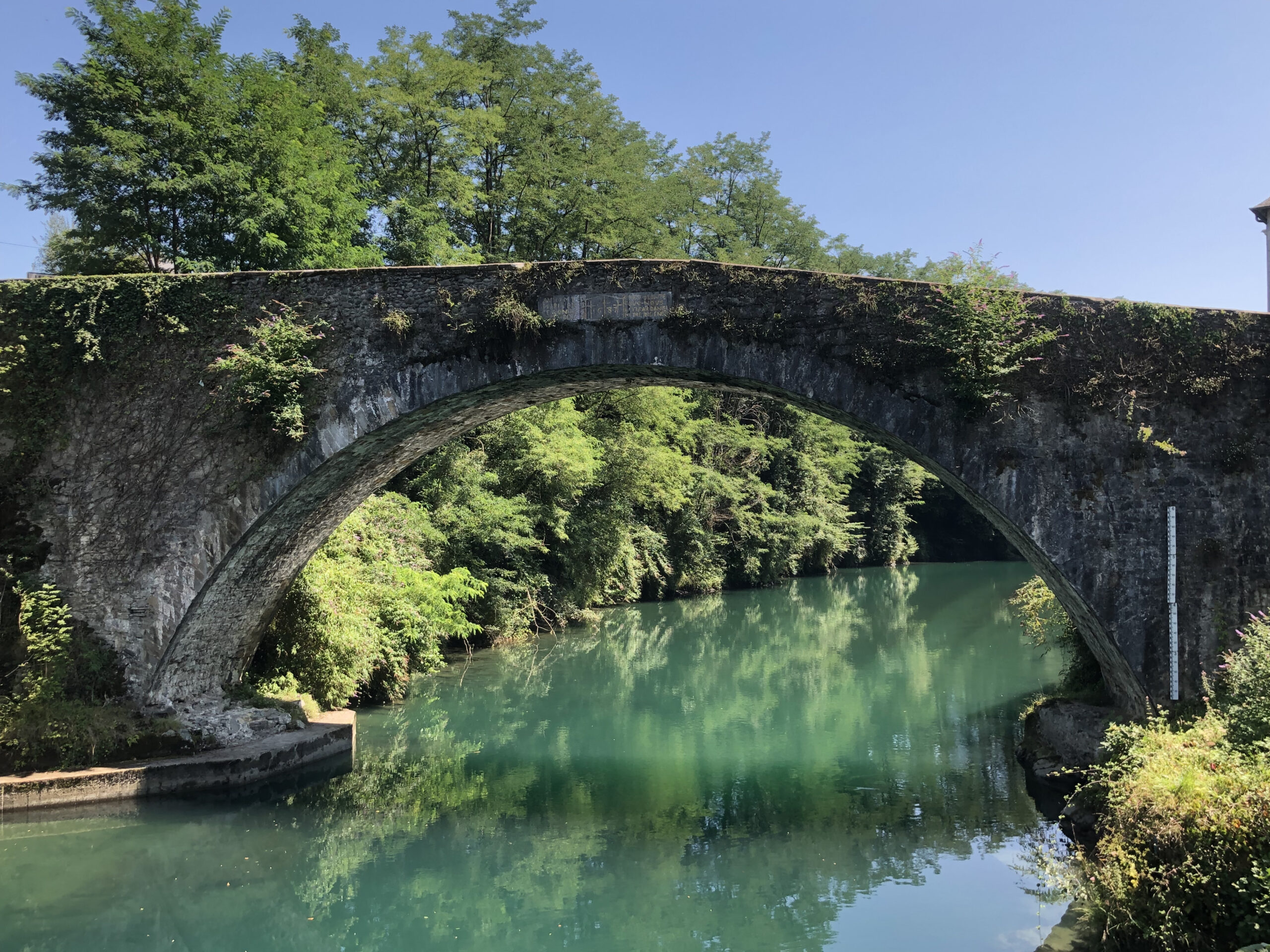
The title Our Lady of Bétharram stems from a legend that Mary cares for the rescue of a girl. A girl fell into the Gave de Pau river, which flows in front of the Sanctuary. Mary saved the drowning girl by offering her a branch. The name granted was then Our Lady of the Branch. In the local dialect, Béarnais, the word for branch is Beth. Arram means rosary in the regional language. Thus, the name Our Lady of Bétharram was created.
In 1825, the young priest Michel Garicoïts (1797-1863) was appointed chaplain in Bétharram. There, he founded the Congregation of the Priests and Brothers of the Sacred Heart of Jesus of Bétharram. This organisation is also known as the Fathers of Bétharram. Due to the steady growth of the congregation, the fathers have been able to work in Africa, Europe and Latin America. The members of the congregation are also active in the Holy Land, India and Thailand.
The priest is of great importance to the Sanctuary. He undertakes many activities for the development of the congregation and organises a lot for children. He is also the confidant of Bernadette Soubirous, who has 18 apparitions of Mary in Lourdes in 1858. The enterprising priest went on pilgrimage to Lourdes several times. Michel Garicoïts dies on 14 May 1863. On 7 May 1947, he was canonised for his enormous commitment.
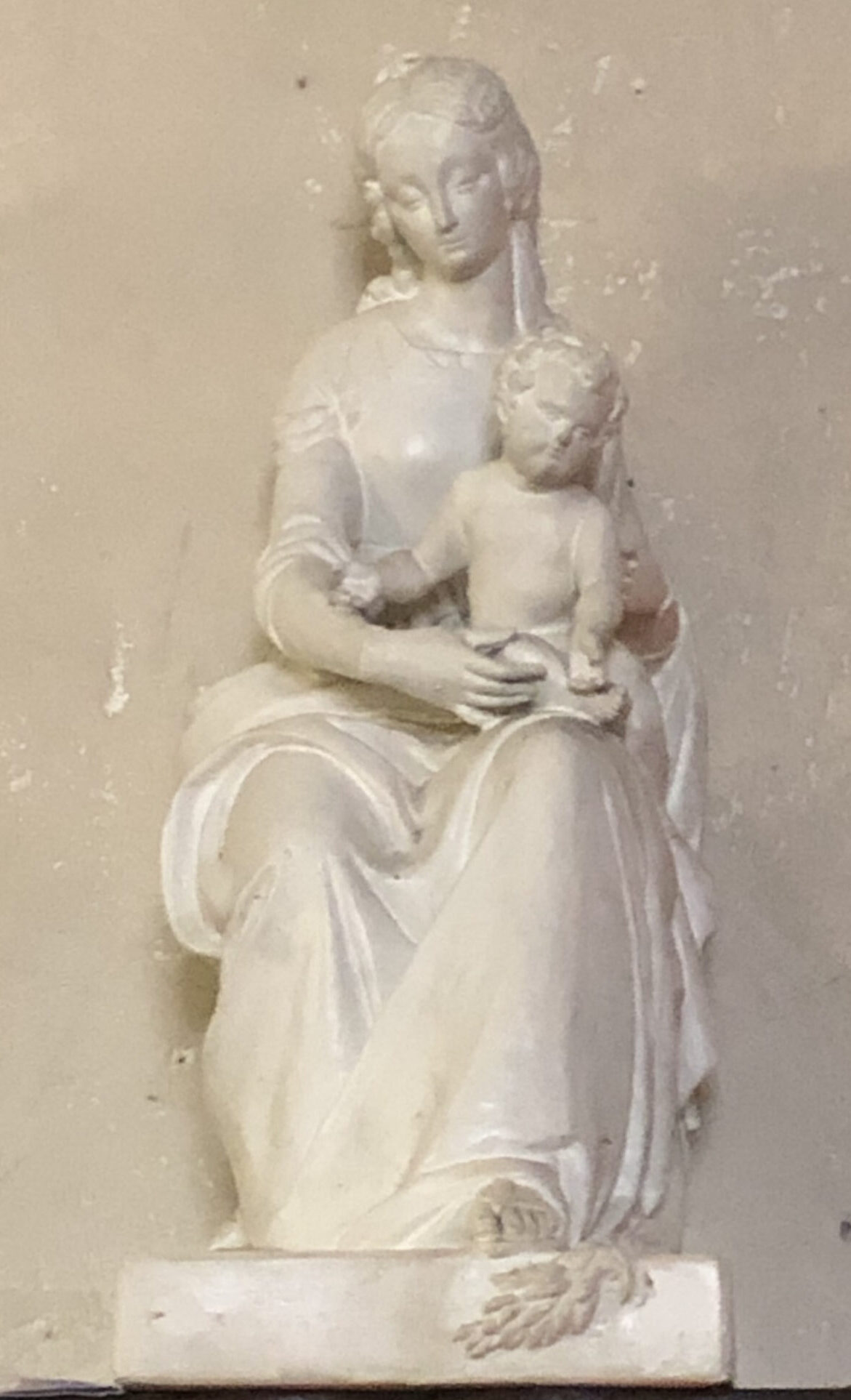
Bernadette Soubirous frequently visits Lestelle-Bétharram. In 1858, shortly before the apparitions of Mary to her, she also visits the Sanctuary. Bernadette thanks Mary for the graces received. In Bétharram, she buys the rosary, which she prays at the Grotto in Lourdes. Michel Garicoïts, her confidant, immediately believes in the apparitions to Bernadette.
Pilgrimage site
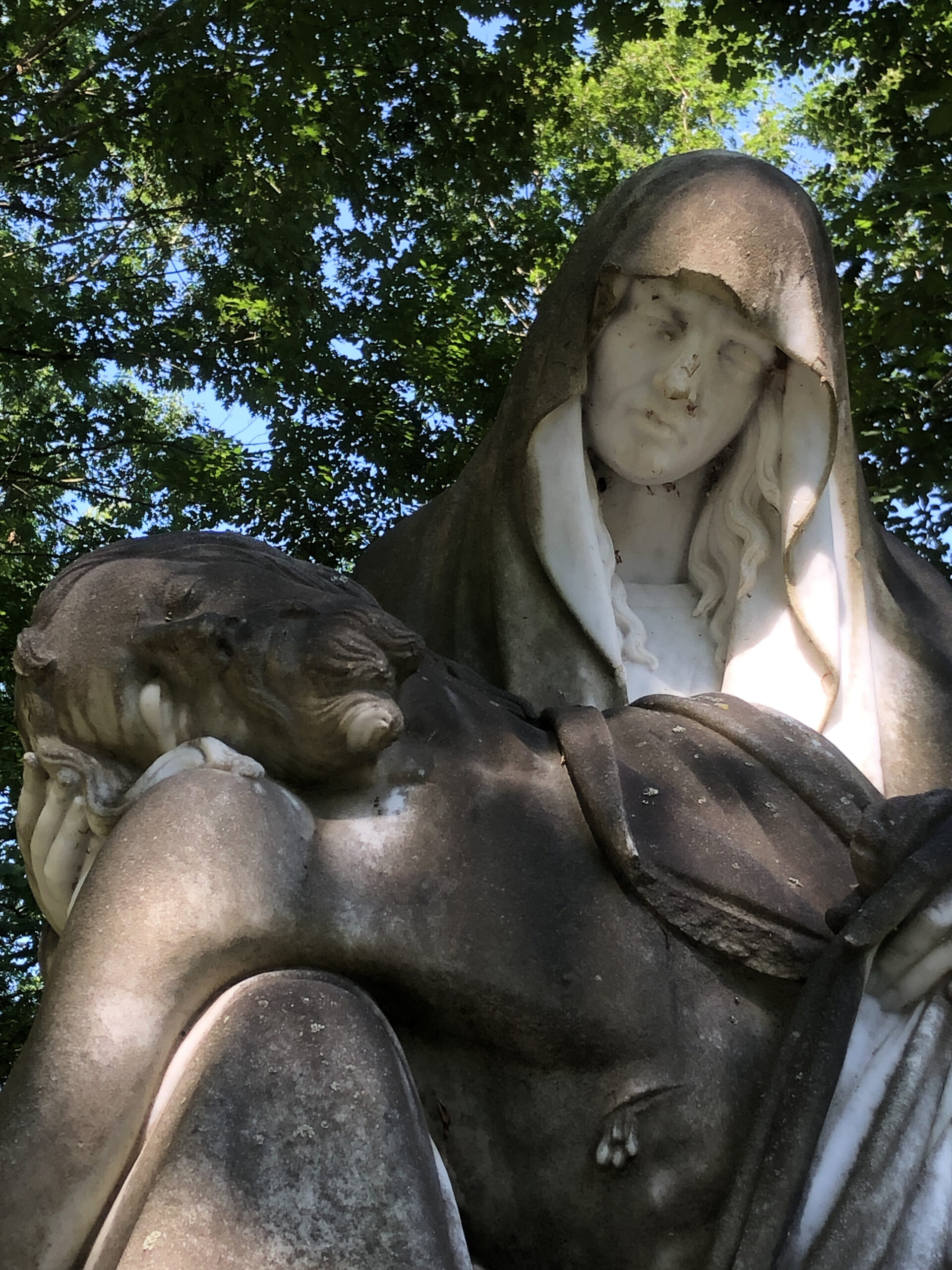
The pilgrimage site of Bétharram has much to see and admire. In the pilgrimage church of Our Lady, the crowns on the effigy of Mary and Jesus were a gift from Pius X, Pope from 1903 to 1914, born Giuseppe Melchiorre Sarto (1835-1914). This Pope had a great fondness for Bétharram. The church features paintings by Bernard Denis (1652-1722). The artworks depict, among other scenes, “the Adoration of the Shepherds and the Magi,” “the Presentation in the Temple,” and “the Flight into Egypt.” The grand altarpiece dates from 1620 and portrays “the Adoration of the Shepherds.” Paintings depicting 17th-century miracles are also on display. Within the pilgrimage church, there is a chapel dedicated to Saint Michael Garicoïts. The recumbent statue of Saint Michael Garicoïts is housed in the reliquary, which also contains his relics.
The high altar dates from 1620 and depicts the family members of Mary.

The original Stations of the Cross date from 1616 but were destroyed in 1793. Between 1840 and 1845, Michael Garicoïts had the current Stations of the Cross constructed. The new Stations of the Cross consist of 15 station structures. The Spanish-born artist Joseph Alexandre Renoir (1811-1855) created many reliefs for these Stations of the Cross. He stayed in Bétharram from 1840 to 1845.
The Sanctuary possesses several monuments, which fall under heritage preservation. Bétharram also has a museum, where special items can be seen, such as frescoes, choir lecterns and a communion veil belonging to the late Queen Marie-Antoinette.
Since the Marian apparitions in Lourdes in 1858, interest in the Sanctuary of Bétharram in Lestelle has significantly declined. Michael Garicoïts does not mind this at all, as long as Mary is venerated.
ACCESSIBILITY

Lestelle-Bétharram is located just 15 kilometres west of Lourdes. From Lourdes, follow the D 937. It is also possible to take the Pau exit on the motorway, then head towards Nay and subsequently take the road to Lestelle-Bétharram.
Address
Sanctuary of Bétharram,
Place Saint-Michel,
F 64800 Lestelle-Bétharram
Websites: www.betharram.fr and www.lestelle-betharram.fr. These sources also provide up-to-date information.
Experience
In the pilgrimage church of Our Lady, I am impressed by all that can be seen. It is beautiful here. In the church, I go to the main altar. I see statues of Mary and her parents, Anne and Joachim. There are also depictions of Elizabeth and Zechariah, the parents of John the Baptist. I stand for a long time contemplating the altarpiece from 1620, which depicts the apparition of Mary to shepherds. Six old paintings also capture my attention. Some of the miracles that occurred here are visually represented on them. I find the statue of “Notre-Dame de Bétharram”, created in 1845 by Alexander Renoir, particularly beautiful. The statue is made of white marble and shows Mary and the child Jesus, both wearing golden crowns.
In the chapel of Saint Michael Garicoïts, I see a large reliquary. Inside, there is a statue of the founder of the congregation. Some of his relics are also kept in the glass case, but I cannot see them; the case is also placed so high up.
My eyes fall on the wrought-iron balcony railing. Incorporated into this railing are several virtues, such as a lion for strength, a basket of fruit for charity, and a ship's anchor for hope.
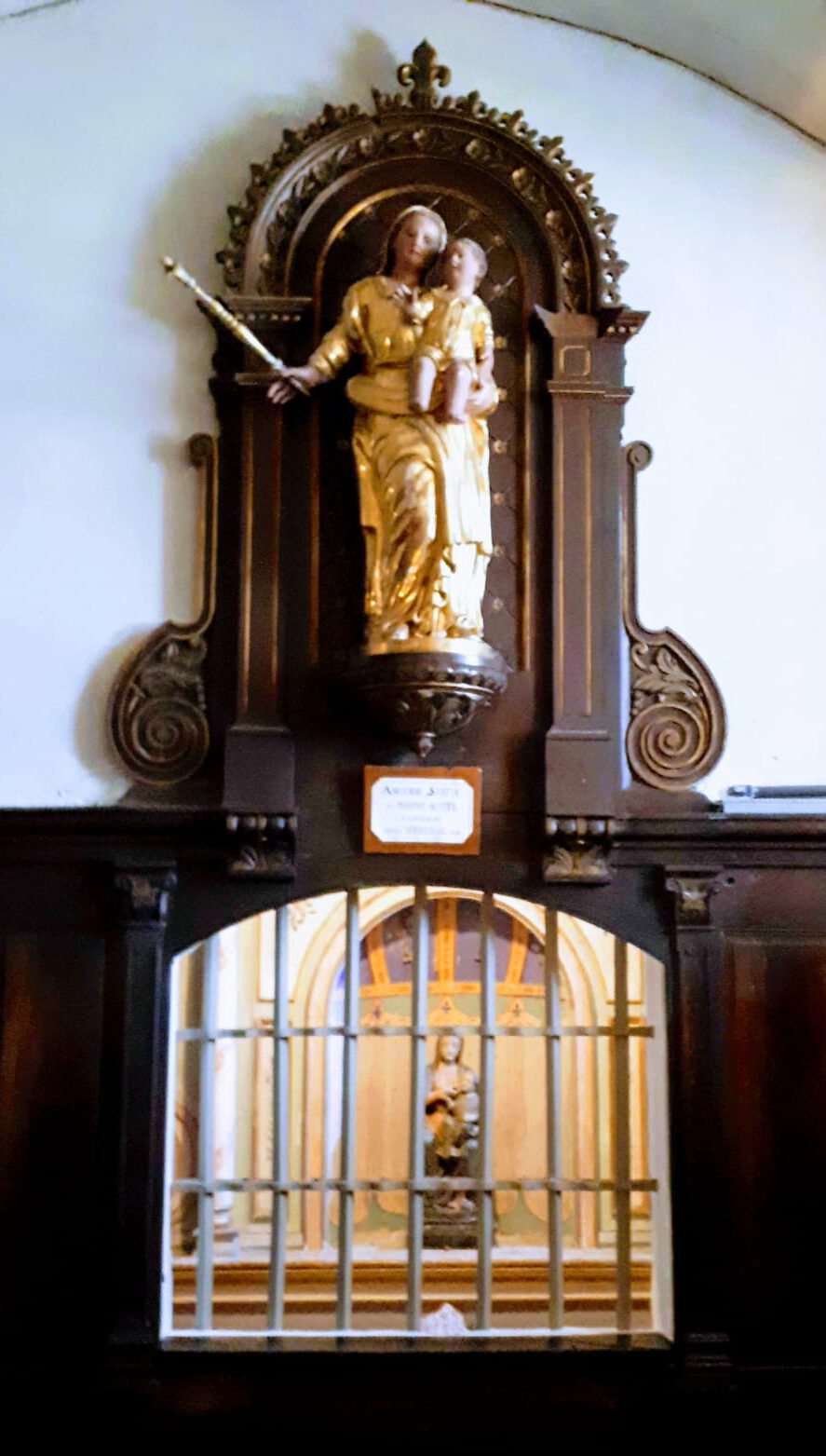
Before I leave the church, I'll buy some devotional items. Afterwards, I'll go to the Stations of the Cross on the mountain and learn that the former route with stations has been destroyed. This happened during the Revolution of 1793. I find the current Stations of the Cross beautiful, both for their location and their stations. The 15 masterfully crafted white resting places against the mountainside tower high above the church. How Renoir must have enjoyed himself in the masterpieces he created. I am particularly drawn to the station of Our Lady of the Cross Mountain. Many stations were restored in the period 2018-2020.
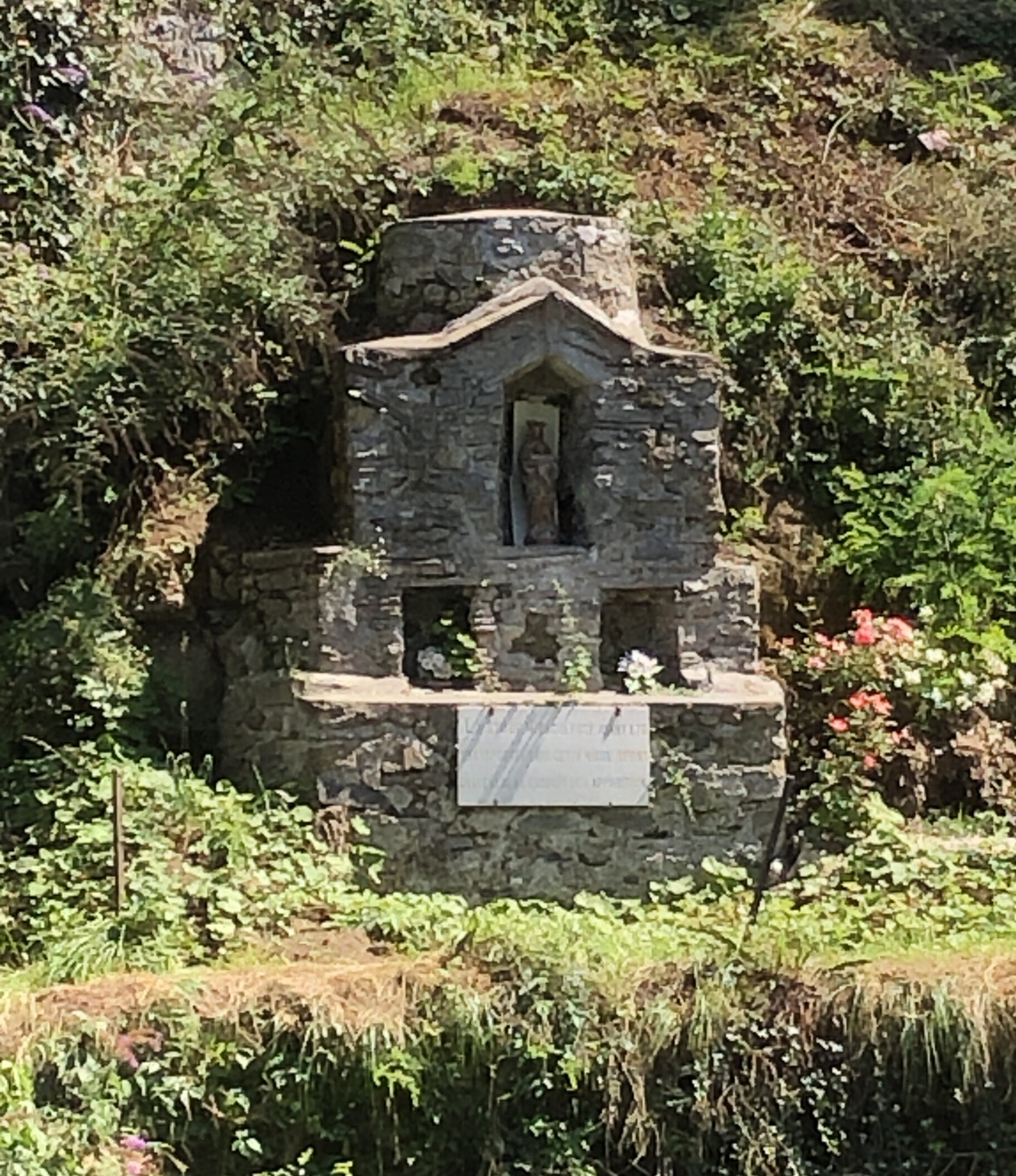
A visit to this Shrine is an enormous enrichment for me. It does me so much good to be able to experience the devotion to Mary here.

~~~
