History
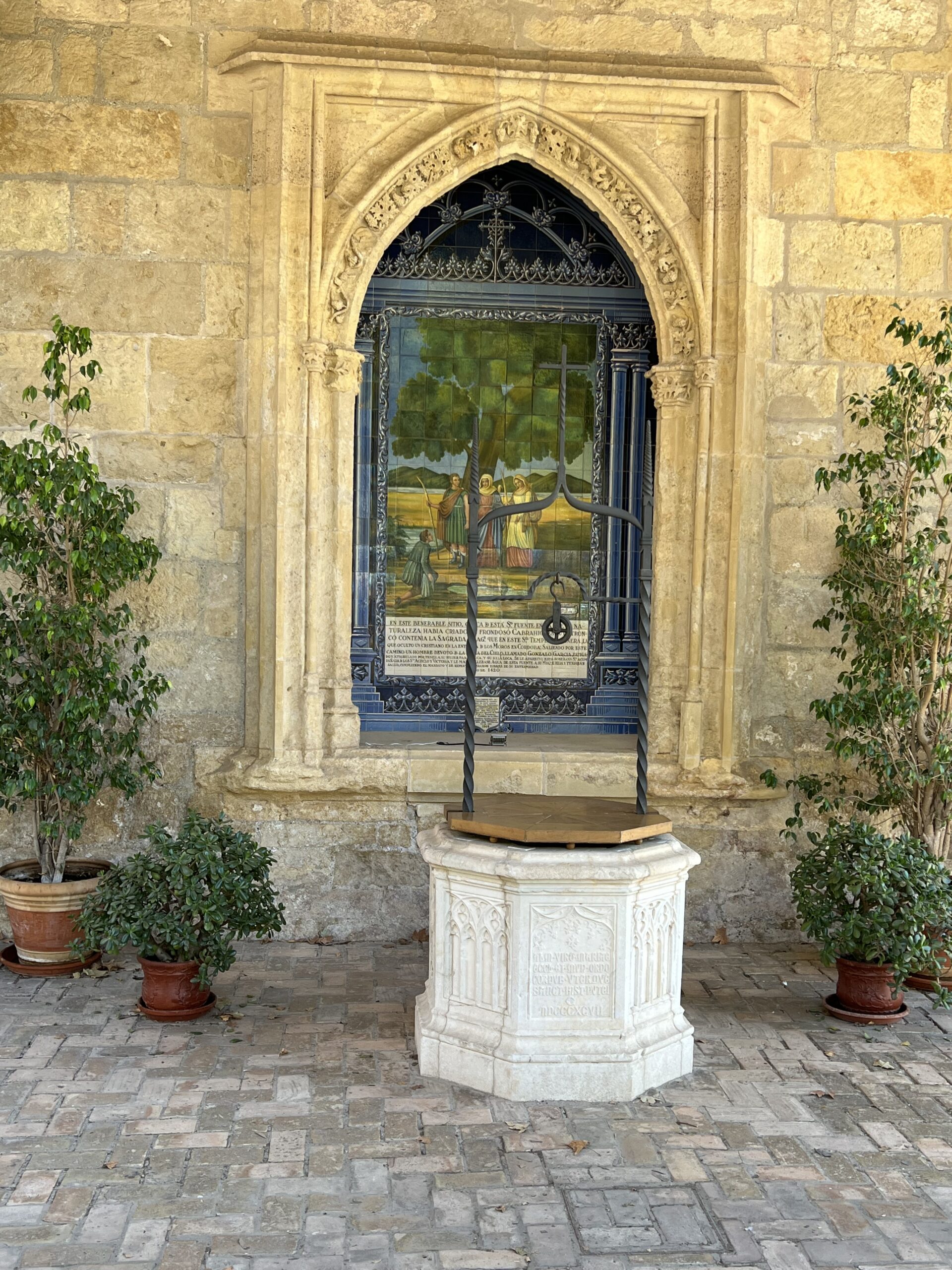
The legend of this pilgrimage site reads: It is the year 1420… The later Saint Acisclo of Cordoba (+304) and his sister, Saint Victoria (+304), are two martyrs and patrons of the place Cordoba. They show a spring, from which water flows, to the workman Gonzalo García. Gonzalo’s wife, Isabel Rodriguez, and daughter are seriously ill. They drink of the water and are healed!
The story continues… In 1442, a hermit fells the fig tree that stands by the spring. This man wants to know why there are healings at the spring. Inside the felled tree, he finds a statue of Mary. Unfortunately, it is broken. A new statue is made. In the second half of the 15th century, construction begins, in Gothic style, of the sanctuary above the spring with the miraculous water. The works are completed in 1494.
Over the years, many distinguished guests have been welcomed at the pilgrimage site. For example, royal visitors arrived in 1455. Doña Maria of Castile (1401-1458), queen from 1416 to 1458, wife of Don Alonso of Aragon (1396-1458), king from 1416 to 1458. She recovers from an illness by drinking water from the spring. As thanks, the queen donates gold and jewellery to build a hospital for the poor, including a few rooms for the clergy.
The pilgrimage site is facing setbacks. This is due to flooding of the Guadalquivir River and occupying forces. In 1808, French troops occupied Córdoba. They looted and devastated the city, including the shrine. The statue of Mary broke into three pieces. The effigy was quickly restored and fully repaired in the same year.
A new brotherhood founded in 1938.
In 1979, the church was restored and the image of Mary was temporarily moved to the parish of Santiago Apóstol in Córdoba. Unfortunately, a fire broke out there and the image was damaged by smoke.
Maria is appointed patron saint of Córdoba in 1987.
On 2 October 1994, the coronation of the statue of Mary took place with the permission of John Paul II, Pope from 1978-2005, born Karol Józef Wojtyla (1920-2005). The coronation was performed by José Antonio Infantes Florido (1920-2005), Bishop of Cordoba from 1978 to 1996.
Pilgrimage site
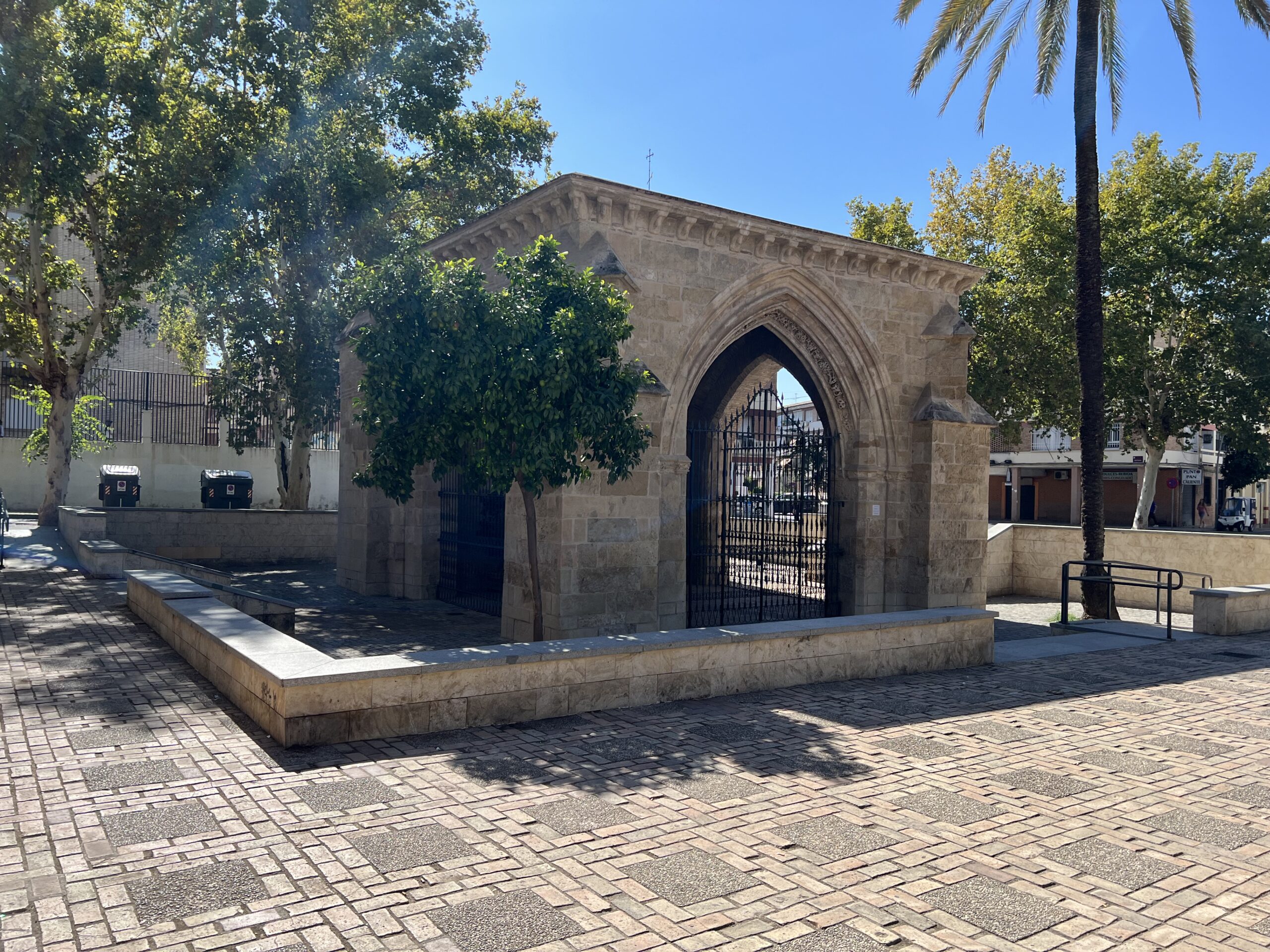
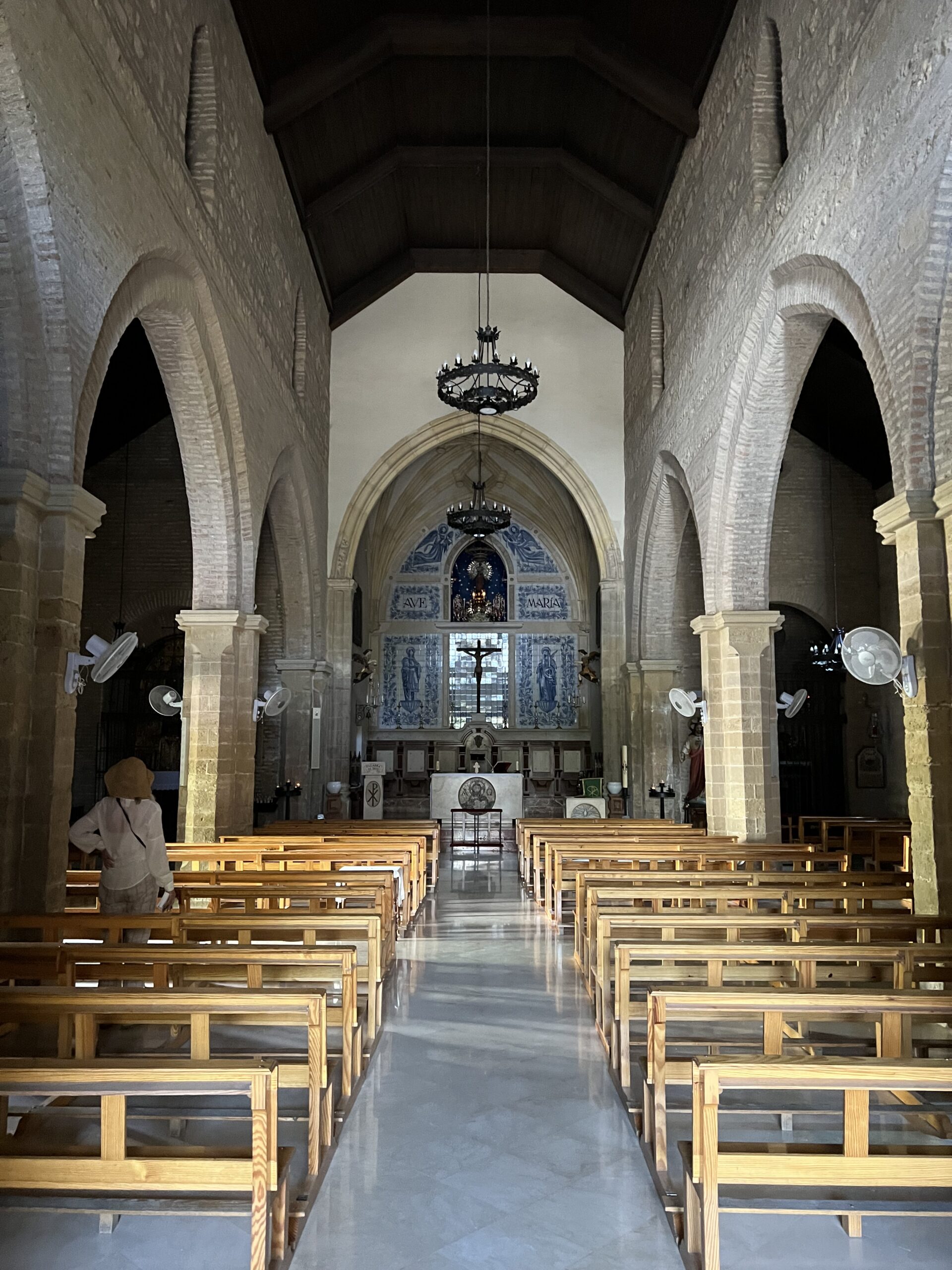
The sanctuary is called “Santuario de Nuestra Señora de la Fuensanta” with the church “Iglesia de la Virgen de la Fuensanta” (“Church of Our Lady of the Holy Spring”). The spring is located in front of the church and is called the Holy Fountain.
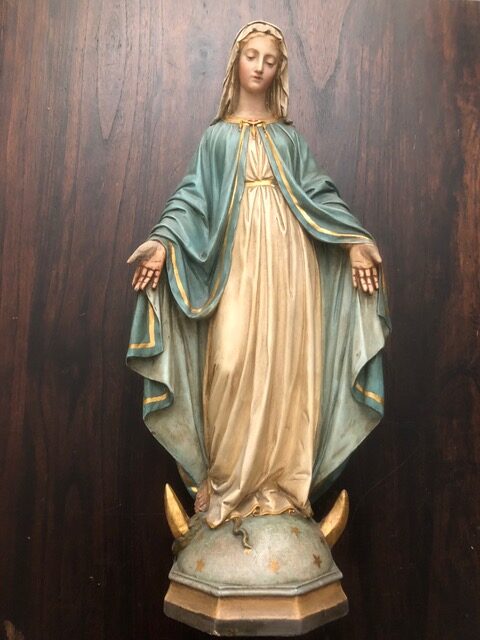
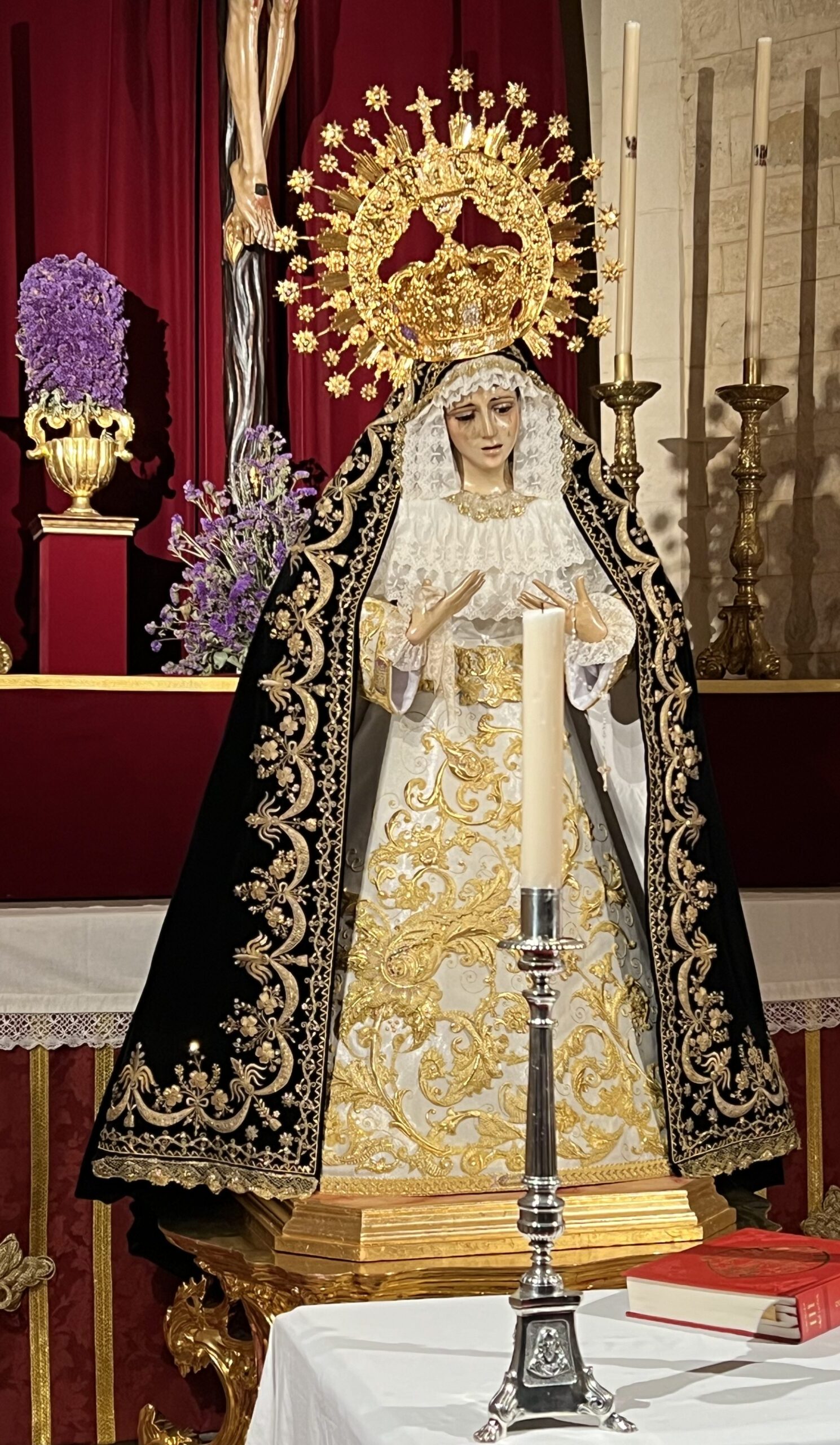
The depiction of Mary is made from painted clay. The Virgin Mary has her Child on her left arm and holds her Son with her right hand. This depiction shows a tunic with a mantle, which is finished with gold-coloured paint. The mantle of the Mother of God folds down to the ankles. The creator of this artwork is Lorenzo Mercadante (+1480) from French Brittany. Mary has a wardrobe of mantles in colours including gold, white, pink, red and blue. She also has several crowns, such as a daily crown and a circular crown.
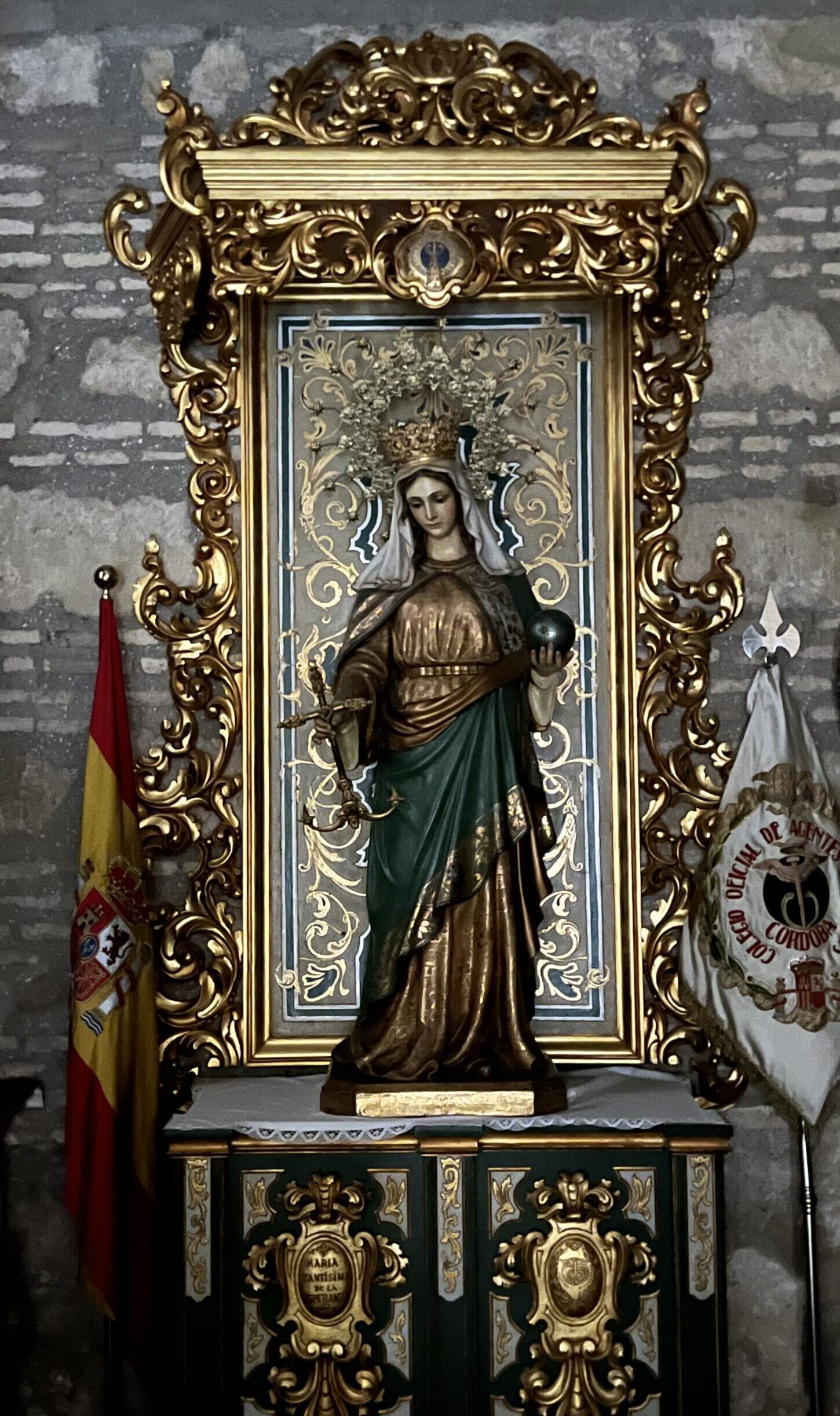
Many ex votos have been affixed to the church walls.
The annual, large procession begins in the cathedral-mosque and takes place during Holy Week. On the first Sunday of May, the pilgrimage takes place to nearby Linares.
The feast day of the pilgrimage site is 8 September, namely the day of “Mary's Nativity”.
The pilgrimage site has opening hours every day in the morning and evening.
ACCESSIBILITY
The shrine is located on the edge of the centre, by the Guadalquivir River, where Mary appeared.
The address of the pilgrimage site is:
Plaza Santuario de la Fuensanta, 14010 Córdoba.
Actual information can be found on www.parroquiadelafuensanta.com.
Experience
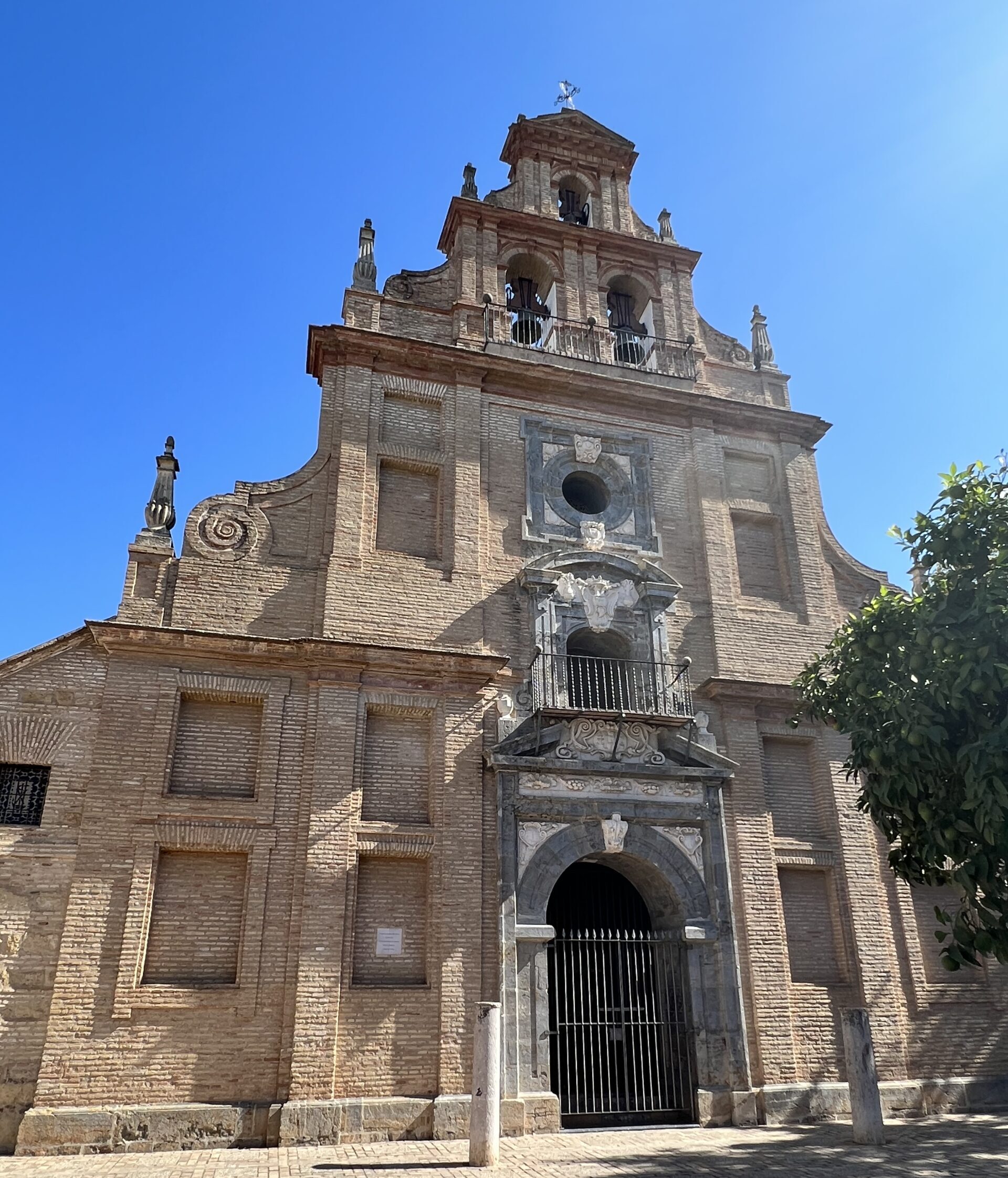
A miracle, I'm lucky, because I arrive at the pilgrimage site just before closing time. Arriving here a minute later would mean at least a six-hour wait. The gate doesn't open again until seven in the evening.
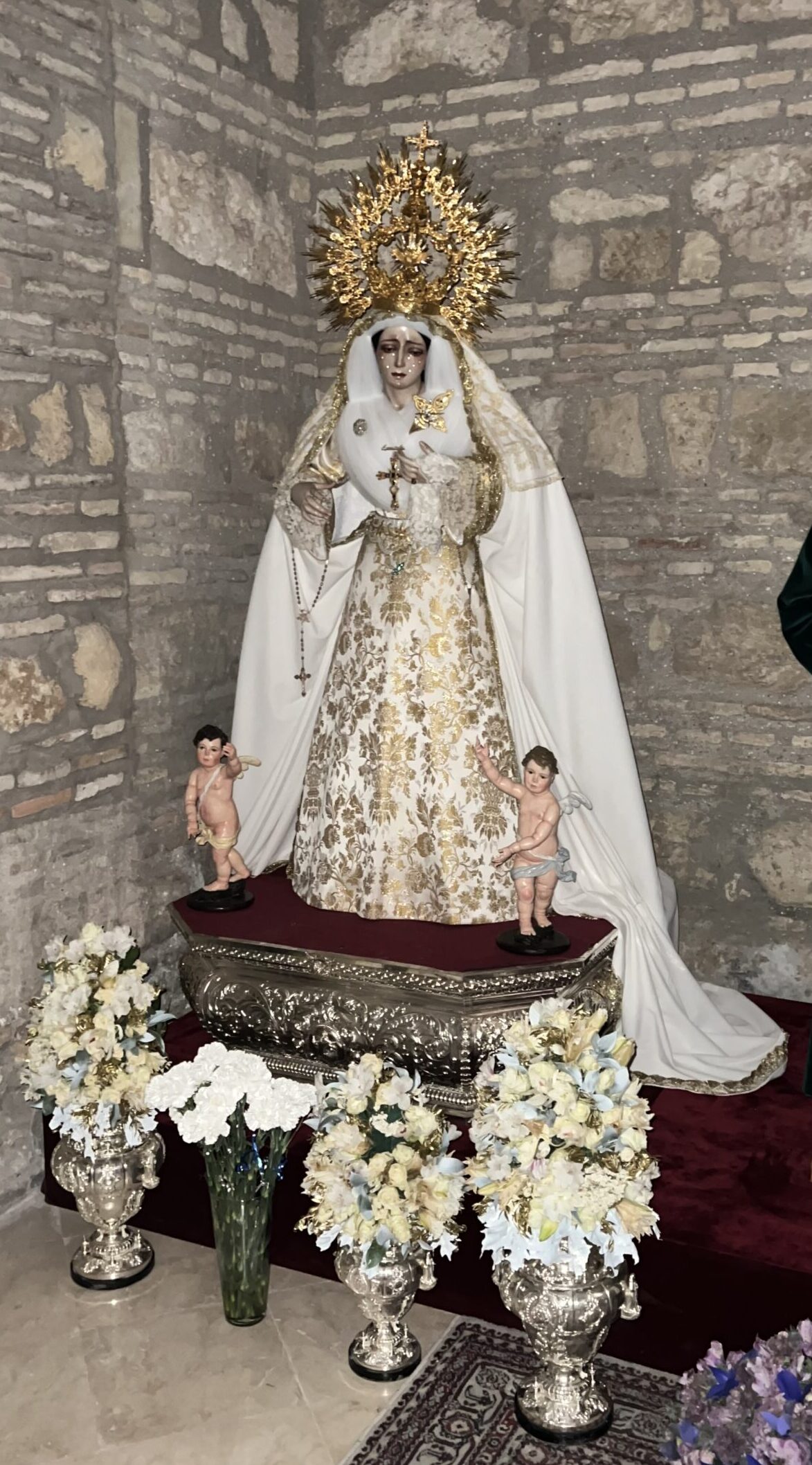
In the church of “Our Lady of the Holy Spring”, Mary is festively attired in a cloak, the making of which must have taken the creator many weeks of labour. I find the image beautiful! The artist seems to possess almost divine gifts. How blessed people are with great talents, and how they have wished and been able to develop them. With this statue, it is time for prayer and thanksgiving.
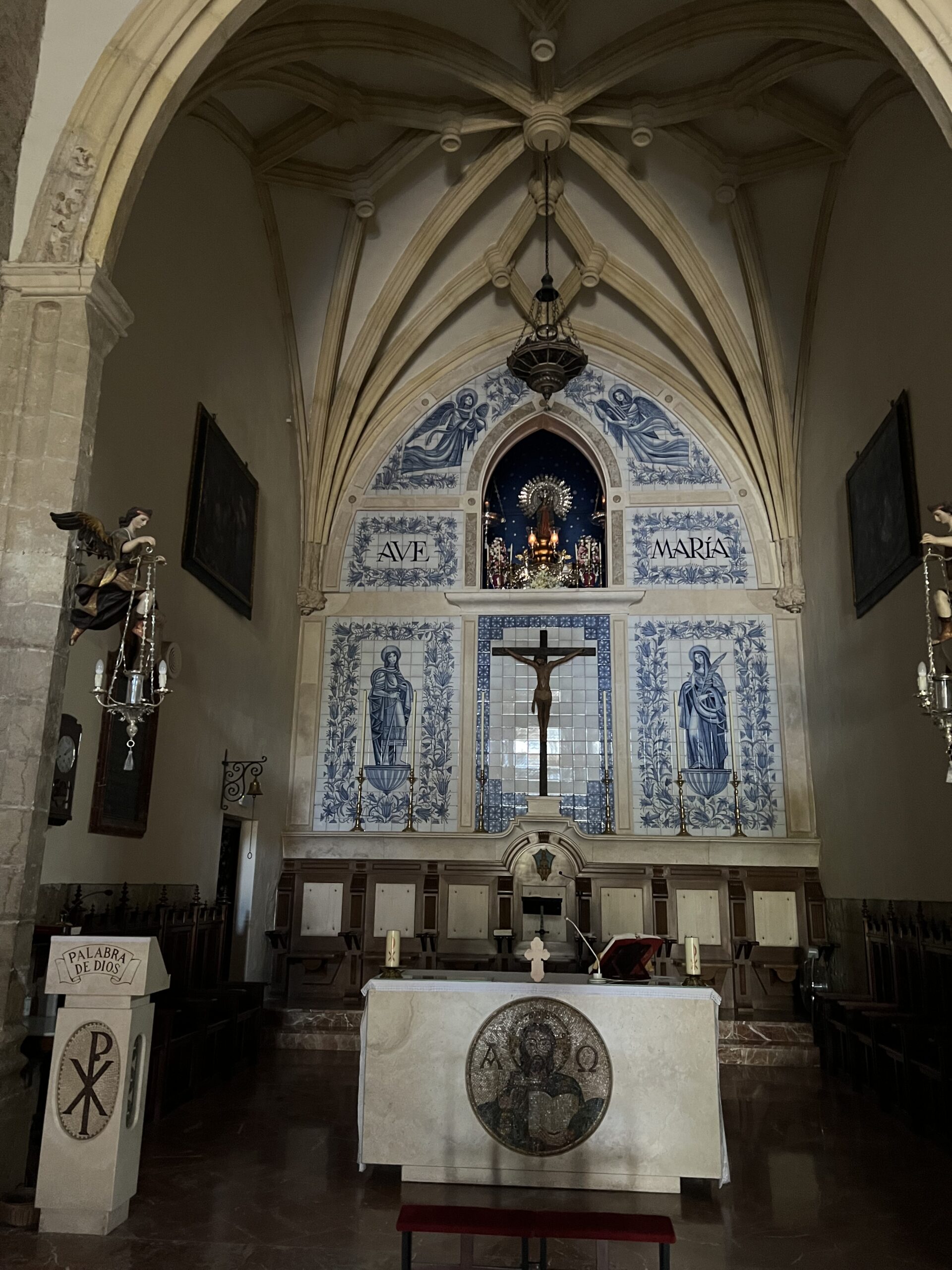
During my tour of the church, I see that the walls are covered with many ex-votos. I estimate the number to be many hundreds. Mary knows many believers who thank and honour Her here. Before leaving the church, I light a few more candles. For Mary, there can never be enough light.
I leave the church and enter the garden, where, among other things, I see a statue of Mary, a crocodile against the wall, and next to it a large tusk. Then questions come to mind, which I must admit I cannot answer. This is typical of me, as I have considerably more questions than answers daily.
In front of the church, on the square, there is a small building over the well. There I also see the depiction of the apparition in the 15th century. This place has such a long history!
After visiting the pilgrimage site, I will go into Córdoba's old town to enjoy the city's beauty, including that of the impressive Mosque-Cathedral.
Environment
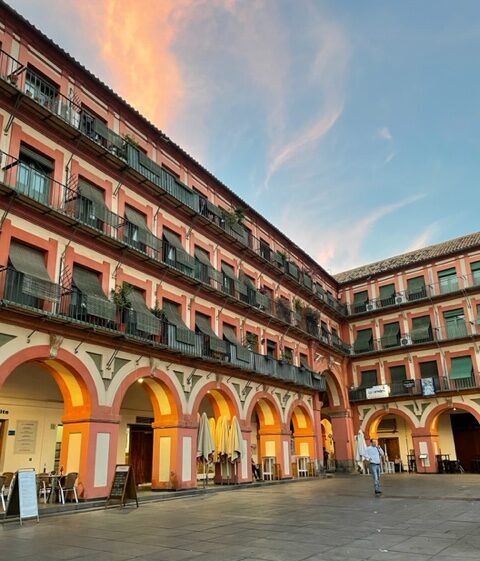
There is much to visit in Córdoba, including the cathedral-mosque, which has an ancient history stretching back to the 6th century. In 1994, the complex was placed on the UNESCO World Heritage List. On the north side of the cathedral-mosque is the Chapel of Our Lady of the Lanterns. Plaza de la Corredera is one of the largest squares in the world. It is the most picturesque and popular square in the city. The Church of Saint Peter, Iglesia de San Pedro, at Plaza de San Pedro 1, 14002 Córdoba, is worth visiting with a weeping statue of Our Lady.
The distance to Seville is 140 km by car, to the pilgrimage site of Andújar it's about 100 km, and to Utrera it's 155 km.
~~~
