History
In 1148, the name “Morbio Subteriori” is first mentioned. The place would later be called Morbio Inferiore.
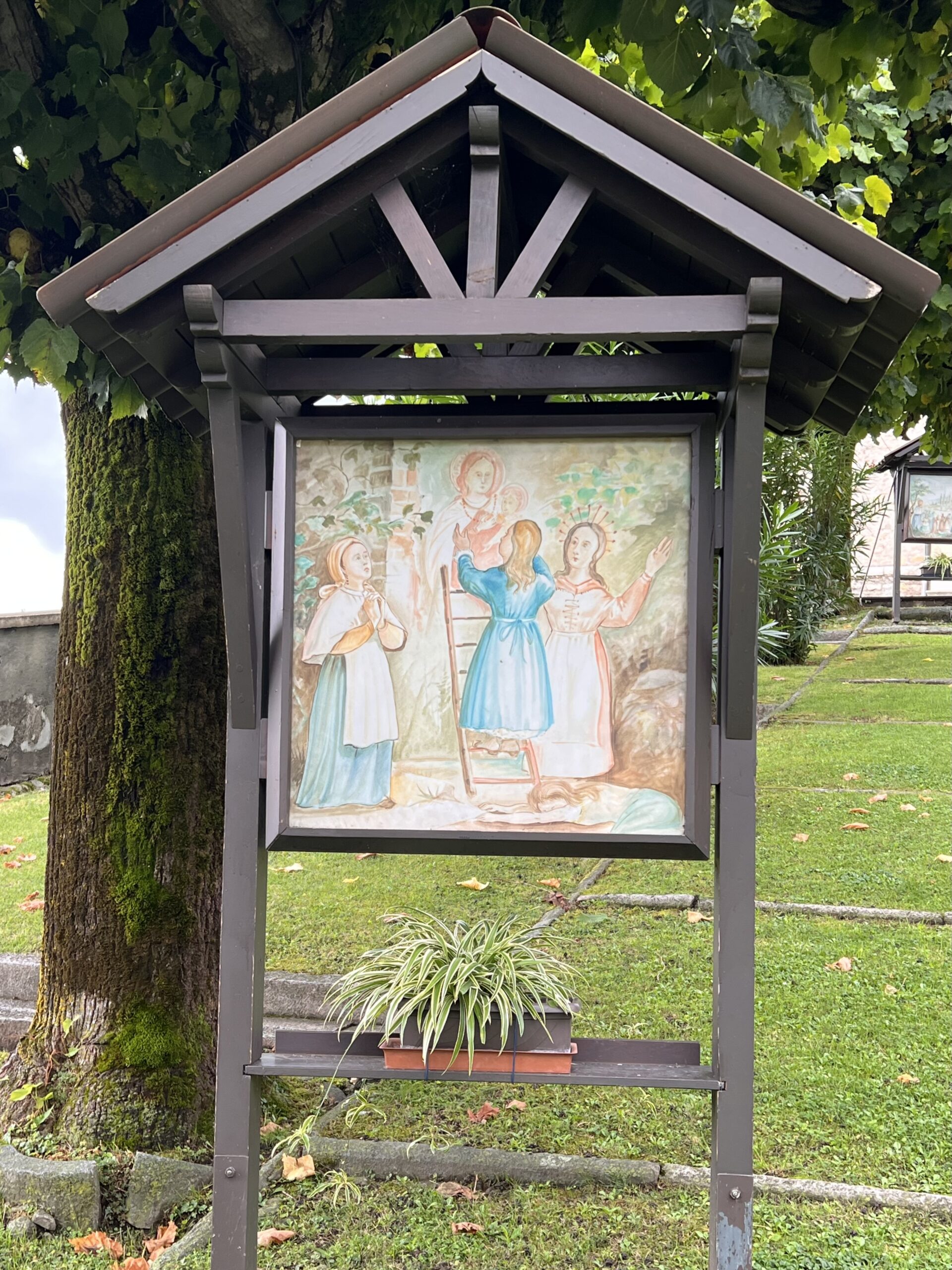
A story lies at the root of this Marian shrine. It tells of two sick women, possessed by the devil. They come from Milan and go to Morbio to be blessed. This happens on 29 July 1594. Upon arrival, they find that the priest is absent. On the site of the current church are the remains of a castle documented in the late 12th century. Against the wall of the ruin, the women place an image of Mary to pray with others. During the prayers, a miracle occurs and a beautiful woman appears. This apparition makes herself known as Mary and heals them. Our Lady instructs the two women to ensure that a place of pilgrimage is established on the site of their meeting. This miraculous event quickly spreads through the surrounding area. A week later, the miracle is recognised by Feliciano Ninguarda (1524-1595), Bishop of Como (1588-1595). Pilgrimages then begin. A year later, on 29 July 1595, the first stone of the current church is laid.
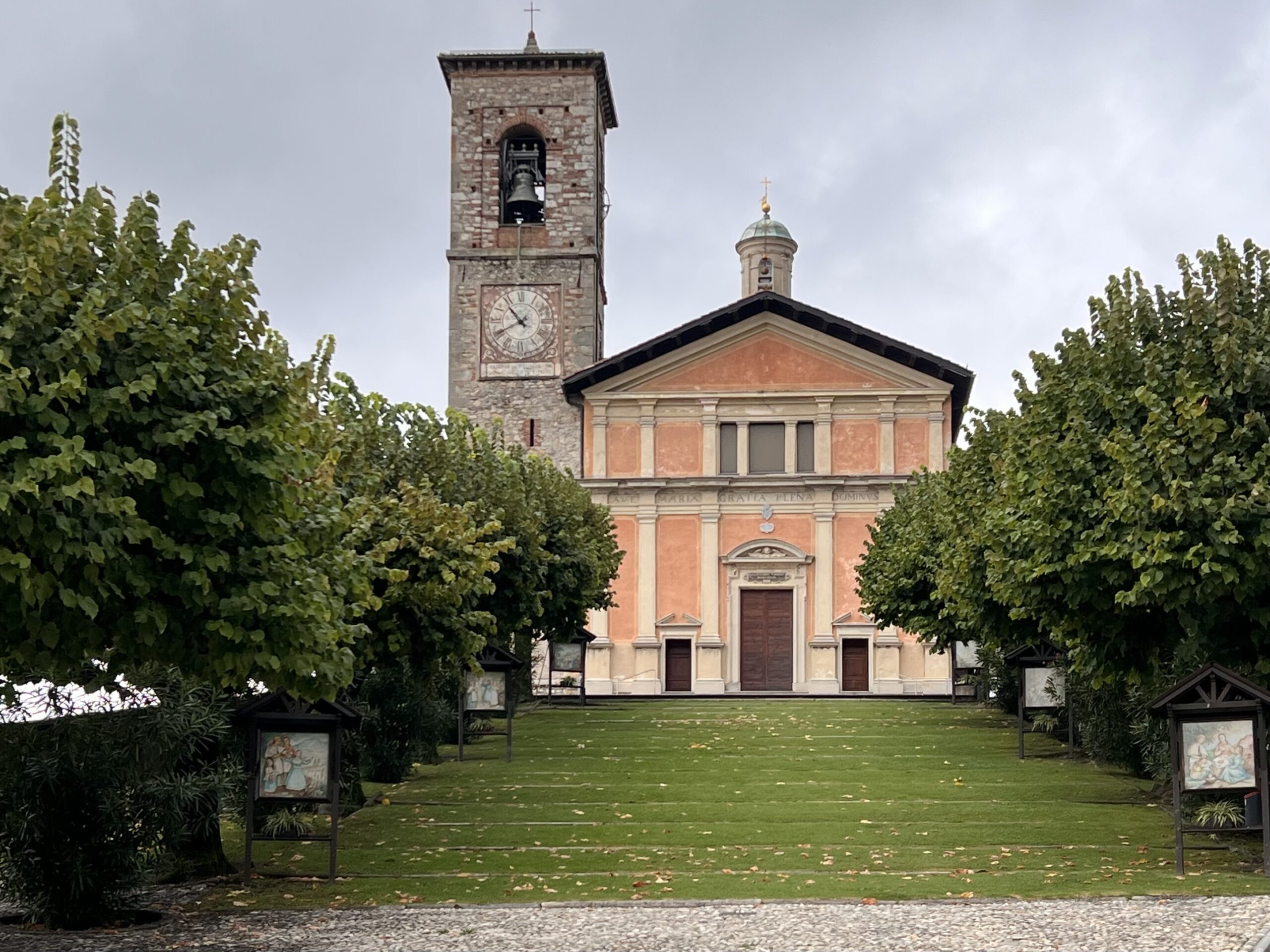
Between 1595 and 1613, the pilgrimage church was built with six side chapels. In 1613, the consecration of the new house of worship took place. This was performed by Filippo Archinto (1549-1632), Bishop of Como (1595-1621). Just over a century later, in 1776, the pilgrimage church became the local parish church.
In the 19th and 20th centuries, prehistoric graves were discovered in the vicinity.
In 1924 and in the years 1999-2001 the church was restored.
In 1990, the church was elevated to basilica by John Paul II, Pope from 1978-2005, and born Karol Józef Wojtyła (1920-2005).
Pilgrimage site
The pilgrimage church stands on a plateau where a castle once stood in the 16th century. The castle was destroyed and then completely dismantled. The pilgrimage site is named Santa Maria dei Miracoli (Holy Mary of Miracles).
The basilica has three portals.
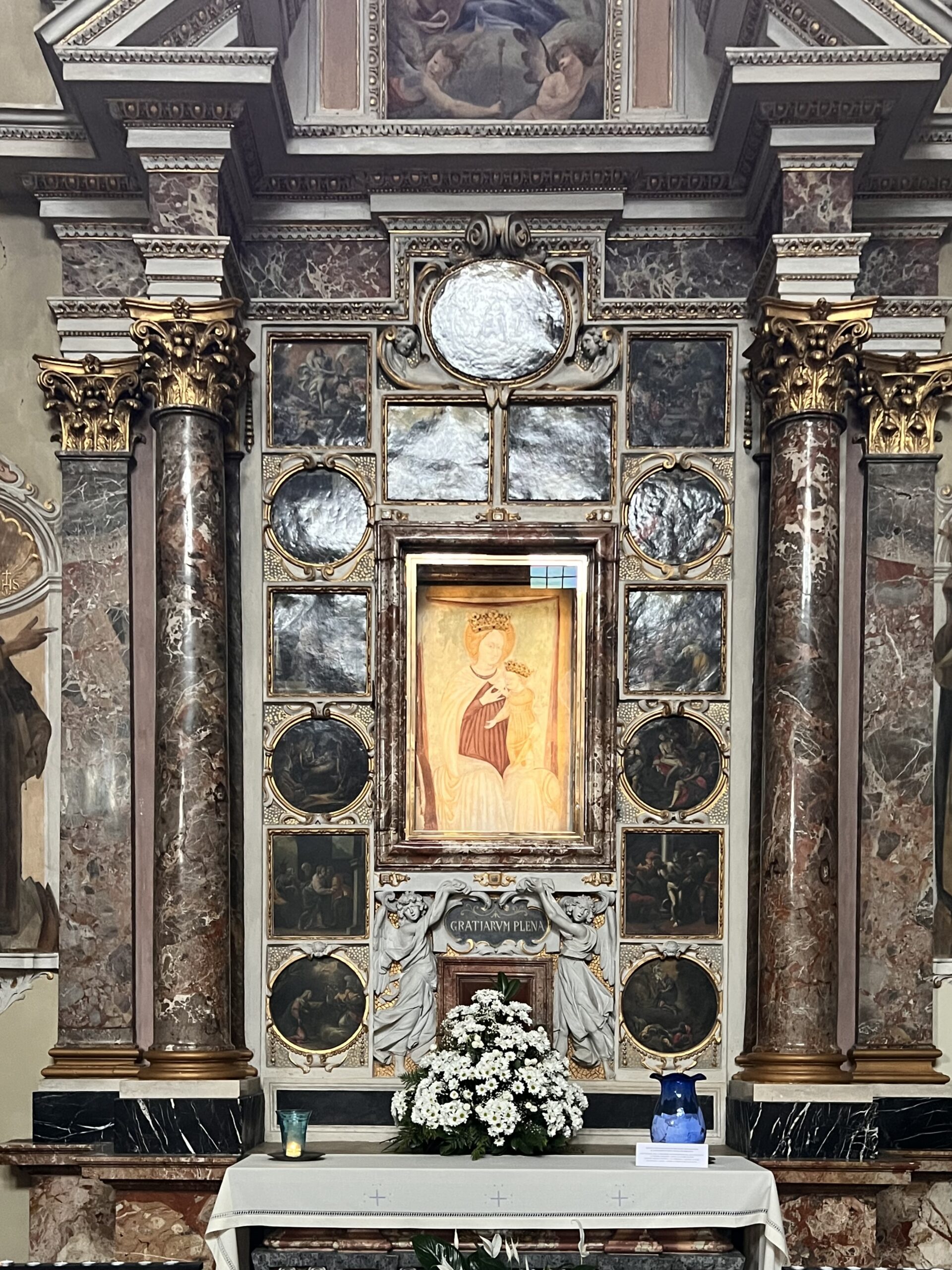
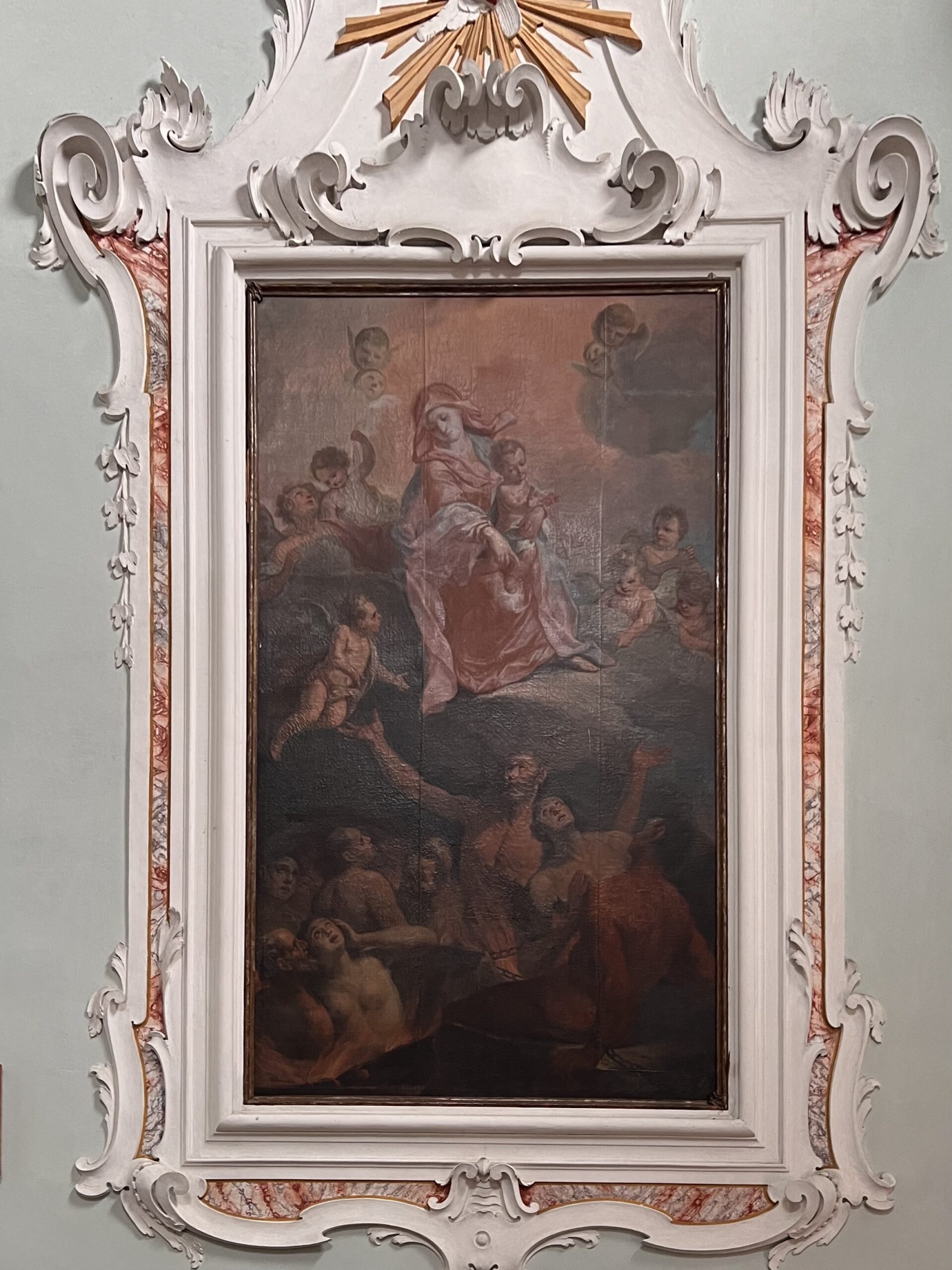
The venerable holy image dates from the 15th century. Around the effigy of Mary with Child, the 15 mysteries of the rosary are depicted. Among those who worked on the paintings from 1671 were Francesco Torriani (1612-1683) and Filippo Abiati (1640-1715).
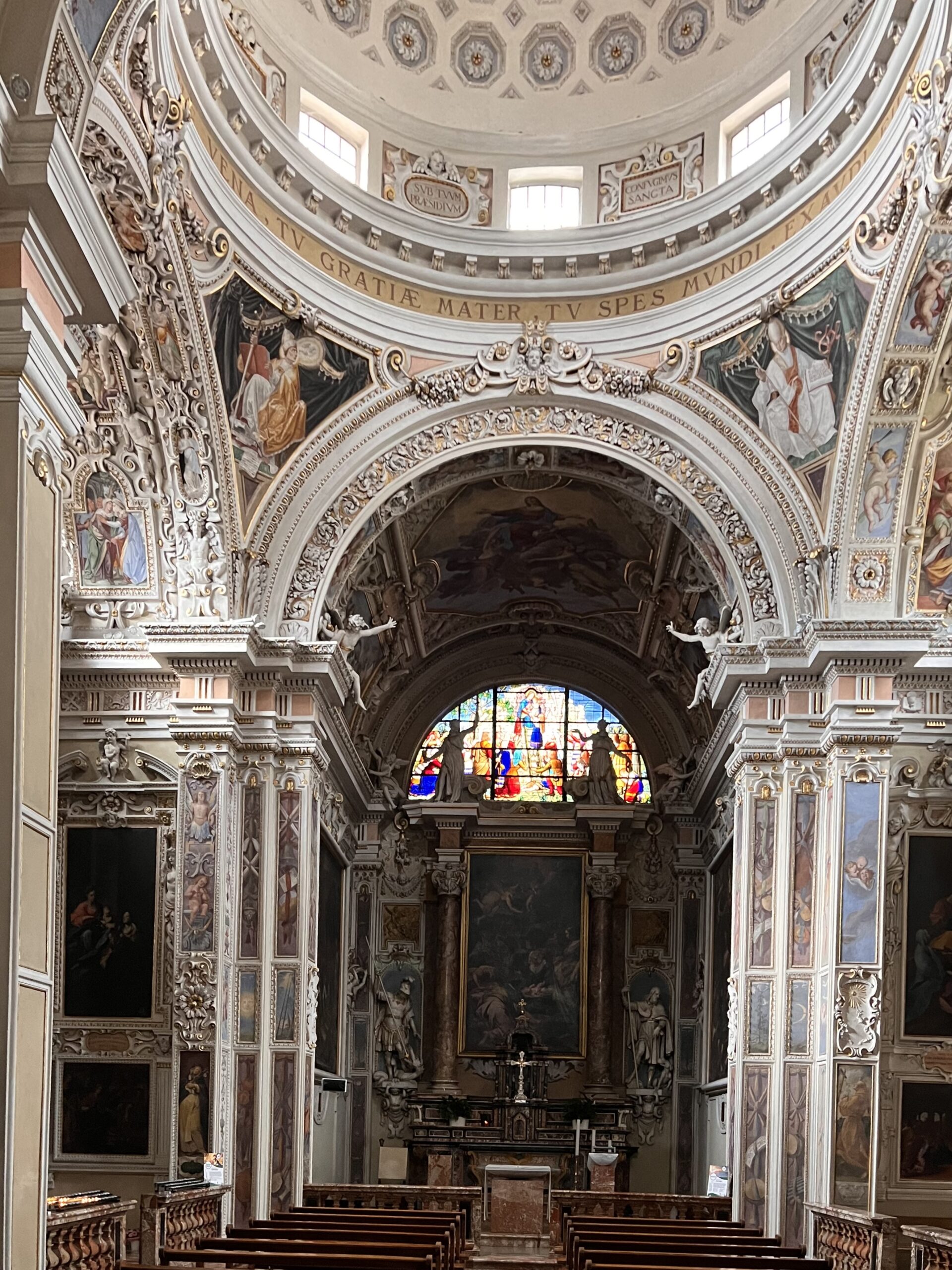
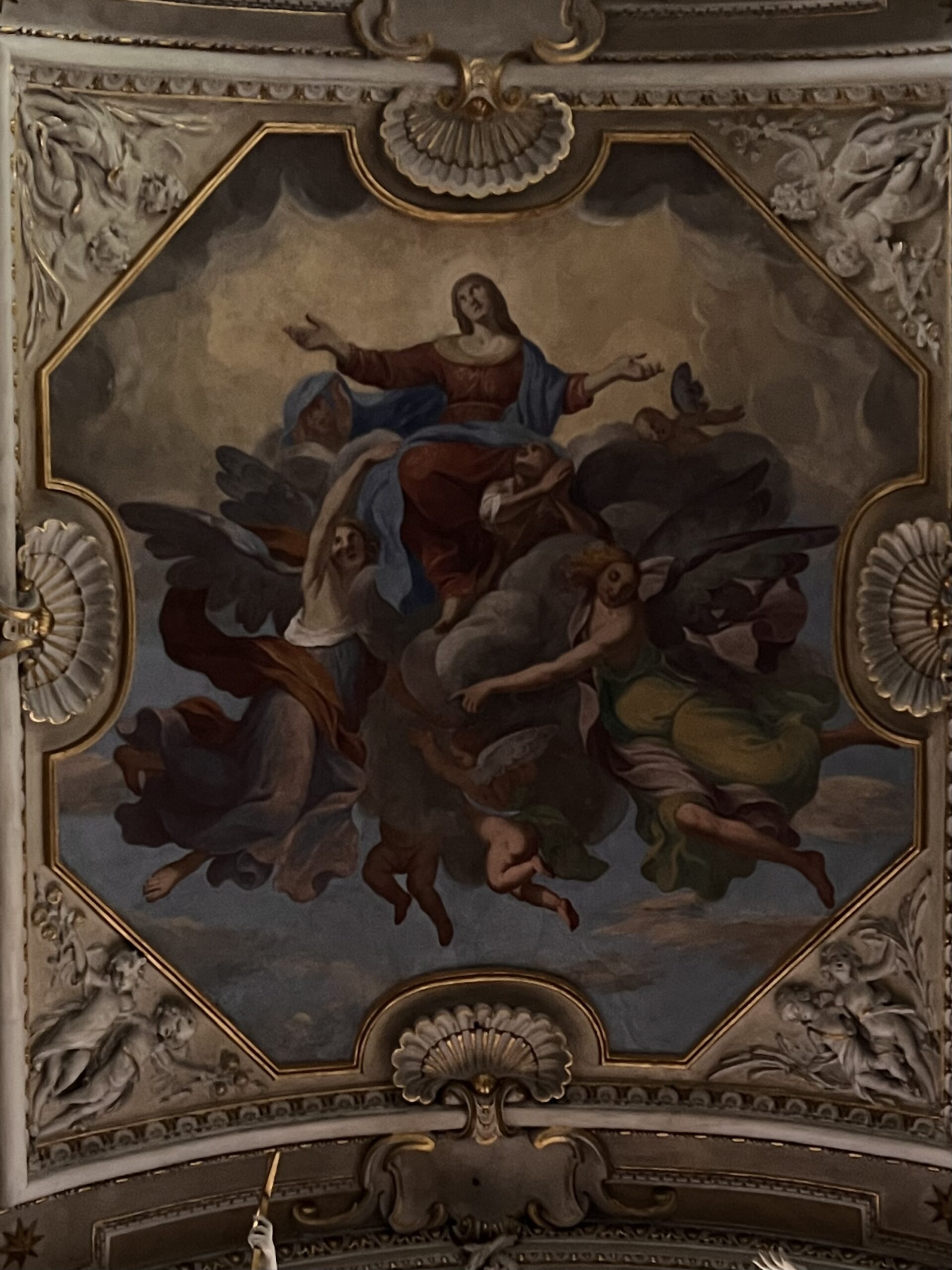
Above the apse is an image depicting the miraculous healing of two women. Frescoes have also been applied in the church, including a large one on the vault of the Assumption of Mary.
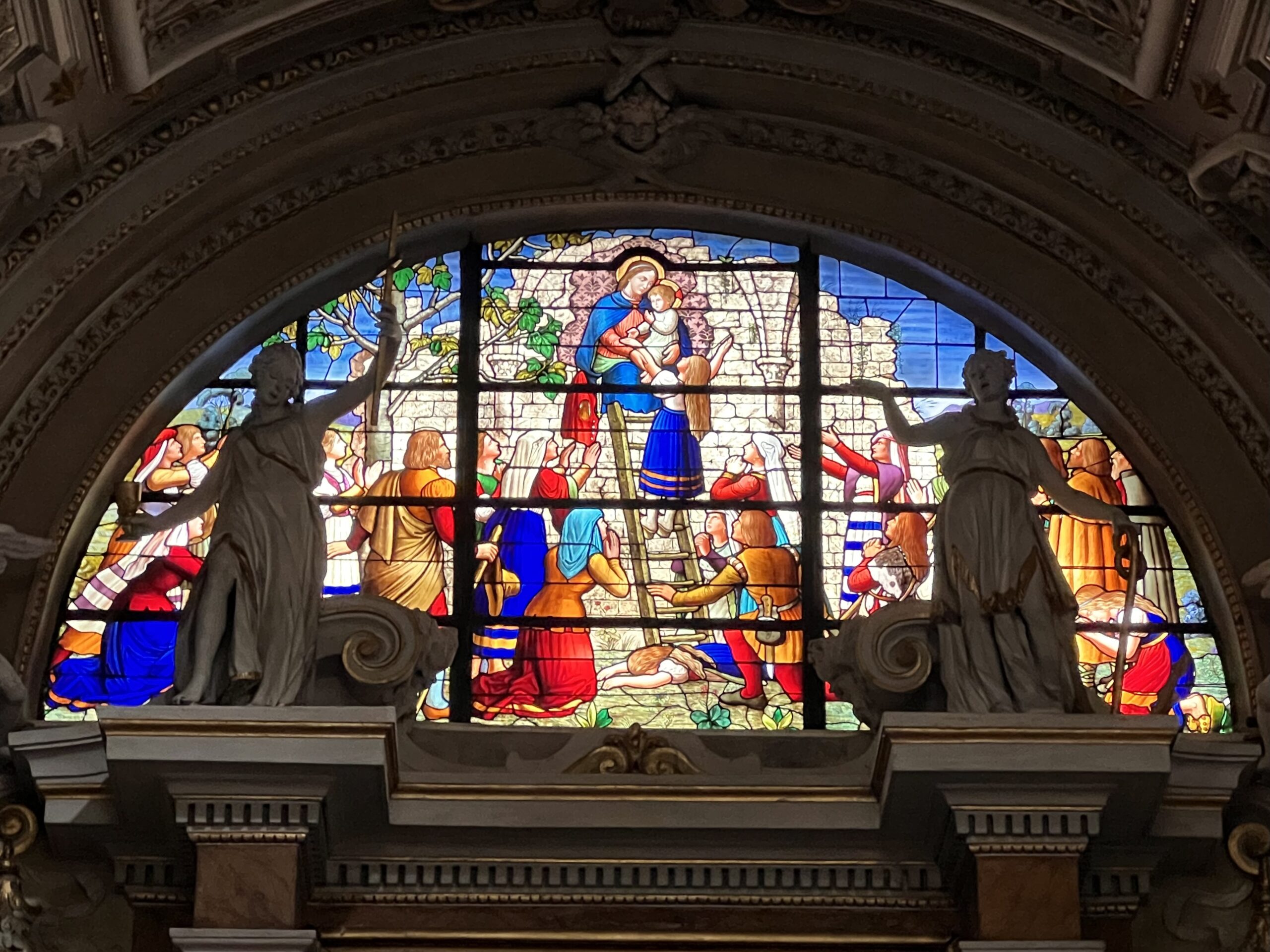
The pilgrimage site's patronal feast day is 29 July, as on that day in the year 1594, Mary appeared to two young, sick women possessed by the devil. Subsequently, Our Lady healed them.
The pilgrimage church is one of the most important Marian shrines in the canton of Ticino.
ACCESSIBILITY
The pilgrimage site at Morbio Inferiore is located in the canton of Ticino and belongs to the diocese of Lugano. The town lies in the far south of Switzerland, near Mendrisio and Varese, close to the border with Italy.
The address of the pilgrimage site is: Salina Alle Basilica 1, 6834 Morbio Inferiore.
More information can be found at www.morbioinf.ch.
Experience
In the south of Switzerland, I am approaching the border with Italy, and the aim is to visit the pilgrimage site of Morbio Inferiore. Today, I hope to pray at the Sanctuary of Our Lady of Miracles, near the border between Switzerland and Italy. I wonder how to translate the name “Morbio Inferiore” into Dutch, and then it occurs to me: “earthly ailments”.
Upon arriving in the town, I'll park the car in the street of the basilica and then proceed to the shrine, which is situated on an elevated spot. On either side of the path leading up, I can see images depicting the history of this Marian shrine, and after that, it's time to enter the basilica.
Upon entering, I am immediately struck by the beauty of the interior. What paintings, ex-votos, statues and frescoes in this building! I take a tour and linger for a long time by the shrine. Mary and the Child are crowned and their hands reach out to each other. This is certainly a special representation of Our Lady and her Son.
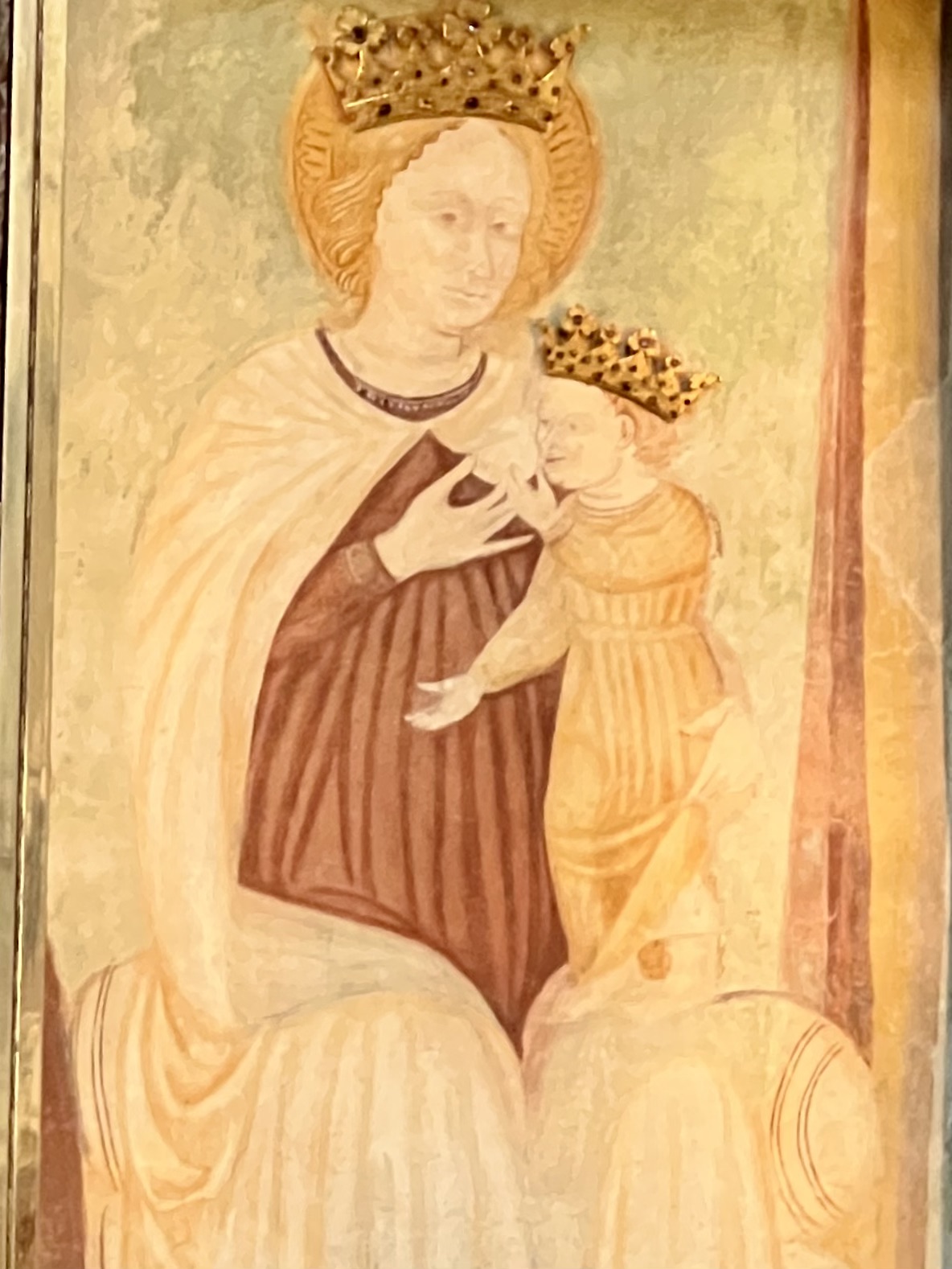
In the basilica, there is a devotional picture with, on the front, Mary and Child, and on the back, a prayer in Italian. If I translate the text into Dutch, it says:
“Prayer to Our Lady of Miracles, venerated in the sanctuary/basilica of Morbio Inferiore:
O Mother of God, Mary of Miracles, by showing yourself in this image of Yours, You have chosen this place as the throne of Your mercy: a privileged place from which You distribute Your favours and graces, and many unhappy souls have already found the remedy for their spiritual and bodily ailments here; with full confidence, we come to the feet of this image of Yours to beg for Your maternal protection.
You know our needs, our pains, our suffering: cast your merciful gaze upon us and, on behalf of the Heart of Jesus, speak to God for us of what we ask of You.
Hear, Mother of grace, our humble prayers. Filled with your blessings, we shall strive to thank you in life by imitating your virtues. We await to sing the song of eternal praise with you, with the angels and with the saints. Amen.”
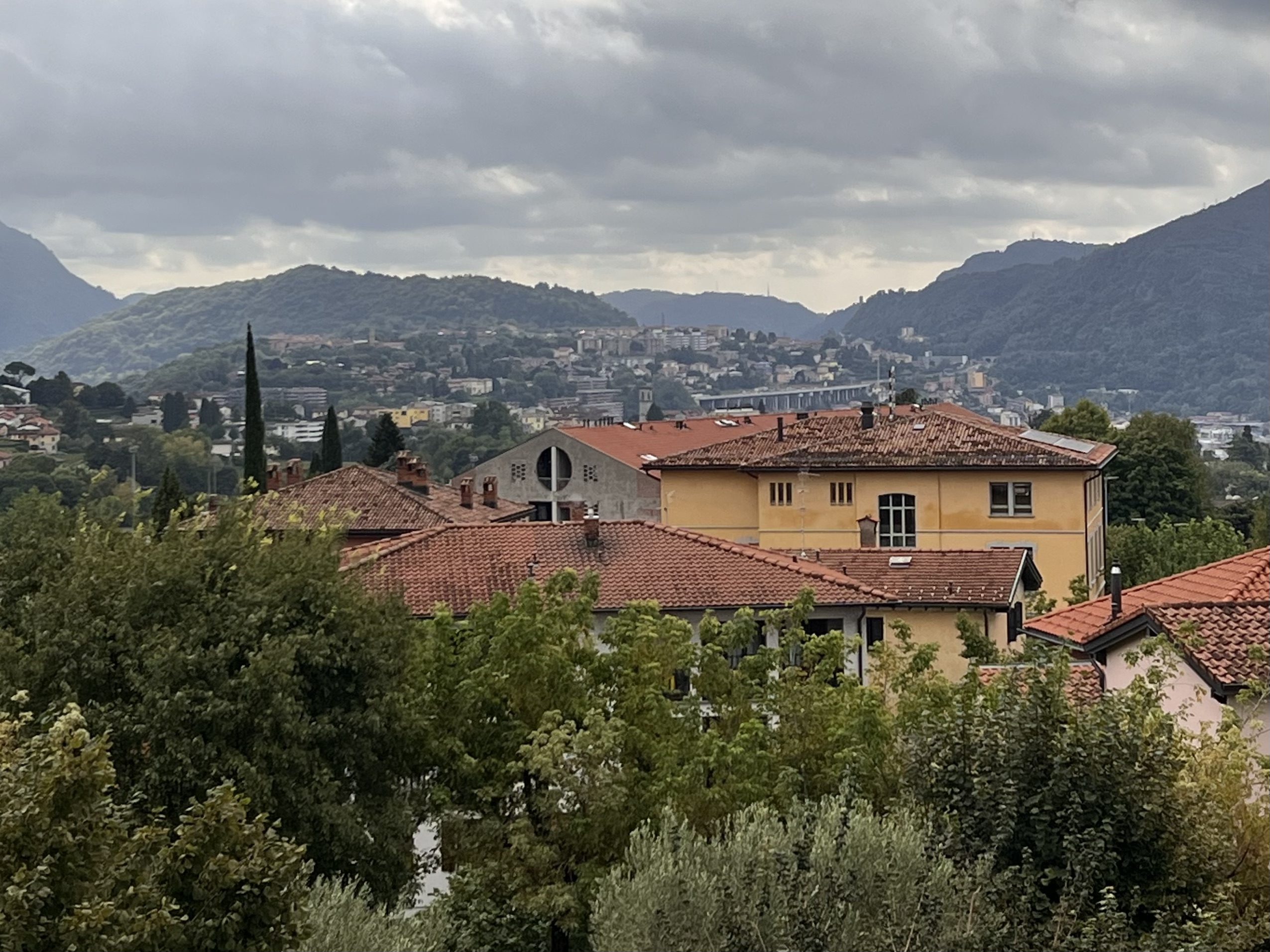
Afterwards, I leave the basilica and look at the sweeping view that this place offers me. I walk down the plateau and go to visit the place. What an experience to gain impressions here. Thank you, Mary!
Environment
The Church of St. Roch is located 150 metres from the pilgrimage site. The church belongs to the parish of Morbio Inferiore and was built in the second half of the 18th century.
From the town of Chiasso to Morbio Inferiore it is only 5 km going to the northeast.
The distance from Mendrisio to Morbio Inferiore is the same, but to the southeast.
Departing from Lugano to arrive in Morbi Inferiore requires travelling 30 km to the south.
Leaving the Italian city of Varese to reach Morbio Inferiore involves covering 28 km to the northeast.
From the Italian town of Como to the Swiss town of Morbio Inferiore means travelling 15 km to the northwest.
~~~
